Black, White and Red: A Cake Built on Cherries and Kirsch
Keep four things clear: the tartness of sour cherries, rich dairy cream, a fruit-spirit aroma of Kirschwasser you can actually taste, and the slight bitterness of dark chocolate. Swap any of them for something sweeter and the cake loses its outline.
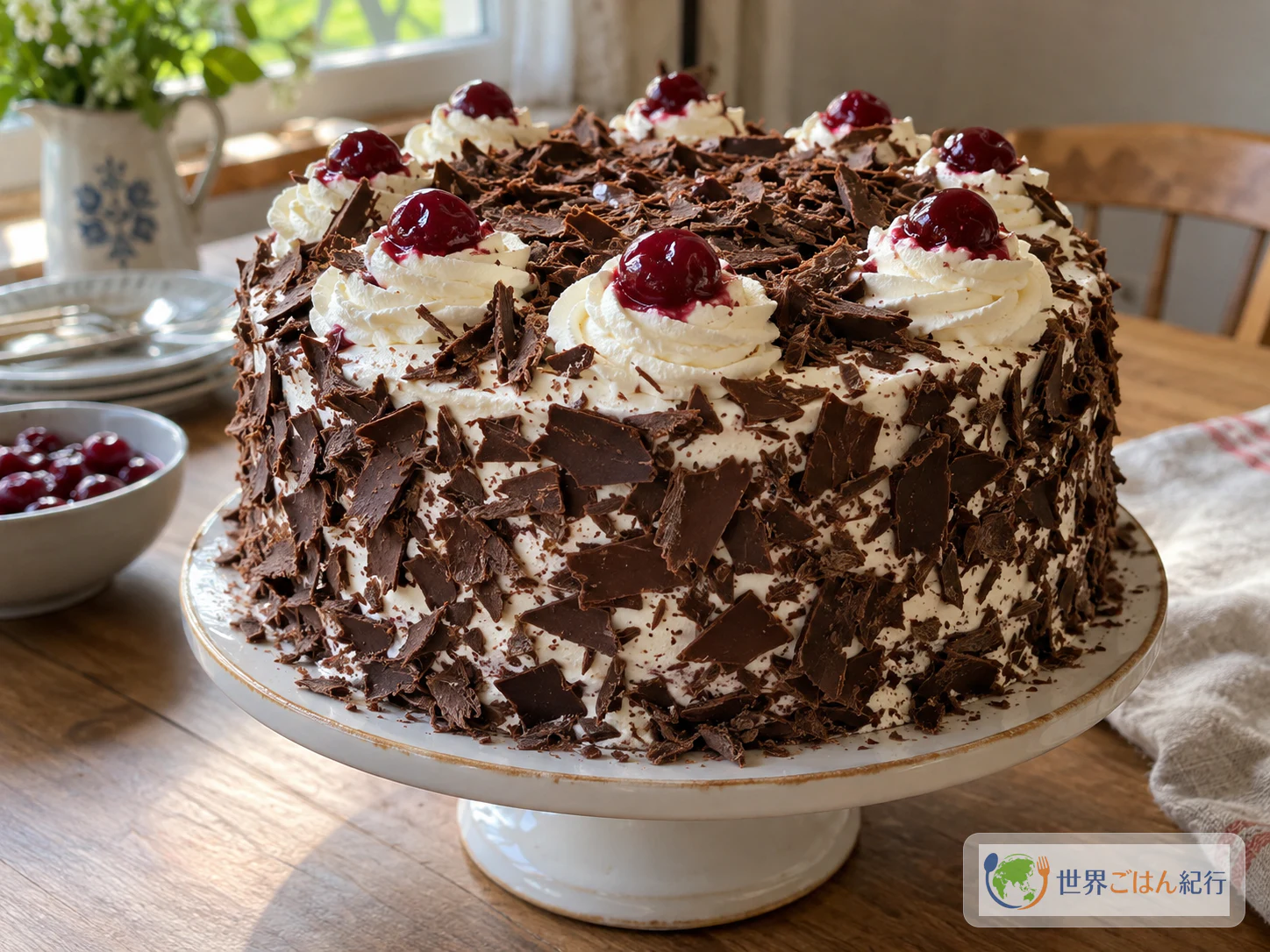
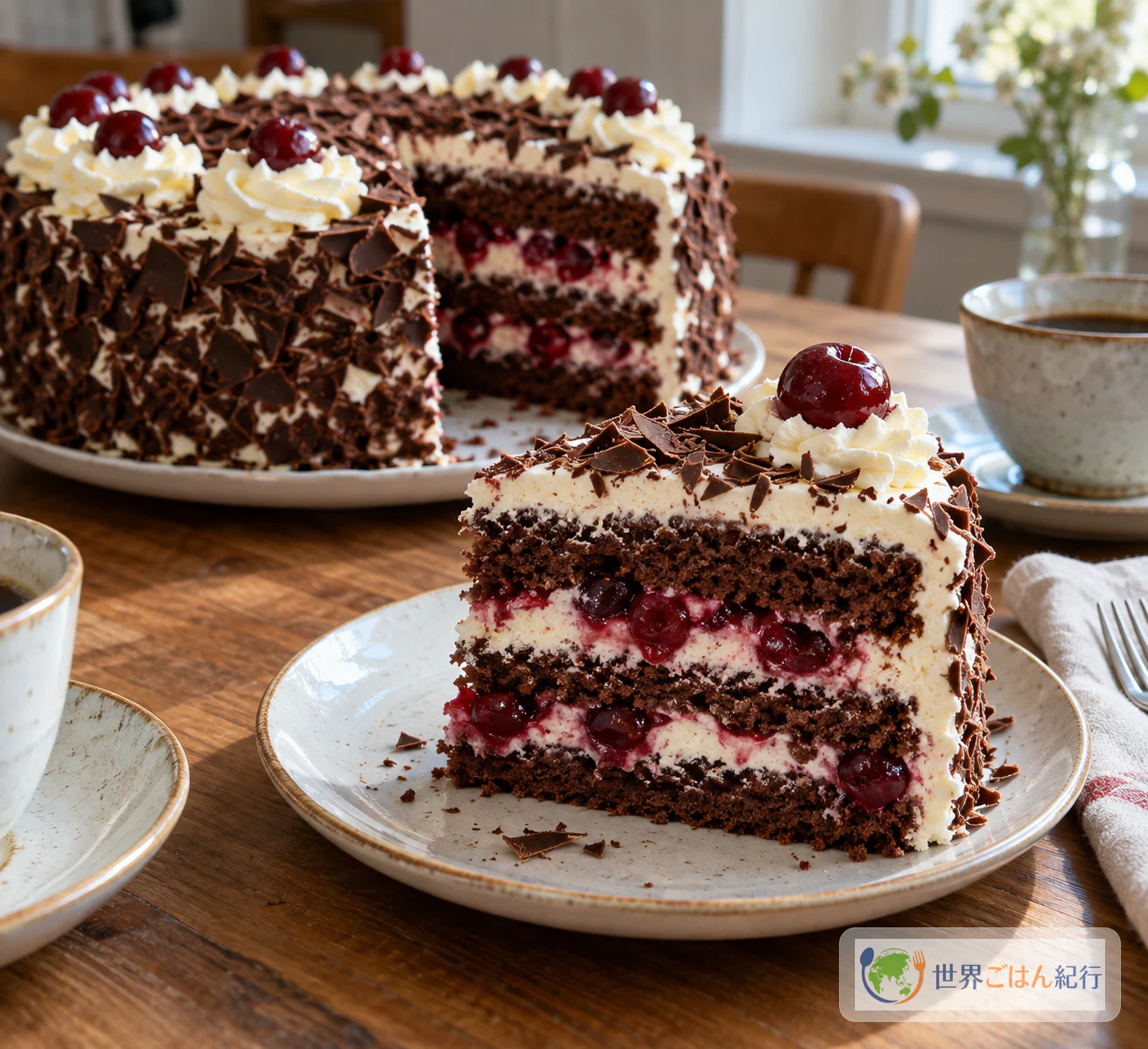
Dark chocolate shavings cover a tall wall of white cream, and a few red cherries sit on top. When the knife goes in, the slice shows dark cocoa sponge, a glossy band of cherries and pale cream, and the clean, fruity scent of Kirschwasser rises from the cream. The regional tourism board of the Black Forest presents this play of black, white and red as the cake's signature, and it is one of the best-known German cakes far beyond Germany.
In German it is called Schwarzwälder Kirschtorte, the "Black Forest cherry torte." Germany's food-safety authorities describe its core as a sponge (a biscuit or Wiener Boden), cream, cherries, Kirschwasser that is clearly noticeable, and chocolate shavings. That last point matters: the kirsch is not a background flavoring but part of what makes the cake what it is.
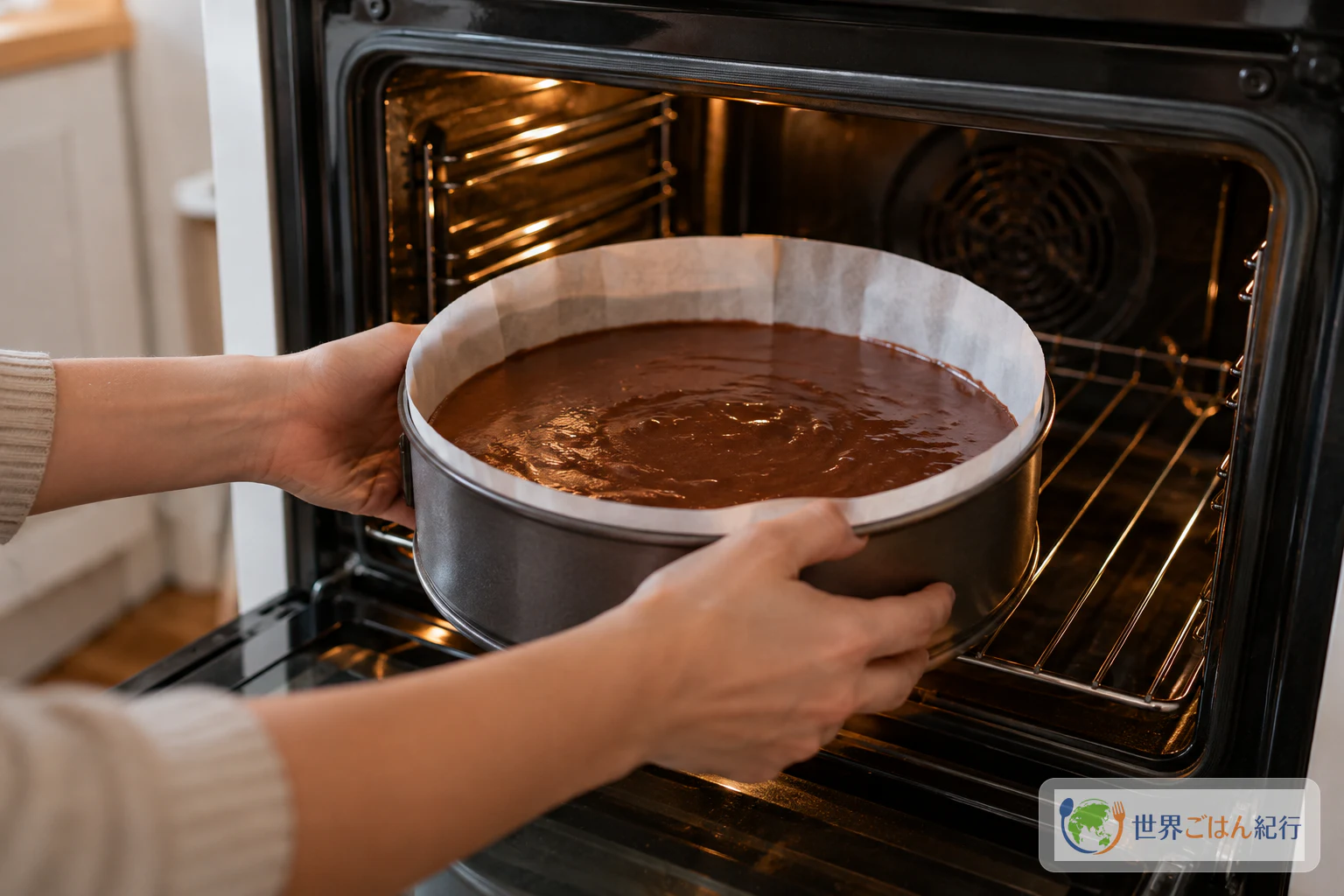
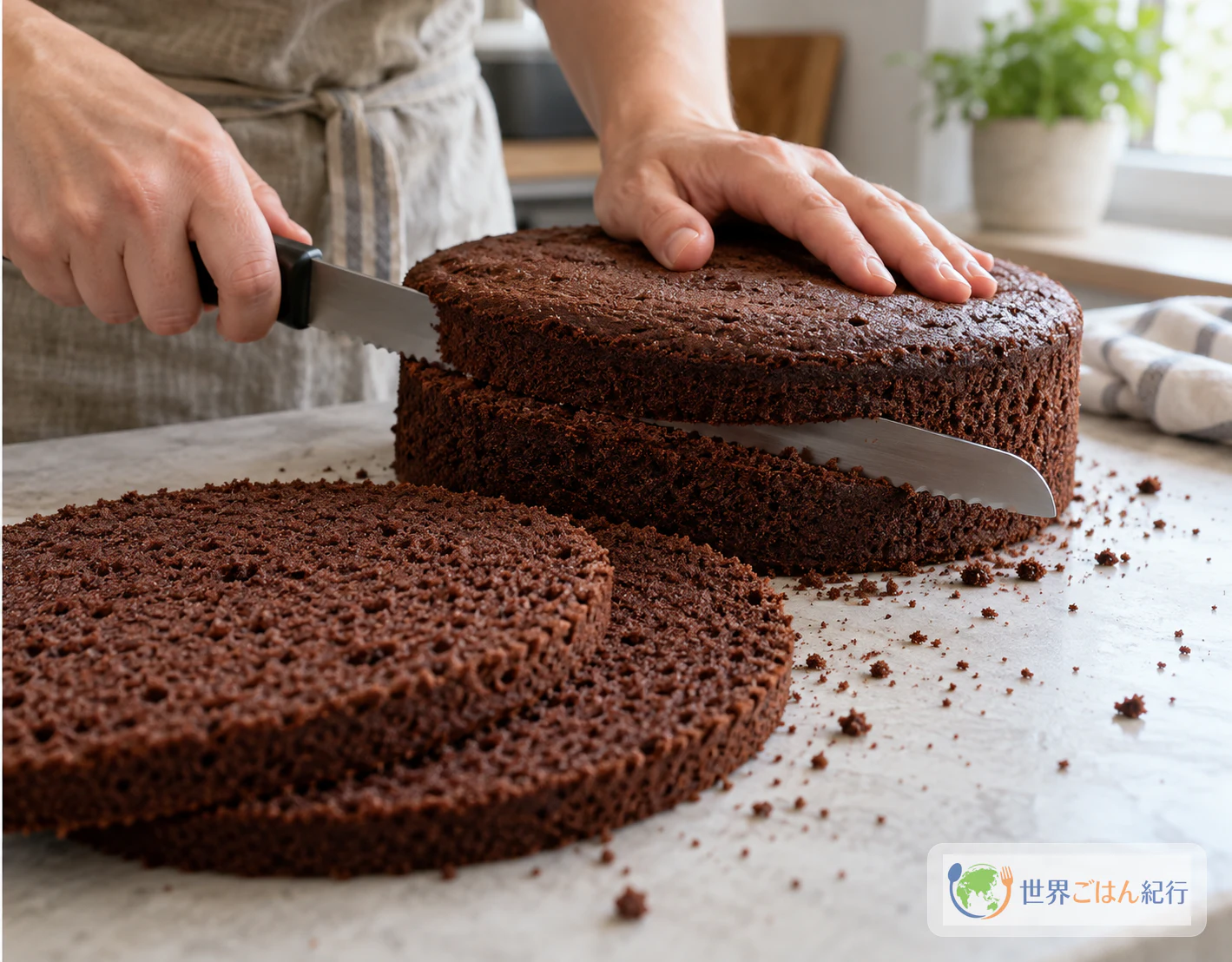
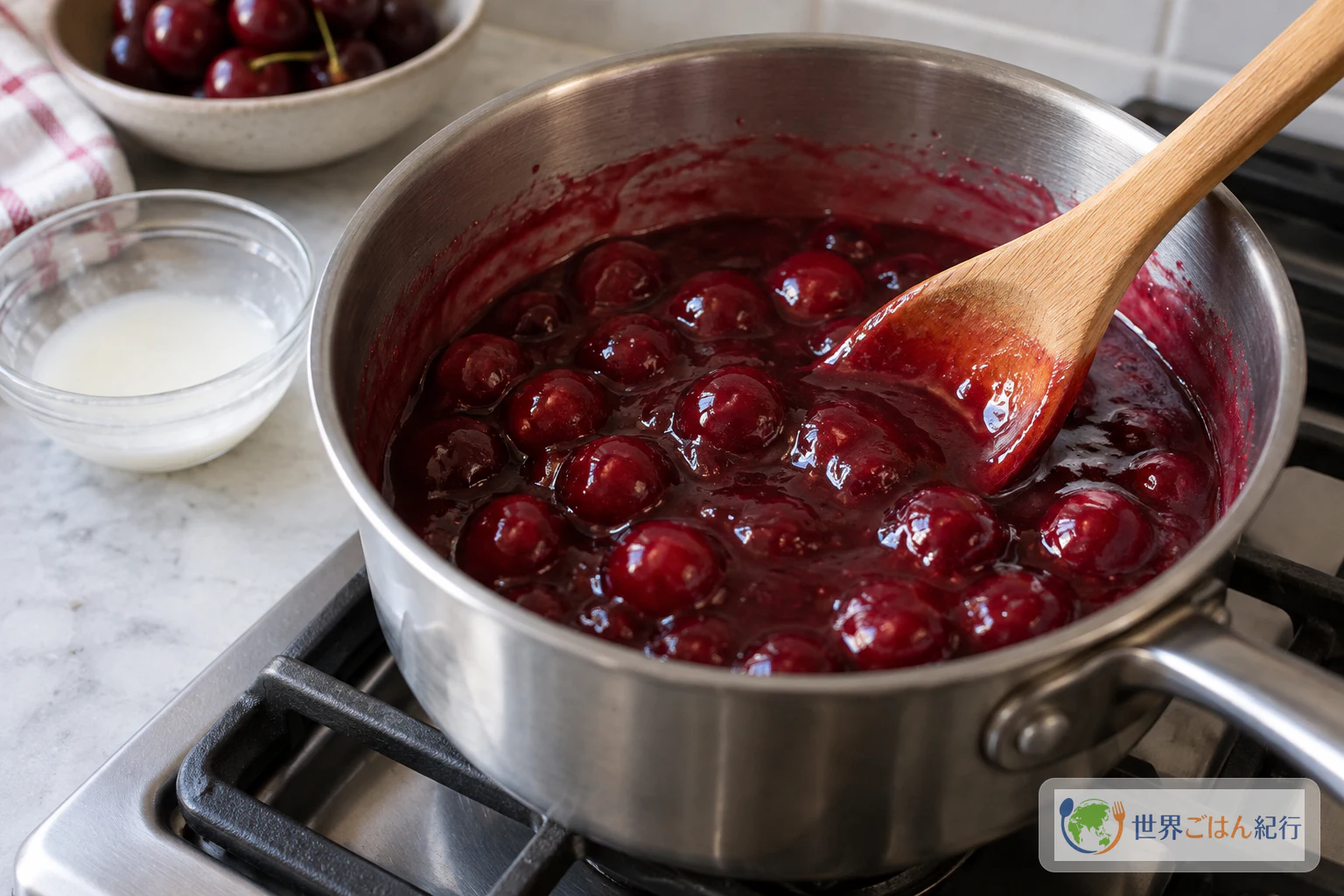
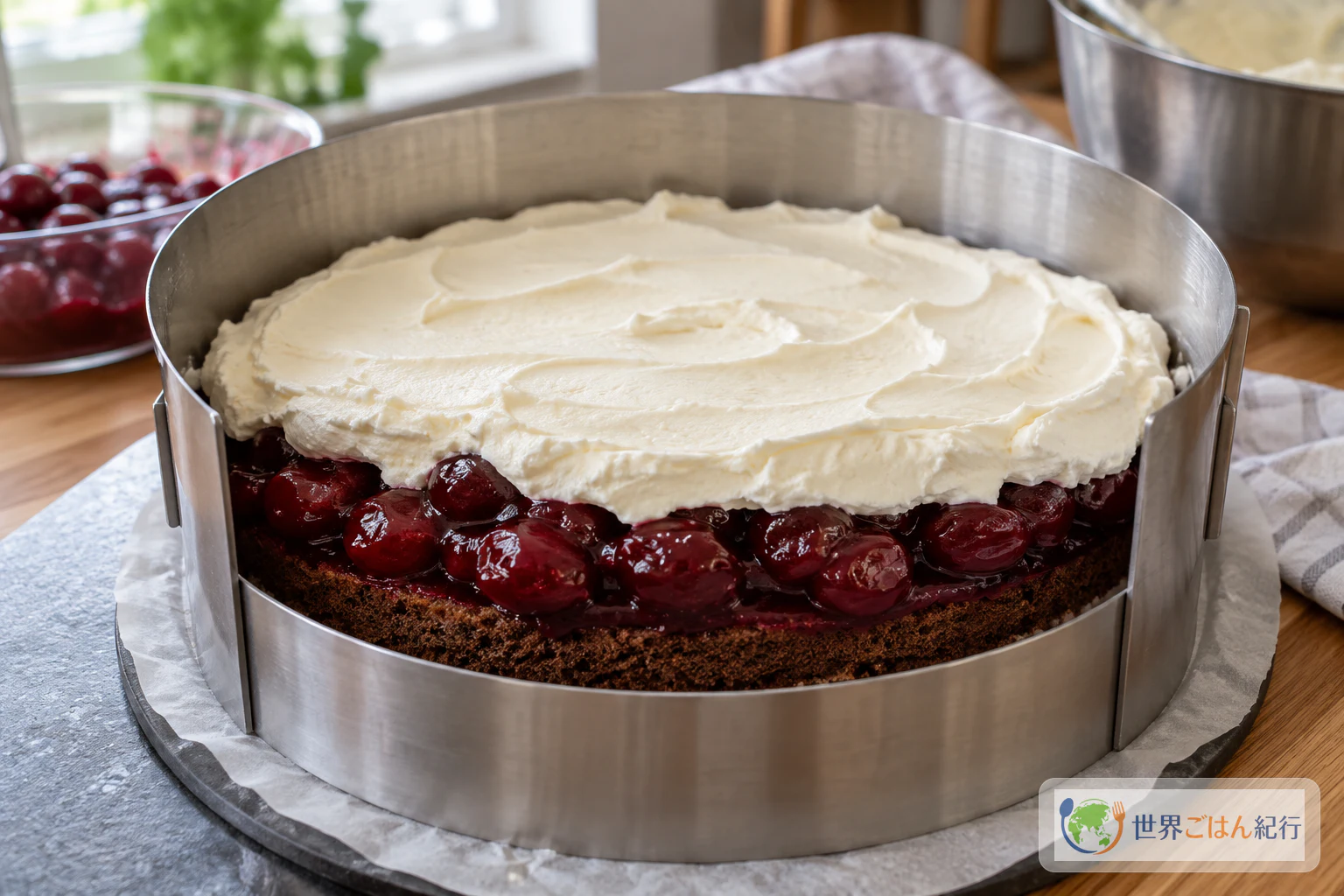
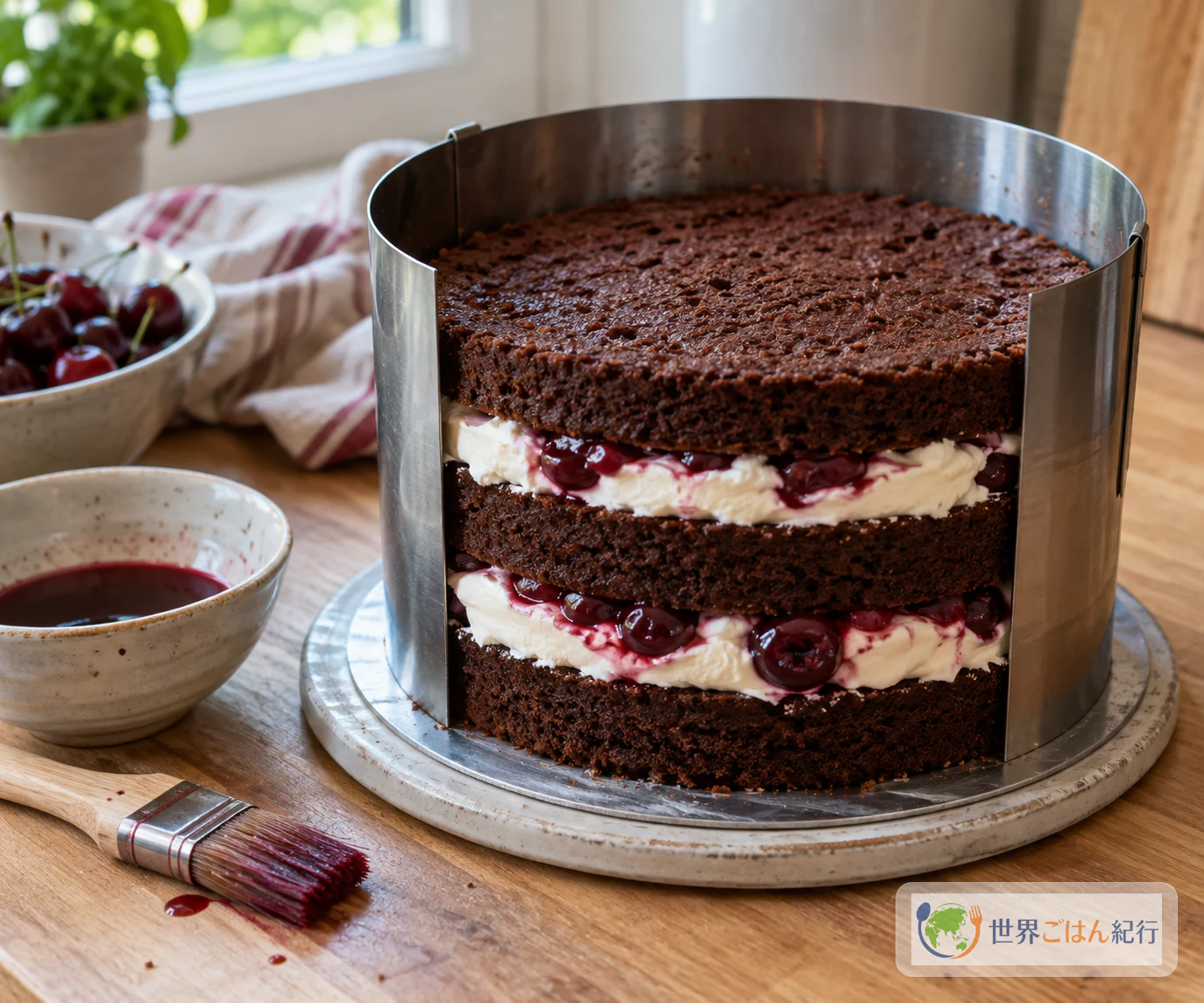
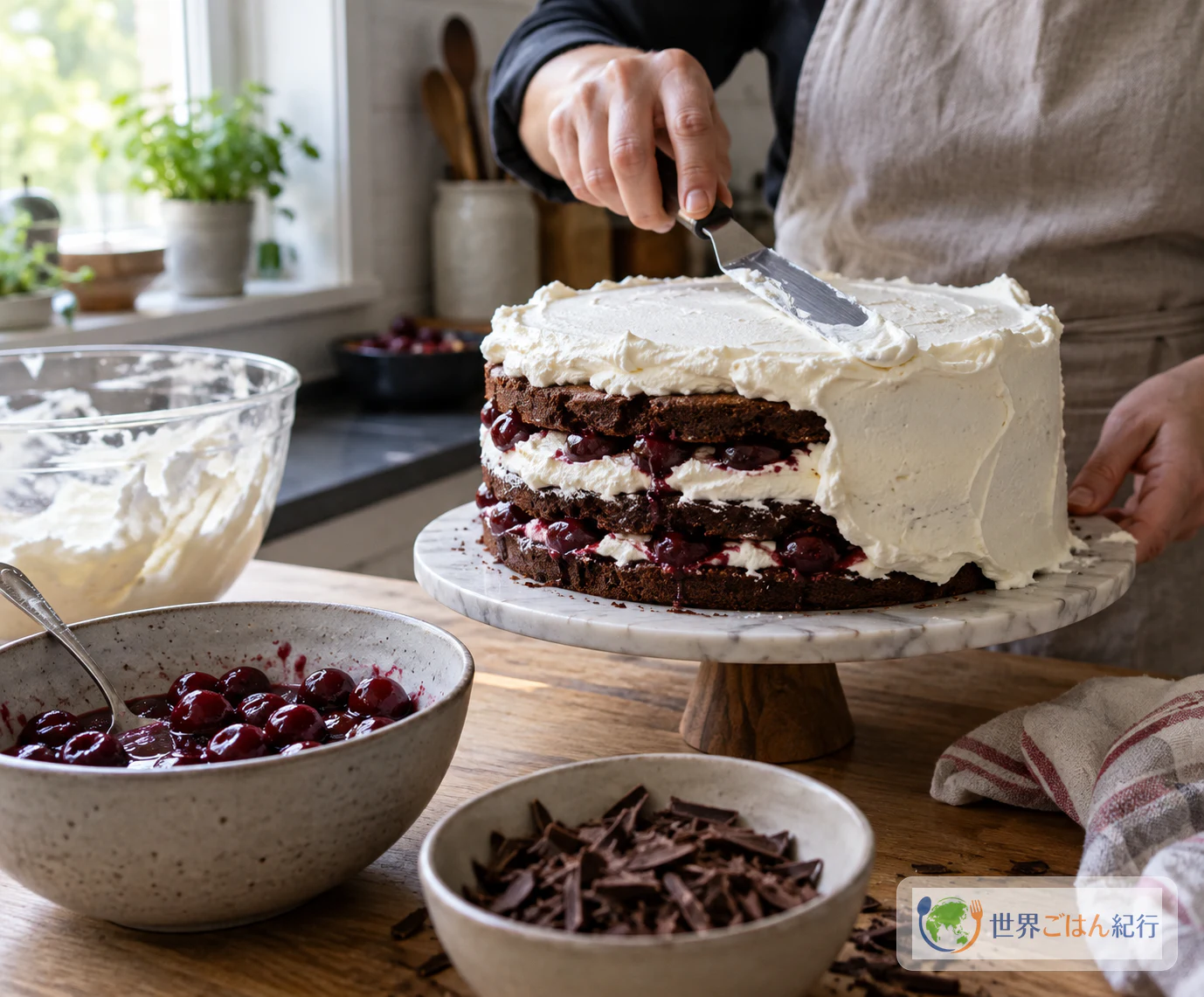
This recipe follows a published recipe by master pastry chef Marcel Seeger for German public broadcaster WDR, made in a 26 cm ring: a cocoa sponge baked from seven eggs and cut into three layers, sour cherries bound in their own thickened juice, a kirsch cream set with gelatine, and a finish of cream and grated chocolate. It is closely related to what English speakers call Black Forest cake, but here the focus is the German version, where the Kirschwasser stays in the foreground. It is also a different cake from the Swiss Zuger Kirschtorte.
Ingredients for One 26 cm Cake
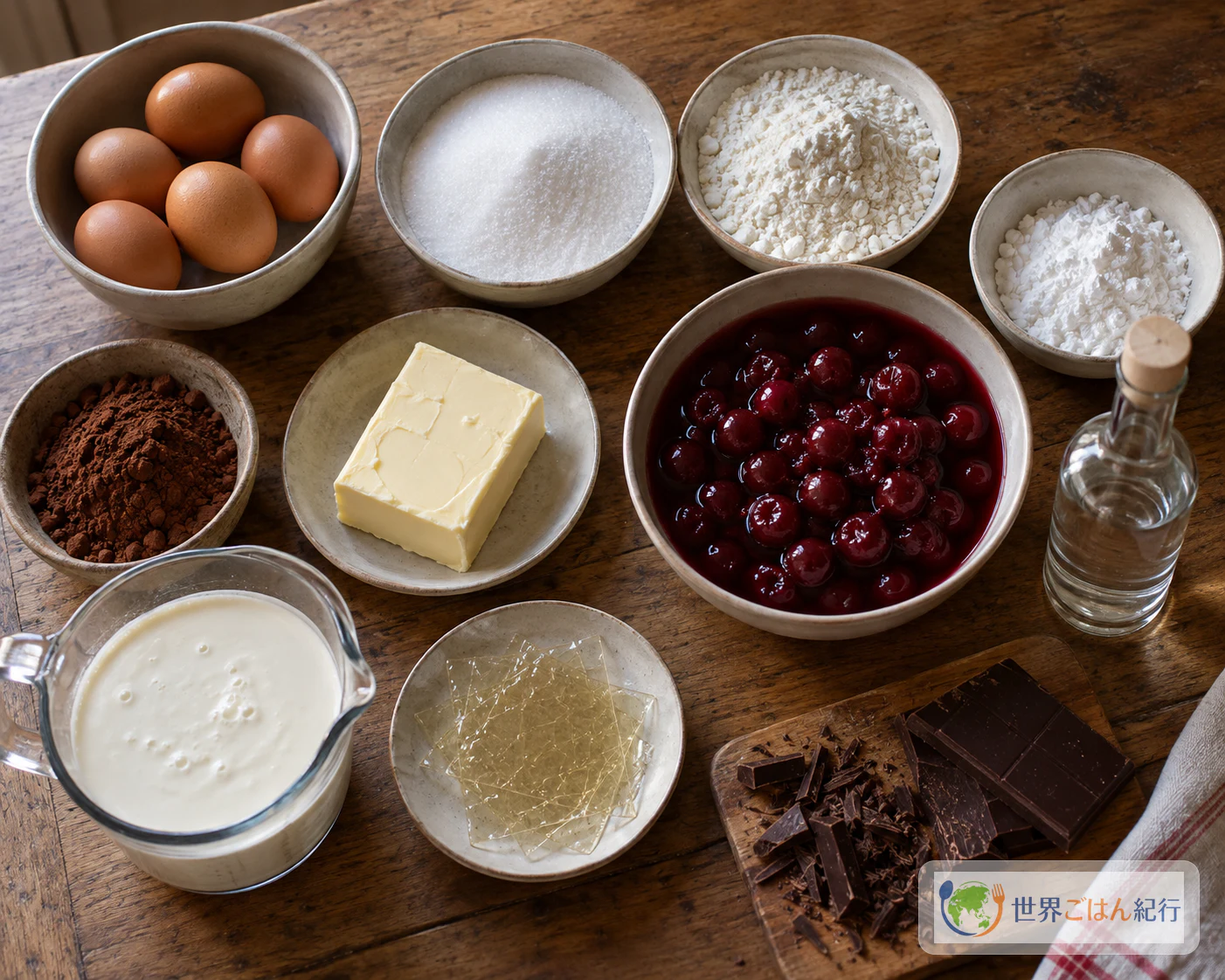
These amounts are for a 26 cm ring. German product names are given alongside, because they help when choosing substitutes.
The 400g of chocolate is the recipe's amount for covering the top and sides generously; you will not necessarily use or eat every last shaving.
Equipment
- 26 cm torte ring (or a springform pan of the same size) and baking paper
- Mixer or whisk and a large mixing bowl
- Fine sieve
- Rubber spatula
- Skewer for testing the sponge
- Long knife for slicing the sponge into layers
- Small saucepan and wooden spoon for the cherry filling
- Pastry brush
- Piping bag for the rosettes
- Grater or similar tool for the chocolate
Choosing and Substituting: Cherries, Kirsch, Flour and Starch
Kirschwasser is a spirit, not a liqueur. It is a clear distilled spirit made from cherries, and it is not the same as a sweet cherry liqueur. Look for bottles called Kirschwasser or kirsch, and check that what you are buying is an unsweetened fruit spirit rather than a sweetened liqueur, whatever the front label says. A sweet liqueur adds sugar and blurs the sharp, fruity aroma the cake depends on.
Sour cherries carry the balance. Their tartness is what cuts through the cream and chocolate. If you cannot find jarred or canned sour cherries, look for cherries packed with noticeable acidity. Sweet canned cherries or fresh sweet cherries taste different and change the moisture and acidity of the filling, so taste as you go and adjust the sugar in the filling; there is no fixed conversion. Whatever you use, keep the juice.
Flour and starch. German Type 550 flour is not identical to cake flour or other flours sold elsewhere. If you use a different wheat flour, the texture of the sponge may turn out somewhat differently. Speisestärke here means a cornstarch-type product; check the label. Swapping in potato starch is not recommended.
Gelatine. Sheet weights vary by brand; use 5 sheets. Check your product's packaging and soak it according to its instructions.
Decorating cherries. Canned or candied cherries are fine on top, though their color and sweetness will vary.
The Kirschwasser goes into the cream, which is not cooked, so do not assume the alcohol has disappeared. Tell anyone who avoids alcohol, including children, people who are pregnant and anyone who will be driving, that the cake contains it. The cake contains wheat, egg and milk. Check the labels of the gelatine (for its source), the decorating cherries and the starch.
Method: From Sponge to Finished Torte
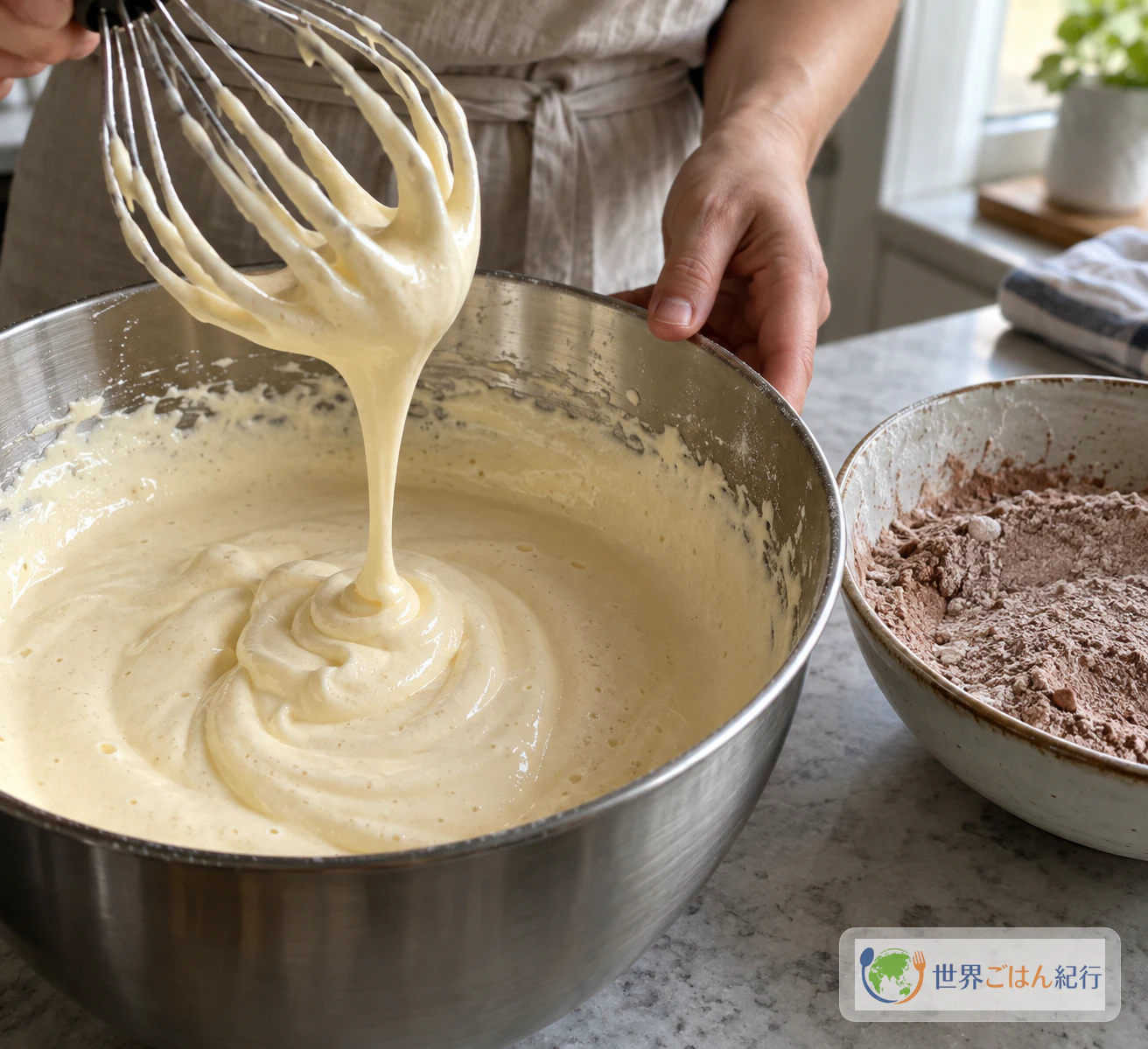
The baking time and temperature are a guide. Home ovens vary, so confirm the sponge is done with a skewer, and let every component cool fully before it meets the cream.
Troubleshooting, Slicing and Keeping
The steps above come from the source recipe. The fixes below are general kitchen technique added to help you get there.
| Problem | Likely cause | What to do |
|---|---|---|
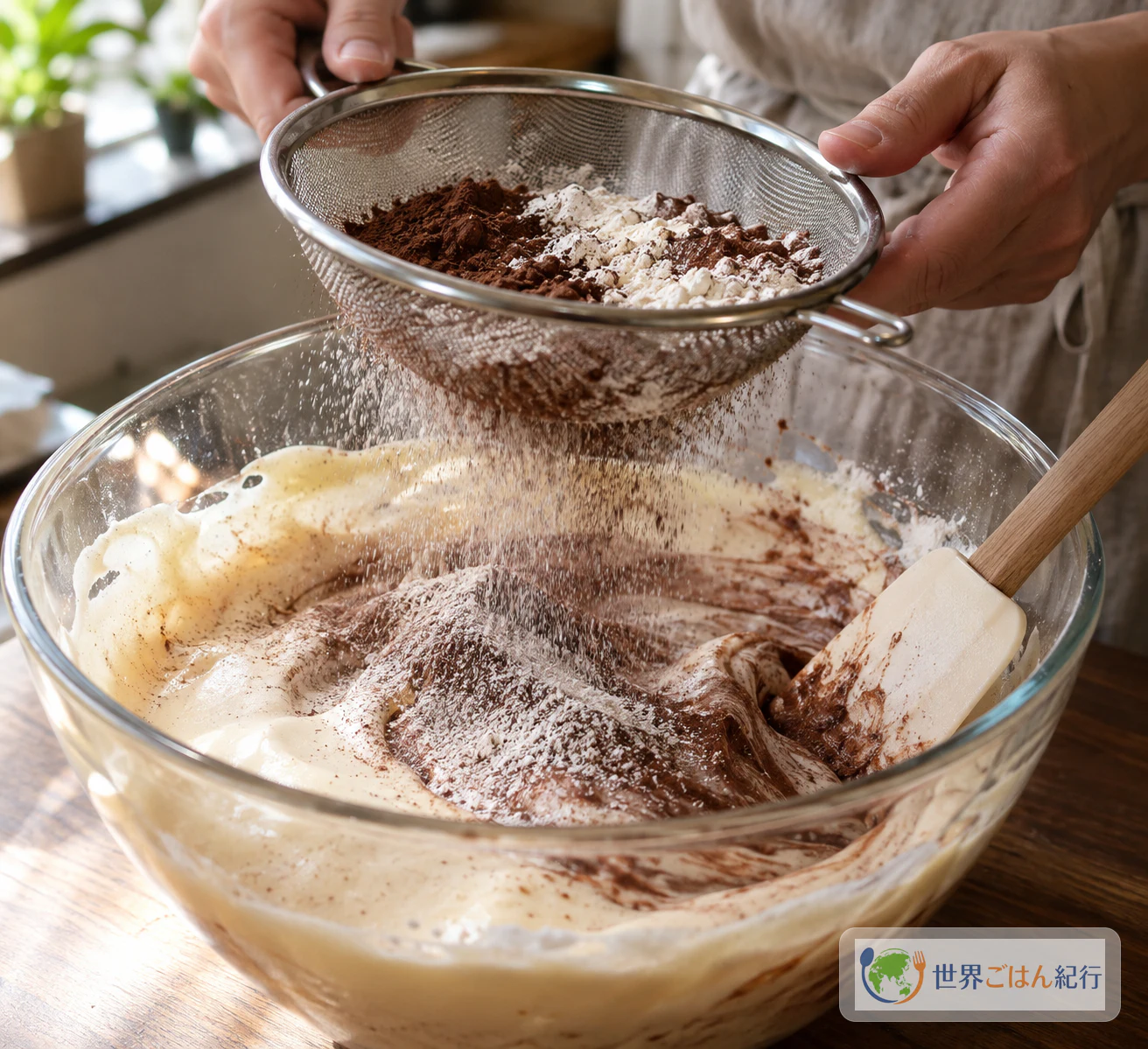
| The sponge is low and dense | The eggs were not whipped enough, or the foam collapsed when the flour went in | Whip the eggs until they form a thick ribbon. Sift the dry ingredients and fold them in a little at a time, lifting from the bottom |
| The cherry layer runs | The starch was not evenly dispersed, or the juice did not boil | Dissolve the starch completely, stir it into juice that is actually boiling and cook until clear. Do not cook the cherries for long after adding them, and cool the filling fully |
| The cream is loose or has gelatine specks | The cream or bowl was warm, or the melted gelatine set as it hit cold cream | Chill the cream and bowl well. Even out the gelatine's temperature with a little cream before adding it. Remember that gelatine products differ, so a sheet count alone is not a perfect guide |
| Slices get squashed | The cake was not chilled enough, or the knife dragged | Chill the cake thoroughly. Use a long knife warmed and wiped between each cut, and cut one slice at a time |
Because the cake is made with fresh cream, keep it in the refrigerator, do not leave it out at room temperature, and eat it soon. How many days it keeps, or whether it can be frozen, has not been established here.
Regional Versions and Swaps
There is no single fixed recipe for this cake, even in the Black Forest itself.
| Version | Base and layers | Where the Kirschwasser goes |
|---|---|---|
| WDR (this recipe) | 26 cm ring; three layers of cocoa sponge; cherries bound in thickened juice; no pastry base | In the cream; the sponge is brushed with cherry juice |
| Hochschwarzwald Tourismus | 28 cm ring; a thin shortcrust (Mürbeteig) base spread with sour cherry jam, then an 8-egg sponge in three layers with cherries and cream (1.5L of cream) | As set out in that recipe |
| Schwarzwald Tourismus | 28 cm, 16 pieces; sponge, sour cherries, cream and chocolate shavings | Used both in a soaking syrup and with the cherries |
The Hochschwarzwald recipe is presented as the home recipe of Alfred Boch, head chef of the traditional Gasthaus Engel in Todtnauberg, and it recommends assembling in a ring. Its shortcrust base and cherry jam make the cake easier to cut and add more sweet-sour fruit. The tourism board calls it "the original," but that means a particular family recipe it publishes, not proof of the one true version.
A few meaningful ways to adjust:
- Kirsch mainly in the cream, as in this recipe, keeps the spirit's aroma strong without overloading the sponge with liquid.
- Kirsch in the syrup as well, as in the Schwarzwald Tourismus recipe, makes the alcohol much more pronounced. Treat that as a different balance rather than mixing it into the amounts above.
- Less tart cherries: taste the filling and adjust the sugar, rather than following a fixed figure.
- Without alcohol: you can moisten and flavor the cake mainly with cherry juice, but it is not an equivalent swap. The Kirschwasser aroma is one of the cake's defining elements, so it is more honest to call the result a Black Forest–style cherry cake. LAVES explains the use of descriptions such as "nach Schwarzwälder Art" (Black Forest style) for versions that differ from the standard components. That commercial naming background does not set a rule for naming a home-made cake.
Where the Cake Comes From: Several Stories, No Final Answer
You will often read that the cake was created in 1915 by a confectioner named Josef Keller in Bad Godesberg. Other explanations link the colors to the Bollenhut, the traditional hat of the Black Forest, or tie the name to the region's Kirschwasser. The Black Forest tourism board itself presents these as stories rather than settled history, and the Lower Saxony food-safety authority LAVES states that the exact place and time of its invention have not been confirmed. Each is worth knowing, but none should be taken as fact.
What the region does connect the cake to is its ingredients. Schwarzwald Tourismus describes a "Schwarzwälder Crème" from the southern Black Forest that combined Kirschwasser with cream and sweet-sour cherries, and it presents the cake as something served in the region's cafés, mentioning a cake festival in Todtnauberg. These are the tourism board's own accounts of local tradition, but they show why the kirsch, the cream and the tart cherries belong together.
Frequently Asked Questions
What is Kirschwasser?
It is a clear spirit distilled from cherries. It is not a sweet cherry liqueur, and in this cake it should be clearly noticeable in the cream. A sweetened liqueur changes both the sugar level and the aroma.
Can I use canned sweet cherries?
You can, but the cake will taste sweeter and less sharp, and the filling's moisture may differ. Look for tart cherries first. If you use sweeter ones, taste the filling and adjust its sugar.
Do I need a shortcrust base?
Not for this recipe. The WDR version uses three layers of cocoa sponge only. The Hochschwarzwald recipe adds a thin shortcrust base with cherry jam, which is a regional variation rather than a requirement.
Can I make it without alcohol?
You can make a cherry cake in the same style, moistened mainly with cherry juice, but it will lose the Kirschwasser aroma that defines the cake. It is best described as a Black Forest–style cherry cake rather than a Schwarzwälder Kirschtorte.
How far ahead can I make it?
The assembled cake needs at least 1 hour in the refrigerator, still in its ring, before it is coated and decorated. After that, keep it refrigerated and eat it soon. No specific keeping time is given here.
Explore more dishes from Germany, including Käsespätzle, or compare another German-speaking-region sweet, Apfelküchle.
Sources
- Westdeutscher Rundfunk (WDR), "Schwarzwälder Kirschtorte – Rezept von Marcel Seeger." The base recipe for a 26 cm ring: ingredients and amounts for the cocoa sponge, sour cherry filling, cherry-juice soaking and kirsch cream with gelatine; baking at 190°C for 25–30 minutes with a skewer test; assembly and chilling for at least 1 hour. https://www1.wdr.de/verbraucher/rezepte/schwarzwaelderkirschtorte-100.html
- Niedersächsisches Landesamt für Verbraucherschutz und Lebensmittelsicherheit (LAVES), "Weltweit beliebt und nach strengen Vorgaben gebacken: die Schwarzwälder Kirschtorte." The cake's standard components (sponge, cream, cherries, clearly noticeable Kirschwasser, chocolate shavings), the unconfirmed place and time of its origin, and the "nach Schwarzwälder Art" description for versions that differ. An explanation of commercial food standards, not a home recipe. https://www.laves.niedersachsen.de/startseite/lebensmittel/lebensmittelgruppen/susswaren/weltweit-beliebt-und-nach-strengen-vorgaben-gebacken-die-schwarzwaelder-kirschtorte-169041.html
- Hochschwarzwald Tourismus GmbH, "Rezept: Schwarzwälder Kirschtorte – Das Original aus dem Schwarzwald." A regional home recipe from Alfred Boch of Gasthaus Engel in Todtnauberg: 28 cm ring, shortcrust base with cherry jam, 8-egg sponge in three layers, 1.5L of cream. "Original" refers to this specific published recipe. https://www.hochschwarzwald.de/reisemagazin/alle-geschichten/rezepte/rezept-schwarzwaelder-kirschtorte
- Schwarzwald Tourismus GmbH, "Schwarzwälder Kirschtorte" (PDF). The competing stories about the cake's name and origin, including the 1915 Josef Keller account; the southern Black Forest's Schwarzwälder Crème; and a 28 cm, 16-piece recipe using Kirschwasser in the syrup and with the cherries. Cultural material from a tourism organization, treated as tradition rather than confirmed history. https://www.schwarzwald-tourismus.info/_Resources/Persistent/e7a695c29b28a7ed9290914feb5186df4a8f5465/Schwarzw%C3%A4lder%20Kirschtorte.pdf