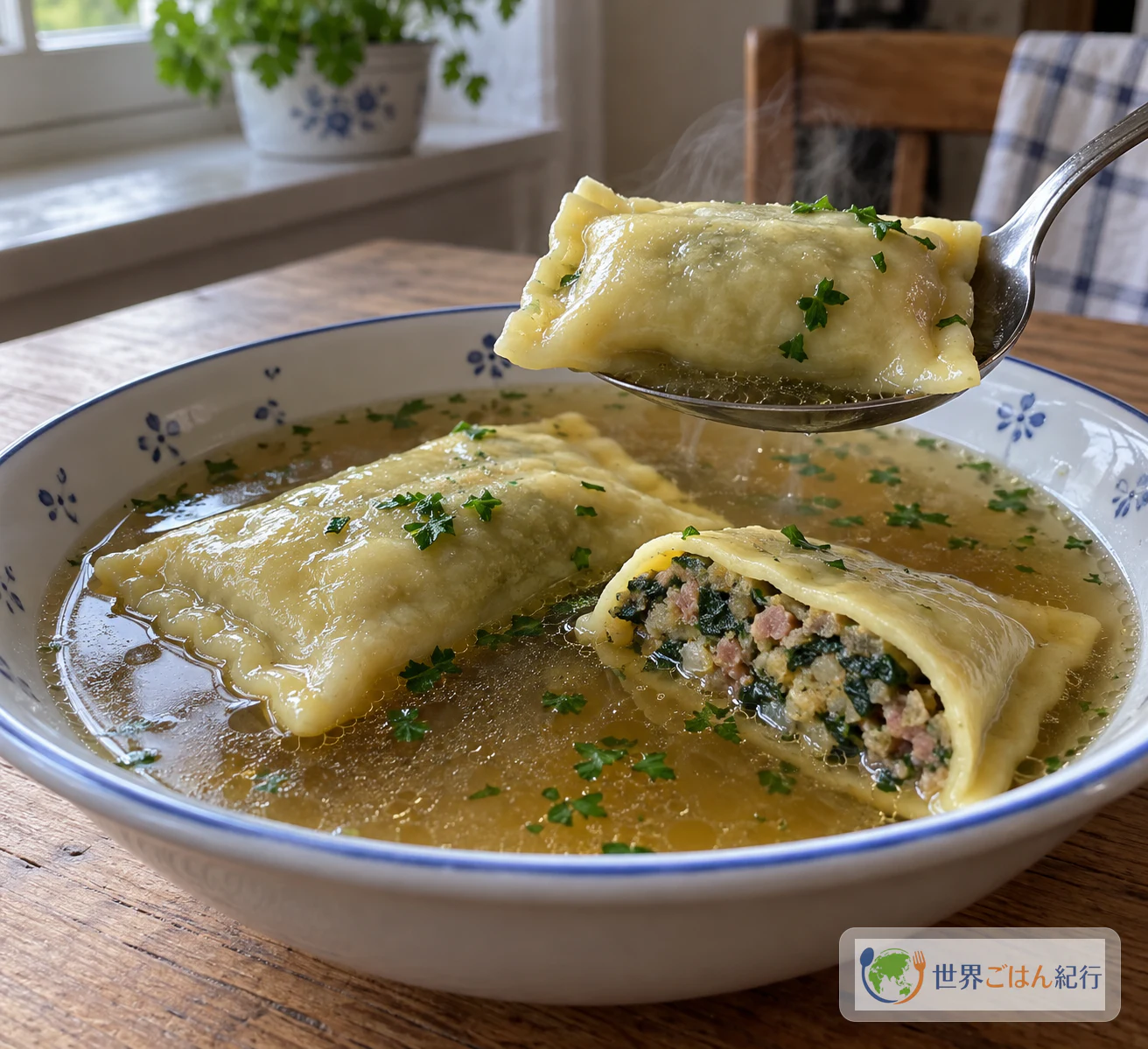
Maultaschen: Served in Broth or Browned in a Pan
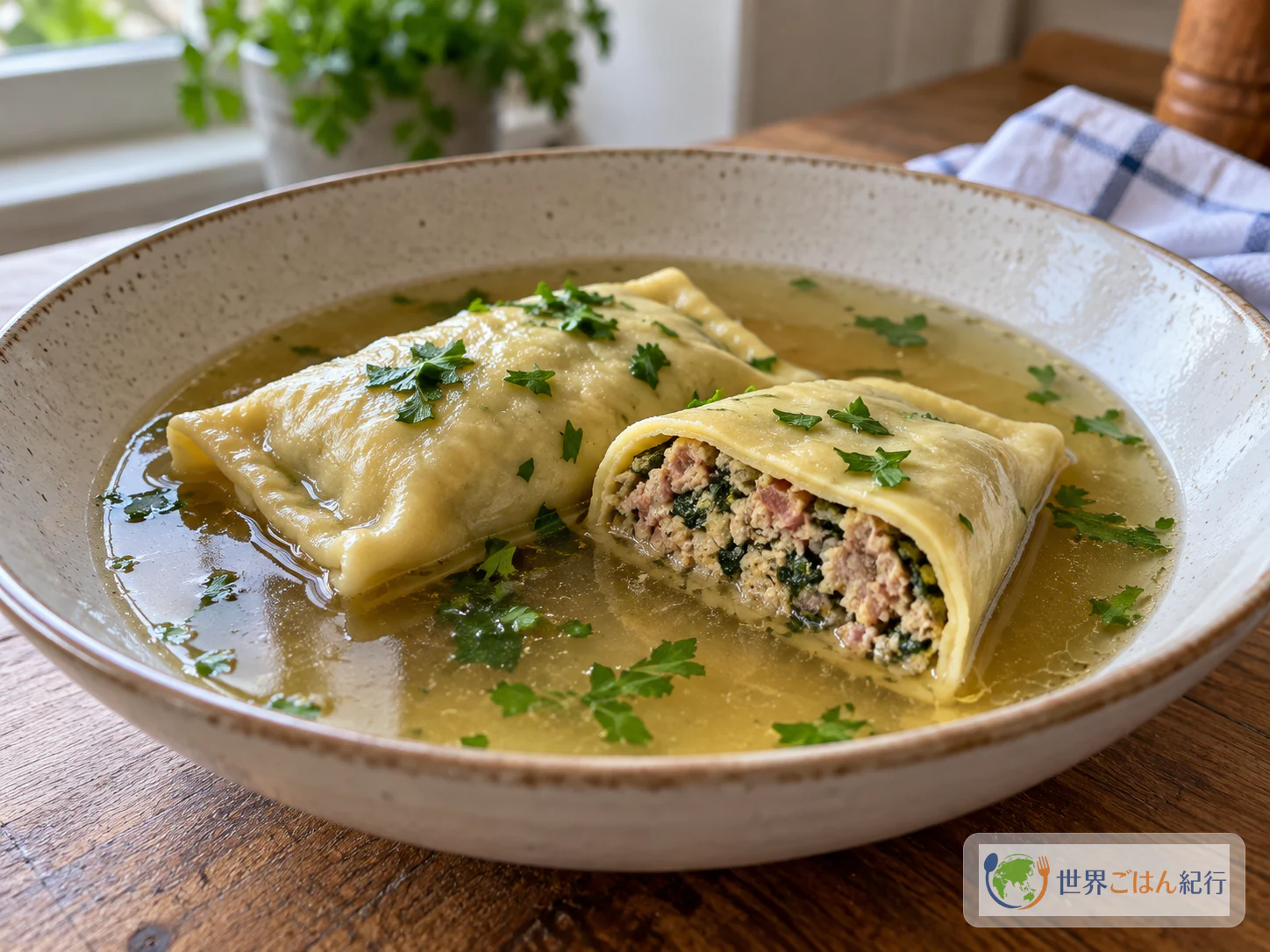
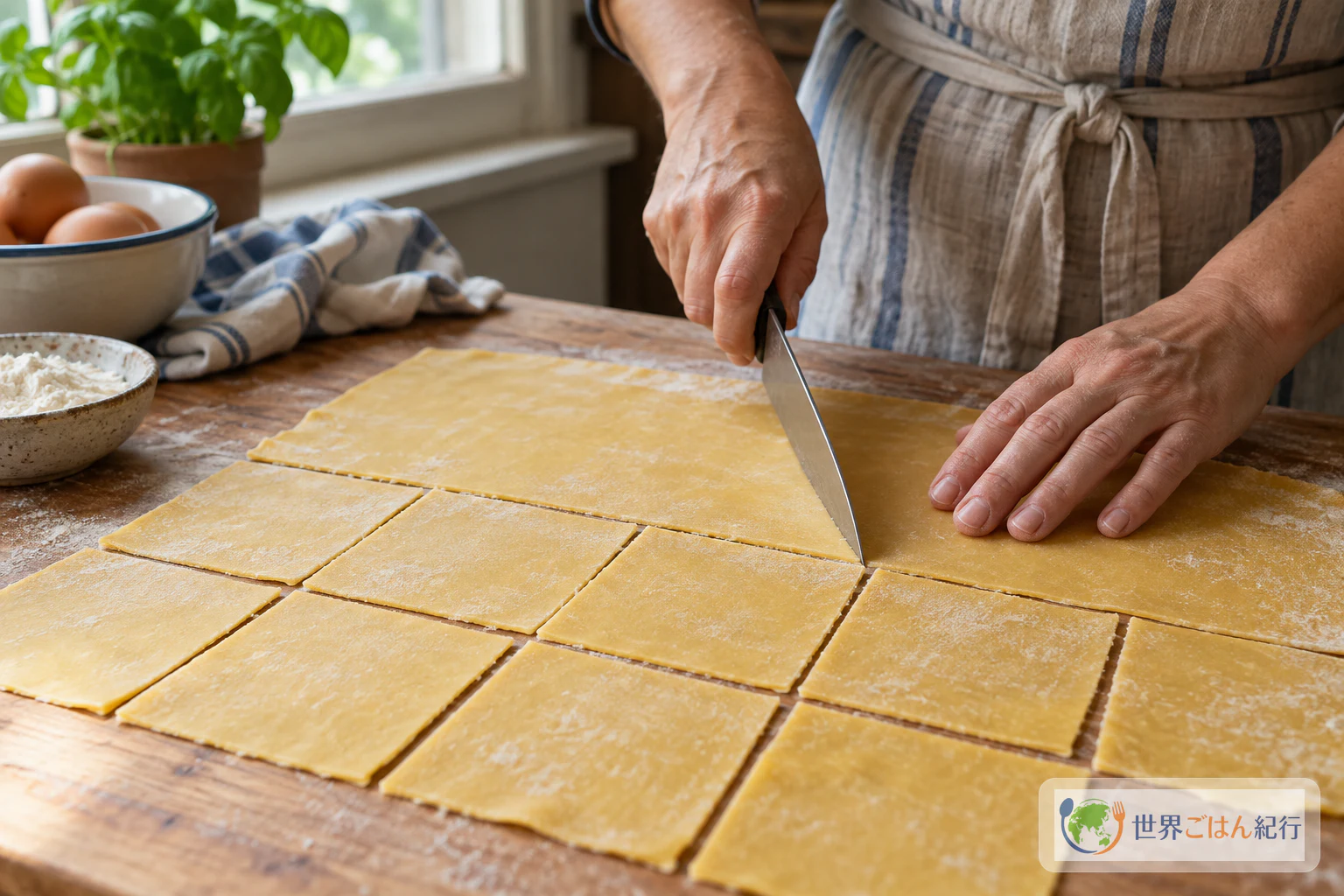
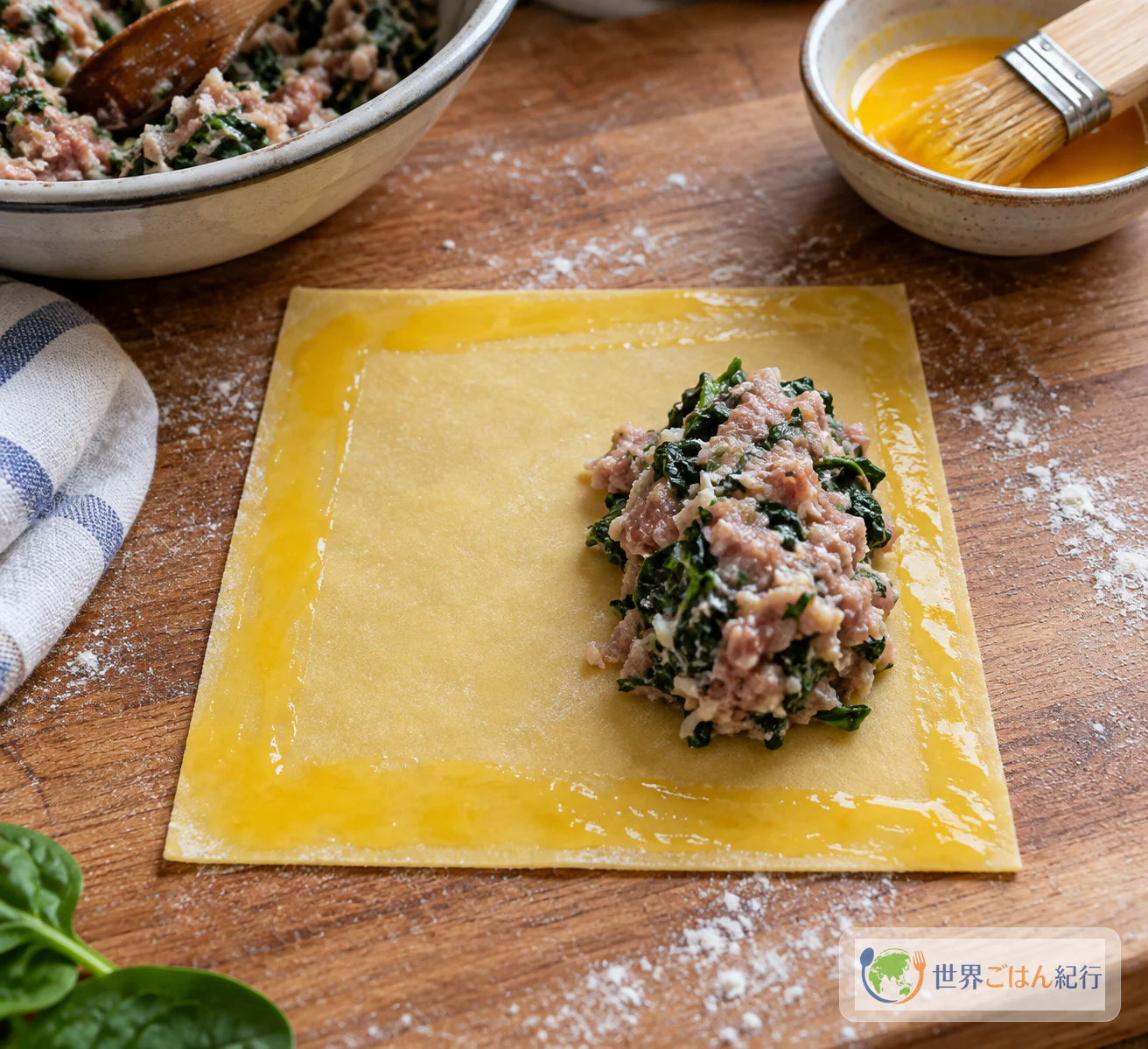
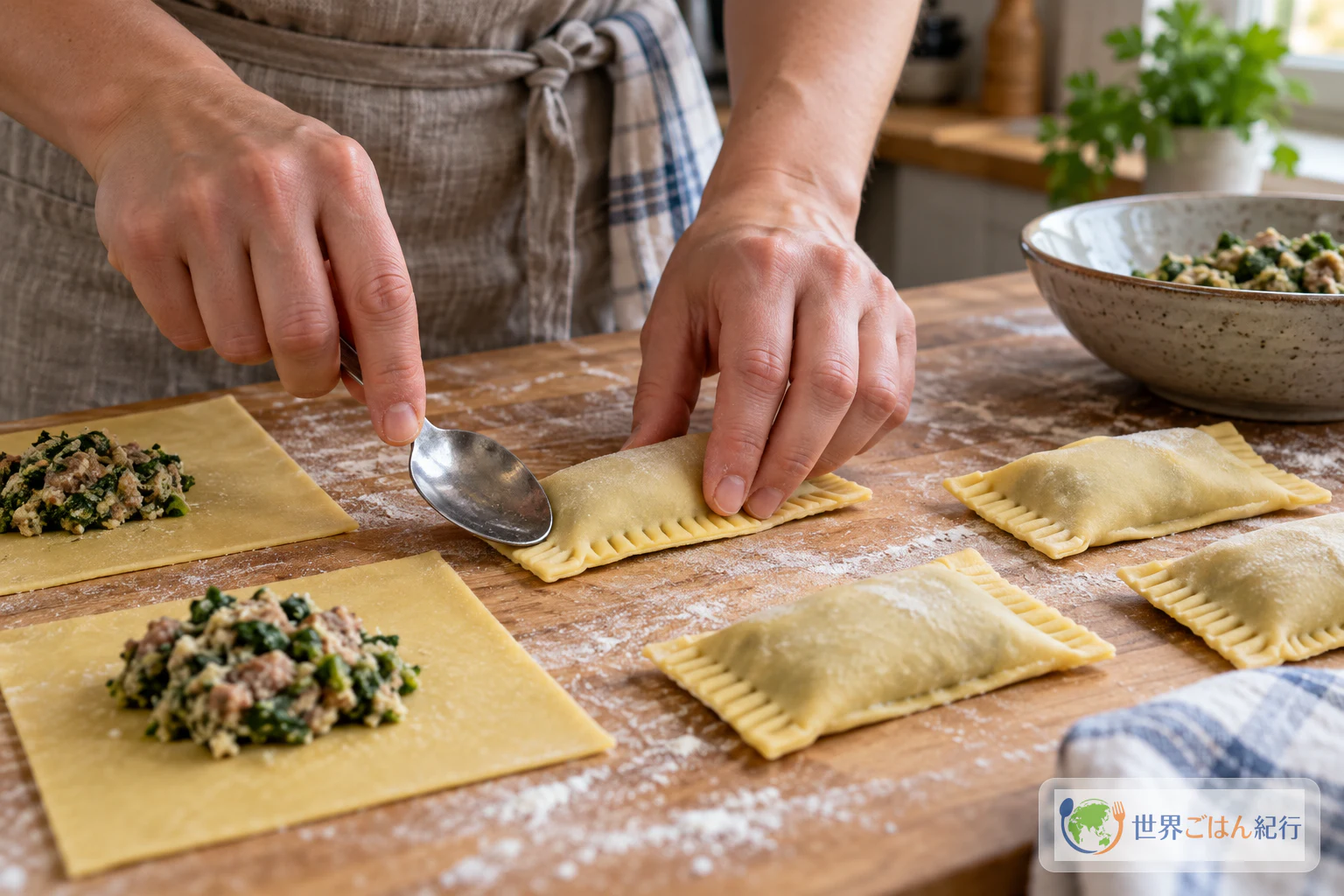
A thin but sturdy egg pasta, a well-sealed seam, and a filling of pork, smoky bacon and spinach with a little nutmeg. Each parcel starts as a dough square of about 7 cm, folded in half into a rectangle.
Steam rises from a bowl of clear broth, and pale pasta parcels sit in it, their folded seams pressed flat. Cut one open and you find a soft filling of pork flecked green with spinach. These are Schwäbische Maultaschen, the filled pasta of Swabia in south-western Germany.
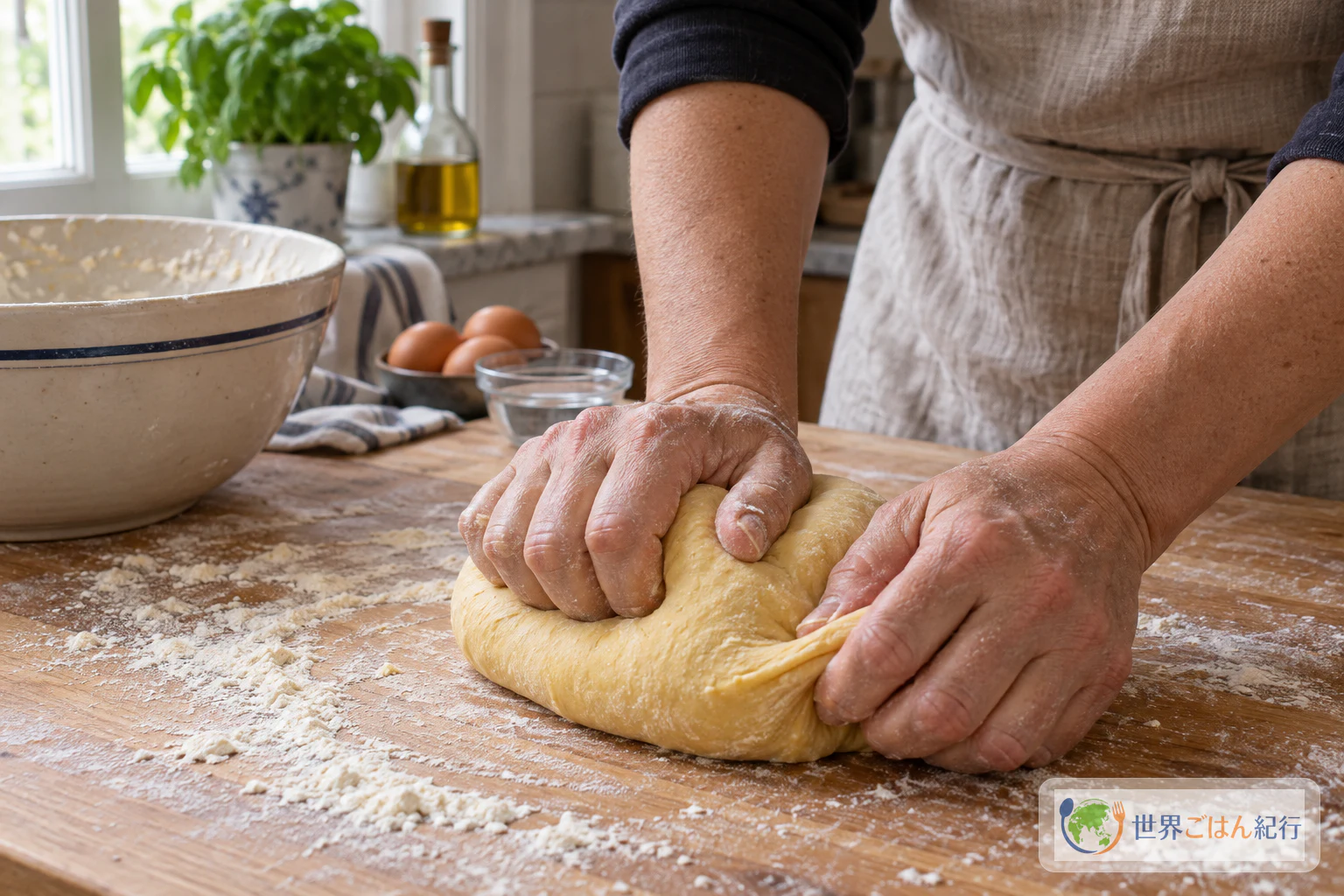
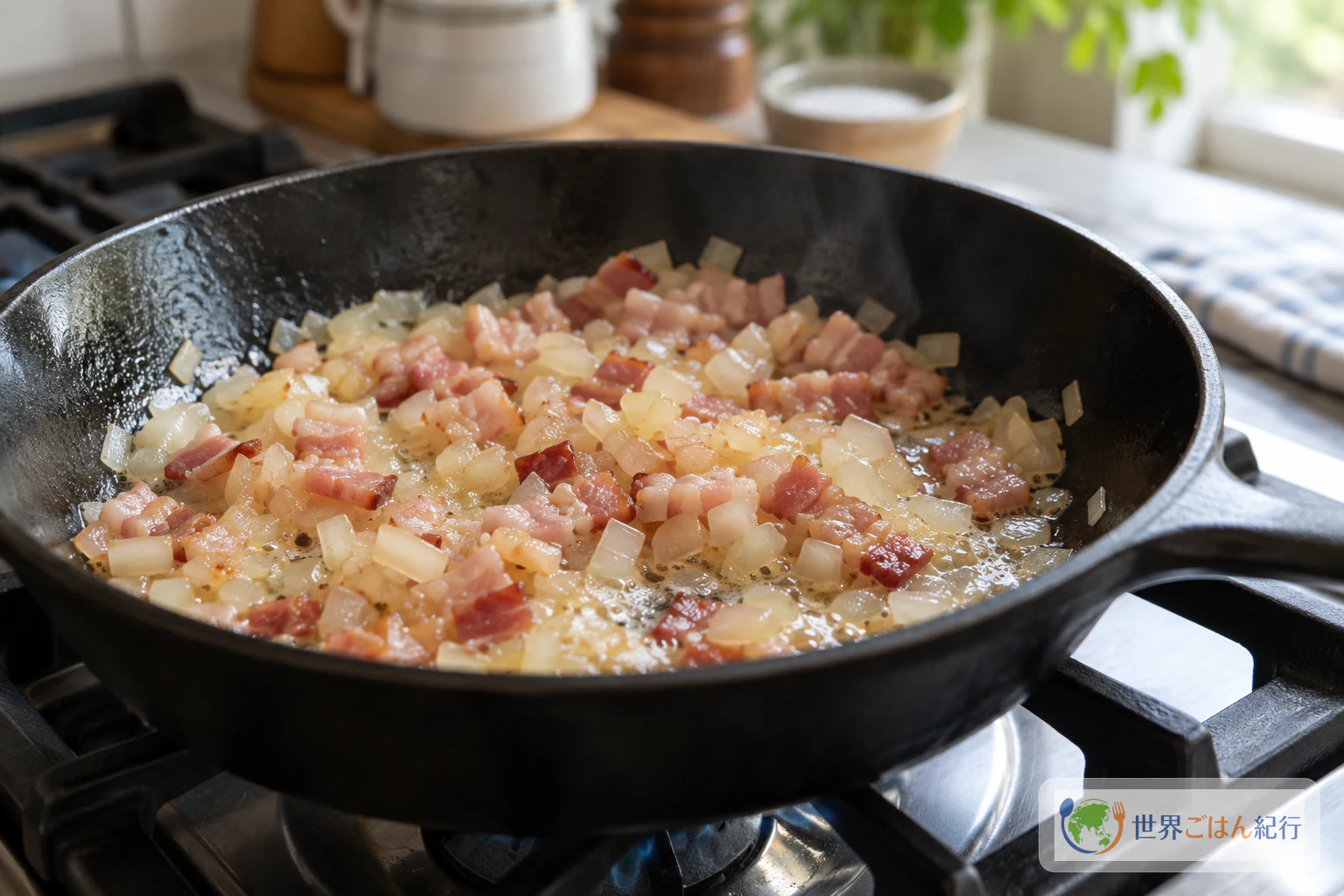
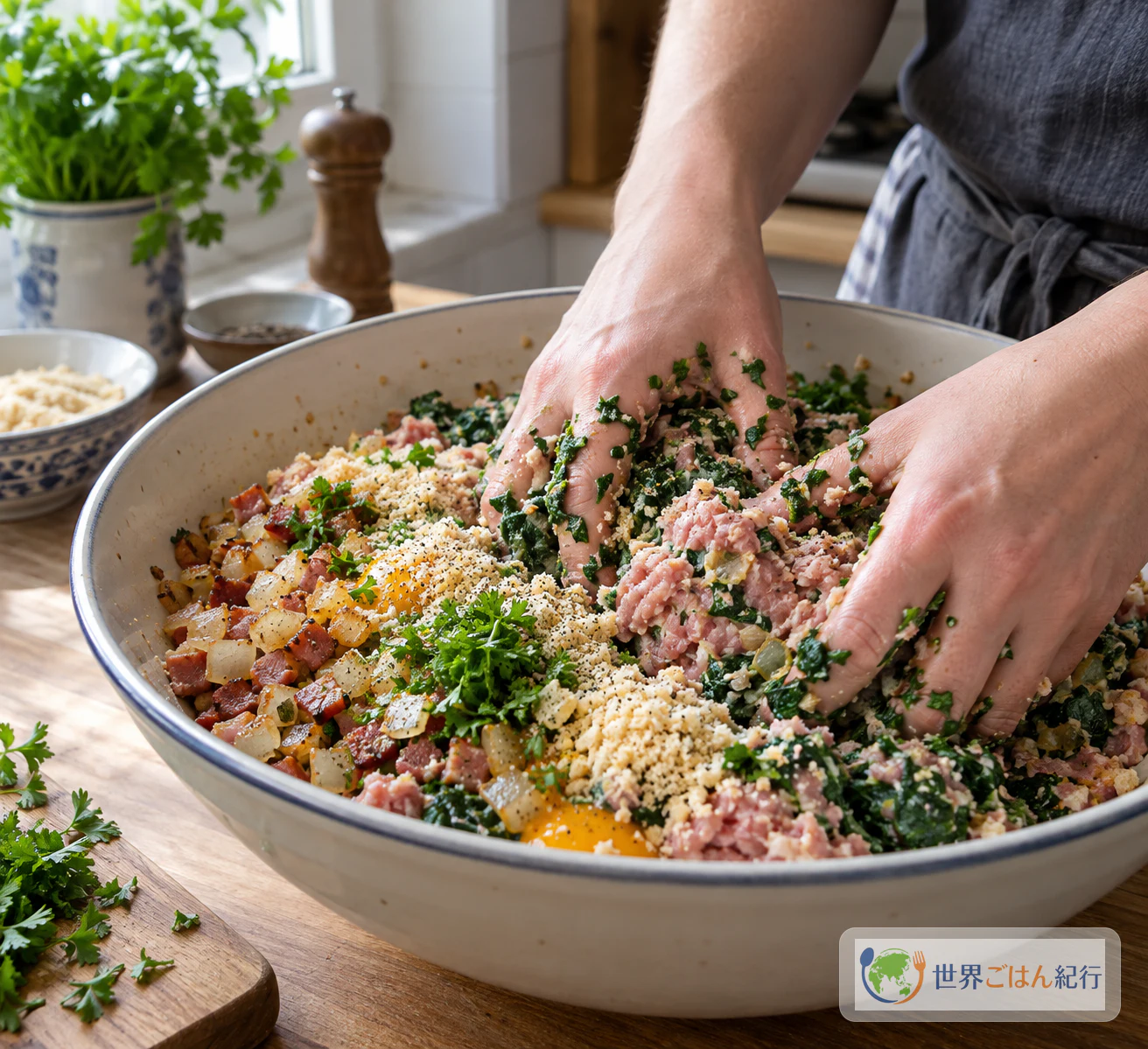
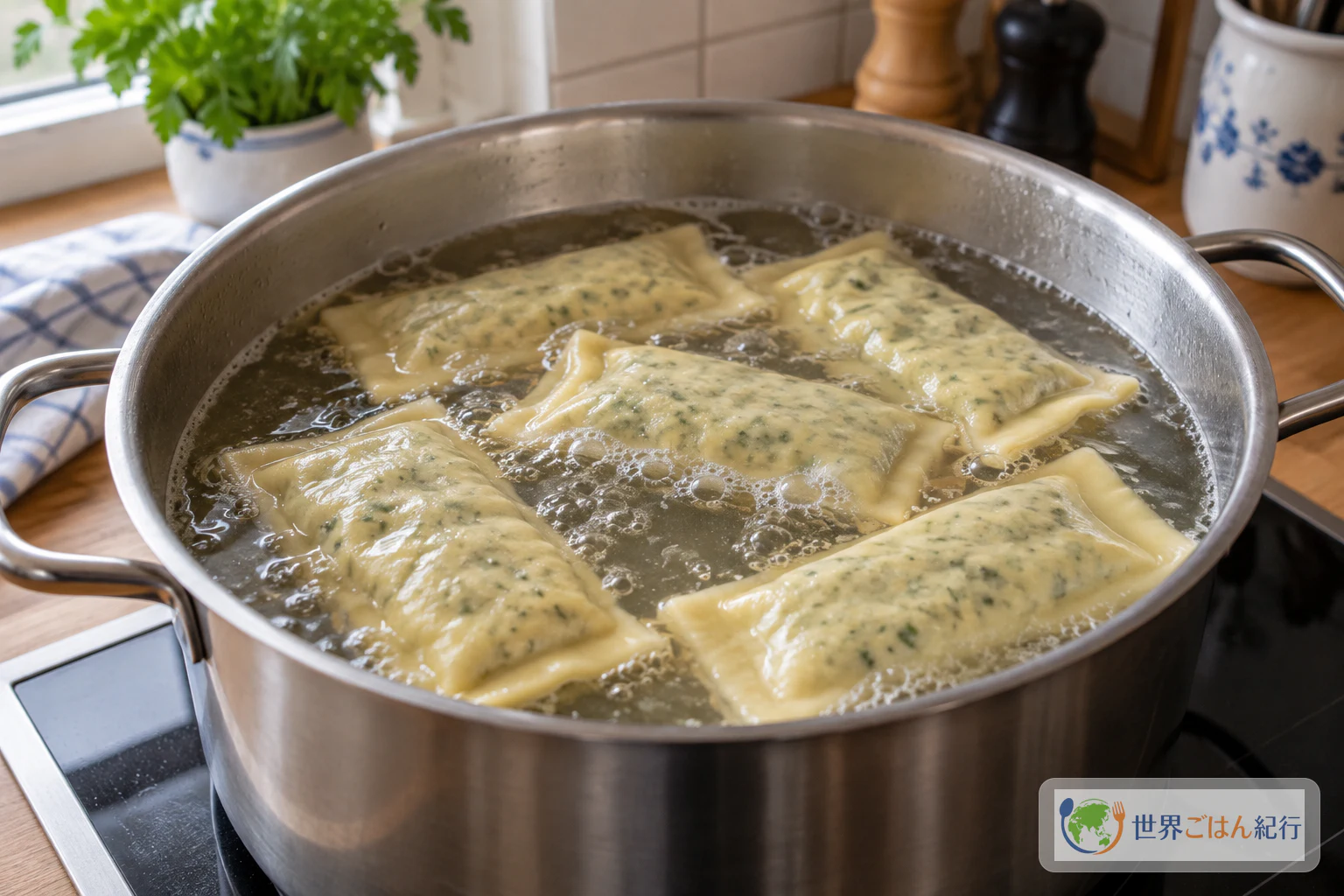
The recipe here follows a single 4-serving recipe published by the Bavarian state's GenussErbe culinary heritage project: a firm dough of flour, eggs, oil and a little water, and a filling of sautéed onion and bacon, ground pork, eggs, spinach, breadcrumbs and parsley, seasoned with salt, pepper and nutmeg. The dough is cut into squares of about 7 cm, filled, folded and boiled in salted water for 12 minutes.
What happens after the pot is just as much part of the dish. Regional sources describe Maultaschen served in broth, browned in a pan with onions after boiling, and sliced and fried with egg the next day. This article serves them in broth first, and covers the other ways in the variations.
If you are cooking your way through German dishes, you can also look at Käsespätzle, Gaisburger Marsch and Hochzeitssuppe.
Monks Hiding Meat in Lent: A Legend, Not a Record
The best-known story about Maultaschen is an origin legend, not established history. Bavaria's GenussErbe describes Maultaschen as a dish of Swabia whose filling is characterized by spinach. It introduces the tale of monks at Maulbronn who hid meat inside pasta during the fasting season as one of the origin stories that are told, rather than as fact. What the same source points to in writing is a reference from 1831 to "Swabian filled noodles."
GenussErbe records the EU registration of "Schwäbische Maultaschen" as a protected geographical indication (PGI, in German g.g.A.) in 2009. The application published in the EU's Official Journal describes the geographical area, the range of ingredients that may be used in the dough and filling, more than one standard for shape and size, and that the parcels are eaten boiled or fried. It also explains that Maultaschen were a traditional food for Maundy Thursday and became a dish eaten all year round. These rules concern the protected product name; they are not a simple test of what a home cook may call a dish made in their own kitchen.
In Swabian homes, the shape is a matter of family habit. The Albstadt tourism office describes how households differ on whether the dough is folded or rolled, and on the mix and size. This recipe uses the folded rectangle from the GenussErbe recipe.
Ingredients for 4 Servings: Dough, Filling and Broth
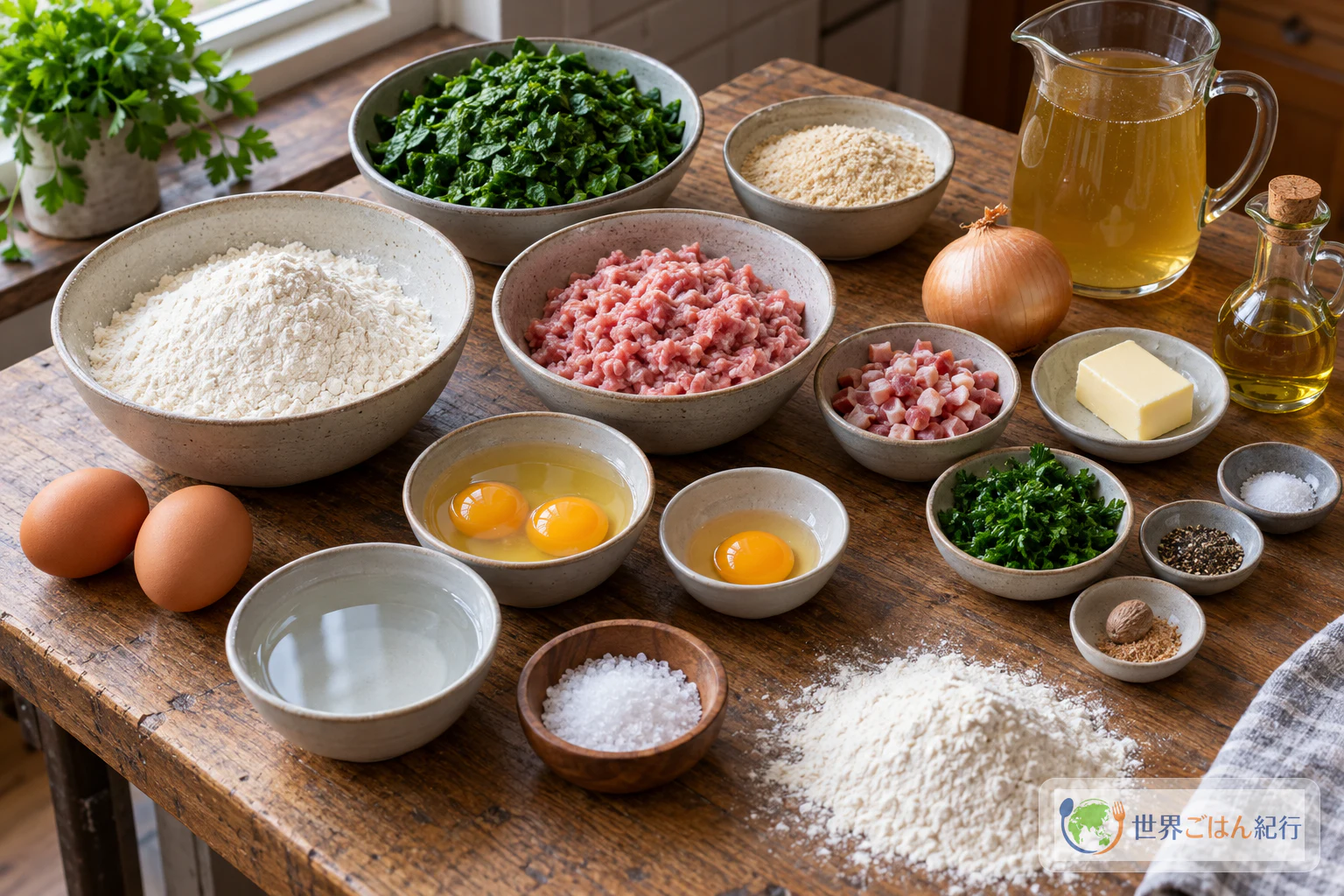
This dish contains wheat, egg, milk (butter) and pork. Check the label of your bacon for additional ingredients and allergens. The filling contains raw meat and raw egg: never taste it before cooking.
Choosing and Substituting Ingredients
Flour: Use a plain flour that kneads into a firm, smooth dough.
Bacon: smoked bacon brings a stronger smoky aroma to the filling. If you use unsmoked pork fat instead, the smokiness will be weaker.
Spinach: This version uses 200 g of raw leaves, washed, drained thoroughly and finely chopped. If you use frozen spinach, thaw it and squeeze out the water, but be aware that the weight and moisture change; it is a different starting point from the version here.
Breadcrumbs: if your dried breadcrumbs are coarse, crush them finer so they disperse evenly through the filling.
Pork: replacing the ground pork with a beef and pork mix, or swapping the spinach for another green, makes a home variation rather than this Swabian-style recipe.
Equipment
- Rolling pin (a pasta machine is optional)
- Knife
- Mixing bowls
- Skillet
- Small brush or spoon for the egg yolk
- Spoon for pressing the edges
- Large, wide pot for boiling
- Slotted spoon
- Separate cutting board and utensils for raw meat
- Food thermometer, to check the center-temperature condition
Method: From Firm Dough to Sealed Rectangles
The recipe fixes the ingredients, the roughly 7 cm square, and 12 minutes in salted water. Kneading time, resting time, dough thickness and heat levels are judged by eye. The separate center-temperature and holding-time condition below must be checked; appearance alone does not establish it.
Troubleshooting: Dry Dough, Open Seams, Wet Filling
| Problem | Likely cause | What to do |
|---|---|---|
| The dough is crumbly or cracks when rolled | Too little water | Add water a little at a time and knead again |
| The seams open | Flour on the edges, too much filling, filling on the edges | Brush off the flour, moisten with yolk, keep the filling away from the edges and press firmly with a spoon |
| The filling is wet and loose | Spinach not drained well | Drain the washed spinach thoroughly before chopping |
| Parcels split in the pot | The water is boiling too hard | Lower the heat to a steady boil and move the parcels gently |
| You're unsure the filling is cooked | Thick parcels or a crowded pot | Check that the center reaches 75°C for at least 1 minute, and keep cooking gently if not |
Keep raw meat and egg away from foods that won't be cooked, and wash boards, knives and bowls after use. Do not eat the filling raw. If you keep cooked Maultaschen, cool them quickly in shallow containers and refrigerate them promptly. When reheating, heat them until they are hot all the way through. Specific storage times and freezing instructions are not given here.
Variations: Broth, Onions, Egg and Other Shapes
| Variation | How it works | Notes |
|---|---|---|
| In broth | Serve the boiled parcels in clear meat or vegetable broth | The serving used in this recipe |
| Browned with onions | After boiling, brown the parcels in a pan with sautéed onions | A serving described in regional sources |
| Next-day egg fry | Slice boiled Maultaschen and fry them with egg | A way of eating them the following day |
| Vegetarian filling | The EU PGI documents allow for vegetable fillings | A separate recipe; simply removing the pork does not make this one vegetarian |
| Rolled instead of folded | Some households roll the dough rather than folding it | The dough-to-filling ratio for squares here may not suit a rolled shape |
Frequently Asked Questions
How many Maultaschen does this make?
The source recipe serves 4, but it does not say how many parcels it makes. The count depends on how thinly you roll the dough and how much filling you place on each square.
Can I fry them instead of serving them in broth?
Yes. Boil them first as in step 8, then brown them in a pan with sautéed onions. Leftovers can also be sliced and fried with egg the next day.
Did Maultaschen really come from the Maulbronn monks?
That story is one of the origin legends that are told about the dish, not an established fact. The written record referred to is a mention of "Swabian filled noodles" from 1831.
Can I change the filling?
You can, but the taste and character change, and it becomes your own variation rather than this Swabian-style recipe. The cited 2009 EU application describes geographical and ingredient conditions for the protected name; this article does not establish the current legal position or what a changed version may be called.
Can I freeze Maultaschen?
Freezing instructions and storage periods are not given here. If you keep cooked parcels, cool them quickly in shallow containers, refrigerate them promptly and reheat them until hot all the way through.
For more dishes from the same country, see German recipes.
Sources
- Bayerisches Staatsministerium für Ernährung, Landwirtschaft, Forsten und Tourismus — GenussErbe, "Rezept Schwäbische Maultaschen." The 4-serving ingredient list, the firm pasta dough, the filling of sautéed onion and bacon with pork, eggs, spinach and breadcrumbs, the roughly 7 cm squares, and boiling in salted water for 12 minutes. https://www.genusserbe.bayern.de/351605/index.php
- Bayerisches Staatsministerium für Ernährung, Landwirtschaft, Forsten und Tourismus — GenussErbe, "Schwäbische Maultaschen." Swabia as the region, spinach in the filling, serving in broth, browned in a pan and fried with egg the next day, the Maulbronn origin story as legend, the 1831 reference to Swabian filled noodles, and the 2009 EU geographical indication registration. https://www.genusserbe.bayern.de/352488/index.php
- Official Journal of the European Union / EUR-Lex, "Publication of an application: Schwäbische Maultaschen / Schwäbische Suppenmaultaschen" (2009). The product description and geographical area, the range of dough and filling ingredients, shape and size standards, eating them boiled or fried, and the shift from a Maundy Thursday dish to a year-round one. https://eur-lex.europa.eu/legal-content/EN/ALL/?uri=uriserv:OJ.C_.2009.041.01.0035.01.ENG
- Albstadt Tourismus, "Maultaschen — Eine schwäbische Glaubensfrage." Household differences between folding and rolling, typical ways of serving, and local legend. https://www.albstadt-tourismus.de/leckeres-von-der-alb/maultaschen
- Ministry of Health, Labour and Welfare (Japan), "家庭でできる食中毒予防の6つのポイント" (Six points for preventing food poisoning at home). Heating the center to 75°C for at least 1 minute, separating utensils, cooling in shallow containers and reheating. https://www.mhlw.go.jp/stf/seisakunitsuite/bunya/kenkou_iryou/shokuhin/syokuchu/01_00006.html