The "airships" loved by a Baltic country
Lithuania, one of the three Baltic states, is known for its amber coast and Baroque old towns, and an extraordinary love of potatoes runs at the root of its food culture. The crystallization of that love is cepelinai (also called didžkukuliai).
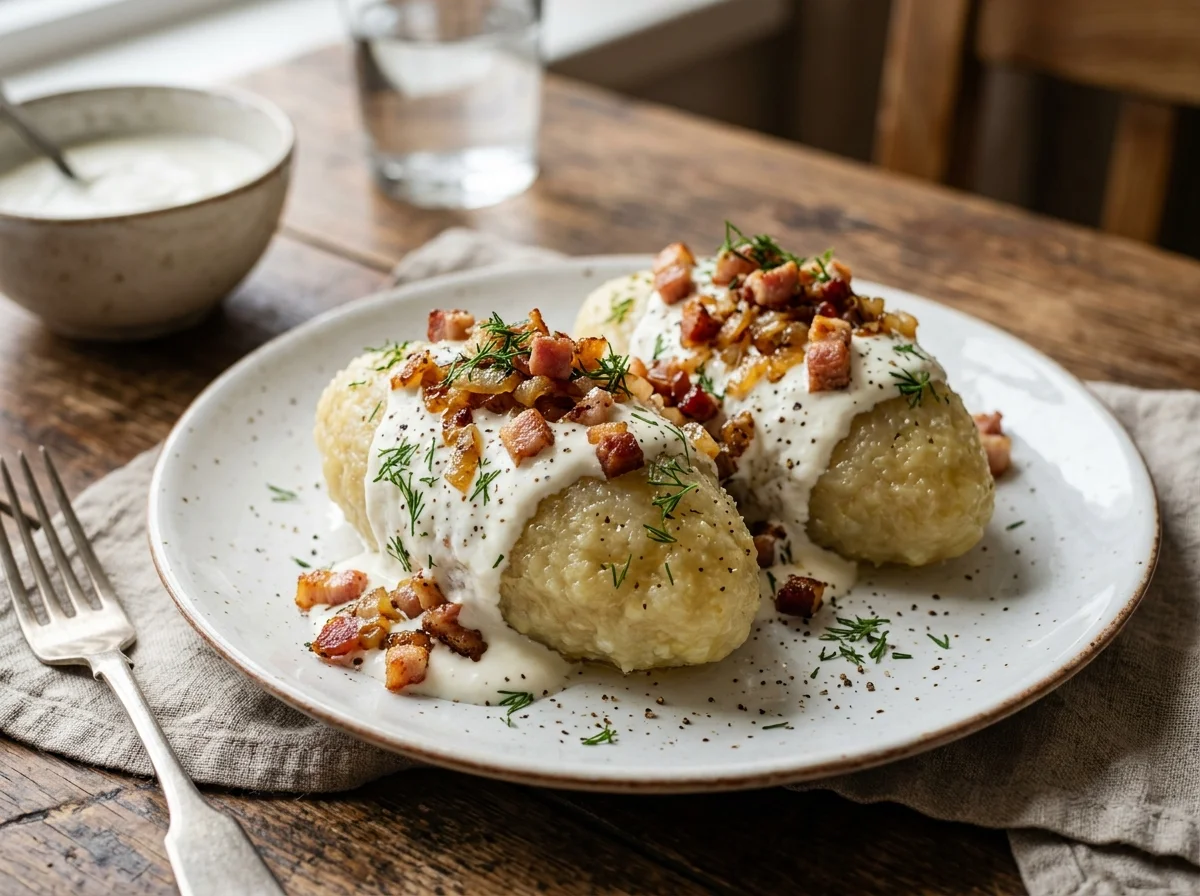
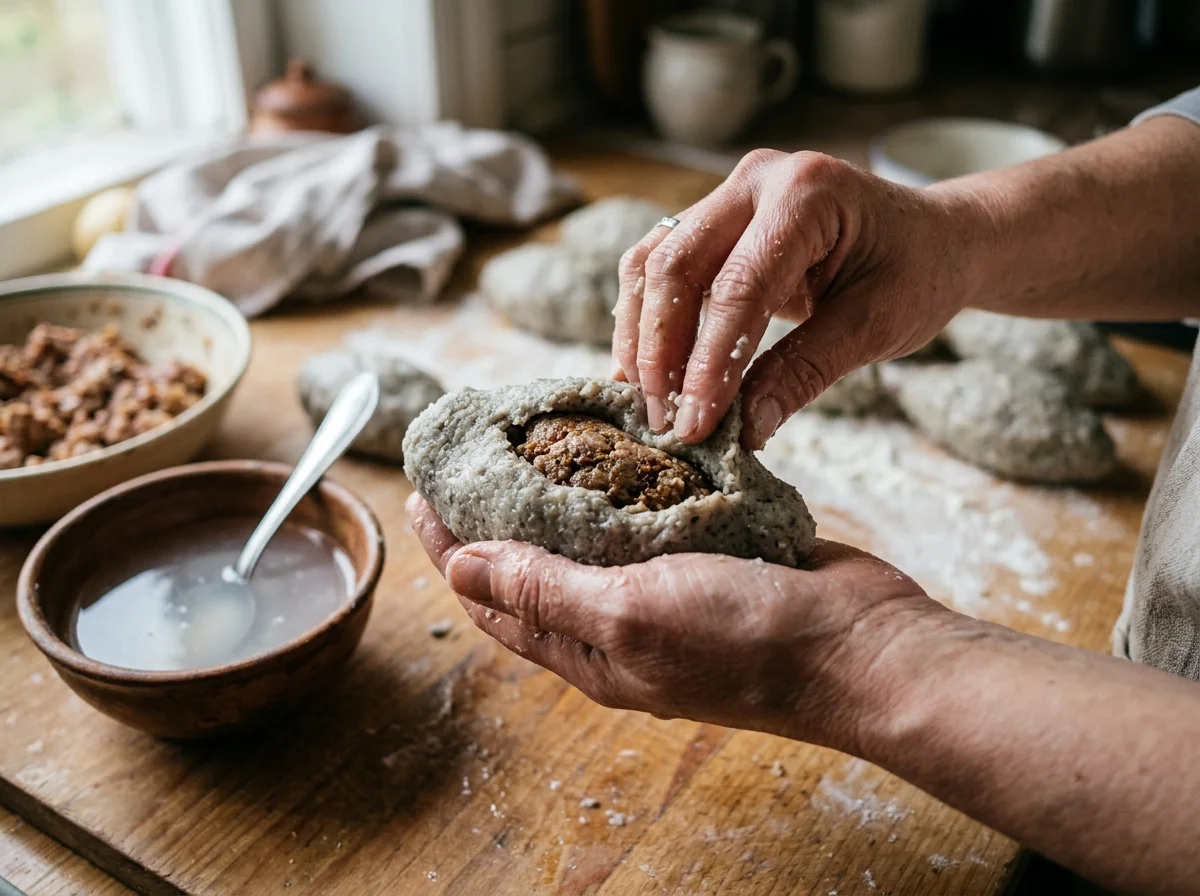
Cepelinai are giant dumplings made from a dough of raw and boiled potato, wrapped around a meat or cheese filling and boiled. One is bigger than a fist and has real heft. The name comes from the German airship, the Zeppelin, which the oval shape resembles.
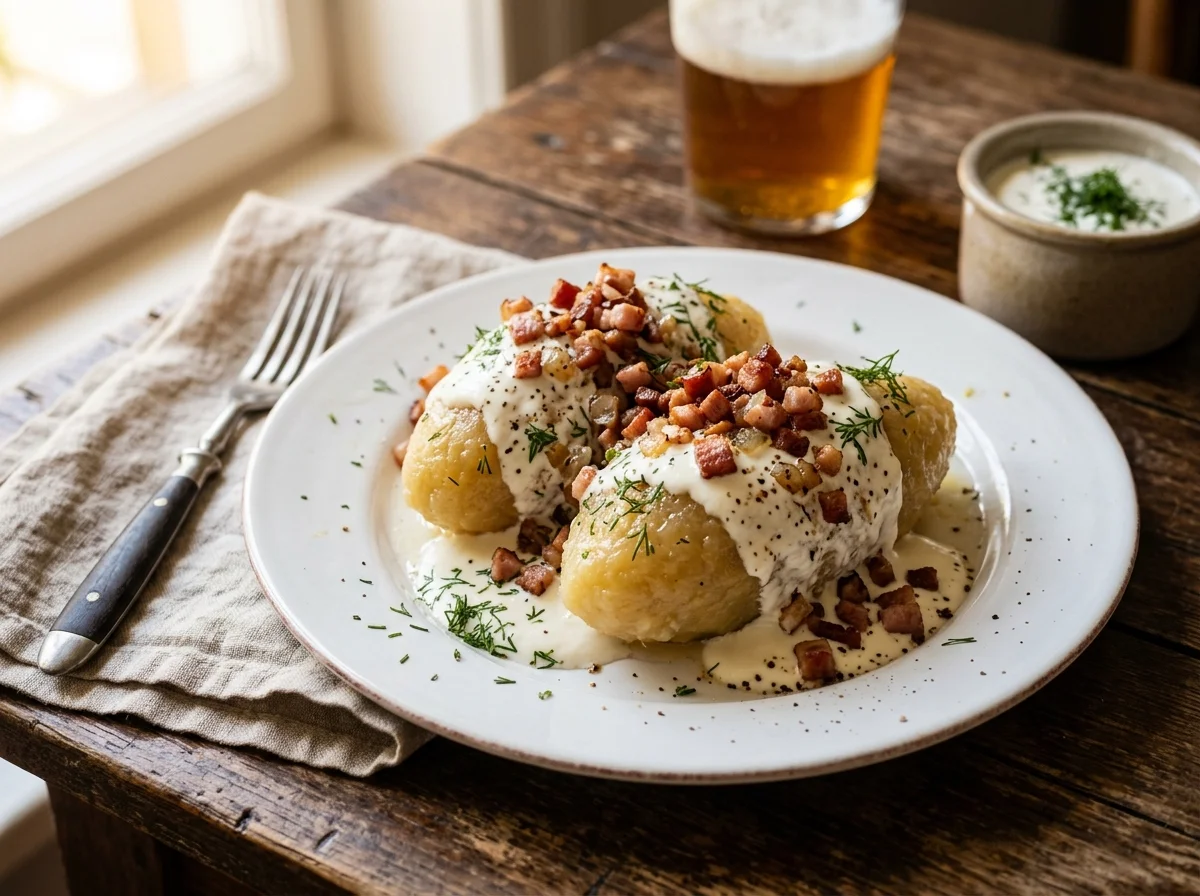
Put a knife in and juices flow from the chewy potato dough. You eat it with a sour cream and crispy bacon sauce over the top. It is the taste of a Lithuanian grandmother and a national soul food. There are many wrapped dishes in the world, such as Polish pierogi, Georgian khinkali and Chinese xiaolongbao, but cepelinai stand apart for their distinctive technique of wrapping in potato dough. Unlike a wheat dough, potato dough has a distinctive chewy spring, and the texture when eaten warm is unlike anything else.
The plural of the word for "zeppelin (airship)" in Lithuanian. The formal name is didžkukuliai ("big dumplings"), but the nickname cepelinai is more common. It is a national dish of Lithuania. Versions with meat, with cottage cheese and with mushrooms are the best known.
There are many wrapped dishes around the world, such as the Polish pierogi (in Japanese) and the Georgian khinkali (in Japanese), but the potato dough of cepelinai has a distinctive texture found nowhere else. In this article we explain carefully how to recreate the local method with ingredients you can get elsewhere.
Ingredients (serves 4, 8 dumplings)
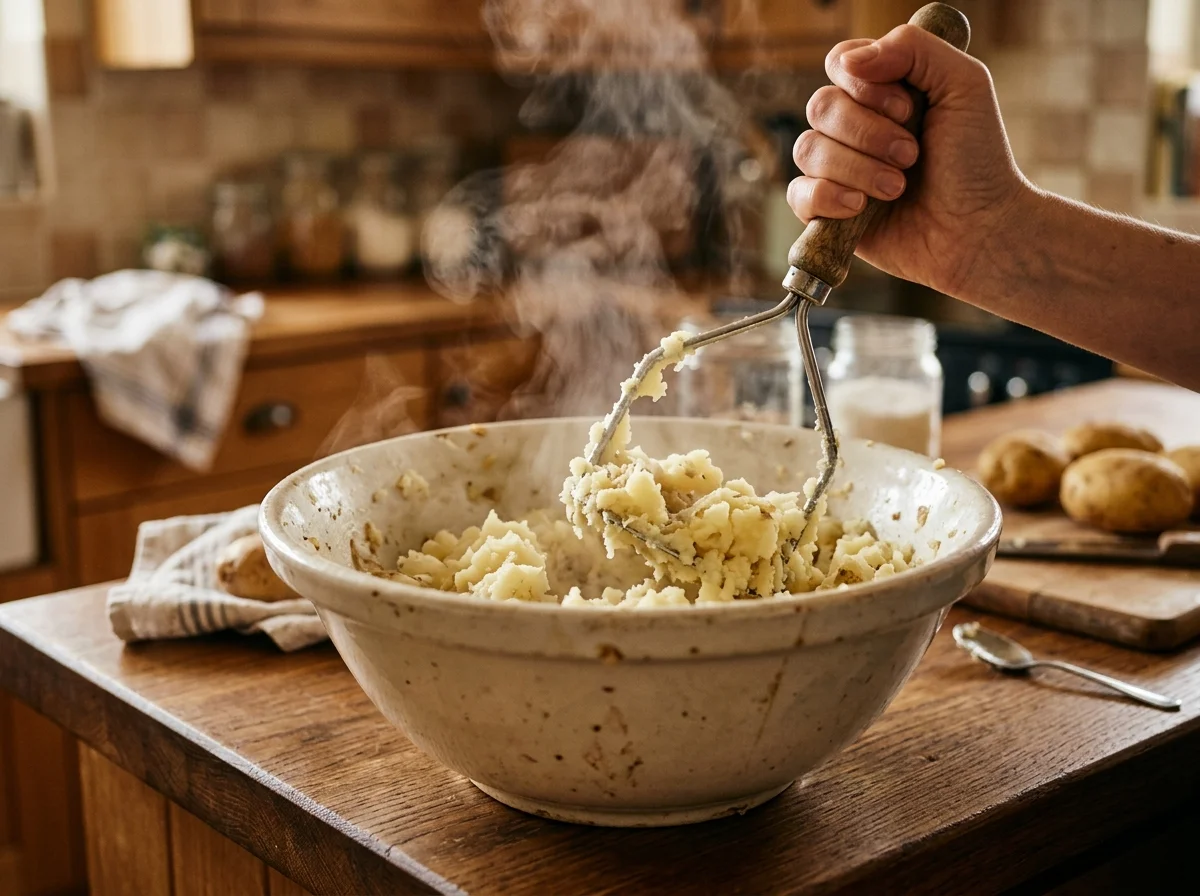
The best potatoes for cepelinai are high-starch varieties. They hold their shape when cooked and give a sticky dough when grated. A potato that is too soft breaks down and the dough loses its shape, so in that case add 1 tbsp more potato starch to firm it up.
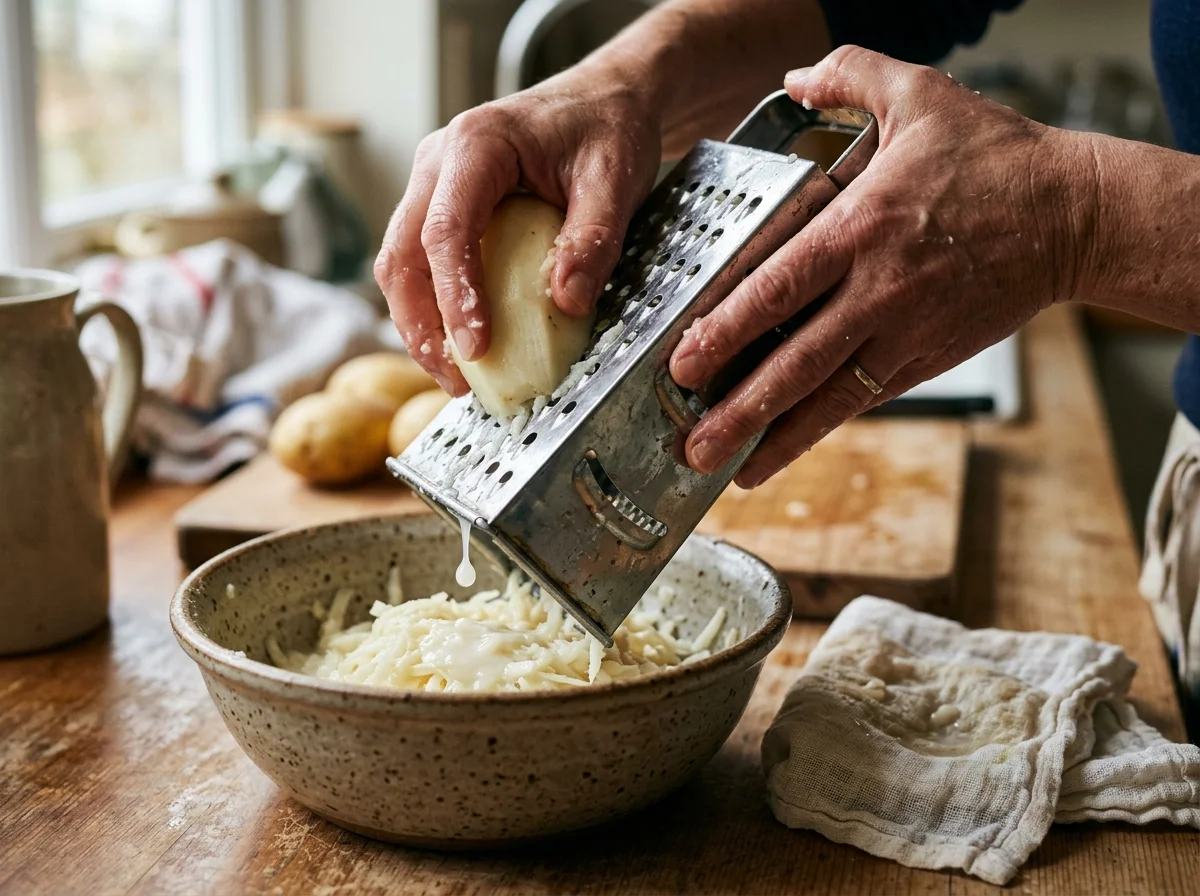
Grated raw potato browns quickly on contact with air. Squeezing out the water right after grating and sprinkling with salt keeps discoloration to a minimum. A few drops of lemon juice are also effective. Discoloration does not affect the taste, but it darkens the look.
A little dill at the end cuts the heaviness of the sour cream sauce. If you cannot get fresh, freeze-dried is enough.
Cooking tips
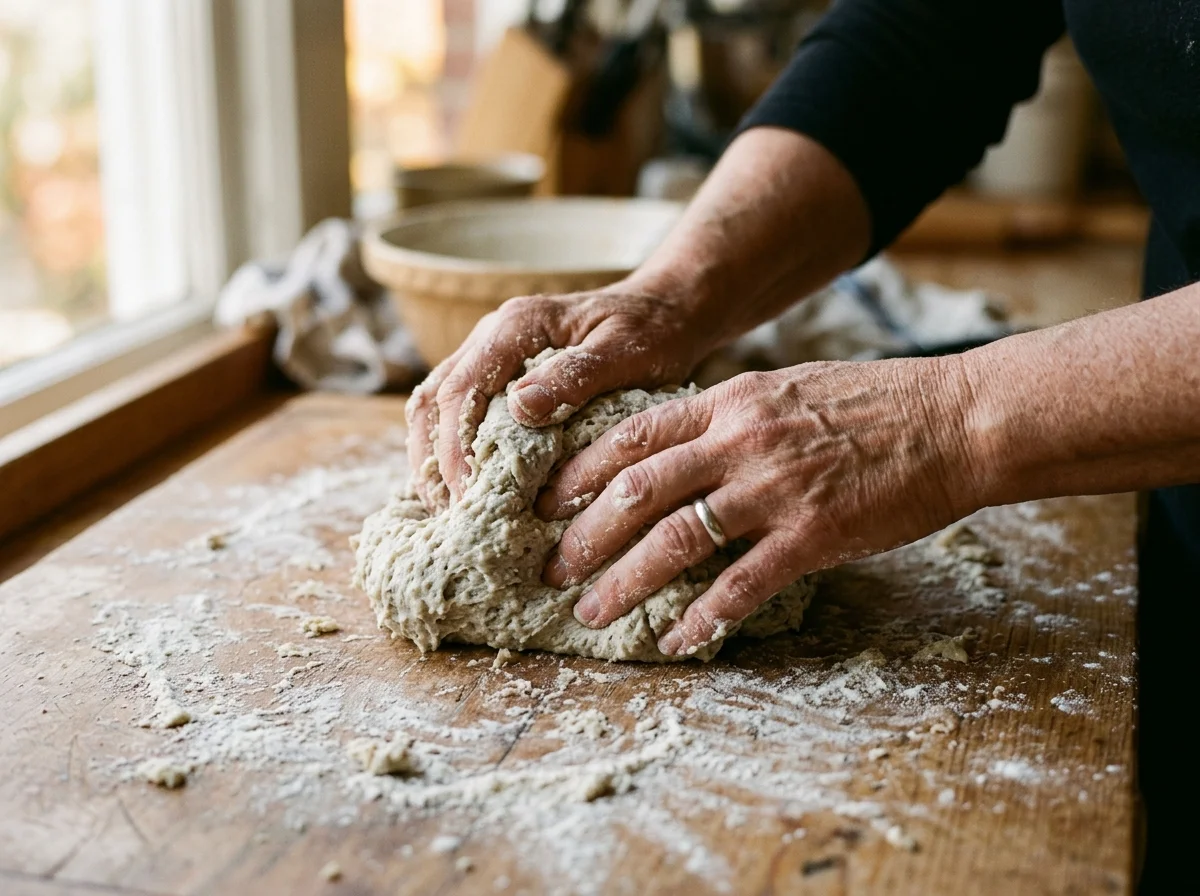
Success with cepelinai depends on how much water you squeeze from the raw potato. Too little and the dough is sticky and cannot be shaped; too much and it is dry and cracks easily. The guide is "no water drips between your fingers when you squeeze." Using a cloth and putting your weight into the squeeze is the Lithuanian way.
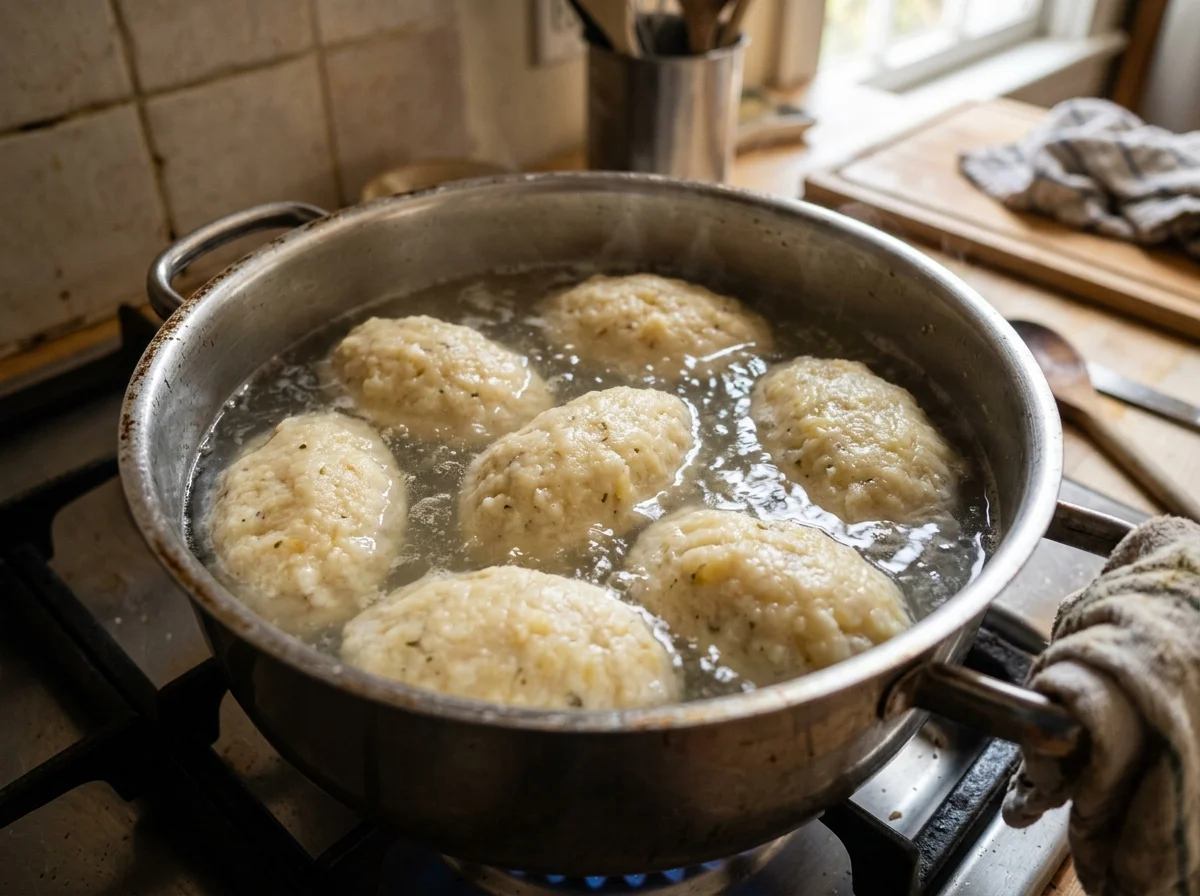
Right after you put the cepelinai in the pot they may stick to the bottom. After 30 seconds, gently scoop under them with a wooden spoon to release them. Once they begin to float it is fine. Choose a large pot and leave room so the cepelinai do not stick to each other.
Adding sour cream straight from the refrigerator to the bacon sauce can make the fat set and separate. Bring it to room temperature 30 minutes ahead and the sauce comes out smooth. The Hungarian goulash also uses sour cream, and temperature control is a shared point.
If dough is left over, roll it thin and cook it in a skillet as potato pancakes. In Lithuania, eating such pancakes for breakfast the day after cepelinai is a classic. Serve with butter and sour cream.
Variations
With cottage cheese (varškė)
Instead of the meat filling, wrap a filling of 200 g cottage cheese, 1 egg and 1 tbsp sugar mixed together. In Lithuania this is made as cepelinai with varškė (curd cheese), and is as popular as the meat version. With the sour cream over a sweet filling it can be eaten like a snack. It is an Eastern European sweet taste related to the cheese filling of the Romanian plăcintă (in Japanese).
With mushrooms
Instead of the meat filling, mince 150 g shimeji (or similar) and 100 g button mushrooms, sauté in butter and season with salt and pepper for the filling. In autumn in Lithuania mushroom picking is a national hobby, and cepelinai made with porcini and chanterelles from the forest are the greatest luxury.
Mini cepelinai
Made at half the usual size and served as an appetizer or snack. It is a popular presentation in modern restaurants. Mini size takes less shaping and boiling time and is recommended for beginners. Skewered like pintxos, they can also be a party dish.
Pan-fried cepelinai
A remake in which boiled cepelinai are fried in a skillet the next day. Fry all sides in butter over medium heat for 3 minutes each to give a crispy browned surface. Chewy inside and crisp outside, with a double texture and a flavor quite different from freshly boiled. It is the same idea as the knedlíky served with the Czech svíčková (in Japanese), which are fried the next day.
Ratatouille sauce version
A modern variation that tops the cepelinai with tomato sauce or ratatouille instead of the sour cream sauce. It gives a lighter result than the heavy sour cream sauce and can be enjoyed like Italian gnocchi.
Background of the dish
Why the name
The name cepelinai comes from the rigid airship invented by Count Ferdinand von Zeppelin of Germany, whose first airship flew in 1900. In the early 20th century the Zeppelin airship was the talk of Europe, and in Lithuania too its oval form fired people's imagination. The formal name "didžkukuliai" is long, which is thought to be why the catchy "cepelinai" spread.
The Polish-Lithuanian roots
The Polish-Lithuanian Commonwealth was one of the largest countries in Europe. In the era of that union, the food cultures of Lithuania and Poland crossed deeply. Polish pierogi (in Japanese) and cepelinai are something like "cousins," sharing the technique of wrapping a filling in a dough of flour or potato.
However, there is a clear difference: pierogi use a wheat dough and are then fried in butter after boiling, while cepelinai use raw and boiled potato and are finished by boiling alone.
Christmas Eve, Christmas and the festive calendar
At Lithuanian Christmas Eve (Kūčios), 12 dishes are traditionally laid out. Cepelinai are not among these 12 dishes. Christmas Eve is a meatless tradition, and a special version with a mushroom or cottage cheese filling may be served.
Gira, the best partner for cepelinai
A drink that has to be mentioned with cepelinai is gira. It is a lightly sparkling drink made by fermenting rye bread, similar to Russian kvass. The faint sourness and sweetness from the yeast in the bread refreshingly balances the heavy taste of cepelinai.
Nutrition (per serving, 2 dumplings, from a recipe for 4)
Cepelinai are an energy food that combines the carbohydrate of the potatoes and the protein of the meat filling, made to see people through Lithuania's harsh winters.
| Nutrient | Amount |
|---|---|
| Calories | 580kcal |
| Protein | 28g |
| Fat | 26g |
| Carbohydrate | 62g |
| Fiber | 5g |
| Sodium | 720mg |
If the saltiness of the bacon bothers you, reduce its amount and increase the proportion of sour cream.
Dishes to make alongside
- How to make carbonnade - Uses similar ingredients and aromas from the same region.
- How to make waterzooi (in Japanese) - Uses similar ingredients and aromas from the same region.
- How to make pasticada (in Japanese) - Uses similar ingredients and aromas from the same region.
Frequently asked questions
Questions we often hear from people making cepelinai for the first time, from handling the dough to storage.
Q1. My cepelinai fall apart while boiling
This is the most common failure. There are three remedies. First, squeeze the raw potato's water out thoroughly. Second, always return the recovered starch to the dough. Third, keep a gentle simmer and do not let it boil hard. If you keep these three, collapse can be prevented. For the first time, practicing with the mini size (half the size) is also recommended.
Q2. Is it all right if the raw potato discolors?
Yes. Discoloration (browning) is a phenomenon in which the enzyme polyphenol oxidase in potatoes reacts with oxygen in the air. It has no effect on taste or safety. If it bothers you, a few drops of lemon juice right after grating suppress the oxidation. Boiling deactivates the enzyme with heat, so the discoloration becomes less noticeable. In Lithuanian homes it is normal not to worry about a little discoloration.
Q3. Can I freeze them?
The best way is to arrange shaped raw cepelinai on a tray and freeze them quickly, then transfer them to a zip-top bag once frozen. They keep for 2 months in the freezer. When boiling, do not thaw; put them into the pot frozen. Add 5 minutes to the usual boiling time. In Lithuanian homes it is common to make a lot and freeze it.
Q4. Can I put cheese in instead of meat?
Of course. Wrap a filling of 200 g cottage cheese, 1 egg, 1 tbsp sugar and a pinch of salt. For a non-sweet version, leave out the sugar and add dill. Like the cheese version of the Bosnian burek (in Japanese), cheese-filled wrapped dishes are a standard in Eastern Europe.
Q5. What drink goes with cepelinai?
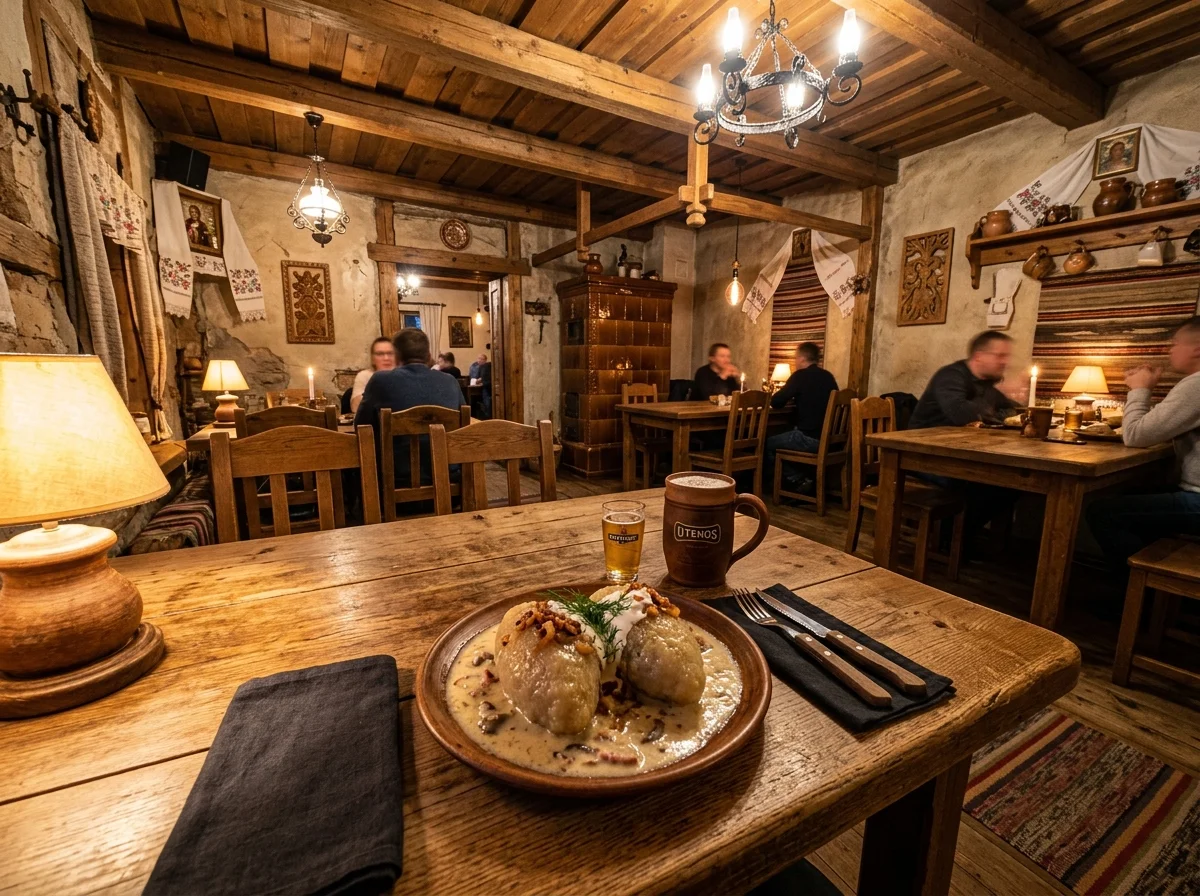
In Lithuania beer is the best partner. Local beers such as Švyturys Extra, Utenos and Kalnapilis are standard, and the crisp taste of a lager washes down the heavy texture of cepelinai. For a non-alcoholic drink, gira (the Lithuanian bread-fermented drink) is the traditional pairing. The gentle sourness and light fizz from the yeast of rye bread offset the heaviness of the potato. The crisp acidity of a dry Riesling also pairs superbly with the sour cream sauce.
Related European wrapped dishes
If cepelinai interest you, do try other European "wrapped dishes" too. The pairing of dough and filling is a mirror of a culture.
- Pierogi (in Japanese): The Polish "cousin." A filling wrapped in a wheat dough, boiled and then fried
- Khinkali (in Japanese): Georgian meat dumplings. A juicy wrapped dish filled with soup
- Burek (in Japanese): Bosnian filo-wrapped baked pastry. Filled with cheese or meat
- Manti: Uzbek steamed dumplings. A representative of Central Asia's wrapping culture