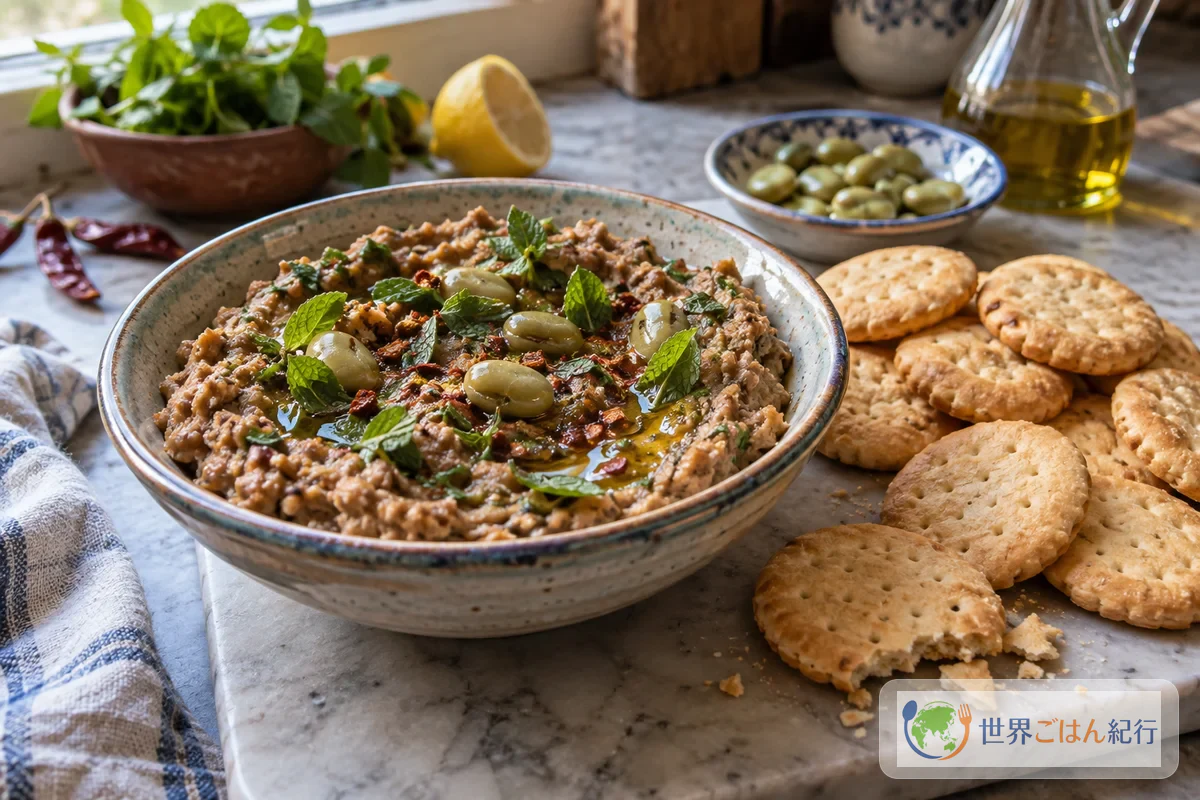
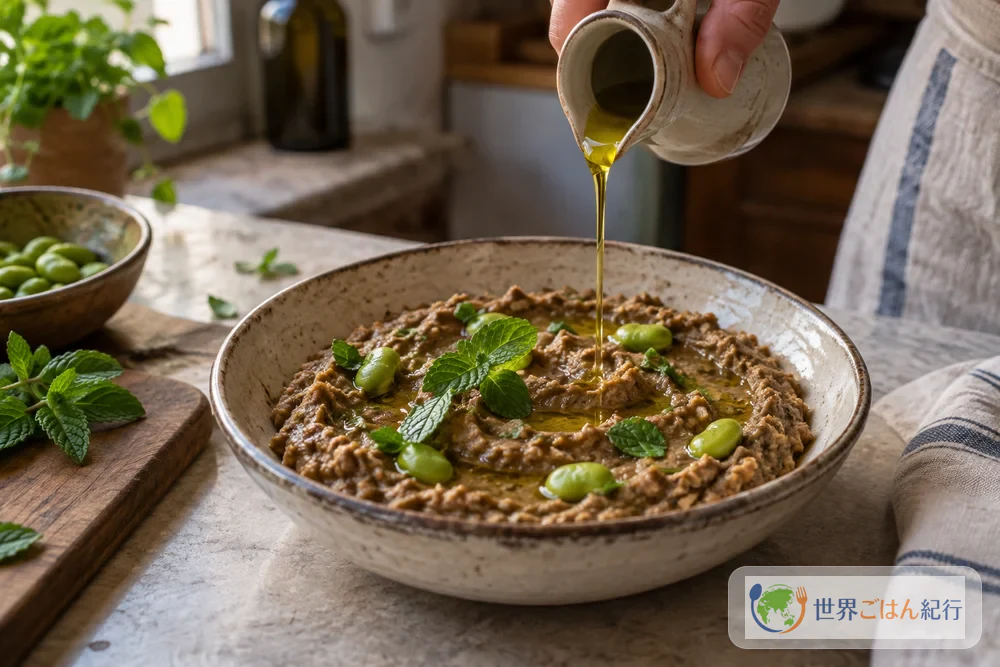
On a morning in a Maltese village, a small van rolls slowly into a narrow cobbled street. In the back is a pot of warm brown paste. People come out of the houses, have it weighed out by the gram, and take it home in a bowl. It is a broad bean paste scented with garlic, chile and herbs: bigilla, a snack the Maltese spread on bread and crackers.
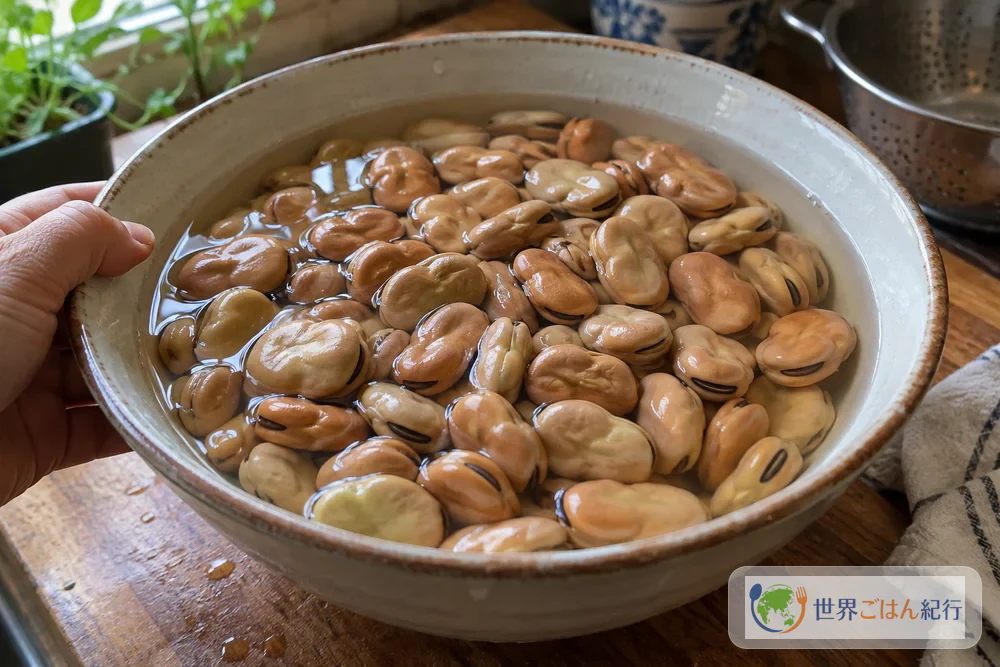
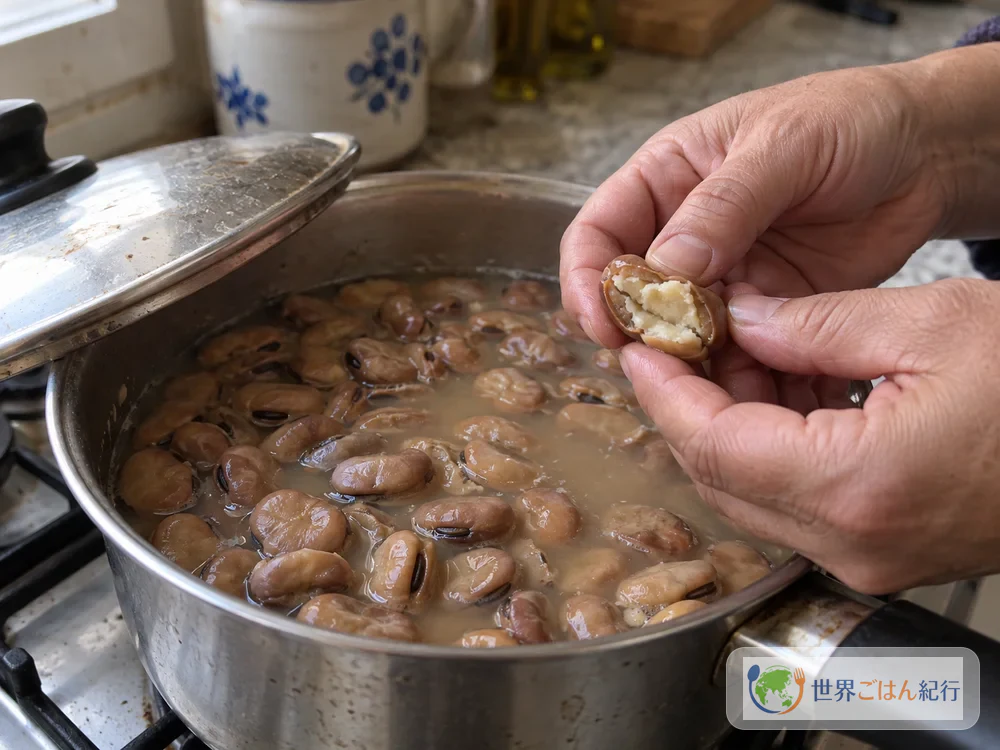
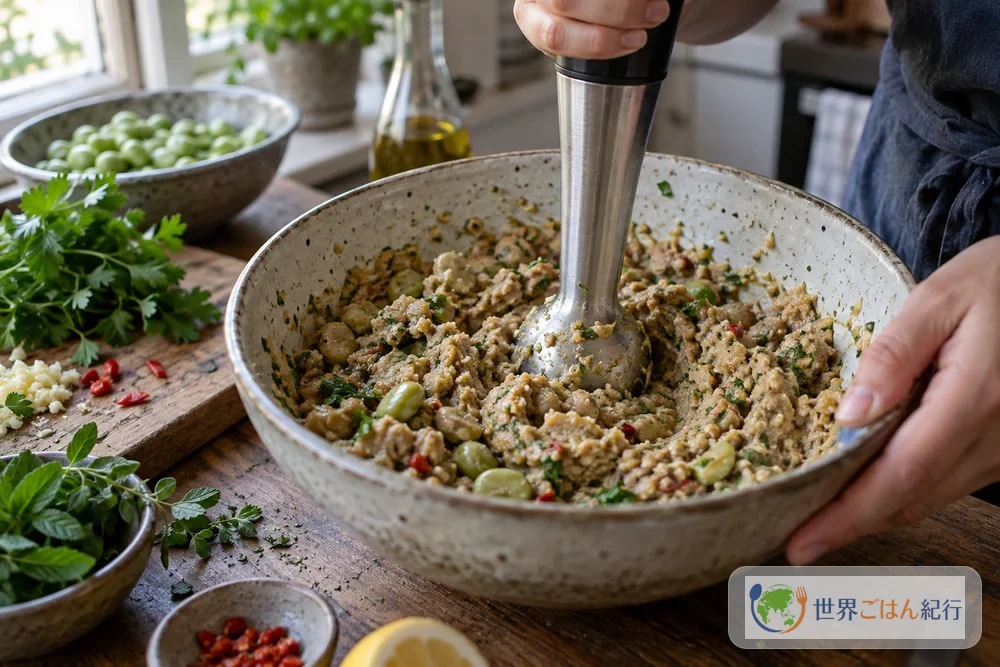
The ingredients are dried beans, garlic, olive oil, herbs and chile. All are plain things that keep well, but it is the Maltese way not to skimp on the garlic and to season generously with chile and salt. What to remember when making it elsewhere is to soak the beans overnight in water, then cook them until they crush under a finger. And when you mash, do not make it perfectly smooth; leave a little texture. These two things give you a hearty, country-style dip.
The van that sells warm bigilla from village to village
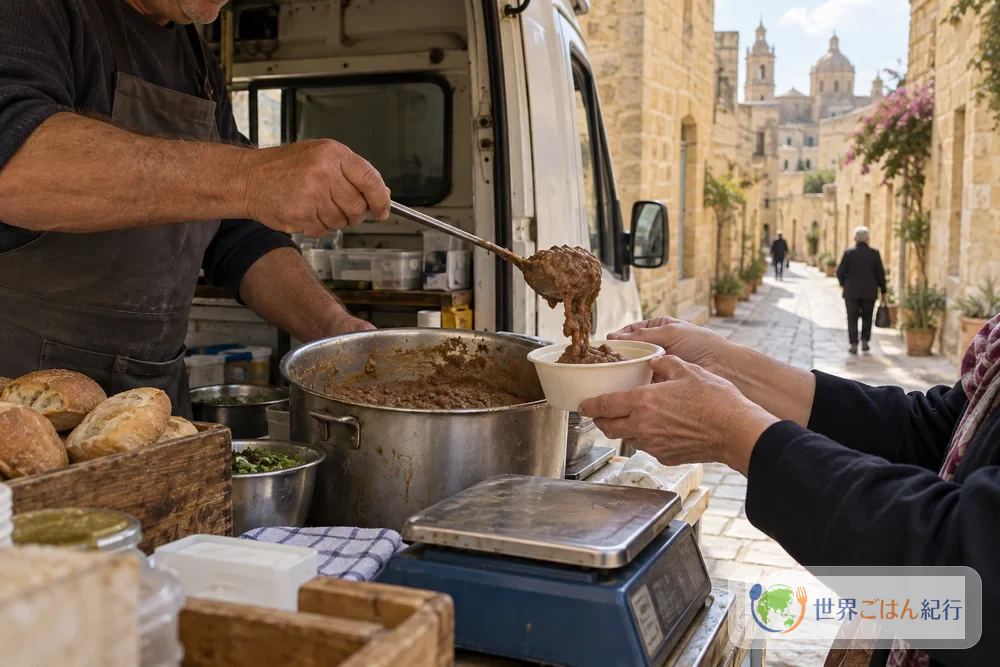
Bigilla is a bean paste that has long been loved in Malta. A Maltese Pantry, a website on Maltese food culture, introduces Peter Sacco, who was born and raised in Qormi, a town near the capital, and has long sold bigilla door to door. At 12 he began selling from a cart his father made, and now, more than 30 years later, he drives a van and covers about a dozen villages, depending on the day of the week. The bigilla is made fresh each morning and sold warm, by weight. Sacco says that he and his brother are now the only two people left who go door to door selling bigilla.
In Maltese streets, peddlers selling food from carts pulled by donkeys or horses were once commonplace. According to the Maltese local information site Guide Me Malta, the carts gave way in time to vans and trucks, and street peddling itself is now rarely seen. A life in which warm bean paste arrives at your front door is gradually becoming a thing of the past in Malta too.
The traditional bean used for bigilla is called ful ta' Ġirba in Maltese, "the beans of Djerba." Djerba is the name of an island off Tunisia. It resembles a broad bean but is smaller, with a dark, hard skin. A Maltese Pantry explains that bigilla originated in Egypt and came to Malta through Arab culture.
Egypt has ful medames, where broad beans are cooked, mashed and eaten with olive oil, garlic and lemon. Malta, floating in the middle of the Mediterranean between North Africa and Sicily, still carries the influence of the Arab world in its language and its food. Bigilla is a dish within that current. It is eaten in many ways: on bread, on galletti (hard crackers baked in Malta with just water and flour), stuffed into artichokes. In bars it is also a snack to go with cold beer.
Ingredients (serves 4)
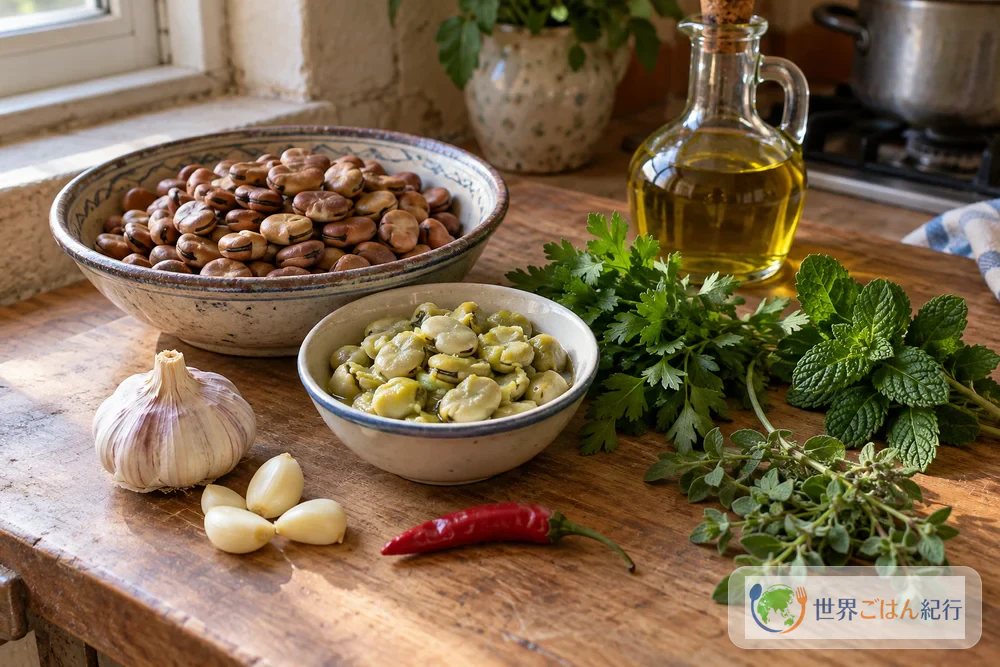
The proportions follow a recipe from the British site Great British Chefs (by Karen Burns-Booth). The small Maltese beans are hard to find elsewhere, so, as in that recipe, we use dried broad beans.
Dried broad beans can be found at specialty bean shops, import food stores and online. Skin-on beans take longer to cook because the skin is tough, and skinned ones become soft enough to fall apart in a short time. If you cannot get fresh marjoram, dried is fine. A stick blender is handy for mixing the paste, but without one a potato masher or pestle gives a coarse mash that is still very good.
A whole head of garlic looks like a lot, but it is added raw after the beans are cooked, so it smells quite strong. If the sharpness of garlic bothers you, cook half with the beans before adding it, and the edge of the garlic softens and sweetness comes out. The Maltese sellers say the key to the flavor is not holding back on garlic, chile or salt.
How to make bigilla
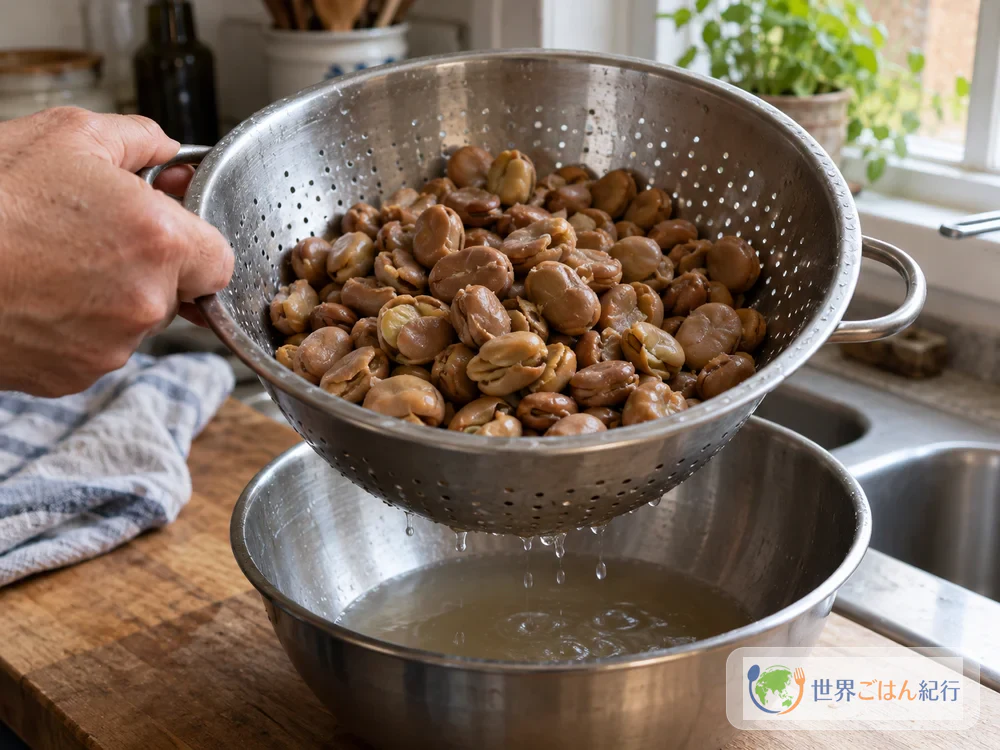
The beans soak overnight (about 12 hours), and cooking takes from 20 minutes to about 1 hour 30 minutes depending on the kind of bean. Mashing and mixing is done in about 10 minutes.
People with a constitution called G6PD deficiency can suffer hemolysis, the breaking of red blood cells, when they eat broad beans. The Singapore Food Agency (SFA) explains that the responsible compounds are relatively heat stable and are not removed by cooking. Anyone who knows they have this condition, or who has been told by a doctor to avoid broad beans, should not eat this.
If you run the stick blender for a long time, the beans turn sticky like paste. Stopping every few seconds to see how it is mixing is the surest way to get a texture with some beans remaining.
Skin-on and skinned beans
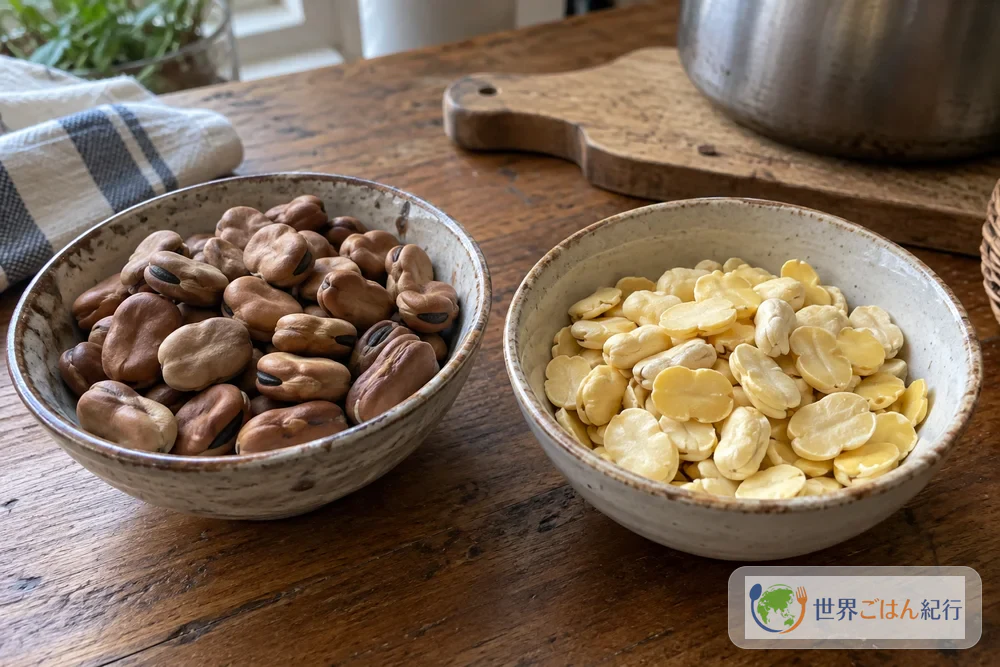
Dried broad beans come either with the brown skin on or with the skin removed so that only the yellow inside remains. Skin-on beans take longer to cook, but mashed with the skin the color is deeper and gives a brown bigilla like the one made with small Maltese beans. Some skin fiber remains, giving a characteristic rustic, slightly rough texture.
Skinned beans become soft enough to fall apart in 20–30 minutes, and mashed they make a smooth, pale yellow-green paste. There is also a way, like the recipe from the Australian broadcaster SBS, of simmering skinned beans in chicken stock for 20 minutes and finishing with lemon juice and olive oil. Which bean you choose changes both color and texture, so choose skin-on if you want a Maltese look and skinned if you want to be quick.
A Maltese Pantry introduces bigilla as tasty not only warm but also cold, and says it can be used as a stuffing for artichokes.
On galletti or bread
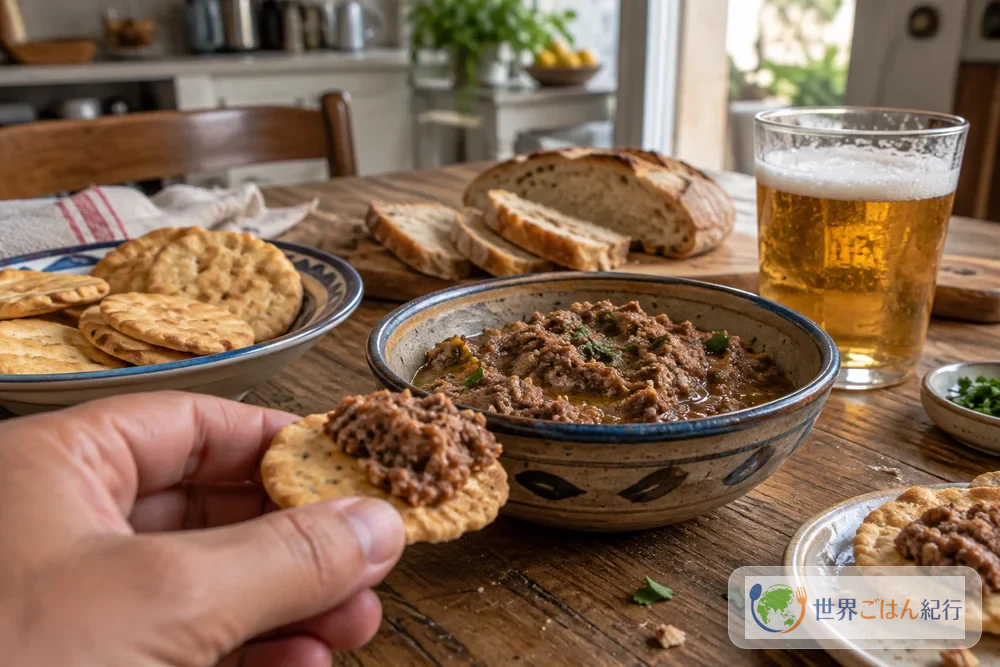
In Malta, bigilla is spread on bread or scooped up with hard crackers called galletti. Galletti are crackers of plain flavor made with water and flour, and they go well with the salty paste. A close texture is hard-baked crackers with little salt, or baguette sliced thin and lightly toasted. While warm it has a soft aroma, and as it cools the sharpness of the garlic comes out clearly.
On the Maltese table, bigilla often appears as a snack or starter alongside olives, cheese and other small dishes. If serving it at beer time, I recommend making the chile and garlic a little stronger. Another Maltese dish known as a taste of the Maltese home is stuffat tal-fenek, rabbit stewed in wine and tomato.
Frequently asked questions
Can I make it only with fresh broad beans?
You can, but the flavor and texture become something else. Fresh broad beans are juicy with a strong green aroma, and they do not give the rich taste of dried beans. Think of it as a substitute for when you cannot get dried broad beans.
The beans stay hard no matter how long I cook them.
Old beans may not soften even with long cooking. Keep adding hot water so it does not run dry and cook another 30 minutes at a time. If they are still hard, running the stick blender longer will bring them together smoothly.
Can I reduce the amount of garlic?
Yes. Garlic is the center of the aroma, so if you halve it, increasing the chile and herbs a little eases the sense that something is missing.
What if I want it less spicy?
Leave out the red chile, or remove the seeds and use only half. You can also serve chile flakes on the side so that each person adds their own.
Can I make it ahead?
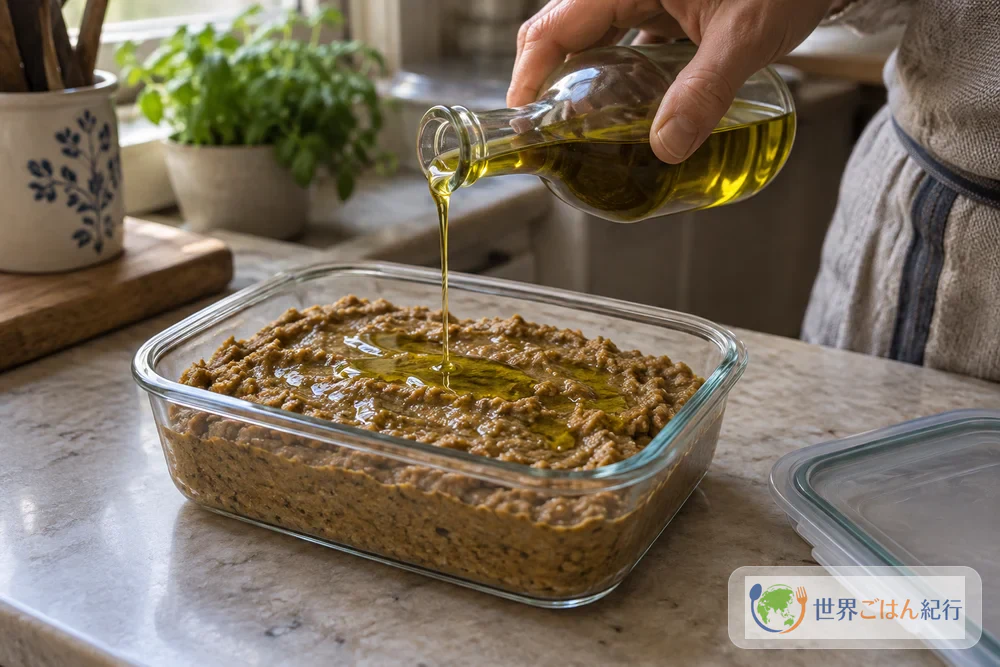
Cool it, put it in a container and pour a thin layer of olive oil on top before refrigerating, which keeps it from drying out. This article does not give a storage time, because we could not confirm a basis for one.
Sources
- Great British Chefs, Karen Burns-Booth, "Bigilla – Maltese Broad Bean Dip." (accessed and checked 22 October 2026). https://www.greatbritishchefs.com/recipes/bigilla-broad-bean-dip-recipe
- A Maltese Pantry, "Here Comes the 'Bigilla' Van," 20 February 2021. (accessed and checked 22 October 2026). https://www.amaltesepantry.com/here-comes-the-bigilla-van/
- Guide Me Malta, "A trip down memory lane! Do you remember 'ic-Cappura', the potato chips street vendor?" (accessed and checked 22 October 2026). https://www.guidememalta.com/en/a-trip-down-memory-lane-do-you-remember-ic-cappura-the-potato-chips-street-vendor
- SBS Food, Katy Holder, "Broad bean dip (bigilla)," 25 June 2015. (accessed and checked 22 October 2026). https://www.sbs.com.au/food/recipe/broad-bean-dip-bigilla/spxvaiplm
- Singapore Food Agency, "The arch-enemy of G6PD deficient individuals: fava beans." (accessed and checked 22 October 2026). https://www.sfa.gov.sg/food-information/risk-at-a-glance/the-arch-enemy-of-g6pd-deficient-individuals-fava-beans
- Wikipedia, "Bigilla." (accessed and checked 22 October 2026). https://en.wikipedia.org/wiki/Bigilla