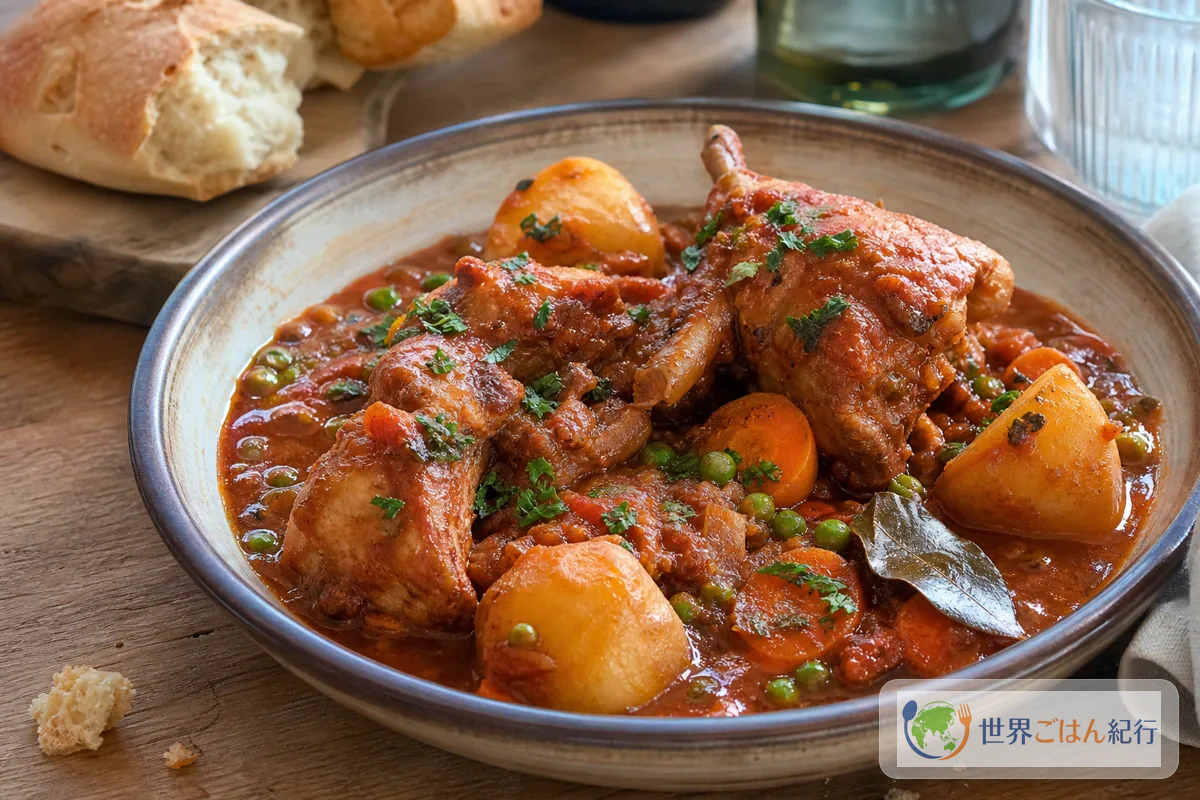
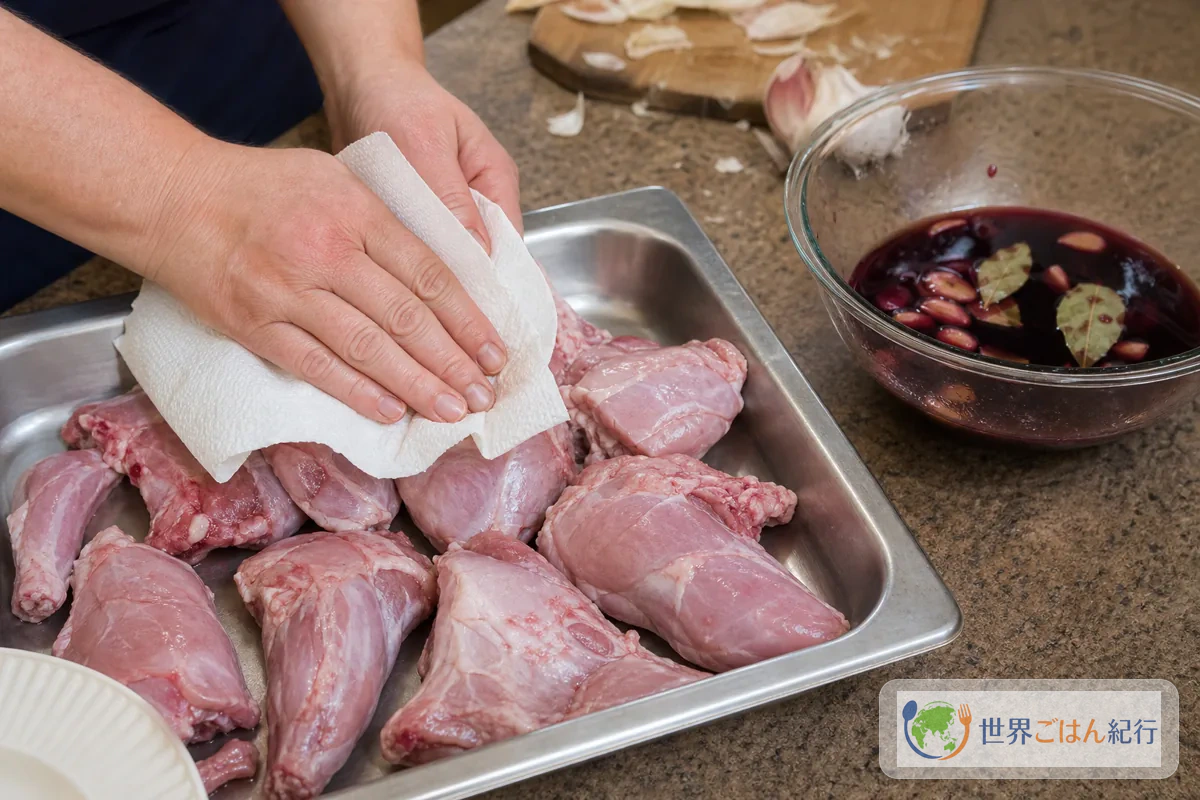
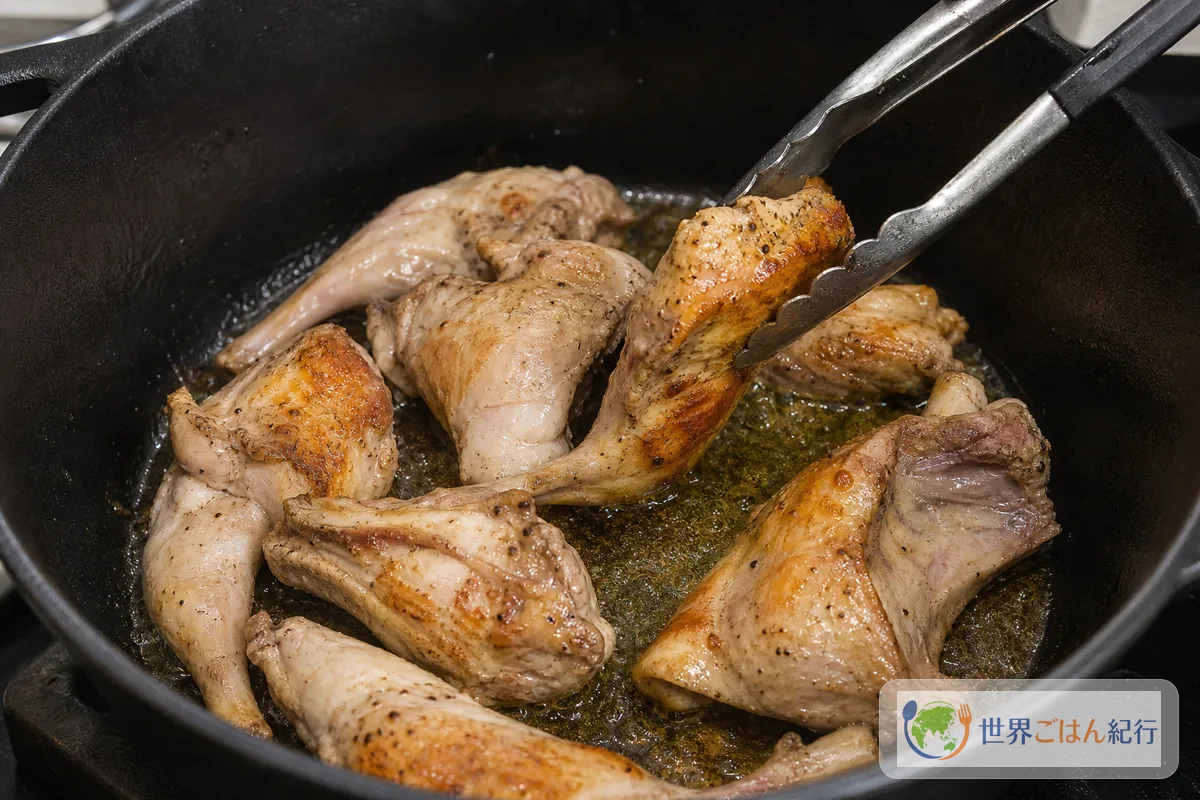
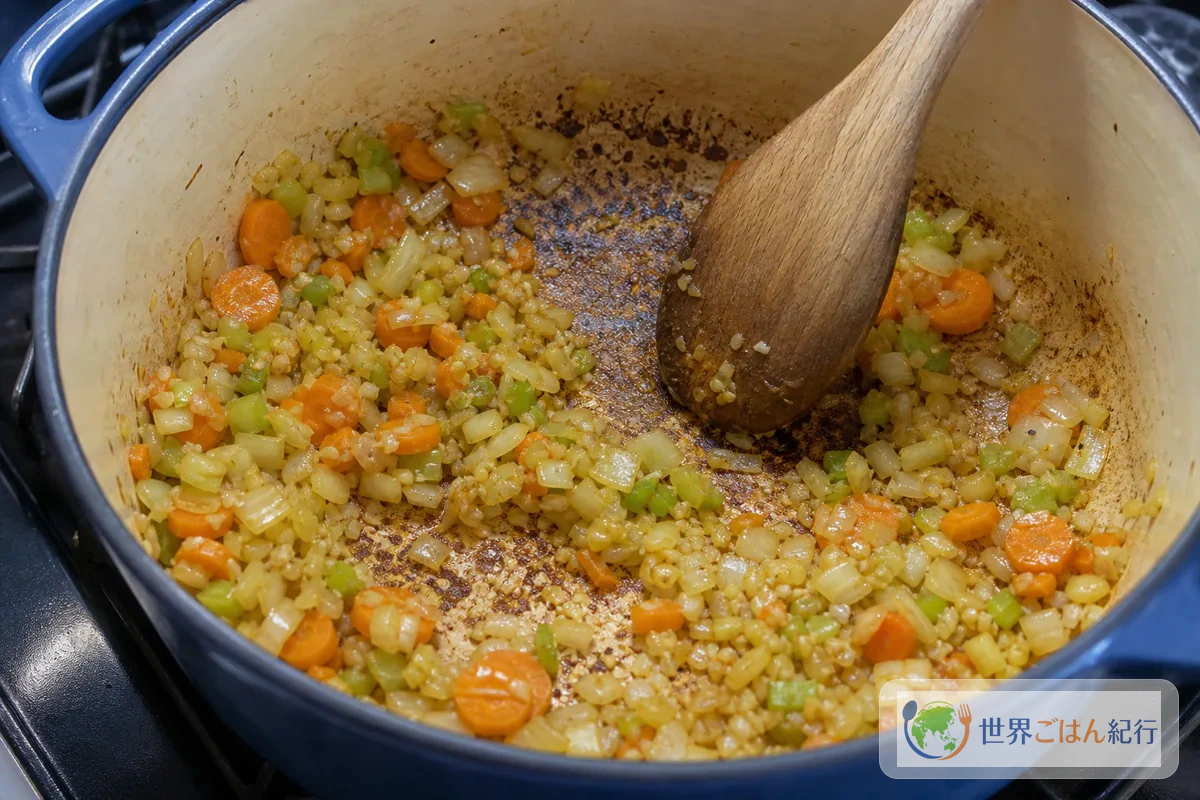


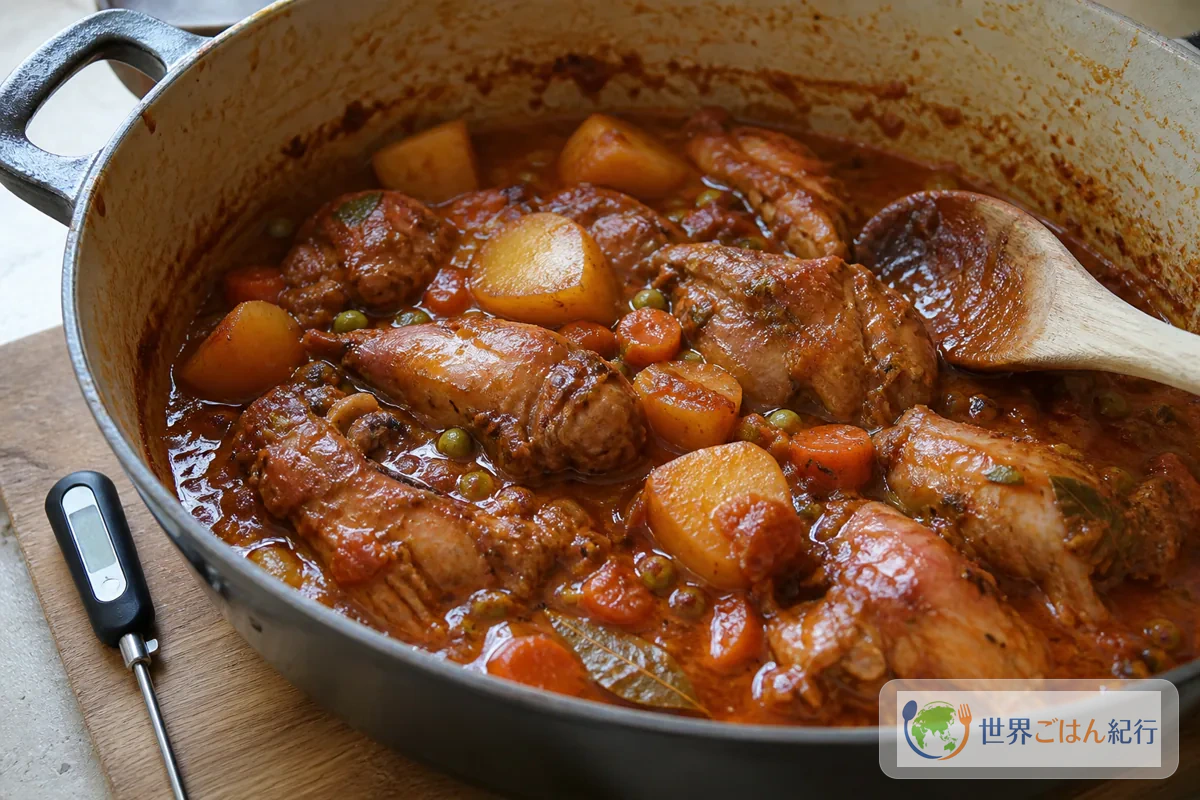
Maltese rabbit stew, steaming with red wine
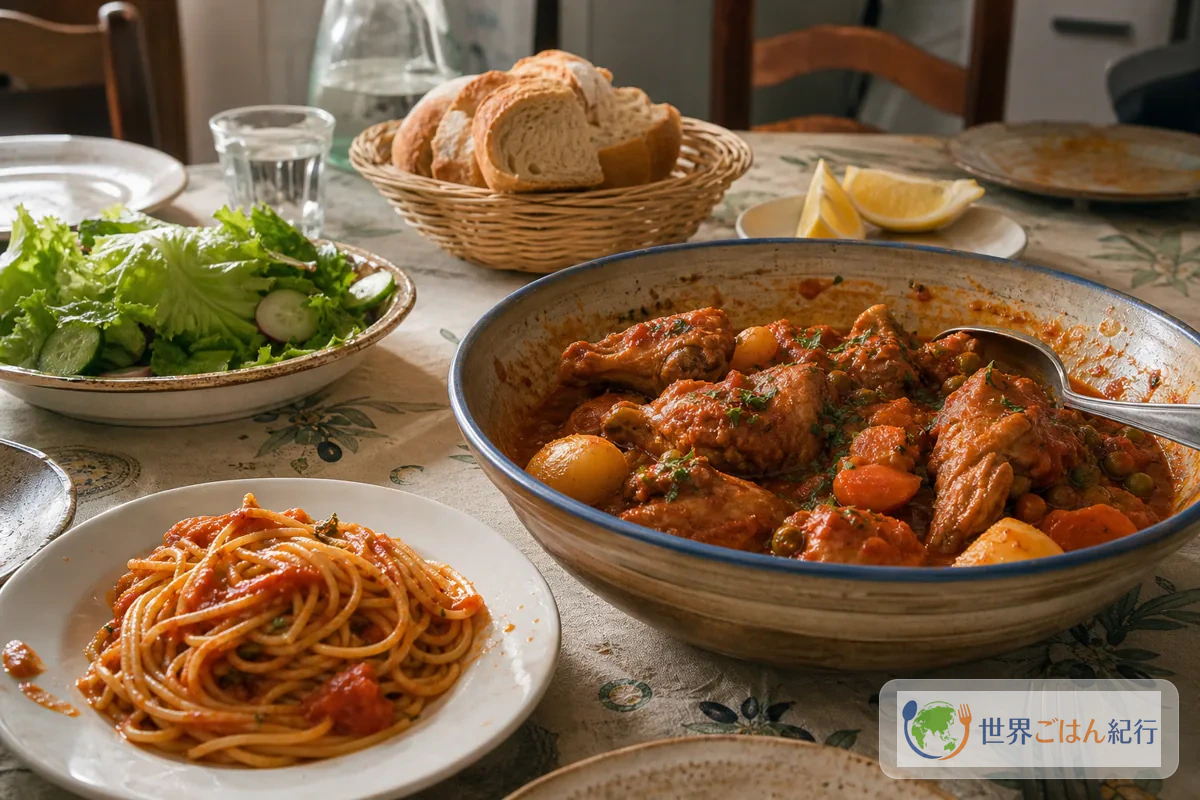
Slide the pot lid a little aside and the smell of red wine, garlic, bay leaf and tomato rises. It is lighter than a beef stew and wilder than a tomato braise, and the sauce falling away from the bone-in meat makes you want to wipe it up with bread. Stuffat tal-Fenek is a rabbit stew long loved in Malta.
In Maltese it is "Stuffat tal-Fenek": fenek means rabbit and stuffat means stew. For visitors it is often described as "Maltese rabbit stew," but looking at how it is eaten, it is more than meat braised in tomato. Some households first toss the rich sauce with spaghetti and then serve the rabbit and potatoes as the main course. Bring it out on a big platter with bread, salad and wine, and you have a table fit for a Mediterranean island.
Rabbit is not always easy to get. This article centers on the basic method with rabbit, but also spells out the differences when you move toward a "Maltese-style" dish using bone-in chicken thighs. Using chicken is not a true fenek. Even so, if you keep the red wine, bay leaf, tomato paste and the time at low heat, you can get close to the outline of the Maltese flavor without going out of your way shopping.
What is Stuffat tal-Fenek?
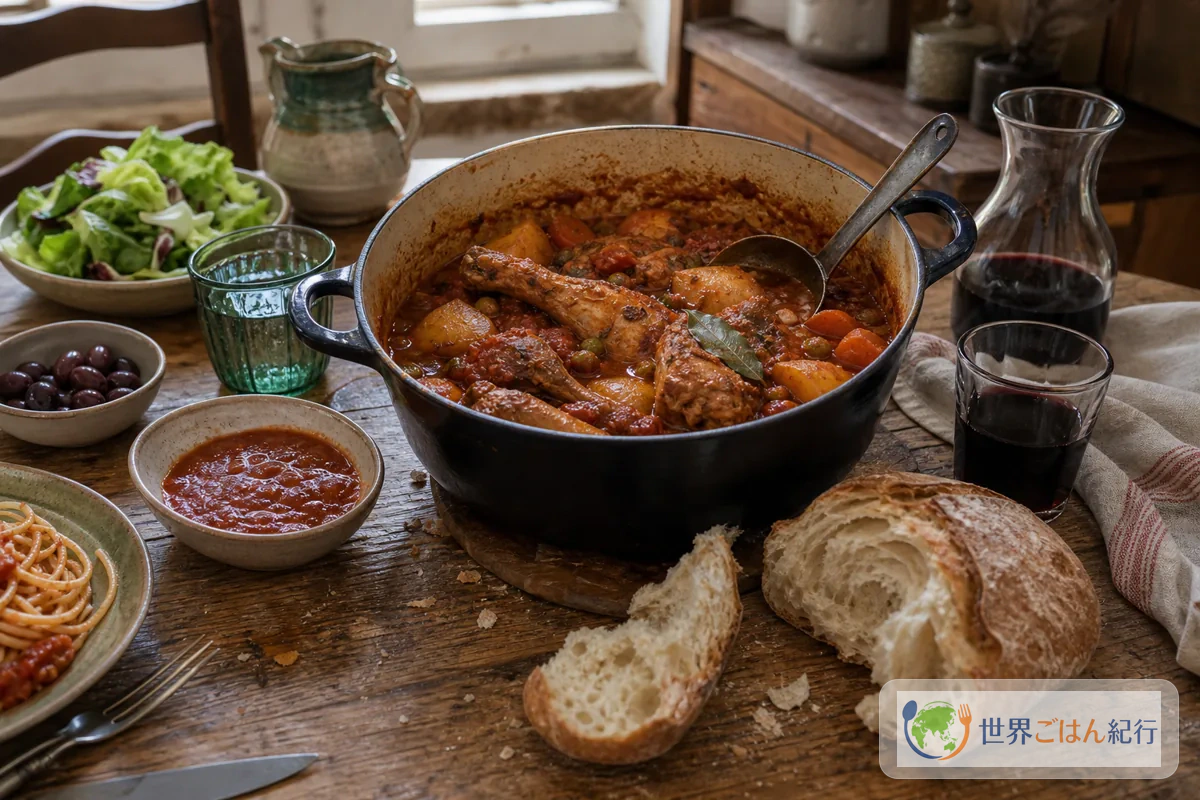
In Malta's register of traditional agro-food products, rabbit stew is treated as a dish originating in the Maltese Islands, described as rabbit, vegetables, tomato paste or tomatoes, potatoes, beans, bay leaf and herbs cooked slowly over a low heat. In older times it is said to have been cooked slowly in a simple oven made of earth or stone, or in a traditional pot, and it is tied to rural food culture.
There is also the word "fenkata" around the dish name. It refers less to the dish itself than to the meal built around rabbit, which extends to a combination of starters, pasta with rabbit sauce, and stewed or fried rabbit. If you make it elsewhere, rather than finishing everything on one plate, setting aside a little of the sauce to toss with spaghetti brings out a pleasure close to the local way of eating.
Among similar dishes are those that share rice or noodles, meat and seafood from one big dish around the Mediterranean, such as the Spanish fideuà and paella valenciana (in Japanese). But in Stuffat tal-Fenek the rabbit and the red wine cooking liquid are the stars. The difference is that rice or noodles are not cooked into it; the stewed sauce is caught with bread or pasta.
Ingredients (serves 4)
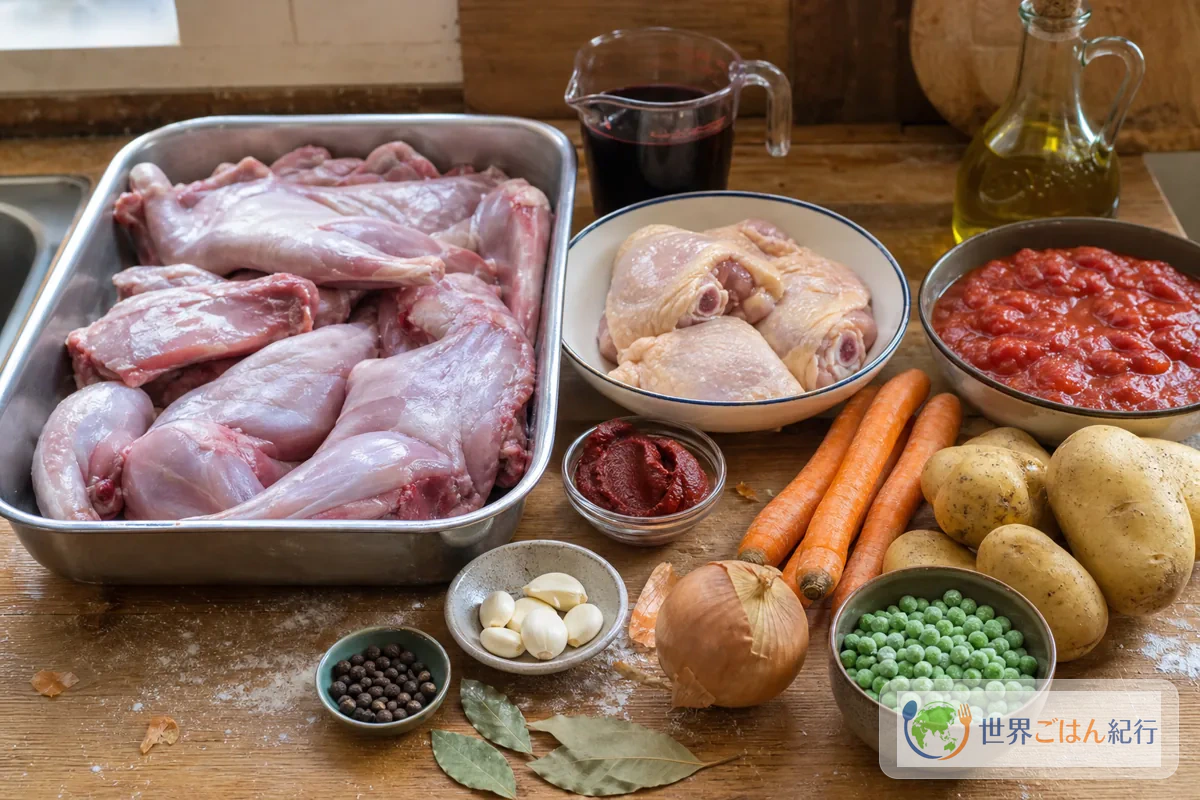
Substitutes when you cannot get rabbit
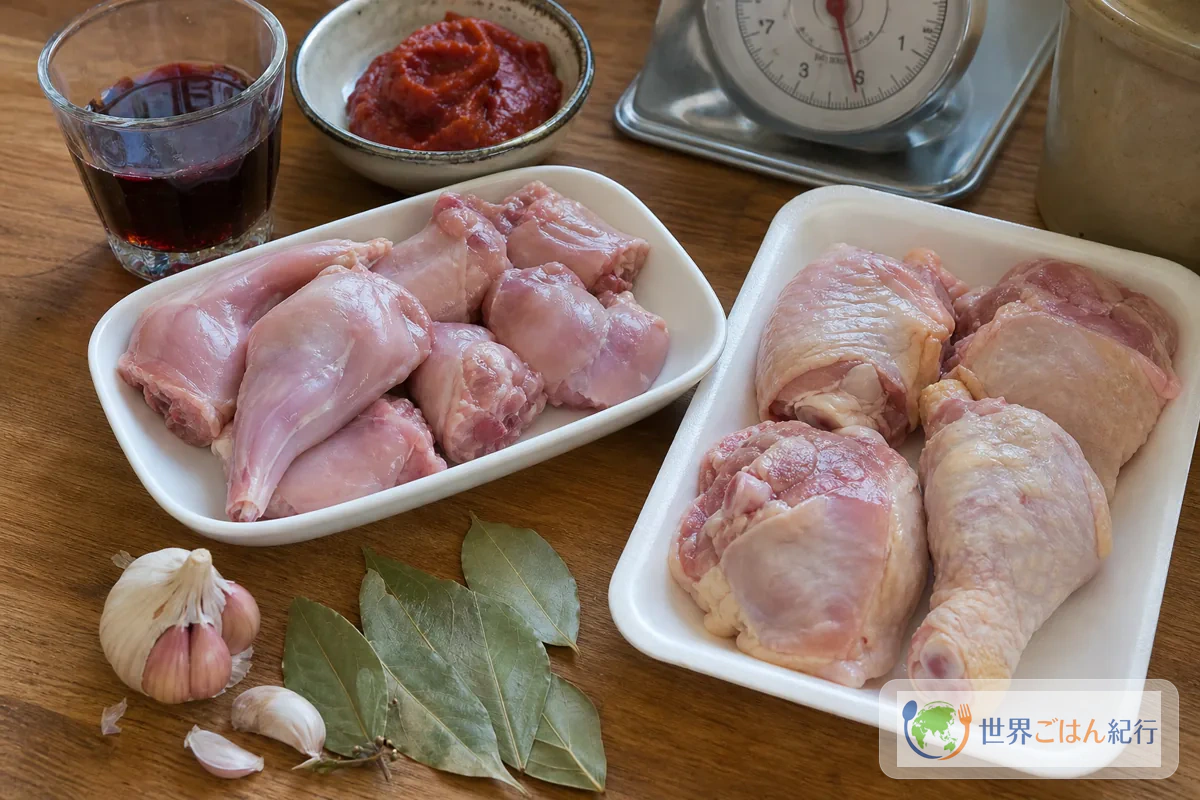
Rabbit is low in fat, with a texture moister than chicken breast and lighter than chicken thigh. If it is hard to find, bone-in chicken thighs are the easiest substitute to work with. Boneless thighs can also be stewed, but the savor from the bone is weaker, so use a light chicken stock instead of water.
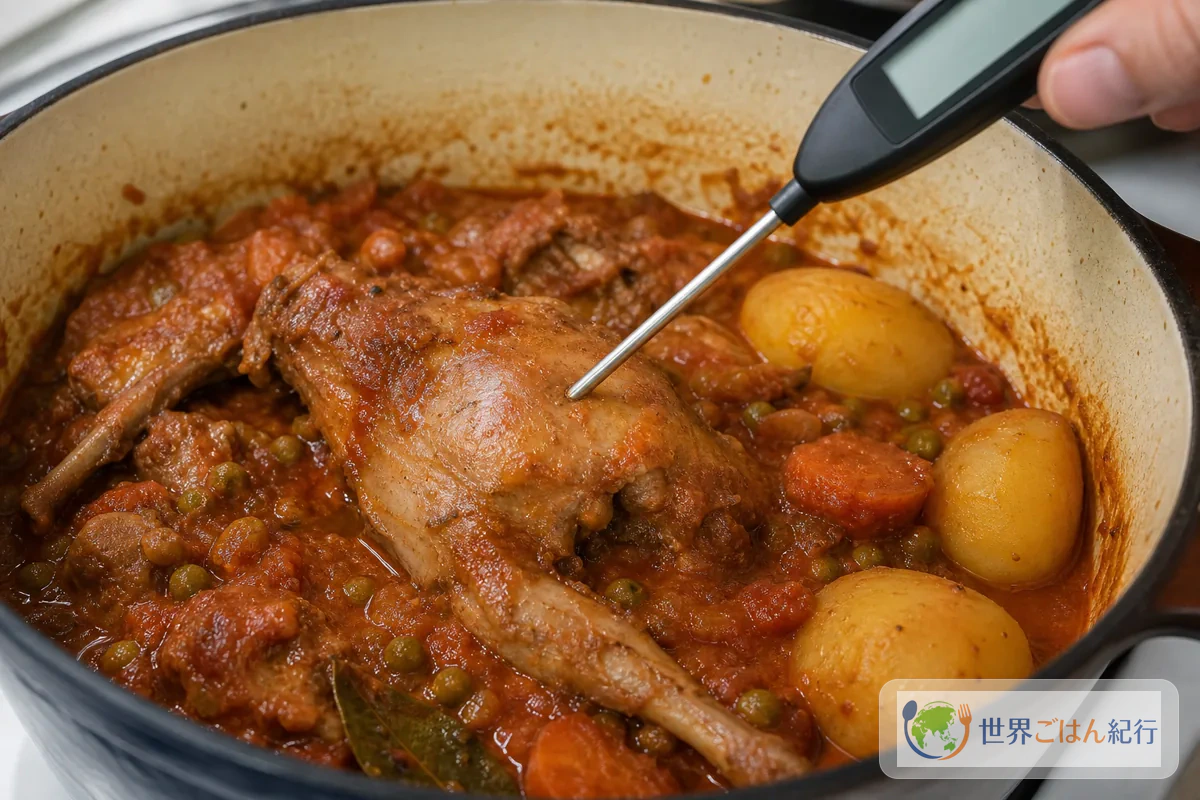
For chicken, start with 900 g bone-in chicken thighs, 250 ml red wine and 250 ml water or light stock. The simmering time is shorter than for rabbit: about 35 minutes on low heat after returning the meat, then 20 minutes after adding the potatoes. Check that the internal temperature reaches 75°C for chicken and, for rabbit, 71°C or more following the U.S. FoodSafety.gov guideline.
Separating what you can swap from what you should not keeps the flavor from wandering.
| Decision | Substitution |
|---|---|
| Fine to swap | Rabbit for bone-in chicken thighs, celery for onion, frozen peas for green beans |
| Fine to adjust in amount | Red wine, canned tomatoes, water. Evaporation of the liquid changes with the size of the pot |
| Better not to change | Bay leaf, garlic, tomato paste, the searing step, simmering at low heat |
| Avoid | Replacing with a lot of ketchup, a strong sweet wine, long simmering in a thin saucepan |
What to buy

What you buy nearby is onion, carrot, potatoes, canned tomatoes and red wine. What is worth looking for online is not the rabbit itself but the tools and spices you can use again and again. Rabbit quality varies a lot by shop and season, so for the first time look for a butcher who can order it or a reliable frozen product.
Allspice is not a traditionally required ingredient, but a small amount in bone-in meat braised in red wine and tomato rounds off the sharp edges of the sauce. It can also be used in dishes such as Guyanese pepperpot and Congolese babute (in Japanese), so it is a spice you are unlikely to be left with in the jar.
The pot changes a stew considerably. In a thin pot only the bottom scorches, and the sauce tightens before the rabbit dries out. For 4 servings a heavy pot of about 22 cm is easy to use and keeps small bubbles going on low heat.
Being "tender" is not a food safety check for bone-in meat. Measure the thickest part and turn off the heat at 71°C or more for rabbit and 75°C for a chicken substitute, and it is easier to avoid both overcooking and undercooking.
Where it goes wrong and how to fix it
| Problem | Cause | Fix |
|---|---|---|
| Meat is tough | Heat too high, or boiled hard after searing | Add liquid and simmer 15 more minutes on low heat. Keep the bubbles small |
| Sauce is watery | The lid was kept shut, or the pot is small and does not evaporate | Remove the meat and reduce over gentle medium heat for 5 to 8 minutes |
| Sourness stands out | Acidity of canned tomatoes, astringency of wine | Add 1 tsp sugar and 2 tsp olive oil |
| Flavor is weak | Too little salt before simmering | Add salt 1/4 tsp at a time at the end. Do not suddenly strengthen it with a bouillon cube |
| Potatoes broke up | Stirred hard, or added too early | Next time add them for the last 20 minutes. This time, catch it with bread or pasta |
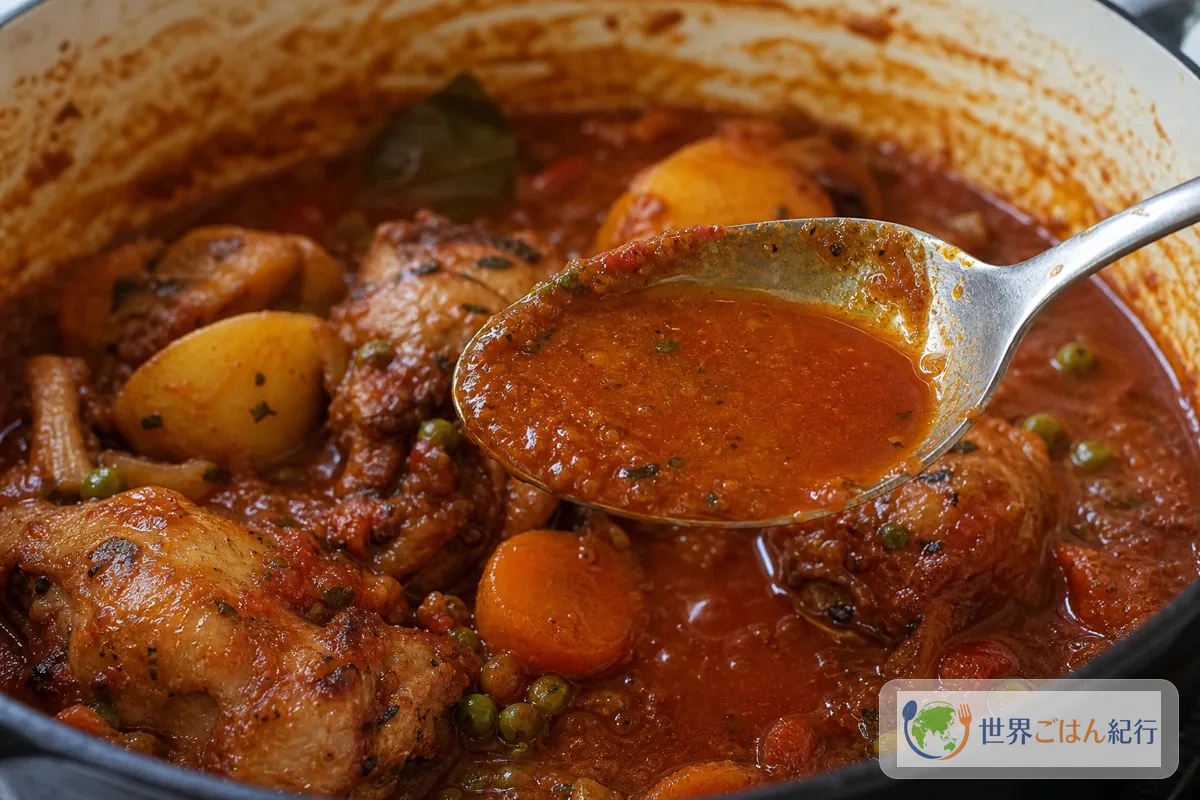
This dish does not get better just because you simmer it longer. Rabbit is not a meat that melts over long cooking like beef shank, and because it is low in fat, toughness shows if the heat is high. If the meat is dancing in the pot, it is too strong. Small bubbles, the lid slightly ajar, turning once along the way: these three things alone change the result considerably.
How to eat it and storage
To approach the local fenkata, first toss a little of the sauce with spaghetti and serve it on small plates, and then bring out the rabbit, potatoes and bread. For a weeknight dinner, serving everything on one big platter with bread and salad is plenty. A tart salad, grilled zucchini, olives and a light red wine go well with it.
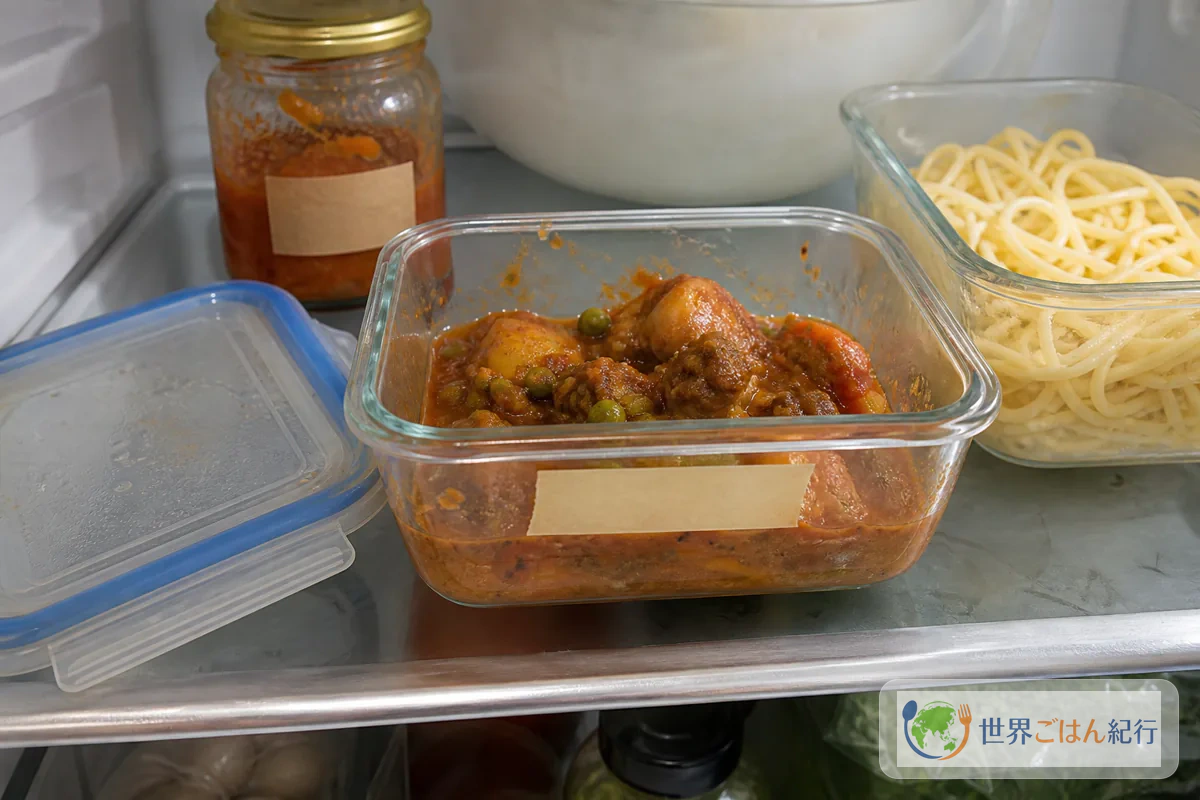
If there are leftovers, put the meat and sauce together in a container and finish it within 2 days in the refrigerator. Keep pasta separate, since stored together it soaks up the sauce and gets heavy. To reheat, move it to a pot, add 2 to 3 tbsp water and warm on low heat for 8 minutes. In a microwave, heat at 600 W for 2 minutes, stir once and add 1 more minute.
If only a little sauce is left the next day, putting it on bread, tossing it with short pasta or spooning it over grilled eggplant wastes nothing. Malta's traditional food register also mentions a record of leftover rabbit stew being used as a pie filling. That kind of home-cooking reuse is part of the charm of this dish.
Frequently asked questions
Where can I buy rabbit?
You rarely see it in ordinary supermarkets. Realistically, look at butchers who deal in game or imported meat, restaurant-supply stores, and online frozen-meat sellers. For the first time, bone-in pieces already cut up are easier to handle than a whole rabbit.
Can I replace red wine with white?
It varies by household, but this article recommends red wine for this recipe. It gives depth to a sauce of tomato and bone-in meat. If you use white, go a little easier on the tomato and add rosemary or thyme for a lighter result.
Is allspice essential to the original?
It is not essential. In this article a very small amount is used so that the aroma does not turn flat when simmering rabbit or bone-in chicken in a home kitchen. It is not something to use to make up for leaving out bay leaf and garlic.
Can I make it without wine for children?
The wine flavor is the outline of this dish, so leaving it out entirely moves it toward a different tomato braise. If you do not use it, make up the acidity with 200 ml water, 100 ml unsalted tomato juice and 1 tsp rice vinegar, and keep the same simmering time. Even when you do use wine, boil it firmly for 3 minutes or more in step 4.
What can I combine it with from other world cuisines?
To bring it toward a Mediterranean table, reading it together with the Spanish fideuà, the Greek fasolada and the Cypriot koupepia (in Japanese) shows the links between tomato, beans, herbs and stew culture. As a bone-in meat stew, the German Gaisburger Marsch (in Japanese) is also a good comparison for heat control.