Navarra's Ajoarriero: Swirl the Pot and Let Cod and Tomato Come Together
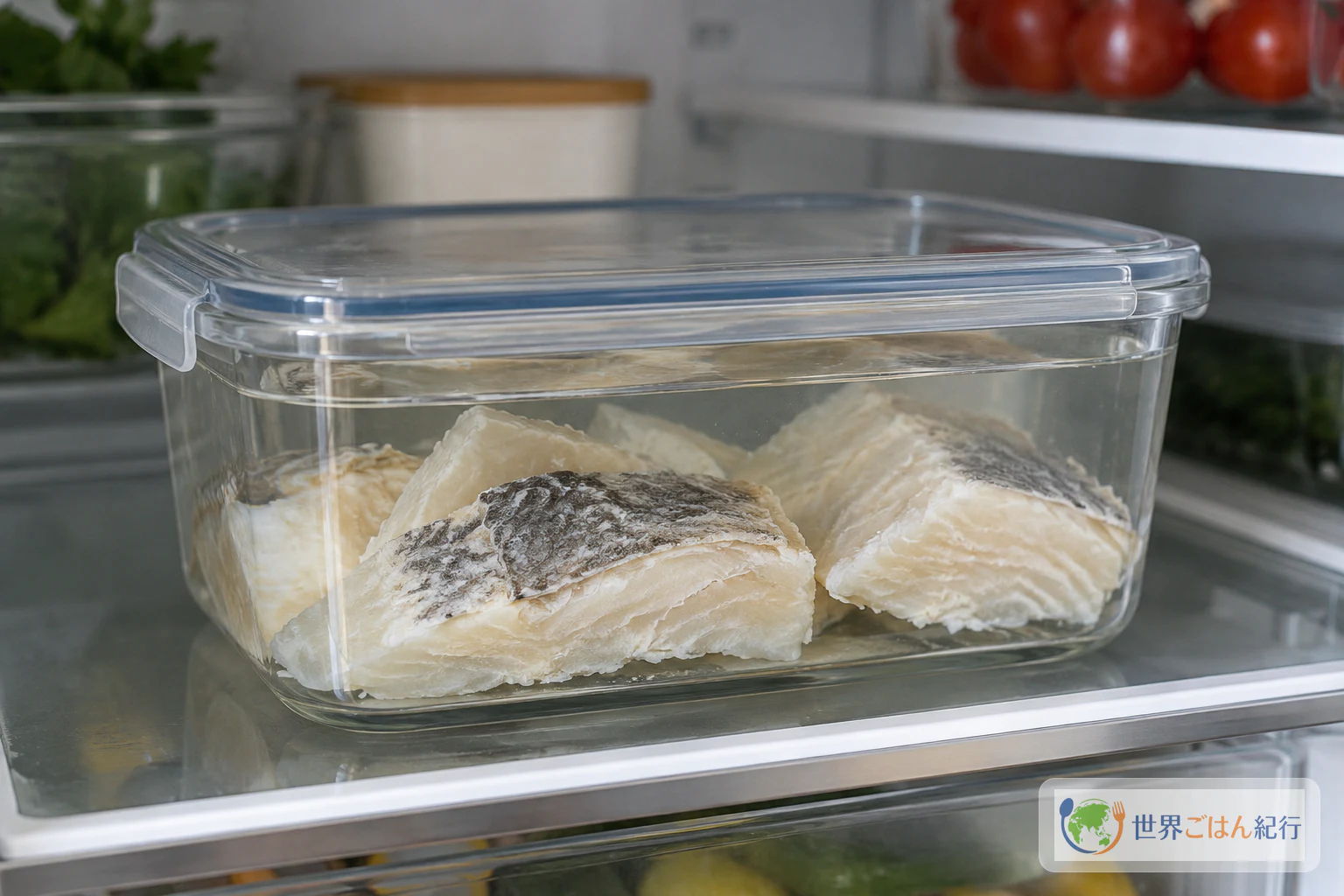
Desalt the cod slowly in the refrigerator, keep the heat low from start to finish, and move the pot instead of the spoon so the cod stays in recognizable flakes.
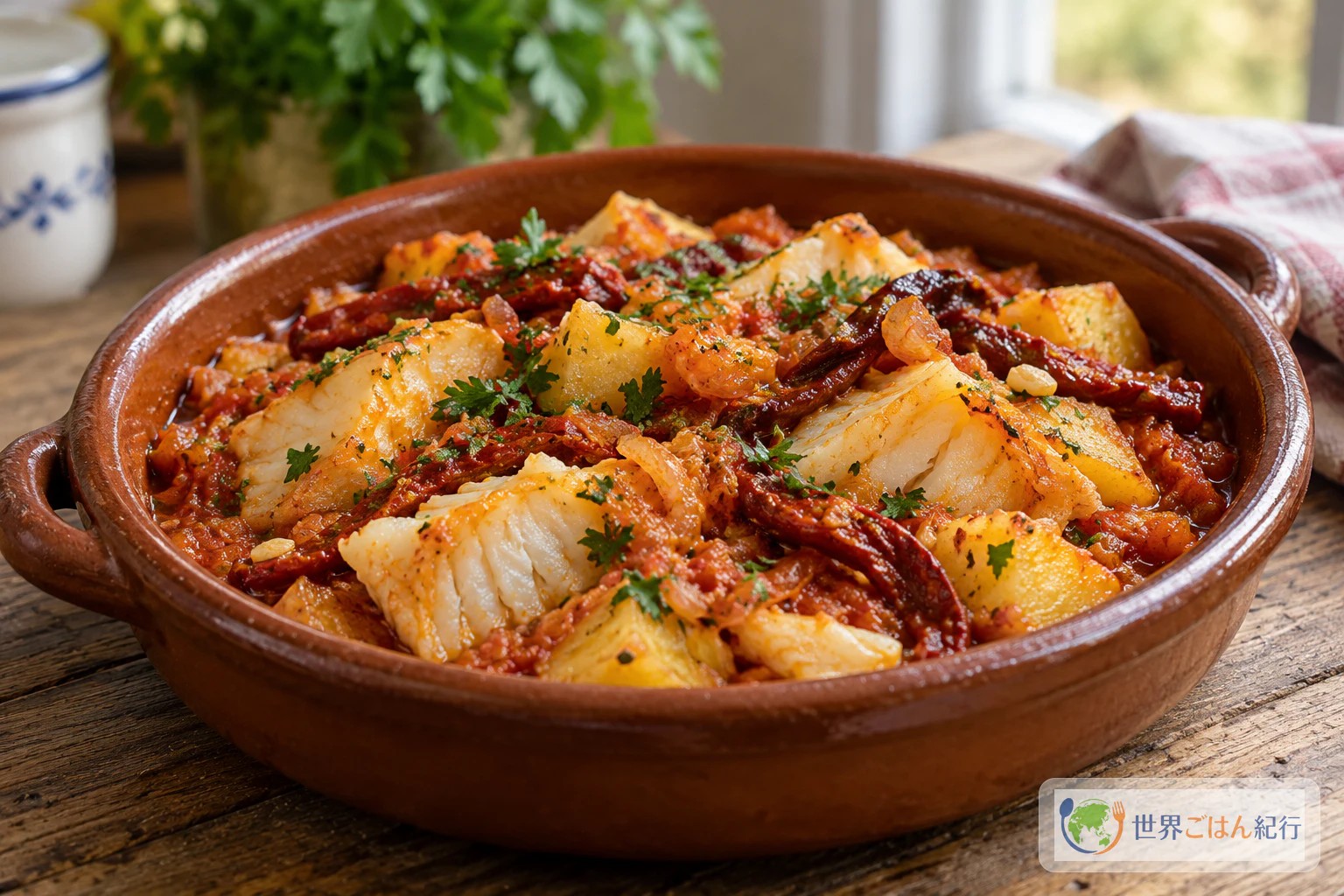
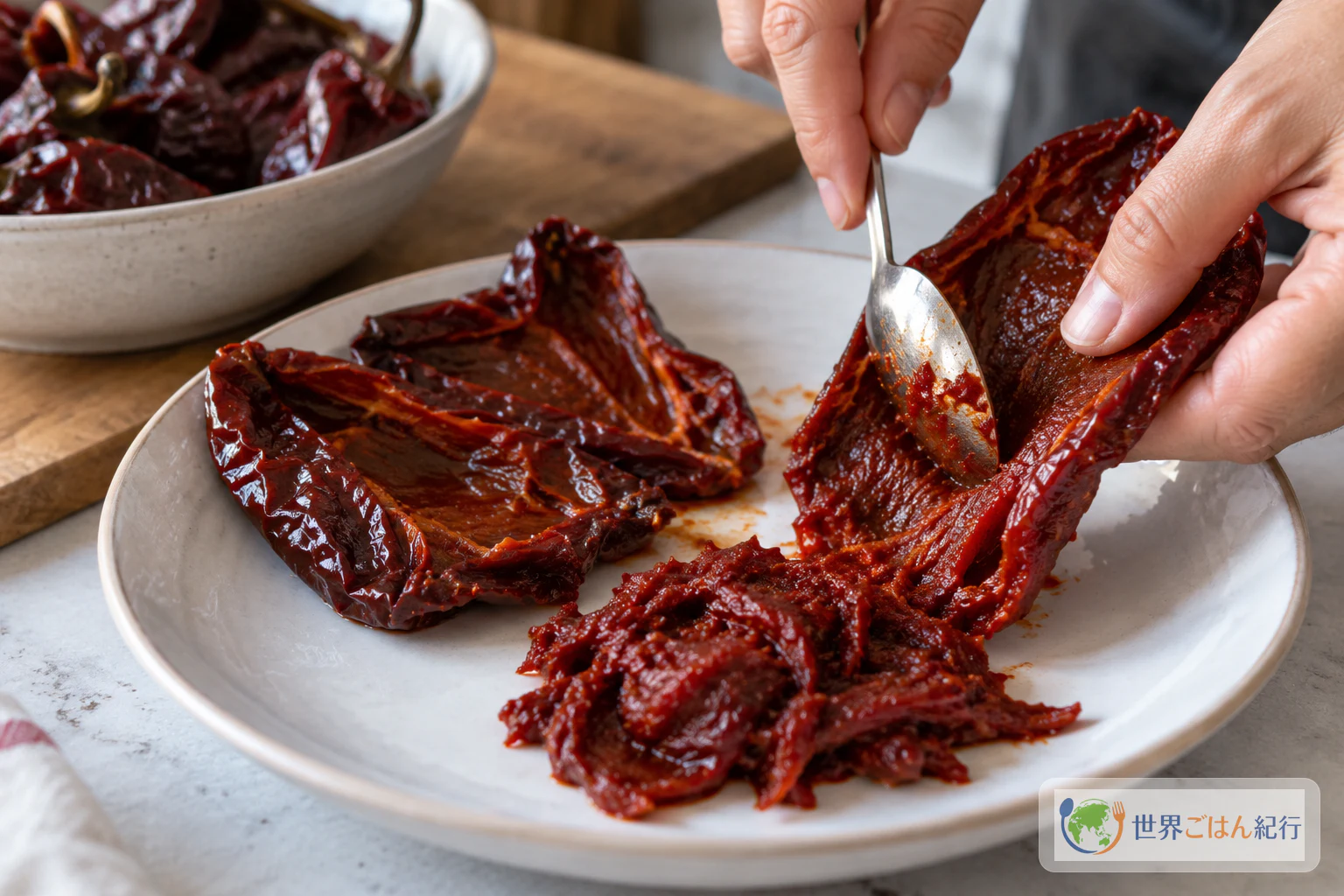
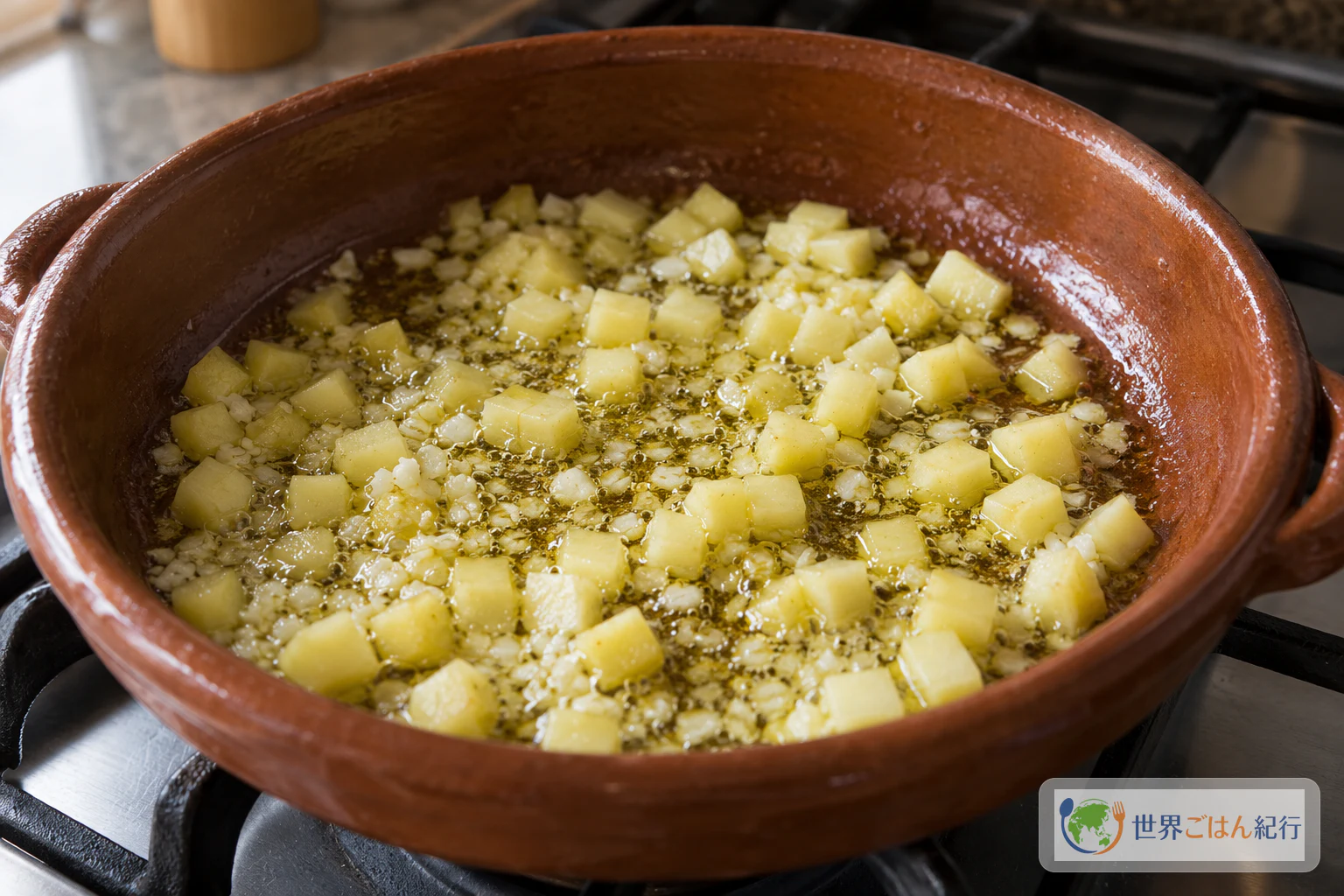
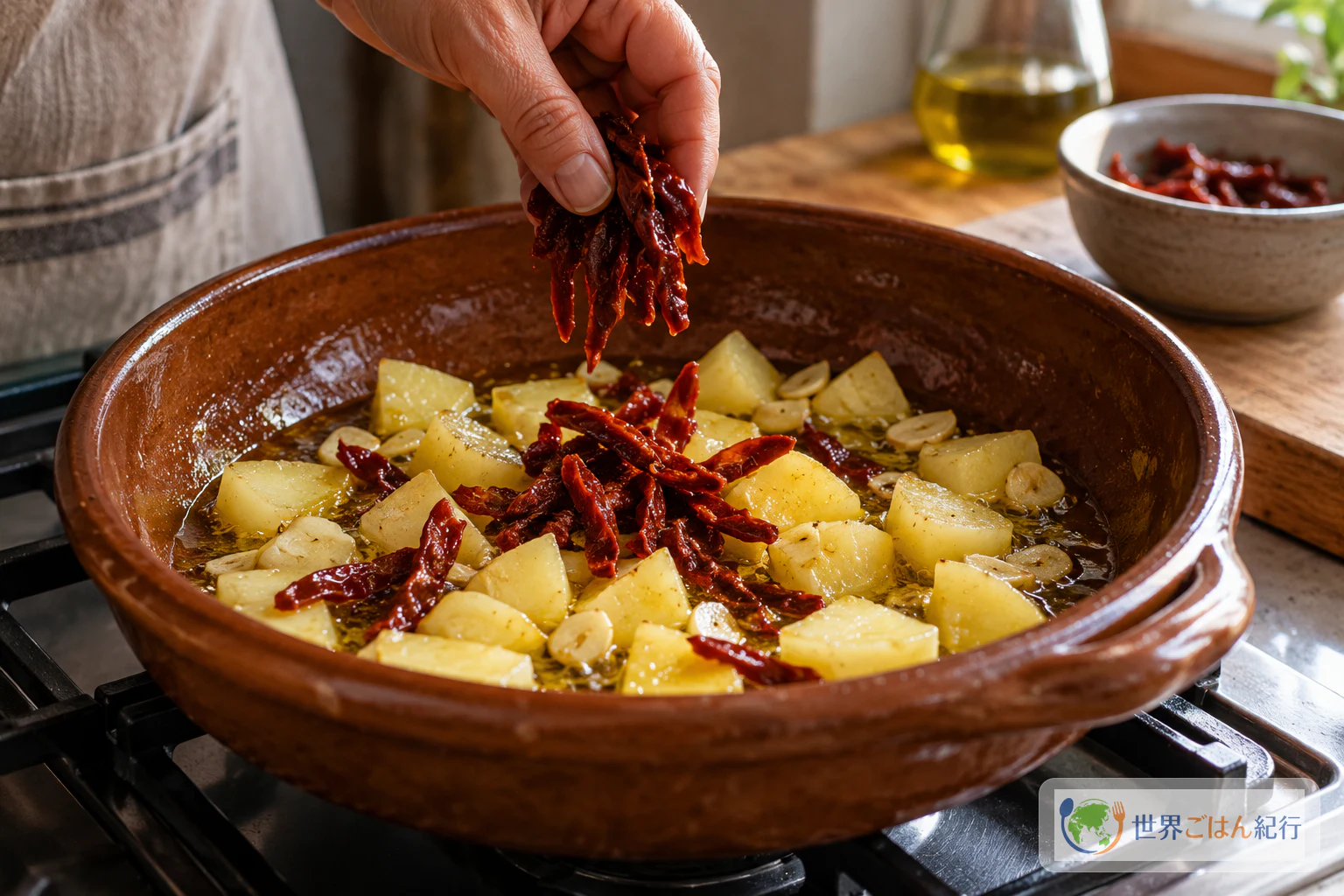
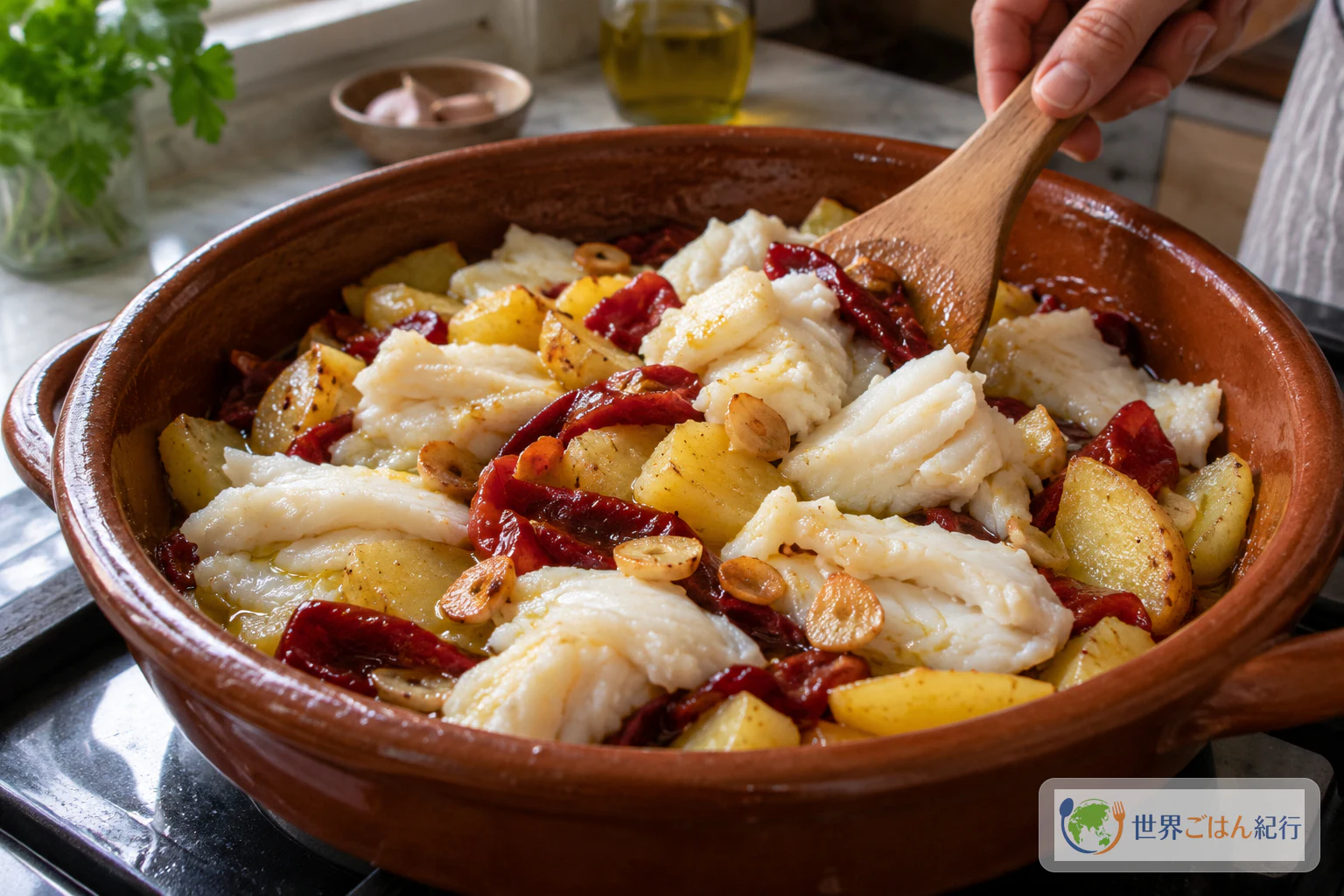
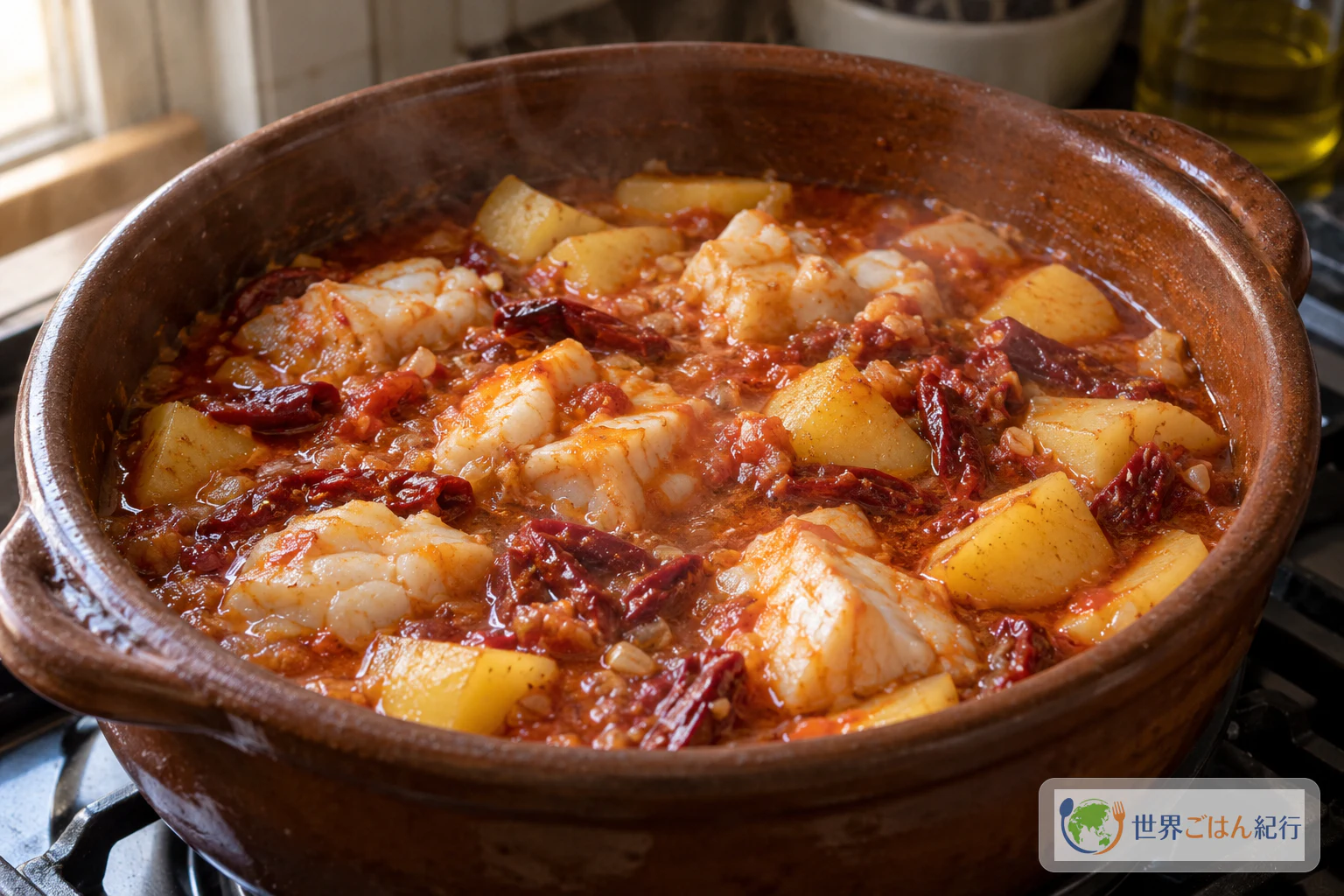
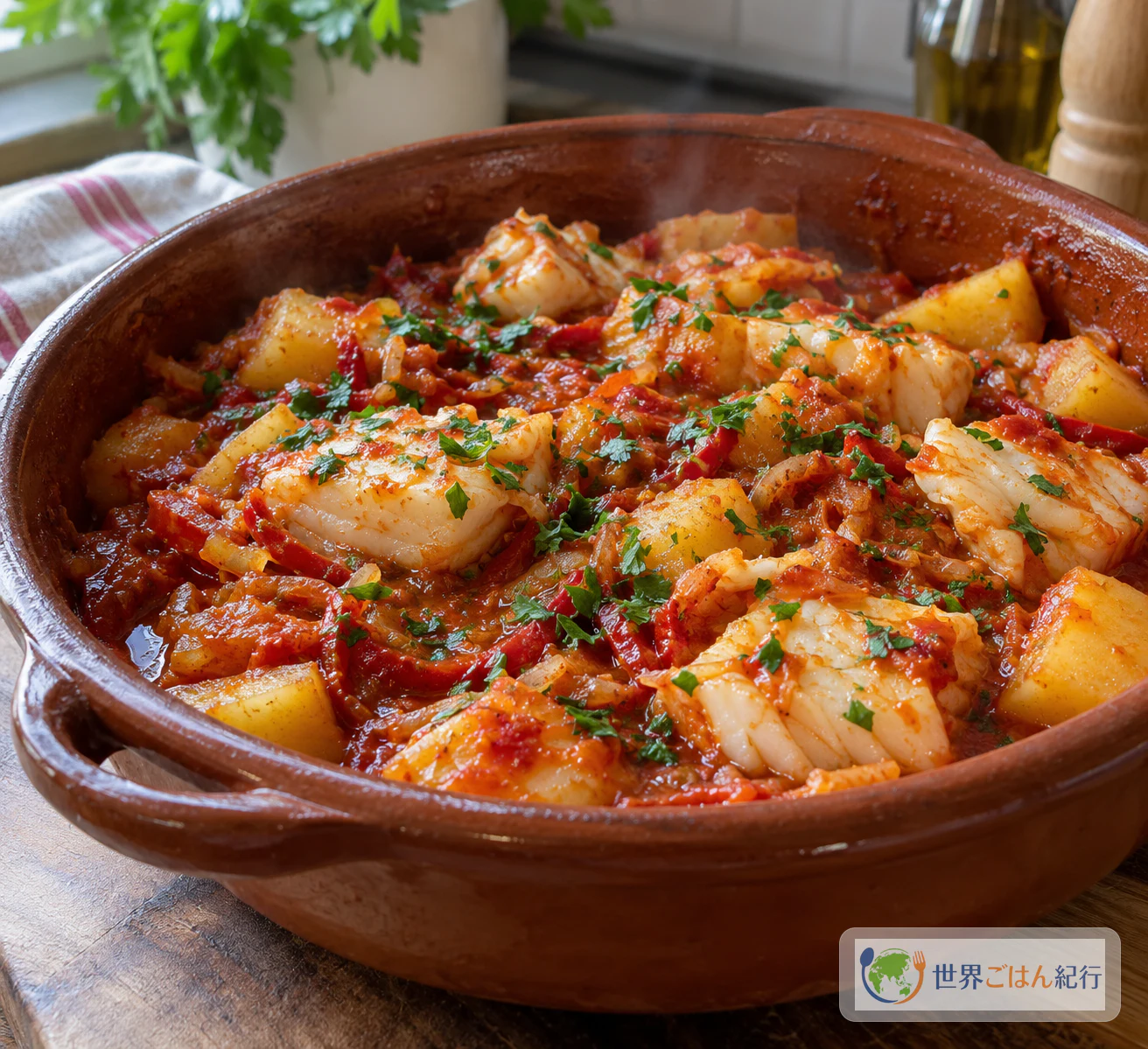
Finely flaked salt cod goes into an earthenware pot where garlic, potato and the deep red flesh of dried choricero peppers have been softening in olive oil. Then the tomato sauce goes in, and instead of stirring, you move the whole pot in small circles so everything comes together, letting it cook gently for about 10 minutes. That is the heart of bacalao al ajoarriero as Spain.info presents it for Navarra: a home stew where the cod is the main ingredient and the tomato, garlic and peppers hold it together.
Spain.info introduces ajoarriero as one of Navarra's representative dishes, built around finely flaked cod with tomato, garlic, potato and peppers, and notes that it has spread to other regions too. It is not a single fixed recipe, though. Within Navarra itself you will find versions without tomato, and in Aragón a version with a different set of ingredients. This recipe follows the Navarra version published by Spain.info for 4 people, because its amounts are complete and it is approachable for a home kitchen.
If you are exploring other cod dishes from the Iberian Peninsula, the cold Catalan salt cod salad esqueixada shows a completely different way of handling the same fish, and Portugal's bacalhau à brás brings potato and egg into the picture. For another regional Spanish dish, see calçotada.
In Spanish it is written bacalao al ajoarriero, often shortened to ajoarriero. The sources used for this article do not settle where the name comes from, so that question is left open here.
Ingredients (Serves 4): Salt Cod, Garlic, Tomato and Choricero Peppers
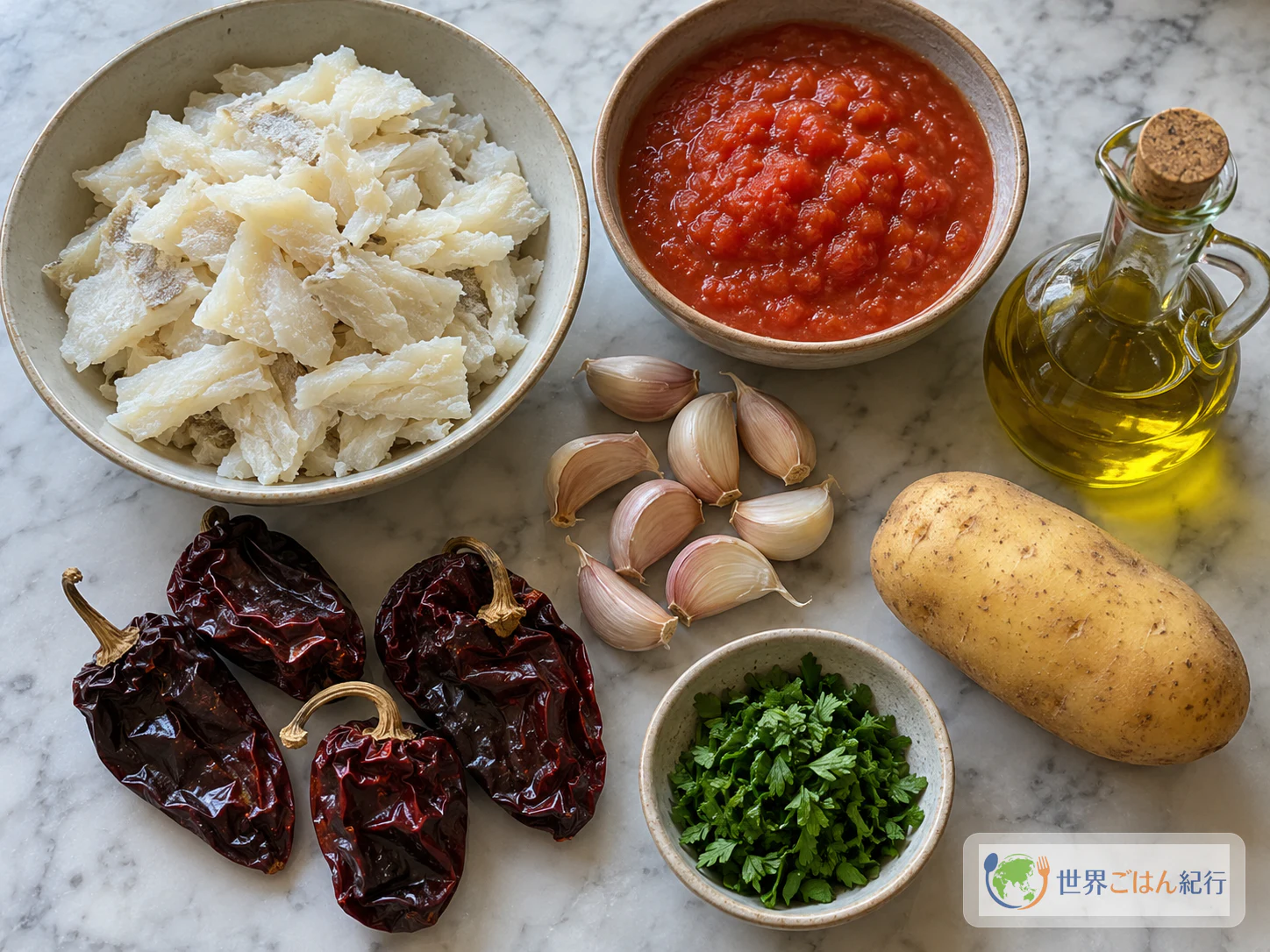
These amounts follow the Navarra recipe on Spain.info. The peppers are listed by count only, with no weight given, so they are kept that way here. Do not add salt until the very end: salt cod keeps some of its salt even after soaking.
This dish contains fish (cod). If you use a store-bought tomato sauce, check its ingredient list.
Choosing Substitutes Outside Spain: Cod, Peppers and Sauce
Salt cod. Look for salt cod at import grocers or online. Lightly salted cod fillets differ in how much salt they hold and how heavily they were cured, so always check the saltiness after desalting. Fresh cod can stand in, but the saltiness and the firm texture of salt cod will be different, so adjust the salt separately (see Variations).
Pimientos choriceros. These are dried sweet red peppers whose soft flesh is used in the stew. Spanish food shops and online stores are the place to look. If you cannot find them, a thick-fleshed sweet dried red pepper, rehydrated, is a possible stand-in, but the aroma will be different. Paprika or chili powder will not give the same pulpy texture, and swapping in chili powder changes both aroma and heat.
Tomate frito casero. Unsalted or lightly seasoned tomato sauce or strained tomatoes, cooked down a little, come close. Ketchup, with its sugar and spices, changes the flavor of the dish.
Olive oil and potato. A very strongly flavored olive oil can easily dominate the finished dish. Ordinary potatoes are fine; floury types break down more easily, so don't chop them too finely.
Equipment
- An earthenware cazuela, or a heavy, shallow pot if you don't have one
- A lidded container large enough to submerge the cod, for the refrigerator
- A colander
- A clean cloth or paper towels
- A bowl of lukewarm water and a small spoon for the peppers
Method: Desalt the Day Before, Then Cook Gently
Desalting the cod takes at least 24 hours in the refrigerator, and longer for thick pieces. Start the day before you want to eat. Once the cod is ready, the cooking itself is done over low heat.
Desalting is a seasoning step as much as a preparation step, and how long it takes depends on the thickness of your cod. Follow the supplier’s desalting instructions as well as the source timings below. For any saltiness check, cook a small separate sample thoroughly first; do not taste uncooked cod.
Too Salty, Watery, Falling Apart: Fixing Problems
| Problem | Likely cause | What to do |
|---|---|---|
| Too salty | The cod was not desalted enough | Rather than diluting the finished stew with water, adjust the desalting time and water changes next time, allowing for the thickness of the cod |
| Watery | The cod was not drained well, or the tomato sauce was loose | Press the cod dry before it goes in. As a home adjustment beyond the original recipe, you can lightly reduce the tomato sauce before adding it |
| The cod falls apart | It was turned too many times | Don't stir; gently shake or swirl the pot instead |
| The garlic or peppers burn | The heat was too high | Start on low heat and move to the next step before the color darkens suddenly |
Variations: Ways to Shift the Balance
These are kept separate from the main recipe above. The first three draw on the Navarra recipe from Visit Navarra, where potato and eggs are optional; the last two are adaptations for cooking outside Spain.
- Without potato. Leave out the potato to bring the cod and peppers forward.
- With beaten egg. Stir beaten egg through at the end and let it cook through.
- With egg on the side. Cook the egg separately and serve it alongside.
- Milder peppers. If your dried peppers are hot, use rehydrated sweet dried peppers instead to tone down the heat. The aroma will differ from choricero.
- With fresh cod. Skip the desalting and season with salt by tasting. This will not taste the same as the salt cod version.
One Name, Several Pots: Ajoarriero in Navarra and Beyond
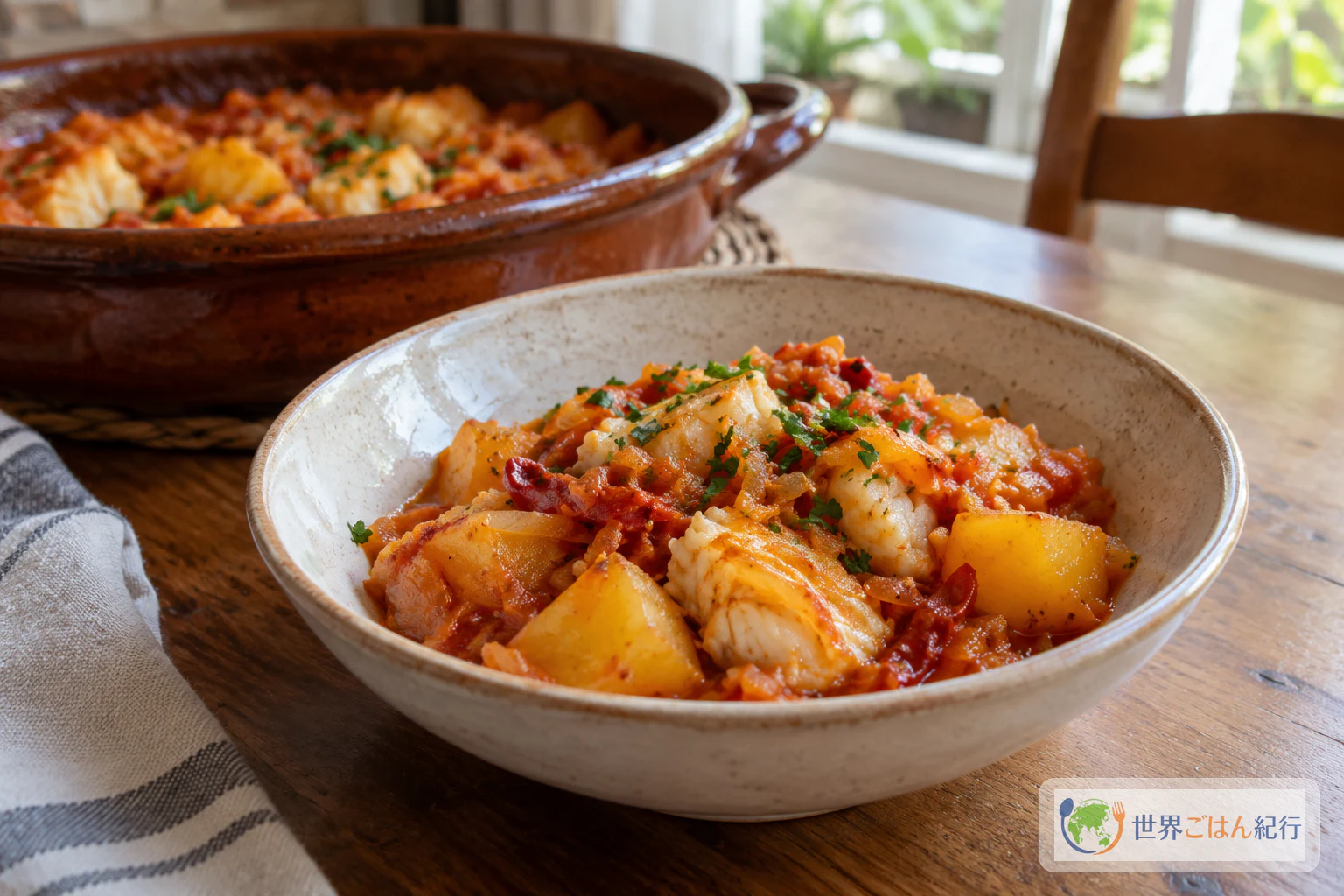
The ingredient lists alone show how much ajoarriero varies. The Navarra recipe on Spain.info, used here, includes homemade tomato sauce, choricero peppers and a little potato. A Navarra recipe published by Visit Navarra has no tomato at all: 1 kg of salt cod, 4 garlic cloves, a cayenne pepper, 3 choricero peppers and 150 ml of olive oil, with potato and eggs as optional additions. Chef Karlos Arguiñano's recipe on Hogarmania takes yet another route, roasting red peppers at 190°C for 30 minutes, cooking the potatoes over low heat for about 12 minutes, and bringing everything together for 5 minutes.
Spain.info also publishes a version labeled as Aragonese, with 700 g of cod, 500 g each of potato and tomato, red peppers, onion and garlic. It is a different recipe, so its ingredients are not mixed into the Navarra version here.
Spain.info describes ajoarriero as a representative dish of Navarra that has spread to other regions, without saying when or how. Its recipe presents the dish as a main course rather than linking it to a specific holiday. Rather than one "correct" recipe, it is closer to the truth to see a set of related pots, each built around cod and garlic.
Frequently Asked Questions
Can I use lightly salted cod fillets?
Yes, but how much salt they hold varies, so check the saltiness after desalting and season the finished dish by tasting. The flavor and texture will not be identical to salt cod.
Is the potato essential?
Not in every version. The Navarra recipe followed here includes it, while the Visit Navarra recipe treats potato as optional. Leaving it out brings the cod and peppers to the front.
How much can I do the day before?
The desalting. Start it in the refrigerator at least a day ahead, and longer for thick pieces.
How should I store leftovers?
The recipe sources do not give a storage period. Cool leftovers promptly, refrigerate them, eat them soon, and reheat until hot throughout.
Explore more dishes in Spanish cuisine.
Sources
- Spain.info / Turespaña, "Receta: Ajoarriero." The Navarra recipe for 4 people used here: ingredients, refrigerated desalting for 24 hours with water changes every 8 hours, cooking over low heat, and adding the tomato and moving the earthenware pot in circles for 10 minutes. https://www.spain.info/es/receta/ajoarriero/
- Turismo de Navarra / Visit Navarra, "Catar Navarra." A different Navarra recipe without tomato, desalting for 24 to 36 hours depending on thickness in the refrigerator with water changes every 8 hours, and potato and eggs as optional additions. https://www.visitnavarra.es/documents/8191683/8519690/Catar%2BNavarra.pdf/175f3ded-f052-24e5-05c5-debcbe641685?t=1621583636065
- Hogarmania / Karlos Arguiñano, "Cómo preparar bacalao ajoarriero." Another example of the dish, with roasted red peppers and a different order of steps. https://www.hogarmania.com/cocina/recetas/pescados-mariscos/ajoarriero-18451.html
- Spain.info / Turespaña, "¿Vienes a Navarra? Esto es lo que tienes que probar." Ajoarriero introduced as a representative dish of Navarra, based on finely flaked cod, and as having spread to other regions. https://www.spain.info/es/top/vienes-a-navarra-esto-es-lo-que-tienes-que-probar/
- Spain.info / Turespaña, "Receta: Bacalao al ajoarriero." The Aragonese version and its different ingredients. https://www.spain.info/es/receta/bacalao-al-ajoarriero/