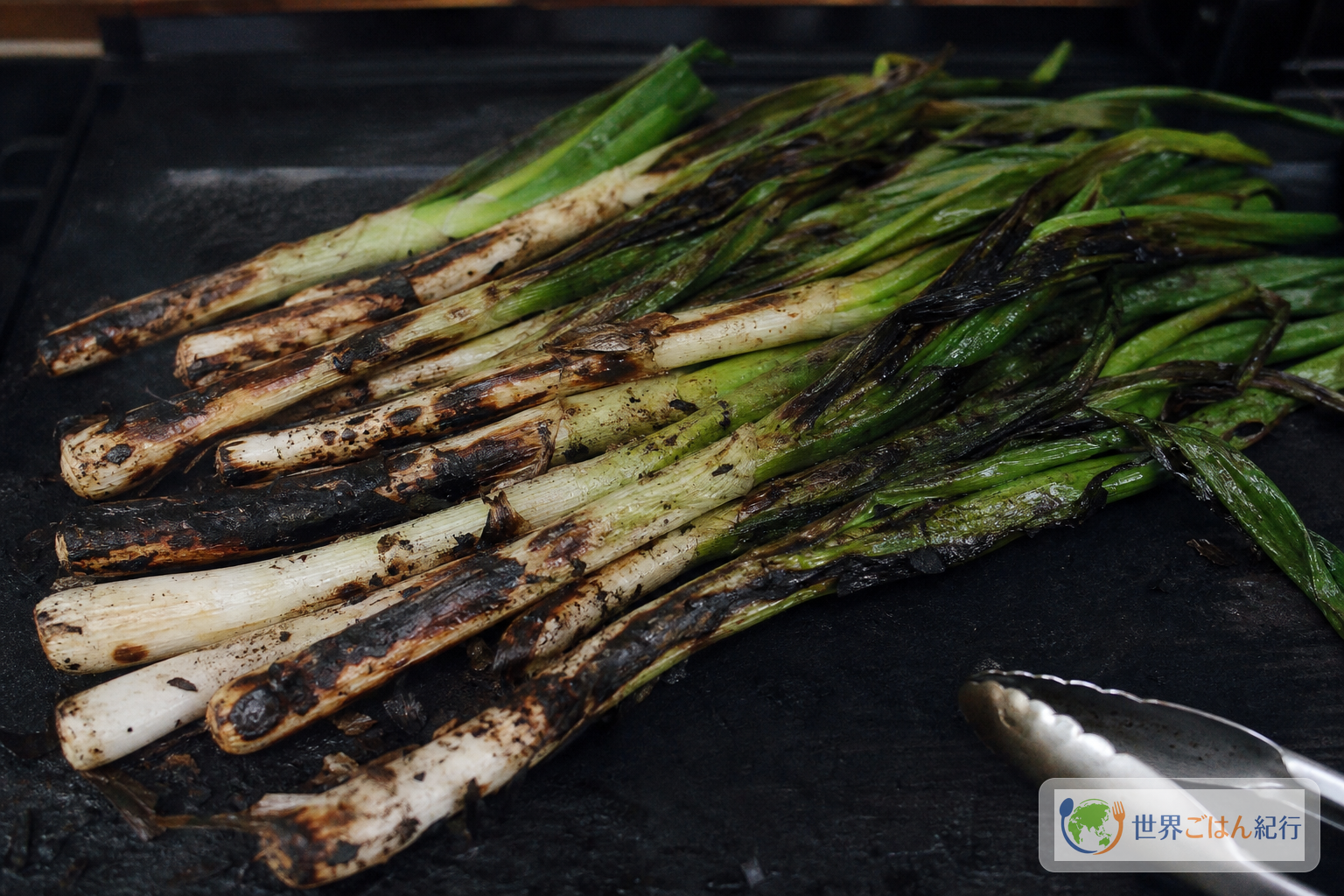
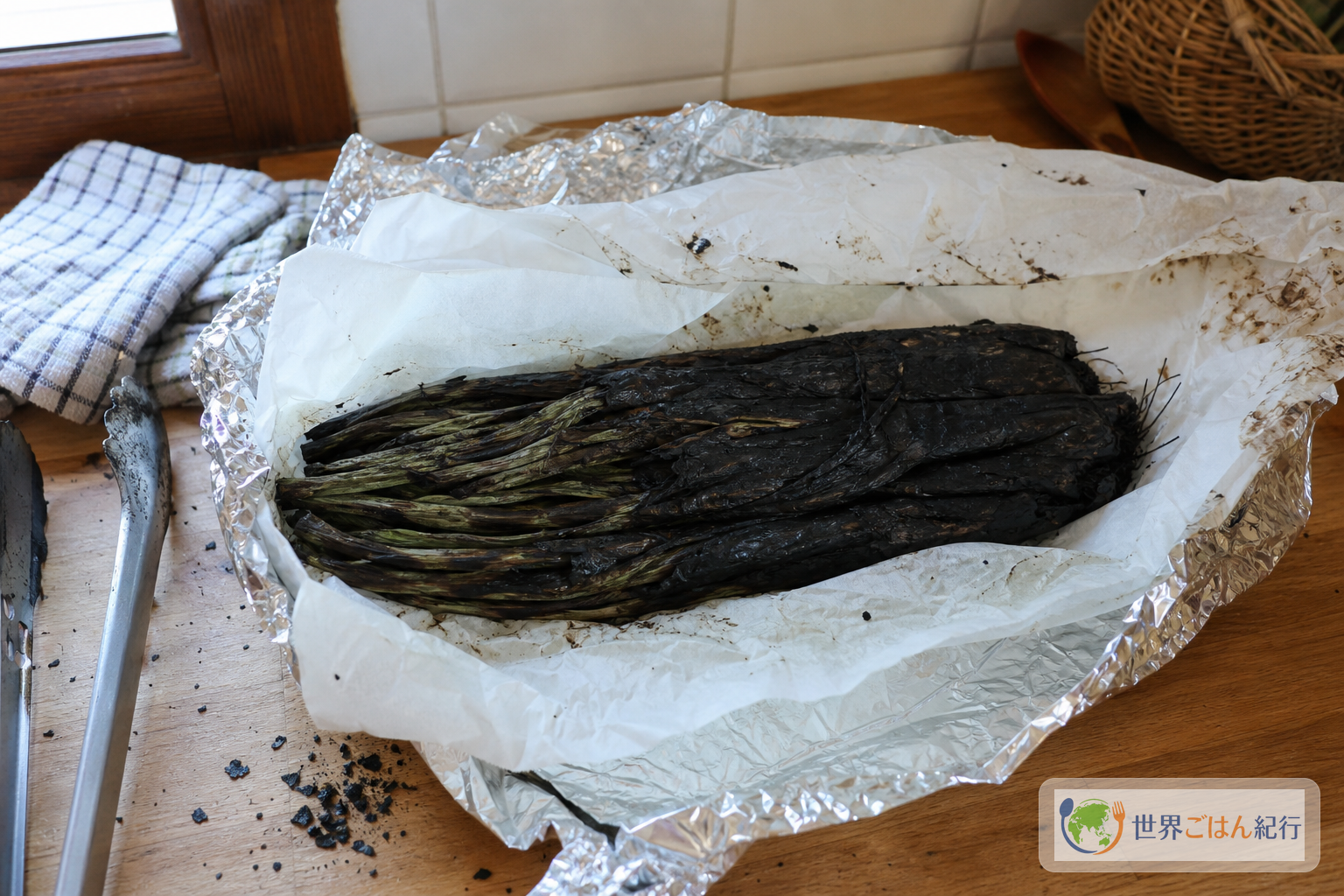
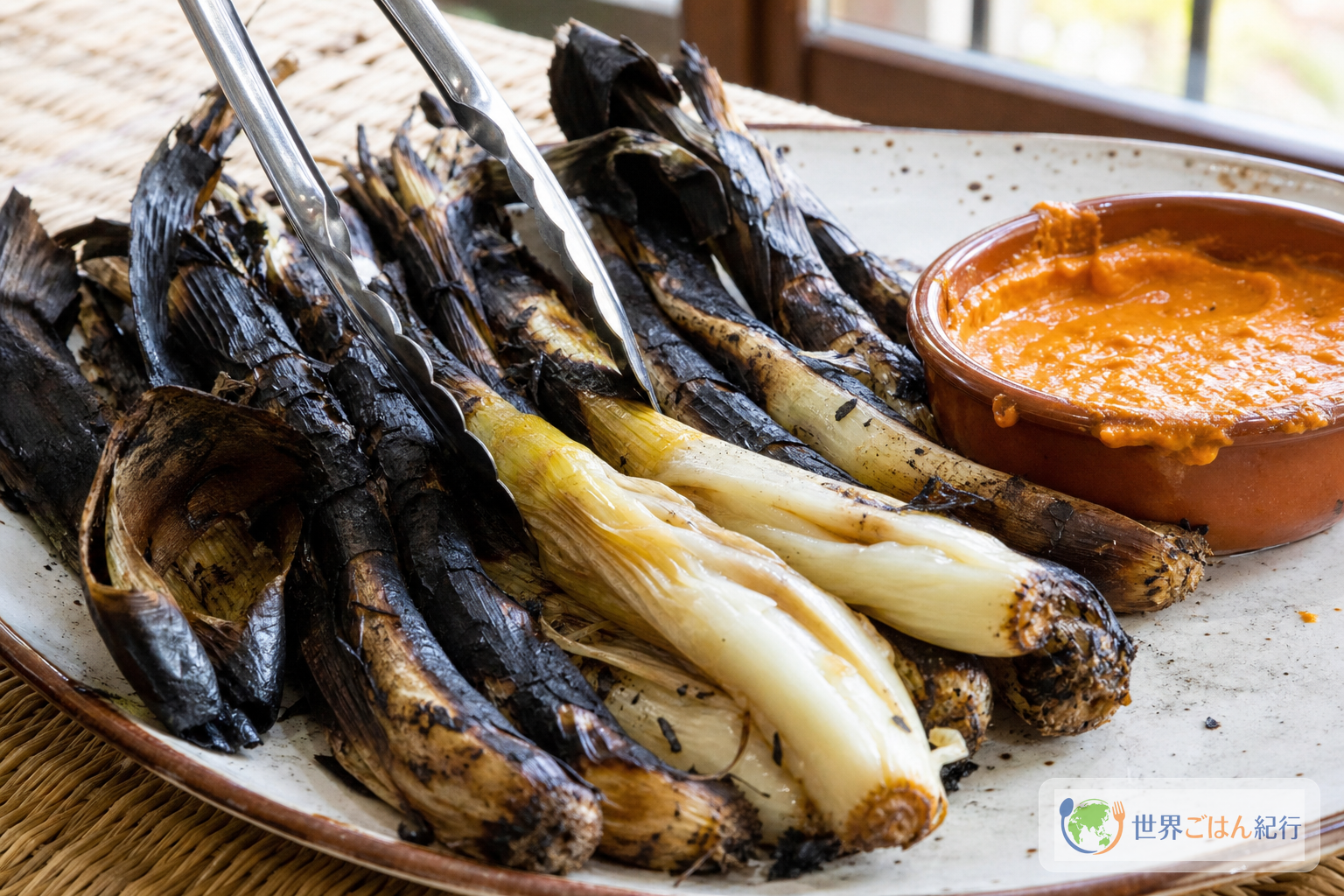
A table where you peel blackened onions with your fingertips
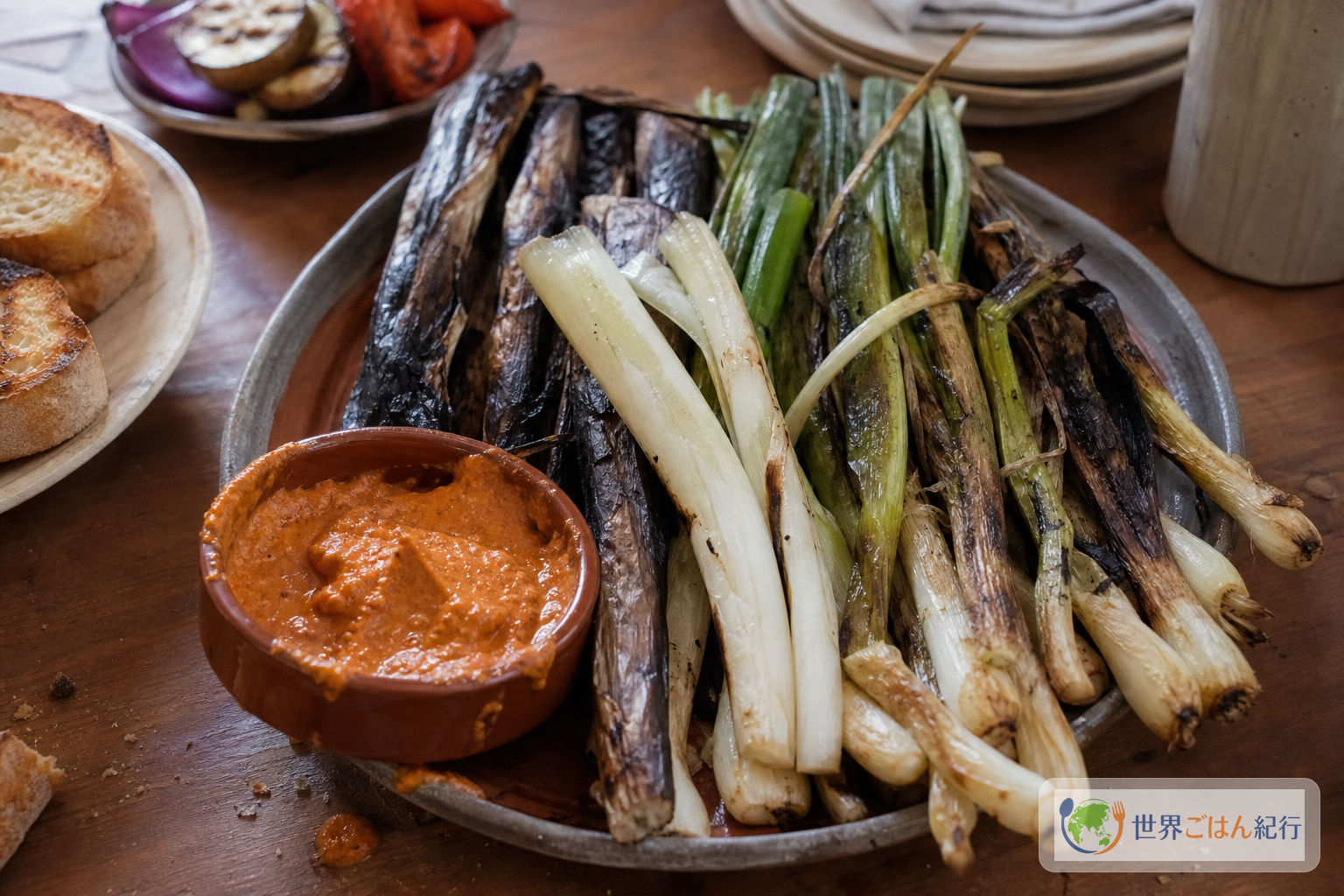
When you char long onions, the air in the kitchen suddenly feels like winter. The outside is black, scorched to the point of worry, but when you slip the skin off, a sweet white core appears. Dip it generously in a sauce of nuts and roasted tomato, and it is less roasted onions than a meal that gathers the whole table.
Calçotada (Calçotada) is a way of eating closely tied to Catalonia in northeastern Spain, especially the area around Valls in the province of Tarragona. The star is the calçot, an onion with a long white part. It is charred until the outside is black, wrapped in paper to carry through with residual heat, then peeled and sunk into the sauce.
Bringing the local outdoor charcoal fire into a home is hard, so here we use thick leeks or large scallion-type long onions and make it three ways: under a broiler, in the oven, and on a griddle. What matters is not being too afraid of the char, resting the onions after cooking, and not making the sauce too smooth.
If Fideuà or Paella Valenciana (in Japanese) are dishes you gather around a pan, calçotada is a dish where you get your hands a little dirty peeling onions. Rather than ending with a tidy plate, thinking of the black skins, the orange sauce, the bread crumbs and the conversation as part of the dish brings you much closer to the local atmosphere. On a hot season day, serving the no-fire Esqueixada (in Japanese) from the same Catalonia as a starter gives a completely different coolness with salt cod and tomato.
What is calçotada?
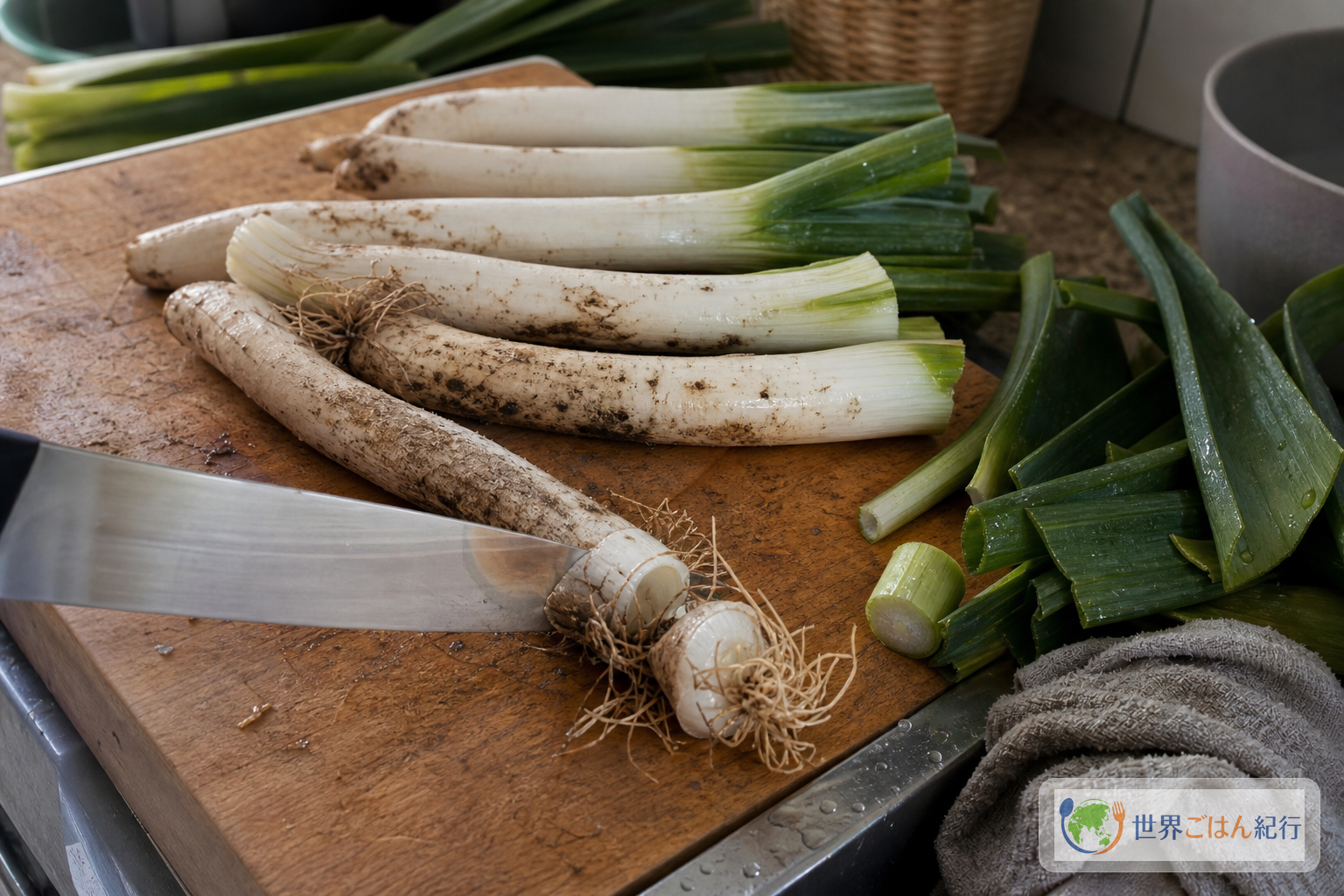
The Catalan calçot is an onion earthed up so that the white part grows long. The Valls calçot is a regional product linked to EU Protected Geographical Indication, and standards for the length and thickness of the white part are described. It is hard to find the same variety elsewhere, so this recipe calls for "thick long onions with a long white part."
What is distinctive in the local way is how they are cooked and how they are eaten. The onions are blackened on the outside with strong heat close to a direct flame, wrapped in paper to carry through with residual heat, and the burnt outer skin is peeled off when eating. The peeled white part is dipped in a sauce called salvitxada, or salsa de calçots, and the traditional gesture is to tip your head back and lower it into your mouth.
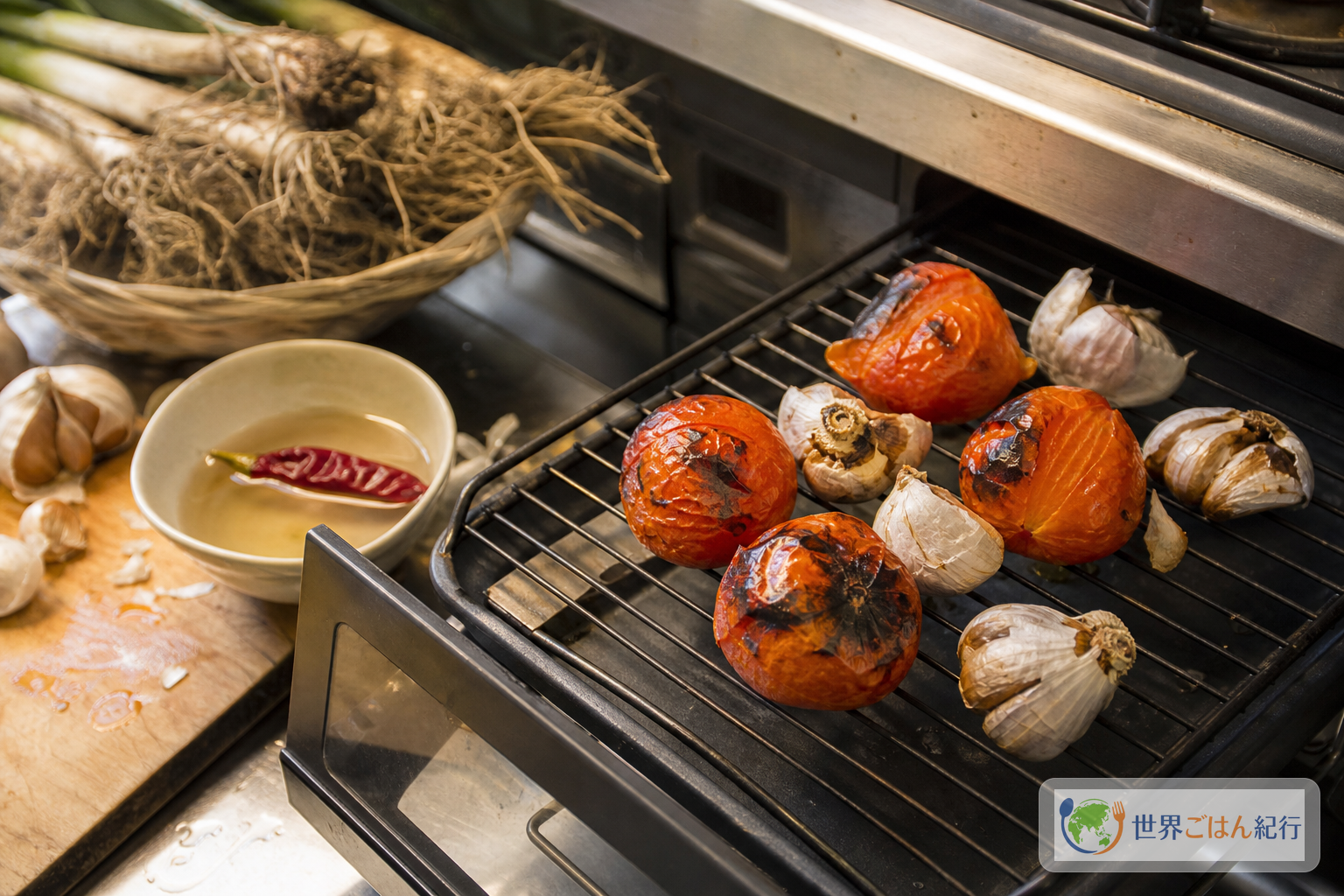
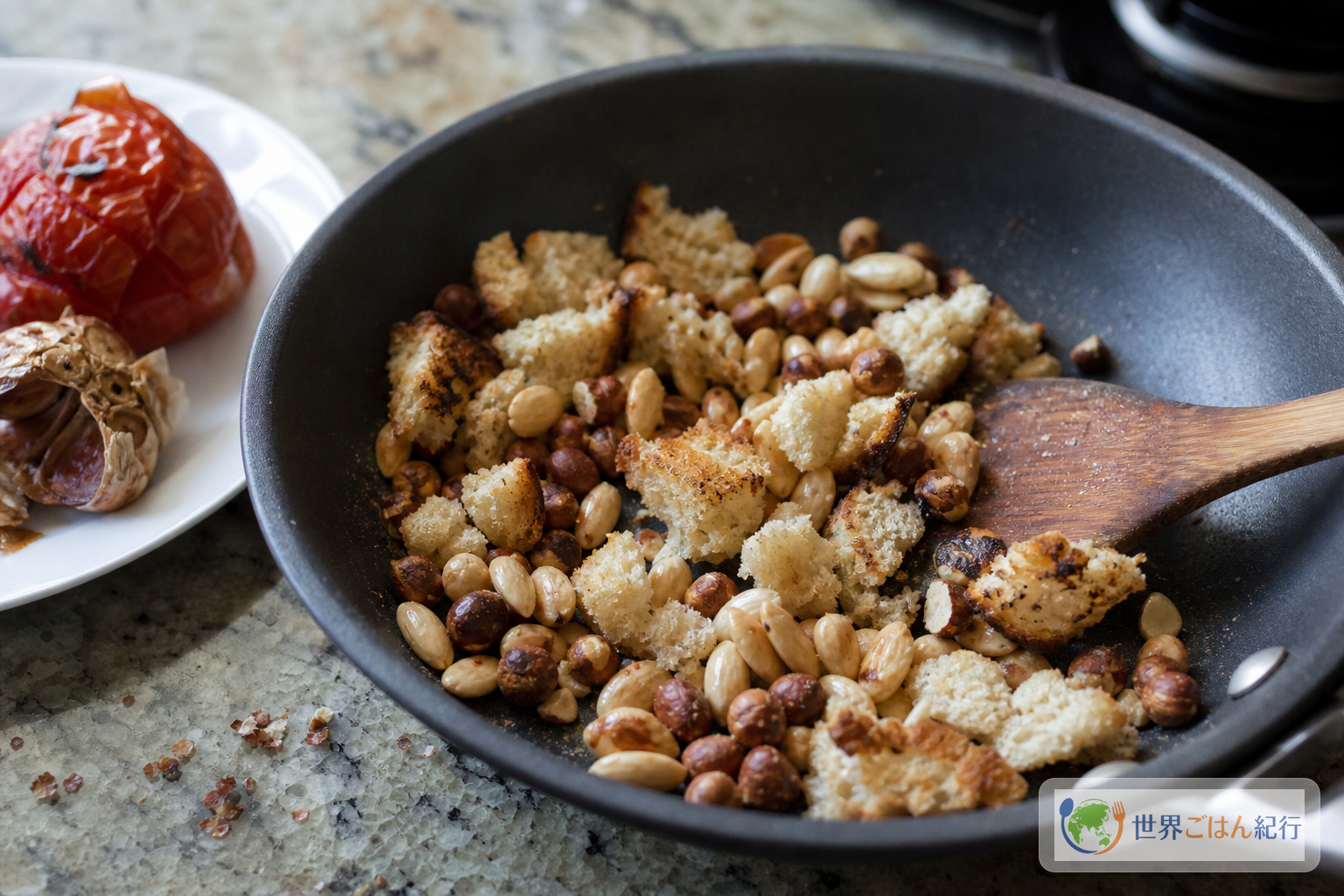
The sauce is close to romesco, but explanations of the calçot sauce often say that bread, garlic and vinegar make the thickness and acidity, and the names salsa de calçots, salvitxada and romesco overlap. This article builds a "salvitxada-style romesco sauce" that is easy to make elsewhere, from roasted tomato, garlic, almonds, hazelnuts, bread, smoked paprika, vinegar and olive oil.
Ingredients (serves 4)
Choose long onions with a long, thick white part. With thin scallions or green onions, almost nothing edible is left once the black outer skin is peeled. Thick leek-like onions can be used, but if very thick they cook through slowly, so do not split them lengthwise and give them a little longer.
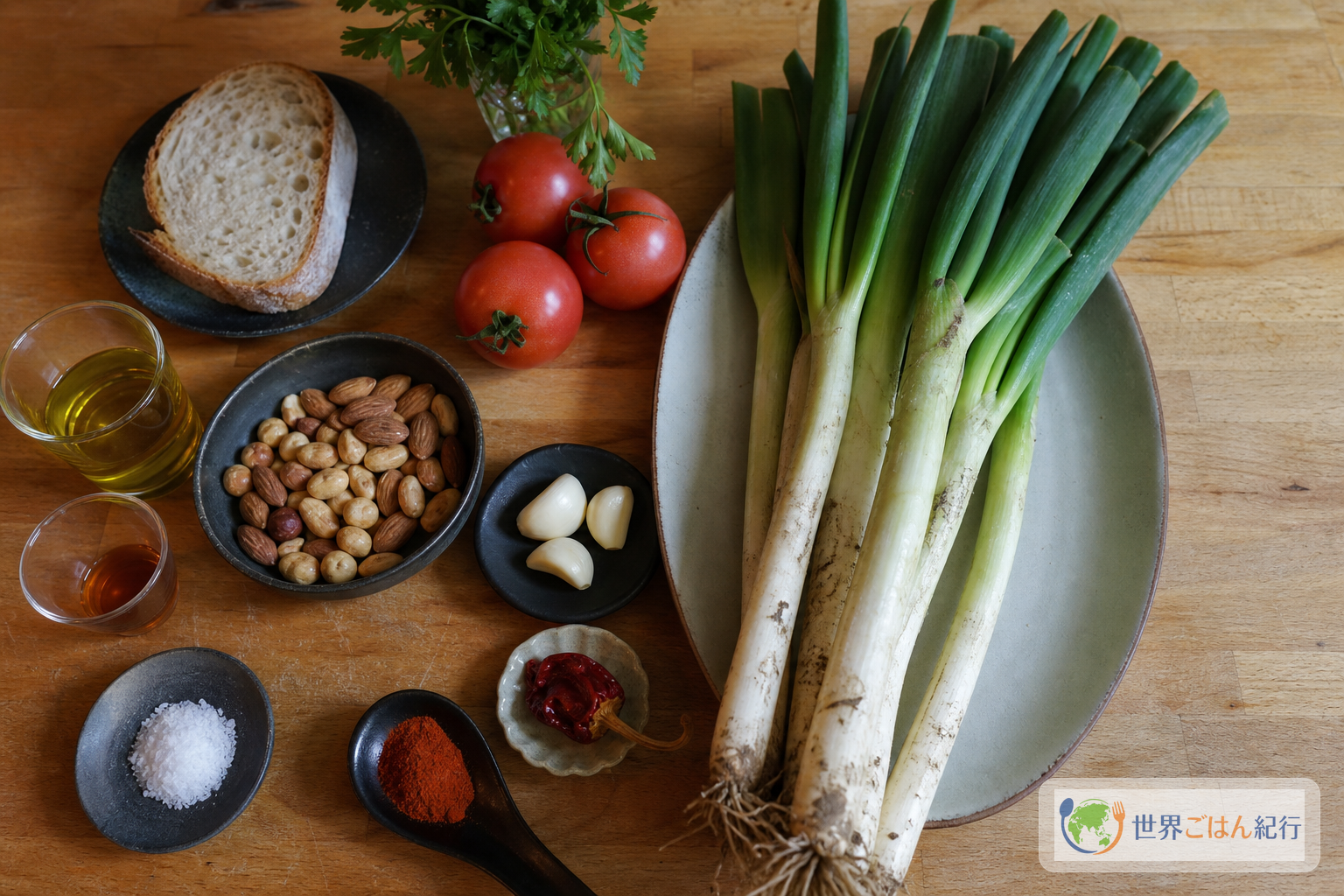
This recipe uses wheat, almonds and hazelnuts. If you have a nut allergy, do not make it. Do not eat the burnt outer skin; eat the inside once peeled. When wrapping the cooked onions in paper, use clean parchment paper or plain food-safe paper that may touch food.
What is worth seeking out when shopping
For calçotada, what is worth hunting for is not the long onions themselves. Choose thick onions near you, and give priority to the smoked paprika that defines local character, a small food processor that lets you make the sauce coarse, and a griddle or plancha that makes it easy to cook a batch at home.
Smoked paprika adds a smoky red aroma to the sauce of roasted tomato and nuts. Even when you can't get ñora peppers, having it moves the sauce away from something like a ketchup-leaning red sauce.
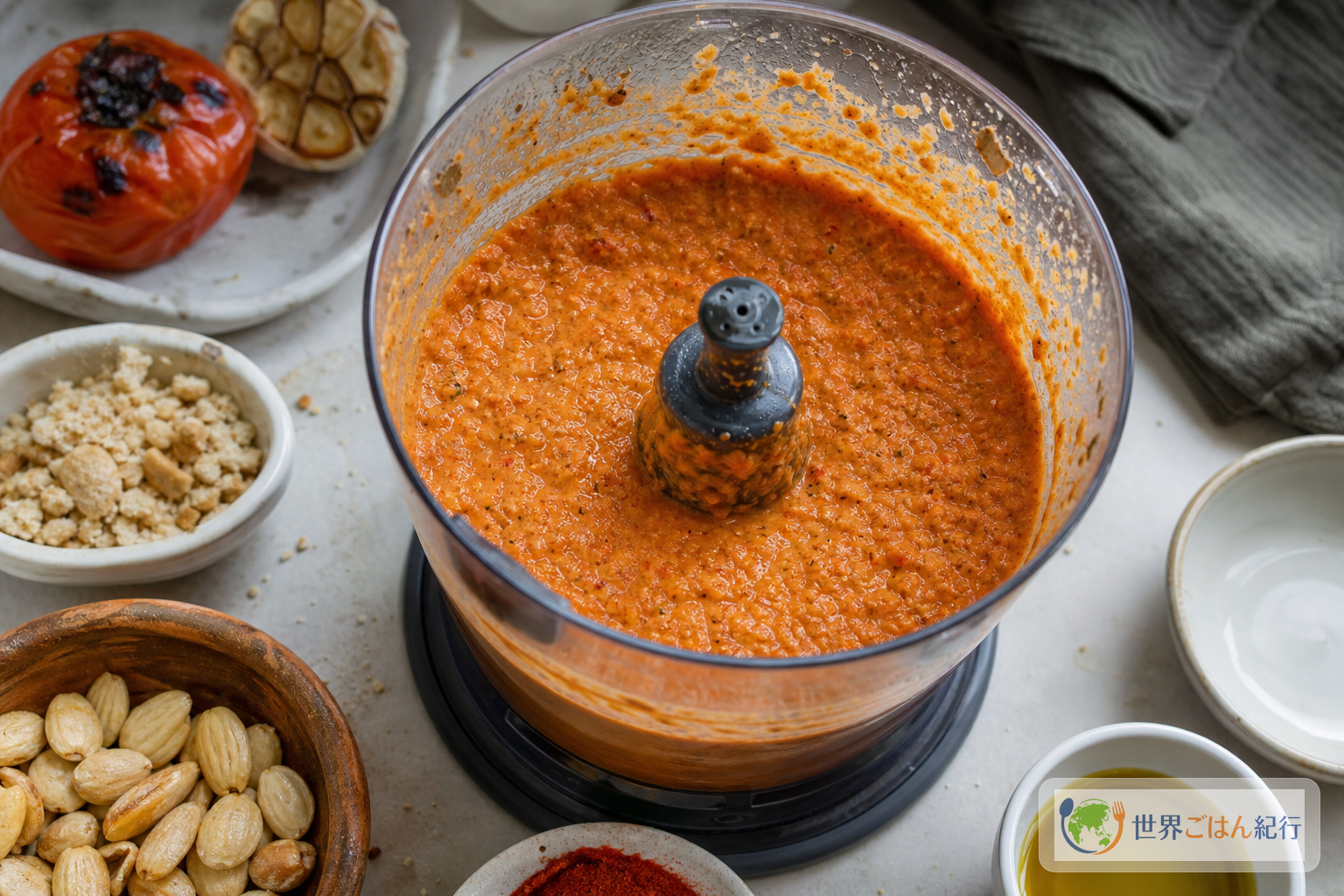
The sauce can be made in a mortar, but to combine nuts, bread and roasted tomato at once, a small food processor is easier. Do not go to a complete paste; stop where fine grains of bread and nuts remain.
In a home with a small broiler, cooking in batches on a griddle makes it easier to rotate. You won't get the aroma of an open flame, but you can recreate the flow of blackening the skin and steaming the inside.
| What to buy | Priority | Reason | Substitute |
|---|---|---|---|
| Smoked paprika | High | Makes up for the red aroma when you have no ñora pepper | Sweet paprika alone gives no smoky aroma |
| Small food processor | Medium | Makes it easy to turn nuts and bread into a coarse sauce | Crush carefully in a mortar |
| Griddle or plancha | Medium | Can cook many onions at once over strong heat | Broiler, oven, skillet |
How to make it: black outside, sweet inside
If you cook roasted onions slowly over low heat, both the outside and inside turn watery. Char the outer skin first with strong heat, then wrap in paper and foil to carry through with residual heat, and the outside peels easily while the inside turns creamy.
Tips for the char and the sauce
The char for calçotada is considerably blacker than for ordinary roasted onions. Unless you cook the outer skin to the point where it feels "burnt" to a home cook, the core stays hard when peeled. But what you blacken is the outer skin. If you cook so long that you dry out the white core, fiber stands out more than sweetness.
| State | Guide | How to fix it |
|---|---|---|
| Outer skin is only brown | Heat is low, cooking time short | Raise to high heat and cook 2 more minutes per side |
| Core is hard | Not enough residual heat for the thickness | Rest 5 more minutes, still wrapped |
| Core is watery | Surface water remained, or cooked long over low heat | Next time wipe before cooking and apply strong heat from the start |
| Sauce is heavy | Too much oil, weak vinegar | Add 1 tsp vinegar and 1 tsp lemon juice |
| Sauce is gritty | Nuts too coarse, bread too dry | Add 1 tbsp water and blend for only 10 seconds |
The commonest mistake with the sauce is making it too smooth. With no grain at all it is closer to a red mayonnaise than a vegetable dip. Stopping where fine grains of bread and nuts cling to the onion puts flavor on each onion.
If you can't get ñora peppers, approximate with 1 tsp smoked paprika and 1/2 tsp sweet paprika. This is not a dish where you add more hot pepper. The aim is to support the aroma, the red color and the sweetness of roasted tomato, so keeping to the amount of paprika holds together better than adding heat with chili flakes.
How it is eaten locally, and a menu
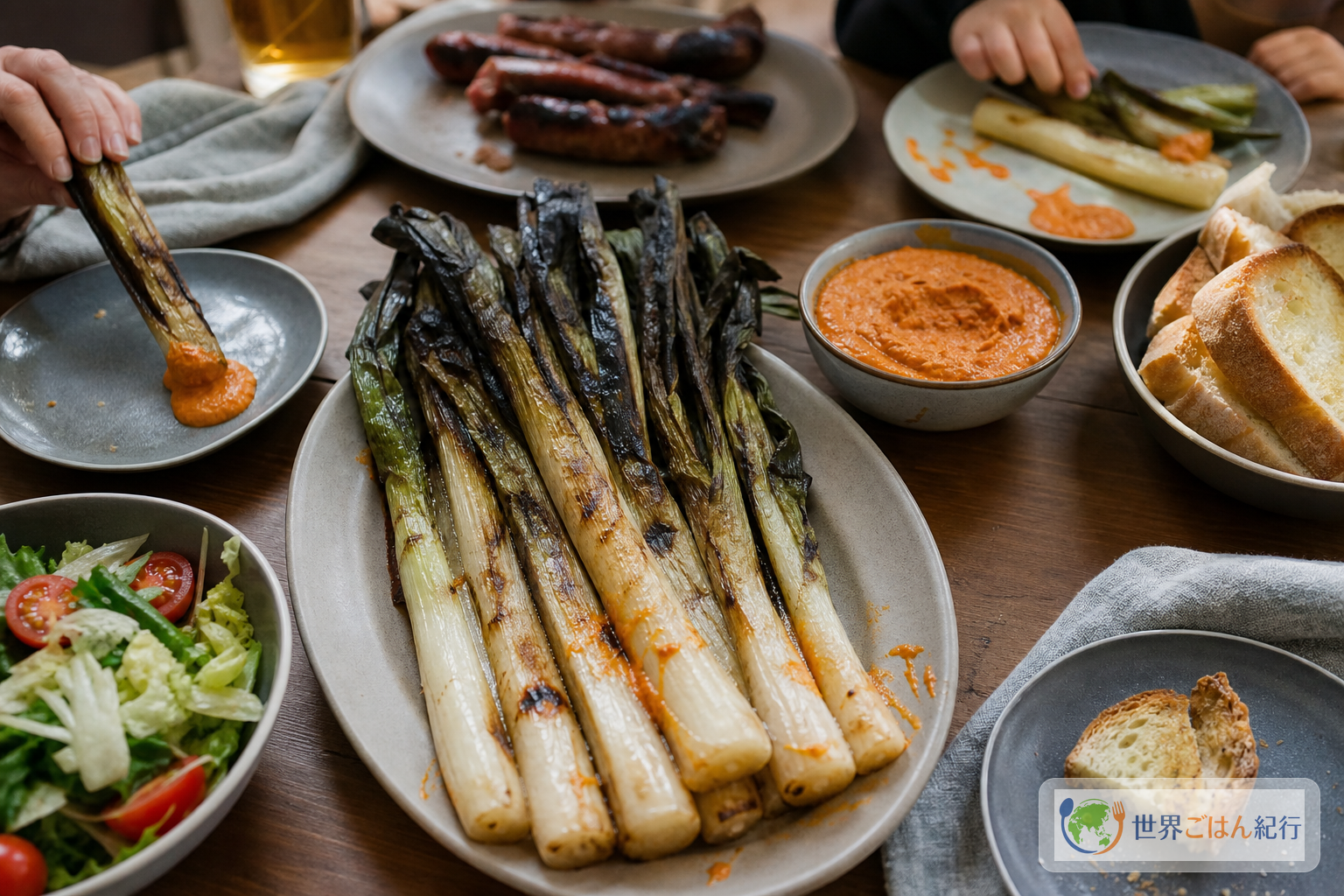
The explanation from the city of Valls presents the way of dipping the calçot in sauce, lifting it up and lowering it into the mouth. Doing the same motion at home might look a little exaggerated, but this is the reason for cooking the long onions without cutting them short. Peeling one, sinking it in sauce and chasing it with bread changes the tempo of the table from ordinary side dishes.
In a local calçotada, after the onions comes a course of meat, sausage, blood sausage, artichokes and so on grilled over charcoal. At home, making the onions the star, with toasted bread, a leafy salad, olives and Tortilla Española is enough. If you add another Spanish dish, a warm Cocido Madrileño (in Japanese) is a little heavy compared with a cold Gazpacho, so leaving it for another day is less tiring to eat.
For wine, a light red, a rosé or a dry sparkling wine suits it. Because the sauce contains nuts and oil, something with acidity is easier to eat than a heavy red. If you aren't pairing with alcohol, even sparkling water with a squeeze of lemon cuts the lingering oil.
Storage and reheating
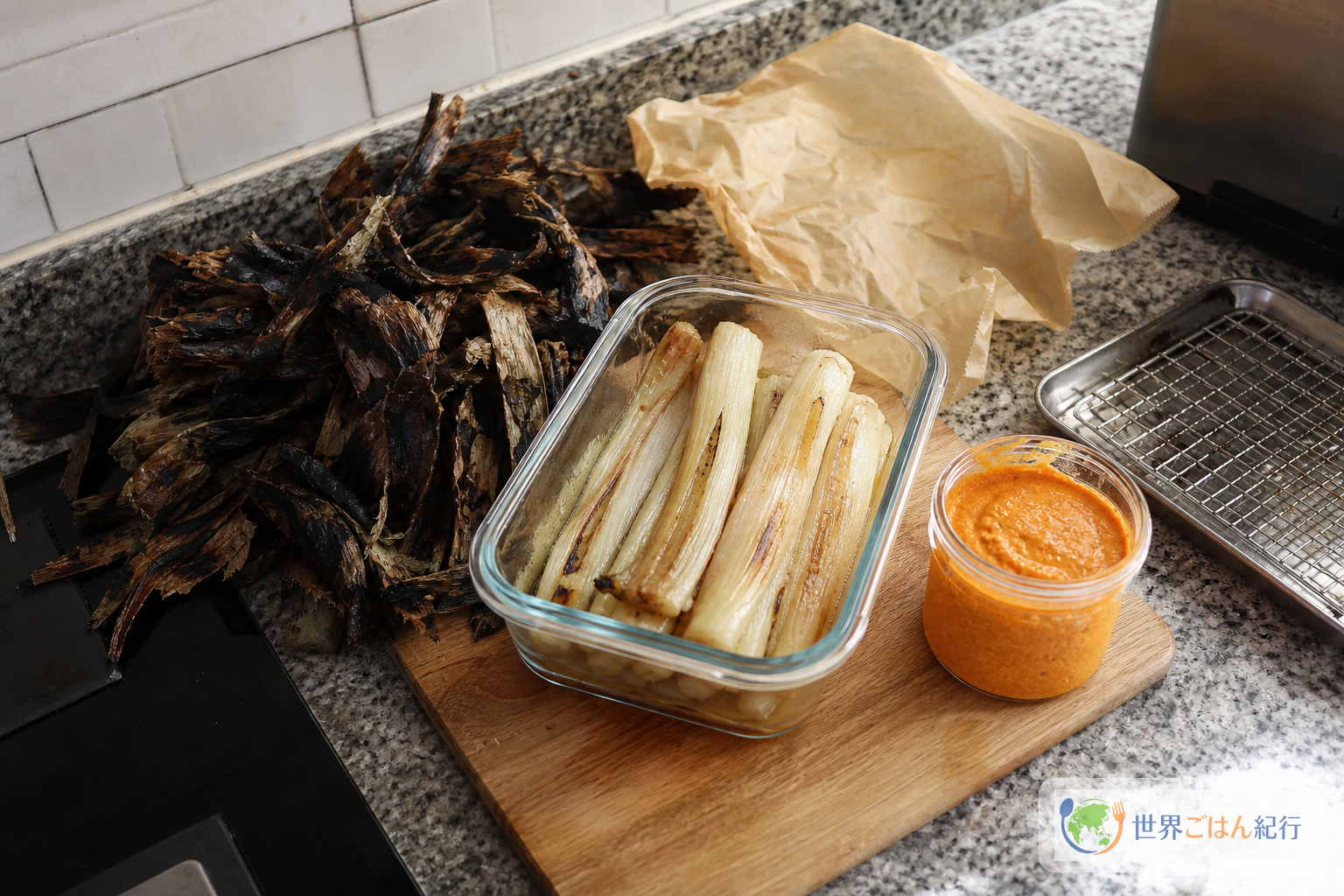
Calçotada is best freshly cooked. If you have cooked a batch of long onions, remove the burnt outer skin and put only the white core in an airtight container. Keep the sauce in a separate container and finish within about 2 days, refrigerated. If the onions and sauce are put together, water comes out by the next day and the sauce thins.
To reheat, use a toaster oven at 180°C for 3 to 4 minutes, or roll them in a skillet over medium-low heat for about 2 minutes. In a microwave alone the onions release water easily, so warming at 600 W for 20 seconds and then drying the surface in the toaster oven brings them back more easily. The sauce is fine cold, or after 10 minutes at room temperature.
Leftover sauce goes well with roasted chicken, white fish, potatoes and hard-boiled eggs. Mixed directly into a bean stew like Fabada Asturiana, the nut aroma comes out too strongly, so serve it only as an accompaniment. Spread thinly on bread and toasted, it becomes a light lunch the next day.
Frequently asked questions
Can I make it with very thick leeks?
Yes. Because they are thick, give them a little longer than long onions: under a broiler, a guide of 8 to 10 minutes on one side and 8 minutes after turning. If the outside is black but the center is still hard, extend the time wrapped and resting to 15 minutes.
May I cut the long onions short?
If they don't fit in your home broiler, you can cut them in half. However, cutting them short reduces some of the fun of peeling at the table. Even when cutting, leaving a length of 15 cm or more, rather than 5 cm pieces, keeps the calçotada character.
I don't have ñora peppers.
You can make it with 1 tsp smoked paprika and 1/2 tsp sweet paprika. Adding a lot of hot chili powder changes the direction of the dish. Think of ñora as an ingredient that gives a red aroma and a round sweetness rather than heat.
Is it OK to wrap them in newspaper?
Many accounts say newspaper is used locally, but in a home kitchen it is easier to handle by first using clean parchment paper as the layer that touches the food and covering the outside with aluminum foil. Make sure the printed side does not touch the food directly.
Can I make the sauce the day before?
Yes. Refrigerate it in an airtight container and leave it at room temperature for 10 minutes before use the next day. If the oil has separated, mix it well, and if it feels heavy, add 1 tsp vinegar or 1 tsp lemon juice. The onions keep more aroma when cooked on the day than the day before.