A stew that starts as a small plate in a Toledo bar
Cut into a chorizo in the evening kitchen and red oil seeps from the knife marks. Layer on garlic, onion, white wine and tomato, and even if you've never been to Spain, the smell makes you want to tear off a piece of bread and wipe up the sauce. Carcamusas is a Toledo small plate that is very honest about that urge.
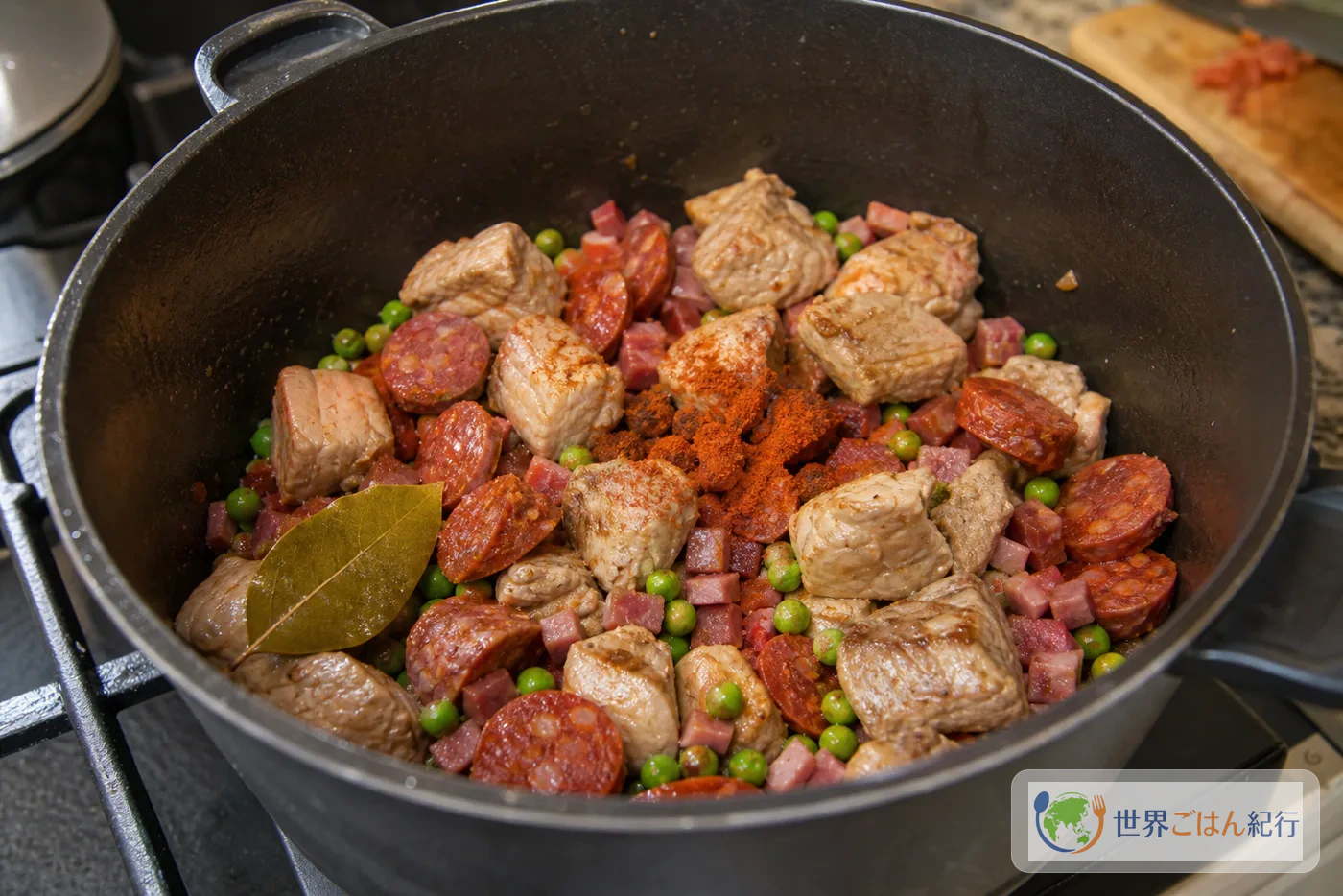
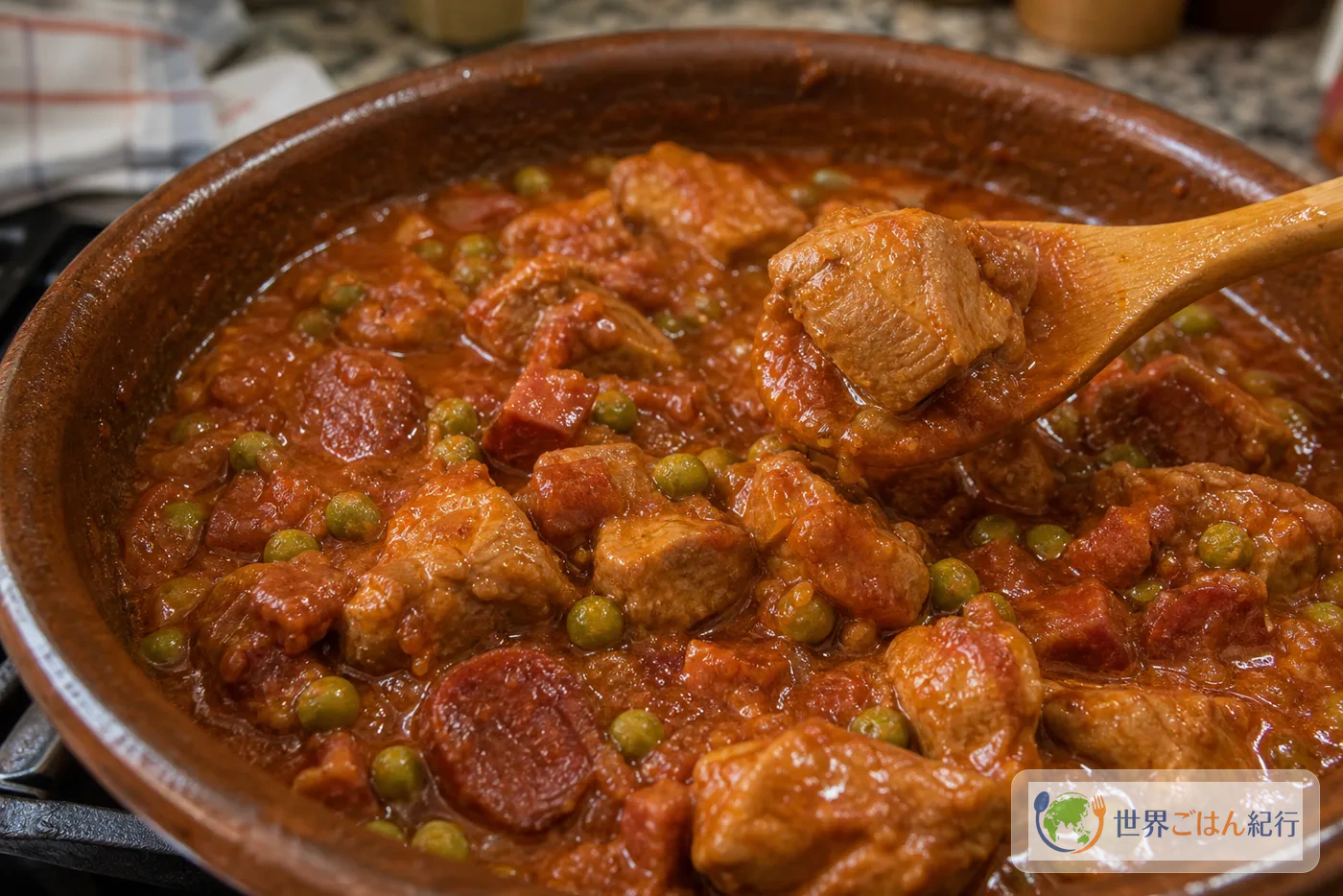
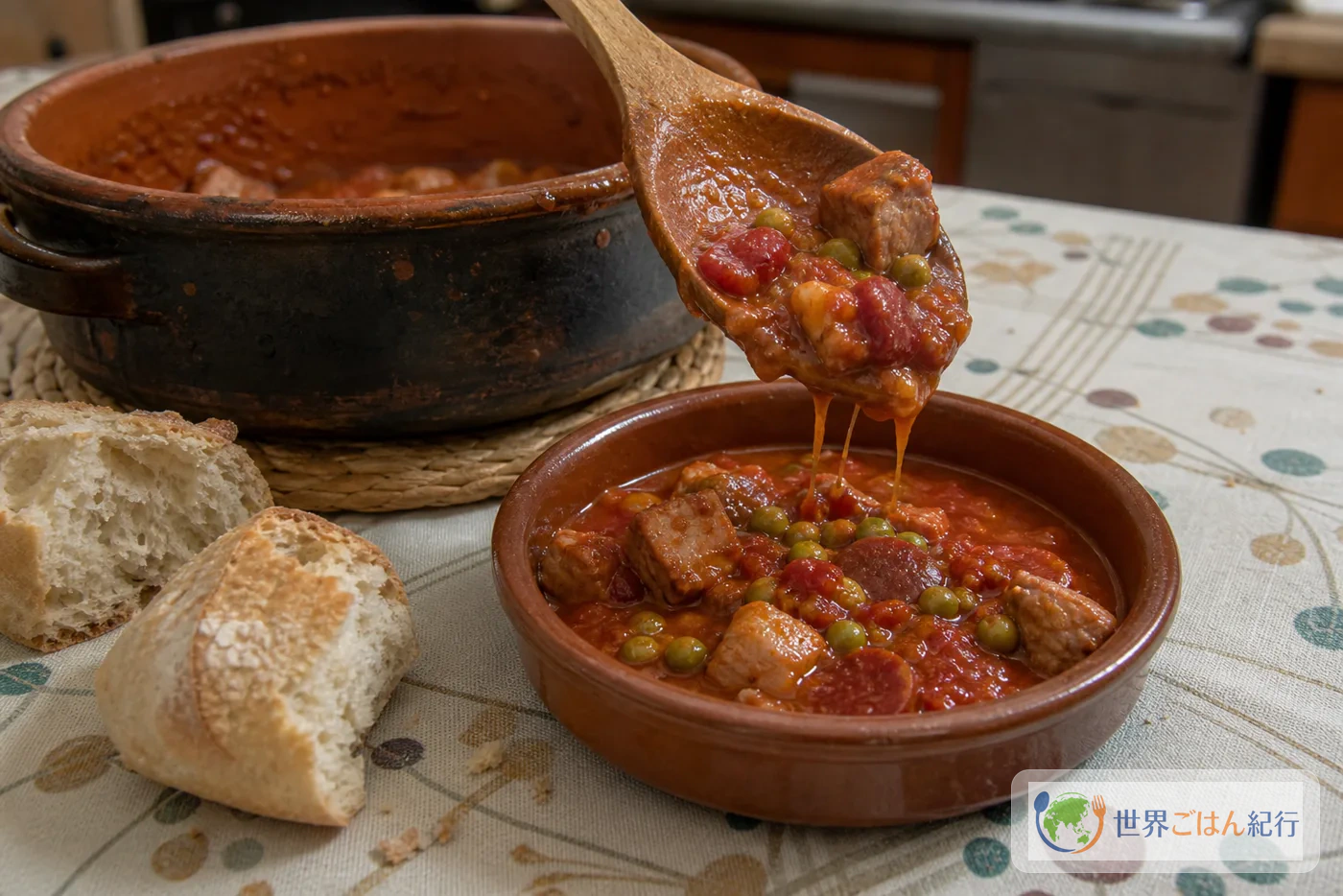
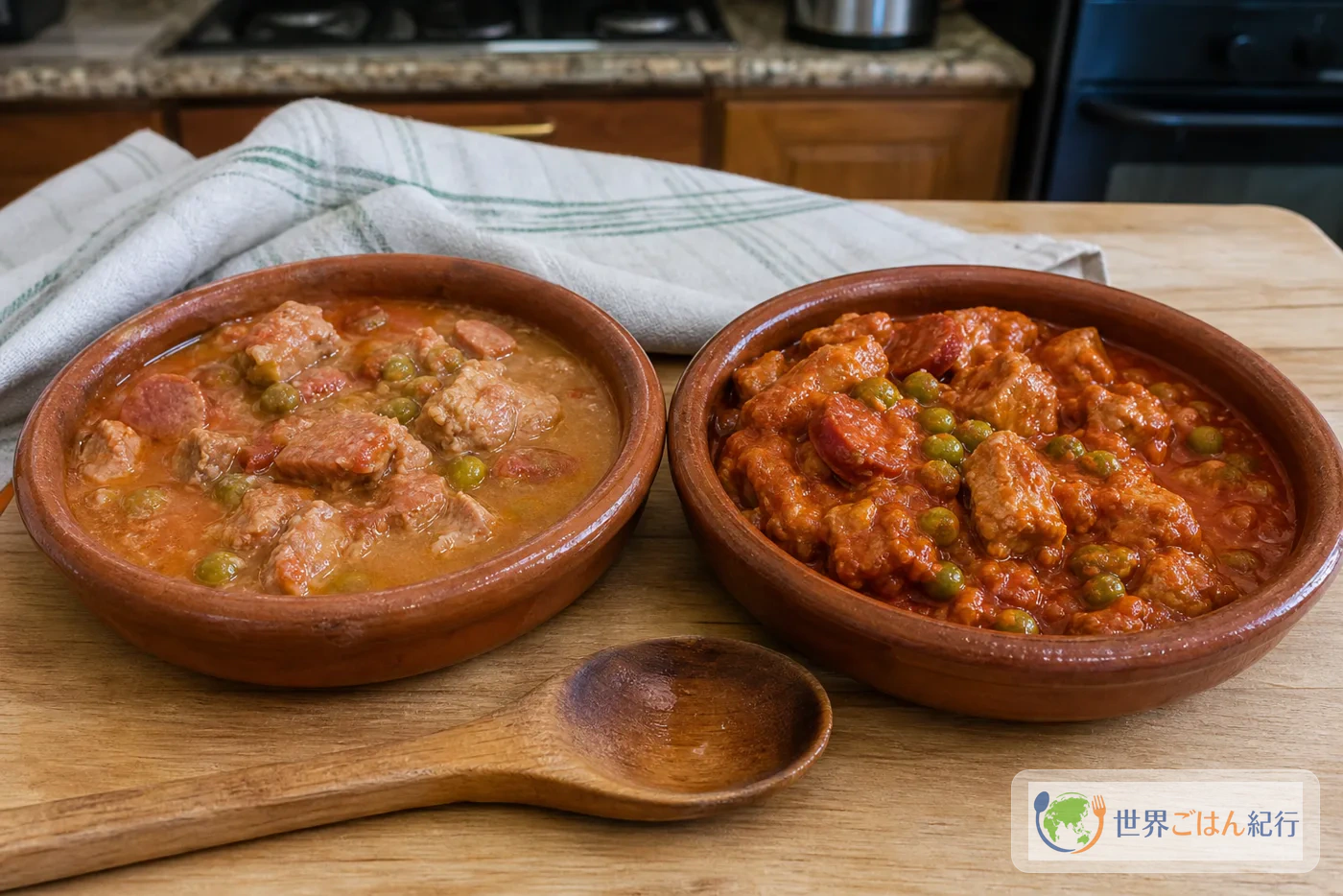
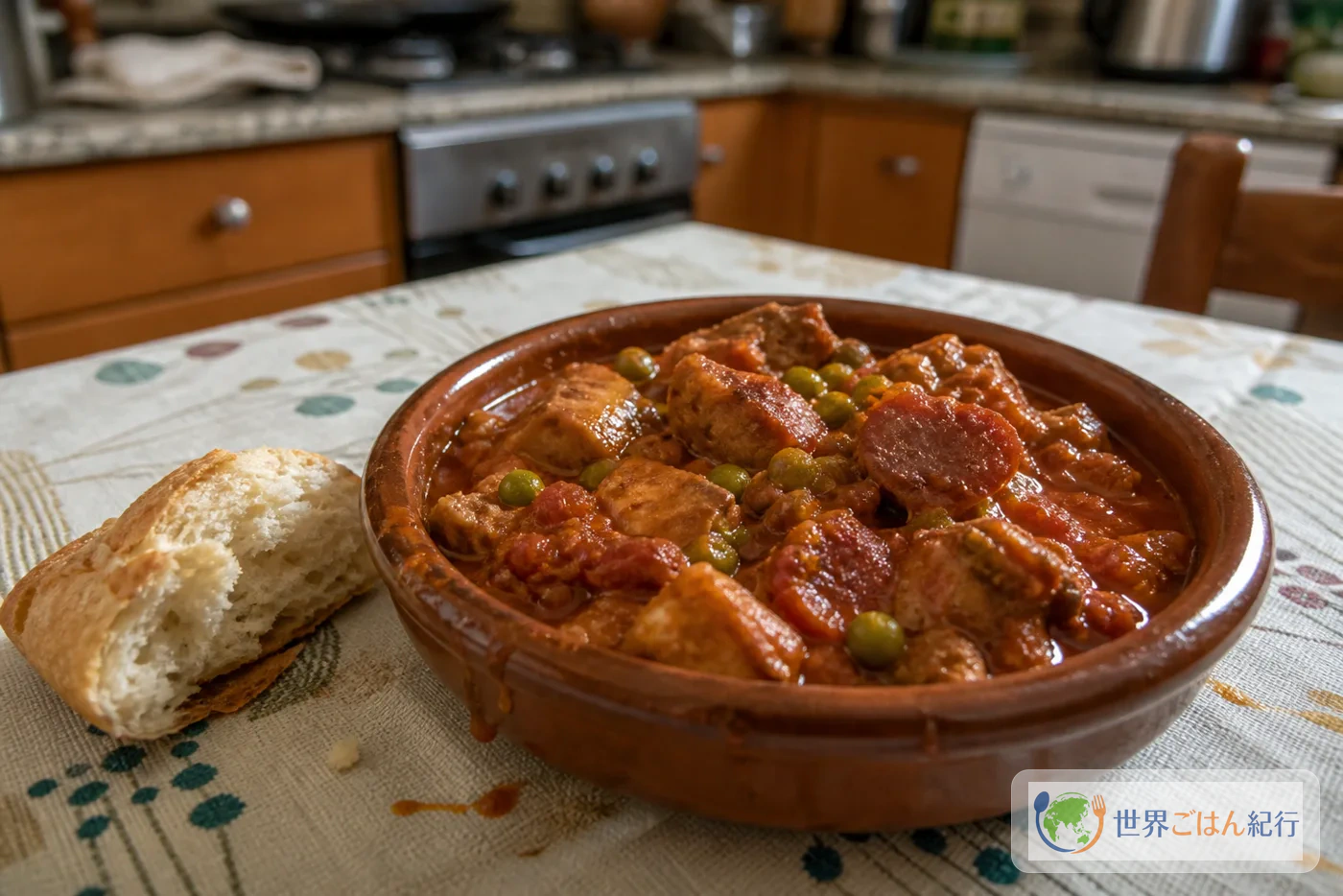
Carcamusas is a stew of lean pork, chorizo, jamón, green peas and tomato, loved in Toledo, the old capital city in Castilla-La Mancha in central Spain. In Toledo it comes piping hot in a small earthenware cazuela, sometimes with bread or French fries on the side. It's less a big-platter feast than a tapa you order first at the bar counter and eat down to the last of the sauce.
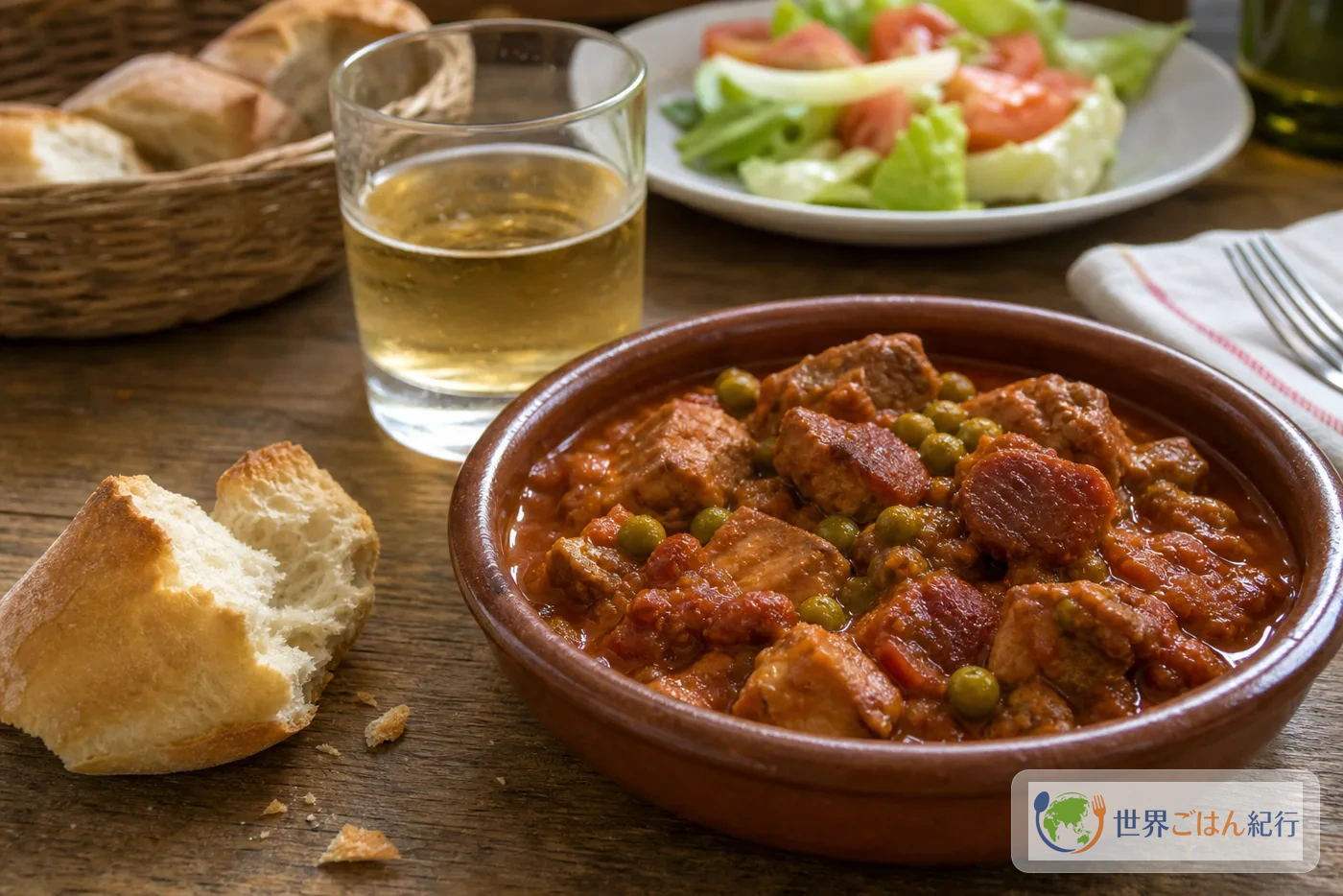
There are several theories about the name. Toledo's official tourism information and local recipes say the dish was born in the mid-20th century at Bar Ludeña in Toledo, and a commonly told story is that the name joins "carcas," for the older men who gathered at the bar, and "musas," for the young women. Rather than treating that as a settled etymology, it's more natural to see it as a dish that grew out of bar conversation, name and all.
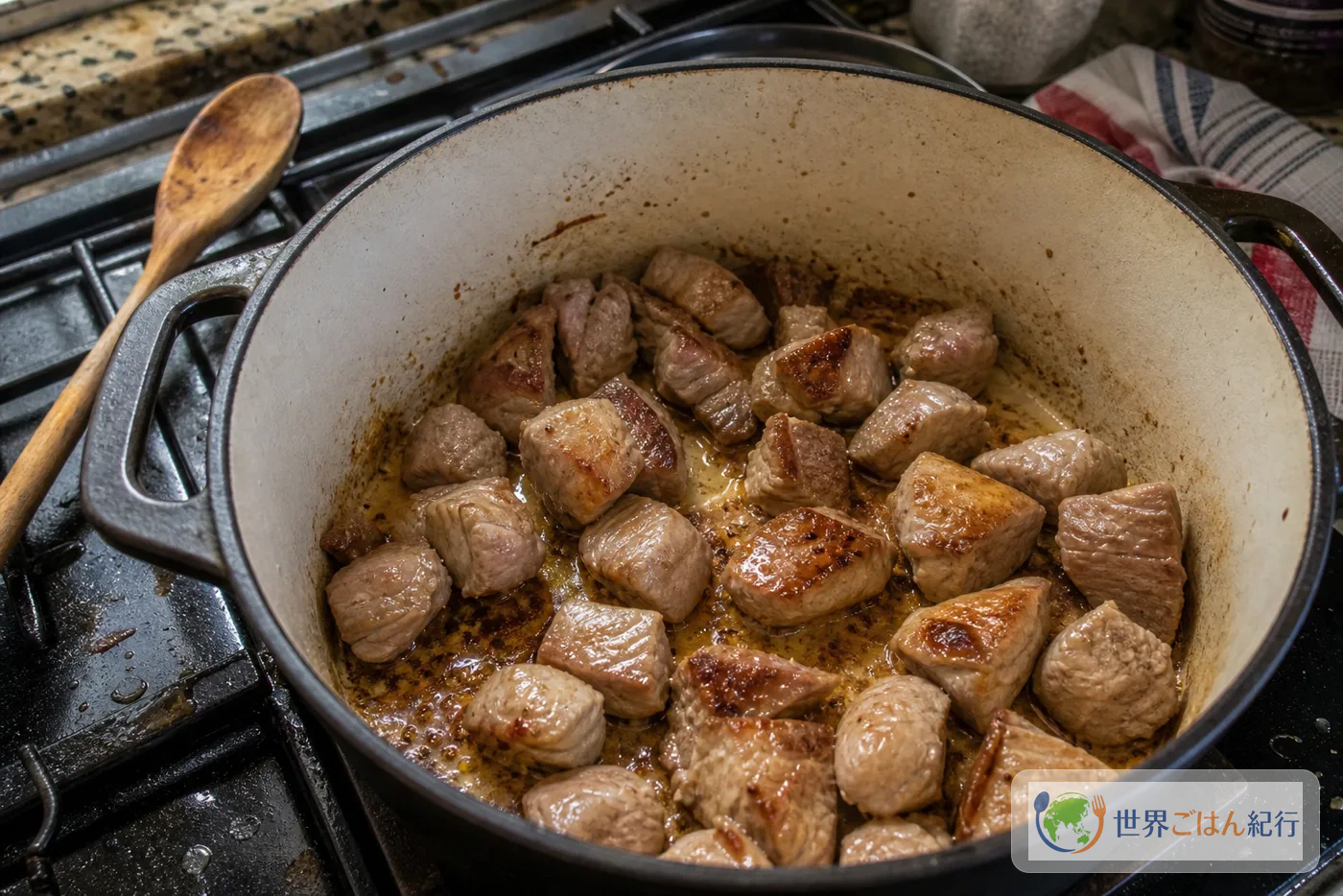
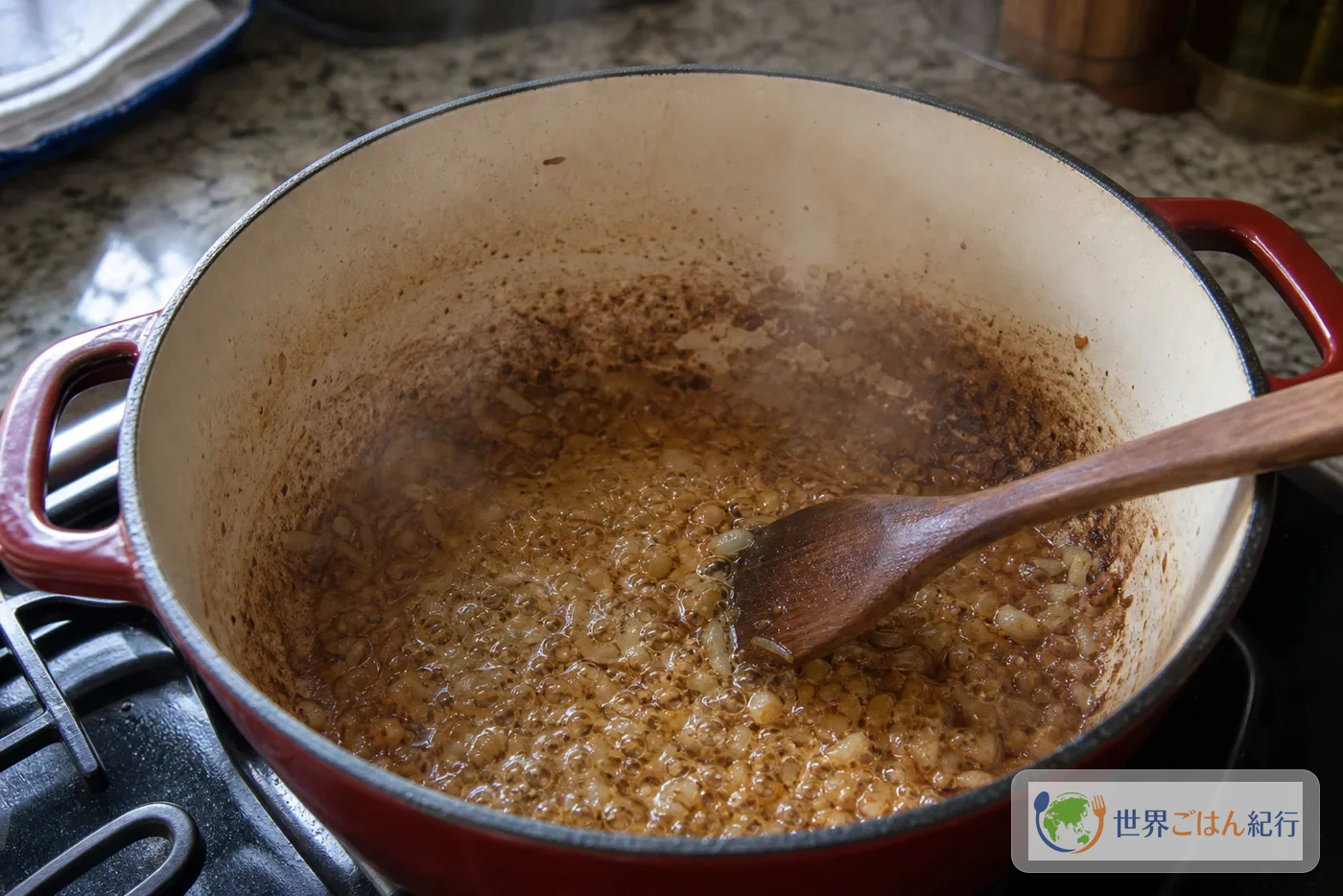
At home, three things are at its core. Brown the pork first; reduce the white wine to bring the flavor at the bottom of the pot back into the sauce; and at the end, don't leave the tomato sauce loose, but cook it down until it clings to bread. Even if you can't find chorizo and jamón, keeping the red oil, the aroma of smoked paprika and the sweetness of the peas takes this one step from a plain pork-and-tomato stew toward Toledo.
To build a Spanish menu, pair it with chilled gazpacho (in Japanese) as a starter, tortilla española (in Japanese) as the egg dish and fideuà (in Japanese) as the centerpiece for a flow of tomato, egg, seafood and meat. If you want to branch out into rich stews of beans and cured pork, northern Spain's fabada asturiana (in Japanese) has a similar aroma.
It keeps the framework of the Toledo original, "magro de cerdo" (lean pork), "chorizo," "jamón" and "guisantes" (green peas), while using easy-to-find pork shoulder, frozen green peas and tomato passata. The heat is kept mild, and smoked paprika fills in the aroma of the chorizo.
Ingredients (serves 4)
If the meat is cut too large, carcamusas loses the easy-to-eat quality of a tapa. Cut the pork into 3 cm cubes, the chorizo into 5 mm slices and the jamón or bacon into 1 cm dice. Aim for pieces small enough that a spoonful holds meat, peas and sauce together.

| Ingredient | Amount | Substitutes & notes |
|---|---|---|
| Pork shoulder or pork leg, in one piece | 600 g | 3 cm (1 1/4 in) cubes. Lean leg needs 1 extra tbsp olive oil. About 1 1/3 lb |
| Chorizo with paprika | 80 g | 5 mm slices. If unavailable, 70 g coarse-ground sausage plus 1/2 tsp smoked paprika |
| Jamón serrano or bacon | 60 g | 1 cm dice. Jamón is salty, so cut back on salt |
| Onion | 1 (200 g) | Finely chopped |
| Garlic | 2 cloves | Finely chopped |
| Frozen green peas | 150 g | Add straight from frozen. If canned, drain and add only for the last 8 minutes |
| Tomato passata | 300 g | Lightly crushed canned diced tomatoes or tomato sauce also work |
| Tomato paste | 1 tbsp (18 g) | Thickens the sauce faster. Can be omitted |
| Dry white wine | 150 ml | To avoid alcohol, use 120 ml water plus 2 tsp white wine vinegar. About 2/3 cup |
| Water or light chicken broth | 200 ml | With salty broth, cut back on salt. About 3/4 cup + 1 tbsp |
| Smoked paprika | 1 tsp | Sweet (dulce) is easiest. With hot (picante), start at 1/2 tsp |
| Bay leaf | 1 | |
| Olive oil | 2 tbsp | For browning |
| Salt | 1 tsp | Adjust at the end, tasting for the saltiness of the jamón and chorizo |
| Black pepper | 1/3 tsp | Freshly ground is best |
| Dried red chili | 1/2 | Optional heat. Removing the seeds makes it milder |
| Baguette or country loaf | 1/2 | For the table |
May contain pork, processed meats and wheat. Depending on the product, chorizo and bacon can contain milk, egg, wheat or soy, so check the labels. Cook pork through to the center; if you use a thermometer, aim for at least 63°C (145°F) in the center followed by a 3-minute rest. In a stew, it is then cooked further for texture before serving.
Pork shoulder is the easiest cut. It has a little fat and doesn't dry out even with about 50 minutes of simmering. If you use leg, keep the browning short and, above all, don't let the liquid boil hard. Made with pork belly alone, the sauce gets too fatty and the result is a heavy stew rather than one that suits bread.
Not just any "spicy sausage" will do for chorizo. For a Spanish leaning, look for one with the red oil and smoky aroma of paprika rather than chili heat. Bacon is a fine stand-in for jamón serrano, but a strongly smoked one clashes with the smoked paprika, so use a little less.
What to look for when shopping
The things to buy nearby are the pork, onion, garlic, frozen green peas and tomatoes. The items worth seeking out are the chorizo and smoked paprika that define the dish's outline, and a heavy pot that lets the liquid evaporate slowly.
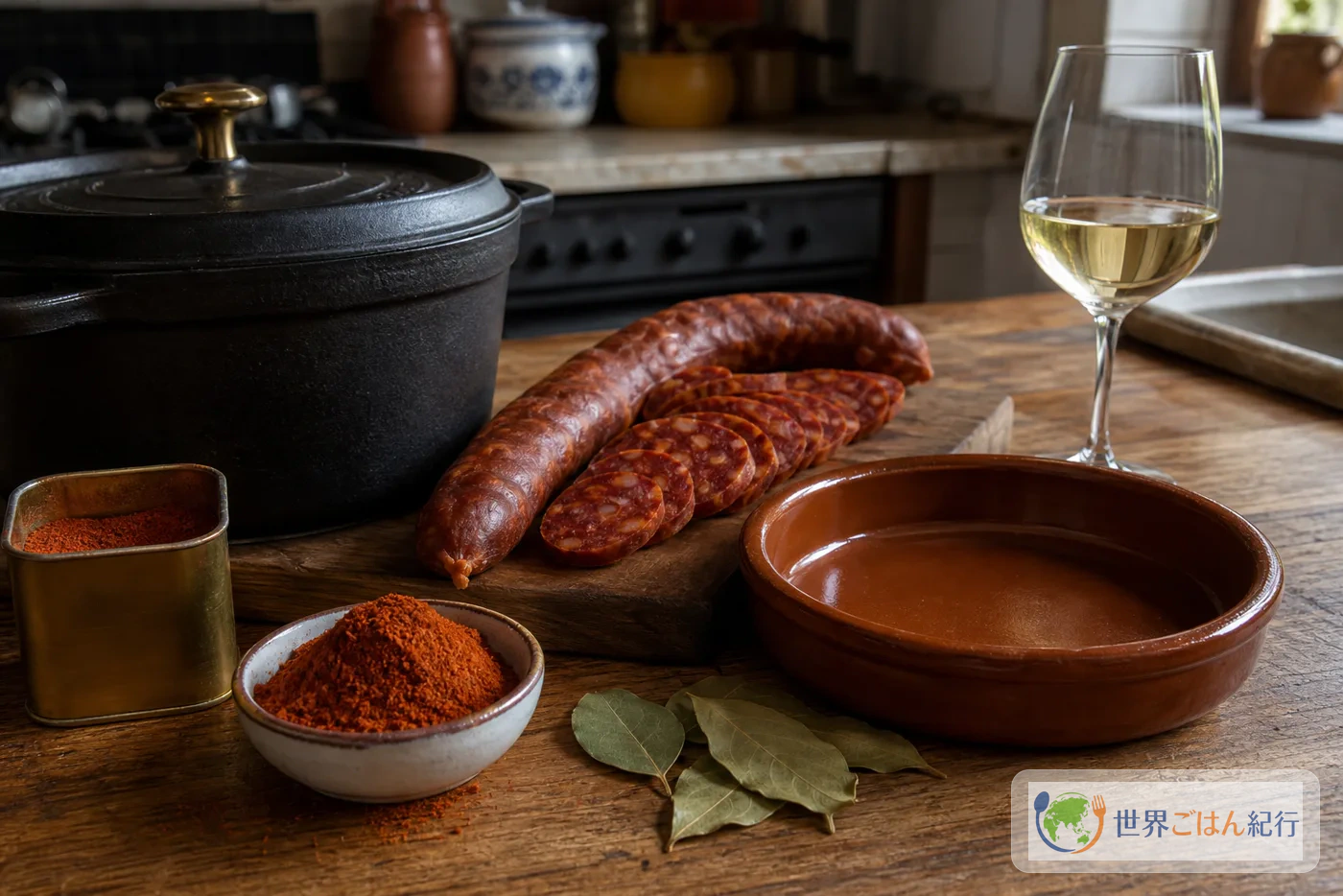
Chorizo makes the red oil in carcamusas. Even if you plan to use ordinary sausage, try a paprika chorizo the first time so you know which aroma you're substituting for.
Smoked paprika is also your insurance when you can't find chorizo. Choosing sweet smoked paprika adds a distinctly Spanish red aroma without adding heat.
Because this is a stew whose sauce you reduce, a pan with harsh hot spots will scorch the tomato. A heavy pot isn't essential, but it makes it easier to move between low and medium heat, and the meat is less likely to toughen.
Method: build the sauce, then simmer gently
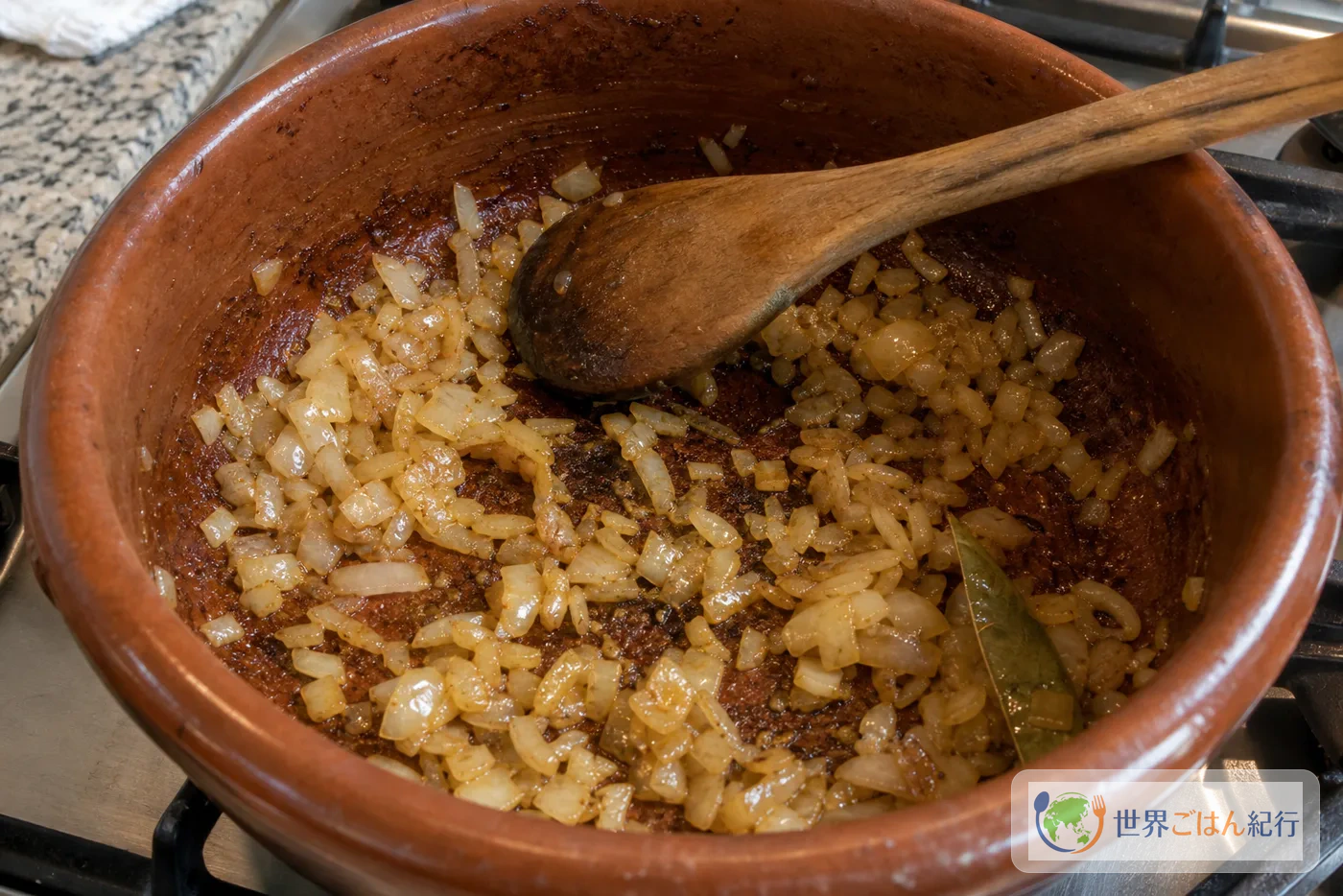
If you put everything in the pot at once and simmer it, carcamusas tastes flat. Brown the meat, sauté the aromatics, deglaze the bottom of the pot with white wine, bring together the chorizo and peas, then simmer in tomato. Follow that order and the sauce won't turn watery, even in an ordinary home pot.