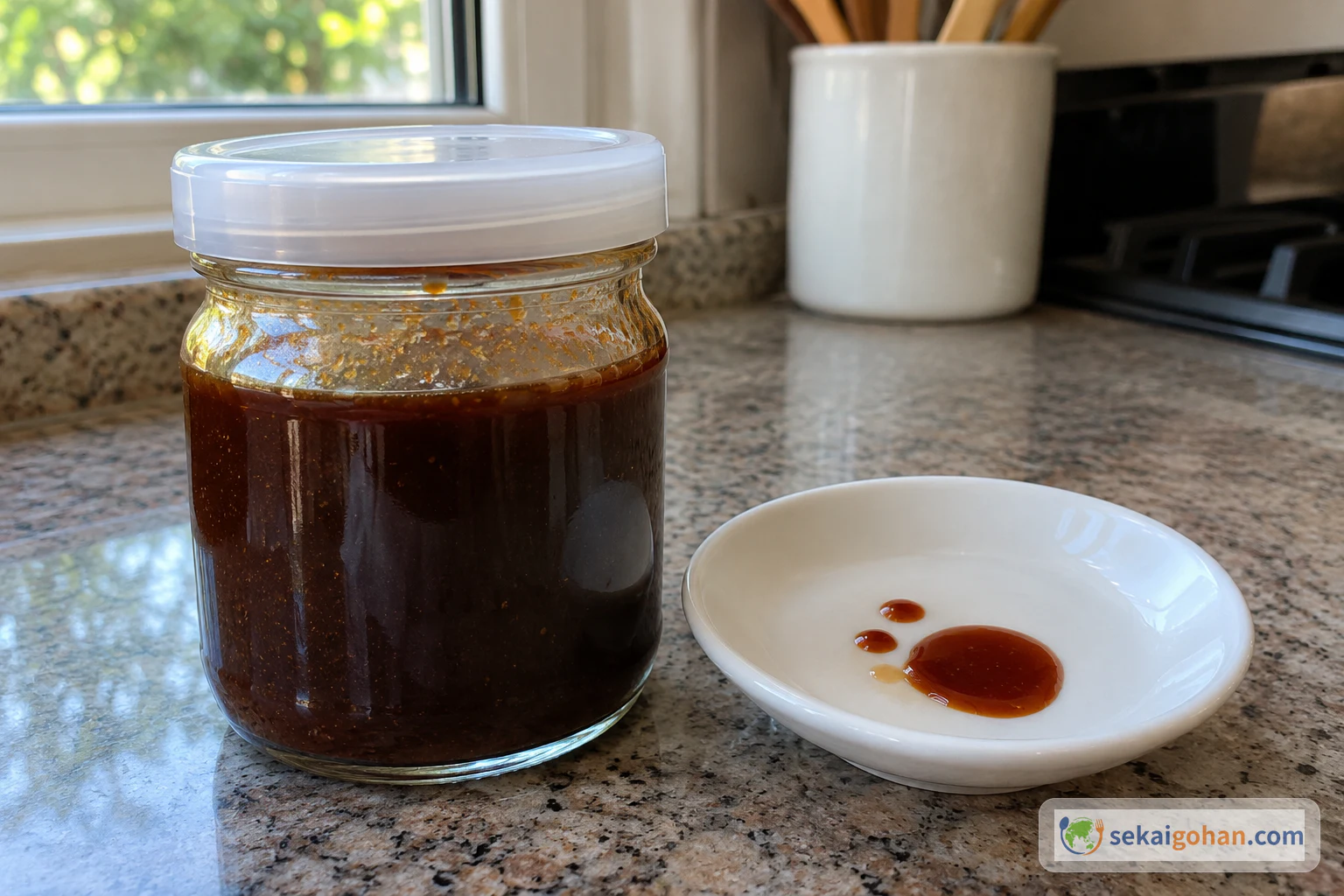
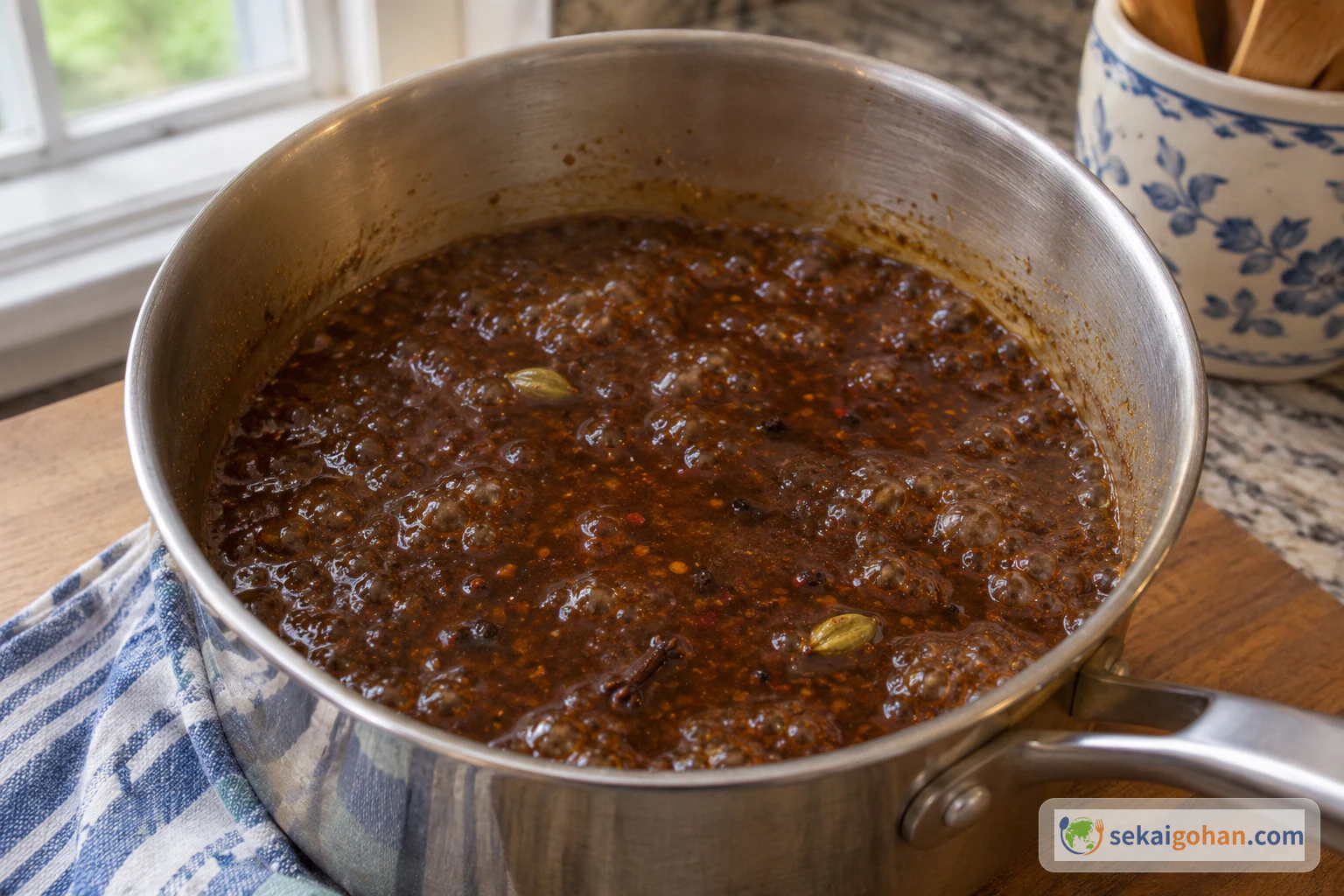
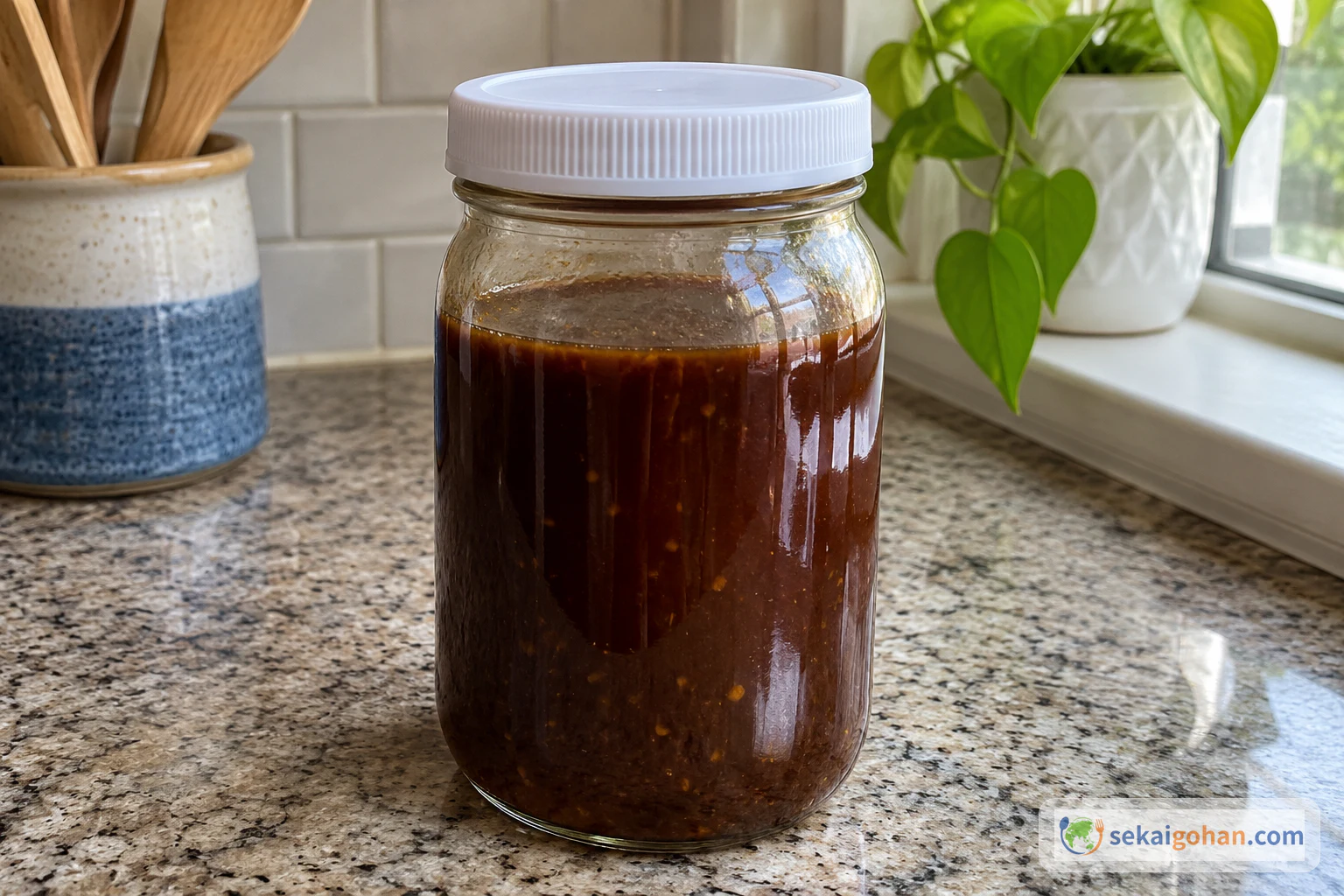
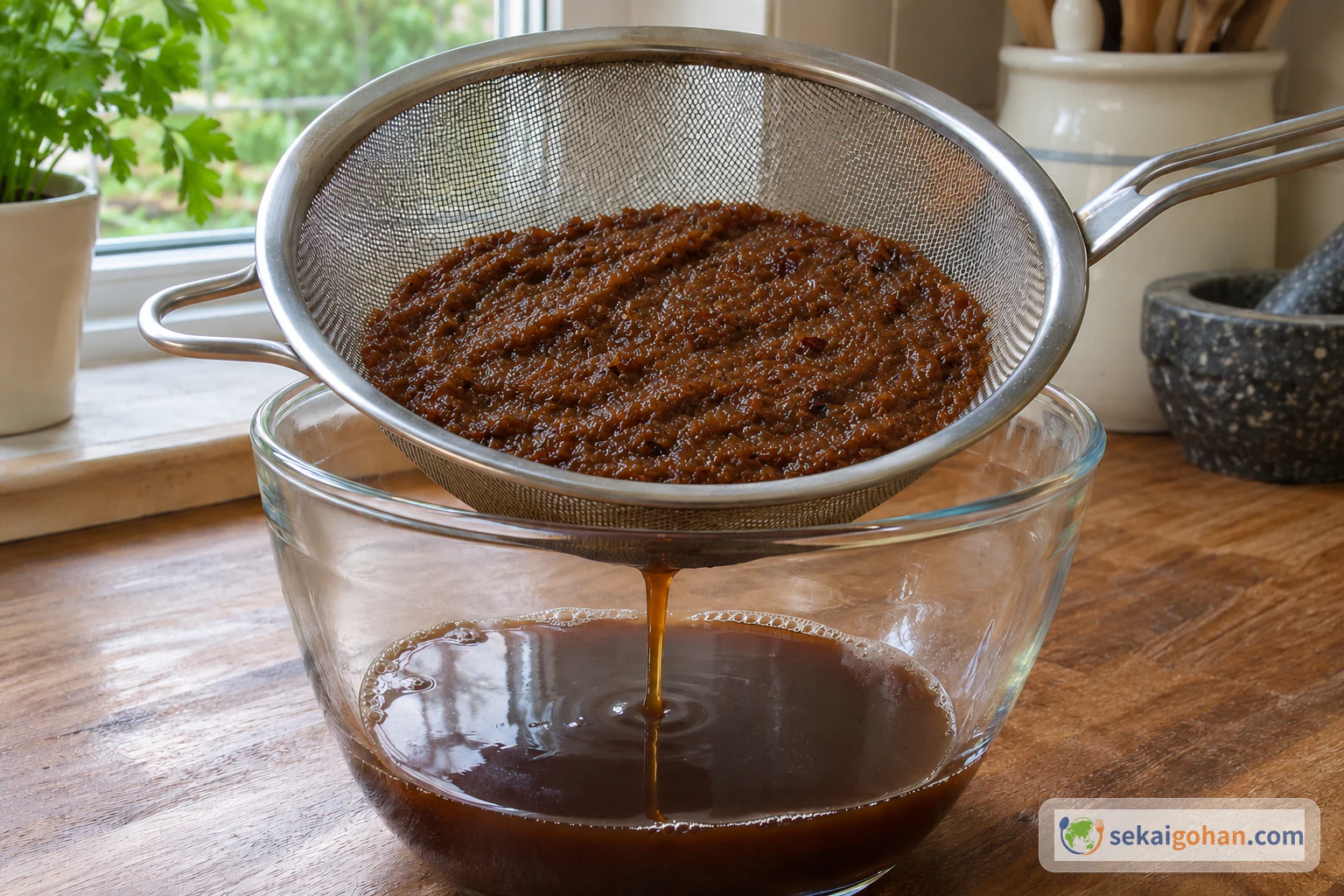
When the brown paste in the saucepan reaches the boil, the vinegar steam hits sharply, and clove, black pepper and mustard come up with it. That boil is the only cooking the sauce gets. After that it goes into a jar and waits in the dark of the refrigerator for a month or longer. When you strain it, the sauce has turned dark and pourable. It tastes sour and salty first, then sweet, with a deep savoury note from the anchovies that you notice without being able to name it. Worcestershire sauce comes from the English city of Worcester, and a few drops are enough to change a whole plate.
From a Worcester Pharmacy to Tables Overseas
The sauce goes back to 1837. That year two chemists, Lea and Perrins, started making it at their pharmacy at 68 Broad Street in Worcester. Nobody knows exactly when they first sold it. The bottle is now so familiar that people forget it began as a mixture made up behind a chemist's counter in Worcester. You can find more of the country's cooking on our United Kingdom page.
It reached distant markets fast. On 19 September 1846 the Maitland Mercury, a newspaper in New South Wales, ran an advertisement for "Celebrated Worcester Sauce, Patronized by the Royal Family." That is the earliest known advertisement for the sauce in Australia. It went there as an imported English condiment, not as part of Australian cooking. Back in Worcester, production moved to a new factory on Midland Road in 1896, though some accounts give the year as 1897.
The ingredients have always been partly secret. Anchovies and vinegar were known to matter. Until the Second World War, soy sauce was one of the main hidden ingredients. A homemade version printed in an American magazine in 1873 already used soy sauce, so people were trying to copy the bottle at home within a few decades. The factory sauce was aged in casks in the cellars before bottling, and the month of rest in the refrigerator here follows the same idea.
Bottled sauces still vary, and the vinegar is one of the differences. The type used changes from product to product, so two brands can taste quite different. This homemade version uses anchovies and tamarind, as British and American home versions do. White vinegar and a month or more of rest in the cold do the rest.
The sauce started in a chemist's shop on Broad Street in 1837. It later moved into its own factory on Midland Road.
Ingredients (makes about 3 cups)
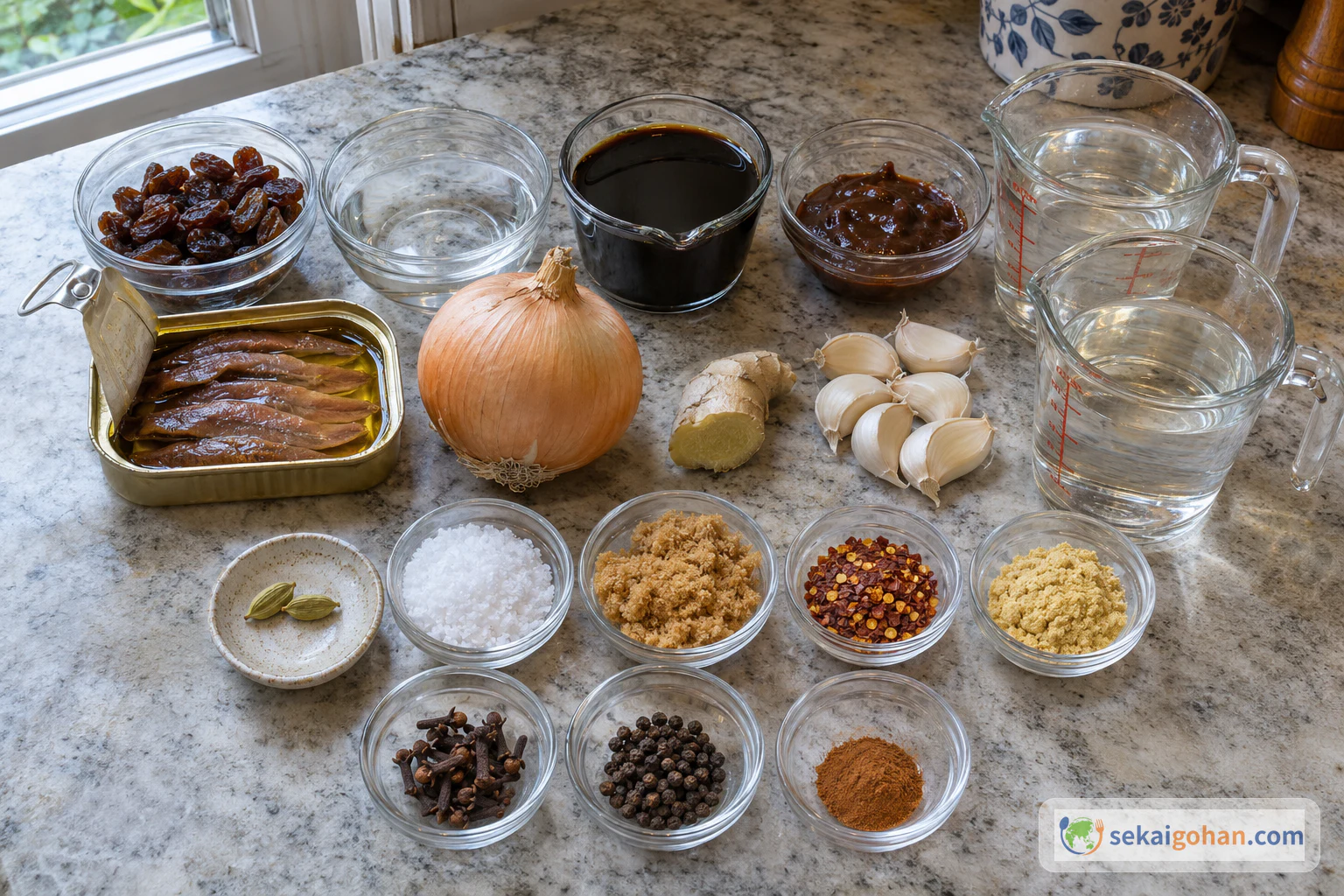
One tablespoon of the finished sauce is one serving, so a single jar lasts a long time.
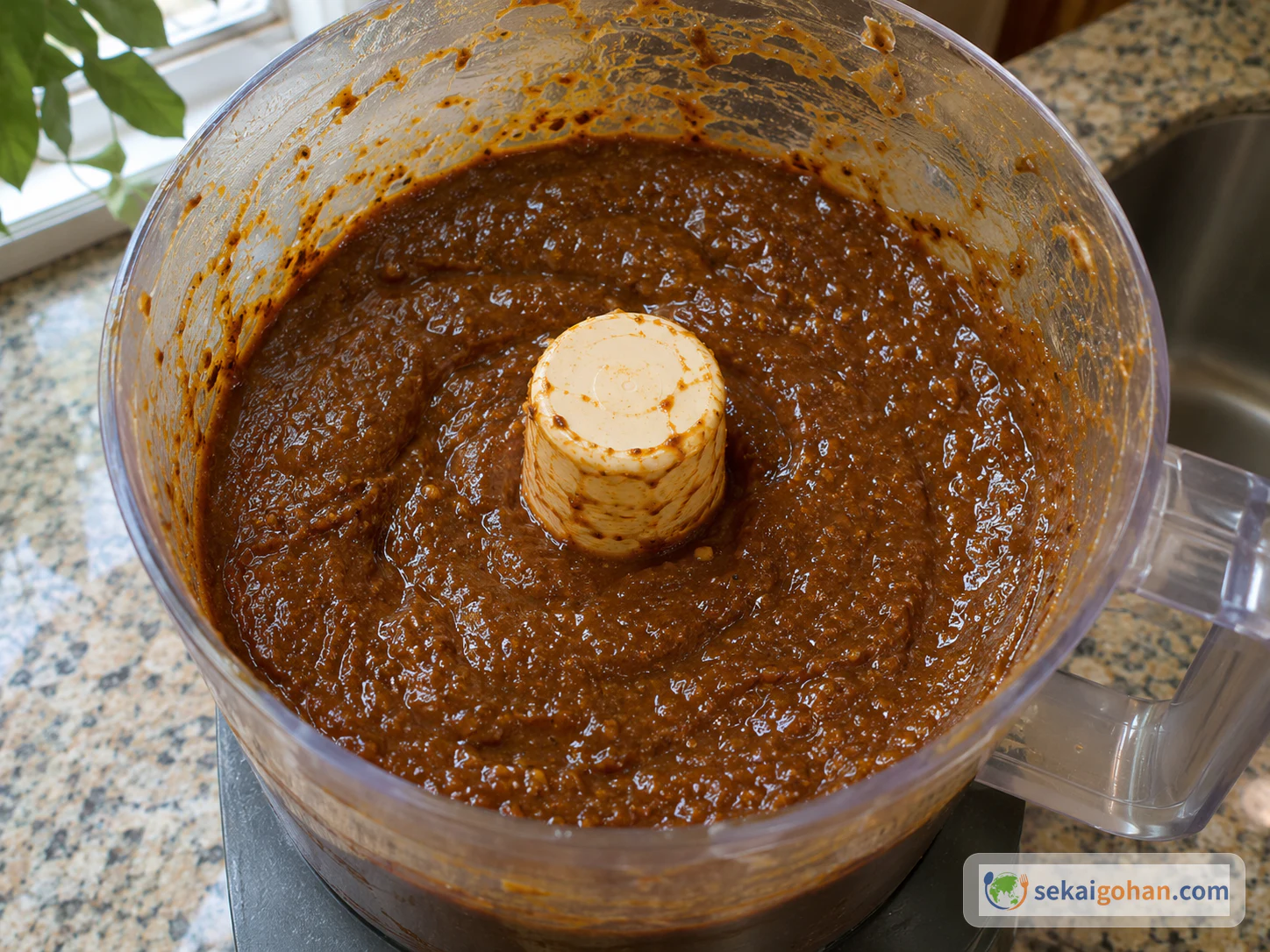
Tip the whole can into the food processor, oil included. The oil carries much of the fish flavour, and it is what gives the finished sauce its savoury depth.
This sauce contains fish (anchovies), plus mustard, onion, garlic and several whole spices. It has no dairy, and none of the listed ingredients contain gluten, but check the labels on the anchovy can, tamarind paste and molasses. If you cannot eat onion or garlic, use a little asafoetida in their place.
Equipment
- Small food processor or blender
- Heatproof bowl and a small sieve for the raisins
- Medium saucepan
- Ladle and funnel
- A clean 1-quart (0.95 L) glass jar with a plastic lid
- Fine-mesh strainer and a second clean jar with a plastic lid
- Knife, cutting board, measuring cups and spoons
Choosing and Substituting
Three things are worth a trip to a specialty grocer or an order online. Tamarind paste supplies the fruity sourness. It is the same sour fruit that seasons pad thai. Unsulfured molasses gives the dark colour and deep sweetness. Whole cardamom pods add a high, floral note. Everything else is ordinary supermarket shopping.
Check the vinegar label for 5% acidity. Plain white vinegar usually meets it. If you use rice vinegar or wine vinegar, read the label, because the acidity changes from bottle to bottle. Salt comes in different grain sizes, so measure kosher or canning salt by volume. If you only have table salt or flaky sea salt, add it gradually and taste instead of swapping spoon for spoon.
For the sugar, this version uses brown sugar rather than maple syrup. Brown sugar makes the flavour fuller and the colour darker, which suits a sauce that is meant to be almost black. Maple syrup works in the same amount and tastes a little lighter.
| Ingredient | Keep it, or let it go? | What changes |
|---|---|---|
| Canned anchovies with oil | Keep | Without them the savoury depth is gone. Dried anchovies work once soaked in hot water |
| 5% white vinegar | Keep | Sourness and keeping quality both depend on it |
| A month or more of aging | Keep | The aroma builds only with time |
| Molasses | Swap if needed | Dark brown sugar can stand in. The flavour shifts |
| Raisins | Swap if needed | A little brown sugar can replace them. The fruit note gets weaker |
| Tamarind paste | Can be left out | The sauce turns less sour and less fruity |
| Whole cardamom | Can be left out | The fragrance gets softer |
Method
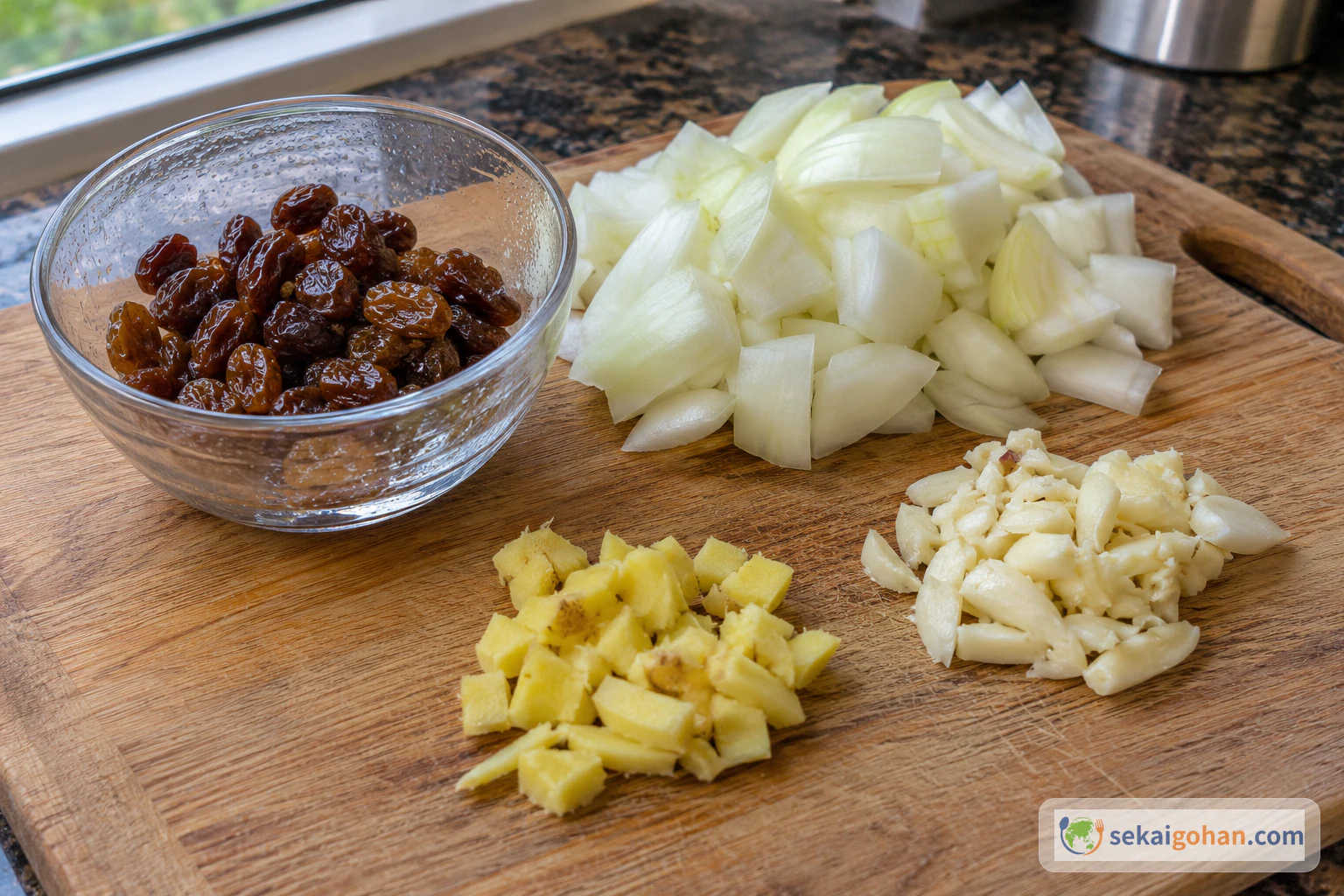
Start the raisins first and do the chopping while they soak. The blending and the single boil go quickly, so measure the spices and set out a clean jar before you turn on the heat. After that the sauce needs no work at all. It sits in the refrigerator for at least a month, and then you strain it.
A month is the minimum. The longer the sauce rests, the stronger its aroma gets, and three months gives a fuller result. If the sauce smells mostly of raw vinegar when you open it, close the jar and give it more time before straining.
When It Goes Wrong
| What you see | Why | What to do |
|---|---|---|
| The paste is grainy or has visible onion pieces | It was not blended long enough | Blend again before it goes into the pan. Grit stays in the sauce and leaves more solids to strain out |
| The sauce tastes bitter or scorched | It boiled too long and the molasses and sugar caught | Next time take it off the heat as soon as the surface bubbles all over. The sauce is never reduced |
| The aroma is thin and the vinegar tastes raw | It aged for less than a month | Seal it again and leave it longer in the refrigerator. The aroma gets stronger with time |
| The flavour is flat after straining | It needs more brightness | Stir in a splash more vinegar. It sharpens the sauce more than extra salt does |
| An off smell, white film or gas in the jar | The sauce has spoiled | Throw it away without straining or tasting |
| The lid is rusted or pitted | Vinegar has corroded a metal lid | Use a plastic lid only |
Serving, Variations and Storage
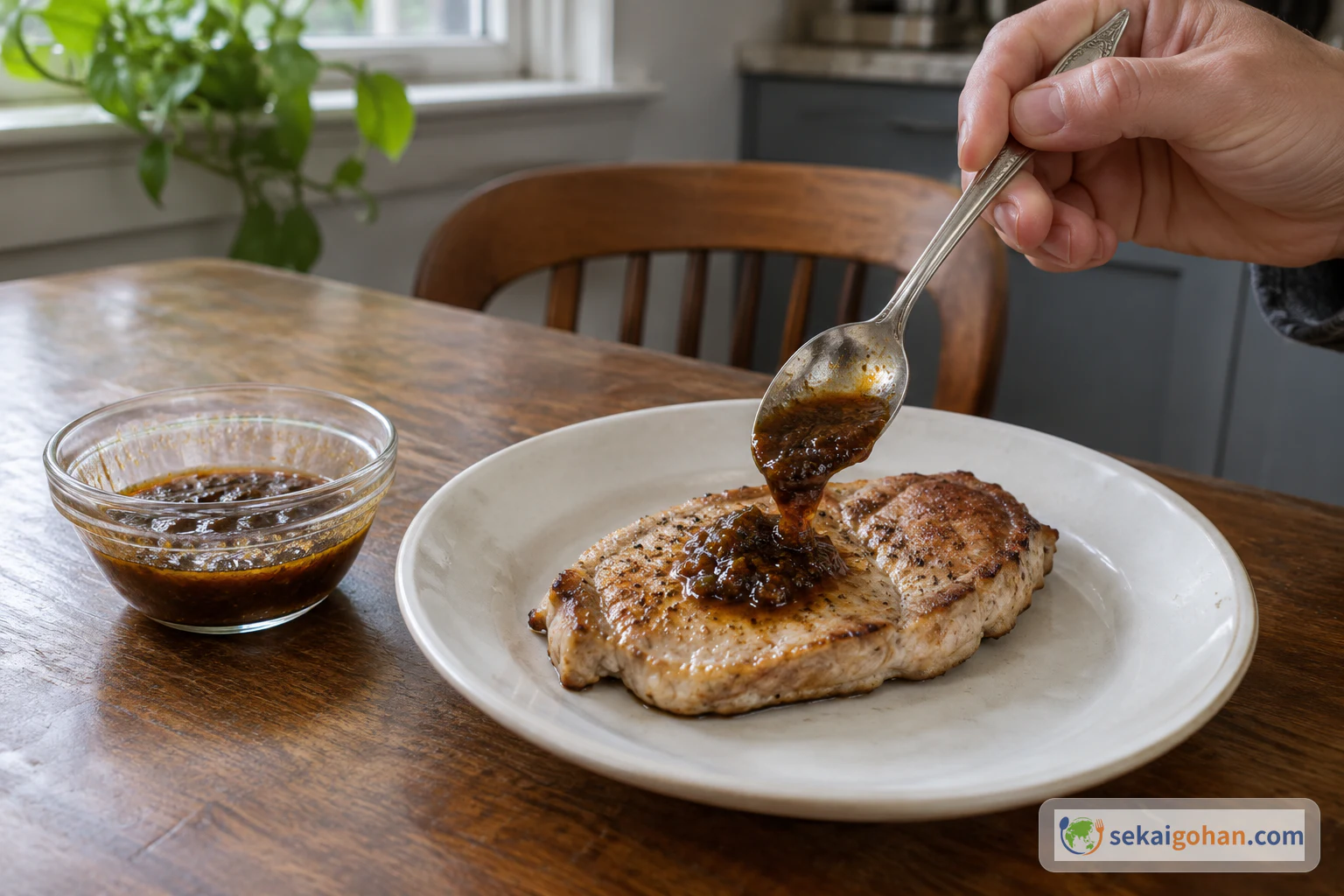
At the table
One tablespoon is a serving, and you rarely need more. Spoon a few drops over a pan-seared pork chop and potatoes, or set the jar beside a plate of bangers and mash so everyone can add their own. Its vinegar edge also works with fried food, the same way vinegar is shaken over fish and chips.
Variations
- Less anchovy, or none. The savoury depth drops, and the sweetness and sourness come forward.
- Less red pepper. The heat goes down, and the spice aroma also feels lighter.
- No tamarind. The sauce is less sour and less fruity, and the molasses takes over.
- Two or three months of aging. Every extra month makes the aroma stronger and rounder.
Storage
Keep the strained sauce in the refrigerator in its clean jar with a plastic lid, and put it back after each use. The salt and 5% vinegar help preserve it, but this recipe is not meant for room-temperature canning, so it belongs in the cold for its whole life. If you cut the salt or vinegar, refrigeration matters even more. Before each use, check for an off smell, film or fizzing, and throw the sauce away if you find any.
Frequently asked questions
Will it taste like the bottled sauce?
No. The commercial formulas are secret, and this is a homemade sauce with its own balance. It has the same sour, sweet and savoury structure, with a fruit note from the raisins and tamarind.
Do I need to water-bath can the jars?
No. The sauce is aged, not fermented, and it does not go through a canning step. It stays in the refrigerator, from the month of aging through to the last spoonful.
Can I use fresh anchovies?
No, fresh anchovies cannot replace the canned ones. Use anchovies canned in oil and add the oil with them. Dried anchovies also work if you soak them in hot water first.
What can I do with the strained solids?
Stir them into a soup for a savoury boost. You can also dry them and grind them into a powder to use as a seasoning.