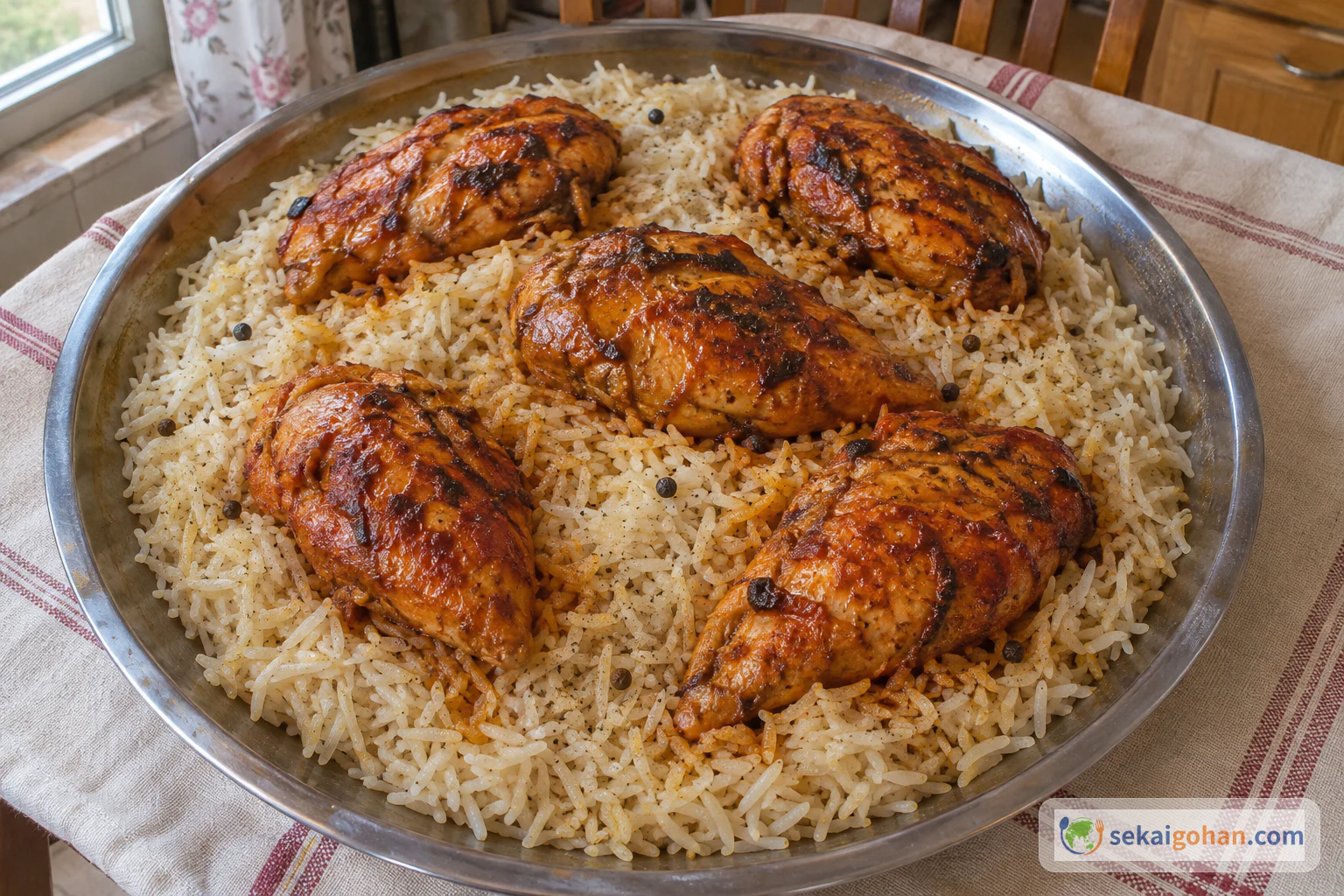
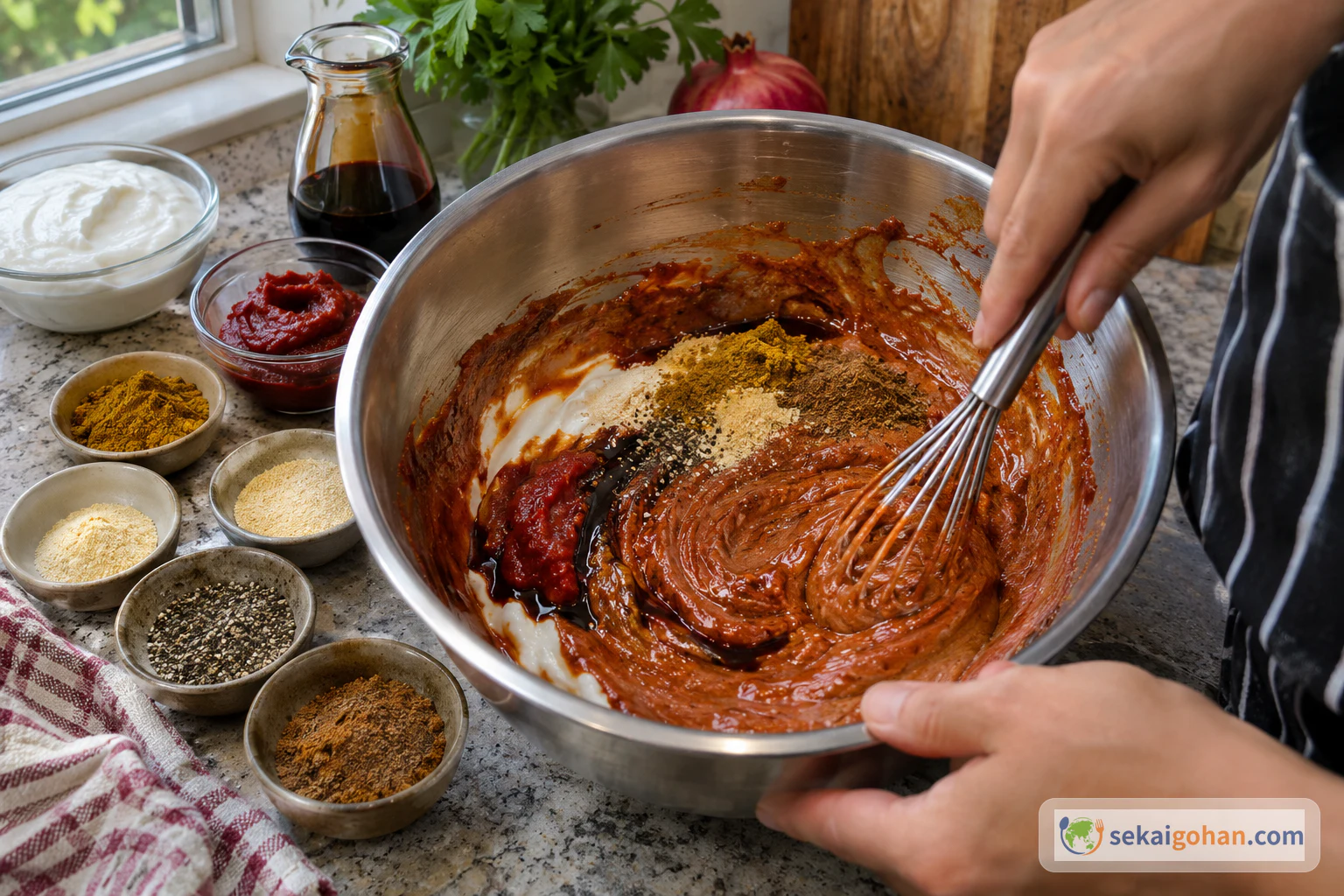
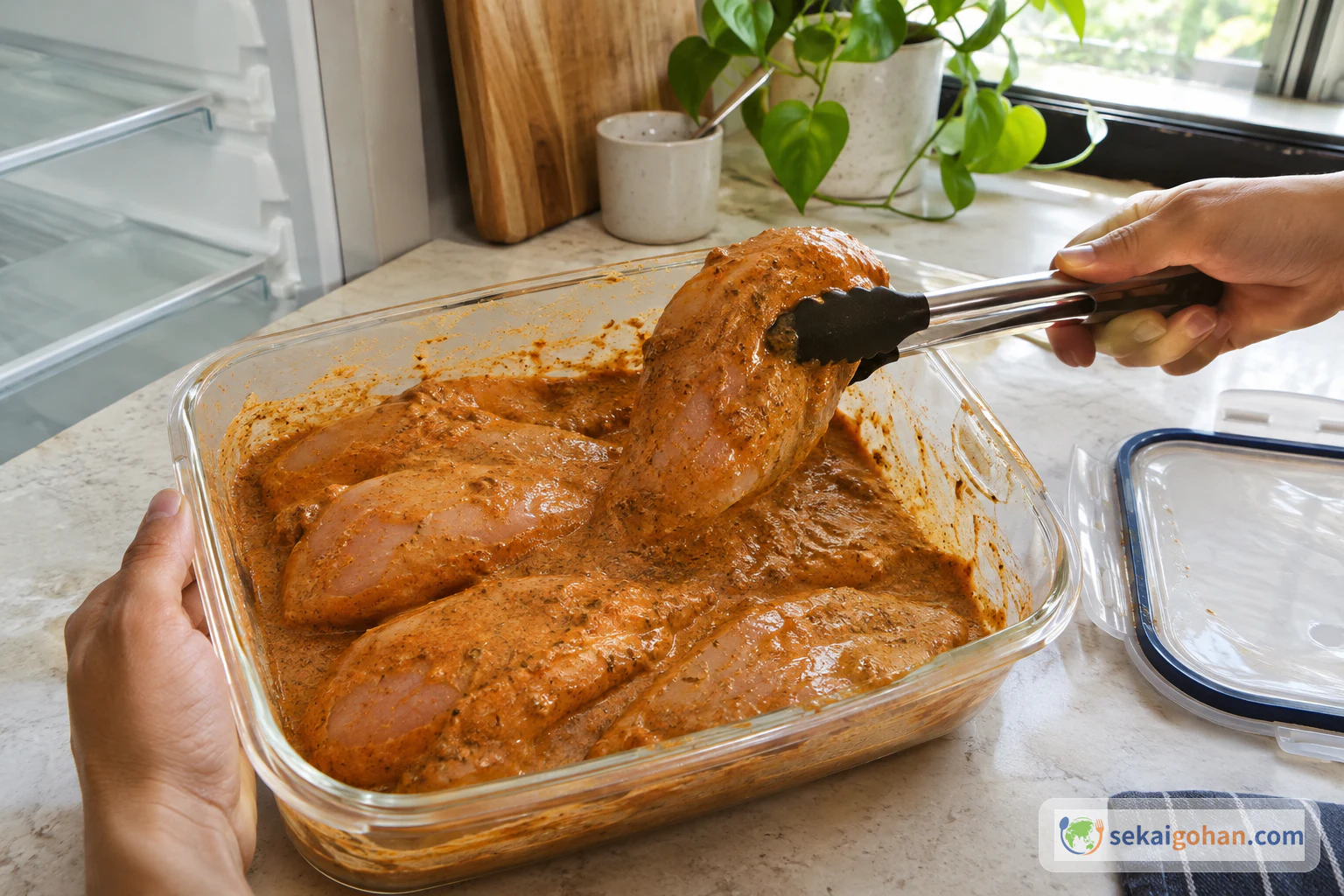
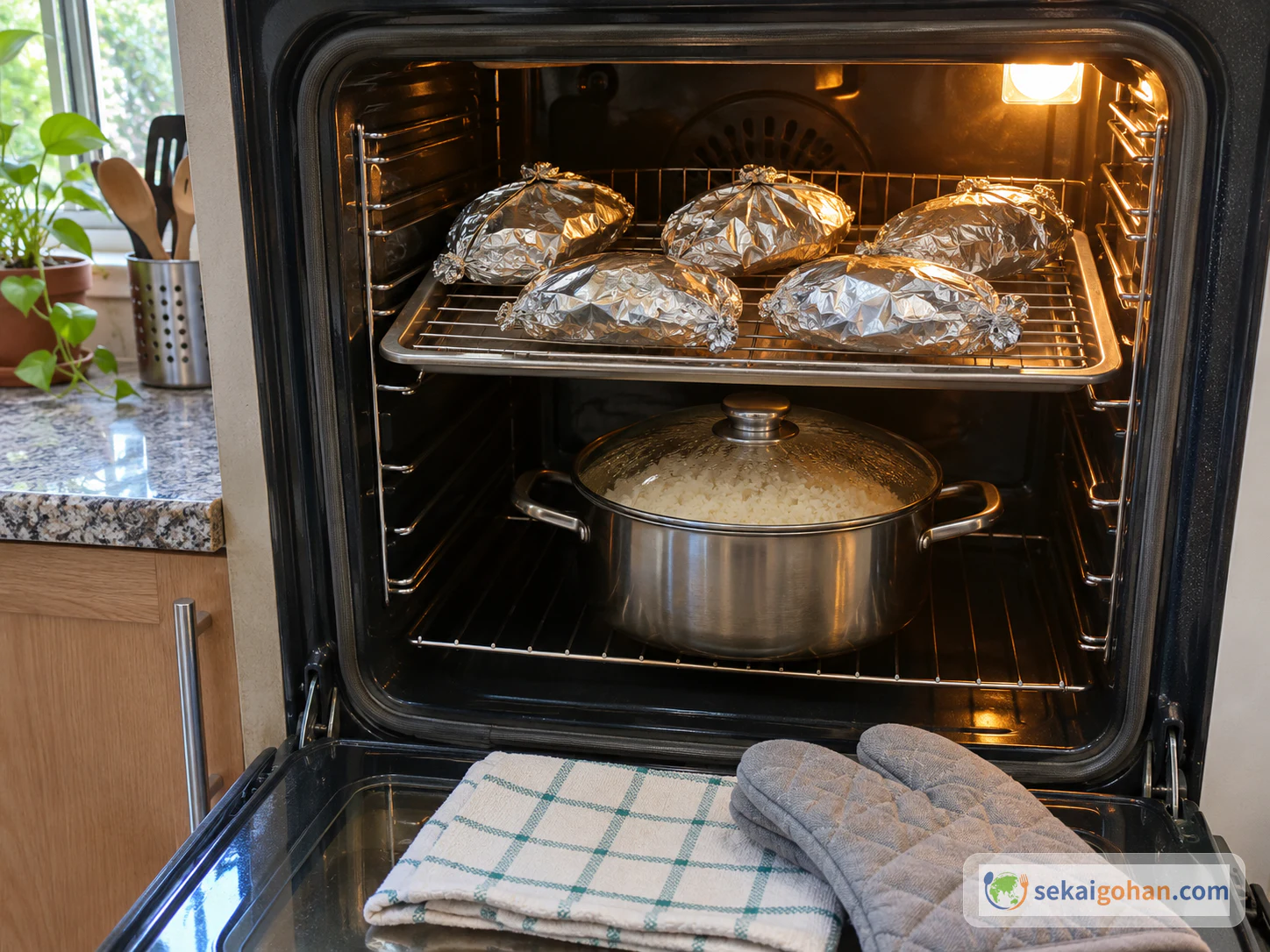
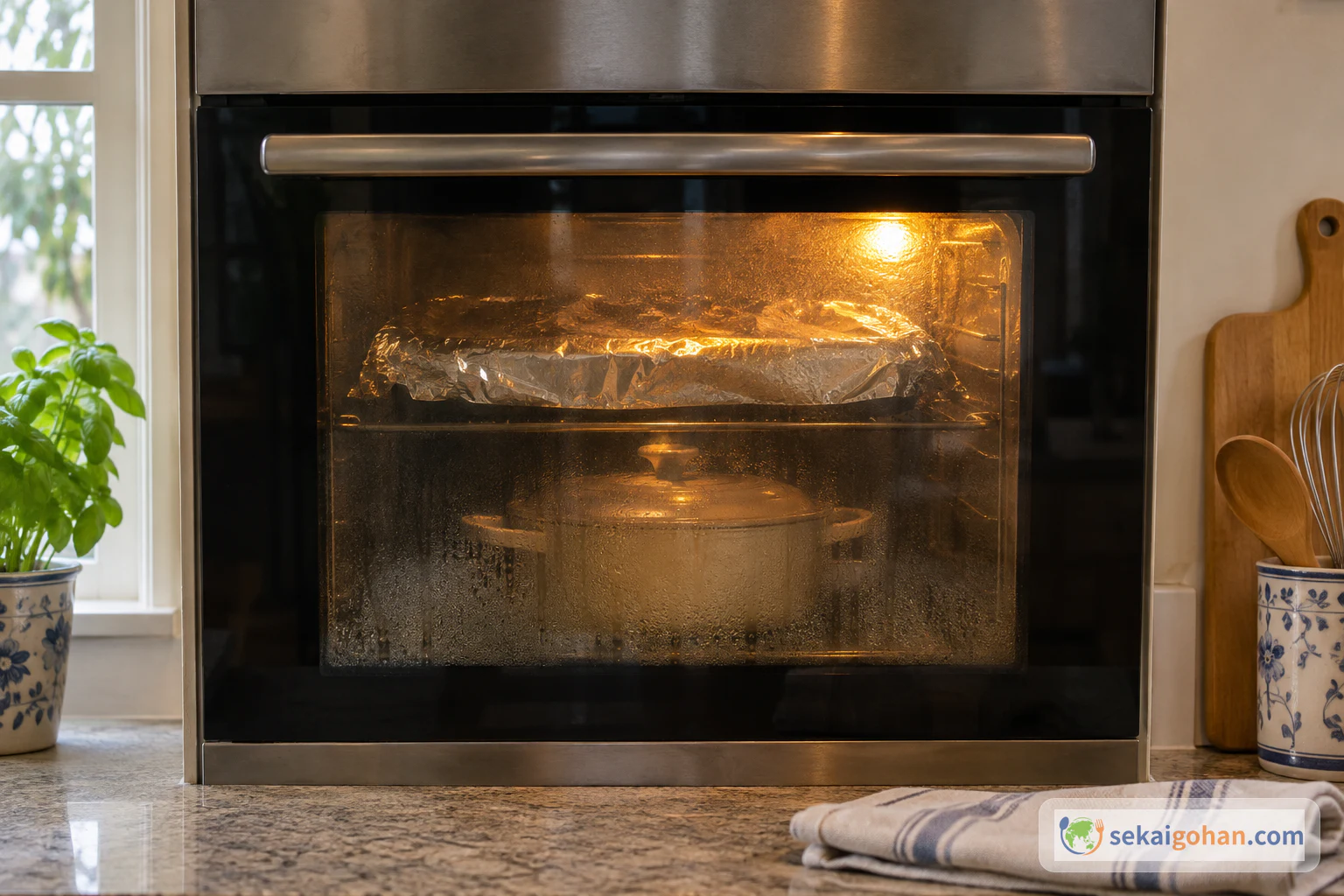
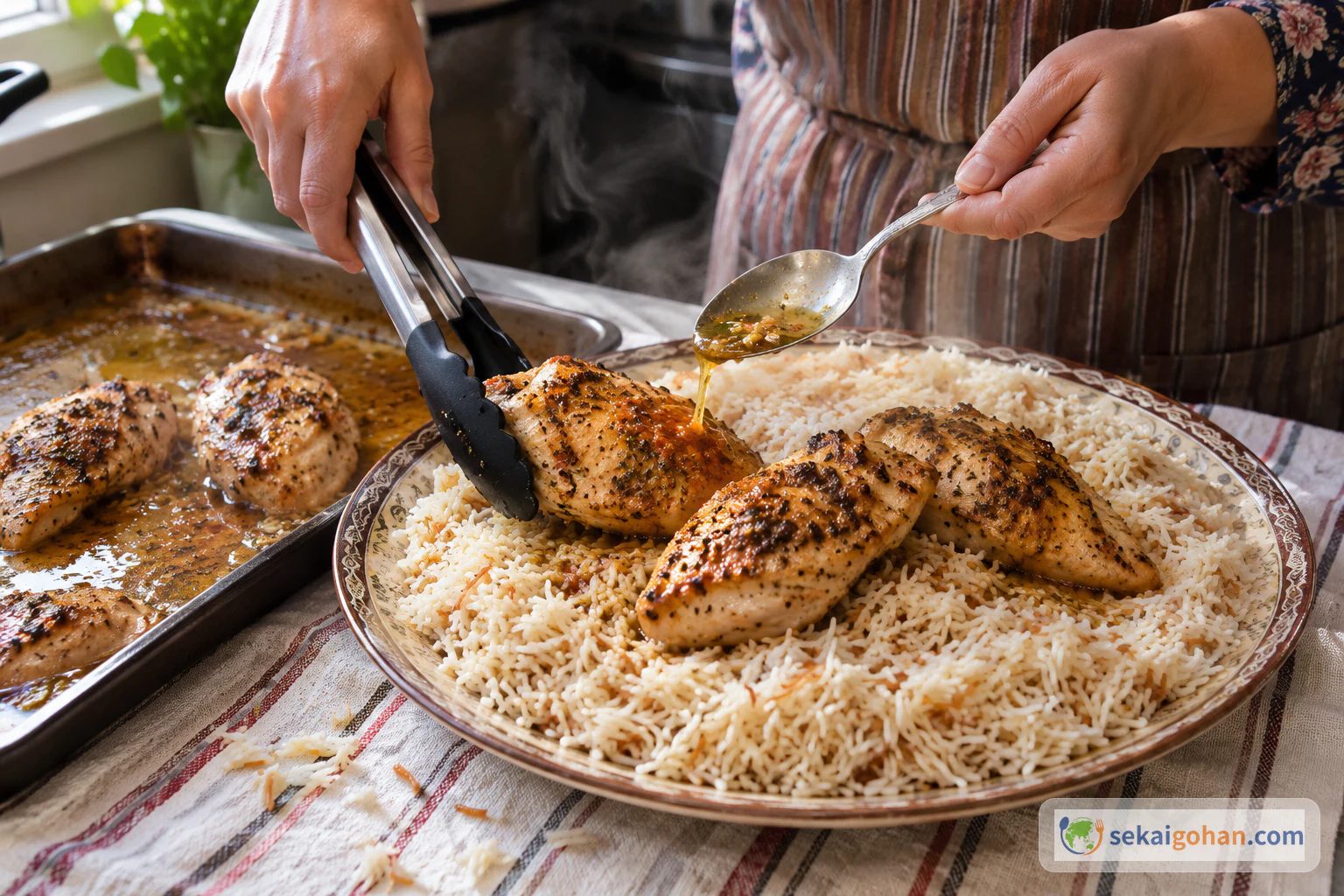
In the desert camps of Wadi Rum, dinner starts with sand being brushed off a buried lid and a steel rack being hauled up out of the ground. The rice pot is turned out onto a wide platter in a cloud of steam, and thin flatbread goes on to bake beside it. That is zarb, both the name of the sealed underground oven and the meal that comes out of it. This version is chicken and rice: breasts that sit a full day in yogurt, tomato paste and pomegranate molasses until they come out glossy, reddish brown, tangy and faintly sweet, laid over long-grain rice seasoned with black pepper, garlic and onion. At home, the oven stands in for the pit, and foil and a pot lid do the work of the sand.
A Meal Cooked Under the Sand
Zarb belongs to the Bedouin of the Jordanian desert. It is popular across the Syrian desert and the lands around Palestine and Jordan, and in Jordan it is counted as a traditional dish of Wadi Rum, the red-sand desert in the south. It sits in the same family as the underground-oven dishes of the Arabian Peninsula, haneeth and mandi, but the build is its own. Here meat and rice go into the pit in separate containers at the same time, and the chicken carries a marinade of yogurt and pomegranate molasses. Jordan's national dish is mansaf, a different plate entirely; zarb is the one people travel into the desert to see lifted out of the ground. More of the country's cooking lives on the Jordan page.
The pit makes sense once you picture the life around it. Bedouin families moved with their herds in search of water and grazing, so they could carry very little equipment. On arriving at a new camp, they dug a hole, raked hot coals and stones from the fire into it, wrapped the meat in palm leaves and covered it with sand to hold the heat. Today cooks lower a steel rack and pots, wrap the food in aluminum foil and lay blankets over the top before the sand goes on. Very little else has changed.
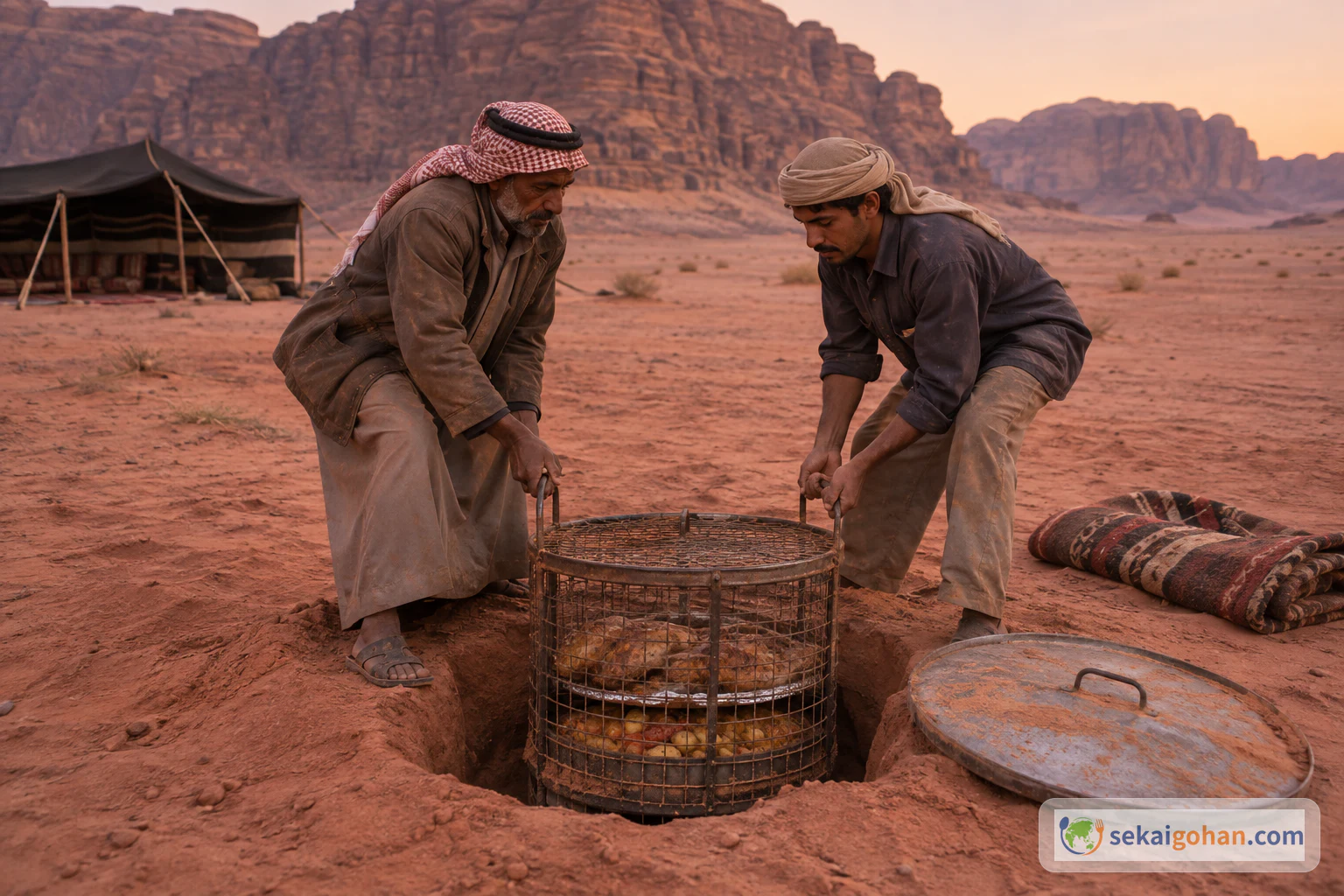
Do not dig a fire pit in a backyard, on a balcony or anywhere near homes. Open fire, smoke, carbon monoxide and collapsing sand walls make it dangerous. The home method below uses an ordinary oven.
How the pit changes from place to place
The seal is where cooks differ most. In Wadi Rum it is a metal case with a lid, then blankets, then sand. In the village of Dana in central Jordan, a cylindrical metal cage of chicken, lamb and vegetables is lowered into the ground and the hole is closed with damp clay and large stones. Desert versions often fill the racks with potatoes, carrots, onions, eggplant, sweet peppers, cauliflower and tomatoes around the meat; the chicken-and-rice version here keeps only the two.
Time in the pit runs long. Lamb and goat take about two and a half hours, chicken about an hour and a half, and the whole process stretches from two to five hours depending on the weather, how much food goes in and the size of the pit. When chicken shares a pit with lamb for the same time, the lamb comes out well and the chicken comes out dry, cooked past its best. That is the reason the home oven runs on a thermometer rather than on desert hours.
"Zarb" names the sealed underground oven and also whatever is cooked in it. A chicken version is often called zarb dajaj, chicken zarb. At a Wadi Rum camp, the lifting of the rack out of the sand is the moment everyone gathers for.
Ingredients
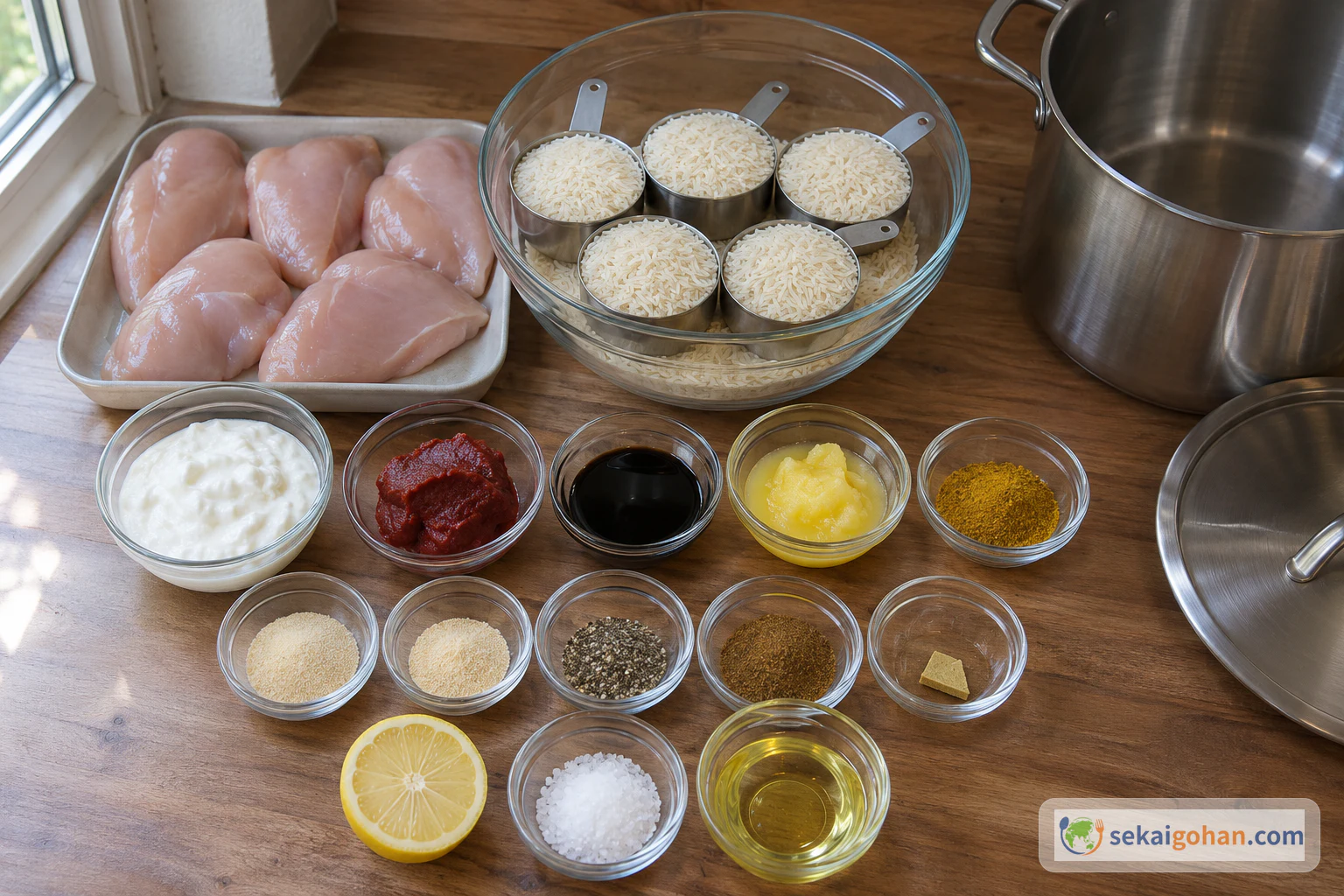
The five cups of rice are generous for five breasts. Expect a full platter with rice left for the next day.
Salt, onion powder and garlic powder are each divided in half, one part to the marinade and one to the rice. Each half is ⅛ tbsp, which is a scant ½ tsp. Measure both halves out before you start so none ends up twice in the same place.
This dish contains milk (yogurt and ghee) and chicken. Flatbread served alongside contains wheat and gluten.
Equipment
- A heavy pot with a tight lid, about 5¼ quarts (5 L) or larger, ovenproof
- An ovenproof wire rack and a baking tray to sit under it
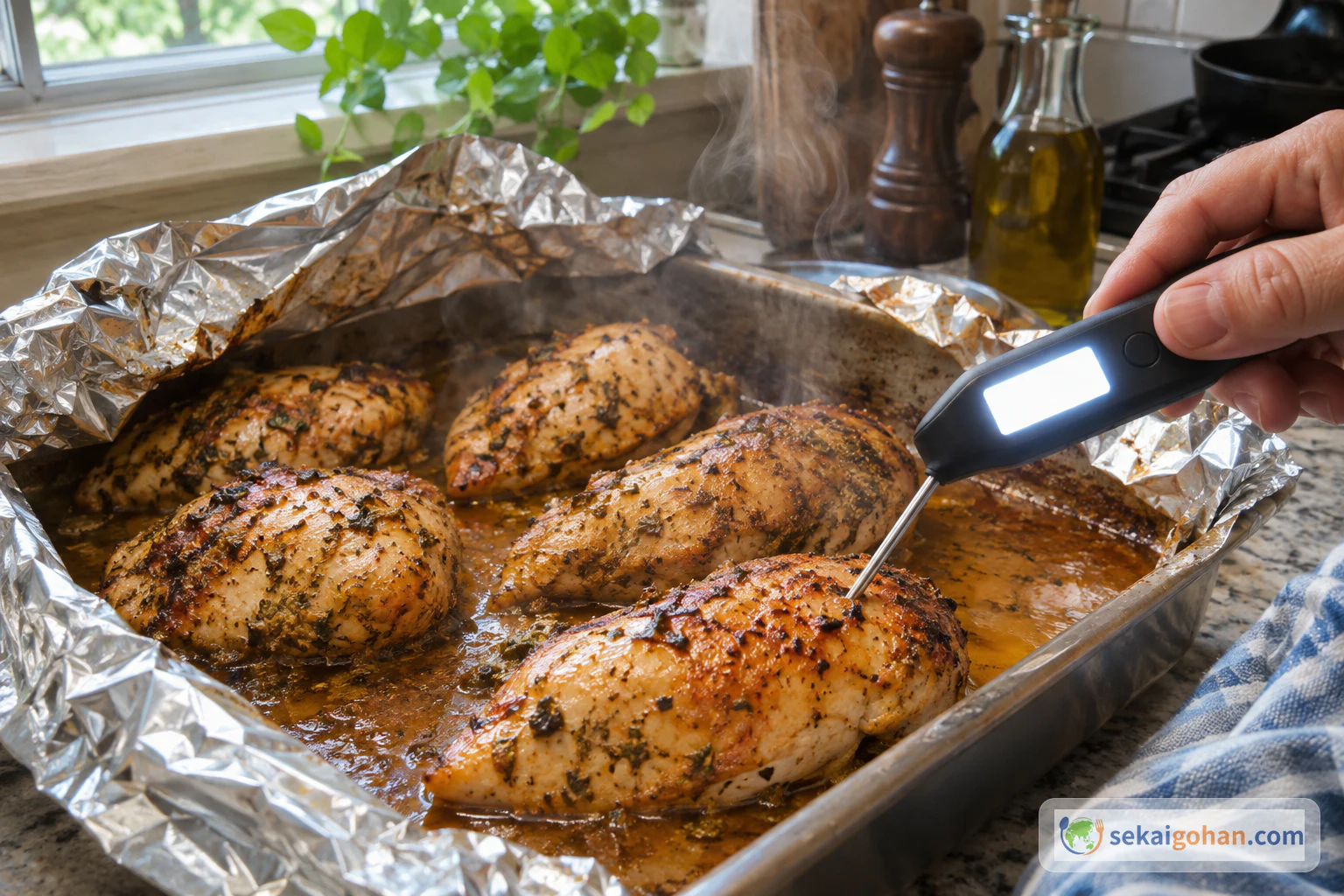
- An instant-read meat thermometer
- Aluminum foil
- A mixing bowl and a whisk
- A lidded container for marinating
- Tongs
- A large round serving platter
Choosing and Substituting
Pomegranate molasses, baharat and ghee are the three things worth a trip to a Middle Eastern grocer or an online order. Look for them under those names; basmati is in any supermarket. The molasses carries most of the character, so it is the one to track down first.
| Ingredient | Swap | What changes |
|---|---|---|
| Pomegranate molasses | Leave it out and raise the lemon juice to 3 tsp | The sourness stays, the sweet depth and dark gloss go |
| Baharat | Allspice with a little cinnamon | Close in warmth, not the same blend |
| Ghee | Unsalted butter or clarified butter | A lighter, less nutty aroma |
| Onion or garlic powder | Grated fresh onion or garlic | More moisture in the marinade |
| Tomato paste | Canned tomatoes cooked down | Wetter, so reduce them well |
| Chicken bouillon cube | A little granulated bouillon | Little difference |
| Curry powder | Any curry powder you have | Blends differ, and so does the aroma |
| Plain yogurt | Greek yogurt | Thicker; the yogurt meant here is ordinary plain yogurt, not a drinking yogurt |
| Basmati or other long-grain rice | Short-grain rice | Grains clump and absorb water differently; keep to long-grain |
Keep the long-grain rice and the yogurt-and-molasses marinade. Those two give the dish its dry, separate grains and its sticky-bright glaze. The optional cinnamon and cardamom, and the chicken breast itself, are the parts with room to move.
Method
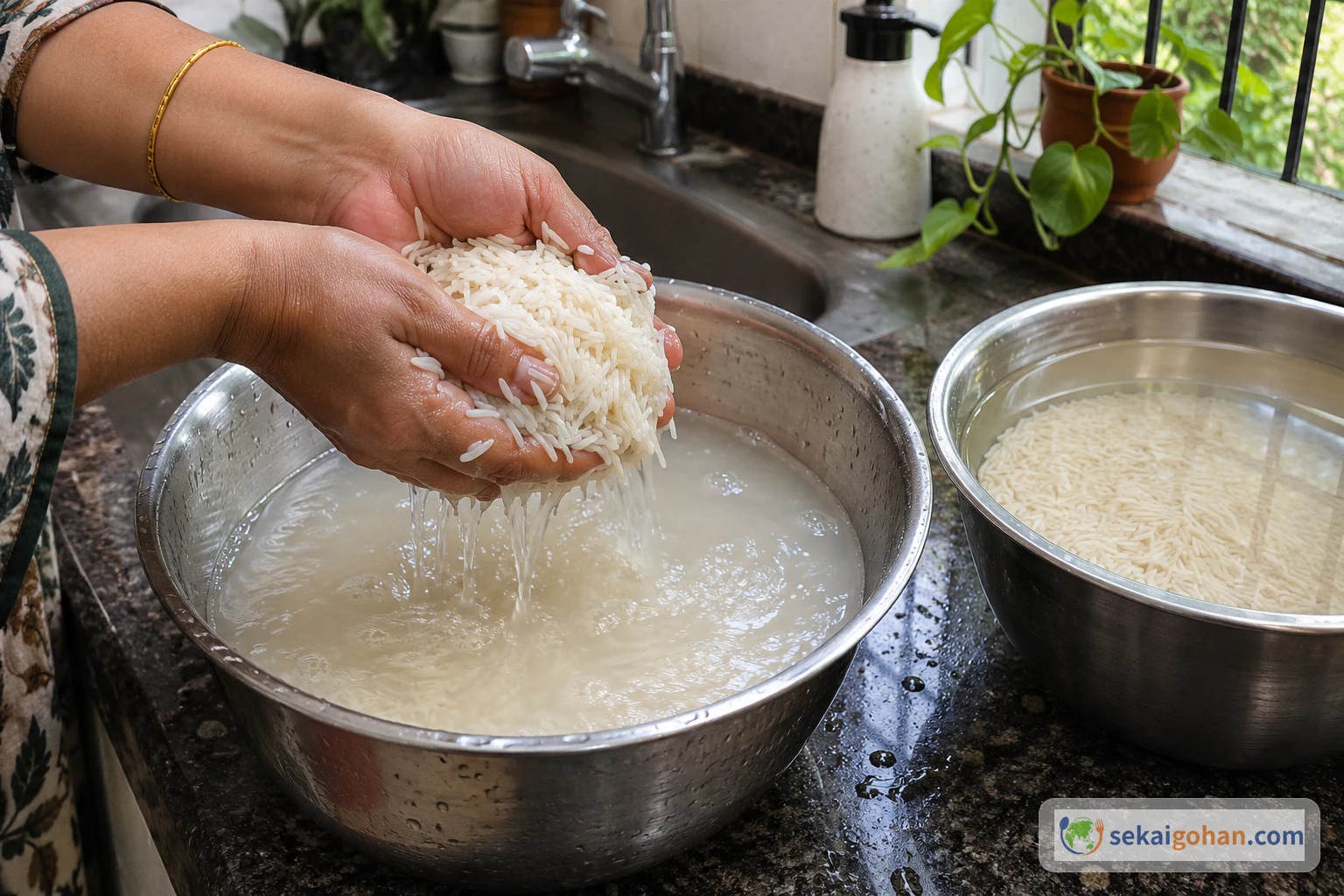
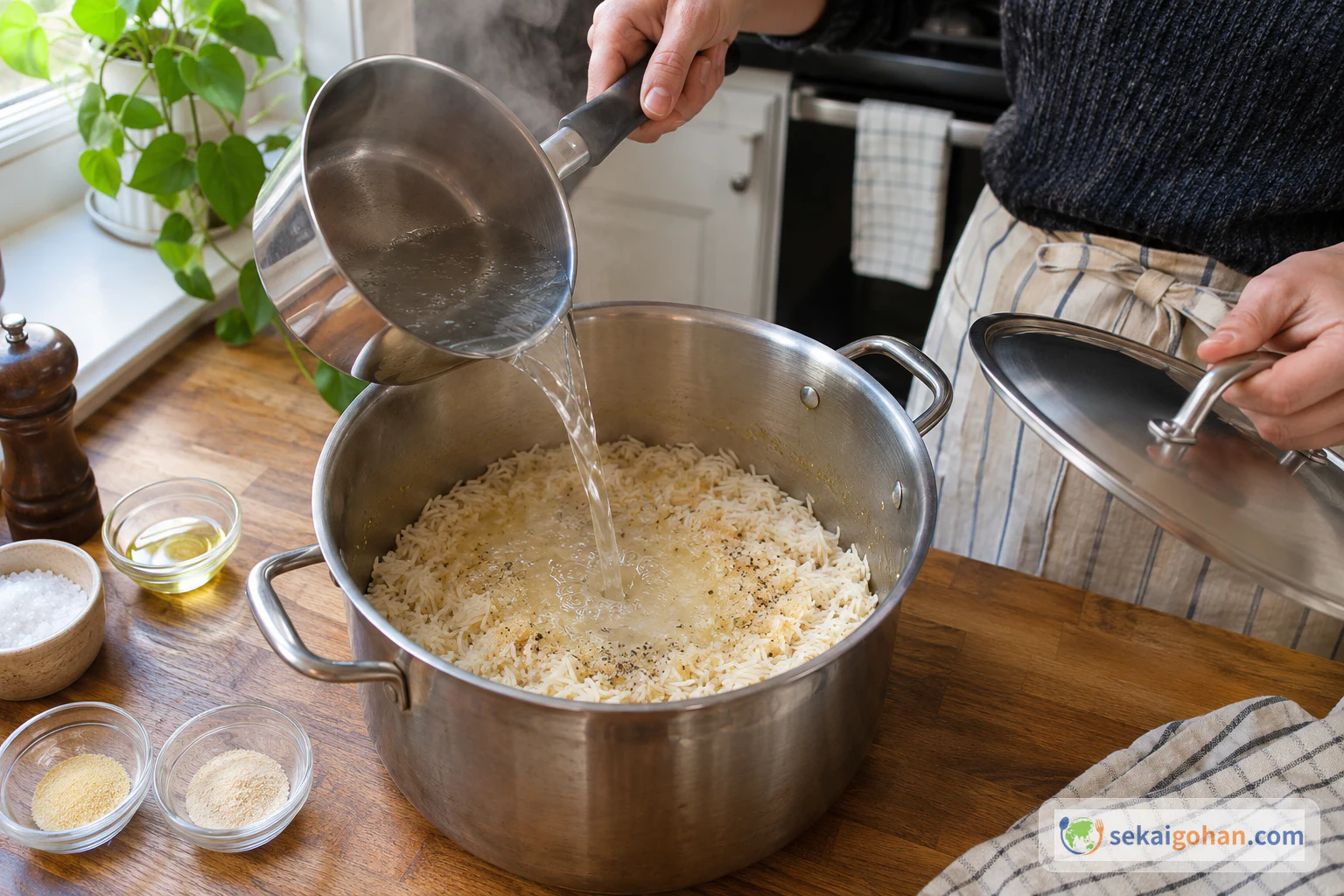
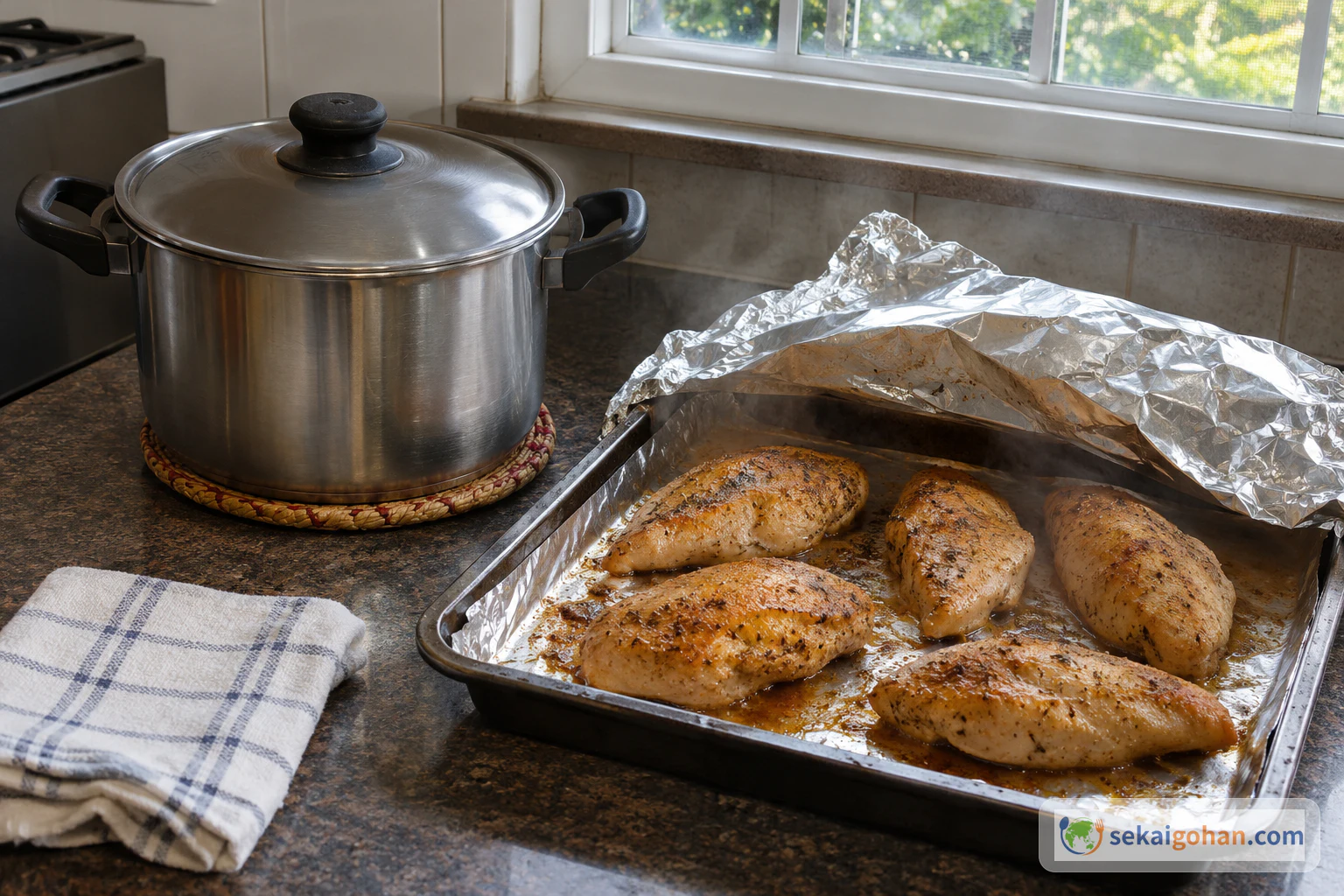
Start the day before: the marinade takes a few minutes, then the chicken waits in the fridge for a full day. On cooking day, the rice soaks for an hour while the oven heats. After that, the rice pot and the foil-wrapped chicken go into the oven together and the hands-off time is short, so stay near the kitchen with the thermometer ready.
When It Goes Wrong
| What you see | Why | What to do |
|---|---|---|
| Dry, stringy chicken | Cooked too long, or extra time with the foil open | Pull it at 167°F (75°C) held for 1 minute; keep the foil closed during any added time |
| Hard rice or a chalky core | Short soak or too little water | Soak the full hour and cover by a scant ½ inch (1 cm); for a hard batch, add a little boiling water and give it 5 more minutes |
| Mushy rice | Short-grain rice or too much water | Use basmati or another long-grain rice and keep the water just over the grains |
| Bland rice or chicken | The salt went mostly to one side | Split it evenly between marinade and rice, and taste before plating |
| Sharp, sour glaze | Too much pomegranate molasses | Keep it to the listed amount; without it, balance with lemon |
| Pale chicken surface | Steam under the foil keeps it from browning | Once the center has reached temperature, open the foil for a final 5 minutes |
Serving, Variations and Storage
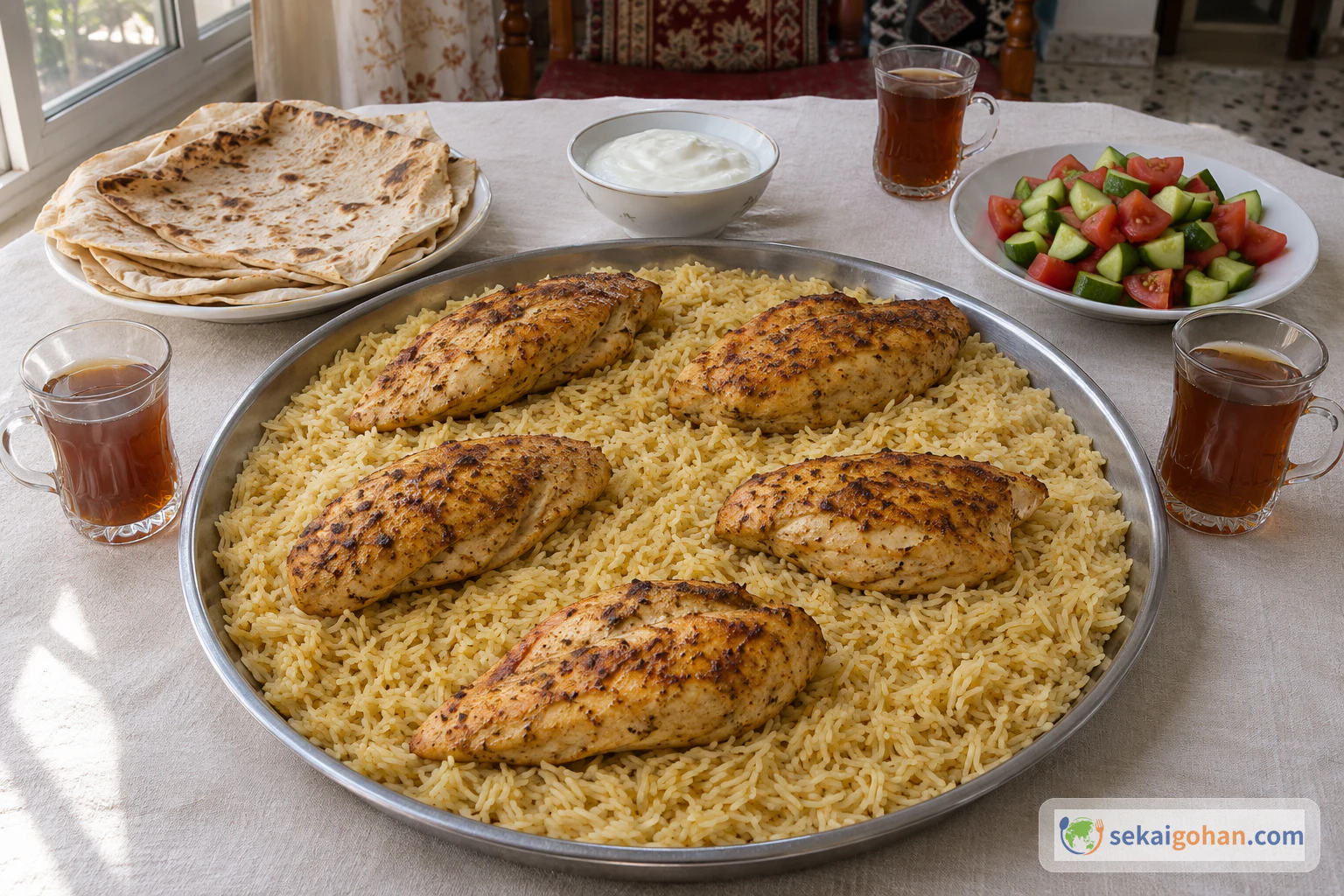
At the table
Zarb goes to the middle of the table on one shared platter, the way it comes out of the sand in the camps. Thin flatbread, shrak, is baked to go with it in Wadi Rum, and a salad of cucumber and tomato with a bowl of plain yogurt sits well beside it. At desert camps the rice is joined by a tomato, onion and cucumber salad, hummus and mutabbal. None of these are required; the platter is a full meal on its own.
Variations
- Bone-in chicken thighs. They stay juicier and make a heartier plate. They take longer, so keep checking until the center holds at 167°F (75°C).
- With vegetables, as in the desert. Add potatoes, carrots, onions, eggplant and sweet peppers around the chicken on the tray. They release more steam, which changes how much water the rice needs and how long everything takes.
- Rice cooked separately. Make the rice in a rice cooker and bake only the foil-wrapped chicken. It is simpler, but the rice loses the aroma it picks up sharing the oven with the chicken.
Storage
Let leftovers cool, divide them into containers, refrigerate, and eat them by the next day. Store the rice and the chicken separately so each reheats well. Heat the chicken until it is hot right through the center, and warm the rice with a light sprinkle of water.
Frequently Asked Questions
Can I marinate the chicken for just an hour?
Yes. In the desert, without a refrigerator, cooks marinate for about an hour before the meat goes into the pit. The chicken cooks fine, but the flavor stays on the surface. A full day in the fridge carries the tang and the spice deep into the breast.
Why is the oven time so much shorter than in the desert?
The pit runs for hours on slowly fading heat from coals and stones, often with lamb that needs the long cooking. Small, boneless chicken breasts in a steady oven reach temperature far sooner. Cooking them for desert hours only dries them out.
Can I make this for children, older relatives or someone who is pregnant?
Yes, with the thermometer as the rule. Never serve them chicken that has not reached 167°F (75°C) at the center for at least 1 minute. Check the thickest breast every time.
Should I rinse the chicken before marinating?
No. Rinsing splashes bacteria around the sink and onto nearby surfaces. Blot any juices with kitchen paper, keep raw chicken away from salad vegetables, and use a separate cutting board for anything eaten raw.