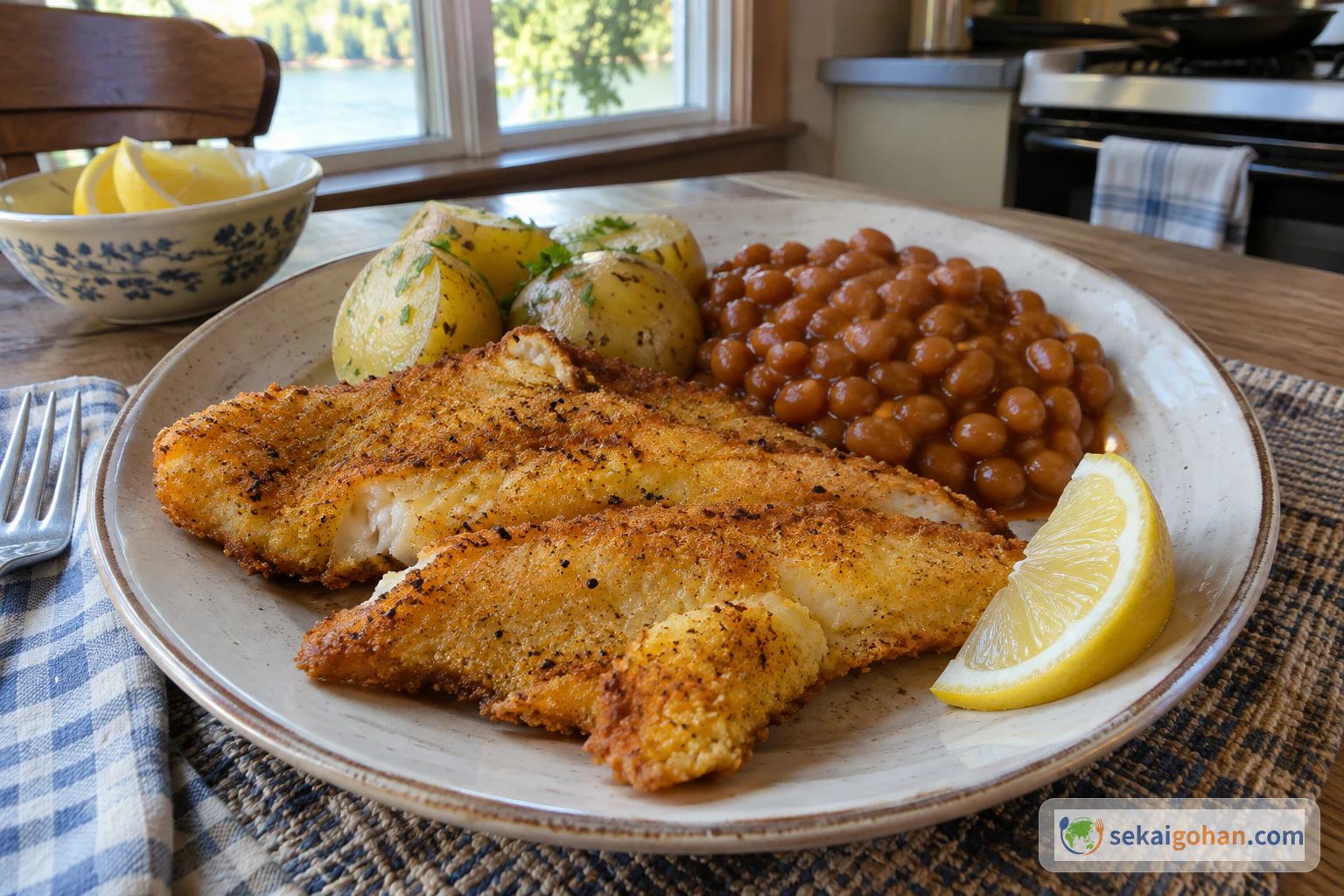
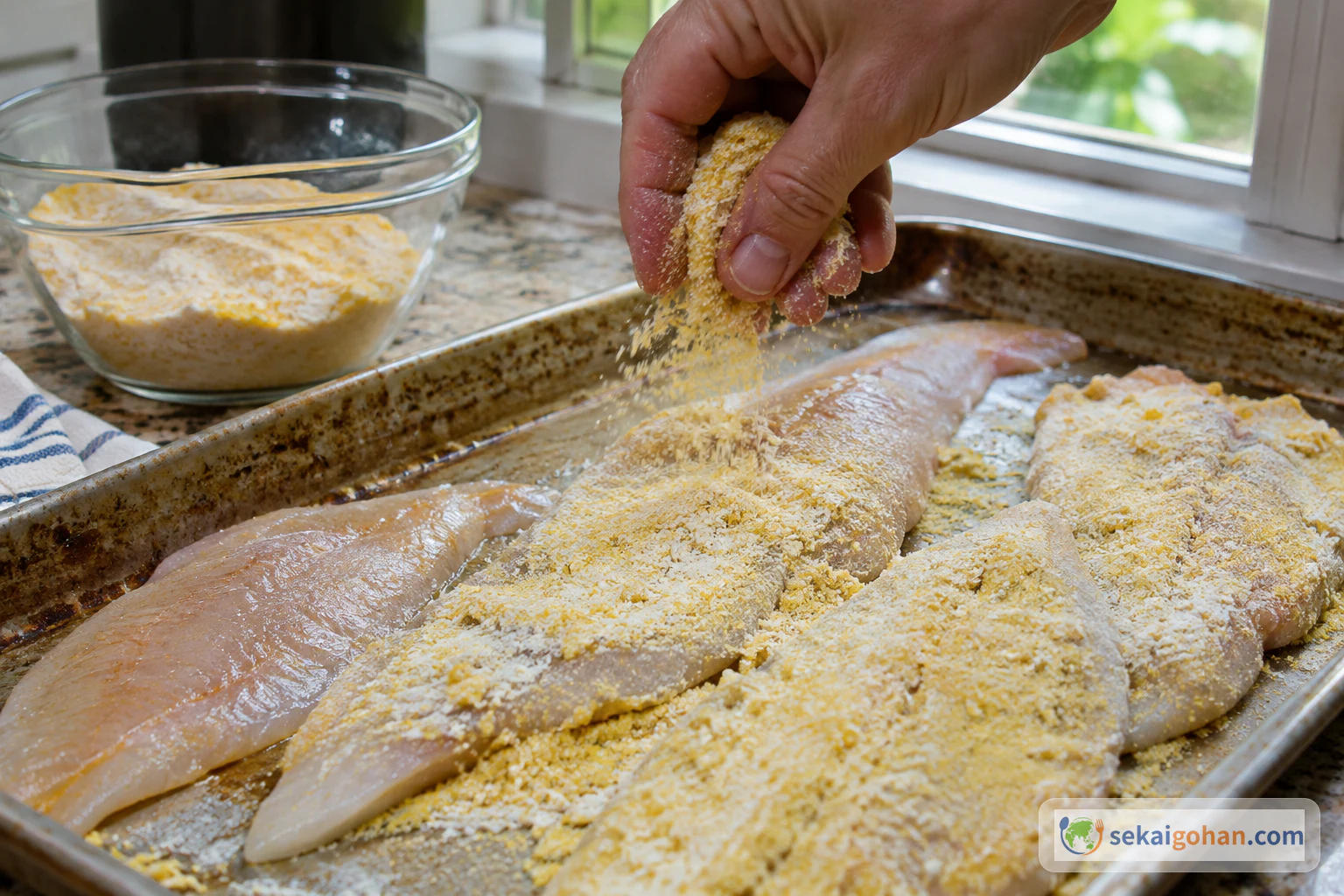
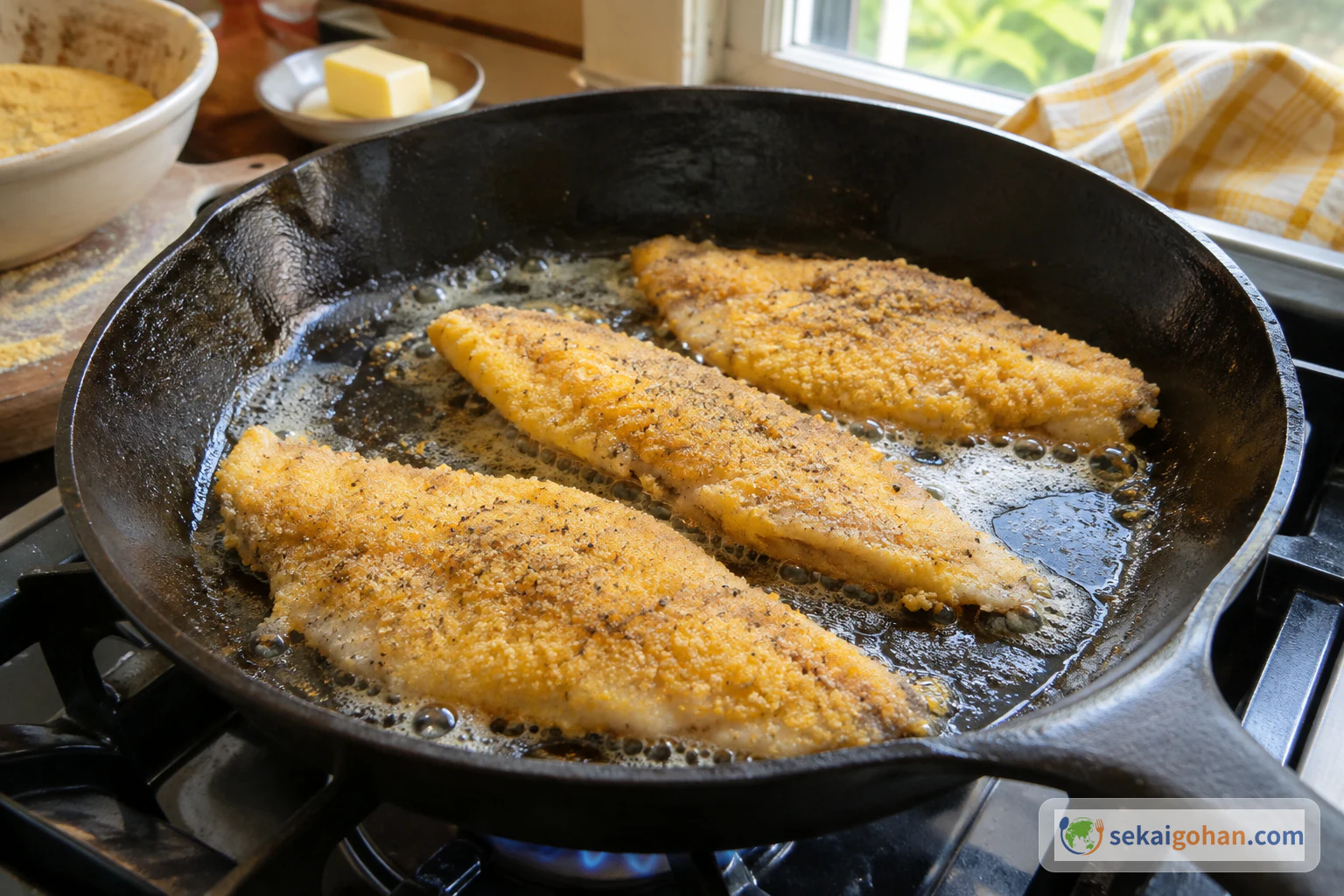
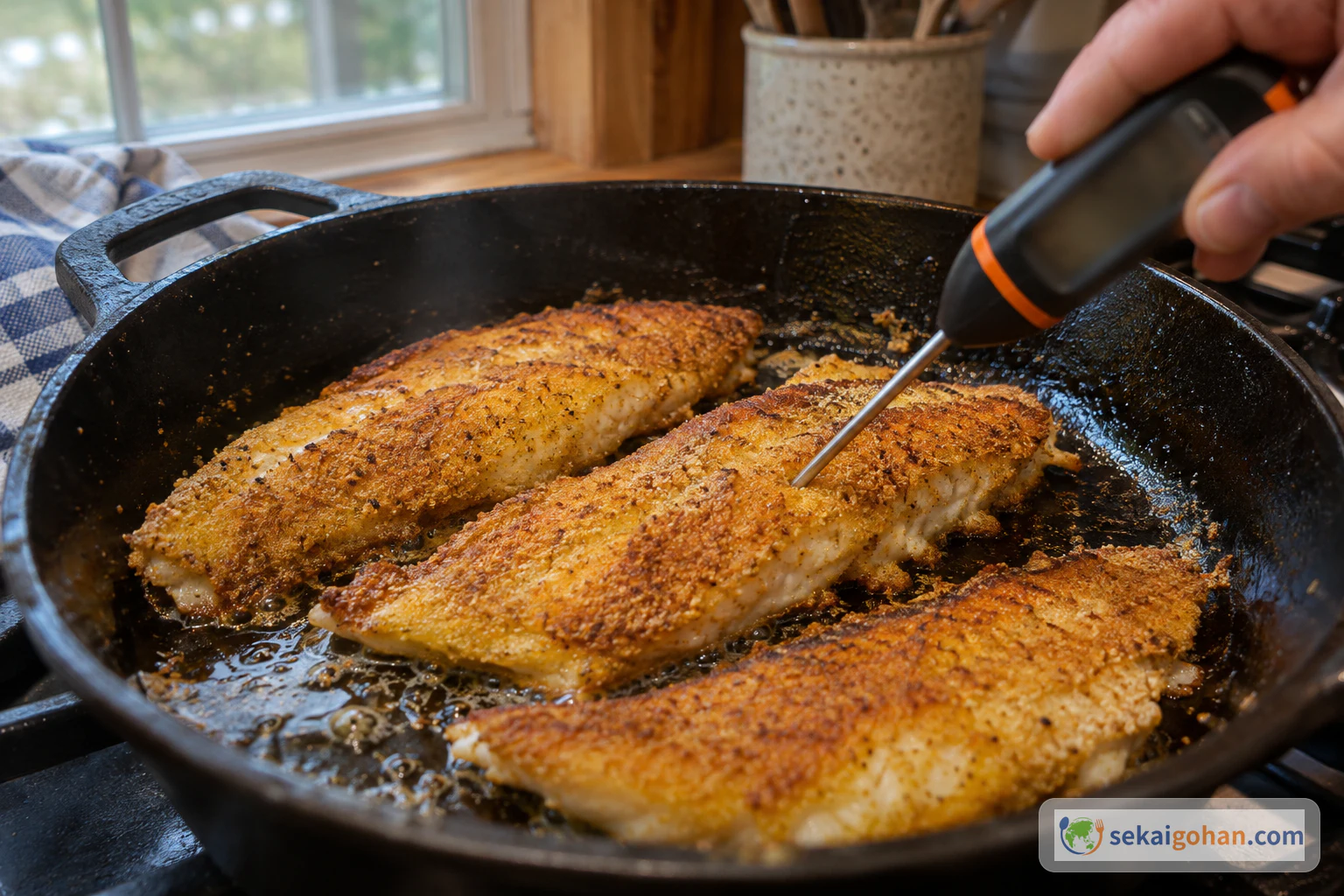
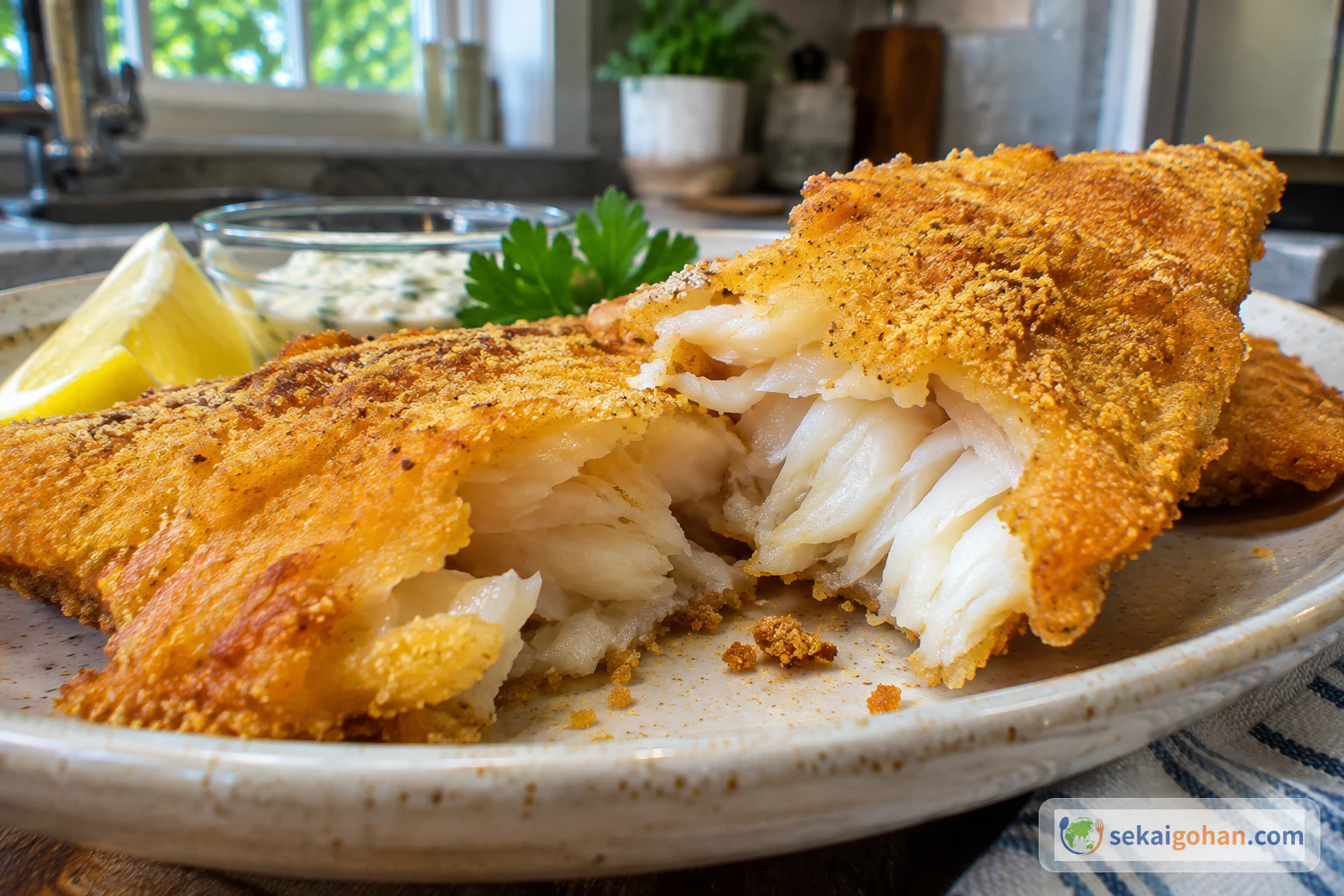
The butter foams in the skillet and the fillets go in with a soft hiss. The edges of the cornmeal crust turn gold first, and a smell of browned butter and garlic drifts up. On a lakeshore in northern Ontario or out on the prairies, those fillets were often swimming that morning. Fried walleye is mild, sweet, flaky white fish inside a thin, crunchy jacket of flour and cornmeal. It is the fish at the center of the Canadian shore lunch, and at home it takes a skillet, a tray and about ten minutes at the stove.
Shore Lunch: Walleye Cooked Where It Was Caught
Shore lunch is the meal anglers cook at the water's edge, at a remote campsite or on a rocky point. The fish is cleaned, coated and fried on the same day it is caught. In northern Ontario it is the signature meal of a fishing trip, and walleye is the fish everyone hopes to cook. At the shore the frying fat is lard or canola oil, and the skillet sits over a fire or a camp stove. Cooks there judge the oil's heat by flicking in a drop of water or a wooden match, and the fish comes out after only a few minutes.
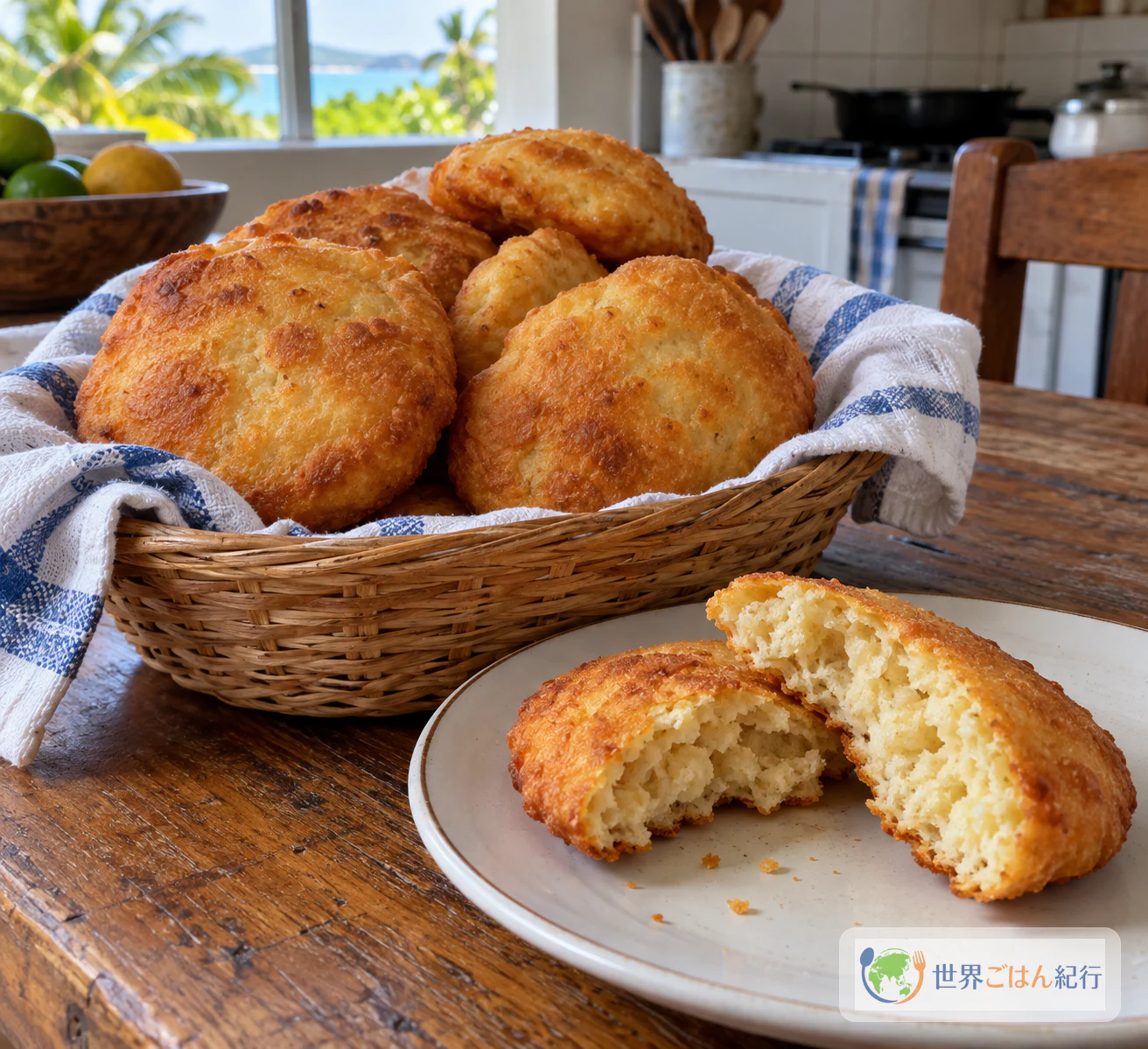
The plate around the fish is part of the ritual. On the prairies, canned beans and potatoes come with the fish so reliably that the three are called a mandatory trilogy. In Ontario, bannock, a simple pan bread, often joins them, and watermelon shows up after the meal. Lodges in northern Manitoba run shore lunches for their guests in much the same way: fish fried in small batches, with beans and potatoes alongside.
In Manitoba and Saskatchewan, walleye is the official provincial fish. On prairie menus it is usually called pickerel. The true pickerel is a different fish from another family, so "pickerel" on a Canadian menu almost always means walleye.
One fish, several coatings
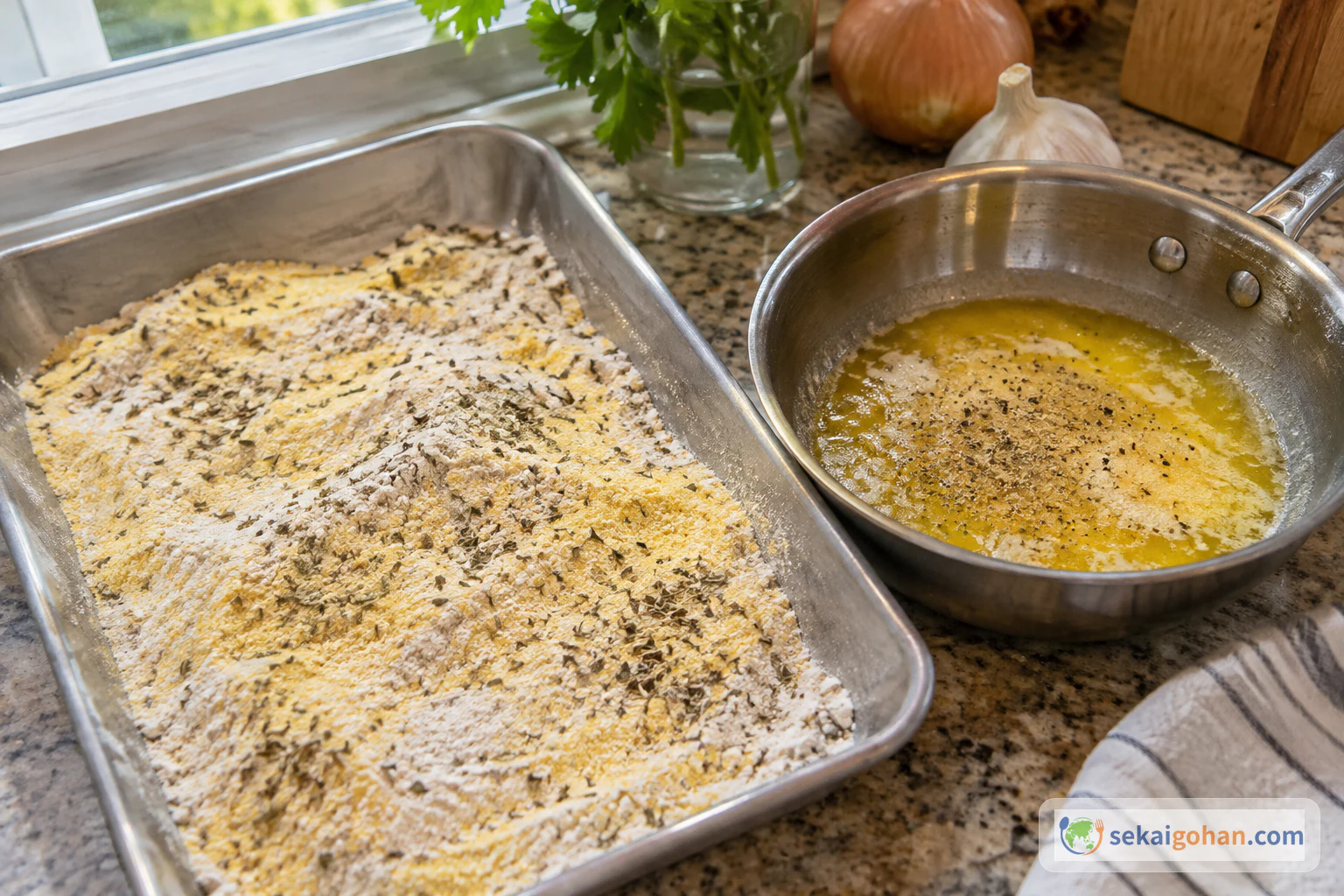
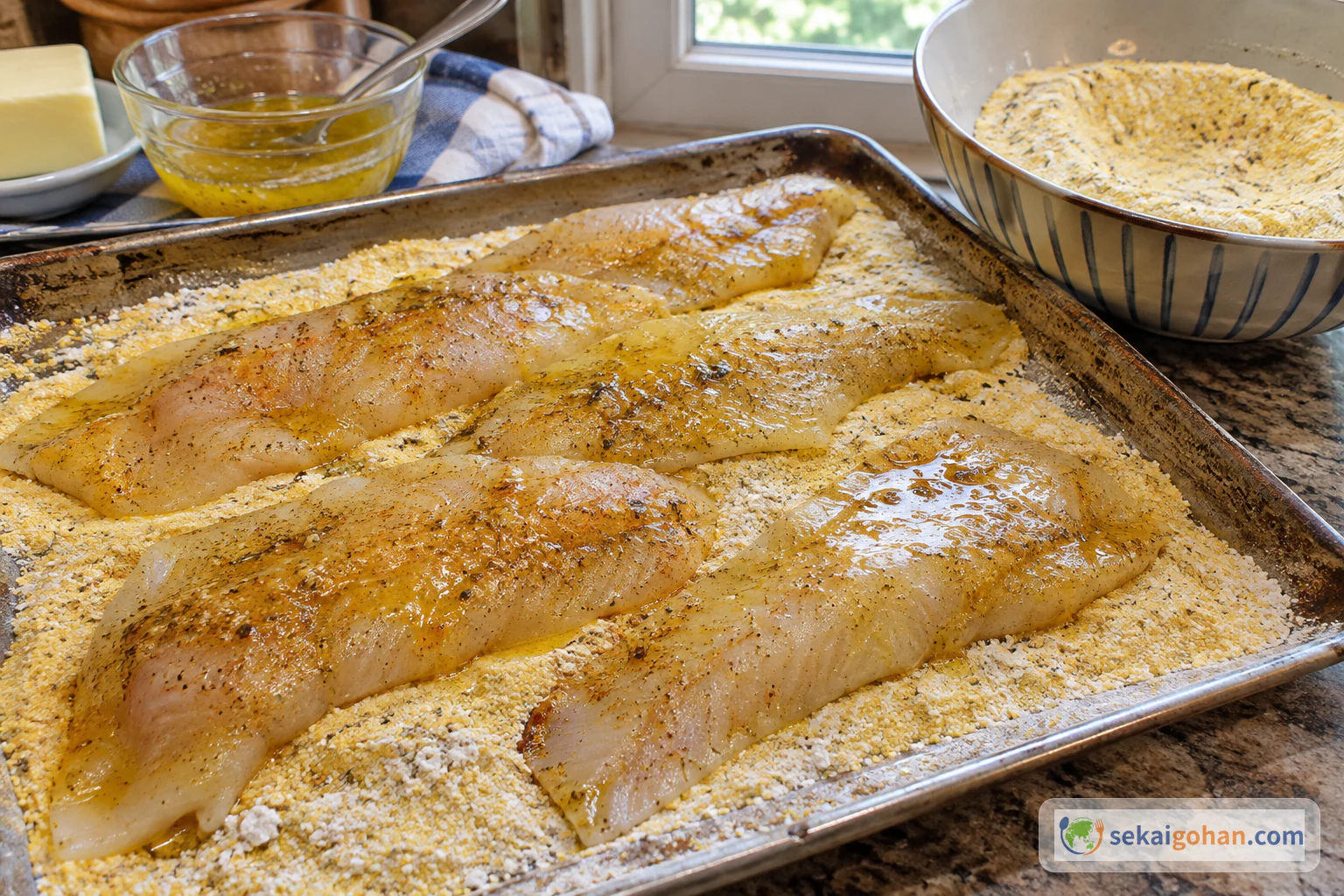
Every lake has its own coating. On the prairies, fillets are dipped in water or milk, dredged in equal parts cornmeal and flour, and fried in canola oil. A Manitoba lodge mix adds lemon pepper, garlic salt, paprika and celery seed. Ontario cooks often use the three-step flour, egg and breadcrumb (or crushed cornflake) coating. Across the border in the American Midwest, a cracker coating and a side of tartar sauce and coleslaw are common. The version here is pan-fried in butter, using seasoned butter as the glue and a cornmeal and herb mix as the crust. It works well indoors on a weeknight. More dishes from the same country are on the Canada page.
Ingredients
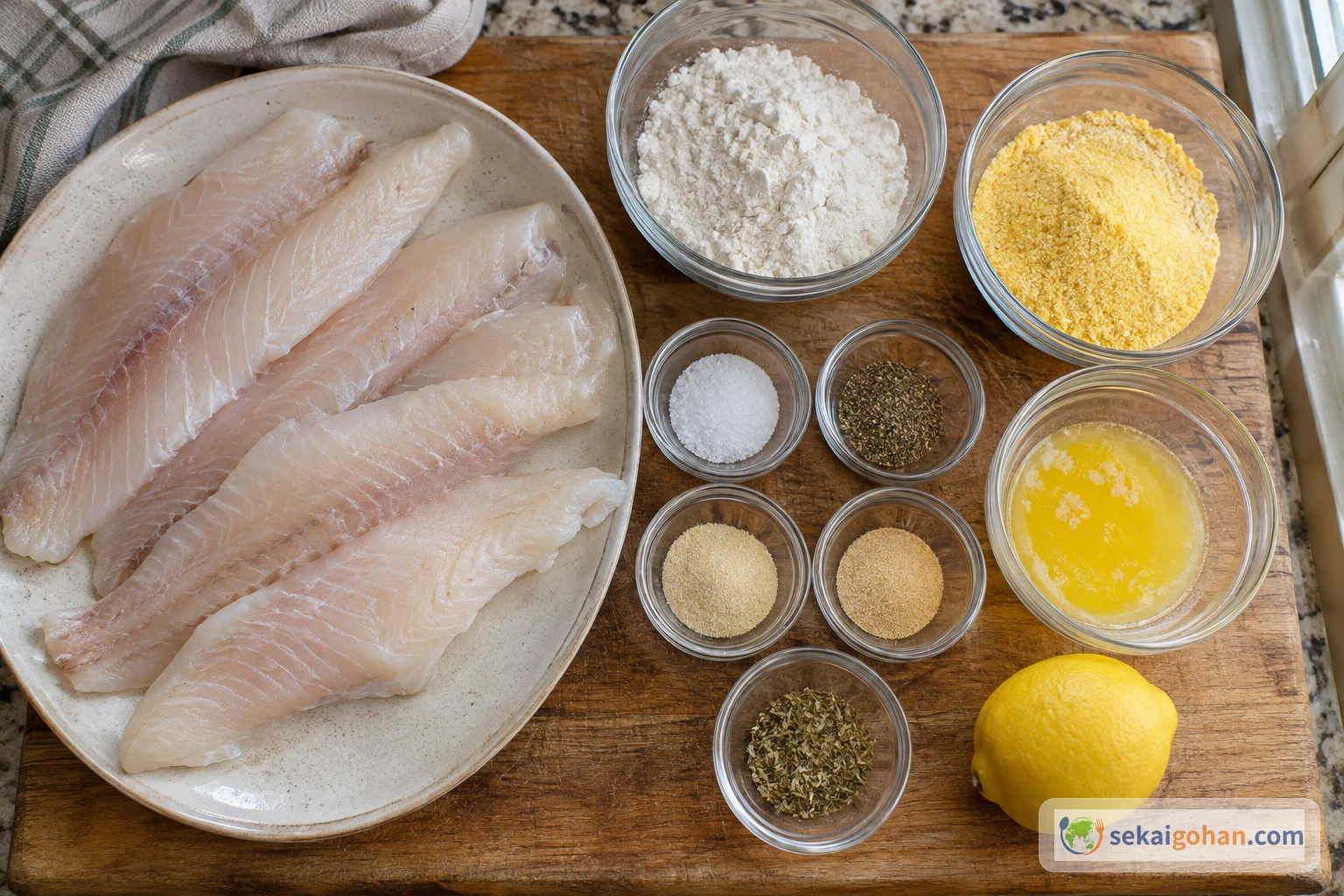
This dish contains fish, milk (butter) and wheat (flour). Check spice blends for added ingredients if you cook for someone with allergies.
Equipment
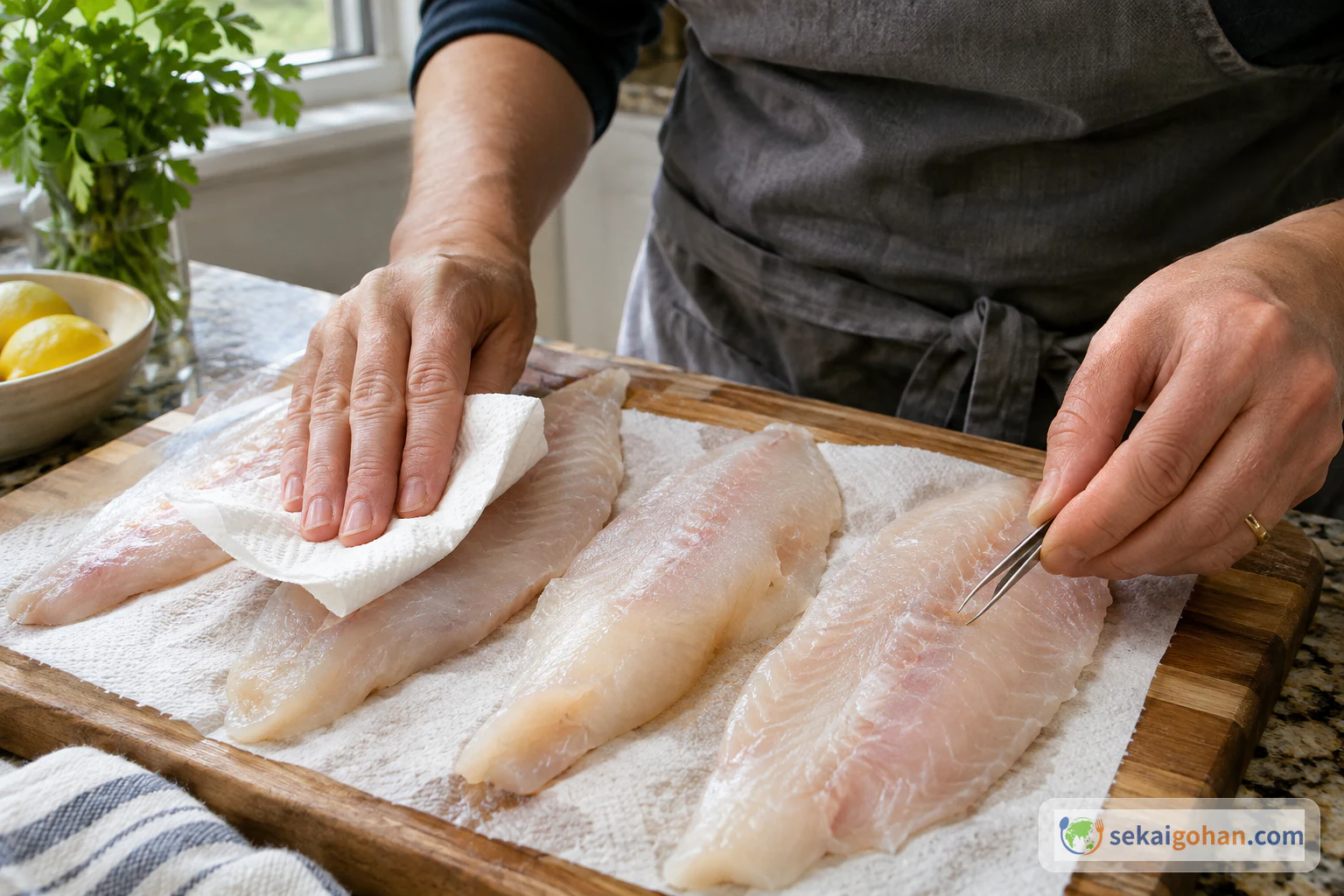
- Paper towels
- Tweezers, for pin bones
- Small saucepan, for melting the butter
- Mixing bowl
- Shallow tray or baking dish
- Large skillet (cast iron gives the deepest color)
- Thin, wide spatula
- Digital probe thermometer
Choosing the Fish and the Crust
When walleye is hard to find, any mild white fish works: sea bass, cod, pollock or hoki. Each one gives a slightly different result. Cod is softer and flakes into larger pieces, and thinner fillets cook faster than thick ones. The coating and method stay the same, and the thermometer tells you when the fish is done.
The cornmeal matters most. Look for fine-ground yellow cornmeal. Polenta is coarser and gives a grittier, crunchier crust. If you use it, the coating will feel sandier on the tongue. Cornstarch is a completely different product and will not give the crunch. All-purpose flour can be swapped for a soft cake-type flour with little change. A jar of mixed dried herbs stands in for Italian seasoning.
The two sit next to each other on many shelves. Cornmeal is gritty and yellow and fries into a crunchy shell. Cornstarch is a silky white powder that makes a thin, glassy coating. For walleye, buy the gritty one.
Method
The work goes in a straight line, from board to butter to tray to skillet. Set out the tray, the bowl and the melted butter before the skillet goes on the heat. Once the fish is coated it should go straight into the pan. The only hands-off time is the 5 minutes per side in the skillet.
Cook fish to an internal temperature of 158°F (70°C), measured at the thickest part. Lay fillets into hot butter or oil away from you, keep handles turned inward, and never leave a hot skillet unattended.
Butter browns fast at medium-high heat. If it starts to smoke or turn dark before the first side is done, lower the heat a notch. Adding a little neutral oil with the butter also helps. A crowded pan steams the crust, so fry in two batches if the fillets touch.
When It Goes Wrong
| What you see | Why | What to do |
|---|---|---|
| Coating slides off in the pan | The fish was wet, or the fillets were moved too soon | Pat the next batch drier and leave the fillets untouched for the full first side |
| Butter turns black before the crust is gold | Heat too high for butter alone | Lower the heat slightly and add a little neutral oil to the pan |
| Crust pale and soft | Pan not hot enough, or too many fillets at once | Wait for the butter to foam before adding fish and leave space between fillets |
| Crust brown but center under 158°F (70°C) | Thick fillet | Turn the heat down, keep cooking, and check again at the thickest part |
| Crust feels sandy | Coarse cornmeal or polenta | Use a fine-ground cornmeal next time |
Serving and Variations
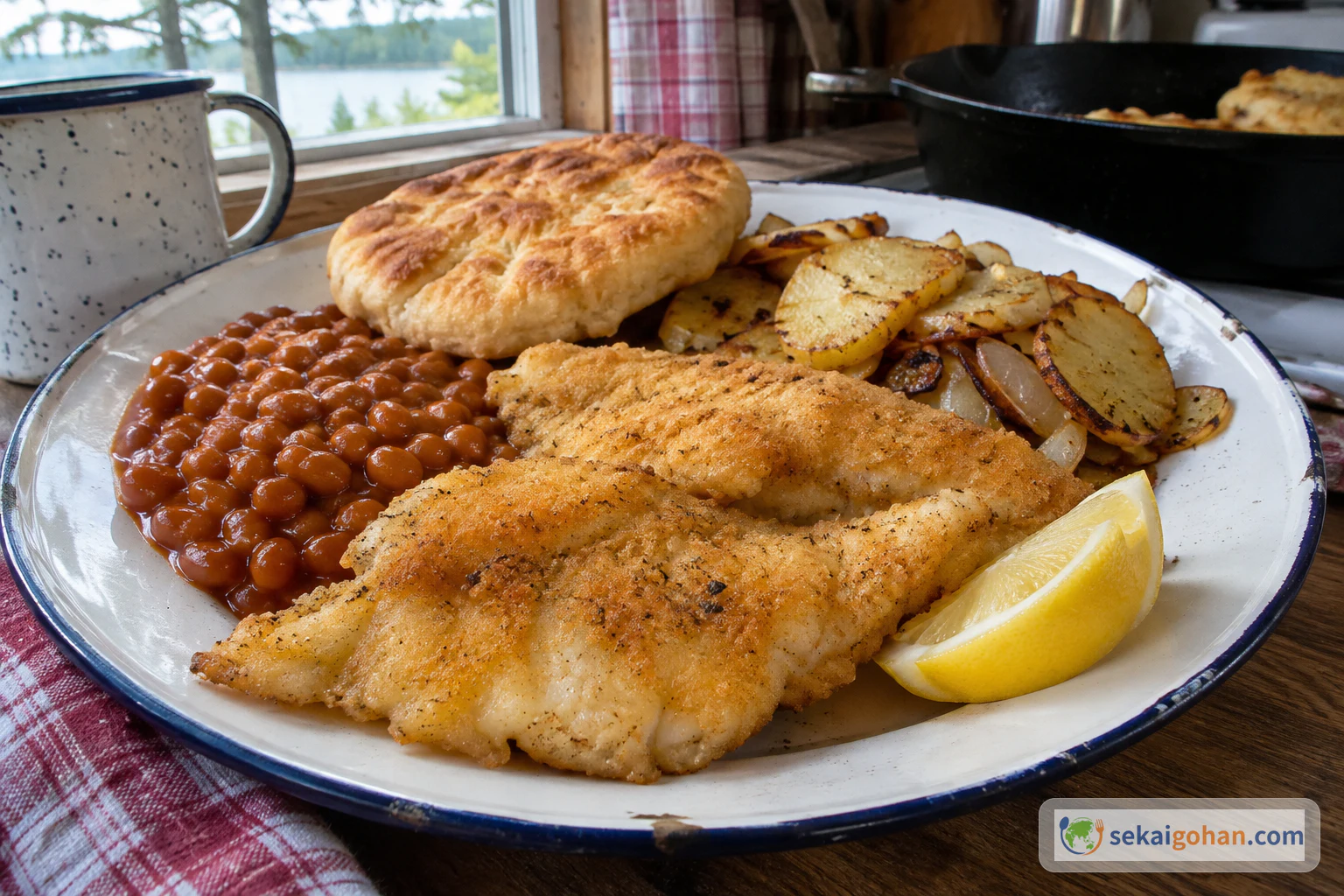
Serve the fish straight from the skillet, with lemon wedges for squeezing. For a shore-lunch plate, warm a can of baked beans and pan-fry sliced potatoes while the fish is being coated. Add bannock or any plain bread, and set out watermelon for afterwards. The American Midwest table adds tartar sauce and coleslaw, which pair well with the crunchy crust. Cool any leftovers, then refrigerate them promptly in a covered container.
Deep-fried in canola oil
This is the shore and lodge method. Heat about 2 inches (5 cm) of canola oil to 375°F (190°C) in a heavy, deep pan. Fry the fillets in small batches, turning once, until golden. Check them with the thermometer the same way. The crust comes out lighter and crisper than the butter version, with less browned-butter flavor.
Milk dip and half-and-half dredge
On the prairies, fillets go through water or milk instead of butter, then into equal parts cornmeal and flour. The crust is thinner than in the butter version.
Lodge spice mix
Season the cornmeal and flour with lemon pepper, garlic salt, paprika and celery seed in place of the Italian herbs. The crust turns redder and tangier, closer to the spice-rack style of a Manitoba lodge.
Egg and crumb
Use the three-step coating: flour, then beaten egg, then breadcrumbs or crushed cornflakes. The shell is thicker and stays crunchy longer on the plate, so it suits serving a crowd.
Frequently asked questions
Salted or unsalted butter?
Either works. With salted butter, the seasoned dip already carries salt, so taste the finished fish before adding more at the table. Unsalted butter gives you more control.
Can I tell it is done without a thermometer?
Opaque, white flesh that flakes at the center is a good sign. But only a thermometer at the thickest part confirms 158°F (70°C). It is a cheap tool and it takes the guesswork out of thick fillets.
Can I coat the fish ahead of time?
Coat it just before frying. Once the fillets sit, the butter firms up and the cornmeal absorbs moisture from the fish, so the crust browns less evenly. Get the butter and coating ready ahead, then coat and fry in one go.
Which skillet works best?
Cast iron holds its heat when the cold fillets go in, so the crust browns evenly. A heavy stainless or nonstick skillet also works. Watch the butter more closely in a thin pan, because it browns faster.