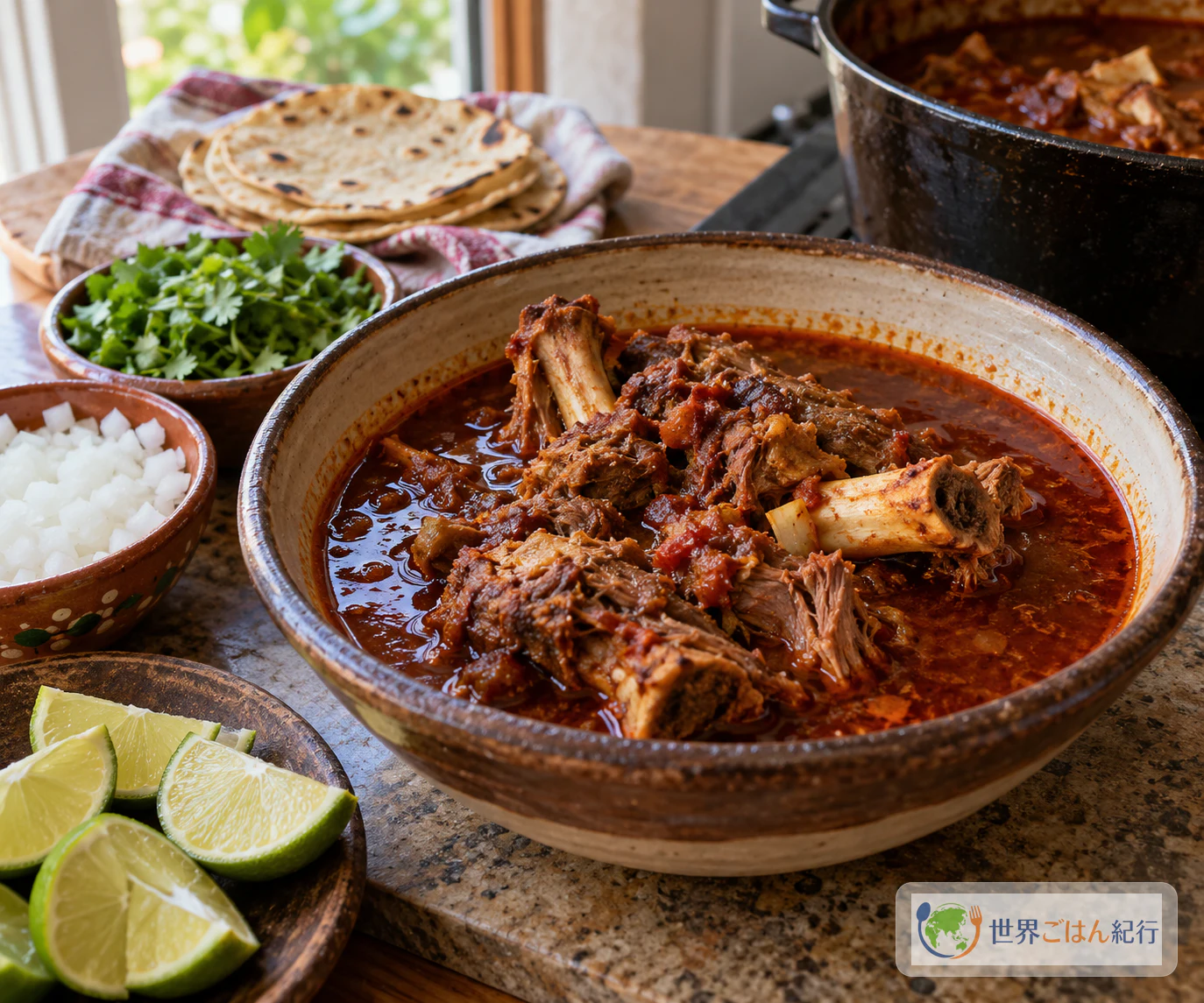
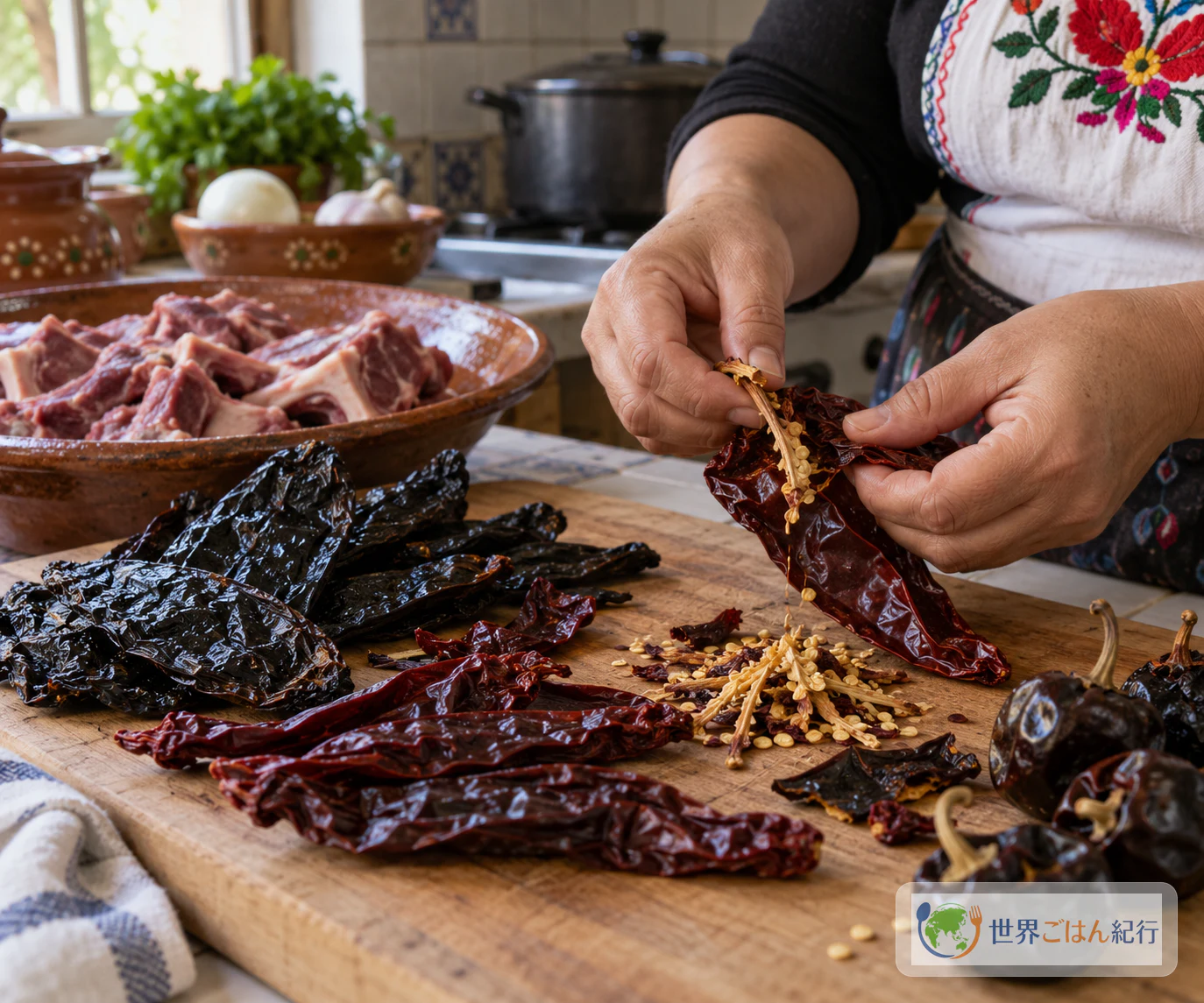
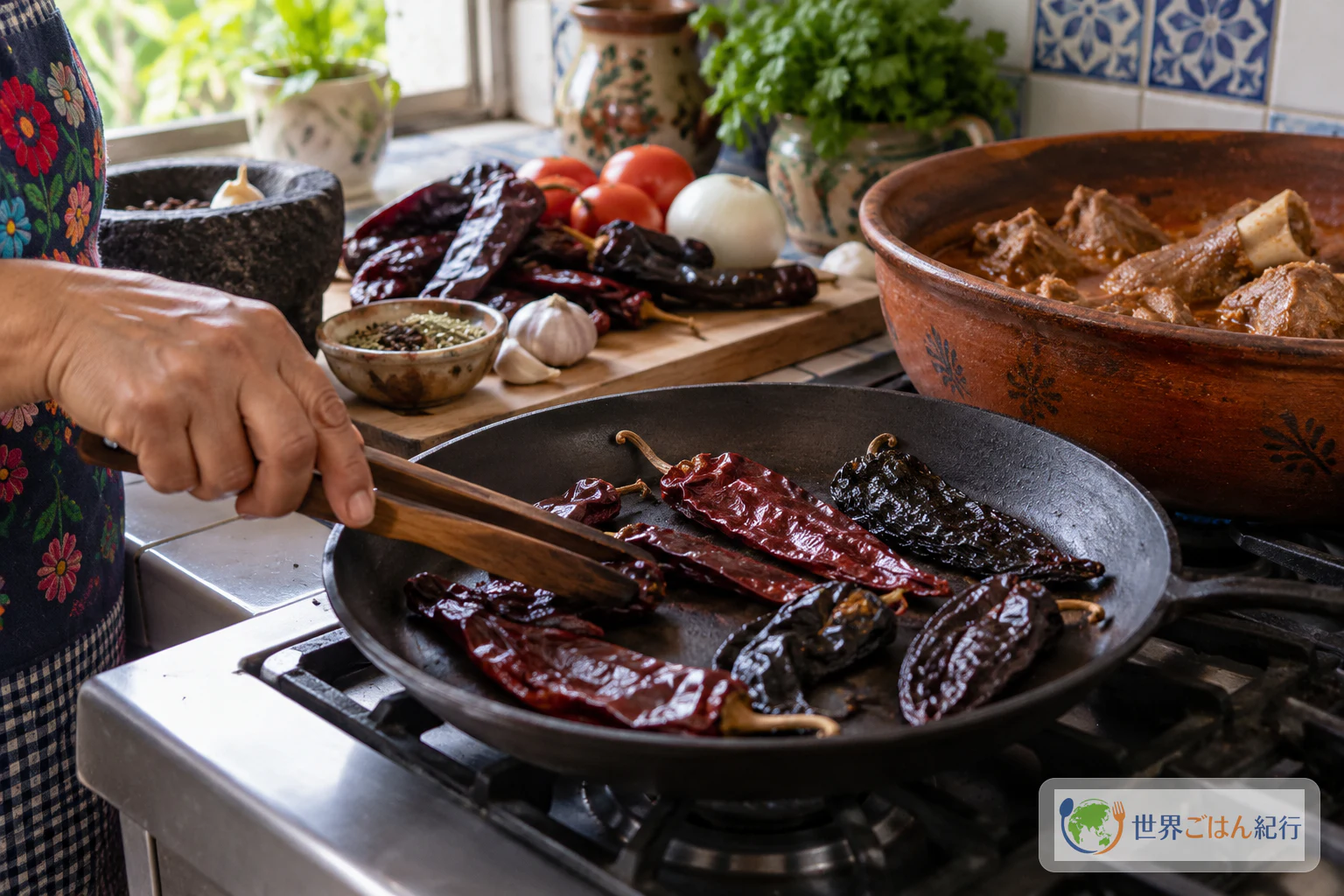
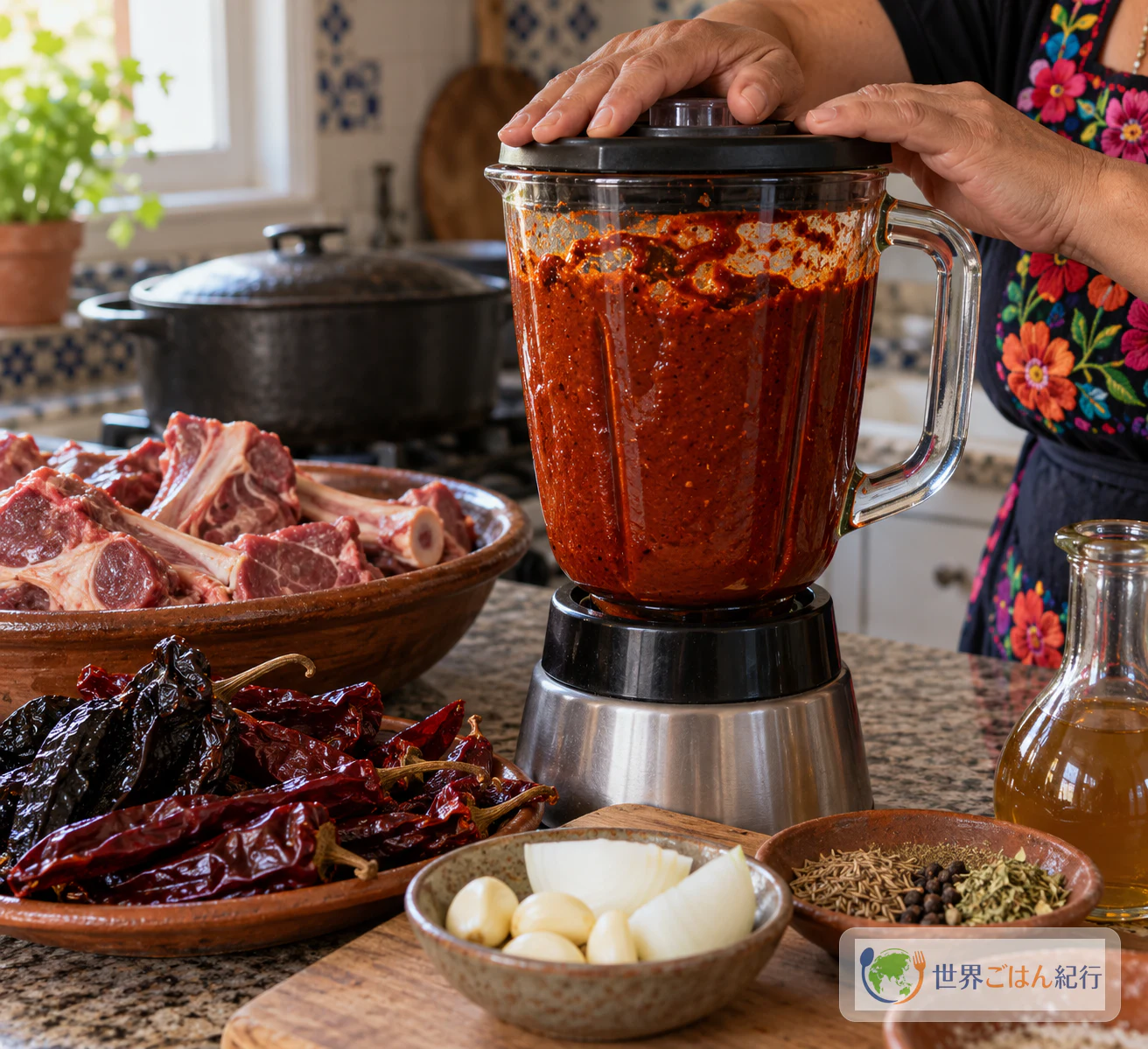
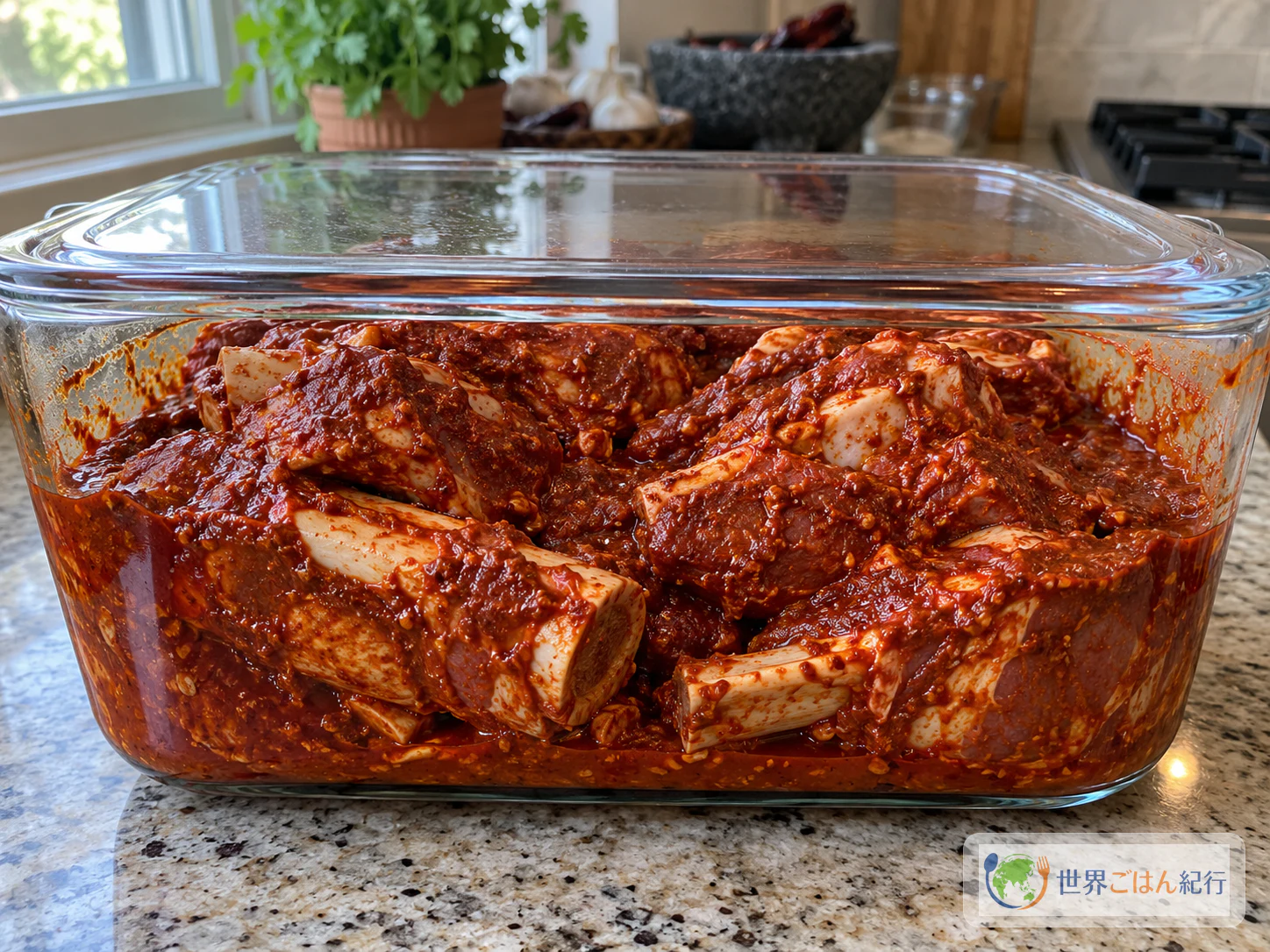
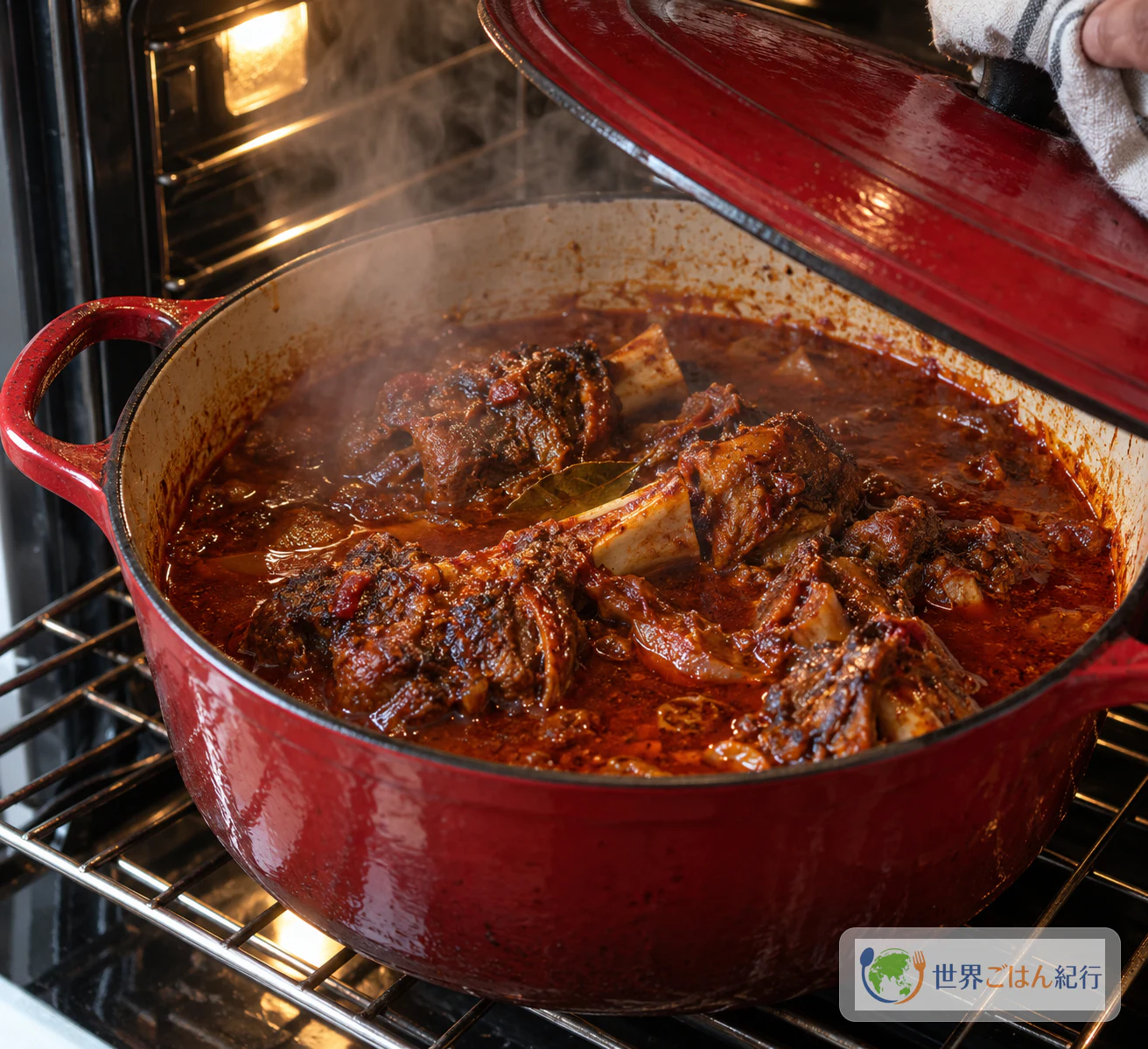
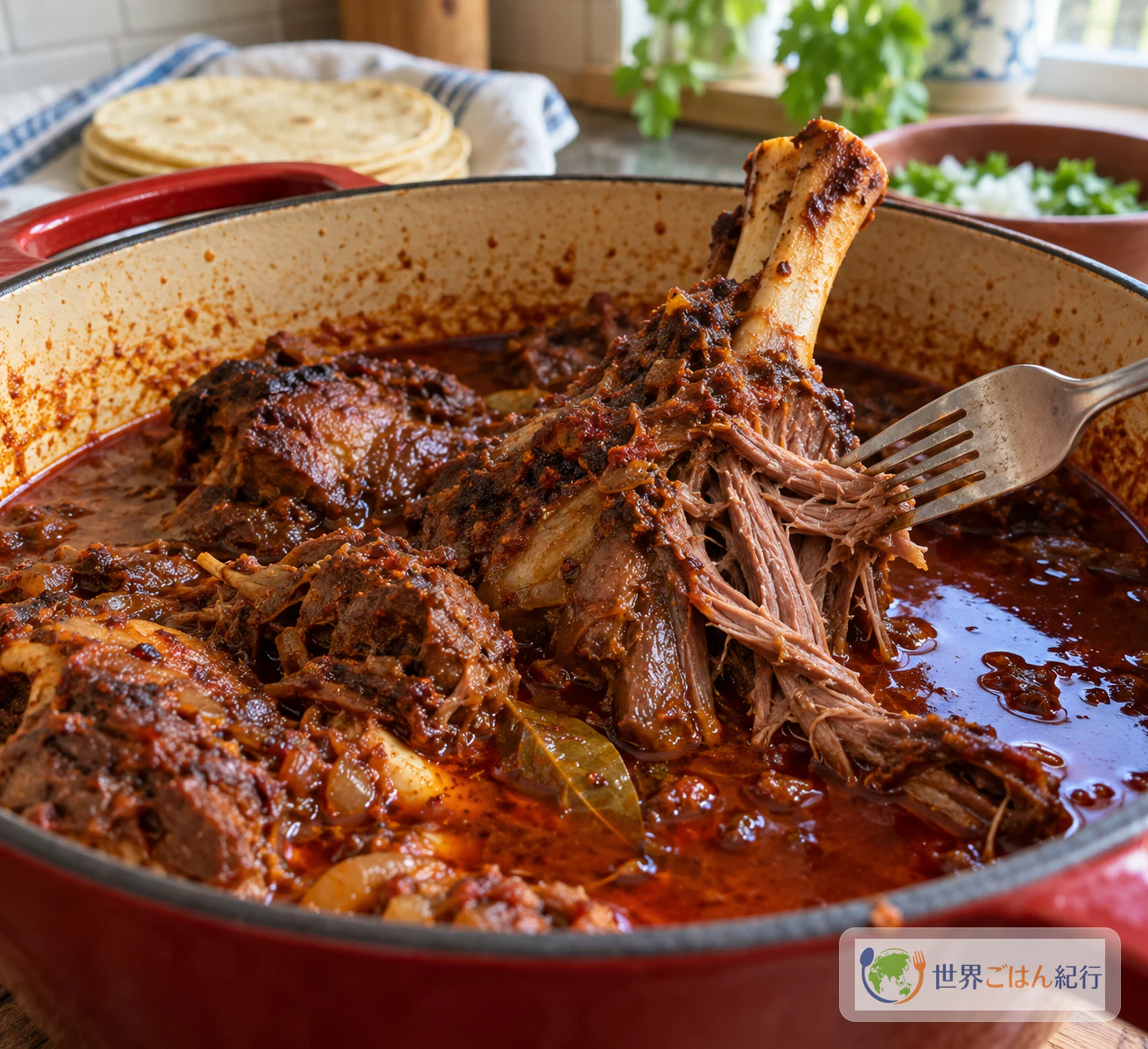
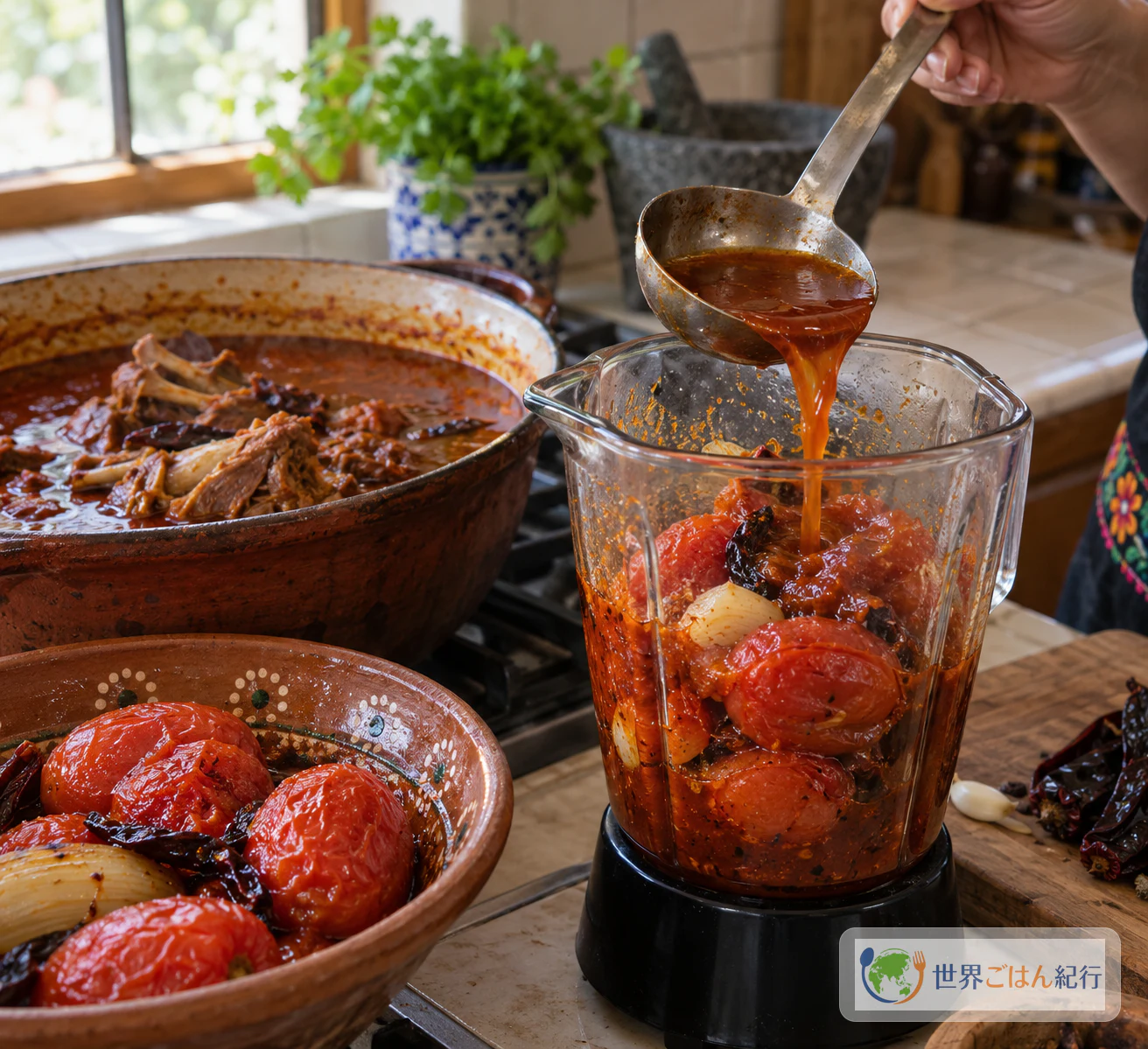
In Guadalajara, a bowl of red, aromatic birria broth is a weekend institution. This version is the traditional one: bone-in goat marinated overnight in an adobo of dried chiles, garlic, spices and vinegar, then baked covered until the meat comes away from the bone. The chiles and vinegar carry the flavor, deep and a little sharp. It makes a big pot, so it's a dish for a gathering.
Birria de Chivo in Jalisco
Birria is one of Jalisco's representative dishes. It was once made for celebrations such as birthdays, weddings and baptisms, and the pot that fed a family occasion is the same dish people now eat as red broth on a weekend morning.
"Birria" covers a lot of ground. The meat, the amount of broth and the cooking method all vary. Birria is cooked in a covered pot, roasted in the oven (tatemada) or cooked in maguey leaves. Goat marinated in chiles and spices is the traditional version, though a beef version is also made today. Here it's birria de chivo, bone-in goat in the Jalisco style. For beef and quesabirria, see birria de res.
Ingredients: Serves 10, with 4.5 lb (2 kg) of Bone-In Goat
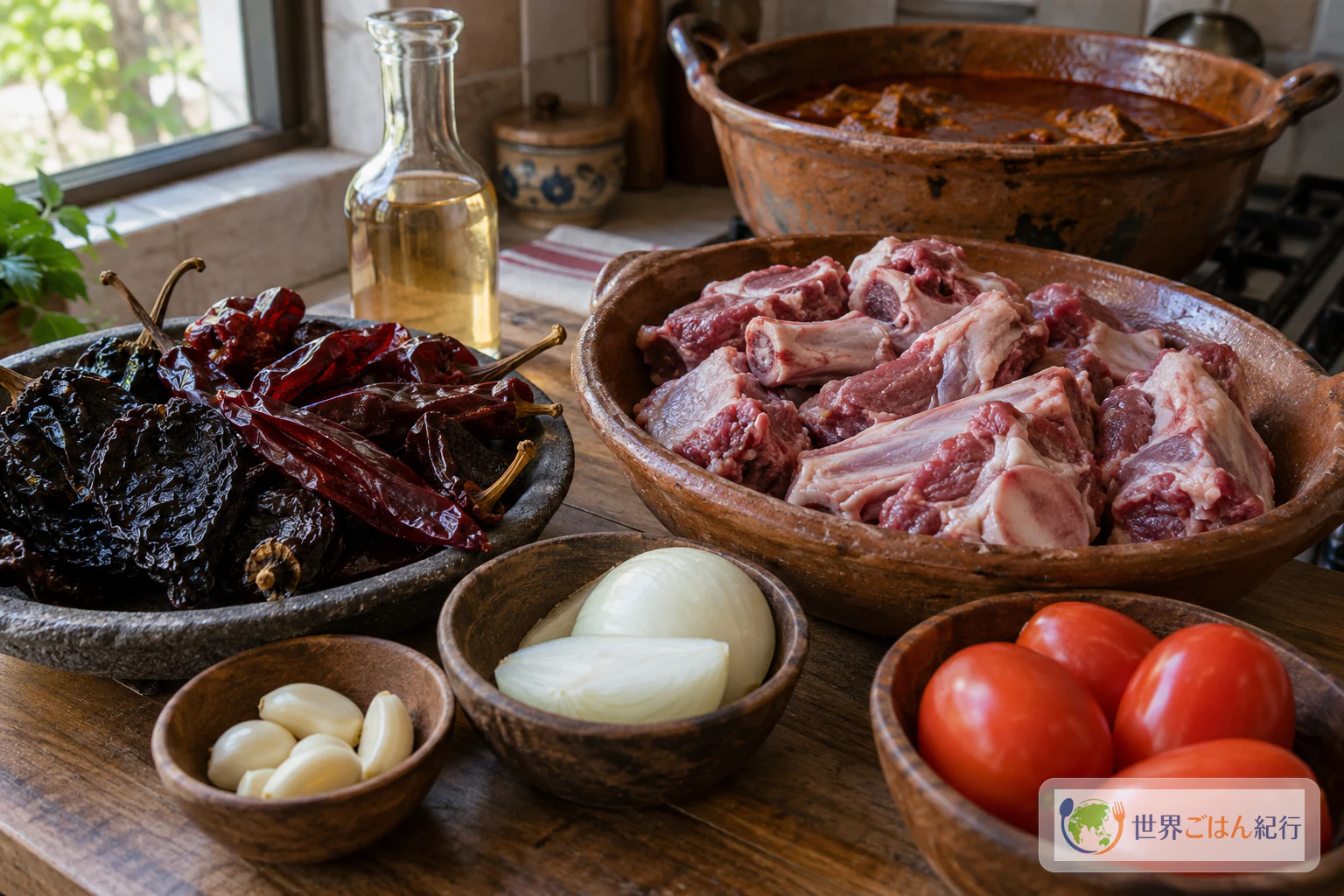
If you use boneless goat, the same 4.5 lb (2 kg) makes 20 servings.
Equipment
- Blender
- Dry skillet for warming the chiles
- Lidded ovenproof pot or covered baking dish large enough for 4.5 lb (2 kg) of bone-in goat
- Food thermometer
- Lidded container for marinating in the refrigerator
Choosing Goat and Dried Chiles
Bone-in goat gives the cooking liquid more depth, even if it's a little less convenient to handle. Jalisco goat birria is made with bone-in cuts, so look for ones suited to long braising, such as shoulder or shank. Goat is lean, and its less tender cuts do well in braises and stews.
Goat is rarely on ordinary supermarket shelves. Ask a butcher, or a shop that handles lamb or game, for "bone-in goat for braising."
Each of the three chiles does a different job. Ancho brings a sweet, deep aroma. Guajillo brings red color and a gentle aroma, and cascabel adds a dry, toasty note and a layer of heat. Look for them by name at Mexican grocers or import-food shops.
- Goat is hard to find: lamb is a closely related braising meat and can stand in, but the aroma will differ. Beef makes a different dish, birria de res.
- No cascabel chiles: you can leave them out, but the flavor will be shallower.
- White vinegar: apple cider vinegar works and makes the flavor softer.
- Paprika or ground chile: these can't match the aroma of whole dried ancho, guajillo and cascabel, so stick with the whole chiles.
The main ingredients do not include common major allergens, but check the labels of any processed products for allergens and shared-facility statements. If heat is hard on you, adjust the amount of chile and remove the seeds and veins carefully, and let people add more heat at the table.
Method: Adobo the Day Before, a Long Covered Bake on the Day
Steps 1 to 4 are done the day before, and the goat marinates in the refrigerator for a day. The oven time on the day is a guide; judge tenderness by whether the meat comes away from the bone, and check food safety separately with the thermometer guidance in step 6.
When Birria Goes Wrong
| Problem | Likely cause | What to do |
|---|---|---|
| The adobo tastes bitter | The chiles scorched | Next time, warm the chiles over low heat and stop as soon as they smell fragrant |
| The meat is tough | Not cooked long enough | Add time and keep it covered until the meat comes away from the bone. If the liquid runs low, add a little hot water so the pot doesn't dry out |
| The sauce feels heavy | Fat on the surface | Skim off some of the fat. Keep the chiles and vinegar as they are; they are the core of the flavor |
Serving, Storing and Variations
Broth Bowls or Tacos
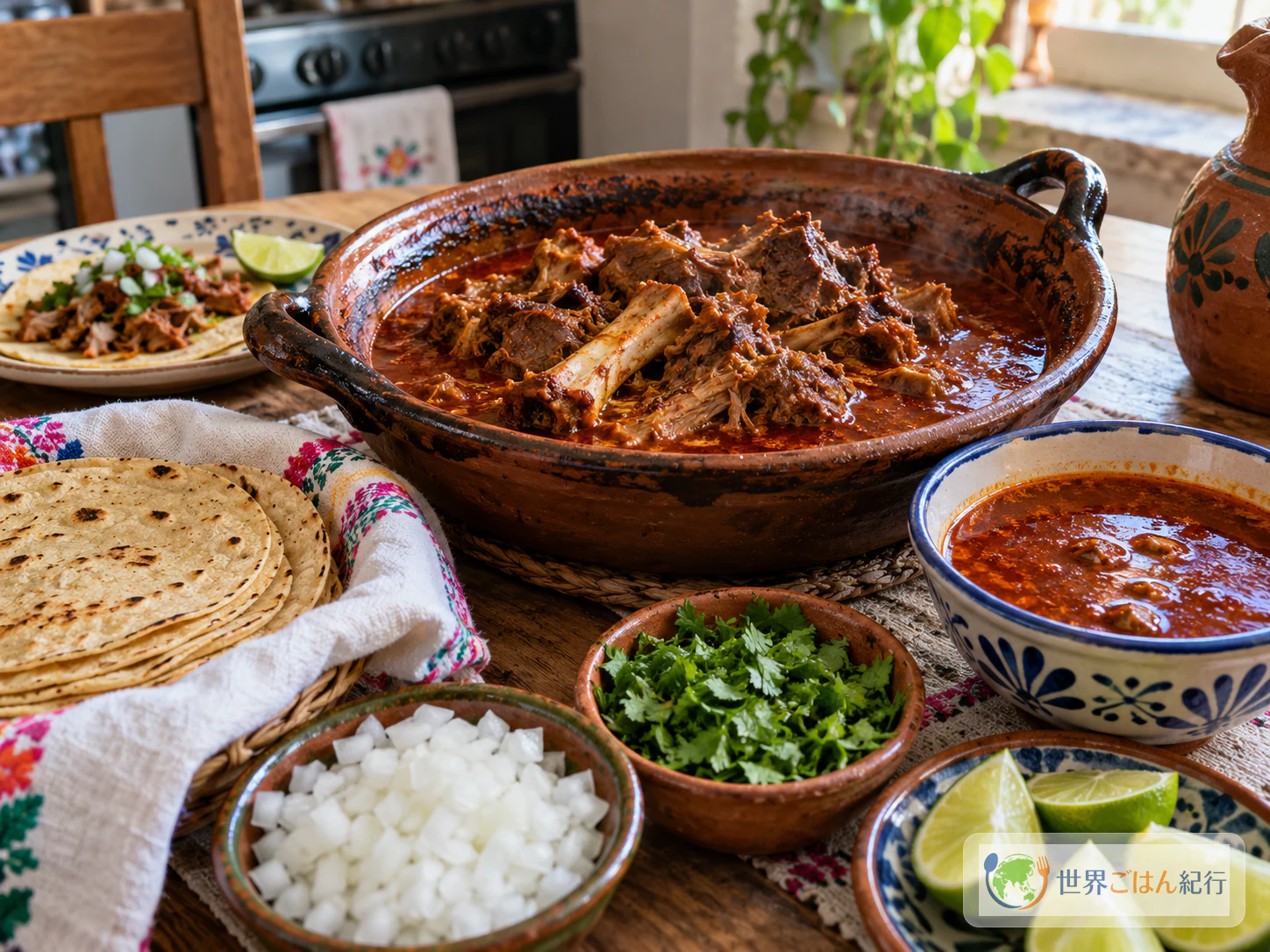
Even within Jalisco, birria comes two ways: as a brothy dish and as drier meat for tacos. For a broth-forward bowl, ladle plenty of the red liquid over the meat. For tacos, wrap the meat in warm tortillas with onion, cilantro and a squeeze of lime. For more on eating with tortillas, see tacos.
Storing Leftovers
A large pot cools slowly. Within 2 hours, divide the birria into shallow containers, which cool faster, and refrigerate it at 39°F (4°C) or below. Reheat it until it's hot all the way through.
Variations
- Lamb or mutton (borrego): a close relative with a different meat and aroma.
- Beef: birria de res is a separate dish, and that recipe also covers quesabirria.
- On the stovetop: 2.75 lb (1.2 kg) of bone-in goat for 6 servings, simmered low for around 3 hours, or 90 minutes in a pressure cooker.
For another red braise from Mexico's table, try pozole rojo.
Frequently Asked Questions
What is the difference between birria and birria de res?
The meat. Chivo is goat and res is beef. Goat is the traditional choice; the beef version has its own recipe.
How much can I prepare the day before?
The chiles, the adobo and the marinade. Coat the goat with the adobo, keep it covered in the refrigerator for a day, then bake it on the day you serve.
Is it very spicy?
That depends on the chiles and how much you use. Removing the seeds and veins tames it, and you can let people add heat at the table.
Explore more dishes in Mexican cuisine.