Saltillo-Style Enchiladas Rojas: Corn Tortillas Wrapped in Red Chile Sauce
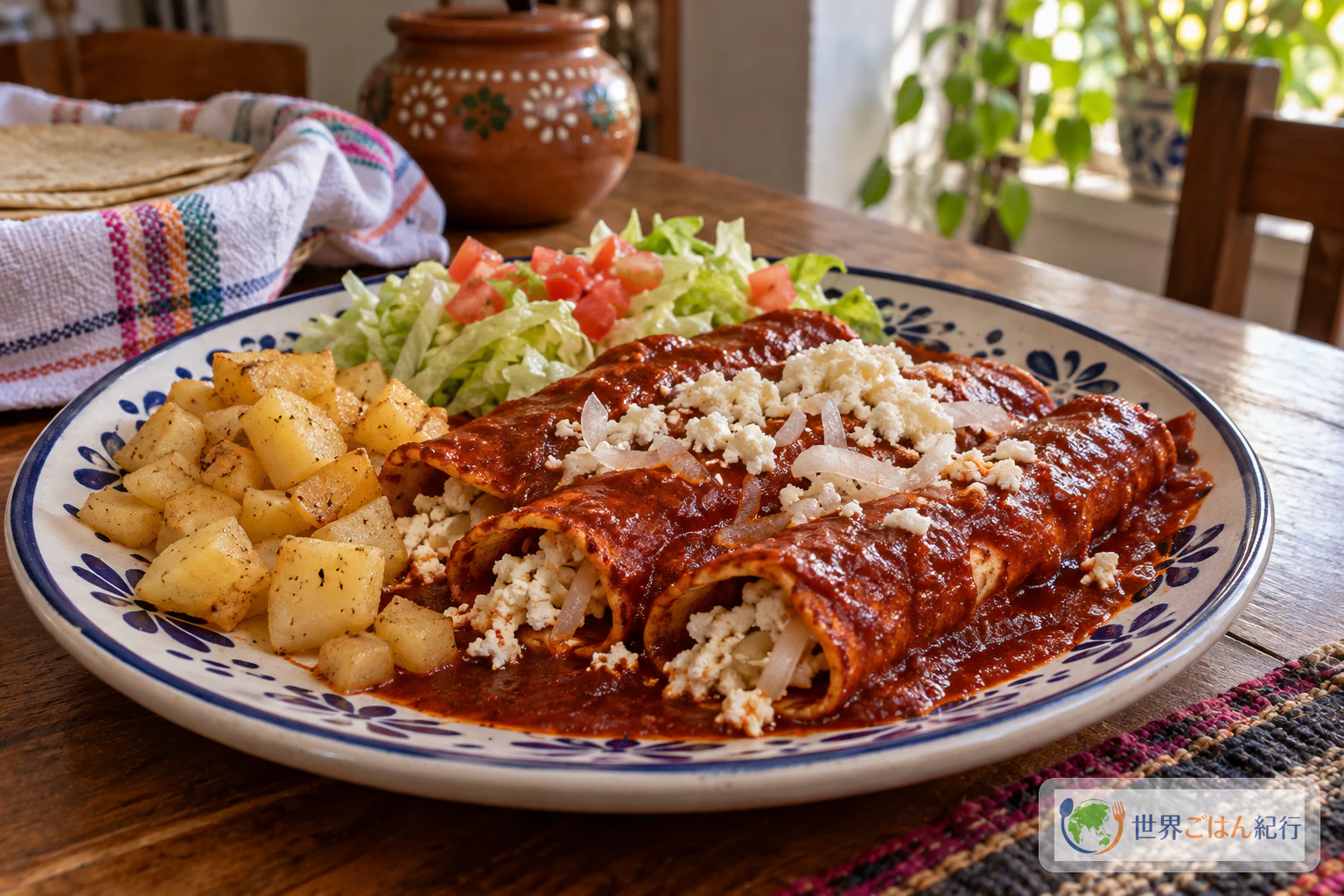
A smooth red sauce made from toasted dried chiles, corn tortillas that stay soft enough to roll, a salty cheese filling sharpened with onion, and potatoes on the side. Everything comes together at the end and goes to the table right away.
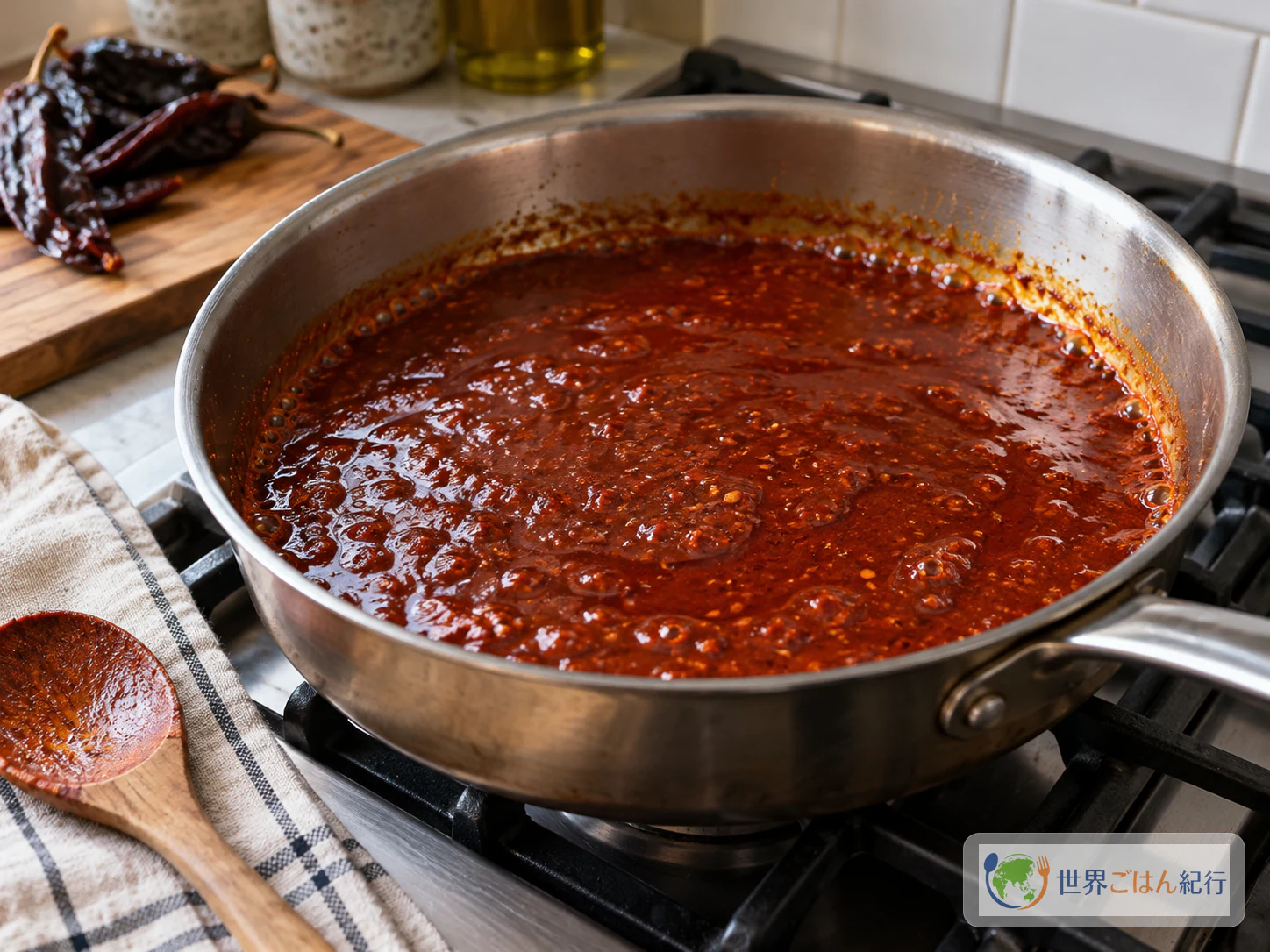
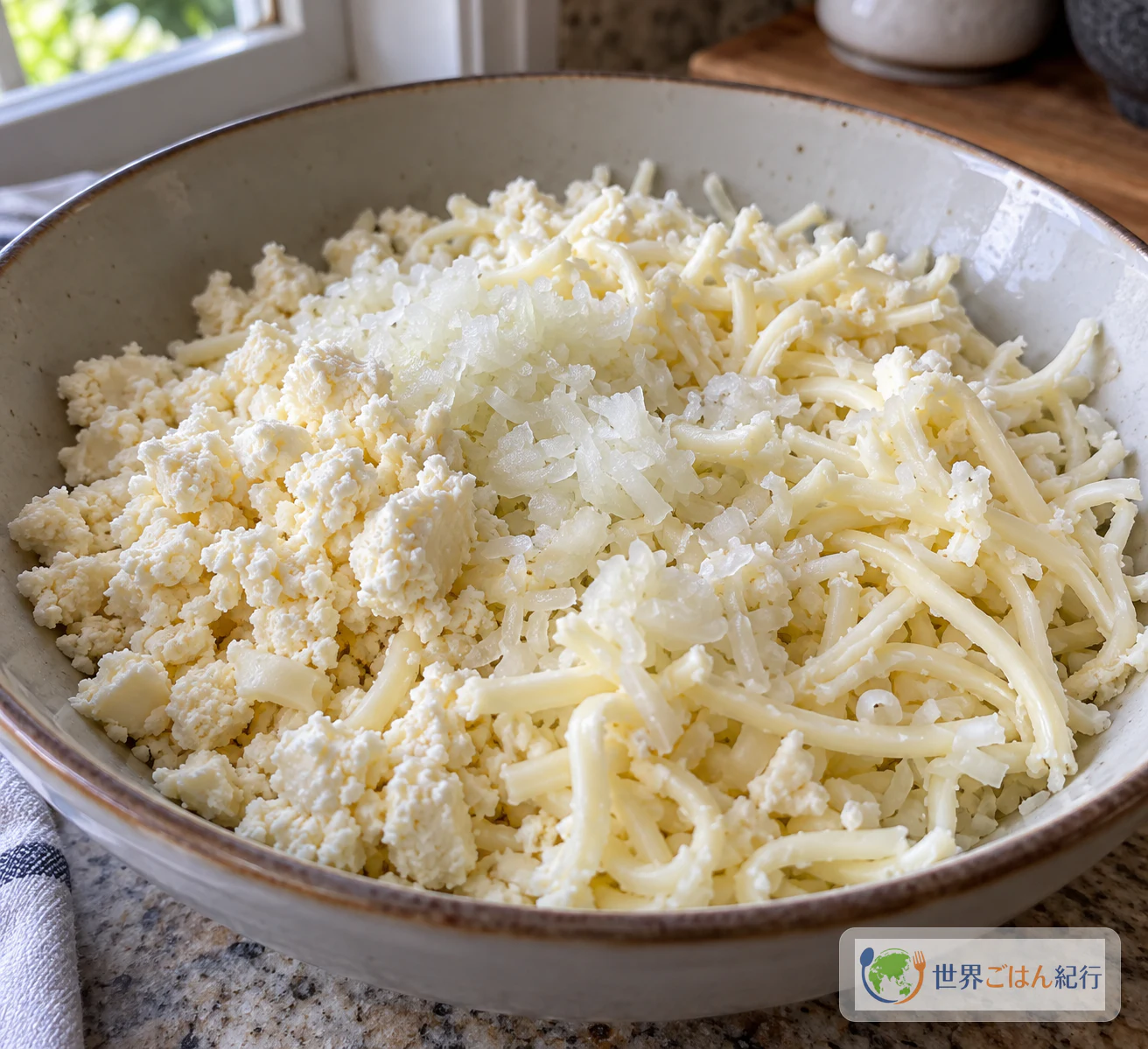
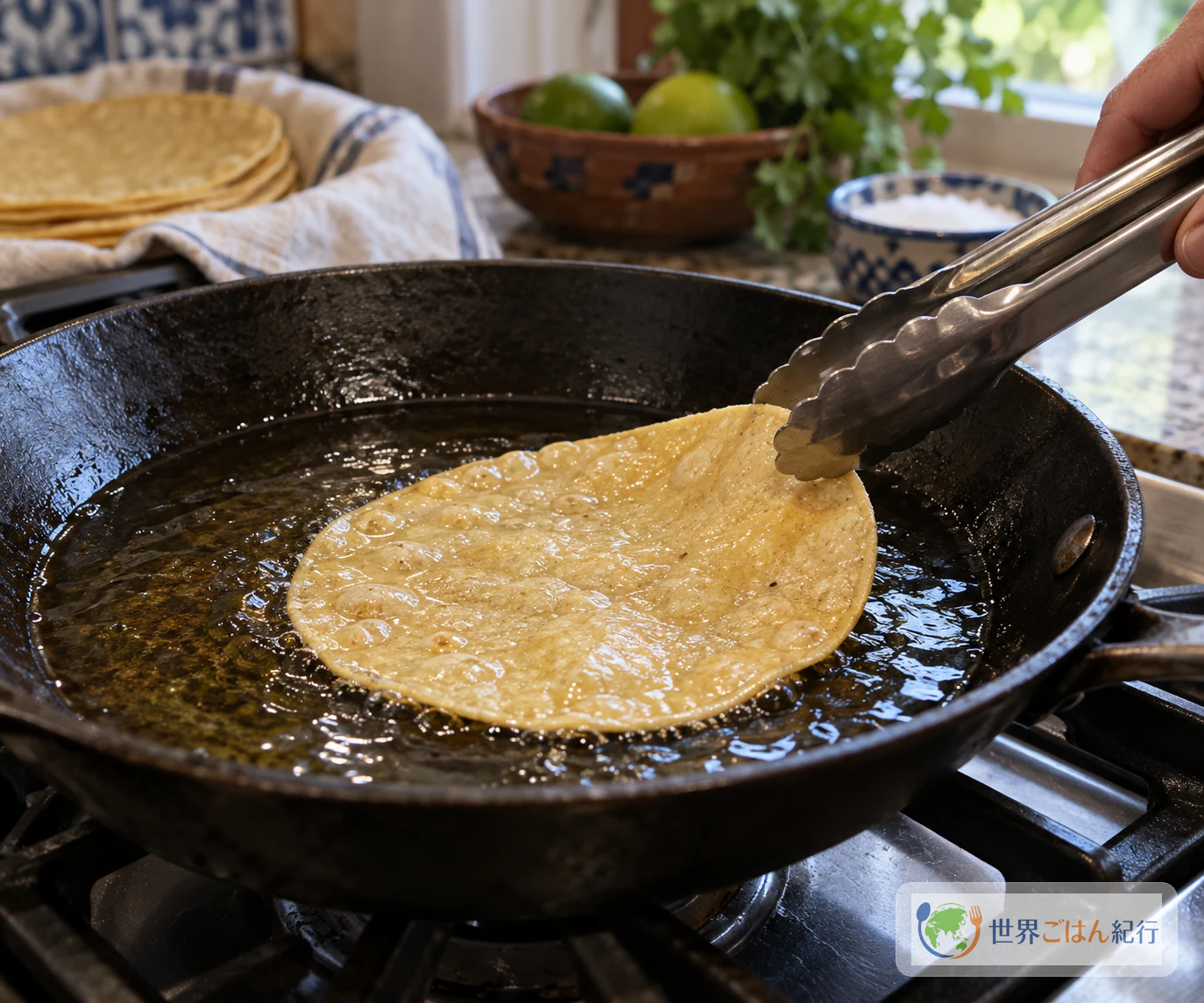
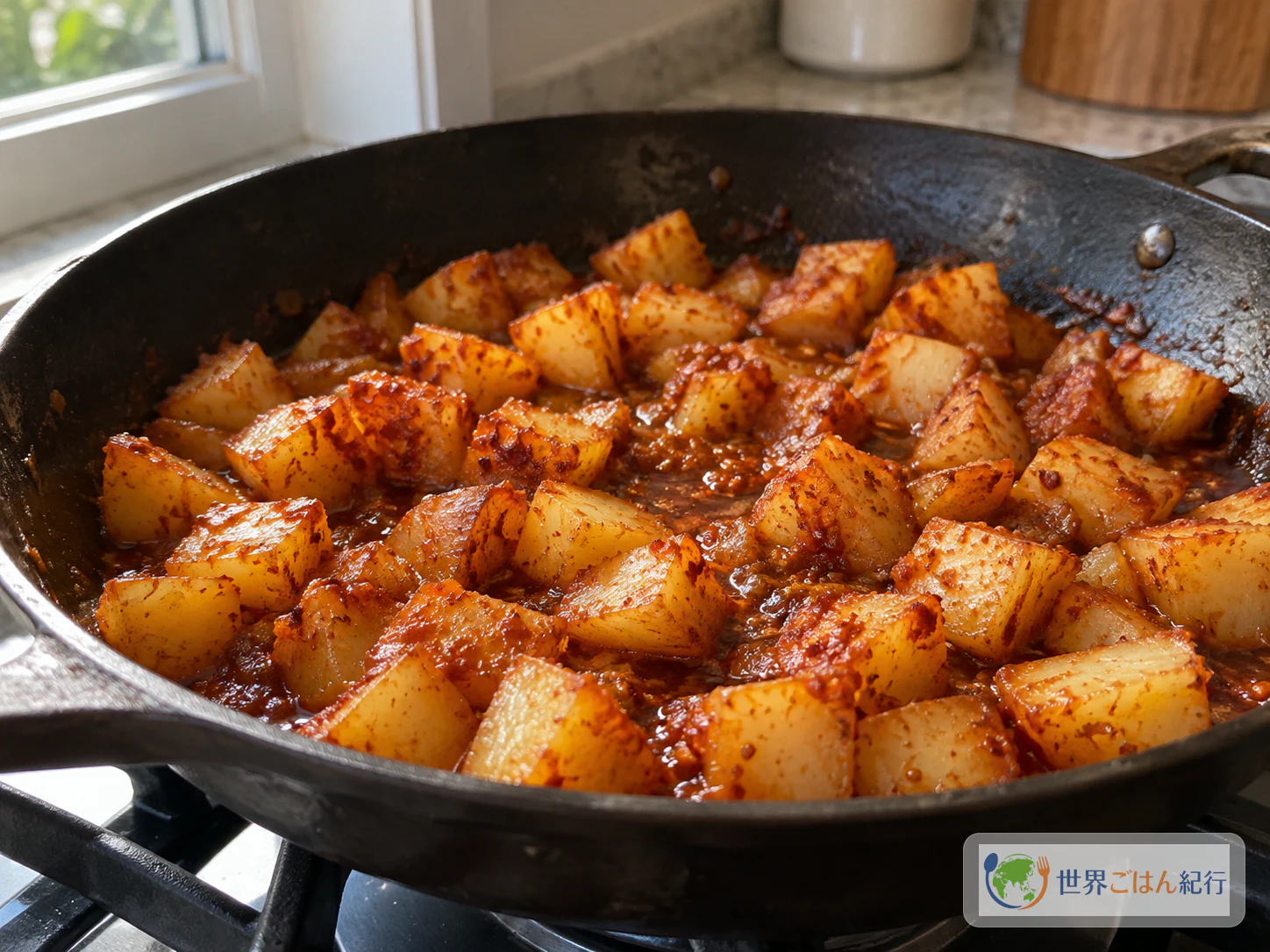
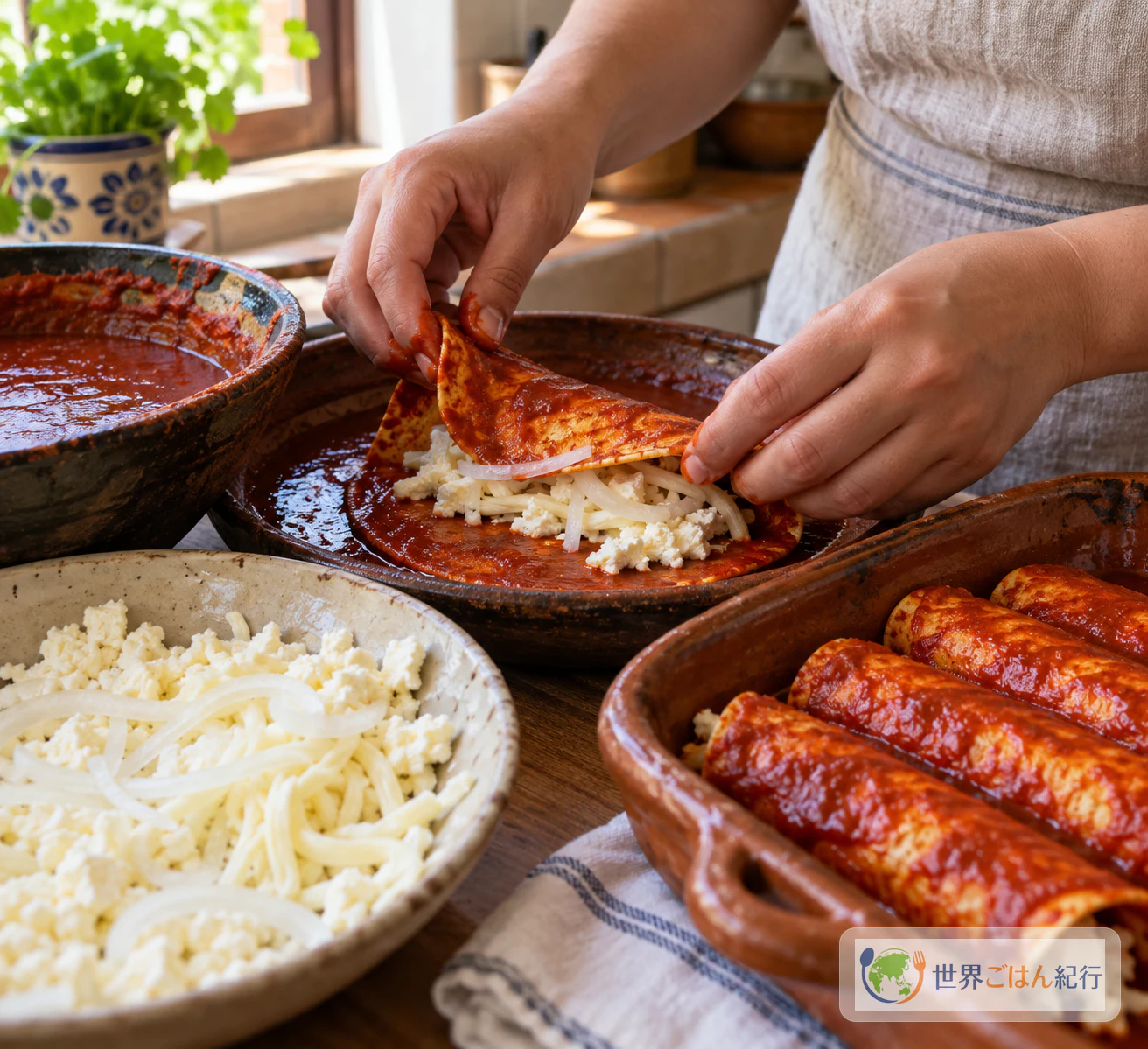
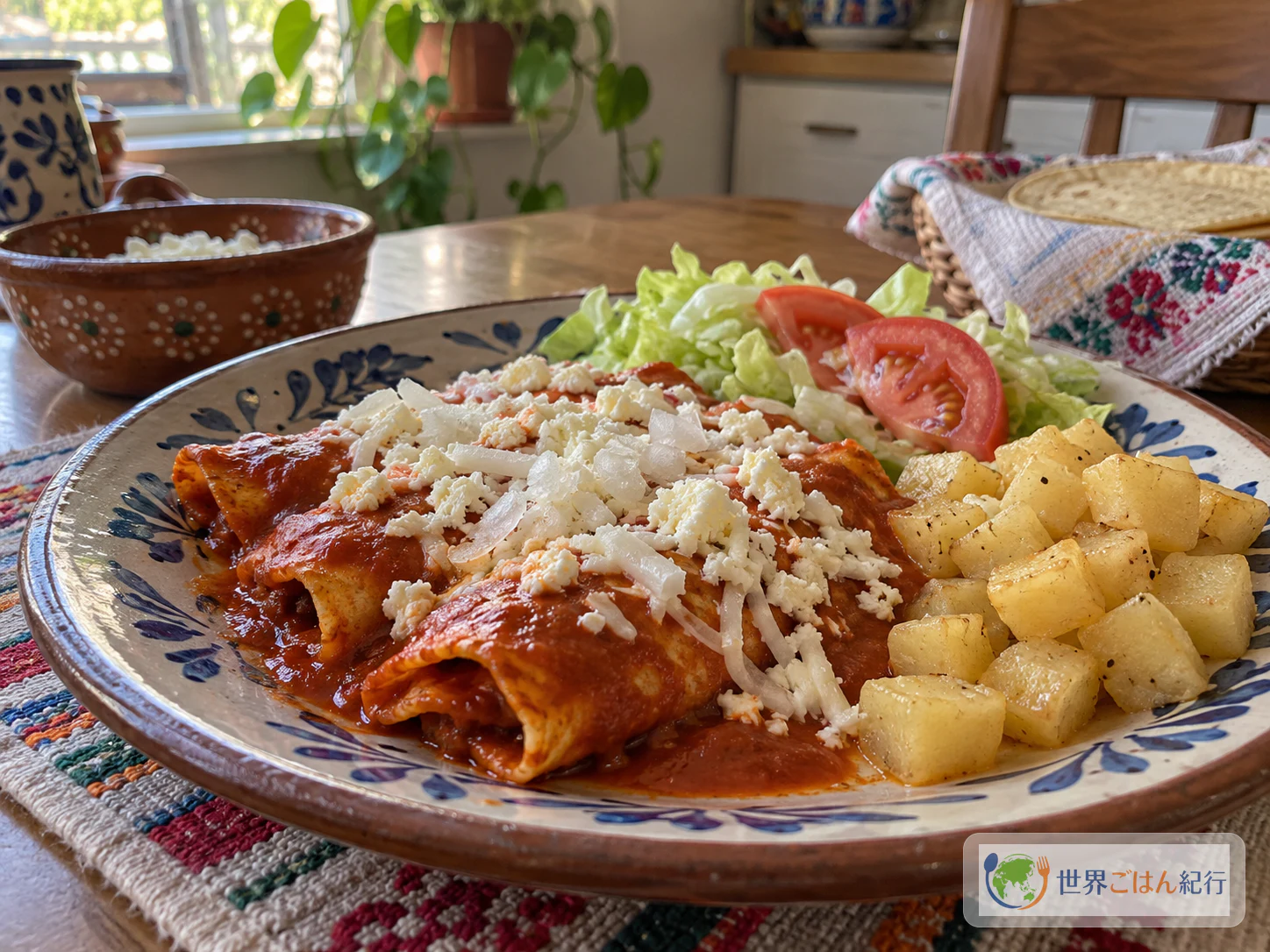
Corn tortillas slip briefly into hot oil, then into a deep red sauce of dried chiles. Each one is filled with cheese and grated onion, rolled, and laid in the dish with the seam underneath. More cheese and onion go over the top, diced potatoes cooked with a little of the same sauce sit alongside, and shredded lettuce and tomato add something fresh. This is enchiladas rojas estilo Saltillo, as recorded in a collection of traditional cooks' recipes published by the Secretaría de Cultura de Coahuila, the cultural agency of the northern Mexican state whose capital is Saltillo.
"Enchilada" covers a wide family of dishes, and this article follows one specific version of it. It is not the green, tomatillo-based dish you will find in enchiladas verdes. Here the color and flavor come from dried chiles, the filling is cheese rather than meat, and nothing goes into the oven: the tortillas are fried, sauced, filled and served.
What "Red Enchiladas" Means: One Name, Many Regional Forms
Enchiladas rojas are not a single fixed recipe. The Larousse dictionary of Mexican gastronomy describes red enchiladas as common from central to northern Mexico, reaching states such as Zacatecas, Guanajuato and Aguascalientes, and notes that the name covers very different preparations from region to region: whether the tortilla is rolled or folded, whether it is filled at all, and what is served alongside.
Even within Saltillo there is more than one form. The Coahuila recipe followed here turns the chiles into a sauce for ready-made corn tortillas. Larousse also describes another Saltillo-style red enchilada in which ancho chile is worked into a dough of corn and wheat flour, coloring the dough itself red before it is briefly fried. That is a different technique, and it is mentioned here only for comparison.
| Region or source | How the dish takes shape | Relation to this recipe |
|---|---|---|
| Saltillo, Coahuila (state cultural cookbook) | Corn tortillas fried, passed through ancho and pasilla sauce, filled with cheese and onion, rolled; potatoes, lettuce and tomato on the side | The recipe in this article |
| Saltillo (Larousse) | Ancho chile kneaded into a corn and wheat flour dough, briefly fried | A separate style; not mixed into these steps |
| Tamaulipas (Larousse) | Sauced tortillas topped with cheese and onion, not rolled around a filling | A regional comparison |
| Huasteca (Larousse) | Large tortillas folded and eaten with cecina (salted, dried meat) | A regional comparison |
Larousse also lists versions from places such as Colima, Puebla and San Luis Potosí that differ in how they are fried, folded, filled and garnished. Home cooks vary too: the cook Mely Martínez describes enchiladas rojas as a dish every household makes its own way, with a guajillo and ancho sauce whose proportions can be adjusted, and mentions a Morelia-style plate served with potatoes and carrots. Origins beyond these modern regional forms are not claimed here.
Ingredients: One Batch as Published in Saltillo
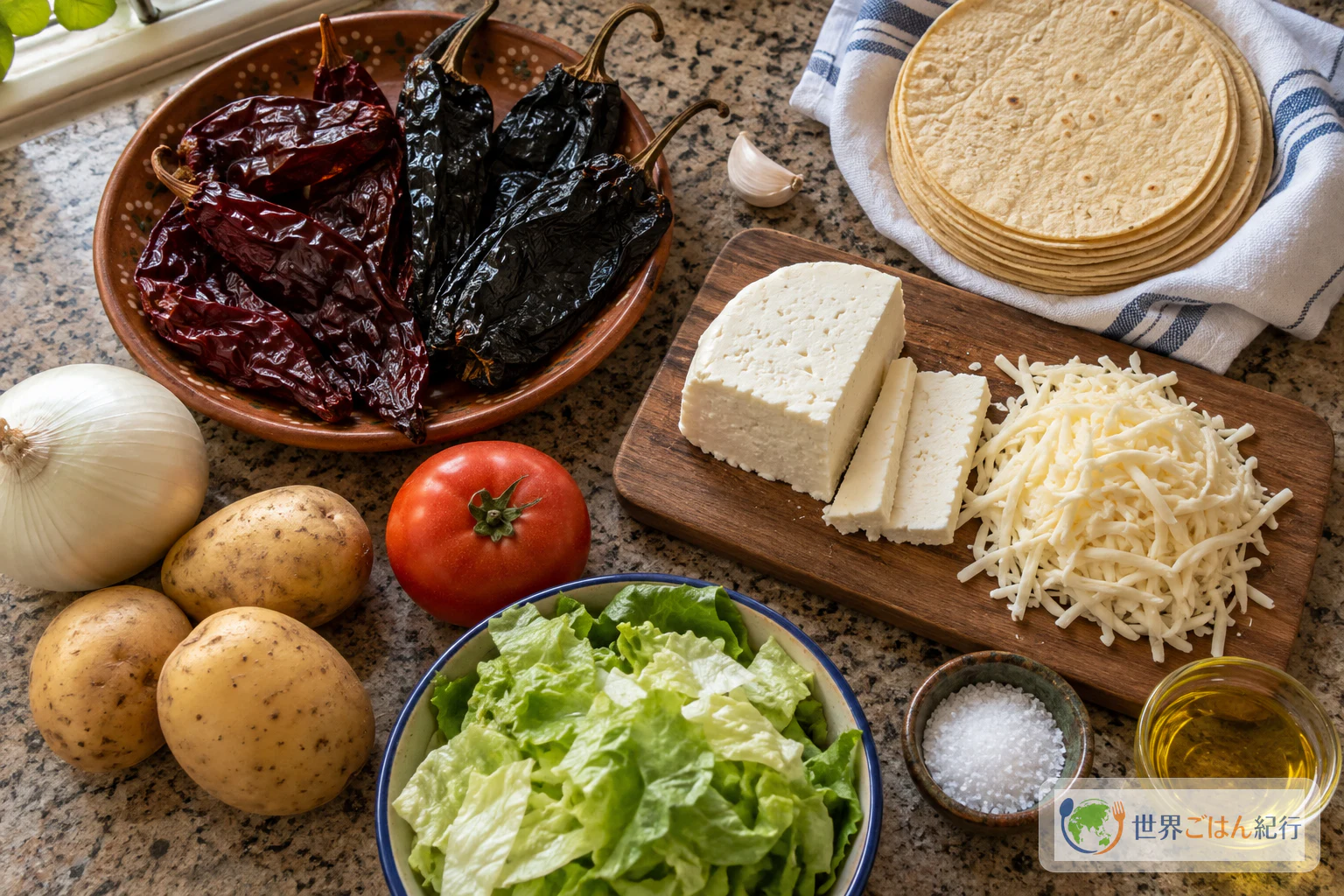
The recipe uses 1 kg of corn tortillas. The sauce water is 3/4 taza (cup).
This recipe uses 3 ancho or colorado chiles and 2 pasilla chiles (some versions use 5 of each), and panela with asadero cheese (manchego also works).
Equipment
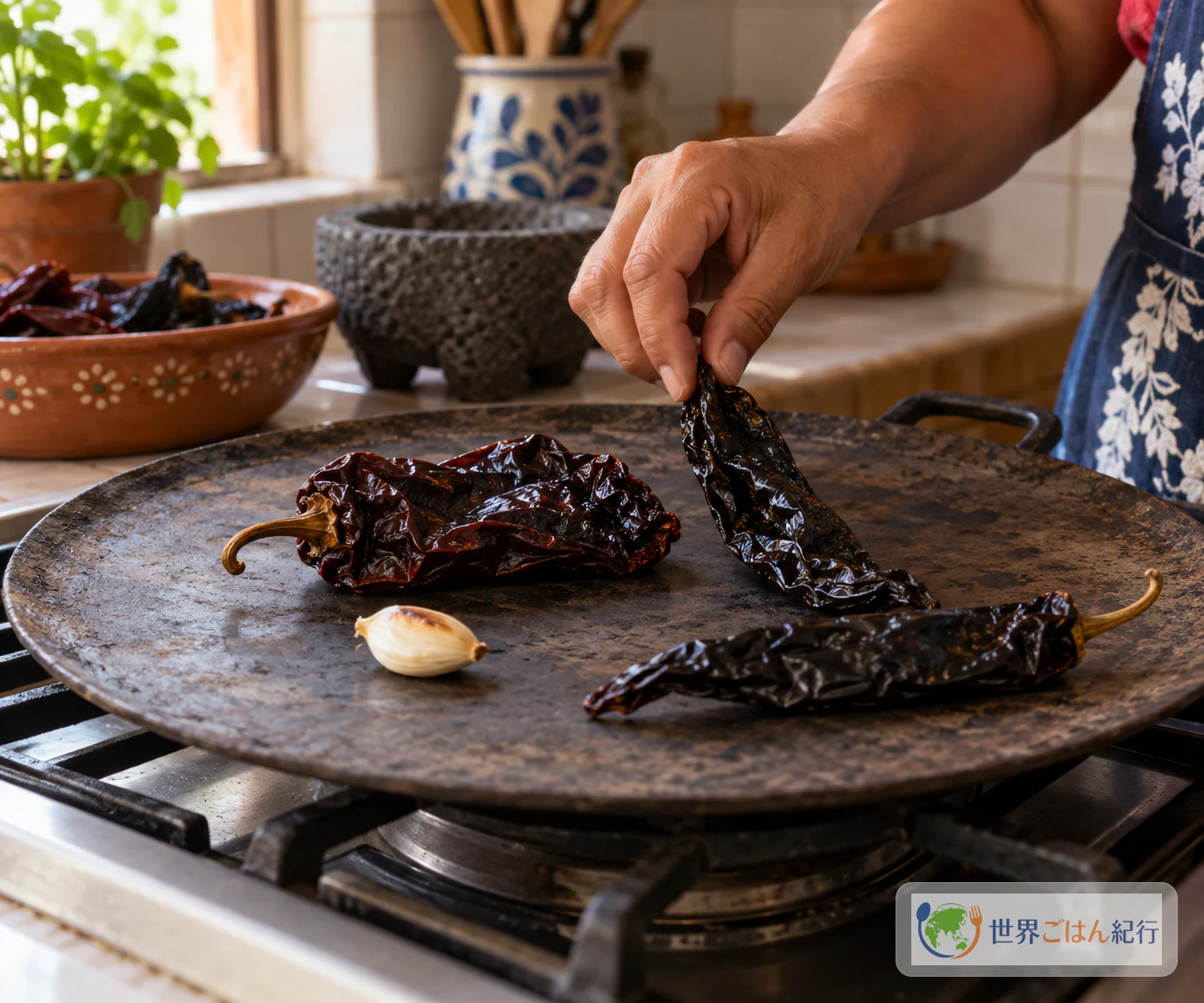
- Comal or a flat, heavy skillet, for toasting the chiles and garlic
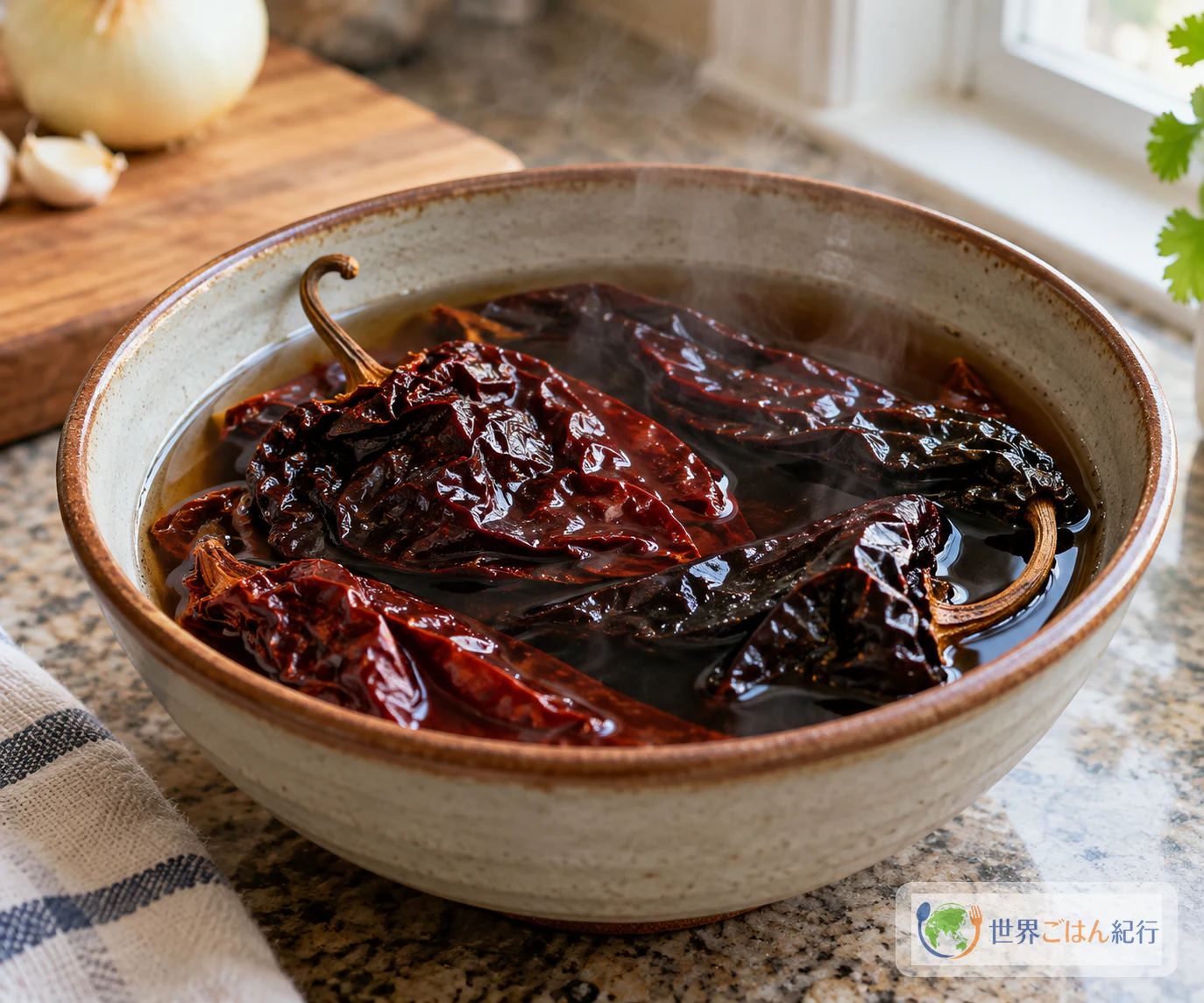
- Small heatproof bowl, for soaking the chiles
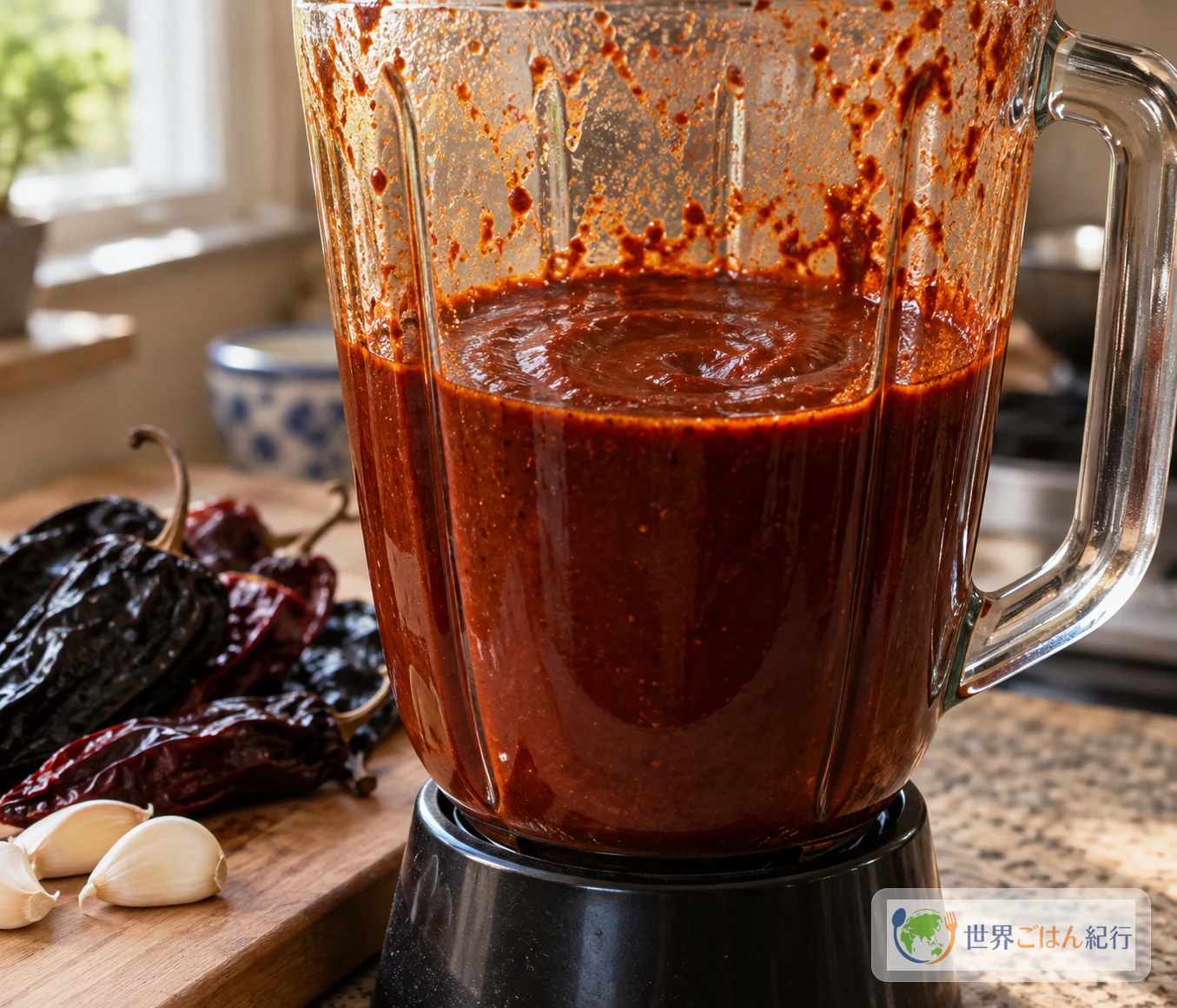
- Blender
- Fine-mesh strainer (optional), if you want an even smoother sauce
- Saucepan or shallow pan, for cooking the sauce
- Skillet for frying the tortillas and cooking the potatoes
- Tongs
- Grater, for the onion and cheese
- Heatproof dish or platter, for laying out the rolled enchiladas
Choosing Chiles, Cheese and Fat Outside Mexico
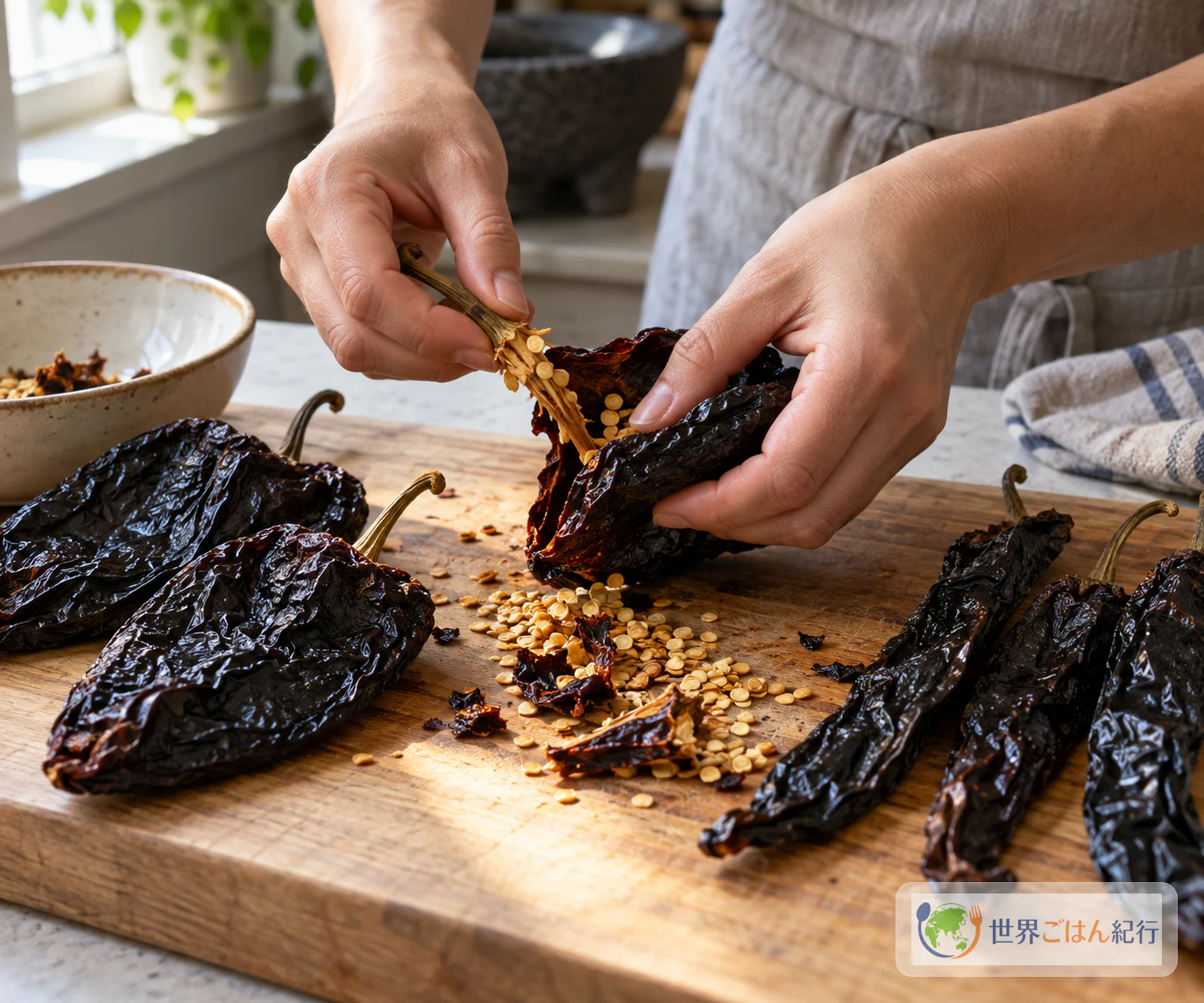
Dried chiles are the one thing worth tracking down. Look for whole dried chile ancho and chile pasilla at Latin American grocers or specialty shops, searching by their Spanish names. Chili powder or fresh chiles are not a like-for-like swap: the aroma, color and texture of the sauce change. Using only one kind of chile also shifts the aroma, so keep both if you can.
Corn tortillas, not flour. The dish depends on their corn flavor and on how they behave in hot oil and sauce.
Two kinds of cheese, two jobs. Panela is a fresh cheese that brings salt and texture; asadero melts. If you cannot find them, a home substitute is to pair a fresh cheese with a good melting cheese, keeping the same two roles. That is a home adaptation, not the local standard.
Lard or oil. Lard gives a fuller, savory flavor; vegetable oil works and keeps the dish free of lard, with a lighter taste.
This recipe contains dairy (two cheeses). Check the labels of tortillas, cheeses and any other packaged ingredients for allergens and shared-facility statements.
Method: Sauce First, Then Fry, Sauce, Fill and Serve
The sauce, the cheese filling and the garnishes should all be ready before the first tortilla goes into the oil. The potatoes are cooked in the oil left from frying the tortillas. So that the rolled enchiladas do not sit waiting, peel and dice the potatoes and cut the lettuce and tomato ahead of time; if you prefer, you can cook the potatoes before the tortillas instead.
Judge each stage by color, smell and texture.
Bitter, Cracked, Heavy: Fixing Common Problems
| Problem | Likely cause | What to do |
|---|---|---|
| The sauce tastes bitter | Chiles scorched on the comal | Toast only briefly and turn before the chiles blacken. Bitterness from burnt chiles is hard to remove once blended, so toasting is the step to watch |
| The sauce is too thick to coat | Too little liquid in the blender | Add water a little at a time and blend again |
| The tortillas crack when rolled | Fried too long, or cooled before filling | Fry briefly so they stay pliable, keep the sauce warm, and fill each tortilla soon after saucing |
| Heavy spattering | Tortillas dipped in sauce before frying | Fry first, then pass through the sauce |
| The plate feels oily | Too much oil carried from the pan | Let excess oil drip off the tortilla before it goes into the sauce |
| Potatoes hard in the middle | Not cooked long enough | Keep cooking until a cut piece is soft at the center |
Variations
- Cheese filling (the source standard). Panela and asadero with grated onion, as in this recipe.
- With shredded chicken. Some home recipes, such as Mely Martínez's, fill red enchiladas with shredded chicken or pork. That is a common home style, not the Saltillo recipe here.
- Vegetable oil instead of lard. Works throughout; the flavor is lighter.
- Other regional shapes. Folded or unrolled enchiladas and the chile-dough style from Saltillo are separate dishes, described above for comparison only.
If you enjoy working with dried chiles, pozole rojo uses them in a different way, and tacos are another dish built on corn tortillas.
Frequently Asked Questions
What is the difference between ancho, pasilla and guajillo?
In this recipe, ancho (or colorado) brings color and a dried-fruit aroma, and pasilla adds depth. Guajillo is not part of the Saltillo recipe; it appears in other home versions of enchiladas rojas alongside ancho.
Can I use chili powder instead of whole dried chiles?
It is not a direct substitute. Powder changes the aroma, color and texture of the sauce. Whole dried chiles, toasted and softened, are what make this sauce.
Why do my corn tortillas tear?
Usually because they were fried too long and turned crisp, or cooled before filling. Fry briefly, keep the sauce warm, and roll each tortilla soon after it comes out of the sauce.
Can I make it without meat?
Yes. The Saltillo recipe is filled with cheese and onion only.
How is this different from green enchiladas?
Green enchiladas are built on a tomatillo sauce. These get their red color and flavor from dried ancho and pasilla chiles, with a cheese filling and potatoes on the side. See enchiladas verdes for the green version.
Do I bake them?
No. The source does not bake them. The enchiladas are fried, sauced, filled, rolled and served right away; the dish only holds them for serving.
Can I make them ahead?
The source serves them as soon as they are assembled, and this recipe does not give storage or reheating guidance. Prepare the sauce, filling and garnishes first so the final rolling goes quickly.
Sources
- Secretaría de Cultura de Coahuila, "Cocineras tradicionales: Enchiladas rojas estilo Saltillo." The recipe followed here: ingredients and order of the Saltillo-style red sauce of ancho and pasilla chiles toasted with garlic, corn tortillas, panela and asadero cheese with onion, and potatoes on the side; including the differences between the ingredient list and the method. https://coahuilacultura.gob.mx/wp-content/uploads/2023/07/Cocineras-tradicionales.pdf
- Larousse Cocina / Diccionario enciclopédico de la Gastronomía Mexicana, "Enchiladas rojas." The definition of red enchiladas across regions, the separate Saltillo style with ancho in a corn and wheat flour dough, and regional differences in rolling, folding, filling and garnishes. https://laroussecocina.mx/palabra/enchiladas-rojas/
- Mely Martínez, "Cómo hacer Enchiladas Rojas," México en mi Cocina. Household variation in enchiladas rojas, the guajillo and ancho combination, the Morelia-style potato and carrot accompaniment, and the comparison of dipping before or after frying. https://www.mexicoenmicocina.com/receta-de-enchiladas-rojas/