Rice That Smells of the Pot Bottom: One Plate from Louisiana
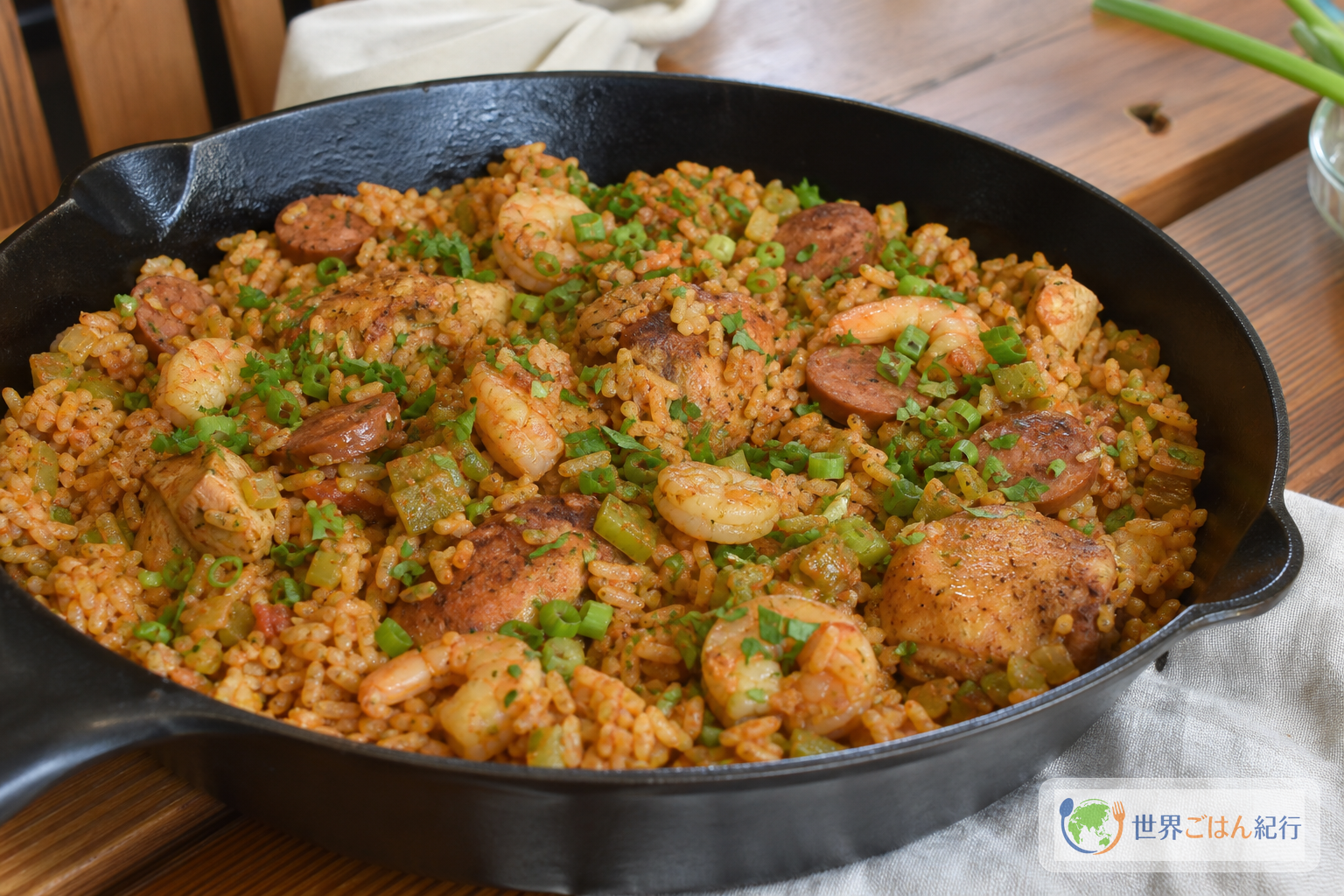
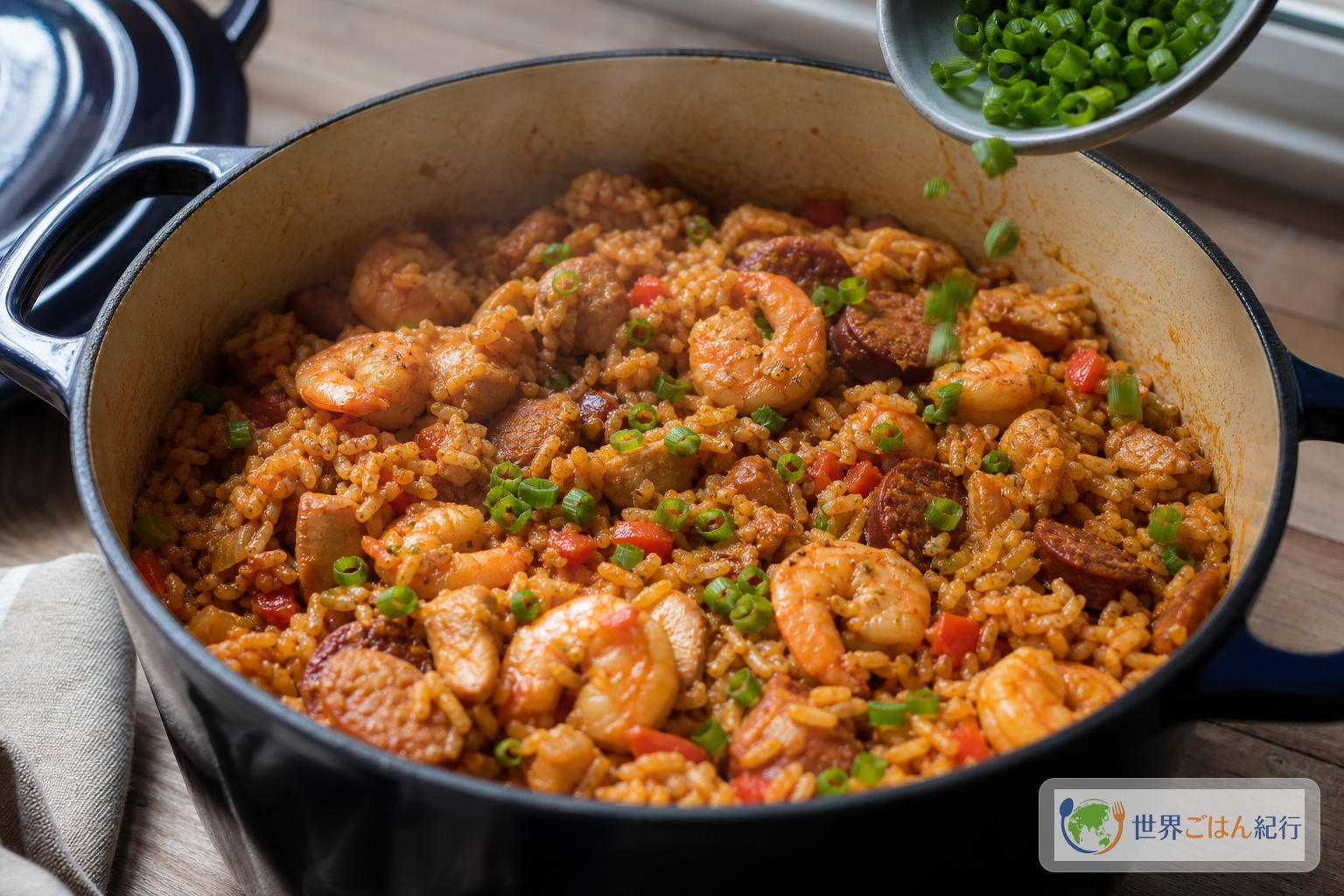
The moment you lift the lid, steam from the rice rises carrying smoked sausage, onion, celery, green bell pepper, and paprika. Jambalaya is a rice dish that grew up in Louisiana. It looks a bit like a mixed rice pilaf, but the browned flavor at the bottom of the pot, the sweetness of the aromatic vegetables, smoked meat, and shrimp stack up in a direction all their own, different from a pilaf or a paella.
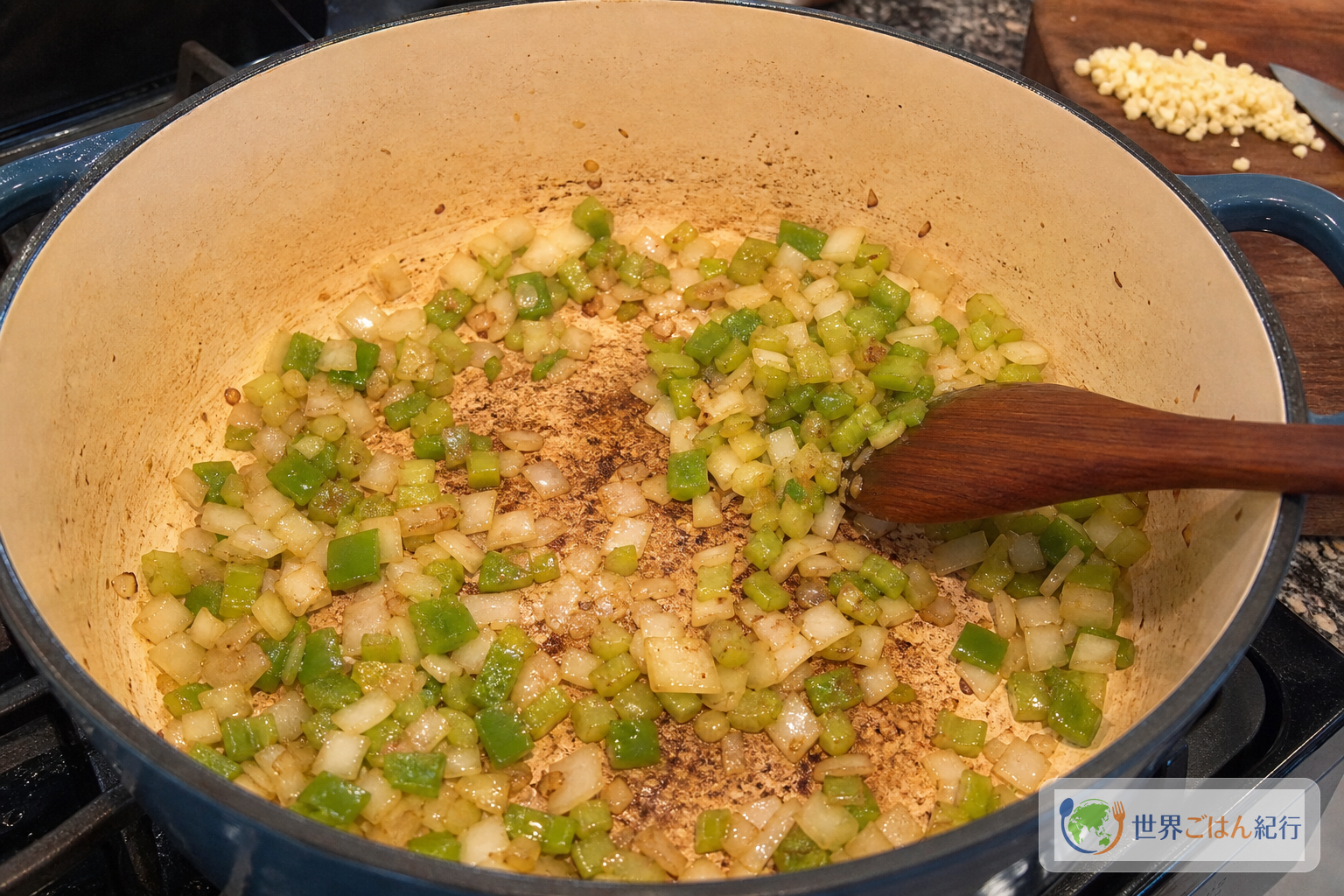
The onion, celery, and green bell pepper combination that turns up all over Louisiana cooking is called the holy trinity there. It is a base like the French mirepoix, but the green note of the bell pepper gives a rice dish a distinctly American South outline. The first fork in the road is not to turn this into an onion-only dish.
The other question is whether to add tomato. The Creole-leaning jambalaya talked about around New Orleans is often red, made with tomato. In Cajun-leaning versions, the meat is browned hard and the brown flavor at the bottom of the pot stains the rice, giving a brown jambalaya. This article leans toward the red, Creole-style version, which is easy to reproduce and where mistakes are easy to spot by eye.
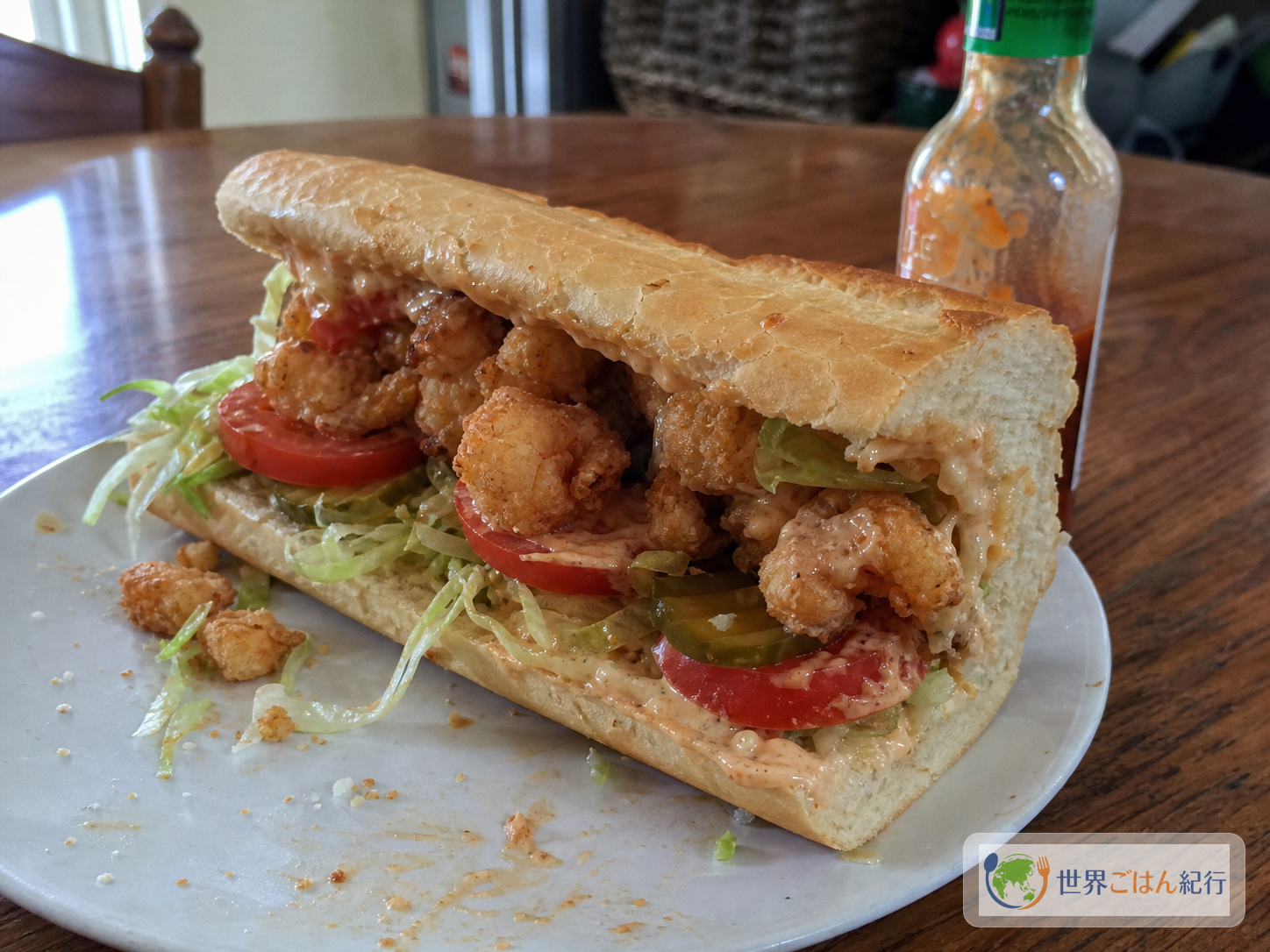
If Red beans and rice is New Orleans' Monday pot of beans, jambalaya is the rice dish you want to bring to the table in the pot when people gather. For a dish built on a dark roux spooned over rice, see Gumbo. For rice dyed brown afterward with the flavor of the meat, see Dirty rice. For the Louisiana sandwich, see the Po' boy (in Japanese). And set it next to other dishes where rice is the star and soaks up the aromatics, Jollof rice and Pelau (in Japanese), and you start to see how rice dishes differ from place to place.
Ingredients (serves 4)
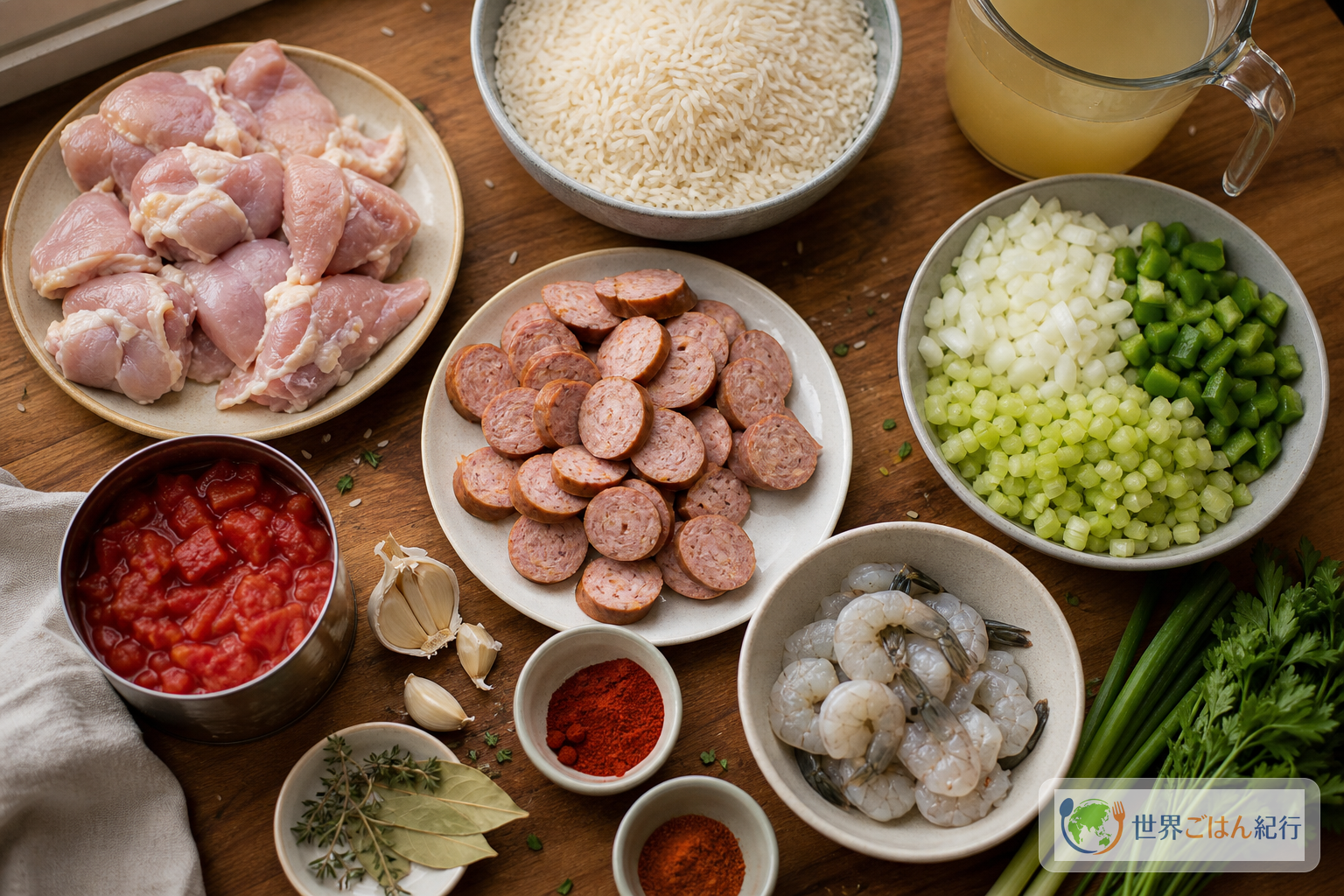
This is the amount for a heavy pot about 24 cm in diameter. Long-grain rice is easiest to work with; jasmine, basmati, and Carolina-style long-grain are candidates. You can make it with short-grain rice, but it tends to get sticky, so after rinsing, drain it in a sieve for about 20 minutes and reduce the stock a little.
This recipe uses shrimp, chicken, and processed pork. If someone has a shellfish allergy, leave out the shrimp and add 100 g more chicken. Cook chicken to an internal temperature of 74°C, and shrimp until opaque through the center and firm. Salt content and ingredients vary widely between sausages, so also check the allergen labeling.
Sourcing Ingredients
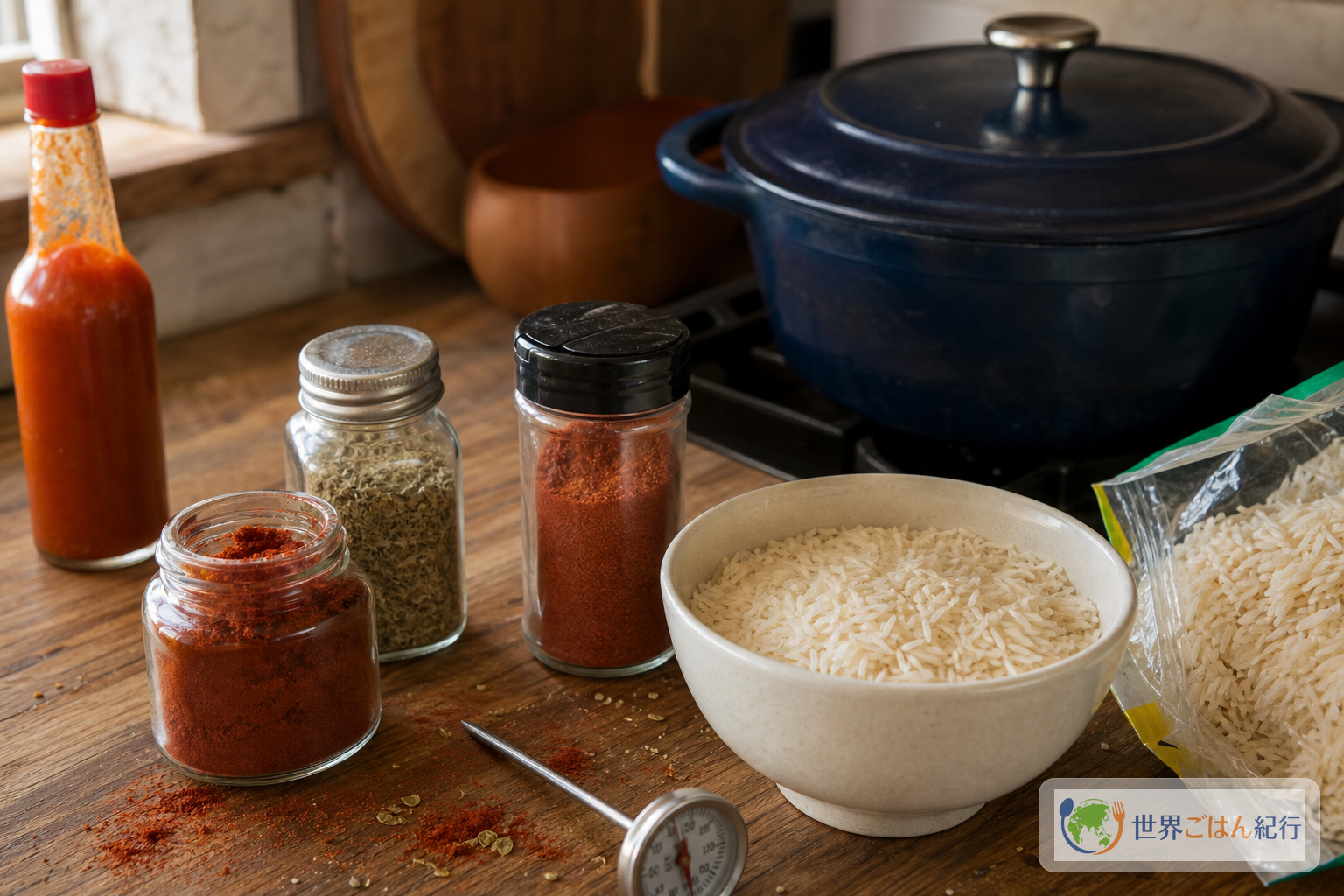
From an ordinary grocery store you need chicken, shrimp, onion, celery, bell pepper, and canned tomatoes. These are nothing to hunt for. What makes a difference is smoked paprika to make up for the missing smoked meat, oregano to keep the sweetness of the tomato from going flat, and a thermometer to confirm that the chicken and shrimp are cooked through.
Long-grain rice is worth getting at least for your first batch. You can make it taste fine with short-grain rice, but it turns sticky the moment you stir, which makes the "sauce-soaked, separate grains" of jambalaya hard to achieve. If you do use short-grain rice, drain it in a sieve after washing and don't stir too much during the steps.
Andouille sausage can be hard to buy reliably outside Louisiana. Rather than hunting for it, choose a thick, smoky sausage and make up the aroma with smoked paprika. Since you can add hot sauce at the table, it is easier on a family not to make the pot too hot from the start.
Method
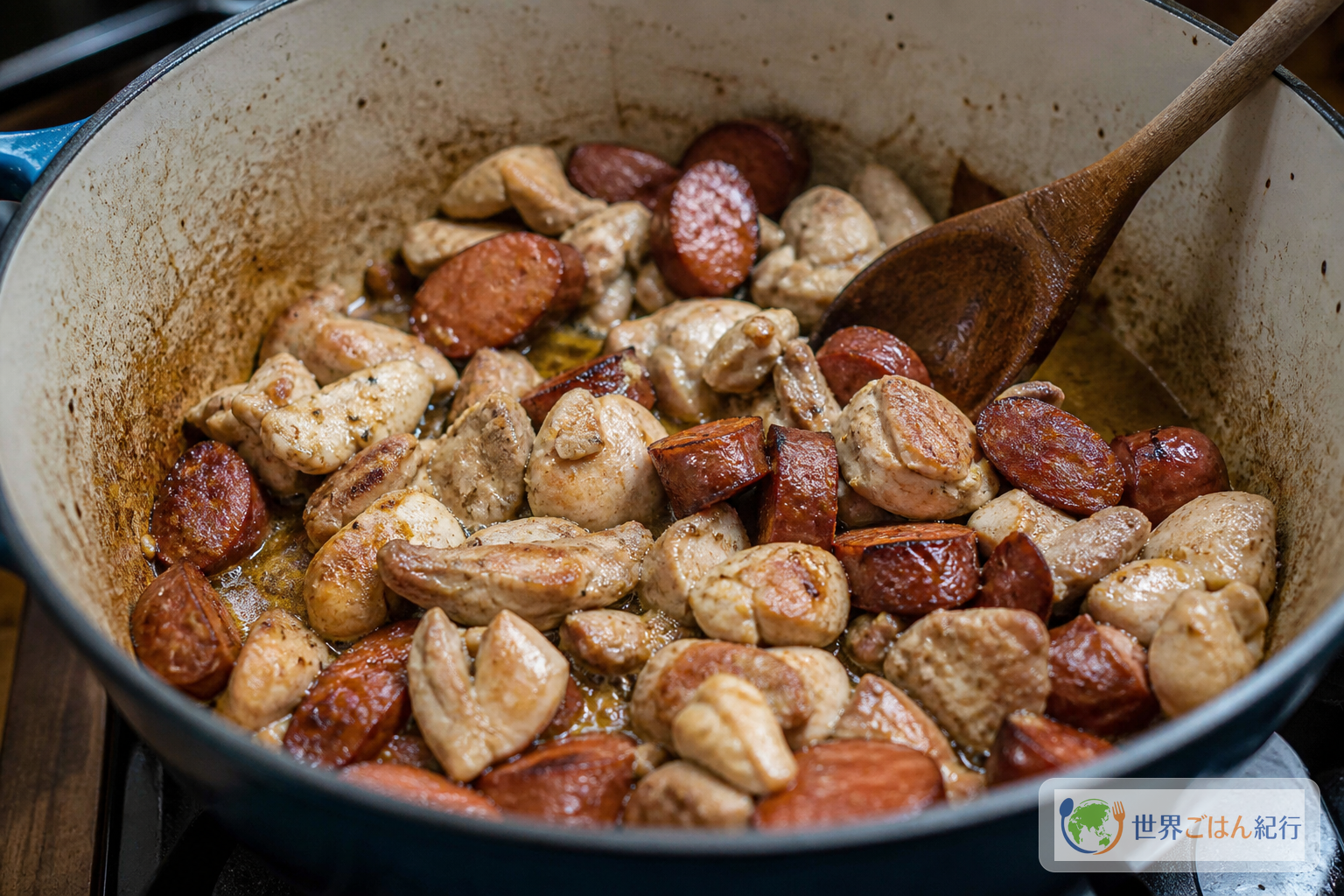
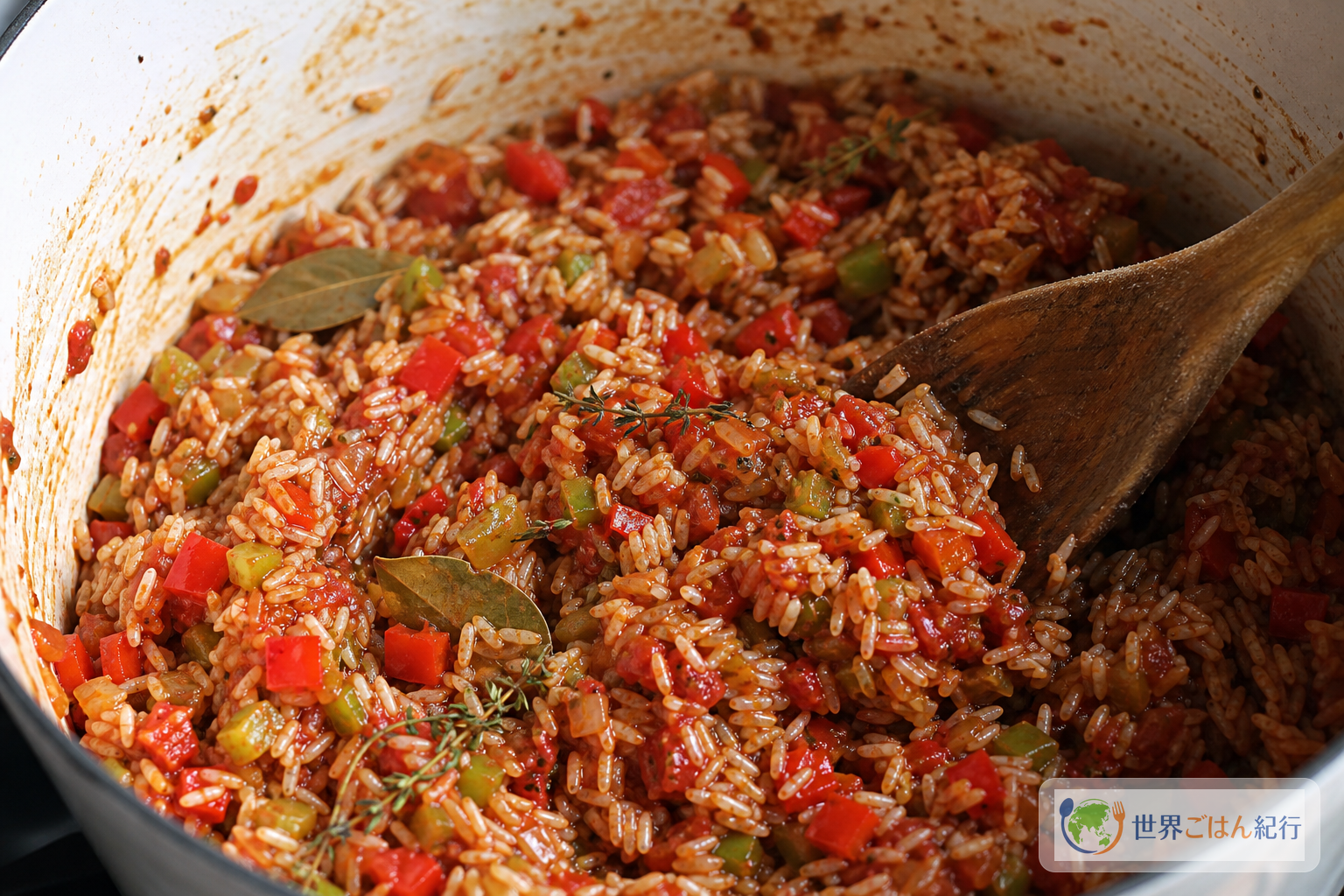
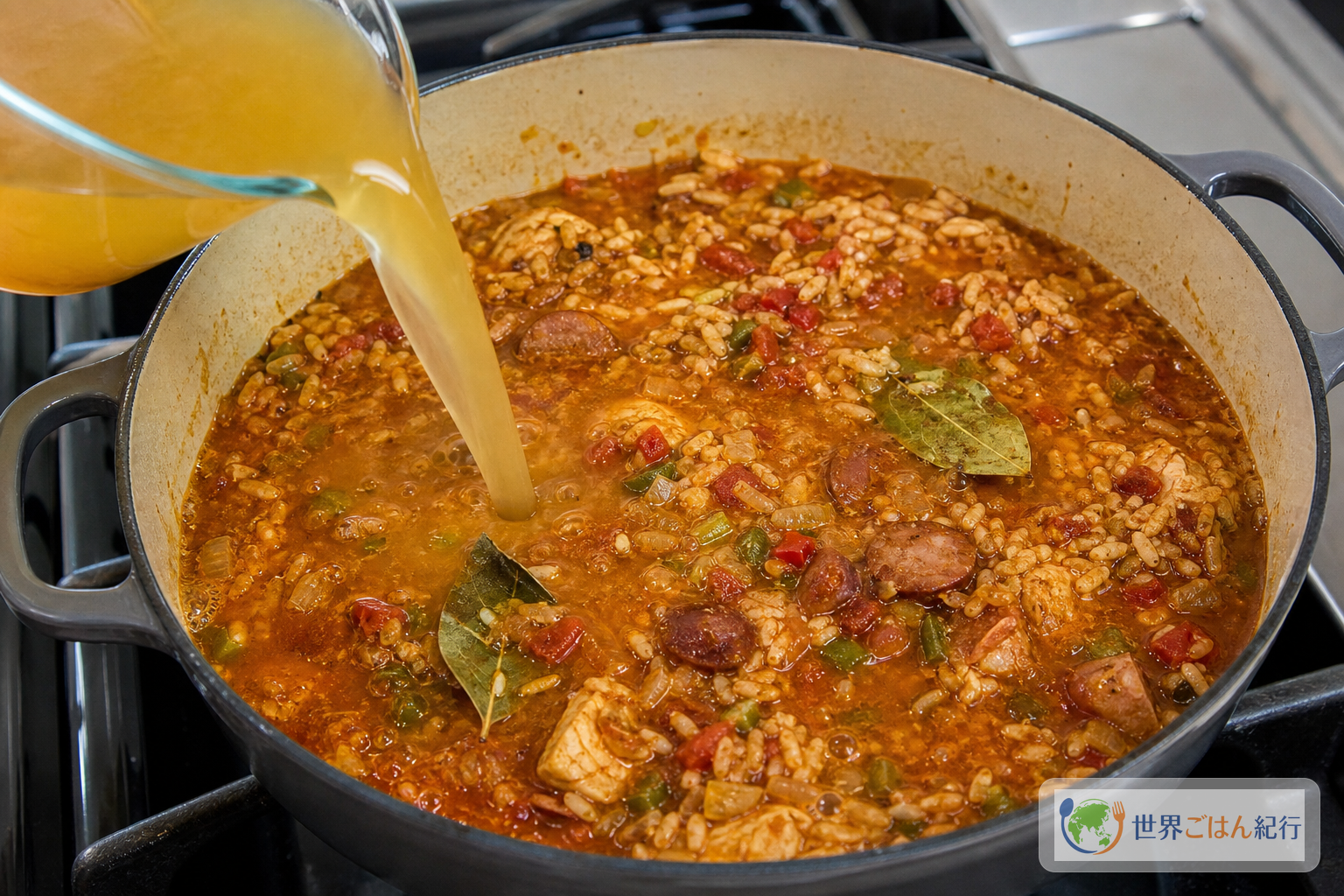
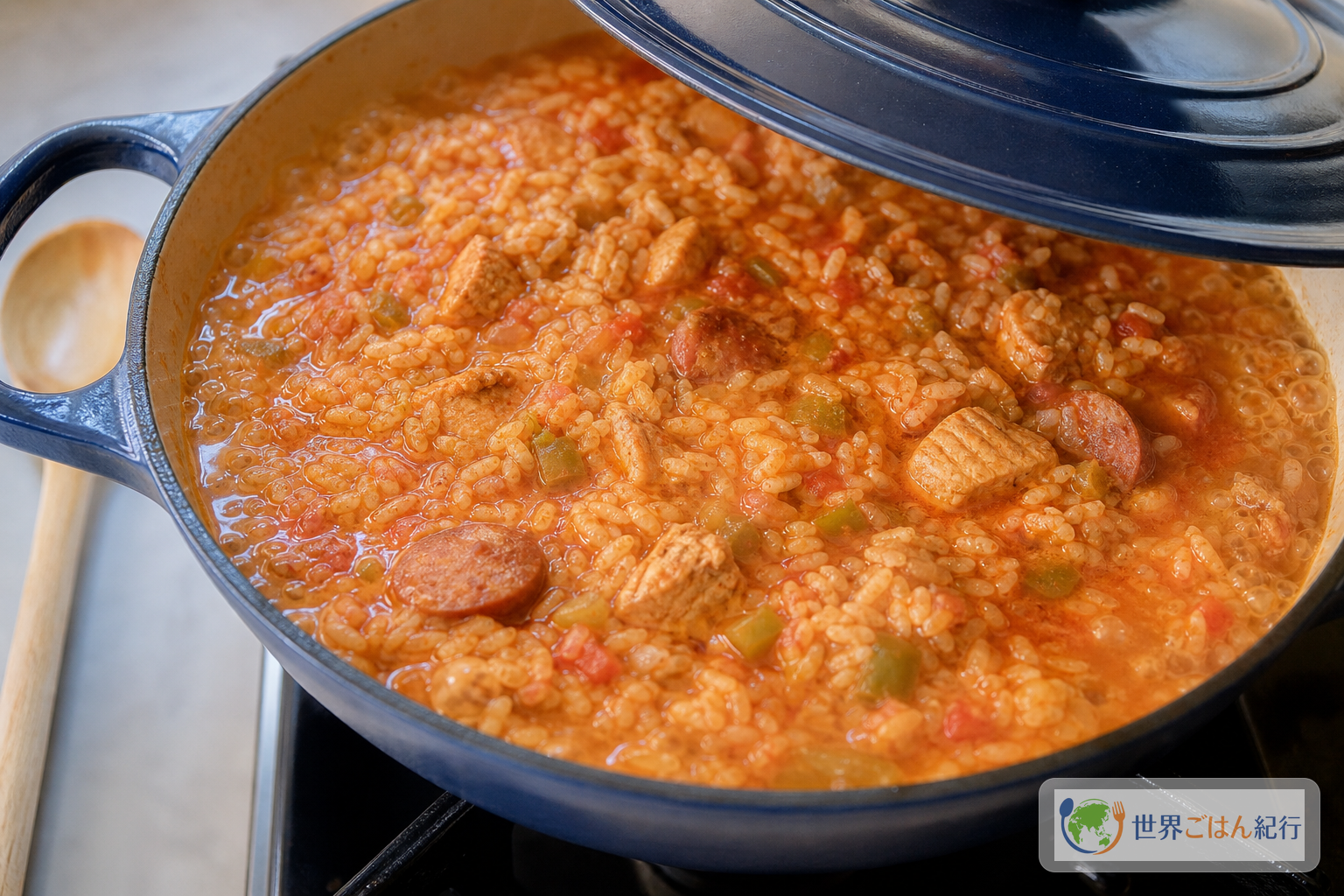
Jambalaya looks like a dish where you can put everything in and cook it, but the order matters. Brown the meat to build flavor on the bottom of the pot, scrape it up with the aromatic vegetables, lightly stir-fry the rice in the oil and tomato, then add the stock. If you stir repeatedly along the way, the rice breaks and turns sticky, so once it is cooking, trust the pot.
A Decision Table for Avoiding Mushy Rice
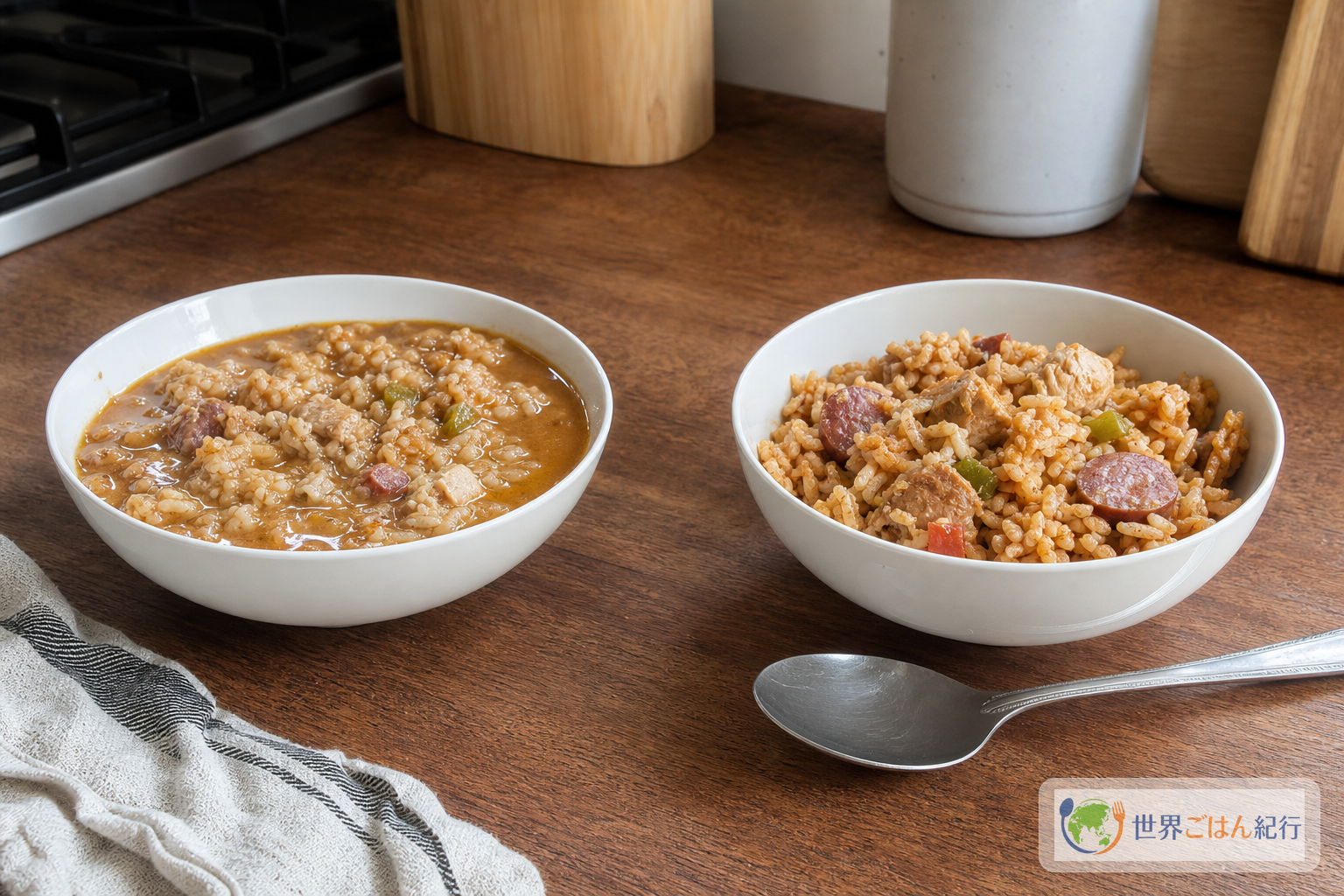
The most common failure with jambalaya is not the flavor but the condition of the rice. Hard rice, a scorched bottom, a whole pot that turns into risotto. None of these are inedible, but sorting out the cause makes the next pot easier.
| Condition | Cause | Fix |
|---|---|---|
| Center of the rice is hard | Heat too high, so the surface lost its liquid first | Add 3 tbsp stock, cook 5 minutes over low heat, then turn off the heat and rest 10 minutes |
| Whole pot is mushy | Too much liquid, or stirred too much while cooking | Take off the lid and cook over low heat for 3 minutes, spreading the rice out to drive off moisture. Next time, reduce the stock by 30 ml |
| Bottom scorches | Pot too thin, heat too high, or not lowered after the boil | Use a heavy pot and lower to low heat as soon as it boils. Don't scrape up too much of the burnt layer |
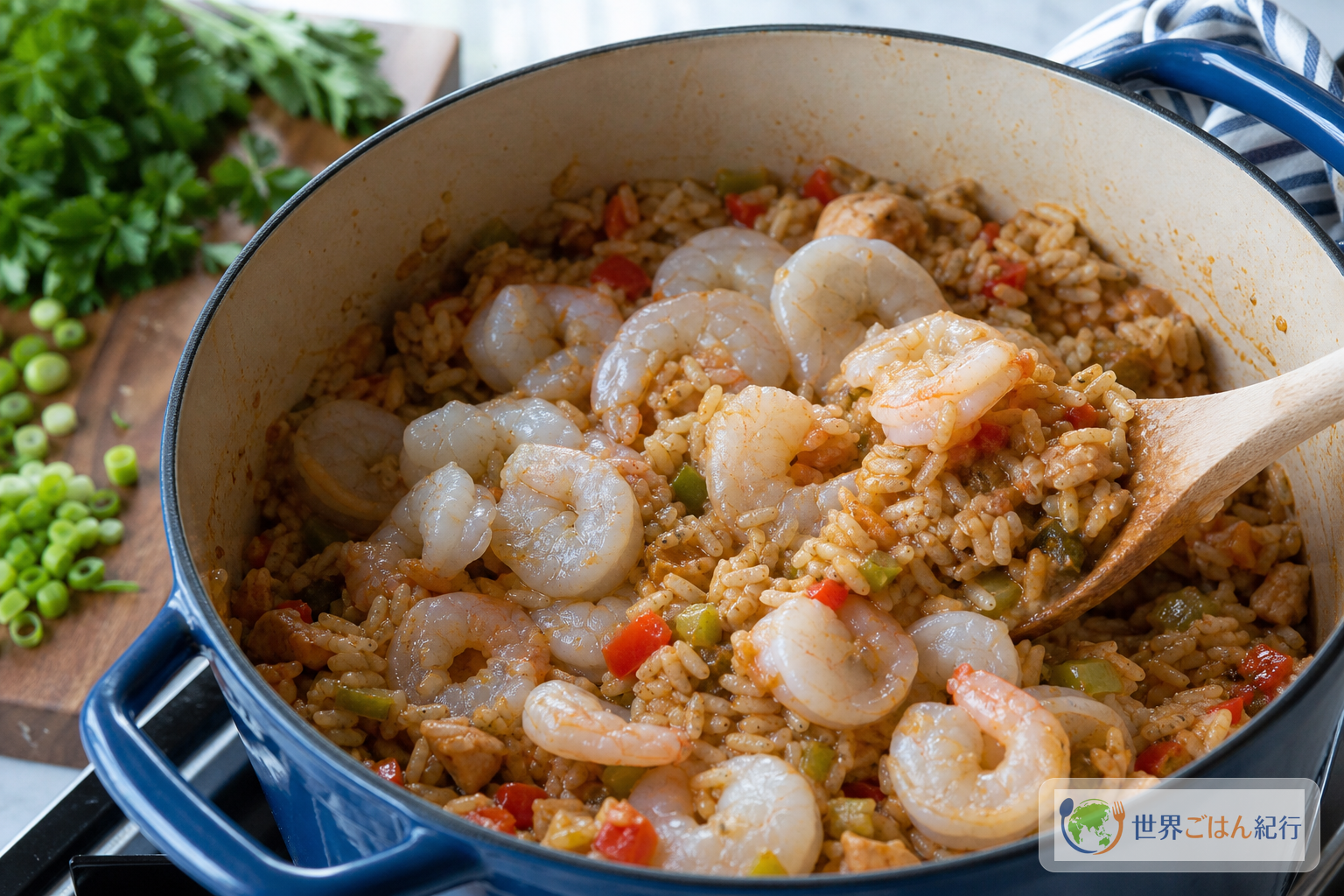
| Meat is cooked but shrimp are tough | Shrimp went in from the start | Add the shrimp last, in Step 6, and stop at about 5 minutes |
| Flavor is flat | Not enough smokiness, acidity, or heat | Make it up on the plate with smoked paprika, hot sauce, and green onions |
When you make it with short-grain rice, some stickiness is natural. Rather than stir-frying it forcibly, spreading it on a plate after cooking and letting some moisture escape pulls it together more neatly. Even with long-grain rice, mixing right after cooking breaks the grains, so don't skip the resting time.
Storage, Reheating, and Serving
Jambalaya smells best fresh from the pot, but you can make it ahead. Let it cool, put it in an airtight container, and keep it refrigerated for about 2 days. It contains shrimp, so don't leave it at room temperature; if you pack it in a lunchbox, reheat it thoroughly first and then let it cool before packing. If you freeze it, shrimp tend to get somewhat tough, so eat the shrimp first and freeze the rice and meat to preserve texture.
To reheat in a microwave, sprinkle 2 tsp water per serving, cover loosely with plastic wrap, and heat at 600 W for about 2 minutes 30 seconds. In a pot, add 2 tbsp water over low heat, turn it over from the bottom in big sweeps, and warm it for 3 minutes. It scorches easily, so don't use high heat.
At the table, serving it with hot sauce, lemon, and chopped green onions lets each person adjust their own plate. It is a richly flavored rice dish, so on days when you pair it with a fried sandwich like a Po' boy (in Japanese), keep the portion modest and add salad or pickles so it doesn't feel heavy. If you are making it the same week as Red beans and rice, it also helps at home that you can reuse leftover celery and bell pepper.
Jambalaya the next day has a rounder aroma than when fresh. If it seems lacking, at the end of reheating in a pot add a pinch of smoked paprika, extra green onions, and a little hot sauce to mask the leftover character. If instead the saltiness stands out, cutting the oil and salt with a leafy salad, cucumber pickles, and lemon stays closer to Louisiana cooking than serving it with a fried egg or an unsweetened yogurt sauce.
FAQ
What do I change to make it Cajun-style?
Leave out the canned tomatoes and tomato paste, brown the meat and sausage harder, and stain the rice with the brown flavor at the bottom of the pot. In that case increase the chicken stock to around 520 ml and keep the heat at medium so you don't build too dark a crust. The quantities in this article lean Creole, so for a first batch this version makes the liquid easier to read.
Can I make it without shrimp?
Yes. Leave out the shrimp and increase the chicken thighs to 450 g and the sausage to 220 g. In Step 6, check that the chicken's internal temperature has reached 74°C before turning off the heat, and if not, add 2 minutes at a time over low heat. At a table with a shellfish allergy, also separate the cooking tools and cutting boards.
Can I make it in a rice cooker?
You can, if you do only the sautéing in a pot and move everything to the rice cooker at Step 4. However, it is hard to add shrimp partway through in a rice cooker, so cooking the shrimp separately over low heat and mixing them in at the end keeps them from toughening. The browned flavor at the bottom of the pot will be weaker, so for a first batch a heavy pot makes it easier to get a true jambalaya character.
How spicy is it?
At this amount it has aroma but isn't strongly hot. If children or people who dislike spice are eating, leave out the cayenne and add hot sauce at the table. If you want it hotter, too, adding it on the plate is easier for adjusting salt and acidity than adding it all at once to the pot.
Sources
- Explore Louisiana, "Chicken and Sausage Jambalaya"
- Explore Louisiana, "Chicken, Andouille and Shrimp Jambalaya"
- 64 Parishes, "Jambalaya"
- Wikipedia, "Jambalaya"
- FoodSafety.gov, "Safe Minimum Internal Temperature Chart"