The Story of the Pasty: A Mining Town Lunch You Could Carry in a Paper Bag
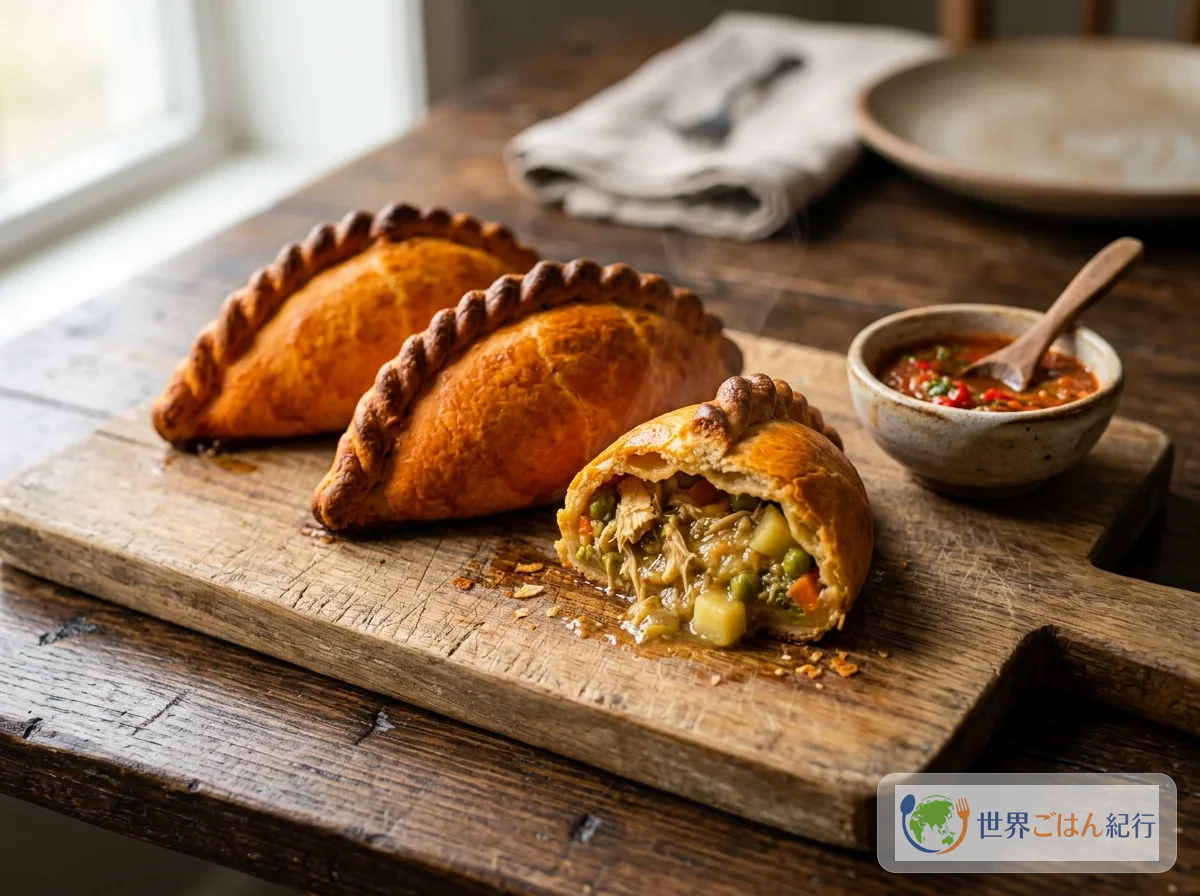
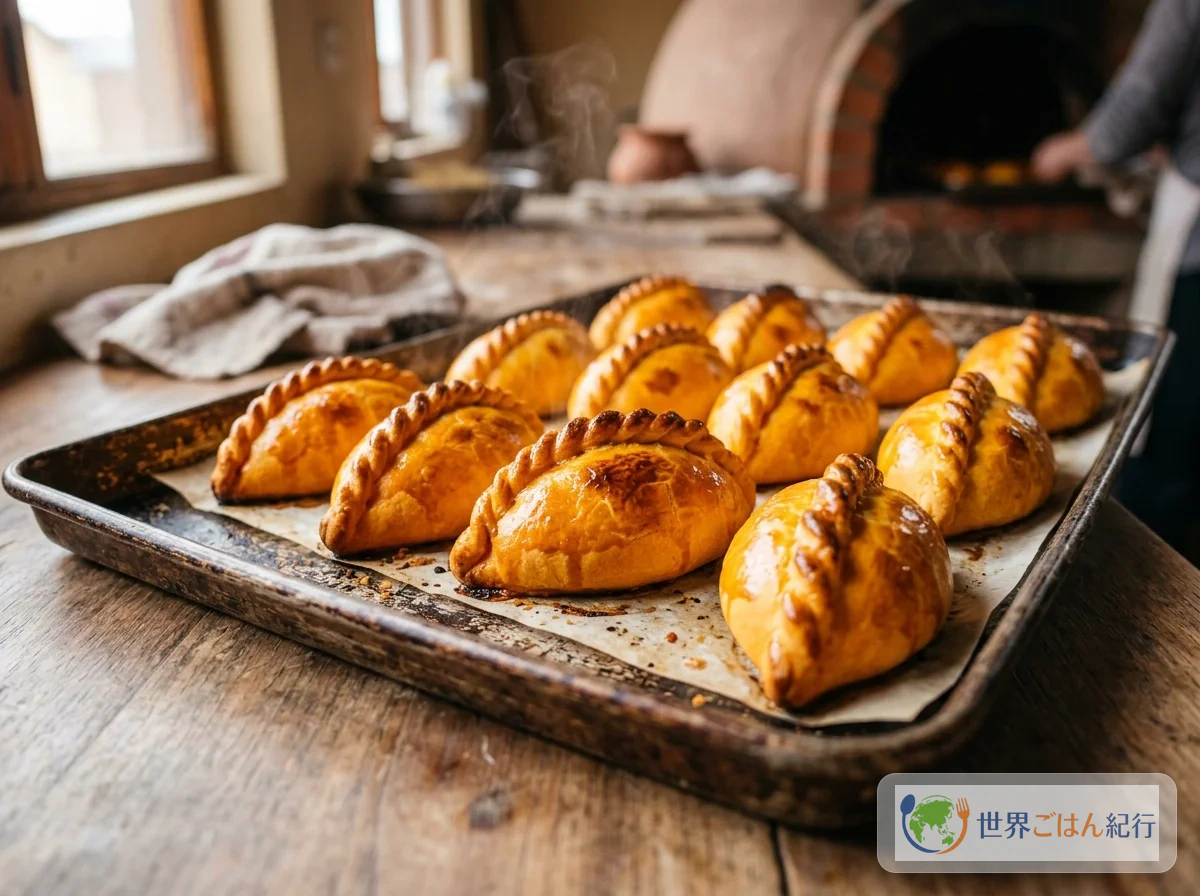
Open the oven door and before the smell of buttery crust comes the sweet smell of potato and onion. A little fat from the meat has soaked into the inside of the crust, and the crimped edge is a deep golden brown. If you cut into it right out of the oven, the steam inside burns your fingers, but that heat is part of the pasty.
The pasty is a half-moon meat pie that crossed to North America from Cornwall, England, with immigrants and took deep root in the mining towns of Michigan's Upper Peninsula. In Michigan it is said "PASS-tee," not "PAY-stee," and it is talked about as lunch, as a roadside-shop food, and as something that lives near the home freezer. Beef, potato, onion, and rutabaga are wrapped in dough and baked into a shape you can hold in your hand. It is not a dish you dress with an elaborate sauce.
When you make it in a home kitchen, the hard part is less the ingredients than "not adding moisture." You may want to fry the meat first, but to approach the Michigan pasty, cut the filling raw and small, wrap it, and let the oven seal in the meat juices and the vegetable moisture. A thin crust tears and a thick one lets the filling dry out before it cooks. So although the steps are not flashy, three things decide the flavor: the size of the cut, the amount you wrap, and the baking temperature.
If city chicken (in Japanese) is a Great Lakes meat dish whose name keeps its history, the pasty is a dish that survived in the same Midwest as a working person's lunch. It does not have the rush of aroma of Louisiana's jambalaya (in Japanese). In its place it has the practicality of a filling meal from just flour, meat, and root vegetables.
The Cornish pasty of Cornwall, England, comes with a protected name and its own context about how it is made. This article, by contrast, deals with the American-side pasty eaten in Michigan's Upper Peninsula. The use of rutabaga, serving with ketchup or butter, and the sense of buying it at a roadside shop are the axis of the text.
Ingredients: Evoke Rutabaga with a Little Turnip
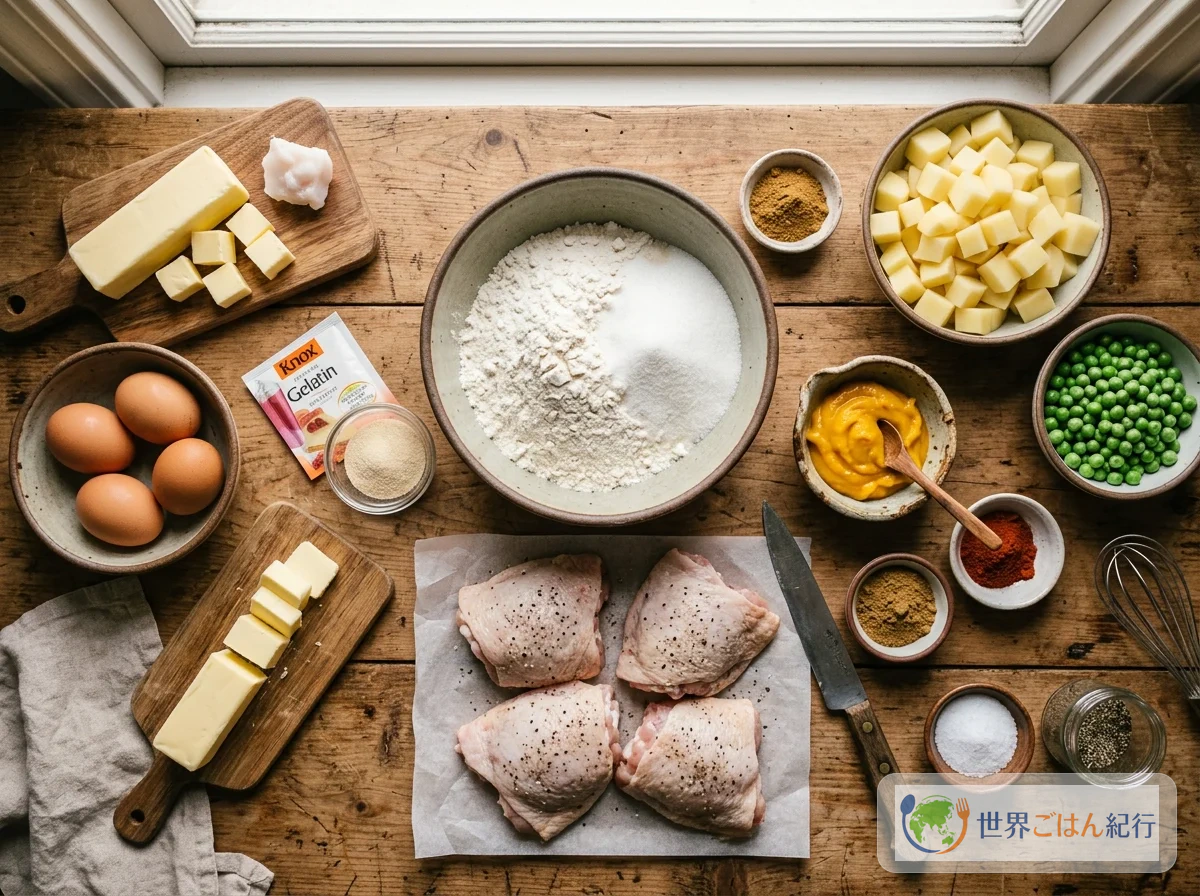
Makes 4 pasties, each large enough to be a lunch. Rutabaga is hard to find in many places, so this article uses 120 g turnip and 30 g daikon to adjust the aroma and moisture. Turnip alone becomes too soft and sweet, and daikon alone too watery. Cut both small and go a little lighter on the salt, and you approach the root-vegetable character of the pasty.
This dish contains wheat, egg, dairy, and beef. Because the filling is wrapped raw, check the finished pasty by inserting a thermometer into the thickest part and aiming for 74°C in the center. Browning alone makes it hard to judge how cooked the inside is.
Shopping and Tools: Control the Wrapping Thickness, Not Special Ingredients

If you chase imported ingredients for pasty, it would be rutabaga, but that is hard to buy reliably in many places. On a first try, do not hunt for it; replace it with turnip and daikon and learn the cutting and baking first. For equipment, the useful items are a rolling pin that rolls cold dough evenly and a small food processor that cuts butter into flour without warming it. Use a thermometer you already have in the steps to check the center temperature.
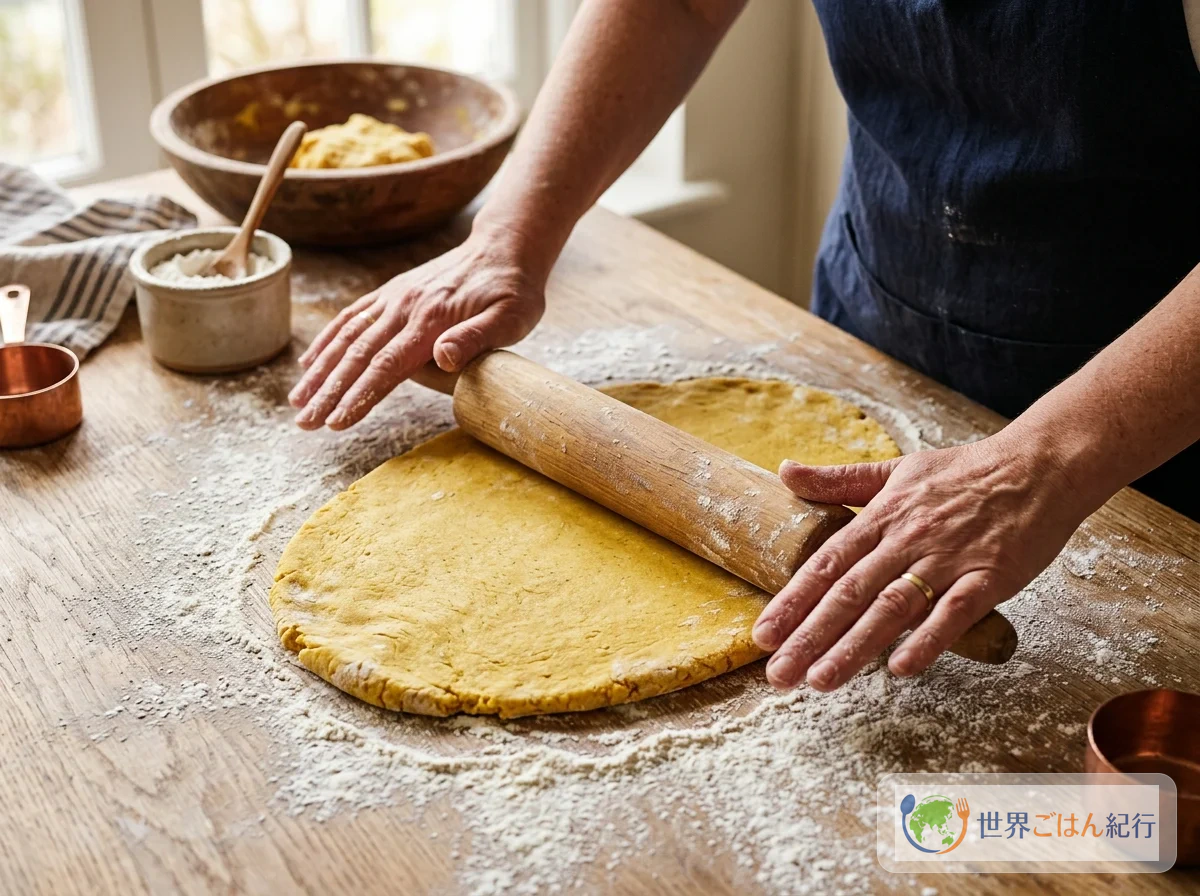
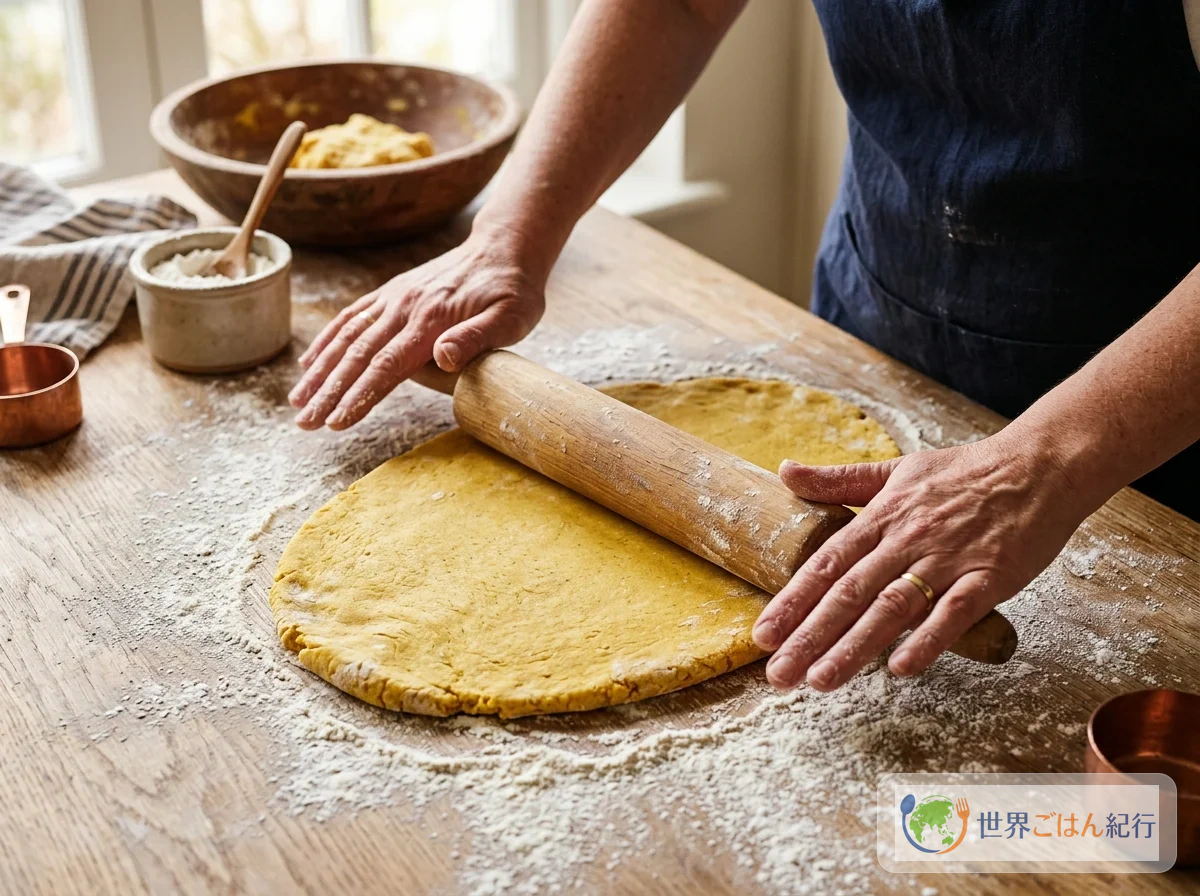
This is a dish where the dough is rolled to around 23 cm, so a too-thin cooking chopstick gives uneven thickness. A rolling pin is plain, but it is the tool that reduces pasty failures.
A food processor is not required. You can also rub in the butter by hand. But in summer or a heated kitchen, it lets you combine the butter with the flour before it melts, so the dough sags less.
For a dish where the filling is wrapped raw, a thermometer helps you avoid overbaking. The outside color of a pasty gets ahead of the inside, so check the center temperature, if only the first time.
Instructions: Stack Short Tasks, and Bake to the Center
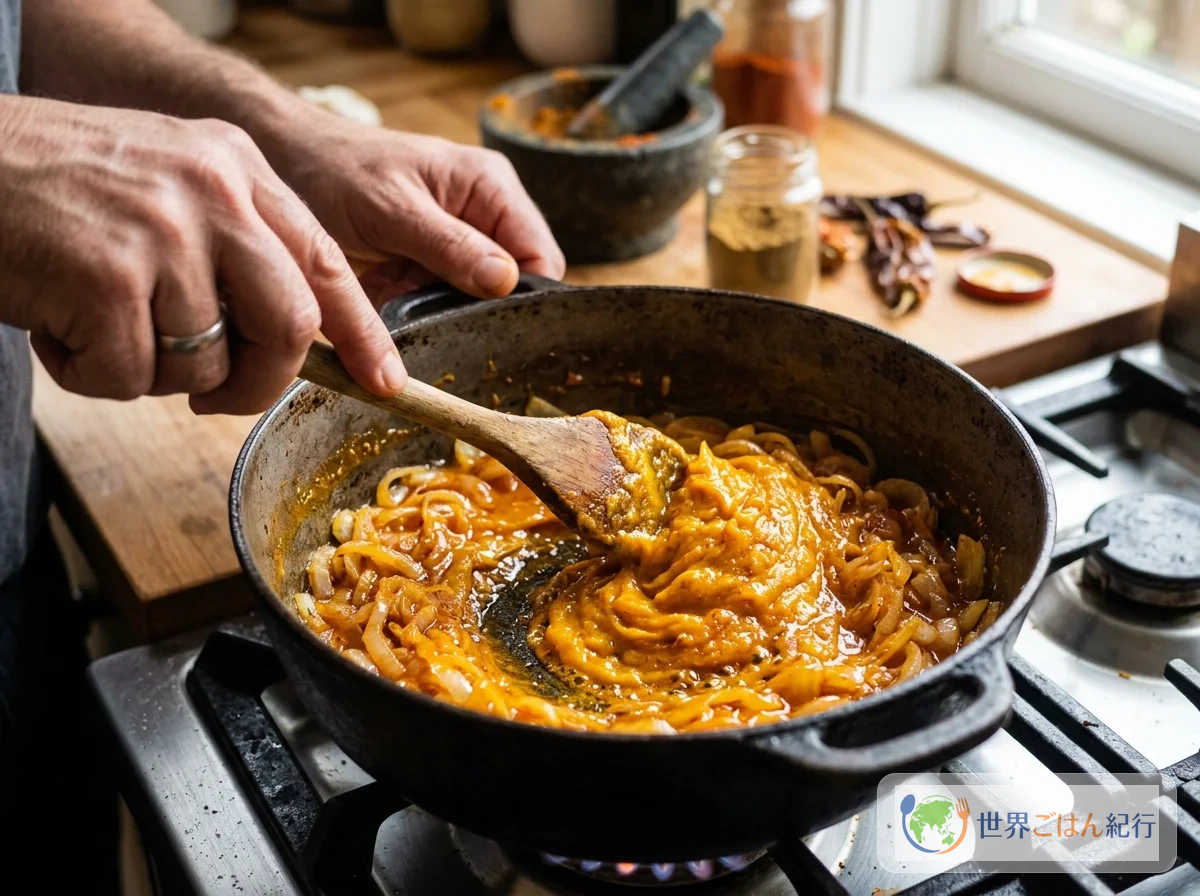
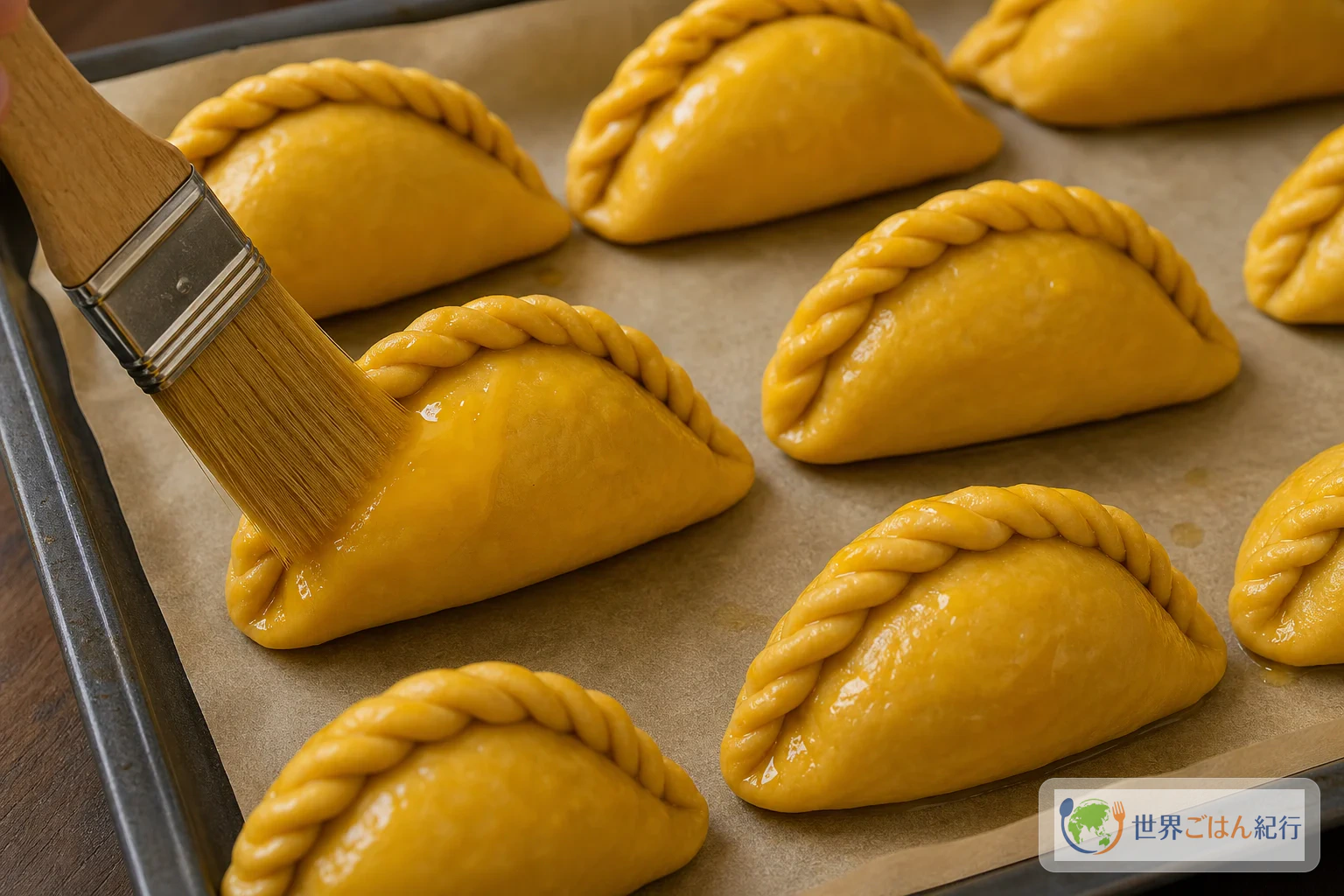
A pasty is not a dish simmered in a pot; it makes a small steam-bake inside the oven. Since the filling is not sautéed, the size of the cut and the amount of the wrap show directly in how it cooks. Rather than rushing and raising the temperature partway, start strong to lift the dough, then bake at 180°C in the second half to cook through.
Where It Goes Wrong: Adding Liquid Makes a Pie You Cannot Hold
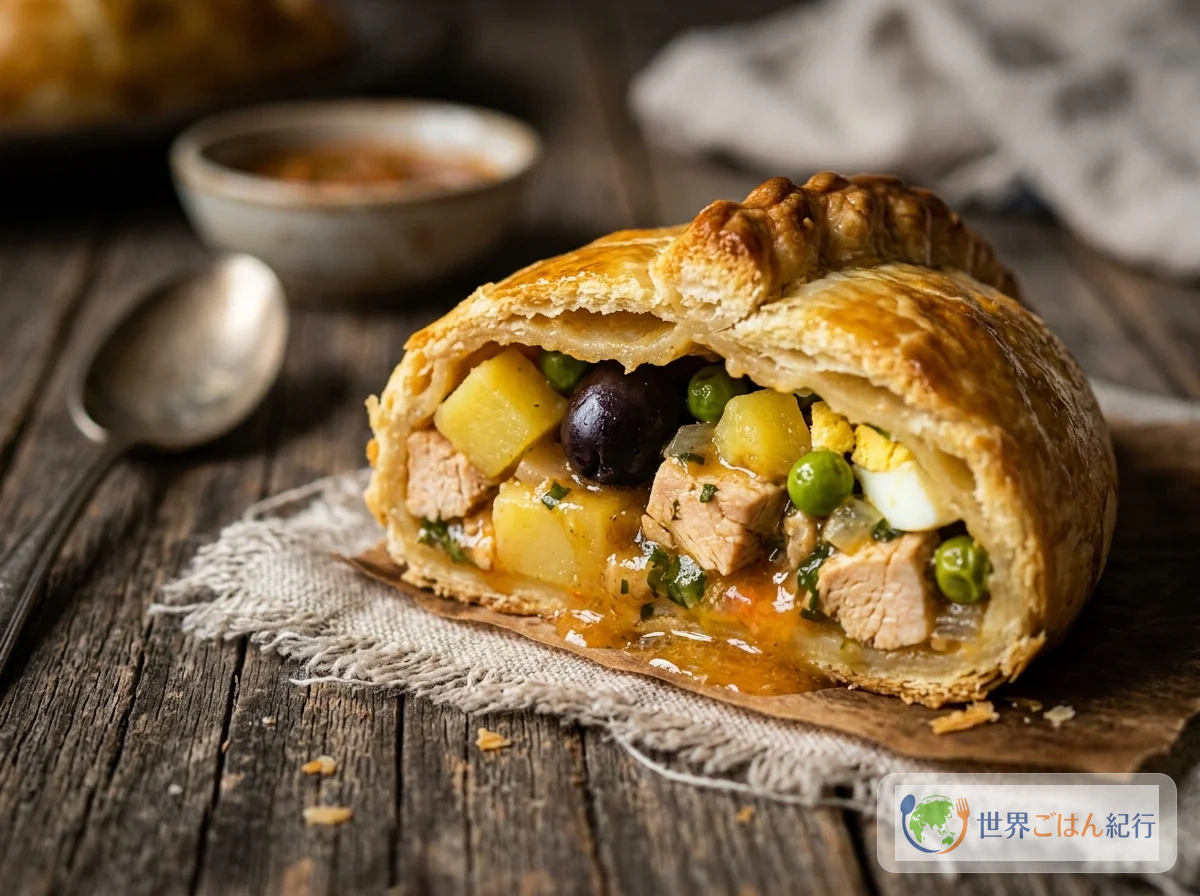
The most common failure is cutting the filling large. A pasty is not a stew, so if potato or turnip is 1.5 cm cubes, the outer crust bakes but the center stays hard. Conversely, if you mince too finely, the vegetables release water and the bottom turns sticky. The slightly fussy size of about 7 mm is the compromise between cooking through and texture.
Next, do not let the dough warm up. On a warm day the dough sags while you roll. Forcing in more flour makes it hard, so when it softens return it to the refrigerator for just 5 minutes. Cold dough looks as though it will crack, but it becomes easier to roll as it warms slightly in your hands. Resting is faster than panicking and reworking it.
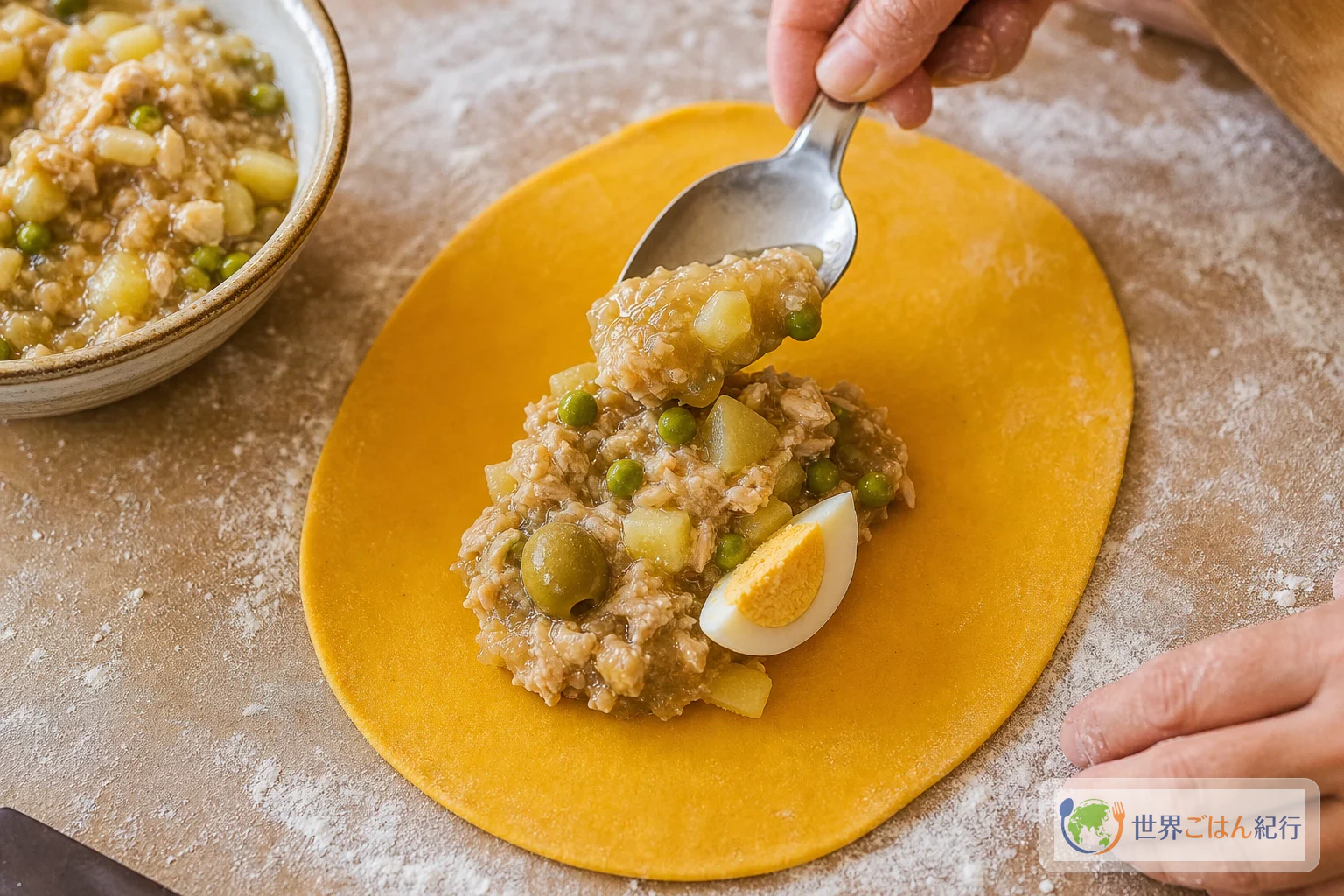
Leaks from the bottom come from too little margin and overfilling. You may want to put in a lot of filling, but over about 160 g per pasty puts pressure on the edge. Leftover filling can be baked in a small heatproof dish, so do not force it into one pasty. The holes in the surface are not for letting meat juice out but for letting a little steam escape and preventing bursting. If you cut them too large, juice comes out through them.
When the flavor is blurry, check with the ketchup or butter pairing before adding salt. If you season a pasty too strongly on its own, the saltiness stands out once it cools. If you serve it with ketchup in the local way, keeping the filling's salt slightly low is just right. On days you add butter, do not make the salt stronger still, or you will tire of it.
How It Is Eaten, and Regional Differences: Ketchup Camp and Butter Camp
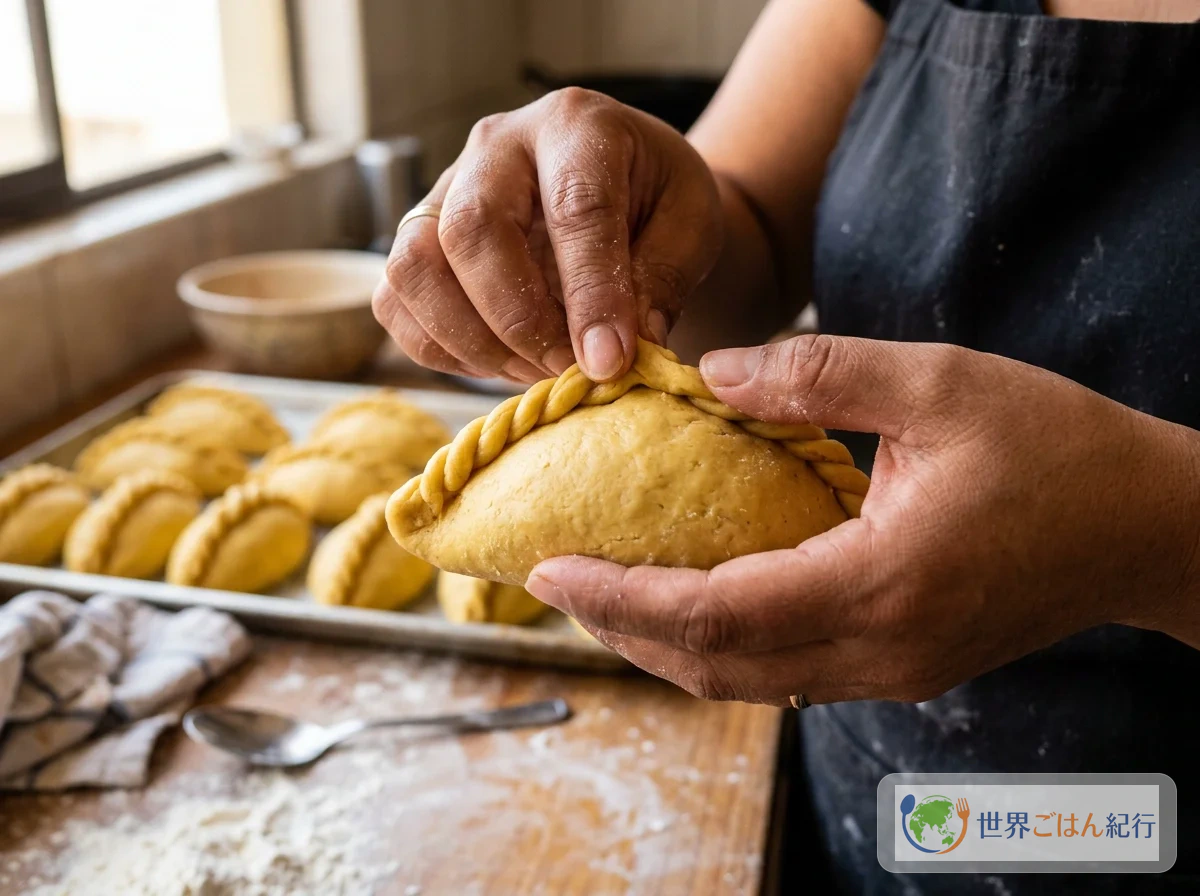
Look into the pasty of Michigan's Upper Peninsula and almost always ketchup comes up. It may seem surprising for a dish of Cornish origin, but in the Upper Peninsula, at roadside shops and at home, putting ketchup on a hot pasty is often described. Some people put a little butter in the cut surface. Rather than arguing which is orthodox, it is easier to think of it as a difference between adding acidity to freshly baked root vegetables and meat, or adding fat to round them out.
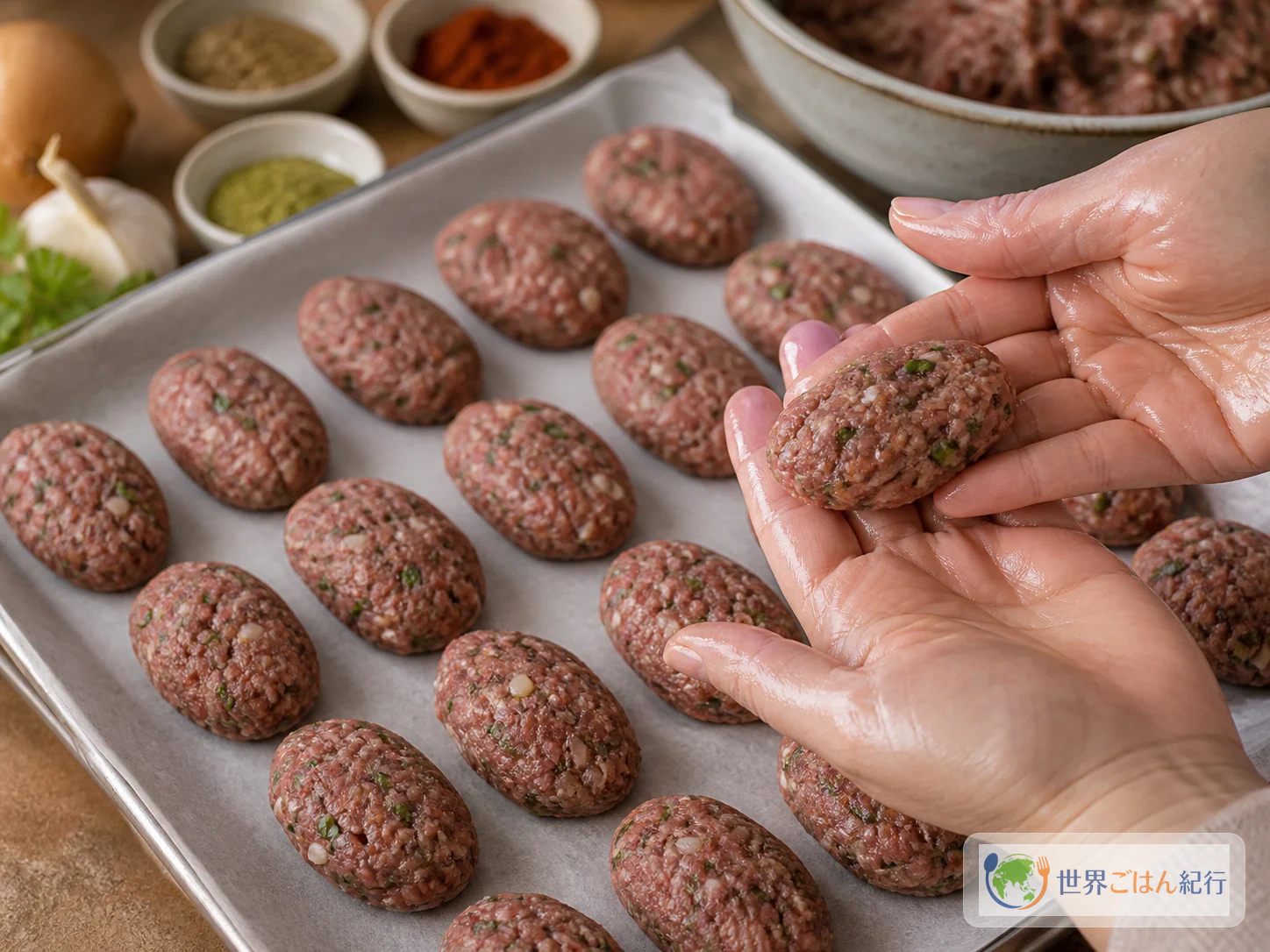
The filling is not one thing either. Beef alone, beef and pork, more potato, more rutabaga, with carrot, strong on onion. Because it survived as a mining-town lunch, there are as many formulas as there are households and shops. This article uses beef and root vegetables, but cutting lean meat small gets closer in texture than using stew-cut scraps. Ground meat is convenient, but it releases juice early and leans toward a baked wrap with meat sauce rather than a pie.
Rutabaga is an ingredient worth protecting, but it is the hard part in many places. If you find it at an import produce shop, it is worth trying. But it is not a dish you cannot make without it. More turnip tastes sweet, and a little daikon makes moisture come out more easily. So in this article turnip is the lead and daikon the support. Carrot is in some places and shops and not in others. The color is pretty but it adds sweetness, so on a first try keep it to a small amount that does not get in the way of the aroma of potato and onion.
What is interesting about the pasty is that a migrants' dish became a different everyday food in an American place. A half-moon pie described as the meal of Cornish miners remains in the iron mines, copper mines, and roadside shops of the long-winter Great Lakes region. The name is the same, but with ketchup, frozen sales, and the distance of buying it by car and taking it home, the meaning of the plate has changed. Making it at home, sizing it as a lunch in one pasty brings out the outline of the dish better than shaping it small and refined.
Storage and Reheating: Bake First, Then Freeze
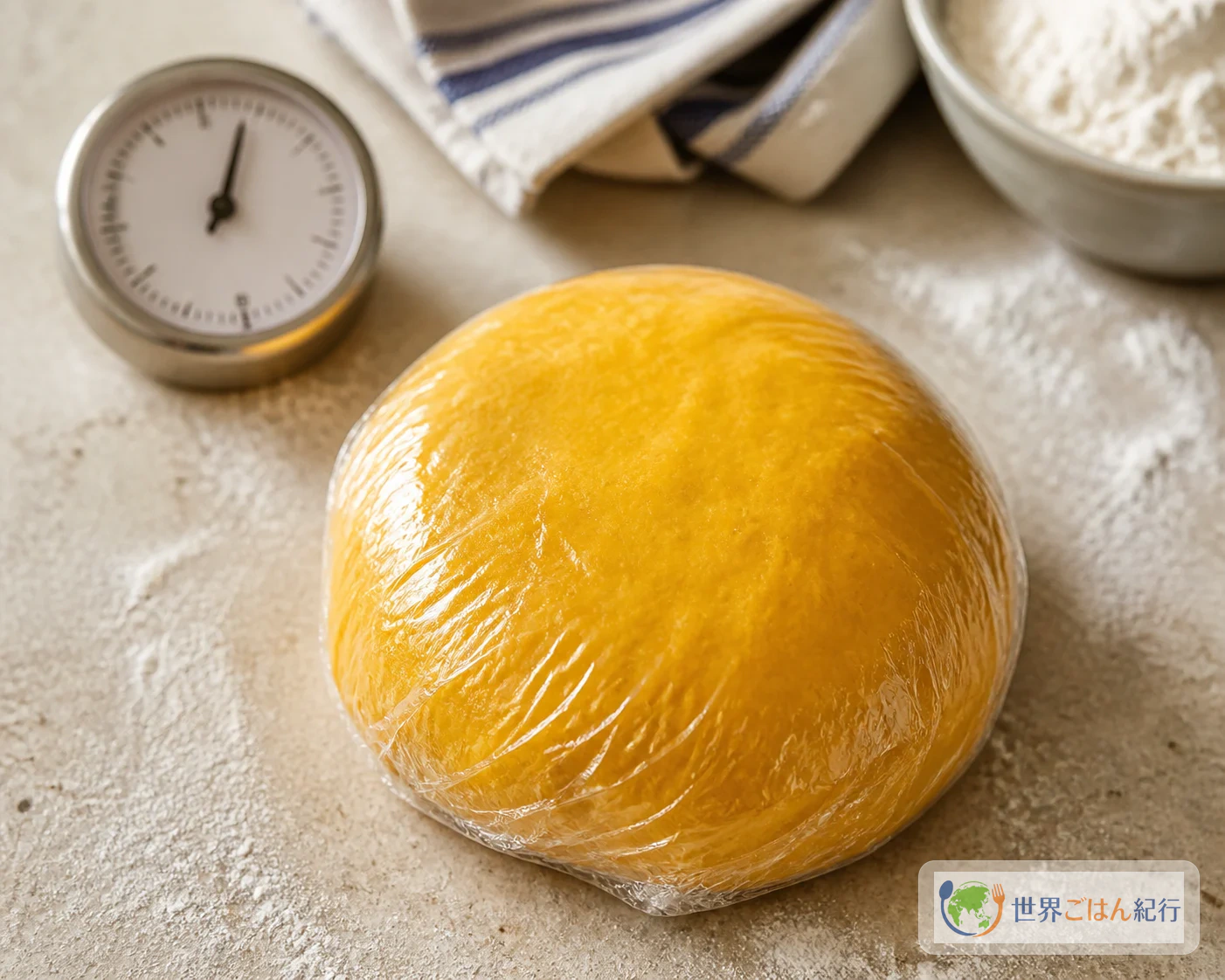
Cool baked pasties, then wrap each in plastic wrap. As a guide, refrigerate for 3 days or freeze for 1 month. If you freeze the dough and filling together before baking, the vegetables release water and the bottom tears easily, so at home freezing after baking is more stable.
To warm from the refrigerator, 12–15 minutes in a 180°C oven or toaster oven. From frozen, thaw in the refrigerator for half a day and warm the same way. If in a hurry, microwave at 600 W for about 1.5–2 minutes and then toast for 5 minutes for a better balance of center and surface. When reheating leftovers, aim for 74°C in the center to be safe.
For a lunchbox, cool it fully before wrapping. If you wrap a freshly baked pasty in paper right away, steam makes the crust damp. Put the ketchup in a separate container and carry the pasty whole, uncut, so it does not break. If you carry half, cool it cut side up and wrap it after the juices settle.
What to Cook Alongside
A pasty is a one-dish meal, so rather than stacking another heavy meat dish the same day, a soup or an acidic side is easier to eat. To continue with American regional cooking, jambalaya (in Japanese), with rice and spices, and the po' boy (in Japanese), with its filling in bread, show the difference between the South and the Great Lakes region within the same country.
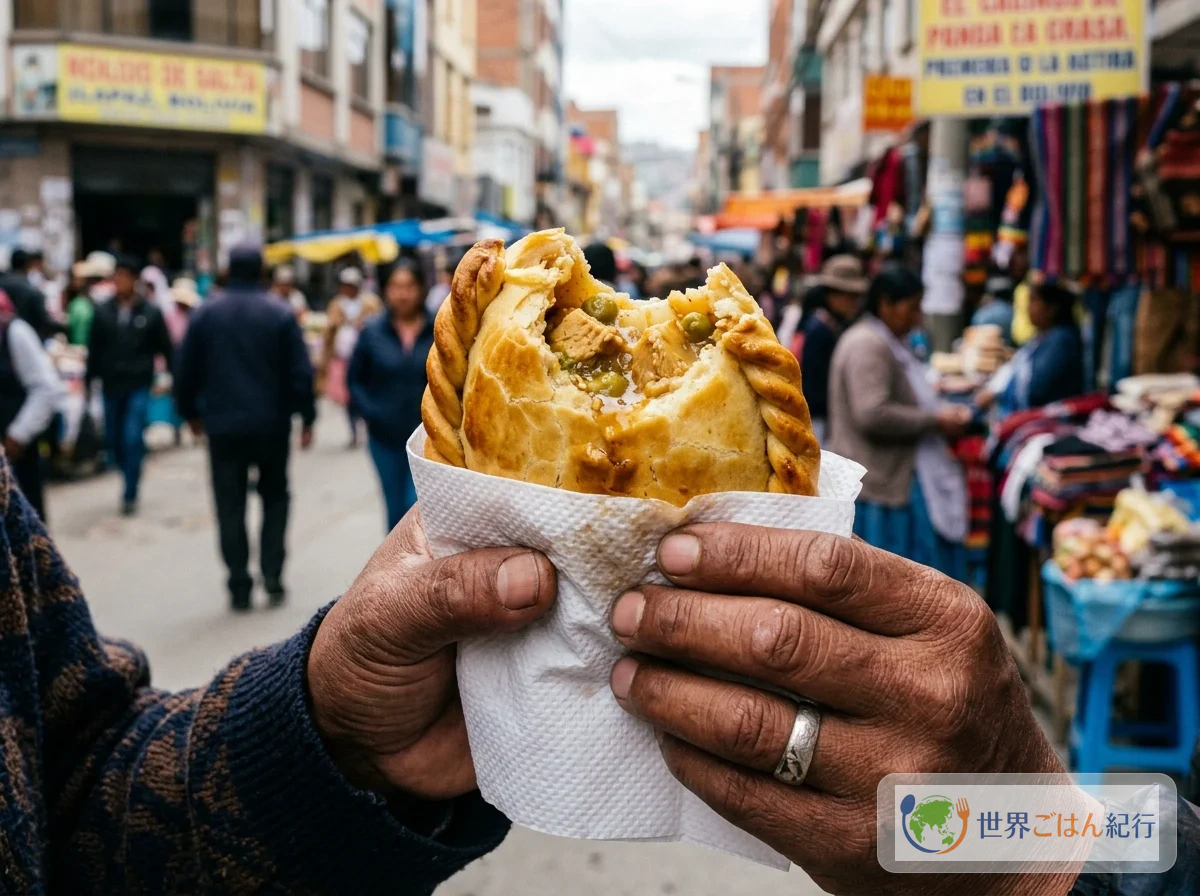
As wrapped dishes to compare, Bolivia's salteña is close in the idea of sealing in liquid, and Argentina's empanada differs in the seasoning of the filling and the thickness of the dough. To widen to boiled wrapped dishes, Russia's pelmeni (in Japanese) is easy to compare as well.
FAQ
Can I make it with ground beef?
You can, but this article does not recommend it. Ground meat releases water easily once salted, and the bottom of the dough turns damp. If you use it, use 250 g ground beef, cut the vegetables slightly smaller, and wrap it right after mixing the filling. The texture gets closer to a meat pie than a pasty.
I can't get rutabaga
You can substitute 120 g turnip and 30 g daikon. Turnip alone is sweet and soft, and daikon alone releases moisture easily. There is a method of salting and draining after cutting, but it makes the saltiness of the whole filling hard to read, so on a first try use them as they are and keep the amounts modest.
Does ketchup really go with it?
It does. It is a combination that often comes up as the Upper Peninsula way of eating, and it adds acidity to the plain sweetness of meat and root vegetables. If you are on the butter side, melt about 1 tsp butter on the cut surface. Using a lot of both at once gets heavy, so try half and half.
Can I make it without an oven?
You can make it in a frying pan alone, but it scorches easily and managing the center temperature is harder. Brown both sides in a thick frying pan with a little oil over medium-low heat, then cover and steam-fry over low heat for around 20 minutes. Turn it several times along the way and take off the lid at the end to drive off moisture. Even so, the oven is more reliable the first time.
Can I prepare it the day before?
The dough can be made the day before. Leave it in the refrigerator overnight and take it out 20 minutes before use. Cutting the filling the day before makes water come out, so cutting it on the day is better. If you must prepare the day before, cut only the vegetables and store them separately, and combine the salt and meat just before wrapping.
Sources
- Epicurious. "How to Make a Real Upper Michigan Meat Pie." https://www.epicurious.com/recipes-menus/michigan-meat-pie-cornish-pasty-for-winter-tips-recipe-article accessed 2026
- Eater Detroit. "Where to Eat in Michigan's Upper Peninsula." https://detroit.eater.com/23025094/best-restaurants-michigan-upper-peninsula accessed 2026
- FoodSafety.gov. "Safe Minimum Internal Temperatures." https://www.foodsafety.gov/food-safety-charts/safe-minimum-internal-temperatures accessed 2026
- Wikipedia. "Pasty." https://en.wikipedia.org/wiki/Pasty accessed 2026