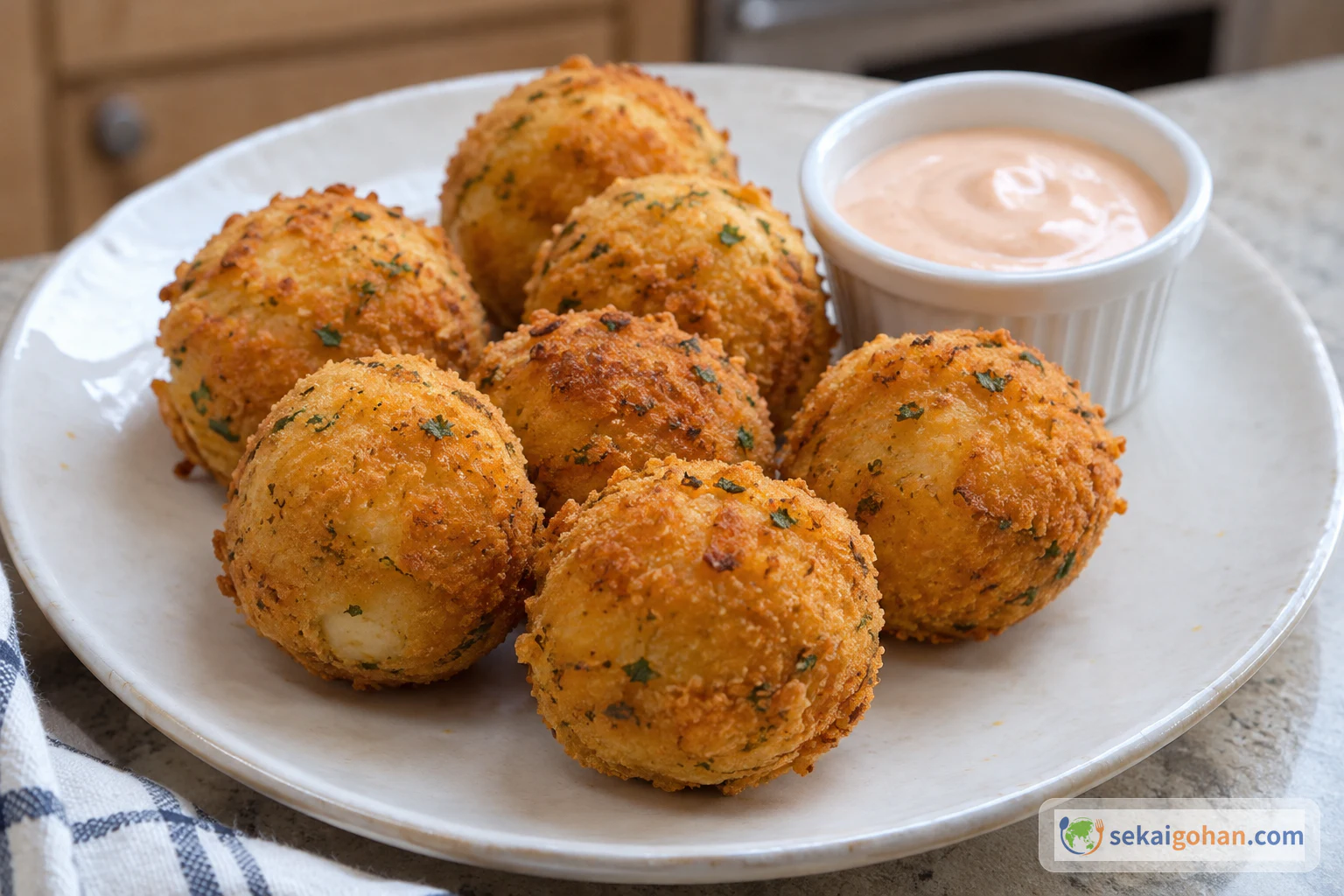
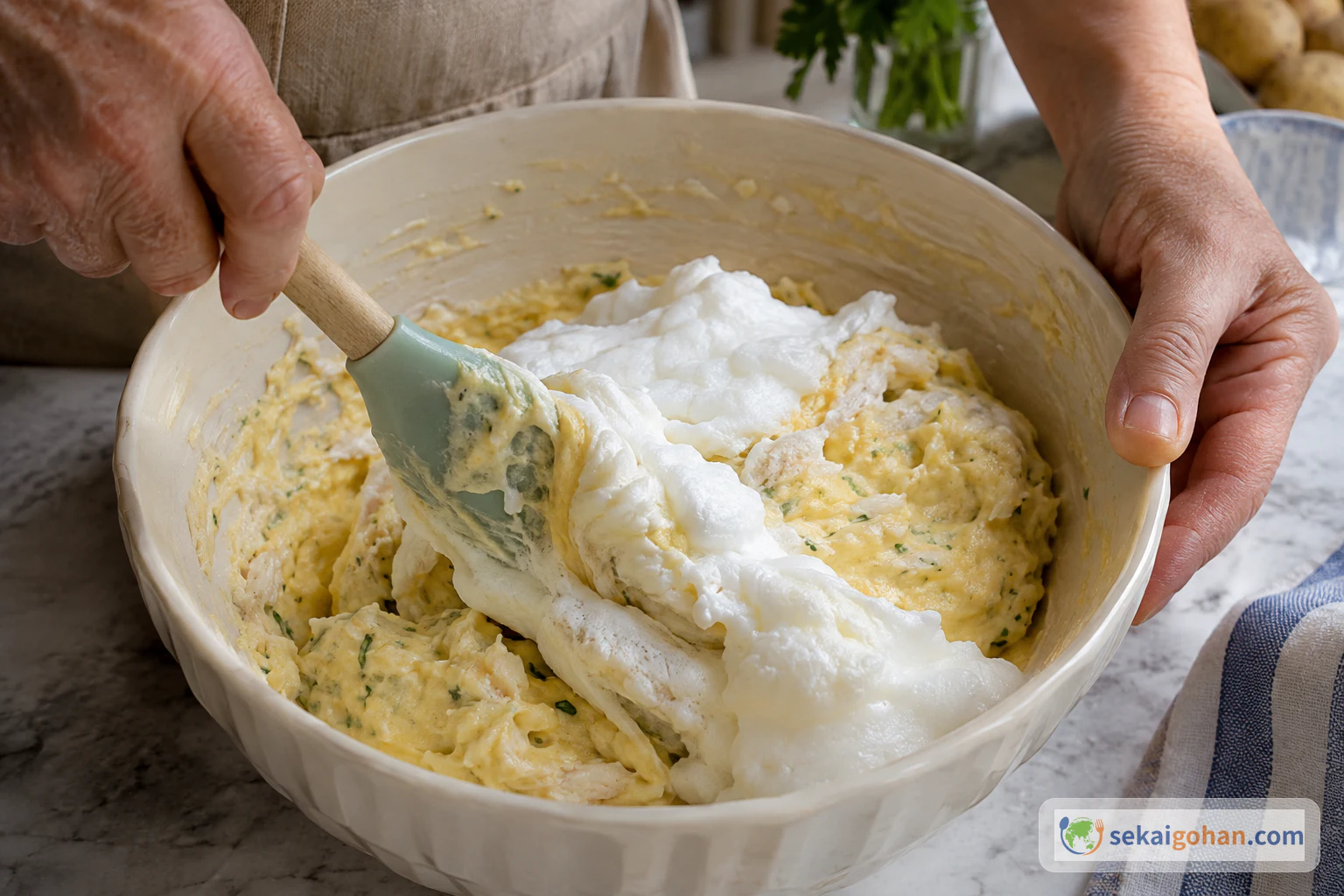
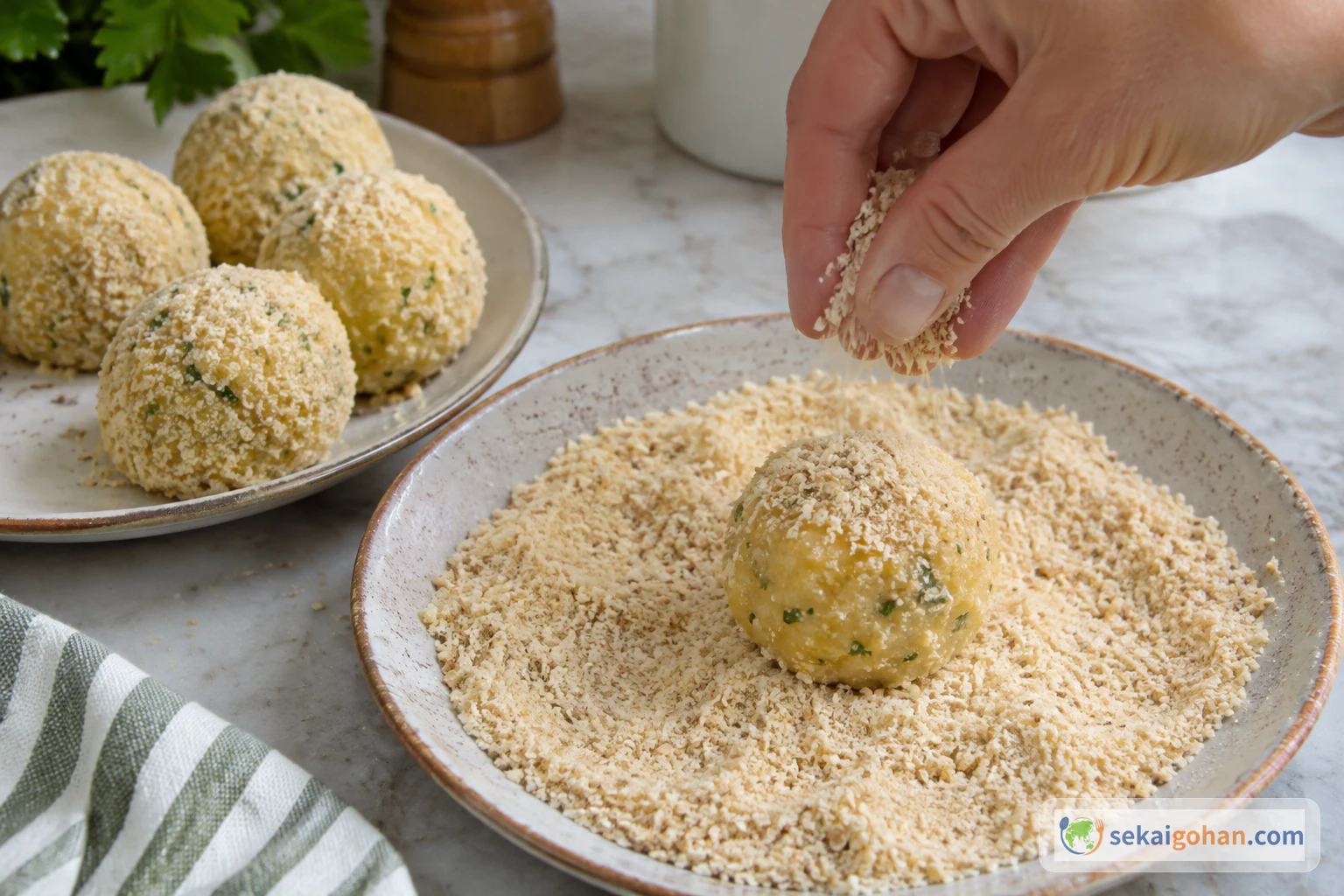
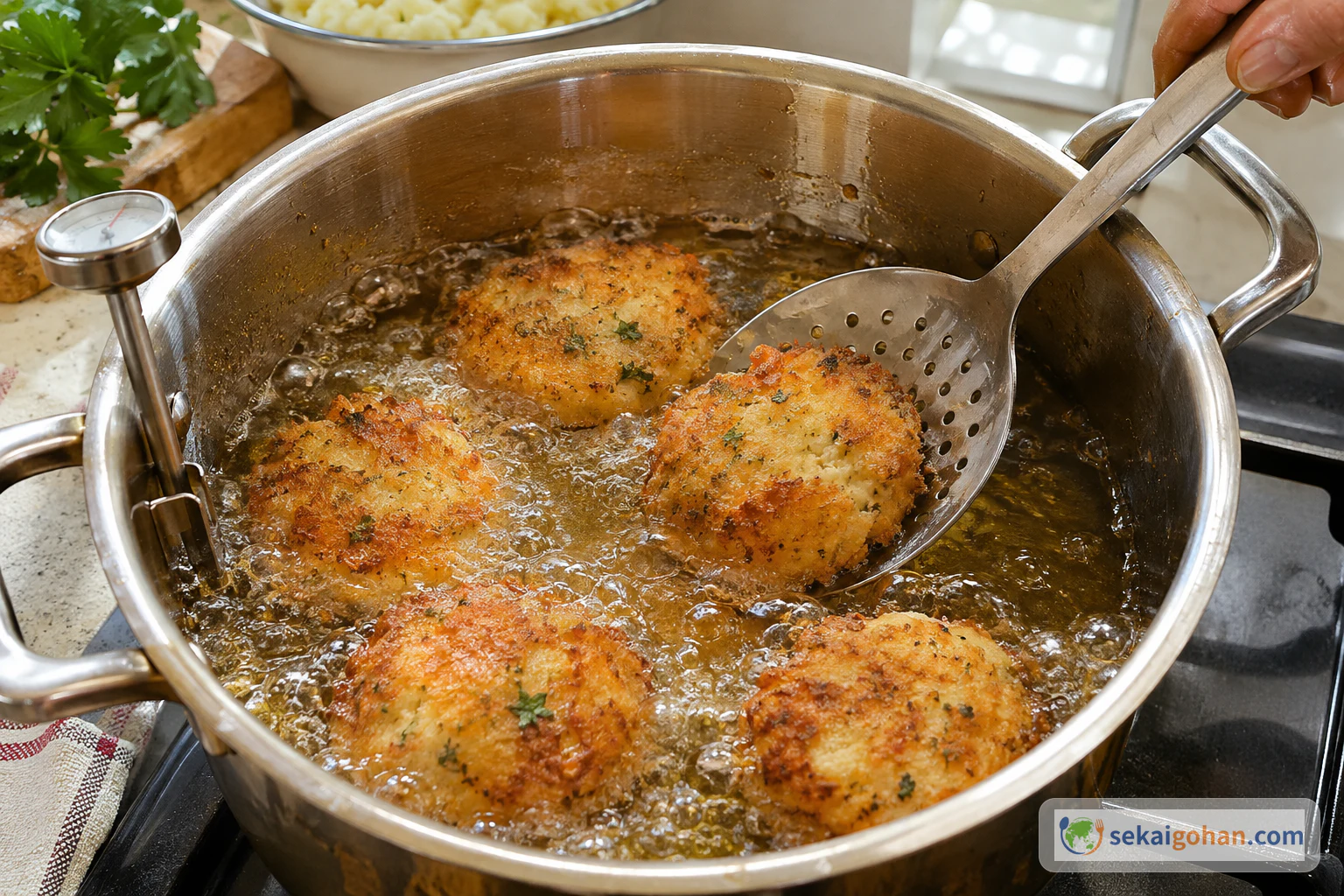
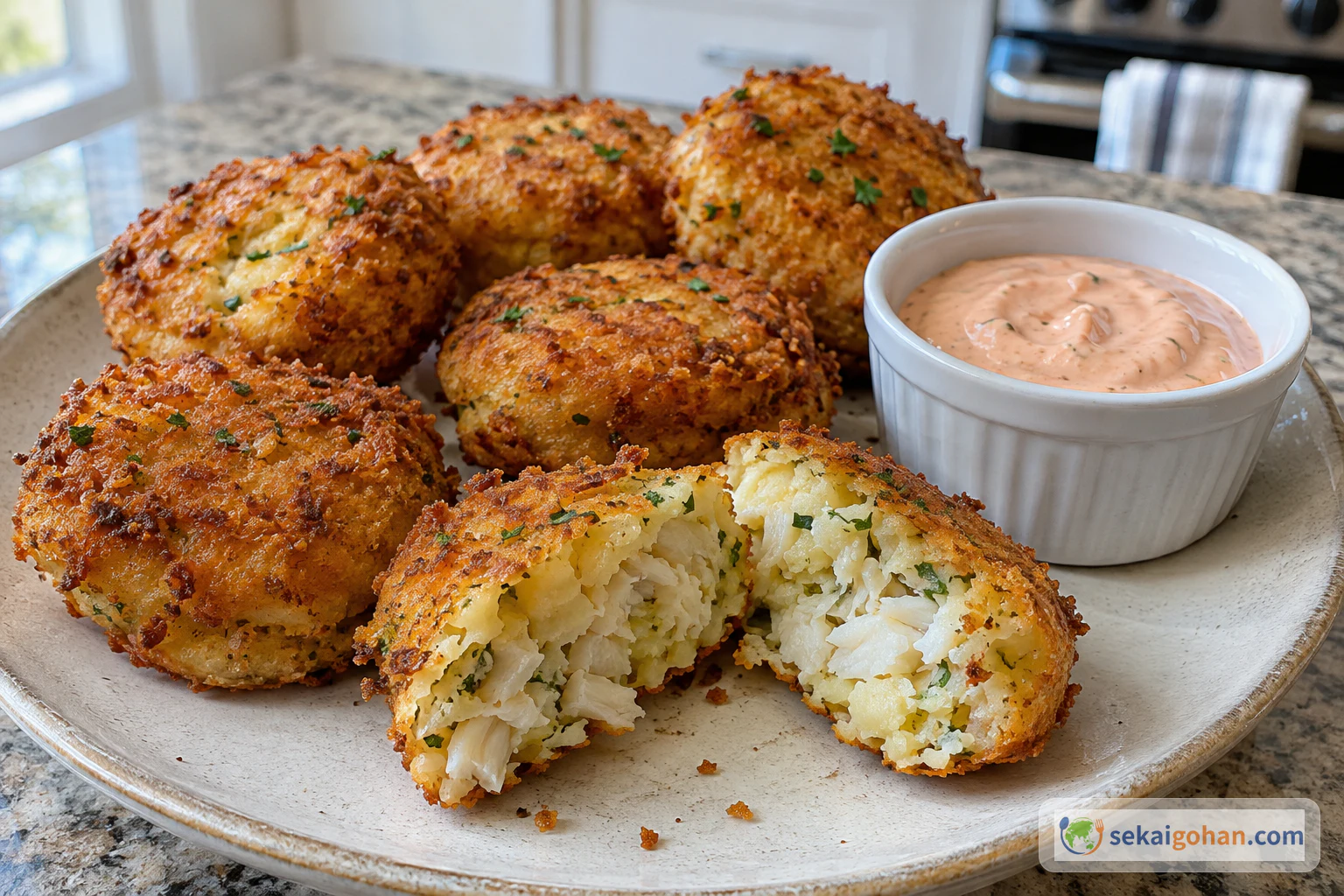
The first batch goes into the hot oil and the pot answers with a steady hiss. Within a minute or two the breadcrumbs go from pale sand to deep gold, and the fritters bob as you turn them. Break one open and steam rises from a soft, almost fluffy center, threaded with white strands of cod and flecks of green herbs. Bolinho de bacalhau is the salt cod and potato fritter that Brazilians pass around at bars and parties. It tastes of the sea and of good mashed potato at once, salty and gentle, with a crust that crackles and an inside lightened by whipped egg white. A spoonful of cold pink rose sauce on the side is all it needs.
From Ship's Store to Bar Counter
Salt cod has a long history behind it. Drying and salting the fish turned it into a preserved food for the long sea voyages of the 16th century, when Portuguese ships sailed far from home and needed provisions that would keep. Over the following centuries it moved from the ship's hold to the kitchen, and by the 18th century salt cod had become a basic food of ordinary people in Portugal.
Once cod was an everyday food, cooks found practical ways to stretch it. Mixing flaked fish with mashed potato, shaping it and frying it turned a modest amount of cod into a plate of fritters for many hands. Where and when the fritter itself was first made is not settled. In Portugal the same family of fritters goes by the name pastéis de bacalhau, and there they are often a full meal with rice, salad and olives. Portuguese cooks also fold salt cod into dishes such as bacalhau à brás, a skillet of shredded potato and egg that has nothing of the fritter's crunch.
In Brazil, the fritter took on its own life as a snack. Bolinho de bacalhau is a fixture of bar snacks and party tables, picked up with the fingers, dipped and eaten in two bites while the conversation keeps going. It belongs to the same world of small fried savories as coxinha, and Brazilian home cooks make it in several ways. Some fold cassava into the potato, some add a spoonful of flour, and some skip the breadcrumb coating altogether.
In Brazil, bolinho covers a whole family of small fried balls, and bacalhau is salt cod. The plural, bolinhos de bacalhau, is the usual way to say it, since the fritters come by the plateful.
Ingredients
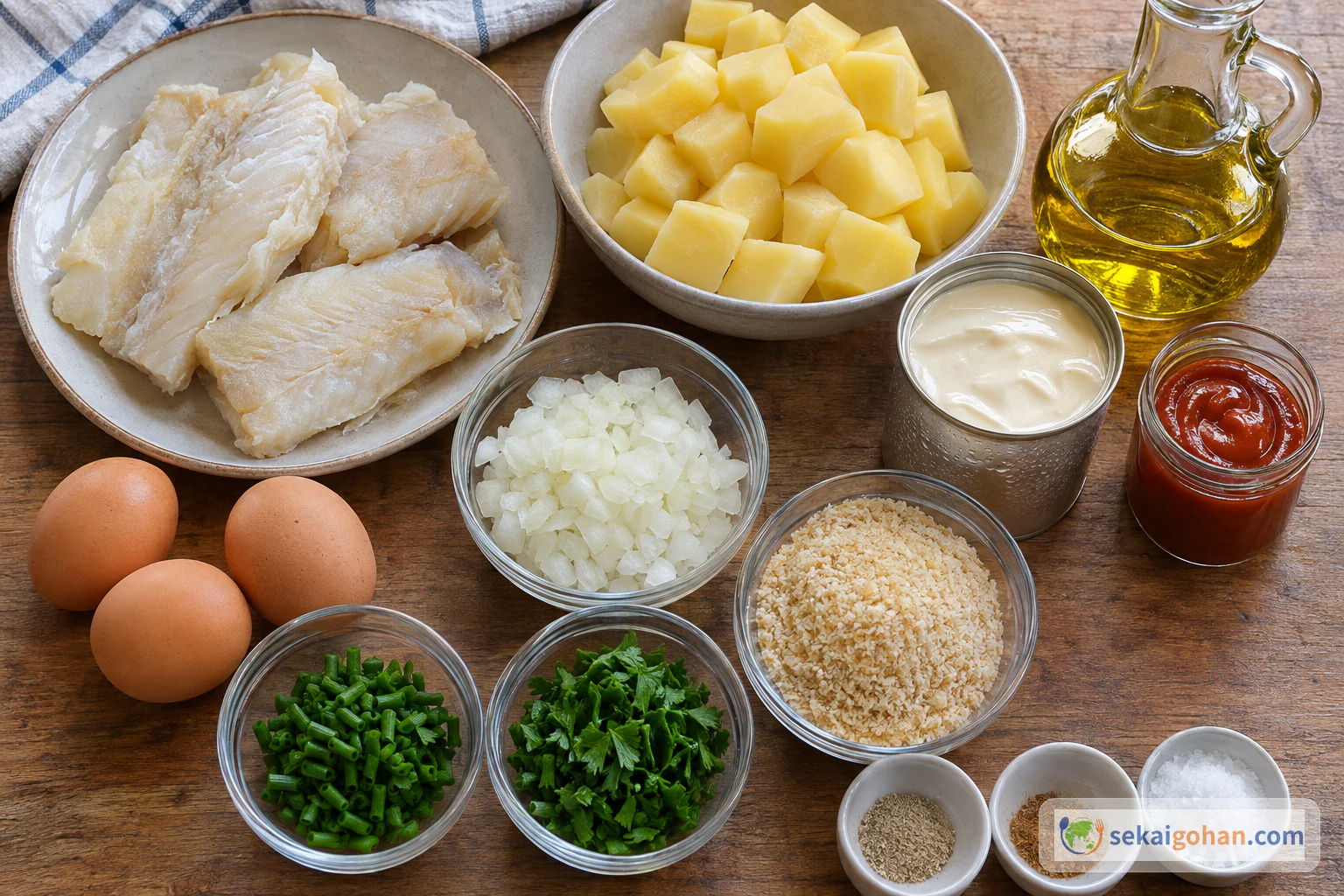
This makes about 30 fritters the size of a small lemon. The cod is measured after it has been soaked, poached and flaked, so start with enough dried salt cod to fill the cup measure at the end.
Salt cod keeps some salt even after a full soak, and how much depends on the fish you bought. Taste the base before the ½ tsp salt goes in and add only what it needs.
This recipe contains fish (cod), egg, wheat (breadcrumbs) and milk (the cream in the rose sauce). Check the labels on breadcrumbs and canned cream for other allergens and shared-facility statements.
Equipment
- Large bowl for soaking the cod, with space in the refrigerator for it
- Two pots, one for the cod and one for the potatoes
- Colander
- Fork
- Mixing bowls, including one clean bowl for the egg whites
- Electric mixer
- Silicone spatula
- Two shallow dishes, for the beaten egg and the breadcrumbs
- Spoon and fork for lifting the coated fritters
- Deep, heavy pot for frying
- Deep-fry thermometer
- Slotted spoon
- Paper towels
- Baking sheet or ovenproof dish for keeping the fritters warm
Buying the Cod and Choosing Swaps
The one thing worth a special trip is dried salt cod, the stiff, pale fillets packed in salt and sold at Portuguese, Brazilian and other import grocers or online. Lightly salted fresh cod fillets from a supermarket fish counter are a different product with a different water and salt content, and they will not give the dense, savory strands that make this fritter taste the way it does in Brazil. Keep the soak in the refrigerator and keep the whipped whites; those two steps are what make the center both properly seasoned and light.
Floury potatoes suit the mixture best, because they mash dry and fluffy and hold the cod without turning gluey. Waxy potatoes make a wetter, heavier mixture that is harder to shape. Canned creme de leite is easiest to find at Brazilian or Latin American shops. If you cannot get it, a lighter cooking cream sits closer than rich whipping cream, which makes a thicker, heavier sauce. Any plain dry breadcrumbs work for the coating; the crust comes out a little finer or coarser depending on the crumb.
Method
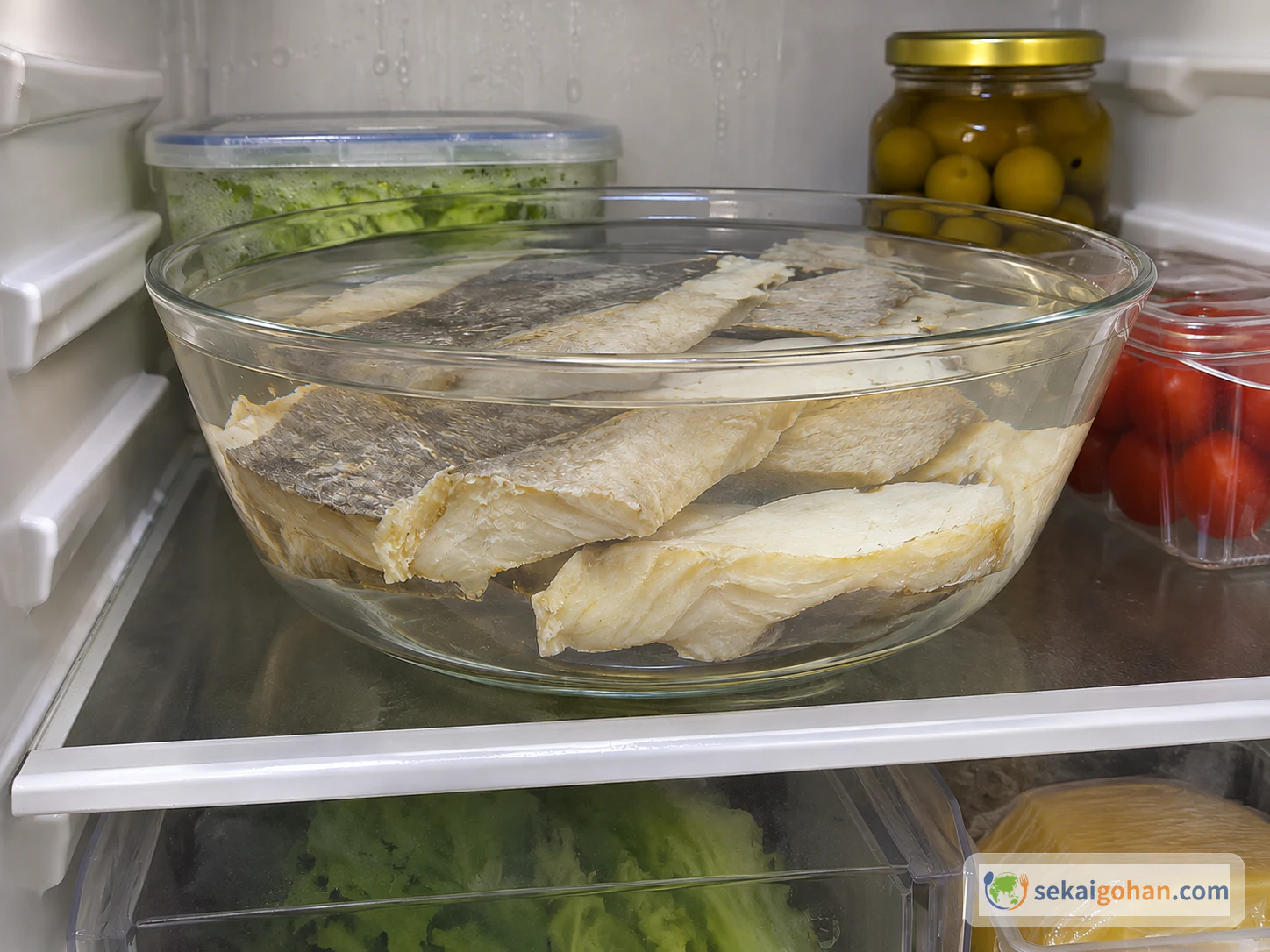
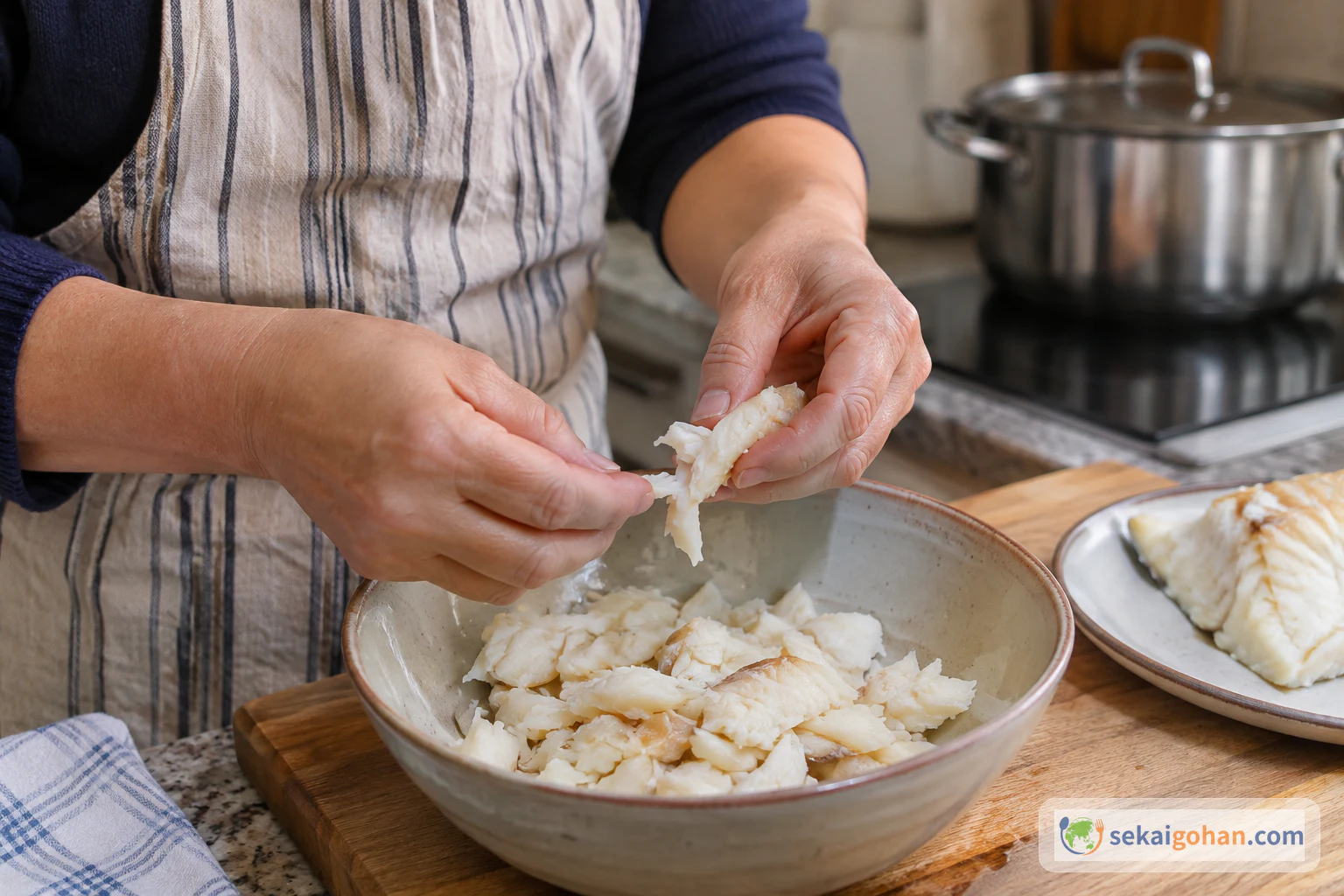
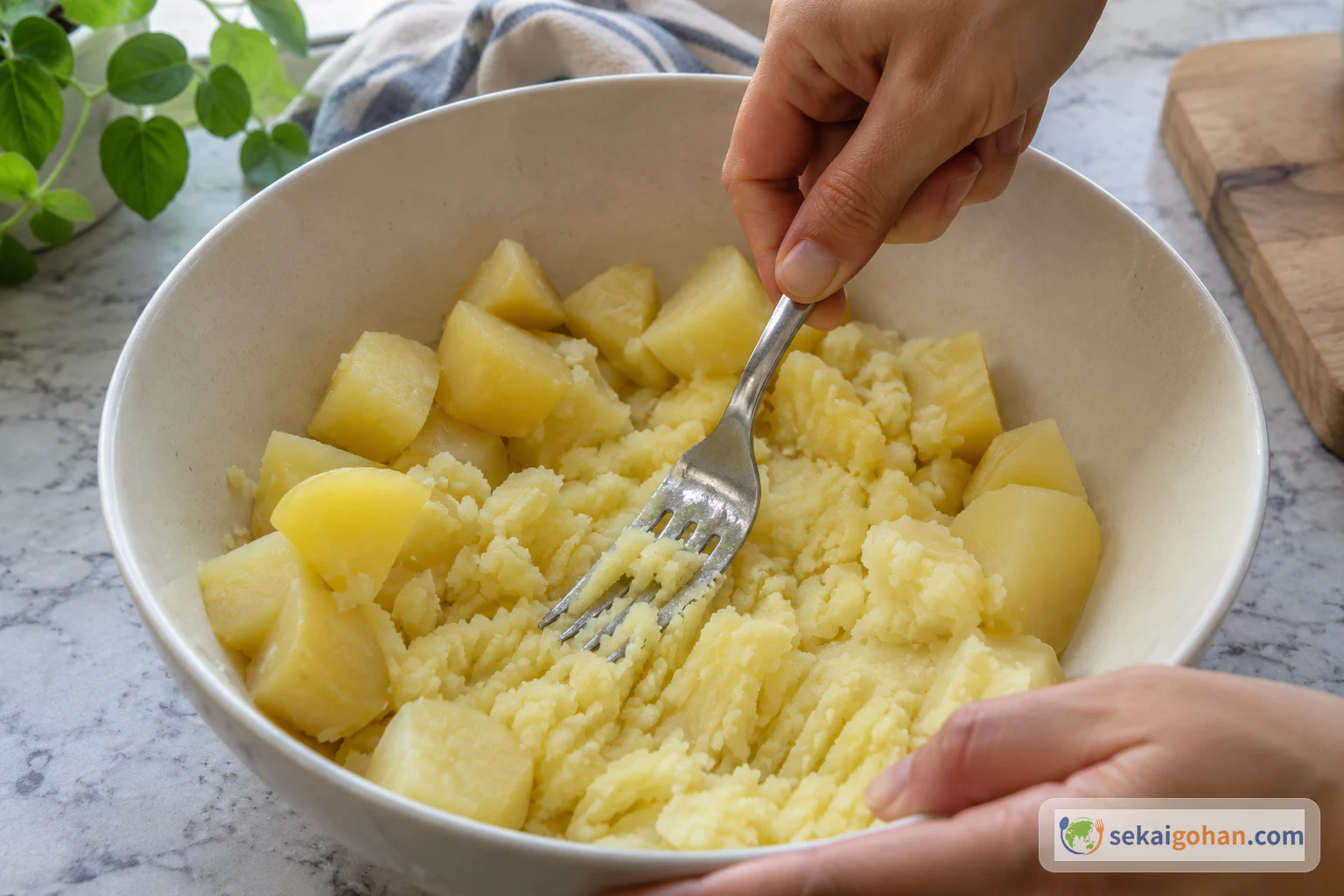
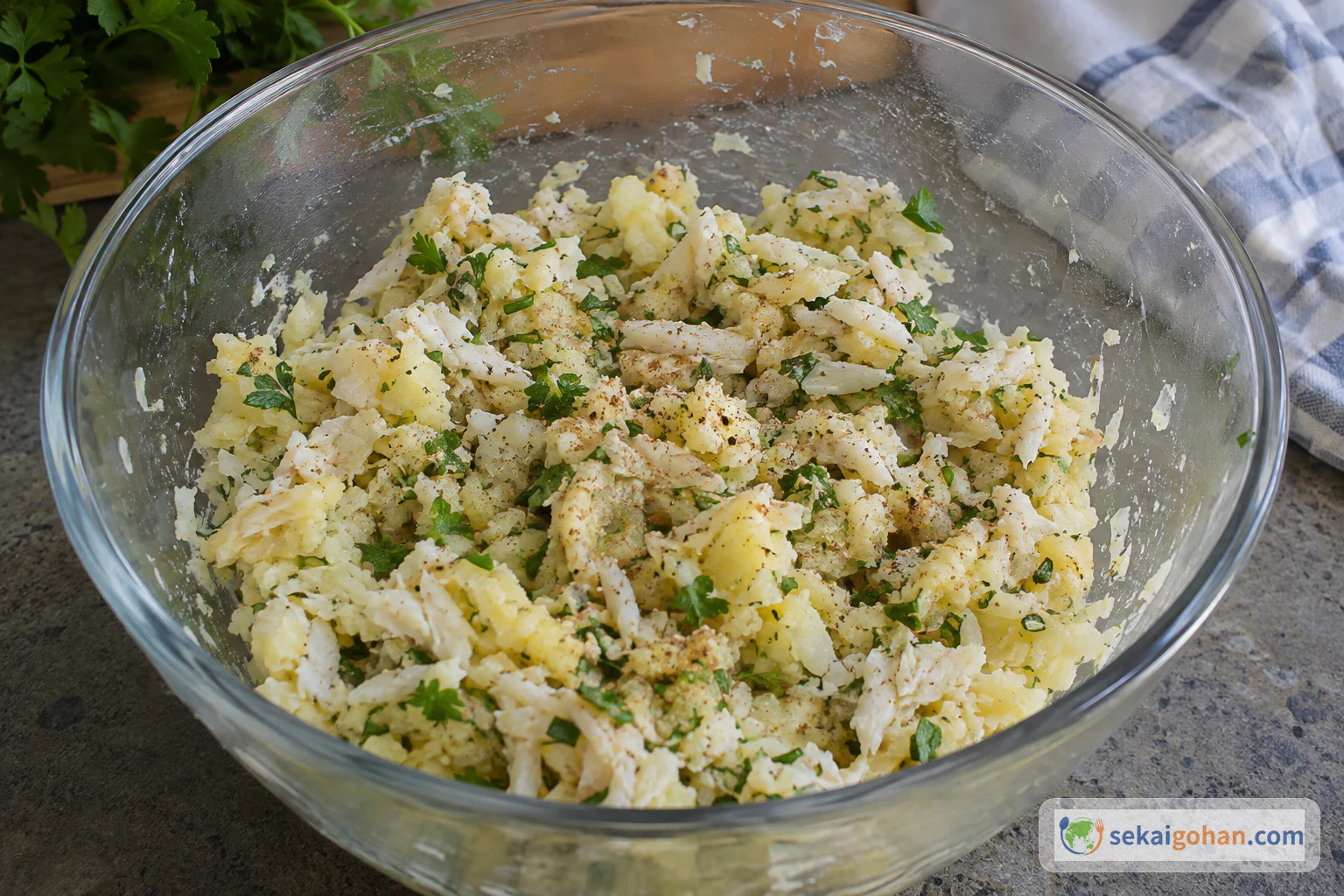
Start a day ahead. The cod spends 24 hours soaking in the refrigerator, and that is the long, hands-off part. On cooking day the work runs in a straight line: poach and flake the cod, boil and mash the potatoes, build the mixture, then shape, coat and fry. Heat the oven for keeping warm before the first batch goes into the oil.
Use a deep, heavy pot with plenty of room above the oil, keep children and pets away from the stove, and never leave the pot unattended. Lower the fritters in gently with a spoon so the oil does not splash, and let the oil cool completely in the pot before you move or discard it.
When It Goes Wrong
| What you see | Why | What to do |
|---|---|---|
| The mixture is sticky and hard to shape | The potatoes held too much water | Drain them thoroughly and give them their full rest before mashing; use floury potatoes next time |
| The fritters taste harsh and salty | The cod kept too much salt | Change the water through the whole soak, taste before adding salt to the mixture, and serve the fritters in small portions |
| The crust is greasy and pale | The oil was too cool | Bring it back to 355°F (180°C) and fry fewer fritters at once |
| Fritters crack or fall apart in the oil | Crowding dropped the oil temperature, or the coating had gaps | Fry no more than six at a time and coat every ball evenly in egg and crumbs |
| The inside is dense and heavy | The whipped whites deflated | Fold gently and stop as soon as the streaks disappear |
Serving, Variations and Storage
At the table
Bolinhos are finger food. Pile them on a plate with the small dish of rose sauce in the middle and let people help themselves with a drink in hand, the way they go around at a Brazilian bar or party. Lemon wedges are a simple alternative to the sauce. For a sit-down meal, serve them the Portuguese way, with rice, a salad and a bowl of olives.
Variations
- Cassava mixture: Some Brazilian households mix cassava (aipim) into the dough, chill the shaped fritters in the freezer for 20 minutes and fry them without breadcrumbs. The outside turns crisp straight from the dough and the inside gets a chewier, denser body.
- A spoonful of flour: Another home style binds the mixture with 1 tbsp of wheat flour. The fritters hold their shape more firmly and come out a little less airy.
- Lemon, olive oil or mayonnaise: Drizzle the fritters with olive oil and lemon or serve them with a mayonnaise-style sauce. The sharper, richer dip gives a different finish from the sweet, creamy rose sauce.
Freezing and reheating
Fry the fritters, drain them and let them cool, then pack them in an airtight container and freeze for up to 1 month. To serve, let them stand at room temperature for 15 minutes. Spread them on a parchment-lined baking sheet and reheat at 390°F (200°C) for about 12 minutes, until the crust is crisp again.
Frequently asked questions
Can I bake them instead of frying?
Yes. Bake on a lined sheet at 390°F (200°C) for about 25 minutes, turning them halfway so both sides brown. The result is a lighter fritter with a drier crust than deep-frying gives.
How do I know the cod has lost enough salt?
Salt cod varies from one product to the next, so the fish itself is the guide. Taste a flake after poaching. If it is still sharply salty, hold back the salt in the mixture and next time give the soak plenty of water changes.
Can I use cilantro instead of parsley?
Yes, cilantro is the other classic herb here, at the same amount. Choose one or the other rather than both. Cilantro gives the fritters a brighter, more fragrant taste, while parsley stays milder and lets the cod lead.