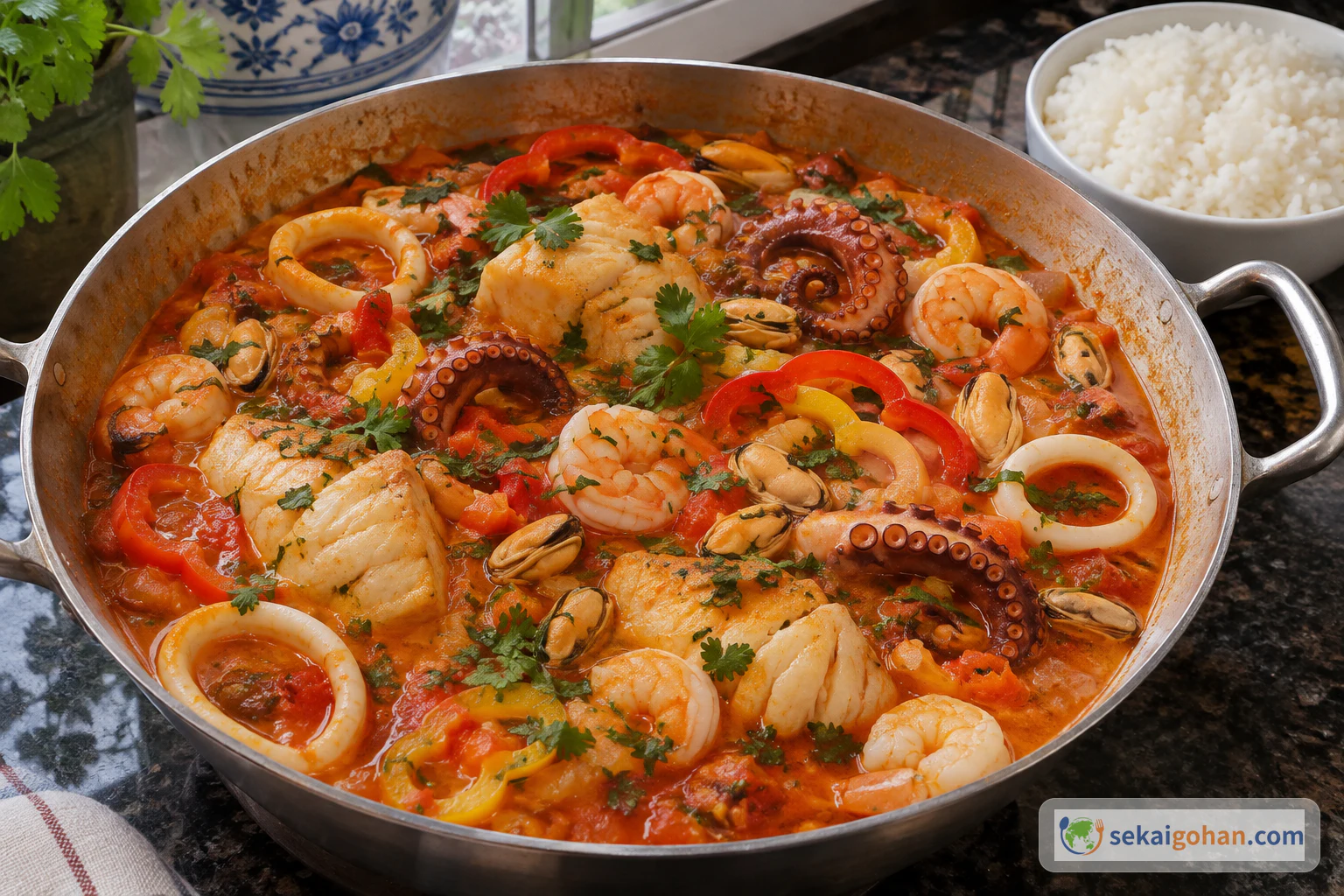
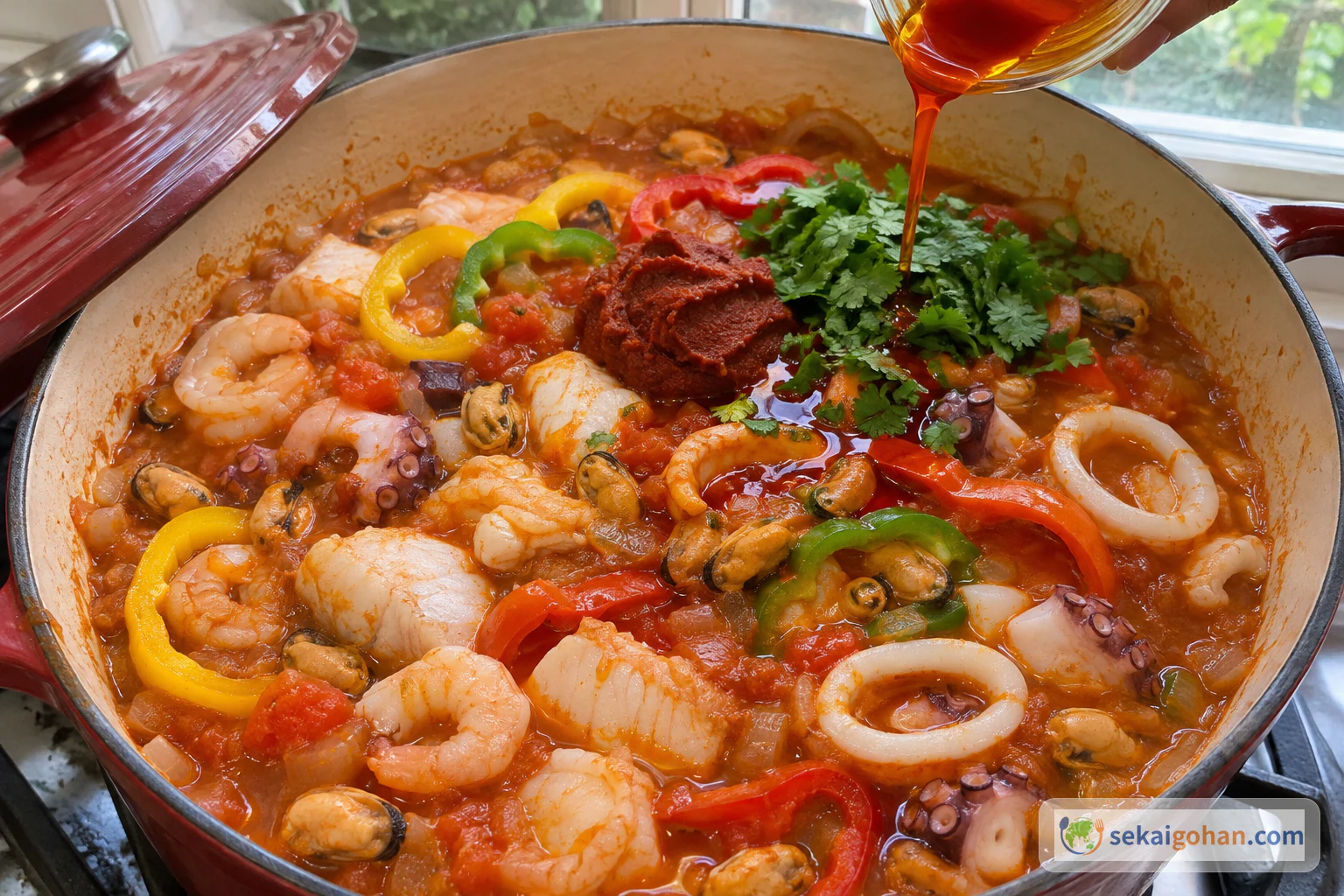
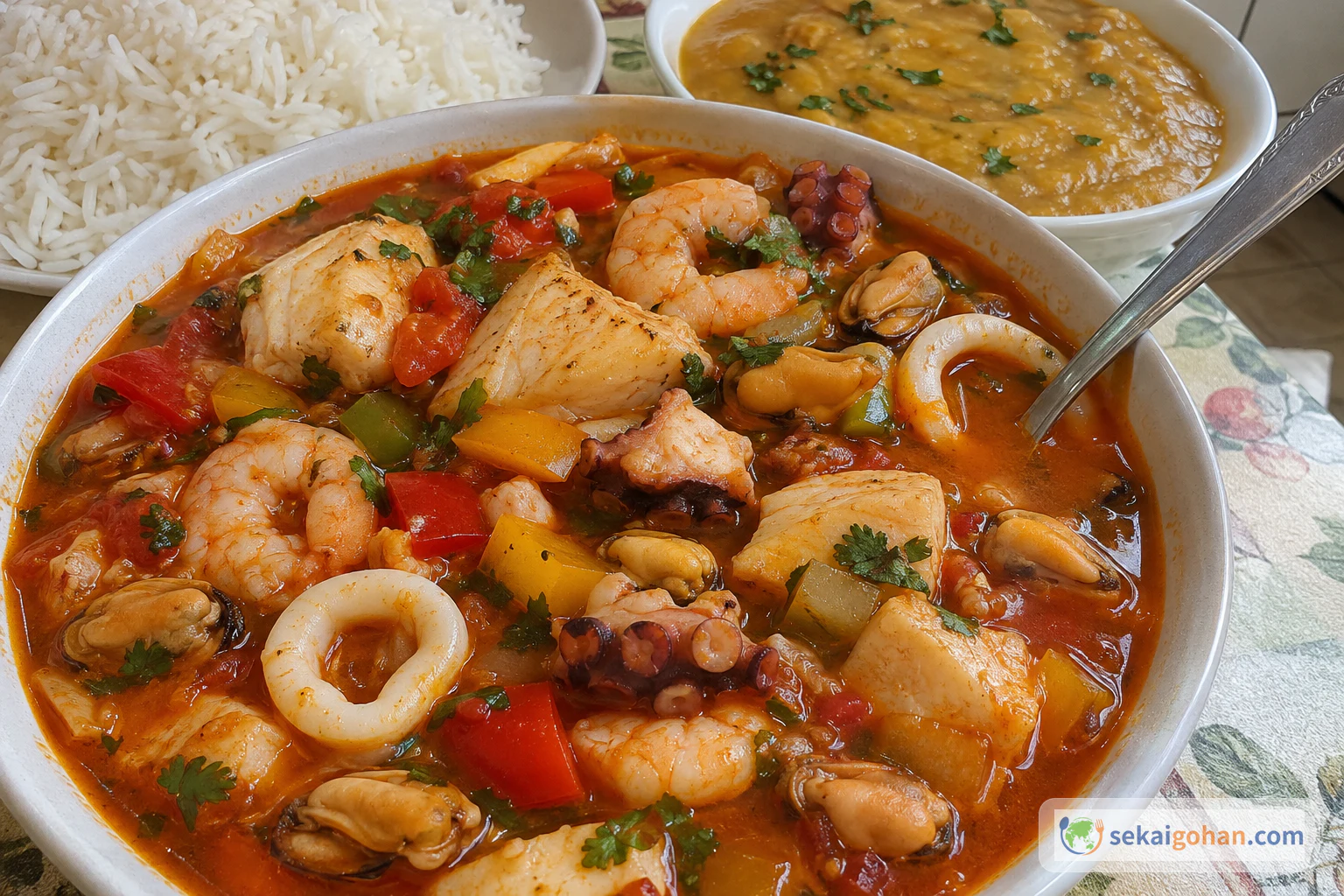
When the lid comes off for the last time, the broth has turned a deep red-orange. Dendê oil streaks through the tomato, rings of yellow, red and green pepper are just starting to slump, and chopped coriander scents the steam. Underneath sit big pieces of white fish, curled shrimp, mussel meat, octopus and squid, cooked mostly in the liquid they gave up themselves. Caldeirada is a fishermen's stew from Portugal and Galicia that is widely cooked in Brazil. This Brazilian home pot tastes of the sea first, then of sweet peppers and bright tomato, with the color and distinctive flavor of red palm oil over everything, and it goes to the table hot with white rice and pirão.
One Name, a Coast and a River
The stew began with the fishermen of Portugal and Galicia. In Portugal, caldeirada is a plain stew of seafood and vegetables, and one Portuguese-style recipe is built on olive oil, vinho verde and fish stock. The Brazilian pot here keeps the core idea of seafood layered with vegetables. The wine and olive oil give way to dendê, the red palm oil of Brazilian cooking, and to a generous fistful of coriander.
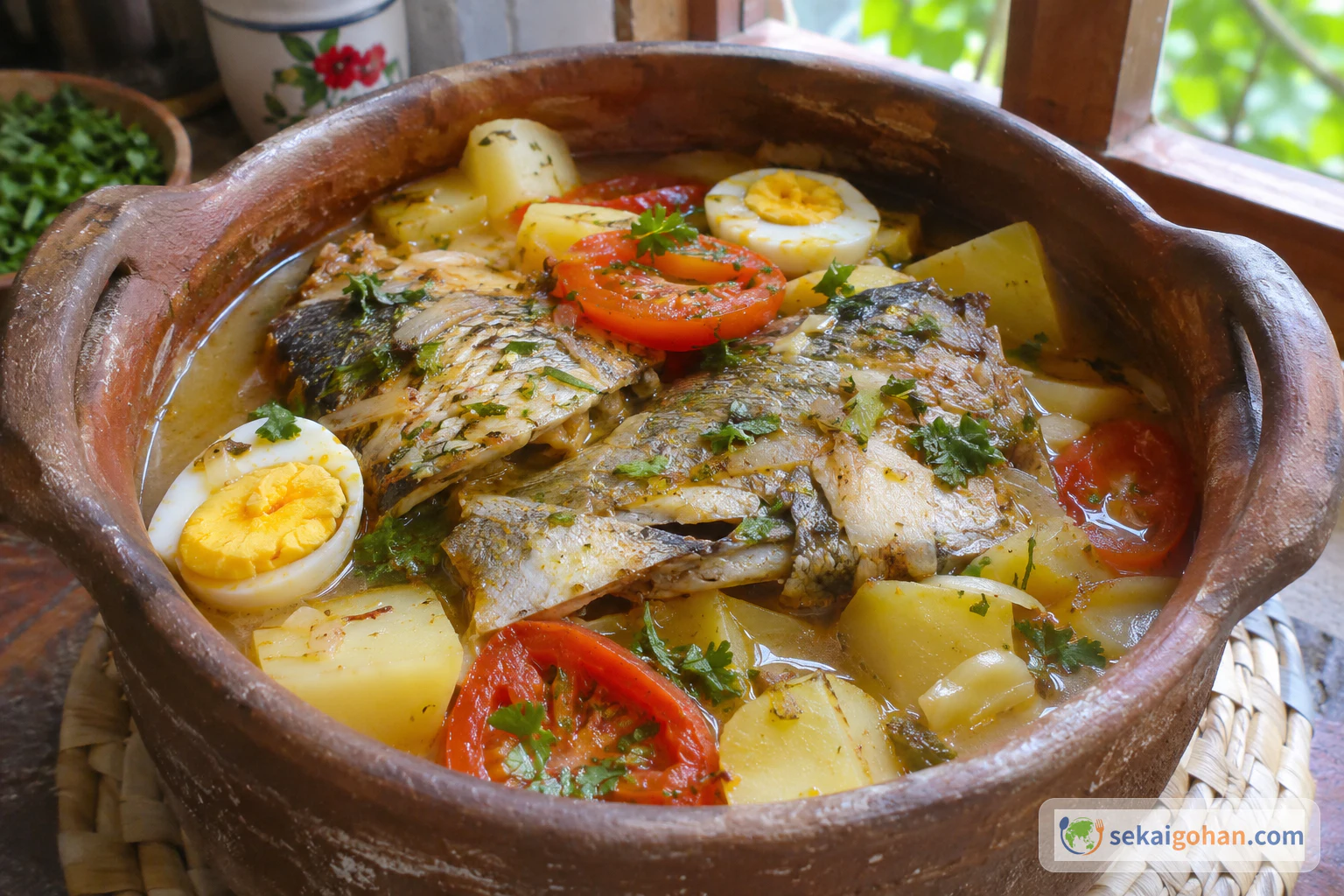
In Brazil the name stretches across very different waters. Along the coast, home cooks make seafood versions like this one, with mussels, shrimp, octopus, squid and white fish, served with fish pirão and white rice. In the Amazon, caldeirada means freshwater fish. Tucunaré is simmered with boiled eggs and potatoes, and the pot comes with pirão made from the fish broth, plus rice and farinha. Tambaqui is cooked in a clay pot with water, onion, cheiro-verde, pimenta-de-cheiro, colorau and potatoes, then served with tomato slices and boiled egg. Some cooks simmer tambaqui or tucunaré in coconut milk instead. In Brazil, the dish is also described as a fragrant chowder of river fish and coriander.
Its closest neighbour on the Brazilian table is moqueca. The two share dendê, coriander and seafood, but moqueca is cooked with coconut milk. This caldeirada uses no coconut milk. It is a vegetable stew of tomato, peppers and onion, so it tastes brighter and sharper, and the peppers carry the sweetness that coconut gives a moqueca. For more of the country's cooking, browse the dishes of Brazil.
In Brazil, "caldeirada" covers both seafood pots and river-fish pots of tambaqui or tucunaré. The river pots often carry potatoes and boiled eggs. The seafood pot here keeps to fish, shellfish, tomato and peppers.
Ingredients (serves 6)
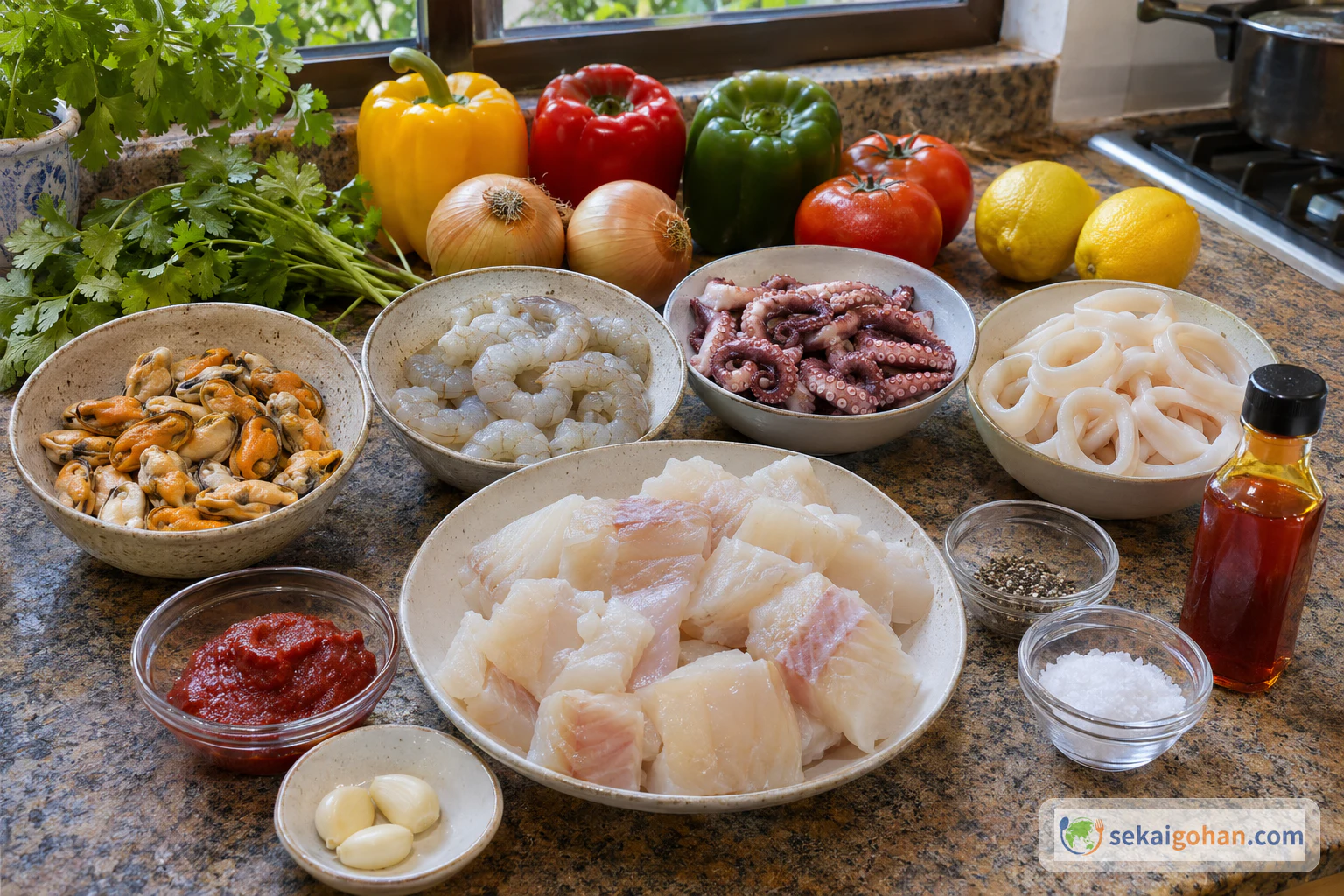
Cut the white fish into large chunks. Big pieces hold together while the stew simmers around them; small ones break apart and cloud the broth.
This stew contains fish, crustaceans (shrimp) and molluscs (mussels, octopus and squid). Check the labels on frozen seafood and tomato paste for any other allergens.
Equipment
- A wide, deep pot with a lid, or an earthenware pot that can go on the stove
- A bowl for marinating
- A knife and cutting board
- A citrus squeezer or a fork for juicing the lemons
- A wooden spoon for gentle stirring
Shopping and Swaps
The two things that make this pot taste Brazilian are dendê and coriander. Red palm oil can be hard to find outside Brazil. You can leave it out, but the stew loses its red-gold color and the flavor changes noticeably; what remains is a pleasant tomato seafood stew rather than a Brazilian one. The exact mix of shellfish matters much less, and frozen seafood works well throughout.
| Ingredient | Swap that works | What it changes |
|---|---|---|
| Shelled mussel meat | Frozen shelled mussels, or shelled clam meat | Clams give a lighter, sweeter broth |
| Peeled shrimp | Any peeled shrimp, fresh or frozen | Little change |
| Octopus tentacles | Boiled octopus from the fish counter | Easier to find, and the texture holds well |
| Squid rings | Frozen squid rings | Little change |
| Pescada (a white fish of the drum family) | Cod or another white fish | Choose fillets thick enough to cut into large pieces |
| Lemons | Limes | A sharper, more fragrant marinade |
| Coriander | Scallions, if you dislike coriander | A different aroma altogether; the stew moves away from Brazil |
| Separate seafood | A frozen shelled seafood mix | One bag replaces four; pick out the octopus and squid if you can, so they go in later |
Method
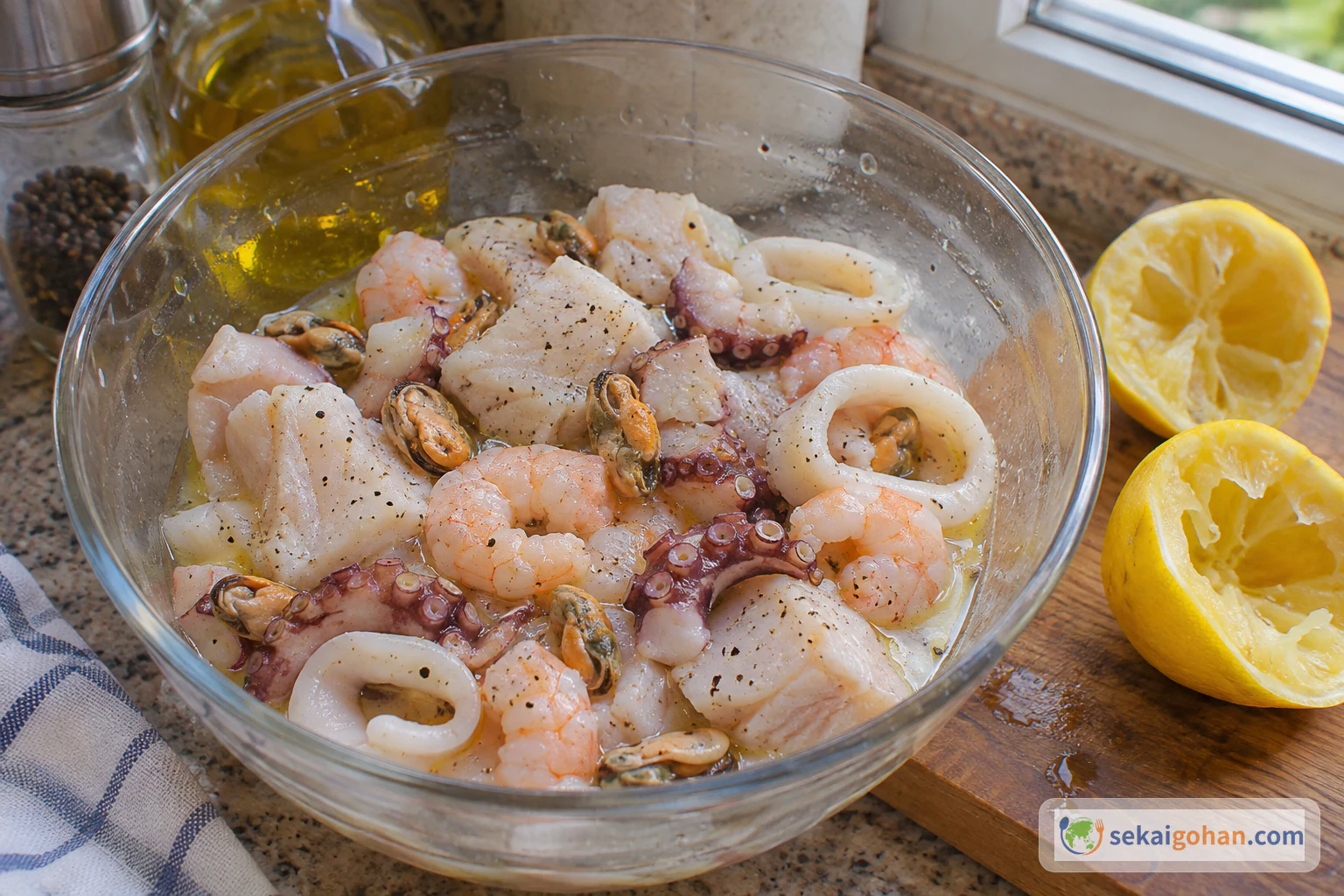
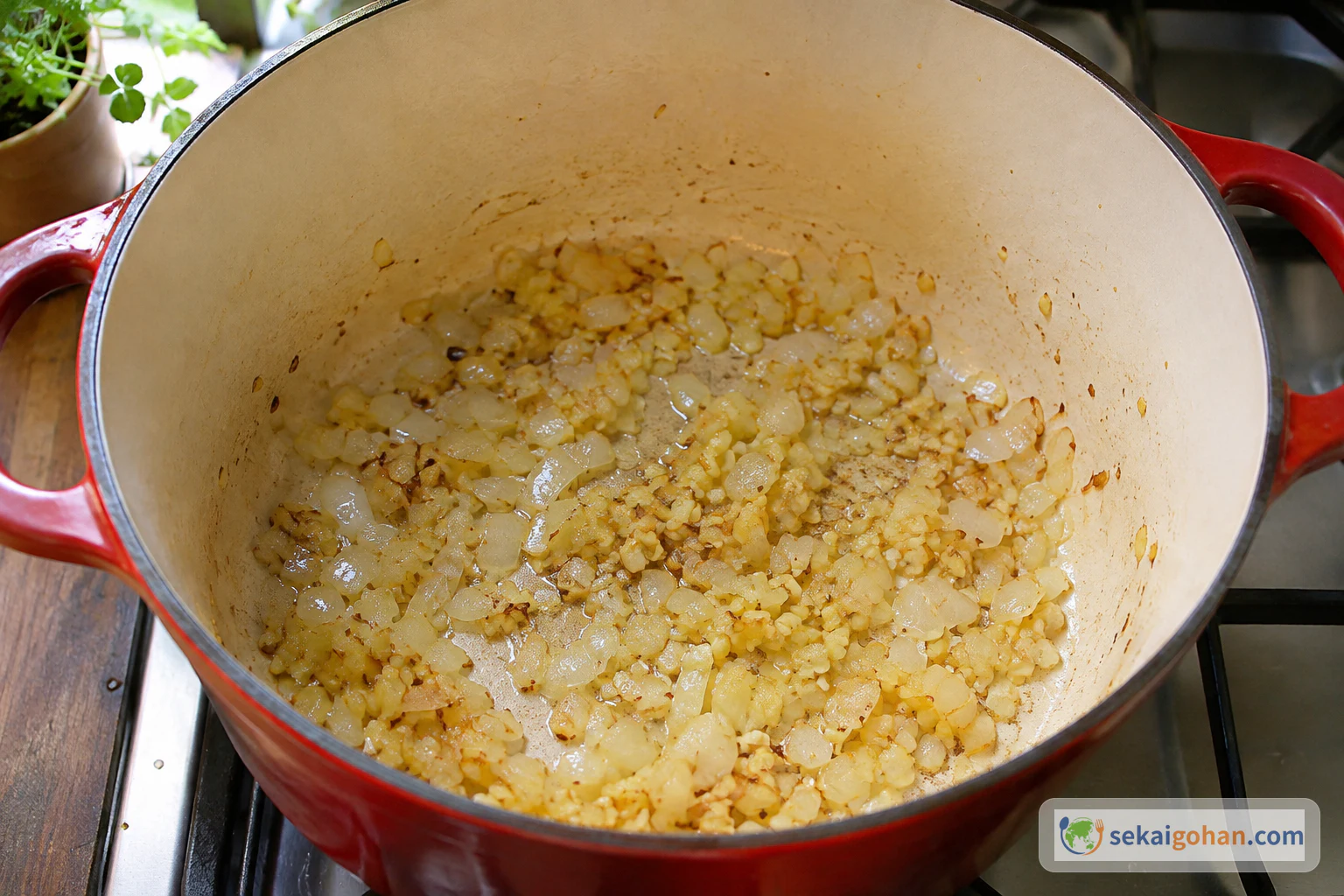
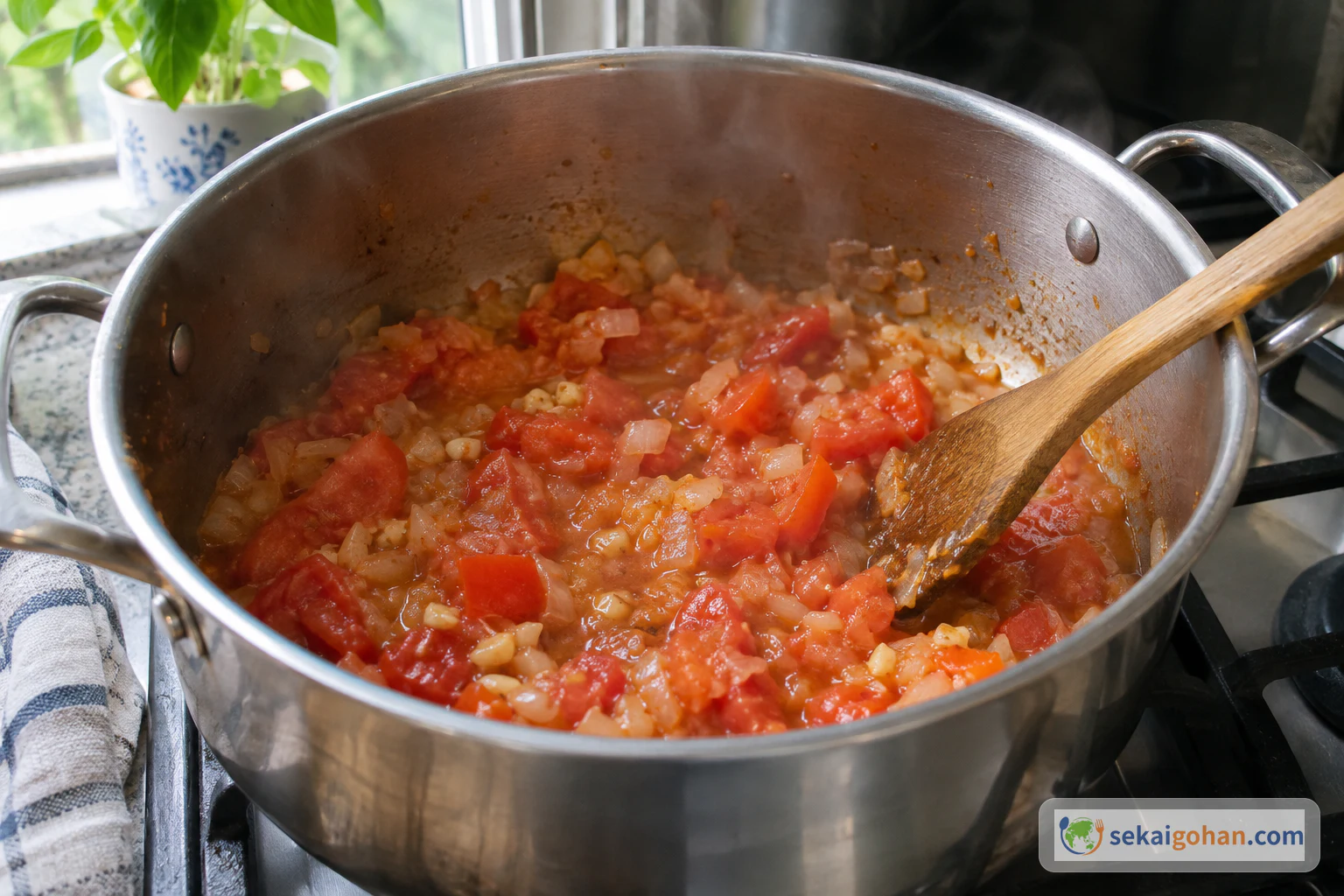
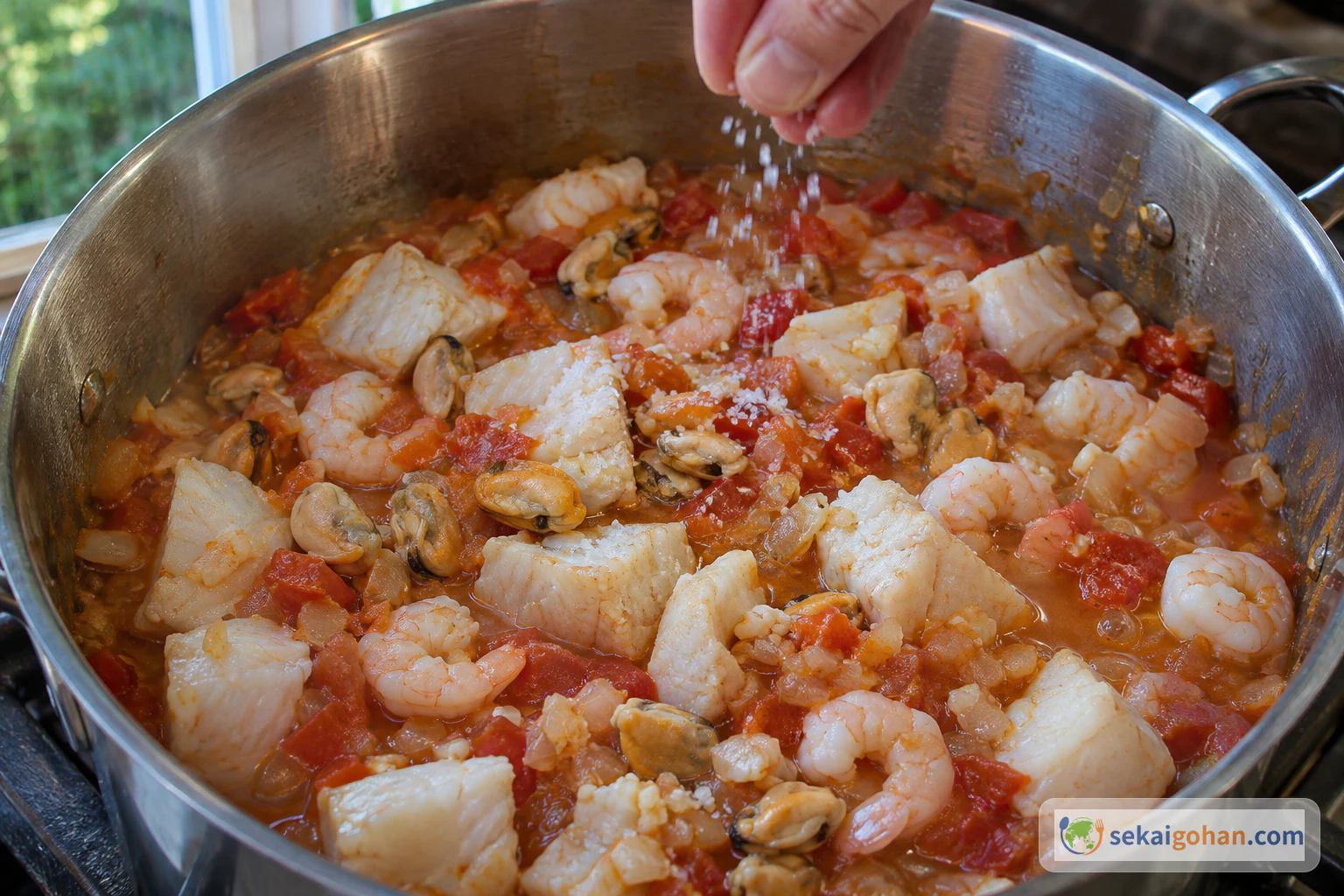
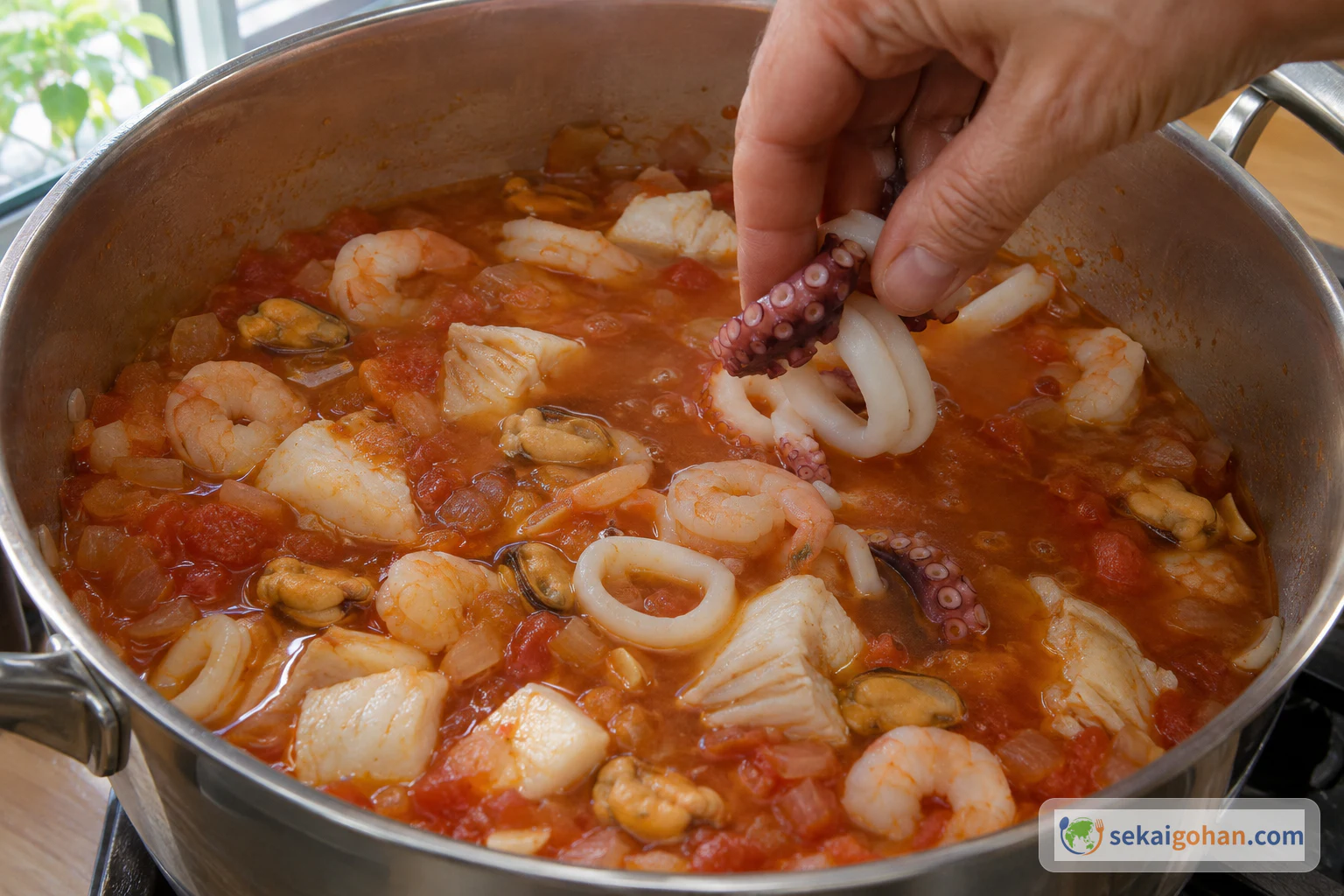
The marinade comes first, so get the seafood into the lemon juice before you chop anything else. While it sits for 30 minutes, chop the onion, tomatoes and coriander, crush the garlic and slice the peppers. After that the pot needs you at every stage, but each stage is short. The seafood goes in in a fixed order: mussels, shrimp and fish first, octopus and squid ten minutes later, peppers and dendê last under the lid.
Mussels, shrimp and fish go in first, and the octopus and squid only after 10 minutes. The peppers and dendê come last, under the lid for about 10 minutes. Following that order means nothing overcooks while the rest catches up.
Most of the broth comes from the seafood and tomatoes themselves. Add water only when the liquid fails to cover the pieces, and only enough to just cover them; extra water dilutes the flavor.
When It Goes Wrong
| What you see | Why | What to do |
|---|---|---|
| The fish has broken into flakes | It cooked too long, was cut small, or was stirred hard | Cut the fish into large pieces, move it gently once, and serve as soon as the peppers soften |
| Octopus and squid are tough and rubbery | They stayed on the heat too long | Add them only at step 5, take the pot off once the peppers are just soft, and serve at once |
| The bottom catches before the seafood goes in | The onion and tomato base dried out | Stir more often in steps 2 and 3, and make sure the tomato has softened into a moist base |
| The seafood sits half out of the liquid | The seafood released too little juice | Add water a little at a time in step 5 until the liquid just covers the pieces |
| The broth tastes flat and looks pale | The dendê was left out, or the stew needs more seasoning | Taste and adjust the salt and black pepper; dendê brings back the color and depth |
Serving, Variations and Leftovers
At the table
Caldeirada comes to the table hot, with white rice and pirão. Fish pirão is a thick, smooth accompaniment made with fish broth. Spoon some of each into your bowl and let the red broth soak in. Amazon-style tables also put out farinha for sprinkling. Pirão is optional; a bowl of white rice on its own carries the stew perfectly well.
Variations
- River fish with potatoes and eggs. Replace the seafood with tambaqui or tucunaré and add potatoes and boiled eggs, with tomato slices on top. The broth turns lighter and earthier, and the pot moves toward the Amazon versions.
- With coconut milk. Simmering the fish in coconut milk rounds and softens the broth. The stew drifts toward moqueca and loses the sharp tomato edge.
- Toward Portugal. Building the pot on olive oil, vinho verde and fish stock, without dendê, gives a paler, wine-scented stew closer to the Portuguese pots.
Leftovers
Caldeirada is best eaten the day it is made. Cool leftovers, refrigerate them promptly in a covered container, and reheat until they are steaming hot all the way through.
Every piece of seafood in this stew is eaten cooked, never raw. Cook until the fish and shellfish are hot and cooked through to the center before serving. If you swap in shell-on mussels or clams, discard any that stay closed after cooking.
Frequently asked questions
Can I use a frozen seafood mix instead of buying each item?
Yes. A shelled frozen mix stands in well for the mussels, shrimp, octopus and squid. Keep the white fish separate and cut it into large pieces. If the mix lets you, pick out the octopus and squid so they go in at step 5 with the others following the usual order.
What if I cannot make pirão?
Serve the stew with white long-grain rice alone. Pirão is a welcome extra, but the rice already soaks up the broth, and the meal is complete without it.
Can I cook caldeirada in a clay pot?
Yes, an earthenware pot that is safe for the stove suits it well; the Amazon tambaqui version is cooked in one. Use a wide one so the seafood sits in a shallow layer. Follow the pot maker's guidance for heating it on the stove.