


It Starts with the Sound of Mashing Avocado: The Queen of Arepas
In the evening kitchen you shred boiled chicken breast with a fork. Into the still-warm meat go ripe avocado, lime, and mayonnaise, and the bowl suddenly turns bright green. Then you split a freshly baked arepa and pack it full. When the toasty scent of corn meets the cool creaminess of chicken and avocado, you know this is neither a sandwich nor a taco. It is a Venezuelan meal.
Reina pepiada is a Venezuelan standard: an arepa stuffed with chicken and avocado salad. "Reina" means queen, and "pepiada" is a Venezuelan colloquial word said to describe a curvaceous, attractive woman. The commonly told story is that Susana Duijm, born in Venezuela, was crowned Miss World in 1955, and an arepa shop in Caracas celebrated her by spreading the name. The details vary by account, but it is certain that the filling is so beloved nationally that "queen" made it into the name.

The crux when you make it at home is not the filling but the flour for the arepa. Cachapa is a sweet batter made from crushed kernel corn, but arepas are made from masarepa, a precooked corn flour. Confusing it with cornmeal or Mexican masa harina changes both how it holds together and how it smells. This article centers on the basic method of baking with masarepa, and also covers in advance the places a home cook gets stuck: a substitute for days you can't get it, a shortcut with store-bought cooked chicken, and a way out when the avocado is hard.
If you're eating your way through Venezuelan food, learn the base arepa first, then move to the sweet-corn cachapa and the national dish pabellón criollo, and the outline of Venezuela's "corn, beans, meat, and avocado" comes into view.
In Japanese you'll see several spellings of the name. This article uses the one closest to the Spanish reina pepiada, which is also easy to read.
The Story of the Dish: Miss World and a Caracas Arepa Shop

The origin of reina pepiada has a glamour you wouldn't expect from a dish name. In the commonly told story, after Susana Duijm won the Miss World crown in 1955, an arepa shop in Caracas honored her by naming a new filling "the queen." The white-and-green filling of chicken, avocado, and mayonnaise probably suited the festive mood of the time perfectly.
However, we don't write this origin as "established history." Venezuelan food sites abroad and Spanish-language food articles differ a little on the name of the shop, who made it, and the early formula. What they share is the flow: the arepa culture of mid-20th-century Caracas, Susana Duijm's Miss World win, and the chicken-and-avocado filling becoming a national favorite.
The arepa itself is a round corn bread rooted widely in Venezuela and Colombia. In Venezuela the style of splitting it open and stuffing it is especially developed, and besides reina pepiada there are many fillings that can be ordered by name alone: the "domino" with black beans and white cheese, the "pelúa" with shredded stewed beef and yellow cheese, the "catira" with chicken and yellow cheese, and a pabellón-style one stuffed with elements of pabellón criollo.
What's interesting is that reina pepiada is a "cold filling." The arepa is hot, crisp outside, and soft inside. Cold chicken and avocado go into it, so there is a temperature contrast. It has the same approachable feel as putting potato salad into warm bread, but the scent of corn and the green richness of avocado turn it instantly into a South American flavor.
If you fill it sparingly, the way you would a sandwich, you won't get the satisfaction of reina pepiada. Packing in enough chicken and avocado that the mouth of the arepa opens slightly is closer to how it's eaten locally.
Ingredients: Masarepa and Ripe Avocado at the Core

This makes 4 arepas with a generous amount of filling, for 4 servings. You can divide into 6 for smaller ones. Reina pepiada tastes better with more filling, so don't make the arepas too thin.
This dish uses chicken and mayonnaise, which may contain egg. Masarepa is corn flour, but imported products differ by production line and labeling. If you have a wheat or egg allergy, always check the label when you buy.
Reina pepiada is quite easy to make from ordinary groceries as long as you can get masarepa. The two things that are easy to get wrong when shopping are the flour and the avocado. Getting them wrong changes the texture, so check them first.
Ripe avocado makes the creaminess of the filling. On a day when you only have hard avocados, don't force it; letting them ripen at room temperature gives a steadier flavor. If you must make it today, make up for it with a little more mayonnaise and yogurt.
You can bake arepas in any skillet, but a heavy one is less likely to scorch and warms the middle more easily. If you want to avoid the failure of a charred surface and a floury center, it's worth paying a little attention to your pan.
Method: A Cold Filling in a Hot Arepa
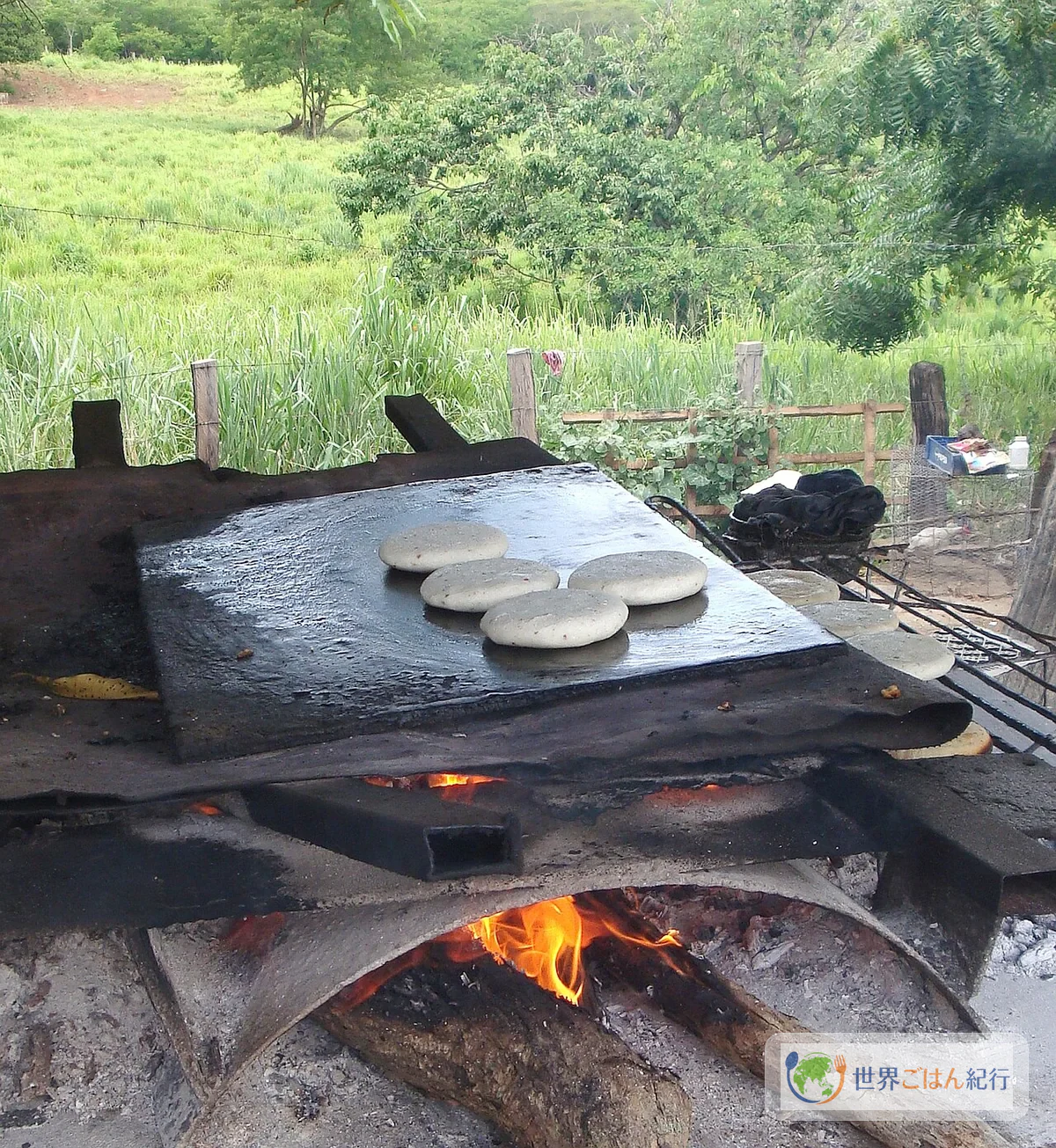
Reina pepiada works best when you separate baking the arepas from making the filling. Chill the filling briefly in the refrigerator so the flavors meld, and bake the arepas last so you split them fresh. The temperature contrast is what makes this dish pleasing.
Cook the chicken all the way through to the center. Don't leave the poached chicken and avocado filling at room temperature for long; refrigerate until just before eating. It is not suited to a summer lunch box.
Getting Close to the Real Thing in a Home Kitchen

Reina pepiada has no single correct set of ingredients. Even in Venezuelan homes, the amount of mayonnaise, whether peas go in, the herbs, and how the onion is cut all vary. At home it helps to separate what to protect from what you can swap.
| Question | Closer to local | Realistic at home | Judgment |
|---|---|---|---|
| Arepa flour | Masarepa, P.A.N. | Buy at a specialty grocery or online | Better not to substitute here |
| Chicken | Boiled chicken, shredded | Cooked chicken breast, rotisserie chicken | Shortcut is fine. Go light on salt |
| Avocado | Fully ripe, coarsely mashed | On a hard day, wait for it to ripen | Used hard, it won't come together |
| Citrus | Lime | Lemon | Acidity is a must. Without it, it's heavy |
| Herbs | Cilantro | Cilantro, Italian parsley | Reduce if you dislike it |
| Green peas | Some households include them | A little frozen | Optional, to taste |
I understand the temptation to substitute cornmeal. You can find it at the supermarket, and it is also corn. But ordinary cornmeal is hard-grained and not precooked. It also absorbs water at a different speed, so it is unlikely to give a soft dough like an arepa. Mexican masa harina is nixtamalized corn flour with a nice aroma, but that is also different from the masarepa for arepas.
The filling is quite flexible. If you use cooked chicken breast, choose plain and reduce the mayonnaise to 2 tbsp. Store-bought cooked chicken is salty, so don't add salt at the start. With rotisserie chicken, chopping a little of the skin into the mix adds toastiness, but because the fat gets stronger, increase the lime.
On days when the avocado is hard, the impression of the whole dish changes. Even diced, avocado that stays green and hard won't come together with the chicken. If you're in a hurry, you can heat small pieces in the microwave for just 10 seconds, but the aroma drops. We recommend pushing the dish to the next day. Reina pepiada is also a dish about "how to use up ripe avocados."
Troubleshooting: Avoiding Cracks, Floury Texture, and Wateriness

Problems with reina pepiada are easier to fix if you divide them into arepa side and filling side. For the arepa the main causes are moisture and cooking time; for the filling, avocado ripeness and salt.
| Problem | Cause | Fix |
|---|---|---|
| Arepa cracks | Not enough water, not rested | Add water 2 tsp at a time and rest 5 minutes |
| Floury inside | Too thick, only the surface was cooked | Cover and cook further over low heat |
| Surface too hard | Heat too high, too little oil | Start on medium and go to low in the second half |
| Filling is watery | Onion not drained, avocado overripe | Squeeze the onion and add more chicken |
| Flavor is blurry | Not enough acidity, afraid of salt | Add lime juice and salt a little at a time |
| Too salty | Salt in cooked chicken, too much mayonnaise | Loosen with avocado, unsalted chicken, or yogurt |
As a guide, the arepa dough should feel a bit softer than an earlobe and not stick to your hands. If the edge splits when shaping, it needs more water. If it spreads out slackly in the palm, there is too much water. Adding flour makes it firm quickly, so adjust by the teaspoon.
The key to cooking is not stopping once the surface is cooked. Even when the outside colors nicely, the inside may still be damp flour. Locally they cook slowly on a budare or griddle. In a home skillet, after browning both sides, cover and cook on low heat for extra time. Warming for a few minutes in a toaster oven also dries the outside and makes it easier to handle.
Season the filling so that it is delicious as a chicken and avocado salad on its own. The arepa is a lightly salted corn dough, so if the filling is bland the whole thing turns vague. But cooked chicken breast and store-bought roast chicken already contain salt, so don't add any at the start. It is safer to taste at the end.
If you split it early, too much steam escapes and the inside dries out. Wait just 1 minute after baking, and when it is hot enough to hold, split and fill. Eating at that pace preserves the contrast between hot arepa and cold filling.
Storage and Make-Ahead: Keep the Filling and Arepas Separate

Reina pepiada is best the moment you fill it. The arepa's heat loosens the filling slightly, and the corn aroma and avocado richness overlap. If you make ahead, always store the arepas and the filling separately.
Refrigerate the filling in an airtight container and eat it by the end of the next day. Avocado discolors when exposed to air, so press plastic wrap against the surface and add a bit more lime juice to help keep the color. Still, this isn't a dish where discoloration can be stopped completely. For guests, making it the same day is safest.
Once cooled, wrap baked arepas individually in plastic wrap and refrigerate for about 2 days. Reheating in the microwave alone makes them too soft, so after 20 seconds in the microwave, restore the surface in a skillet or toaster. To freeze, keep them unfilled, with no cheese or filling, for about a week. Thaw naturally and rebake, and they are easier to split.
Leftover filling is also good on toast the next morning. That is purely a way to use it up, though. If you want to keep the outline of a Venezuelan dish, it's better to rebake small arepas and stuff them again. Keeping a bag of arepa flour on hand makes leftovers like these suddenly fun.
Be careful in summer or when carrying it. A filling of chicken, avocado, and mayonnaise isn't suited to being left at room temperature. For a picnic, bake only the arepas to bring, carry the filling separately in a cooler, and fill just before eating.
Variations

For a lighter reina pepiada, cut the mayonnaise to 1 tbsp and add 2 tbsp Greek yogurt. The acidity increases, so adjust the lime juice starting from 1 tbsp. Leaving mayonnaise out entirely moves away from the local mellowness, but it is easier to eat for a weekday lunch.
The rotisserie chicken version uses a store-bought whole chicken or deli chicken. Chopping some of the savory skin into it gives more richness than boiled chicken. Salt and fat are stronger, so increase the avocado and squeeze more lime. On a busy evening, this shortcut is the most realistic.
For a classic style with green peas, quickly thaw frozen peas in hot water and add them. Overseas recipes differ on whether peas go in, but adding them gives a slightly old-fashioned salad feel. If you don't like them, there's no need to force them.
For a version with a little heat, finely chop just a bit of jalapeño or green chili. Venezuelan cooking doesn't always push strong chili the way Mexican cooking does. Raising the aroma with lime and cilantro rather than heat keeps more of the reina pepiada character.
Comparing it with the pabellón-style is fun too. Reina pepiada is cold chicken and avocado; pabellón criollo is the warm combination of beef, black beans, and plantain. Even in the same arepa, the filling completely changes the impression of the meal. If you like South American meat dishes, a small amount of leftover meat from ropa vieja (in Japanese) or lomo saltado stuffed in works too, as a home staff meal.
For a menu, make reina pepiada the star and add a small sour side plate to make it easier to eat. With the mellow mouthfeel from avocado and mayonnaise, a tomato and onion salad, ceviche (in Japanese) with extra lime, or a light black bean soup works well. Rather than putting a heavy meat dish beside it, adding acidity and beans that set off the cold filling gives a better balance for a Venezuelan lunch.
Background: Its Place in Arepa Culture

Venezuelan arepa culture is a little like Japan's onigiri or sandwiches. You can eat it in the morning or as a late-night snack. Change the filling and it can be a light bite or a staple. But because of the corn aroma of masarepa and the hand-held form, no matter how much the fillings change, it all holds together as "arepa."
Reina pepiada is a filling that travels especially well. The reason is plain: the ingredients cross borders easily. Chicken, avocado, mayonnaise, lime. Even people living outside Venezuela can get them fairly easily and recreate it at home. Reina pepiada is a standard on the menus of Venezuelan restaurants in Spain and North America too.
On the other hand, the flour for the arepa itself is hard to replace. That is the pitfall for readers elsewhere. Looking only at the filling, it's a chicken avocado salad, so you're tempted to substitute sandwich bread or pita. It would still be tasty, but it is a different dish. It is because it is wrapped in a round corn bread that the fat of the chicken and avocado feels lighter and the satisfaction of eating it by hand arises.
If you see South American cooking only as hearty meat, a dish like reina pepiada may be a little surprising. Unlike heavy plates such as churrasco (in Japanese) and feijoada, this is eaten for its cold filling and the lightness of corn. But in the sense of how easily it enters a home kitchen, it is quite strong. On a day when avocados are cheap, get chicken breast and masarepa, and the Venezuelan table is a lot closer.
FAQ

Can I use cornmeal if I don't have masarepa?
The texture won't be the same. Masarepa is precooked corn flour and holds together quickly after absorbing water. Ordinary cornmeal is hard-grained, and even baked it is unlikely to give the soft feel of an arepa. For the first time, getting masarepa such as P.A.N. from online or a specialty grocery is the safe route.
Can I make it with cooked chicken breast?
Yes. Shred 300 g of plain cooked chicken finely, and go light on mayonnaise and salt. Store-bought products contain salt, so taste at the end before adding any. It is handy when you're short on time, but boiled chicken gives a moister result.
What if the avocado is hard?
If you can, move the cooking day. Hard avocado doesn't blend with chicken and tends to taste green and bitter. If you must use it, cut it small and bind it with a little extra mayonnaise and yogurt. The smoothness of reina pepiada will be weaker, though.
Can I fry the arepas?
Fried arepas exist, but for this recipe we recommend pan-baking. Because the reina pepiada filling already has fat from mayonnaise and avocado, frying tends to make the whole thing heavy. Toasting the surface and finishing in a toaster if needed is easier to eat.
Can I make it ahead for lunch the next day?
Yes, if you keep the arepas and filling separate. Stored filled, the arepa absorbs moisture and softens. As a guide, the filling keeps in the refrigerator through the next day and the arepas about 2 days; reheat the arepas just before eating, then fill.
Wrapping Up: Don't Miss the Flour and the Avocado, and You Can Get Close at Home
Reina pepiada is a much easier Venezuelan dish than it looks. It uses no difficult spices. What matters is baking the arepas with masarepa, using ripe avocado, shredding the chicken finely, and finishing the flavor with lime at the end. With those four in place, you get quite close in a home kitchen.
On the first shopping trip, only finding masarepa takes a bit of effort. But one bag extends to the basic arepa, the sweet cachapa, and arepas with different fillings. It is a flour that turns South American cooking from a special dish you make once in a while into one you can bake on a weekend lunchtime.
Next, try it side by side with pabellón criollo, made with black beans and shredded beef. The cold green of reina pepiada, the warm brown of pabellón, the sweet yellow of cachapa. Venezuelan food changes its expression this much on top of corn.
Sources
- P.A.N. official, "Pre-cooked White Corn Meal": used to check product information and uses for masarepa
- Goya Foods, "Arepa with Chicken and Avocado": used to check the structure of the chicken-avocado filling
- Laylita's Recipes, "Chicken Avocado Arepa": used to check a Venezuelan home-style recipe
- ArepasDelGringo, "Arepa Reina Pepiada": used to check the name, filling, and home-style method
- Venezuelan Profiles, "Arepas Reina Pepiada": used to check the Susana Duijm origin story and Spanish-language explanations


