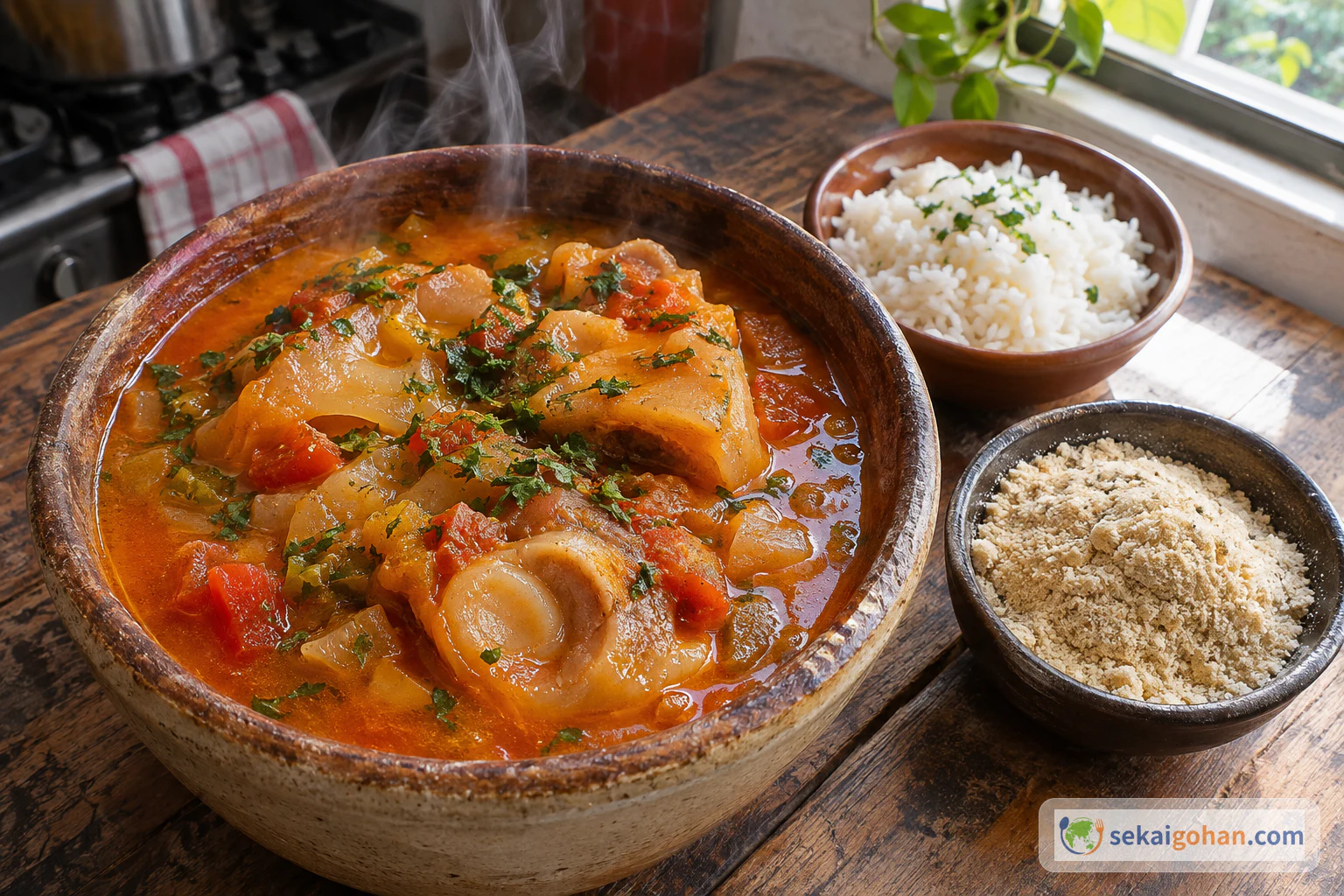
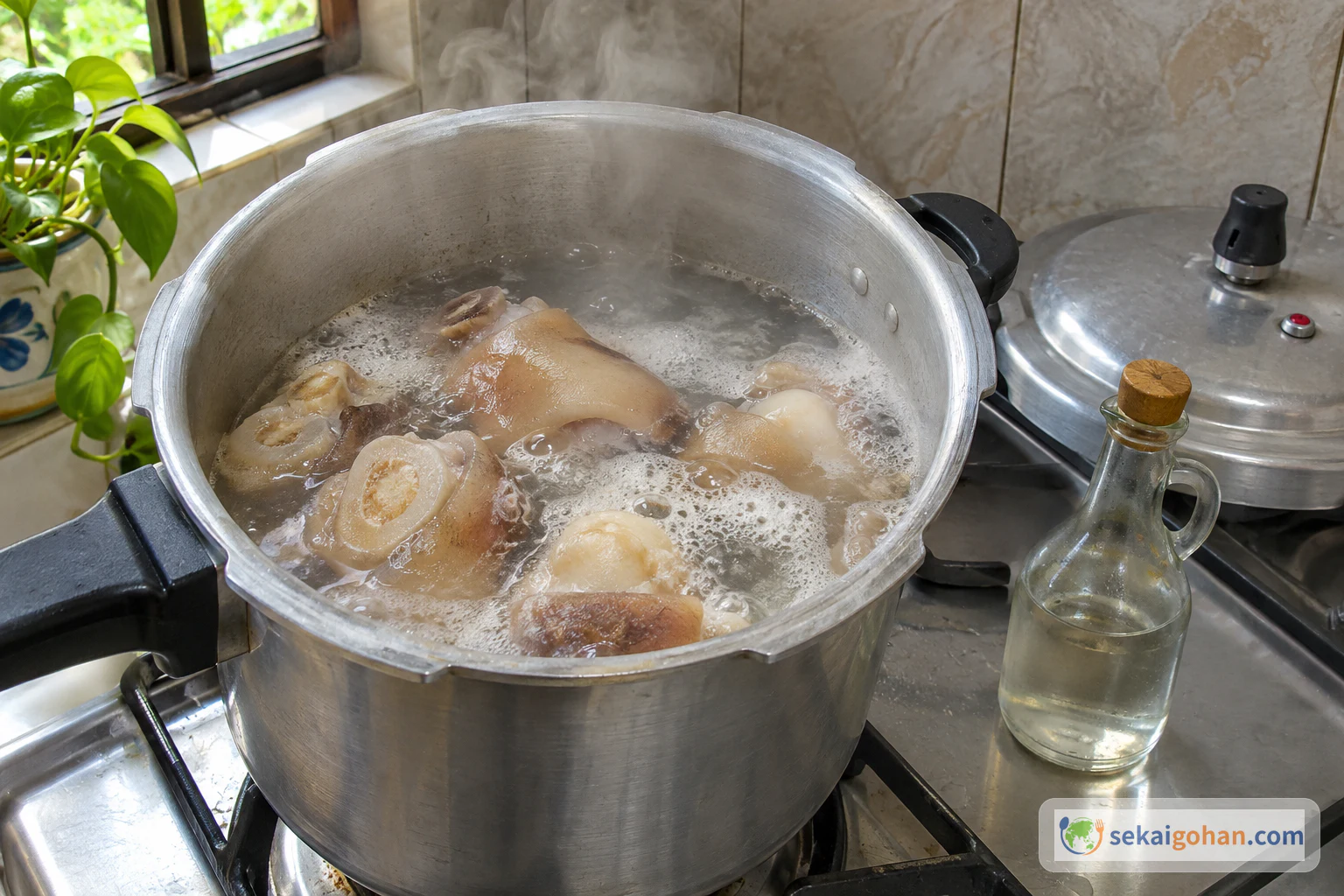
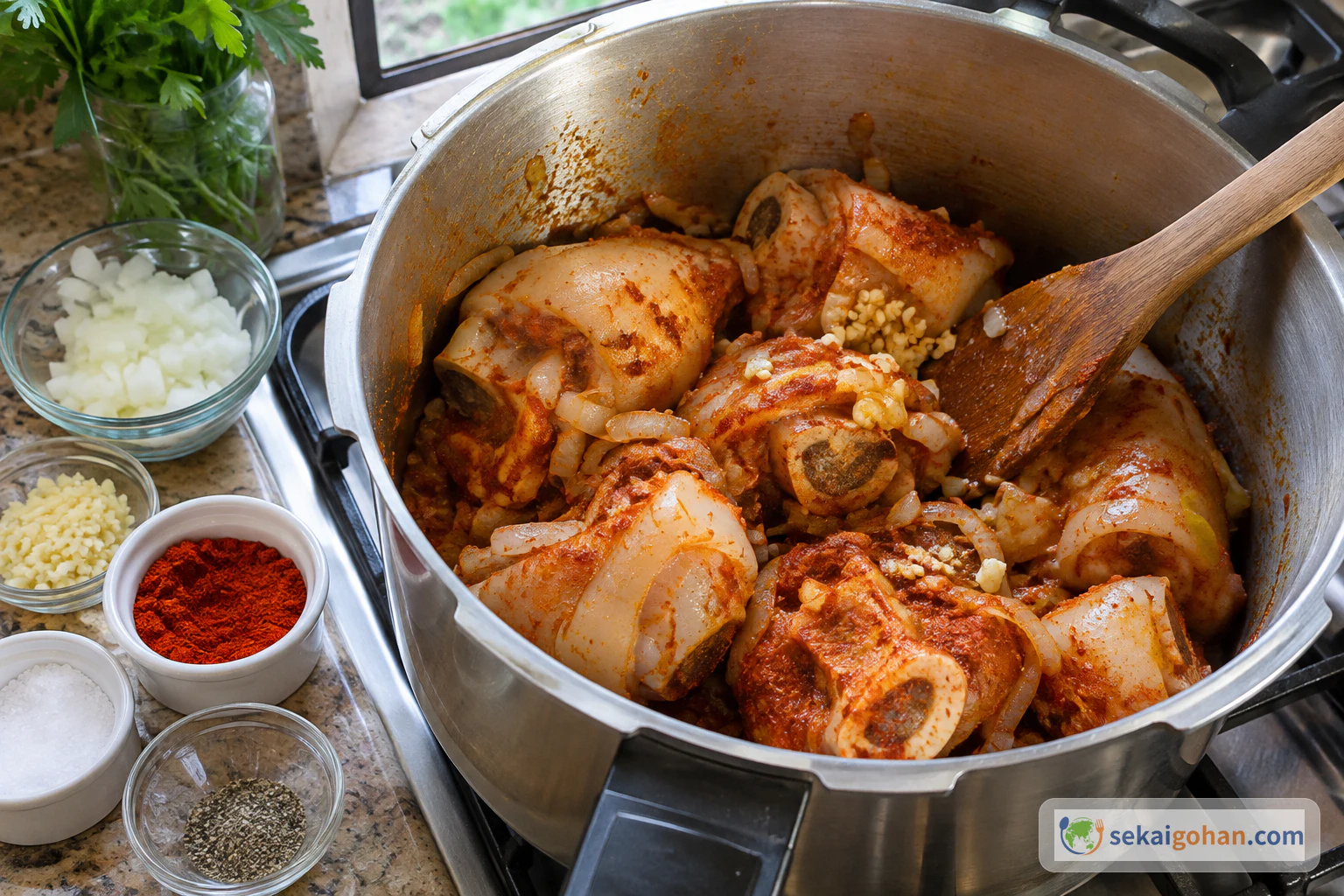
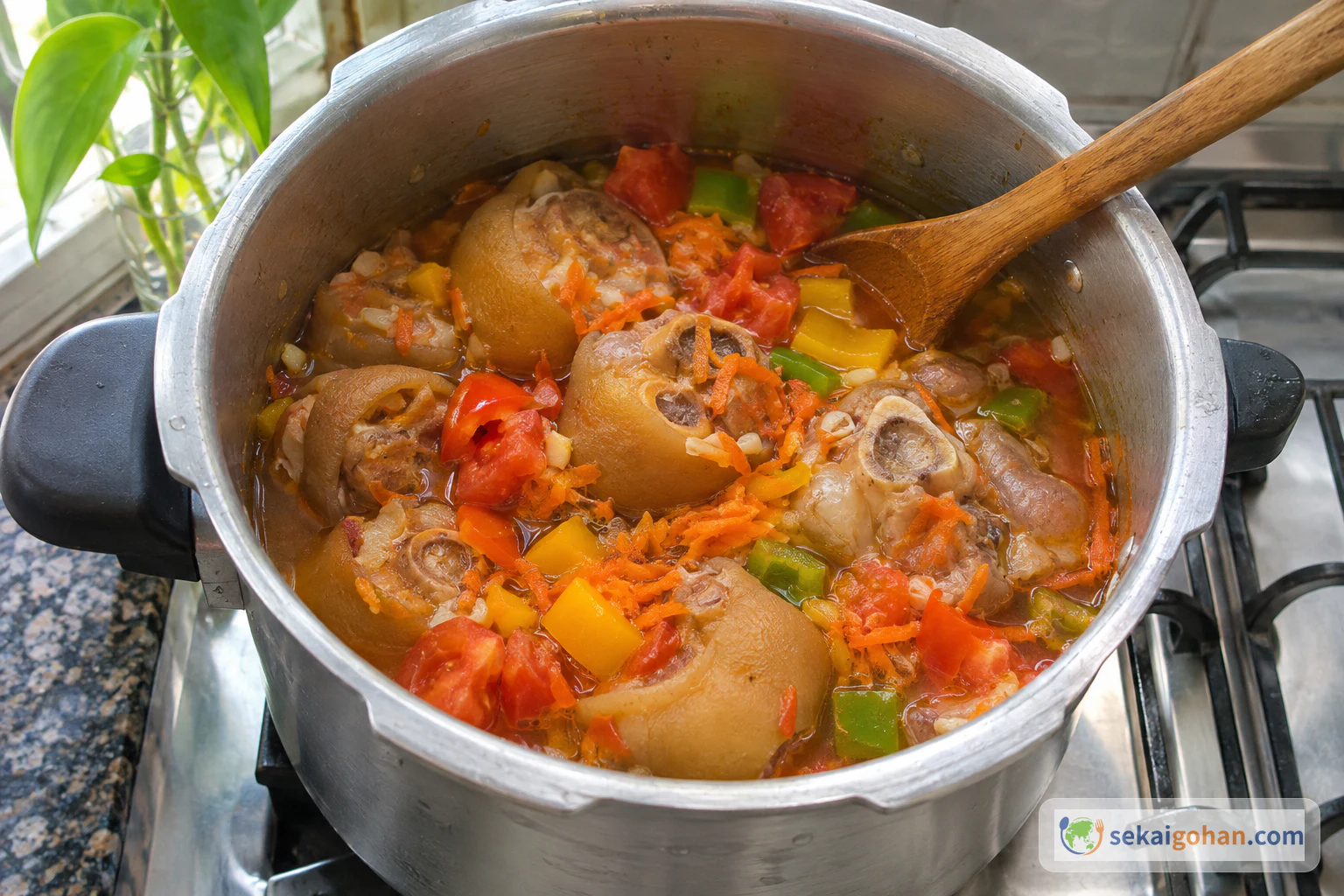
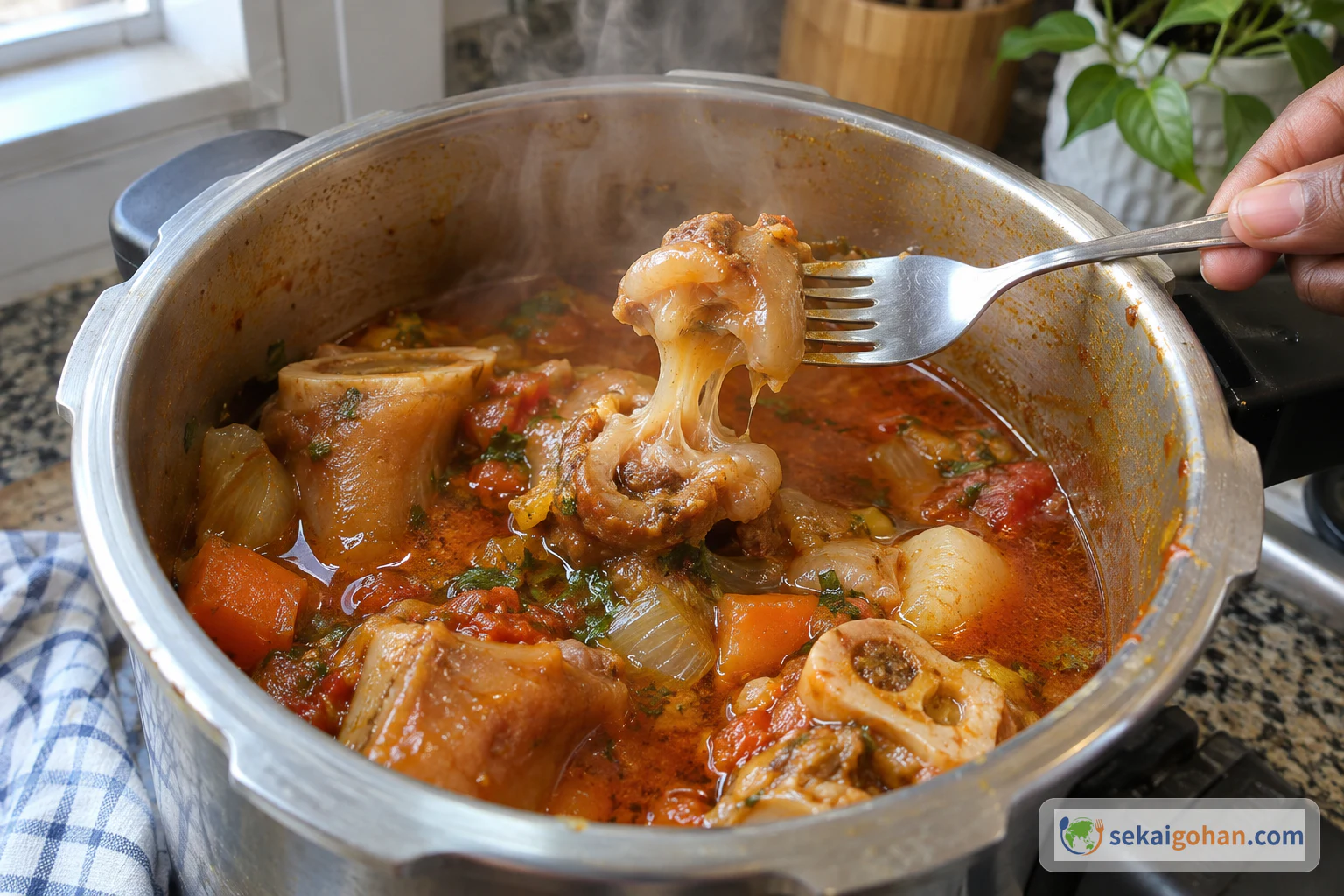
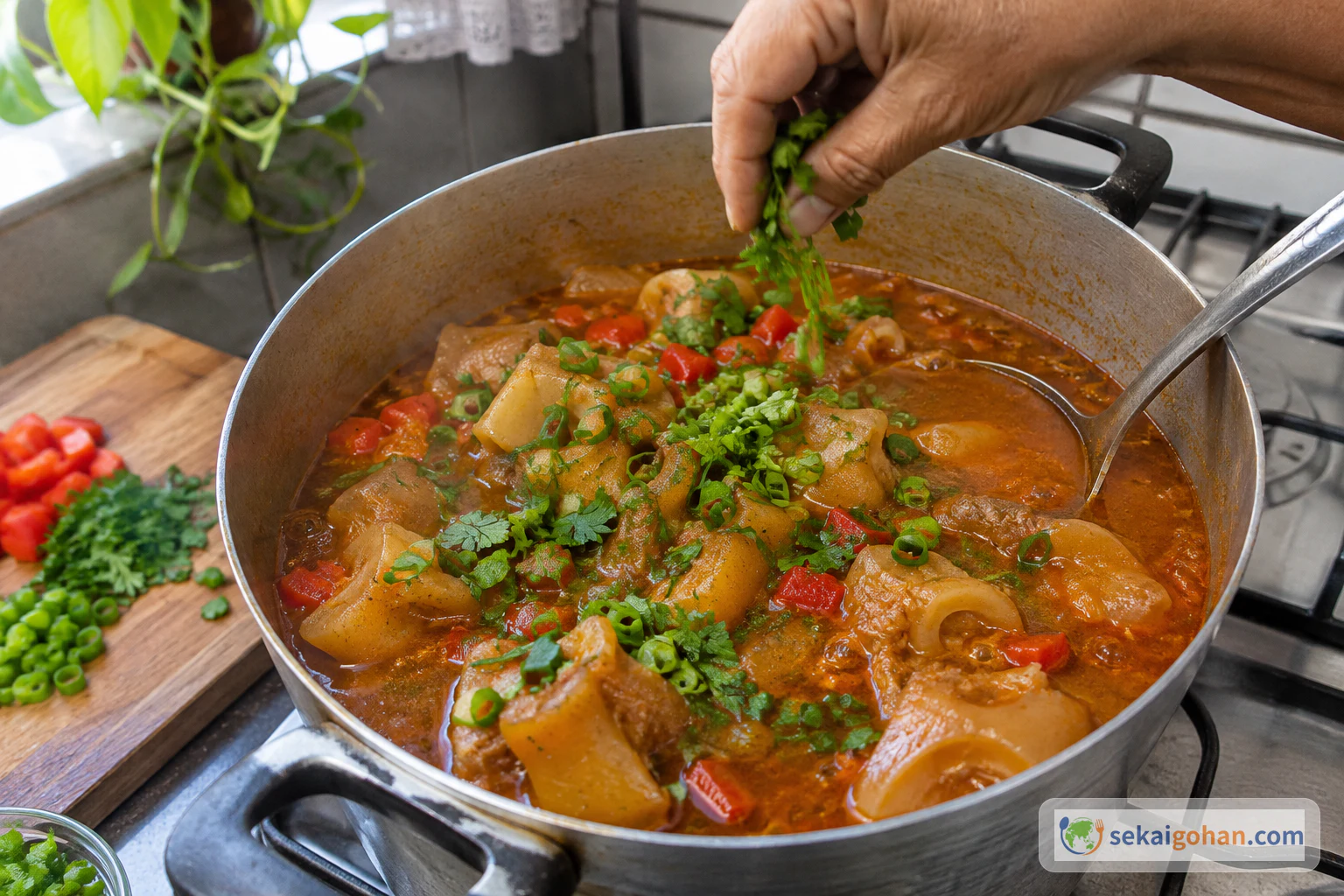
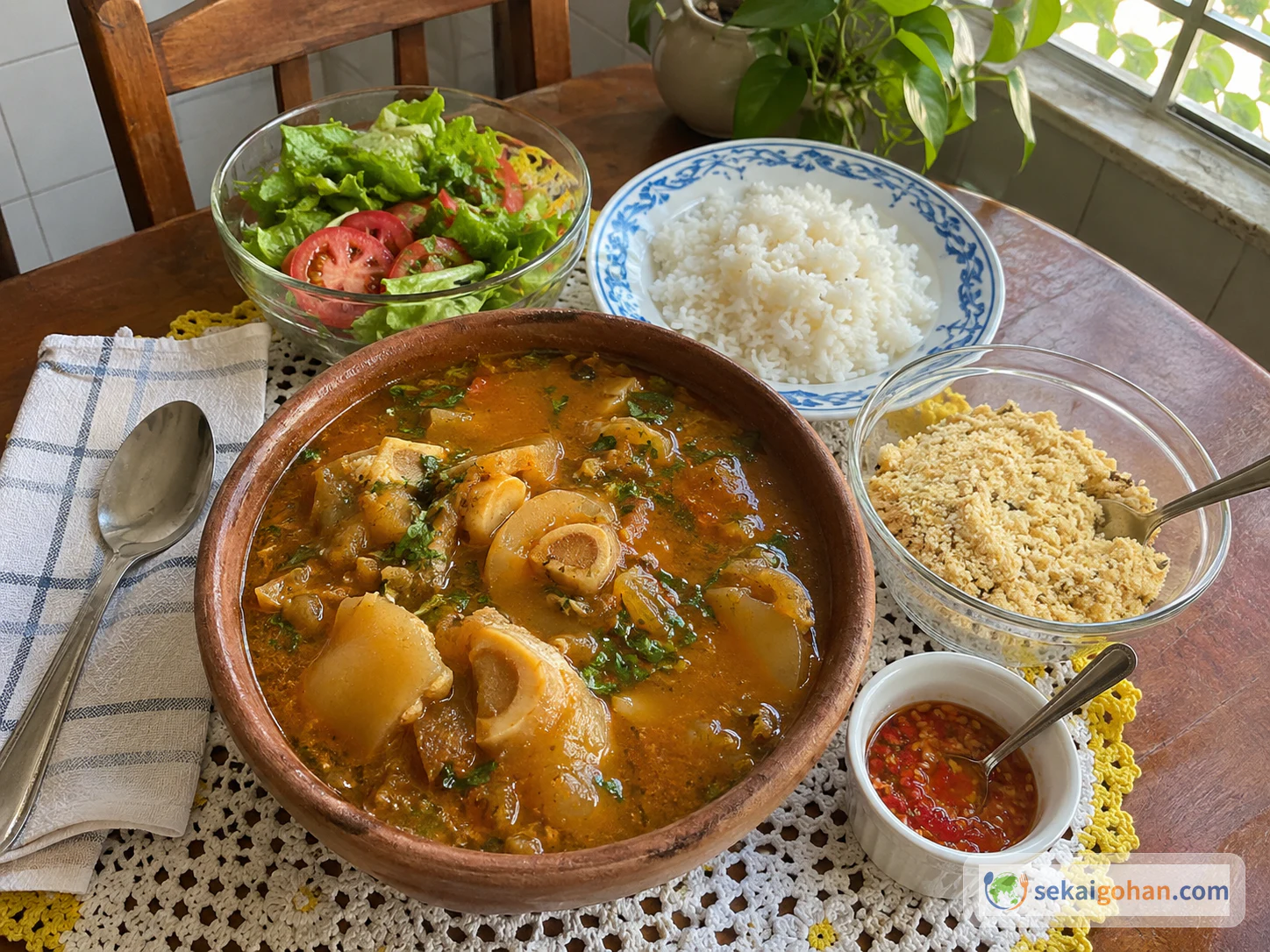
The pressure drops, the lid comes off, and a cloud of steam smelling of tomato, pepper and paprika rolls out of the pot. You lift a piece of beef foot with a fork. The skin gives way and the cartilage starts to slide off the bone, which tells you the pot is ready. Mocotó is a Brazilian home stew of beef feet cooked down with all their gelatin. The broth is red with colorau, sweet from onion and three colours of bell pepper, and it coats your lips the way only collagen does. It goes into deep bowls with white rice, cassava flour and a fresh salad alongside.
Beef Feet, Gelatin and Two Stories About a Name
In Brazil, mocotó means the beef foot and the stew made from it. People cook it slowly so the skin, the cartilage and the bones give up everything they hold. The result has a texture of its own. The soft cartilage melts on the tongue rather than being chewed, and the broth is so full of gelatin that it sets solid when it cools. A cold bowl of leftovers firms up like jelly, then turns back into a loose, glossy broth as soon as it is warm again.
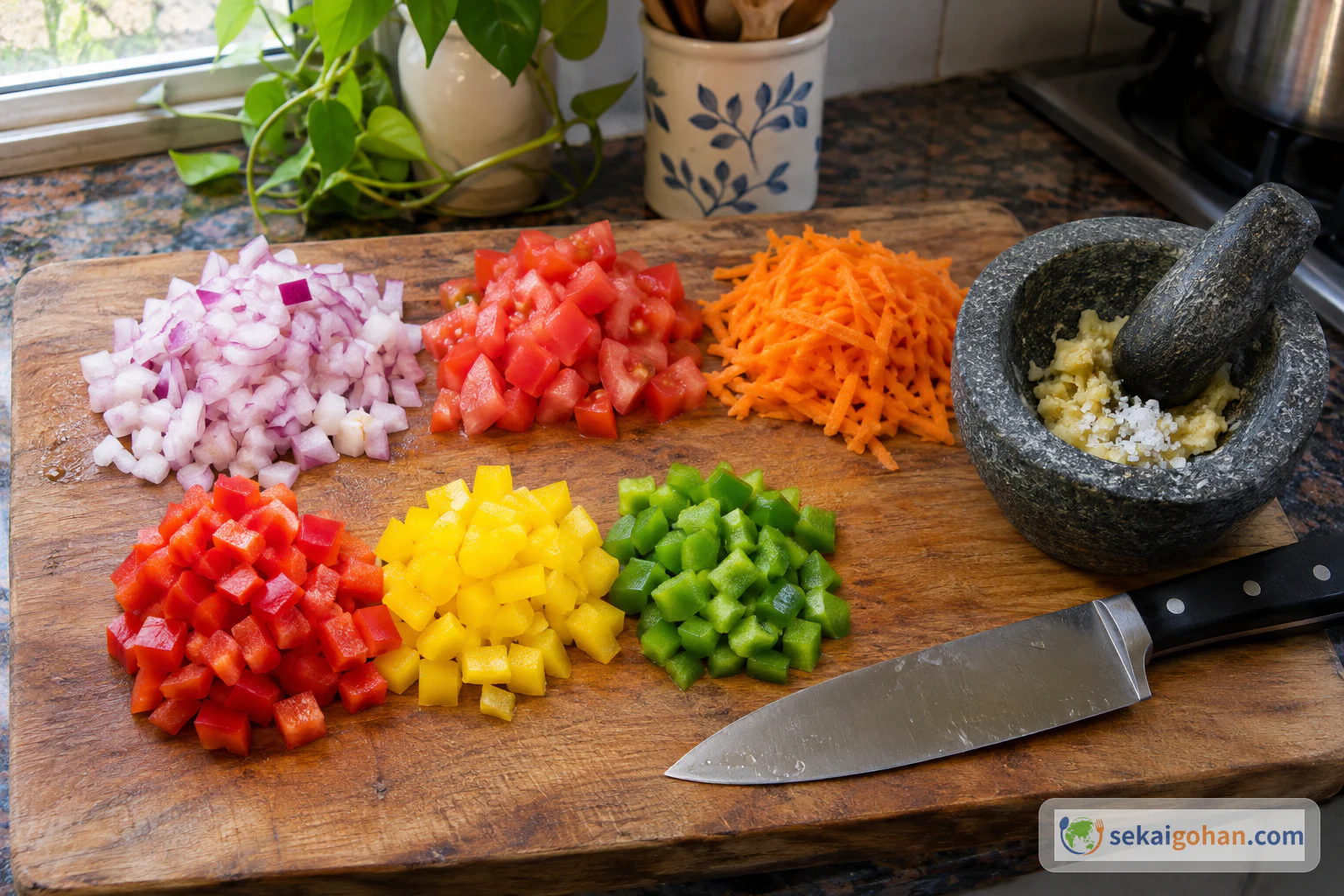
The version here has no beans. It is a vegetable stew of onion, tomato, carrot and red, yellow and green bell peppers, with a seasoning of colorau, Bahian spice mix, dried chimichurri seasoning and chili flakes. Fresh cheiro-verde goes over the top at the end. Other cooks take the same feet in other directions. Some cook them with beans, which is closer to a favada. In Rio Grande do Sul, mocotó gaúcho also carries dobradinha (tripe) and other cuts. Across the Atlantic, Portugal makes mão de vaca com grão, almost the same pot with chickpeas.
Where the dish began is not settled. One story traces it to Angola, and nobody has confirmed it. The name has two explanations as well. One derives it from the Kimbundu word mbokotó, the other from Tupi-Guarani. Both are still told. If you want the rest of the country's table, the Brazil page gathers it.
Brazilians call the cut pé de boi (ox foot) or simply mocotó. In Portugal the same part is mão de vaca, the "cow's hand", so the Portuguese dish and its English nickname, cow hand soup, both name a hand where Brazil names a foot.
Ingredients (serves 8)
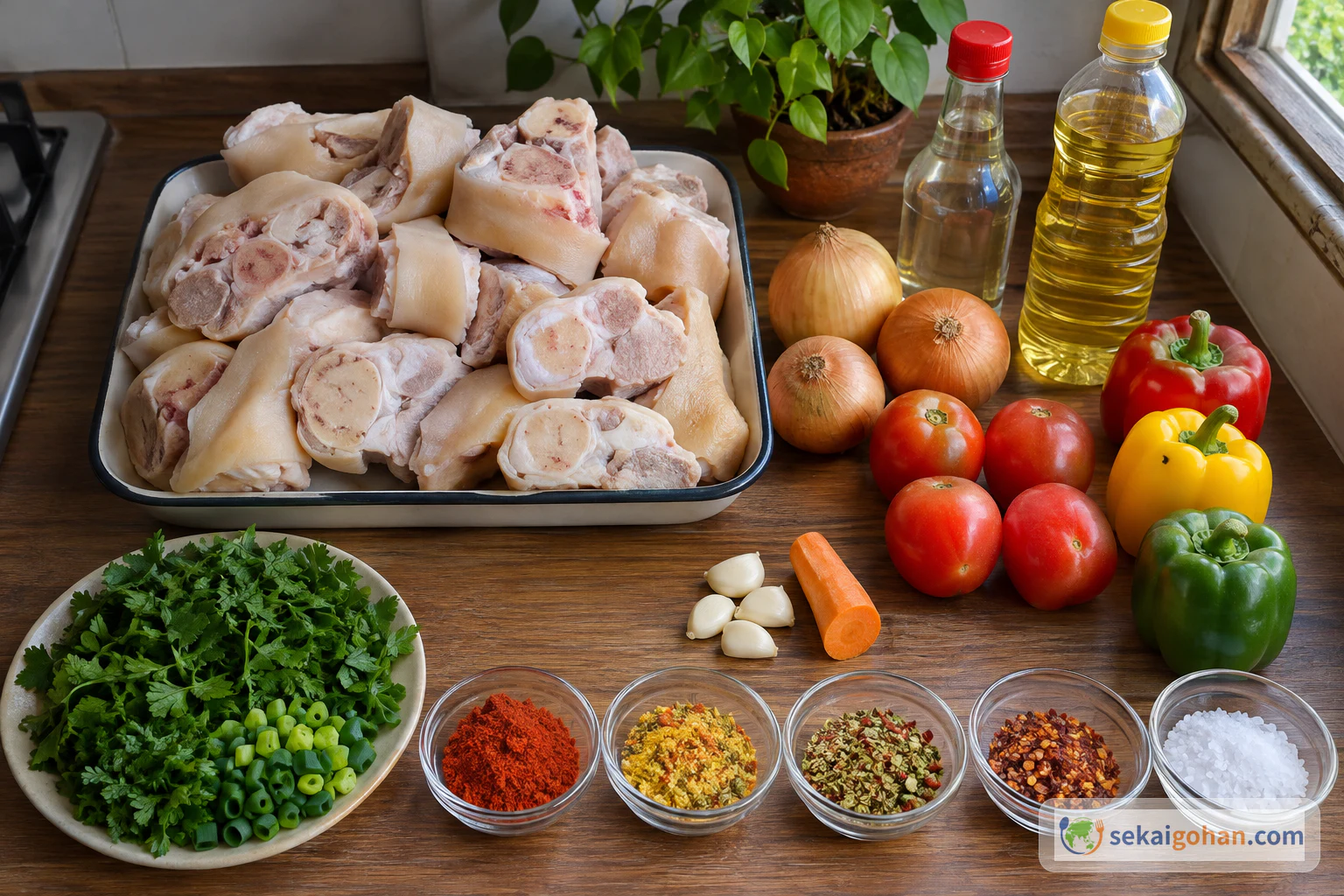
Salt crystals differ in size, so 2 tablespoons of coarse salt and 2 tablespoons of fine salt season very differently. Treat the salt as something you finish by tasting.
This dish contains beef, tomato and carrot. The ingredients in Bahian seasoning, colorau and dried chimichurri change from brand to brand. Read the labels for wheat, soy and anything else you need to avoid.
Equipment
- Large pressure cooker (big enough for the full batch while staying under its maximum fill line)
- Cutting board and chef's knife
- Mortar and pestle, or a small bowl and fork, for the garlic
- Box grater
- Colander
- Wooden spoon
- Fork, for testing the cartilage
- Ladle
- Immersion blender (optional)
Choosing and Substituting
The one thing you have to hunt for is the feet. Ask a butcher for cleaned beef feet cut into pieces, or look online or at Korean grocers. When you buy them, check the label for origin and handling. Everything else is a supermarket vegetable or a spice you can build at home. Each swap moves the flavour a little away from a Brazilian kitchen, so it helps to know what you give up.
| Brazilian ingredient | Swap | What changes |
|---|---|---|
| Tempero baiano | Your own mix of cumin, paprika and black pepper | Close in spirit. The exact blend is hard to match outside Brazil |
| Colorau | Paprika powder | The colour holds. The heat and flavour are different |
| Dried chimichurri seasoning | Dried parsley, oregano and garlic powder | The herb note stays, but the taste shifts |
| Cheiro-verde | Fresh parsley plus spring onion | This is the same pairing Brazilians sell tied in one bunch |
| Pimenta calabresa | Coarse chili flakes | Use flakes rather than fine chili powder, and keep the amount small |
| Vinagre | Plain white or grain vinegar | Works the same in the blanch |
The feet and the red broth make this dish, so spend your effort there. Use good feet and enough colorau or paprika, and the stew tastes like mocotó even if the spice mix is homemade.
Method
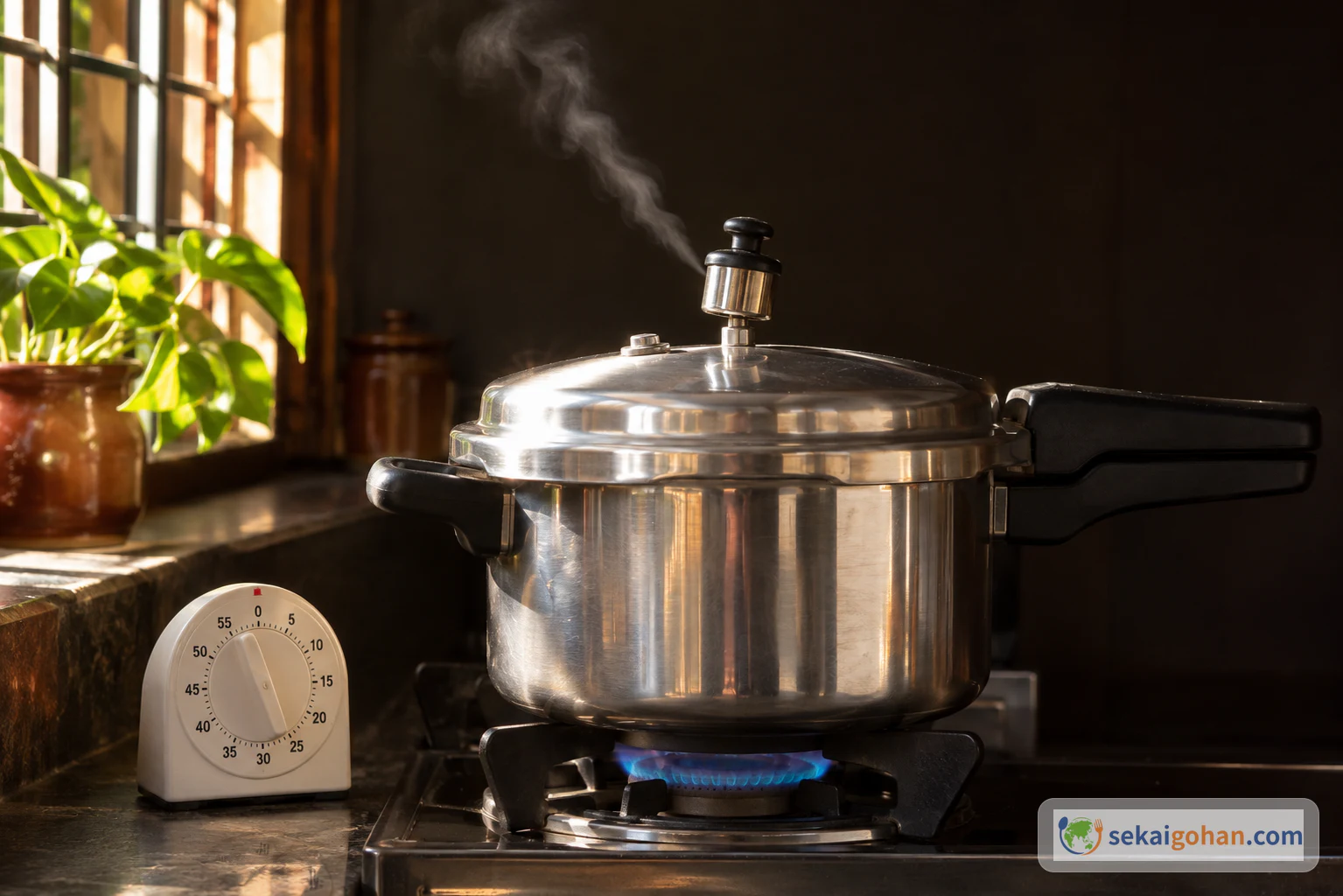
Prep all the vegetables first, because the work at the stove moves quickly once the oil is hot. After the blanch and a few minutes of frying, the pressure cooker takes over. Two rounds of pressure cooking and two natural releases are the hands-off stretch. The minutes below are the plan. The final call is the cartilage.
Follow your cooker's manual for its maximum fill line, generally no more than two-thirds full, and for its release method. This batch is large, so use a big cooker. Let the pressure fall on its own before you open the lid, and never force a lid that is still locked.
When It Goes Wrong
| What you see | Why | What to do |
|---|---|---|
| Strong smell, greasy broth | The blanch was skipped or cut short | Next time, give the vinegar blanch its full time. For this pot, chill the broth and lift off the fat that sets on top, then reheat |
| Cartilage still firm after both rounds | Your cooker reaches lower pressure or comes up to pressure slowly | Close the lid, give a short extra round under pressure, release naturally, and test with a fork again |
| Broth too salty | All the salt went in early, or the colorau or seasoning mix is already salted | Add water to loosen it. Next time add salt in stages and decide the final amount at step 8 |
| Broth thin and watery | Too much water went in before sealing | Blend part of the broth with its vegetables and stir it back in, or stir in a little farinha to thicken it |
| Leftovers set like jelly in the fridge | The gelatin from skin and cartilage | This is how it should be. It loosens back to broth as it heats |
Serving, Variations and Storage
At the table
Mocotó is a deep-bowl meal. Spoon white rice into the broth or serve it alongside, and pass the farinha so each person can sprinkle it on to soak up the gelatin. For a toasted version of the flour, set out farofa instead. The salad cuts through all that richness. A bowl of vinagrete does the same job with its sharp onion and tomato. A small bowl of hot chili sauce lets the heat-lovers add their own.
Variations
- With linguiça. Add sliced linguiça sausage and serve the stew as a hot, thinner soup. The sausage adds smoke and fat, and the soup turns meatier.
- Herbs and olive oil. Finish with cilantro, parsley and mint and a thread of olive oil. The bowl tastes greener and lighter than the paprika-red version.
- Thickened with farinha. Stir cassava flour into the pot rather than sprinkling it at the table. The broth turns thick and spoonable.
- Chilled and skimmed. Cook the feet, pull the meat off, chill the broth and lift away the set fat before you finish the stew. It takes longer and makes a cleaner, leaner broth.
Storing leftovers
Let the stew cool, then refrigerate it promptly in a covered container. It will set to a firm jelly. Reheat it over gentle heat, stirring, until it is hot all the way through and has melted back into broth.
Frequently asked questions
How do I control the heat?
The coffee spoon of chili flakes gives only gentle warmth, so most of the heat comes from the chili sauce at the table. If you cook for people who avoid spice, leave the flakes out of the pot and let everyone add sauce to their own bowl. If you swap in your own chili flakes, use a coarse, mild kind.
Is the farinha essential?
No. Rice and salad alone make a full meal. Farinha adds a dry, toasty contrast that soaks up the gelatin-rich broth, and many people would miss it. If you can't find it, the stew still works with rice.
Can I make it without a pressure cooker?
This recipe is written for a pressure cooker, and its times do not carry over to a plain pot. If you use a heavy pot with a lid, do the blanch, frying and vegetable steps the same way, then simmer gently, covered, keeping the feet under water. Judge doneness only by the cartilage cue: soft skin and cartilage ready to fall from the bone.
Can I halve the batch?
Yes. Halve every ingredient together, including the vinegar, oil, spices and salt, and use half of each small bell pepper. Cook through the same steps and judge doneness with the fork, as with the full batch.