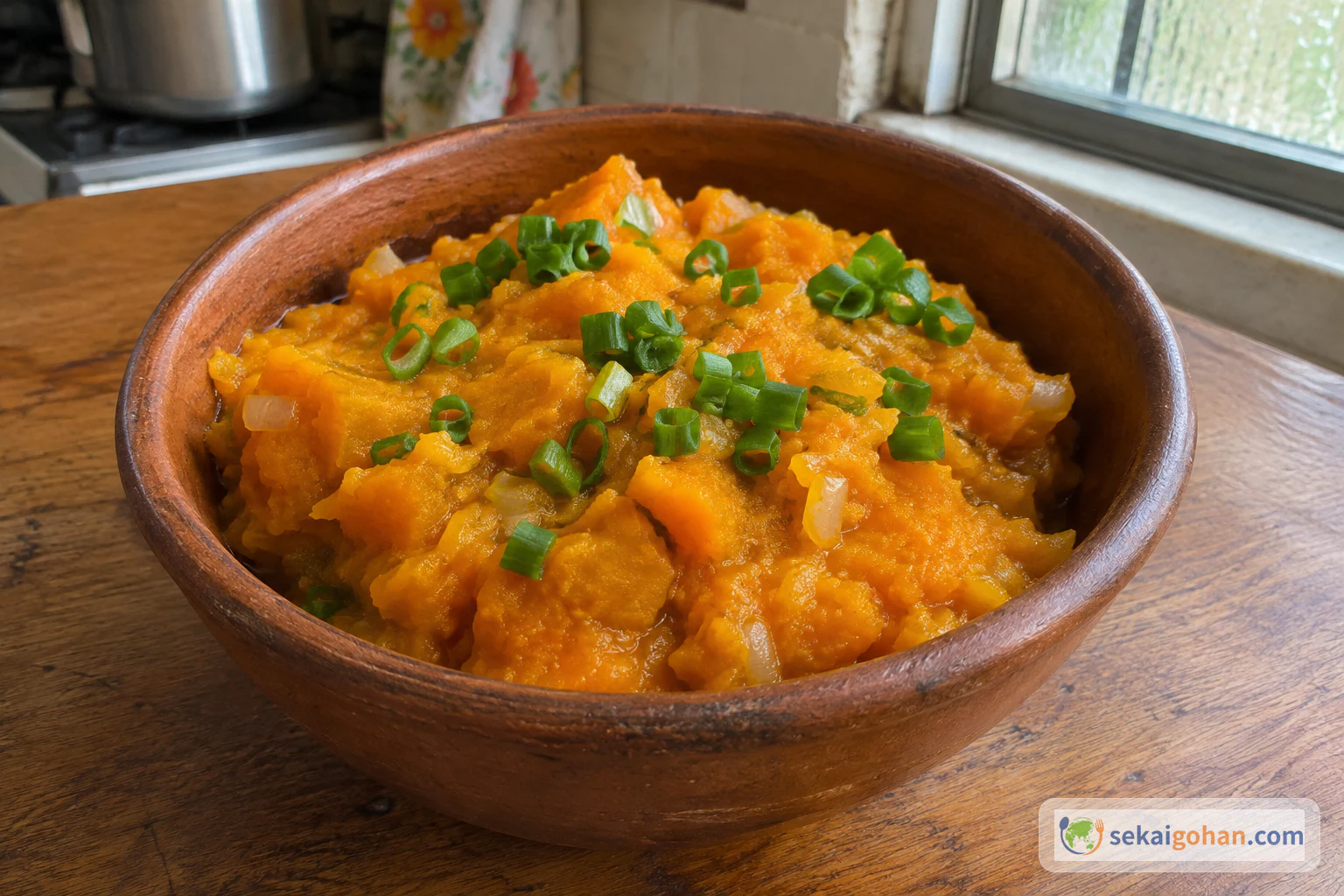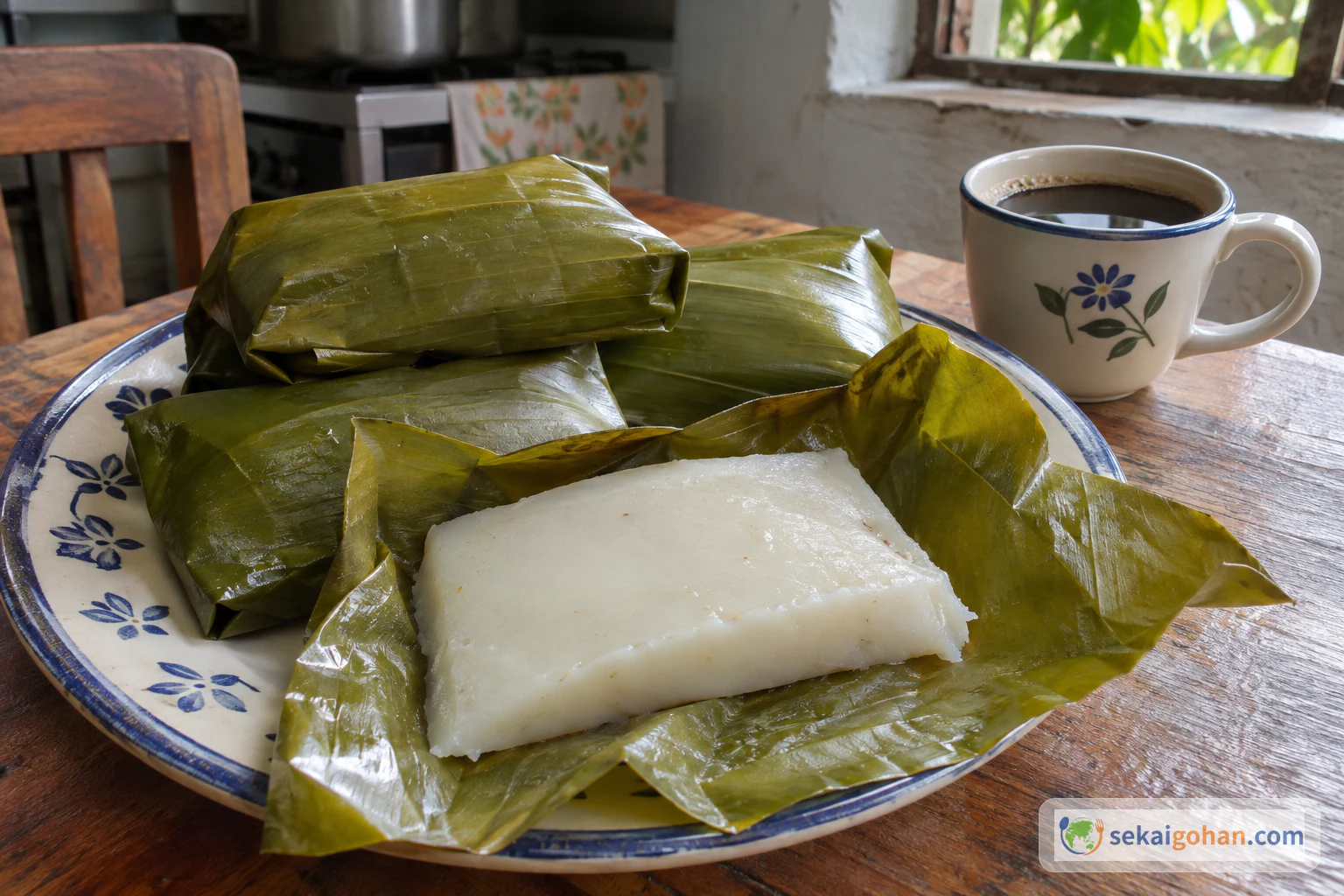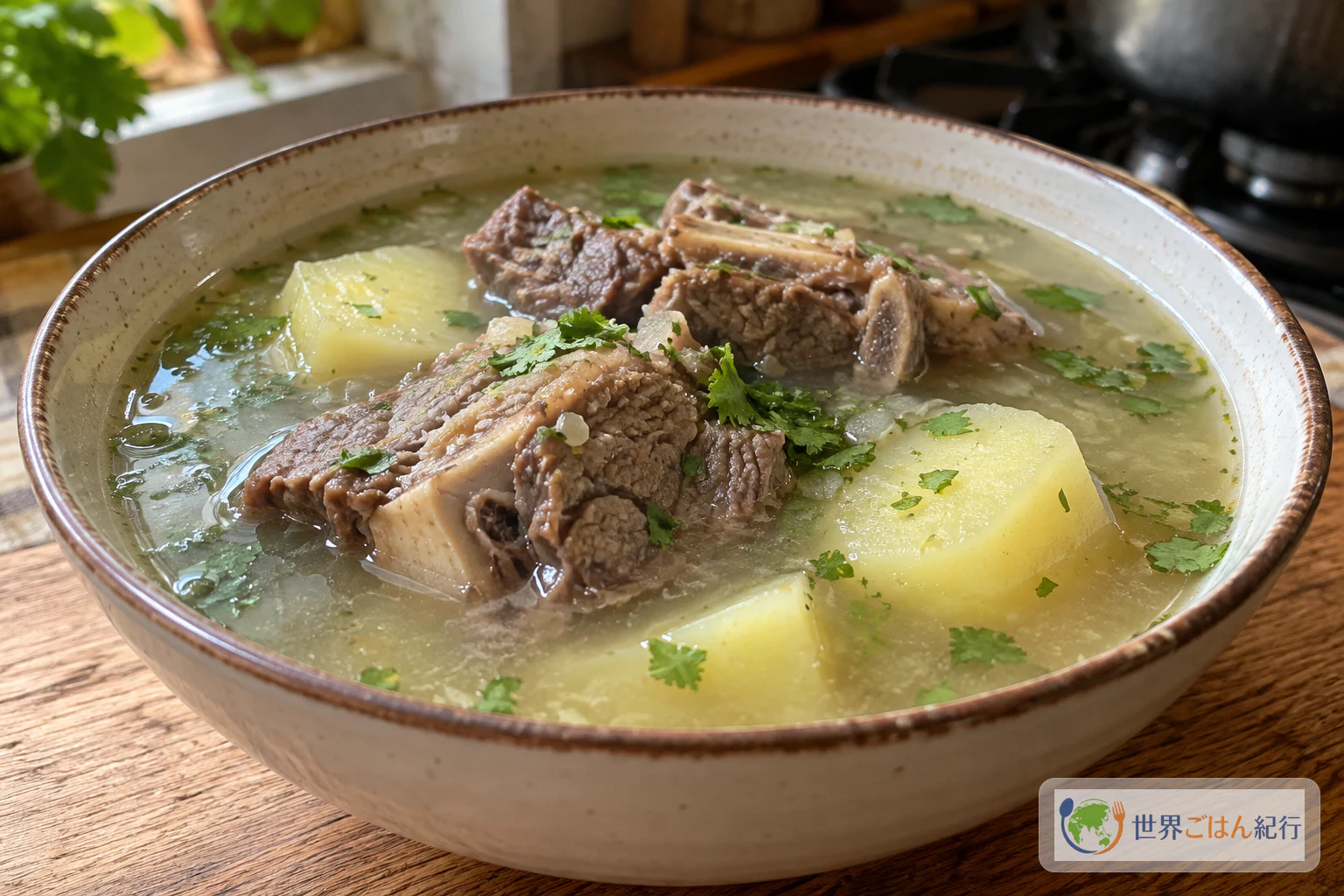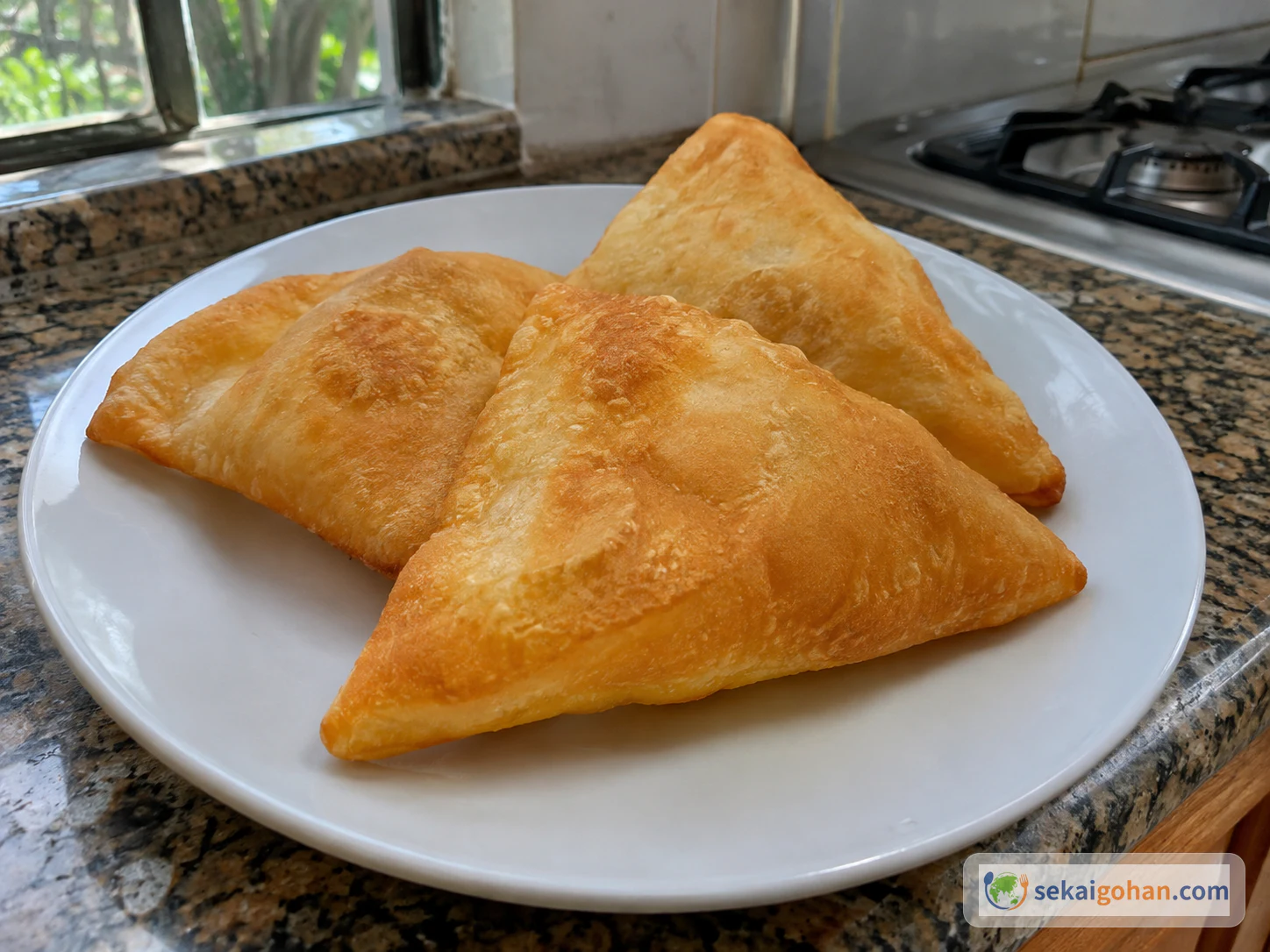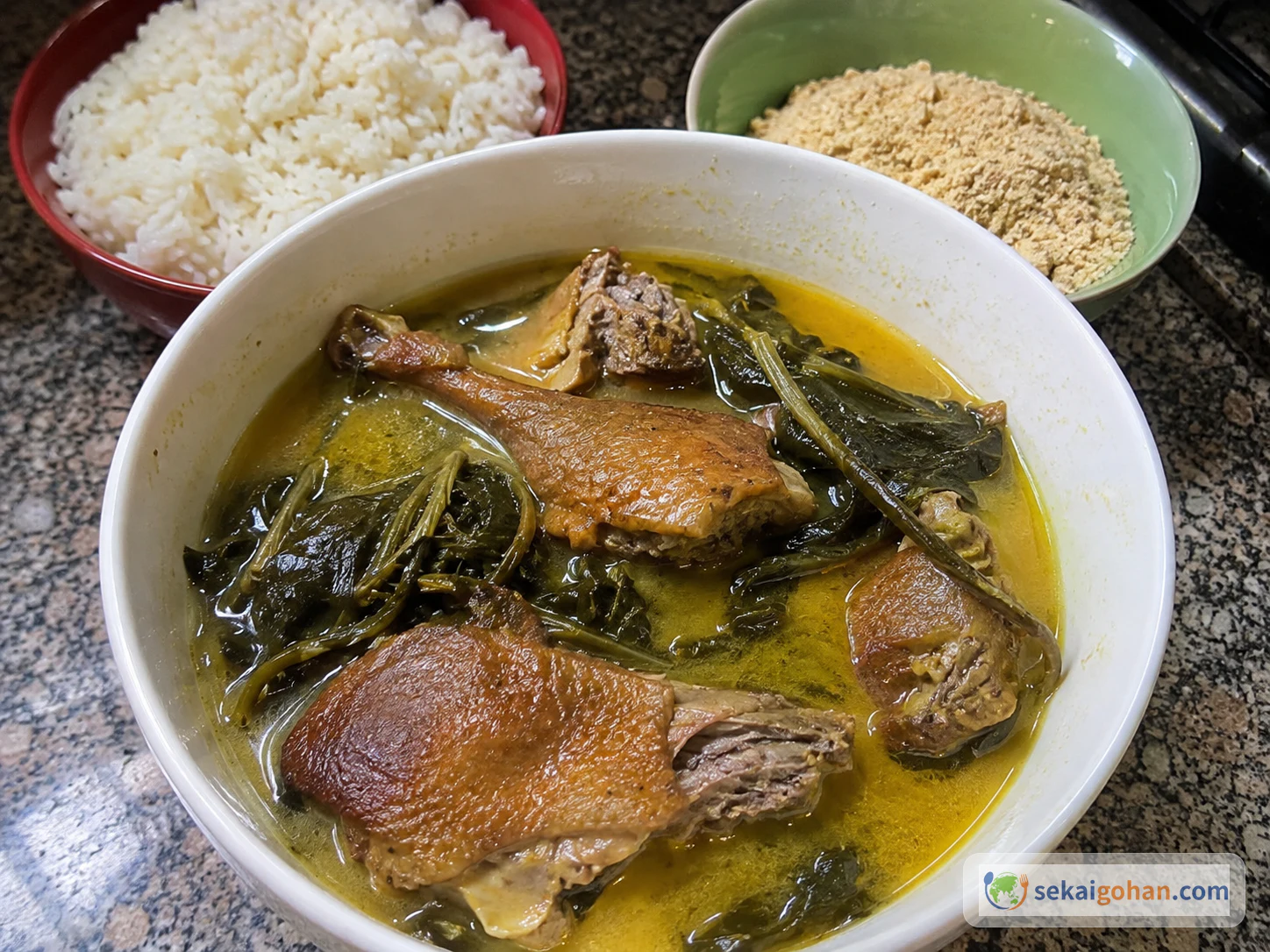
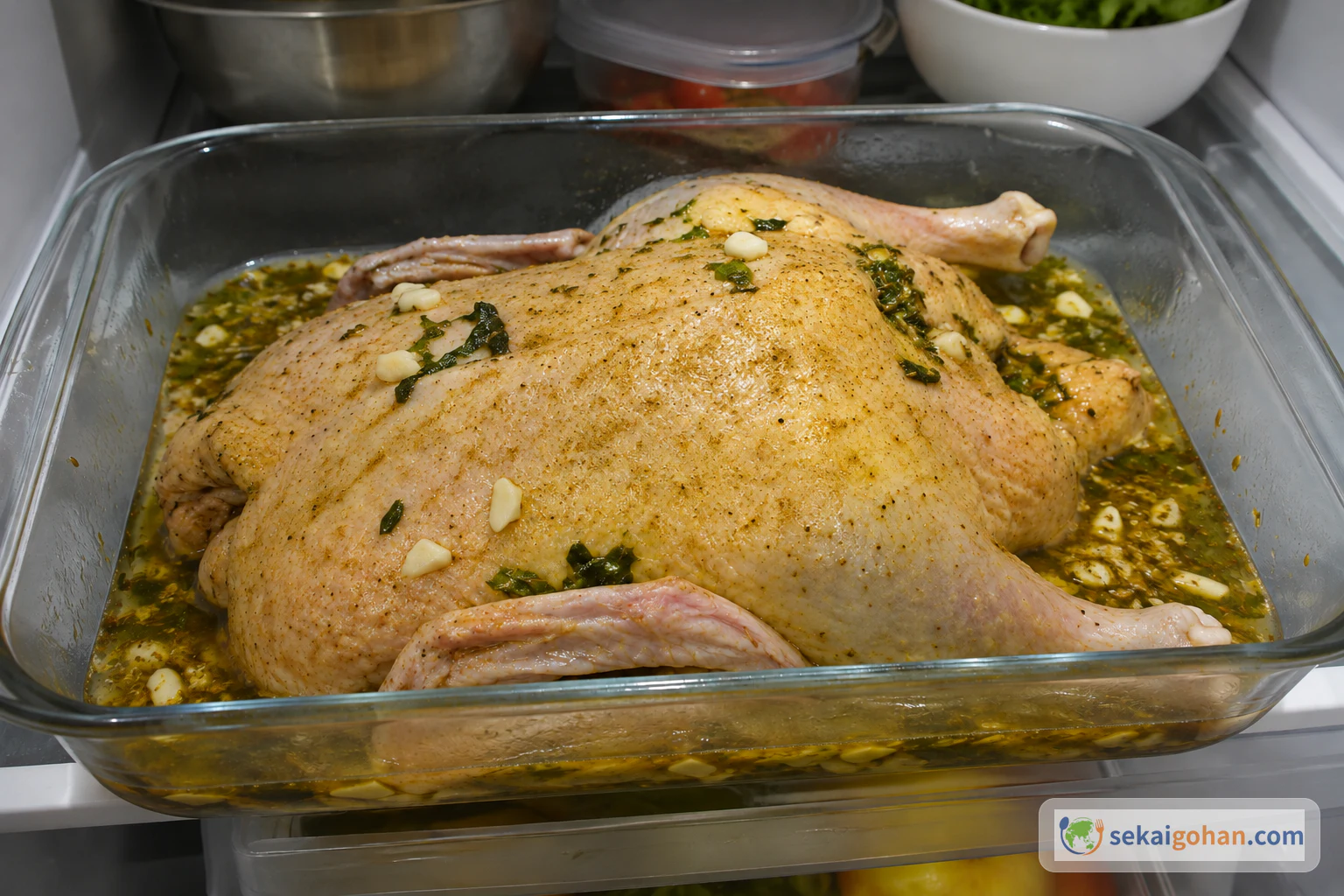
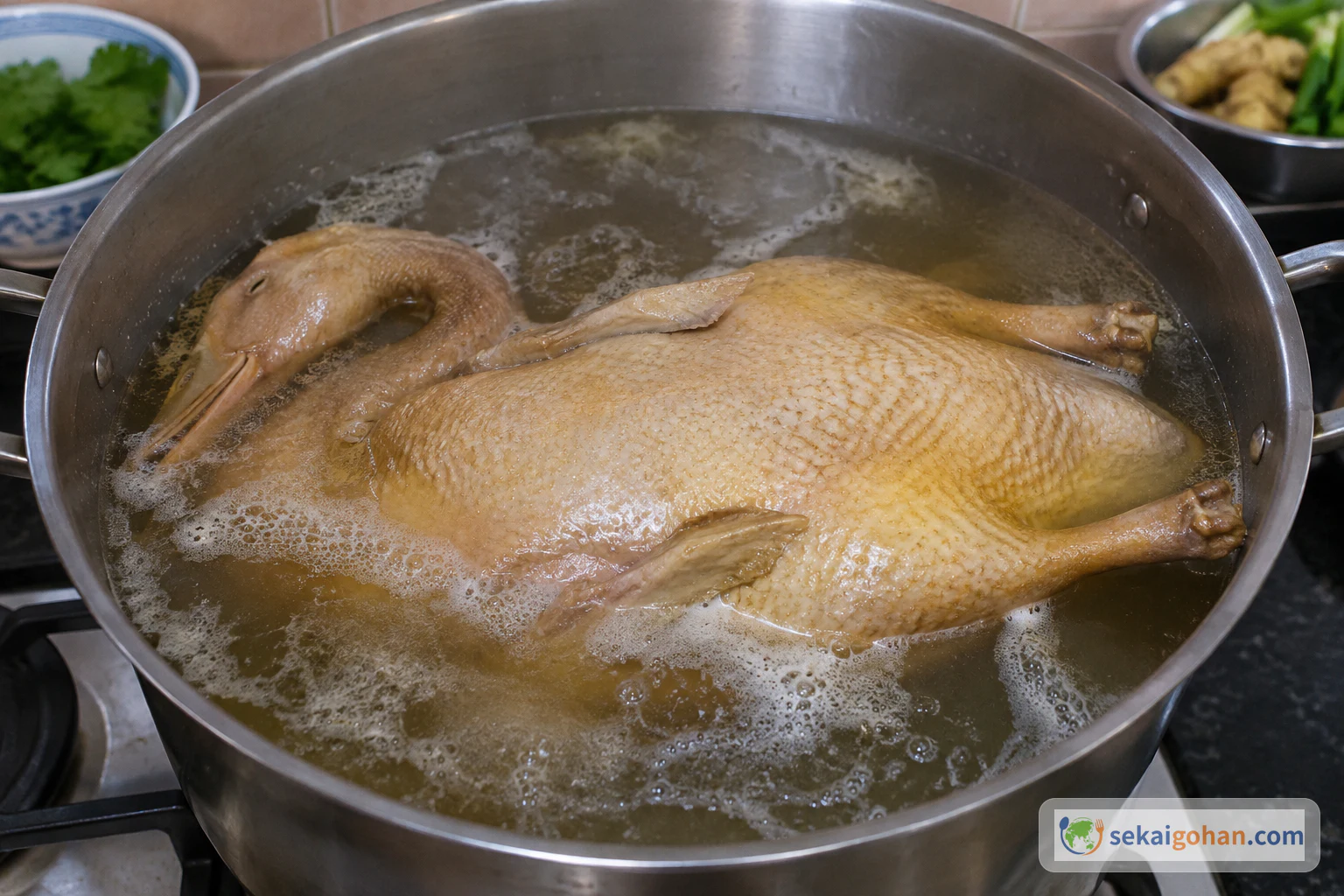
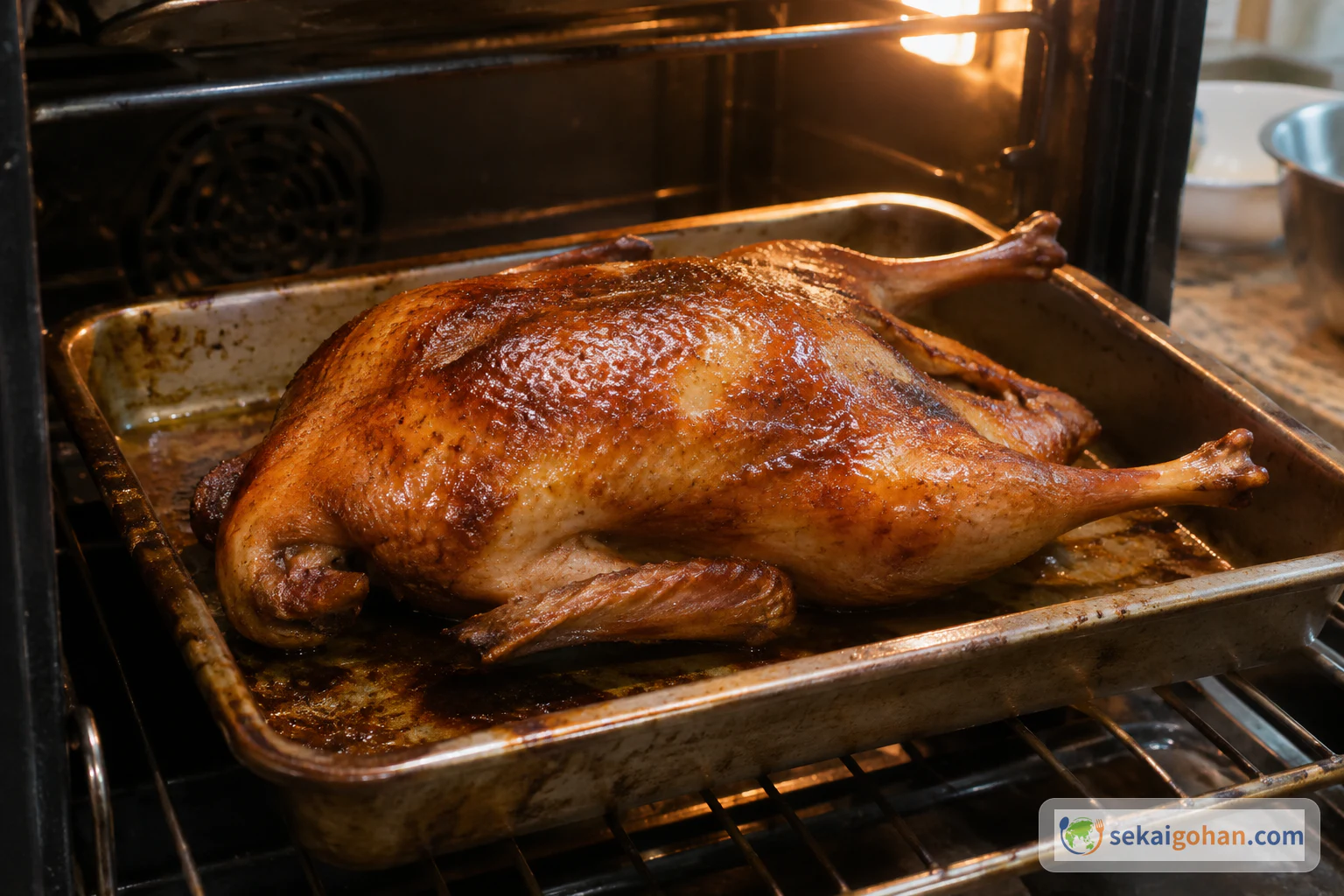
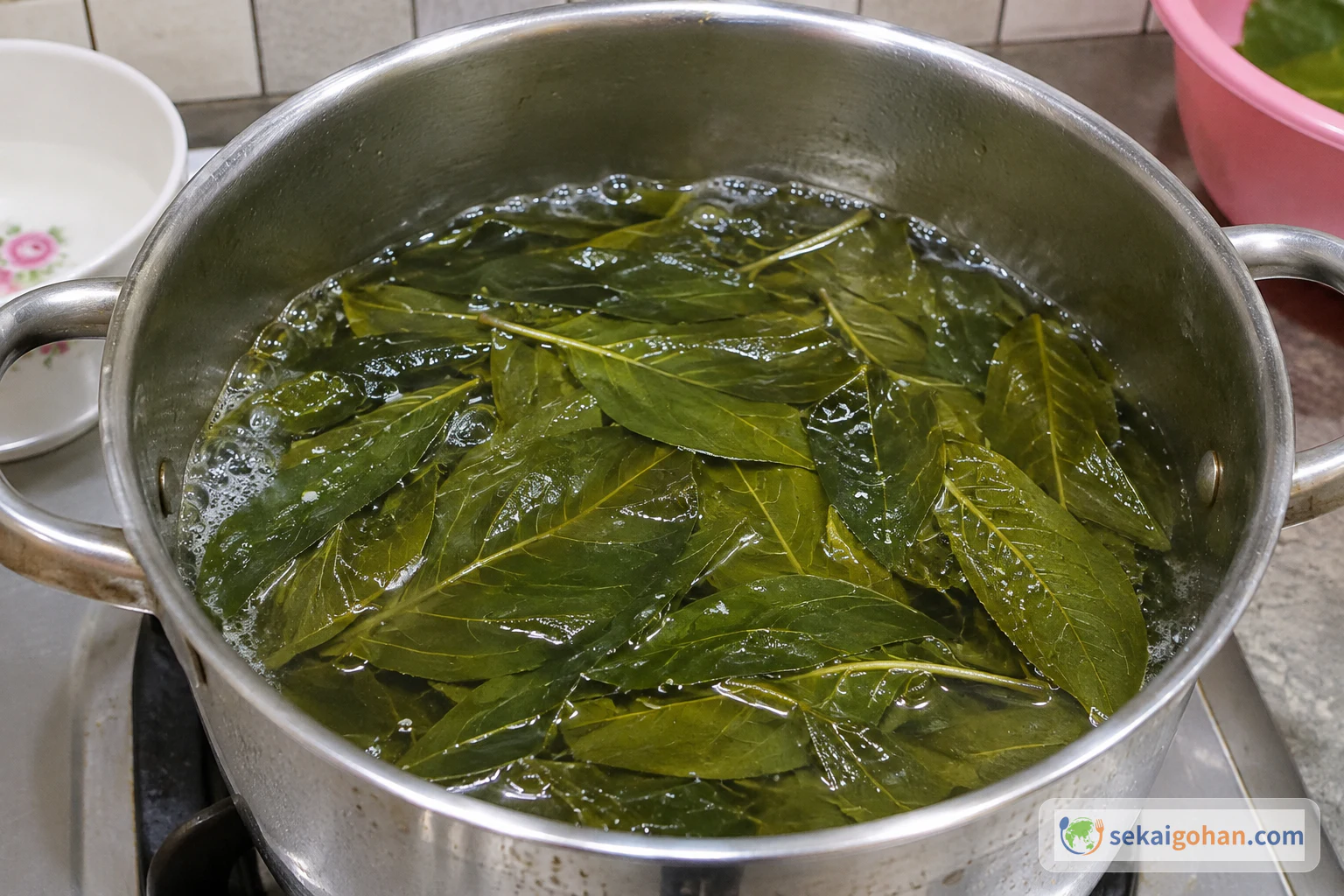
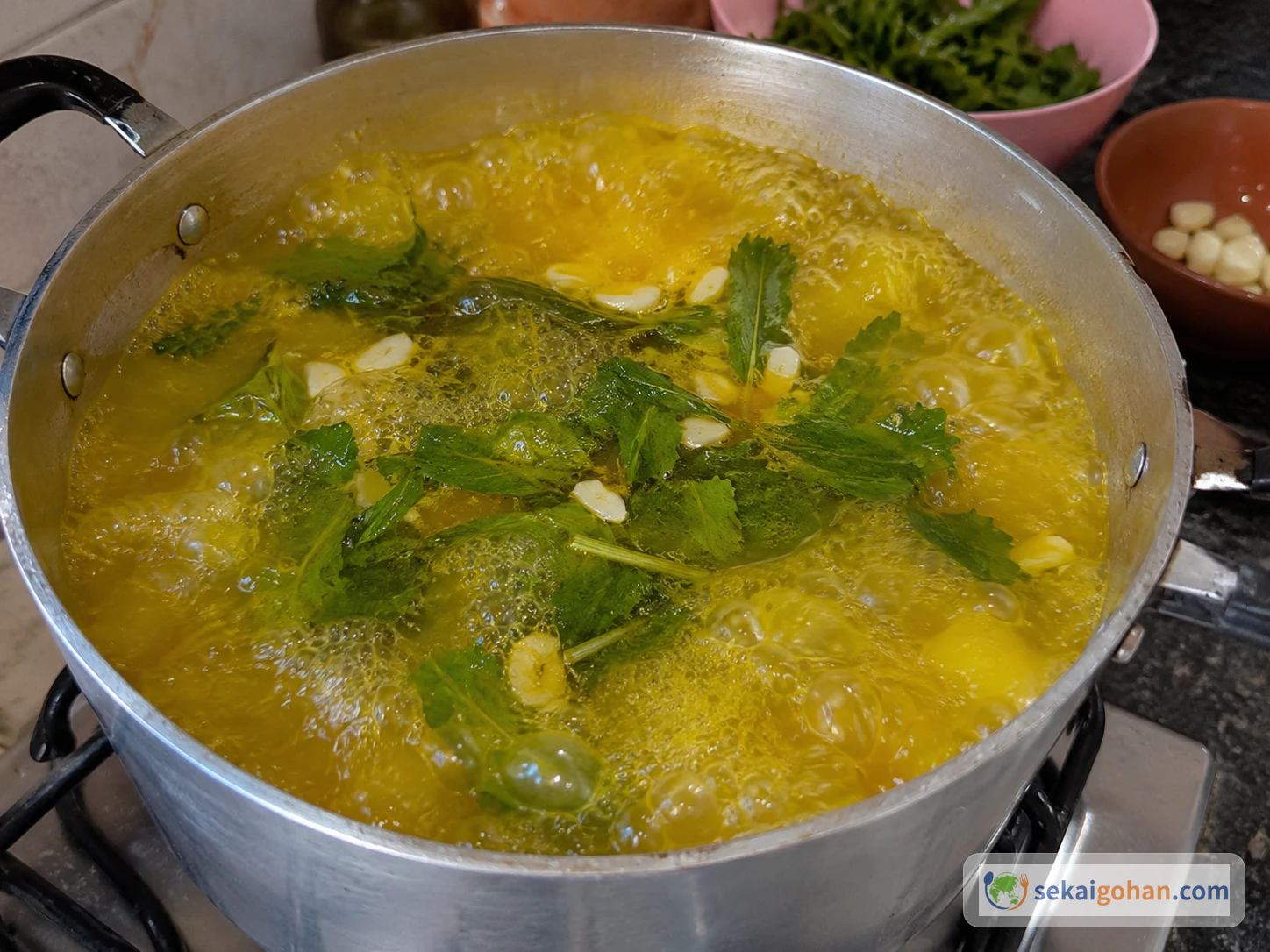
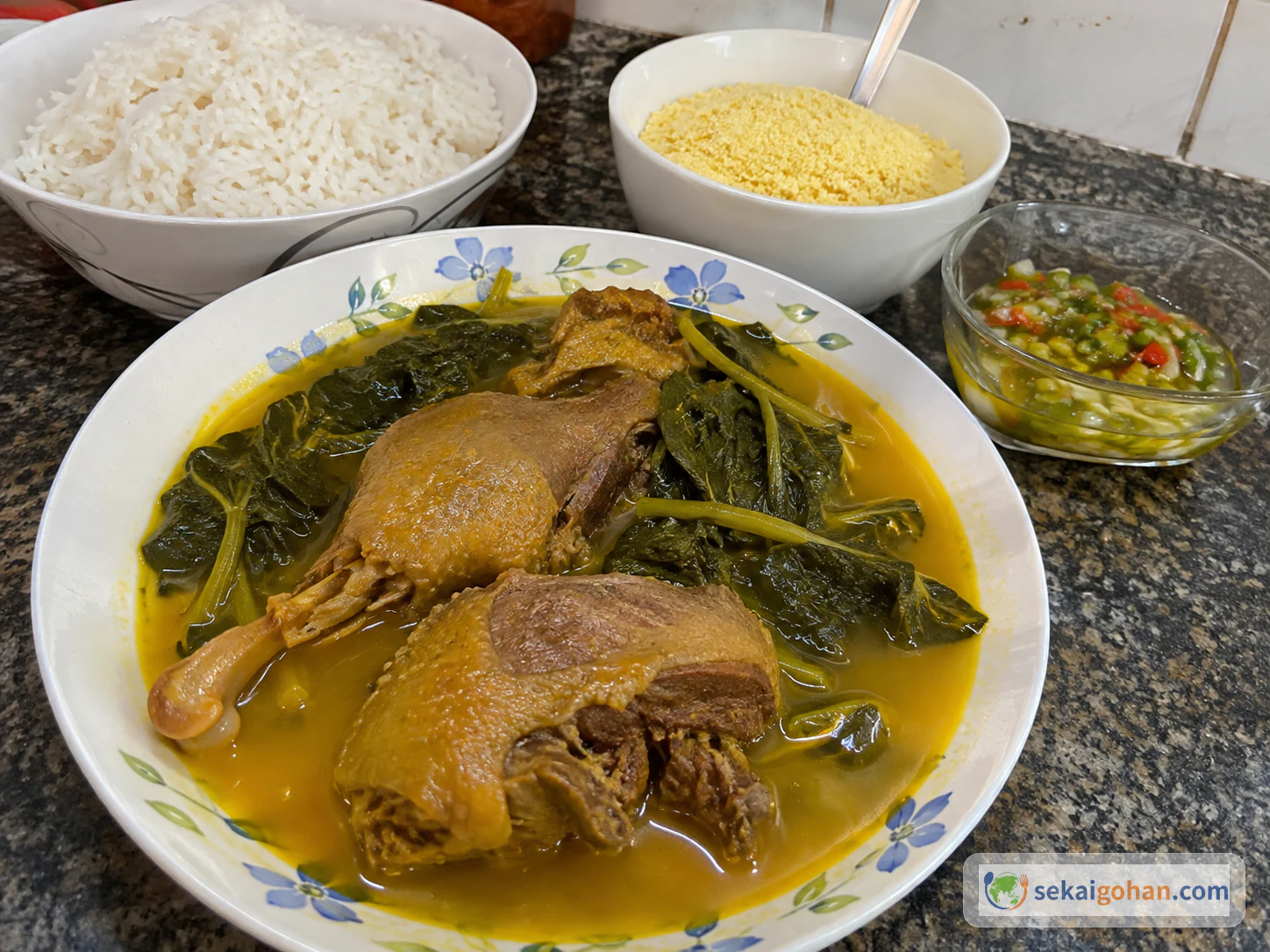
On the second Sunday of October, families in Belém sit down to a long lunch, and in the middle of the table there is often a deep bowl of bright yellow broth with pieces of roast duck and dark, soft greens. That bowl is pato no tucupi. The duck spends the night in garlic, vinegar and cumin, gets parboiled and roasted until brown, and only then goes into a pot of boiling tucupi with culantro and garlic. Jambu, a leafy green, is folded in at the very end. White rice and a bowl of farinha sit on the side, along with a small dish of crushed peppers for anyone who wants heat.
Duck, Yellow Broth and the Círio Lunch in Belém
The dish belongs to Pará, the state around Belém at the mouth of the Amazon, and it is tied to one day more than any other. The Almoço do Círio, the family lunch held on the second Sunday of October for the Círio de Nazaré, gets called "the Christmas of Pará." Pato no tucupi is one of the traditional dishes on that table, along with maniçoba and tacacá. In the days before Círio, demand in Belém rises for the ingredients those dishes need: tucupi, maniva and jambu.
What makes the dish taste of Pará is the broth. Tucupi is made from manioc, from the liquid of yellow bitter manioc (mandioca brava). The raw manioc is grated with water and squeezed through cloth. That liquid, called manipueira, is very toxic because it contains hydrocyanic acid. Producers leave it to settle, take off the starch, let it ferment naturally, add seasonings and boil it to drive the hydrocyanic acid off. One producer boils for about an hour and another for 40 minutes, so the process changes from one maker to the next. What reaches the cook's pot is a finished product, and the recipe starts from there.
Pato is duck, and no tucupi means "in tucupi." Paraenses call the Círio lunch their Christmas. It is a family meal, and the recipe below cooks one whole bird and one big pot of broth.
The rest of Brazil cooks with manioc too. Toasted manioc flour turns up in farofa, and the coastal stews such as moqueca baiana build their sauces from coconut milk and dendê. Pato no tucupi does neither. Its broth is thin, yellow and fermented, and it gets its body from the roasted duck that goes into it. There are more Brazilian dishes on the Brazil country page.
Ingredients
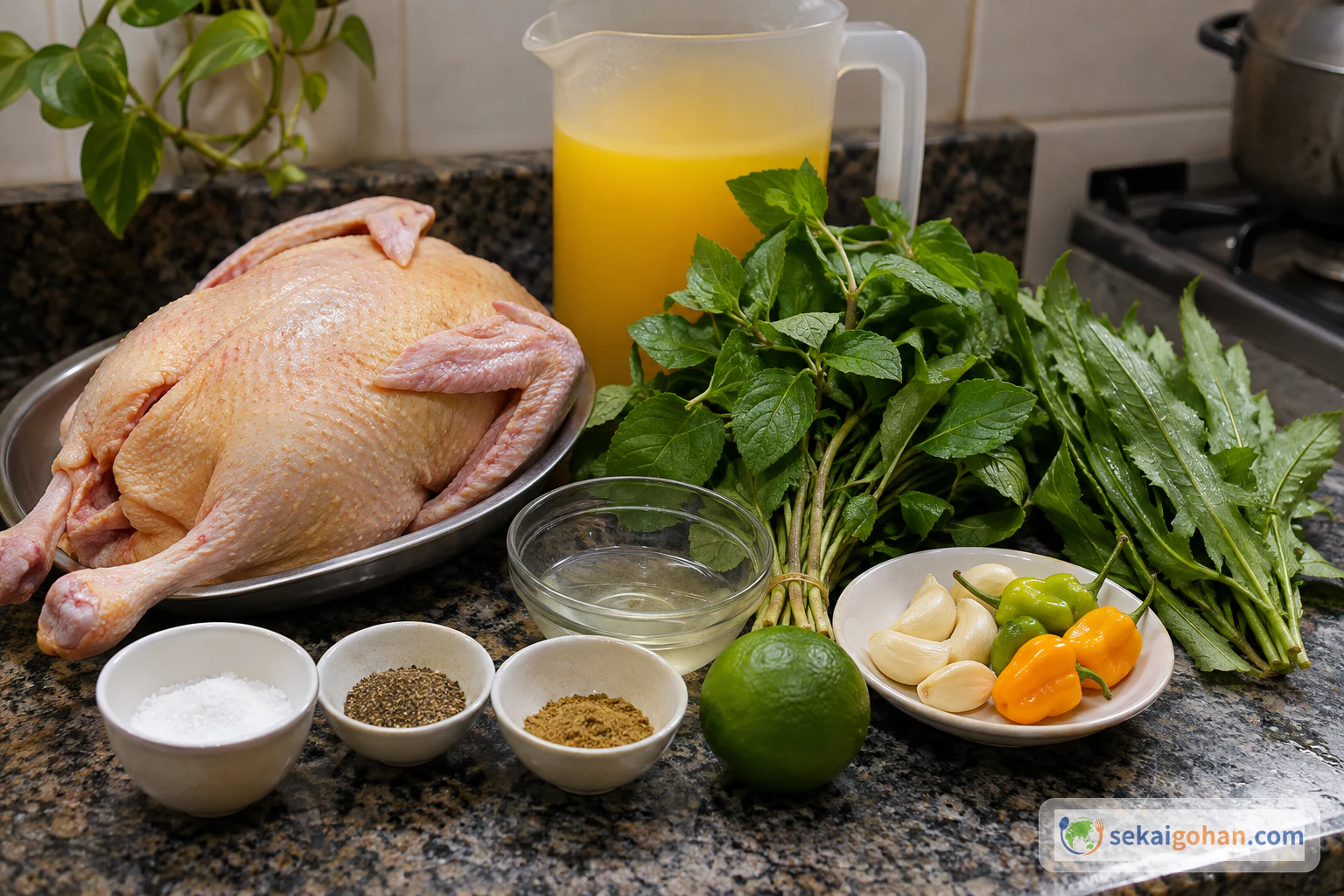
None of the ingredients contain dairy or peanuts. Read the labels on the tucupi and the farinha for allergens and shared-facility statements before you buy.
Equipment
- A large food-safe dish or container that holds the whole duck, with a cover
- Space on the lowest shelf of the refrigerator
- A large pot with a lid that holds the whole duck in water and later the tucupi
- An ovenproof dish or roasting pan
- A medium pot for blanching the jambu, and a colander
- A small pan and a small bowl for the pepper sauce
- A cutting board kept for raw poultry, and a sharp knife
Choosing Tucupi, Jambu and the Rest
Tucupi is the one ingredient you cannot swap. Nothing else gives the yellow color or the fermented depth of the broth, and if you leave it out you are cooking a different dish. Buy tucupi only as a finished product made and sold by a producer, with a label you can read.
Never grate, squeeze or ferment raw manioc at home, and never cook with raw manipueira. Boiling it in a home kitchen does not make raw manioc liquid safe, and a yellow color or a full boil tells you nothing about whether the hydrocyanic acid is gone.
Jambu has no stand-in. Watercress and other peppery greens are different plants and give the bowl a different taste, so use them only if you accept a different result. Culantro (chicória) has a stronger, longer-lasting aroma than cilantro. Cilantro works as a swap, but the broth comes out lighter and greener-tasting. If you can't find pimenta de cheiro, crush paprika with a little fresh chili for the table sauce. It gives color and heat without the perfumed aroma of the real peppers. Any plain vinegar works in the marinade, and a whole duck can be replaced with bone-in duck pieces if that is what your butcher sells.
The marinade, the parboil and the roast are all built around one whole bird. Cutting it only after roasting keeps the meat moist and gives every piece browned skin when it goes into the broth.
Method
The work runs over two days. On the first day you season the duck and put it in the refrigerator for about 12 hours. The next day the duck is parboiled and roasted, and while it is in the oven you blanch the jambu, make the pepper sauce and bring the tucupi to a boil. Once the duck is cut and in the broth, the meal is only minutes from the table.
The roughly 12 hours in the refrigerator is when the garlic, vinegar and cumin get into the duck. That seasoning is what the duck carries into the tucupi later, so plan to start the evening before.
When It Goes Wrong
| What you see | Why | What to do |
|---|---|---|
| The skin is still pale after about 40 minutes in the oven | The oven was not fully heated, or the skin went in very wet | Leave the duck in the oven until the skin is deep brown all over |
| Pink meat or juice at the bone when you cut it | The thickest parts are not cooked through | Put those pieces back in the oven until no pink remains, then add them to the tucupi |
| The jambu stems are stringy | The flowers and tough stems were left on, or it came out of the water too soon | Pick out the hard stems and boil the rest until soft before it goes into the broth |
| The jambu falls apart in the bowl | It went into the broth too early | Next time add it near the end and only for the few minutes under the lid |
| The broth tastes too salty | The marinade already seasoned the duck and the tucupi was salted too | Salt the tucupi lightly at the boil and adjust only after the duck has been in it |
Serving and a Larger Pot
At the table
Pato no tucupi is a centerpiece for a long family lunch, the way it is eaten on Círio Sunday. Serve it in deep bowls so there is plenty of broth with every piece. Rice and farinha make the meal more filling, and the pepper sauce lets each person decide how hot their bowl is.
Variations
- A bigger pot. Another version scales up to about 6½ lb (3 kg) of duck and 3 quarts (3 L) of tucupi, with 5 bunches of jambu and 10 cloves of garlic. It also adds 2 onions and 2 tomatoes to the broth, which makes it sweeter and rounder and moves the color toward orange.
- Bone-in duck pieces instead of a whole bird. Marinate, parboil and roast them the same way. They brown faster and each piece has more skin, but check every piece at the bone before it goes into the tucupi.
- Cilantro instead of culantro. The broth comes out lighter and fresher-tasting, and the aroma fades faster in the pot.
Frequently asked questions
Is pato no tucupi spicy?
The broth itself is not hot. It tastes of tucupi, roast duck, garlic and culantro. The heat is in the crushed pimenta de cheiro on the side, and each person adds as much as they like.
Why does the duck get parboiled before roasting?
Parboiling and roasting are both part of the dish. The duck is simmered in water first, then roasted for the brown skin and the flavor it brings to the broth. If you skip either one, the duck that goes into the tucupi has a different texture and taste.
How do I eat the farinha?
Farinha de mandioca stays in its own bowl, and each person takes it to eat with the rice and the broth. Keep it out of the pot so the broth stays thin and yellow.