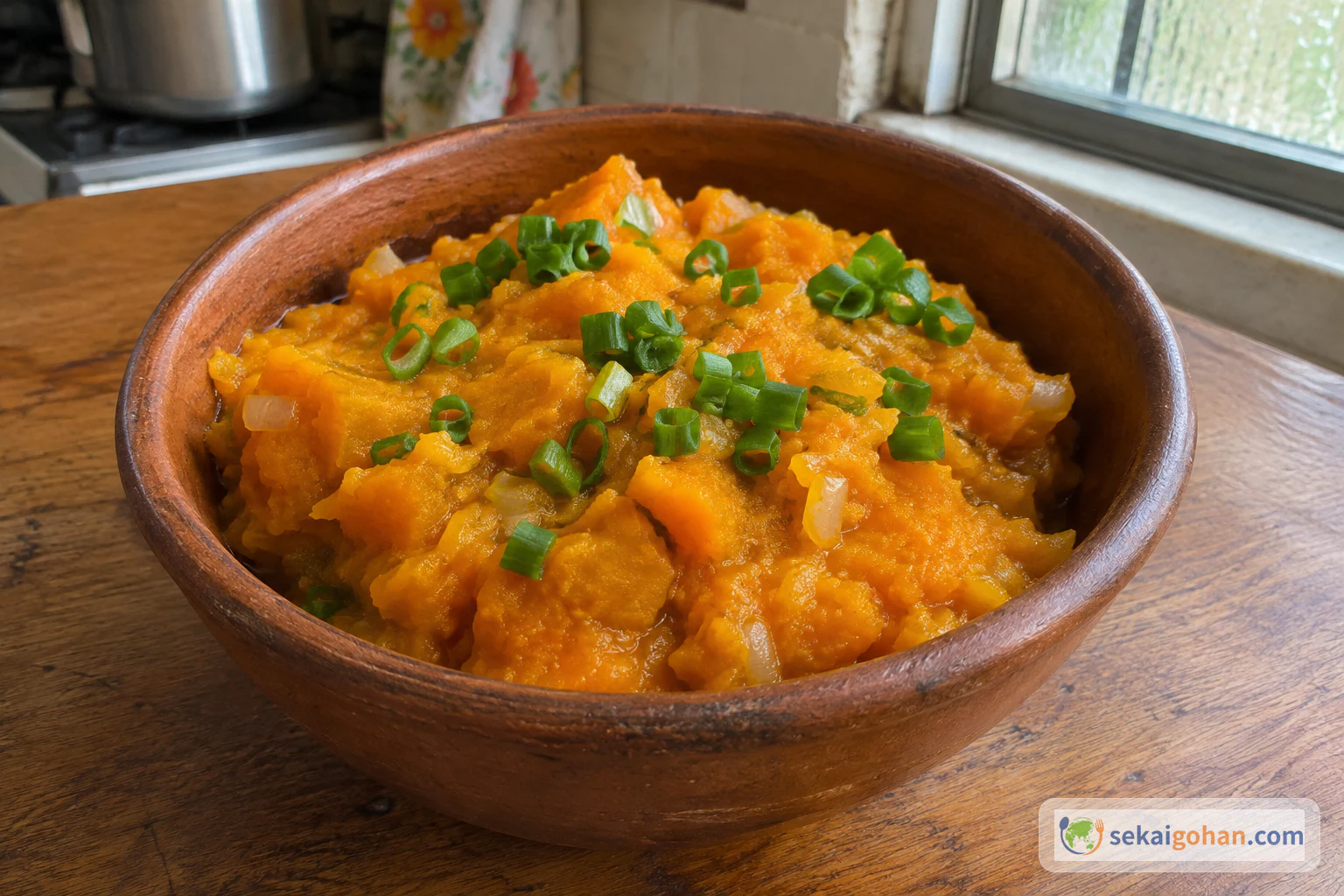
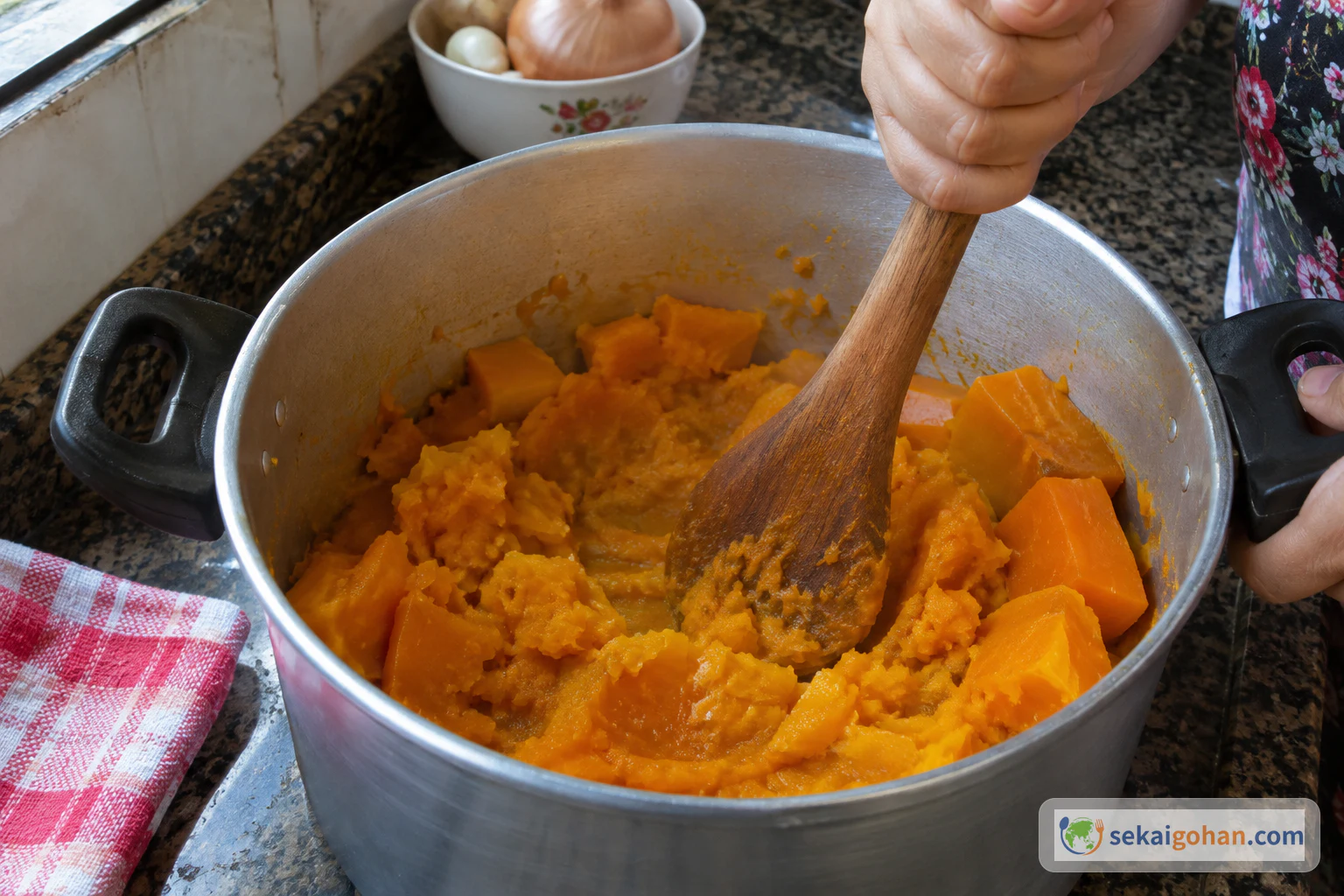
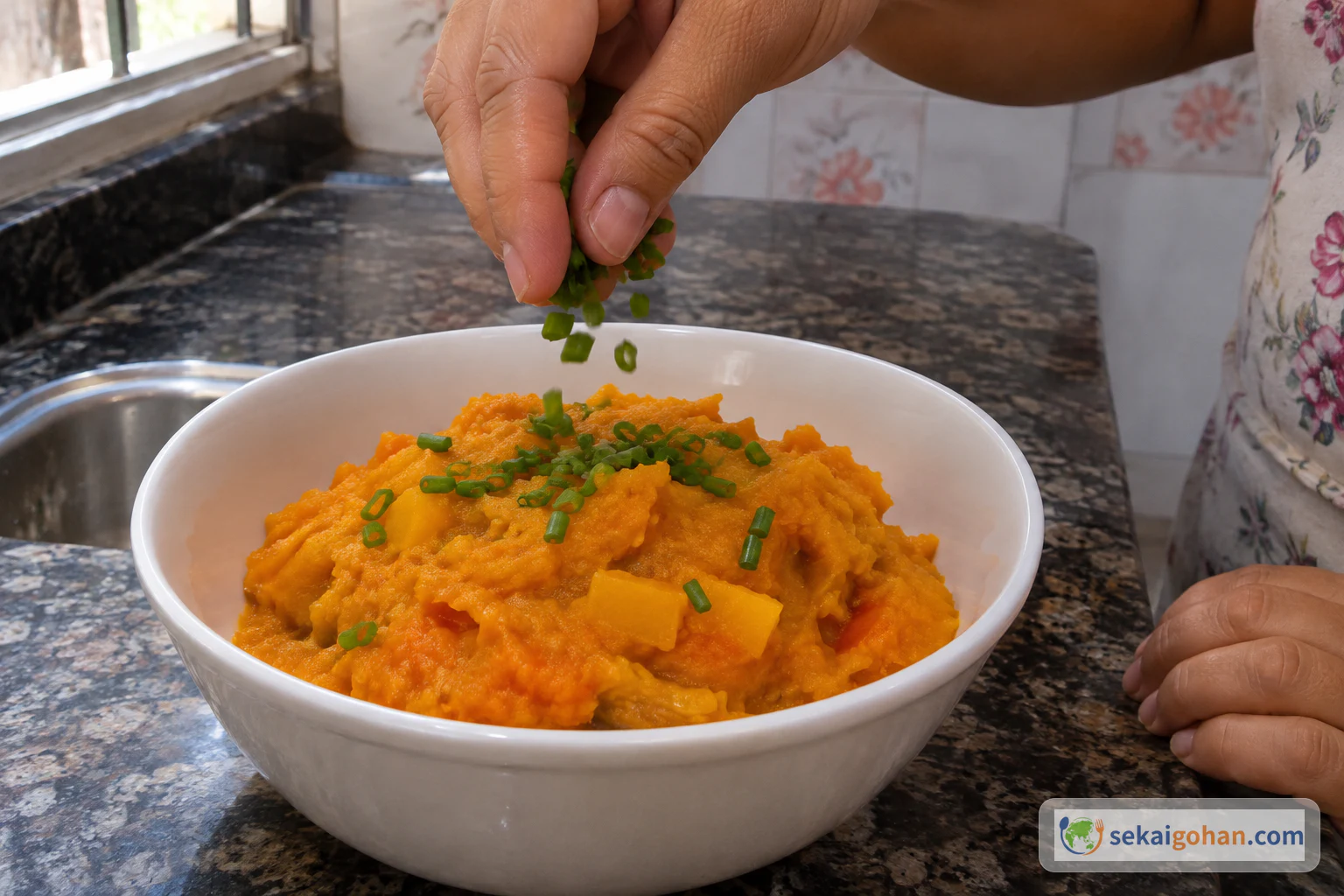
When you lift the lid, the pumpkin cubes have slumped. Their corners have gone soft, and they sit in a little orange juice that came out of the squash itself, because no water went into the pot. You push the back of a wooden spoon down, the cubes give way, and the pot fills with a coarse, glossy mash that smells of onion and garlic softened in olive oil. That is quibebe, a savory Brazilian pumpkin side dish. It tastes of the squash first, sweet and earthy, then salt and a slightly sharp green note from the chives scattered on top.
A Pumpkin Dish That Goes Beside Everything
Quibebe is a home dish. It sits next to the meat on the plate, the way a mash or a pile of greens would, and it is eaten with rice and beans, the everyday pair of the Brazilian table. It is cooked all over the country, and each region and household has its own version. Some cooks simmer it in water and others add only a splash. One sweeter style is thickened with cornmeal. The version here is the plainest of them: pumpkin, onion, garlic, olive oil, salt and chives, braised in its own moisture and mashed so that small chunks stay visible.
Where the name comes from
Where the word began is not settled. One explanation traces it to Kimbundu, a language of Angola, where it is read as "pumpkin food". This would give the dish an African root. Another view points out that squash is native to Central America and was cooked by Indigenous peoples long before that. On this view, quibebe is better seen as something African and Indigenous cooks made together. Both stories fit a dish this simple, and the pot does not need either one to be true.
Paraguay has a dish called kiveve, and the names quibebé, kiveve and quibebe are often listed together. The Paraguayan dish is sweet, almost a dessert, made with cornmeal, sugar and fresh cheese. Brazilian quibebe is a salted vegetable side. If a recipe calls for sugar, cornmeal and cheese, it is heading toward kiveve.
What it goes with
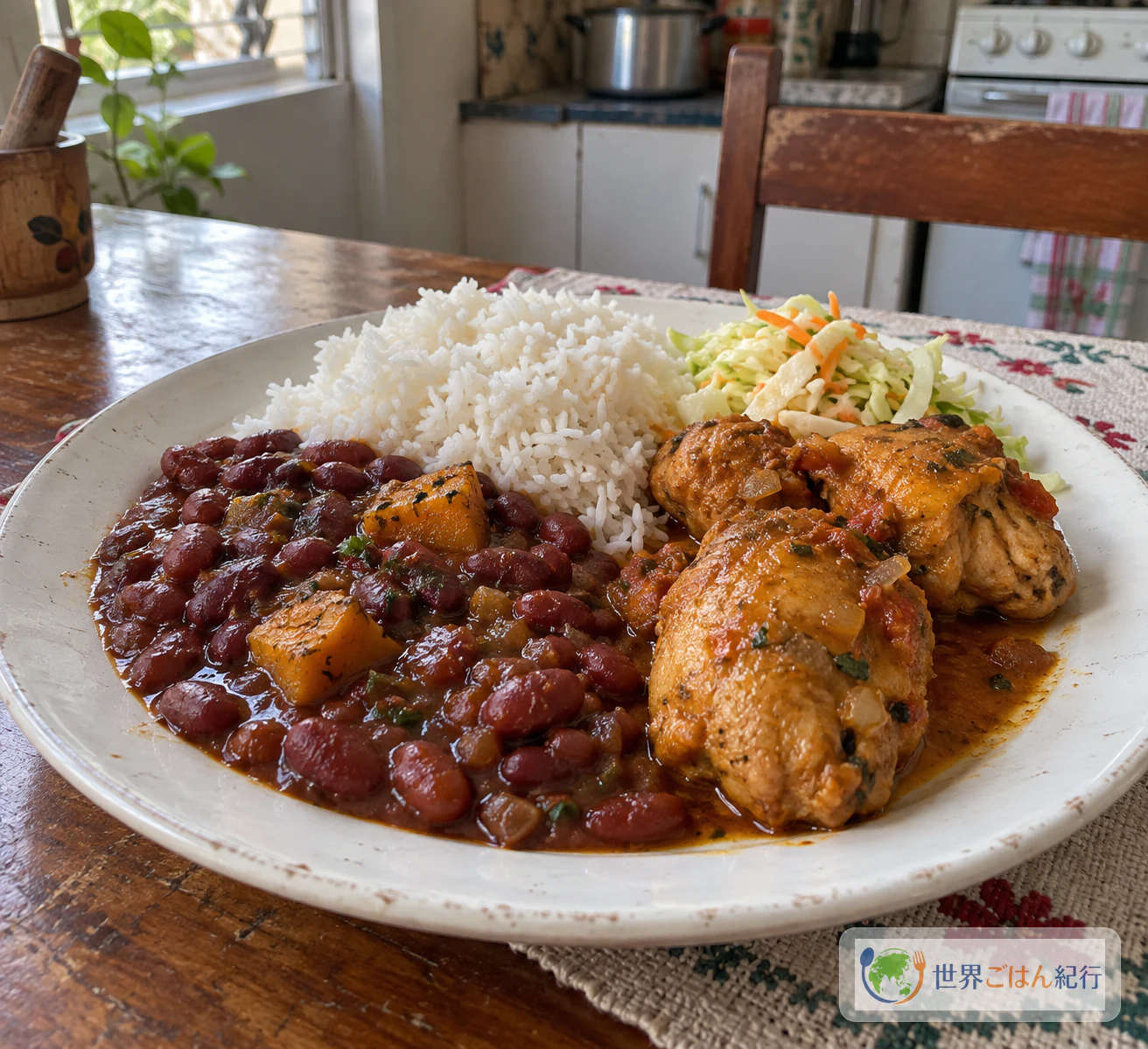
The classic partner is carne-seca, Brazilian salted dried beef, fried with onion and served hot with white rice and quibebe. It is also served with bacon, chicken or fish, or as the vegetable beside a pot of feijoada or a platter of grilled meat from a churrasco. A spoonful of farofa gives a dry, toasty crunch against the soft mash. The okra stew caruru is another vegetable dish of the same table, but it fills a different place in the meal. For more of the country's cooking, see our Brazil page.
Ingredients (serves 4 to 5)
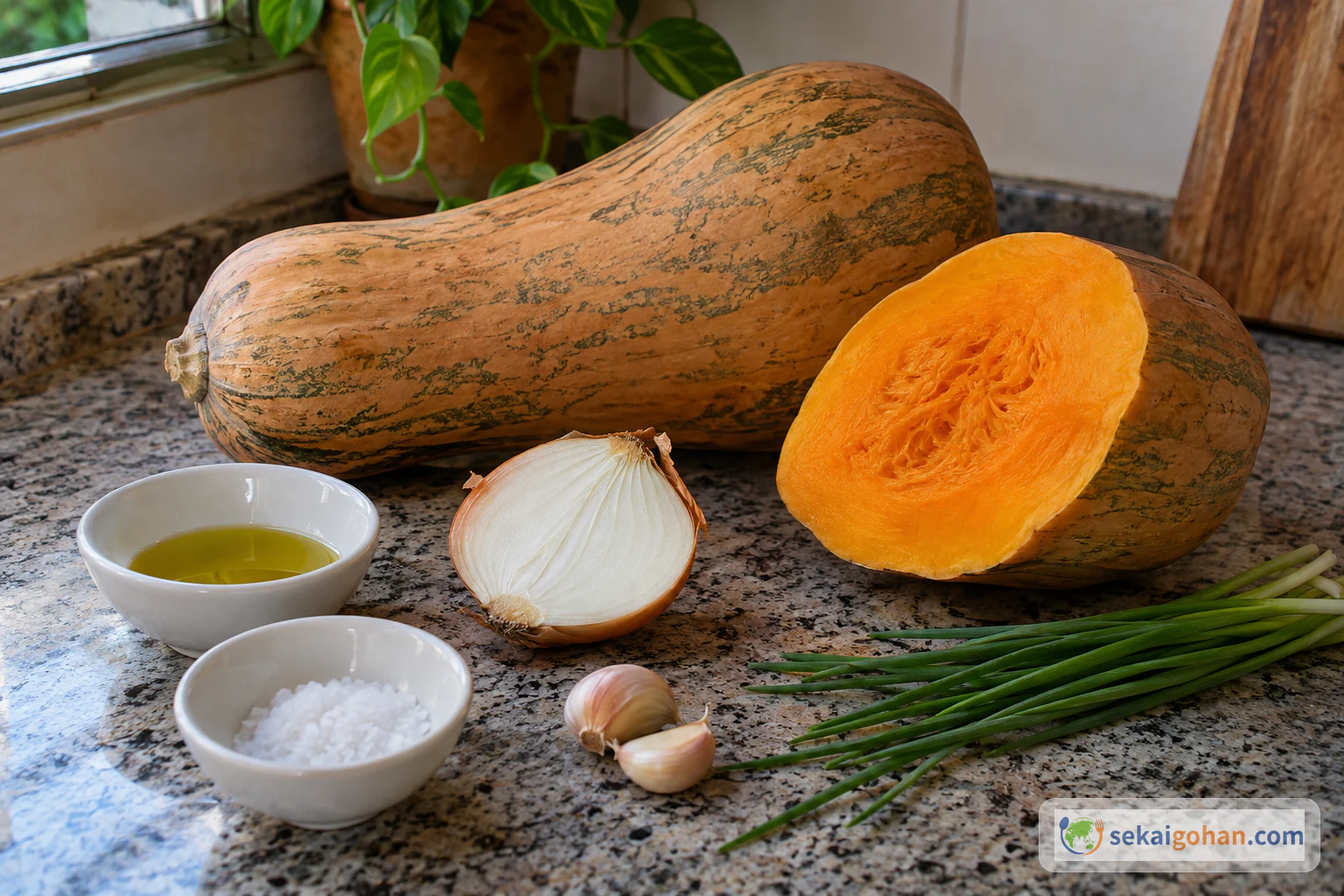
The base recipe uses no wheat, dairy or eggs. If you serve it with carne-seca, bacon or other processed meats, check those products' labels separately.
Equipment
- A large heavy pot with a tight-fitting lid
- A wooden spoon
- A sturdy chef's knife and a cutting board
- A spoon for scraping out seeds
Choosing the Squash and the Green
The main recipe here is made with abóbora de pescoço, a long-necked pumpkin with dense orange flesh. Outside Brazil, butternut squash is the closest in shape and texture. It has the same solid neck, which is easy to peel and cube, and it holds enough moisture to braise without water. Look for one that feels heavy for its size, with a long neck and a small seed bulb.
Japanese kabocha also works, but it changes the dish. Its flesh is starchier and drier, so the mash comes out thicker and fluffier, and the pot can catch on the bottom before the squash releases enough juice.
For the green, Brazilian cebolinha is a slender green onion. Chives or the green tops of scallions are a direct swap with the same mild bite. Parsley and black pepper belong to other versions of the dish. Leave them out here if you want the plain, pumpkin-forward taste.
A dense, sweet squash like butternut gives you a mash that holds small chunks and shines with oil. If all you can find is a watery pumpkin, plan to cook it uncovered for longer at the end.
Method: Braise in Its Own Juice, Then Mash Coarsely
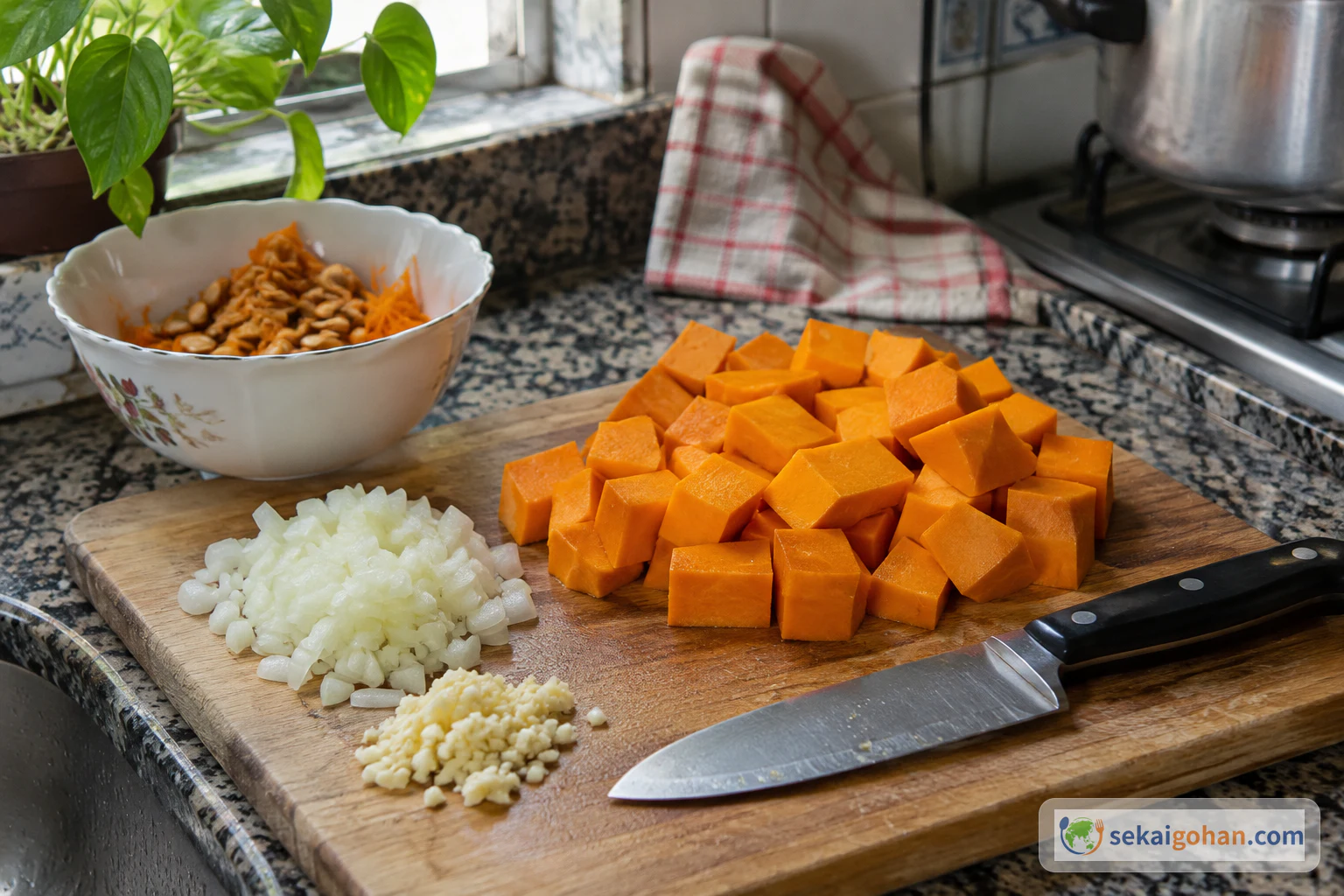
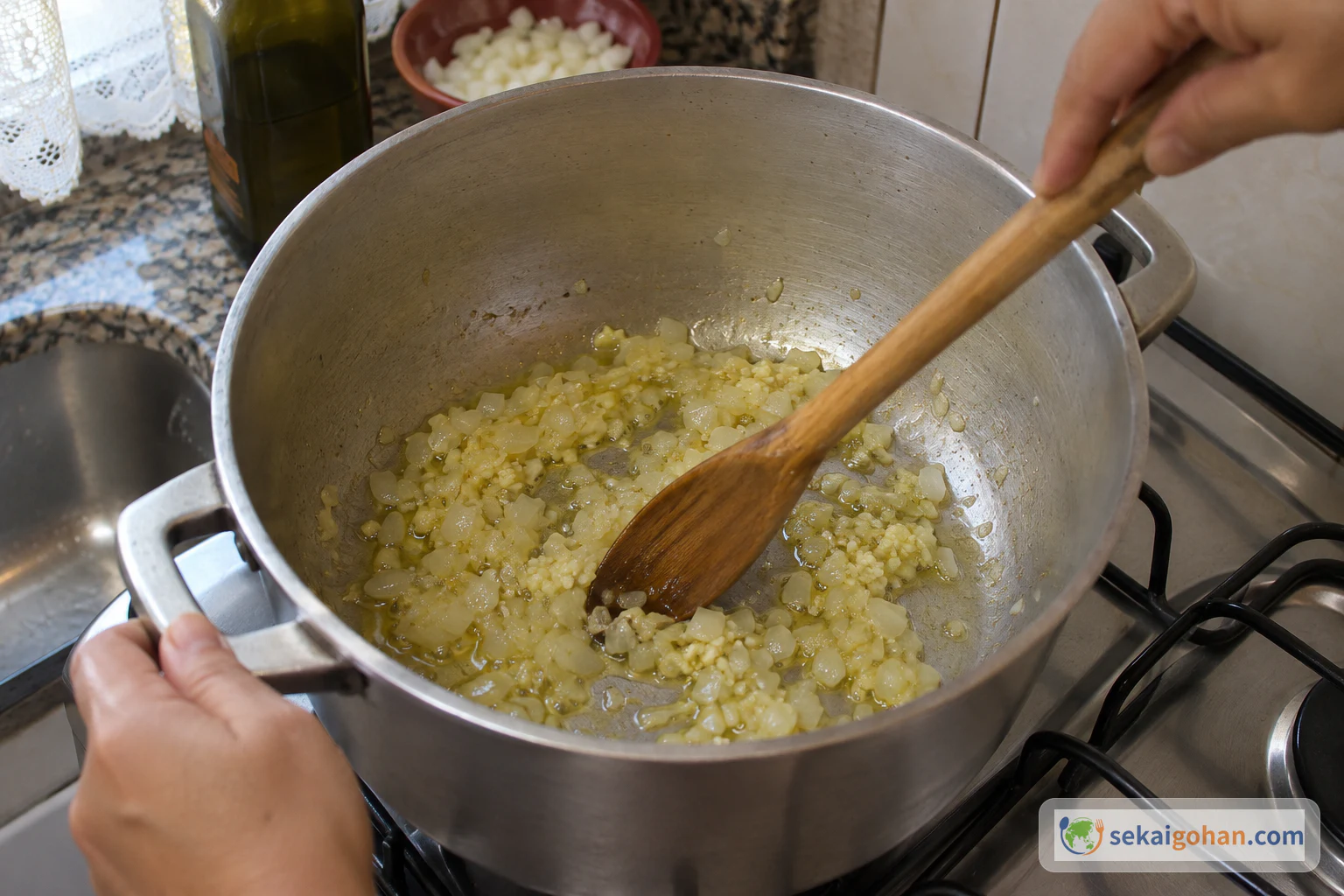
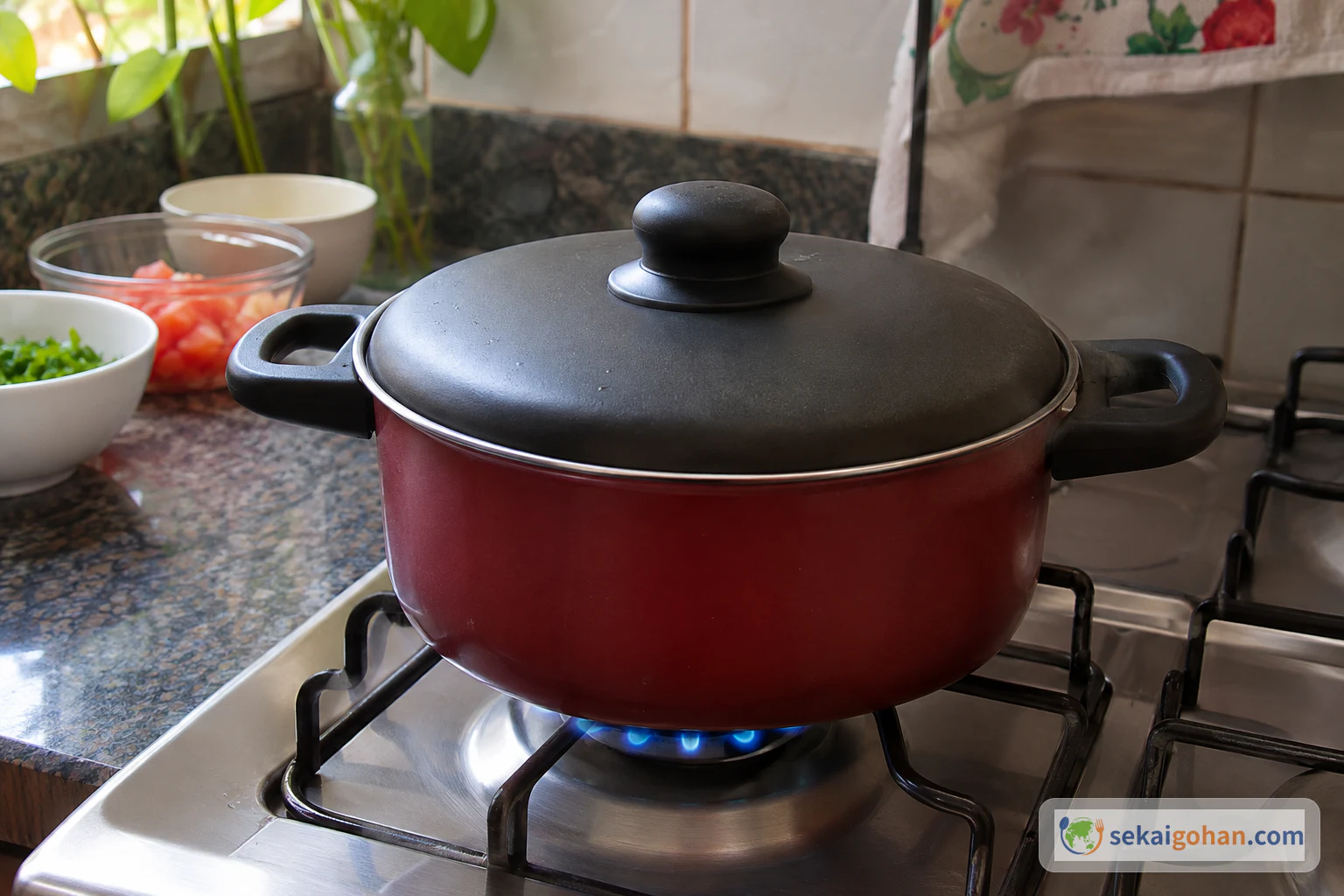
All the cutting happens first, and once the pot is on, the dish moves quickly. Have the pumpkin cubed and the onion and garlic minced before you heat the oil. The whole dish comes together in about 30 minutes. The only hands-off stretch is the five minutes under the lid, and the heat stays at medium the whole way through.
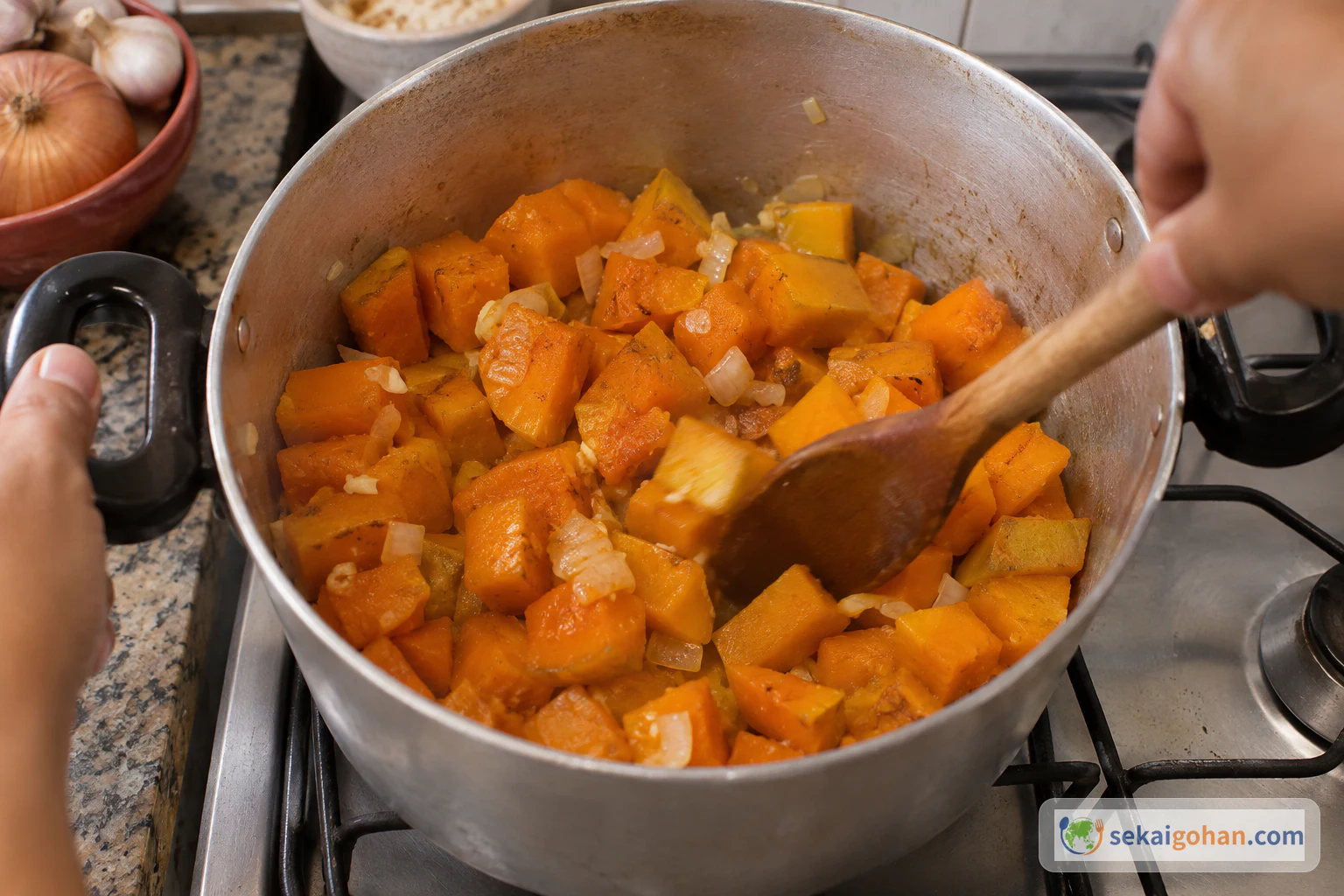
All the liquid comes from the squash, which keeps the flavor concentrated and the color deep. Add water only if the bottom of the pot starts to catch, and then just 1 to 2 tbsp at a time.
A spoon gives you the right texture. A blender or a potato masher worked too long turns quibebe into baby food. Stop as soon as most of it has collapsed.
When It Goes Wrong
| What you see | Why | What to do |
|---|---|---|
| The bottom sticks and smells toasty | A dry, starchy squash such as kabocha has not released enough juice | Scrape the bottom, add 1 to 2 tbsp water, and keep stirring |
| The mash is loose and watery | A watery pumpkin, or the lid stayed on too long | Take the lid off and cook over medium heat, stirring, until the extra liquid cooks off |
| Cubes resist the spoon at the mashing stage | The cubes were cut too big or unevenly | Cover again and keep cooking until a cube crushes under light pressure |
| A bitter edge under the sweetness | The garlic browned in step 2 | Next time, add the garlic only after the onion has softened and keep it pale |
| It tastes flat | Not enough salt for the size of your squash | Salt a pinch at a time at the end and taste between pinches |
Serving and Variations
On the table
Serve quibebe hot, straight from the pot, as the vegetable beside the main dish. For an everyday plate, put it next to white rice, beans and grilled or stewed meat. Chicken and fish work as well as beef. For the most Brazilian plate, serve it with carne-seca fried with onion and a mound of white rice. Carne-seca is salted, cured beef and a different product from beef jerky, so jerky is not a substitute. Crisp bacon gives a similar salty contrast and is easier to find.
Other ways it is made
- Simmered in water. This version uses more onion, adds parsley and black pepper, and simmers 4½ lb (2 kg) of ripe pumpkin in 2 cups (480 ml) of water, covered, over low heat. The result is looser and milder, closer to a thick stew.
- A splash of water and parsley. Here the squash is braised covered over low heat with only a little water, which gives a softer mash with a herbal finish.
- Sweet, thickened with cornmeal. In this version 4½ lb (2 kg) of pumpkin is boiled, drained and mashed. Then 2 tbsp sugar and salt are stirred in for 5 minutes, and ½ cup of cornmeal goes in after the heat is off. It turns sweet and dense, and it moves toward the Paraguayan kiveve.
Keep each version's amounts together rather than mixing them. The water and sugar change the dish too much to swap one ingredient at a time.
Frequently asked questions
Can I use a blender or food processor?
You can, but you will get a smooth purée, which is a different dish. Quibebe should feel rustic in the mouth, with soft chunks of squash through the mash. A wooden spoon in the pot gives exactly that and saves you a machine to wash.
I can't find carne-seca. What should I serve it with?
Serve it with any meat on the menu: grilled steak, roast chicken, pan-fried fish or crisp bacon. Rice and beans alone also make it a full meal. Carne-seca is a pairing, not part of the recipe, so the mash itself does not change.
Is quibebe vegan?
The base recipe is pumpkin, onion, garlic, olive oil, salt and chives, so it is plant-based as written. It stays vegan as long as you serve it with rice and beans and leave out the meat.