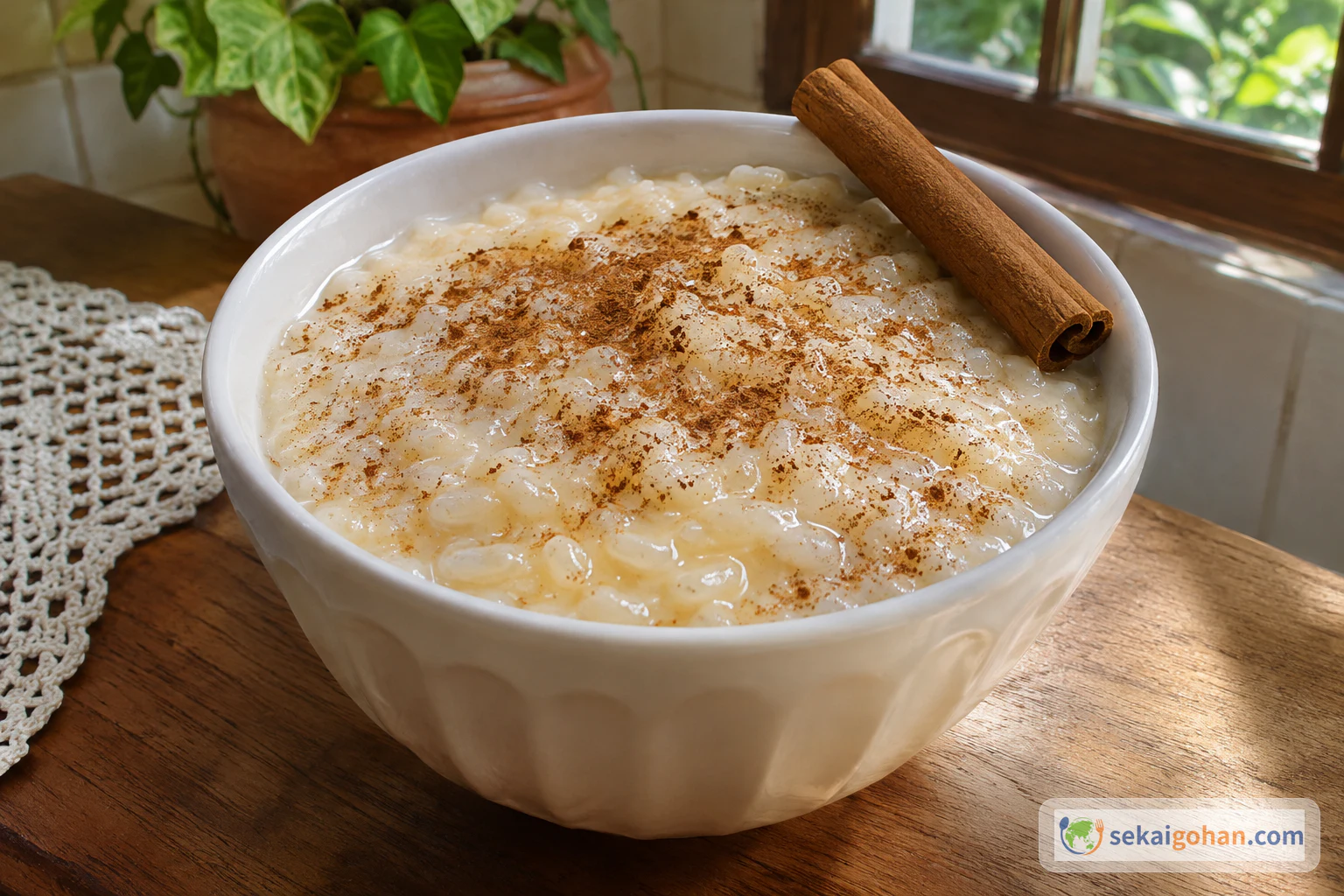
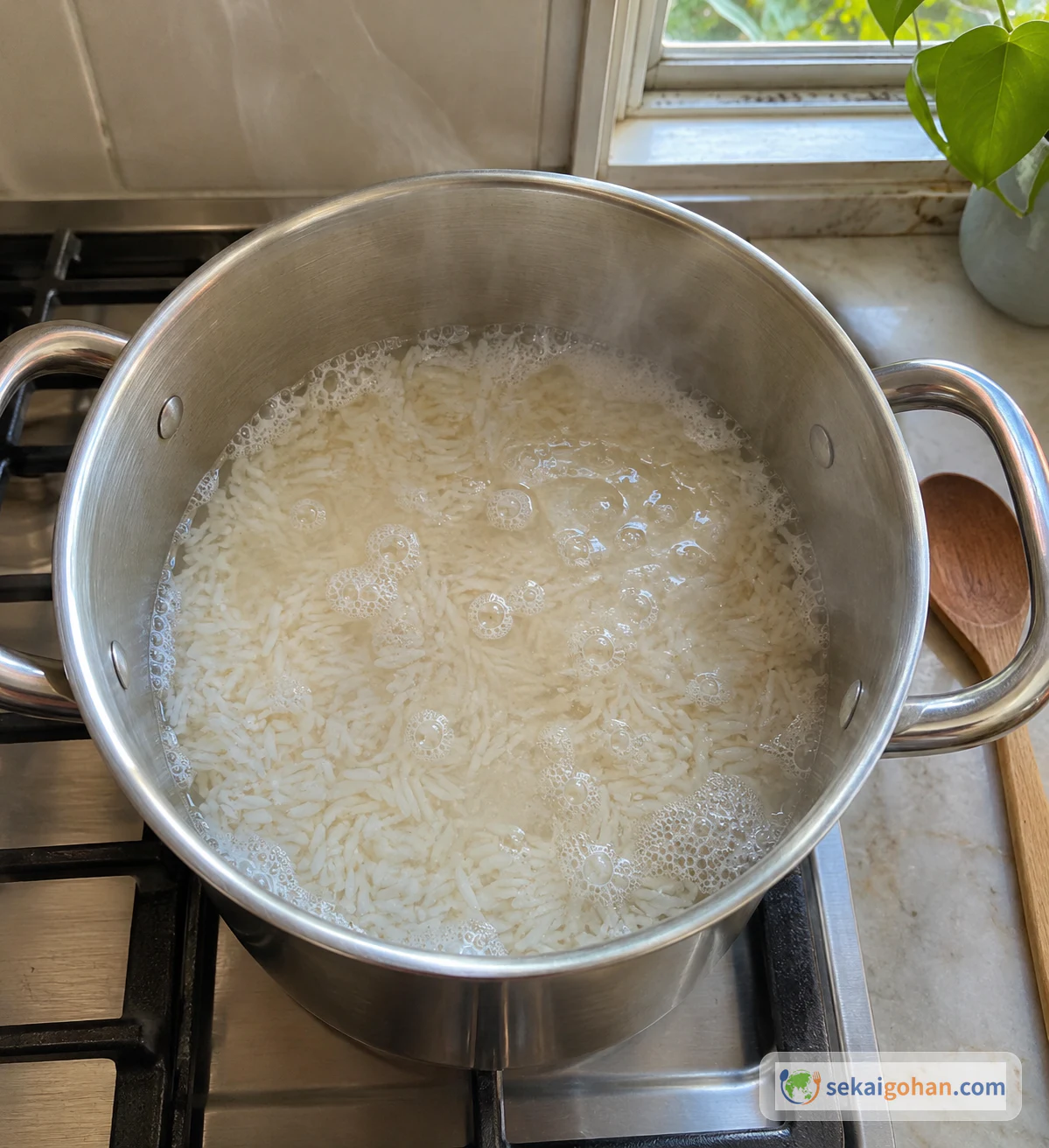
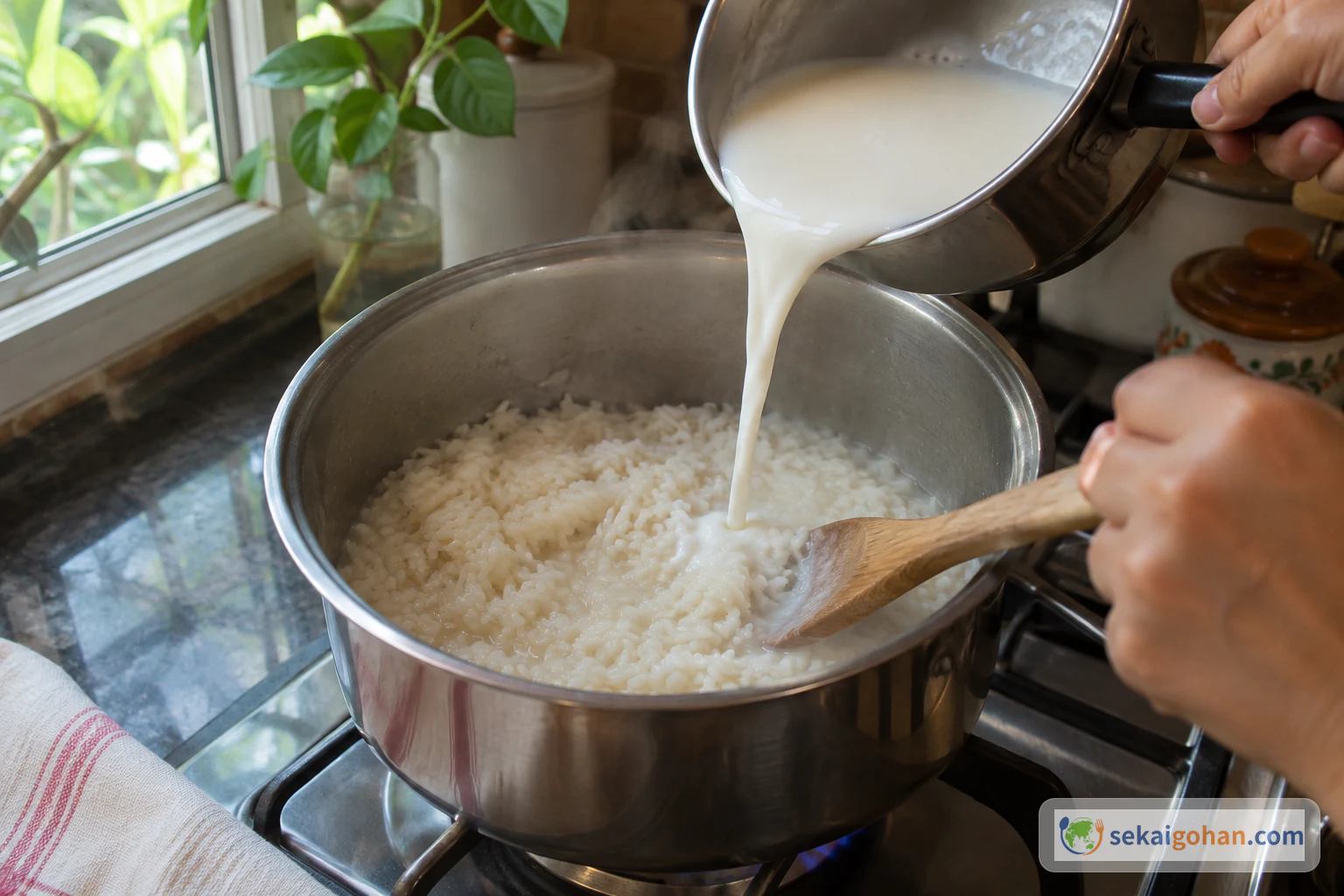
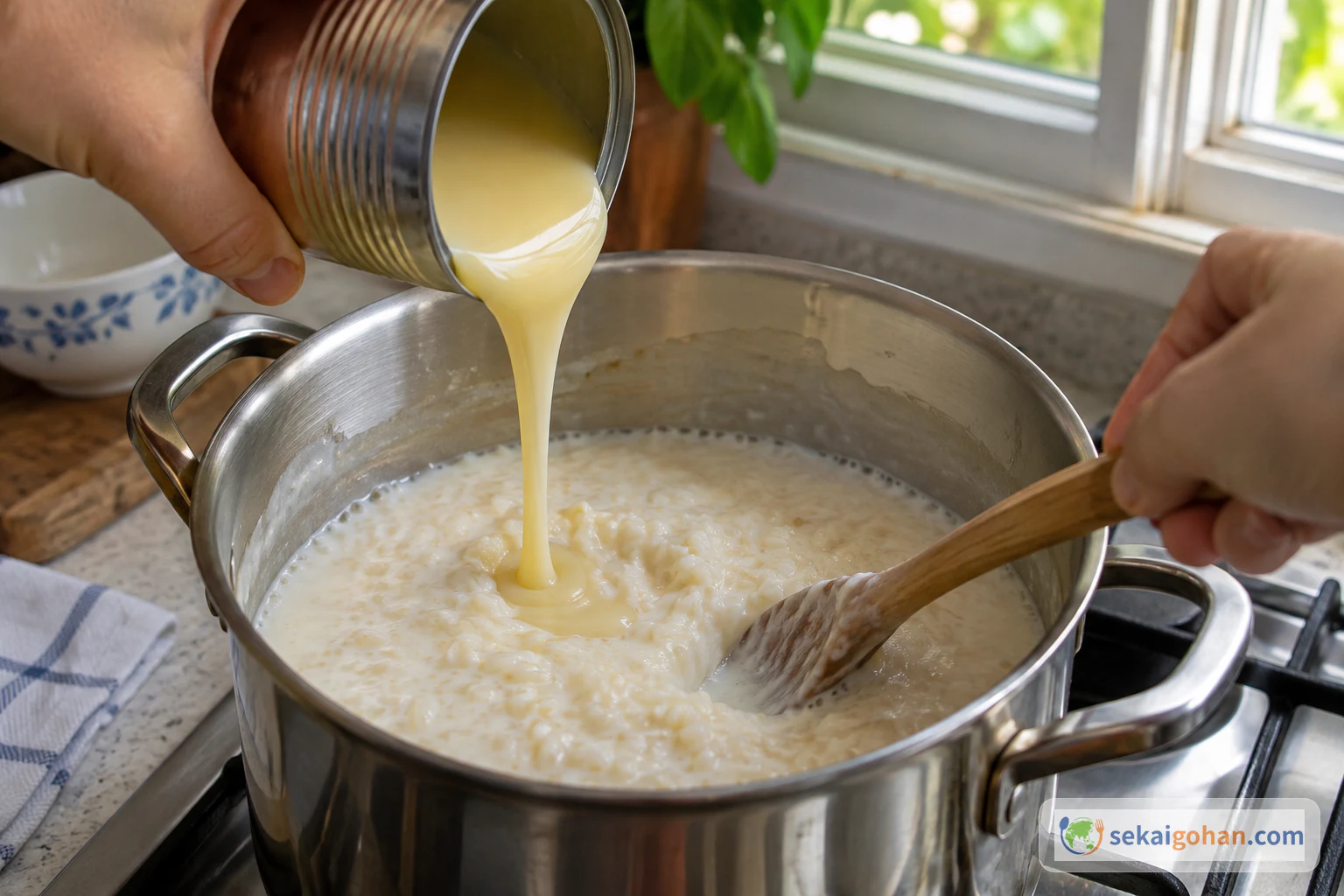
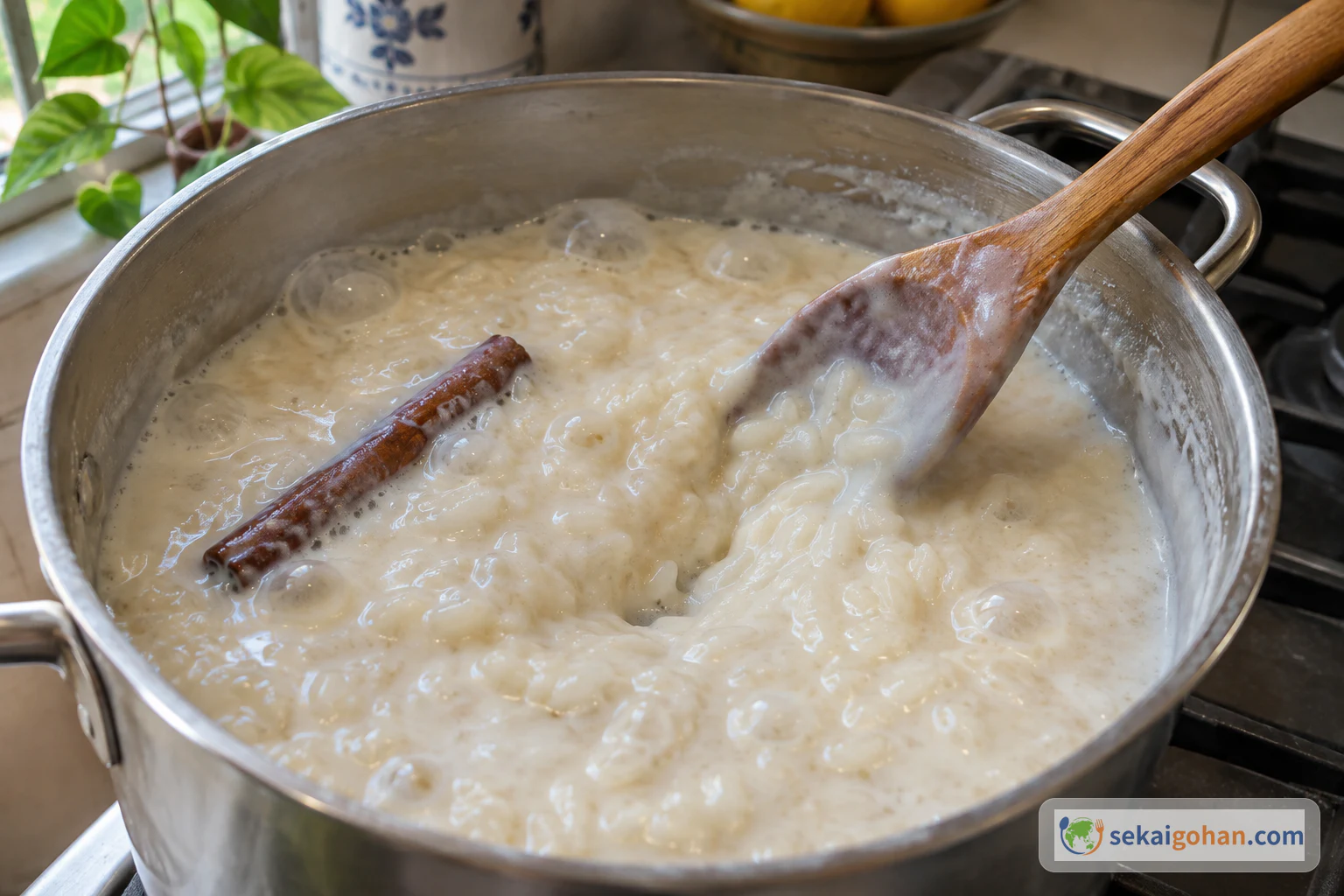
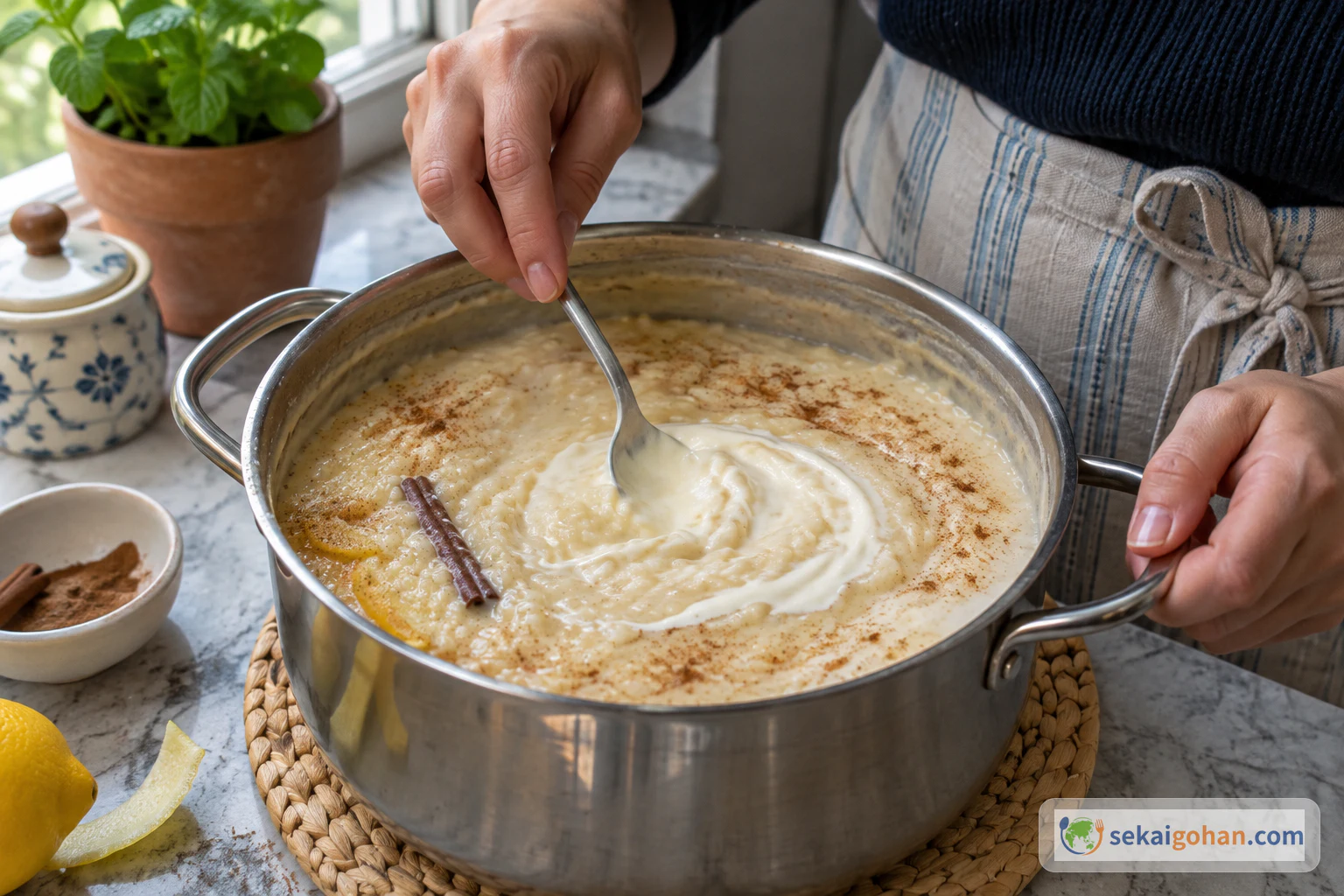
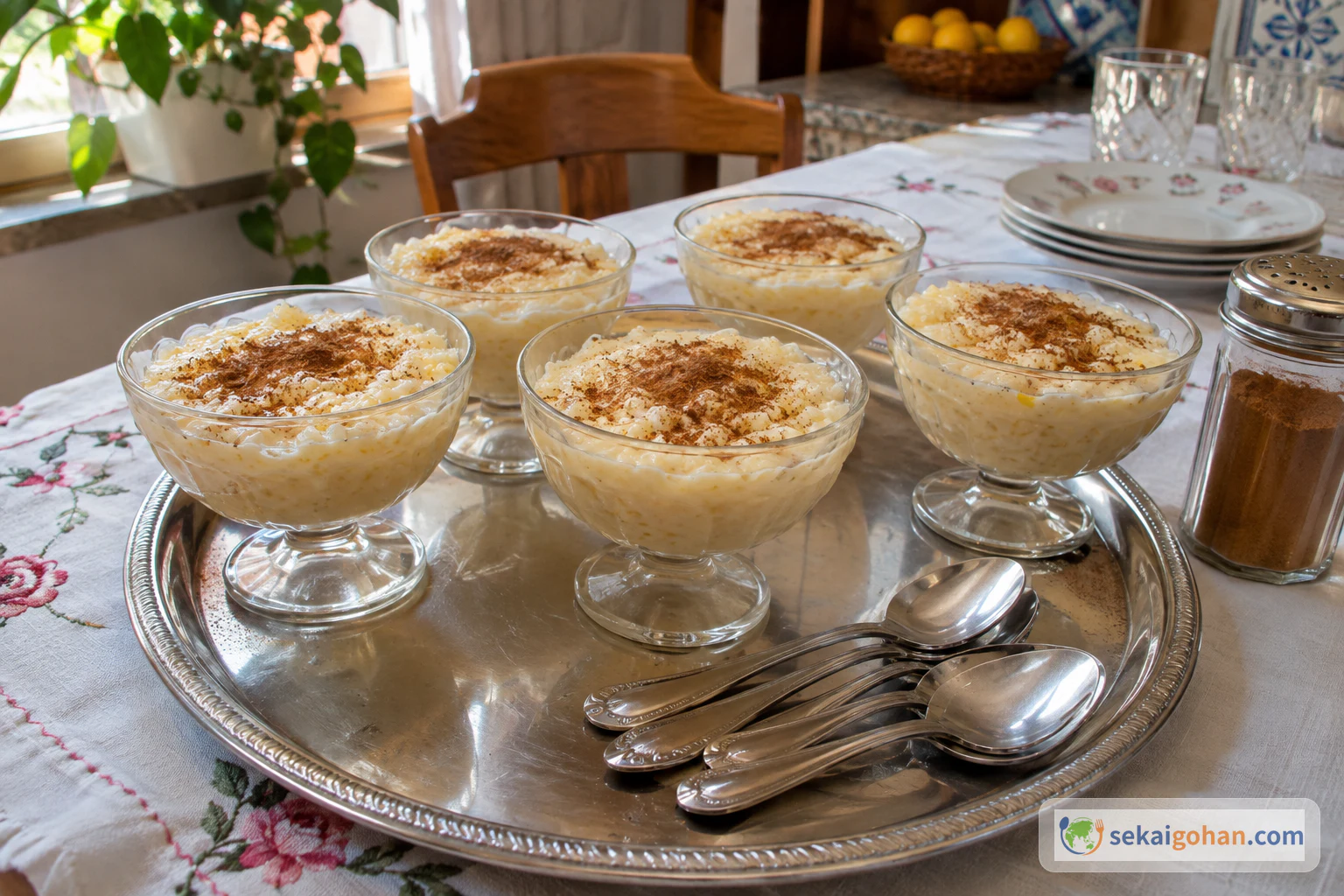
The moment that matters comes after the hot milk goes in. The rice has already softened in water, the condensed milk slides off the spoon in a thick ribbon, and within a couple of minutes the pot turns from thin and white to pale, glossy and creamy. A cinnamon stick goes under the surface, and the kitchen starts to smell of warm milk and spice. Arroz doce is Brazil's sweet rice cooked in milk, made rich with sweetened condensed milk and finished with cream stirred in off the heat. It is soft, milky and gently sweet, and it is just as good warm from the pot as it is cold from the fridge with a dusting of ground cinnamon on top.
A Portuguese Sweet That Became Brazilian
The name means "sweet rice," and the dish arrived in Brazil from Portugal. It is usually said to have come over with Portuguese settlers. In Portugal, arroz doce has been part of the sweets kitchen since the Middle Ages, and it is essential on the Christmas table there. Portuguese cookbooks from the sixteenth century to the present show a recipe that barely changes across all that time. Further back, where rice cooked in milk and sugar began is not settled. One line traces it from Persia to the Arab world and then into the Iberian Peninsula after 711, and the Moorish influence on Portuguese sweets is often named in the same breath.
The Brazilian pot took its own turn. The Portuguese version leans on short-grain carolino rice, sugar, cinnamon and lemon, with egg yolks stirred in at the end for a custardy finish. The Brazilian home version drops the eggs and the lemon and builds its body from condensed milk and cream instead. The result is smoother and milkier, with a caramel-like depth that comes from the condensed milk rather than from yolks.
In the south of Brazil the same dessert also goes by arroz de leite, "milk rice." Either name gets you the same bowl of creamy rice and cinnamon.
Where it sits among Brazilian sweets
Arroz doce shares the Brazilian dessert table with pudim, the caramel flan, and quindim, the glossy egg-yolk and coconut sweet, and it is the easiest of the three to make on a weeknight. It needs one pot, a spoon and patience at the stove. Households change it freely. Some cook cloves with the rice, some add orange peel or vanilla, and others replace the condensed milk with doce de leite or pour the rice over caramel. You can find more of the country's home cooking on the Brazil page.
Ingredients (serves 8)
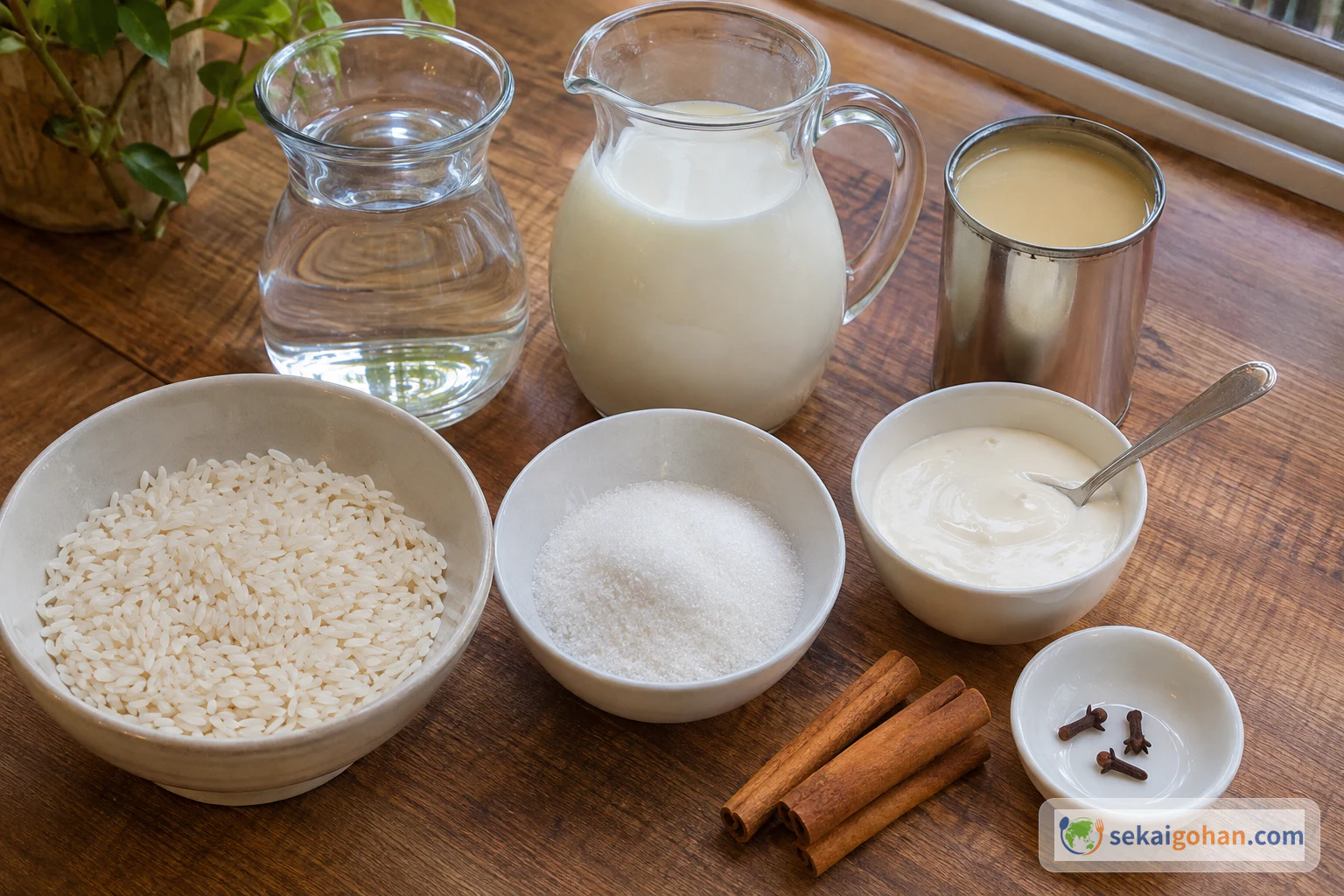
The condensed milk carries most of the sweetness. Add the sugar only after the condensed milk is in and you have tasted the pot; some cooks use all of it, others none.
Arroz doce contains milk in three forms: whole milk, condensed milk and cream. It is not suitable for anyone with a milk allergy.
Equipment
- A large, heavy-bottomed pot
- A small saucepan for heating the milk
- A wooden spoon or silicone spatula for long stirring
- Heatproof glass dessert cups or bowls for serving
Choosing and Substituting
The cream is the one ingredient to think about. Brazilian creme de leite comes in a small box and is a light cooking cream with a fairly low fat content. Heavy cream is much richer, so if that is what you have, stir it in a little at a time and taste as you go rather than adding the whole amount at once. The finish will be fuller and heavier than the Brazilian version.
Short-grain white rice gives the closest texture, and ordinary white rice works well. Buy sweetened condensed milk in a can, not unsweetened evaporated milk, which gives neither the sweetness nor the thickness. Squeeze tubes of condensed milk hold a different amount from the can, so measure out 14 oz (395 g) if you buy tubes. Cinnamon sticks are worth finding in the spice aisle or at a Latin American grocer; they give the pot its aroma.
What keeps the dish tasting Brazilian is the order of the work and three ingredients: rice cooked in water first, condensed milk for body and cinnamon for scent. Cloves, orange peel, vanilla and salt are household touches. Leave them out and you still have the dish.
Method
The work is one pot from start to finish, with milk warmed alongside it in a small saucepan. Heat the milk while the rice cooks in water so it is ready the moment the grains reach al dente. After that, the job is stirring; the pot needs your spoon almost the whole time, especially once the condensed milk goes in and the mixture starts to catch on the bottom.
When It Goes Wrong
| What you see | Why | What to do |
|---|---|---|
| The grains stay hard after long cooking | The milk went in before the rice softened in water | Next time, cook the rice in water to al dente first. Now, add a little water and keep stirring over low heat until the centers soften |
| The bottom scorches | Thin pot, high heat, or too little stirring after the condensed milk | Use a heavy-bottomed pot and lower the heat. Do not scrape up burnt bits; pour the rest into a clean pot |
| The milk boils over | Heat too high when the milk returned to a boil | Lower the heat as soon as foam starts to climb and keep stirring |
| The cream looks split or grainy | Cream added while the pot was still on the heat | Always turn the heat off first, then fold in the cream |
| It is solid after chilling | It keeps thickening as it cools | Stir in a little milk to loosen it before serving |
| It tastes too sweet | All the sugar went in before tasting | Add the sugar only after the condensed milk, tasting first |
Serving, Variations and Storage
Arroz doce works as an everyday dessert after a family meal and as something to bring to a gathering, since it holds well in a large dish or individual cups. Served warm, it is loose and comforting. Served cold, it firms into a spoonable, creamy pudding, and the cinnamon on top stays crisp and aromatic.
Variations
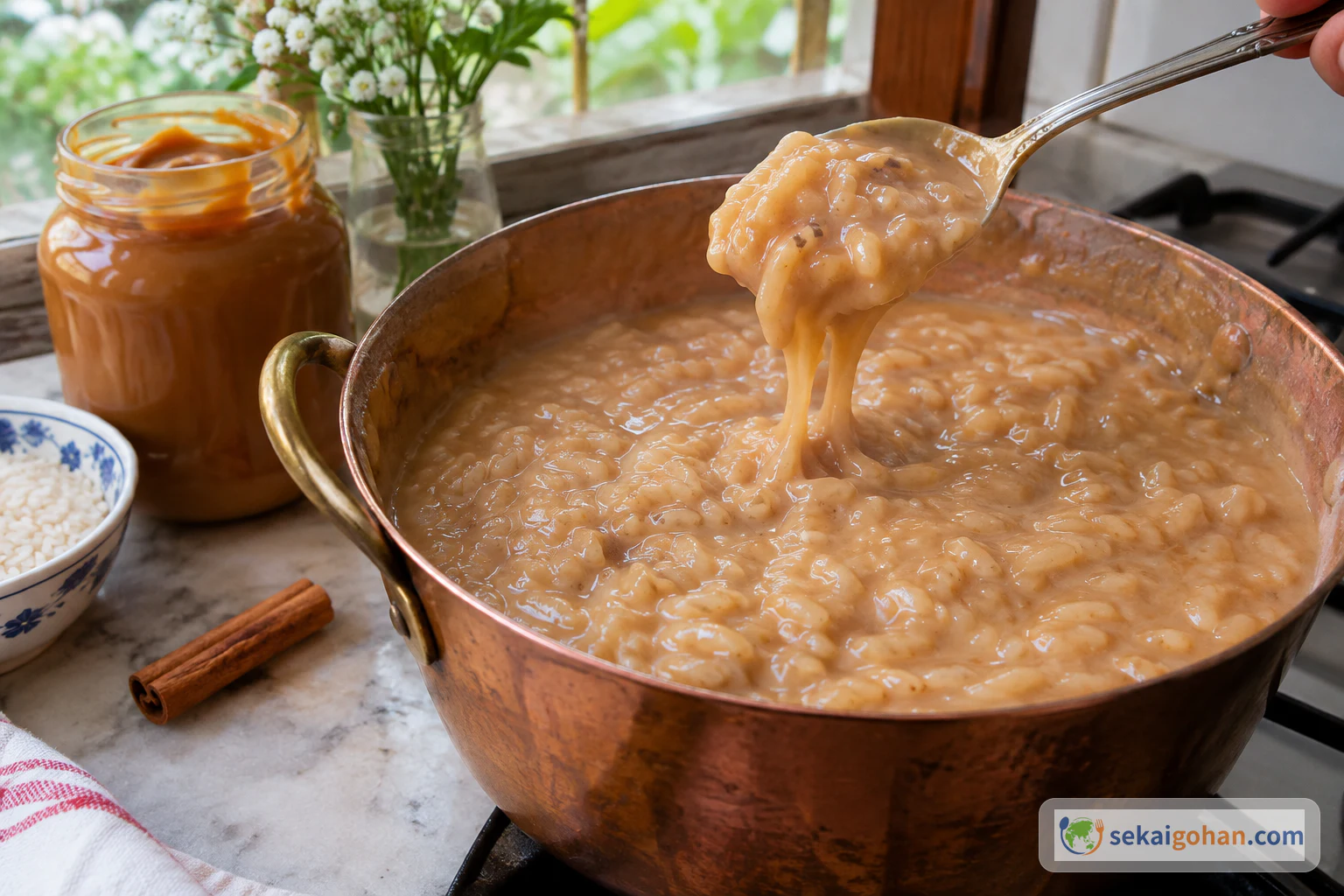
- With doce de leite. A separate mix that replaces the condensed milk and cream: 1 cup rice, 4 cups milk, 14 oz (400 g) doce de leite, a cinnamon stick and, if you like, 2 cloves. It cooks to a caramel-beige color with a deeper, toasted-milk flavor.
- Moreninho, with caramel. Some households pour arroz doce over a sugar and water caramel. The caramel adds a bitter-sweet edge and a darker color to the creamy rice.
- With cloves, orange peel or vanilla. Cloves cook with the rice from the start and add a warm, spiced note. Orange peel brings a fresh citrus aroma, and vanilla rounds out the sweetness.
Storage
Do not leave it out at room temperature; it is made of milk and cooked rice. Let it cool, then refrigerate it promptly in a covered container. It firms up in the fridge, so loosen it with a little milk when you reheat it or before serving it cold.
Frequently asked questions
Can I make it without condensed milk?
Yes. Make the doce de leite version, which uses milk and doce de leite in place of the condensed milk and cream. It comes out darker and tastes more of caramel.
Can I freeze arroz doce?
Yes. Freeze it in a covered container. When you reheat it, add a little milk and stir until it turns creamy again.
Is this the same as the sweet rice used in Asian desserts?
No. In Chinese and Southeast Asian kitchens, sweet rice usually means glutinous sticky rice. Brazilian arroz doce uses ordinary white rice cooked in milk, which keeps the grains soft and separate in a creamy liquid rather than chewy and sticky.
Should I add the sugar if I already used condensed milk?
Taste first. The condensed milk makes the pot sweet already, and the sugar is there only to bring it to your own taste. Many bowls need little or none.