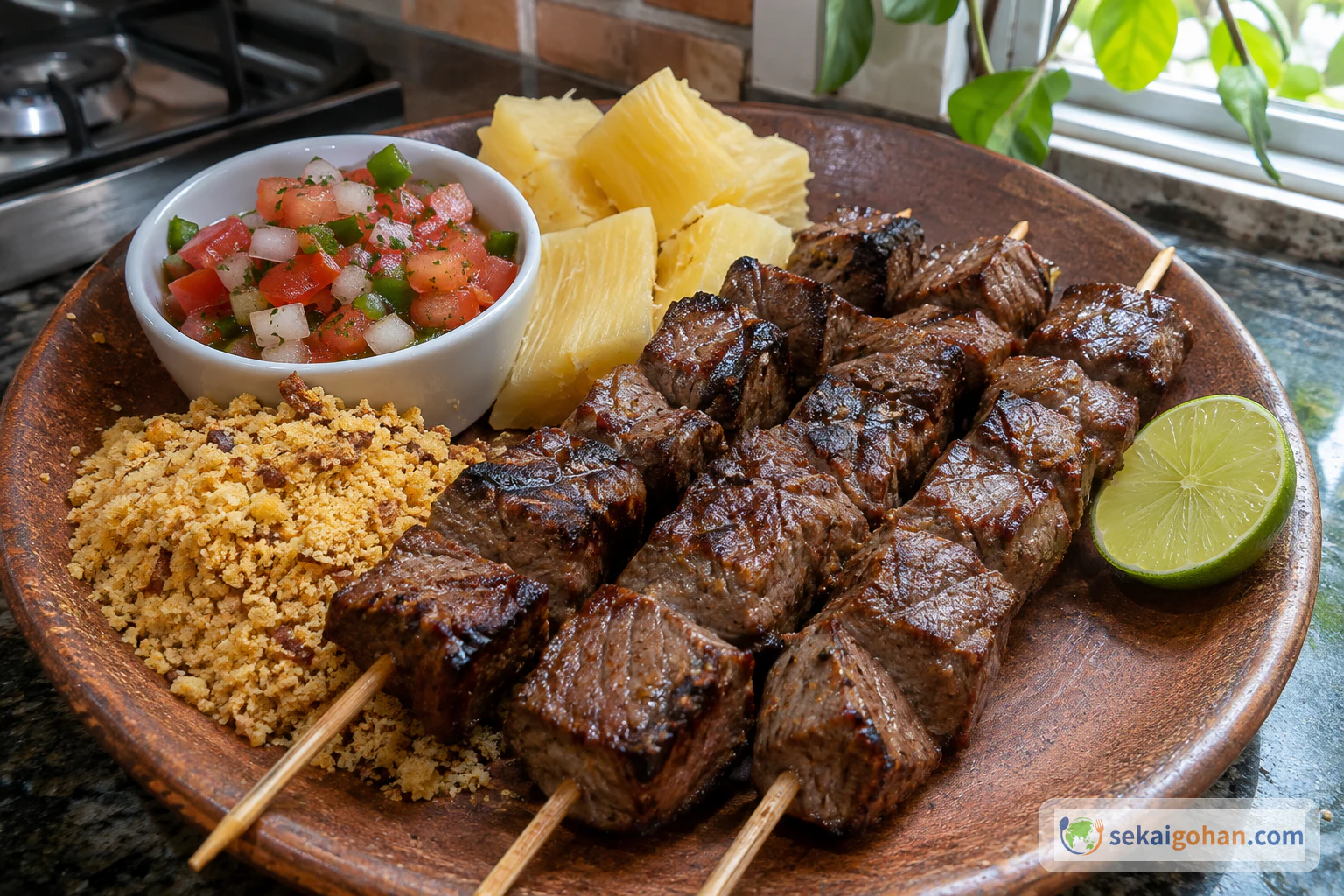
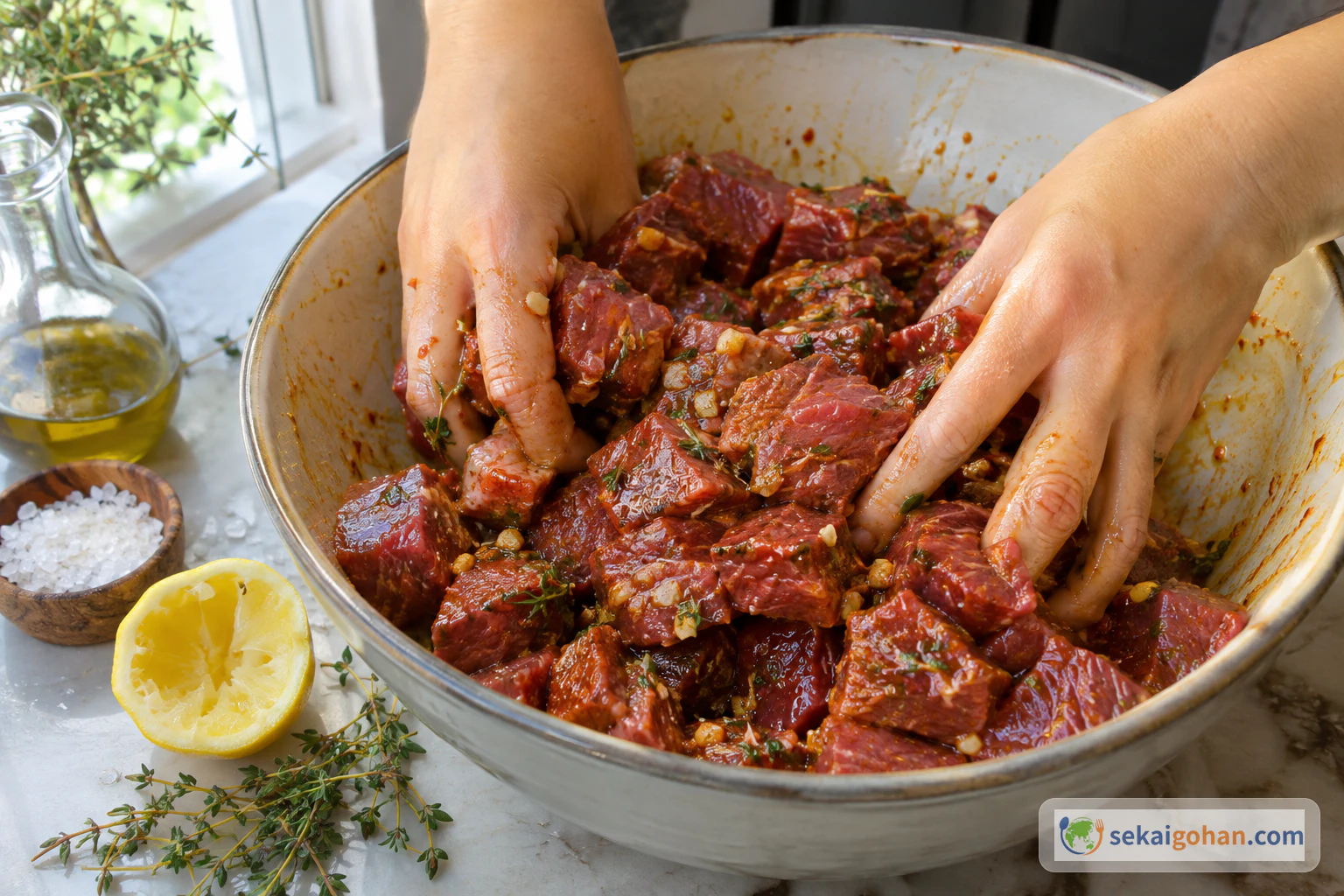
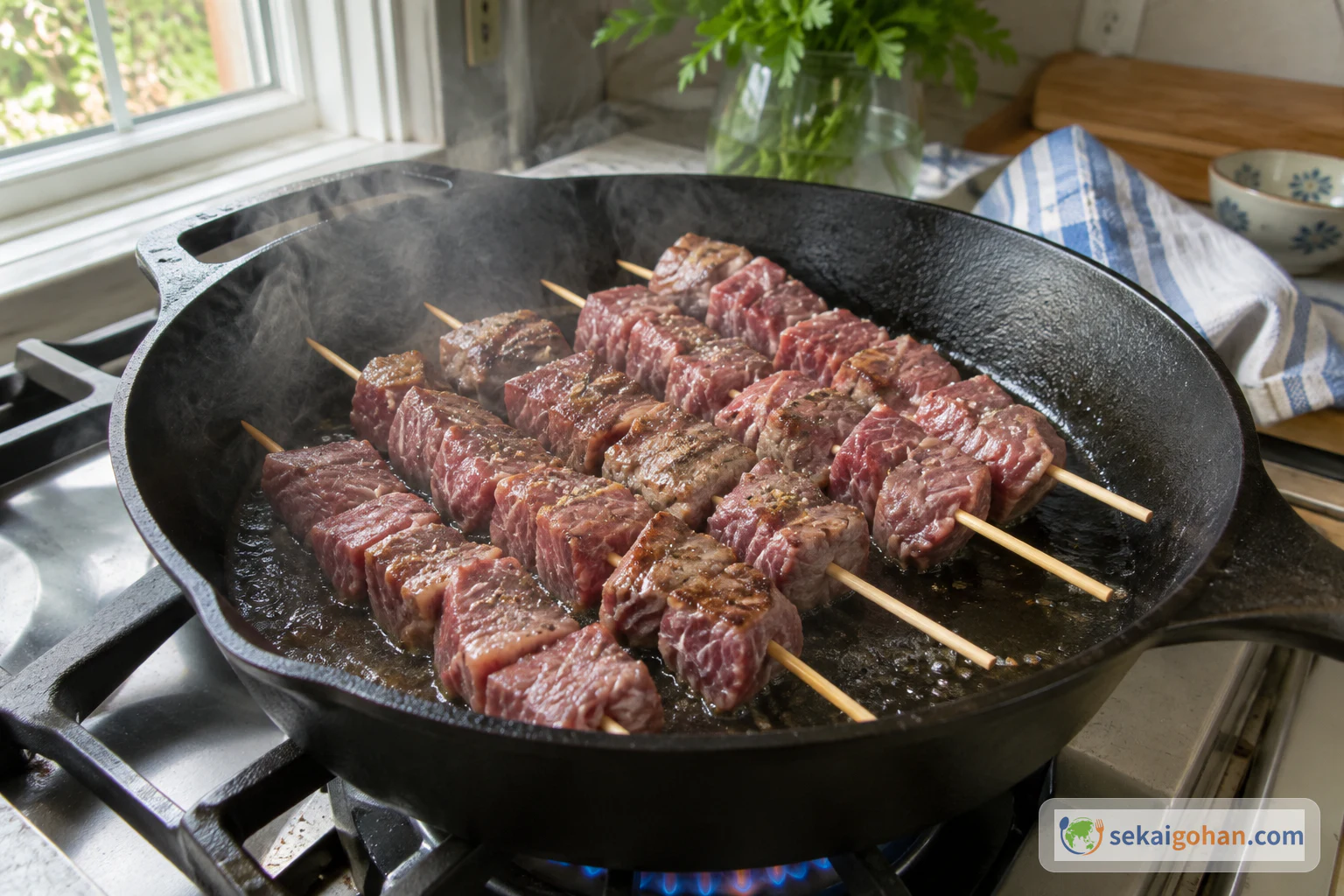
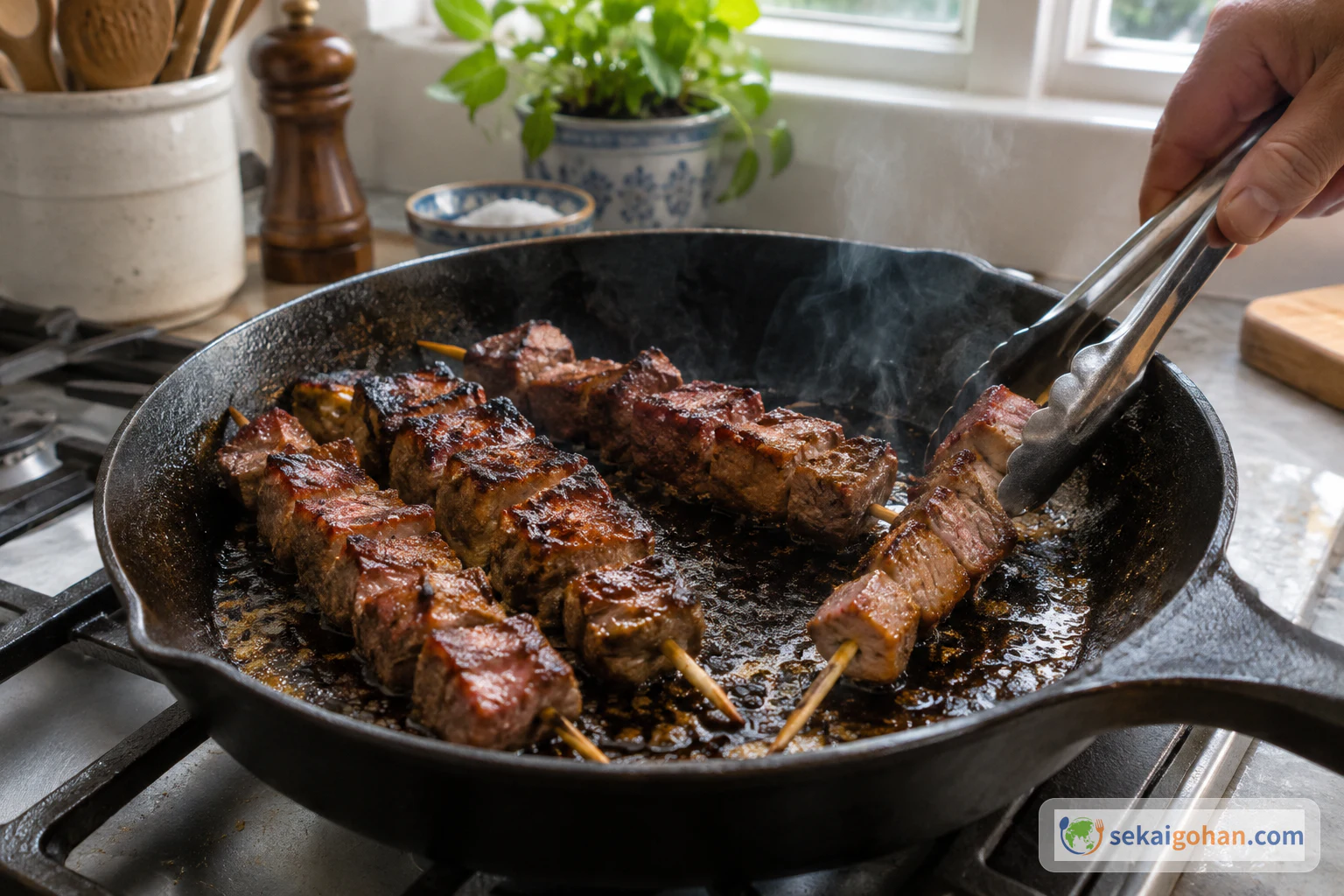
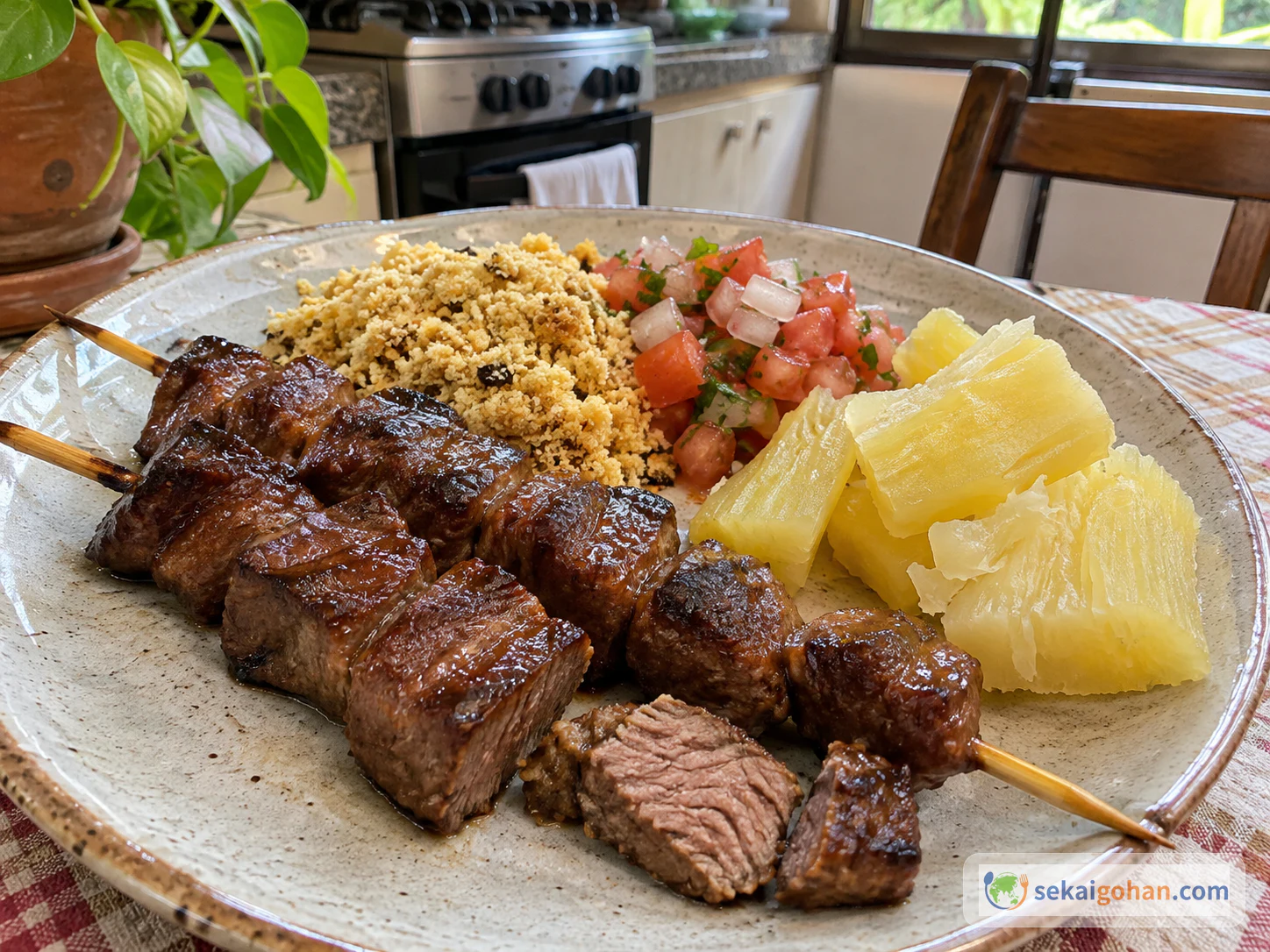
After work, a cart with a grill parks on the pavement. A few tables and chairs go out next to it, and rows of small skewers start to hiss over the heat. People stop on the way home, take a skewer in one hand and eat it with farofa and a spoonful of chopped tomato salad. That is espetinho: cubes of beef marinated in lemon, garlic, thyme and two kinds of paprika, threaded onto a thin bamboo stick and seared until the edges darken and turn crisp. The meat tastes bright and garlicky, with a mild warmth from the hot paprika. At home it goes into a very hot skillet, and the cubes come out browned outside and juicy inside.
Small Skewers From the Sidewalk Grill
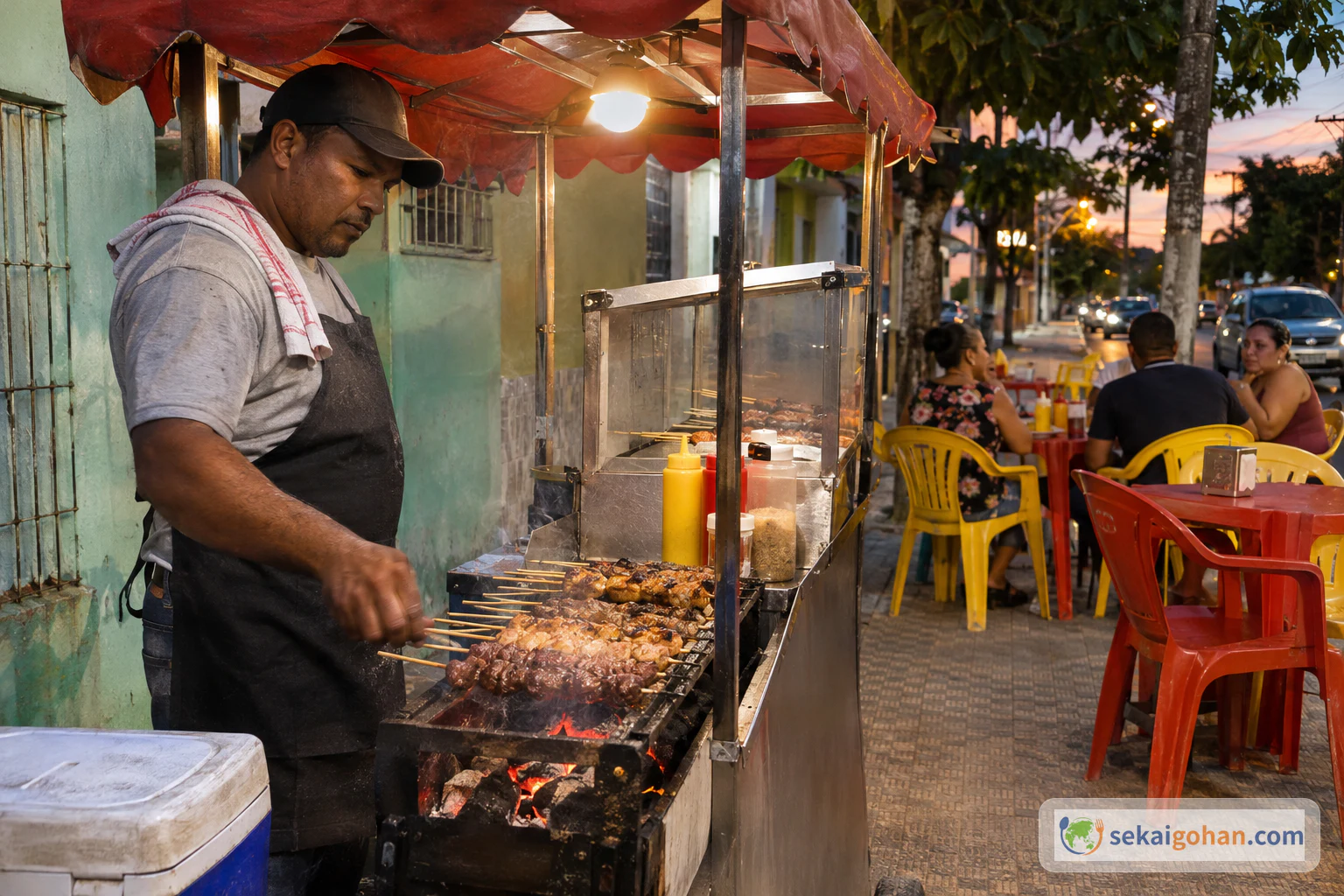
The word means "little skewer", and in Brazil it is the everyday name for a dish Portuguese speakers elsewhere call espetada. In Portugal and on Madeira, espetada is beef cubes seasoned with salt, garlic and bay leaf. The Brazilian espetinho has its own seasoning of thyme, lemon and paprika, and where it first appeared is not settled. What you can see clearly is where it is eaten today. In Espírito Santo, espetinho, also called churrasquinho, is ordinary street food, sold from carts, food trucks and stalls. The grill sits on the sidewalk and seating spreads out around it.
On those carts the beef skewer shares the grill with others: chicken, chicken hearts, and medalhão, meat rolled into a round. Some vendors sell an espetão, a giant skewer of about 20 inches (50 cm) that holds roughly as much as three normal ones. Many order the skewer as a jantinha, a "little dinner" plate. It comes with the skewer, crunchy batata palha potato sticks, a sauce, farofa and vinagrete, and sometimes cheese, hearts or garlic bread on top.
Espetinho and churrasco are different meals. Churrasco is large cuts like picanha roasted on long skewers over charcoal, and it fills an afternoon. Espetinho is cut small before it cooks, so it browns quickly and is gone just as fast. You can grill it on a cart, on a griddle, or in the family skillet. In Brazilian homes, the frying pan is the usual way to make it, and many households have their own version, cooked in butter, wrapped in bacon, or marinated in red wine and bay leaf. Find more dishes from the country on our Brazil page.
Espetinho and churrasquinho mean the same thing at the stall, a small skewer of grilled meat. Order the plate version as a jantinha and it comes with farofa, vinagrete and potato sticks around the skewer.
Ingredients
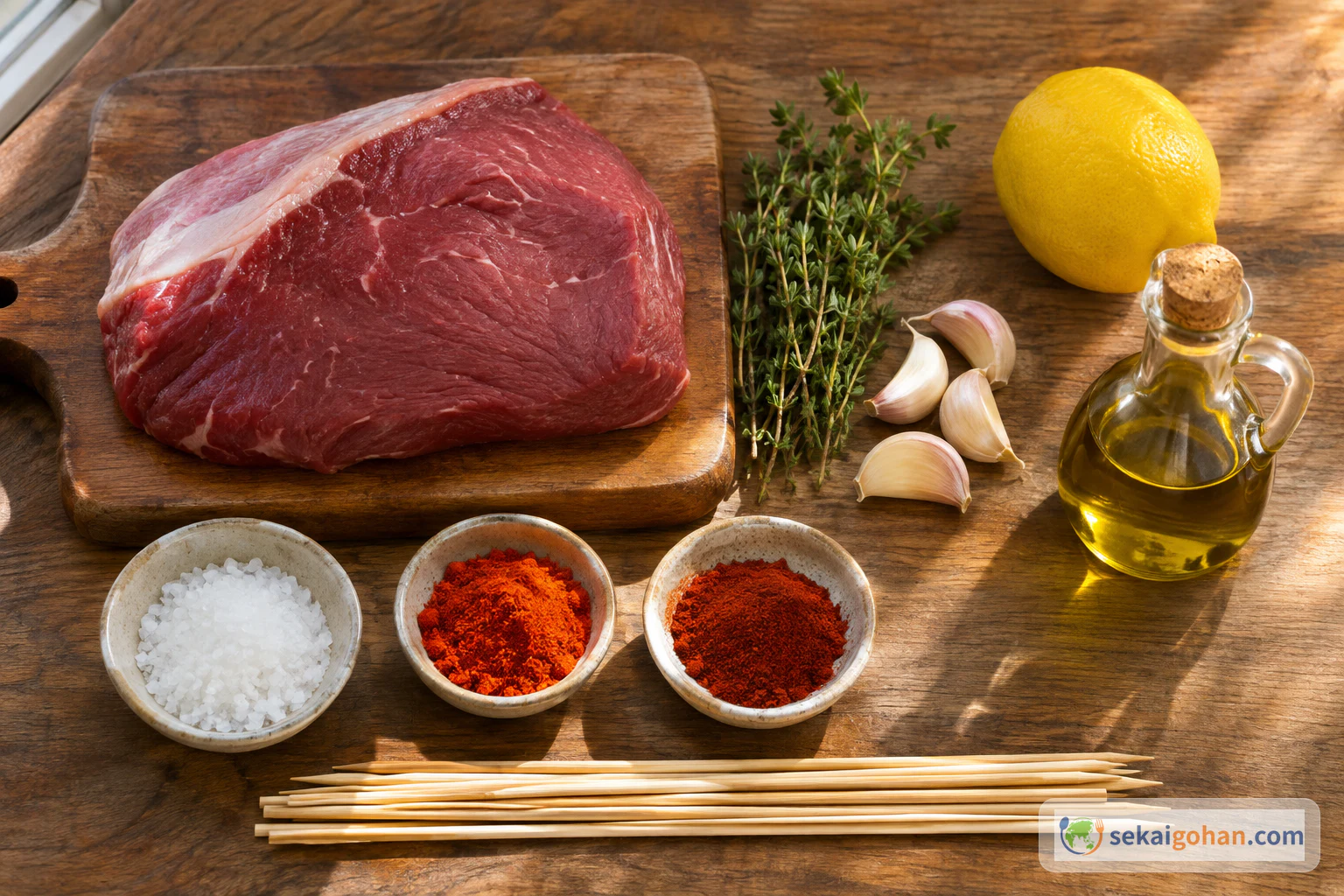
This batch makes about nine skewers. The exact number depends on how large your cubes turn out.
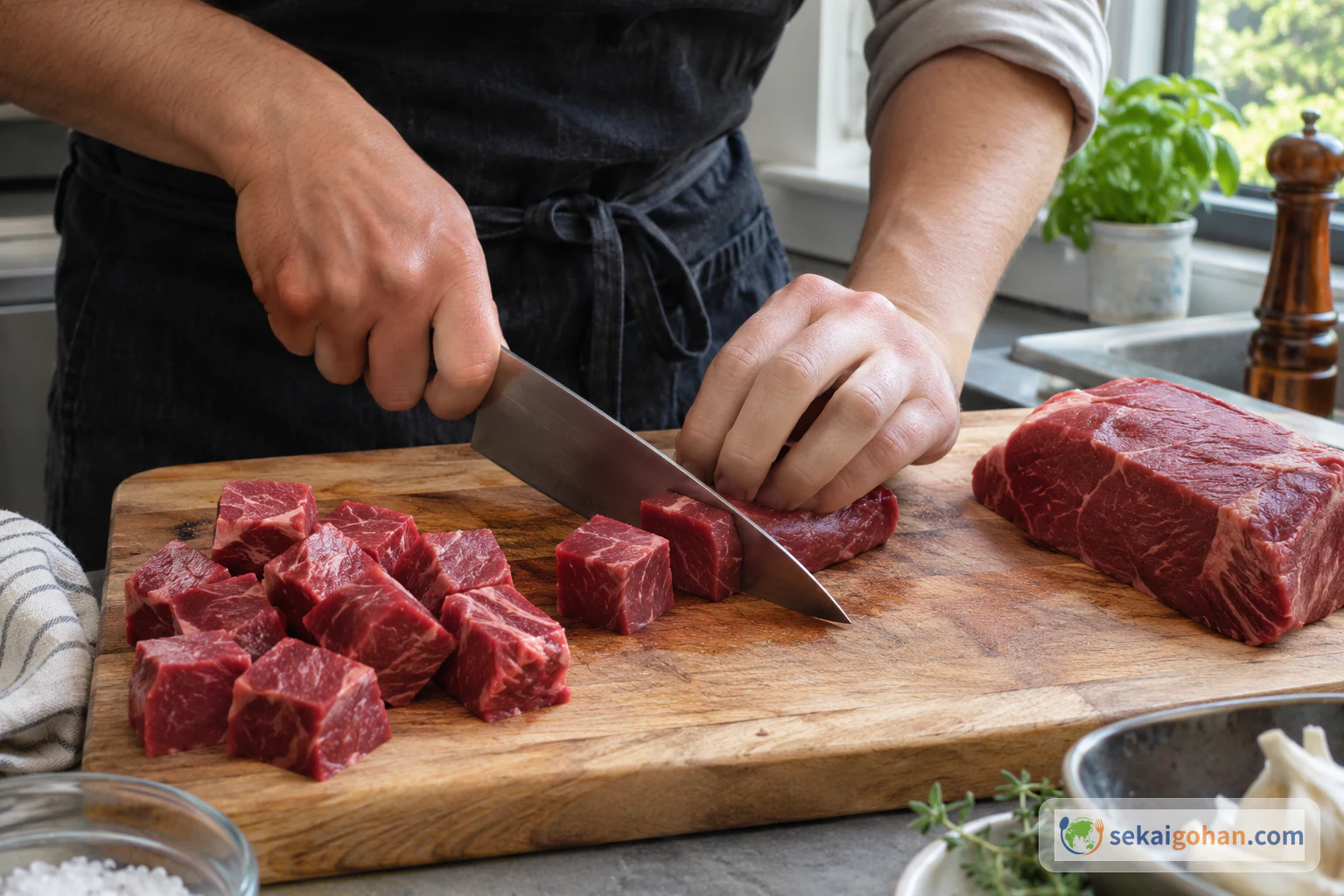
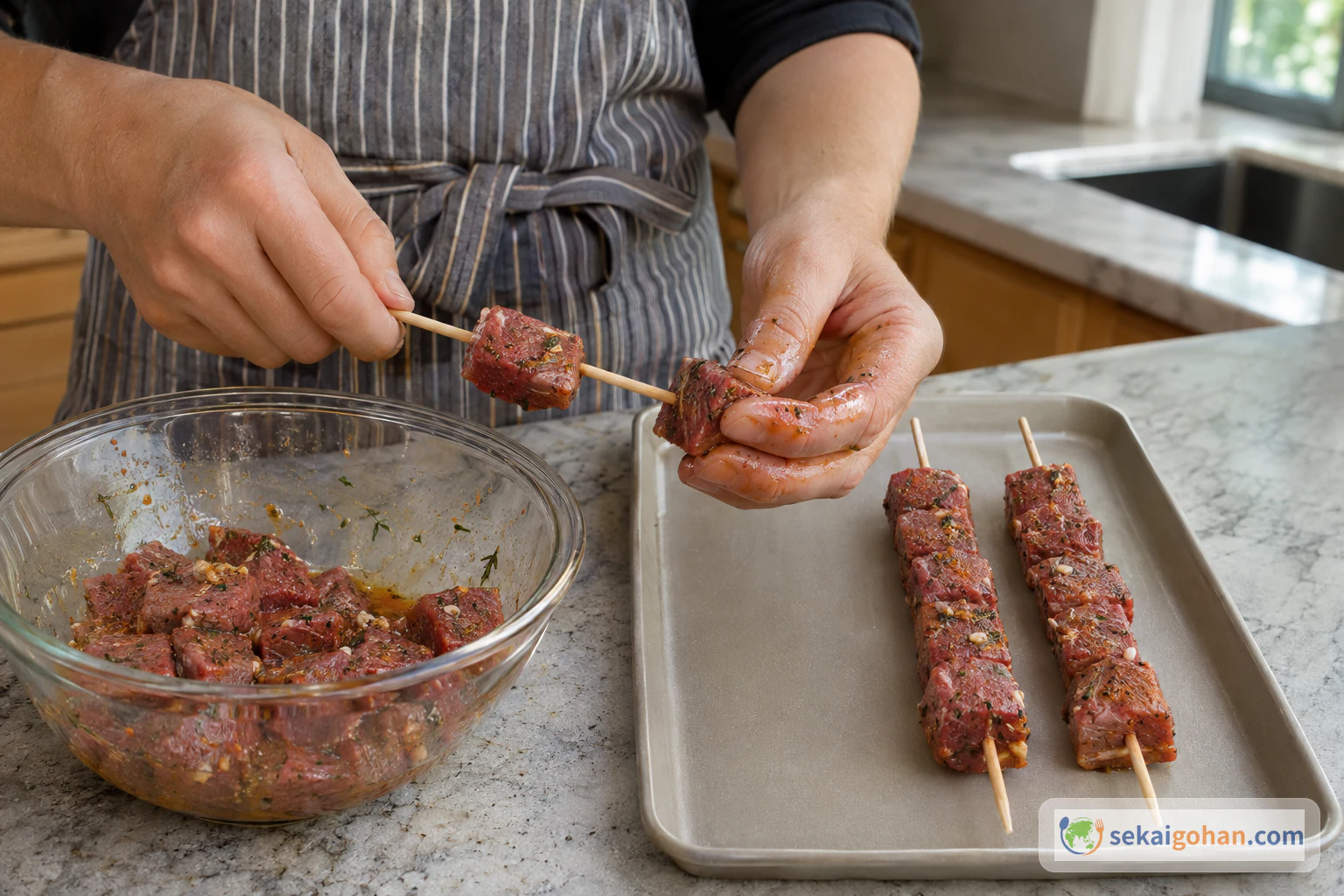
Cut every cube to the same size, about 1¼ inches (3 cm). When the pieces match, every cube on a skewer browns and cooks through at the same moment. When they differ, the small ones dry out before the big ones are done.
The skewers contain no milk, egg or wheat. Check the label on spice blends you buy, and on the farofa and other sides you serve with them.
Equipment
- Large cast iron skillet or griddle
- Bamboo skewers, about 6–8 inches (15–20 cm), enough for about nine
- Shallow dish of water for soaking the skewers
- Sharp knife and cutting board
- Large mixing bowl with a lid or plastic wrap
- Tongs
Choosing the Beef, Paprika and Thyme
In Brazil the cut is alcatra, the area around the top sirloin and rump, and fraldinha works too. At a Western supermarket, top sirloin or rump gives lean meat with a full beefy smell. Round steak tastes milder and leaner. Fattier meat shrinks more in the pan and makes more smoke. Leave some of the fat and sinew on when you trim, because it keeps the cubes moist.
For the paprika, buy hot paprika and sweet paprika as two separate jars. Chili flakes or cayenne give a sharper, flatter heat and change the dish. If you only have sweet paprika, use it for the full amount. The skewers turn out milder but still have the right colour and aroma. Fresh thyme is best. If you only have dried, use about ½ teaspoon. Lemons vary in size, so when yours are small, squeeze a little more than one.
The flavour of the dish comes from lemon, garlic, thyme and the two paprikas, so keep all four. The sidewalk charcoal grill is the part you can let go. A hot skillet is how most home cooks in Brazil make espetinho.
Method
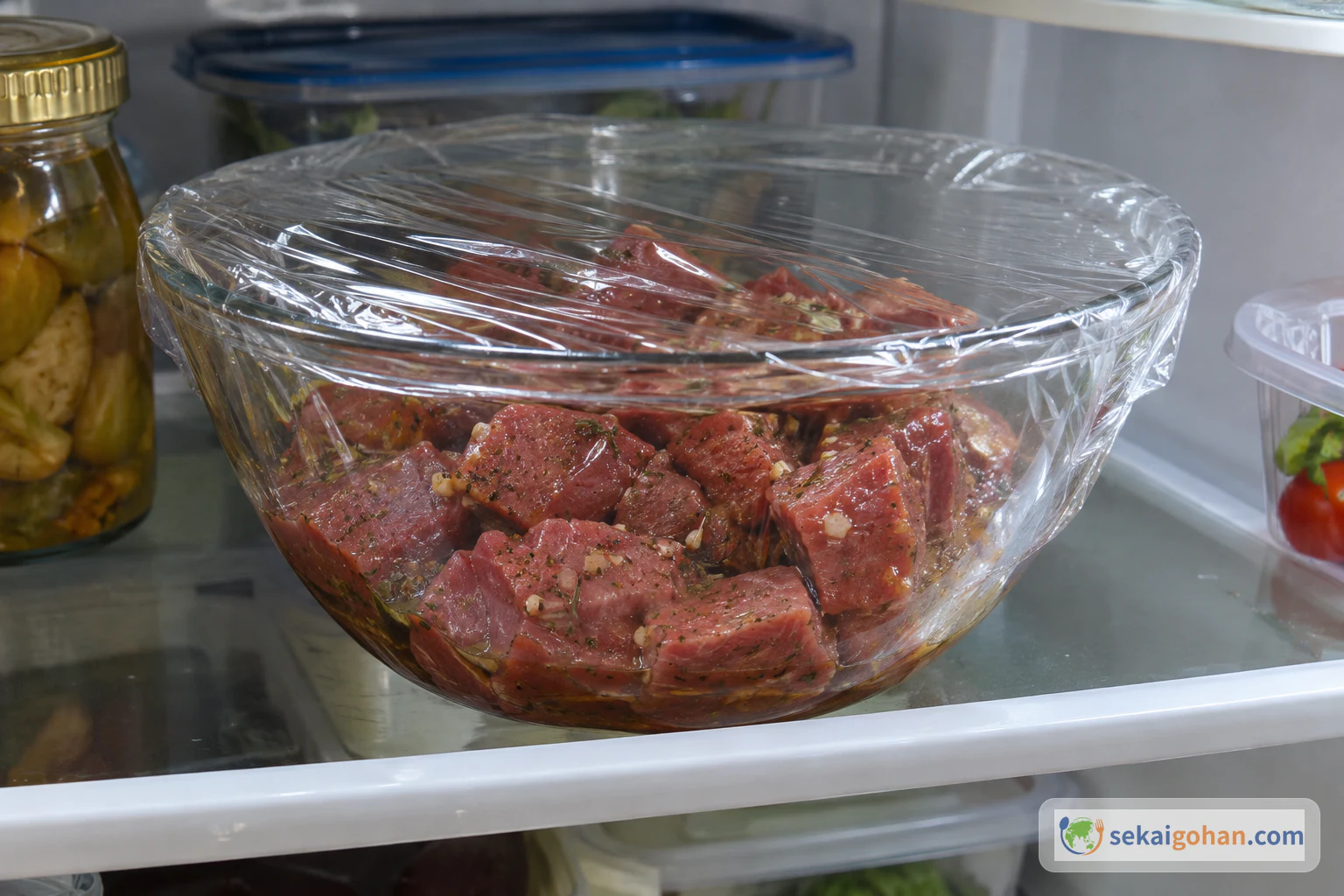
Cutting and seasoning take a few minutes. Then the bowl goes into the fridge for an hour, which is the hands-off part of the recipe. Use that hour to soak the skewers. Cooking goes quickly once the pan is hot, so get the sides ready before the first skewer goes in.
Each side of the cube needs its full 4 minutes untouched. A cube that sticks when you lift it has not finished browning yet. Once the crust has formed, it lets go by itself and leaves the crust on the meat.
Cook beef skewers until the centre is fully cooked, and never serve them half raw. A very hot pan spits oil and smokes, so turn on the extractor or open a window, and use tongs instead of fingers. Keep the hands, board and tongs that touched raw meat away from the cooked skewers.
Bamboo that goes into a hot pan dry chars at the ends. Soaked skewers stay pale, and the bare ends stay safe to hold.
When It Goes Wrong
| What you see | Why | What to do |
|---|---|---|
| Skewer ends burn black | Bamboo went in dry | Soak the skewers in water through the marinating hour |
| Cubes turn grey and release liquid | The pan was not hot enough | Heat the pan until it is very hot first; the skewers should sizzle on contact |
| Outside brown, centre still red | Cubes were cut too large or unevenly | Keep cooking the thicker skewers and cut one open again; cut even cubes next time |
| Some cubes dry, others underdone | Mixed cube sizes on one skewer | Cut all cubes to the same size |
| Meat feels tight and odd in texture | It sat in the lemon too long | Marinate for 1 hour only |
| Heavy smoke from the pan | Very fatty meat | Choose leaner top sirloin or rump and keep the kitchen ventilated |
Serving, Variations and Leftovers
At the table
The usual home plate is skewers with farofa, vinagrete and boiled cassava. Make your own farofa and vinagrete while the meat chills. The crunchy toasted farofa and the sharp tomato salad cut through the browned beef. For a jantinha at home, add batata palha potato sticks and a sauce to the plate, then cheese or garlic bread if you like. Rice and a little mayonnaise are also common partners.
Variations
- Alternate the beef with vegetables or bacon. Thread cherry tomatoes, small onions, bell pepper or bacon between the cubes. The vegetables sweeten as they char and the bacon adds smoke and fat. Serve these with a garlic sauce or cheese.
- Onion and tomato skewers. Alternate beef with chunks of onion and tomato for a juicier, sweeter skewer.
- A wetter marinade. Orange juice, beer, or vinegar with oil all help keep leaner cubes from drying out.
- Charcoal. Grill the skewers over charcoal for the smoky taste of the sidewalk carts. The browning and centre check stay the same.
Leftovers
Slide leftover meat off the skewers, let it cool, then refrigerate it promptly in a covered container and eat it soon. Reheat until it is hot all the way to the centre.
Frequently asked questions
Can I make a smaller batch?
Halve everything: 1.1 lb (500 g) beef, 1 thyme sprig, 2 or 3 garlic cloves, the juice of half a large lemon, ½ dessert spoon salt and ¼ dessert spoon of each paprika. That makes about four or five skewers. The marinating hour and the cooking stay the same.
Can I leave the beef in the marinade overnight?
Keep it to 1 hour. The lemon keeps working on the meat and tightens its texture the longer it sits.
Will a broiler or outdoor grill work?
Yes. A charcoal grill gives the taste of the street carts, and a broiler also browns the cubes well. On either one, turn the skewers until every side is seared. Cut a cube open to check the centre before serving.
Can I use chicken or hearts instead of beef?
Both are standard on Brazilian street grills. Season them the same way. Cook chicken until no pink is left in the centre and the juices run clear.