The story of baleadas: beans and cheese, folded in a morning kitchen
You open the refrigerator planning to bake bread for breakfast, and find a few odds and ends: some beans, eggs, an avocado, a little yogurt. On a day like that, knowing the Honduran baleada changes how you see the kitchen. Knead flour into a thick tortilla and cook it, mash red beans, add white cheese and tangy crema, and fold it in half. The ingredients are modest, but the smell of freshly cooked flour and the steam of the beans bring the breakfast table straight to Central America.
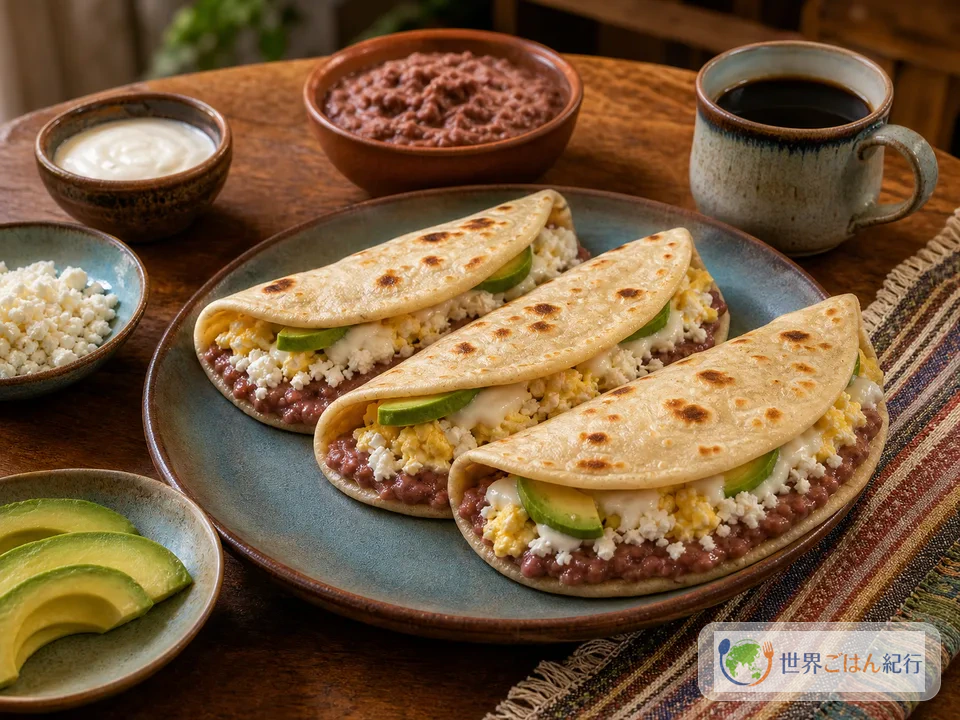
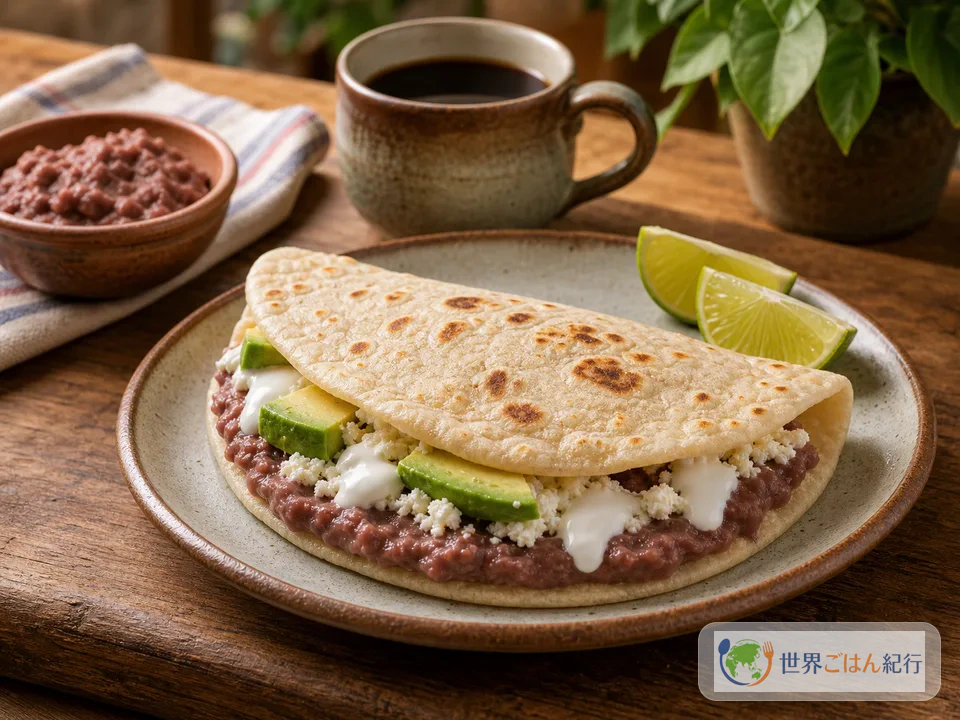
The baleada is a flour tortilla dish eaten at street stalls, in eateries and at home across Honduras. The basic form is very simple: tortilla, refried beans, white cheese, and mantequilla or crema. Add egg, avocado, chorizo or meat, and it becomes a dish that carries you from breakfast to lunch.
The first stumbling block when cooking it elsewhere is the translation of ingredient names. Honduran mantequilla is not always butter as English speakers know it; it may mean a tangy cream. Queso duro and queso fresco are not melting cheeses but white cheeses that crumble. And many households use red frijoles rather than black beans. How you approximate these with what you can buy is part of the fun of making baleadas.
If Guatemalan pepián is a stew built on a seed sauce, the baleada has a more everyday feel: cook, spread, top, fold. It is not a difficult dish. But a tortilla that is too stiff, beans that are too watery, cheese that melts too much or cream that is too heavy can suddenly push it toward a "bean burrito." This article keeps to ingredients you can find in an ordinary supermarket and a method that preserves the softness and plain tang of Honduras.
In Honduras, one with only beans, cheese and crema is sometimes called a baleada sencilla, while versions with egg or avocado added are called by other names as fuller baleadas. Usage varies by home and stall, but the core is always "a thick flour tortilla folded around red beans and dairy."
Background: from stalls on the north coast to a national breakfast
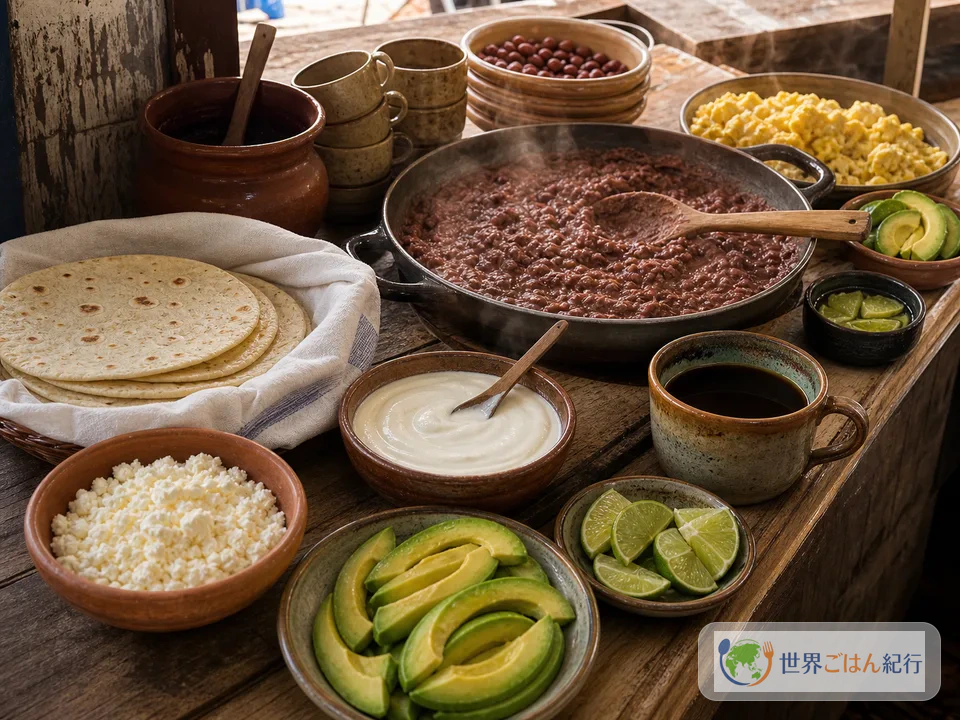
Stories about the origin of the baleada often link it to the port city of La Ceiba on Honduras's north coast. English- and Spanish-language food writing often says it spread from street stalls on the north coast in the mid-twentieth century, and there are several theories about the name. None, however, rests on a definitive primary record. So this article does not assert any anecdote about the name and focuses on characteristics that are easy to confirm about the dish itself.
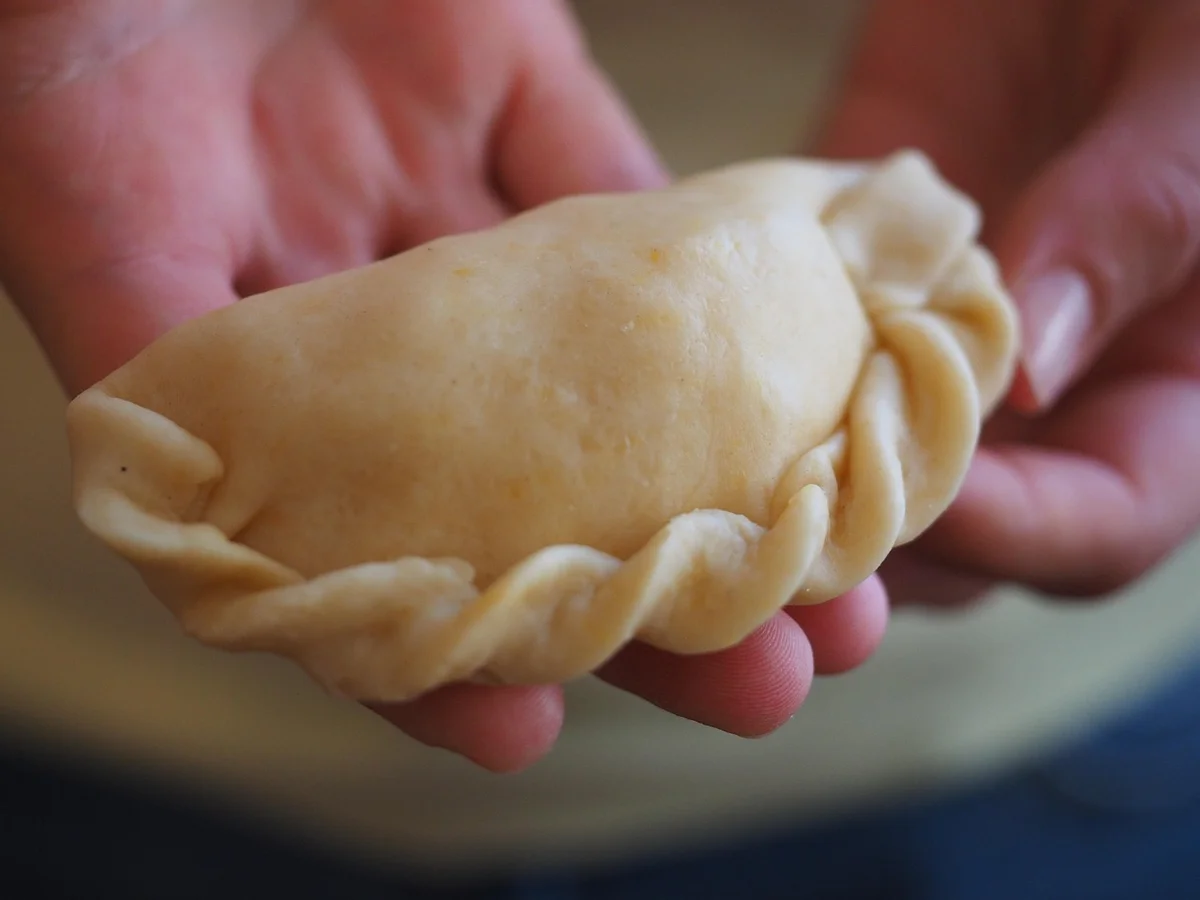
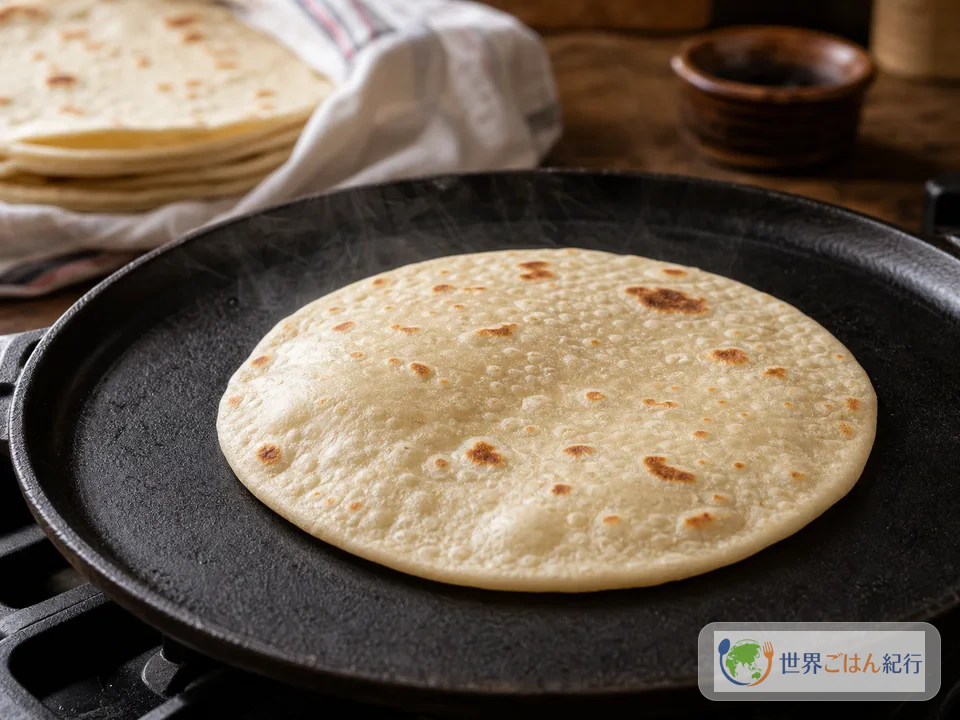
Honduras is a part of Central America where flour tortillas are deeply part of daily life. If you think only of Mexican cooking, a tortilla seems to be a thin corn tortilla, but the base of a baleada is wheat flour. And rather than thin and small like a taco shell, it is cooked a little thicker and soft, so that it does not crack when folded.
This is an interesting difference from Venezuelan arepas and cachapa. Arepas and cachapa are staples eaten for the aroma of corn. The baleada uses the suppleness of a wheat tortilla to hold beans and dairy. Both are home cooking made from "flour, beans and cheese," but changing only the kind of flour changes the texture and the way it is eaten.
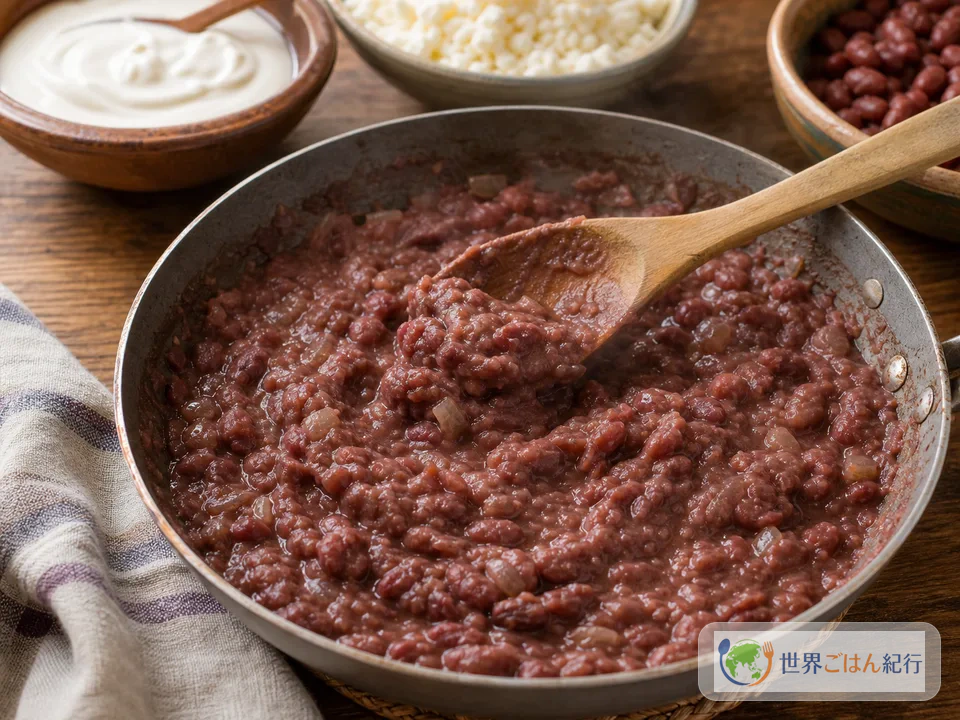
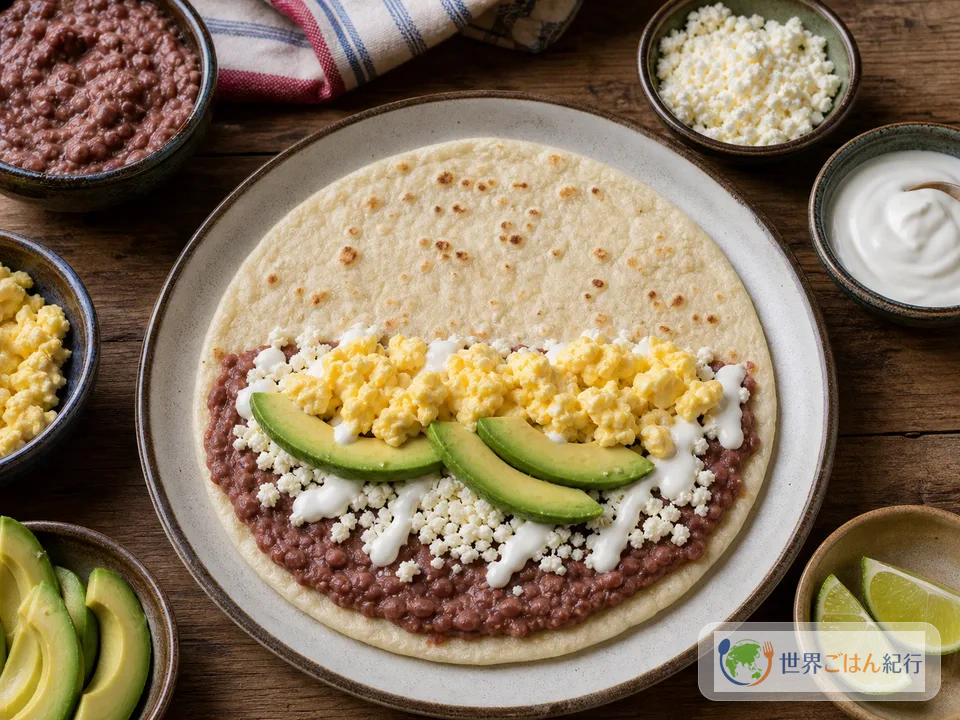
Honduran recipes in English share a few terms: refried red beans, crumbled cheese, crema, flour tortillas. Beans should not dominate but be thick enough for the tortilla to wrap. The cheese is not melted but adds saltiness and a crumbly texture. The crema is used not as fat but as a tangy dairy. These three points are the outline that keeps a baleada from being a mere bean sandwich.
The baleada is not a dish where lots of filling is rolled into a tube. It is basically just folded in half. Too many fillings add substance but hide the plain character of the thick tortilla and beans. For the first time, stop at beans, cheese, crema and egg, and you will see the core of the dish.
Ingredients (serves 4): thick flour tortillas and red beans
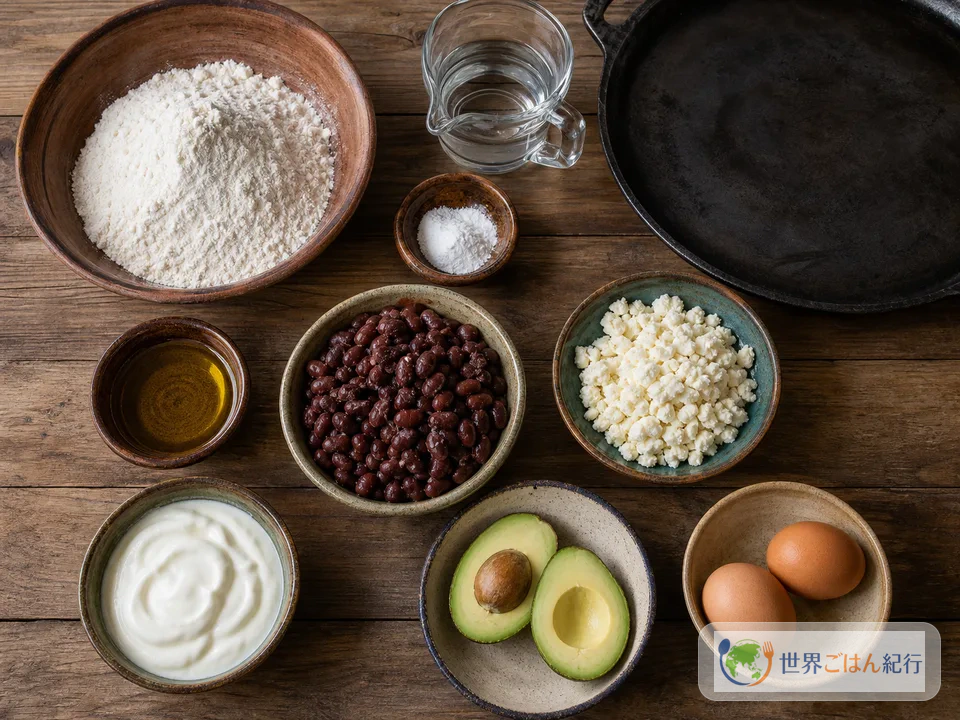
This makes 8 baleadas for 4 people. Two per person gives the satisfaction of a breakfast edging into lunch. For a light breakfast, make it one per person and store the remaining tortillas and beans separately.
This dish contains wheat, egg and dairy, and processed items may contain soy. Check the labels on sour cream, cheese, canned beans and tortilla ingredients. If cooking dried beans, cook them thoroughly, and do not leave the finished bean paste at room temperature for long.
Even if the names look unusual, shopping for baleadas is not hard. The three things people get stuck on are the white cheese, the beans and the pan. Sort these first and every later batch is much easier.
For the white cheese, you want not a melting pizza cheese but a salty cheese that crumbles. Cottage cheese with a little added salt is easy to handle. A heavy cast-iron pan or flat griddle gives a steadier browning on the tortillas, and the same pan will cook other flatbreads, such as roti canai. A potato masher is handy for the beans; do not make them as uniform as a blender would, since leaving a few bits suits a baleada better.
Method: rest the dough, thicken the beans, fold in half
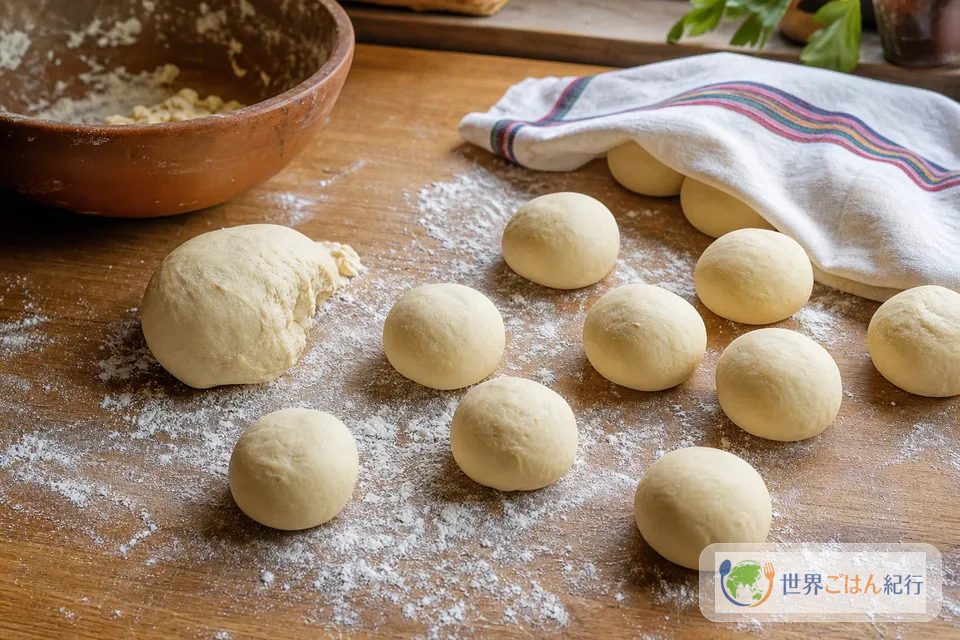
A baleada is a dish where the tortilla and beans are finished separately. You want to combine them both warm, so knead and rest the dough first, make the beans while it rests, and cook the tortillas and assemble last.
Dough that springs back when rolled has not rested enough. Rather than forcing it thin, rest it 10 more minutes and begin again. Flour tortillas bake softer when rested and rolled than when thinned by force.
Tips: avoid stiff, heavy and watery
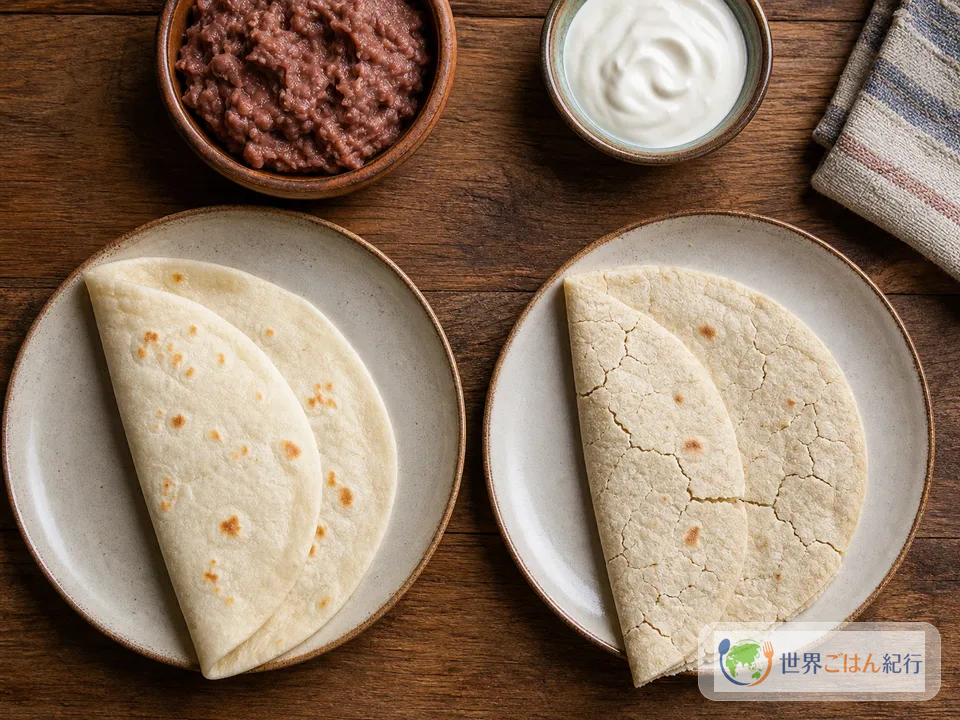
With so few steps, the causes of failure are easy to find. The most common is a tortilla so stiff it will not fold. Next is beans so loose the filling runs. Last is adding too much cheese and cream so that it turns heavy.
Do not make the tortilla too thin
When people hear "tortilla" they tend to imagine a thin wrap. The baleada tortilla is thicker, with the sweetness of wheat when you bite it. Cooked thin it seems easier to fold, but it dries fast and cannot hold the moisture of the beans. Do not widen it too far; cook it thick and soft.
Wrap them in cloth once cooked
Left bare on a plate, a cooked tortilla loses moisture from its surface. After each one, wrap it in a clean cloth or kitchen towel to return a little steam. This is the same basic principle that keeps thin flour flatbreads such as roti canai or pan-cooked naan soft.
Stop the beans a little on the firm side
Bean paste tightens slightly as it cools. But if it is loose enough to flow when hot, it will all spill out when folded. Add water or cooking liquid not all at once but 2 tbsp at a time. If the beans are too stiff, add water; if the flavor is thin, add the cooking liquid; if the aroma is lacking, add a little onion oil.
Do not melt the cheese
Pile on pizza cheese and it becomes an easy-to-eat but different dish. For a baleada you want the saltiness and crumbly bits of white cheese, so you get closer by not making a melting cheese the star. If using cottage cheese, drain it in a sieve and mix in a little salt first, and it will not blur when mixed with the beans.
Decide the order for adding fillings
For the first one, eat just beans, cheese and crema, like a sencilla. Then add egg, avocado and meat, and you will see what makes the dish heavy. Add everything at once and it is hard to see what to adjust.
Variations: from sencilla to fully loaded
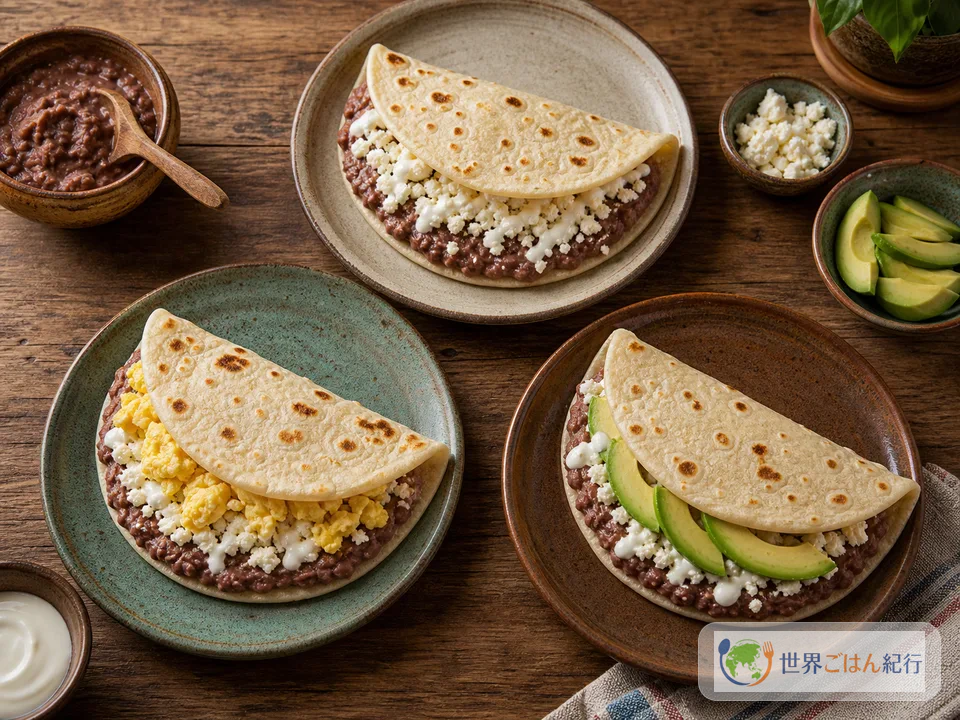
Baleada fillings change by household and stall. Since more fillings make shopping harder in a home kitchen, it is easier to think first in terms of roles.
| Form | Fillings | Good for | Watch out for |
|---|---|---|---|
| sencilla | Beans, white cheese, crema | Breakfast, light meal | Shows clearly the taste of beans and tortilla |
| con huevo | Sencilla plus scrambled egg | Weekend breakfast | Keep the egg soft and do not add too much |
| con aguacate | Avocado added | Lunch, days you want vegetables | Too ripe is heavy. A little lemon |
| con carne | Shredded or grilled meat added | More of a dinner | If adding meat, use fewer beans |
| Weekday version | Store-bought tortillas, canned beans, cottage cheese | Days with no time | Warm store-bought tortillas, then wrap in cloth |
If you add anything, egg is the most natural. Do not cook the scrambled egg hard, and go easy on the salt. The beans and cheese already have saltiness, so egg made too strong weighs down the whole.
When adding avocado, a little squeezed lemon cuts the heaviness of the dairy.
For meat, finely shred leftover chicken or beef and use only a little. Shredded meat such as ropa vieja (in Japanese), roast pork from pernil (in Japanese), or the sweet-savory ground beef used in Chilean pastel de choclo would also suit. But once a baleada becomes a meat dish, it moves away from the lightness of a Honduran breakfast. Meat is not the star; a little leftover added is just right.
To widen the Central American table, continue to Mexican pozole rojo (in Japanese) from the same bean and corn culture, the seed-sauce pepián, and chile-and-chocolate mole poblano, and the differences between breakfast, soup, stew and sauce dishes become visible.
If you use store-bought flour tortillas, warm them in a frying pan for 20 seconds per side and wrap in cloth at once. Put the fillings on a cold one and it cracks when folded, and the warmth of the beans loses out. For large wrap-size ones, spread the beans thin and fold in half.
Storage and the next day: keep the parts separate
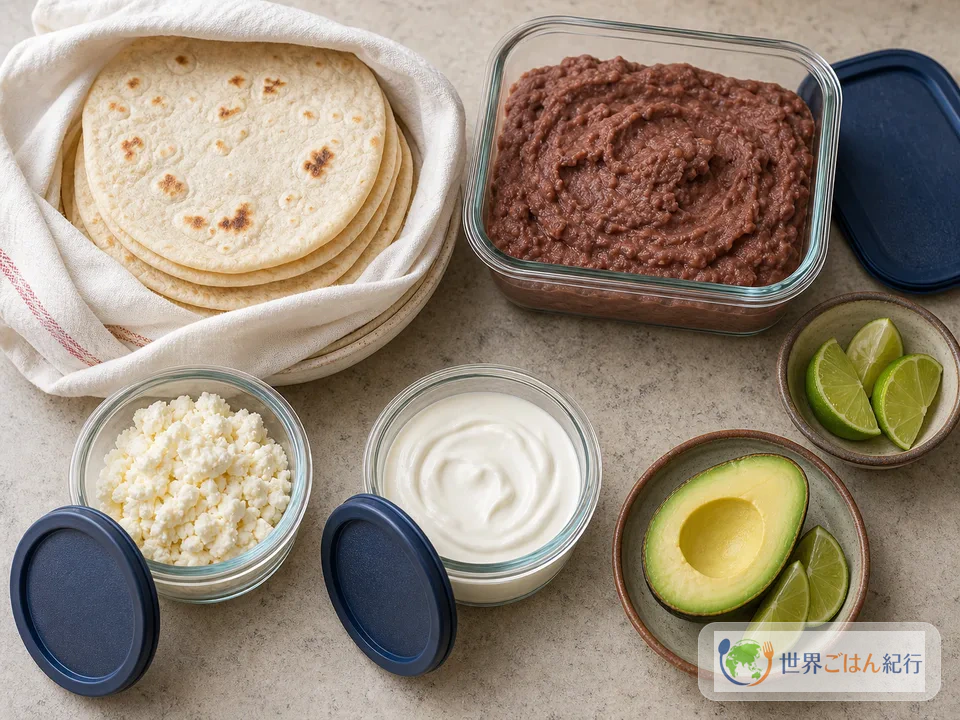
A baleada is not a dish to leave assembled for long. The moisture of beans and crema moves into the tortilla and the fold turns heavy. To make ahead, store the parts separately.
Once cooked tortillas have cooled, put them one at a time in plastic wrap or a storage bag. They keep 2 days in the refrigerator or about 2 weeks in the freezer. To reheat, thaw naturally rather than from frozen if you can, then warm in a frying pan for 20 to 30 seconds per side. In a microwave alone they dry easily, so wrap them in lightly dampened paper towel to bring them back.
Put bean paste in an airtight container and eat within about 3 days in the refrigerator. To reheat, put it in a pot or frying pan over low heat and add water 1 tbsp at a time. A microwave is fine, but only the surface dries, so stir midway.
Cheese and crema go in separate containers. Avocado discolors easily, so cut it just before eating. If you must keep some, coat it with lemon juice, but the aroma suffers the next day. Do not make eggs ahead; cooking them on the spot is safer and tastier.
For lunch the next day, warm the tortilla, spread the beans thinly, and eat it lightly with only cheese and crema. Bringing back the taste of the beans is more satisfying than piling on fillings from the morning. For a different direction, you could serve a little of the leftover beans next to nasi goreng (in Japanese) or mix them into the filling of empanadas (in Japanese). But do not substitute sweet simmered kidney beans: the sugar changes the axis of the dish.
Because it contains beans, egg and dairy, do not leave a finished baleada at room temperature for long. For a packed lunch, avoid the crema and avocado, spread only beans and cheese thin, and eat it quickly. In summer use an ice pack, and it is safer not to carry it around.
Frequently asked questions
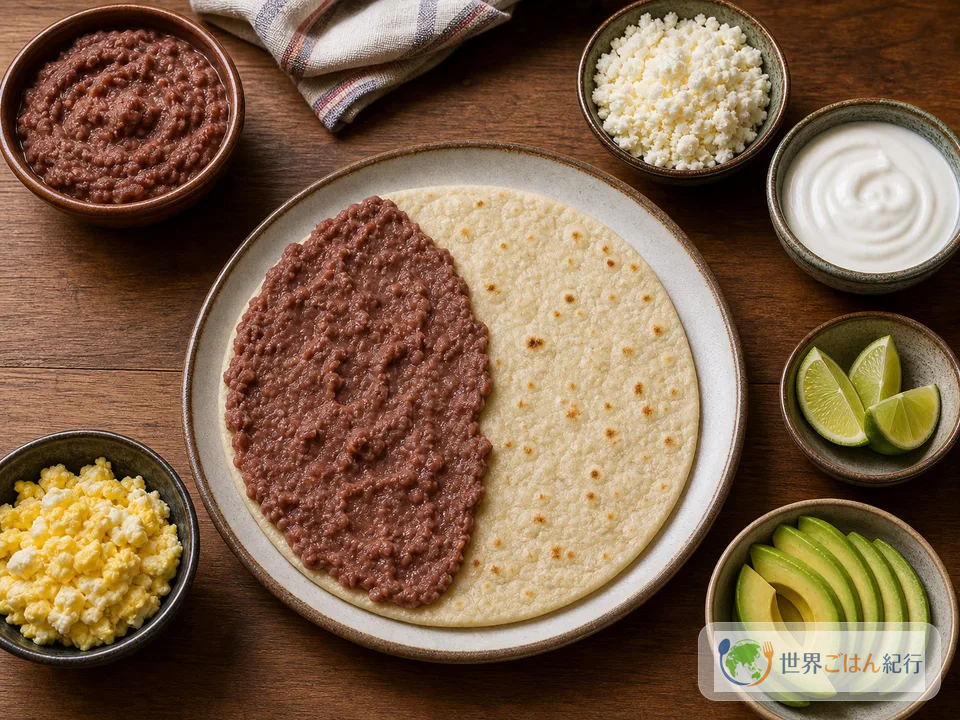
Q1. Is a baleada the same as a regular burrito?
No. A burrito is often a dish where the filling is wrapped and rolled into a tube, while a baleada is a thick flour tortilla folded in half. The fillings are also basically red refried beans, white cheese and crema. Keeping the plain combination of beans and dairy, rather than adding a lot of meat or rice, is what makes it a baleada.
Q2. Can I make it with black beans?
You can, but for a Honduran feel red kidney beans are closer. Black beans make the aroma a little heavier and the impression leans toward Mexican or Caribbean. If you are using canned beans, lightly rinsed salted red kidney beans work well.
Q3. Can I substitute butter for mantequilla?
Here it is safer not to think of mantequilla as solid butter. What goes on a baleada is closer to a tangy cream. Sour cream, or plain yogurt mixed with heavy cream and a little salt, works well. Spreading butter smells good but changes the direction of the dish.
Q4. Can I use store-bought tortillas?
On a busy day, store-bought is fine. But do not use them cold; warm them briefly in a frying pan and wrap them in a cloth. Store-bought ones are often thin, so they tear if you spread the beans thick. To get a first sense of the dish, store-bought first and homemade dough next time is a perfectly good order.
Q5. What do I change for children?
You hardly need any heat. Go easy on the garlic and cumin in the beans, and adding egg and avocado makes it easier to eat. Cheese and crema bring salt, so adjust the salt in the beans a little at a time at the end. Hands get messy when eating, so use less filling and fold it smaller.
Baleadas are not a flashy dish. But the steam when you lift a tortilla out of the cloth, the sound of spreading beans, the way white cheese crumbles off, all have the strength of breakfast. In a home kitchen, you can start with red beans, cottage cheese, sour cream and eggs. The first one, beans and cheese only. The second, with egg. The third, with avocado. Eat by adding like this, and Honduran street food suddenly feels close.