The Story of Pernil: A Night When the Smell of Garlic Drifts from the Oven
Take a pork shoulder out of the refrigerator after a night of marinating and the smell of garlic, oregano, vinegar and citrus spreads through the kitchen. Put the big piece of meat in the oven and roast it slowly at a low temperature. For the first few hours nothing dramatic happens. But by evening the air in the house has changed. The fat has melted, the skin has dried, and amber juices have gathered in the bottom of the pan. Pernil (pernil asado), the Puerto Rican celebration dish, is a dish where even the waiting is part of the center of the table.

Pernil is Caribbean roast pork: shoulder or leg marinated in garlic, oregano, salt, pepper, and vinegar or citrus, then roasted low for a long time. It is eaten in Puerto Rico, the Dominican Republic, Cuba, Venezuela, Colombia and elsewhere, but when English-language writers talk about "Puerto Rican pernil" they usually mean the generous roast of skin-on pork shoulder served on Christmas Eve (Nochebuena) and at family gatherings.
The hard part in a home kitchen is not the seasoning. It is that skin-on, bone-in pork shoulder is not always easy to find, and that crisp skin takes temperature control. This guide centers on the authentic version for when you can get skin-on shoulder, and also covers realistic compromises: skinless pork shoulder, skin-on pork belly, a small oven, and a home version without sous-vide equipment.
If mofongo is the taste of the island's plantains and garlic, pernil is the taste of pork and family occasions. Among Caribbean pork dishes it connects with Haitian griot and Cuban ropa vieja. You roast a big piece of meat and turn it into sandwiches or arepas the next day. That "tastes good afterward too" quality is pernil's strength.
In Spanish, "pernil" is used for a large piece of pork leg or shoulder. As a Puerto Rican home dish it usually means skin-on shoulder roasted low with garlic. The finished skin is called "cuero" or "cuerito", and people look forward to it as much as the meat.
Background: Nochebuena and the Roast-Pork Culture of the "Pork Highway"

Look into Puerto Rican celebration food and pernil appears almost every time alongside arroz con gandules (rice with pigeon peas), pasteles, tostones and coquito. In the Smithsonian Center for Folklife and Cultural Heritage's guide to a Puerto Rican family Christmas table, pork-shoulder pernil is described as a practical way to bring the whole roast pig, lechón, into a home kitchen.
The island's mountains also hold a place that symbolizes pork culture. Guavate, near Cayey, is known for the lechoneras, roast-pork restaurants, lined up along PR-184, and travel media call it the "Pork Highway". On weekends families drive up the mountain road and sit for a long meal of roast pork, mofongo, yuca, rice dishes and cold drinks. Pernil is a home oven dish, but behind it is this island culture of roasting pork slowly and sharing it.
What English-language Puerto Rican food sites share is that they do not treat pernil as a quick roast. Delish D'Lites uses skin-on picnic shoulder and stresses pushing a garlic and oregano paste into slits. The Noshery describes leaving the skin attached and making a pocket under it for the seasoning. Both share the idea that flavor can't just be rubbed on the surface; it has to go inside the meat.
That "stuff the slits" step is the big difference from other roast pork. You don't just rub herbs on the surface. You deliver garlic, salt, oregano and vinegar directly into the meat. The cooking time is long, so surface aroma alone won't last to the end. When you cut into a large pork shoulder, garlic scent that reaches the center is what makes it pernil.
Ingredients (serves 6): Getting Close Without Skin-On Pork

For the closest result, skin-on, bone-in pork shoulder is ideal. But skin-on shoulder can be hard to find outside a butcher or wholesale source. For a first attempt, boneless pork shoulder without skin works. You'll get the pull-apart tender meat of pernil, but the crisp skin, the cuerito, will be a different thing.
Helpers when you can't get skin-on pork
| Situation | What to use | Verdict |
|---|---|---|
| Only skinless shoulder is available | Pork shoulder 1.8 kg | The meat is delicious. Give up on cuerito and brown the surface harder |
| You want the skin texture too | Cook 300 g skin-on pork belly separately | Not fully authentic, but adds a crisp part to the table |
| No bone-in meat | Boneless block | Shorten the roasting time and judge by internal temperature |
| Small oven | Two 1 kg blocks | Divide the seasoning in the same ratio. Roasting time is shorter |
This recipe uses pork. If you use store-bought adobo seasoning, sazón or Worcestershire-style sauces, some products contain wheat, soy, dairy and other allergens. Cook pork thoroughly to the center. This recipe aims for pull-apart tenderness, so the meat is cooked to an internal temperature of around 90°C.
If you can get sour orange (naranja agria), that is best. But it is hard to find in many stores. A realistic substitute is 80 ml orange juice mixed with 2 tbsp lime juice and 1 tbsp vinegar, which gets the balance of sweetness and acidity close. Lemon alone makes the aroma sharp, and orange alone makes it too sweet.
Adobo or sazón makes it easier to get the flavor of a Puerto Rican home kitchen. Many products are very salty, though, so for a first try use a small amount as an aroma helper and weigh the salt separately. When shopping, it is easiest to choose the meat first, then the dried oregano, and add adobo or sazón last.
Pernil means roasting a big piece of meat, so it is worth checking the size of the meat against the size of your roasting pan before you buy.
Method: Marinate Overnight, Roast Low Until Tender
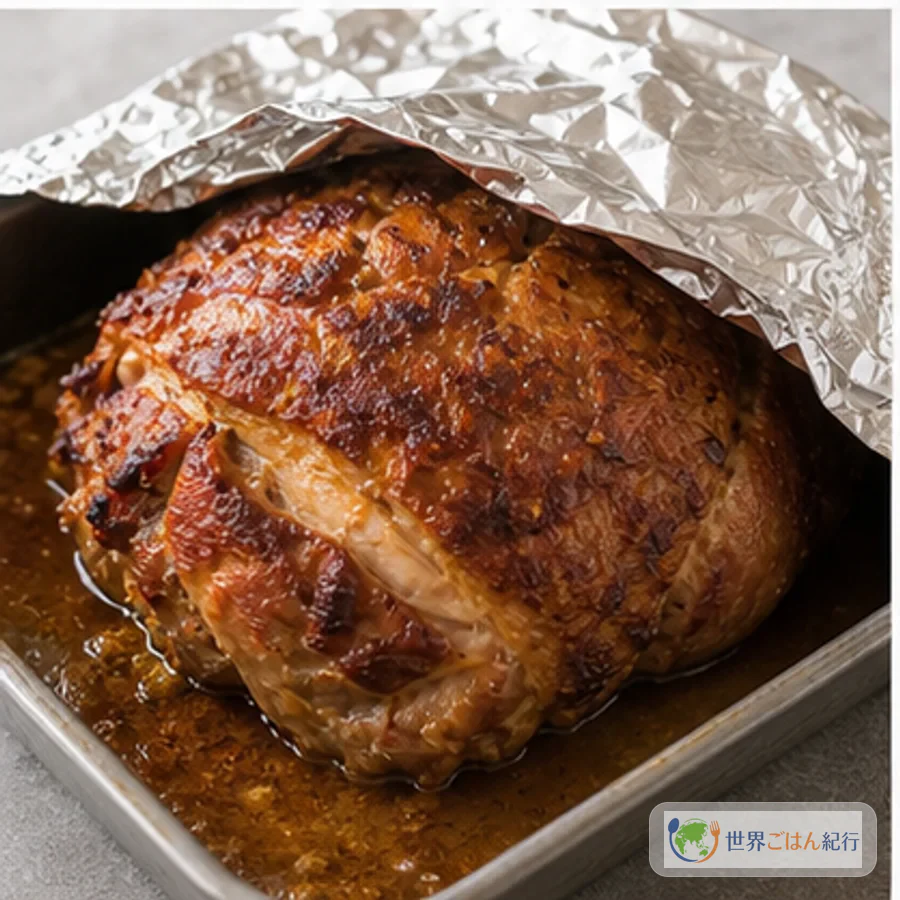
Start the day before. If you try to do everything on the day, the flavor won't reach the center and the roasting time is hard to predict. Marinate for at least 8 hours, preferably overnight. On roasting day, plan for dinner rather than lunch.
Small ovens have the top heating element close to the meat, so skin burns easily. Prioritize the low roasting step that makes the meat tender, and check the high-heat finish every 10 minutes. If the skin burns first, remove the skin and crisp it separately under a broiler or in a toaster oven for a cleaner result.
Cooking Tips: Skin, Salt and Resting Decide Success

With a big piece of meat, thinking only in "teaspoons" makes the seasoning inconsistent. For a first attempt, aim for salt equal to 1.2–1.5% of the meat's weight. If you use adobo seasoning, which contains salt, reduce the total. Too little salt gives a thin roast pork that tastes only on the surface.
If you want crisp skin, the skin surface needs to be dry. After applying the marinade all over, blot only the skin surface lightly with paper towel, sprinkle on a thin layer of salt, and dry it in the refrigerator for a better result. Flavor goes under the skin; the top of the skin stays dry. That division of labor matters.
For skin-on, bone-in shoulder, The Noshery gives a guideline of about 35–40 minutes per pound. That varies with the shape of the meat, whether there's a bone, and the quirks of your oven. At home, put "does it pull apart with a fork" and "is the internal temperature around 90°C" ahead of time.
Vinegar and citrus are not magic for making meat dramatically tender. The tenderness comes from long cooking loosening the shoulder's connective tissue. The main job of the acid is to cut the heaviness of pork fat and brighten the garlic and oregano. Too much gives a boiled-pork smell, so keep the balance.
Variations: Adapting to Your Home Oven

Skinless shoulder version
If you can't buy skin-on meat, make it with 1.2–1.5 kg of pork shoulder. Reduce the marinade to about 3/4 for the meat's weight, and shorten the roasting time. You won't get the skin texture, but if you put the garlic and oregano in the slits, it still tastes like pernil. Finish the surface at high heat for stronger browning for more satisfaction.
Add skin-on pork belly
If you can't find skin-on shoulder but want cuerito, prepare skin-on pork belly separately. Salt 300 g skin-on pork belly, roast at 160°C for 1 hour, then puff the skin at 230°C. It isn't the same as the shoulder itself, but a crisp piece of skin on the table brings out the fun of pernil.
Pressure-cooker pre-cook version
On days when you can't spend 5 hours on the oven alone, you can tenderize the meat in a pressure cooker first and then brown the surface in the oven. Put the marinated meat and 100 ml water in the pressure cooker and cook under pressure for 45 minutes. After a natural release, take the meat out and roast at 220°C for 20 minutes. The aroma is a little behind long oven roasting, but it is an excellent weeknight solution.
Venezuelan and Caribbean-style serving
To take it in a Venezuelan direction, stuff leftover meat into arepas with avocado, white cheese and black beans. For a Cuban direction, strengthen the mojo of lime, orange and garlic and put it in bread as a Cuban-sandwich-style dish.
What to Serve: Mofongo, Rice and Beans, Plantains

Pernil is not a dish that is complete with meat alone. Garlic and fat are strong, so rice, beans, plantains and something acidic alongside make it easier to keep eating. On a Puerto Rican celebration table you would find arroz con gandules, pasteles, tostones, avocado, a mayonnaise-style potato salad and coquito.
At home you don't need all of them from the start. Fresh white rice, a can of black beans simmered lightly, a lettuce and tomato salad and mofongo will take you quite close to a Caribbean table. Mofongo layers garlic with the aroma of chicharrón, so on days when pernil is the star, make it smaller for balance.
When you pull the meat apart for tacos or sandwiches, return a little of the juices first. Pulled cold, it dries out easily and the aroma weakens. In bread, add thinly sliced onion, pickles, mustard and lime so the fat doesn't feel heavy.
Compared with other Caribbean pork dishes, griot is simmered in citrus and then fried, so the outside is crisper. Jamaican jerk chicken is a dish of spice and smoke. Pernil sits between them, built on garlic, oregano and the tenderness of low roasting.
Storage and Make-Ahead: Roast Big and Plan for the Next Day

Pernil is a dish you roast intending to have leftovers. Fresh, the skin is the star; the next day the meat's aroma has settled and it works well in sandwiches, arepas, fried rice and soup. But store it the wrong way and it dries out quickly.
Once the meat has cooled a little, pull it into large pieces, return 2–3 tbsp of pan juices to each container and store. In the refrigerator, plan on 3 days. If freezing, divide into single portions with the juices and use within 2–3 weeks. To reheat, don't dry it out in a microwave alone; put 1–2 tbsp water or juices in a skillet, cover and steam it back over low heat so it stays moist.
It is better not to store the skin with the meat. In the refrigerator it absorbs moisture and goes soft, so eating it all the same day is ideal. If some is left, re-crisp it briefly the next day in a toaster oven or broiler. It burns easily, so don't walk away.
What makes buying a big piece of meat worrying is not only how to cook it. If you can see what happens to leftovers, putting 1.8 kg of meat in the basket feels much less daunting. A pernil sandwich the next lunch, and pernil over rice with black beans for dinner: with that plan, pernil is not one night's feast but a dish that helps with two days of kitchen work.
Frequently Asked Questions

I can't buy skin-on pork shoulder. Is it still worth making?
Yes. Without skin you can't make cuerito, but if you stuff garlic and oregano into slits and roast low, you still get plenty of the meat's aroma and tenderness. To get closer to the authentic texture, ask a butcher for skin-on shoulder, or roast skin-on pork belly separately and serve it alongside.
Can I use pork belly instead of pork shoulder?
You can, but it gets too fatty. Pernil is a dish of shoulder's lean meat, fat and connective tissue roasted long until tender. Made with belly alone, cuerito is easy to get, but the meal as a whole gets quite heavy. I recommend using belly as a skin helper and keeping shoulder as the main.
Does the marinade need to be overnight?
Overnight is ideal. It can be made with a minimum of 4 hours, but flavor is less likely to reach the center of thick meat. If you're short on time, make more slits and push the garlic paste in firmly. If you only rub the surface and roast, the center will be ordinary roast pork.
My skin won't crisp. What's the cause?
Mostly moisture. Thick marinade left on the skin surface, no drying in the refrigerator, skin touching foil and steaming during the low roast, or not enough high heat at the end. It is any of these. Skin is more likely to succeed the more you dry it before roasting, so blot only the skin surface with paper towel before roasting.
What internal temperature should I aim for?
Just to eat safely, a lower temperature would be enough, but for pernil's pull-apart texture aim for an internal temperature of 90–93°C. Shoulder loosens its connective tissue with long, low cooking. Without a thermometer, push in a fork and twist to see whether the fibers pull apart without resistance.
Can children or people who don't like spicy food eat it?
It is an easy dish to eat. Pernil's aroma comes from garlic, oregano and citrus, and chili heat is not the star. Anyone who wants heat can add a little hot sauce or pique at the table. For children, halve the cumin and serve extra salad and white rice.
Summary: When You Roast a Big Piece of Meat, the Next Day's Table Works Too

Pernil is not a quick, convenient recipe. You crush the garlic the day before, cut slits in the meat, let it rest in the refrigerator, and roast it for hours on the day. But most of that time is waiting. The smell of garlic and pork fat drifting from the oven slowly turns the kitchen into a celebration.
For a first attempt, skinless pork shoulder is fine. What to protect: get flavor inside the meat, make it tender at low heat, and make the surface fragrant at the end. If you get skin-on meat, dry the skin and make cuerito with the final high heat. Do that and you are much closer to pernil as a Puerto Rican home dish.
At the table, mofongo, black beans, white rice, tostones, avocado and citrus pull it together. Leftover meat can go into the next day's sandwiches or arepas. On the day you roast a big piece of meat, you enjoy it not only that day but through the next day's lunch. Pernil is a dish with that plan built in from the start.
Sources
- Smithsonian Center for Folklife and Cultural Heritage, "Our Family Guide to a Puerto Rican Christmas Feast" https://folklife.si.edu/magazine/foodways-holidays-puerto-rican-christmas (accessed 7 May 2026)
- The Noshery, "Roasted Pernil (Puerto Rican Roast Pork)" https://thenoshery.com/roasted-pernil-puerto-rican-roast-pork/ (accessed 7 May 2026)
- Delish D'Lites, "Puerto Rican Pernil (Roast Pork Shoulder)" https://www.delishdlites.com/type/puerto-rican-recipes-2/puerto-rican-pernil-roast-pork-shoulder/ (accessed 7 May 2026)
- AFAR, "For Some of the Best Food in Puerto Rico, Head to the Pork Highway" https://www.afar.com/magazine/in-puerto-rico-where-to-eat-on-guavates-pork-highway (accessed 7 May 2026)
- Discover Puerto Rico, "Guavate and Puerto Rico's Pork Highways Ultimate Guide" https://www.discoverpuertorico.com/article/guide-to-guavate-la-ruta-del-lechon (accessed 7 May 2026)
- Wikimedia Commons, Category "Pernil" https://commons.wikimedia.org/wiki/Category:Pernil (accessed 7 May 2026)
- Wikimedia Commons, Category "Pork shoulder" https://commons.wikimedia.org/wiki/Category:Pork_shoulder (accessed 7 May 2026)
- Wikimedia Commons, "Arroz con gandules.jpg" https://commons.wikimedia.org/wiki/File:Arroz_con_gandules.jpg (accessed 7 May 2026)
- Wikimedia Commons, Category "Tostones" https://commons.wikimedia.org/wiki/Category:Tostones (accessed 7 May 2026)