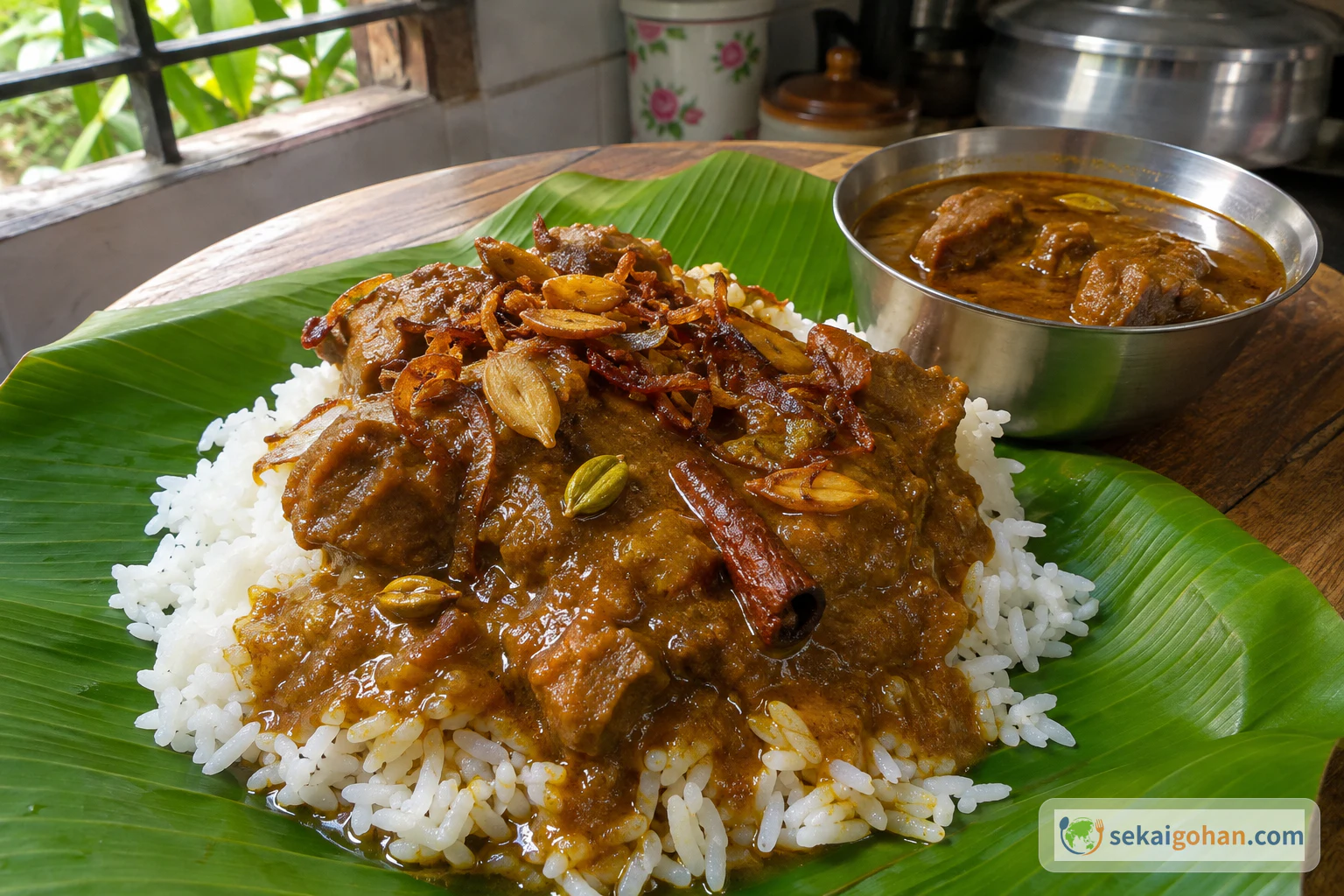
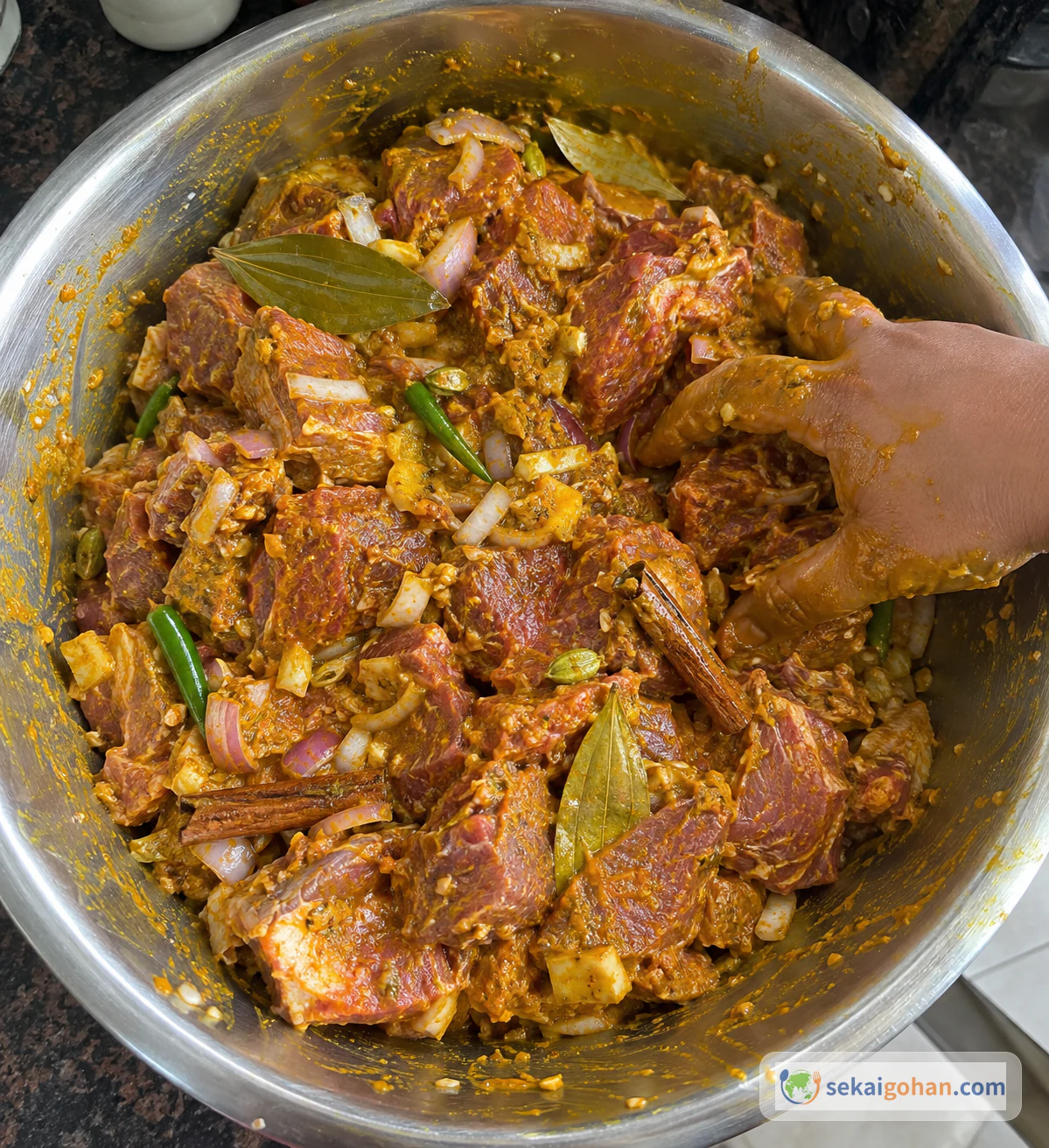
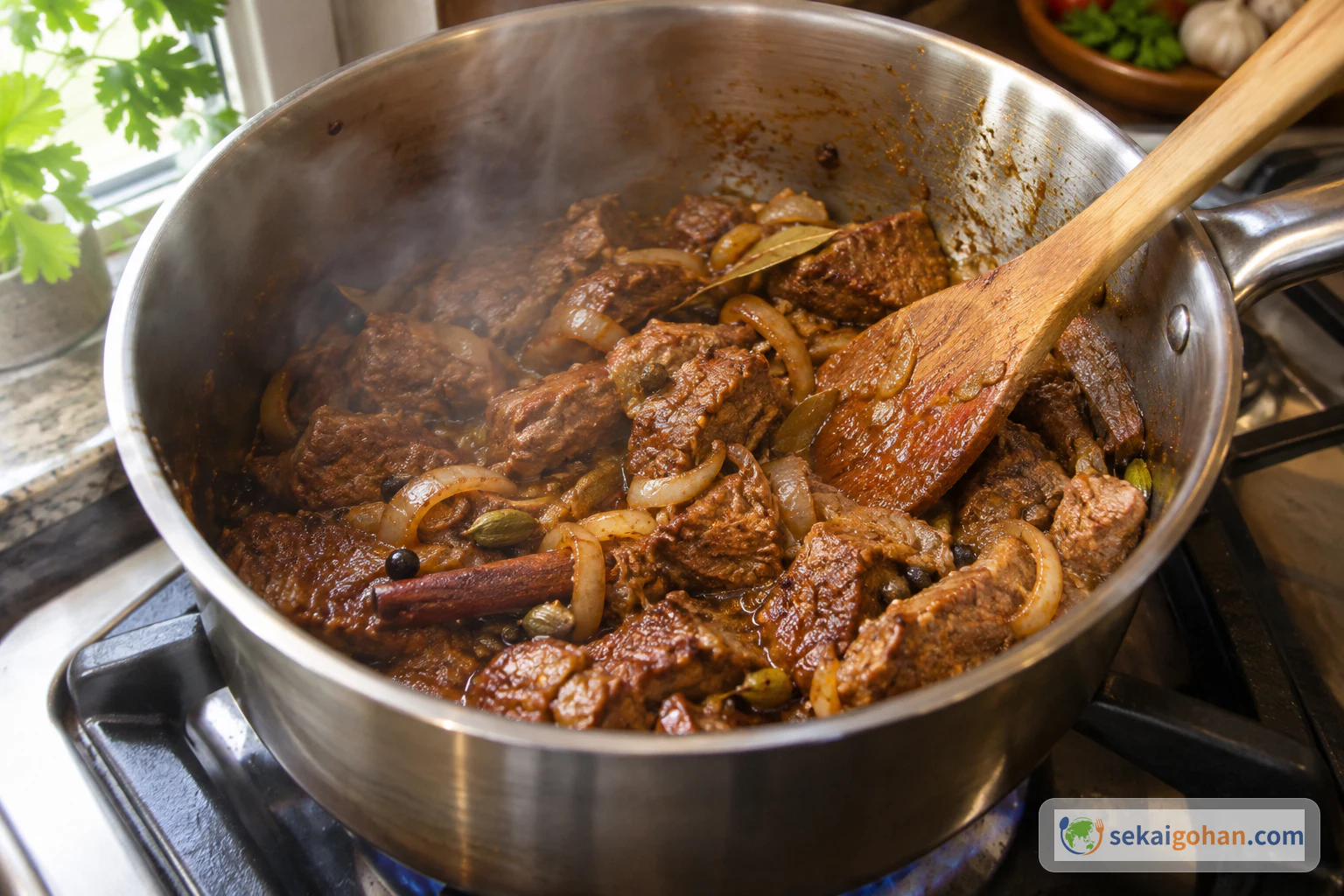
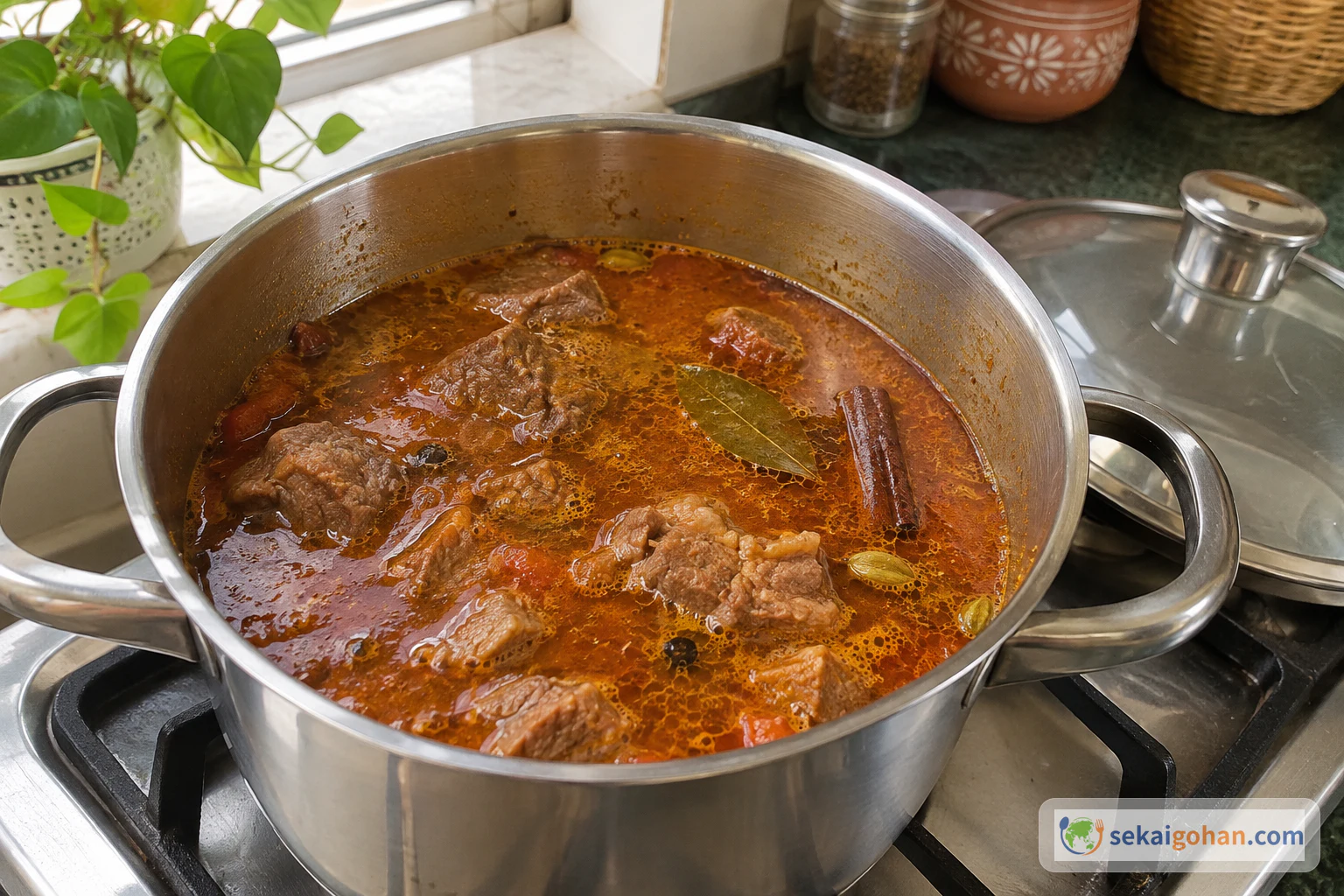
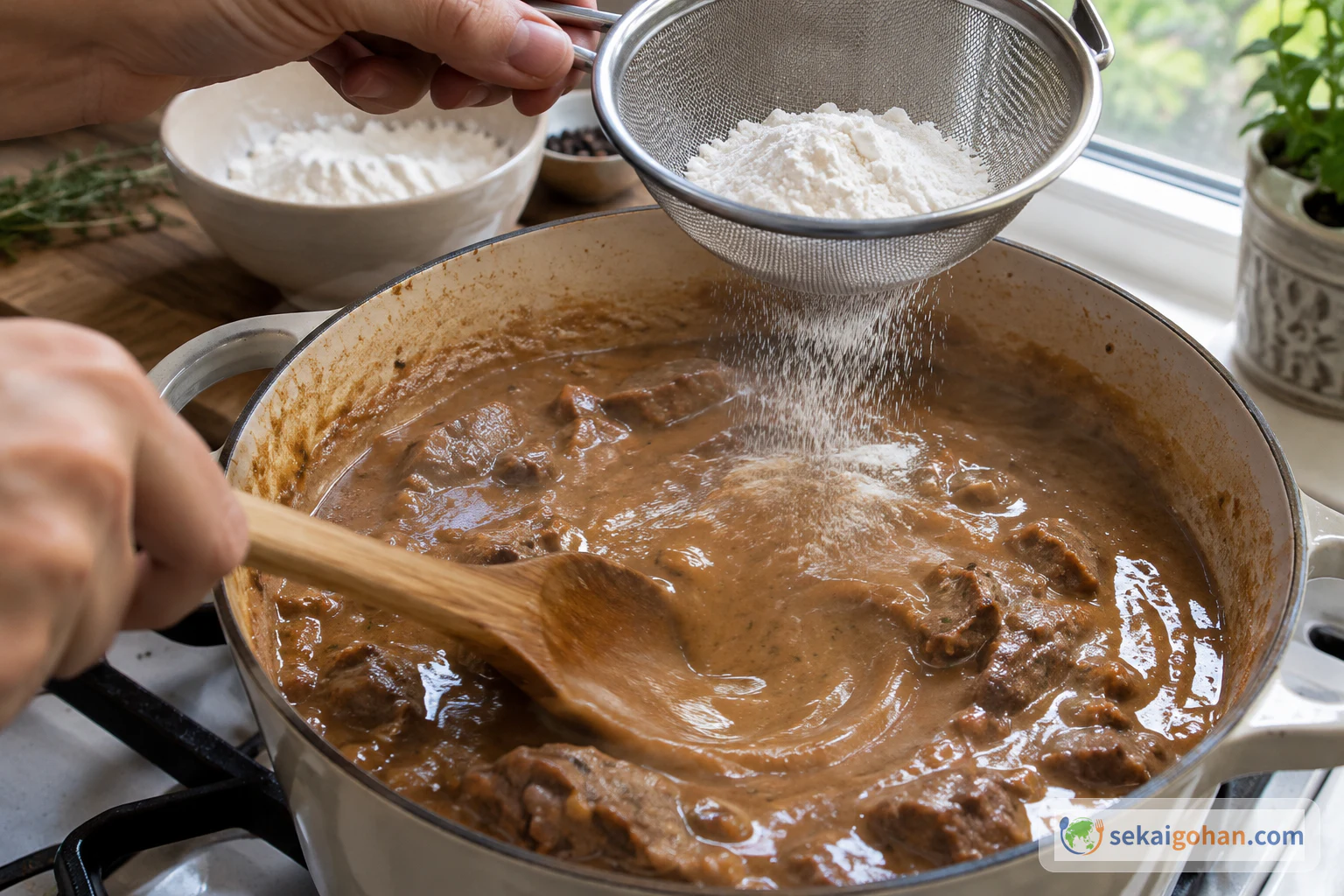
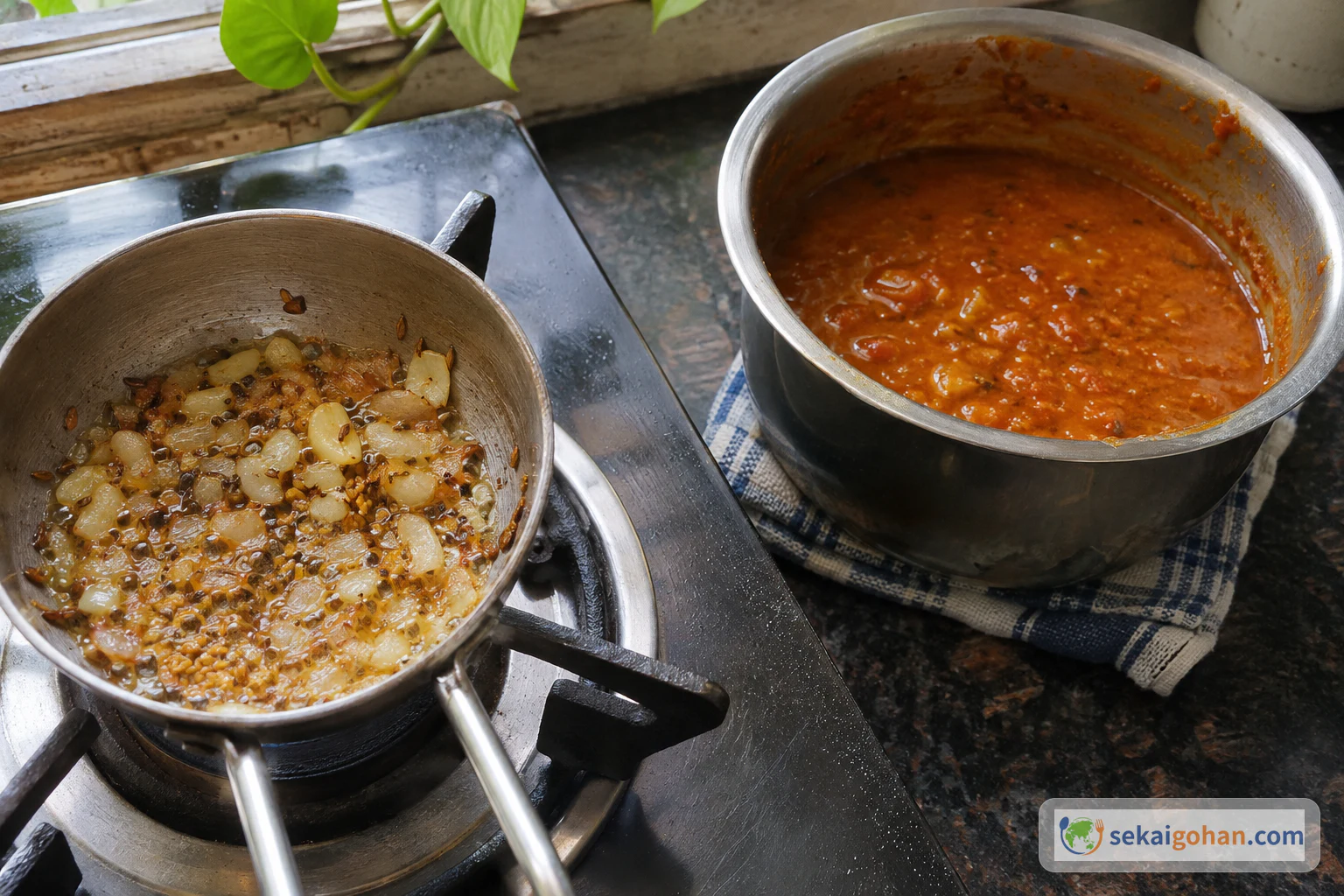
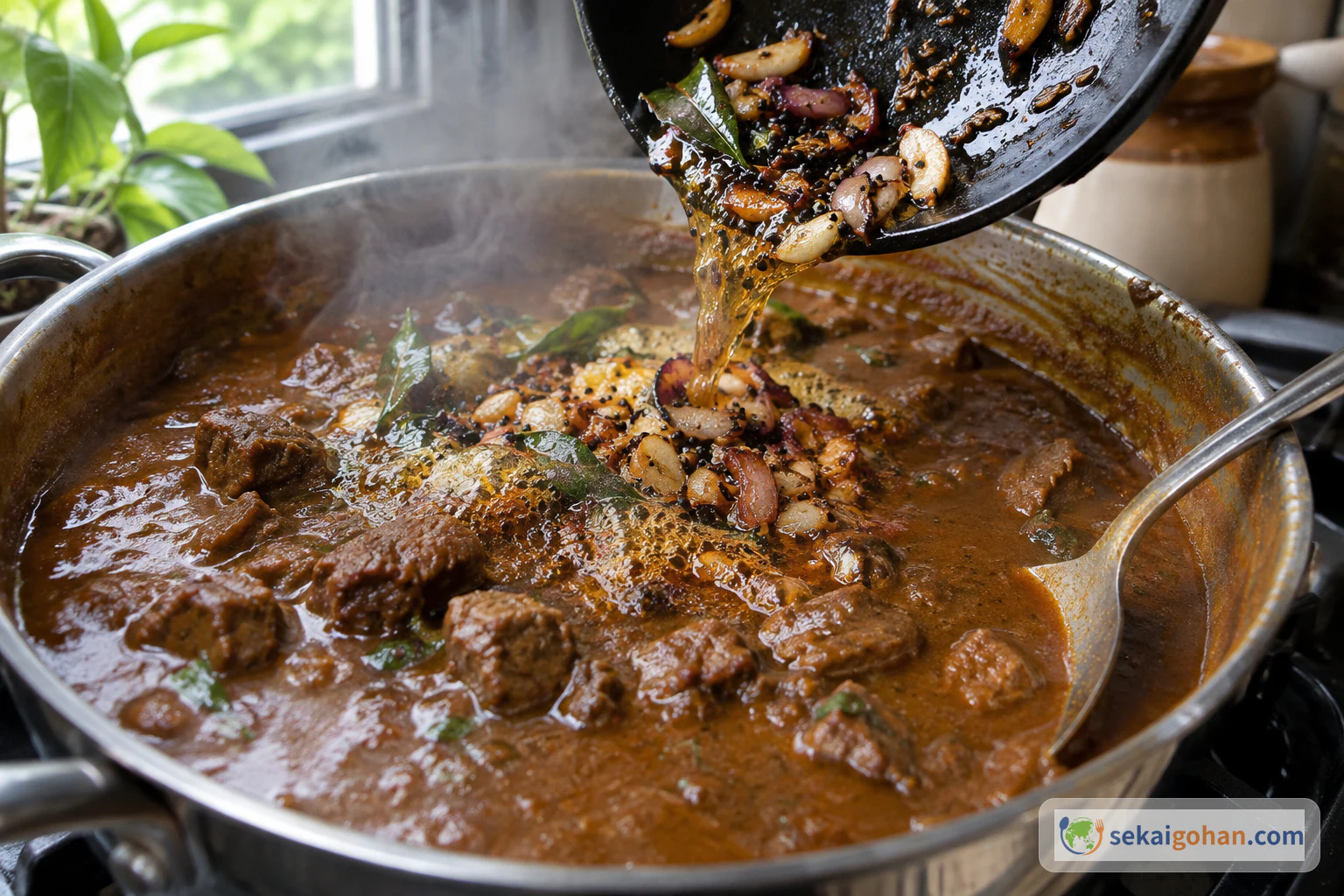
The last move is the loudest. A small pan of oil with garlic, onion, cumin and fenugreek seeds goes over the pot of thick brown gravy, and it hisses and steams as it hits the surface. Underneath is beef that has marinated in pastes and whole spices, fried in oil and simmered soft, then thickened with rice flour into something close to a savory porridge. This is pithali, the wedding stew of Jamalpur in northern Bangladesh, ladled over plain white rice. It tastes of turmeric, garlic and warm whole spice, with a toasted, faintly bitter edge from the fenugreek in that final splash of oil.
Three Names and a Wedding Pot
Pithali belongs to Jamalpur District in the Mymensingh Division, in the north of Bangladesh. The name sounds like pitha, the family of rice-flour cakes and sweets eaten across the country, and newcomers often expect something sweet. Pithali is salted, spiced beef, and the only thing it shares with pitha is rice flour, which here thickens a meat gravy.
Locally the dish has several names. Many people in Jamalpur call it milli, others say manda or pithali, and milani is heard as well. When it comes with rice, it is milli bhaat. Where the name comes from is not settled, and neither is the dish's age: it is often described as more than two hundred years old, while other accounts give it a shorter history.
Pithali, Manda (Mənda, ম্যান্দা in Bengali), Milli, Milani and Milli Bhaat all point to the same rice-flour-thickened beef stew. If you search for it, try all of them; Milli is the name many people in Jamalpur use.
Where it is eaten
Pithali is party food. It is cooked for weddings, for aqiqah celebrations after a birth, for milad gatherings and religious occasions, and for village feasts. For a crowd it goes into big pots over a wood fire and simmers for hours, with some cooks working around twenty spices into the pot before the rice flour goes in and the hot spiced oil, called bagar, goes on top.
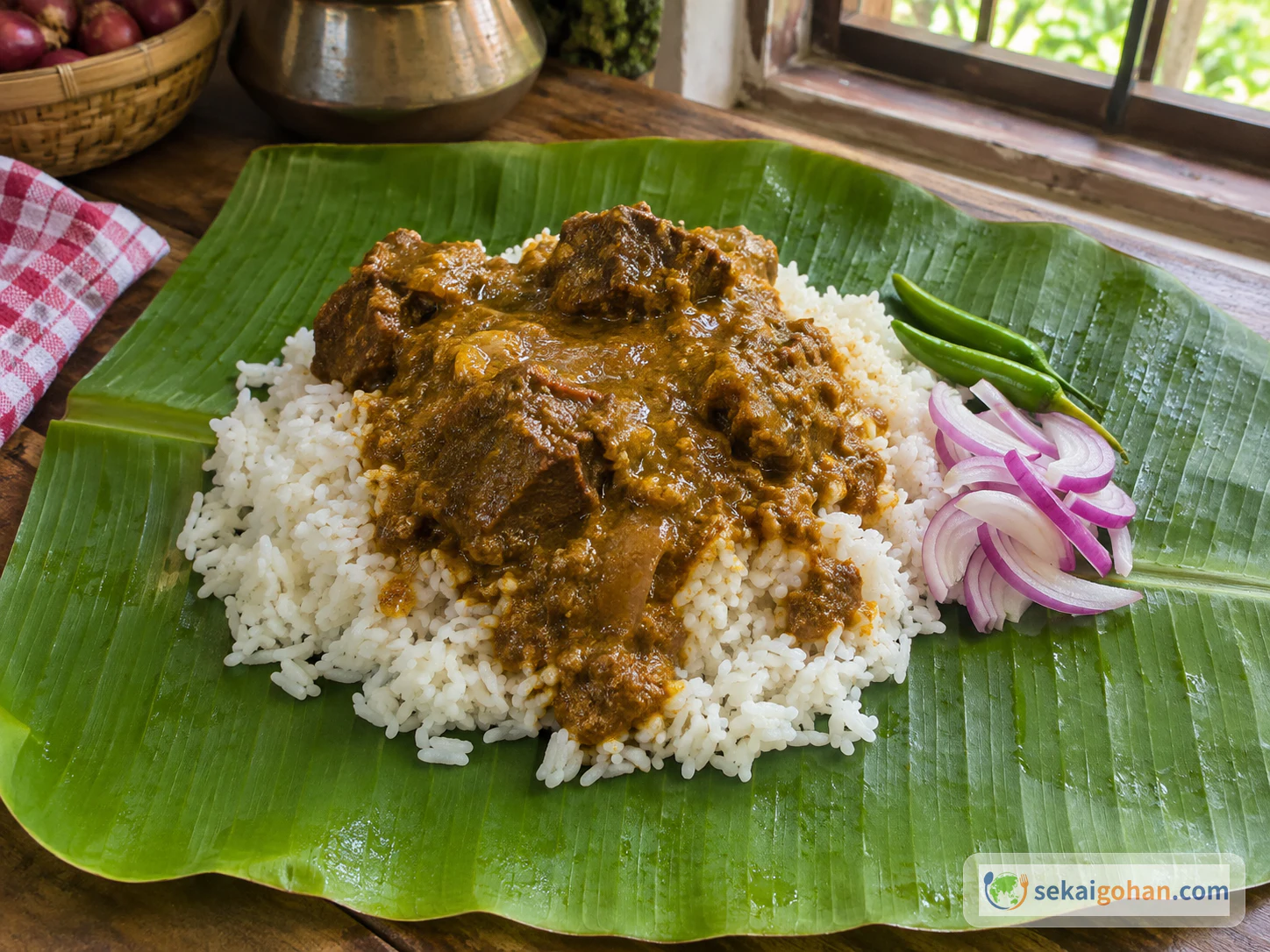
Guests have traditionally sat together on straw and eaten the stew from banana leaves heaped with rice. Today it is just as often served on plates or from clay pots. A local group, the Milli Sangha, holds a Milli Utsav every year to keep the dish and its feasts going.
How it differs from its neighbours
Bangladesh has other thick meat dishes, and pithali sits apart from them. Haleem gets its body from lentils and grains cooked down with the meat; kala bhuna, from Chittagong, is a beef dish cooked in mustard oil. Pithali is wet, thickened only with rice flour, and finished with a tempering of garlic, onion, cumin and fenugreek, or in some households with fried onion and toasted cumin. Families change the pot too: some cook it with bone-in beef, some add potato, and some make shrimp or vegetable versions.
Ingredients
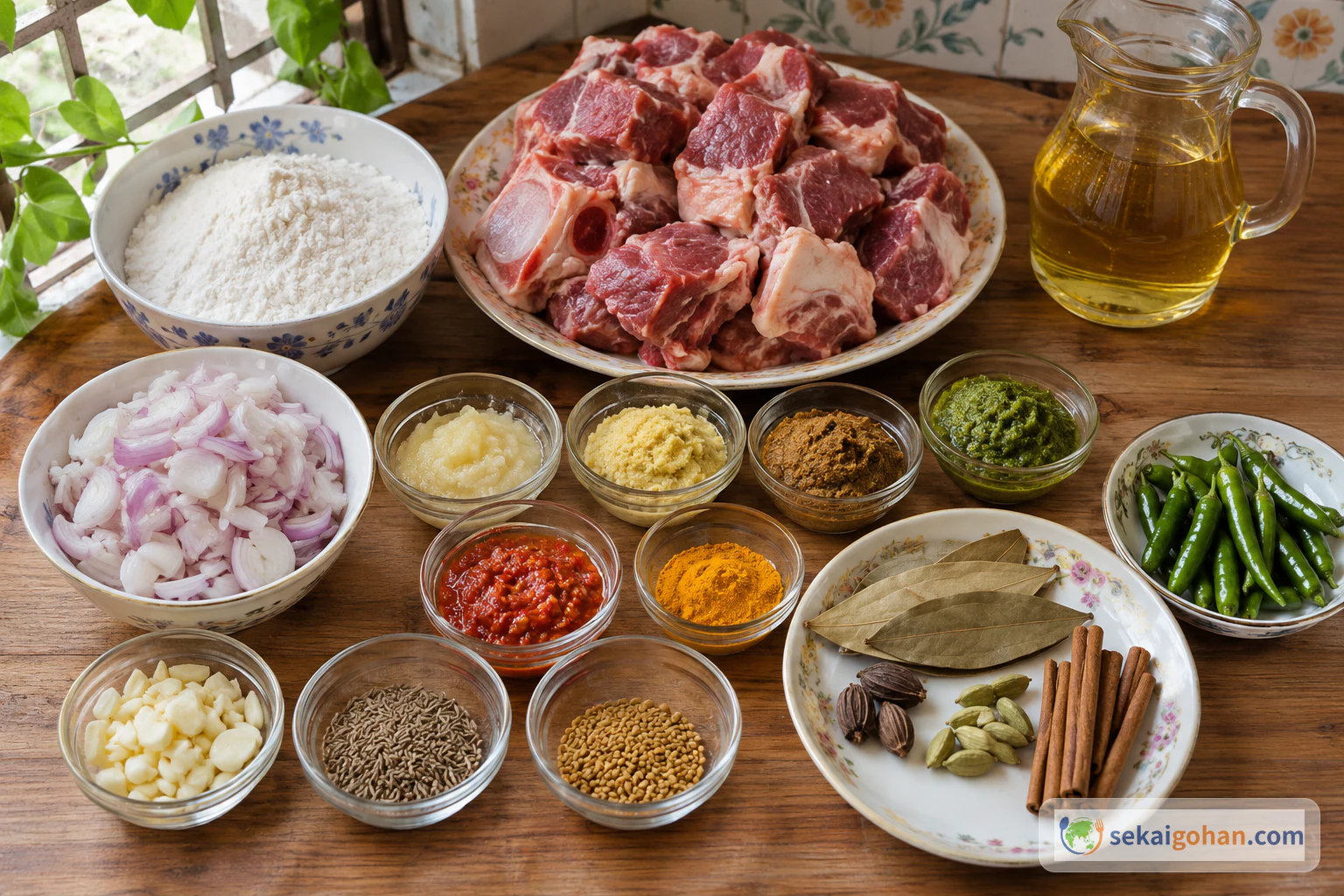
Pithali is fried in soybean oil, so it contains soy. If you swap in another oil for that reason, check its label. The chili paste and green chilies make it hot.
Equipment
- Heavy-bottomed pot, at least 3 quarts (3 L)
- Small frying pan for the tempering
- Large bowl for marinating
- Wooden spoon or flat spatula that reaches the corners of the pot
- Sieve or small bowl for adding the rice flour
Choosing and Substituting
The rice flour decides the dish. Use plain rice flour, the kind ground from ordinary rice, sold in most supermarkets and Asian grocers. Cornstarch and wheat flour are not substitutes; they give a different gravy and a different dish. Flours differ in how finely they are ground, so add yours gradually and judge by the thickness rather than the bag.
For the beef, stewing cuts work: shin, brisket or ready-cut stew cubes. Bone-in pieces are also used in Jamalpur. Tougher cuts simply need longer in the pot.
The pastes are the heart of the marinade. If you cannot make cumin or coriander paste from seeds, ground cumin or coriander stirred with a little water stands in; taste the marinade and add more if it seems faint. Soybean oil can be replaced with ordinary vegetable oil, which tastes close. Black cardamom comes from South Asian grocers or online spice shops; if you cannot find it, add a few extra green cardamom pods. Fenugreek seeds and cumin seeds for the tempering are worth tracking down, because that last splash of oil gives the stew its finishing aroma.
Cinnamon sticks vary a great deal in length and thickness. If yours are long, thick sticks, use fewer pieces so cinnamon does not take over the other whole spices.
Method
The work runs in one pot plus a small pan. Mix the marinade first and let it sit while you get the pot out. After the beef is fried and the water goes in, the long simmer is mostly hands-off; check the meat now and then. The rice flour needs your full attention, so have it measured and the tempering ingredients chopped before you start thickening.
When It Goes Wrong
| What you see | Why | What to do |
|---|---|---|
| Lumps in the gravy | Rice flour went in too fast or sat without stirring | Lower the heat and keep stirring; add the rest of the flour mixed into a little cold water |
| Bottom of the pot catching or smelling scorched | Rice-flour gravy settles and sticks | Use a heavy pot, lower the heat and scrape the bottom as you stir; move the stew off any burnt layer without scraping it up |
| Beef still tough after thickening | The simmer was too short for the cut | Next time, cook until the meat falls apart before adding flour; now, keep it on low and stir often until tender |
| Flat, one-note taste | Not enough salt, or the tempering was skipped | Season again after the tempering goes in |
| Bitter edge | Garlic or fenugreek burned in the tempering | Brown the tempering only to pale gold next time |
Serving, Variations and Storage
At the table
Pithali goes over hot white rice, and on a banana leaf if you can get one, the way it is served at Jamalpur feasts. Green chilies and sliced raw onion on the side give something sharp against the thick gravy; rinse both well under running water before slicing and serving them raw. It is a dish for a crowd and a celebration, so make the full pot and bring it to the table in the pot or a clay bowl.
Variations
- Bone-in beef: Pieces on the bone give the gravy more body; they need a longer simmer before the flour goes in.
- With potato: Some households add potato. This is a separate version from the one above, with a softer, starchier pot.
- Milder heat: Reduce the chili paste. The pastes of garlic, ginger and cumin carry the flavor without it.
Storing and reheating
Let the stew cool briefly, then refrigerate it promptly in a covered container; do not leave it standing out. The gravy sets thick in the fridge. Reheat it in a pot with a splash of water, stirring from the bottom so it does not scorch, until it is steaming hot all the way through.
Frequently Asked Questions
Can I use cornstarch or wheat flour instead of rice flour?
No. Rice flour gives pithali its porridge-like gravy, and cornstarch or wheat flour turns it into a different dish. Plain rice flour is easy to find in supermarkets and Asian grocers.
Why is there so much oil floating on top?
A full cup of oil goes into frying the meat, and more comes with the tempering. Some of it rises to the surface by the end, which is normal for this stew. Stir it back through the gravy as you serve.
Is pithali very spicy?
It has real heat from the chili paste and green chilies, carried by plenty of garlic, ginger and whole spice. If you want it gentler, cut back the chili paste and keep everything else the same.
Do I take out the whole spices before serving?
They stay in the pot, and the cinnamon sticks and cardamom pods end up on the rice. Eat around them and leave them at the side of the plate or leaf.