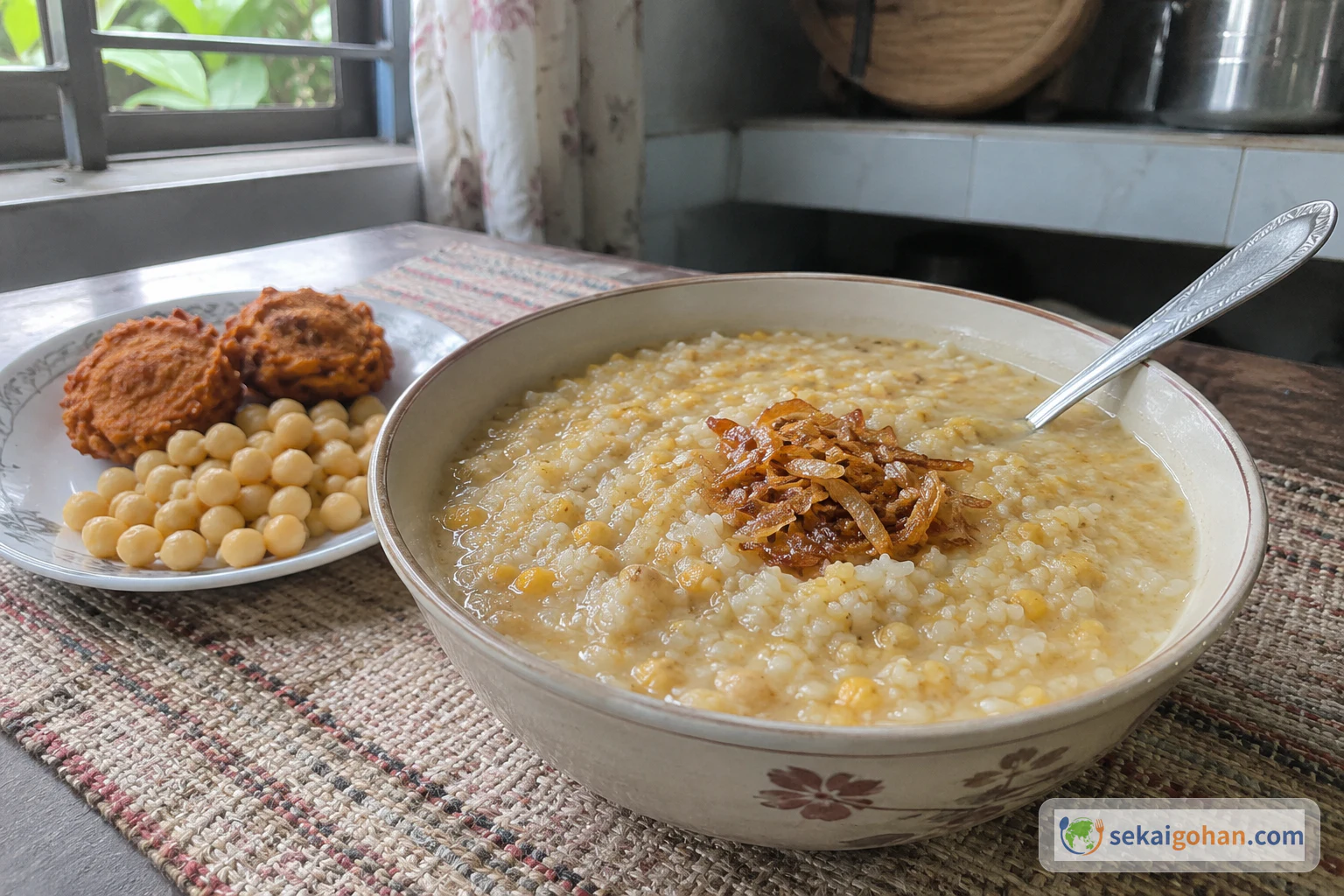
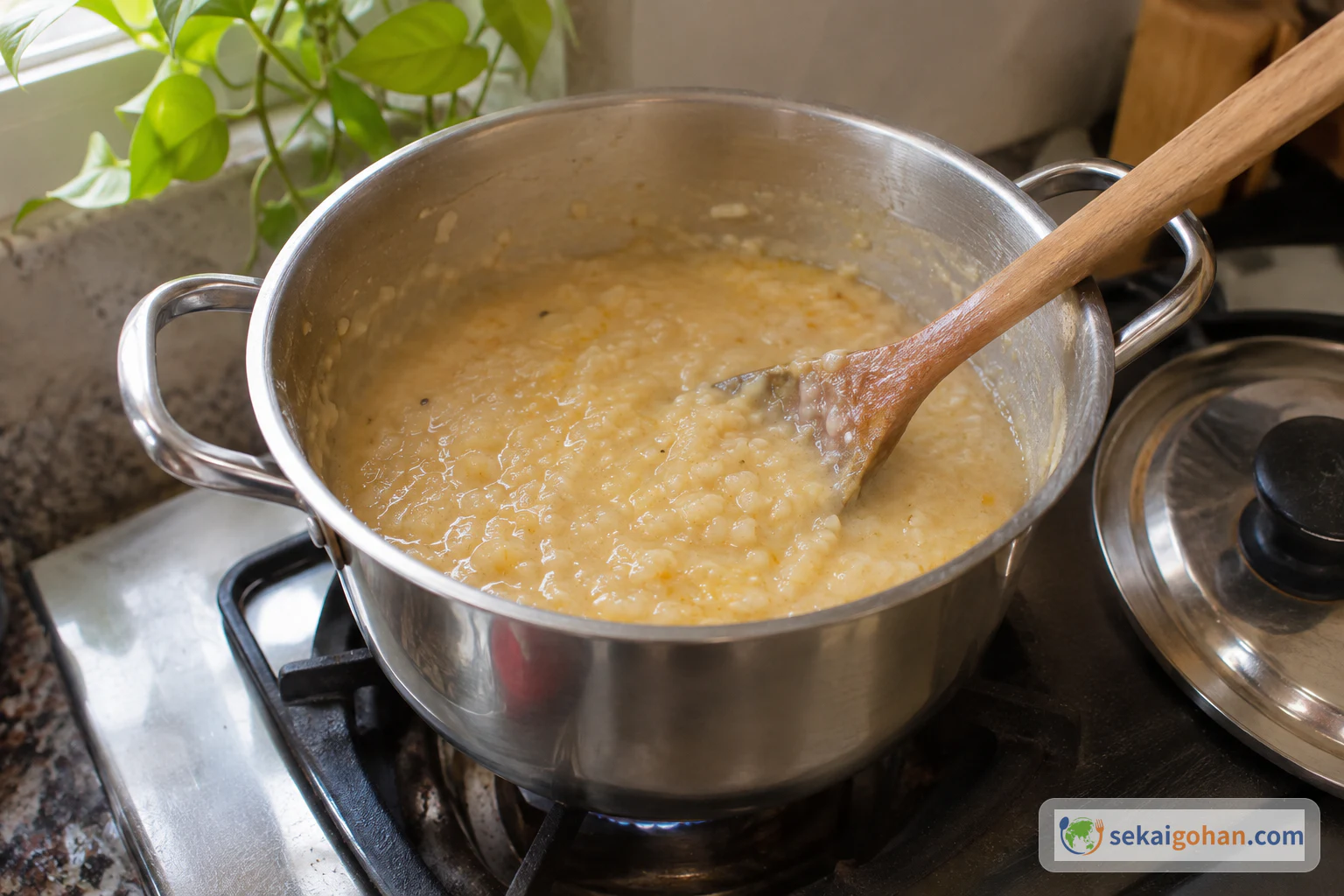
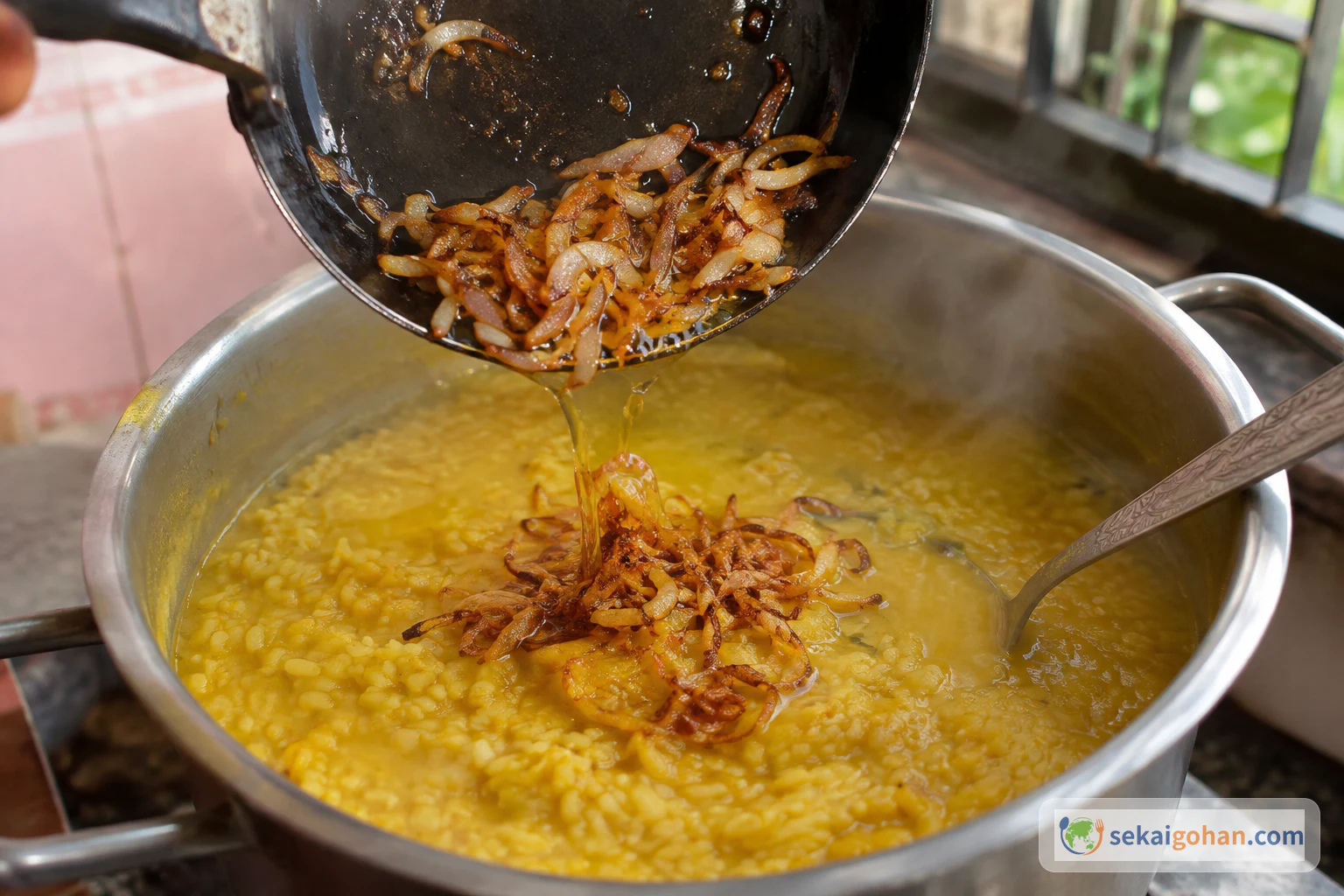
The last thing to go into the pot is a pan of onion fried golden in hot oil. It hits the pale porridge with a hiss, the steam smells sweet and a little bitter from fenugreek, and one stir pulls the dark strands through a pot of rice and red lentils cooked down until it pours from a spoon. In Sylhet, in northeastern Bangladesh, this soft khichuri is what many families put on the table at dusk during Ramadan, the first warm bowl after a day of fasting. It tastes gentle and savoury, with ginger and fried onion over the mild sweetness of lentils that have melted into the rice.
Patla Khichuri: Sylhet's Thin Khichuri at Iftar
In most of Bangladesh, the word khichuri brings to mind bhuna khichuri, the fried style of rice and lentils. Sylhet's version goes the other way. Patla means thin, and here the rice and dal simmer in plenty of water until the grains break down into a loose porridge with a strong aroma. People also call it norom (soft) khichuri or letka khichuri, and Sylhetis call it Kissoori or Leța Kisuri in their own speech.
Sylheti cooks make khichuri several ways: rice with dal, rice alone, chunnar jau cooked with limewater, and the fried bhuna style. The rice-and-dal patla kind is the one cooked here. People also speak of a white kind (jau) and a yellow kind, but they don't all draw the line between them in the same place.
At the iftar table
During Ramadan, patla khichuri appears on almost every iftar table in Sylhet. Local press reports it as the most popular iftar dish in Sylhet. Many in Sylhet hold that a soft, easy meal is the right way to break a long day's fast. Homes cook it, eateries sell it by the kilo, and orphanages serve it at iftar. The guest dish is akhni, a fragrant rice dish cooked with meat that resembles Dhaka's tehari but smells different. Some families who make akhni still cook a small pot of khichuri to go beside it. If the iftar table you have in mind runs richer, haleem is another iftar staple from the same country.
Sylheti cooks sometimes choose fragrant rice varieties such as chinigura, kalijira or tulshimala. Shop versions add vegetables and ghee. Bangladeshi families in Britain carry the dish into their own Ramadan, and it is served at iftar in British Bangladeshi homes and shops. Outside the fasting month it is a comfort dish, cooked for someone feeling unwell and soft enough for a small child. It is a close cousin of Indian khichdi, but the Sylheti bowl is thinner, and the fried onion and fenugreek give it its own flavour. You can find more of the country's cooking on the Bangladesh page.
Ingredients
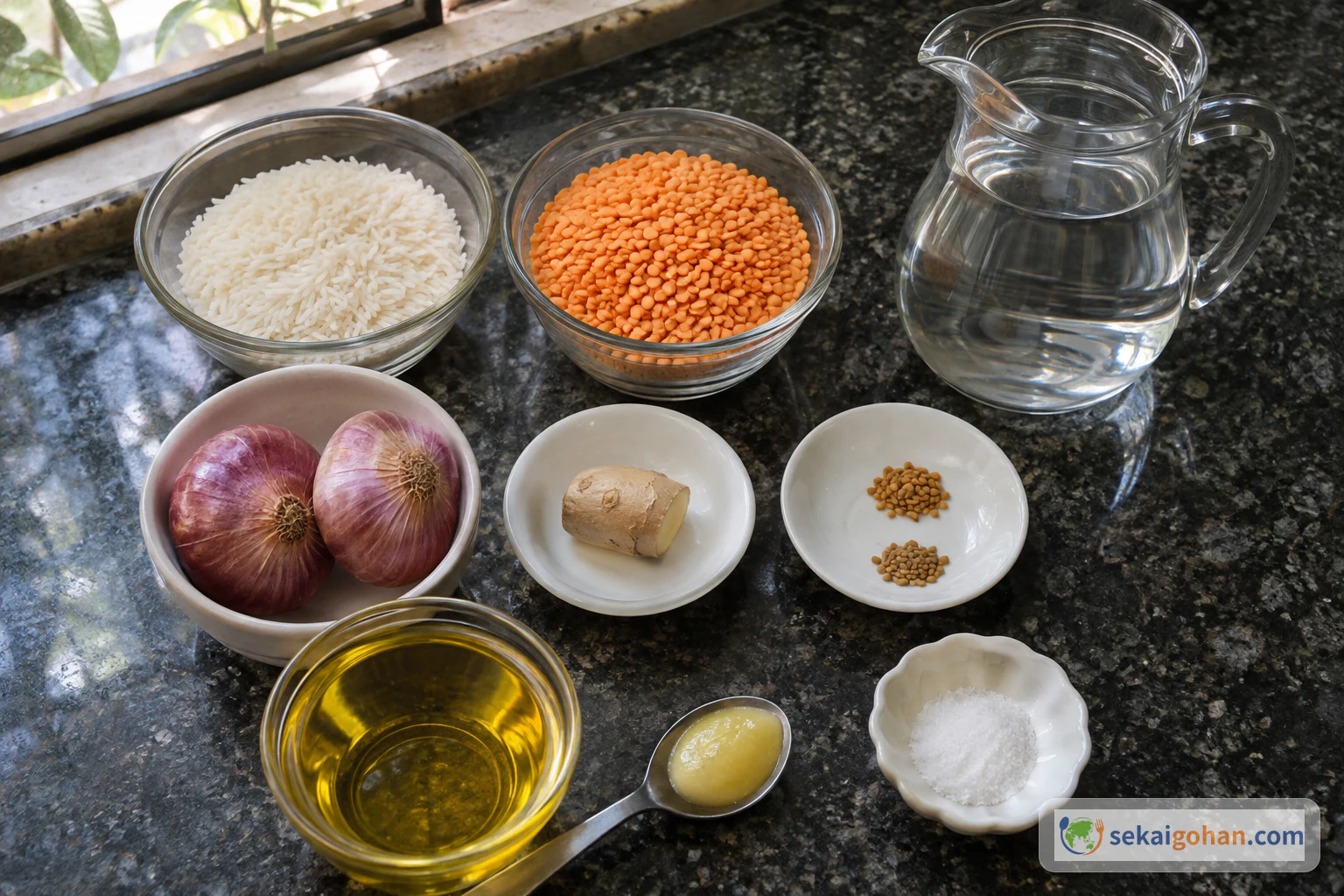
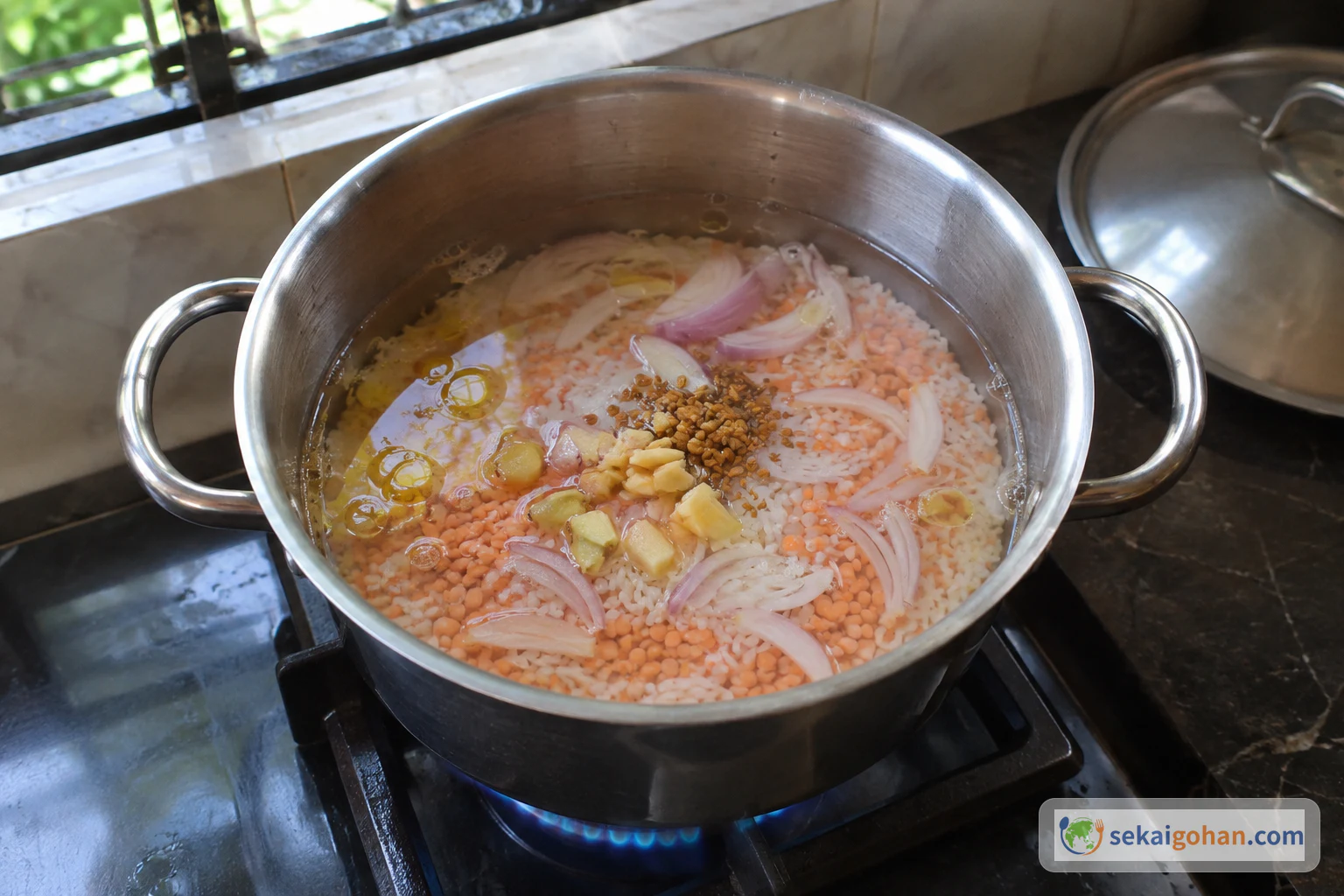
The amount of water is set by depth, not by a measuring cup. Level the soaked rice and lentils in the pot and pour until the water stands 1 inch above their surface. That depth gives a loose, thin khichuri.
Ghee is a dairy product (milk). Red lentils are legumes. Piyaju, the fritter often served alongside, is made from lentils and deep-fried. Choose oil instead of ghee for a dairy-free pot.
Equipment
- Medium heavy-bottomed pot with a lid
- Small frying pan
- Bowl for soaking
- Wooden spoon
- Knife and cutting board
Choosing and Substituting
The one thing worth a trip to a South Asian grocer or an online order is fenugreek seeds (methi). Two pinches are enough to give the pot its faintly bitter, almost maple-like smell, and a small bag lasts a long time. Split red lentils (skinless masoor dal) are sold in South Asian shops and online. They cook quickly and dissolve, and that is what thickens a patla khichuri.
| Choice | What it does |
|---|---|
| Oil or ghee | Both work. Ghee gives a rounder, buttery richness and contains milk. Oil keeps the taste cleaner and the pot dairy-free |
| Fragrant rice (chinigura, kalijira) or plain white rice | Small aromatic rice brings the scent of a Sylheti iftar. Any plain white rice also works and gives a milder pot |
| Fresh ginger | Use fresh root. It is chopped and simmered, so its aroma runs through the whole pot |
| Turmeric, bay leaf, vegetables | These belong to other khichuri styles. Leave them out to keep this pot pale, plain and Sylheti |
The fried onion and the softness are what make this bowl taste of Sylhet. Keep both, even if you have to use everyday rice and oil.
Method
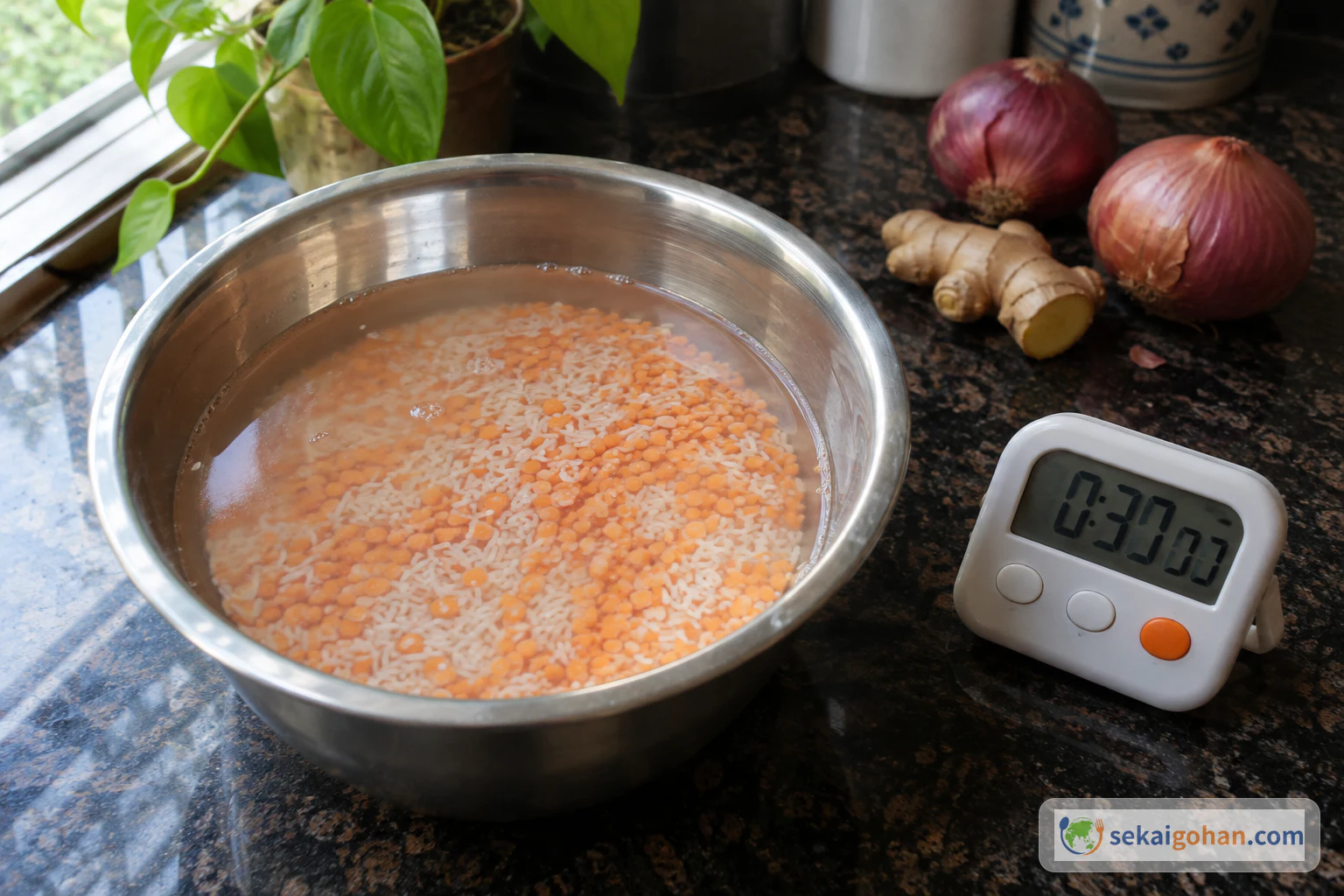
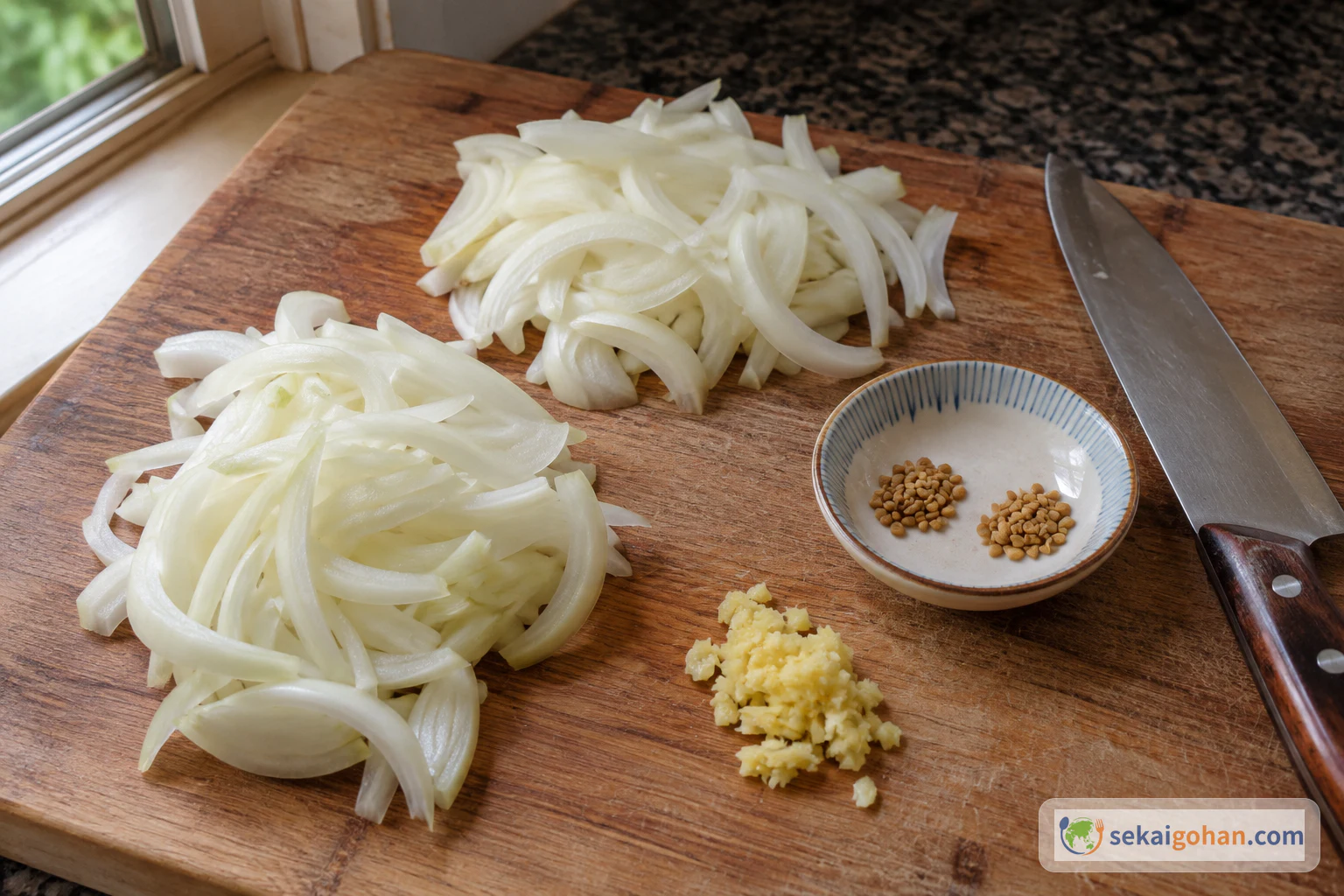
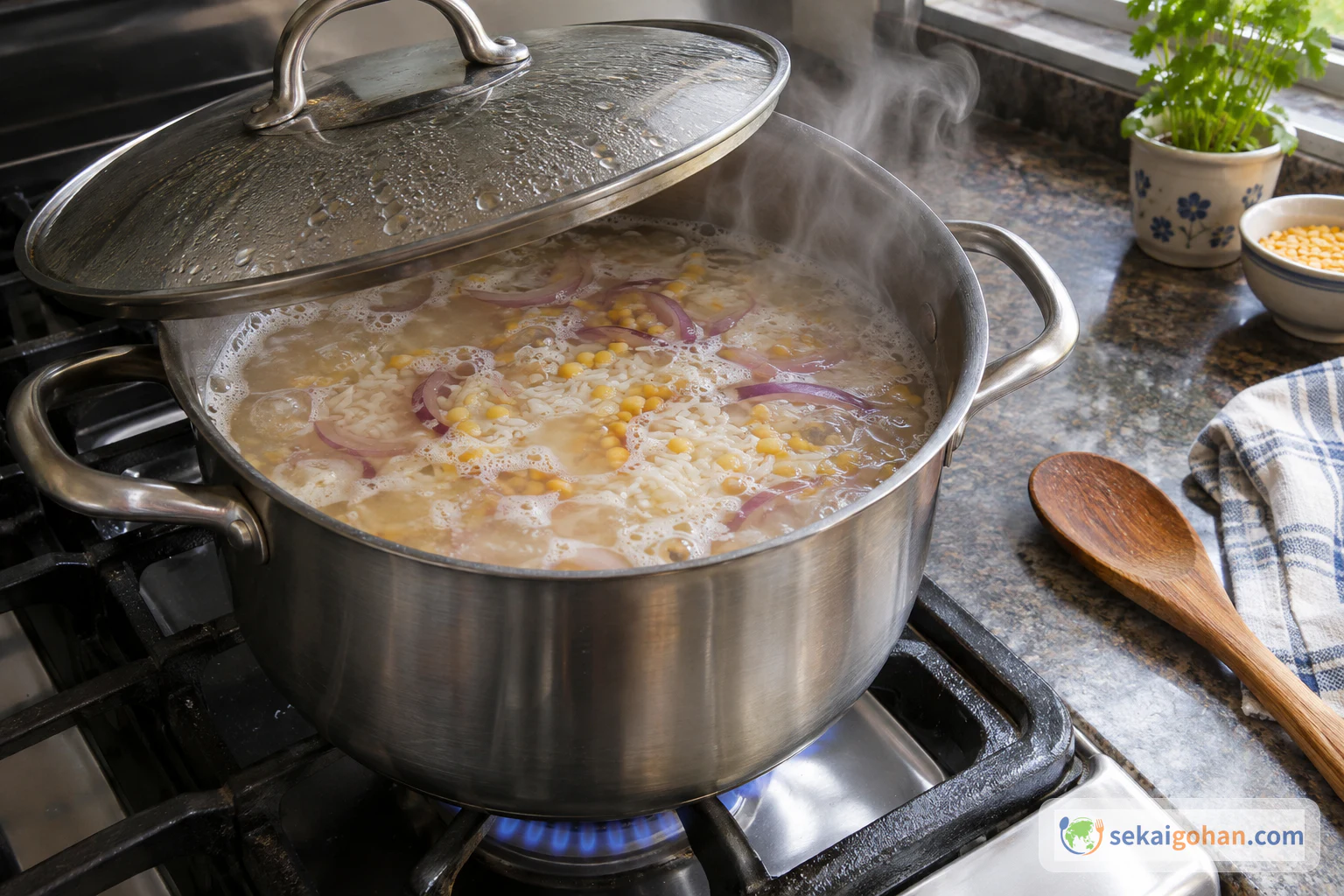
Soak the rice and lentils first, and slice the onions and chop the ginger while they soak. After that everything goes into one pot and the heat is turned down in three stages. During the 20 minutes on low you only need to stir now and then, which leaves you free to fry the second onion at the end.
Don't leave the pot alone on low heat. Regular stirring breaks the rice into the porridge and keeps it from sticking to the bottom. A khichuri that is stirred often turns out smoother and tastier than one left alone.
Keep your face back when you pour the hot oil into the pot, because it spits as it meets the wet porridge. Pour slowly and close to the surface.
When It Goes Wrong
| What you see | Why | What to do |
|---|---|---|
| Foam boils over the rim | Full lid or heat still high after the boil | Turn down to medium and set the lid ajar so steam can escape |
| A brown layer sticks to the bottom | Too long between stirs on low heat | Stir more often from then on |
| Too thick to pour from the spoon | Water ran low during the simmer | Stir in a little hot water at a time until it loosens |
| Grains still whole at the end | Not stirred enough on low | Keep simmering on low and stir more vigorously until the rice breaks |
| Fried onion tastes bitter | Pan too hot, onion went past golden | Turn the heat down next time and pour as soon as the strips turn golden brown |
Serving and Variations
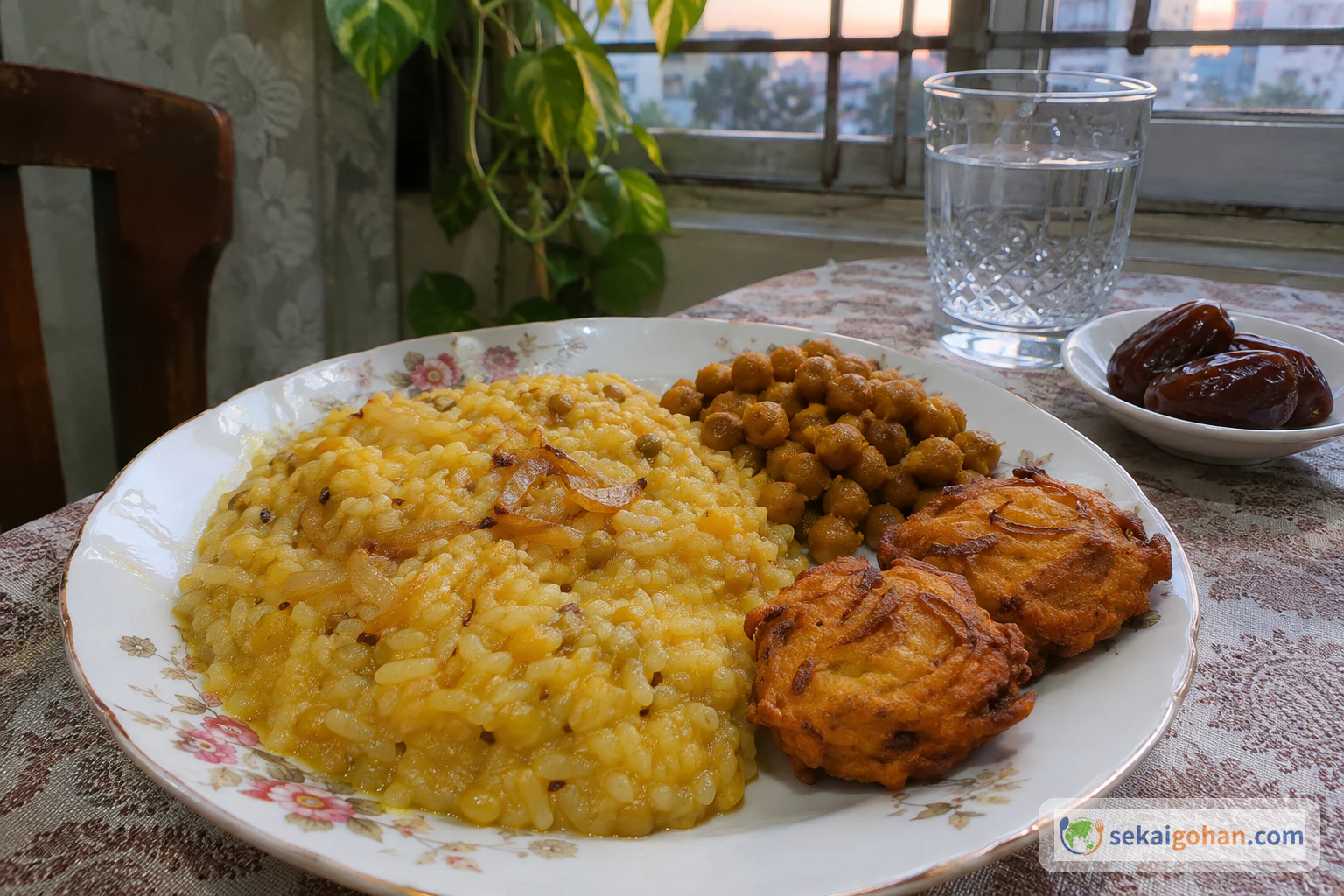
Ladle it into shallow plates or bowls while it is hot and loose. In Sylhet it comes with boiled chickpeas (chhola) and piyaju, crisp lentil fritters, which add the bite the porridge lacks. At iftar it sits beside dates and water, and on a guest night it shares the table with akhni. Make it on the day you eat it, and finish it that day.
Variations
- Without dal. Some describe a version that leaves out the lentils and leans on fenugreek, ghee, aromatic rice and kalijira.
- Turmeric and bay leaf. Simmering red lentils and rice with turmeric and bay leaf, and optional butter, gives a yellow khichuri. It is a different style, so swap rather than stack the spices.
- Shop-style with vegetables. Eateries add vegetables and ghee and use chinigura rice.
Frequently asked questions
Which rice works best if I can't find chinigura?
Any plain white rice works, because the rice is meant to break down. Fragrant rice such as kalijira or tulshimala adds aroma.
Can I skip the fenugreek?
You can, and you will still get a good rice and lentil porridge. You lose the faint bitterness that sits under the fried onion, so the flavour changes. If you cook this more than once, it is worth buying a small bag.
Are the chickpeas and piyaju necessary?
No. They are side dishes, and the khichuri is complete without them. They add texture and make the plate into a fuller iftar spread.
What is the difference between white and yellow patla khichuri?
Sylhet has a white (jau) and a yellow kind, but people define them differently, so no firm line can be drawn between them. The rice-and-red-lentil pot here comes out pale yellow-beige.