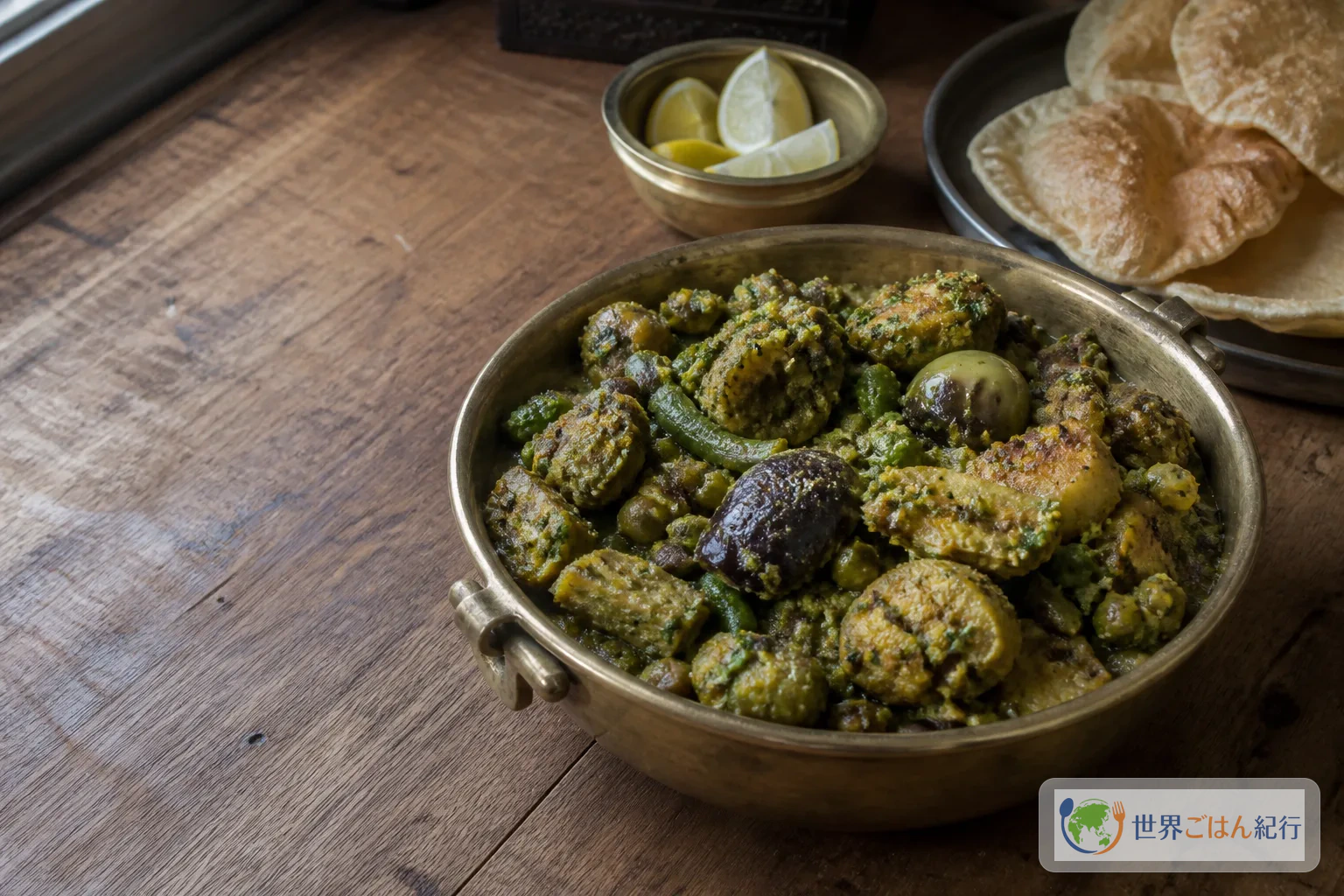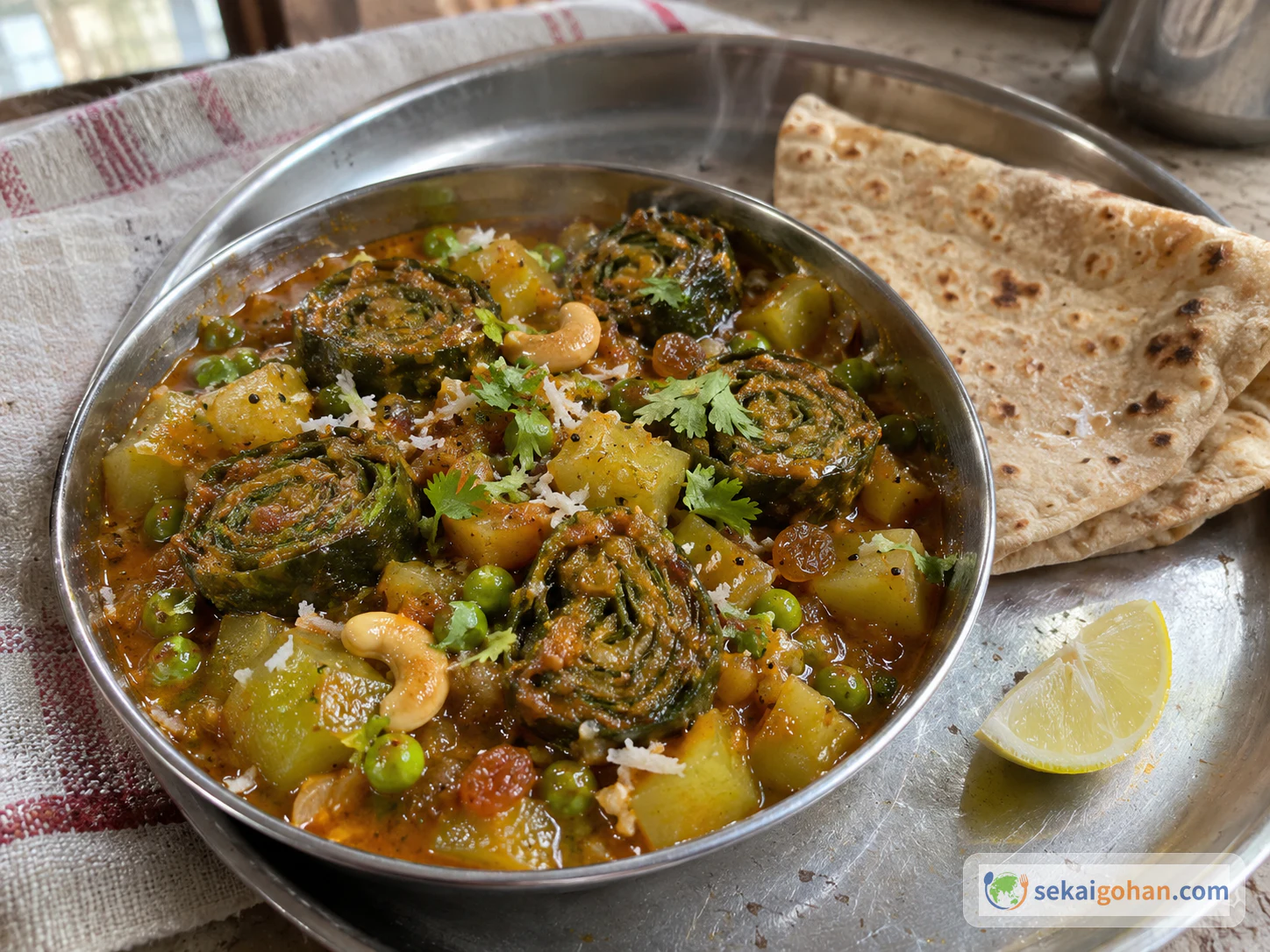
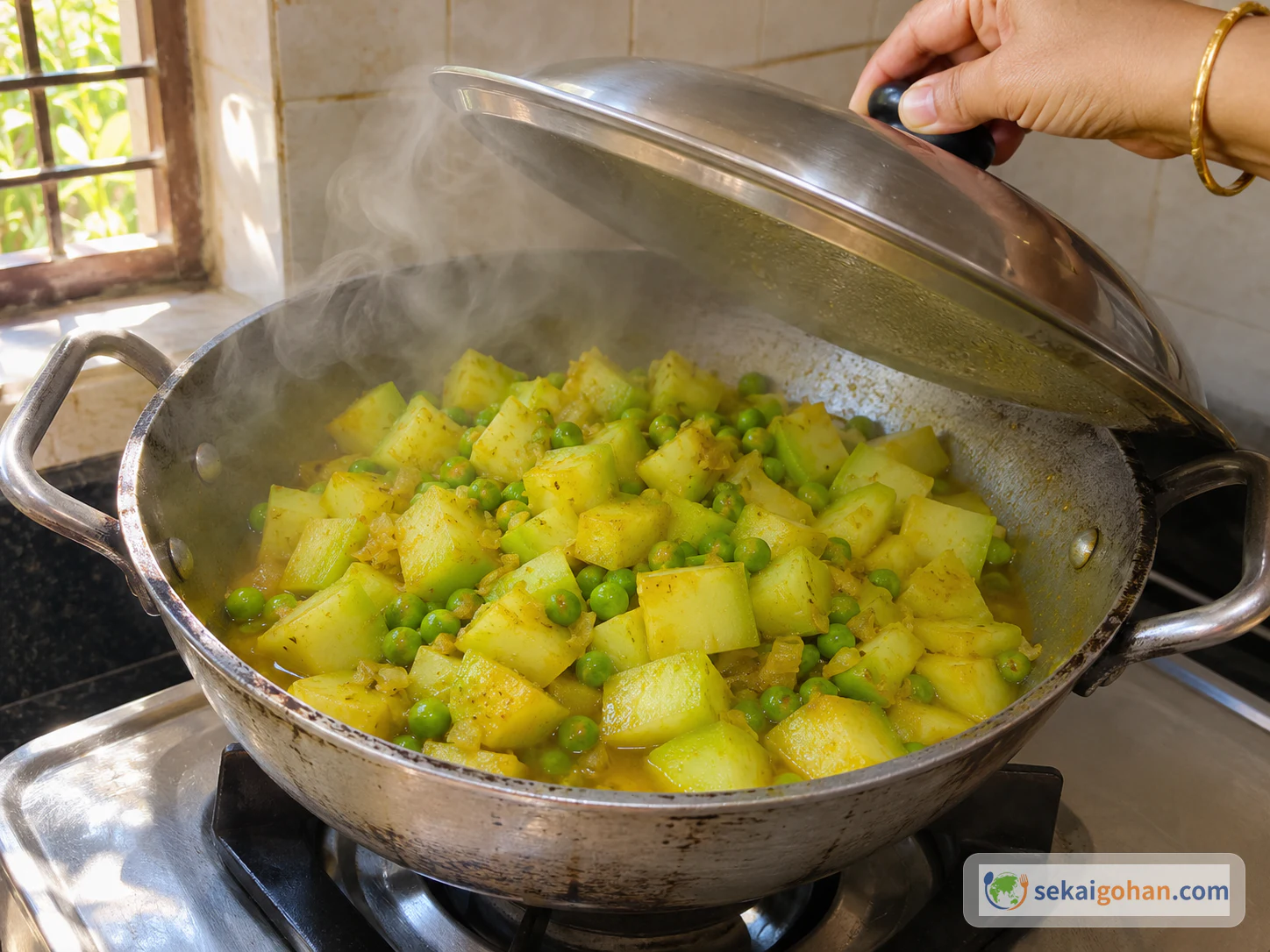
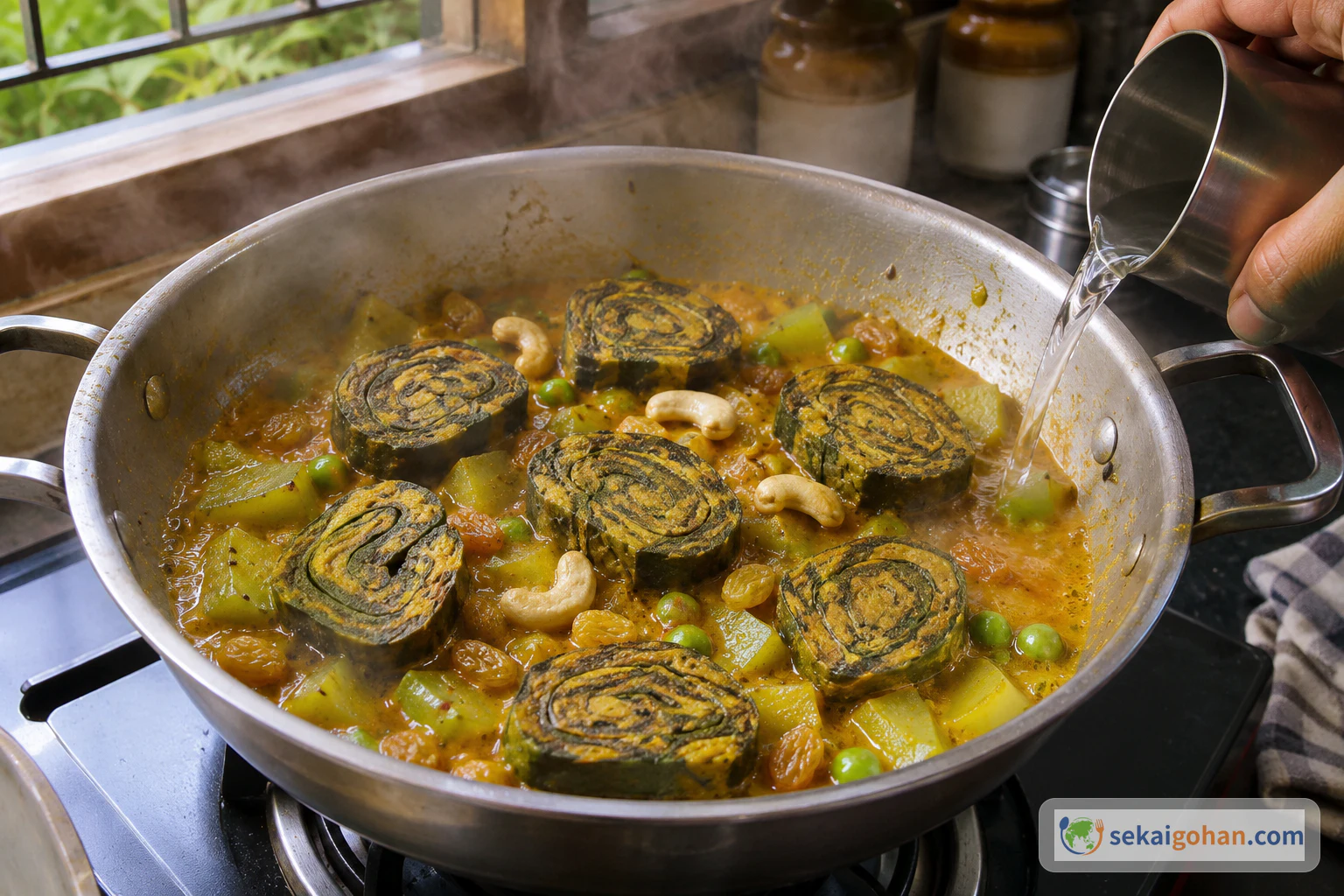
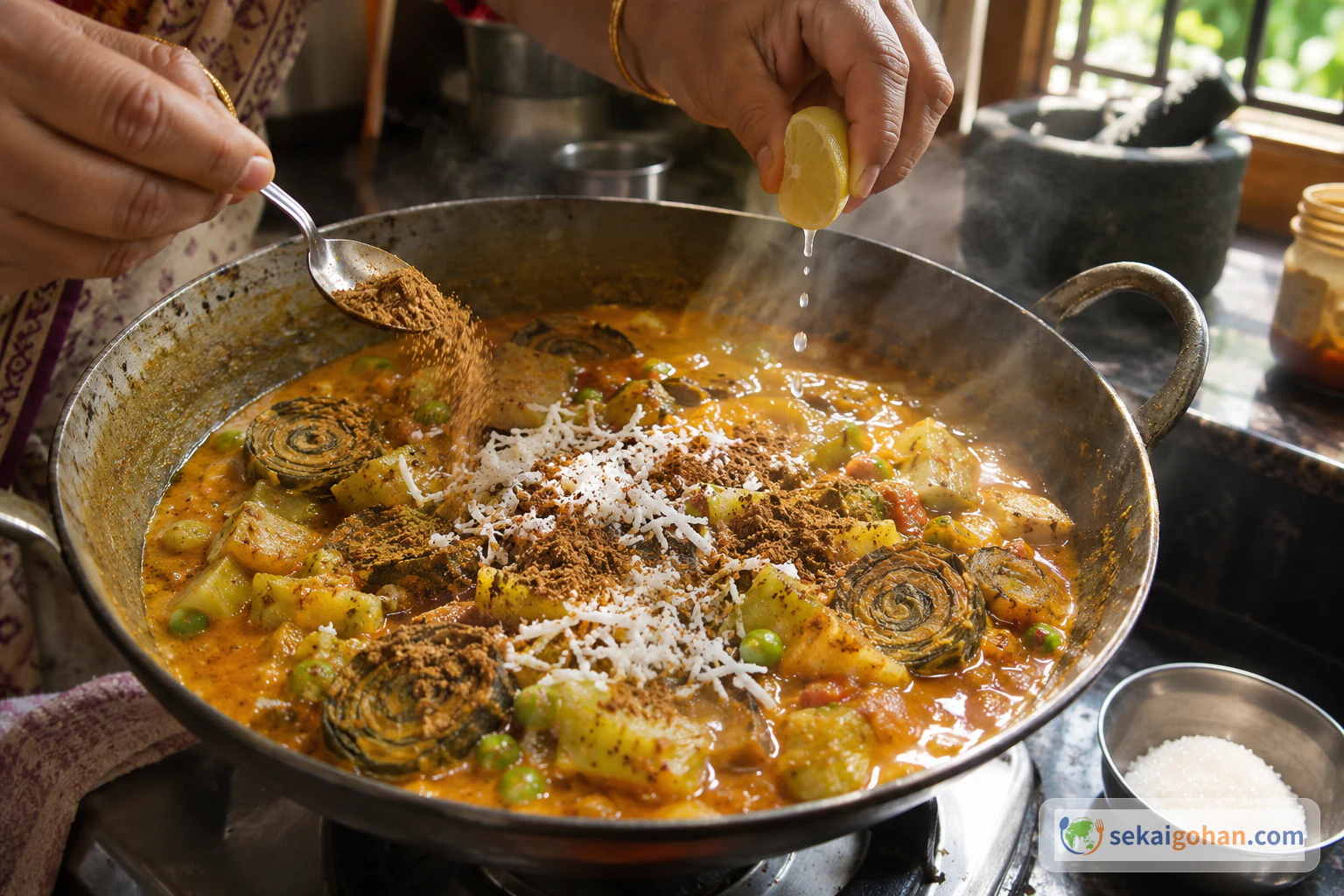
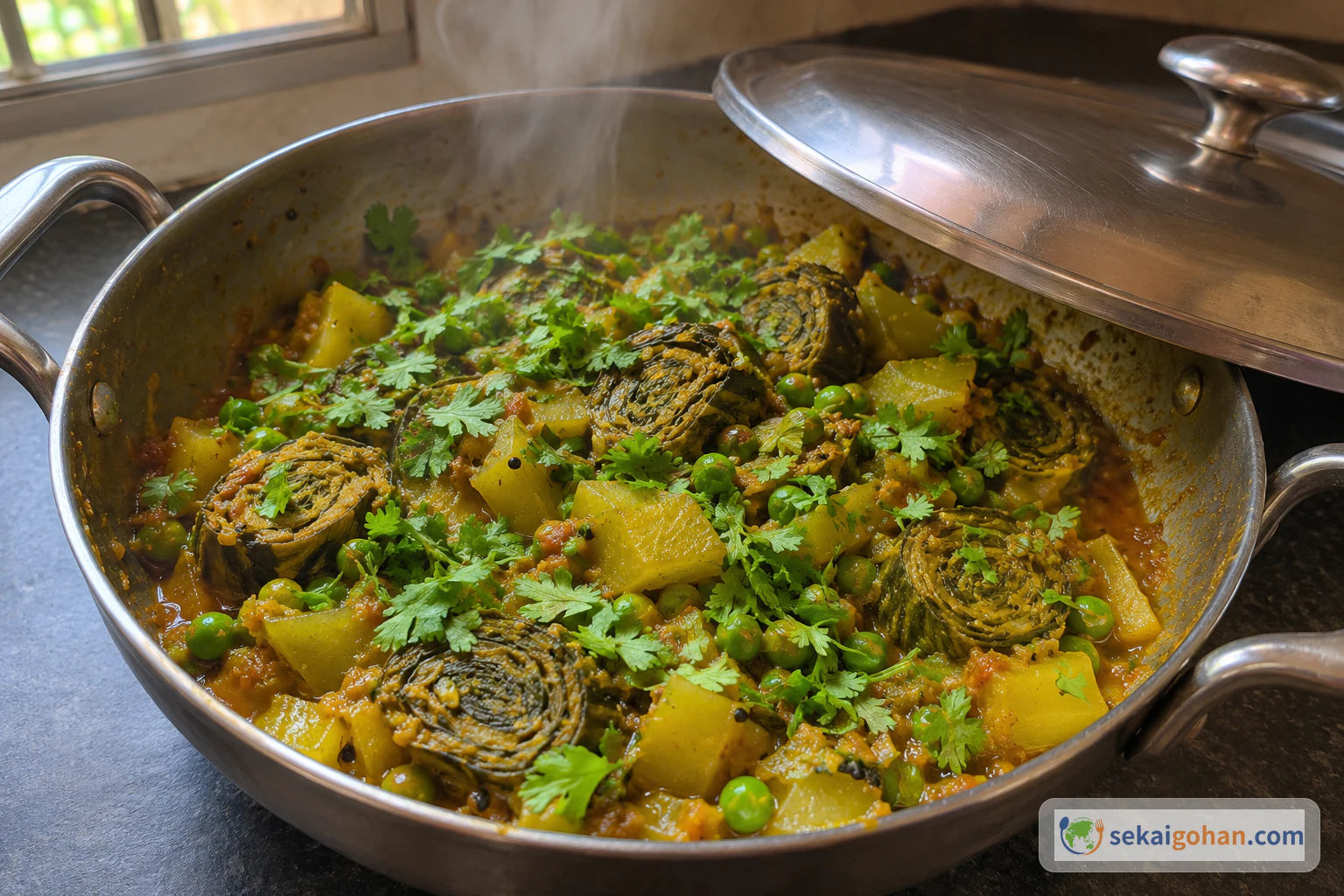
The last minute decides this dish. The lemon, sugar and grated coconut go into the pan together, and the thin gravy turns glossy and starts clinging to everything in it. You get pale cubes of ridge gourd so soft they nearly fall apart, dark spiral slices of steamed taro-leaf roll that have drunk up the liquid, and bright peas. Turiya patra vatana sabji is a Gujarati vegetable curry, generally made in winter. It tastes sweet, sour and gently hot all at once, with cashews and raisins tucked into the gravy, and it goes to the table with soft rotli to scoop it up.
The pairing is unusual. Ridge gourd is mostly water and turns silky. Patra is a firm, chewy roll of leaves and chickpea-flour paste. A sweet-sour masala pulls the two textures into one dish, but only if things go into the pan in the right order: gourd, then patra, then the ground spices, then the acid.
Three Words, One Pan: What Turiya Patra Vatana Is
The name is simply a list of what is in the pan. Turiya is ridge gourd, the long, angled green squash that India knows by a dozen names. Patra is a roll of colocasia (taro) leaves spread with a sweet-sour chickpea-flour paste, rolled up tight, steamed and sliced into pinwheels. It belongs to the same family as alu vadi, a traditional snack from Maharashtra and Gujarat. Vatana is green peas. In this curry the steamed patra is not fried and served as a snack. It is sliced and simmered in the gravy, so it soaks up the masala and swells, and it stays chewy against the soft gourd.
Ridge gourd turns up as turai, torai or tori, dodka, gilki, jhinge, peerkangai and beerakaya, depending on the language. In English it is also sold as angled luffa, and in Japan as tokado-hechima. Knowing these names helps a lot in an Indian grocery.
A wedding dish and a winter one
Without the peas, turiya patra is a fixture at Gujarati weddings. It is a sabji that is expected on the wedding menu, and Gujaratis are very fond of it. The banquet style is the generous one: coconut, cashews, raisins, sugar and lemon, with plenty of gravy. The peas link it to the winter table, which is where the full three-part name belongs. Leave the peas out and you have the wedding turiya patra nu shaak exactly. Put them in and the gourd gets a sweet, mealy counterpoint. A note on this version: the amounts, order and timing follow a six-serving turiya patra recipe that has no peas, and the ¾ cup (120 g) of peas is our own addition, scaled from the pea-to-gourd ratio of a different pea-and-ridge-gourd dish. The salt is split too, ¾ tsp early and the rest at the end, to allow for the peas.
The ingredients don't follow one calendar. Fresh peas are a winter crop, but ridge gourd peaks in summer and early autumn in places that grow it outside India. In Japan, for example, it is grown in Okinawa and parts of Kyushu and is in season from July to October. Frozen peas are available all year, so in practice the dish follows the gourd, not the peas.
The same pan in different Gujarati kitchens
Every household and community cooks it its own way. Among the Anavil, a Brahmin community of south Gujarat, the home version leaves out the coconut, cashews and raisins. It gets its flavor from hing, garlic and ginger-chili paste with only a teaspoon of sugar, and the gourd steams in about ⅓ cup of water, so it comes out fairly dry. The patra is fried separately in a teaspoon of oil and folded in at the end, and the pan rests covered off the heat. In the Jain version there is no onion or garlic. Tomato, tamarind, jaggery and mustard seed make the gravy redder and sharper, no water goes in at the start because the gourd gives its own, and the patra goes in last so it holds its shape. Jain cooks serve it with puri and aamras, sweet mango pulp. Restaurant kitchens sometimes add khandvi, a different steamed chickpea-flour roll, alongside the patra. They put both in once the gourd is about three-quarters cooked.
Undhiyu is another Gujarati winter vegetable dish, but it is built in layers and cooked as a mixed pot. Turiya patra vatana is quick: the pan is one gourd, one kind of roll and peas, cooked in stages. You can find more of the country's food on our India page.
Ingredients (serves 6)
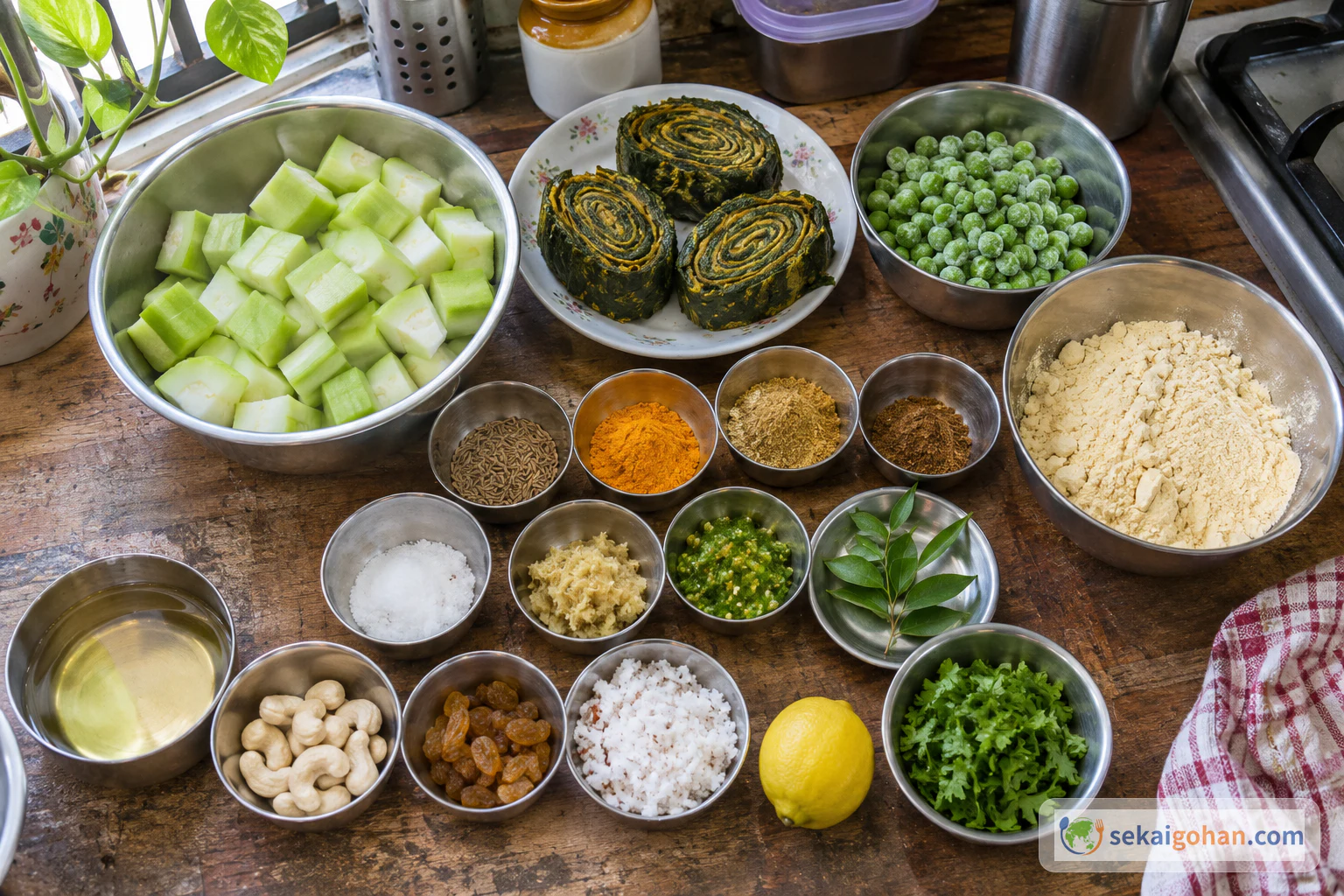
After peeling, cut off a small piece of the raw flesh and taste it. If it is bitter, throw that gourd out. Cooking does not take bitterness away, and one bitter gourd spoils the whole pan.
This dish can contain chickpea (gram flour, in the patra), cashews, peanut oil, coconut and mustard (sometimes in bought patra). Some hing (asafoetida) is cut with wheat flour, so check the label if you avoid gluten. Read the ingredient list on frozen patra before you buy. Leave out the cashews if anyone at the table has a nut allergy, and use another vegetable oil for a peanut allergy.
Equipment
- Wide, heavy-bottomed pan or kadai with a lid
- Vegetable peeler
- Chef's knife and cutting board
- Flat spatula
- Measuring cups and spoons
- Steamer (only if you make patra at home)
Shopping and Substitutions: Gourd, Leaves and Spices
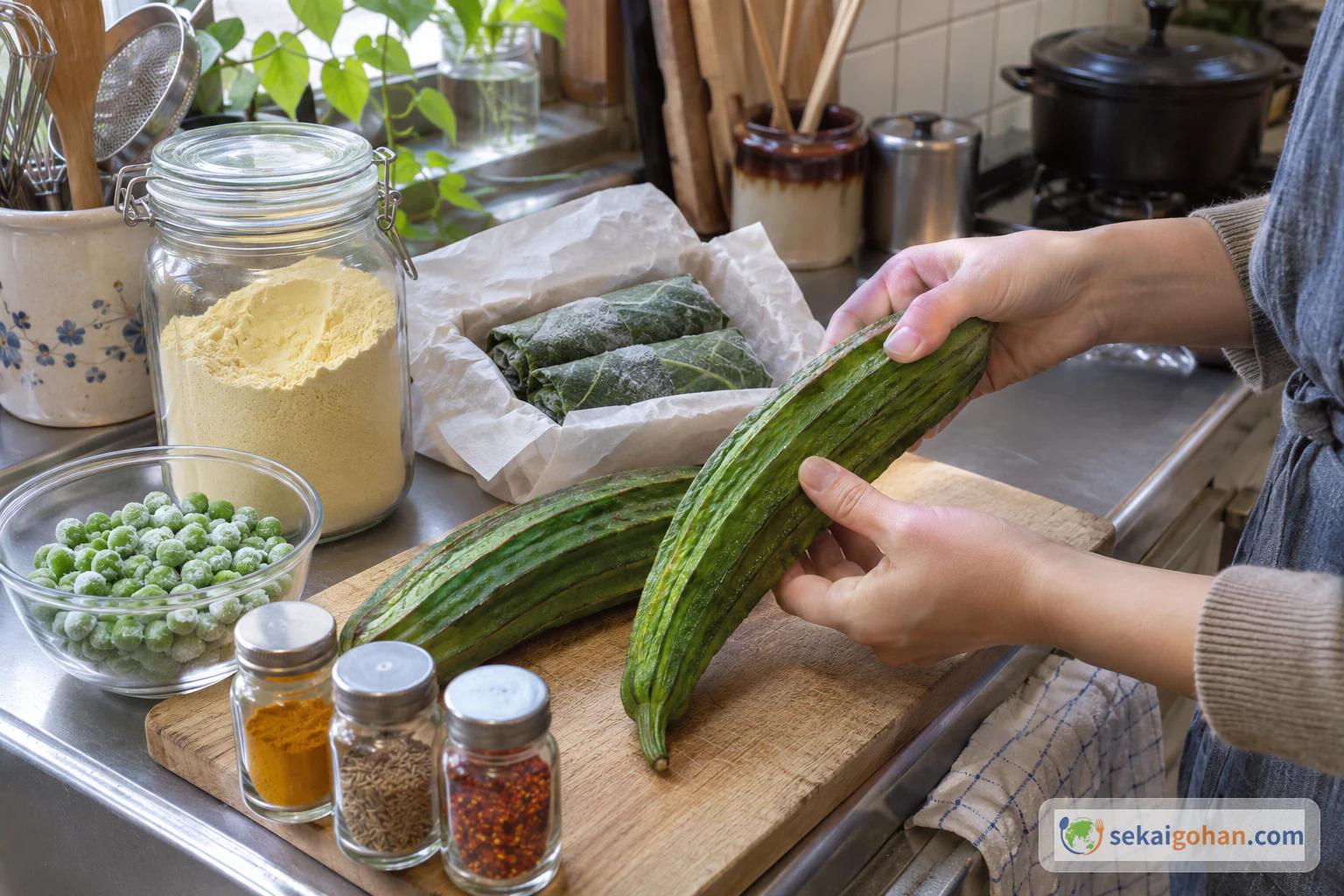
Most of the effort goes into two items. You need a ridge gourd that is young and sweet, and a source of patra you can trust. Choose gourds that feel firm when pressed. Softness means the inside has started to turn fibrous. Young gourds are about 8 to 19.5 inches (20–50 cm) long. Past that the fibers harden and won't soften however long you cook them. Peel the hard skin with a peeler, and if the ridges still feel stringy, peel deeper along them. The flesh inside is white and spongy, like eggplant, with soft seeds and almost no grassy taste. It takes up oil quickly, and it takes up seasoning just as readily.
For patra, the easiest source is frozen patra rolls from an Indian grocery, already steamed and ready to slice. Follow the package directions for thawing and heating, and keep them frozen or refrigerated until you use them. If you can't find them, see the homemade section below.
| Ingredient | Swap | What changes |
|---|---|---|
| Ridge gourd | Bottle gourd (dudhi) | Similar mild sweetness and soft texture |
| Ridge gourd | Zucchini | Less water, so the gravy comes out tighter and the green skin stays visible; cut the first water by 2 tbsp |
| Ridge gourd | Smooth luffa (same genus) | Close texture once cooked |
| Frozen peas | Fresh shelled peas, ¾ cup (120 g) | Same role. Dried peas are a different ingredient and don't work here |
| Curry leaves | Frozen, or dried | Frozen keeps the most aroma. Without any, you lose one strand of fragrance |
| Garam masala | ½ tsp ground cumin | Fewer layers of aroma |
| Sugar | Jaggery | Darker color and deeper sweetness |
| Lemon juice | Lime juice | Same sour lift |
| Fresh grated coconut | Dried coconut | Sweeter, more toasted aroma |
| Cilantro | Green onion | A different kind of freshness |
| Green chili paste | Jalapeño | Adds a grassier note |
| Cumin seeds | Ground cumin | Avoid; you lose the popping, toasted aroma |
Hing, dhana jiru, garam masala, gram flour (besan) and curry leaves are all at Indian groceries. Small jars or packs are enough. Gram flour is only needed for homemade patra. Wheat flour or potato starch can't stand in for it.
Colocasia leaves contain needle-shaped calcium oxalate crystals. Eaten raw, taro-like plants have caused a burning mouth and tongue, a numb tongue and swollen lips. Patra must always be steamed, and then it heats again in the curry. Do not use leaves or stalks from ordinary taro grown for its corms. Except for varieties raised specifically for their stalks, these are high in calcium oxalate and should not be eaten. Ornamental elephant-ear plants (Alocasia) look very similar. In Japan, someone who cooked and tasted Alocasia leaves mistaken for taro had mouth numbness and nausea. Buy leaves only from a reliable seller, remove any unfamiliar plant mixed in with vegetables, wash leaves well before cooking, and never forage wild plants to eat. If you can't tell whether a plant is edible, don't eat it.
Method: Gourd, Patra, Spices, Acid
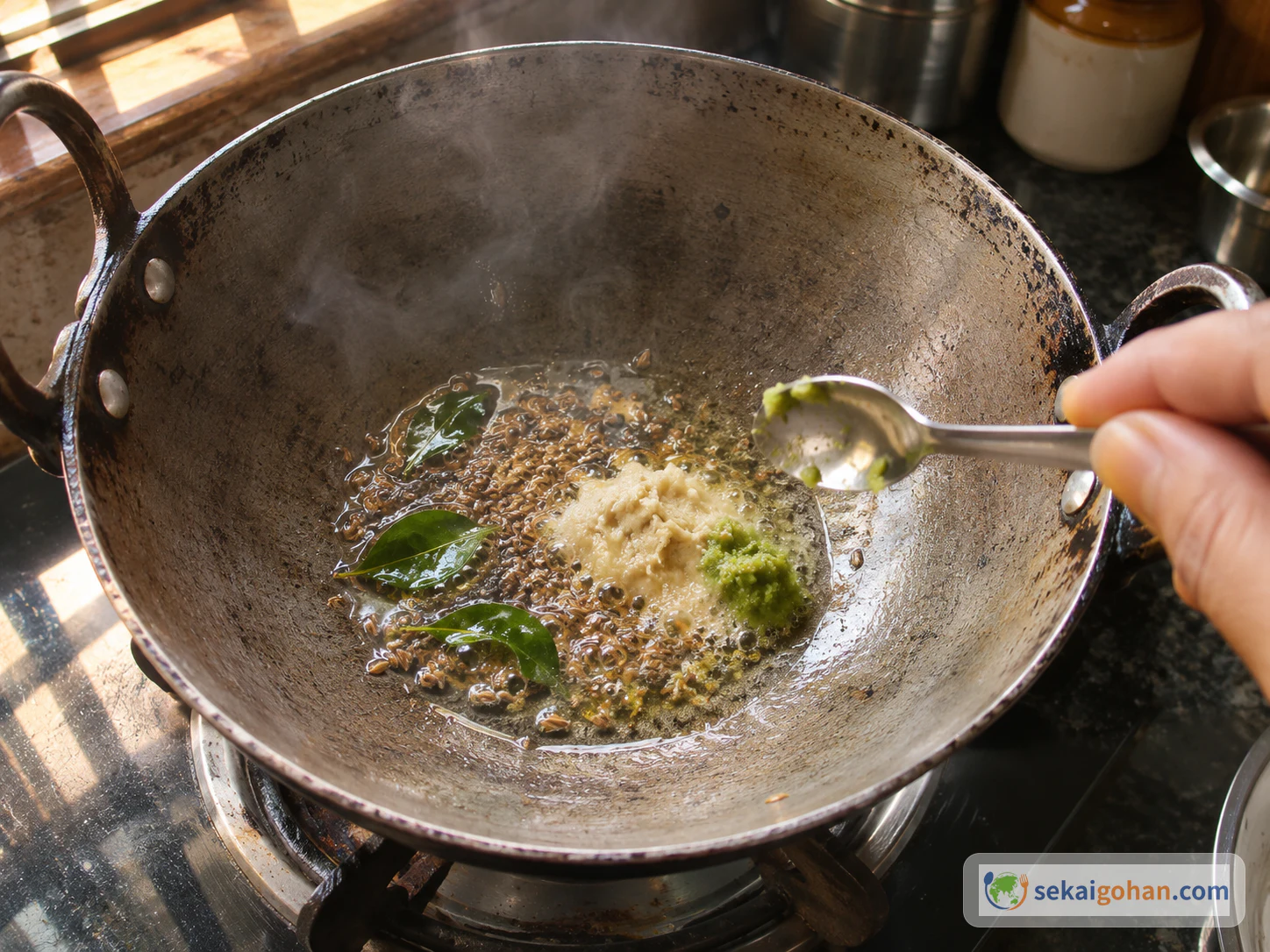
Get everything ready before the pan goes on. Once the cumin pops, the additions come one after another within about fifteen minutes. With bought patra, the dish takes about 25 minutes from start to finish. The only hands-off stretches are the covered simmer and the rest at the end.
Making Patra at Home
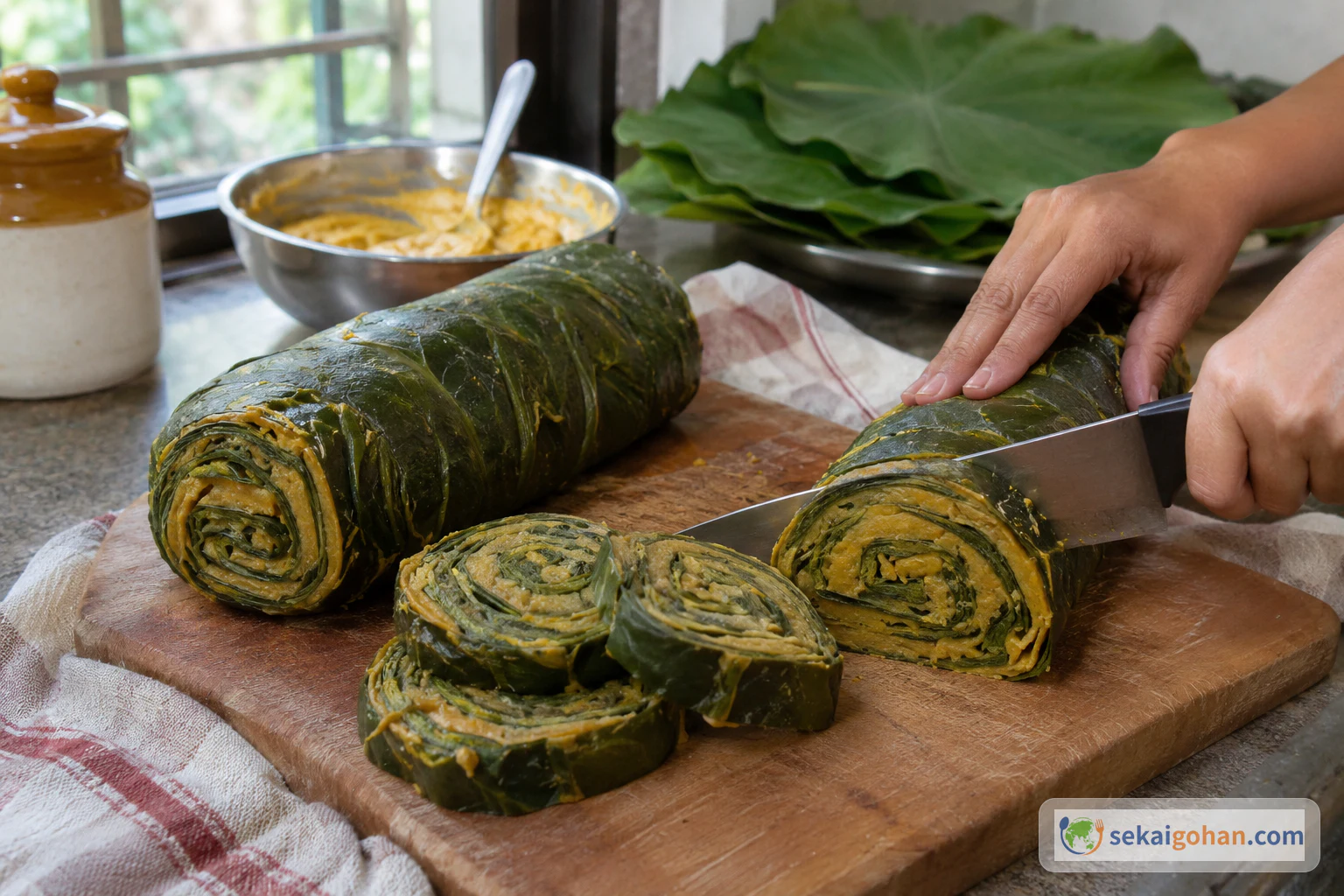
Homemade patra adds roughly 50 minutes to an hour to the cooking, which is a rough estimate rather than a measured time. In return the rolls taste much more of the leaf and have a firmer chew. Make it the day before if you can. You need 5 colocasia leaves, 2½ cups gram flour (besan), 1 tsp minced ginger, 1 tbsp plain yogurt, ¼ tsp ground turmeric, 1 tbsp jaggery (sugar works but changes the color), ½ cup (120 ml) tamarind water, 1 tsp ground coriander, ¼ tsp hing, ½ tsp chili powder and salt to taste.
Wash and dry the leaves and shave down the thick veins on the back. Stir the gram flour, spices, jaggery, yogurt and tamarind water into a thick, spreadable paste, adding a little water as needed. Lay one leaf dark side down, spread it with paste, and lay the next leaf over it with its tip pointing the other way. Repeat until four or five leaves are layered. Fold in both sides by 1 inch (2.5 cm) and roll up tightly. Tamarind in the paste is said to calm the scratchy feel the leaves can leave in the throat. It does not replace steaming.
Steam the rolls over high heat for 10 to 12 minutes, or up to 15 to 20 minutes for thicker rolls with more leaves. They're done when the paste has set firm and a skewer comes out clean. Cool them completely before slicing them 1 inch (2.5 cm) wide, because warm rolls fall apart under the knife. Steamed, cooled rolls freeze well. Thaw them before using.
Where colocasia leaves aren't available, large spinach leaves can be rolled the same way. They are thinner, so steam them until the leaves wilt and the paste sets, about 8 to 10 minutes as a rough guide.
Never put raw colocasia leaves into the curry, and never roll raw leaves and simmer them without steaming first. Steam each roll until the paste is completely set, then let it heat again in the curry.
When It Goes Wrong
| What you see | Why | What to do |
|---|---|---|
| Patra breaks up and the gravy turns mushy | Too much stirring or too long in the pan after step 4 | Turn from the bottom only. Broken patra still tastes the same; serve it as is |
| Gravy is loose and watery | The gourd and peas both release water | Uncover and cook over medium heat for 1 to 2 minutes. Don't add salt to make up for it; the salt will take over |
| Flavor tastes flat | Sweet or sour is short | Add lemon juice 1 tsp at a time and sugar ½ tsp at a time, alternating and tasting |
| The whole pan tastes bitter | A bitter gourd went in | It won't cook out. Next time taste every gourd raw after peeling |
| Gourd stays stringy | The gourd was overgrown | Choose young, firm gourds; peel deeper along the ridges |
| Too hot | Green chili paste | Leave the chili out next time. Don't add sugar to cover the heat |
Serving, Variations and Storage
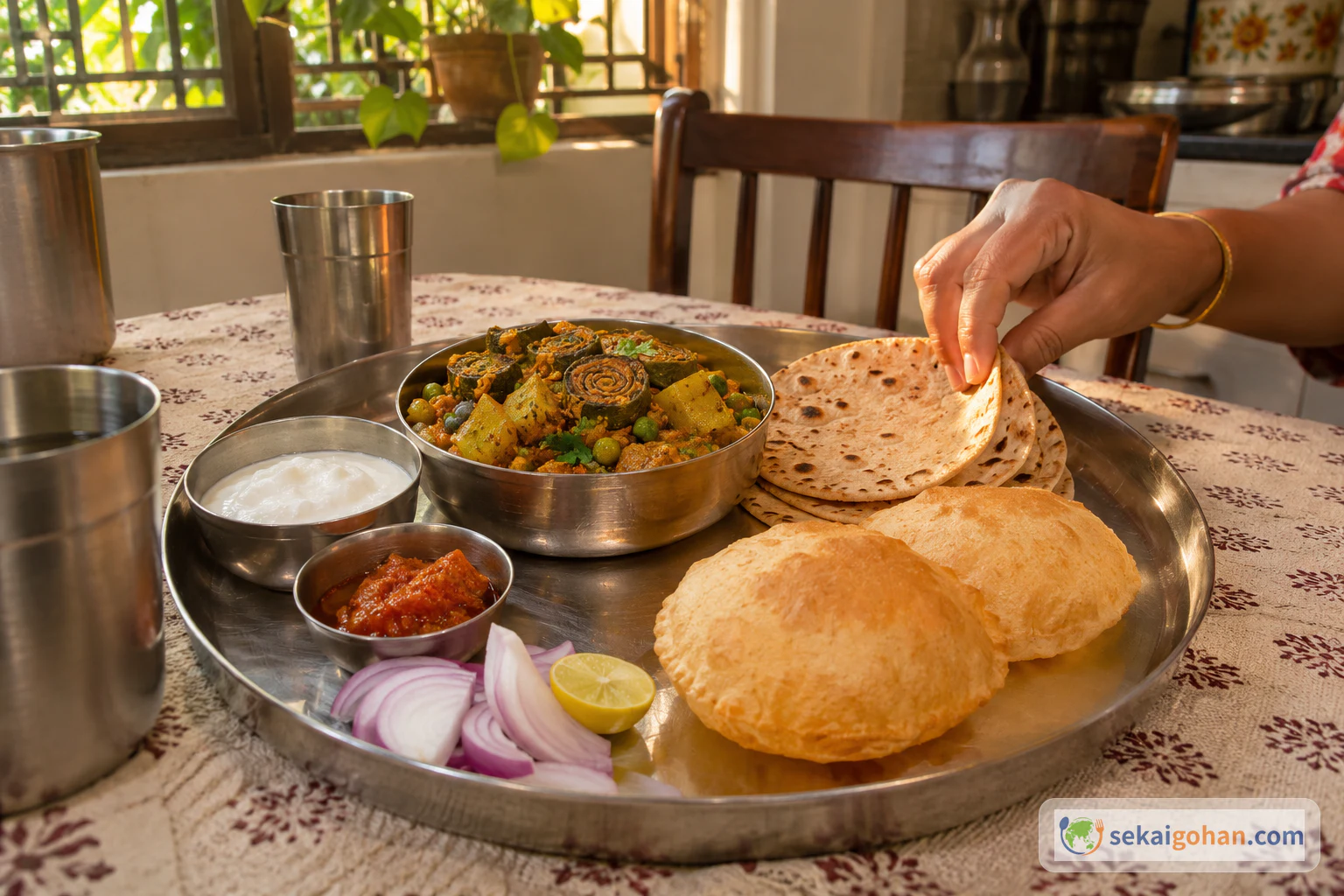
At the table
This is a side dish, served with rotli, paratha or puri for scooping. Plain yogurt or a raita cools the chili, mango pickle and sliced onion with lemon add sharpness, and thepla, the Gujarati spiced flatbread, also carries it well. With steamed rice, flatbread and a raita it makes a full meal instead of one dish on a spread.
Variations
- Without the peas. This is the wedding turiya patra nu shaak. The gourd's juiciness comes forward and the winter sweetness goes.
- Drier, Anavil style. Cut the simmering water to ⅓ cup and fry the patra separately in a teaspoon of oil before folding it in. The result is dry enough to pile onto rotli.
- Jain style. Use tomato, tamarind and jaggery, leave out garlic and onion, and add no water at first. The gravy turns redder and more sour.
- Zucchini in place of gourd. The gravy comes out tighter and the green skin shows. Reduce the first water by 2 tbsp.
Storage
Cool the curry, then refrigerate it promptly in a covered container and eat it within 2 to 3 days. Don't leave it out at room temperature. The version with peas carries more liquid, so eat it at the earlier end of that window. Do not freeze it. Reheat it in a pot over low heat, turning gently because the patra breaks easily, and add a splash of water if it has thickened. The flavors settle overnight, but the patra softens further.
Frequently asked questions
Can I double the recipe for a crowd?
Yes. Scale every ingredient by the same factor, but go easy on the water. The patra and peas take up liquid, and more gourd releases more water, so a doubled pan is easy to make soupy. Use a wide pan and cook off any extra liquid uncovered at the end.
Can I leave out the cashews and raisins?
Both are optional. Without them the dish loses its banquet richness and some of the sweet-sour bursts, but the balance of gourd, patra and masala holds. Always leave out the cashews for anyone with a nut allergy.
Can the frozen patra go straight into the pan?
Thaw and heat it according to the package directions, then slice it. It's already steamed, so in the curry it only needs the 3 minutes it spends soaking up the gravy. Slice it while it's still cool and firm and the pinwheels will stay neat.
Why does the lemon go in only at the end?
Simmering lemon juice dulls its fresh aroma and leaves only a flat sourness. Added in the final minute together with the sugar, it keeps the sweet and sour bright and in balance.