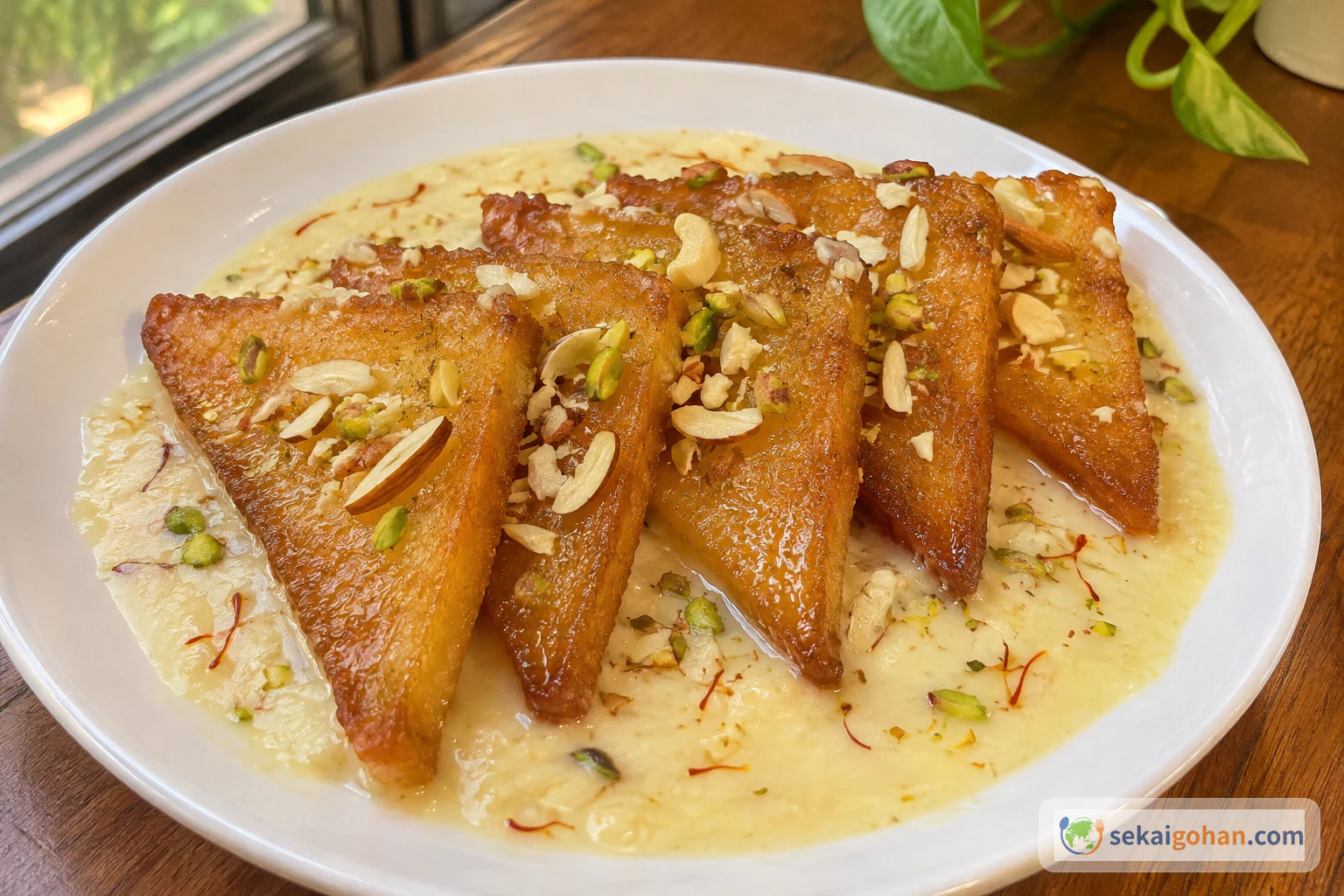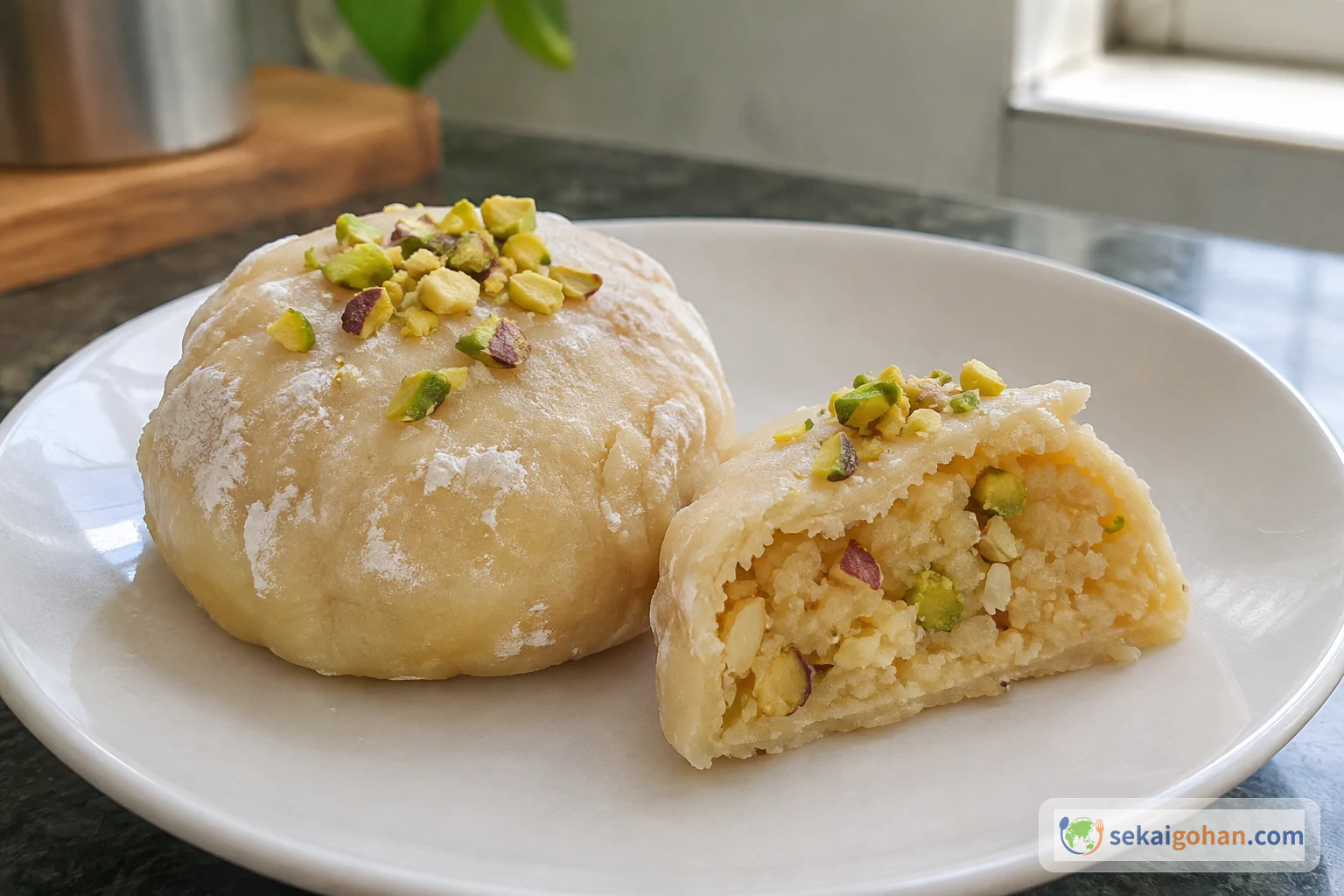
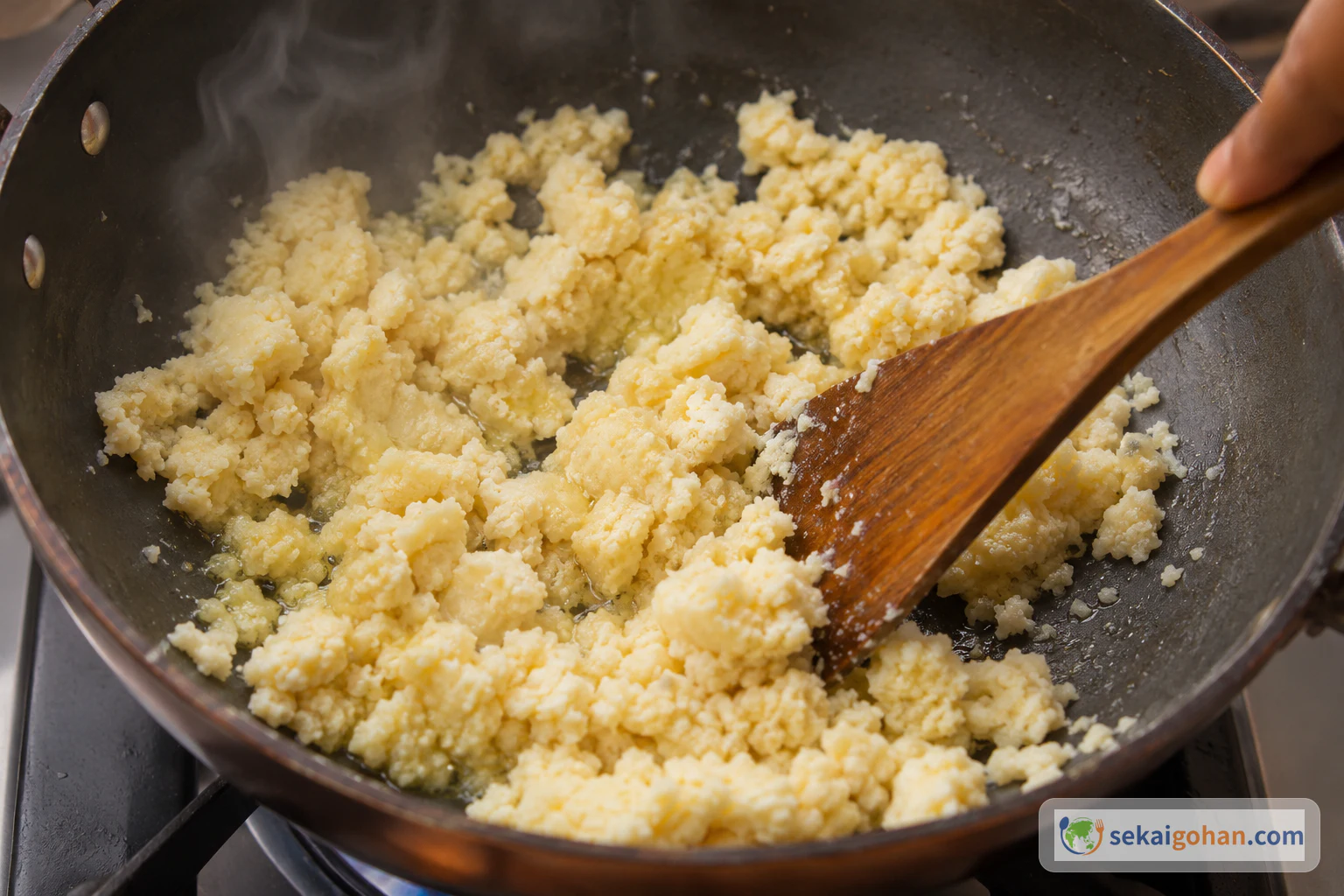
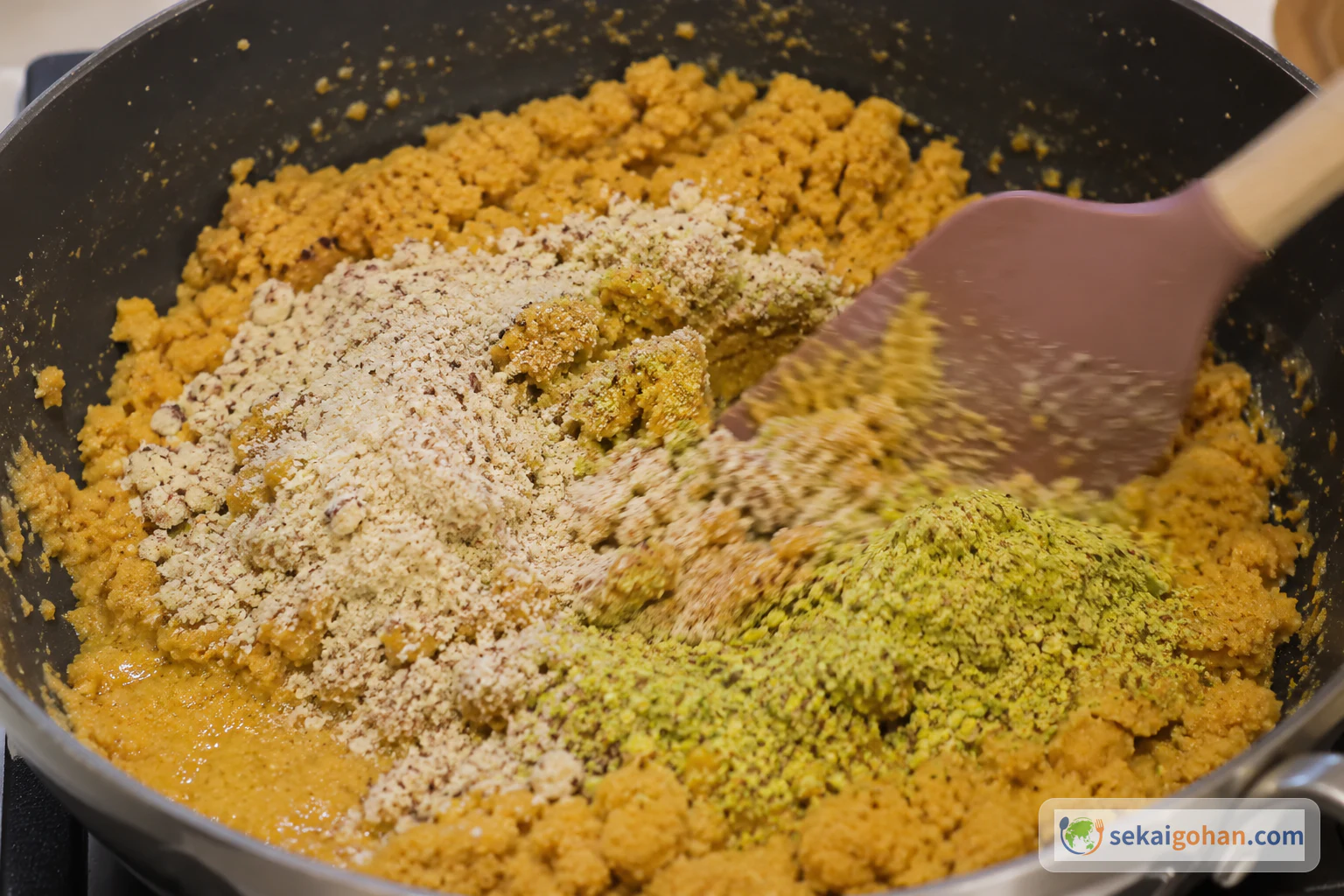
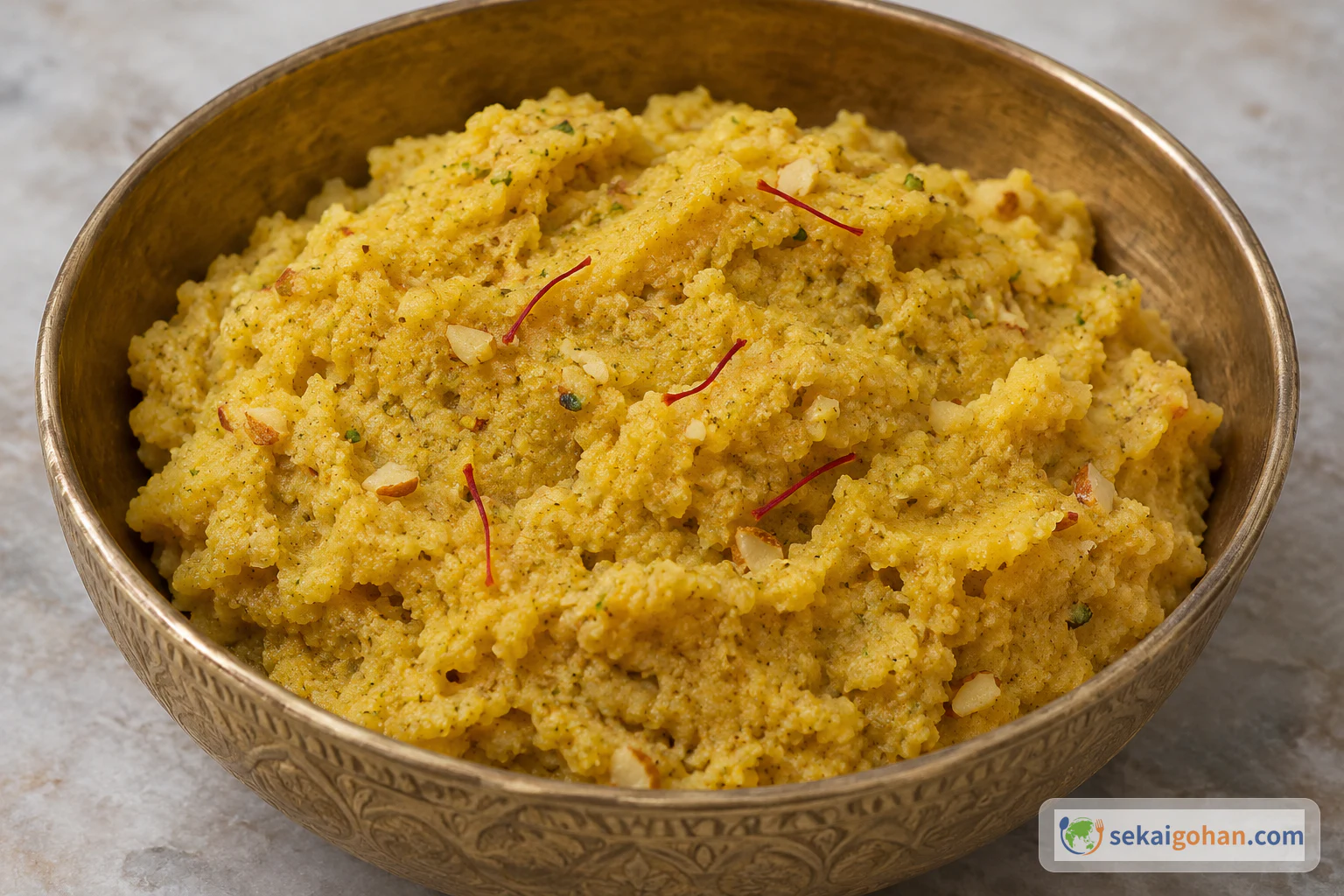
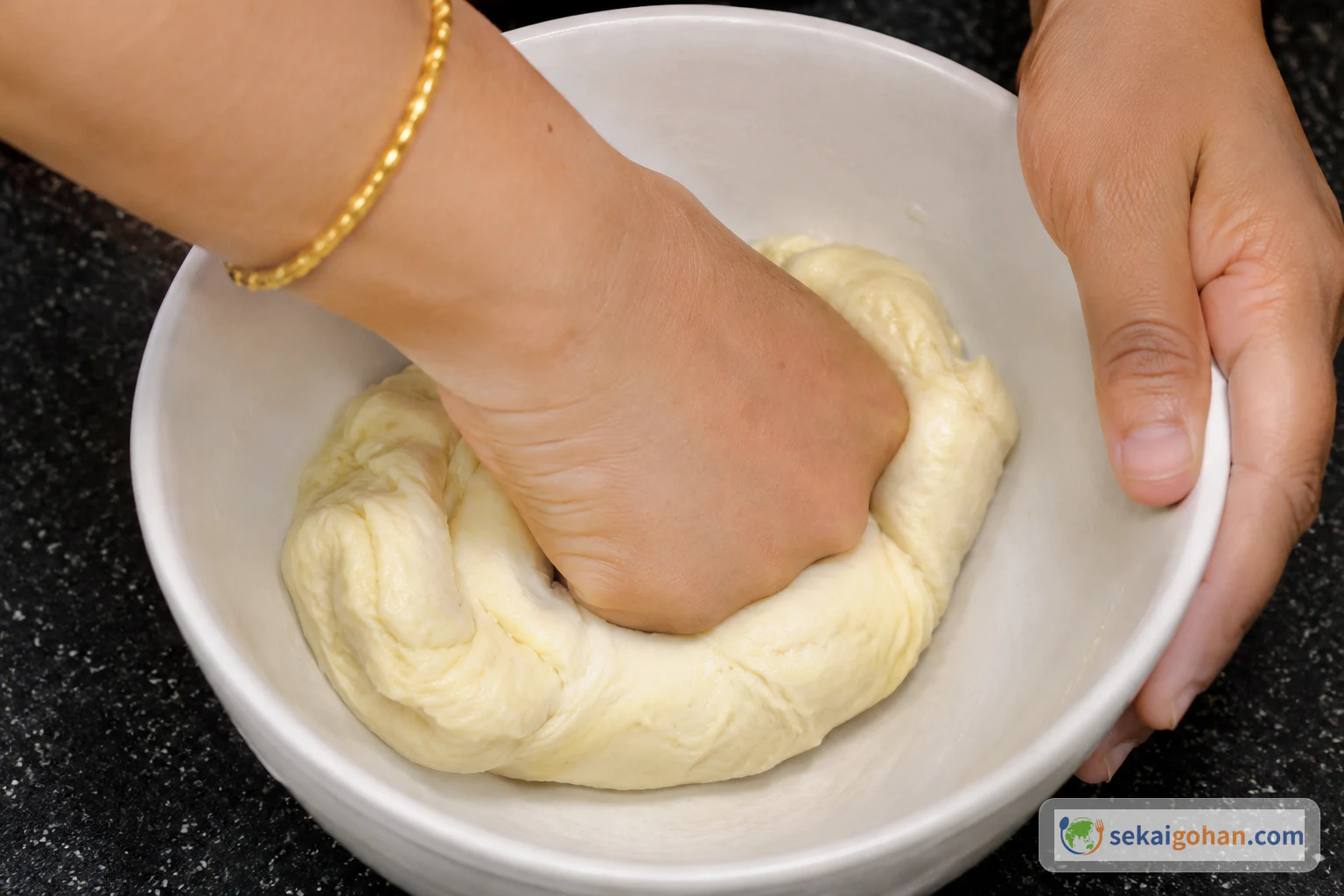
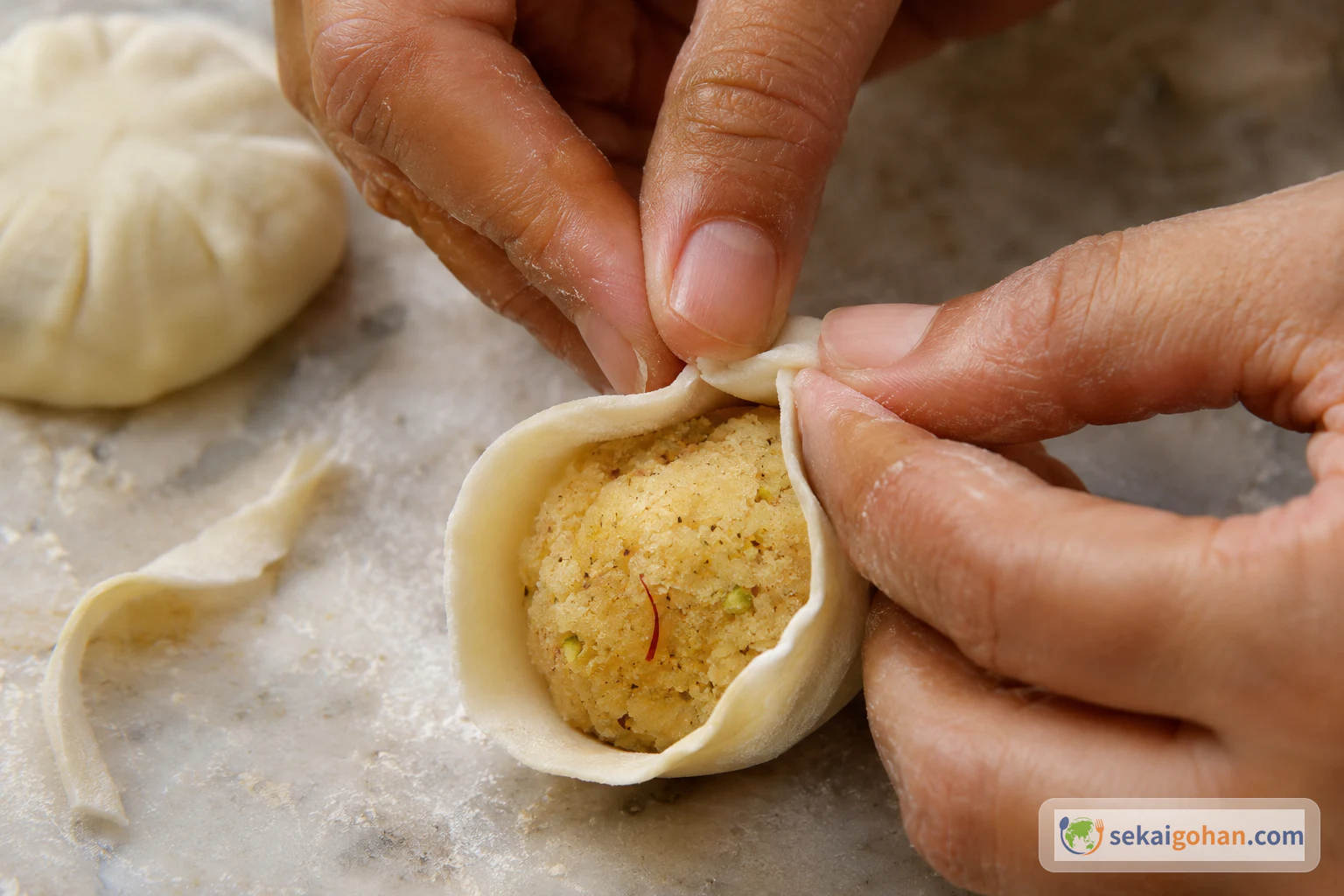
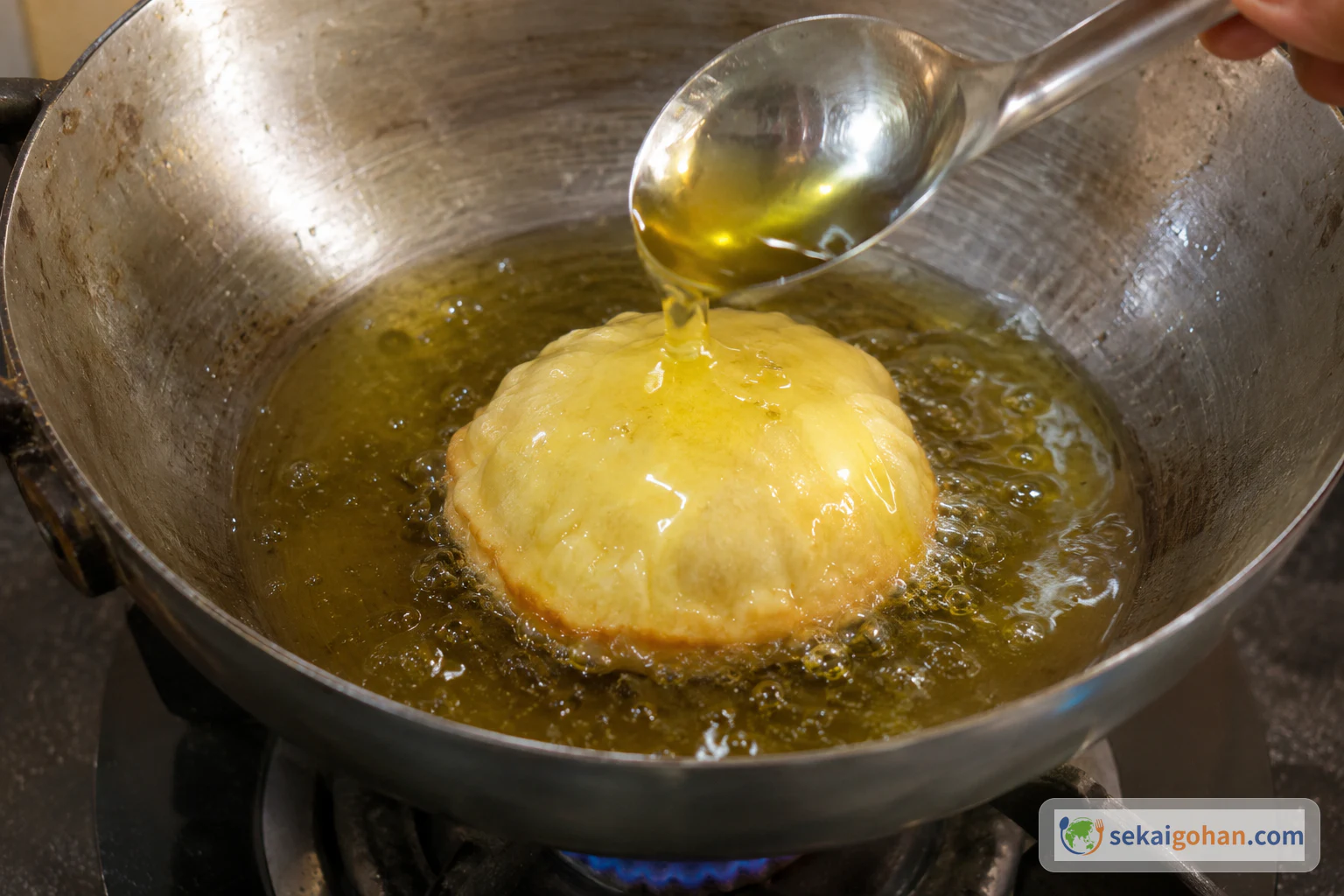
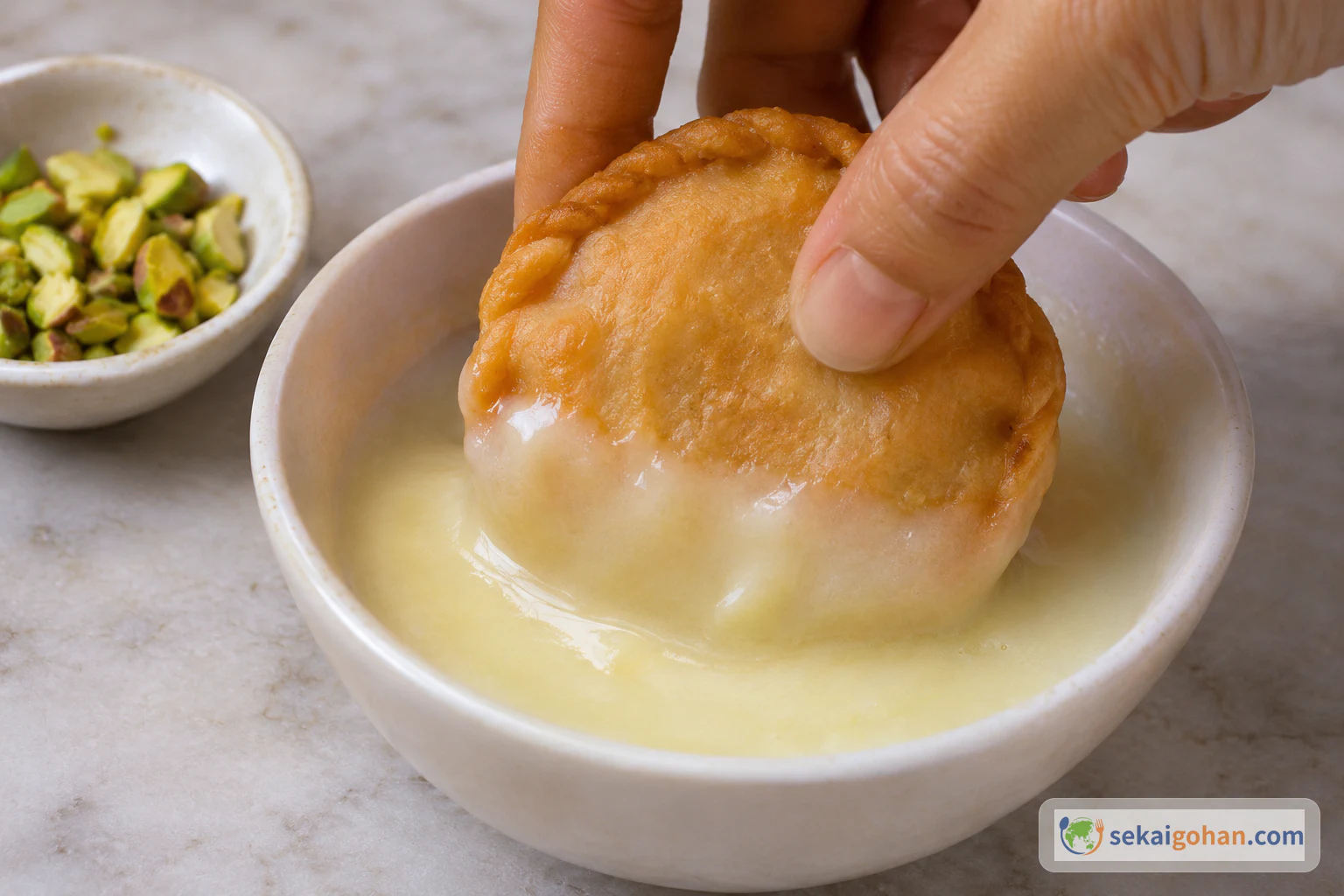
One pastry sits alone in the kadai, and the cook keeps tipping spoonfuls of hot ghee over its top while the underside slowly turns brown. That is the moment that decides a ghari. Inside the thin maida shell is a filling of roasted mawa, toasted besan, almond and pistachio, warm with saffron and cardamom. Once the fried pastry has cooled, it goes into a paste of ghee and powdered sugar and sets in a pale, sweet coat. The first bite is all ghee and milk, then nuts and cardamom, with the shell giving way underneath.
A Sweet of Surat
Where it belongs
Ghari is the sweet of Surat, a city in Gujarat in western India, which is why it so often carries the city's name: Surti Ghari, Surati Ghari, Surat Ghari. The shell is maida, the filling is mawa, and ghee runs through every stage, from the dough to the frying fat to the coating. The version here is the badam-pista one, with almond and pistachio powders roasted into the filling.
The sweet has a night of its own. A 2020 report in The Indian Express describes the evening of Chandi Padvo, when people in Surat took Ghari and Bhusu outdoors and ate them in the open air, including on the beaches at Dumas and Ubhrat.
Surti, Surati and Surat Ghari all point to the same sweet from Surat. The milk base of the filling is written both mawa and mava, so look for either on a shop label.
How households differ
Ghari is made more than one way. Some cooks add rava (semolina) to the filling or the dough, some knead the dough with milk, some make two separate nut fillings, and some leave the coated sweets in the refrigerator for many hours to set. The badam-pista ghari keeps things direct: one filling, a simple ghee dough, a short set in the refrigerator. Where the sweet first came from is told in more than one way, and none of the stories is settled.
Ingredients
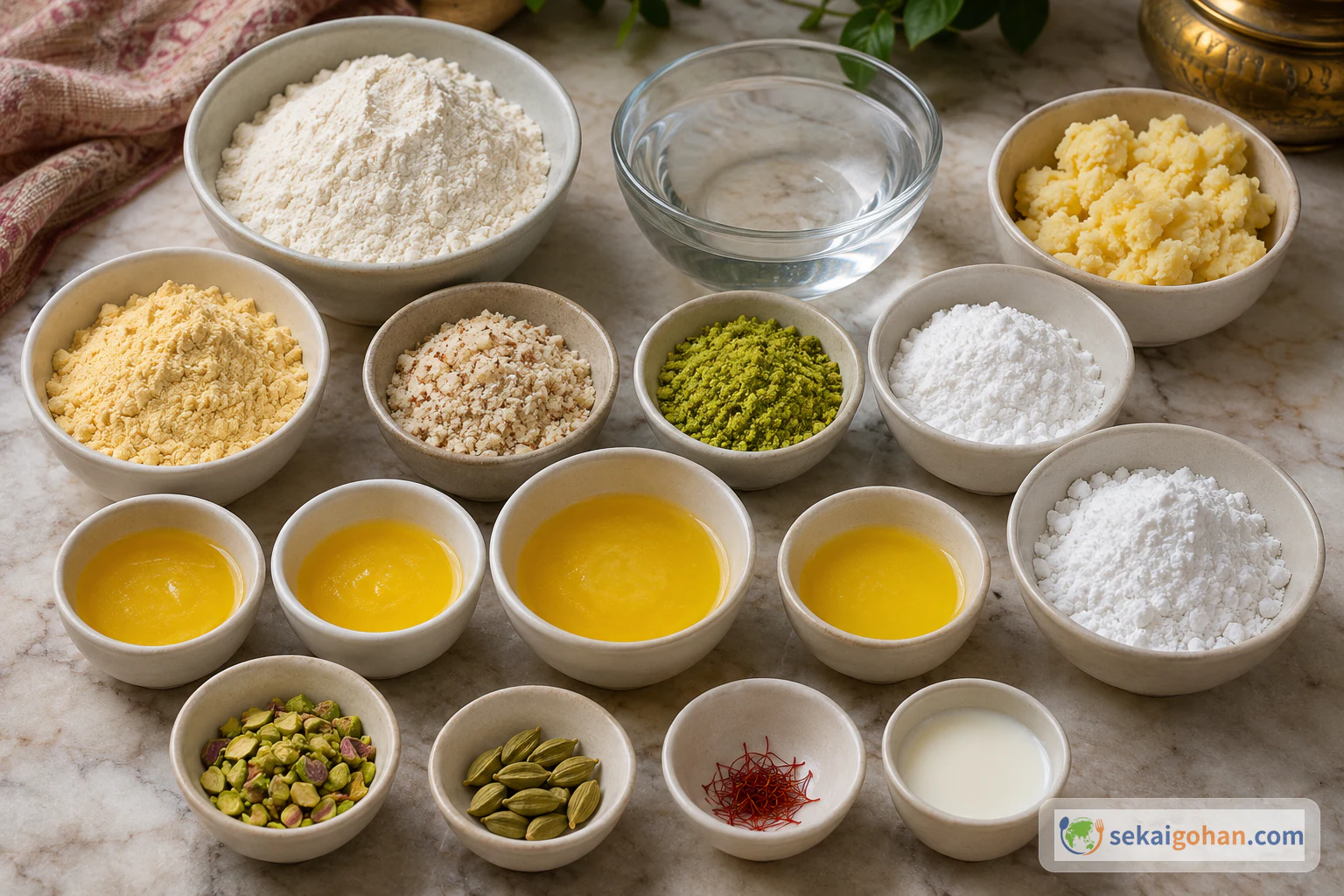
The mawa, flour, besan and nut powders all have weights in grams. A kitchen scale gives you the same filling and the same dough every time, while cup measures of crumbly mawa and fine powders change with how hard you pack them.
Ghari contains milk (mawa, ghee and milk), wheat (maida), chickpea (besan) and tree nuts (almonds and pistachios).
Equipment
- Heavy pan for roasting the filling
- Kadai or deep pan for frying
- Mixing bowls
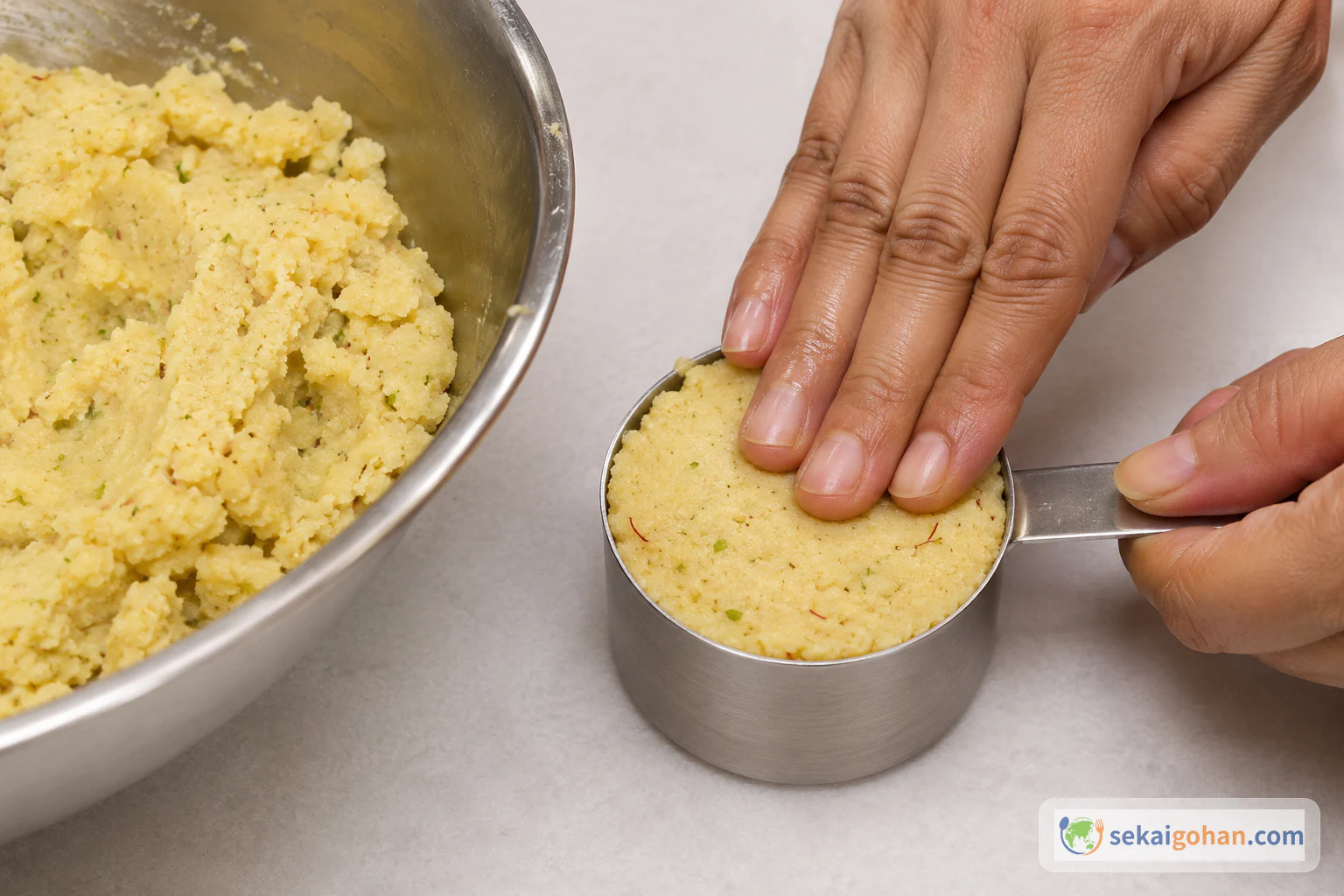
- A ¼-cup measure for shaping the filling
- Rolling pin
- Small knife for trimming the dough
- Large spoon for basting with ghee
- Plates or a tray for cooling and setting
- Refrigerator space for a plate of ghari
Choosing What to Buy
Mawa is the heart of the filling, so buy it from an Indian grocer, labeled mawa or mava, rather than trying to build the filling from something else. Crumble it before it goes in the pan; it roasts evenly only when it starts in small pieces.
Buy desi ghee in a jar large enough for every stage: the dough, the besan, the frying and the coating. The coating has to be ghee, because it is what the sugar is mixed into and what you taste first on the outside. Frying is the one place you can let ghee go: refined oil works in the kadai, and the coating stays ghee either way.
Besan is sold as besan or chickpea flour at Indian grocers and many supermarkets. Look for almond powder and pistachio powder that are finely ground, so they disappear into the mawa instead of leaving chunks. Saffron is counted in threads, so a small pack is plenty. Grind the cardamom coarsely just before you use it, and keep the two portions of powdered sugar apart from the start, one for the filling and one for the coating.
Method
Start by dropping the saffron threads into the teaspoon of milk so they have time to color it. The filling comes first: roast the mawa, toast the besan and nuts, combine, and let it cool, which is the main hands-off stretch. Make the dough while the filling cools, and chill the coating ghee and shape the filling while the dough rests. Frying goes one pastry at a time, then everything cools completely before the coating and the final set in the refrigerator.
When It Goes Wrong
| What you see | Why | What to do |
|---|---|---|
| The filling is too soft to shape | The sugar went in while the filling was still warm | Next time, wait until the filling is cool before adding sugar |
| The outside browns before the top has cooked | The flame is too high | Turn the flame to between low and medium-low and keep basting the top |
| The seam opens in the kadai | Too much dough gathered at the top, or the edge was not pinched tight | Trim the excess dough and press the seam firmly before frying |
| The coating slides off or melts | The fried ghari were still warm | Let them cool completely before dipping |
| The coating is thin and runny | The coating ghee was not chilled | Chill the melted ghee before mixing in the sugar |
Variations
Fry in refined oil if you want to save ghee or have none left for the kadai. The shell comes out with less ghee flavor of its own, so the coating carries more of the ghee taste. The coating itself stays ghee.
Coat only one side instead of the whole pastry. Dip just the top into the ghee and sugar paste, add the pistachio and set it as before. The brown fried shell stays visible underneath, and each bite is a little less sweet and less rich.
Ghari made in other kitchens may have rava in the filling or dough, or a dough kneaded with milk. These versions also tend to set in the refrigerator for many hours, giving a firmer, more settled coat than the short set here.
Frequently asked questions
Why does the coating ghee go in the refrigerator before mixing?
Freshly melted ghee is thin and runny, and sugar sinks in it. Chilled, it thickens and holds the powdered sugar as a paste that clings to the pastry. That paste is what sets into the pale coat after the final 30 minutes in the refrigerator.
Do I need a thermometer for the frying ghee?
The written recipe gives no temperature, so read the kadai instead: medium-hot ghee, a flame between low and medium-low, and a brown underside after about 1½ to 2 minutes.
How long should the dough rest?
The written recipe is not consistent here: it says to rest the dough for 30 minutes, then to knead it again after 20 minutes. Step 4 therefore gives 20 to 30 minutes, which is a range rather than a tested time.
How sweet should the filling be?
Taste after each addition of sugar and stop at the sweetness you like. The ghee and sugar coating adds more sweetness on the outside, so the finished ghari tastes sweeter than the filling alone.