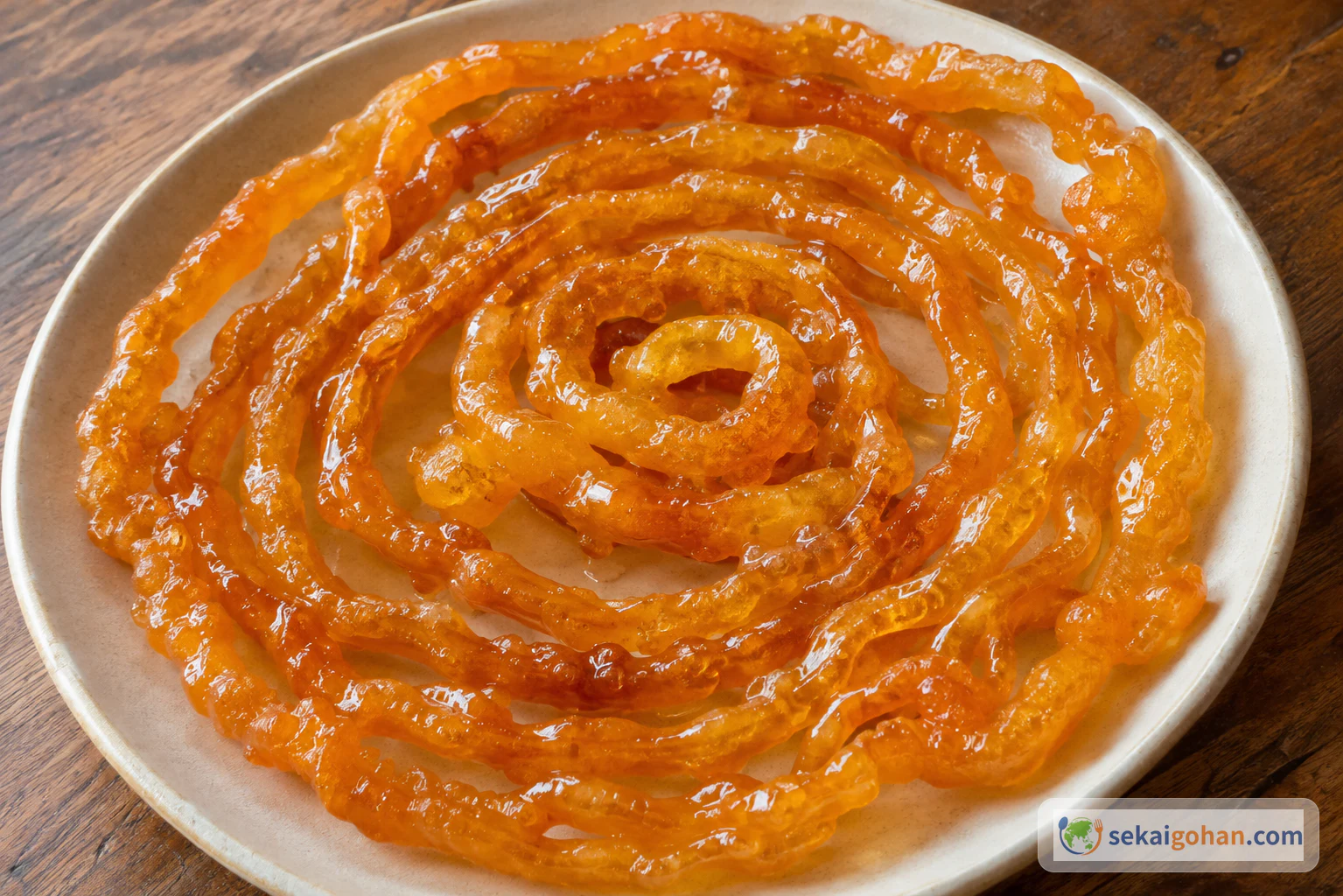
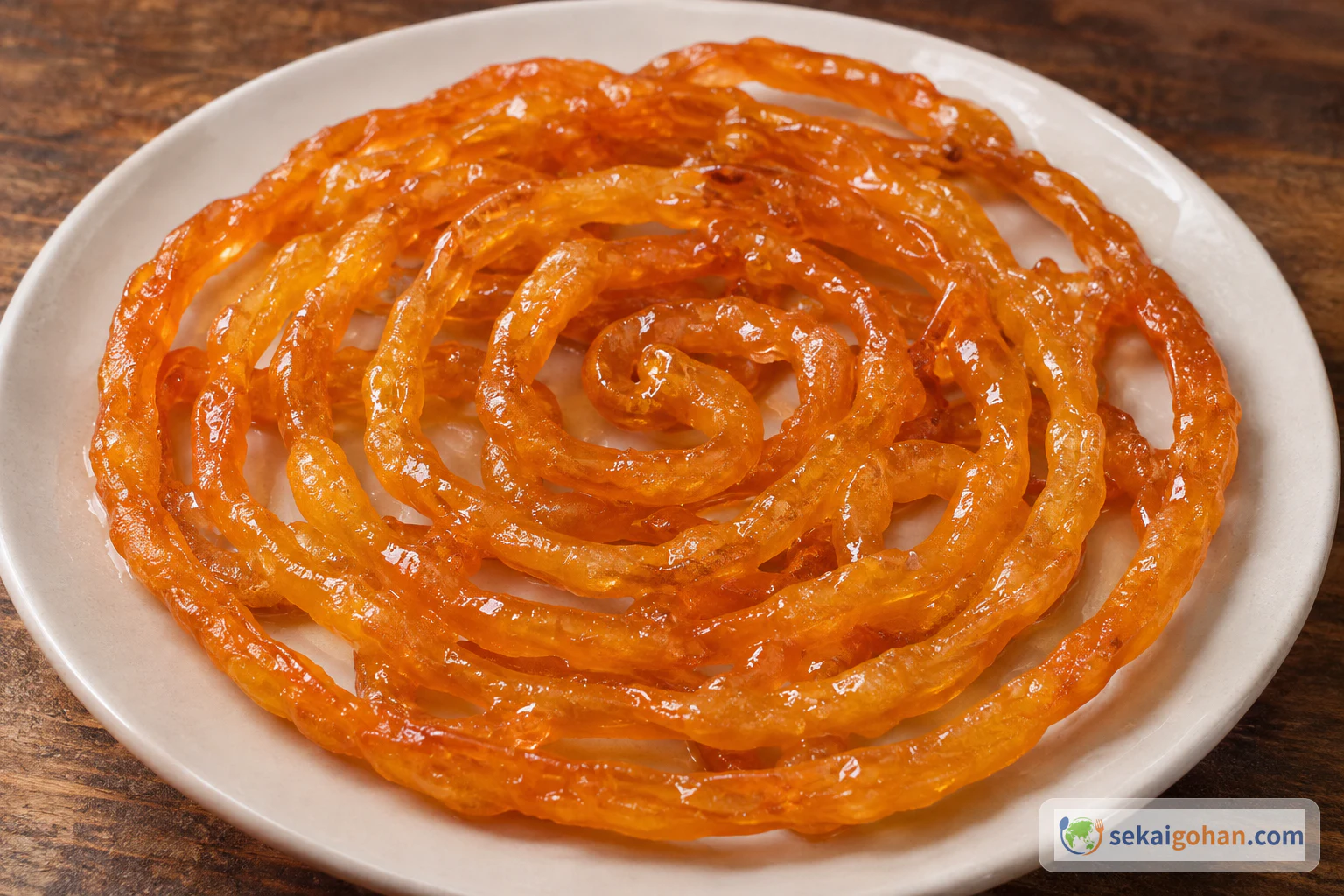
A single finished large jaleba, glossy with syrup, shown on its own
Serves12 servings
CuisineIndian

Jaleba: Indian Large-Spiral Jalebi in Warm Saffron Syrup

Jaleba, India's oversized jalebi: how to ferment maida batter overnight, pipe a broad spiral, fry it crisp and light brown, and soak it in warm saffron syrup.

Cooking flow

Cooking steps

STEP 11 / 11

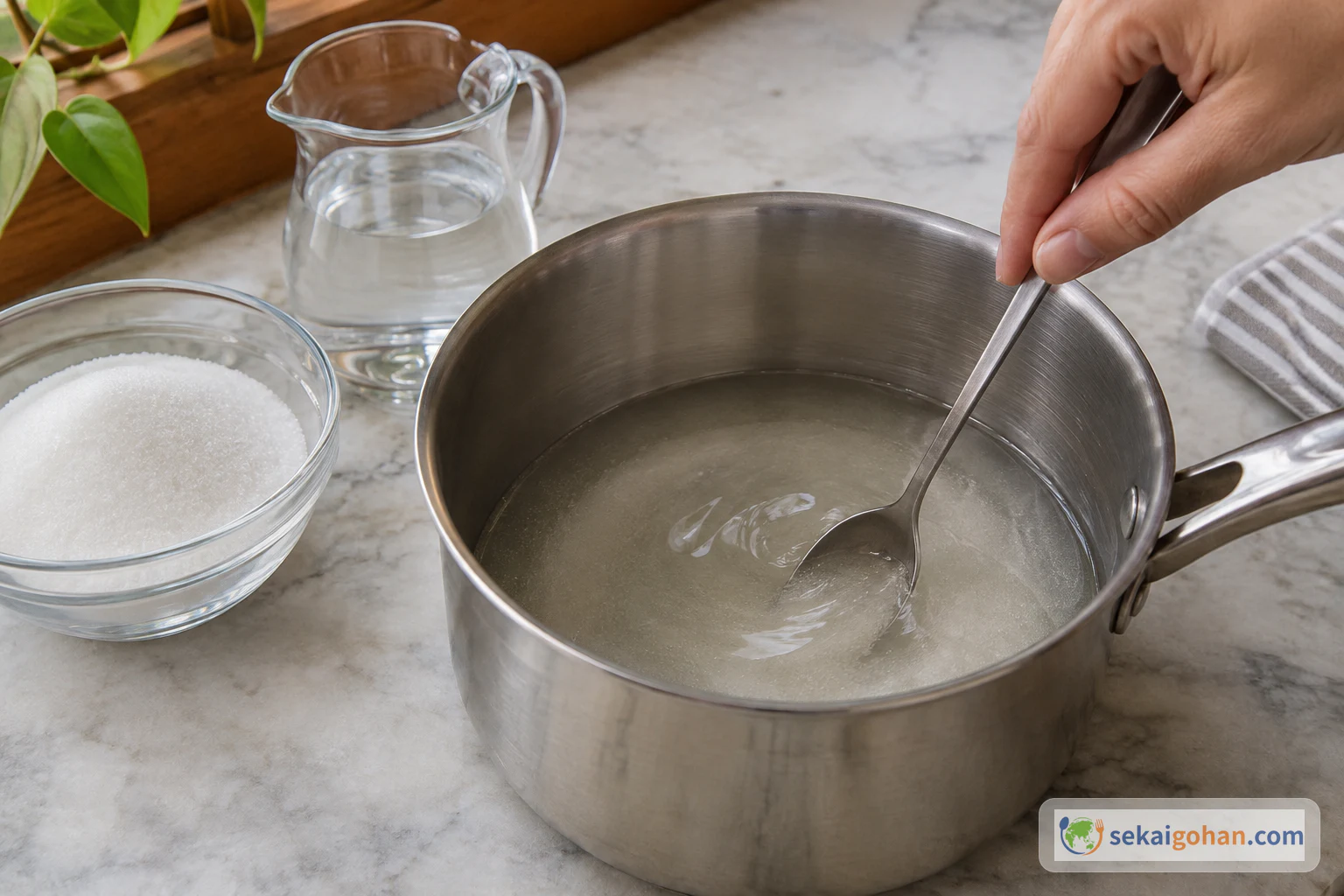
Combine the sugar and water and bring them to a boil

Sugar and water for the syrup being stirred together in a saucepan
Before the heat goes on, the sugar should look like wet sand with no dry patches

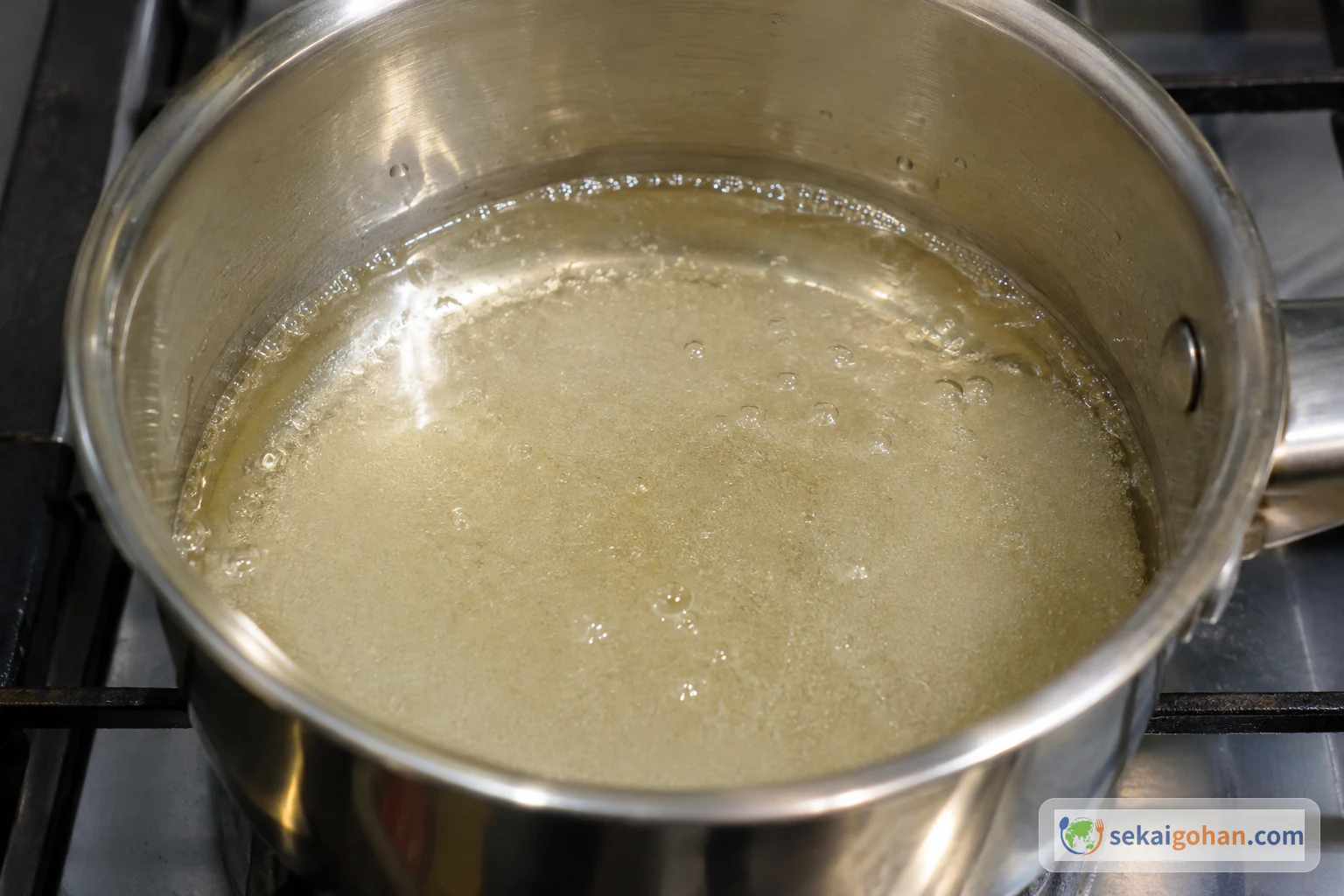
Put the sugar and the syrup water in the saucepan. Stir them together before the heat goes on, so the sugar is wet through and nothing settles dry at the bottom. Set the pan over the heat and keep stirring now and then as it warms. Keep heating until it comes to a boil, with bubbles rising across the surface.

Sugar and water starting to boil in a saucepan
The first bubbles break through the cloudy liquid as the sugar dissolves
STEP 22 / 11

Add the saffron and finish the syrup

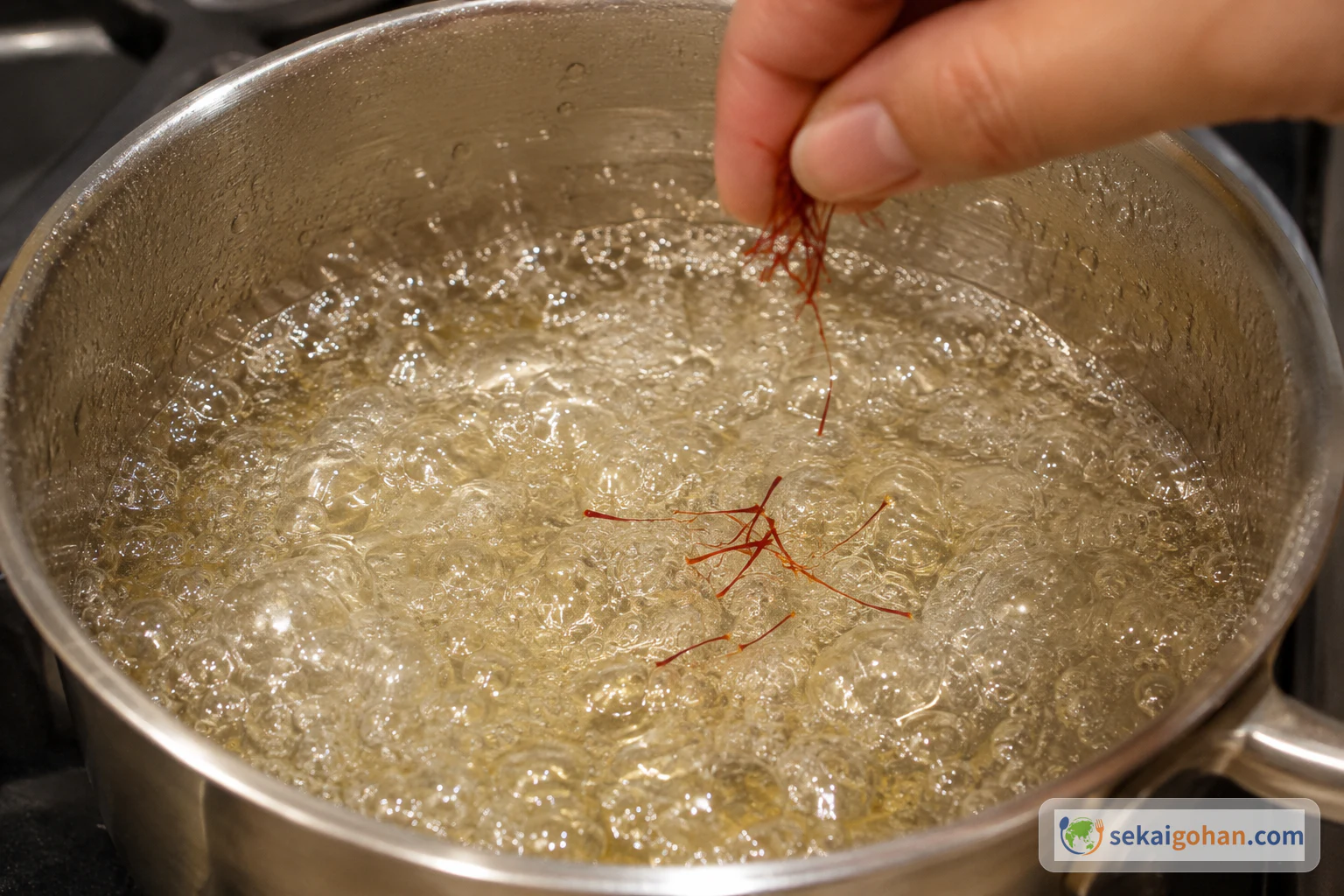
Saffron strands added to the boiling syrup
The strands float and start to bleed gold into the bubbling syrup

Once the syrup boils, drop in the saffron strands. Let it bubble until it is a light syrup, neither thick nor watery. Take it off the heat and leave it in its pan, because the fried jaleba will go into this same syrup while it is warm. Hot sugar syrup burns badly, so keep your hands and face back when you lean over it.

Thick or thin decides the bite

A syrup that is too thick sits on the surface and goes sticky; one that is too thin soaks the jaleba soft. Aim for a light, flowing syrup.

STEP 33 / 11

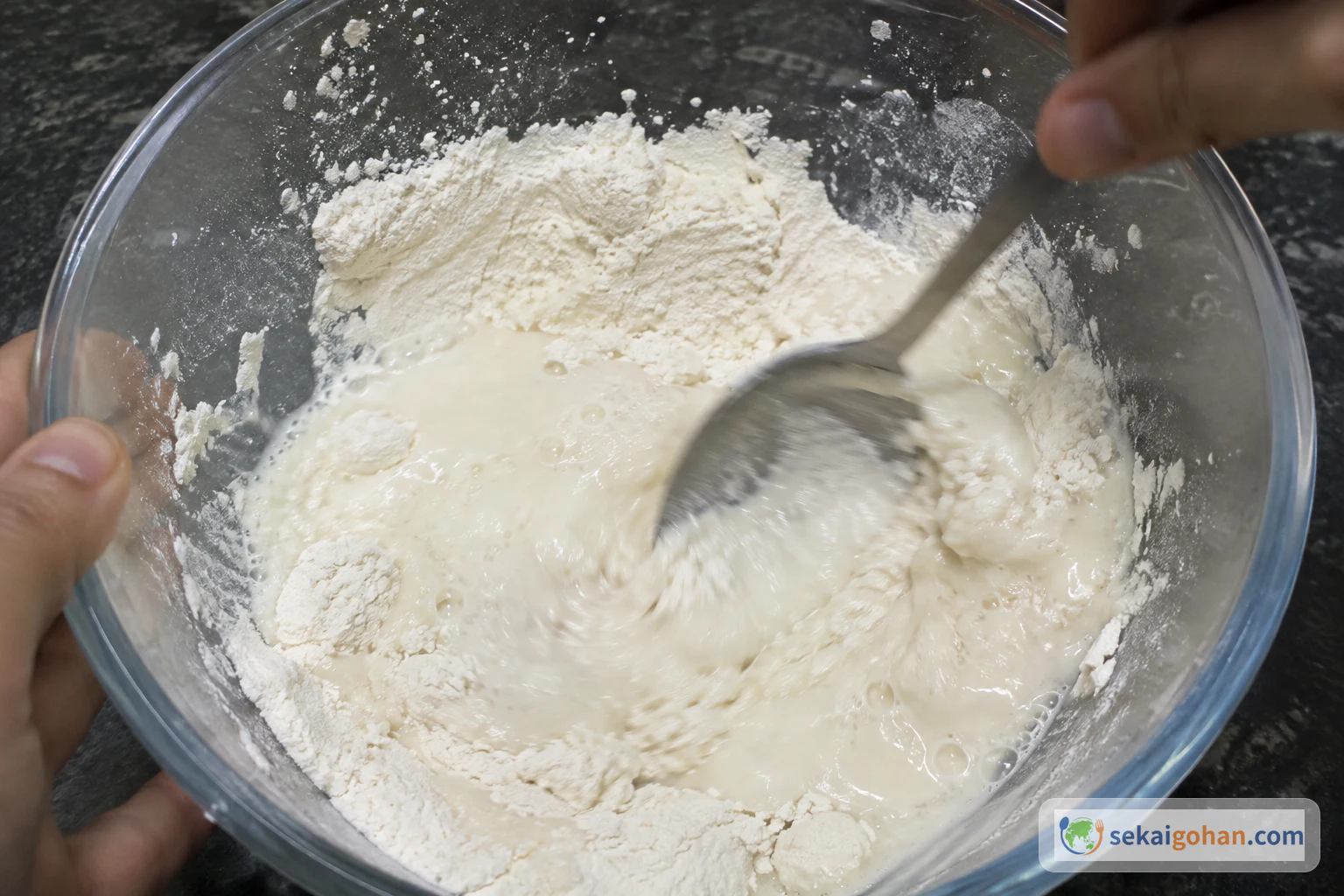
Mix the batter

Maida and water being mixed into a smooth batter
Dry flour hangs on at the rim longest, so scrape it down into the batter

Put the maida in a clean bowl and pour in the batter water. Stir with a spoon, scraping down the sides so no dry flour clings to the rim. Keep going until every lump has gone. The batter is ready when it is smooth and pourable.

STEP 44 / 11

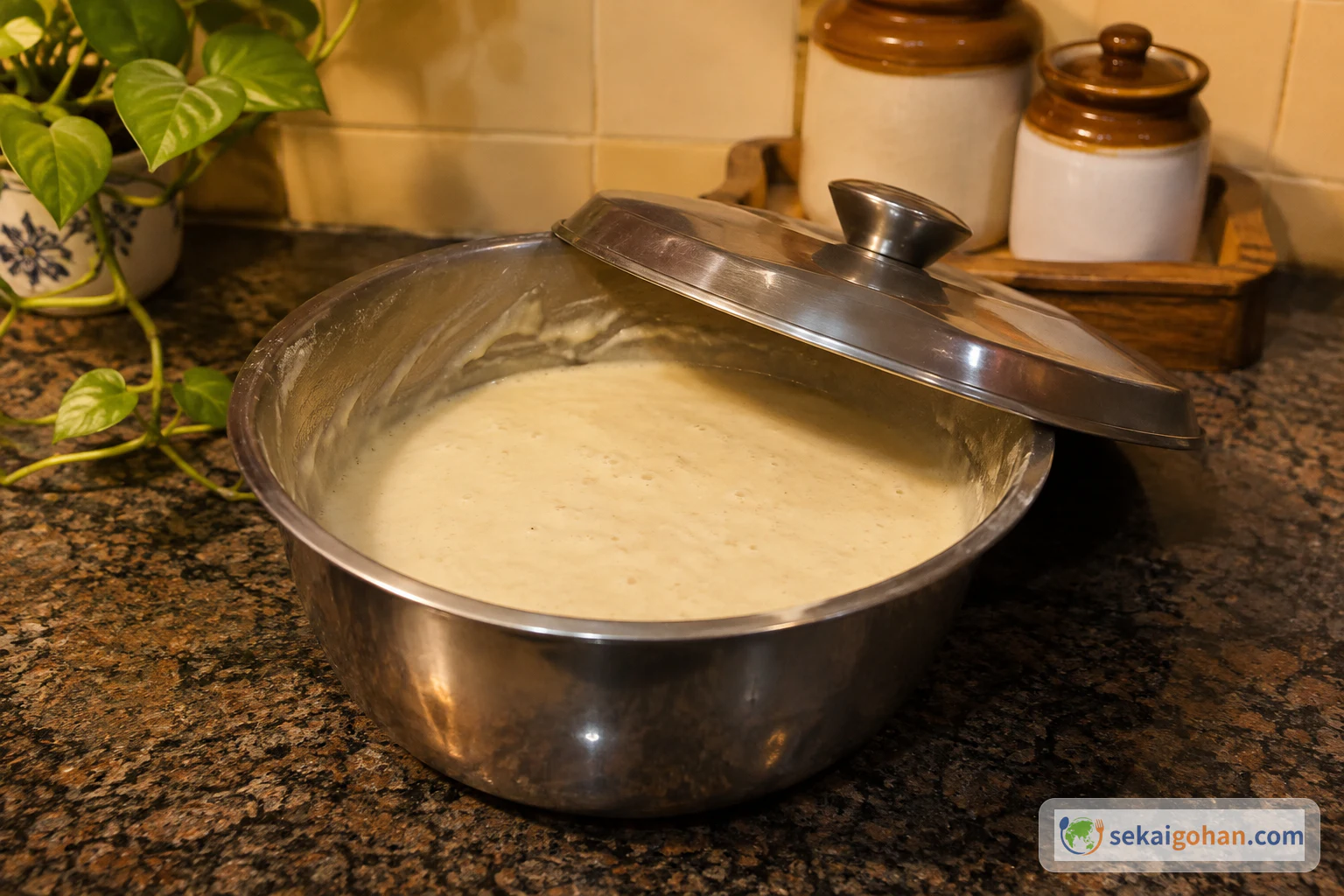
Leave the batter overnight in a warm spot

Batter resting overnight in a warm spot under a lid set slightly ajar
A narrow gap under the lid lets the batter breathe as it ferments

Cover the bowl with its lid set slightly ajar, leaving a gap instead of sealing it. Set it in a warm corner of the kitchen and leave it overnight. In the morning, lift the lid and look and smell before you do anything else. Go on only when it smells clean, with no mould and no unexpected colour.

Fermenting the batter

Wash your hands and use a clean bowl, lid and spoon. Leave the batter overnight in a warm spot with the lid ajar. If it smells wrong, grows mould or turns an unexpected colour, throw the whole batch away and start again.

STEP 55 / 11

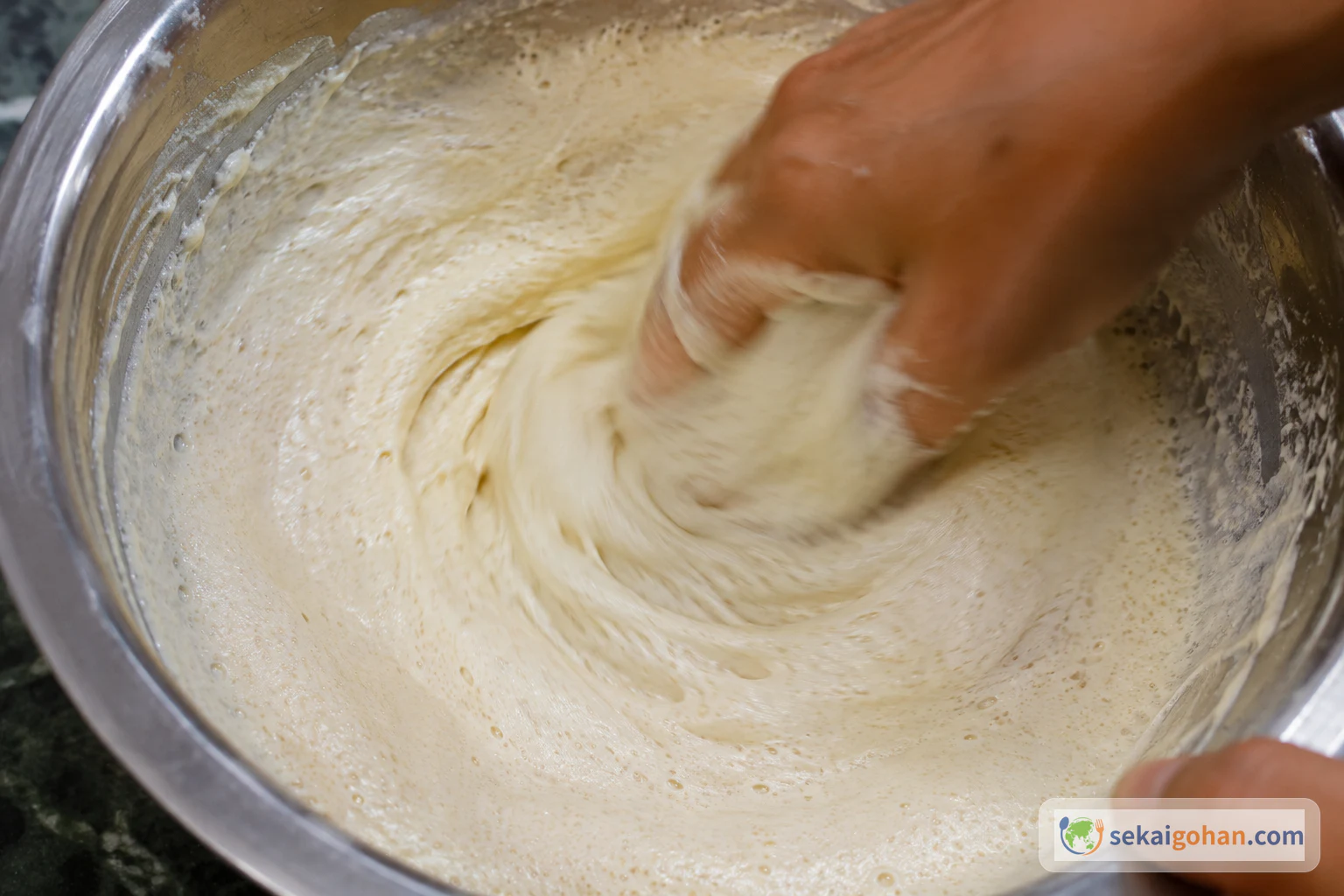
Whip air into the batter by hand

Fermented batter being whipped by hand
Tiny bubbles across the surface show the air is worked in

Work the fermented batter with your hand, beating and lifting it against the side of the bowl. Keep at it for about 10 minutes, resting your arm for a moment when it tires and then going again. The batter loosens and lightens as you go. Stop when fine bubbles run all through it and the surface looks airy.

Rest, then whip again

Short pauses keep your strokes strong to the end. Weak, slow stirring for the last minutes leaves the batter heavy, and heavy batter fries dense.

STEP 66 / 11

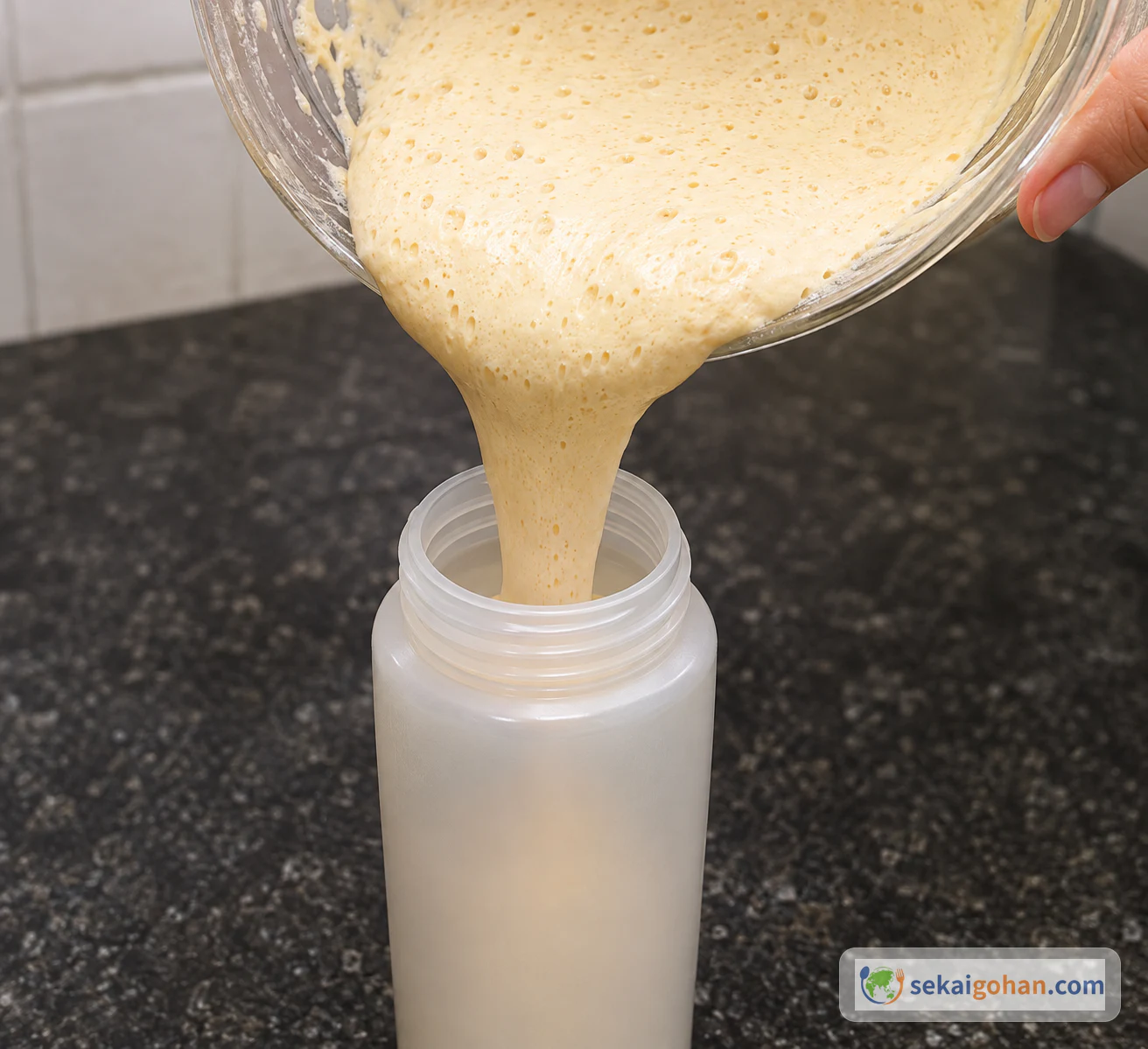
Fill the squeeze bottle

Batter poured into a squeeze bottle
Pour along the inside of the bottle so the bubbly batter slides down without overflowing

Set the clean squeeze bottle upright, tipping it slightly toward the bowl. Pour the whipped batter in steadily so it fills without trapping big air pockets. Cap it and give it a gentle squeeze over the bowl to bring the batter to the tip. It is ready when a steady, unbroken line flows out with light pressure.

STEP 77 / 11

Heat the frying oil

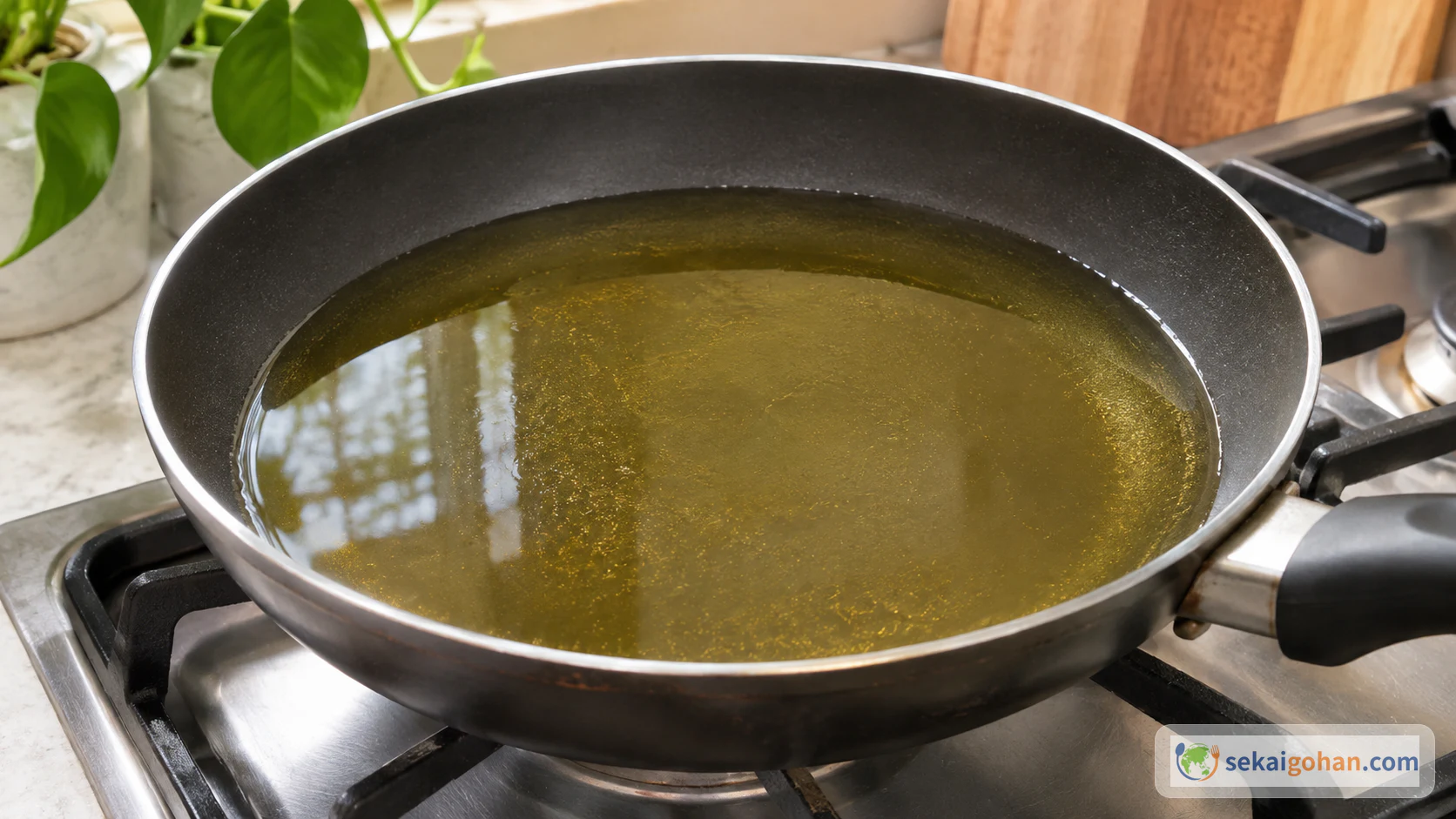
Frying oil warming in a flat-bottomed pan
A flat bottom keeps the oil even across the pan so the whole spiral fries at once

Pour oil into the flat-bottomed pan, enough to fry a spiral flat in one layer. Set it over the heat. Keep your syrup pan, skimmer and serving plate within reach so you are not walking away later. Heat the oil until it is hot. Warm the syrup again if it has cooled.

Hot oil

Stay at the stove the whole time the oil is on the heat; if you have to step away, turn the heat off first. Use a stove with overheat protection if you have one. Never pour water on burning oil.

STEP 88 / 11

Pipe one large spiral into the oil

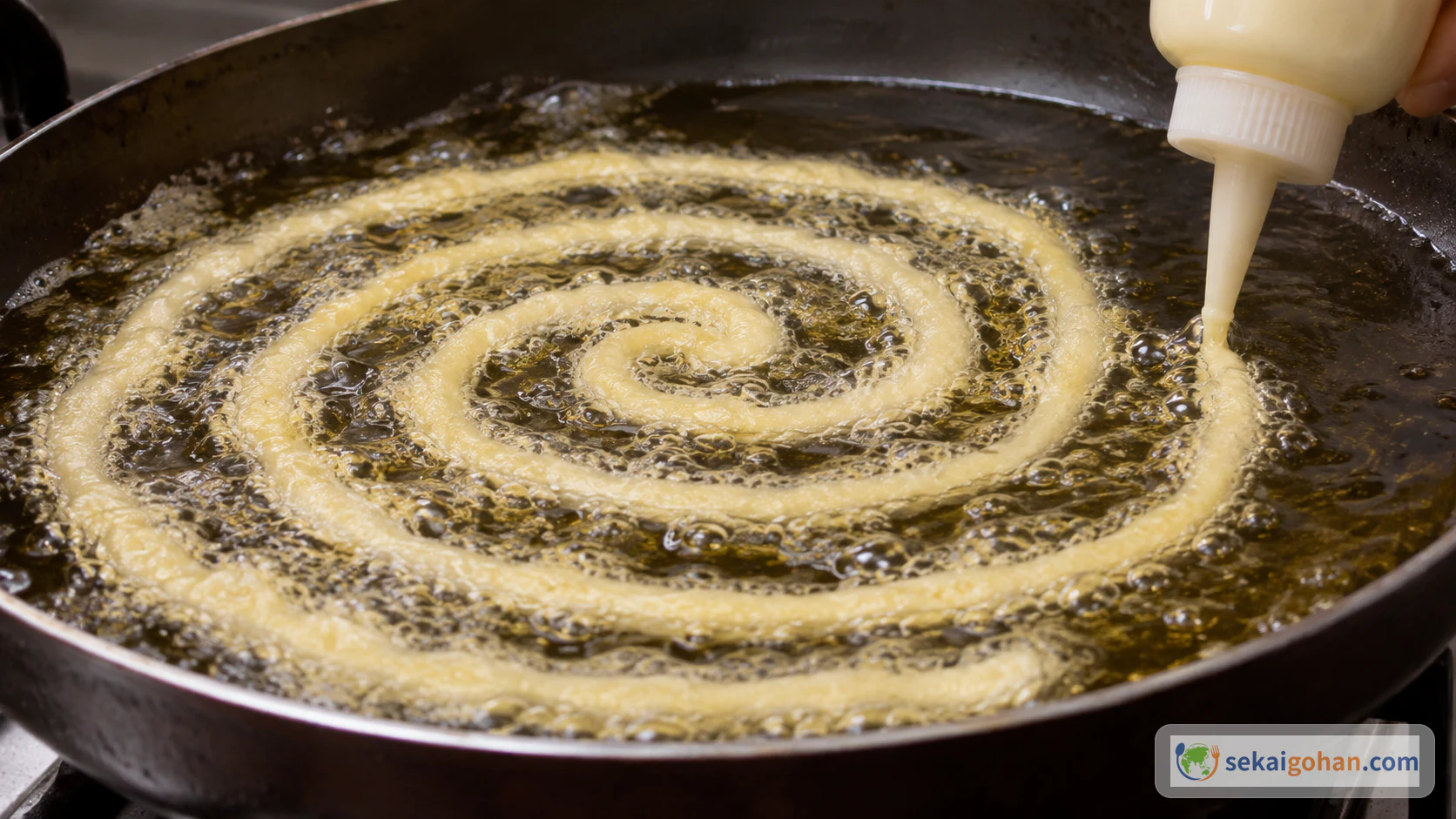
Batter piped into the oil in one large spiral
Each new loop should touch the last so the spiral holds together when lifted

Squeeze a small test coil first to check the thickness of the strand. Then, holding the bottle just above the oil, start at the centre and draw the batter outward in wide, connected circles. Keep the pressure steady so the line stays slender and even all the way round. The spiral is right when the loops are connected and hold together.

STEP 99 / 11

Fry until crisp and light brown

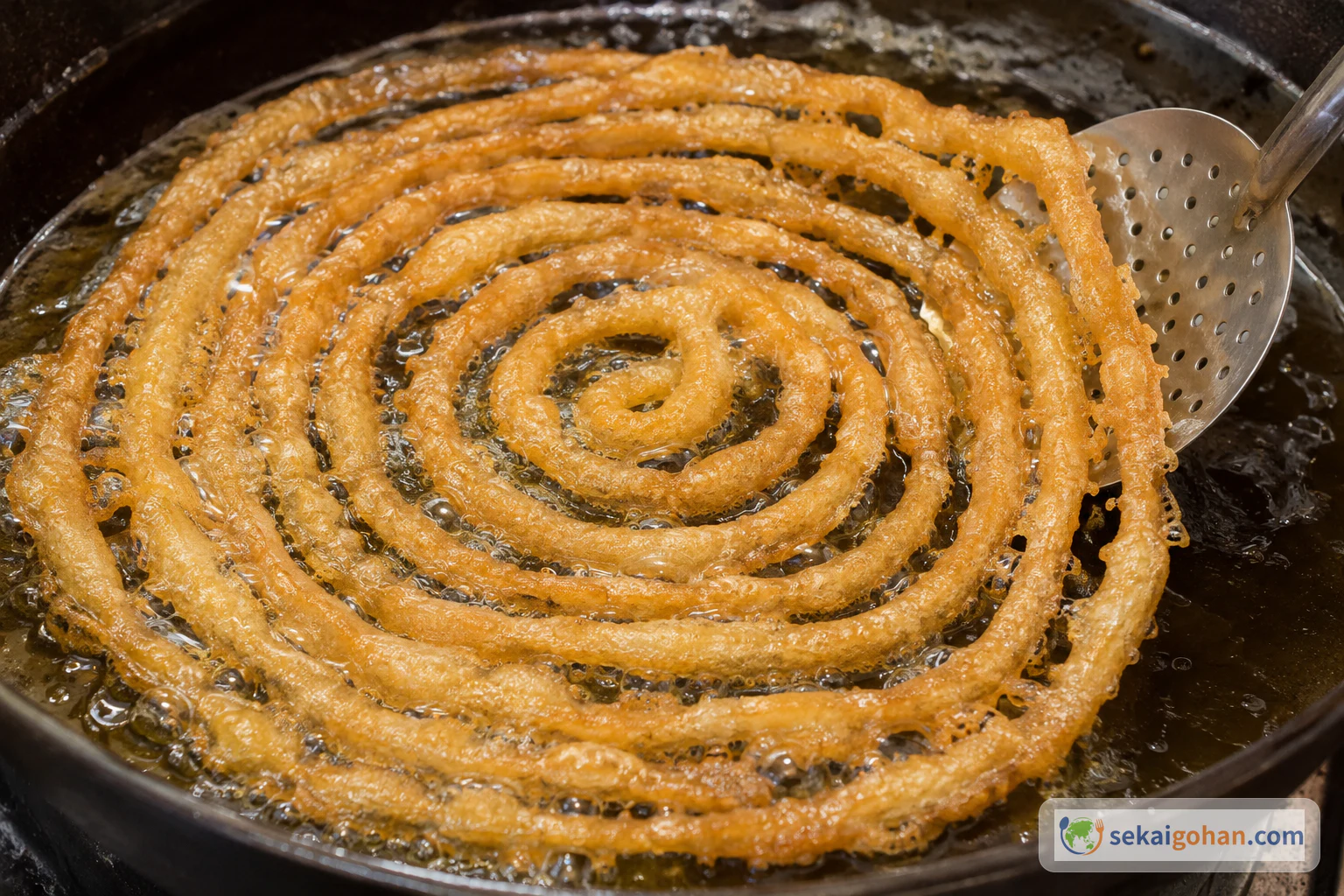
The large spiral fried crisp and light brown
The edges colour first; wait for the centre loops to match

Let the spiral fry, watching the colour change from pale to golden. Slide the skimmer under an edge to check the underside. Do not let it go dark. Lift it out when the whole spiral is crisp and light brown.

STEP 1010 / 11

Move it straight into the warm syrup

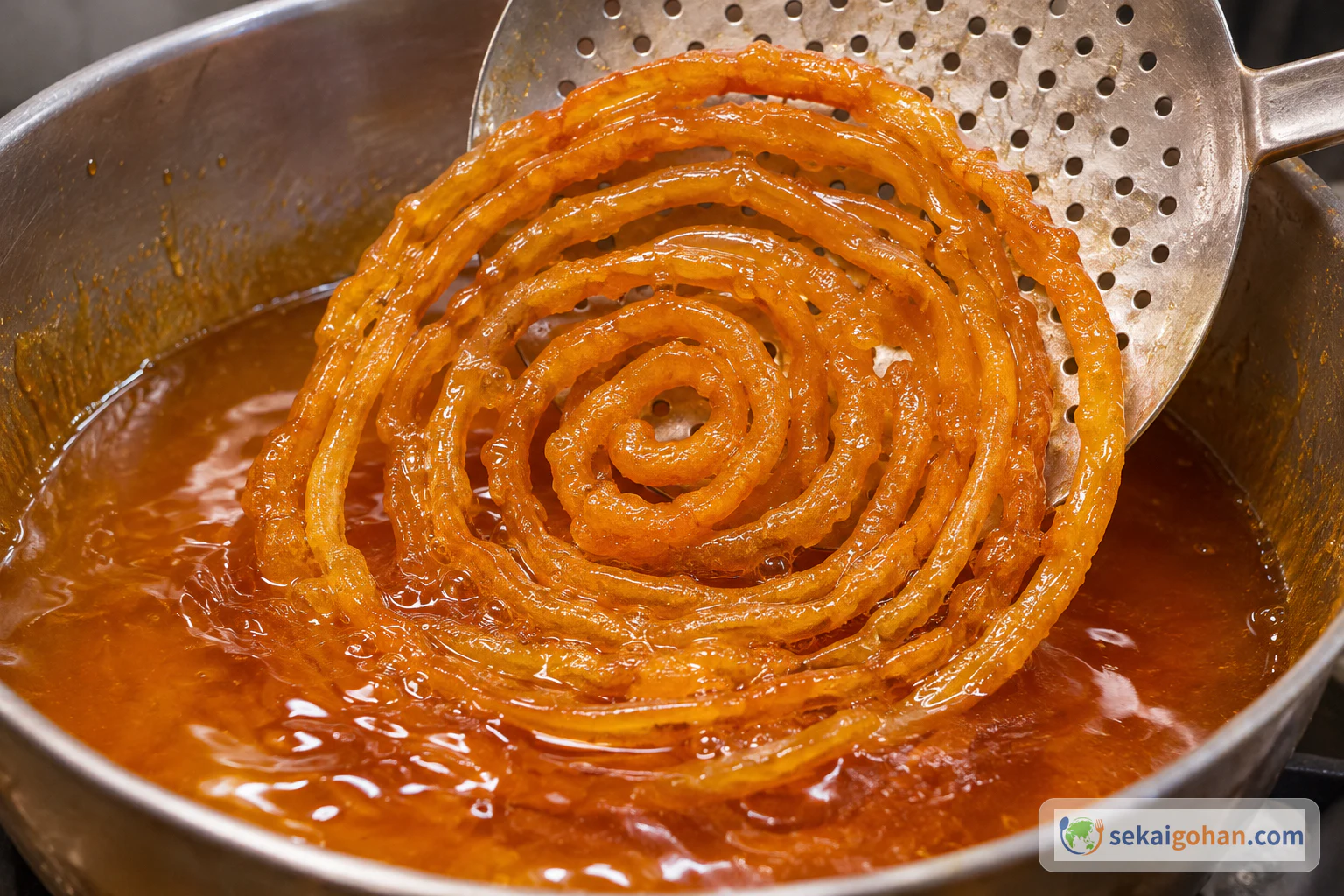
Fried jaleba transferred into warm syrup
Go straight from oil to syrup while the spiral is hot

Let the oil drip off for a moment, then lower the hot spiral into the warm syrup. Turn it gently so syrup reaches every coil. Lift it out when it gleams all over. Repeat the piping, frying and soaking with the rest of the batter, one spiral at a time.

STEP 1111 / 11

Serve

Jaleba served on its own, with no required accompaniments
A plain plate shows off the size and the glaze of the spiral

Set each jaleba on a plate on its own. Serve it as it is, or put rabri, milk or curd alongside for anyone who wants them. Eat it soon, while the coils are still crisp at the edges and soaked through. It is at its best when the syrup still shines on the surface.

0 / 0
Ingredients

Ingredients

1 / 1

Ingredients

Ingredient Amount Role
All-purpose flour (maida) 2 cups (250 g) The whole batter, with the water below
Water, for the batter 1¼ cups (300 ml) Loosens the flour into a pourable batter that ferments overnight
Oil as needed For frying only; it never goes into the batter
Sugar 4 cups (1 kg) The syrup
Water, for the syrup 1¼ cups (300 ml) Dissolves the sugar
Saffron a few strands Gold colour and aroma in the syrup
0 / 0

The batter leaves the squeeze bottle in one long, unbroken line, and you draw it into the hot oil in wide loops, circling outward until the spiral covers the pan. It hisses, sets, and slowly turns crisp and light brown. You lift it out on a skimmer and lower it into warm syrup stained gold with saffron, and it comes out shining. That oversized coil is jaleba, also called jaleb: the large form of India's jalebi, made from nothing more than fermented flour-and-water batter, sugar, water and a few saffron strands. It eats crisp at the edges and soaked with sweetness, and it is good on its own or with rabri, milk or curd.

The Jalebi Made Big

Jaleb or jaleba is simply a large jalebi. The everyday jalebi is a small, tight tangle of thin coils, the kind you see piled high on a sweet shop counter. Jaleba keeps the same idea and widens it. The size lives in the whole spiral, not in the strand: the line of batter stays slender enough to fry crisp, and the coil around it is broad. A thick, solid rope of dough would come out bready inside, and that is a different thing.

Jalebi recipes vary a great deal across India, and many everyday versions mix gram flour (besan) into the batter alongside maida. Jaleba as it is made here keeps the batter to two things, maida and water, left to ferment overnight in a warm corner. That slow, natural souring is where the flavour comes from: a faint tang under the syrup that keeps a large sweet from tasting flat. Imarti looks like a cousin, but it is made from urad dal batter piped in a flower pattern, and it belongs to its own recipe.

Where and when it is eaten

A big jaleba is a sweet to sit down with. People eat it as it is, warm from the syrup, or pair it with rabri, with a glass of milk or with a bowl of curd, which cools the sugar. In Indore, jalebi turns up at breakfast next to poha, the flattened-rice dish, and poha-jalebi is presented there as a regional breakfast combination. That is a regional example from Indore, not a standard way to serve jaleba. Where jalebi itself first came from is not settled; the dish is old, widely shared and written about in many versions, and no single origin story holds up on its own. For more dishes from the same kitchens, see the India country page.

Jaleb, jaleba, jalebi

All three names point to the same family of fried, syrup-soaked spirals. Jaleb and jaleba mean the big one; jalebi is the everyday small coil. If you are searching for shapes or shops, try all three spellings.


Ingredients (serves 12)
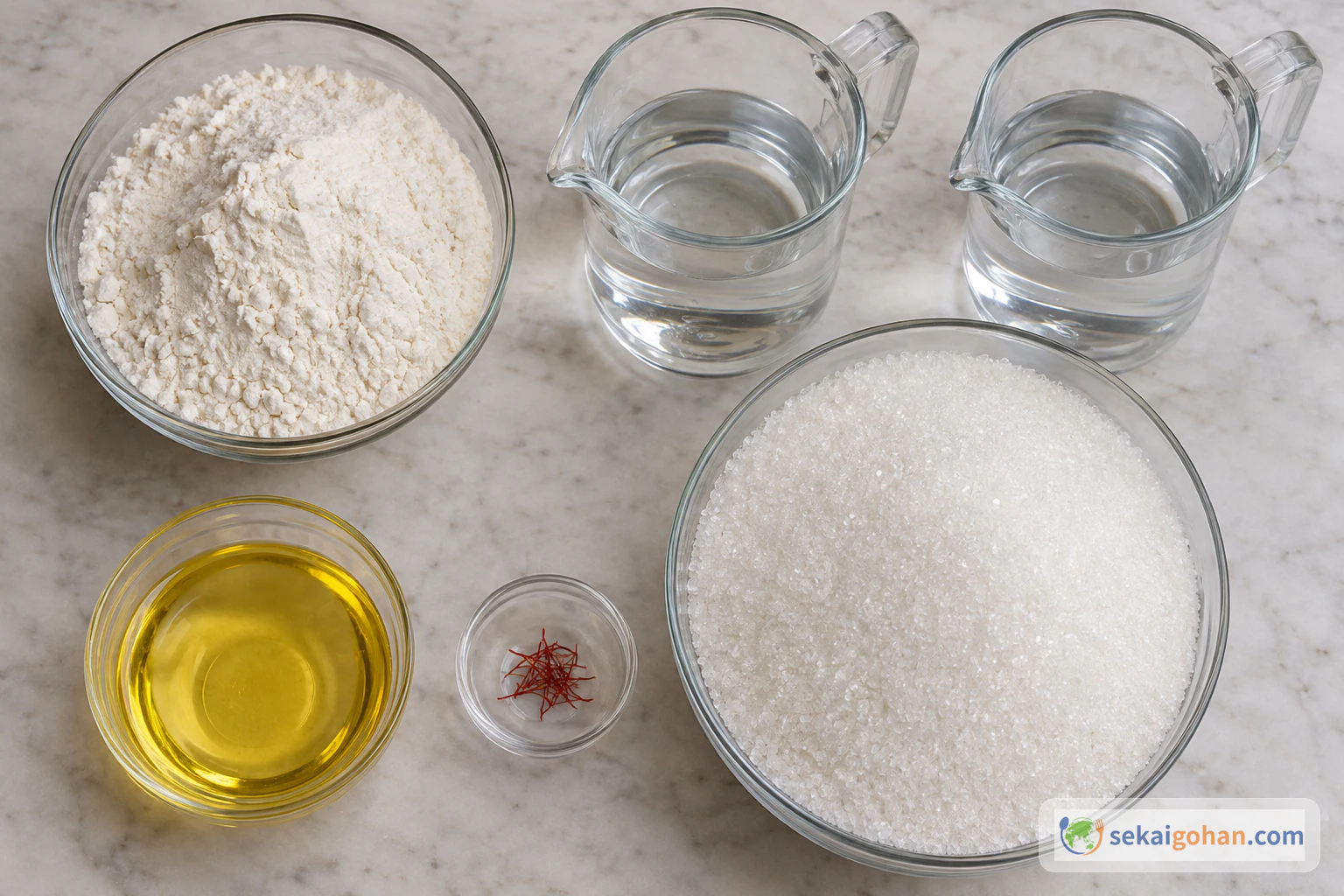
All the ingredients for jaleba laid out before cooking
Two separate portions of water sit side by side: one for the batter, one for the syrup
Measure the two waters separately

The batter water and the syrup water are the same amount but they are two separate portions. Pour them into two jugs before you start so neither ends up in the wrong pan.

Allergen information

Jaleba contains wheat. Serving it with rabri, milk or curd adds dairy.

Equipment

  • Saucepan for the syrup, big enough to hold the jaleba as it goes in
  • Mixing bowl with a lid or a plate to cover it loosely
  • Spoon for mixing
  • Clean food-safe squeeze bottle with a broad opening
  • Wide, flat-bottomed frying pan
  • Skimmer or slotted spoon
  • Plates for serving

Choosing and Substituting

Maida is a finely milled, refined wheat flour, sold at Indian grocers and online under that name. Supermarket all-purpose flour is the closest stand-in, though it is not the same flour, so the crunch and colour may differ a little. Use maida if you can find it.

Saffron is sold in tiny packs at Indian and Middle Eastern grocers and in the spice aisle of larger supermarkets, and a few strands are all you need. It gives the syrup its gold and its scent. If you have none, the syrup stays clear and plainly sweet; turmeric or food colouring would change the taste and the look, so leave them out.

The squeeze bottle decides the shape more than anything else on this list. A food-safe squeeze bottle from a kitchen shop works well; the size of the opening sets the thickness of the strand, so you will want one wide enough to let the airy batter flow without clogging and narrow enough to keep the line slender. Pipe one small test spiral before committing to a full-size coil.


Method

The work splits across two days. Make the syrup first, then mix the batter and leave it overnight in a warm spot; that night is the only hands-off stretch. The next day you whip the batter, fill the bottle, heat the oil and fry one spiral at a time, moving each straight into the warm syrup.

When It Goes Wrong

What you see Why What to do
The strand comes out thick and the spiral looks doughy The bottle opening is too wide, or you are squeezing too hard Use lighter, steady pressure, or switch to a bottle with a smaller opening; check with a test coil
The spiral is pale and soft when lifted It came out of the oil too soon Return it to the oil and fry until crisp and light brown
The outside darkens before it crisps The oil is too hot Lower the heat and let the next spiral fry more slowly
The jaleba turns soggy in the syrup The syrup is too thin Boil the syrup a little longer before the next spiral goes in
The syrup sits sticky on the surface The syrup is too thick Loosen it with a splash of water and bring it back to warm

Serving and Variations

At the table

A jaleba is generous enough to be the centre of a sweet course, set out whole so everyone sees the spiral before it is broken. Warm from the syrup, it is crisp outside and soaked within, and the saffron gives the syrup its scent. Indore's poha-jalebi shows how happily these sweets sit at breakfast next to something savoury.

Ways to change it

  • With rabri: the thick, creamy reduced milk softens the crunch and turns the plate into a richer dessert.
  • With milk: a glass alongside cuts the sweetness, and pieces dipped in it go soft and milky.
  • With curd: the sourness of the curd pushes back against the syrup and makes each bite feel lighter.
  • Without saffron: the syrup stays clear and plainly sweet, and the spiral looks paler gold.

Frequently Asked Questions

Does the oil go into the batter?

No. The batter is only flour and water. The oil is used purely for frying, so measure it by your pan, not by the recipe.

How big should a jaleba be?

Much larger overall than an everyday jalebi, a wide spiral rather than a small tangle. Keep the strand itself slender; the size comes from more and wider loops, not from a thicker line of batter.

How is jaleba different from imarti?

Imarti is made from urad dal batter and piped in a flower pattern. Jaleba is a maida batter fermented overnight and piped as an open spiral, and the two are made from separate recipes.

Can I pipe the batter without a squeeze bottle?

The squeeze bottle gives the steady, even line the spiral needs. A food-safe bottle with a broad tip is easy to find in kitchen shops and is worth buying before you start.
Sources