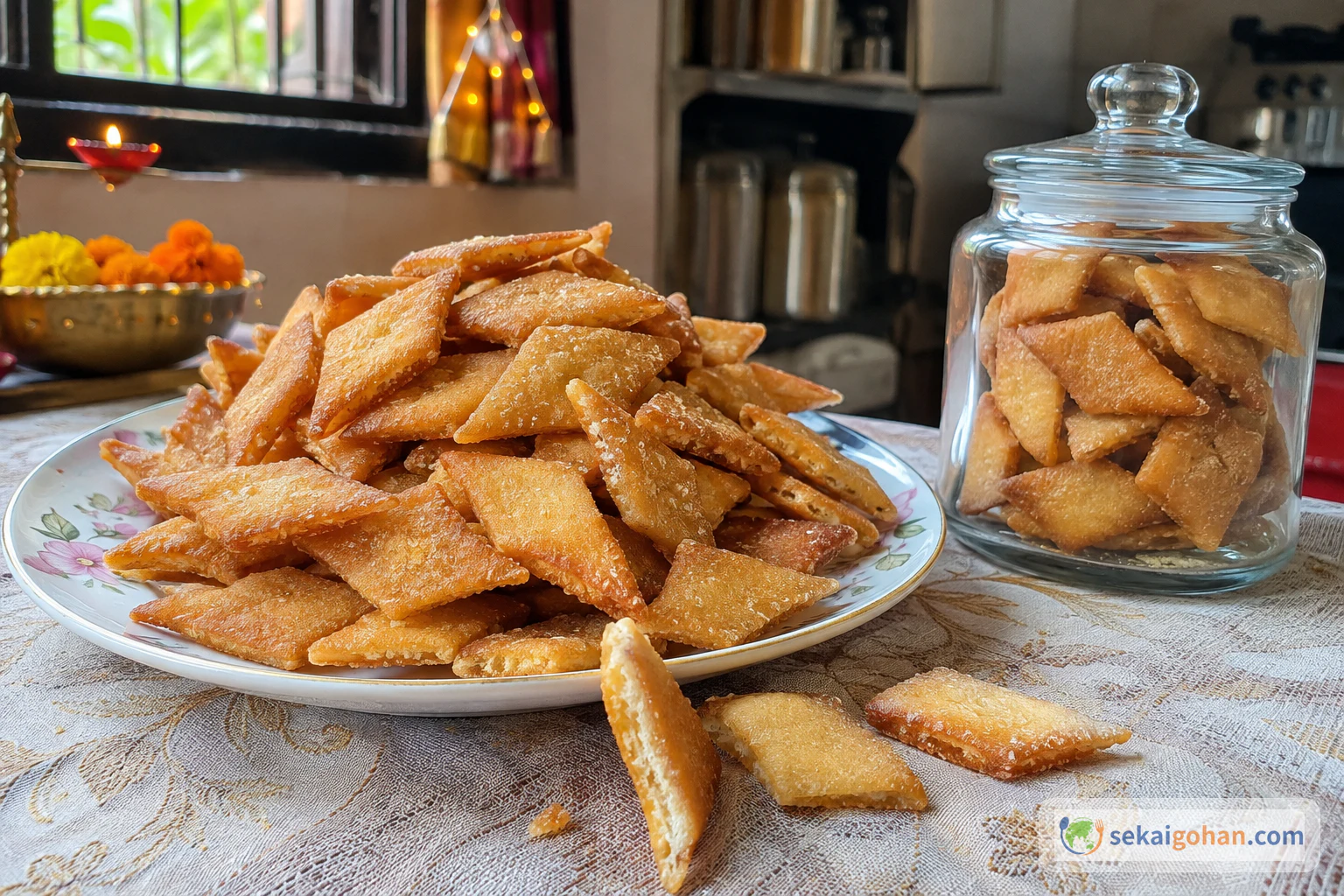
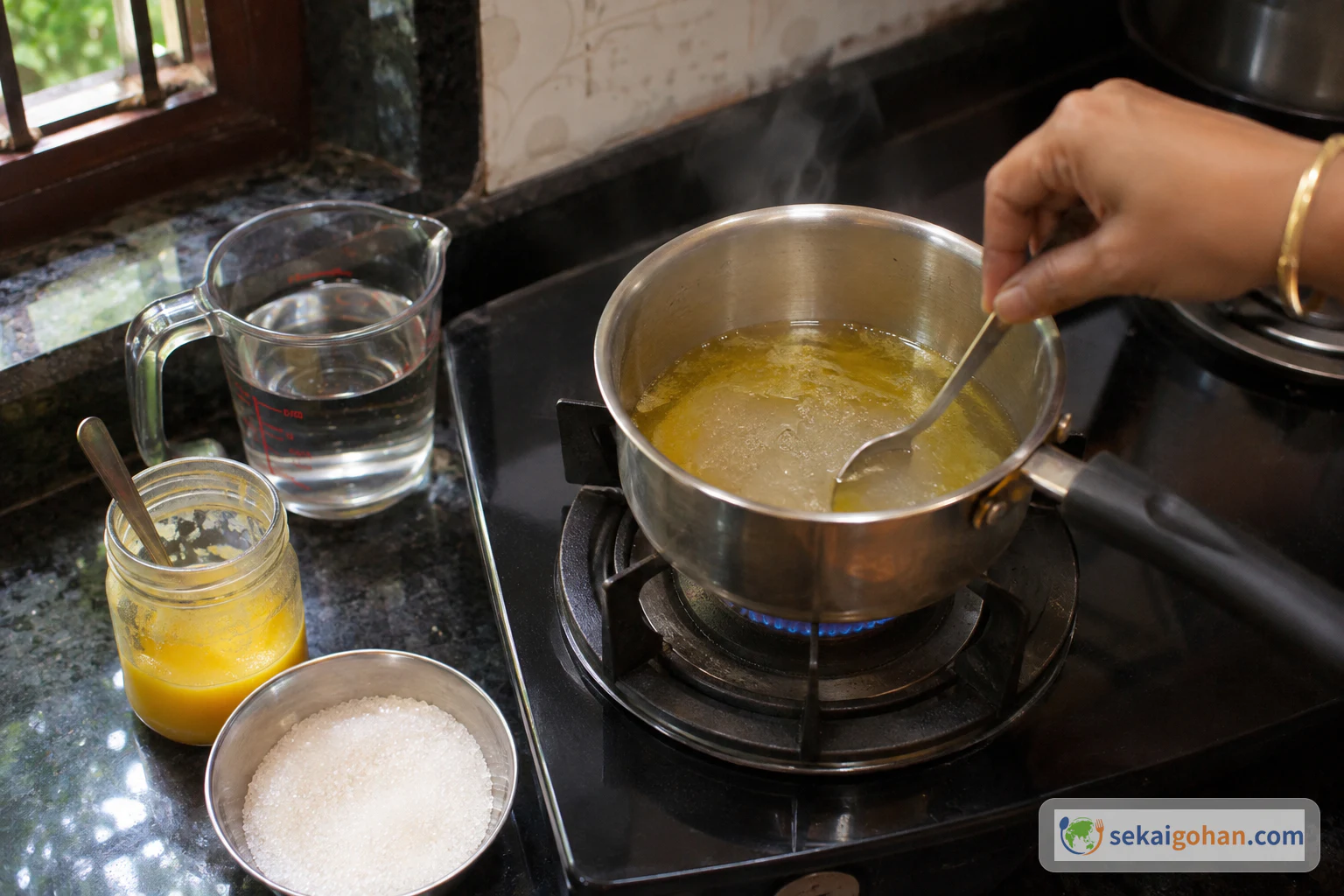
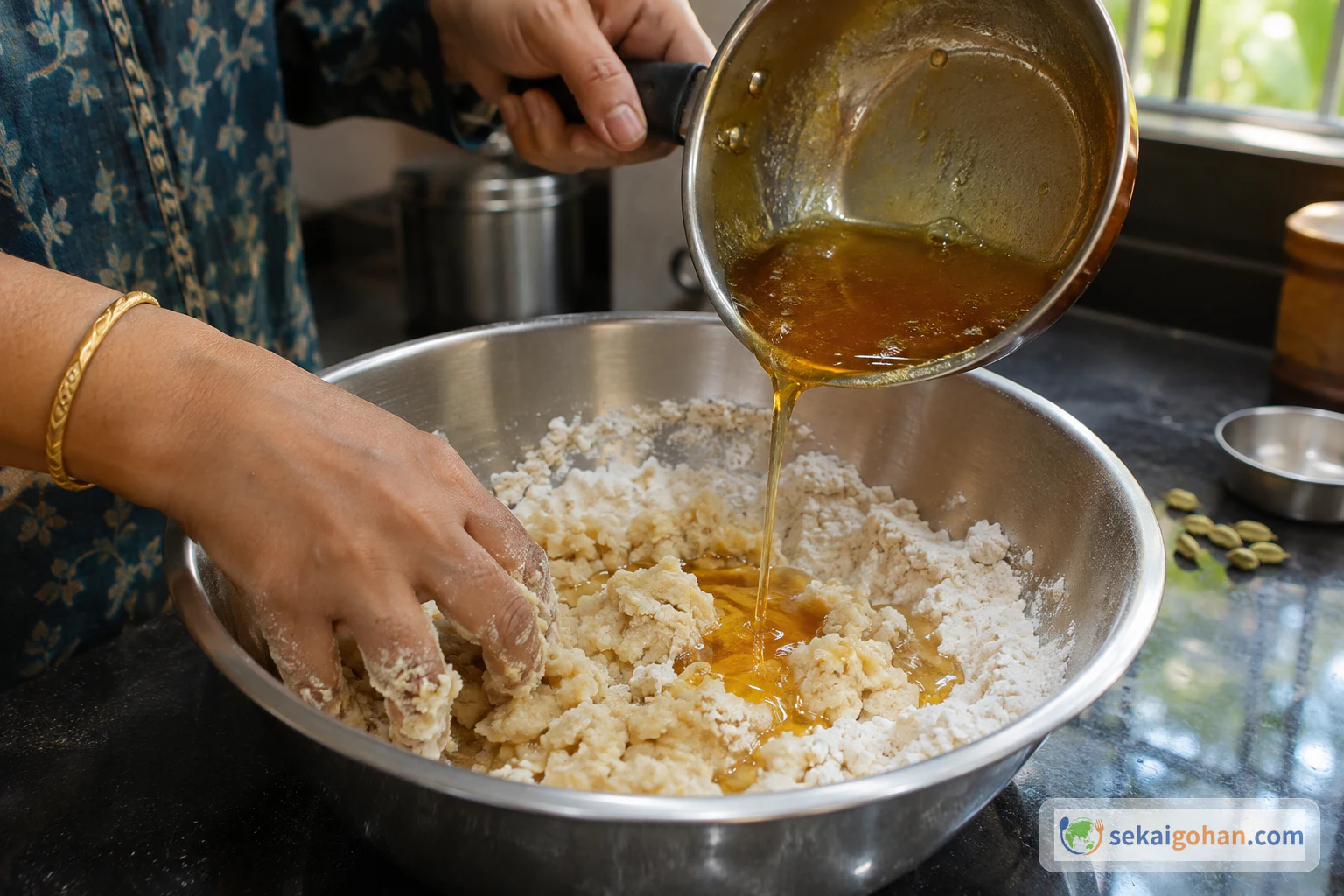
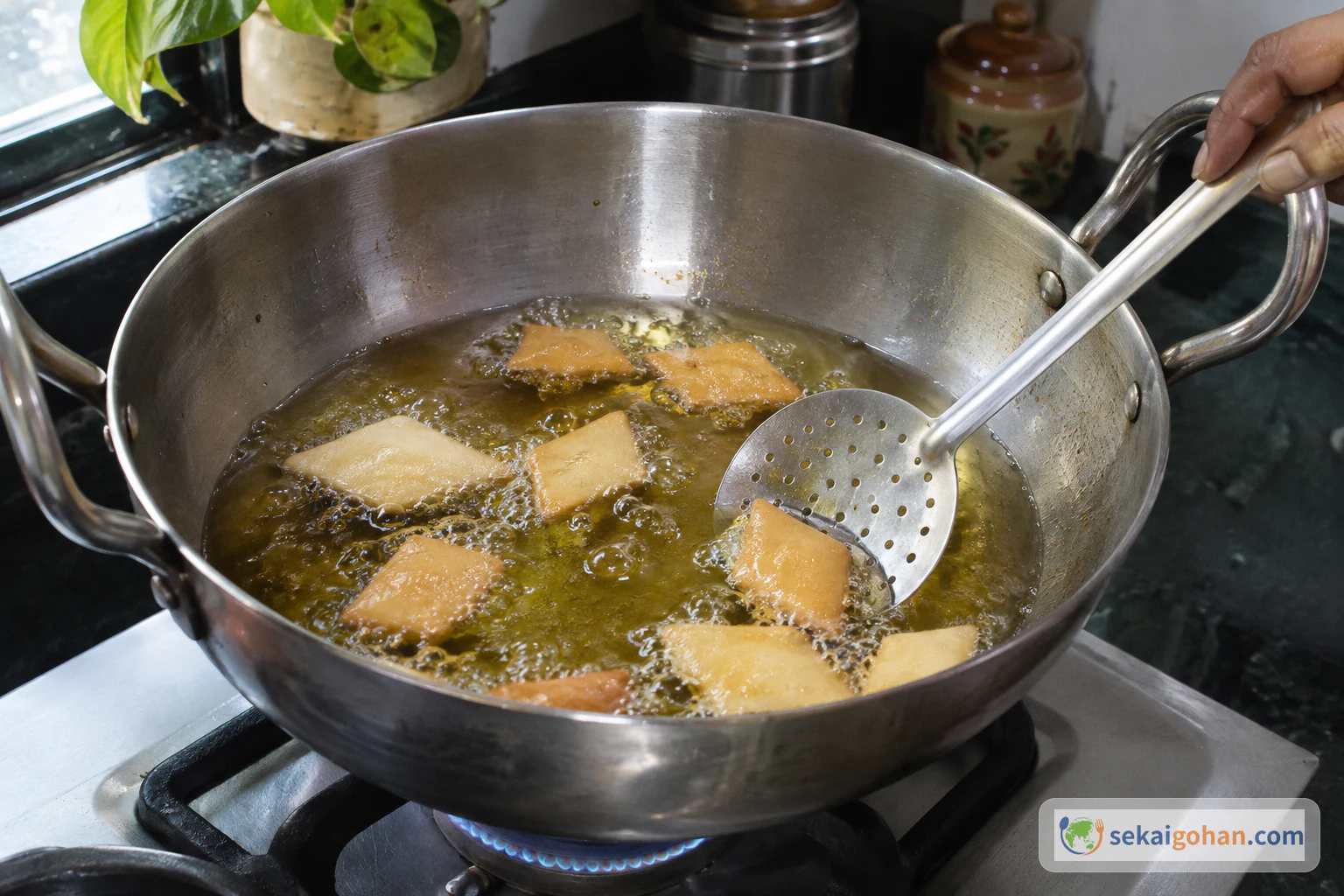
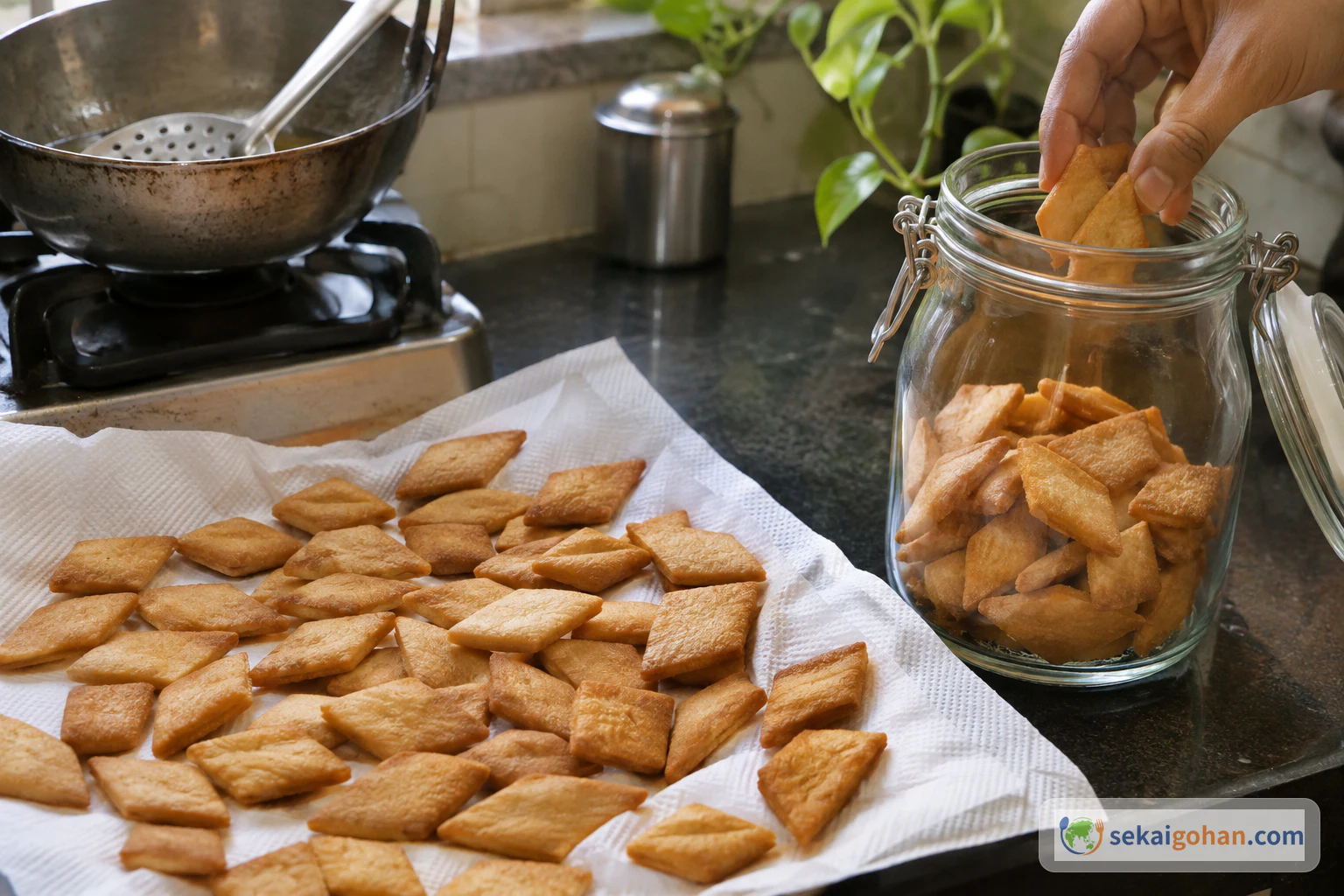
The batch is ready when the oil goes quiet. The loud sizzle around the pale diamonds of dough fades, the pieces float high and turn golden brown, and the kitchen smells of warm ghee and cardamom. Lift them onto kitchen paper and give them time to cool. Then they go into tins and jars, and in Maharashtra in the days before Diwali those jars fill up in kitchen after kitchen. Shankarpali is a small fried biscuit made from flour, ghee, sugar and water. The sugar goes into the dough, so every piece comes out crisp, flaky and lightly sweet, with cardamom in the background and the rich taste of ghee in every bite.
Diamonds for Diwali, Tea and the School Tiffin
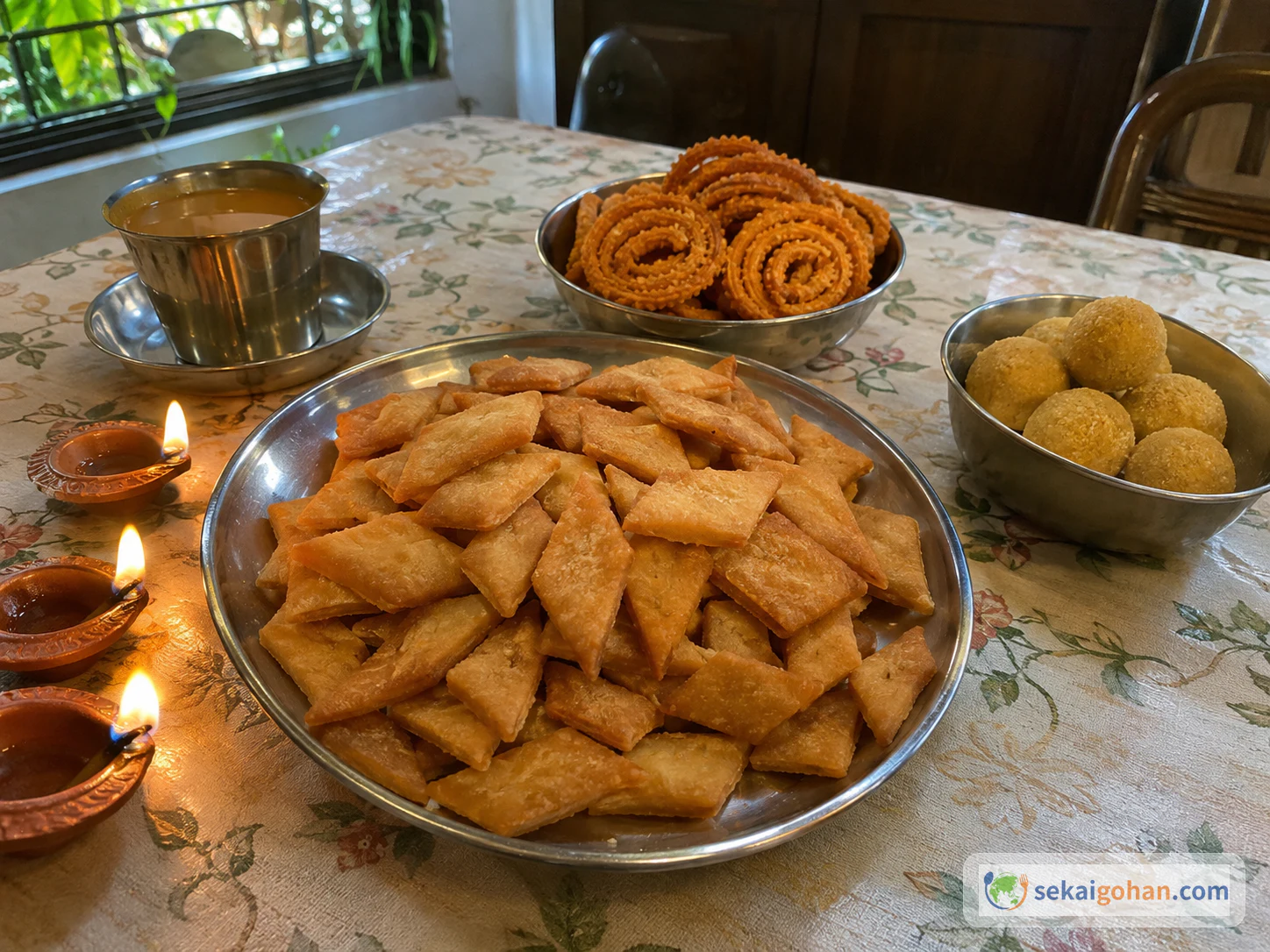
In Maharashtra, the sweets and snacks a household makes for Diwali, the festival of lights, have their own collective name: faral. Shankarpali are one of its fixtures. They are easy to make in large amounts, they keep well, and they are easy to share, so a single rolled sheet of dough becomes a plate for guests, a tin for neighbors and a jar for the weeks after the festival. Shankarpali also appear at Holi, the spring festival of colors. Most of the year, though, they belong to ordinary days. People eat them with evening tea, children snack on them after school and they go into school tiffin boxes. Shops sell them all year, and many families make their own mainly in the festival season. In some places, making these sweets to sell is also a source of income for women.
The dish is usually traced to the Marathi cooking of Maharashtra. The name goes back to the Persian Shekarpareh, "sweet pastry", and the same basic idea of flour, fat and sweetness has picked up a different name almost everywhere it travelled. Gujarat calls it shakkarpara. Parts of north India say sweet tukdi, Tamil Nadu kalakala and Andhra teepi maida biscuits. In south India you also hear "diamond cuts" and "sweet maida biscuits". In Bihar, Jharkhand and eastern Uttar Pradesh, related versions go by khurma or laktho. The biscuit also travelled with the Indian diaspora to Fiji, Guyana, Mauritius, Suriname and Trinidad and Tobago, and on to Britain, North America, Australia and New Zealand, where names such as lakdi mithai turn up.
Sugar in the dough, or syrup on top
There are two ways to sweeten these diamonds, and families tend to have strong opinions about which is right. In the Maharashtrian home method used here, the sugar dissolves into the warm ghee and water and goes straight into the dough. The pieces come out thicker, crunchy and gently sweet all the way through. The other method fries an unsweetened dough and then coats the pieces in a one-string sugar syrup. That gives a glassy, much sweeter shell, and some people find it too sweet. The ingredients overlap, but the two methods produce different biscuits, and their amounts don't mix. Savory versions are made too, and they are just as common as an everyday snack.
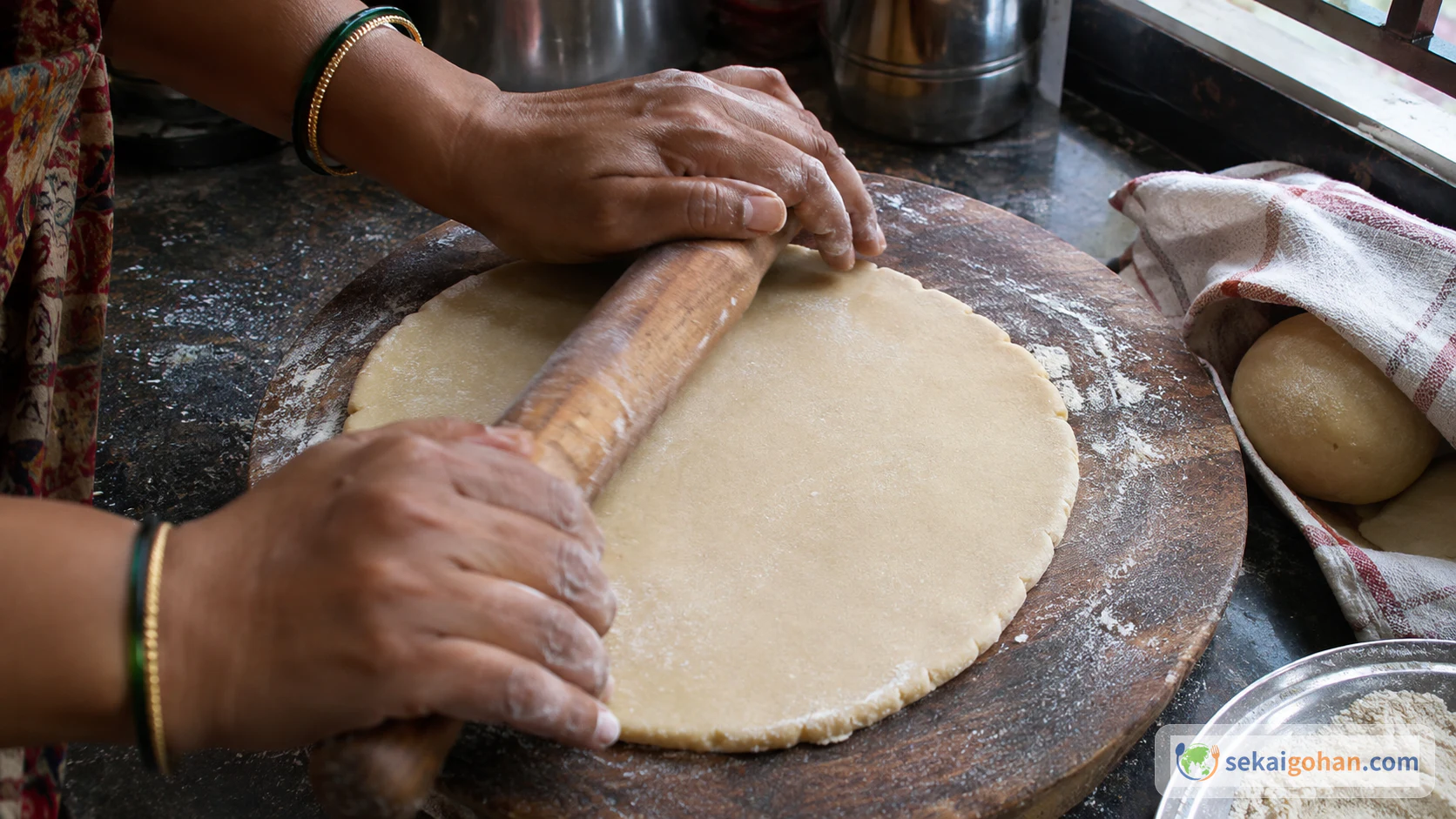
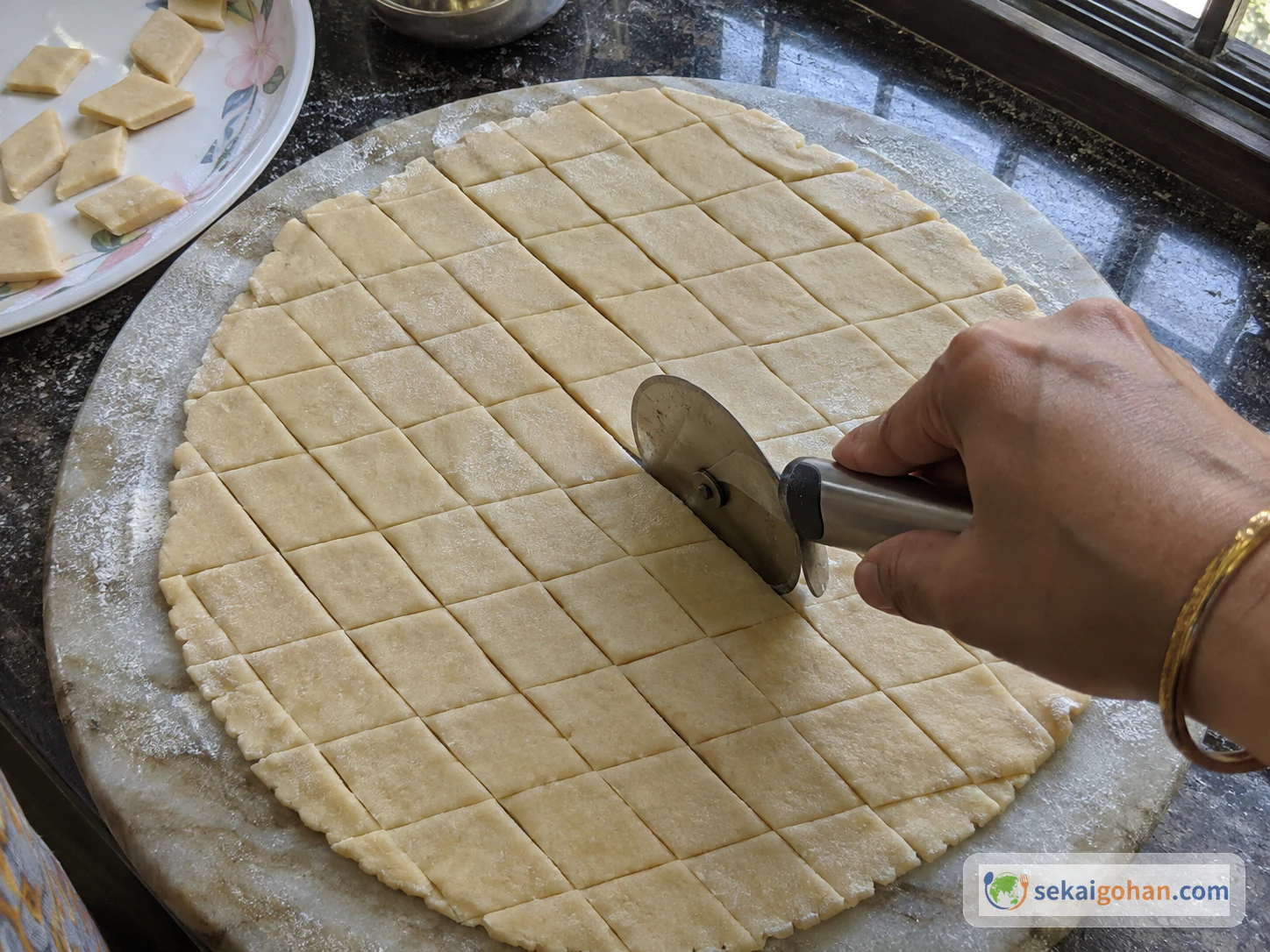
The diamond shape is practical. You roll out one round, cut parallel strips, then cut across them at an angle, and the whole sheet becomes many even pieces with almost no waste. Even pieces fry evenly, which matters when you are filling jars for a festival. If you prefer squares, cut straight across.
For more of the country's cooking, see Indian food by region and dish.
Ingredients (serves 10)
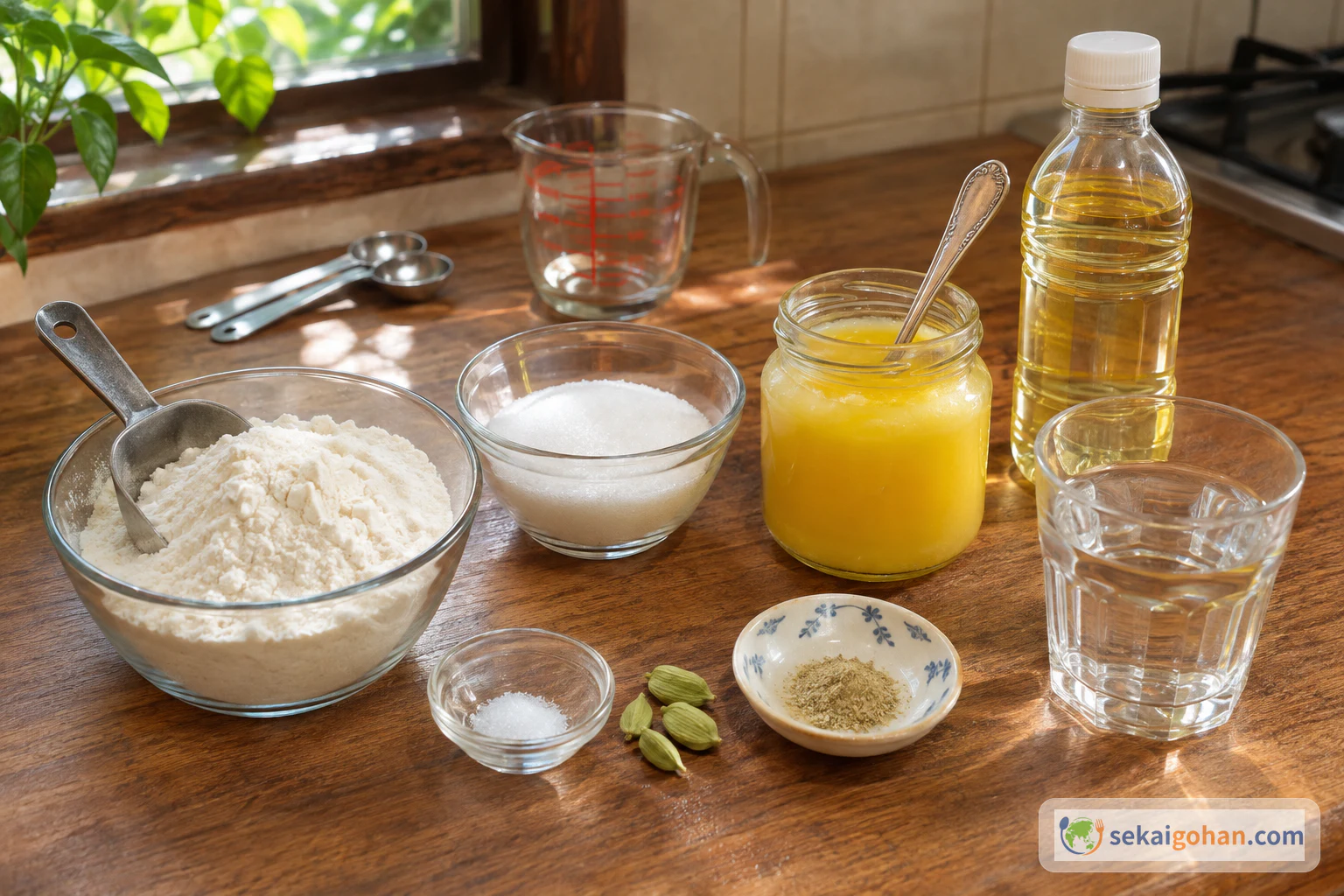
Shankarpali contain wheat (flour) and milk (ghee). Use oil in place of the ghee to make them dairy-free. This dough contains no egg or nuts.
Equipment
- Mixing bowl
- Small saucepan
- Rolling board and rolling pin
- Pizza cutter or sharp knife
- Plate or tray for the cut pieces
- Heavy, deep pan for frying
- Slotted spoon
- Kitchen paper
- Airtight container or jar
Choosing and Substituting
Maida is finely milled, refined white wheat flour. Plain (all-purpose) flour gives the same smooth, pale dough. Whole wheat flour also works and makes a lighter-tasting biscuit that some households prefer, but it gives a darker, nuttier result. Ghee gives shankarpali their aroma and their flaky texture, so buy it from an Indian grocer or online if you can. Butter is the closest swap and still tastes rich. Oil gives a plainer, crisper piece and makes the batch dairy-free. Ready-ground cardamom powder is fine. If you buy green pods, grind the seeds just before you start for a brighter smell. Because the sugar is in the dough, these brown faster in the oil than savory versions do, so a deep color comes quickly.
Method
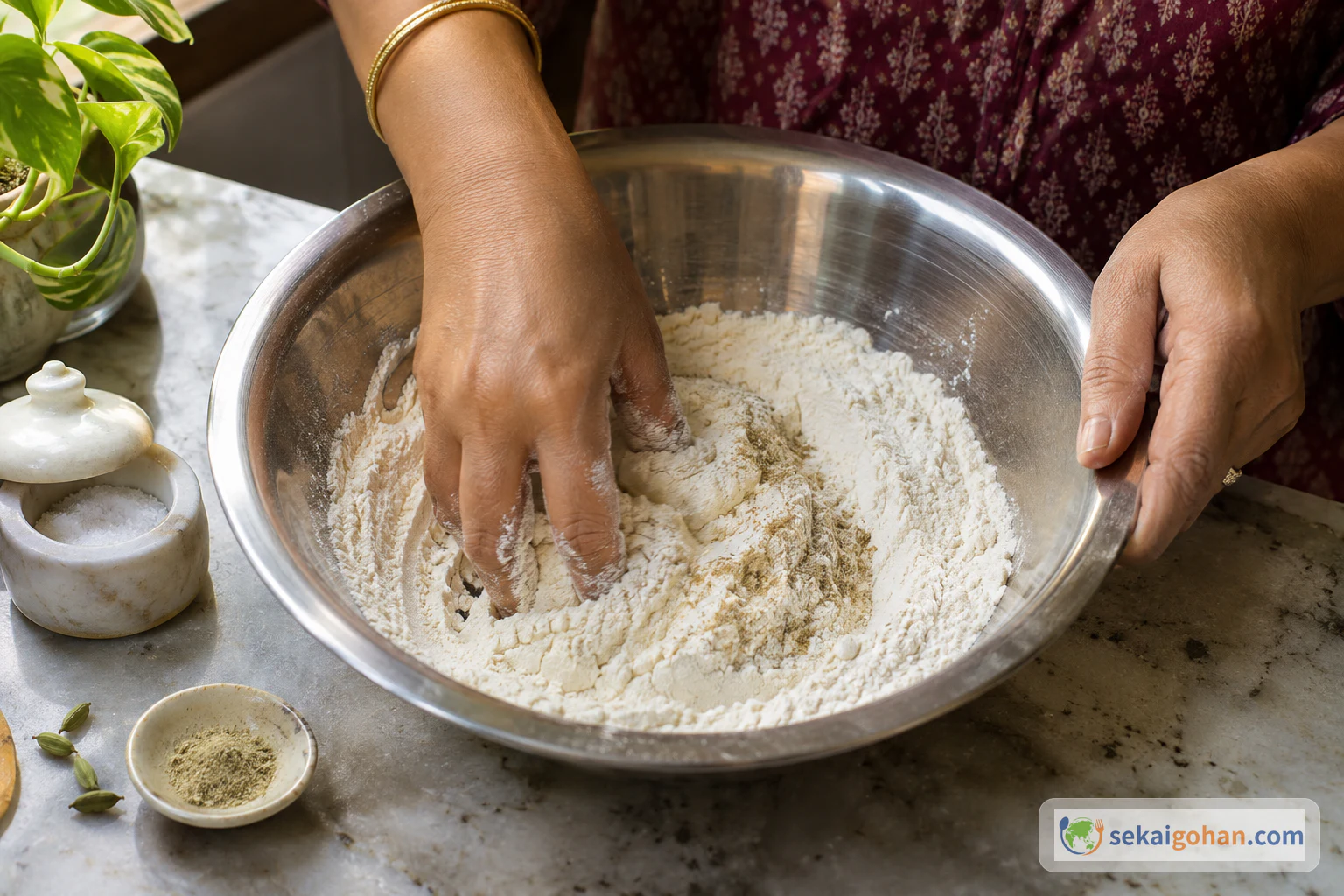
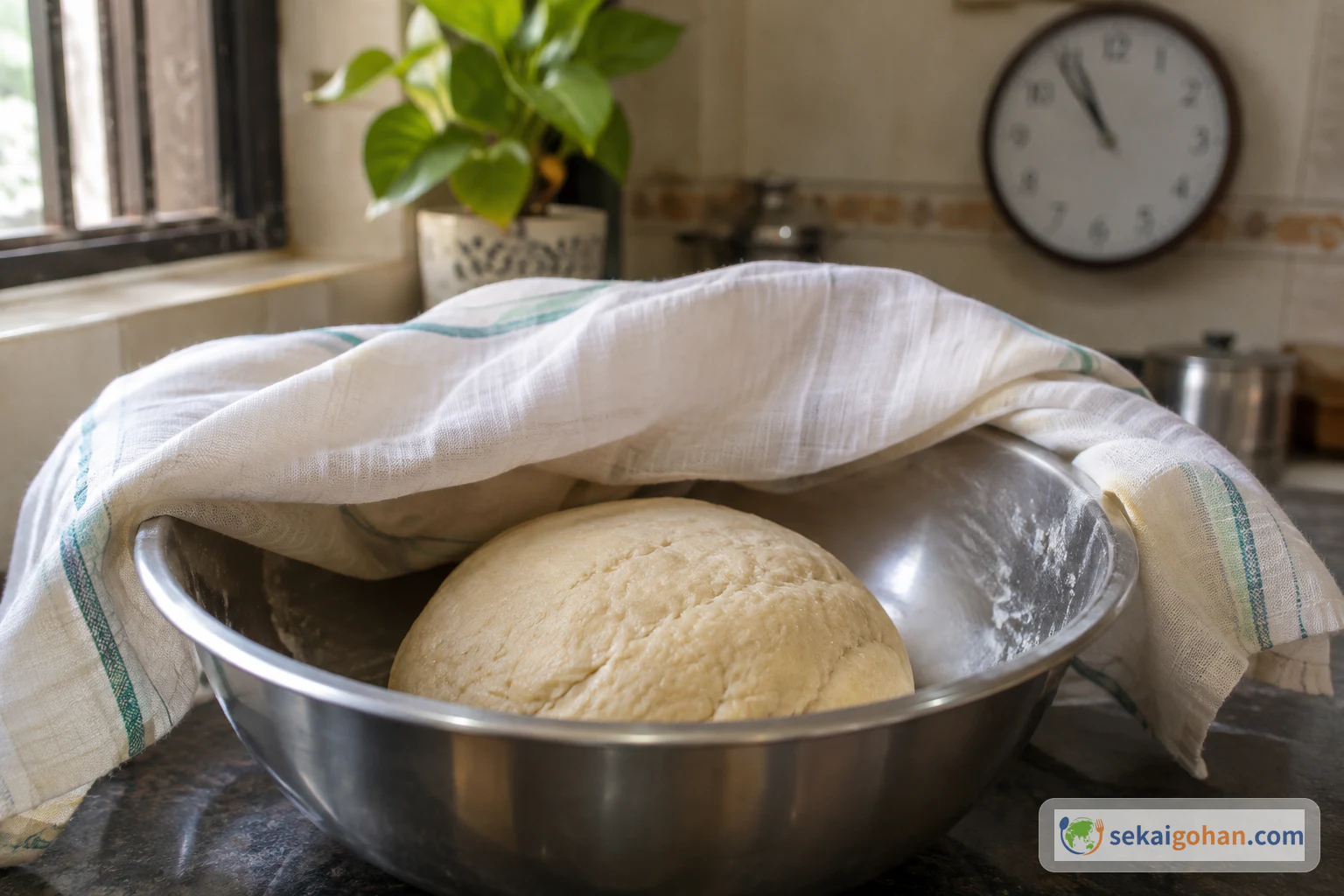
The work is short and comes in three parts. Mix and knead the dough, let it rest, then roll, cut and fry. Use the 30 to 60 minutes of resting time to clear a surface for rolling, set out the plate, kitchen paper and slotted spoon, and put the frying pan on the stove. Fry in small batches. That part needs your full attention.
If the oil is too hot, the sugary surface browns before the middle cooks, and you end up with dark pieces that are soft inside. Medium heat or a little lower cooks them all the way through and gives the flaky, layered crunch.
A slightly firm dough absorbs less oil than a soft one. If your first batch comes out greasy, knead a spoonful of flour into the remaining dough before you roll it.
When It Goes Wrong
| What you see | Why | What to do |
|---|---|---|
| Dough is soft and sticks to your hands | Too much liquid for the flour | Knead in more flour, a little at a time, until it feels slightly firm |
| Dough cracks at the edges as you roll | Dough is too dry | Add 1–2 tbsp water and knead briefly before rolling again |
| Brown outside, soft or raw inside | The oil is too hot | Turn the heat down to medium or below and fry smaller batches |
| Pieces come out greasy | The dough was too soft | Make a firmer dough next time, or work a little flour into what's left |
| Color turns dark very quickly | The sugar in the dough browns fast | Lift each batch out as soon as it turns golden |
| Pieces stick together in the pan | The pan is crowded | Fry fewer pieces at a time so they float apart |
Serving, Variations and Storage
At the table
Serve shankarpali with tea, as an evening snack or as the crunchy part of a Diwali faral plate next to other sweets and savory snacks. They travel well, so they suit lunch boxes and gift tins as much as a bowl on the table.
Variations
- Semolina for extra crunch. Grind 2 tbsp semolina (rava) with the sugar and mix it into the flour. The pieces turn noticeably crunchier and slightly grainier.
- Whole wheat flour. Use whole wheat flour in place of maida. You get a lighter-tasting, darker biscuit with a nutty edge.
- Baked. Bake the cut diamonds at 355°F (180°C) for 15 to 20 minutes, until golden. This works if you'd rather not deep-fry. The texture is drier and less flaky.
- A drier surface. Leave the cut pieces to dry for about 20 minutes before frying. This makes them crisper.
Storage
Cool the pieces completely, then keep them in an airtight container at room temperature. Kept sealed and dry, they stay good for 10 days to two weeks, and a well-sealed jar lasts up to a month. Moisture is what softens them, so close the lid every time you open it.
Frequently Asked Questions
Can I use this dough for the syrup-coated version?
No, keep the two methods separate. The syrup-coated version starts from an unsweetened dough that is fried and then coated, so it uses different amounts of everything. This dough already contains its sugar, and it is meant to be eaten as it comes out of the oil.
Do they have to be diamonds?
No, squares work just as well. Cut straight across the strips instead of at an angle. What matters is that every piece is the same size, so the whole batch fries at the same pace.
Can I make a smaller batch?
Yes. Divide every ingredient by the same amount and keep the method the same. With half a batch, roll the dough as a single round instead of two.
Why does the first batch sometimes color differently from the last?
The oil temperature drifts as batches go in and come out. Test the oil with a scrap of dough again partway through. Keep the heat at medium so every batch reaches the same golden color as the sizzling dies down.