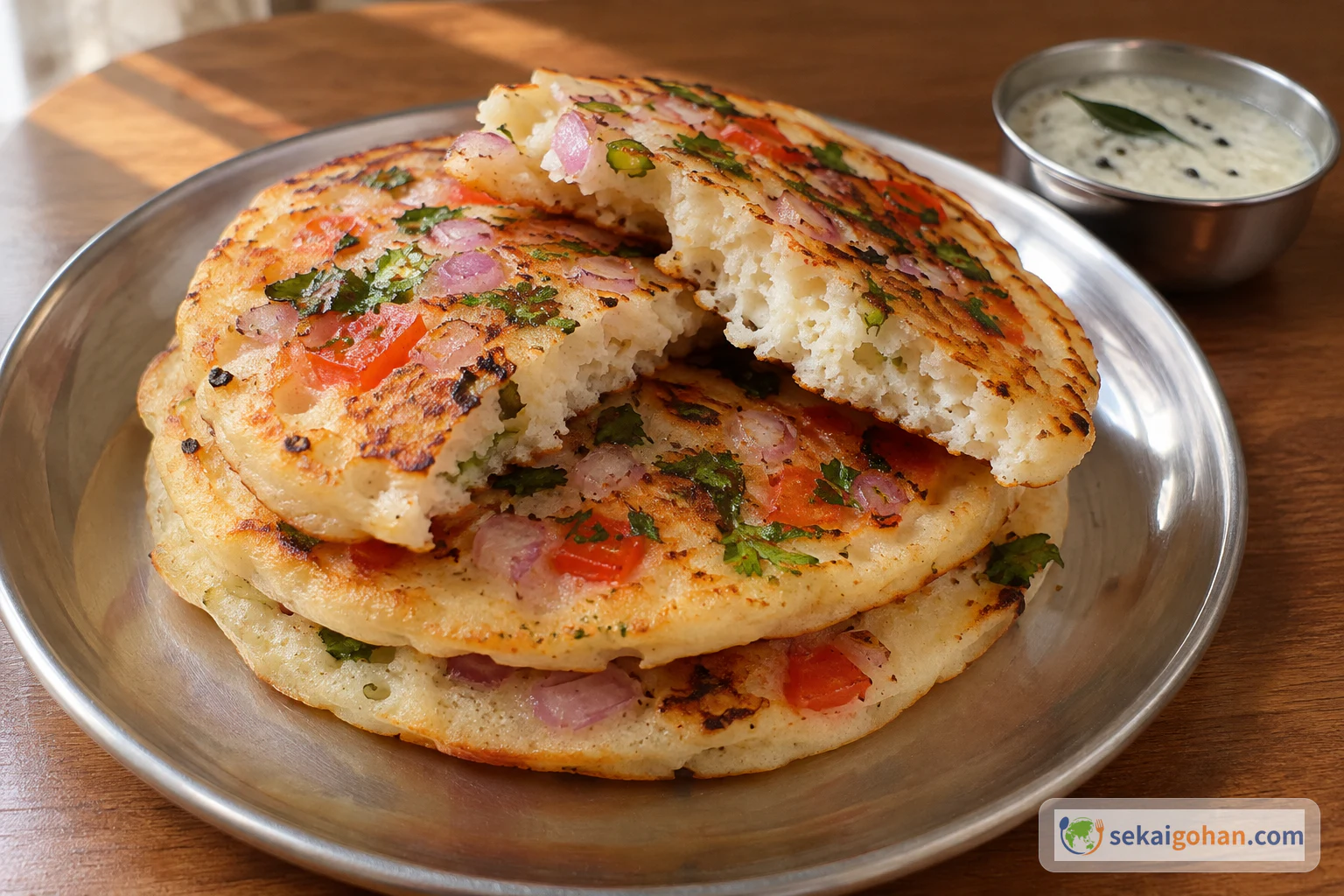
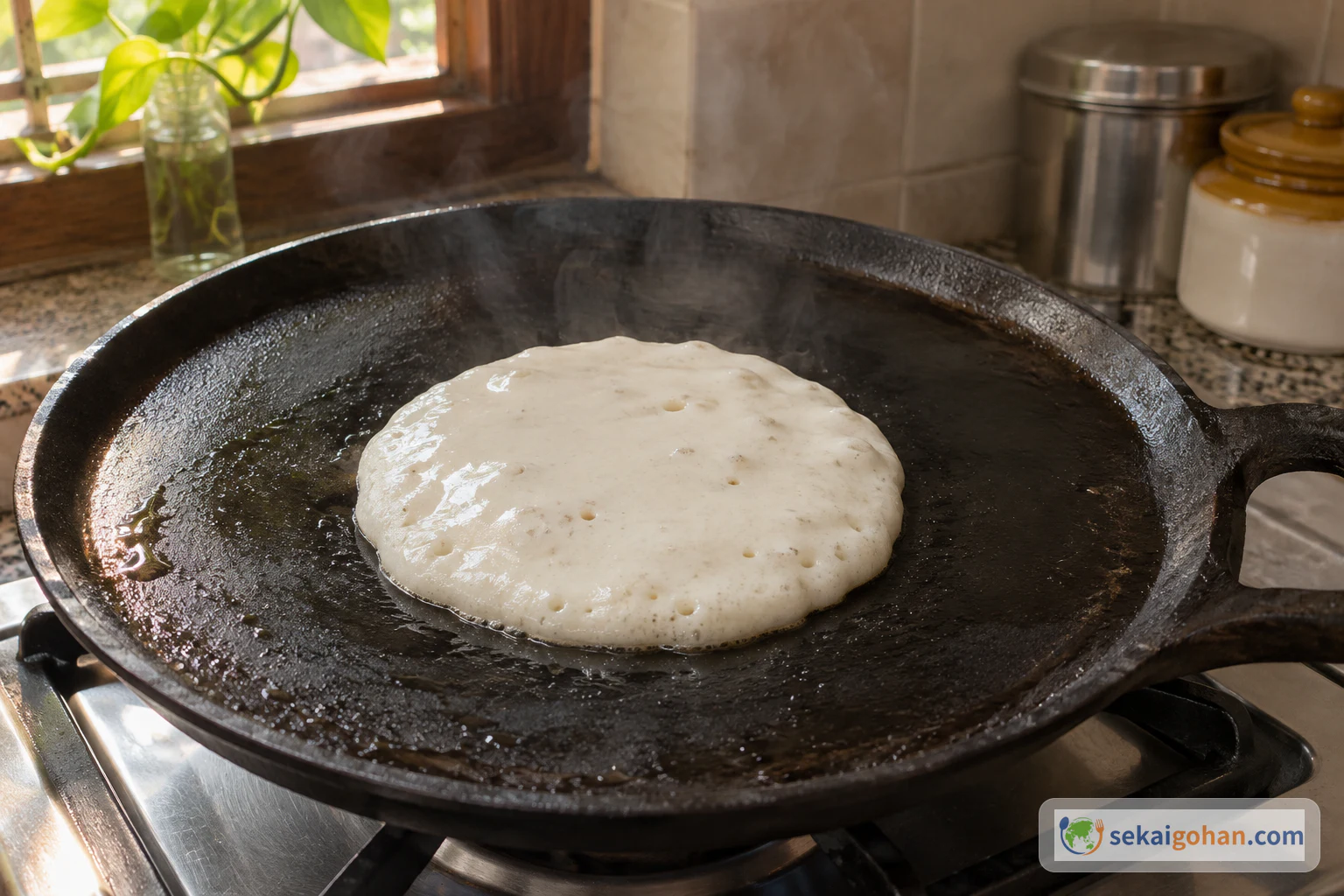

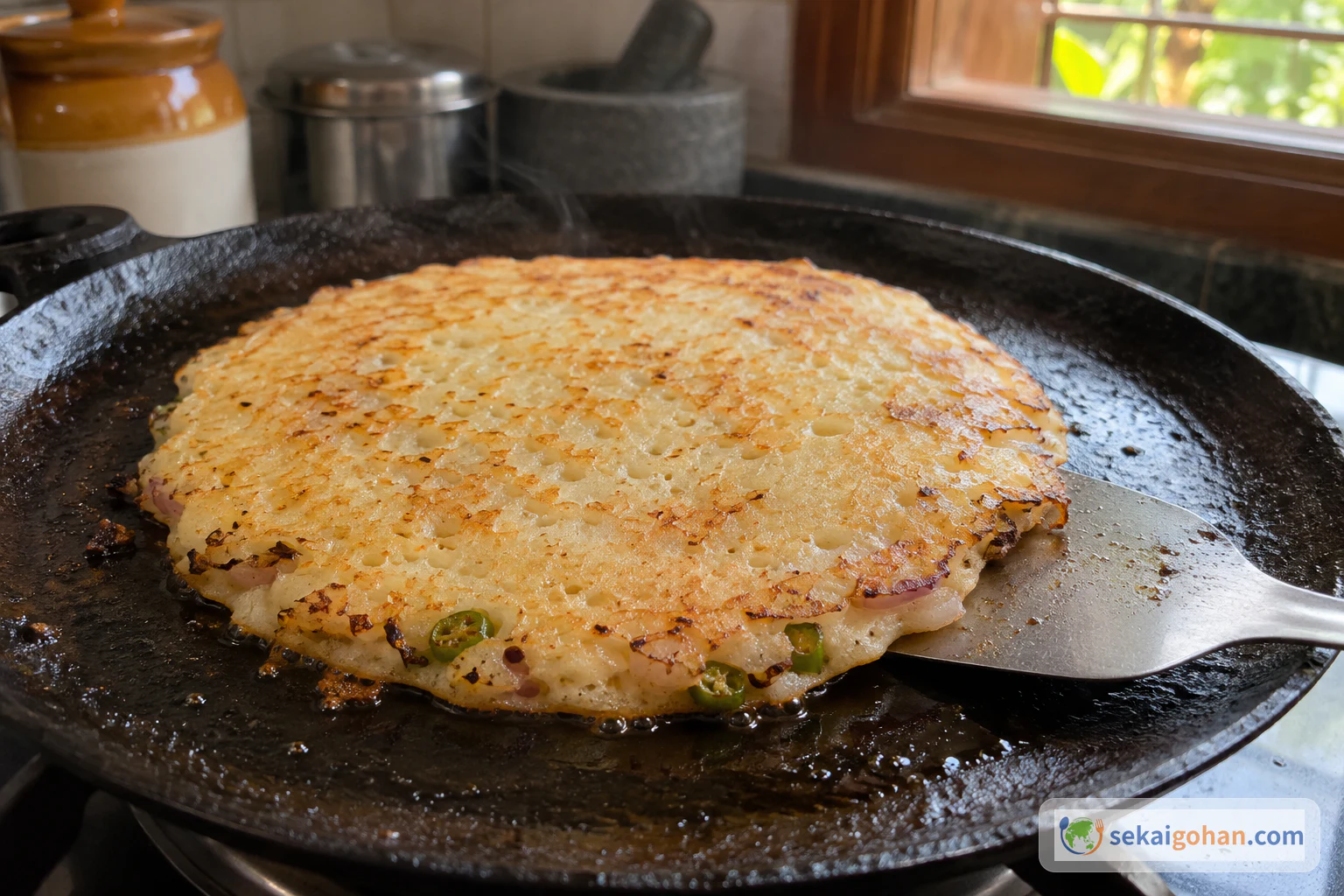
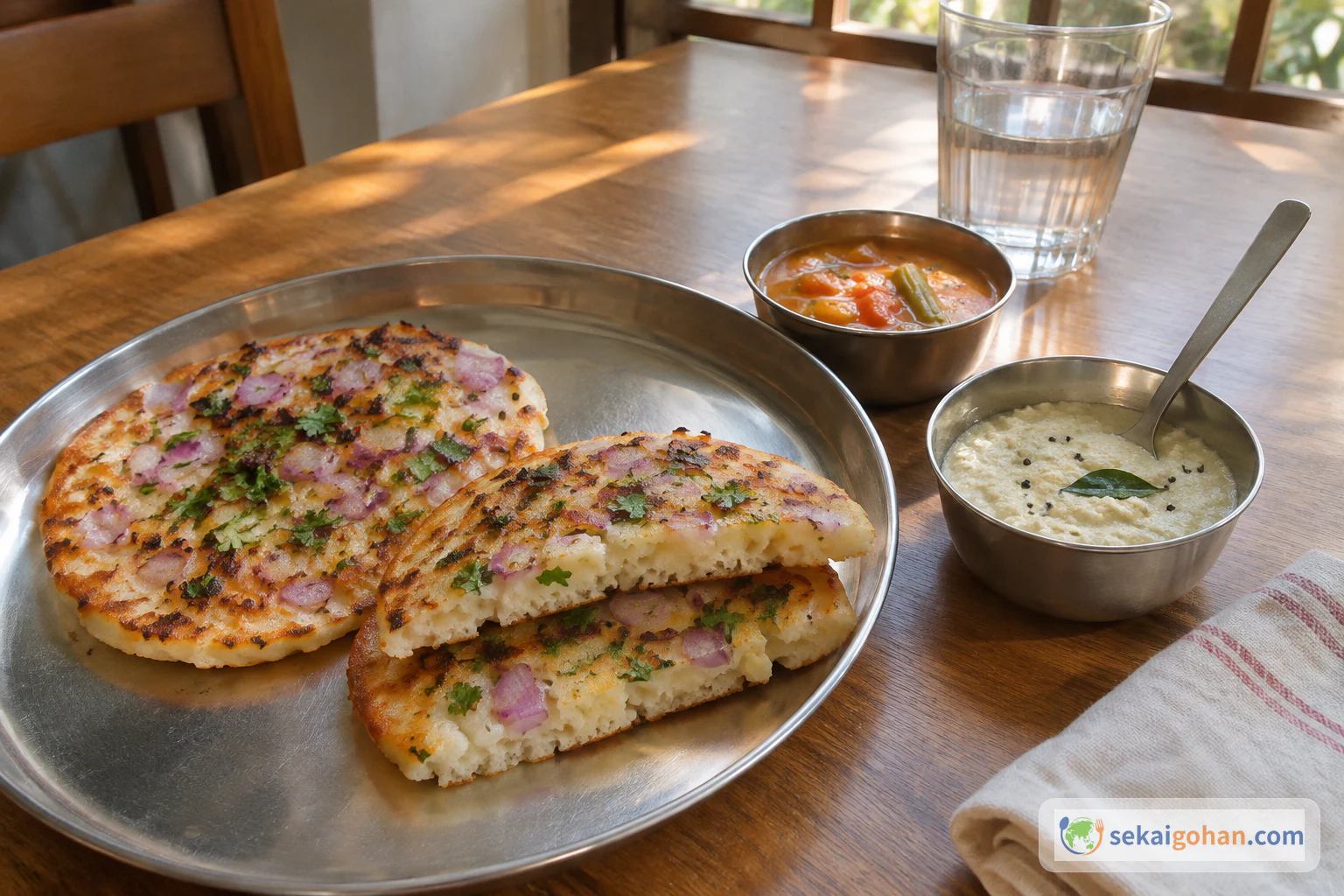
The ladle tips its batter onto the middle of a hot tawa, and then you leave it alone. It settles into a thick, pale round, the rim turns opaque, and small bubbles open across the top. Chopped onion, green chilli and coriander go straight onto the wet surface, and by the time the pancake is turned, the onion is browning against the iron and the whole kitchen smells of it.
Uttapam is the thick member of the South Indian family of fermented rice and urad dal batters, made for breakfast and light meals across the southern states. Inside it is soft and spongy, at the rim crisp and golden, and the gentle sourness of the fermented batter meets the sweet, scorched onion pressed into its face.
A Poured Pancake From the Batter Pot
The name carries the method. In Tamil the dish is ஊத்தப்பம் (ūttappam), a word built from ūtu- and appam, and it means a kind of raised cake, a thick dosa made by pouring slightly fermented batter onto the dosa griddle. One English-language recipe page explains it as a "poured appam," which sits comfortably with that meaning.
Many South Indian kitchens keep one pot of soaked, ground and fermented rice and urad dal, and the pan decides what it becomes. Spread thin across the griddle, it is dosa. Spooned into molds and steamed, it is idli. Poured thick, with chopped vegetables pressed into the top and both sides cooked, it is uttapam. The hand movement is the opposite of dosa: a dosa cook swirls the ladle outward to thin the batter, while an uttapam cook lets the batter sit and keeps its height.
It turns up at breakfast and as a light meal in nearly every state of southern India, and its name is Tamil, and one recipe collection lists it as a dish of Tamil Nadu. Nothing here fixes where or when it was first made. It belongs to the same morning table as ven pongal, and in some homes children call it Indian pizza.
The toppings do real work. Onion and green chilli soften the sour edge of the fermented batter and make each pancake more filling, which is also why batter that has turned a little too sour can end up as uttapam. Tomato pulls the other way and adds a sourness of its own, so it stays optional.
Uttapam, uthappam, oothapam and uttappa are all the same pancake. Set dosa and paniyaram are different dishes, even though they come from similar batters.
Ingredients (makes 8 uttapams)
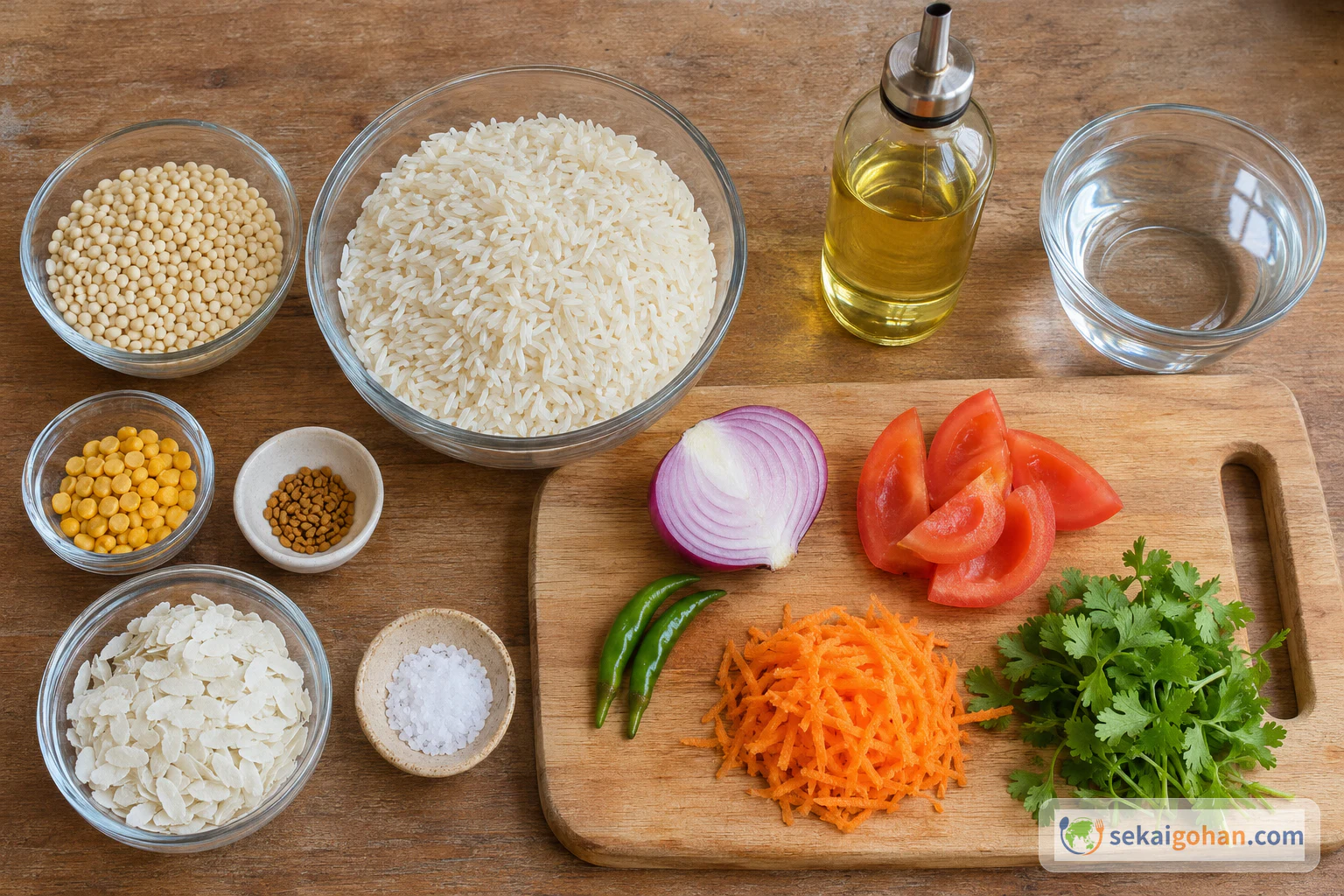
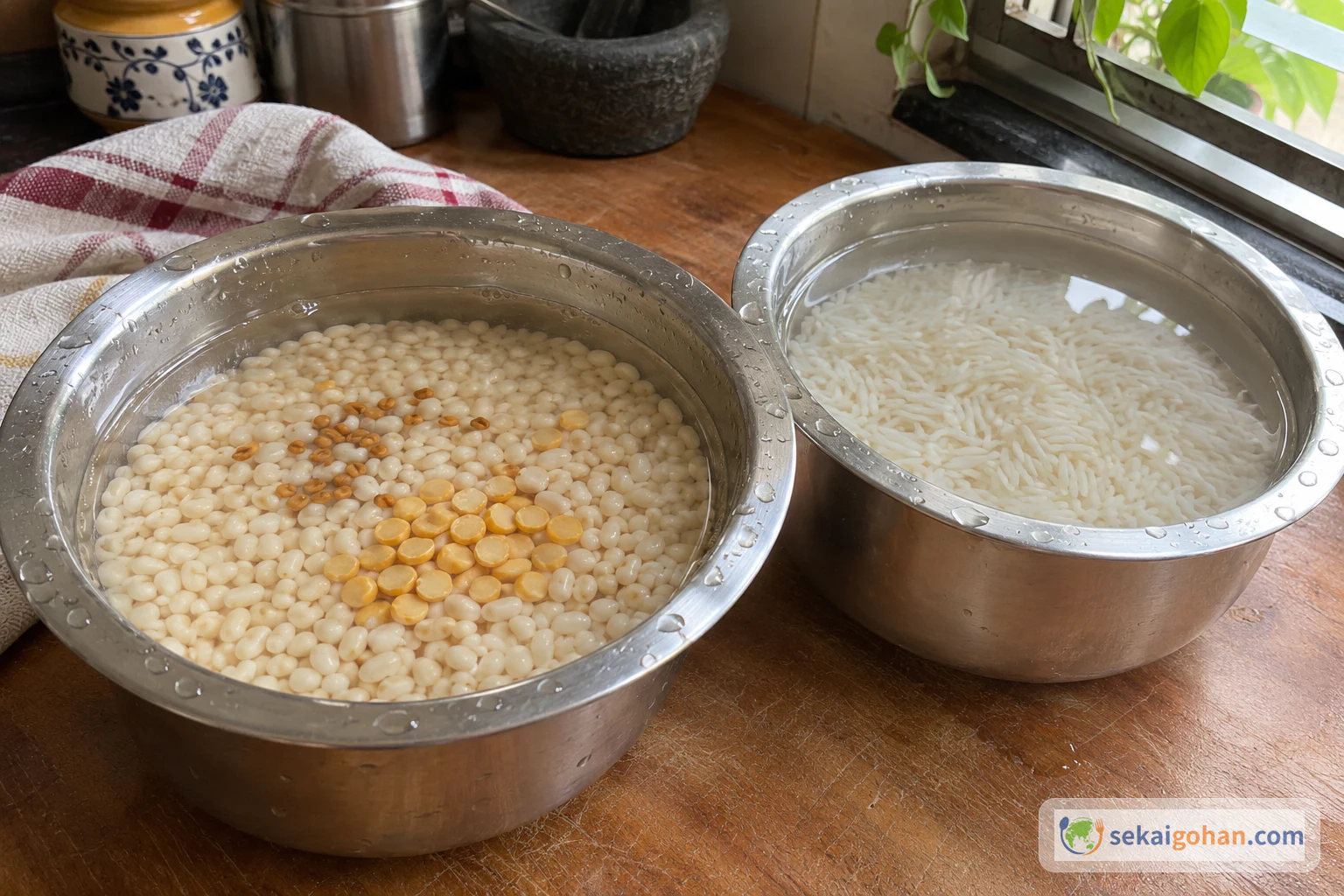
The batter is mostly rice, with a smaller share of skinned urad dal that brings the foam and the stretch. Chana dal and poha are optional: chana dal adds a fuller taste, and poha helps the fermentation get going.
Divided across eight uttapams, the chopped onion comes to about 1½–2 tbsp per pancake. Measure the first one; a heavier pile slides off at the flip, and a lighter one leaves the sourness of the batter uncovered.
The batter is built on legumes: urad dal and, if you use it, chana dal. Anyone with a legume allergy should ask a doctor before eating it. The recipe has no wheat, but check poha and dal packaging for shared-facility statements. Butter or ghee adds dairy, sesame oil adds sesame, and coconut chutney or sambar on the side bring coconut, legumes and tamarind.
Equipment
- Two bowls for soaking
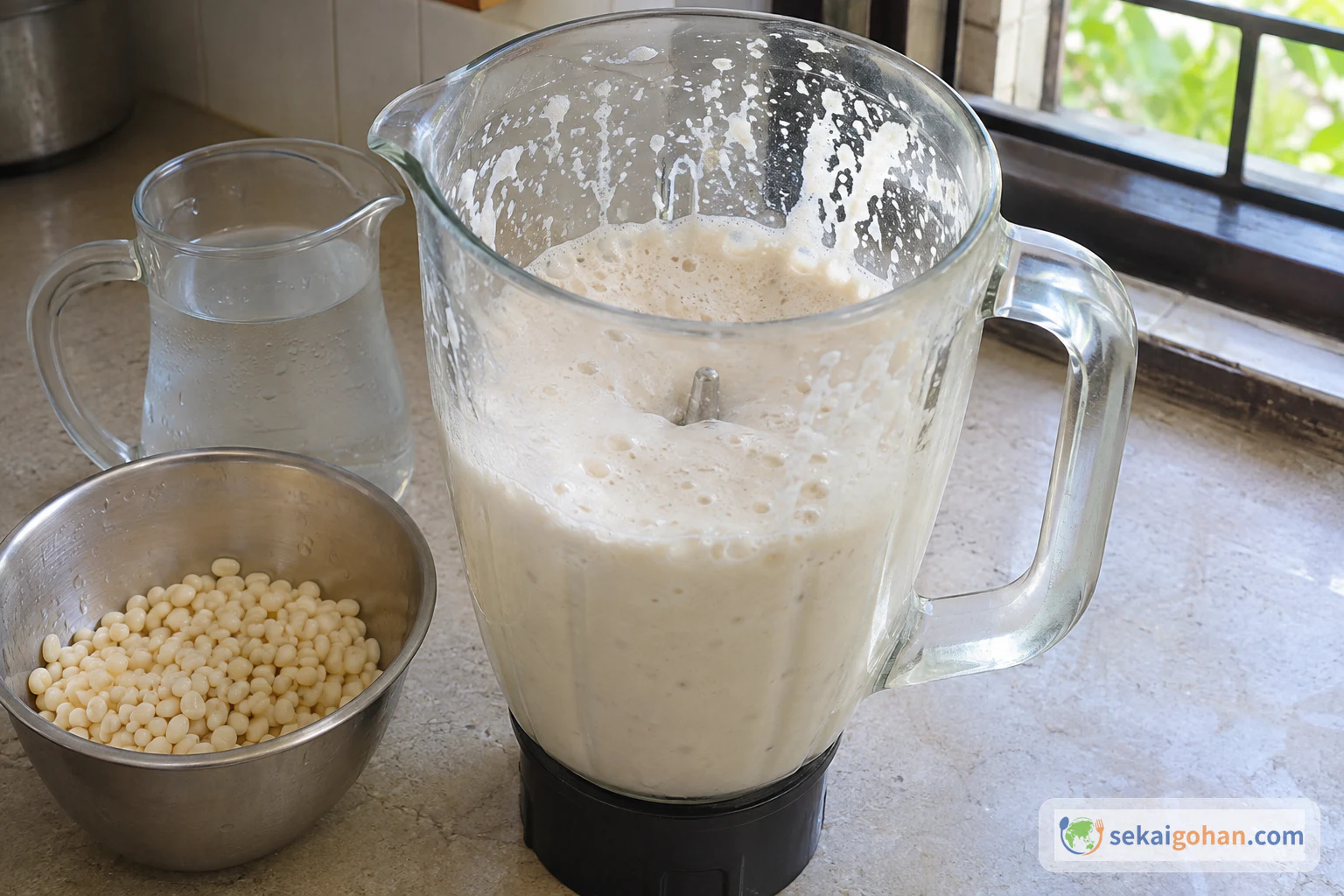
- Blender or wet grinder
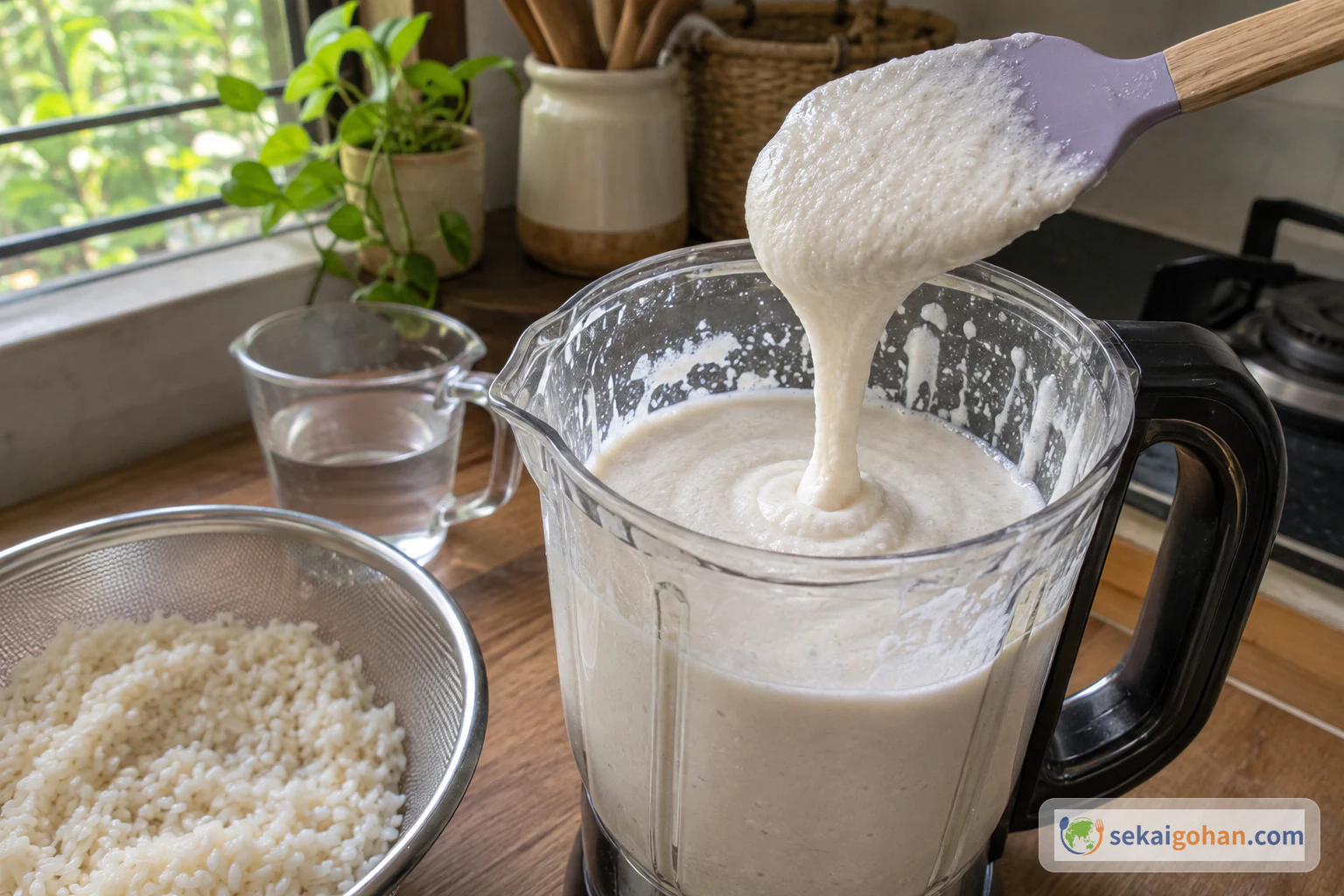
- Large bowl with room for the batter to rise, and plastic wrap or a cloth to cover it
- Tawa, cast-iron pan or nonstick pan
- Ladle
- Thin spatula
- Paper towels for oiling the griddle
- Probe thermometer (optional)
Choosing and Substituting
Skinned urad dal is the one thing to hunt down. Indian grocers and online shops sell it as white urad dal; whole dal with the black skin and urad flour are different products and give a different batter. Fenugreek goes in as whole seeds, never as methi powder, and poha should be the thick kind. All of these sit on the same shelf at an Indian grocer.
For rice, use raw long-grain rice, idli rice or parboiled rice. Use non-iodized or pink salt.
The cooking fat is open. A neutral oil such as canola gives the plainest result; butter gives a richer, browner edge. Ghee and sesame oil each change the flavor toward their own, and they change the allergens as well. Coriander can be left out entirely, and carrot and tomato are free to swap, but keep the onion: it is the topping that balances the batter.
Method
The work falls into three stages. Soaking and fermenting are almost entirely hands-off and take most of the time; grinding takes one short session; cooking is quick and repeats itself eight times, one ladle at a time.
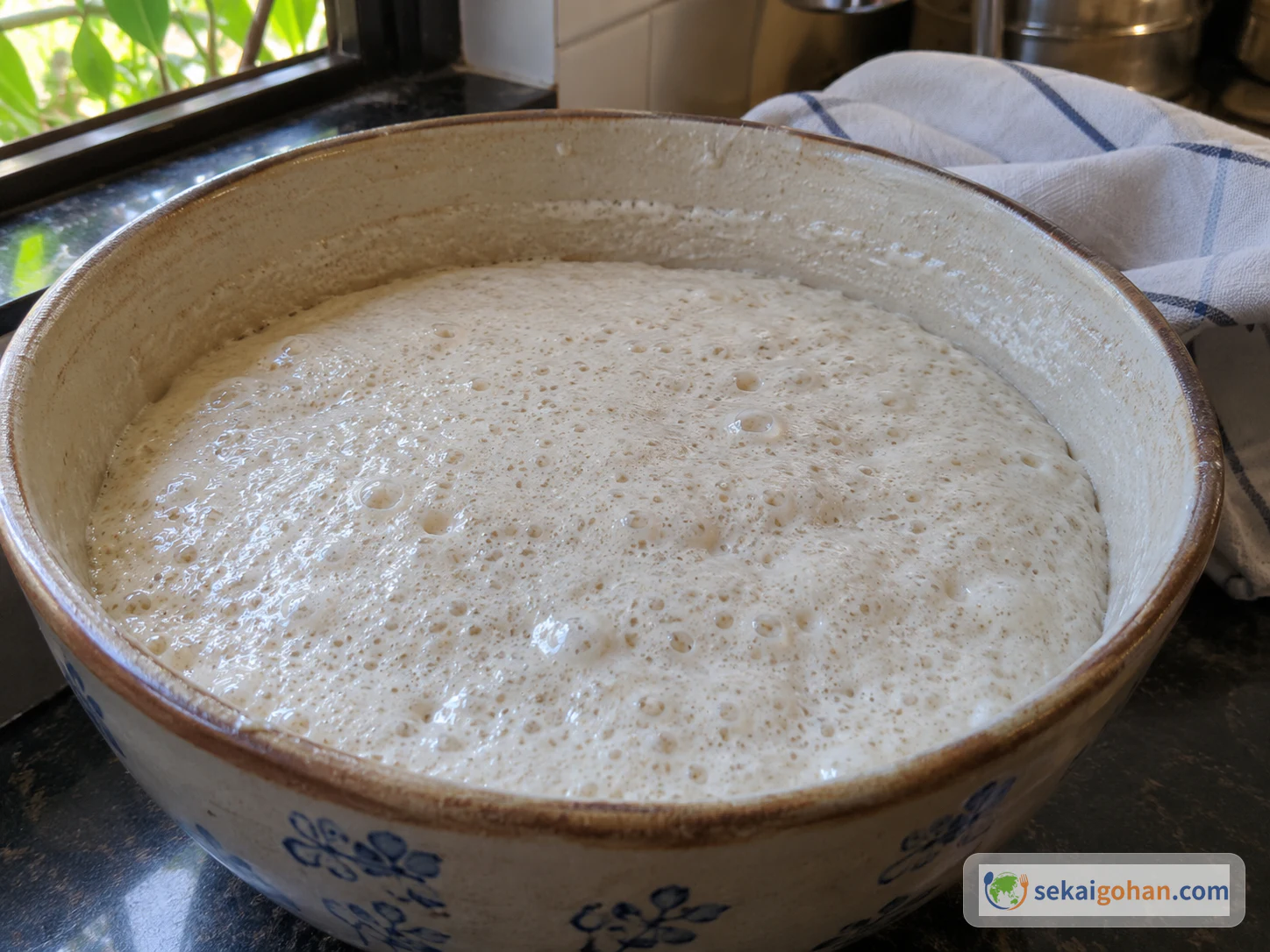
Start the soak in the late morning, grind in the afternoon, and let the batter ferment overnight. The griddle is ready for breakfast the next morning.
Soak in drinking-quality water. Wash your hands, bowls and blender jar before you start, and keep the batter away from raw meat and the tools used for it. This batter is always cooked; never eat it raw.
When It Goes Wrong
| What you see | Why | What to do |
|---|---|---|
| The pancake stays flat and dense | The griddle was not hot enough, the batter was too thin, or the batter was under-fermented | Reheat the griddle, thicken the consistency back to "thick but pourable," and next time let the batter rise until it is bubbly and light |
| The center is raw and heavy | Too thick, heat too high so only the outside cooked, or only one side was cooked | Lower the heat, cook both sides, and pour one ladle without piling batter on top |
| Sour, and hard once cooked | Over-fermented batter | Cooking does not bring it back. Use it up with plenty of onion and skip the tomato, which adds more sourness |
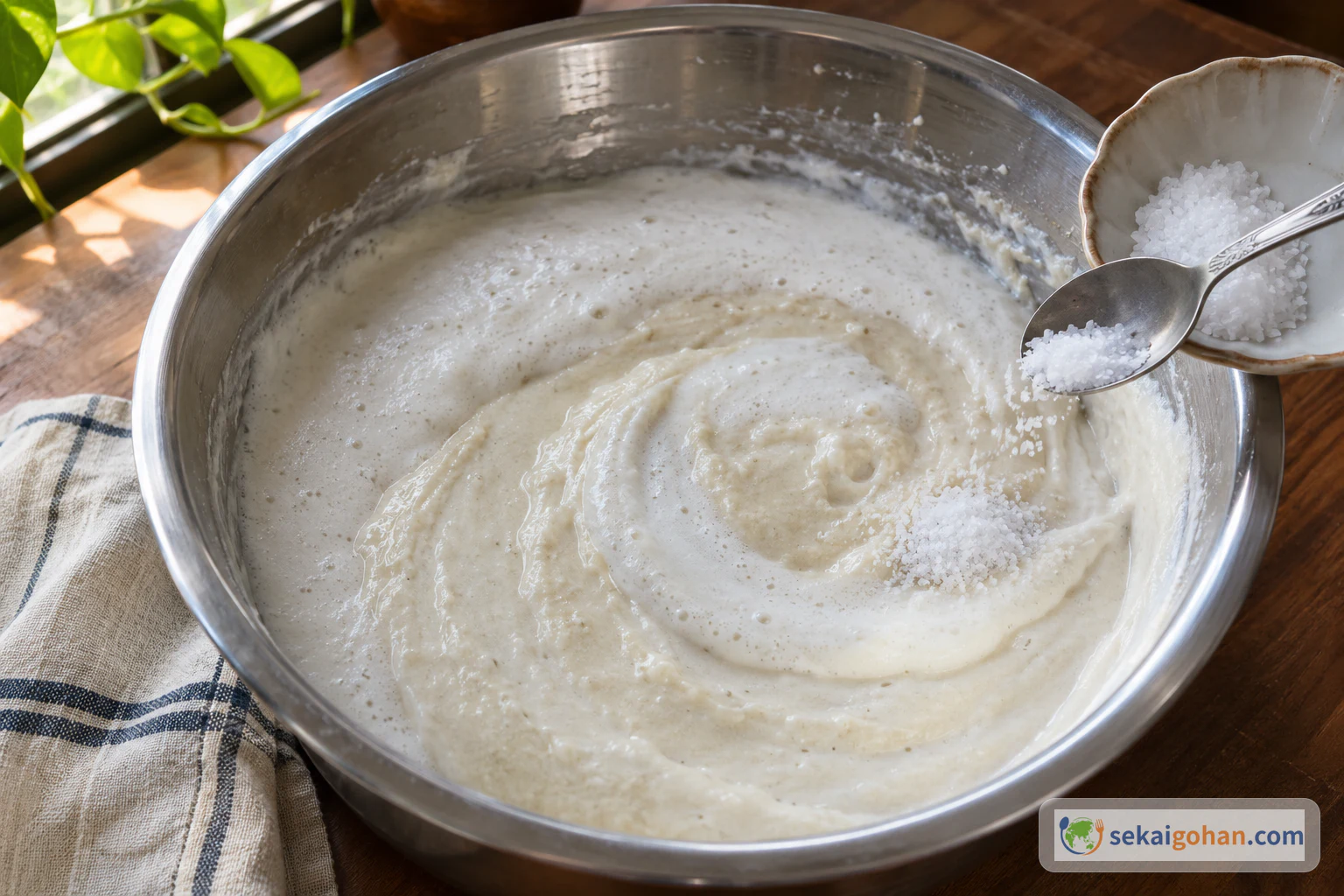
| Bland | Not enough salt, or the salt was forgotten | Stir a little salt into the batter you are about to cook and test one small pancake |
| The second and later ones come out flat | The griddle cooled between pancakes | Reheat it fully before each ladle |
| Mold, an off smell, or batter that pulls into strings | Spoilage | Throw the whole batch away; do not cook it |
Serving, Variations and Storage
Serving
Serve uttapam hot, topping-side up, while the rim is still crisp. Coconut chutney, tiffin sambar or a sprinkle of podi all belong beside it, and every one of them is optional; the pancake is complete on its own. Two or three per person make a breakfast.
Variations

- Plain: no topping at all. You taste the batter itself and see the blistered, golden face of the griddle.
- Tomato: chopped, seeded tomato stays mixed into the topping and adds sourness; thin tomato rounds laid on top give a neater look and a juicier bite.
- Masala or cheese: onion, tomato, capsicum, green chilli and coriander together make a fuller, sweeter pancake; grated cheese over the vegetables is an option for children.
- Podi or mini: skip the vegetables and dust the top with idli podi or peanut podi for a dry, spicy finish, or squeeze small rounds about 1 inch across from a squeeze bottle and serve them as a starter.
Storing batter and leftovers
Fermented batter keeps at room temperature for no more than 1 day, so cook it the day it rises or the next morning and keep it in the fridge at 39°F (4°C) or below after that, for up to 5–7 days. It keeps fermenting slowly in the cold, so take out only what you will cook and return the rest straight away. Leftover batter also makes idli, dosa or mini uttapam.
Cool cooked uttapam, then refrigerate them promptly in a covered container, or freeze them stacked with paper between each one. Reheat in a pan, in the microwave for 1–2 minutes under a damp paper towel, or in a 400°F (205°C) oven for 5 minutes, until the center reaches 165°F (74°C) for 15 seconds and steams when you break it.
Frequently Asked Questions
Can I start from store-bought idli or dosa batter?
Yes, ready-made idli or dosa batter makes good uttapam. Follow the label for salt and for how long it keeps, and start at step 6, loosening only what you will cook. Leave the batter as it comes rather than adding your own salt to the whole tub.
Can I make it with wheat flour or pancake mix?
That gives a different dish. The flavor and the open, spongy crumb come from fermented rice and urad dal, and wheat batters have neither the sourness nor the lift.
Can I add old batter to a new batch to speed up fermentation?
No. Mixing old batter into fresh batter carries mold forward from one batch to the next. Start every batch from freshly soaked dal and rice, and let it rise on its own.