Shondesh: Bengali Milk Sweet Kneaded from Fresh Chhena

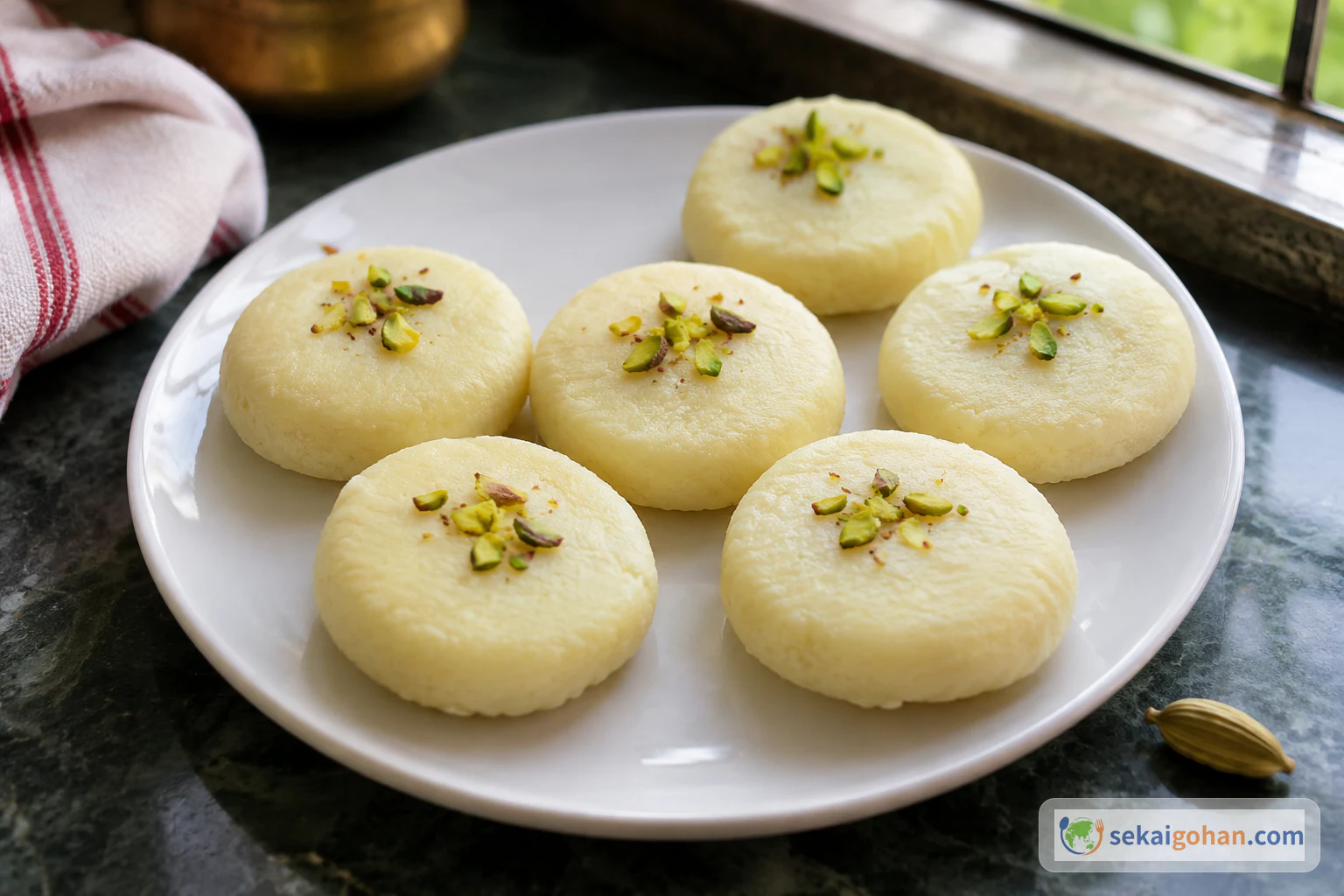
Round, flat shondesh lined up on a white plate, each with chopped pistachio pressed into the center
Serves
12–14 pieces
Cuisine
Bengali

Shondesh is the Bengali sweet of fresh chhena kneaded with sugar and cardamom. Learn to curdle milk with lemon, keep the curd moist and cook it just enough.

Cooking flow

Cooking steps

STEP 11 / 10

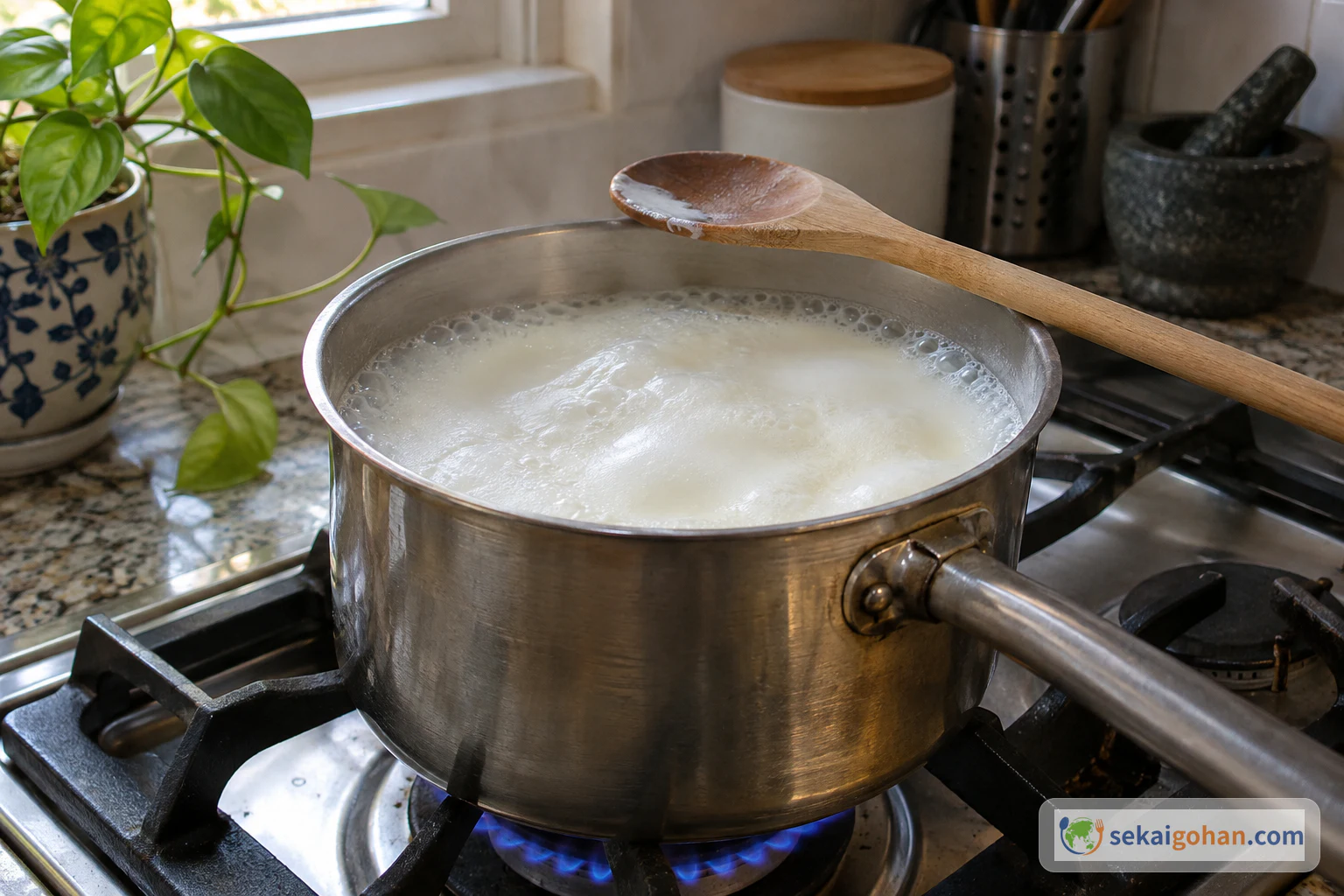
Bring the milk to a boil

Milk at a strong near-boil with bubbles and foam in a heavy steel saucepan on a gas burner
Foam rising toward the rim is the signal to turn the flame down before the lemon goes in

Pour the milk into a heavy saucepan and set it over medium heat. Stir now and then with a wooden spoon so nothing catches on the bottom. Watch the edge of the pot. When bubbles break across the surface and the foam starts to climb, turn the heat down to low right away.

STEP 22 / 10

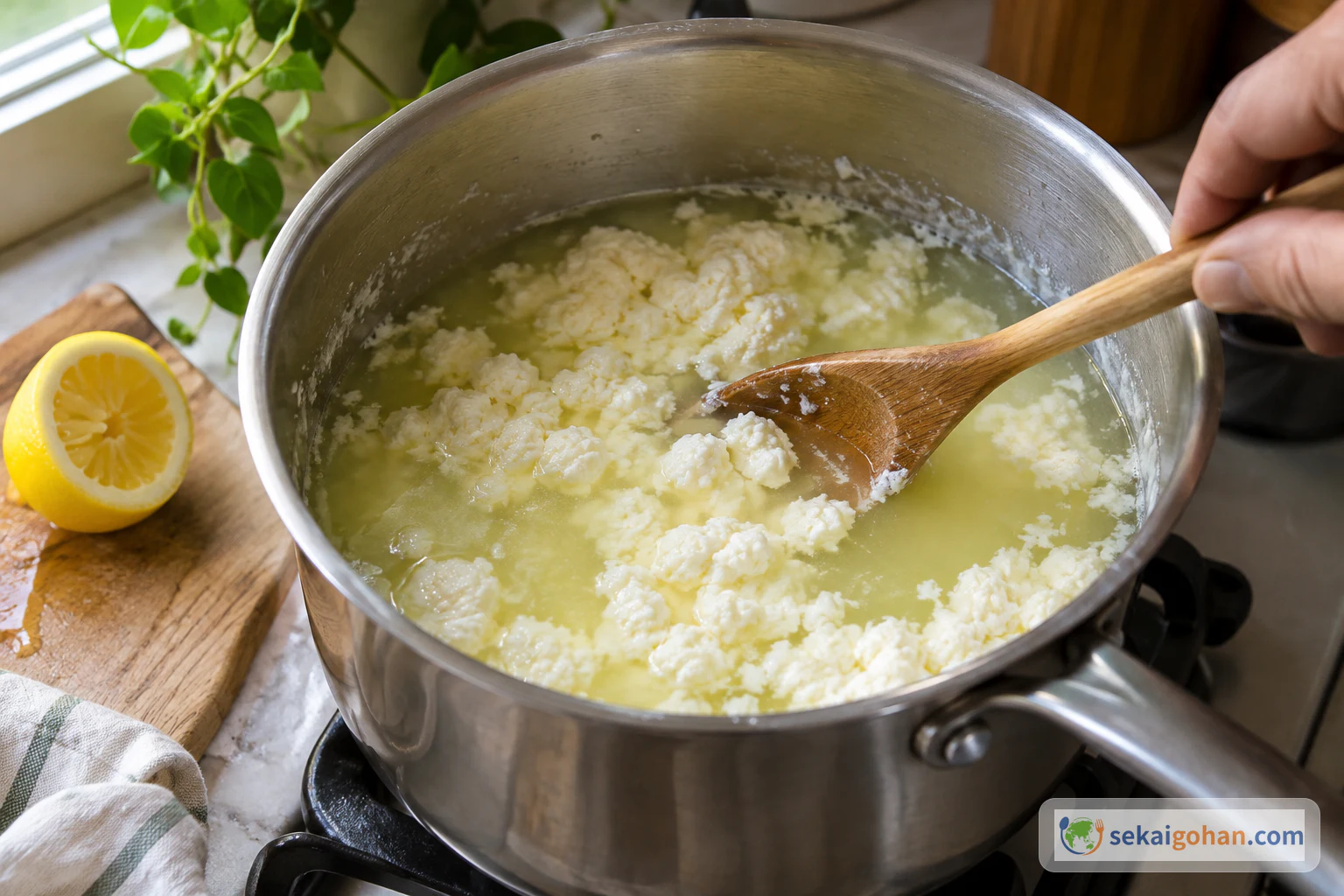
Split the milk with lemon juice

White soft curds floating in translucent pale yellow-green whey, a hand stirring with a wooden spoon
A greenish, see-through whey means the milk has fully split; milky whey needs a few more drops of juice

With the flame low, add the lemon juice a little at a time, stirring gently and continuously. Within 1–2 minutes the milk separates. Stop adding juice once it has fully split. It is ready when the whey is close to clear and the curds have gathered into soft white clumps.

STEP 33 / 10

Drain and rinse the curds

STEP 3

Pour the curds and whey into the cheesecloth-lined colander and let the whey run off. Run cold water over the curds in the cloth, turning them gently with your fingers. This washes out the lemon smell and cools the curds enough to handle. Stop when the curds smell of fresh milk rather than lemon.

STEP 44 / 10

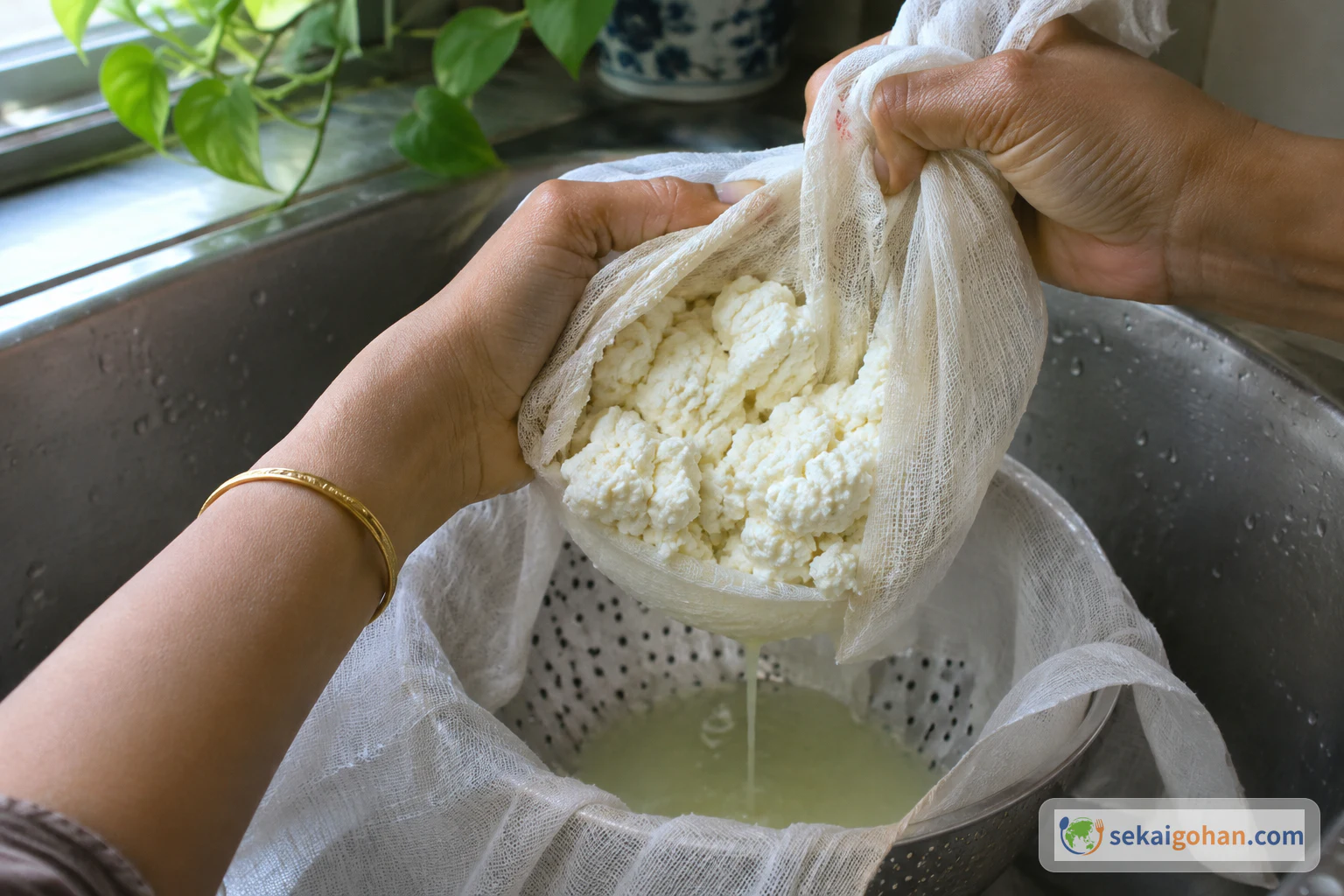
Squeeze and hang the chhena

Moist chhena curds gathered in cheesecloth over a colander, squeezed gently by two hands as whey drains
A gentle twist is enough; whey should drip, not stream, from the cloth

Gather the corners of the cloth and twist gently to press out the water. Squeeze lightly; the curds should still feel damp. Hang the bundle for 30 minutes, and no longer, because past that the chhena dries out. It is ready when it no longer drips but is still soft and damp in the cloth.

Keep the chhena moist

Moisture is what lets chhena turn silky under your hand. A bundle that has hung too long or been wrung hard gives a crumbly dough that cracks when you shape it.

STEP 55 / 10

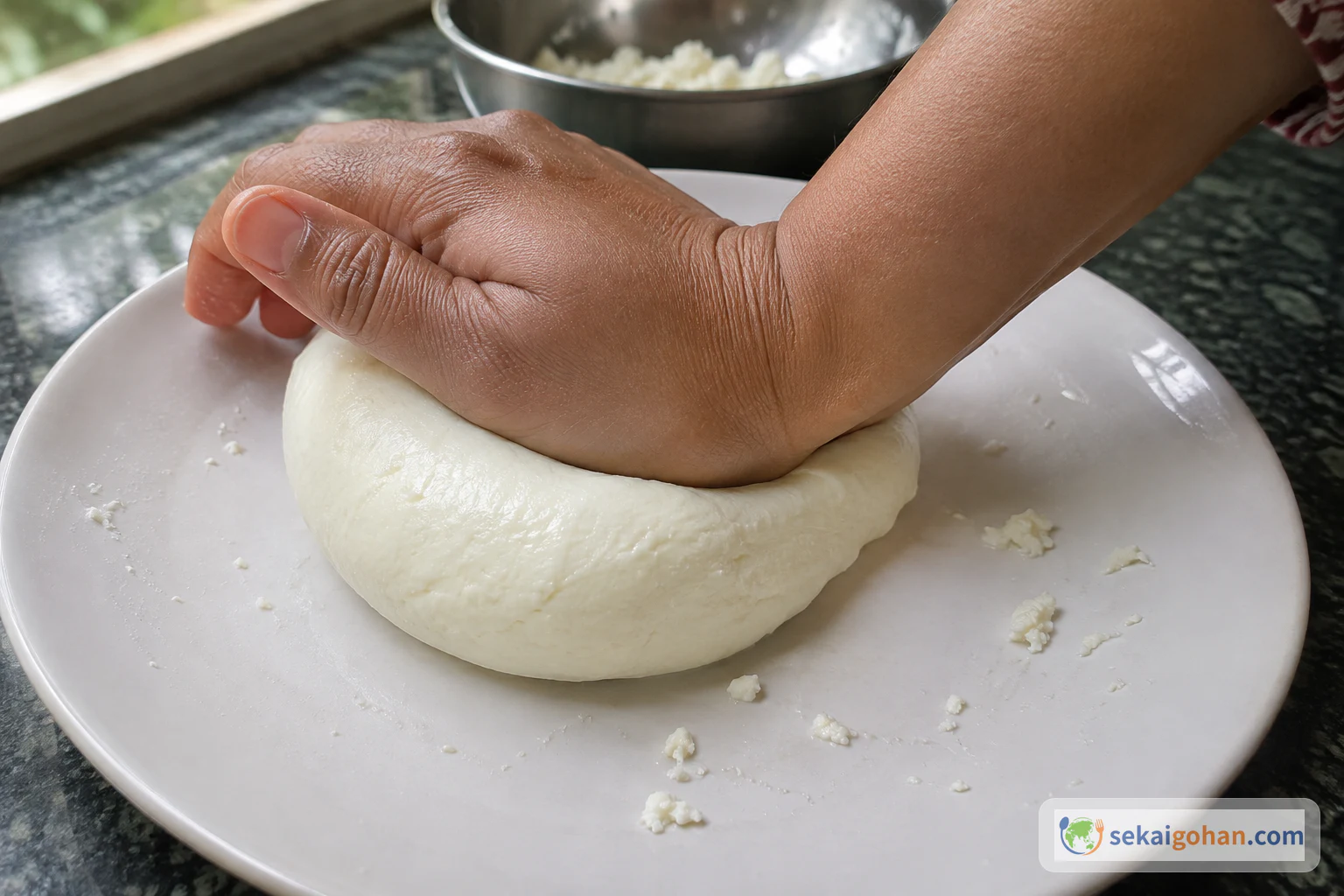
Knead the chhena smooth

A smooth, moist pale-ivory chhena mass kneaded under the heel of the palm on a white plate
The surface should look glossy and close-grained, without cracks, before the sugar goes in

Unwrap the chhena onto a large plate. Press a little between your fingers; it should feel moist, and dry chhena crumbles. Knead with the heel of your palm, pushing it across the plate and gathering it back, for 4–5 minutes. It is done when the grain has disappeared and the mass is smooth, with only a few crumbs at the edge.

STEP 66 / 10

Work in the sugar and cardamom

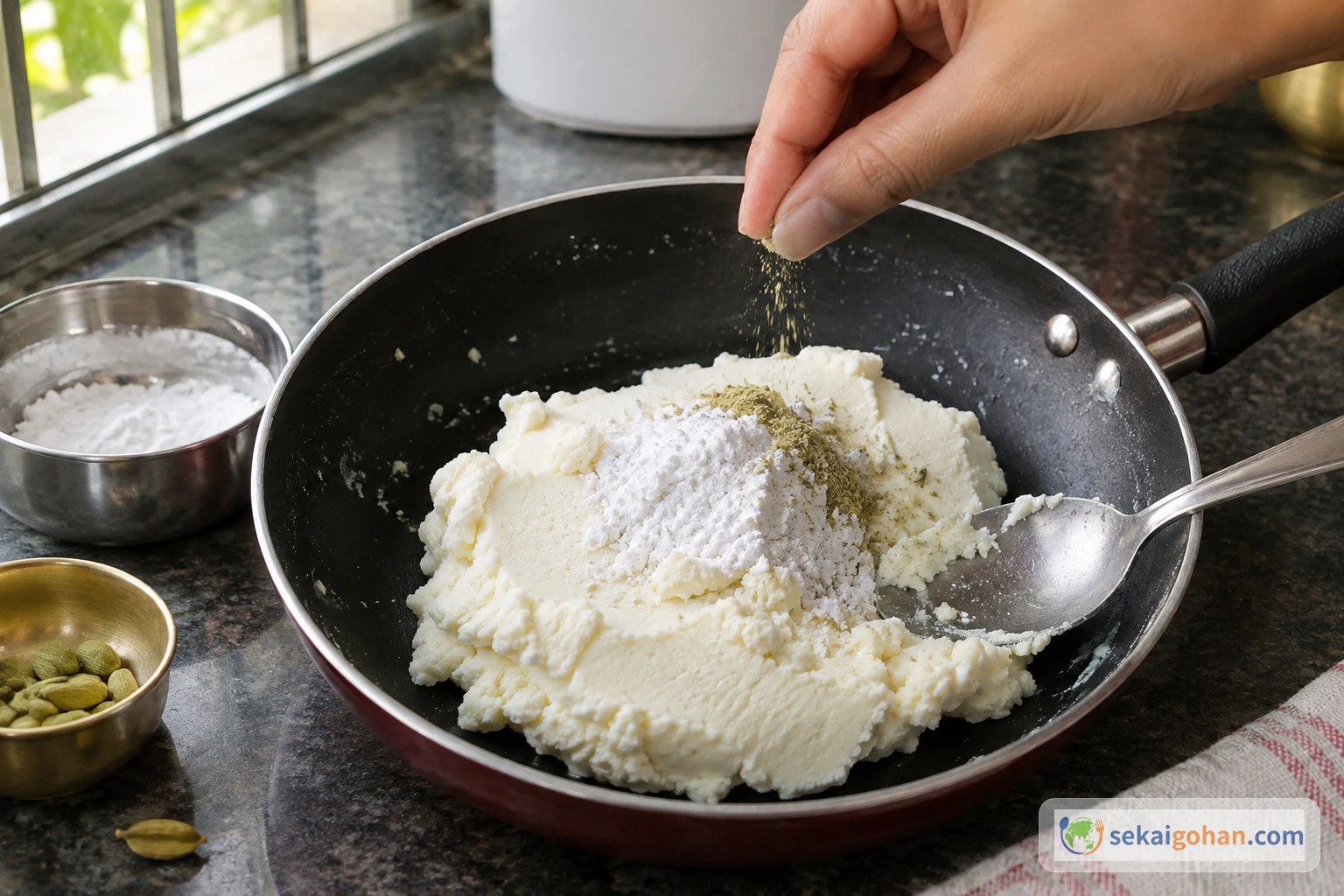
Chhena in a nonstick pan off the heat, with powdered sugar on top and a pinch of cardamom being added
Add the sugar to the dough before any heat touches it so it blends in evenly

Scatter the powdered sugar and cardamom over the kneaded chhena. Knead for another 3–4 minutes, folding and pressing until no streaks of sugar remain. The dough softens as the sugar dissolves. Move on when it is evenly pale and the sugar is worked in.

STEP 77 / 10

Cook briefly over low heat

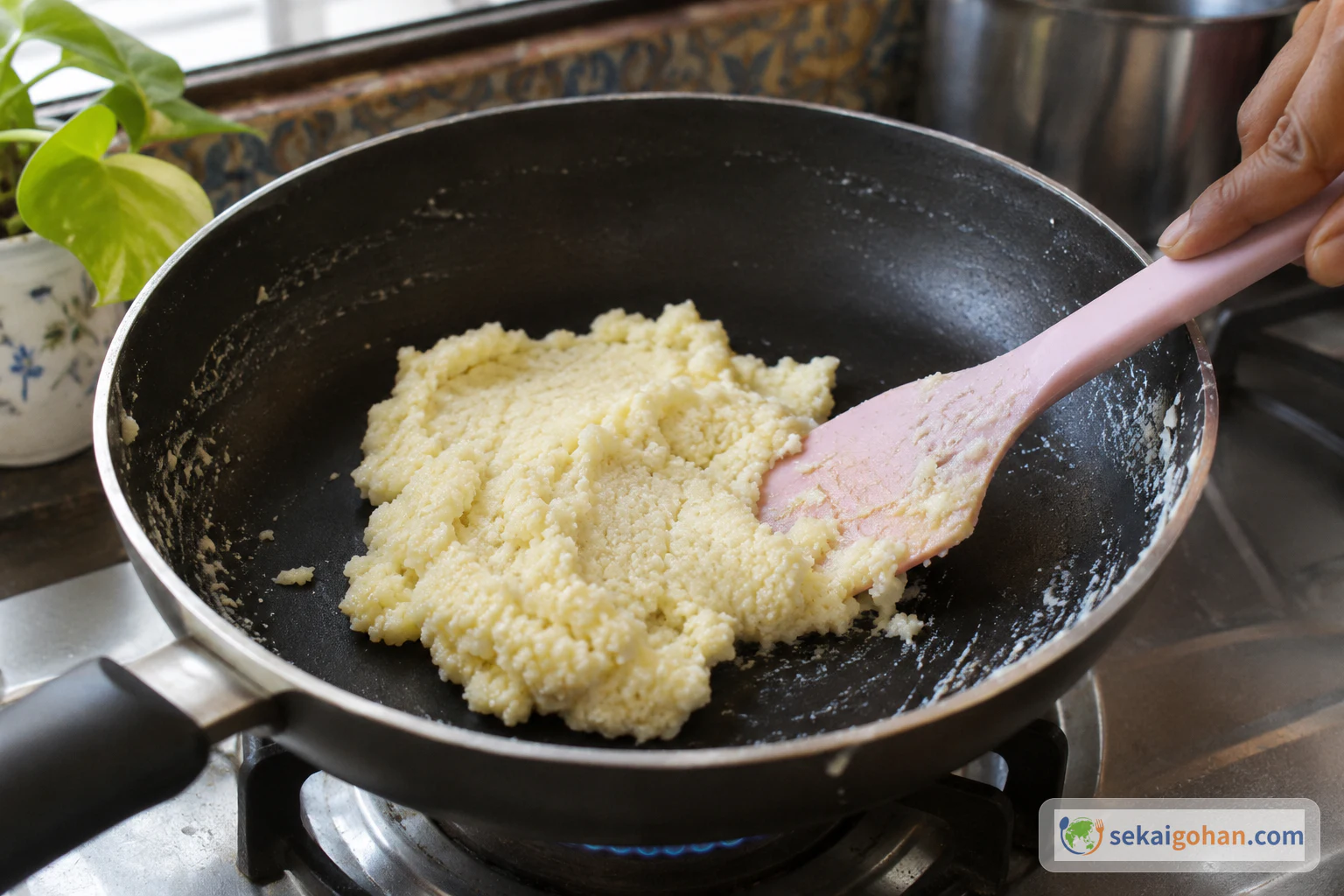
A spatula stirring the pale, cohesive chhena-sugar mixture in a nonstick pan over a small blue flame
No browning at all; the color should stay as pale as when it went in

Put the mixture into the heavy-bottomed nonstick pan over low heat. Stir constantly with a spatula, turning it over and pressing it across the pan, for about 5–6 minutes. Medium or high heat, or longer cooking, dries the chhena and makes it fall apart. Stop when it looks slightly dry but is still moist, comes together as one mass and starts to leave the sides of the pan.

Take it off a little early

The pan step is where shondesh is made or lost. The mixture keeps firming as it cools, so lift it off while it still feels soft and a little damp.

STEP 88 / 10

Cool and knead again

STEP 8

Turn off the heat and tip the mixture onto the plate. Let it cool for a few minutes until you can handle it comfortably. Knead it again while it is still warm, briefly, until it is smooth. It is ready when it presses into a ball with no cracks at the edges.

STEP 99 / 10

Shape the pieces

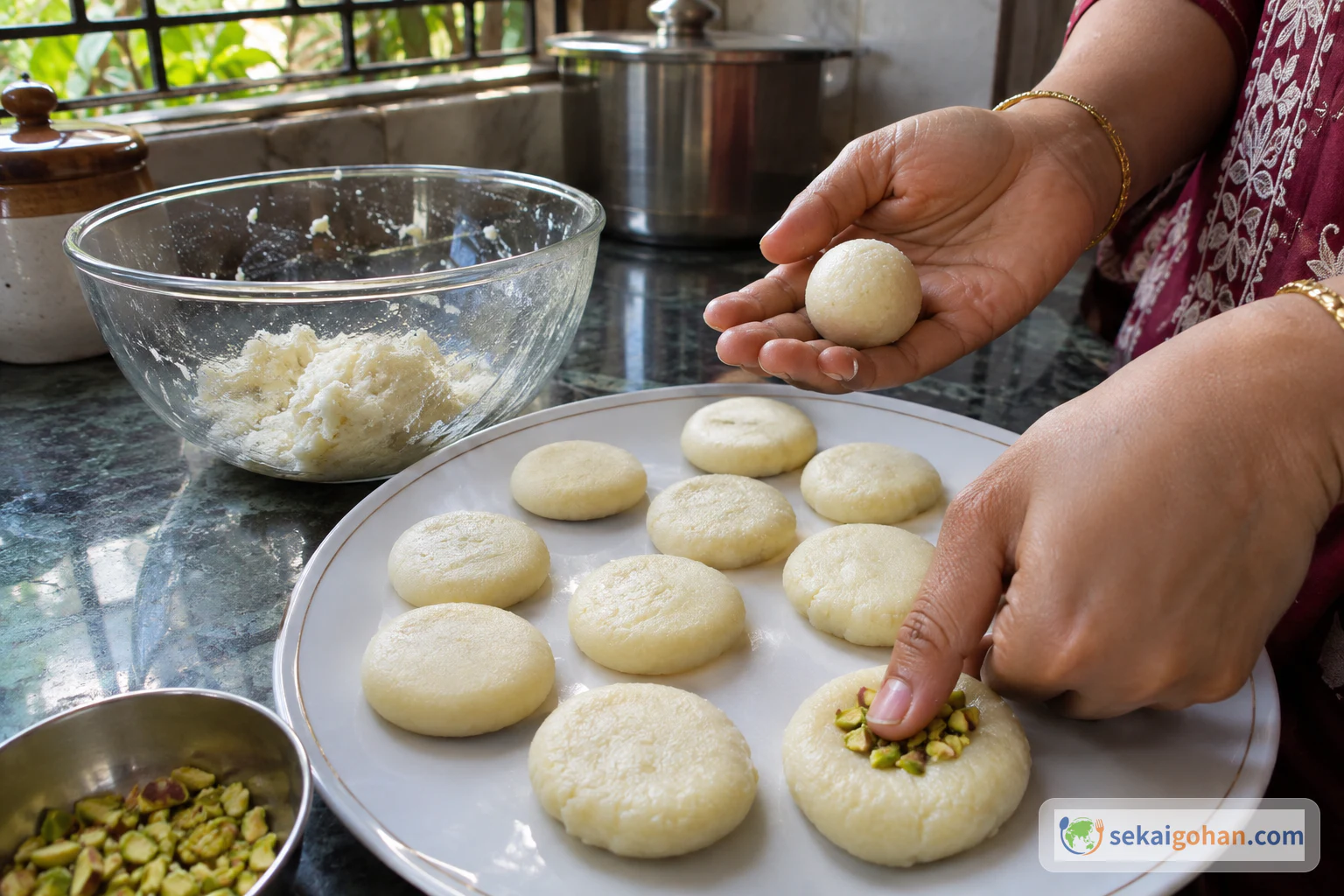
Hands flattening chhena dough into thick discs and pressing chopped pistachios into the center with a thumb
Shape while the dough is still warm; once cold it cracks at the rim

Divide the dough into 12–14 equal portions. Roll each into a ball between your palms, then flatten it into a thick disc. Press a pinch of chopped pistachio into the center with your thumb, leaving a shallow dip. The discs should hold a clean, round edge without splitting.

STEP 1010 / 10

Chill and serve

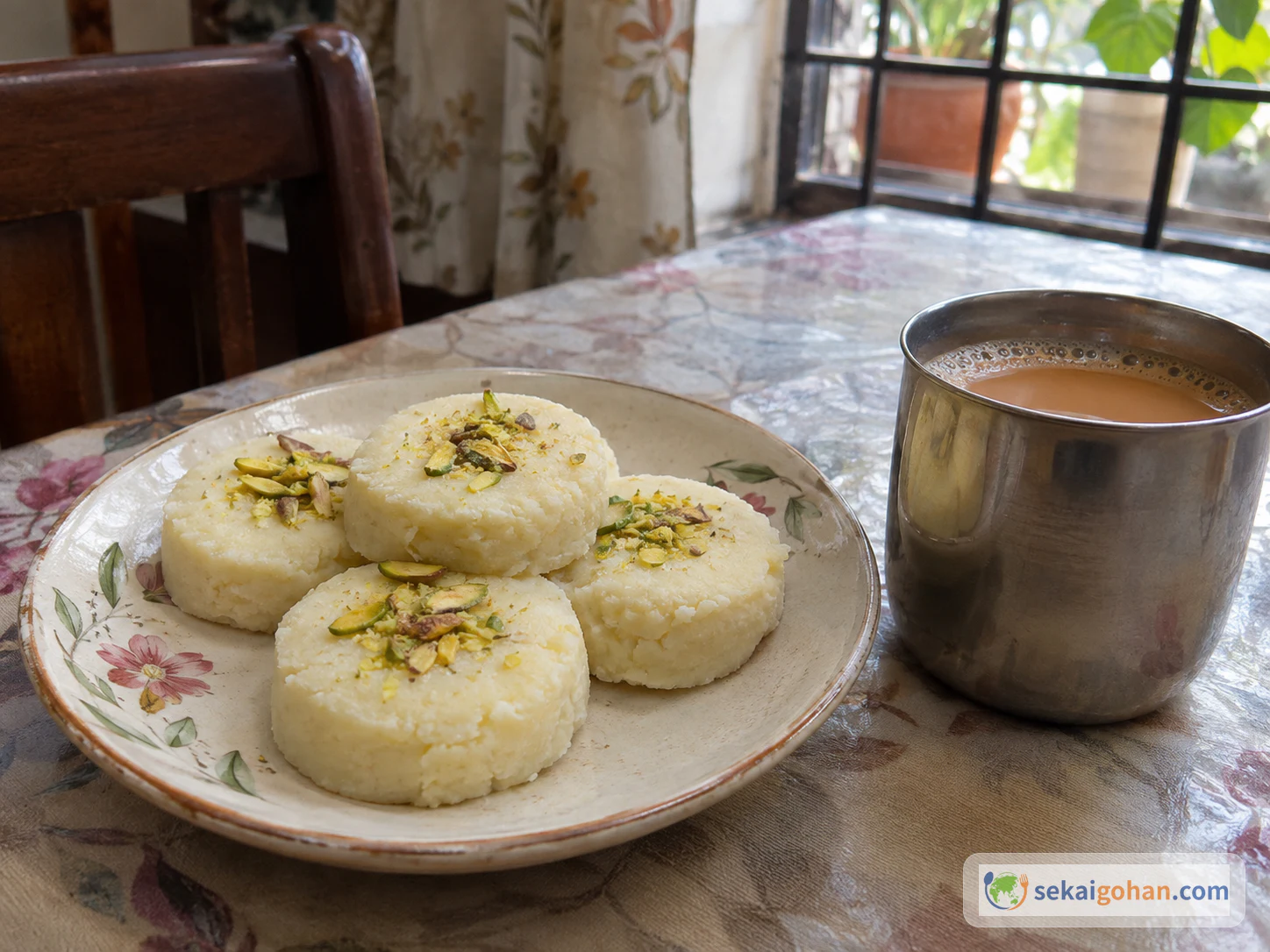
Chilled pistachio-topped shondesh on a small ceramic plate beside a steel cup of tea
Chilled shondesh should look matte and firm at the edge, soft just beneath

Set the pieces on a plate and refrigerate them for at least 1 hour. They firm up and the cardamom settles into the milk flavor. Serve them cold with tea. They are ready when they lift cleanly from the plate and hold their shape when bitten.

0 / 0
Ingredients

Ingredients

1 / 1

Ingredients

Ingredient Amount Role
Full-fat milk (full cream milk) 4¼ cups (1 L) Becomes the chhena
Lemon juice 2 tbsp Sets the milk into curds and whey
Powdered sugar ¼ cup (60 ml) Sweetness
Green cardamom powder (elaichi) ¼ tsp Aroma
Pistachios 5–6, chopped Garnish pressed into each piece
0 / 0

The milk has come to a boil and the flame is down low when the first spoonful of lemon juice goes in. Within a minute or two the pot changes completely: soft white curds gather and float in a pale, nearly clear whey. Those curds, drained and kneaded smooth, are chhena, and shondesh is chhena worked with powdered sugar and cardamom over a low flame until it just holds together.

The finished pieces are small, pale ivory discs with a fleck of green pistachio in the middle, cool from the refrigerator, milky, gently sweet and scented with cardamom. They belong to Bengal, on both sides of the border, in West Bengal in India and across Bangladesh, where shondesh is the sweet people carry as a gift and set out for festivals.

From Medieval Verse to the Sweet Shop Counter

The name in Bengali is সন্দেশ, and it is old. It turns up in medieval Bengali literature, but the sweet those poets knew was possibly something else: a confection of milk cooked down until thick, closer to khoya or kheer than to the fresh curd used today. Somewhere between then and now the word moved from one kind of milk sweet to another.

How that happened is not settled. One line of thought ties chhena to the Portuguese, who made a cheese by setting milk with acid around Bandel, upriver from Kolkata. The idea that Bengali cooks took the method and turned it into something entirely their own is widely repeated, and just as widely left open. What is clearer is the later picture: by the second half of the nineteenth century, "shondesh" generally meant the chhena sweet.

Three spellings, one sweet

You will see Shondesh, Sandesh and Sondesh; all three render the same Bengali word. Sweets with a similar name in north India and in Gujarat are different confections. The kind here is makha shondesh, where the chhena is kneaded with sugar and stirred briefly over low heat.

A whole family on the counter

Walk into a Bengali sweet shop and makha is only the start. Kancha golla is another chhena sweet in the same family. Nolen gurer shondesh is made with nolen gur. Jolbhora and pranhara are other variants, and pranhara is the name tied to Dhaka. Shapes change too: some shops press the mixture into molds, others shape it by hand into plain discs like the ones in this recipe.

It sits among the milk sweets of India alongside doodhpak, phirni, shrikhand and gulab jamun, but it is the one built on fresh acid-set curd. That is why it is so light: the whole sweet is milk, a little sugar and a breath of spice, and nothing hides a curd that has been dried out or overcooked.


Ingredients (makes 12–14 pieces)
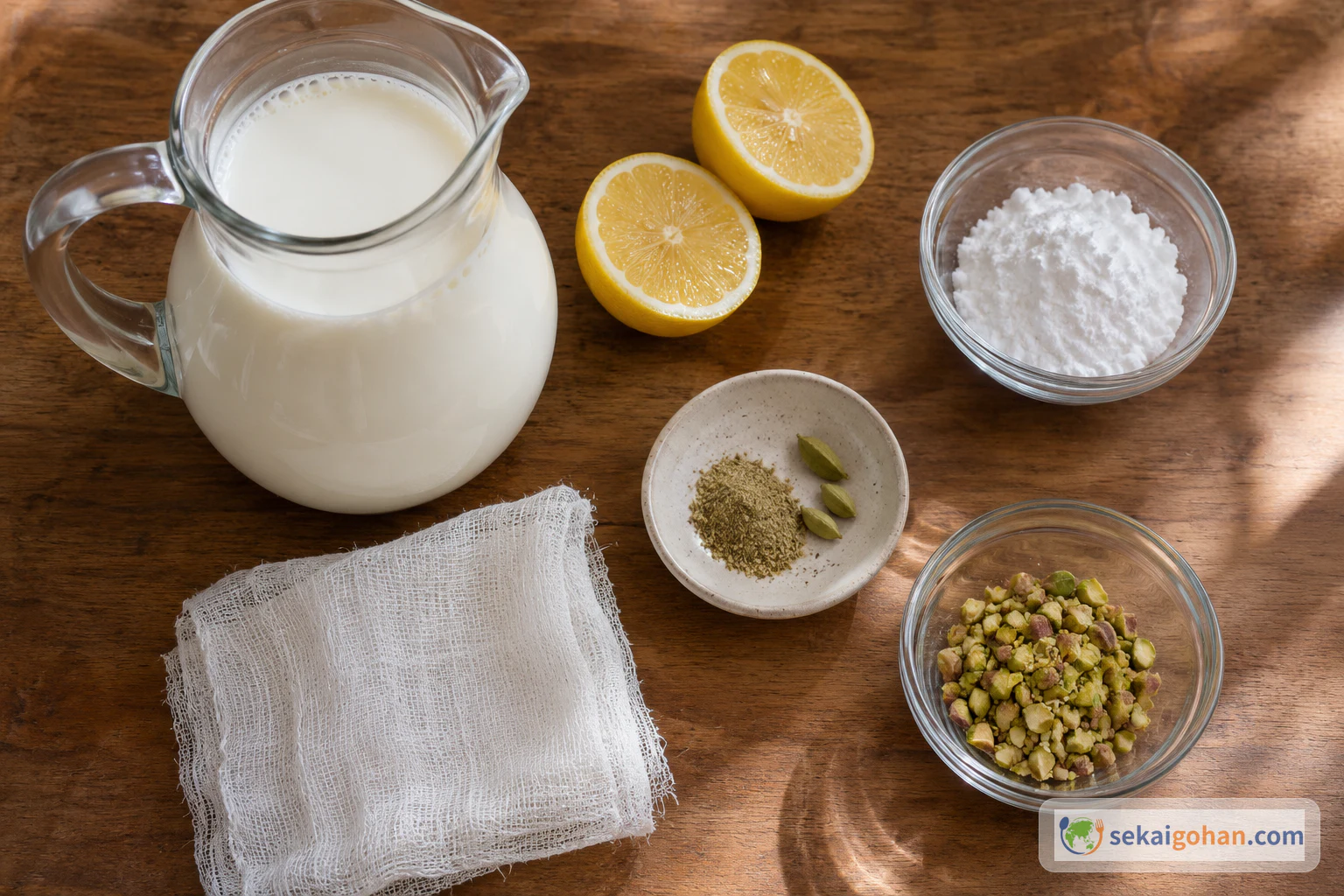
Whole milk in a jug, halved lemons, powdered sugar, ground cardamom with pods, chopped pistachios and a square of cheesecloth on a wooden table
The cheesecloth matters as much as the milk; have it cut and ready before the pot goes on
Full-fat milk decides the result

Use full-fat milk. Low-fat milk gives less chhena and a flatter taste.

Allergen information

Shondesh contains milk and nuts (pistachio). Leave the pistachios off for a nut-free batch, and check any nut garnish or nut powder you swap in.

Equipment

  • Heavy saucepan for the milk
  • Wooden spoon
  • Colander or sieve
  • Cheesecloth or muslin, one square large enough to wrap the curds
  • A hook, tap or cupboard handle to hang the cloth from
  • Large plate for kneading
  • Heavy-bottomed nonstick pan
  • Spatula

Shopping and Swaps

Buy fresh, pasteurized full-fat milk, the plain kind with nothing added; the milk is the whole flavor, so buy a brand you like drinking.

Cardamom powder is sold with the spices. If you only have whole green pods, crack them, pick out the black seeds and grind them fine. Plain cotton muslin can be used in place of cheesecloth. Chopped pistachios are the finish used here.


Method

Start by setting up the draining station: colander in the sink, cheesecloth over it, and somewhere to hang the bundle. The milk and the curdling move fast and need your full attention, then there is a long hands-off stretch while the chhena hangs. Kneading and the short spell in the pan come together quickly, and the shaped pieces finish in the refrigerator.

Hot milk and whey

Boiling milk rises fast; stay at the stove and turn the heat down as soon as it boils. Pour the hot curds and whey into the cloth slowly and away from your body, and let the bundle cool enough to handle before squeezing.

When It Goes Wrong

What you see Why What to do
The dough crumbles and will not hold a shape The chhena dried out while hanging, or cooked too long in the pan Tip it out and knead it again. If it still breaks, blend it very briefly in a mixer, then knead
Kneading feels dry and cracks keep opening Too little moisture left in the chhena Work in a few drops of milk and knead until smooth
Finished pieces are hard or rubbery Overcooked in the pan Next batch, keep the heat low and stop while it still looks moist
Texture is coarse and grainy Overcooked, or the chhena went into the pan before it was kneaded smooth Knead longer at step 5, and take it off the heat sooner
A sour, lemony taste comes through The curds were not rinsed Rinse the curds under running water before hanging them
Less chhena than expected, thin flavor Low-fat milk Use full-fat milk

Serving, Variations and Storage

At the table

Shondesh is a teatime sweet as much as a festival one. Put a plate out with tea alongside savory, crunchy snacks such as namak pare or chakli, and the salt makes the milkiness taste sweeter. It is also the sweet you bring when visiting, arranged in a box, and the one set out when there is something to celebrate. Serve it cold, straight from the refrigerator.

Variations

  • Saffron garnish: a few saffron threads pressed on top beside or instead of the pistachio add a warm golden color and their own aroma.
  • Coconut: coconut appears in shondesh across Bengal and brings a nuttier, fuller taste than plain milk.
  • Molded shondesh: some shops press the dough into small decorative molds instead of shaping discs by hand.

Storage

Keep shondesh in a covered container in the refrigerator and eat it within 2 days, the keeping time given in the recipes this one follows. Do not leave it out at room temperature; take out only what you will serve.

Frequently Asked Questions

Can I use granulated sugar instead of powdered?

Yes, grind it fine first in a spice grinder or with a mortar. Coarse crystals do not dissolve during the short knead and the brief time in the pan, and they leave the shondesh gritty.

Can I skip the pan and just knead?

Yes, kneading the chhena with sugar and cardamom and shaping it straight away gives a softer, uncooked shondesh. Make it with pasteurized store-bought milk, keep it refrigerated and eat it within 2 days.

Is this the same as the sandesh sold in north India or Gujarat?

No. Sweets with a similar name elsewhere in India are different confections. The Bengali shondesh here is built on fresh chhena set with acid, in the makha style, where the chhena is kneaded with sugar and stirred briefly over low heat.

Can I add ground almonds or other nut powder?

Another recipe adds almond powder to a different proportion of chhena and sugar. It changes the balance of the dough, so treat it as a separate recipe rather than an addition to this one, and keep in mind it adds another nut allergen.
Sources

  • Foodviva, "Sandesh (Sondesh) Recipe." Ingredients and amounts (full-fat milk, lemon juice, powdered sugar, cardamom, pistachio), the full method with times, yield of 12–14 pieces, fixes for crumbly dough, serving with tea and savory snacks, and refrigerated storage for 2 days. https://foodviva.com/bengali-recipes/sandesh-sondesh
  • Indian Healthy Recipes, "Sandesh Recipe (Bengali Sondesh)." Keeping the chhena moist, overcooking making the sweet hard or coarse, full-fat milk, nut powder and saffron as variations, and refrigerated storage. https://www.indianhealthyrecipes.com/sandesh/
  • Madhulika Liddle, "On Chhenna." The unsettled link between Portuguese acid-set cheese near Bandel and chhena, and older milk sweets of the khoya type. https://madhulikaliddle.substack.com/p/on-chhenna
  • Wikipedia, "Sandesh (confectionery)." The name in medieval Bengali literature, the shift to chhena-based shondesh by the late nineteenth century, and variants such as makha, kancha golla, nolen gur, jolbhora and pranhara. https://en.wikipedia.org/wiki/Sondesh