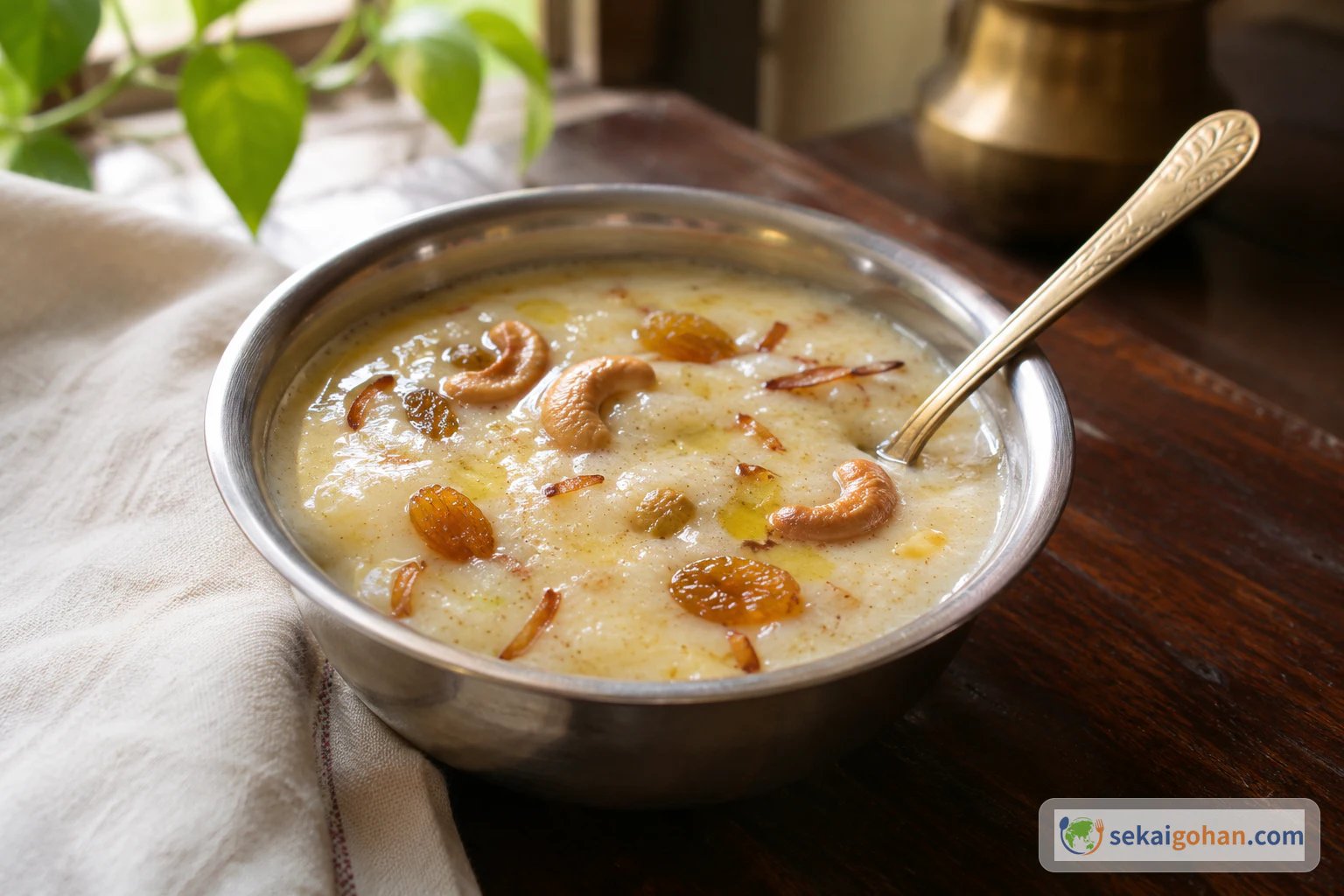
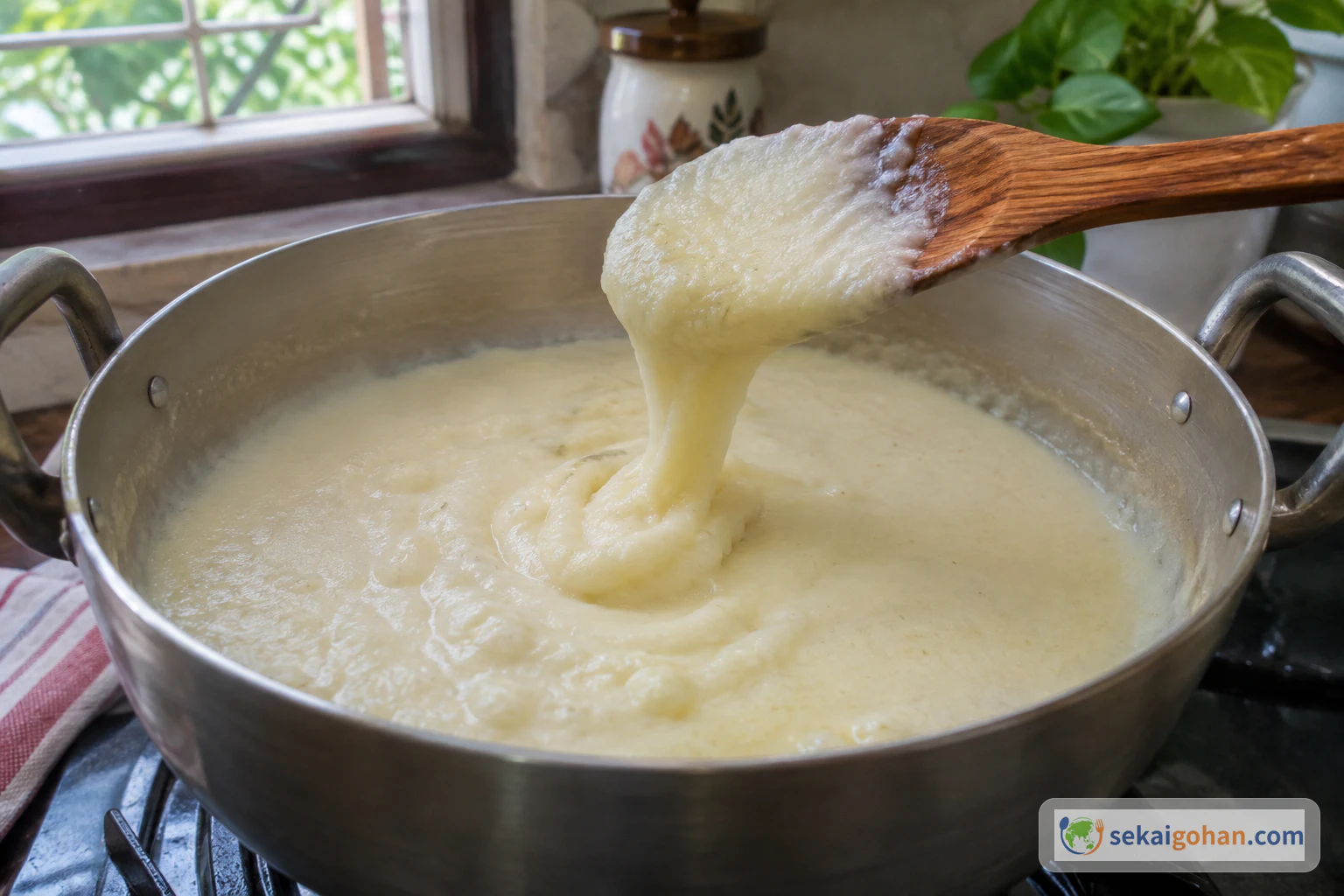
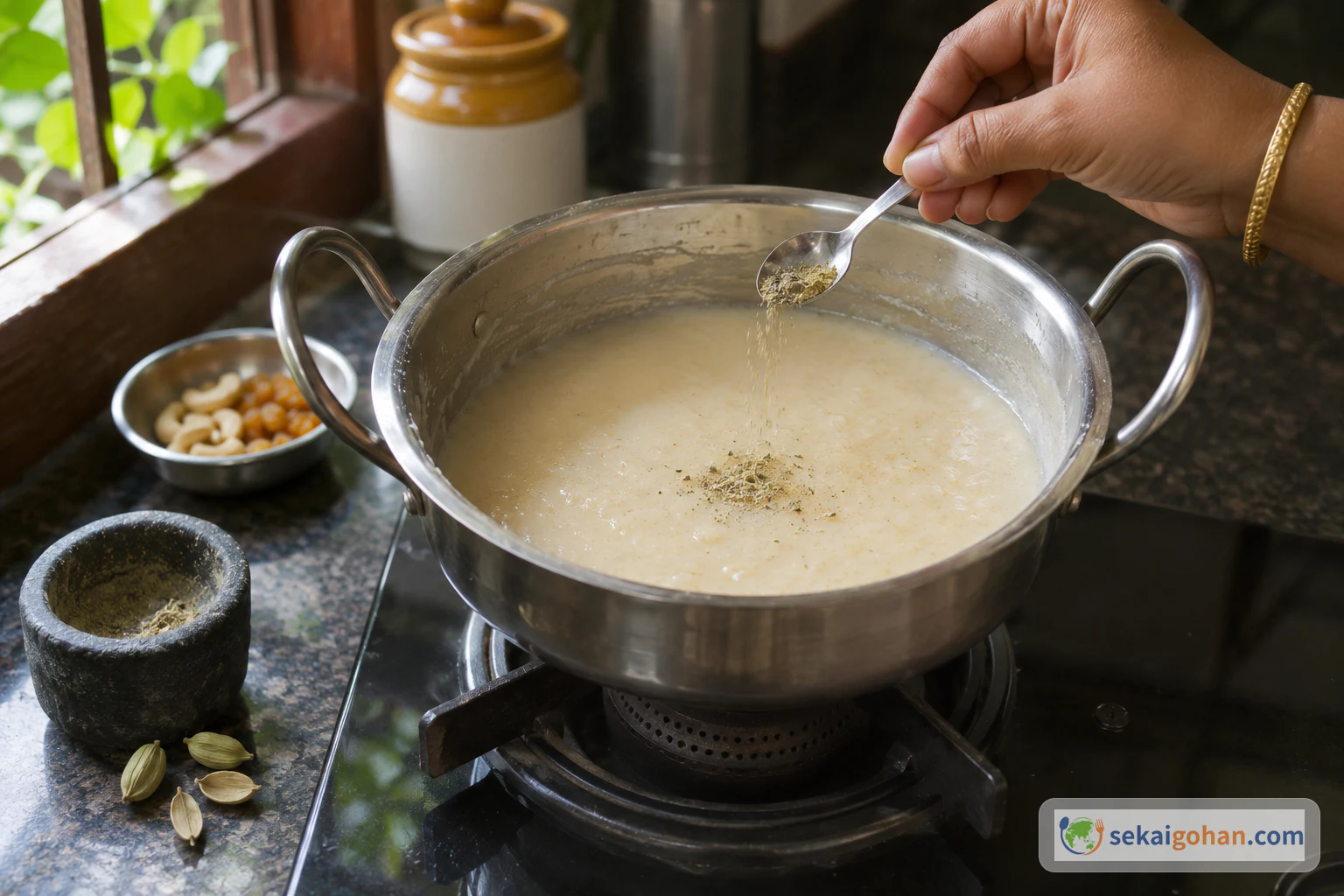
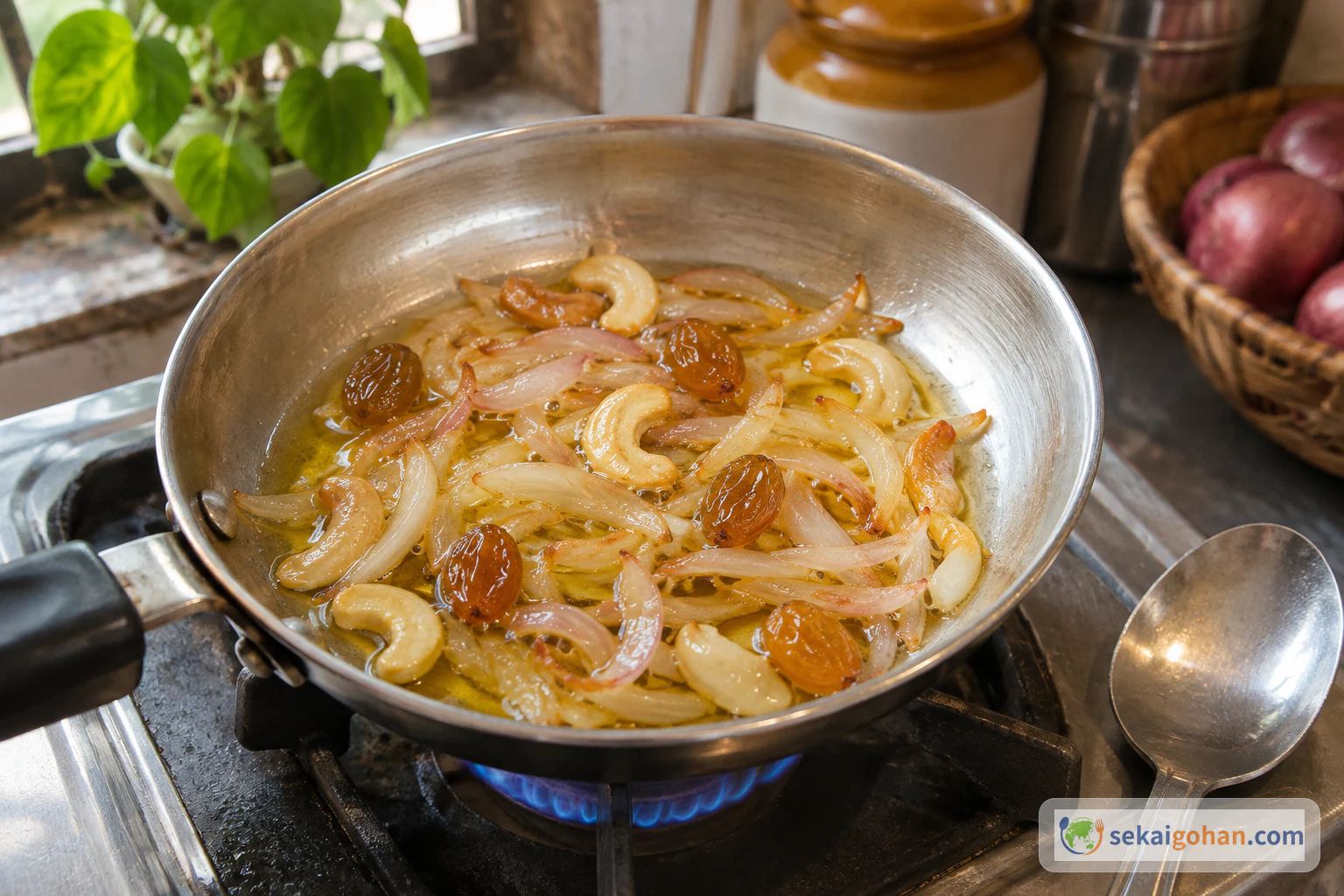
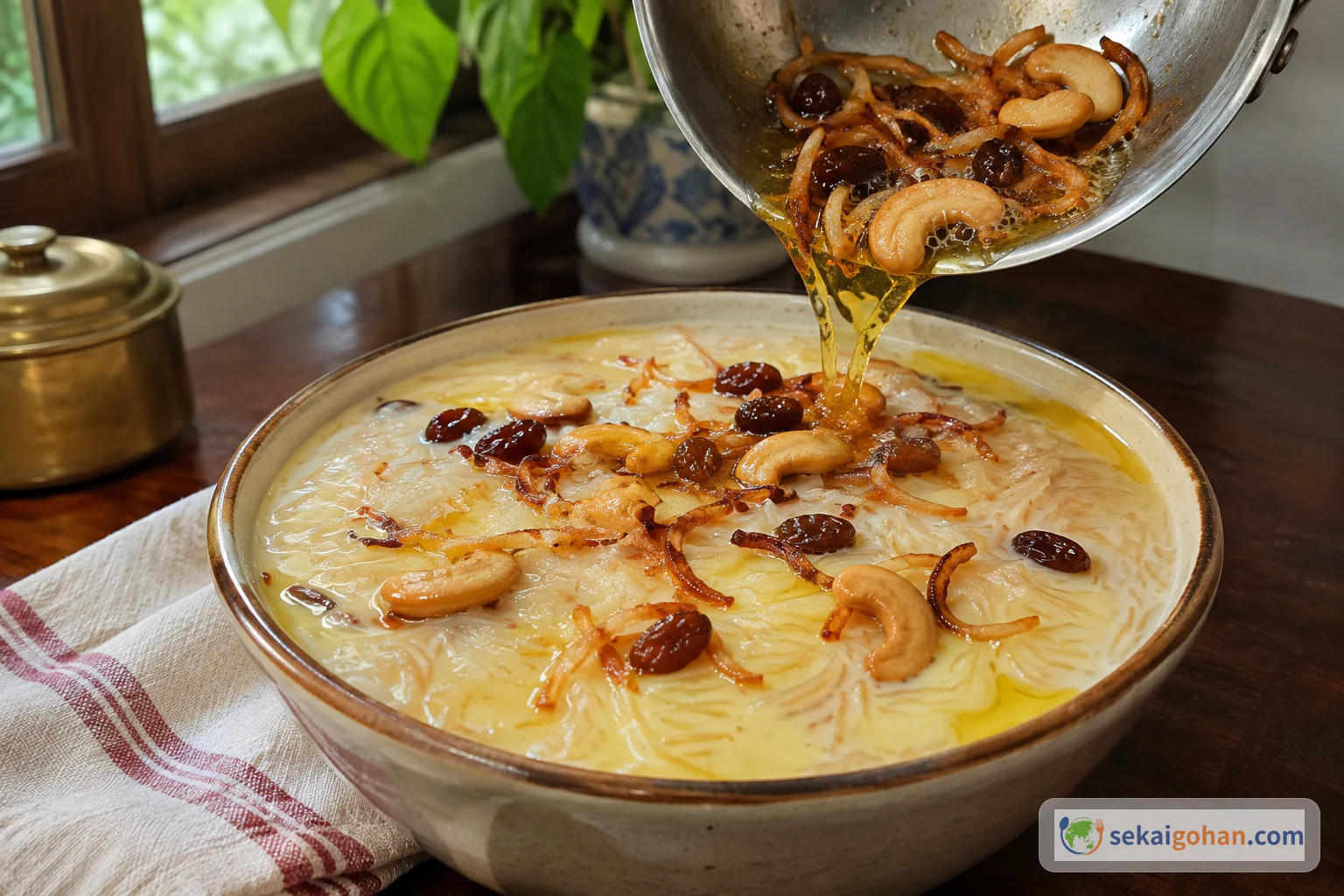
A spoonful of ghee melts in a small pan. A minute later, thin slivers of onion hiss beside broken cashews and raisins that swell and shine. The whole golden panful goes over a pot of pale, thick milk scented with cardamom, and the ghee runs in streaks across the surface. This is rava payasam the way it is made in Malabar, the northern part of Kerala. Semolina simmers slowly in sweetened milk until it is creamy but still pours.
The milk tastes sweet and round, and the semolina gives it a soft, light body. The nuts and raisins are expected in a payasam. The onion is the surprise: it brings one toasty, faintly savoury note to a milk sweet.
Payasam in South India: Feasts, Temples and a Malabar Onion
One sweet, many names
Across India, the family of milk sweets cooked with a grain changes its name from region to region. In the north it is kheer. In the east it is payesh, payas or payasa. In Tamil Nadu and Kerala it is payasam. The same broad family also takes in gil-e-firdaus and phirni. A home cook in Chennai might call this exact dish "semolina kheer" and "rava payasam" in the same breath, and both names are right.
What changes from one payasam to the next is the base. Milk, ghee or coconut milk carries a grain, a lentil, a fruit or a vegetable. Sugar or jaggery sweetens it, and spices, cashews and raisins finish it. Kerala alone has palada pradhaman, parippu pradhaman, semiya payasam made with vermicelli, gothambu payasam made with wheat, and paal payasam. Rava payasam is the semolina member of that family.
Rava is the South Indian word for semolina, which the north calls sooji. When you see "rava payasam", "sooji kheer" or "semolina payasam" on a menu or a sweet-shop board, they all point to the same idea: semolina cooked in milk until it flows like thick cream.
At the feast and the shrine
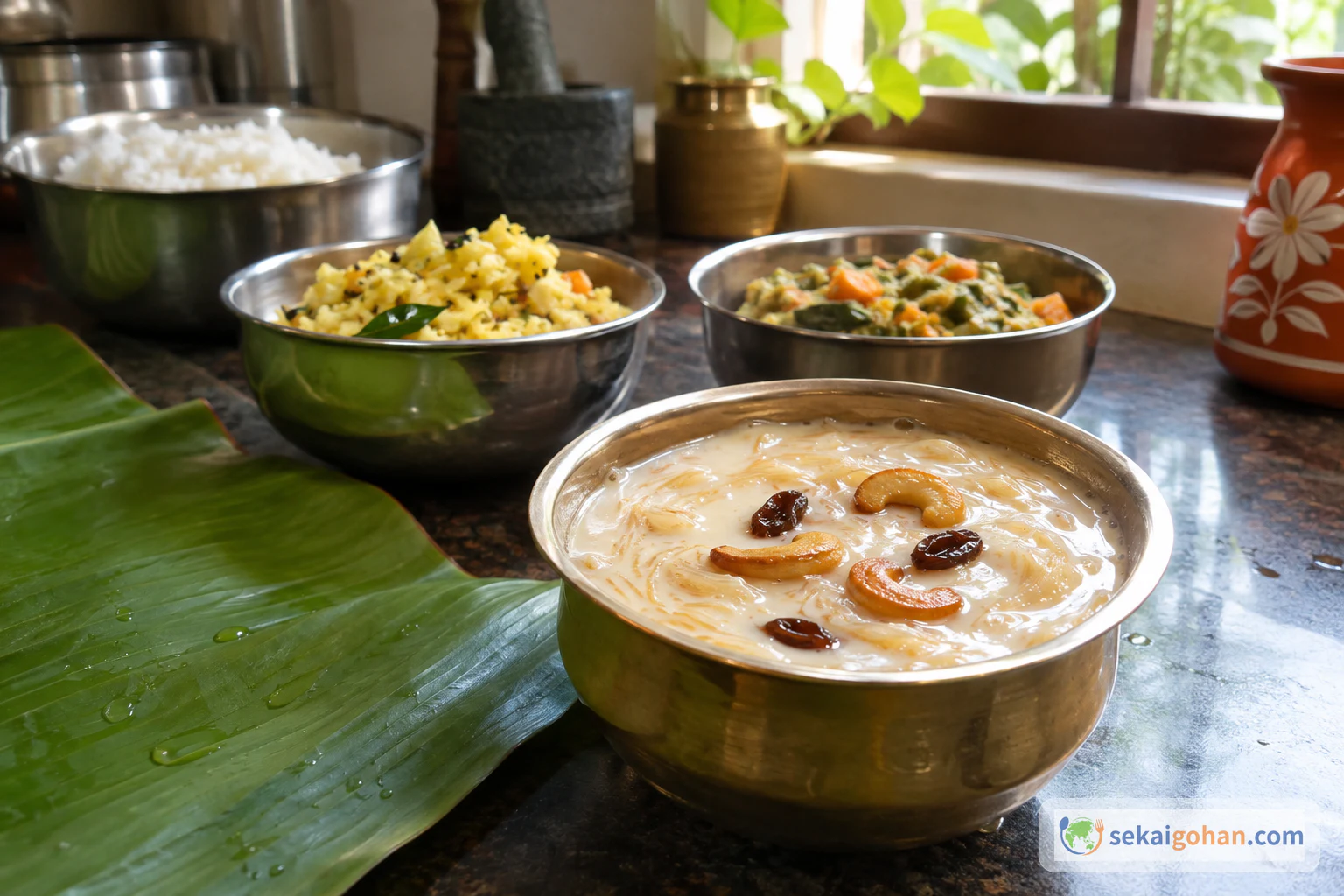
In Kerala, payasam has a fixed place in the Onam sadya, the harvest-festival feast served on a banana leaf. It comes partway through the meal, among the other dishes, not saved for the end. It also matters well beyond the sadya. It appears on ordinary tables, and it is offered as prasadam at temples and household pujas. The payasam of the Guruvayur and Ambalappuzha temples is famous across the state.
Tamil kitchens make payasam for every auspicious occasion: festivals, pujas, weddings, a child's naming ceremony, and gruhapravesham, the housewarming. In the Tamil Brahmin tradition it is temple and festival food, often much thinner than the Malabar bowl, almost a drink.
The Malabar onion
In Malabar, semolina payasam gets a finish that surprises anyone who knows payasam only from the south's festival tables. One thinly sliced onion goes into the ghee with the cashews and raisins and is poured over the pot at the end. It does not dissolve into the milk. It stays on top in soft, golden slivers, so each spoonful catches a little of its toasty sweetness next to a cashew or a plump raisin. This is the version below. Keep the onion the first time you make it, because it is what marks this payasam as Malabar's.
Ingredients (serves 5)
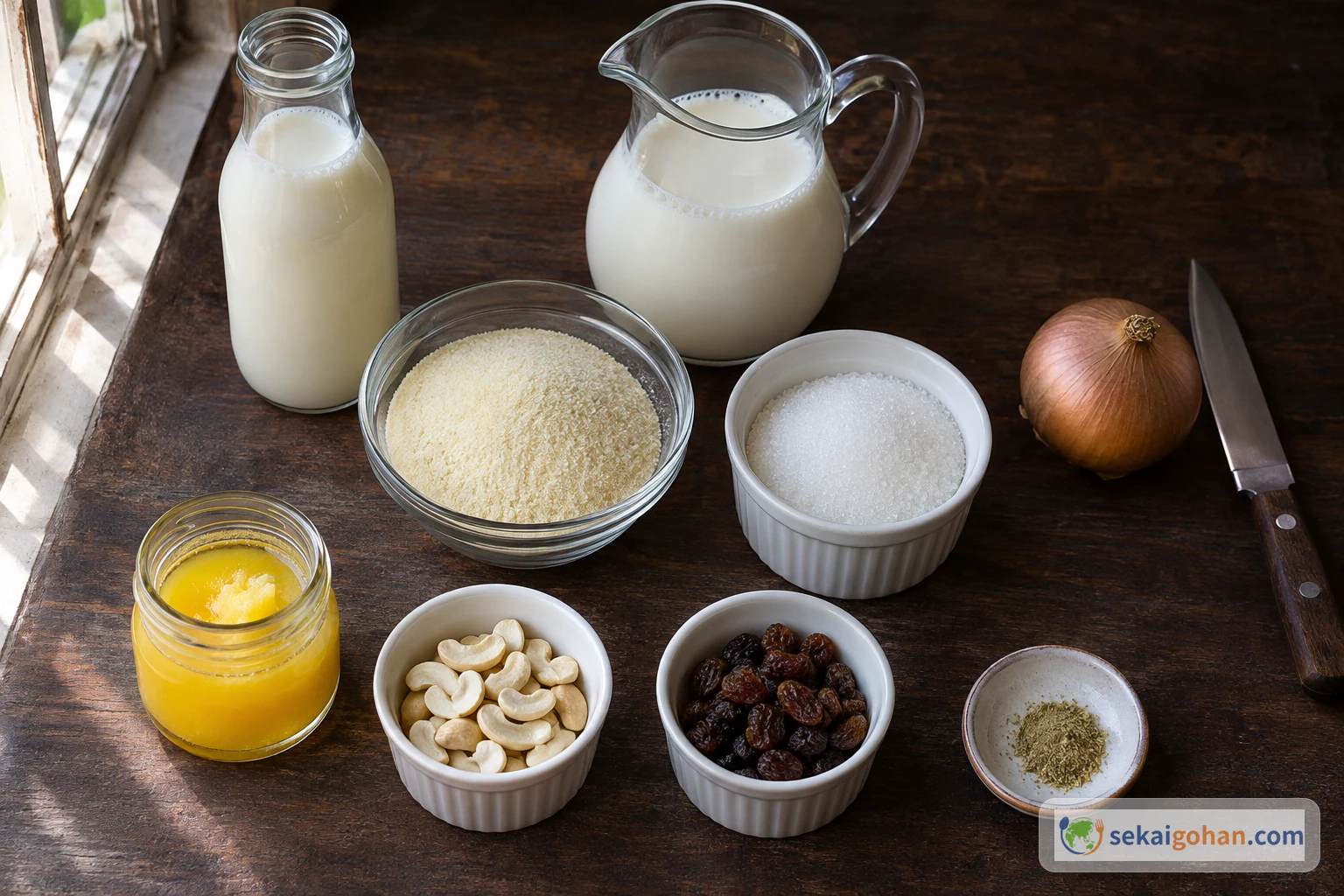
This payasam contains milk (milk and ghee), tree nuts (cashews) and wheat (semolina, which contains gluten). Raisins, onion and cardamom are not usually allergens, but check the labels on what you buy for additives and shared-facility statements.
Equipment
- A heavy, deep pot that holds 2 L of milk with plenty of room for foam
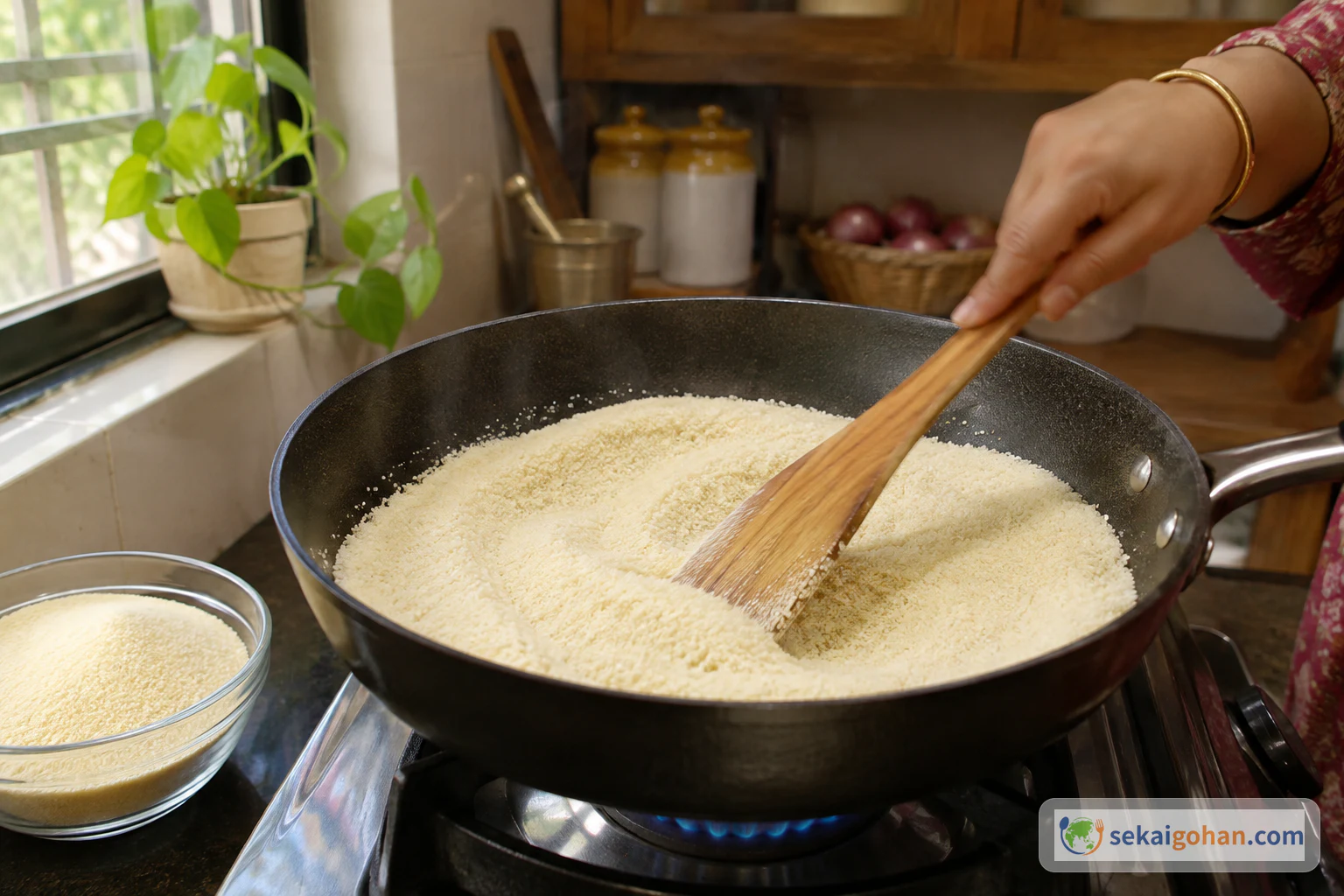
- A dry, heavy pan for roasting the semolina
- A wooden spatula
- A whisk (handy for keeping the semolina free of lumps)
- A small pan for frying the topping in ghee
Choosing and Substituting
Semolina is the one ingredient worth a trip to an Indian grocer. Rava is semolina ground from wheat. Supermarket semolina, usually durum wheat, varies in grind from brand to brand. If you buy it at the supermarket, a finer grind is the safer choice here; a coarse, pasta-style semolina may leave more separate grains in the milk.
Ghee brings the toasty, browned-butter aroma that the onion and nuts carry onto the pudding. Unsalted butter works if you have no ghee, but the topping tastes milkier and less nutty.
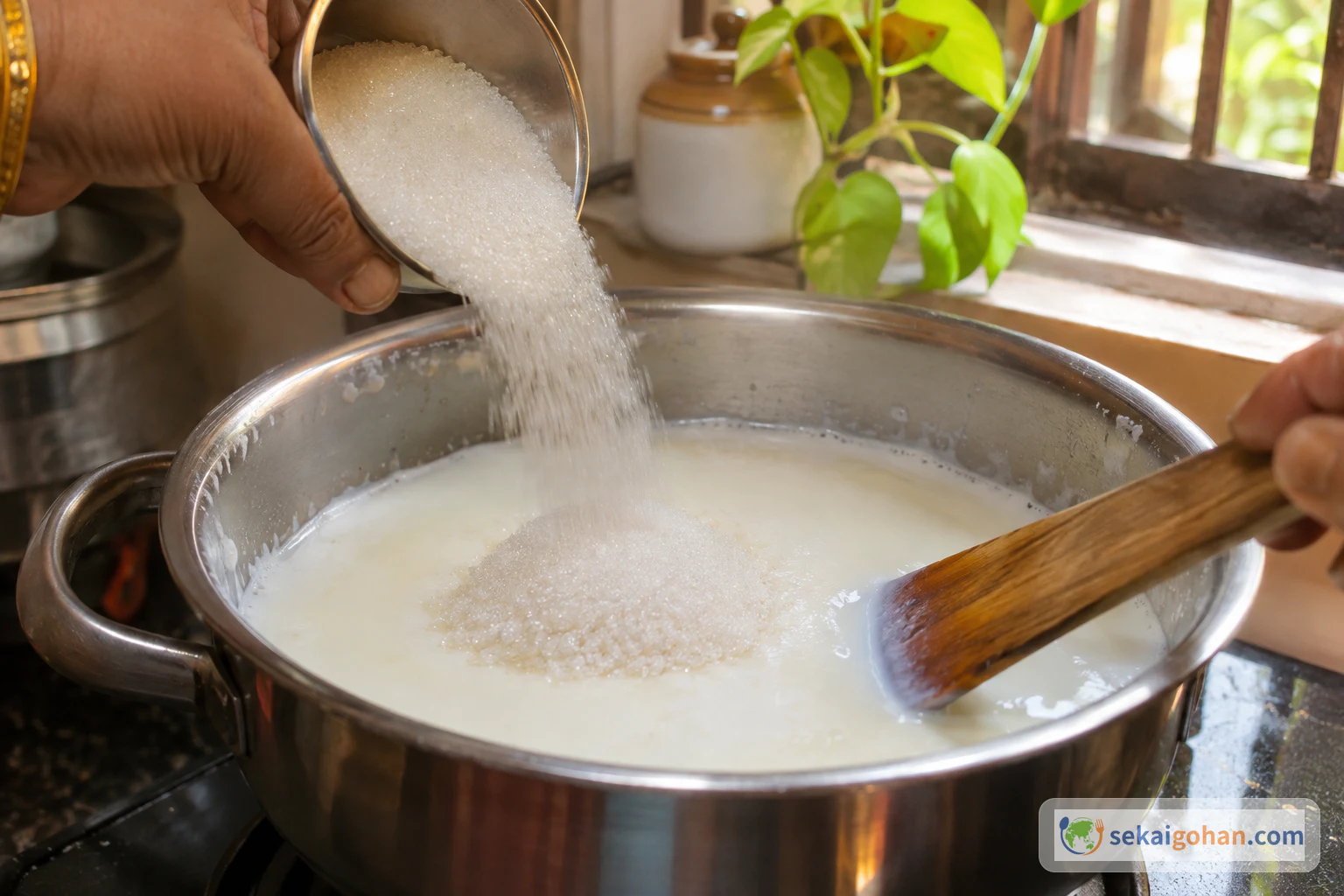
Cardamom can be bought ground. You can also crack open green pods and grind the seeds yourself, which gives a brighter scent. Choose unsalted cashews, raw or lightly roasted, and break them roughly by hand. Any ordinary dark or golden raisins will do. Plain white granulated sugar keeps the pudding pale.
To keep the Malabar character abroad, hold on to the pale-roasted semolina, the milk-only cooking and the fried onion. The sugar type, the brand of milk and whether you grind your own cardamom are the places where you can relax.
The thickness and richness of the finished payasam follow the fat in your milk. Whole milk gives a fuller, creamier pot. Lower-fat milk still cooks the semolina, but the body is lighter.
Method: Roast, Simmer, Perfume
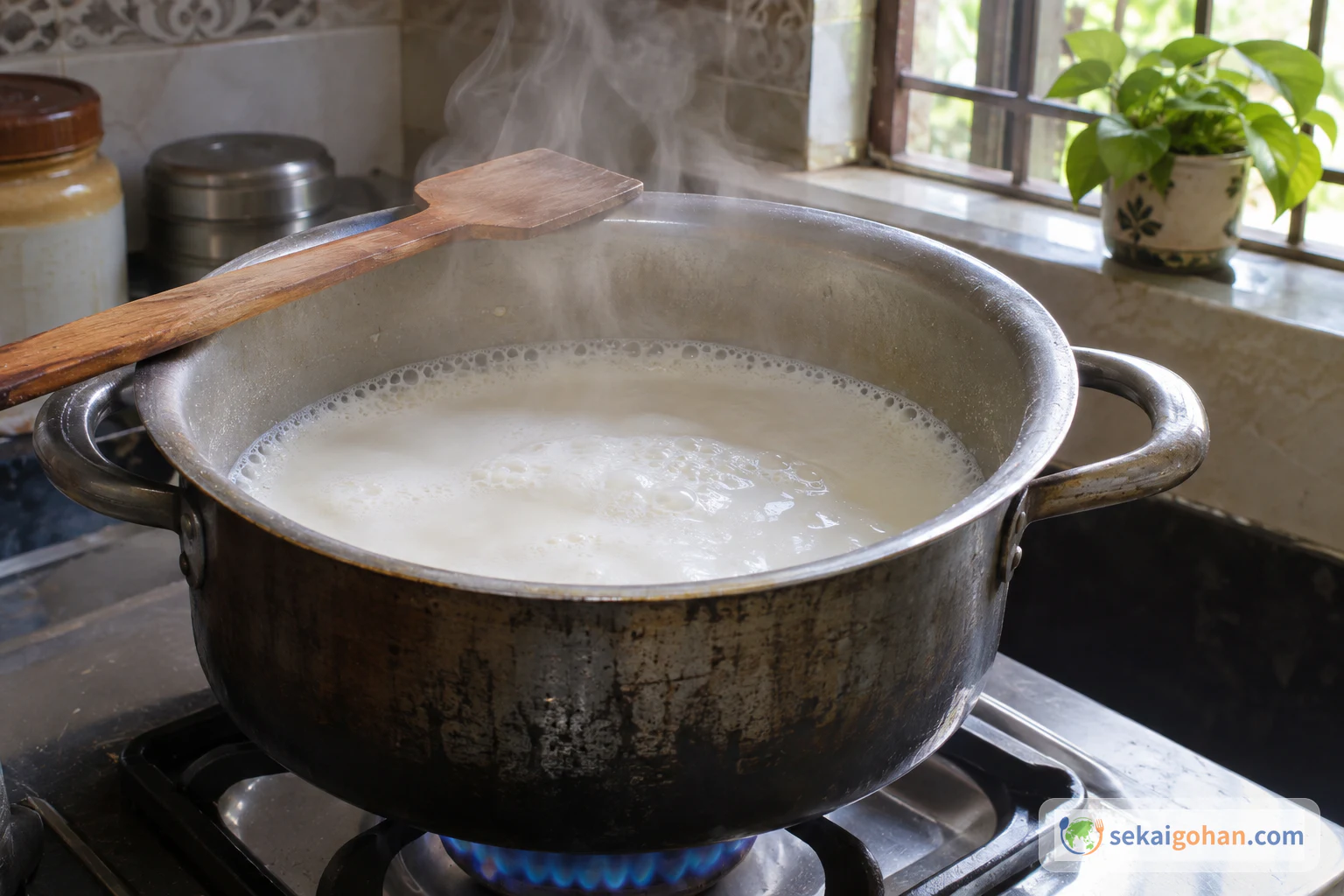
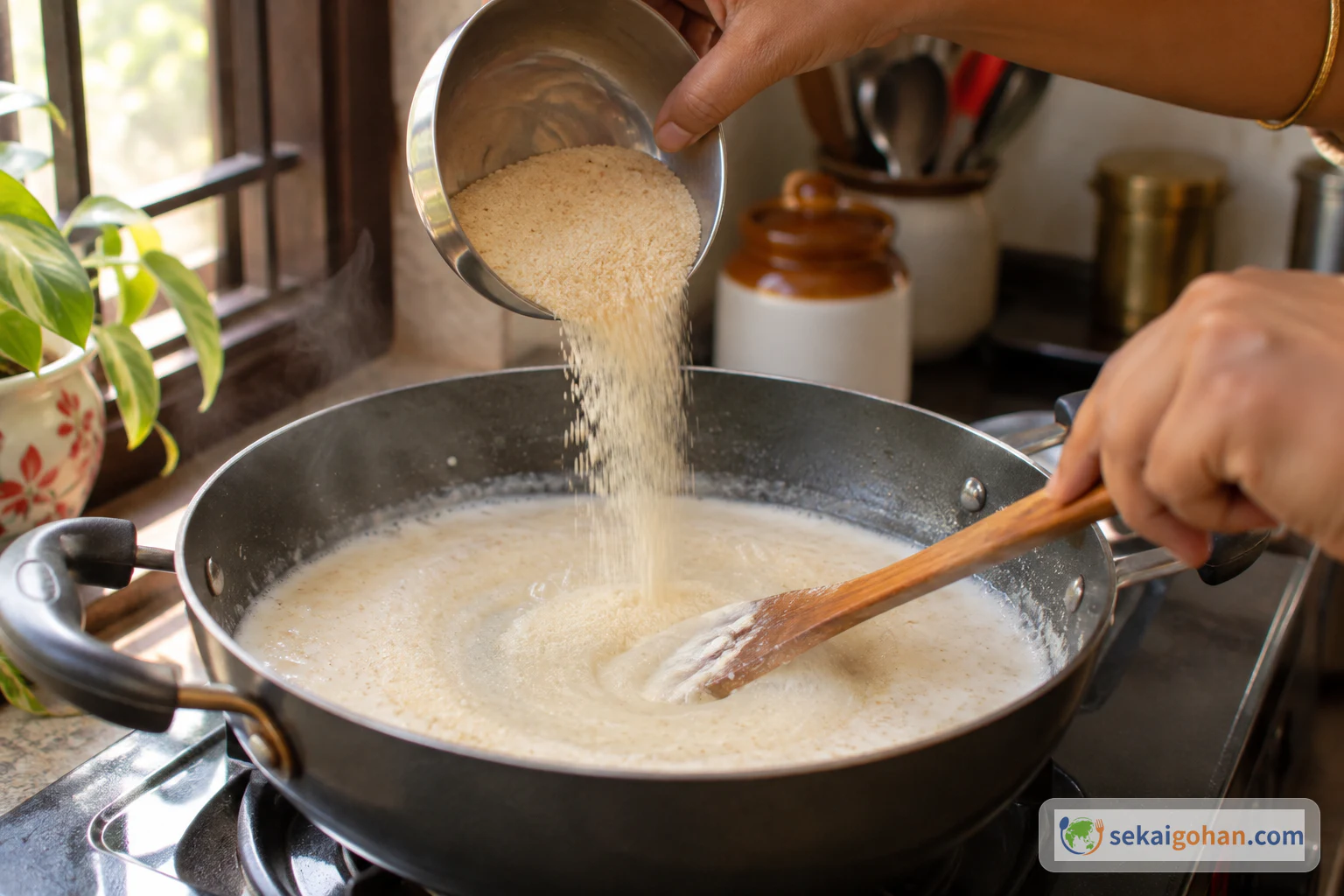
The work runs in one line. Roast the semolina first and set it aside, then bring the milk up in the big pot and build the pudding in it. Fry the topping in the small pan only once the cardamom is in and the pot is off the heat. Nothing here is left alone for long. Stay at the stove from the first boil to the final pour, because hot milk demands attention.
The amounts and the order of the pot and topping steps follow a Kerala recipe. The first step, roasting the semolina dry over low heat without letting it change colour, and the heat and doneness cues are our own editorial guidance.
Milk foams up suddenly as it reaches the boil and can spill over in seconds. Keep the pot well short of full and stay beside it. Thickened payasam and hot ghee both burn badly on skin, so use a long wooden spatula and pour the topping slowly, away from you.
When It Goes Wrong
| What you see | Why | What to do |
|---|---|---|
| Lumps in the milk | The semolina went in too fast or without stirring | Whisk hard to break them up. Next time sprinkle more slowly and keep the whisk moving |
| Roasted semolina turned beige or brown | The heat was too high or the pan sat unstirred | Its smell has changed, so roast a fresh batch over low heat and stop at the first toasty smell |
| Brown flecks and a burnt smell from the pot | Milk caught on the bottom | Pour the payasam into a clean pot without scraping the bottom, then carry on over lower heat with more frequent stirring |
| Milk foamed over the rim | The pot was too full or left alone at the boil | Lift it off the heat at once. Use a deeper pot and lower the heat as the bubbles crowd the edge |
| The topping tastes bitter | Ghee too hot; onion or nuts scorched | Fry a new batch over gentle heat and take it off once the cashews are pale gold |
| Too thick by the time it is served | It kept cooking, or it cooled and set | Stir in a little warmed milk until it pours again |
Serving, Variations and Storage
At the table
Serve the Malabar bowl hot, in small portions, after a meal or as the sweet on a festival day. Small steel bowls and a spoon suit it best. At a festive meal it sits alongside rice and vegetable dishes and gets eaten in sips and spoonfuls during the meal.
Variations
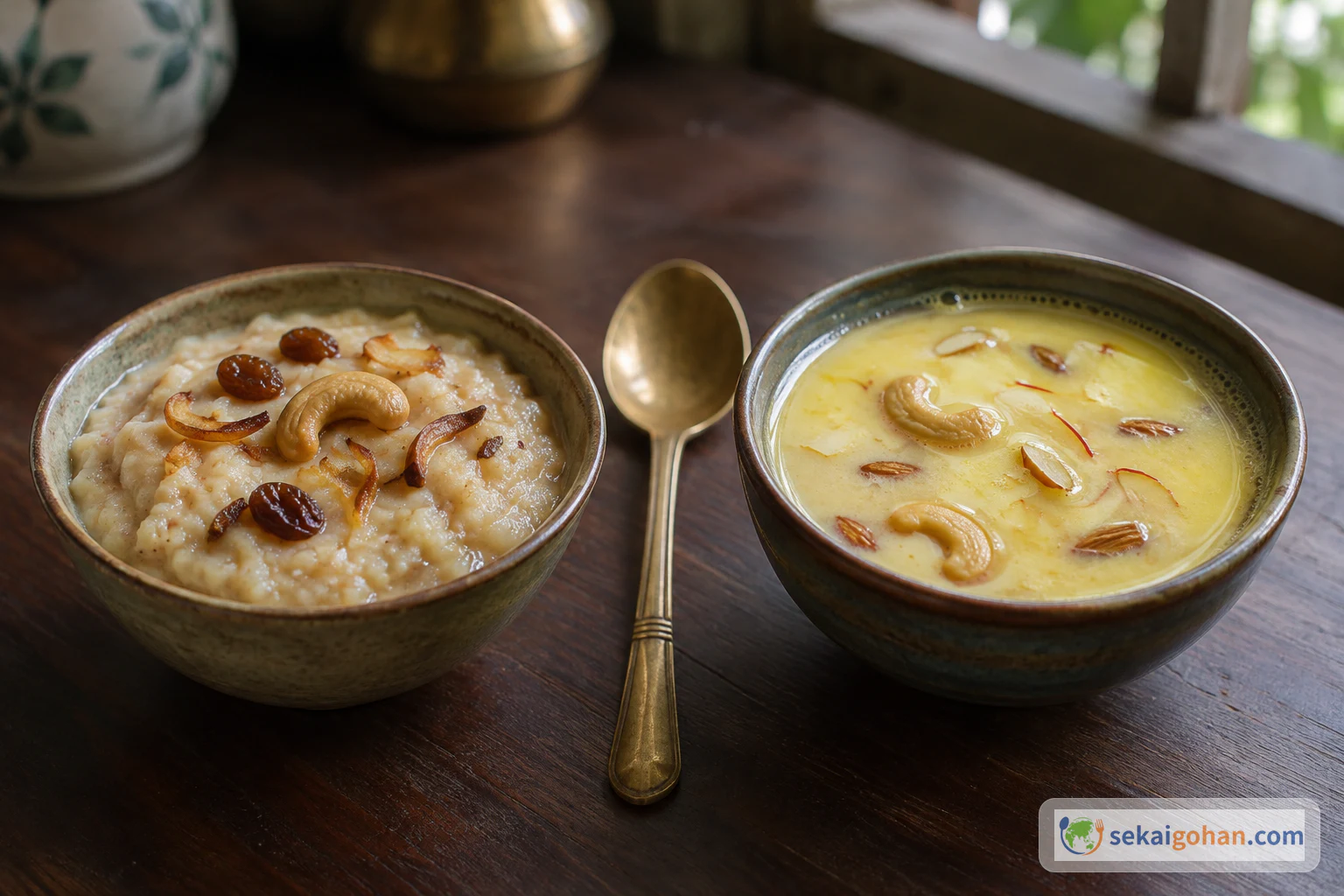
- Thin Tamil style with saffron. The Tamil temple-and-festival payasam uses far less semolina, only 2 tbsp in 4¼ cups (1 L) of milk, ideally full-cream. The semolina is roasted in ghee, and a few strands of saffron soaked in milk go in at the end with the cardamom. It is pale yellow, almost drinkable, and topped with cashews and raisins only, no onion.
- Without the onion. Fry only the cashews and raisins in the ghee. The bowl loses its one savoury edge and becomes a plain, sweet milk pudding with nuts.
- Sweetened with jaggery. Payasam is often sweetened with jaggery instead of sugar. Add it to taste. The pudding turns tan and takes on a deeper, caramel-like sweetness.
- Condensed milk and saffron. A modern style sweetens with condensed milk and a little sugar, adds saffron, and is served warm or chilled. It is a different, modern bowl.
Storage
Nothing in this pot is raw, fermented or aged. It is a milk sweet, so treat leftovers as you would any cooked milk dish. Let it cool, then refrigerate promptly in a covered container. It sets much thicker in the fridge. Before serving, warm it gently with a splash of warm milk, stirring, until it pours again.
Frequently Asked Questions
Can I use less sugar?
Yes. Taste the milk once the sugar has dissolved and stop adding when it suits you. Less sugar gives a lighter pudding that lets the milk and cardamom come forward. The raisins on top still add bursts of sweetness.
Can I serve rava payasam cold?
The Malabar bowl is served hot, while the ghee topping is still glossy and the onion is soft and golden. Chilled payasam is usually the condensed-milk style. If you chill this one, expect it to set firm, and add the fried topping just before serving so the cashews stay crisp.
How is this different from sooji halwa or kesari?
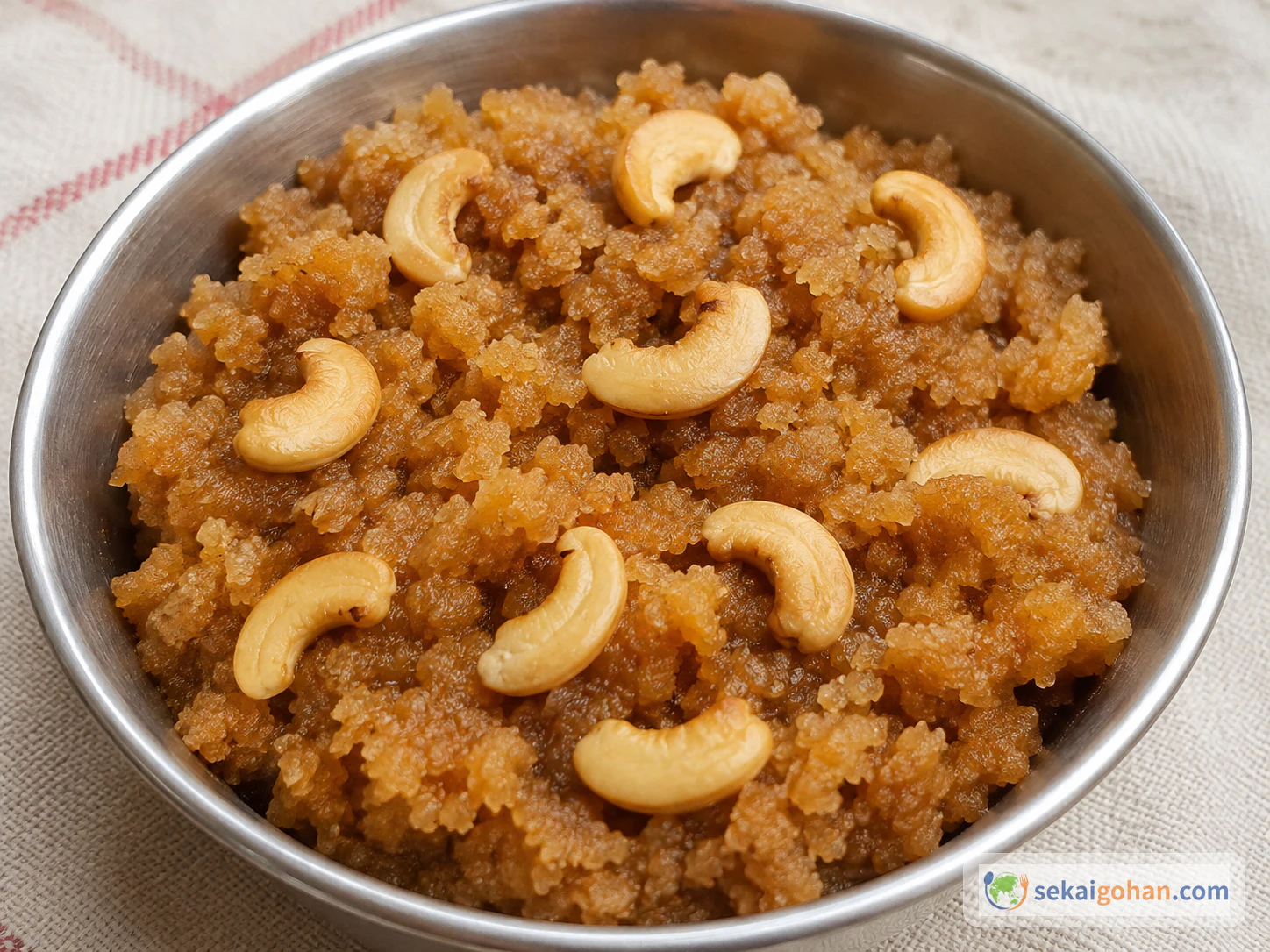
They share the semolina, but sooji halwa and kesari are a different, firmer family of sweets. Payasam is cooked in milk and stays fluid. Sooji gothambu payasam, despite the name, is made with broken wheat rather than semolina.
Can I make it in a smaller pot for fewer people?
Yes. Scale every ingredient down by the same proportion, and keep the semolina-to-milk balance so the body stays the same. A smaller volume of milk boils and thickens faster, so watch for the soft-ribbon cue rather than the clock.