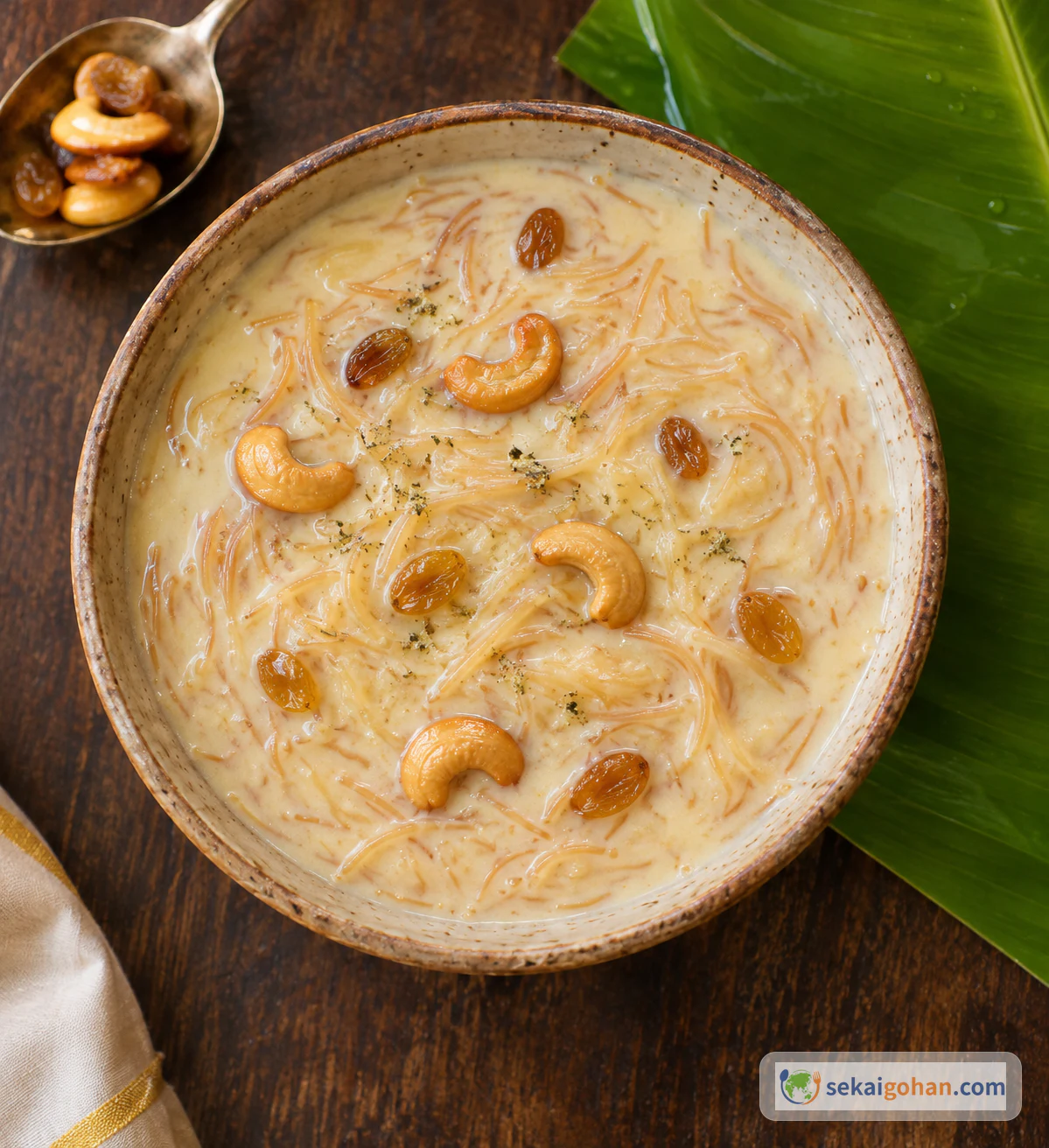
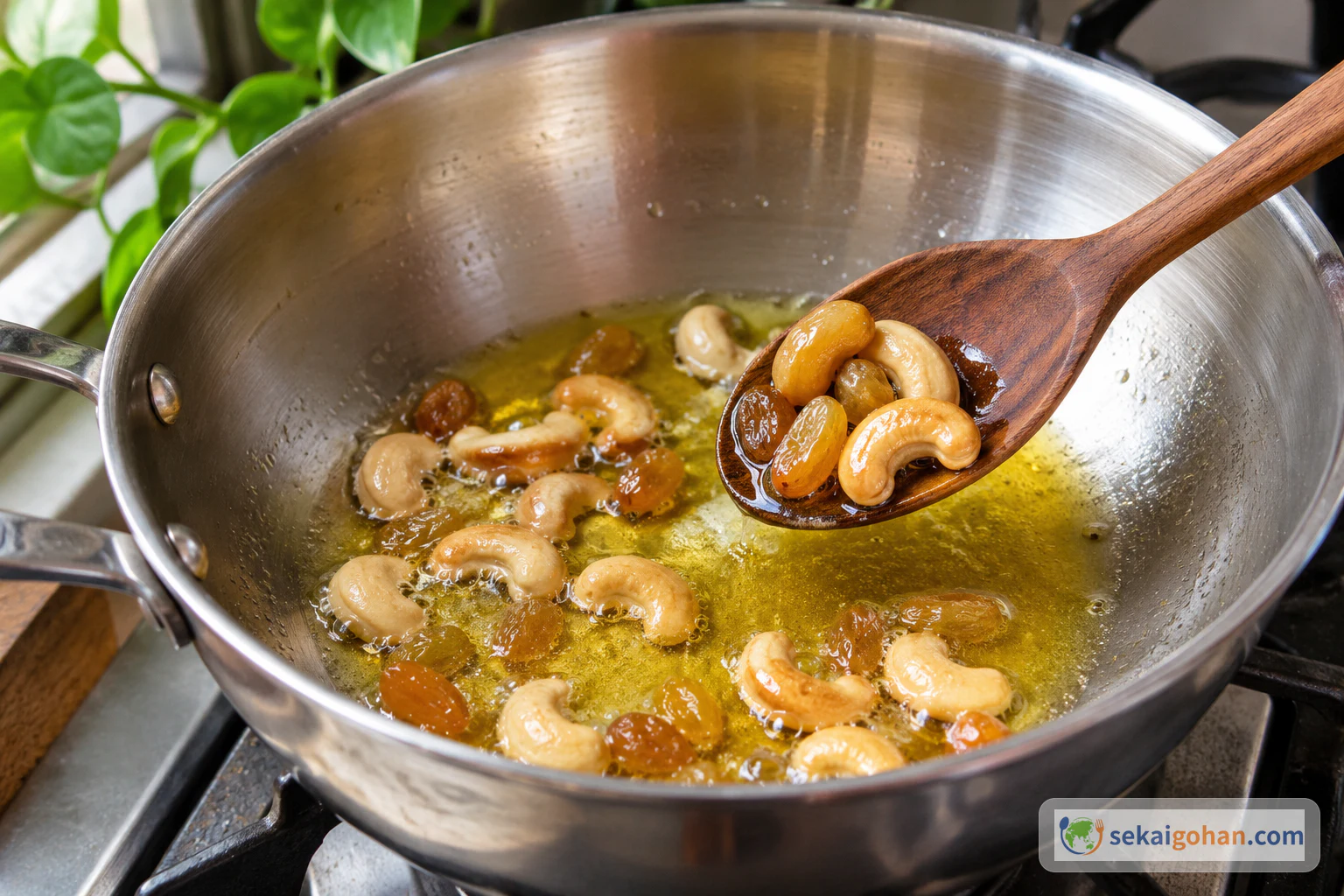
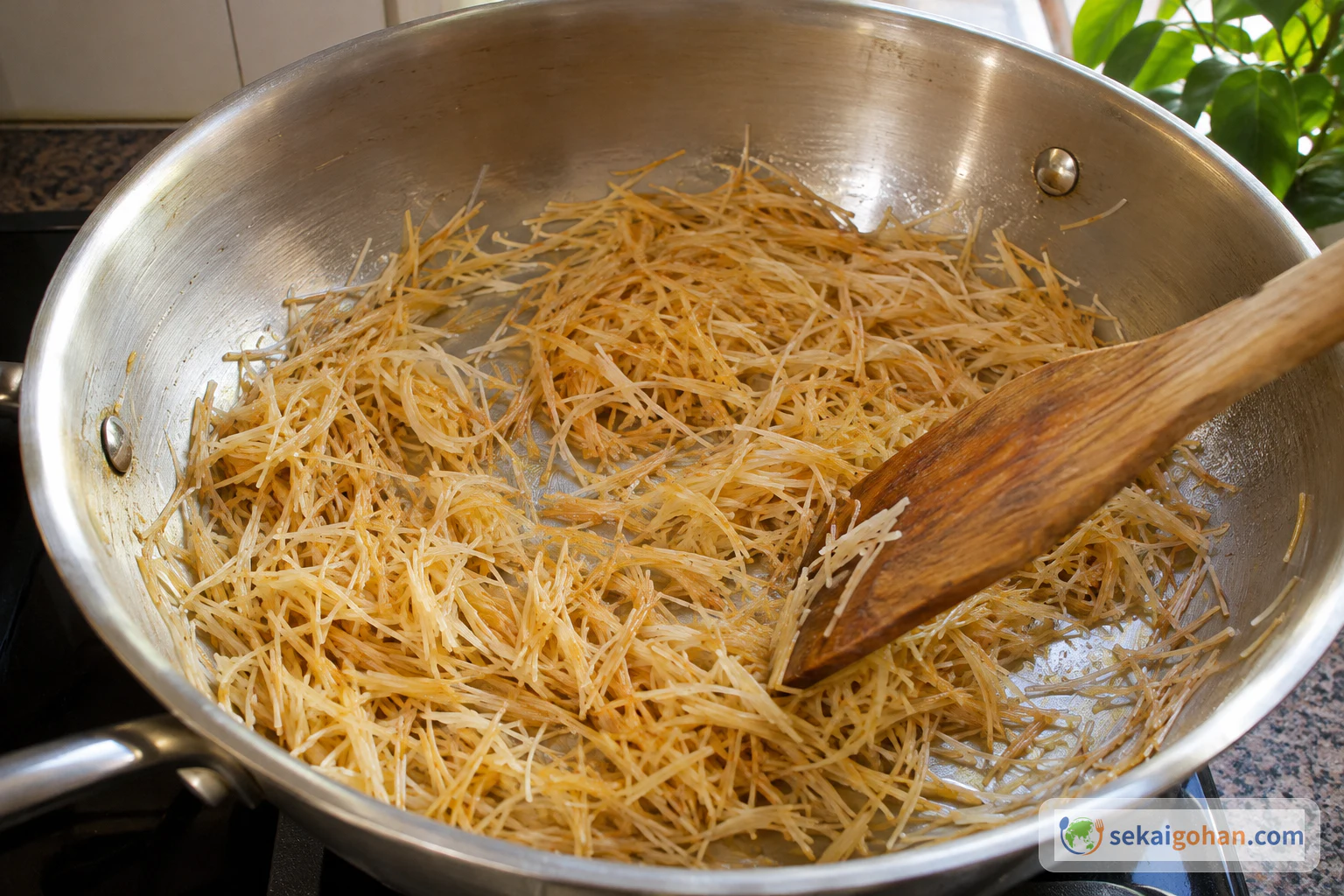
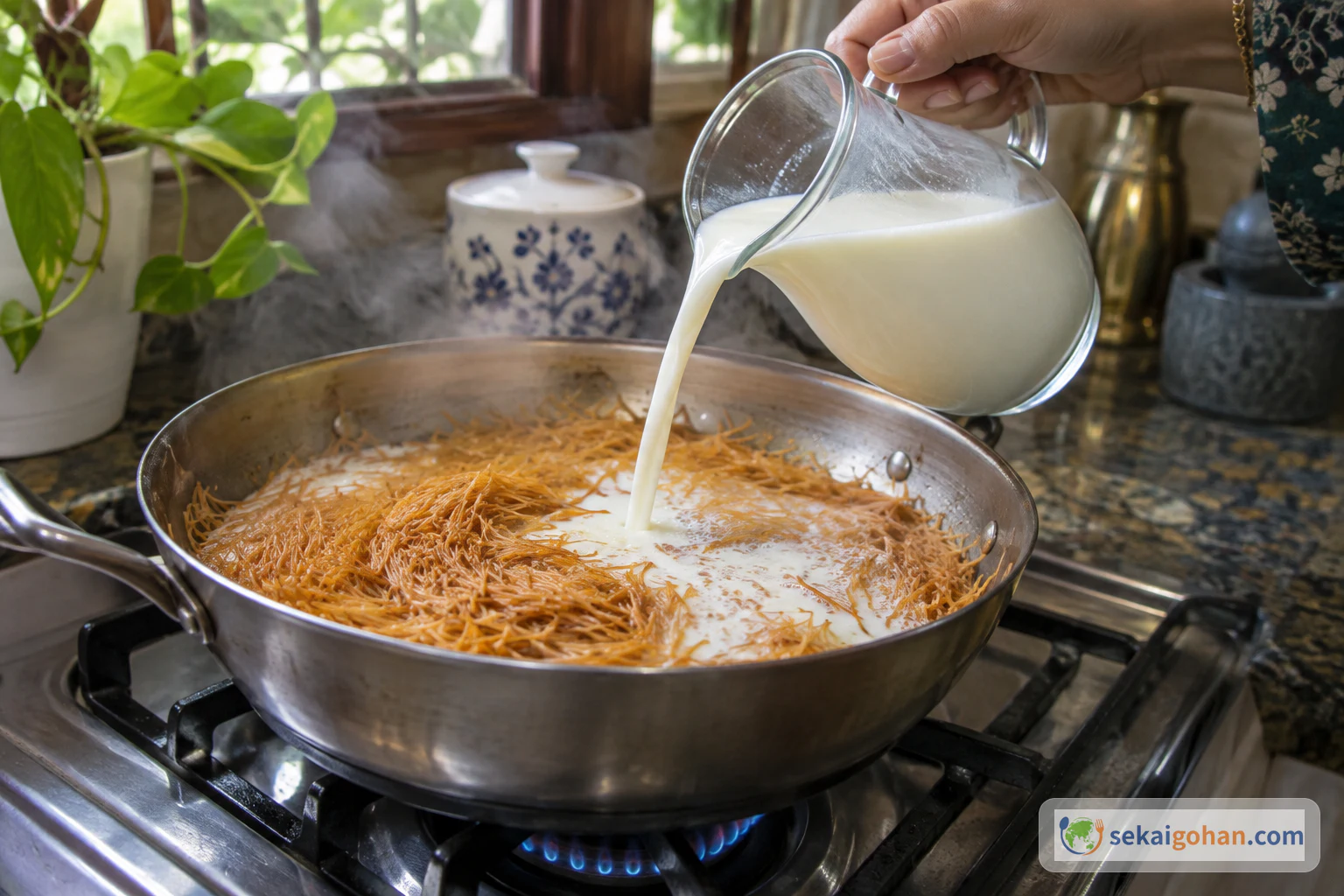
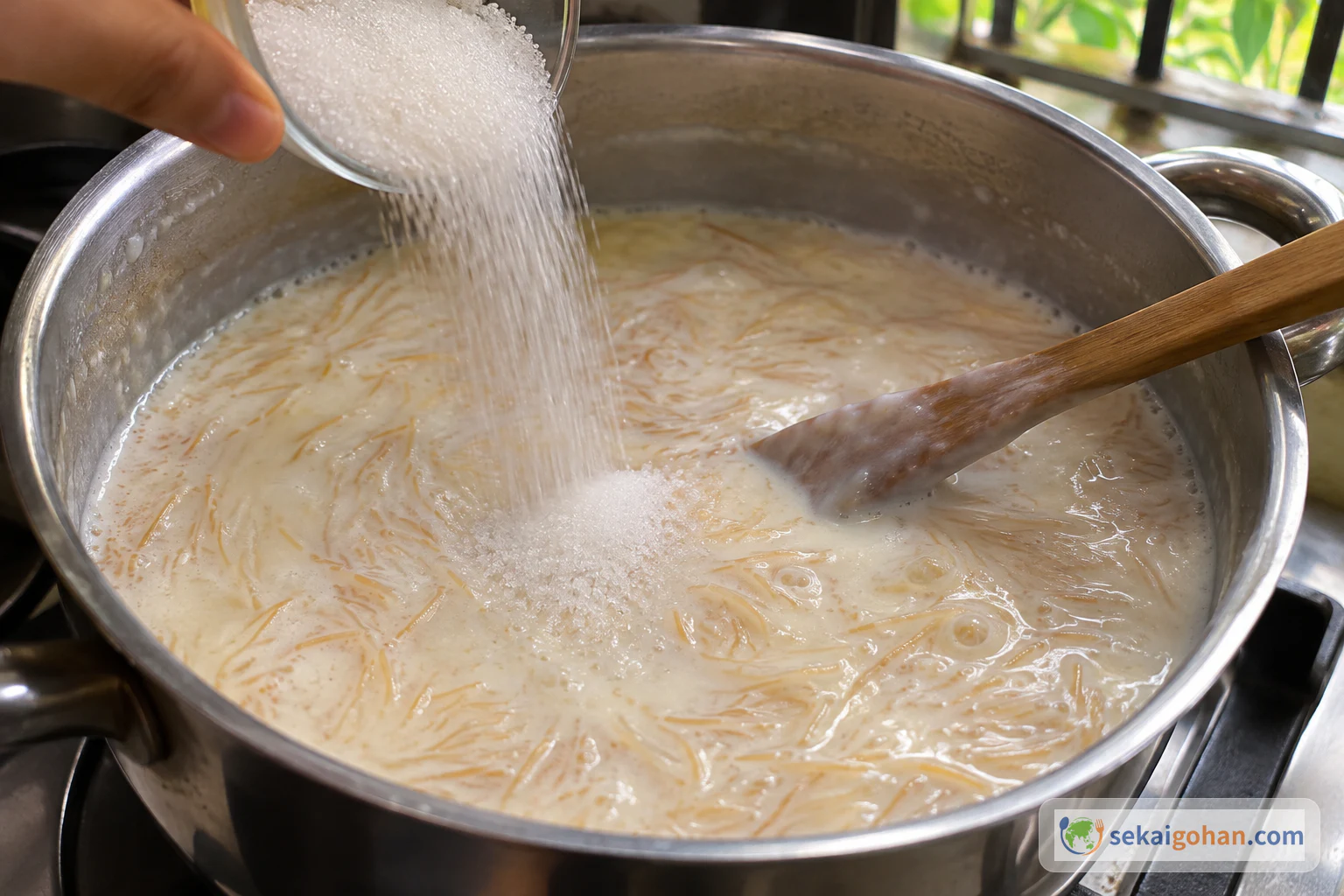
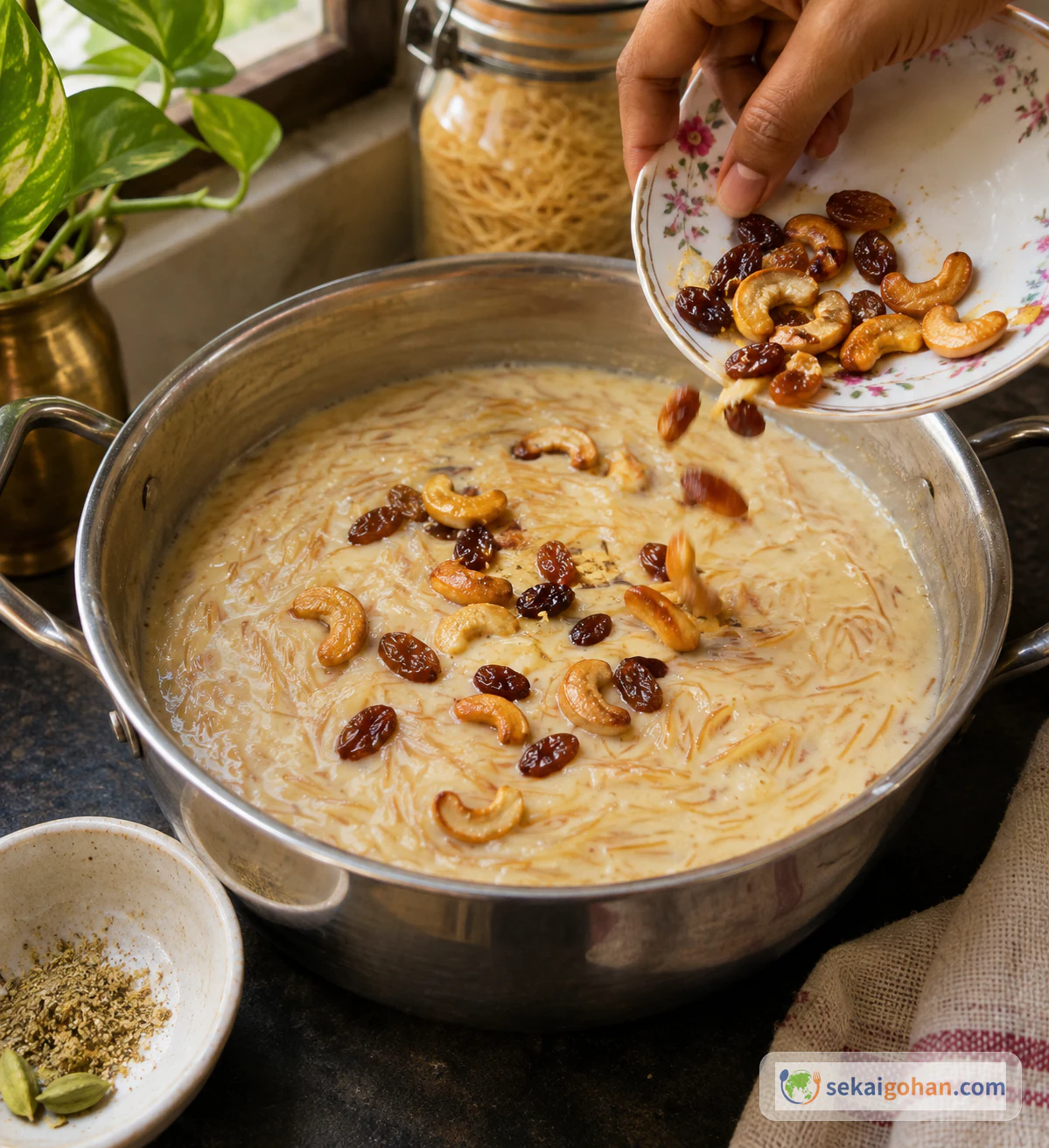
Start with the ghee. The cashews go in, and within moments they turn gold at the edges. Then the raisins hit the hot fat and puff up into small, shiny balls. Once those are lifted out, the vermicelli goes into the same pan. Its toasted, wheaty smell is what carries through the milk, the sugar and the cardamom to the last spoonful. Semiya payasam is the South Indian sweet of short vermicelli strands simmered in milk until soft. It tastes creamy and gently sweet, with cardamom, the crunch of cashews and the odd burst of raisin. It takes about twenty minutes from the first spoon of ghee, which is why it gets made for a festival and just as often on a whim.
A Payasam in the South, a Kheer in the North
Semiya means vermicelli in Telugu, Tamil and Malayalam. Payasam is the southern word for the whole family of Indian milk puddings. Cooks in North India make the same dish and call it seviyan kheer or vermicelli kheer. The noodle is the one thing that holds its name still. Payasam can also be built on rice, lentils or flattened rice. A rice payasam, a grain kheer or a chilled ground-rice phirni are separate dishes. So are sheer khurma, the festive milk-and-vermicelli sweet, and the savoury seviyan dishes that use the same noodle with no milk at all.
The two names also hint at two habits at the stove. In the south, payasam has traditionally been sweetened with jaggery. The main ingredient is cooked in water first, and a smaller amount of milk goes in at the end, which keeps the jaggery from splitting the milk. Northern kheer is usually cooked in milk from the start and sweetened with white sugar. A water-first version of semiya payasam also exists. The vermicelli is boiled in about four times its volume of water with a pinch of salt, then sugar and cardamom go in, and a splash of milk finishes it. That gives a spoonable pudding. The version below cooks the noodles in milk the whole way. That gives a richer pudding you can still pour.
Onam, Tamil New Year and the banana leaf
Most people make semiya payasam for festivals and celebrations. It is a standard dessert at Tamil New Year and at the Onam feast. It also turns up at Ramzan, Janmashtami, Dussehra and Varalakshmi Vratham. In Kerala, the Onam meal, Onasadya, is served on a banana leaf. It comes with customs about which dishes go on and in what order, and vegetable dishes like avial share the leaf. Near the end come the payasams: ada (large flat rice flakes), lentils, vermicelli and rice, each cooked in milk. Semiya payasam is one of the regular sweets of the sadya. It is sometimes eaten with boli, a thin lentil-flour crêpe, or with kunjaladdu or boondi ladoo.
Semiya, semiyan, seviyan, sevai: the noodle travels under many spellings across India's languages. On a menu or a pack, "vermicelli kheer" and "semiya payasam" mean the same bowl. More of the country's food is on the India page.
Ingredients (serves 4)
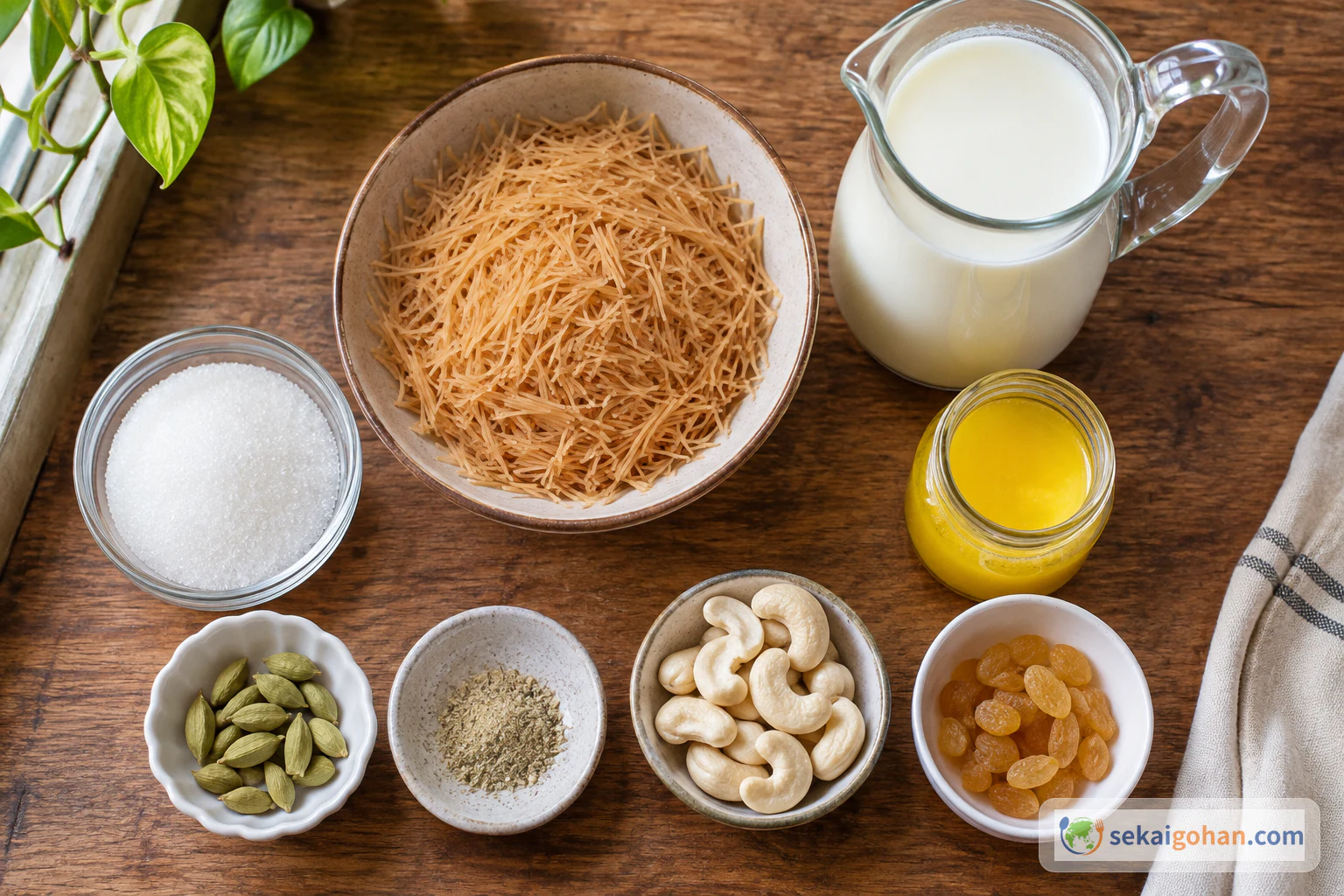
This pudding contains milk (milk and ghee), tree nuts (cashews) and wheat (vermicelli). Swapping in plant milks, rice vermicelli or sago changes the allergen list, so check every pack you use.
Equipment
- Heavy-bottomed saucepan
- Wooden spatula or spoon
- Small plate for the fried nuts and raisins
- Grater and fine strainer (only for the jaggery version)
Buying Vermicelli, Milk and the Swaps That Work
The noodle you buy decides the texture. Indian grocers and online shops carry semiya made from rice, maida (refined wheat flour), whole wheat, ragi and millet. Thick whole wheat vermicelli is the most common kind and the one this pudding is built on. Thick strands swell and drink up milk, which gives the pudding its body. Look for packs labelled semiya or vermicelli from Indian brands such as MTR or Bambino. Some packs are sold pre-roasted. They cook to a darker, more caramel-coloured payasam, and they let you skip the toasting step.
Whole milk gives the richest result. Low-fat milk works but makes a thinner, less creamy pudding. For a dairy-free payasam, use the same amount of soy milk, almond milk or thinned coconut milk. If you choose coconut, use carton coconut milk, because canned coconut milk is too thick here. Ghee gives the nutty, buttery smell that defines the dish, and every Indian grocer stocks it. A few strands of saffron can replace the cardamom, or join it, for a more golden and floral pudding. Sultanas can stand in for raisins, and chopped almonds can join the cashews.
This pudding is built on thick vermicelli. Thinner noodles give a different texture, so judge doneness by the strands rather than the clock.
Method
The work runs in one pan, from start to finish. Fry the garnish first and set it aside. Then toast the vermicelli in the leftover ghee, and pour in the milk. The longest stretch is the simmer in milk. You cannot walk away from it, because the milk catches on the bottom of the pan unless you stir the whole time. Have the cardamom measured and the sugar at hand before you start.
When It Goes Wrong
| What you see | Why | What to do |
|---|---|---|
| Brown flecks or a burnt smell from the bottom | The milk caught on a thin pan, or the stirring stopped | Next time, use a heavy-bottomed pan and stir all the time |
| The pudding is stiff and spoonable after cooling | The vermicelli absorbed the milk as it stood | Warm some milk, dissolve 2 tsp to 1 tbsp sugar in it, and stir it in until the payasam pours again. If you are cooking ahead, have this ready |
| Too thick while still on the stove | Too little milk for the noodles | Add more milk, up to 5 cups in all, and simmer briefly |
| The strands are still firm in the centre | The vermicelli has not finished cooking in the milk | Keep simmering and stirring until it is fully soft, then add the sugar and thicken |
| The jaggery version curdles into grains and whey | Hot jaggery syrup met hot milk | Cool both before you combine them (see the jaggery variation) |
| A sago payasam turns very thick | Sago soaks up milk heavily | Add ½ cup water along with the milk |
Serving and Variations
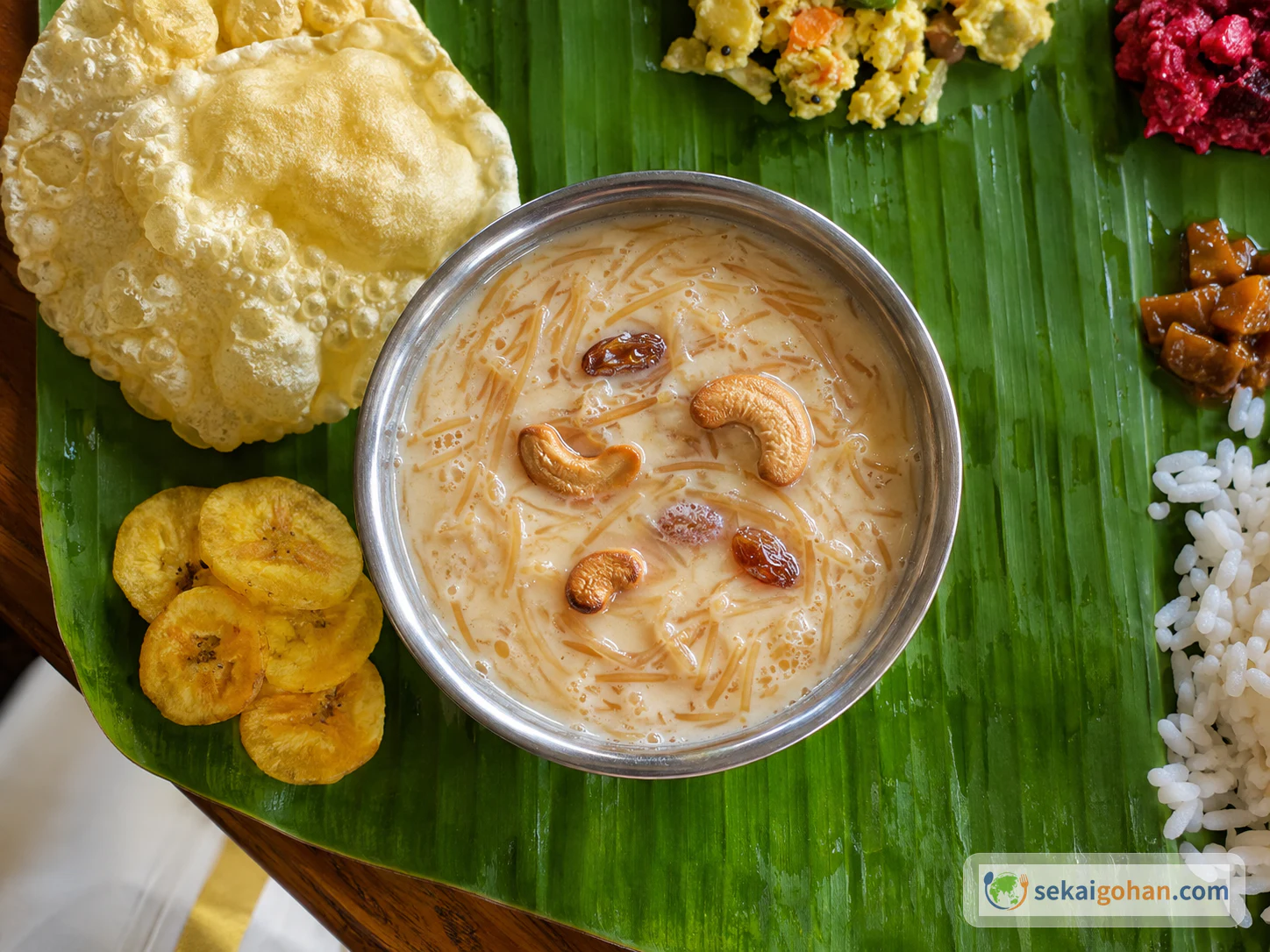
Serve semiya payasam hot on a cool evening, warm after a festive lunch, or chilled from the fridge on a hot day. It is the sweet course of a festival meal, and it sits comfortably beside other Indian milk sweets such as doodhpak. For a sadya-style spread, put it on the leaf with boli or boondi ladoo alongside.
Jaggery payasam
Grate ¾ cup jaggery into a small pan with 3 to 4 tbsp water and simmer it. When the syrup turns frothy and slightly sticky, turn off the heat and let it cool completely. It does not need to reach string consistency. Make the payasam without sugar, up to the end of step 3, take it off the heat, and let it cool for 5 to 6 minutes. Then strain the cooled syrup into it and stir. The result is darker, with a deeper caramel sweetness, closer to the old southern habit.
Pour hot jaggery syrup into hot payasam and the milk curdles at once. Cool the syrup fully and rest the payasam off the heat before you combine them.
Sago, richer milk and plant milk
Soak 2 tbsp sago (sabudana) in water until soft. Add it with the milk, along with ½ cup water, and the payasam gains soft, translucent pearls among the strands. For a richer festival bowl, stir in 2 tbsp sweetened condensed milk and cut back the sugar. Or add ¼ cup evaporated milk for extra body and a light caramel note. A few strands of saffron or a little rose water make the pudding more fragrant. The plant-milk version is lighter, and coconut gives it a gentle southern sweetness.
Frequently Asked Questions
Can I make it in an Instant Pot?
Yes. On sauté, fry the cashews in ghee, add the raisins for 30 seconds, take both out, and toast the vermicelli. Add 3½ cups milk and the sugar, and cook on porridge mode for 6 minutes. Let the pressure release naturally for 6 minutes, release the rest manually, then stir in the cardamom.
If you double the amounts, let the pressure release naturally all the way. A manual release sends hot milk spraying out of the vent.
Do I still toast pre-roasted vermicelli?
No. Pre-roasted semiya is already toasted, so it can go straight into the milk. Some cooks still turn it briefly in the ghee to coat the strands, which is enough to keep them separate. Expect a darker finished colour than with unroasted vermicelli.
Can I use rice, ragi or millet vermicelli?
You can, and each gives a different texture from thick whole wheat semiya. The strands soften at different speeds, so judge by the strands rather than the clock. Simmer until the vermicelli is fully soft, then add the sugar.
How sweet should it be?
The ½ cup of sugar gives a clearly sweet festival pudding. Reduce it to taste. If you plan to add condensed milk, reduce the sugar first, because condensed milk brings plenty of its own.