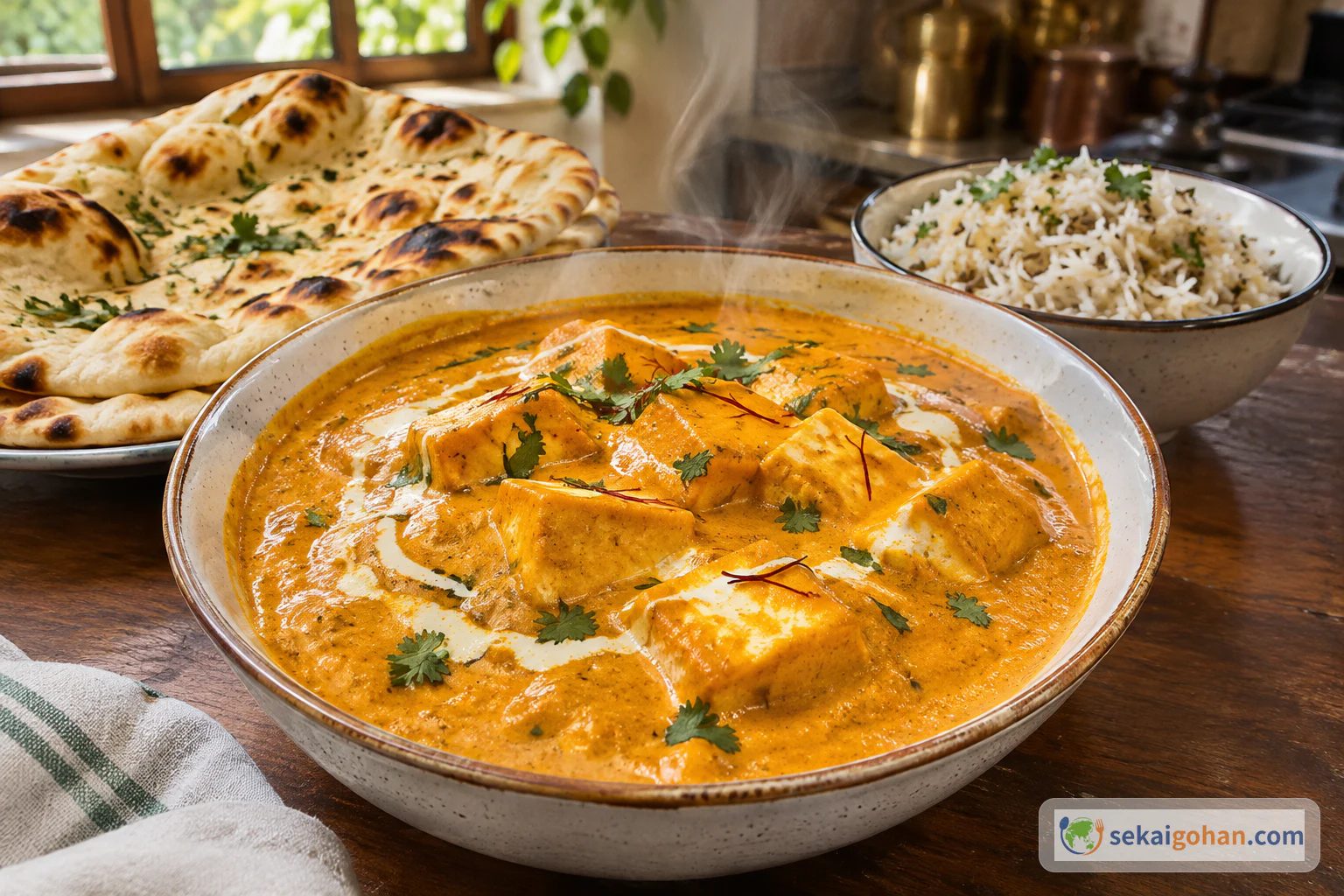
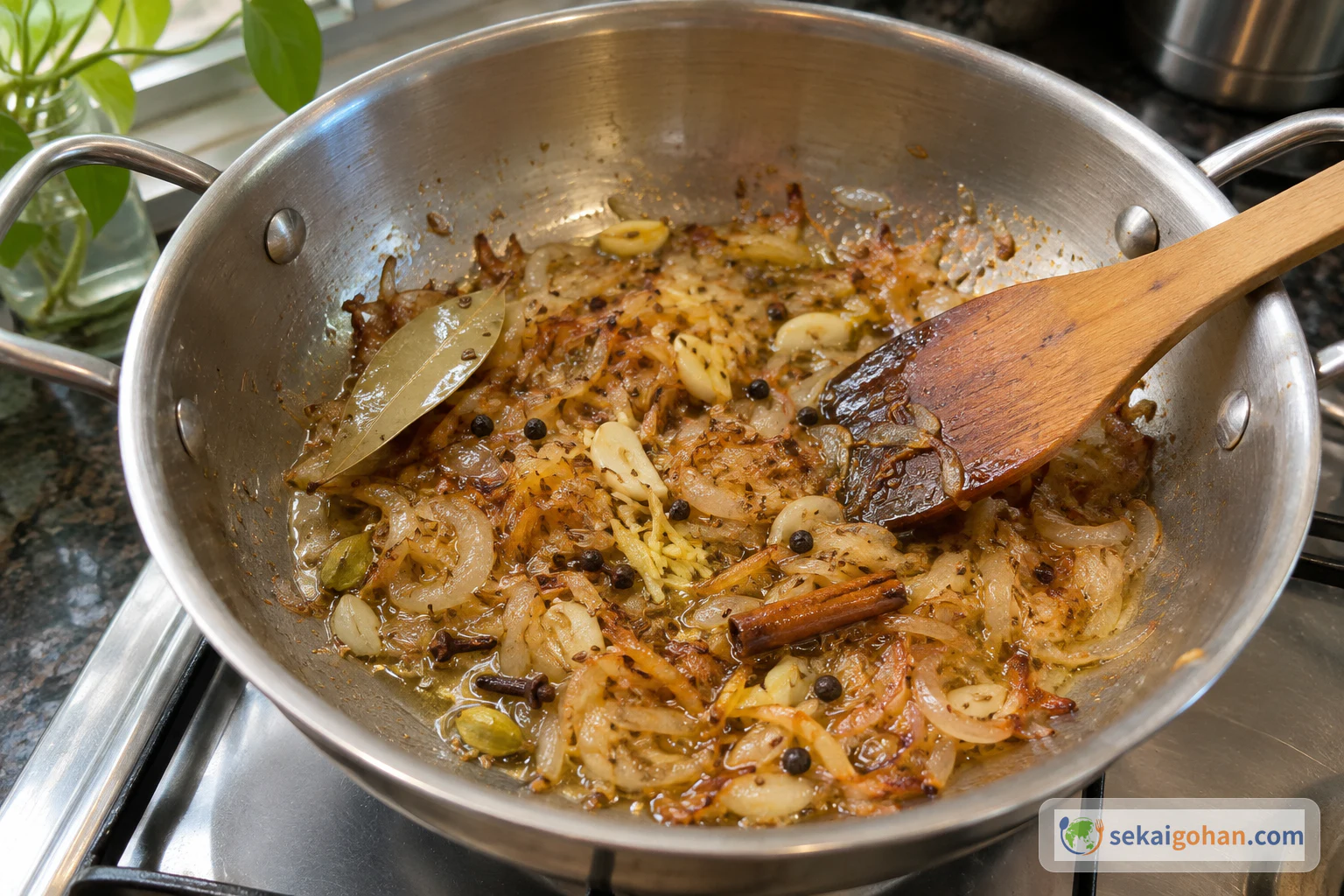
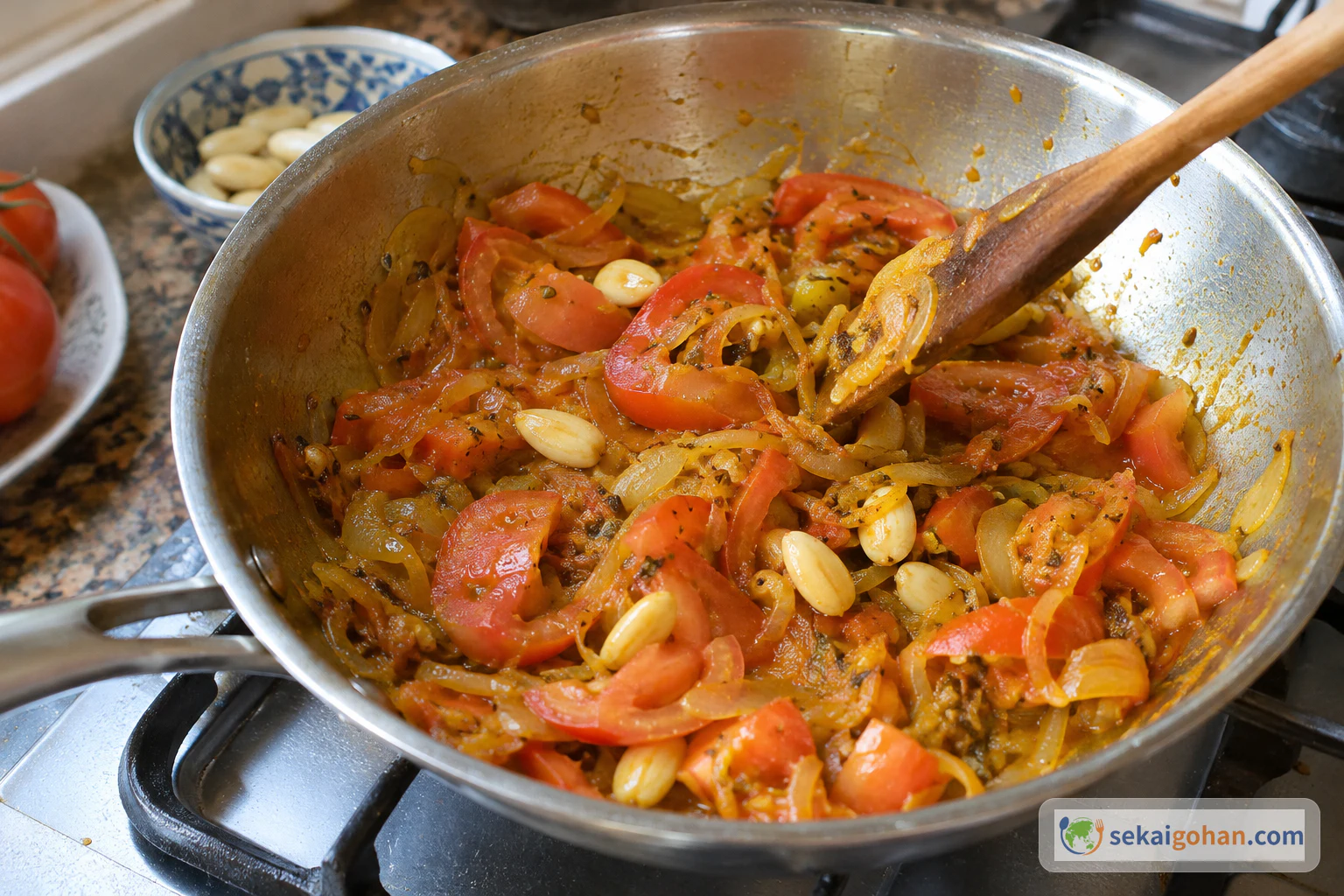
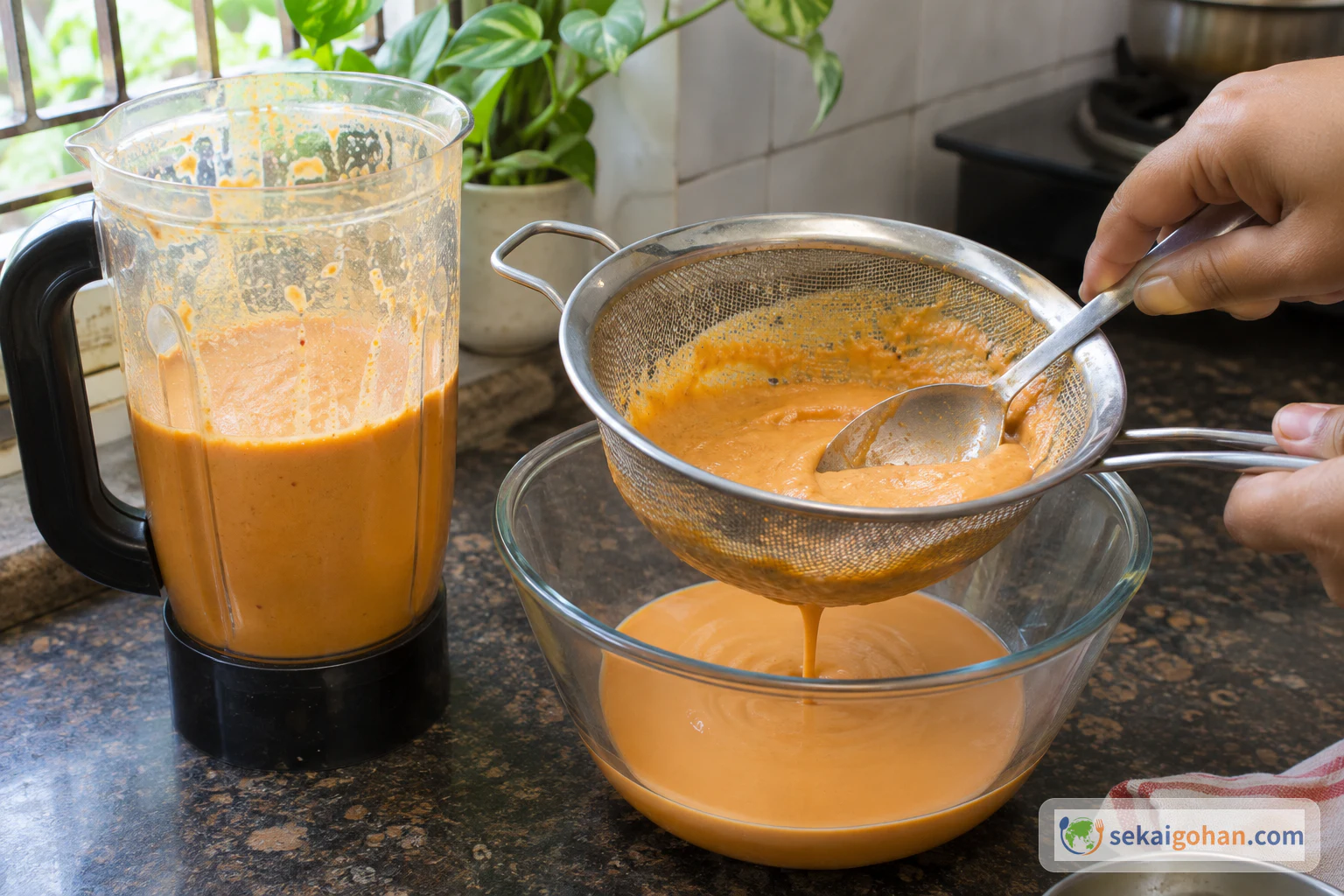
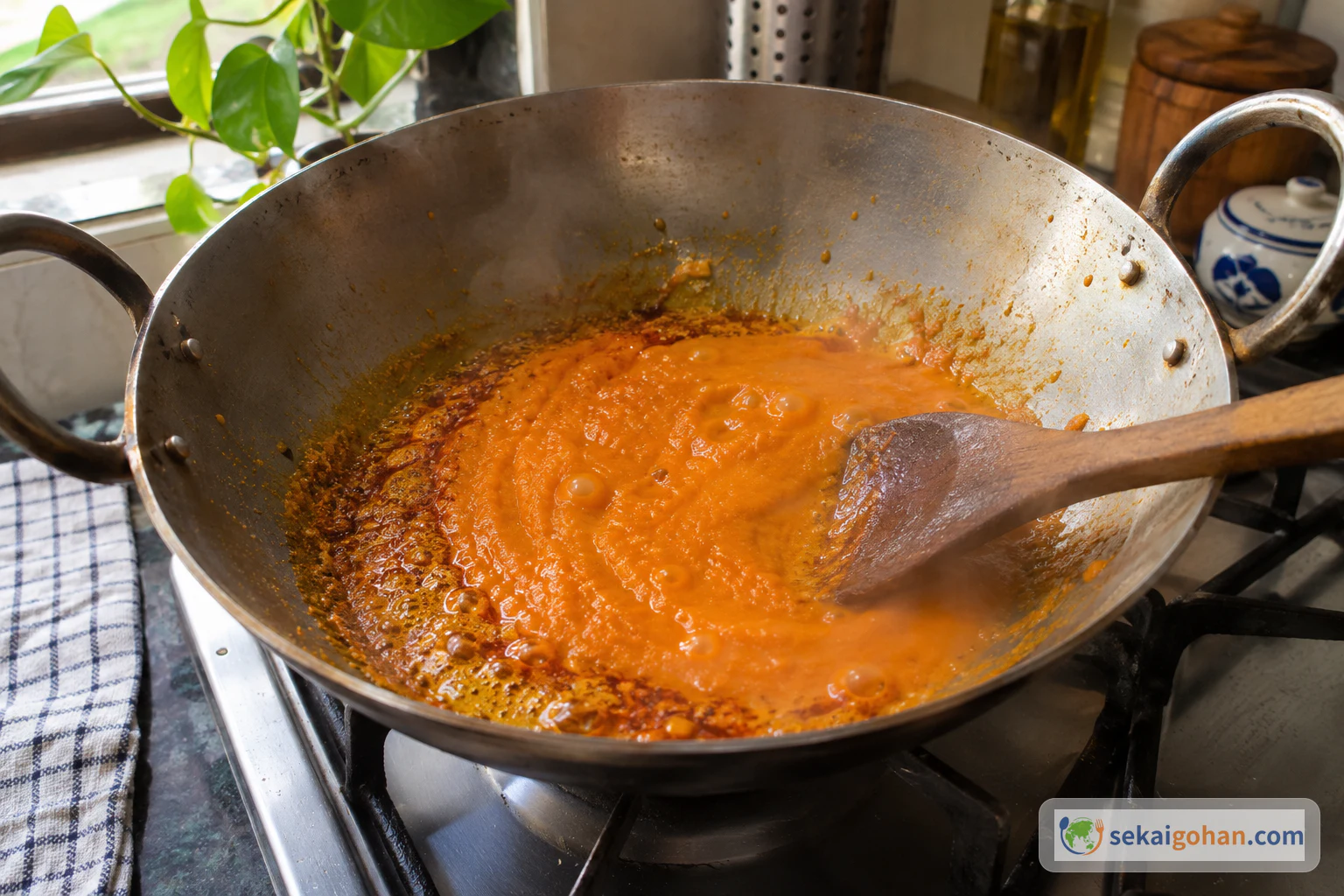
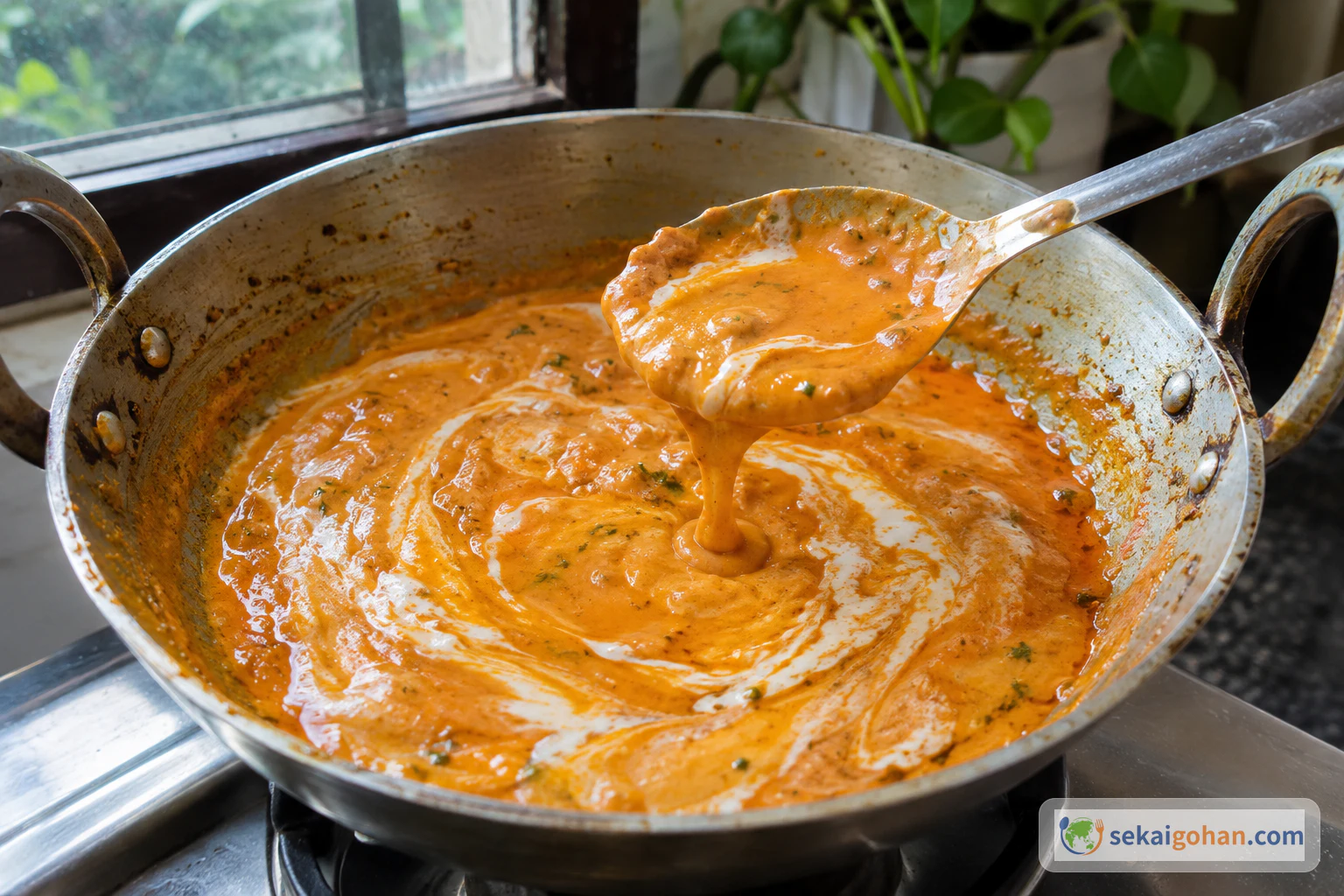
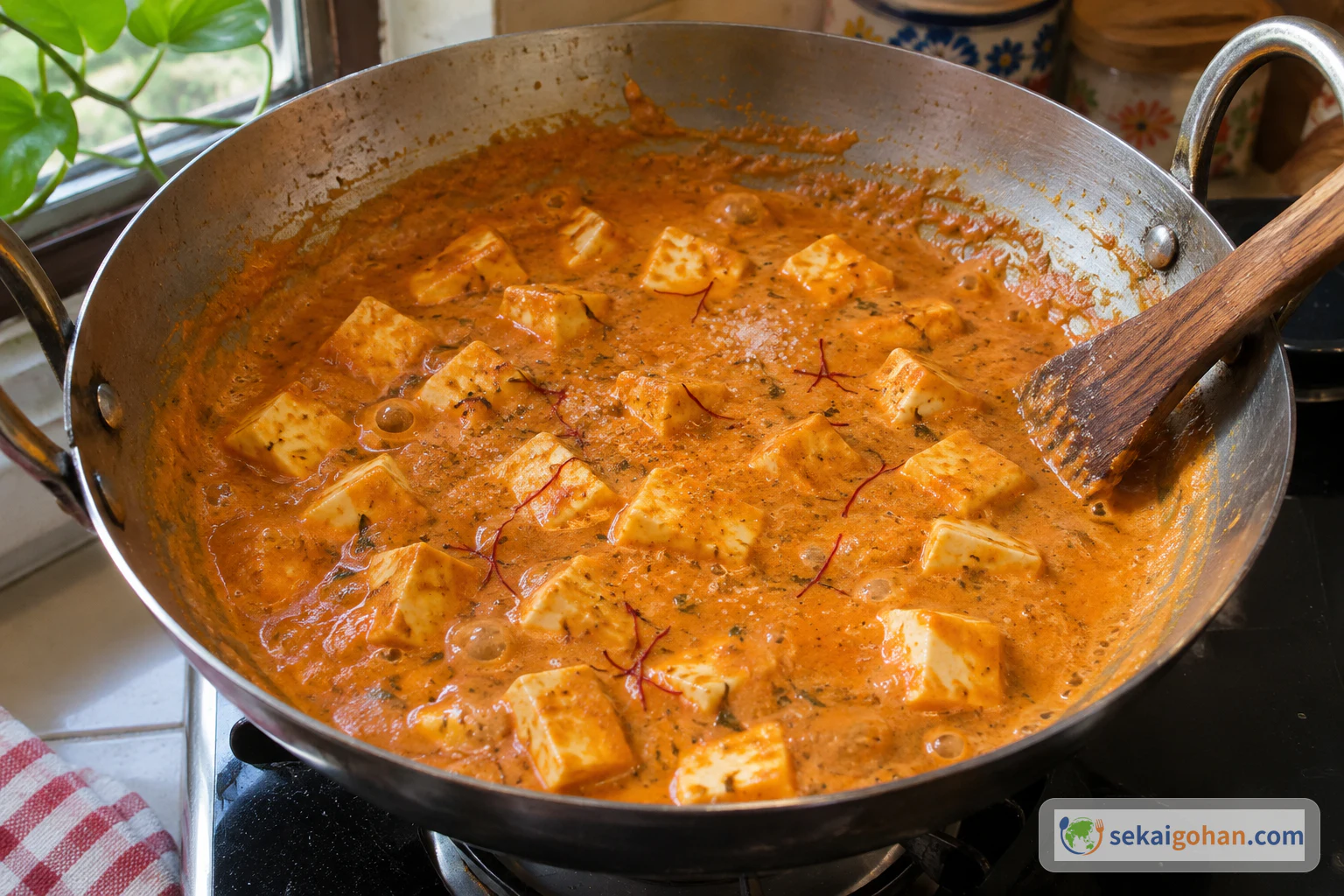
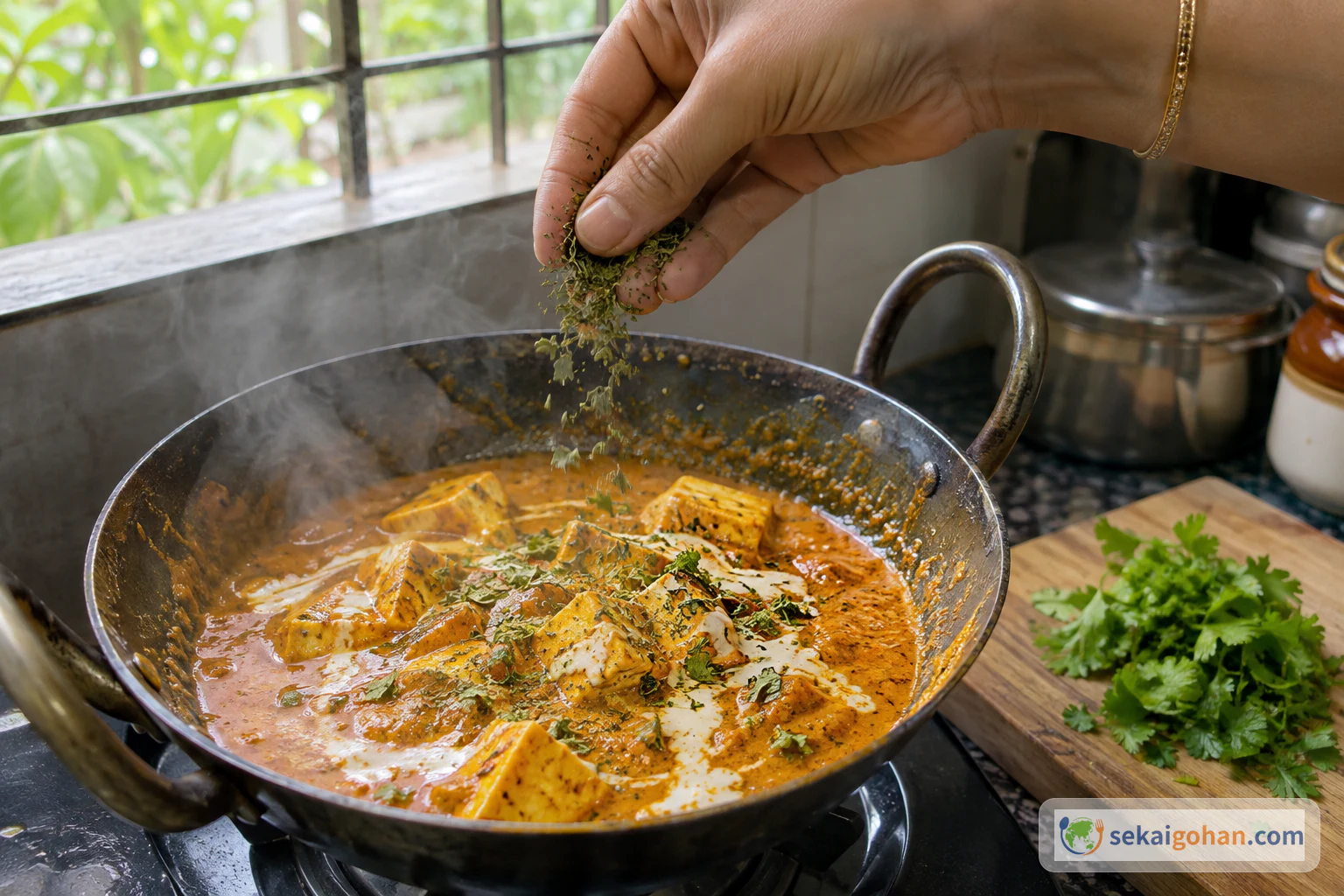
You press the blended onion, tomato and almond through a fine sieve with the back of a spoon, and what drips into the bowl is pale orange and as smooth as velvet. That puree then goes into butter and warm spices, cream softens it, and cubes of paneer sit in it for a few minutes until they are soft and warmed through. Shahi paneer is a North Indian curry of paneer, India's fresh unripened cheese, in a gravy made thick and silky with onion, nuts and dairy. It is gentle rather than fiery: milky, a little tart from the curd, slightly sweet, with saffron and dried fenugreek leaves rising from the top as you lift the bowl.
A "Royal" Curry Without a Settled Birthplace
The name is usually traced to a Persian word: shahi means "royal." It suits a gravy built from cream, nuts and saffron, the same rich ingredients associated with Mughal cooking. Still, the dish does not turn up in Mughal-era cookbooks, so the idea that it was born at the Mughal court is not settled. The safest thing to say is that it belongs to the Indian subcontinent.
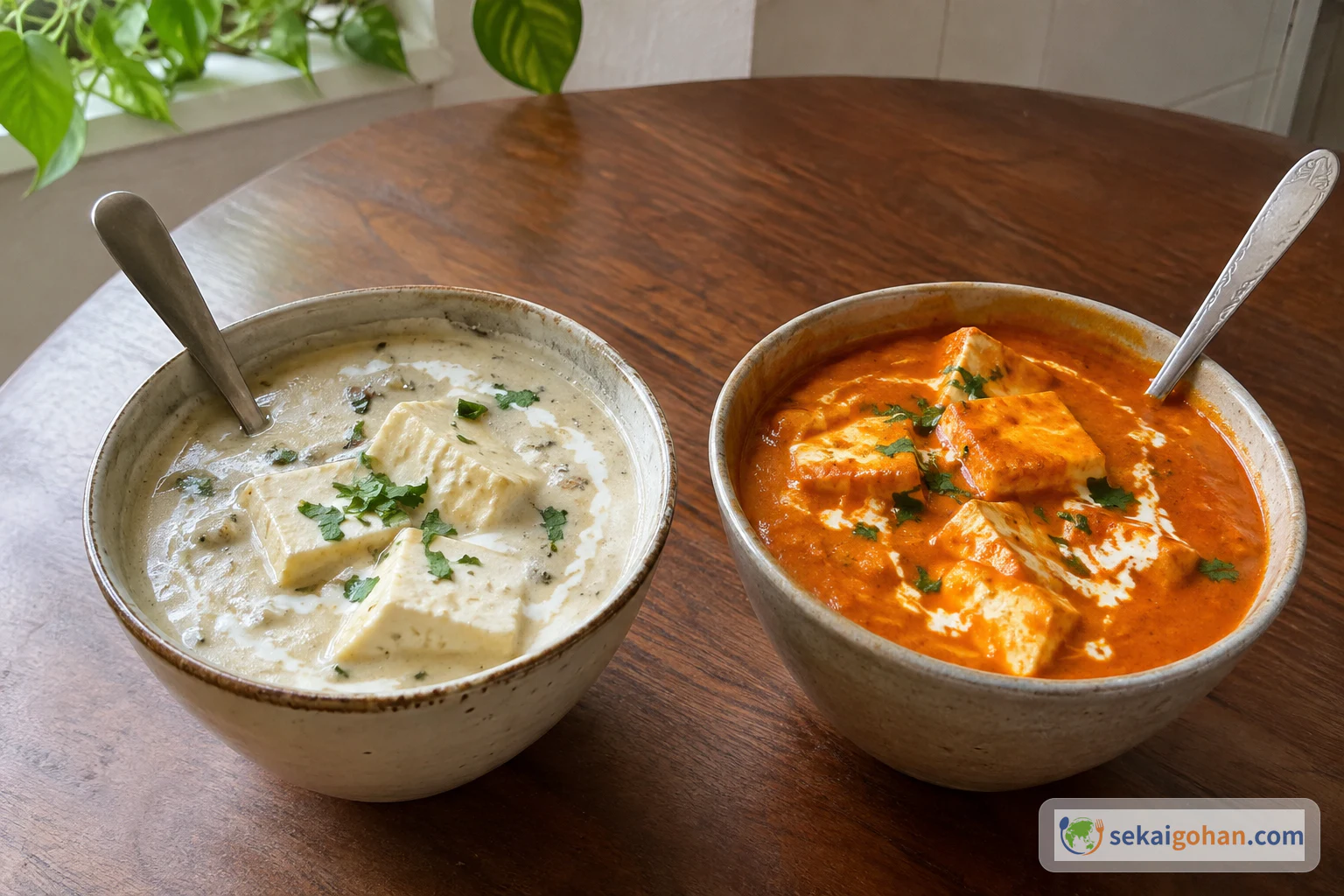
You will also see it called paneer rajwadi or chhena rajwadi. Many versions use the orange gravy cooked here, with tomato, nuts, curd and cream. Some recipes make a pale white gravy with no tomato at all. Households also choose their own nut: almonds in this version, cashews in many others.
Several North Indian curries look alike in the bowl. Paneer butter masala is the closest, and next to it shahi paneer is a touch sweeter. If you know the butter, tomato and cream gravy of murgh makhani, think of shahi paneer as a vegetarian cousin made smoother by nuts and curd and perfumed with saffron.
Paneer is the reason the dish exists. It is a fresh cheese that holds its shape in hot sauce, takes on whatever it simmers in and has a soft, slightly squeaky bite. In India it has a legal standard: no more than 60 percent moisture, and at least 50 percent milk fat on a dry basis. For more dishes from the same kitchens, such as chana masala, kashmiri dum aloo and rogan josh, see the Indian cooking page.
Ingredients (serves 4)
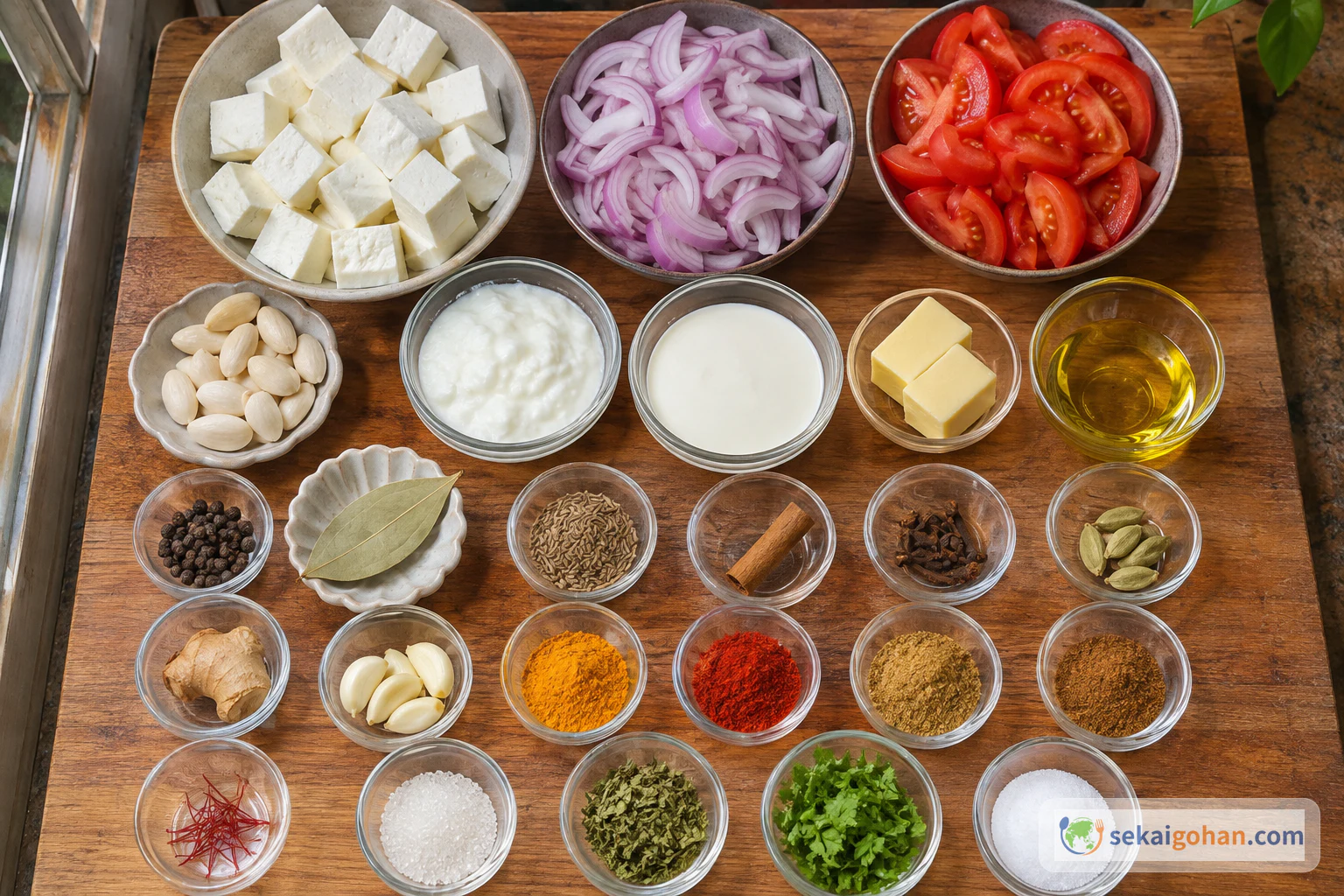
The oil is used twice, in two different pans. The first 2 tbsp cooks the whole spices and onion for the puree. The second 2 tbsp goes in with the butter for the gravy. Measure them separately so neither stage runs short.
This dish contains milk (paneer, butter, curd, cream) and tree nuts (almonds). Check the labels on packaged paneer, cream and spice blends for other allergens and shared-facility statements.
Equipment
- A wide, heavy pan for the puree
- A kadai or other deep pan for the gravy
- A blender or stick blender
- A fine-mesh sieve and a bowl to strain into
- A spoon or spatula for pressing the puree through
- A wooden spatula or spoon for stirring
Choosing and Substituting
Paneer comes chilled or frozen from Indian grocers and online shops, usually in blocks you cut into cubes yourself. Choose a firm block that holds an edge when you slice it. A crumbly or very wet block breaks apart in the gravy.
The whole spices, ground spices, kasuri methi and saffron are all at Indian and Middle Eastern shops, and many online spice sellers carry them. Kasuri methi is the one to track down. Its bittersweet, hay-like smell is what people recognise in a North Indian paneer curry, and nothing at the supermarket replaces it. Saffron goes in by the strand, so a small pack lasts a long time.
| Ingredient | Swap that works | What changes |
|---|---|---|
| Blanched almonds | Slivered or skinless almonds | Hardly anything. Skinless nuts keep the puree pale and smooth |
| Curd | Plain, unsweetened yogurt | Very close. Sweetened or flavoured yogurt throws off the balance |
| Cream | Dairy whipping or heavy cream | Any dairy cream works. Richer cream gives a heavier finish |
| Chili powder | Kashmiri chili powder | Same red colour with less heat |
| Saffron | A pinch more turmeric | The golden colour stays but the saffron perfume is lost |
Keep the paneer, the kasuri methi and the slight sweetness of the sugar, and the dish will taste of North India wherever you cook it. Saffron is the one thing you can let go of on a weeknight.
Method: Two Pans and a Sieve
The work falls into two halves. First you cook the onion, tomato and almond base and let it cool completely. That is the hands-off stretch, and a good time to cube the paneer, chop the coriander and measure the gravy spices. Then you blend and strain the base, and finish the gravy in a second pan, adding the paneer only at the end.
Once the cream is in, keep the gravy at a lazy simmer. Hard boiling can split the dairy into a grainy sauce, and gentle heat is also what lets the oil separate cleanly.
When It Goes Wrong
| What you see | Why | What to do |
|---|---|---|
| The gravy feels grainy | The base was blended hot or not strained | Strain the gravy through the fine sieve now, then return it to the pan. Next time cool the base completely and strain it before step 5 |
| The sauce looks curdled or split | The dairy boiled too hard | Lower the heat at once and stir gently. A spoonful of cream stirred in off the heat helps bring it back together |
| The powdered spices taste bitter | The heat was too high in step 5 | The bitterness stays, but cream and a pinch of sugar soften it. Next time add the puree as soon as the spices smell toasty |
| The paneer crumbles | It went in too early or was stirred hard | Add it only in step 7 and turn it with a folding motion |
| It is hotter than you wanted | The chili powder is strong | Stir in a little more cream. Next time use less chili or Kashmiri chili powder |
| The aroma is flat | The kasuri methi went in whole or was left out | Crush another pinch between your palms over the pan at the end |
Serving and Variations
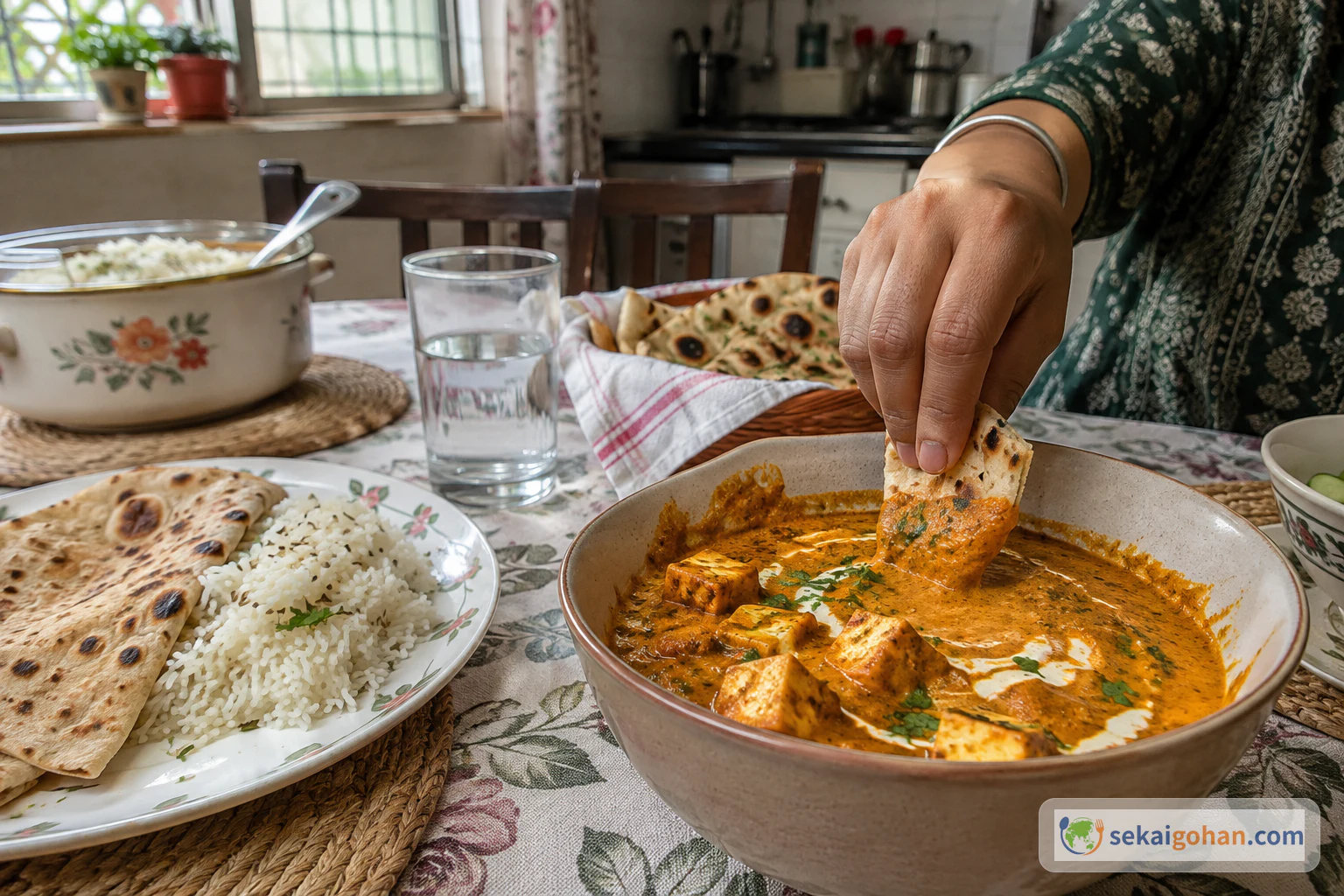
Naan or roti is the classic partner. You tear off a piece and use it to scoop a cube of paneer with plenty of gravy. Jeera rice, steamed with cumin seeds, soaks up the sauce well, and thin phulka or a millet pilaf also work. Because the gravy is rich and mild, it is good on the same table as a spicier dish, or as the centrepiece when you cook a vegetarian meal for guests.
Leftovers: cool them, refrigerate promptly in a covered container, and reheat thoroughly over low heat, stirring gently so the paneer stays whole.
Variations
- Cashew and yogurt. Use cashews in place of almonds and blend them with yogurt and tomato. The method is quicker. One version fries the paneer lightly first, which gives the cubes a golden skin and a firmer bite. Add the cashew-yogurt paste late, a little at a time, over low heat so it does not split.
- No nuts. Cook tomato puree with fresh cream and skip the nuts entirely. The result is lighter and sharper, with less body. It suits a busy night or a table with a nut allergy.
- The white style. Some cooks make a pale gravy with no tomato, built on nuts and cream. It loses the tang and the orange colour and becomes softer and milkier.
Frequently asked questions
Can I make shahi paneer for someone with a nut allergy?
Make the no-nut style instead: tomato puree with cream, and no almonds. The gravy is thinner and less rich, but it is still creamy and mild. Check that the paneer, cream and spices are free of nut traces.
Can I use tofu instead of paneer?
Some cooks use firm tofu. Press out as much water as you can before cubing it, and add it at the same point as the paneer. It is softer and has none of the milky taste of paneer, so the dish becomes a close cousin rather than shahi paneer.
Do I really have to strain the puree?
Straining is what gives shahi paneer its velvet texture. If you skip it, the gravy tastes the same but feels coarser. A strong blender narrows the gap, but the sieve still catches fibres and skins the blades leave behind.
Why is there sugar in a curry?
The slight sweetness is part of the dish's character. It is what sets shahi paneer apart from its orange neighbours. The teaspoon of sugar rounds off the tomato and curd and brings out the cream, without making the gravy taste like dessert.