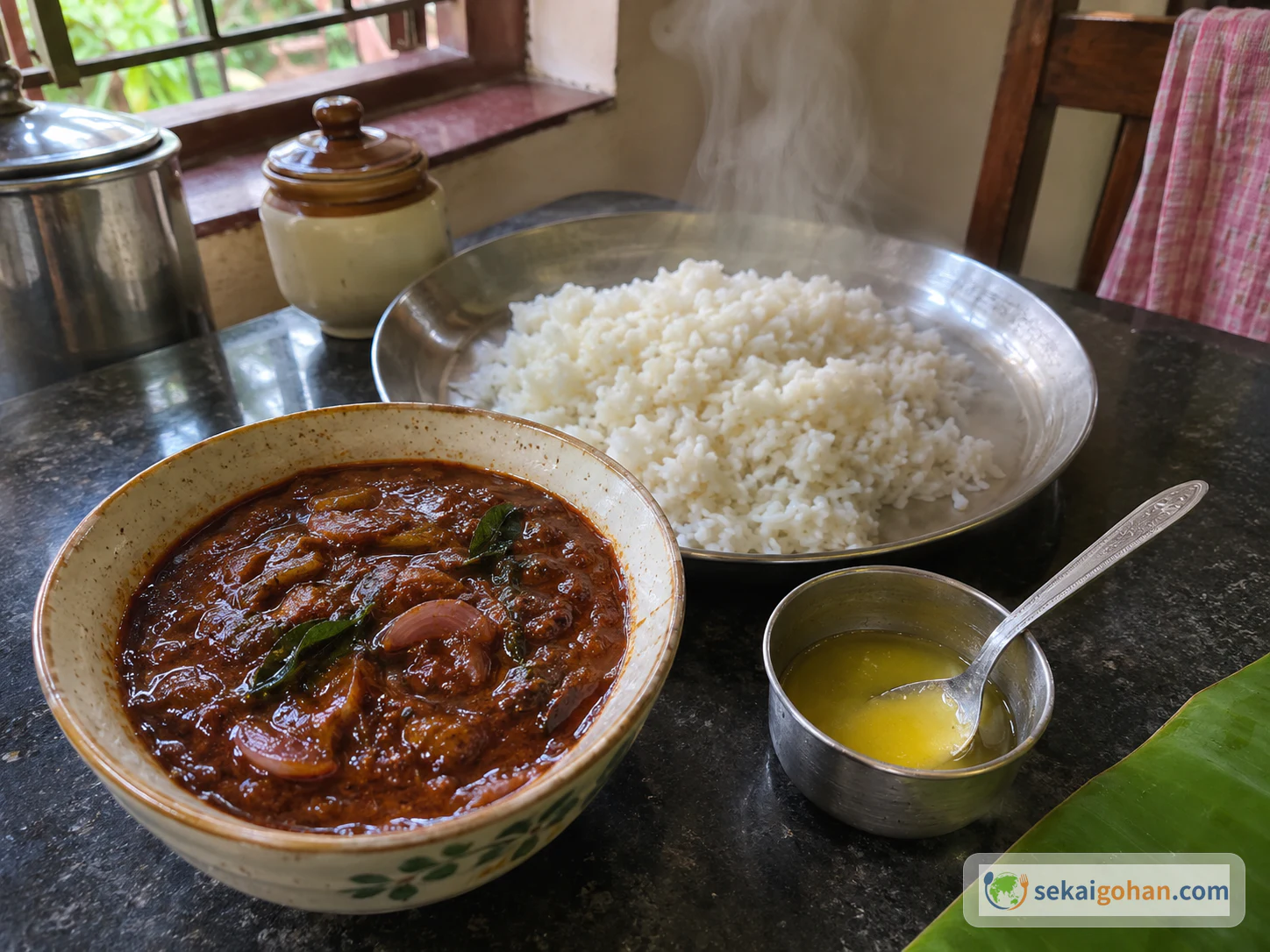
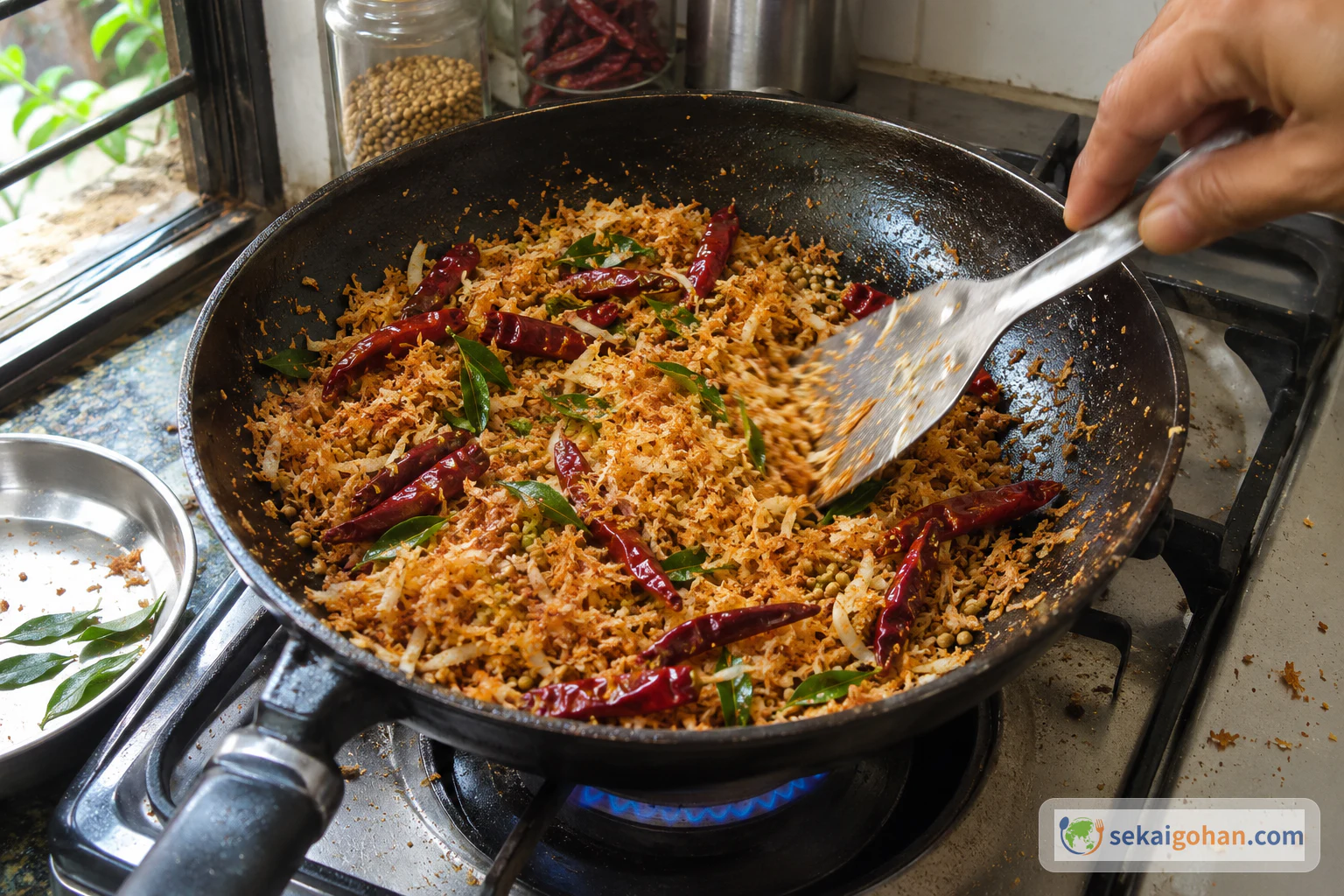
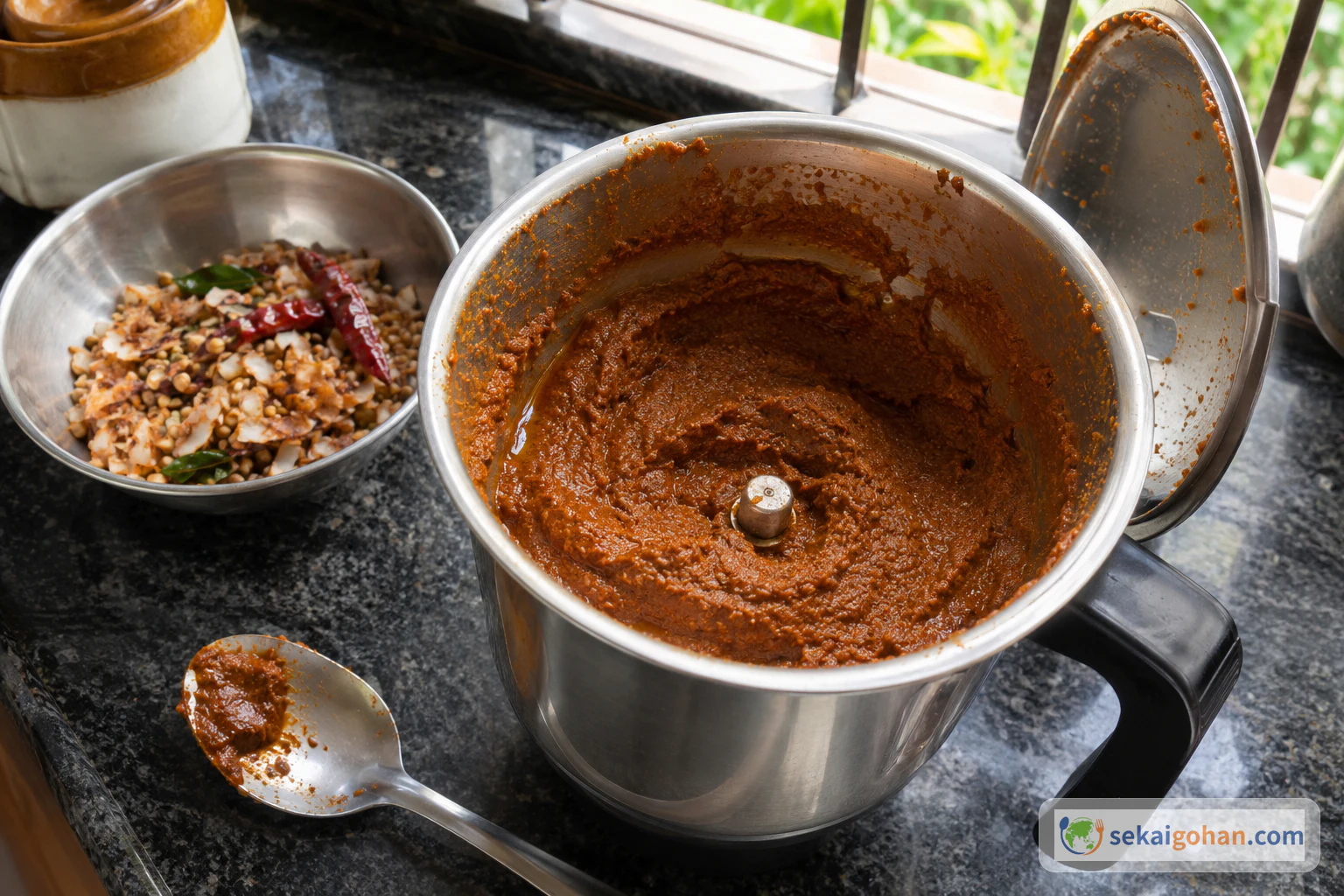
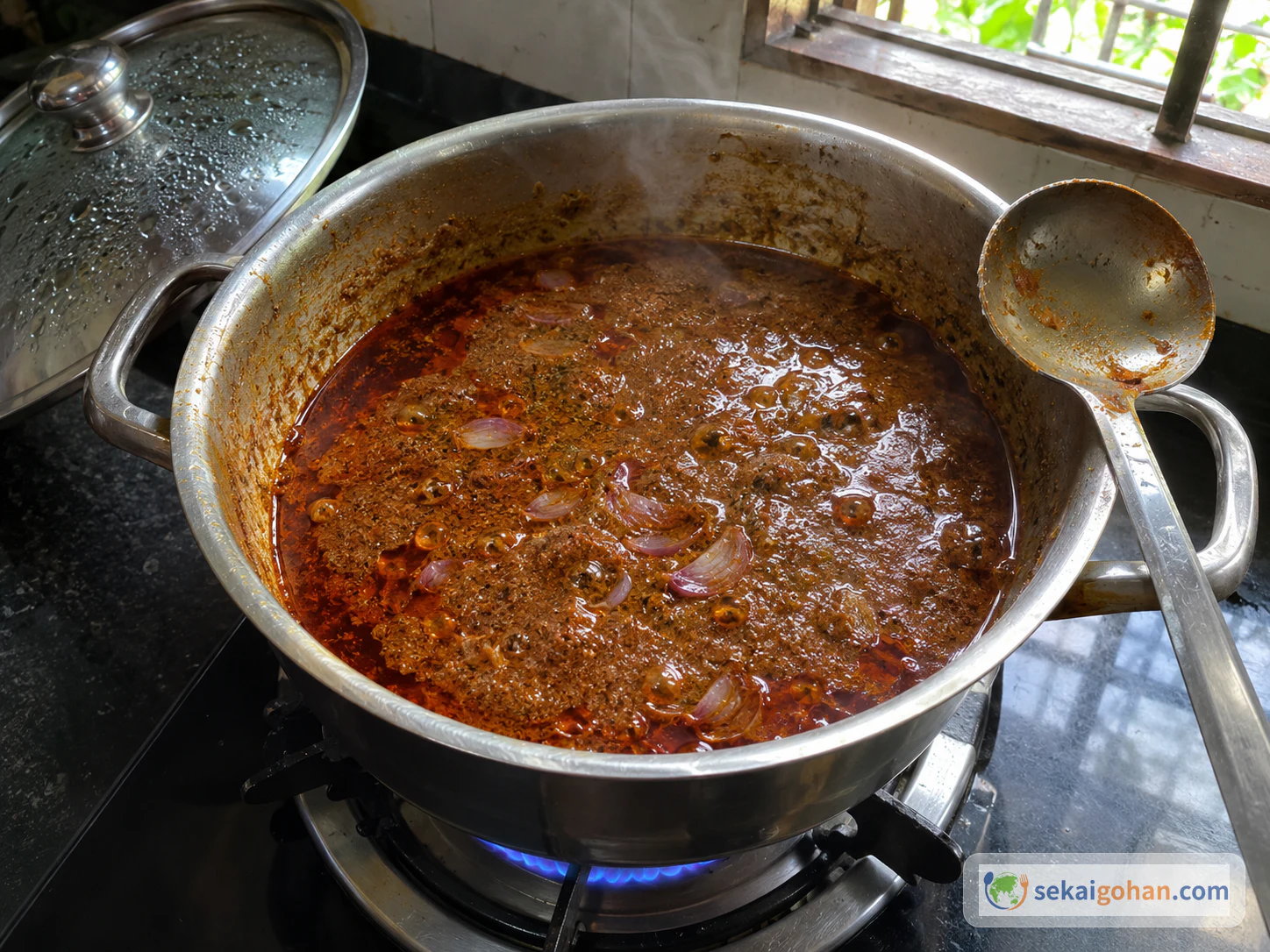
The grated coconut starts out white in the pan. Then, with steady stirring, it turns gold strand by strand, and the coriander seeds and dried chillies start to smell toasty as the curry leaves go crisp. That roasted coconut, ground to a paste and simmered with shallots and tamarind, becomes ulli theeyal, a dark and glossy gravy from Kerala. It is sour, hot and deeply nutty, and the small onions inside go soft and sweet. When it is ready, a ring of red-orange coconut oil lifts to the edge of the pot, and it goes onto hot rice with a little ghee.
A Dark Gravy Named for Burning
The colour surprises people first. Theeyal is so dark it looks scorched, and the name fits: theeyal is usually explained as meaning "burnt". The colour comes from the coconut, roasted until it is deep golden brown and then ground with the spices. It is not burnt food, though. Roast the coconut too far and the gravy turns bitter. The skill is to take it close to that point and stop.
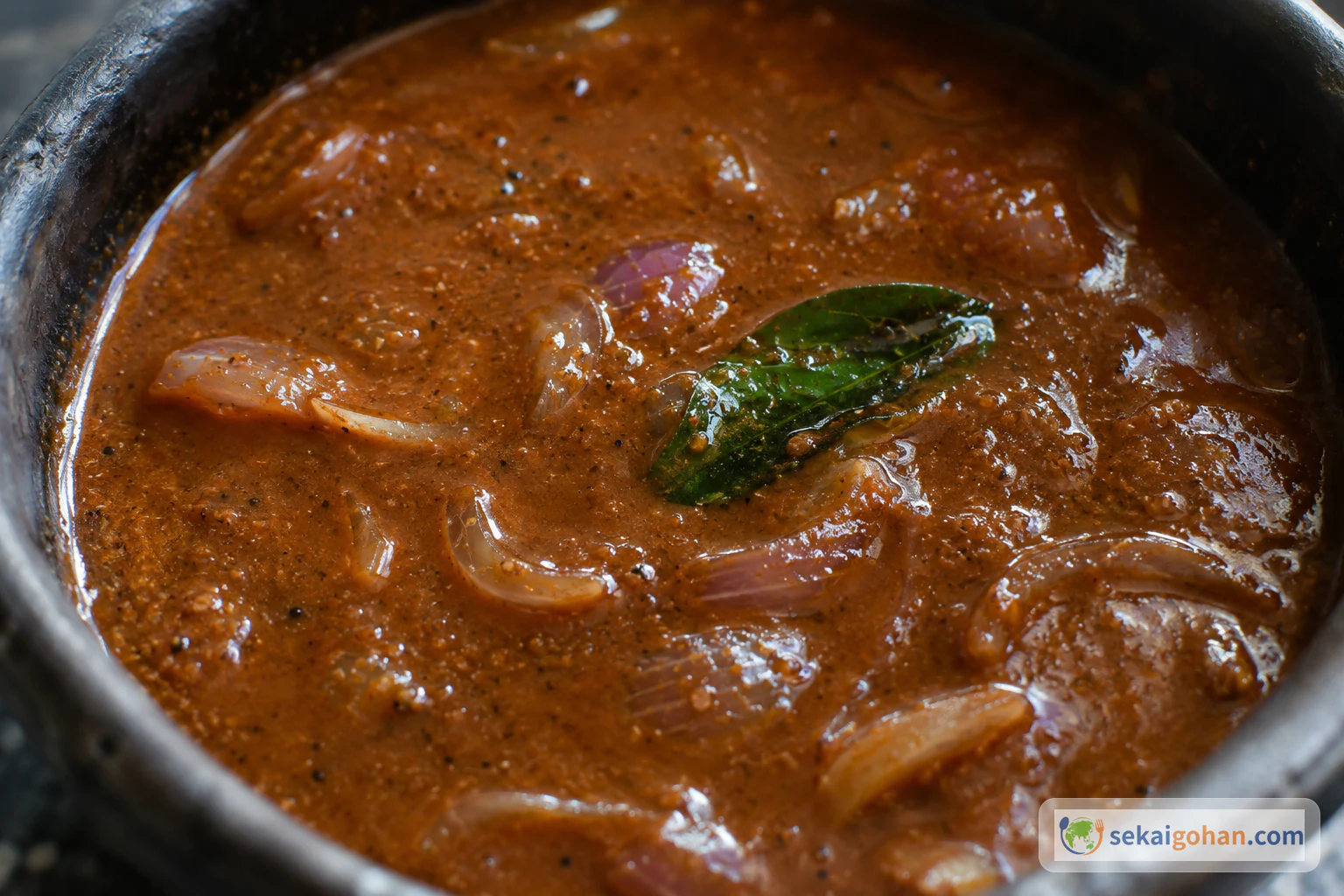
Its structure is what sets theeyal apart from the other sour dishes of South India. Sambar is built on lentils and vegetables. Rasam is thin, sharp and peppery. Theeyal is built on roasted coconut ground with coriander and dried red chillies, then loosened with tamarind and simmered until the oil comes back out. It is a separate dish with its own method, not a variant of either.
Shallots first, then whatever is in season
Ulli means small onion, and the shallot version is the most basic theeyal and the one most often praised. The same roasted coconut base also takes eggplant, okra, bitter gourd, drumsticks, ginger, sundakkai berries or prawns. The filling changes, but the roasted coconut stays at the heart of the dish. There is also paccha theeyal, made with coconut that is not roasted, which is likened to the kaara kuzhambu of Tamil Nadu. It is a different dish.
Households finish theeyal their own way. Some stir in thick coconut milk at the end. Some cook the shallots in tamarind water first and pour the tempering over at the end. Some roast the coconut to a deep brown instead of golden. Every one of these is a real theeyal.
On the sadhya leaf and the everyday table
Ulli theeyal is cooked for Onam and for guests. In some homes and regions it is part of the sadhya, the feast served on a banana leaf. The sadhya itself has changed over time. The traditional core is described as four curries (kalan, olan, erissery and pulissery), with sambar, rasam and avial coming later, and the arrival of chillies and tamarind reshaped Kerala's cooking. Both of those go into theeyal, but it is not clear when theeyal itself took its place on the leaf. Away from the feast, it is everyday food in Malayali homes. For another Kerala coconut dish, try the coconut-milk fish curry meen moilee. For more of the region, see our India page.
Ulli is the small onion, the sambar onion or shallot. Theeyal names the method and the roasted-coconut gravy, so the word for the filling goes in front: ulli theeyal, or a theeyal of eggplant or prawns.
Ingredients (serves 4)
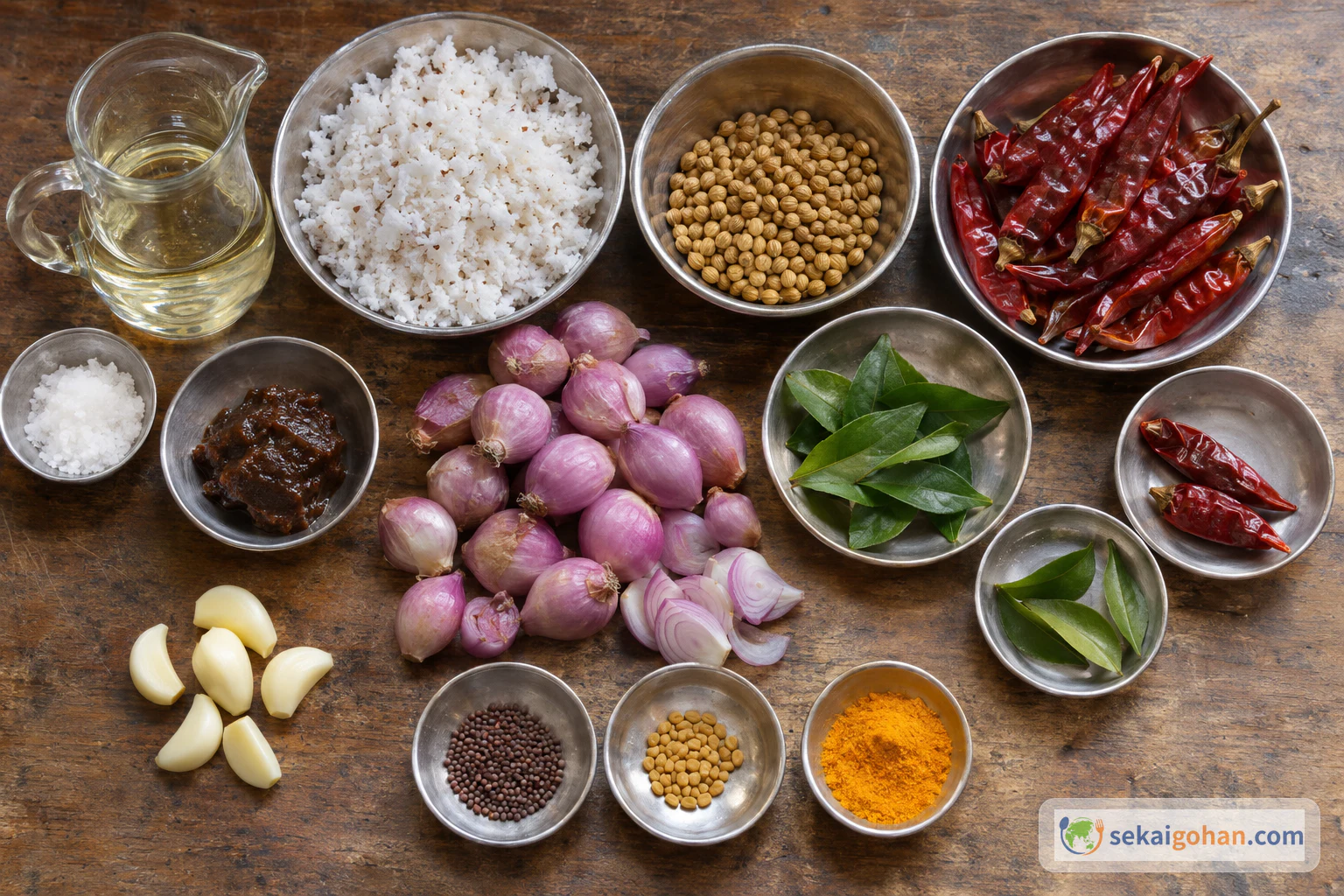
The ingredients fall into three groups: what you roast and grind, what goes into the hot oil, and what simmers in the pot. Count the chillies and curry leaves for each group separately.
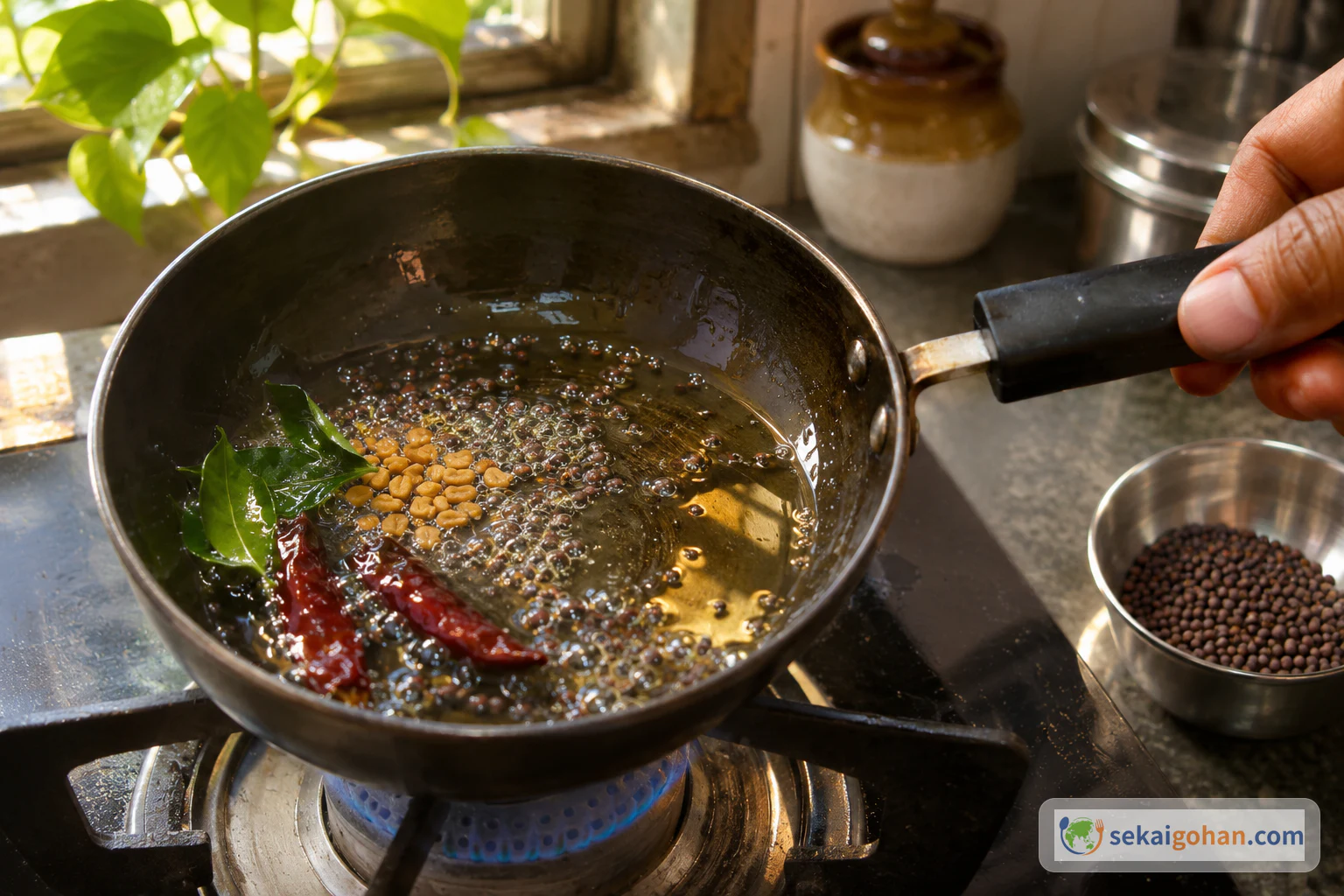
Ten chillies are roasted and ground into the paste, which gives the gravy its colour and steady heat. The other two fry whole in the oil and add aroma. If you roast all twelve, the paste gets hotter and nothing goes into the tempering.
This dish contains coconut. Mustard seeds come from a plant in the cabbage family and are an allergen for some people. Dairy, wheat, egg and peanut are not among the ingredients, but serving it with ghee adds dairy, and packaged spices and pastes can carry their own allergen labelling. Check them.
Equipment
- Heavy frying pan, for roasting the coconut and spices
- Blender, spice grinder or mortar and pestle
- Heavy-bottomed pot with a lid
- Spatula and a spoon for tasting
- Measuring cups and spoons
Buying and Substituting
The coconut and the tamarind decide how the dish tastes, so those are where to spend your effort. Freshly grated coconut is best. Frozen unsweetened grated coconut from an Indian or Southeast Asian grocer works, but it holds water and oil differently from fresh. It takes longer to colour, and the aroma comes up more slowly, so judge it by colour rather than minutes. Tamarind paste in a jar is the easiest form of tamarind. A block of tamarind pulp is stronger and fruitier: soak a lemon-sized piece in hot water, squeeze it, and strain out the seeds and fibres before using the liquid.
For the onions, sambar onions or shallots are right. Pearl onions or small onions work, but they are a different variety and the gravy will be a little less sweet and sharp. A large red onion, sliced, is an acceptable stand-in when there are no small ones. Buy curry leaves fresh if you can find them, otherwise frozen or dried. Bay leaf is no substitute: its aroma is something else entirely. Use whole mustard and fenugreek seeds, since the tempering depends on whole seeds sizzling in oil.
Dried red chillies vary a lot in heat from one kind to another. Ten Indian chillies chosen for colour taste very different from ten small hot chillies from another cuisine, so pick yours by how hot they are and adjust the count. Virgin coconut oil smells strongly of coconut, while refined oil is neutral. Theeyal gets much of its aroma from the oil, so virgin oil keeps more of the coconut scent.
Method
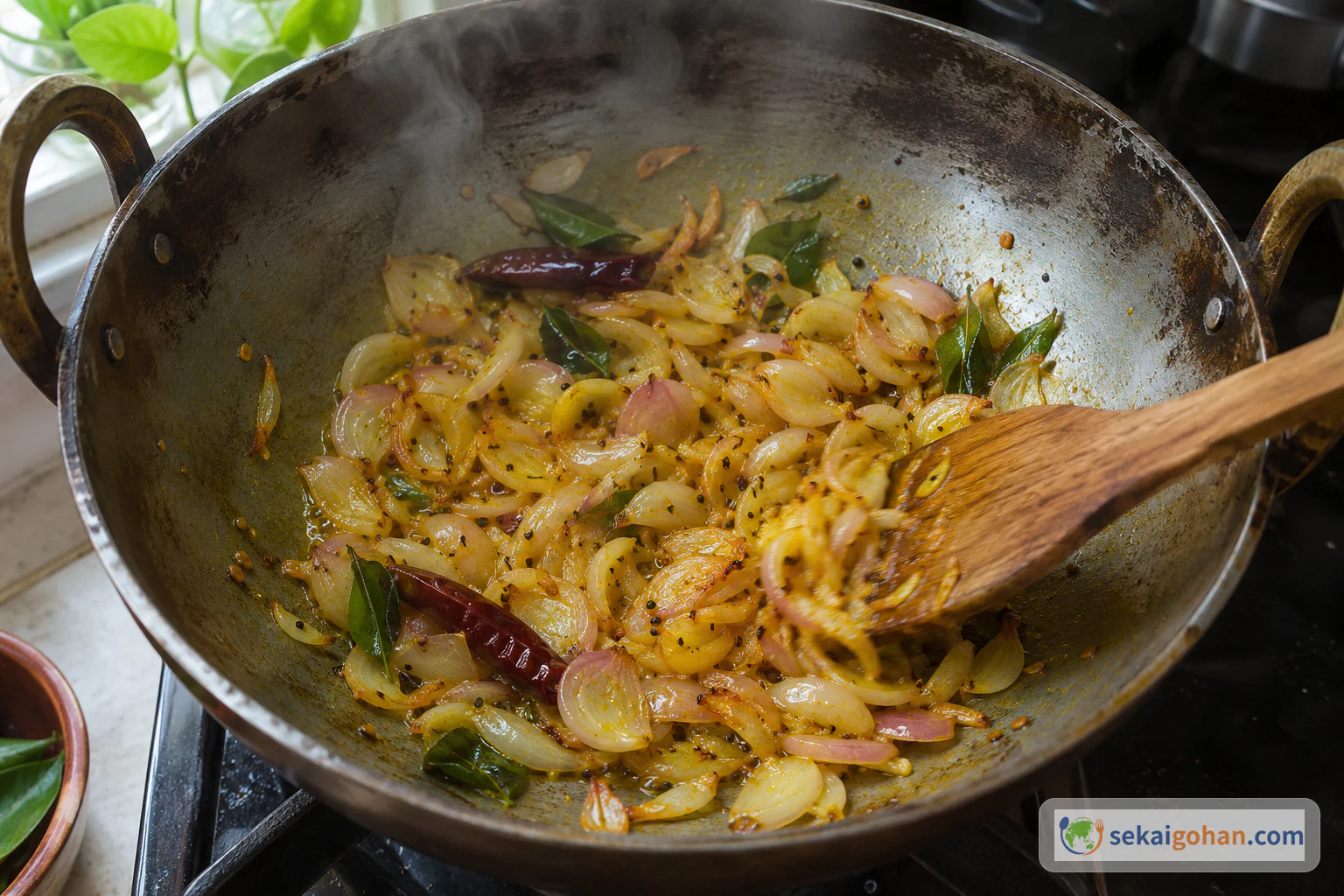
Slice the shallots and get the tamarind ready first, since the work in the pot goes quickly once it starts. Roast and grind the coconut while the pot is still cold. The only hands-off stretch is the covered simmer at the end. Everything before that needs your attention, the roasting most of all.
Roasting decides everything. An even golden brown gives a deep, nutty gravy that grinds smooth. Burnt patches spread bitterness through the whole pot, and pale patches add no aroma. Stir constantly and keep the heat at medium-low.
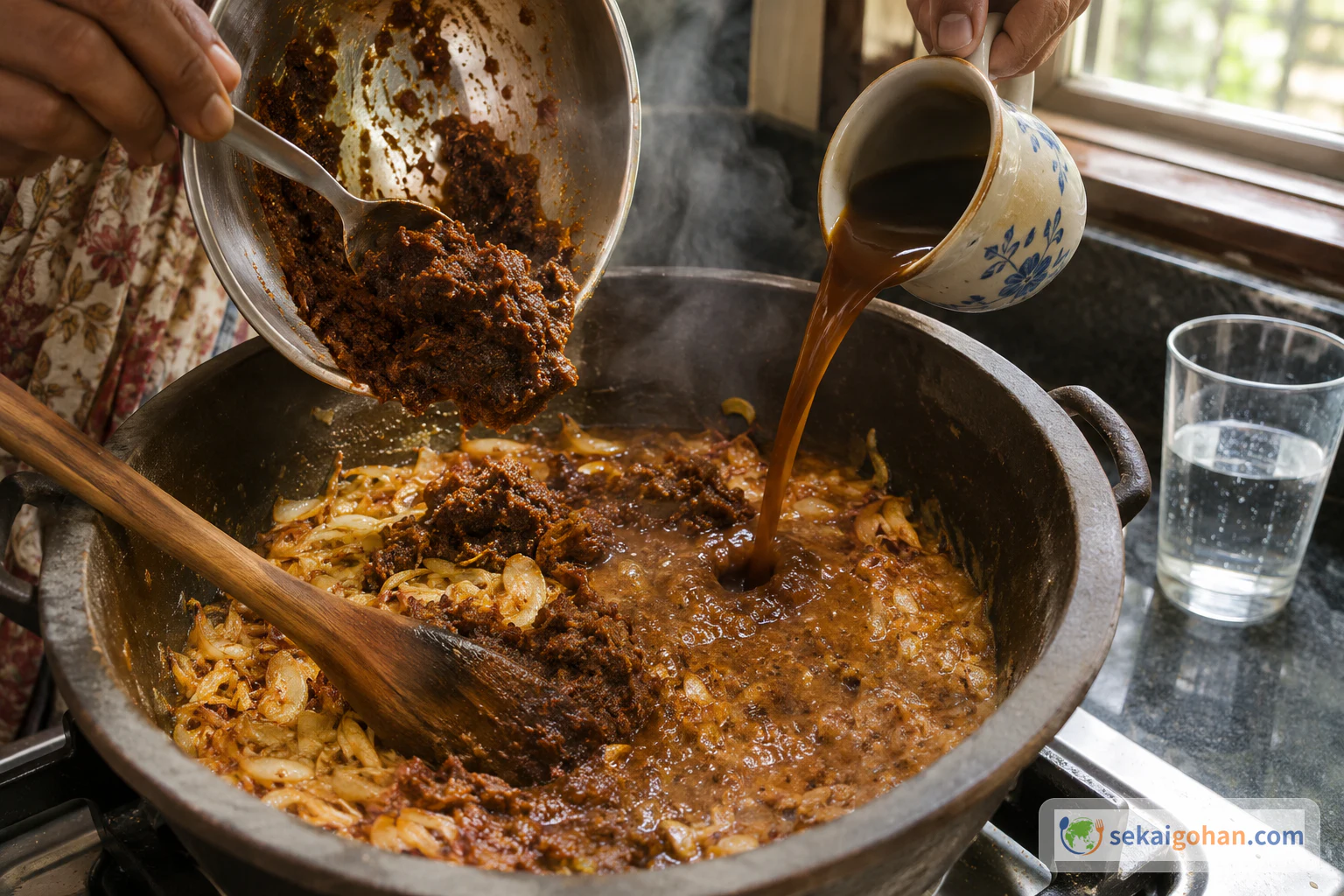
Tamarind varies in strength from jar to jar and block to block. Add part of it, taste after the gravy boils, and then add more. Once a gravy is too sour, it is hard to bring back.
Mustard seeds pop hard and can spit hot oil out of the pot. Keep your face back, keep a lid nearby, and add the curry leaves carefully, because their moisture makes the oil spatter.
When It Goes Wrong
| What you see | Why | What to do |
|---|---|---|
| The gravy tastes bitter and acrid | The coconut burned in spots during roasting | Next time, roast at medium-low heat, stir constantly and stop at an even golden brown |
| The roasted coconut won't grind into a paste and stays grainy | It was not roasted enough | Roast until it is fully golden brown with no white left before you grind |
| A sharp bitter note runs through it | Too much fenugreek, or it darkened too far in the oil | Use exactly ¼ tsp and keep the tempering short before the shallots go in |
| Too sour | All the tamarind went in at once | Add tamarind gradually and taste after the gravy boils |
| Thin and runny, with no oil on top | Too much water, or the simmer was cut short | Keep simmering until it thickens and the oil separates |
| Some spots taste burnt and others taste of raw coconut | Uneven roasting | Spread the coconut out and keep it moving from the edges of the pan |
Serving, Variations and Storage
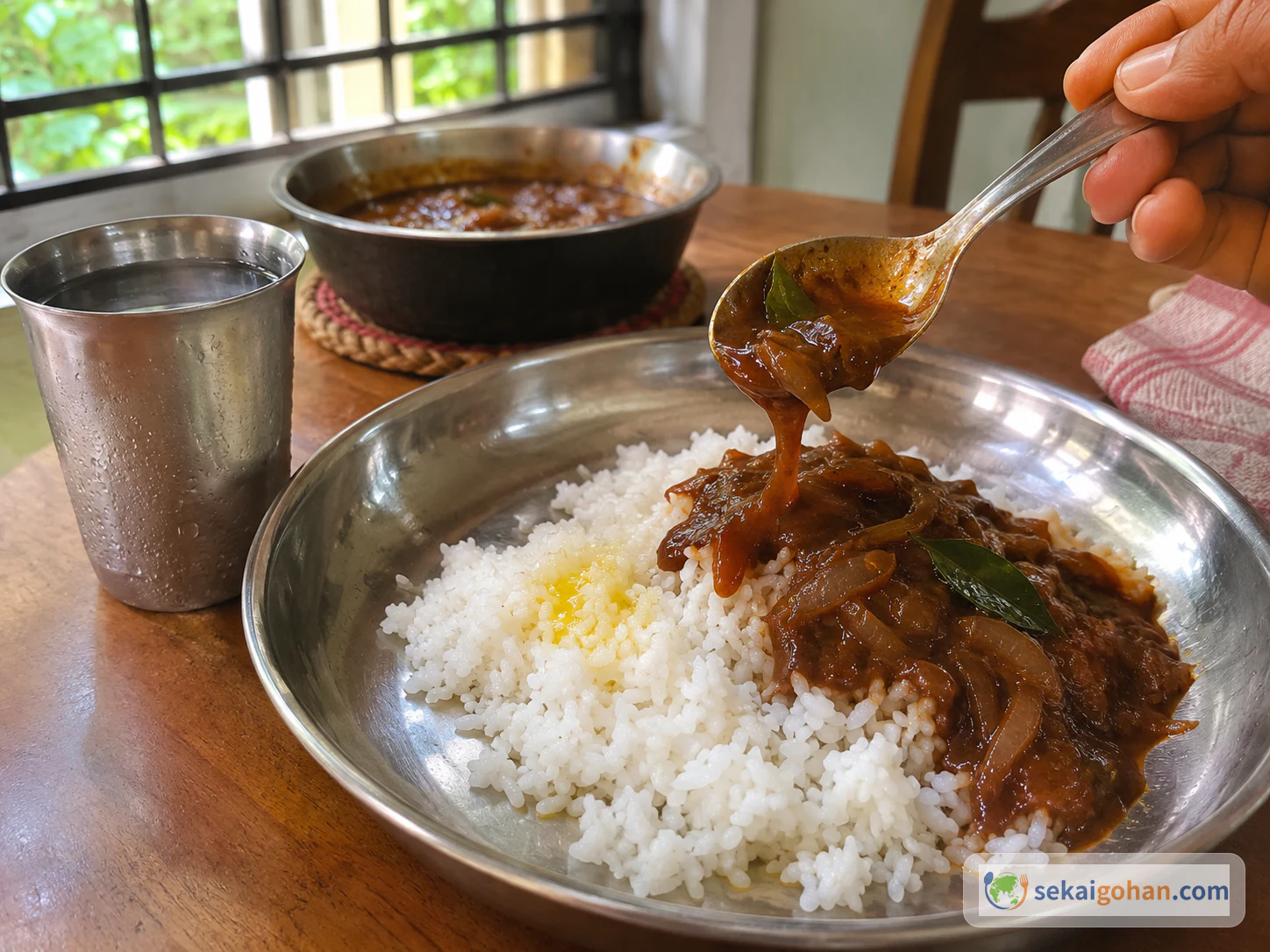
Theeyal is strong, so a little goes a long way. Spoon it beside hot steamed rice with a drizzle of ghee and mix it in a bit at a time. It also goes well with Kerala parotta and with chapati. On a feast day it is one dish among many on the leaf. On an ordinary night, rice, theeyal and a vegetable side make a full meal.
Variations
- Finish with coconut milk. Stir a little thick coconut milk in at the end. The gravy gets paler, rounder and less sharp.
- Temper at the end. Cook the shallots in tamarind water first, then fry the mustard seeds, curry leaves and chillies separately and pour them over the finished gravy. The aroma of the tempering stays fresher and sits on top.
- Change the filling. Eggplant, okra, bitter gourd, drumsticks and prawns are all made as theeyal. The amounts change with the filling, so the quantities here are written for shallots only.
Storage
Let the theeyal cool, then refrigerate it promptly in a clean covered container and eat it soon. Do not leave it out at room temperature. Reheat it in a pot over gentle heat, stirring, until it is hot all the way through.
Frequently Asked Questions
Can I grind the roasted coconut without any water?
Yes. In the older way, the roasted coconut is ground with no water at all until it releases its own oil. That gives a denser paste with more aroma, but it needs a strong grinder or a stone and a lot of patience. A small splash of water gets a blender to a smooth paste much faster.
How do I make it less spicy?
Use fewer of the 10 roasted chillies, or switch to a milder dried chilli. The gravy will be less red as well as less hot, because those chillies give much of the colour. Keep the 2 chillies in the tempering for their aroma.
Why does the oil need to separate before it is done?
The oil comes back out of the gravy once the paste has cooked through and the raw edge of the coconut and tamarind has gone. Stop before that and the gravy tastes flat and slightly raw. When you see the oil at the edges, it is ready.
Is a block of tamarind better than paste?
Block tamarind tastes fresher and fruitier, and paste is quicker and more consistent. Both work in this gravy. Whichever you use, add it a little at a time, because sourness is the easiest thing to overdo here.