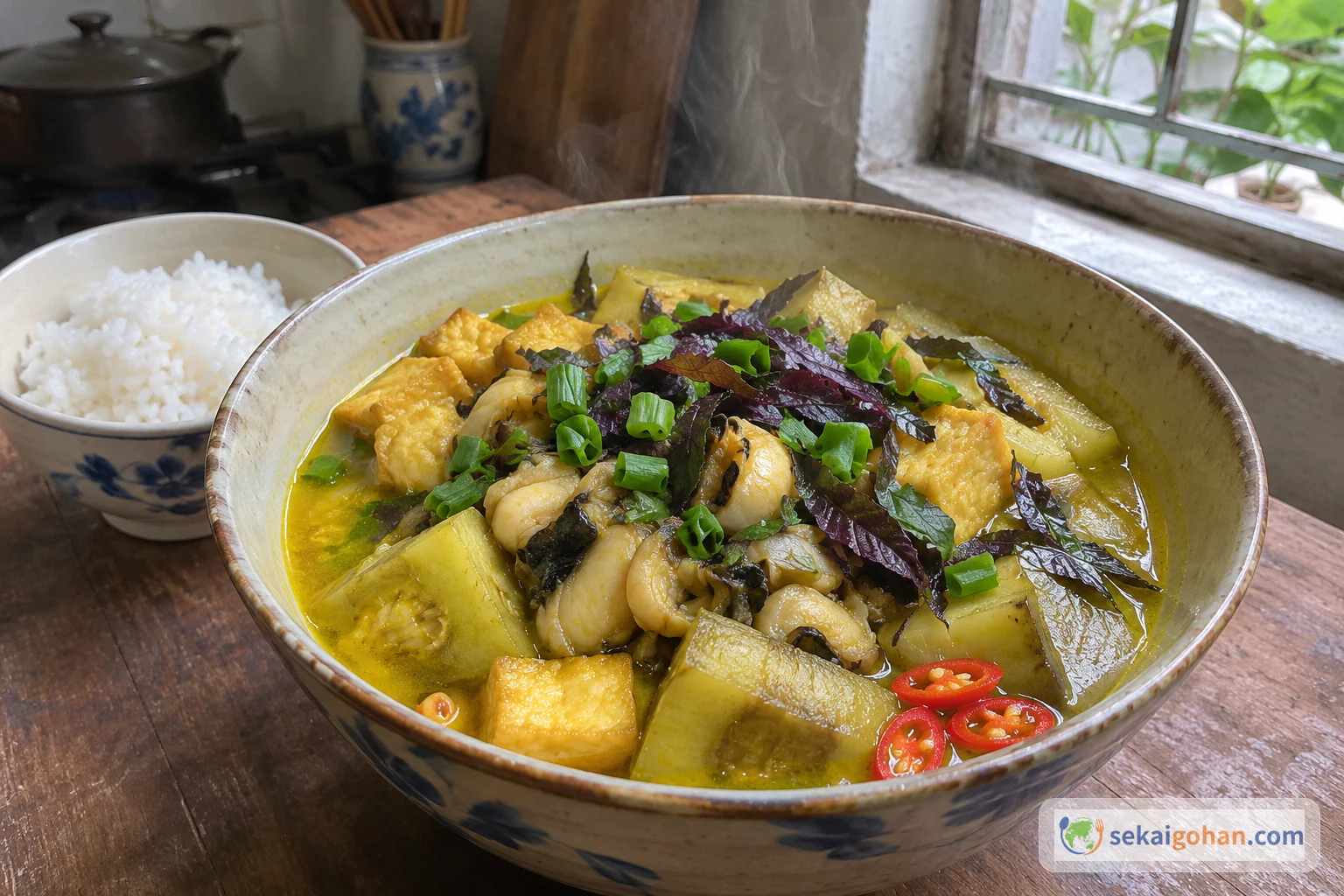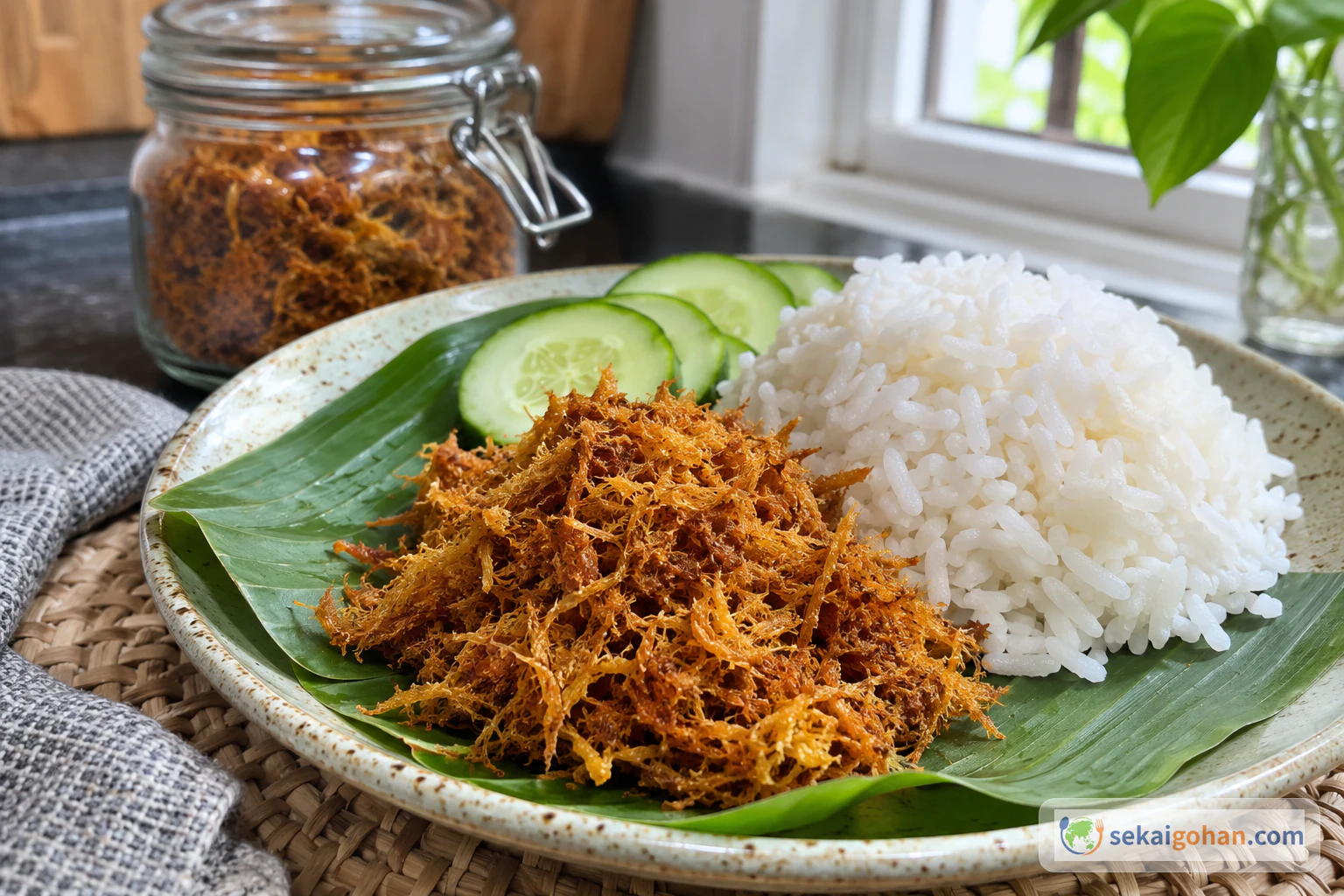
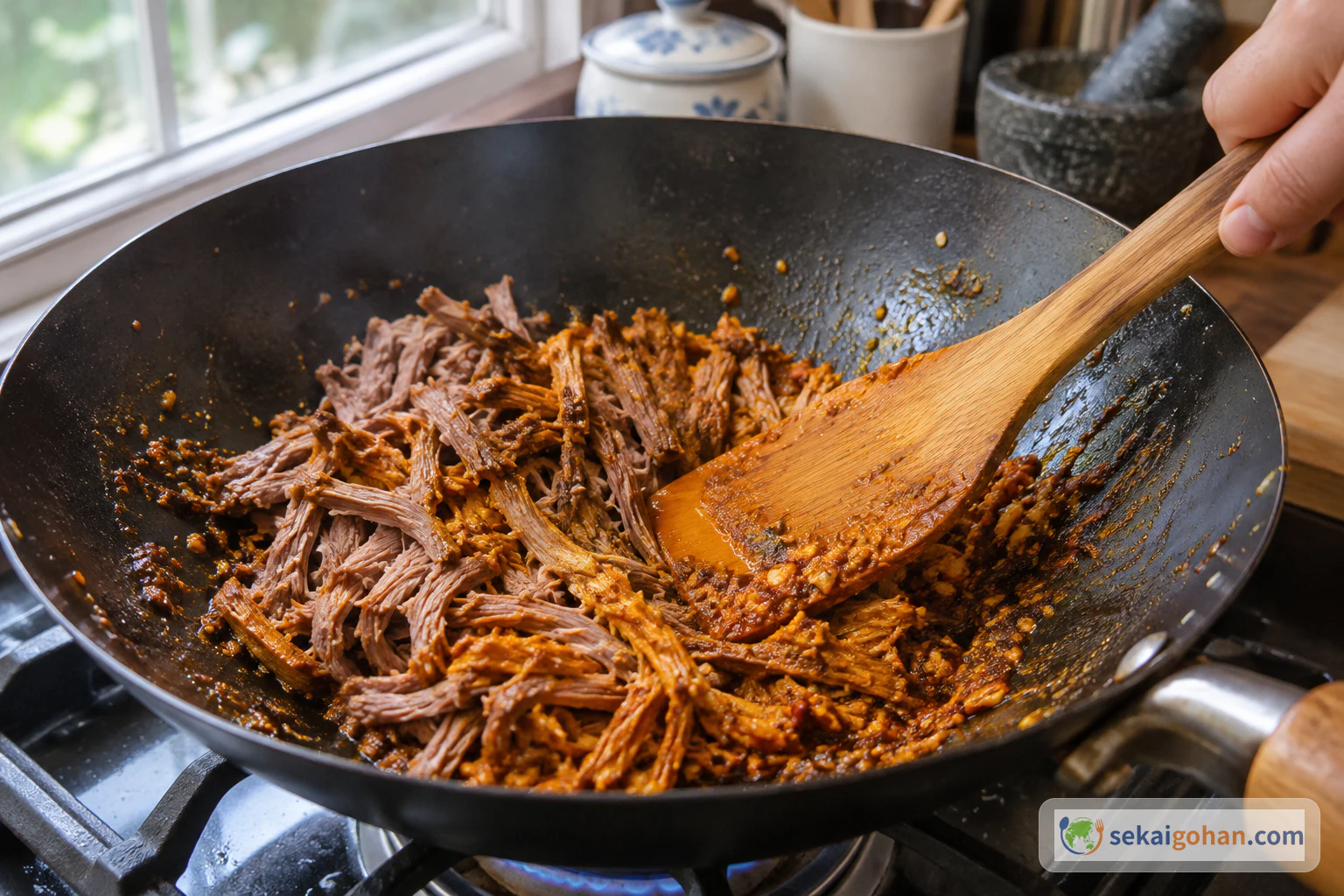
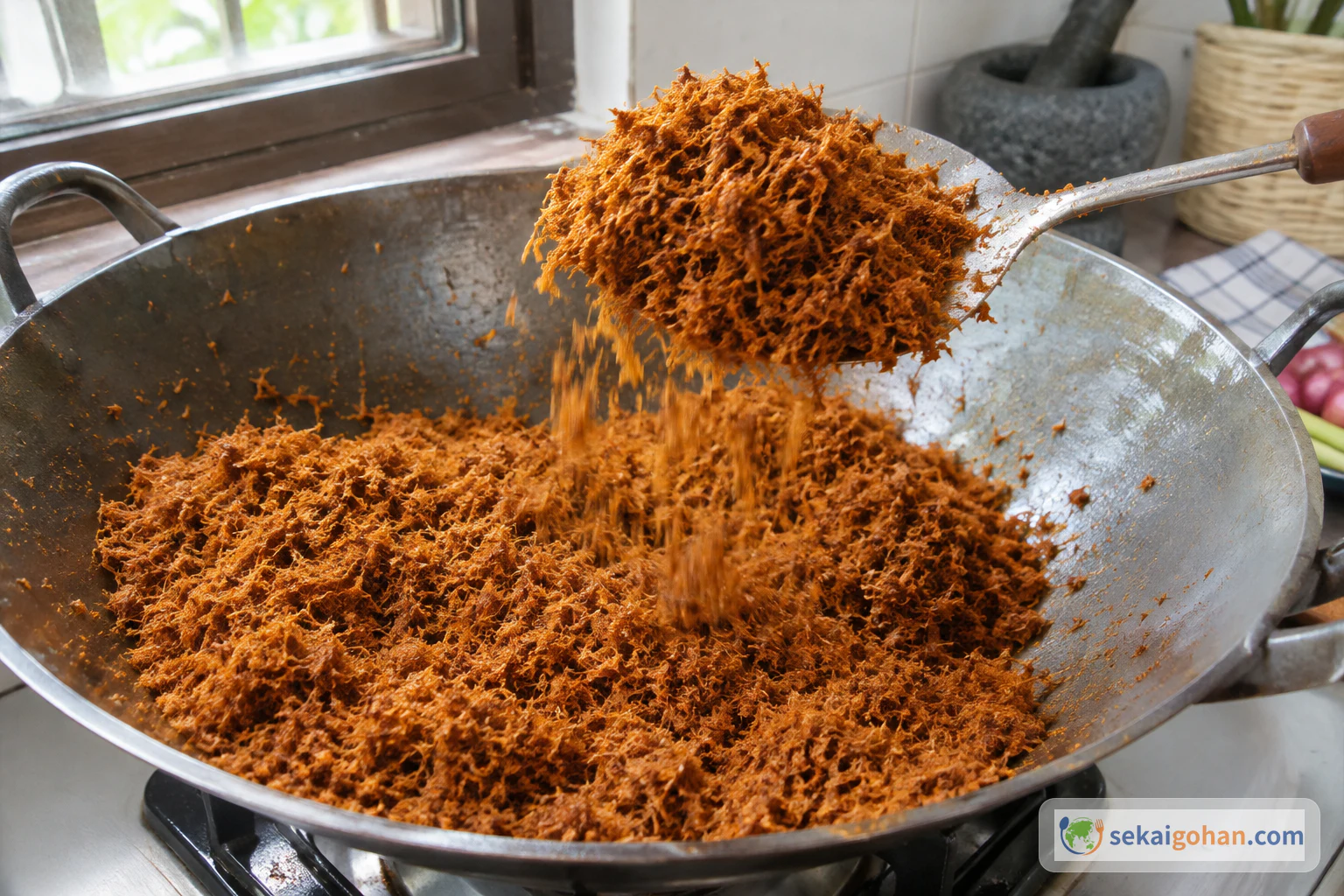
Near the end, the wok goes quiet. The spatula keeps pressing shredded beef against the hot metal, the steam thins out, and the dark, glossy mass turns into loose golden-brown threads that smell of toasted coriander, fennel and caramelised palm sugar. That is serunding: beef simmered until tender, pulled into fibres, then fried with a spice paste, coconut and tamarind until it is completely dry. In Malaysia it sits in a jar on the table and goes over rice by the spoonful, sweet and sour at once, with a slow chilli heat and the nutty depth of toasted coconut.
From Rendang to Floss: Serunding in Kelantan
Serunding is usually described as rendang taken all the way to dry. Rendang is a slow braise of beef in coconut milk and spices. Serunding starts in the same family of flavours, but the meat is shredded and fried until every drop of moisture is gone, leaving a light floss that keeps. On the east coast of the peninsula it also goes by sambal daging lumat, and in Kelantan the beef version is also called sambal daging.
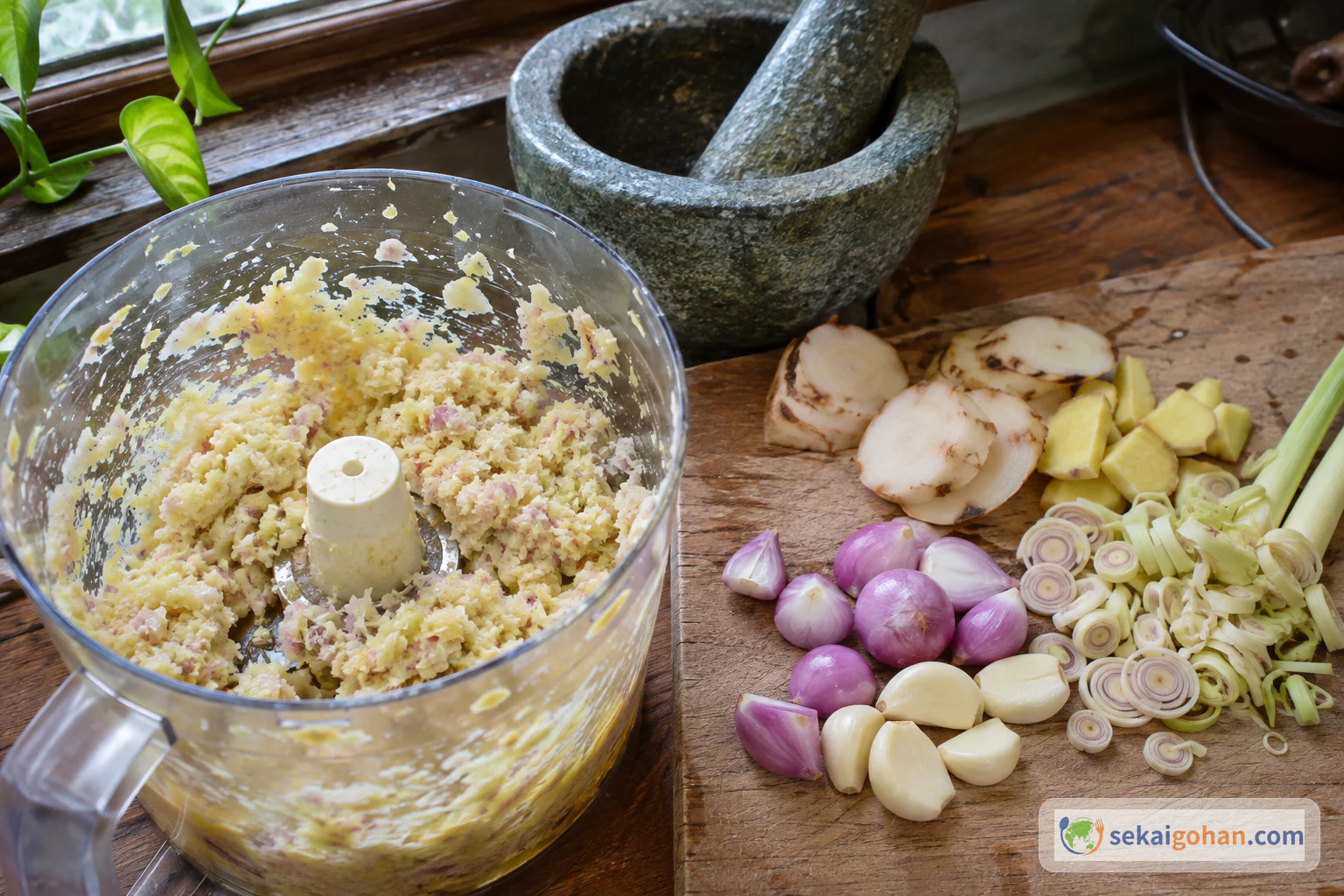
Keeping was the point. In Kelantan, women turned serunding into a home industry because a dry floss lasts where a wet curry does not, and Kelantan producers still sell it across Malaysia. The Kelantan beef serunding below is the style made in Kampung Orang Laut, with a paste built on galangal, lemongrass and ginger, and a seasoning of tamarind and palm sugar that pulls the flavour toward sweet and sour.
Before the holidays
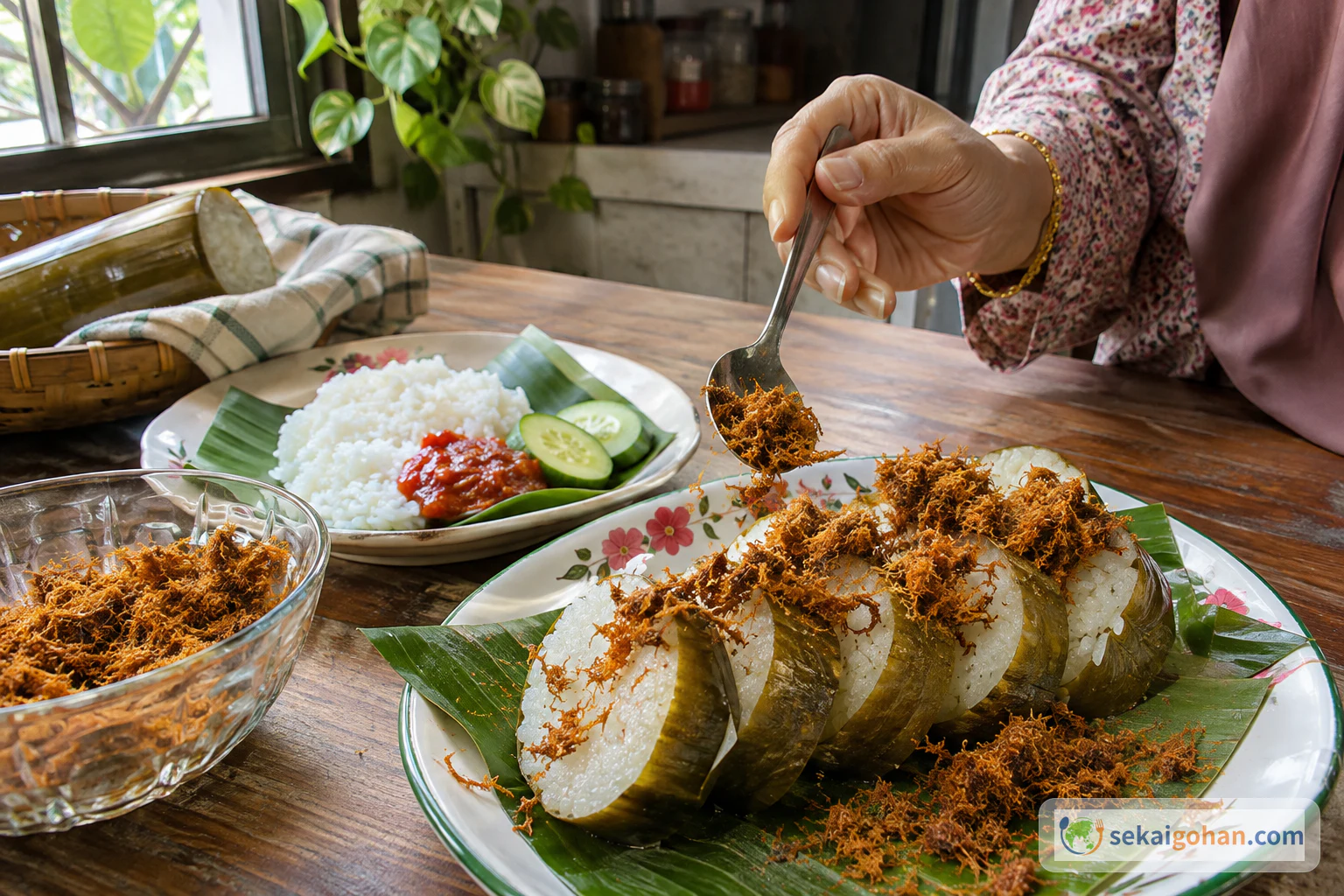
In Kampung Laut, in the Tumpat district of Kelantan, serunding is made as a heritage food, and the village's producers sell it across Malaysia. Demand rises before Hari Raya Aidilfitri, Chinese New Year and Deepavali, before the festivals. It is also sprinkled over slices of lemang, the glutinous rice cooked in bamboo, or spooned beside nasi lemak. Where serunding was first made is not settled, and nobody can put a date on the first batch. For more of the country's cooking, see the Malaysia page.
Cross into Indonesia and the near-identical word serundeng means spiced toasted coconut, with no meat at all. The Indonesian name for meat floss is abon. In Malaysia, serunding daging means beef floss, and that is the dish here.
Ingredients
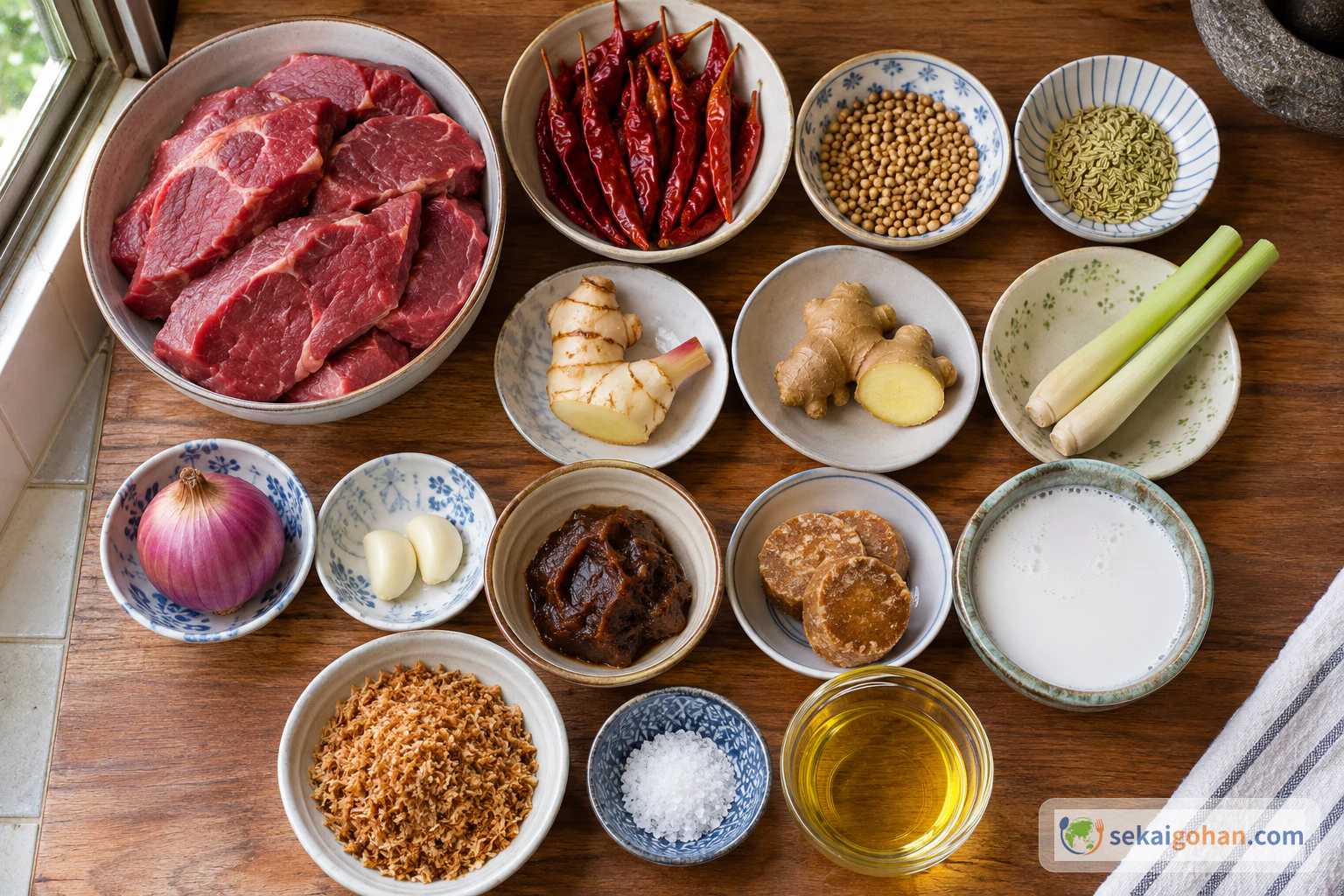
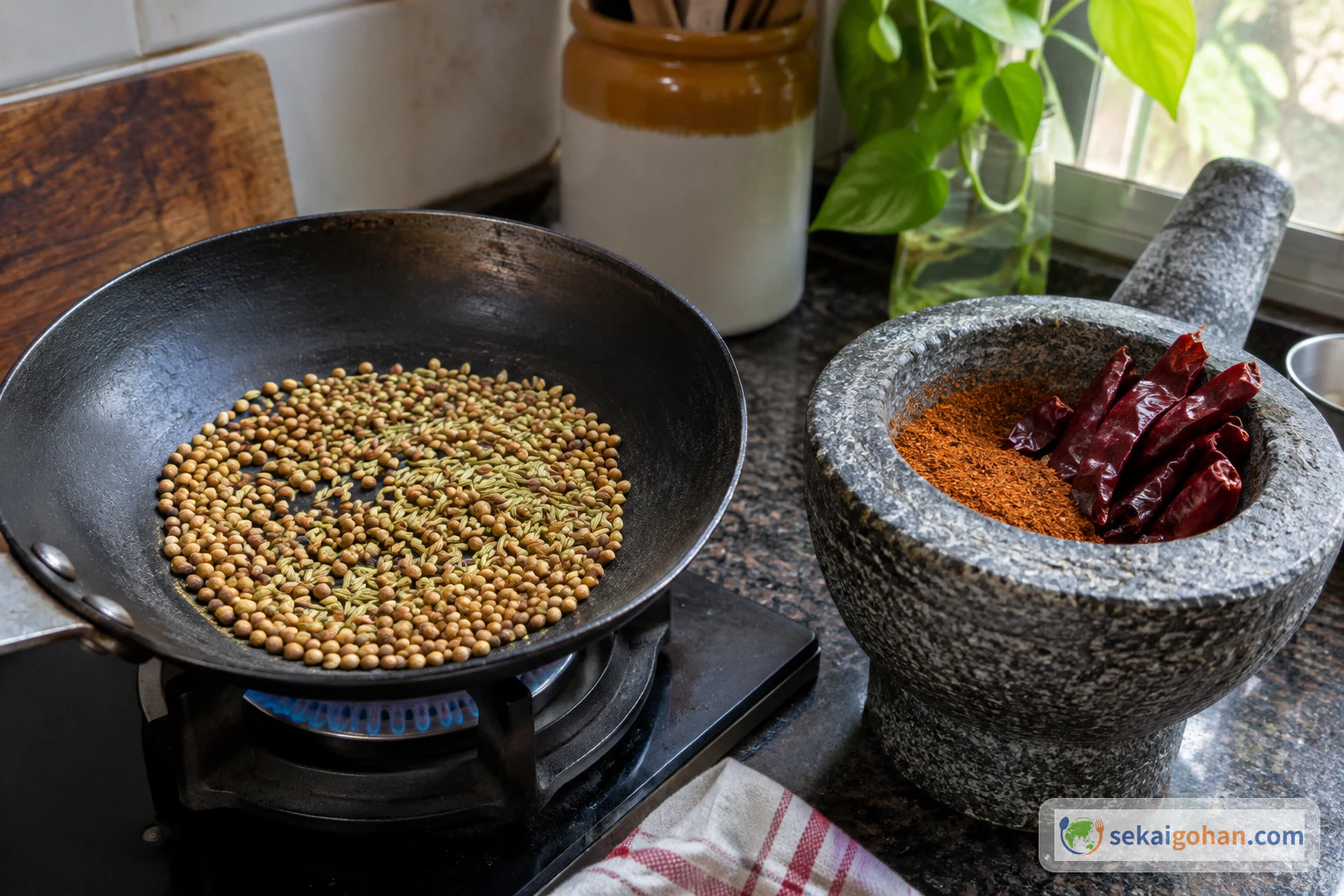
The flavour stands on four things: toasted coriander and fennel, the galangal and lemongrass paste, the sour-sweet pull of tamarind against palm sugar, and the nutty oil of kerisik.
Coconut milk and kerisik both contain coconut. If you buy ready-made kerisik, tamarind paste or palm sugar, read the label for other allergens and for shared-facility statements.
Equipment
- A pot for simmering the beef
- A wok or wide, heavy frying pan
- A small dry pan for toasting spices
- A spice grinder, or a mortar and pestle
- A food processor, or a mortar and pestle, for the paste
- A fine sieve for the tamarind
- A sturdy wooden spatula
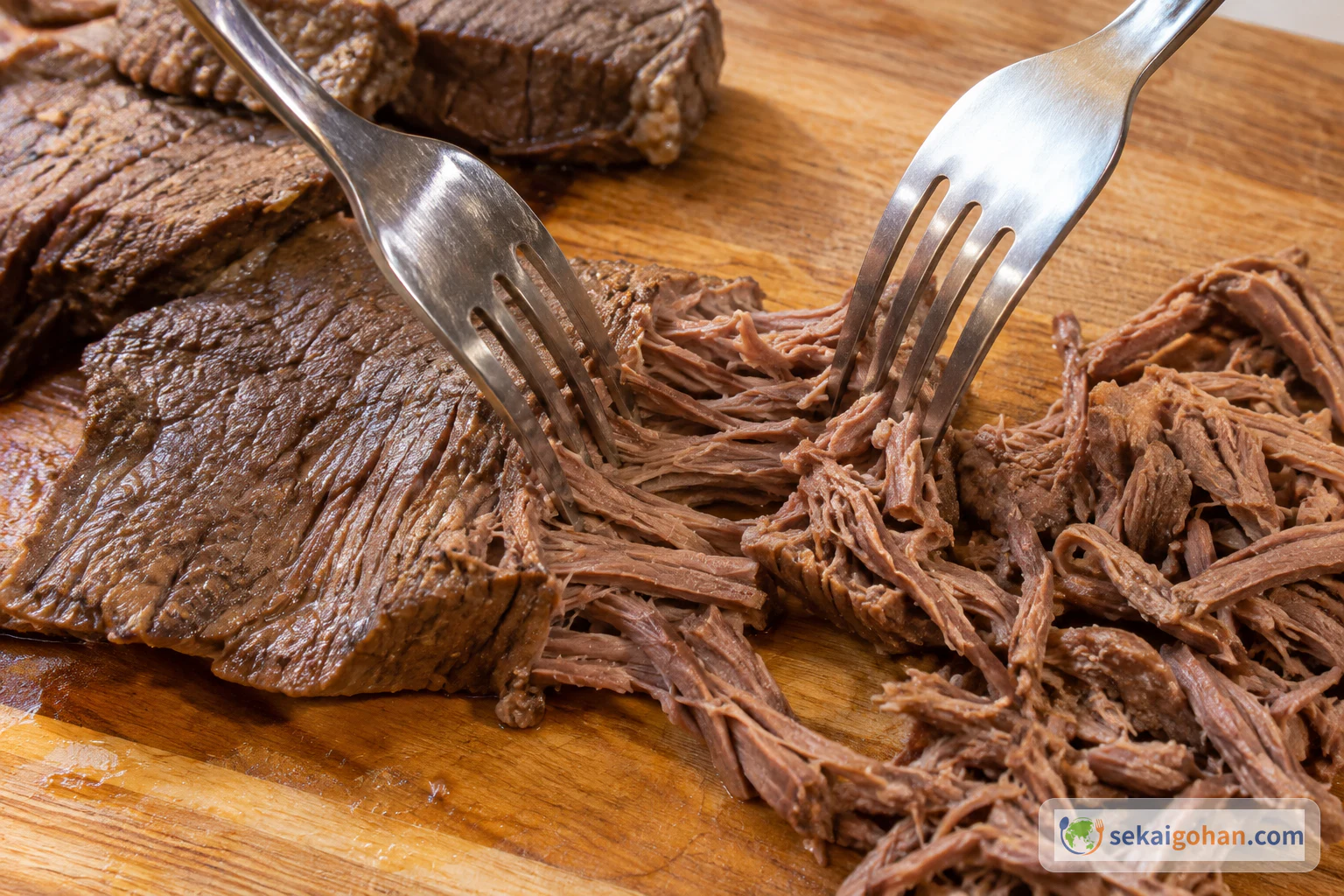
- Two forks for shredding
- A tray for cooling and a clean, dry airtight jar
Choosing and Substituting
Choose a long-grained cut such as round or shank. Its fibres pull into long threads, which is what gives serunding its fluffy, floss-like texture; a marbled, short-grained cut breaks into crumbs.
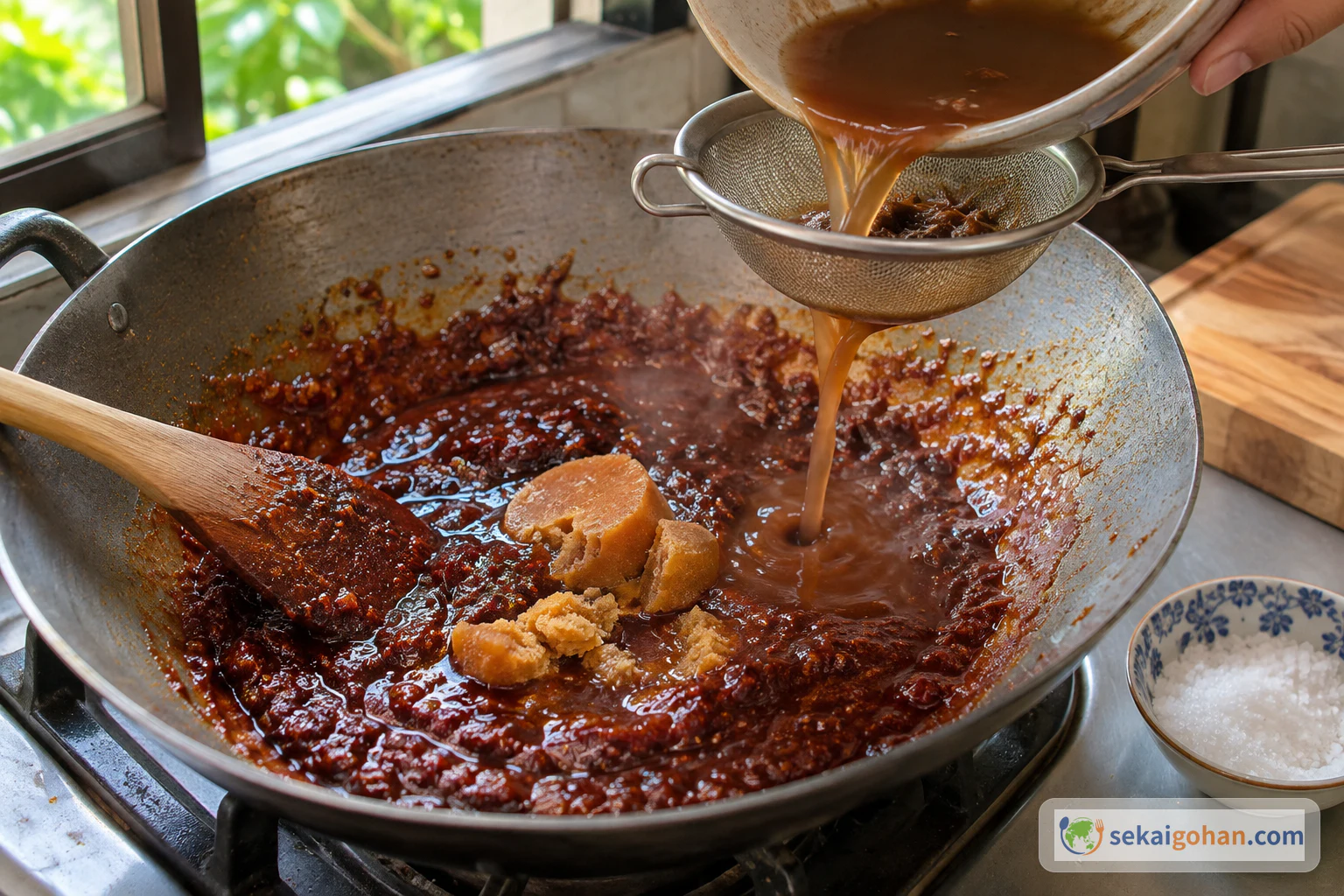
Tamarind pulp comes in dark, sticky blocks at Southeast Asian and Indian grocers and online. Tamarind paste from a jar works, but it differs in strength from soaked pulp, so add it a little at a time and taste for a clear sourness behind the sugar. Gula Melaka is sold in cylinders or blocks. A dark, unrefined cane sugar gives similar depth but a different, less smoky sweetness. Fresh galangal and lemongrass give the brightest paste. Dried versions are the fallback when fresh ones cannot be found, and the aroma comes out flatter; use them as needed and lean on the fresh ginger.
Dried chillies vary a lot. Small, very hot varieties carry far more heat than the larger, milder ones used in Malaysian kitchens, so use fewer if that is what you have.
| Keep for the Kelantan taste | Can be swapped abroad |
|---|---|
| Toasted coriander and fennel, ground fresh | Fresh galangal and lemongrass, for dried |
| Tamarind sourness | Pulp, for paste added to taste |
| Kerisik | Shop-bought, for homemade |
| Fibres pressed fine in the wok | Gula Melaka, for dark unrefined sugar |
Dry-toast unsweetened desiccated coconut in a pan over low heat, stirring without a break, until it is an even deep brown and smells nutty. Pound it in a mortar while still warm until it turns into a moist, oily paste. That oil is what kerisik brings to the floss.
Method
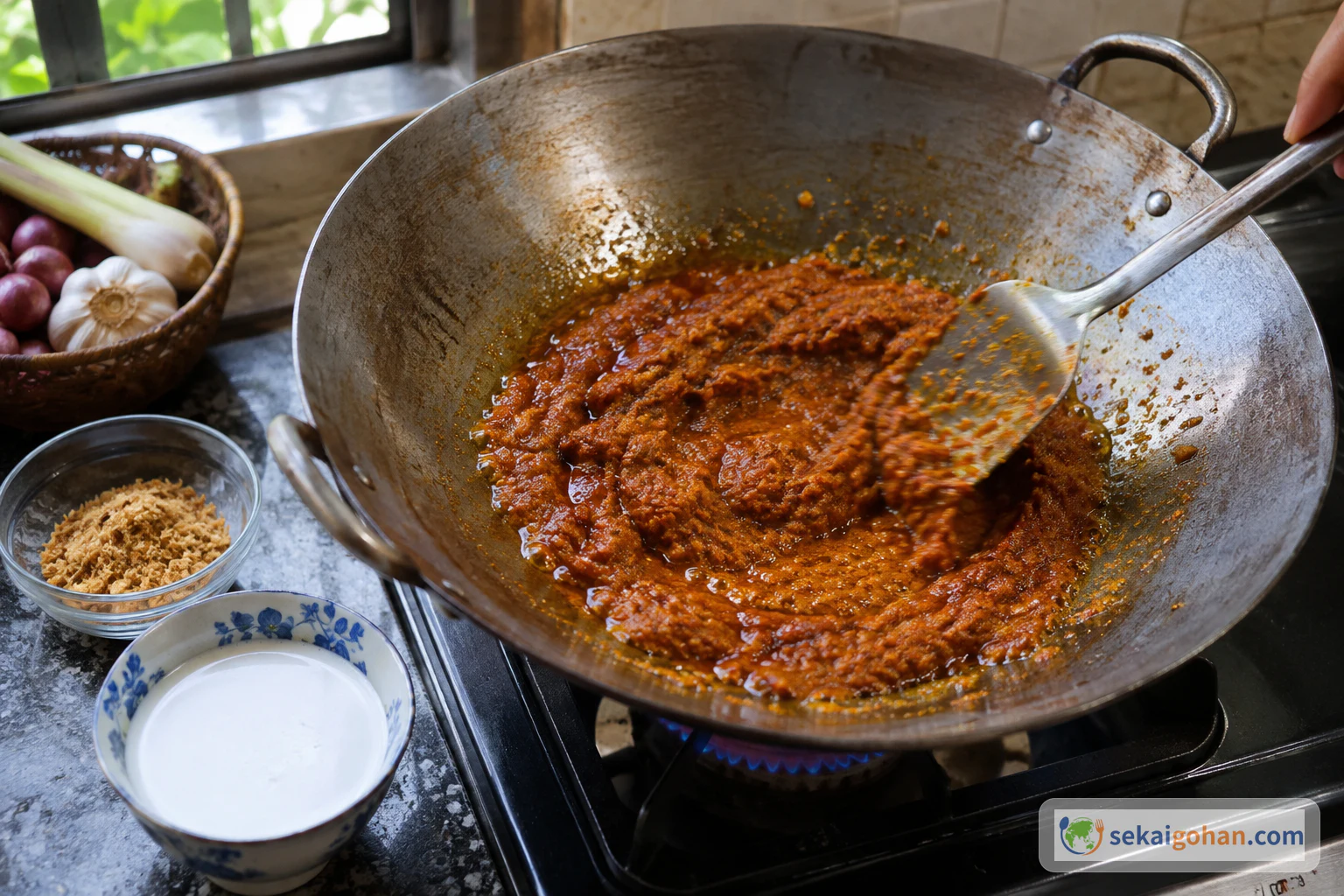
The beef simmers for a long stretch first, and that hands-off time is when you toast the spices, grind the paste and soak the tamarind. After that, the wok work is continuous. The paste goes in, then the coconut, then the seasoning, then the beef, and the last stage is pressing and stirring until dry. Keep the spatula moving and the heat moderate from the moment the beef goes in.
Stirring only moves the shreds around. Pressing them flat against the wok with the spatula, then dragging and lifting, is what splits the fibres into fine threads. For an even finer floss, pound the beef in small batches in a mortar along the way.
The sugar in the paste burns easily once the moisture is gone. Keep the heat low at the end, scrape the bottom with every turn, and taste a pinch. It should be crisp-dry and toasty, never bitter.
When It Goes Wrong
| What you see | Why | What to do |
|---|---|---|
| The beef will not pull apart | It came out of the pot too early | Return it to the simmer until it is tender enough to pull apart |
| The floss stays damp and heavy | Moisture is still trapped in the fibres | Keep frying on lower heat, spreading the floss out so the steam escapes |
| Dark specks and a bitter smell | The sugar scorched on the bottom of the wok | Lower the heat, scrape the bottom on every turn, and lift out any burnt bits |
| Thick ropes instead of fine threads | The beef was stirred, not pressed | Press it flat against the wok, or pound small batches in a mortar |
Serving, Variations and Storage
Serving
Serunding is a side to rice. Spoon it over hot white rice with cucumber and sambal, set it beside nasi lemak, or scatter it over slices of lemang, a good pairing. It also goes with glutinous rice steamed with coconut and turmeric. Because it keeps, a jar comes out whenever guests arrive and goes back into storage afterwards.
Variations
- Lamb. Lamb makes a dry rendang-style floss of its own, with a stronger, gamier flavour that stands up well to sticky coconut rice.
- Beaten beef, slow-dried. Pound the simmered beef to loosen the fibres before it goes into the wok, then dry it long and slow on low heat. The floss comes out finer and more even.
- Milder. Use fewer dried chillies, seeded as before. The colour pales a little and the sweet-sour notes come forward.
Storage
Spread the finished serunding on a tray and let it cool completely. Spoon it into a clean, dry airtight jar only when it is fully dry and cold, then keep the jar in the fridge or freezer.
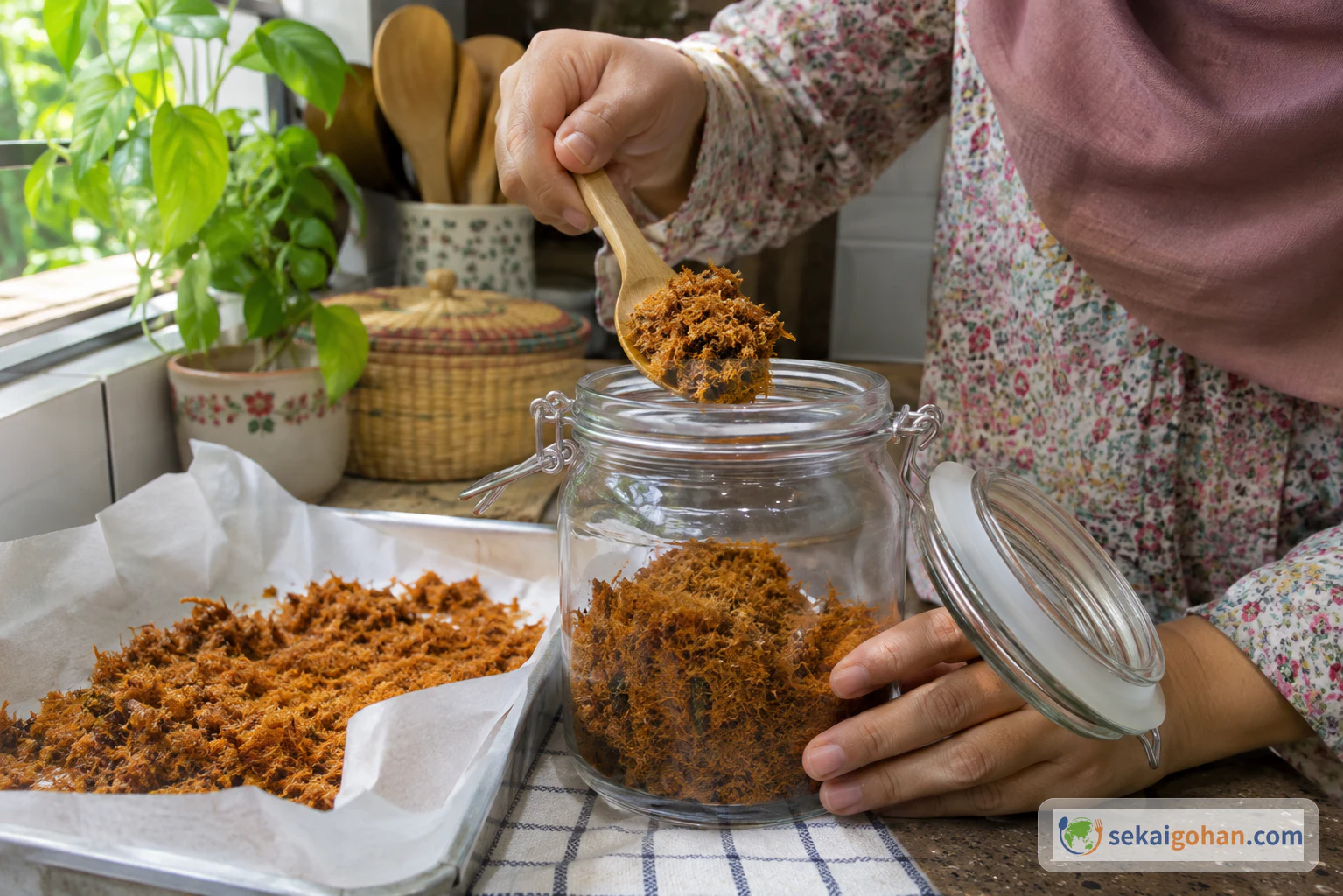
Serunding is made with coconut milk. Never leave floss that still feels damp at room temperature. Fry it until fully dry, cool it, and seal it before storing. No shelf life is given here, so do not rely on any claim that it keeps for a year at room temperature.
Frequently Asked Questions
Can I skip the kerisik?
You can, but the floss loses much of its toasty depth and some of the oil that coats the strands. If you cannot buy it, toasting and pounding desiccated coconut brings the flavour back.
How do I make it less spicy without losing colour?
Seed the chillies carefully, since the seeds hold much of the heat, and use fewer of them. The toasted coriander and the dark palm sugar still colour the floss brown, though it pales a little with less chilli.
Can I use a stand mixer or food processor to shred the beef?
Shredding by hand along the grain gives the longest threads. Pressing in the wok and pounding in a mortar then split those threads finer. Machine-chopped beef breaks across the fibres and comes out crumbly.