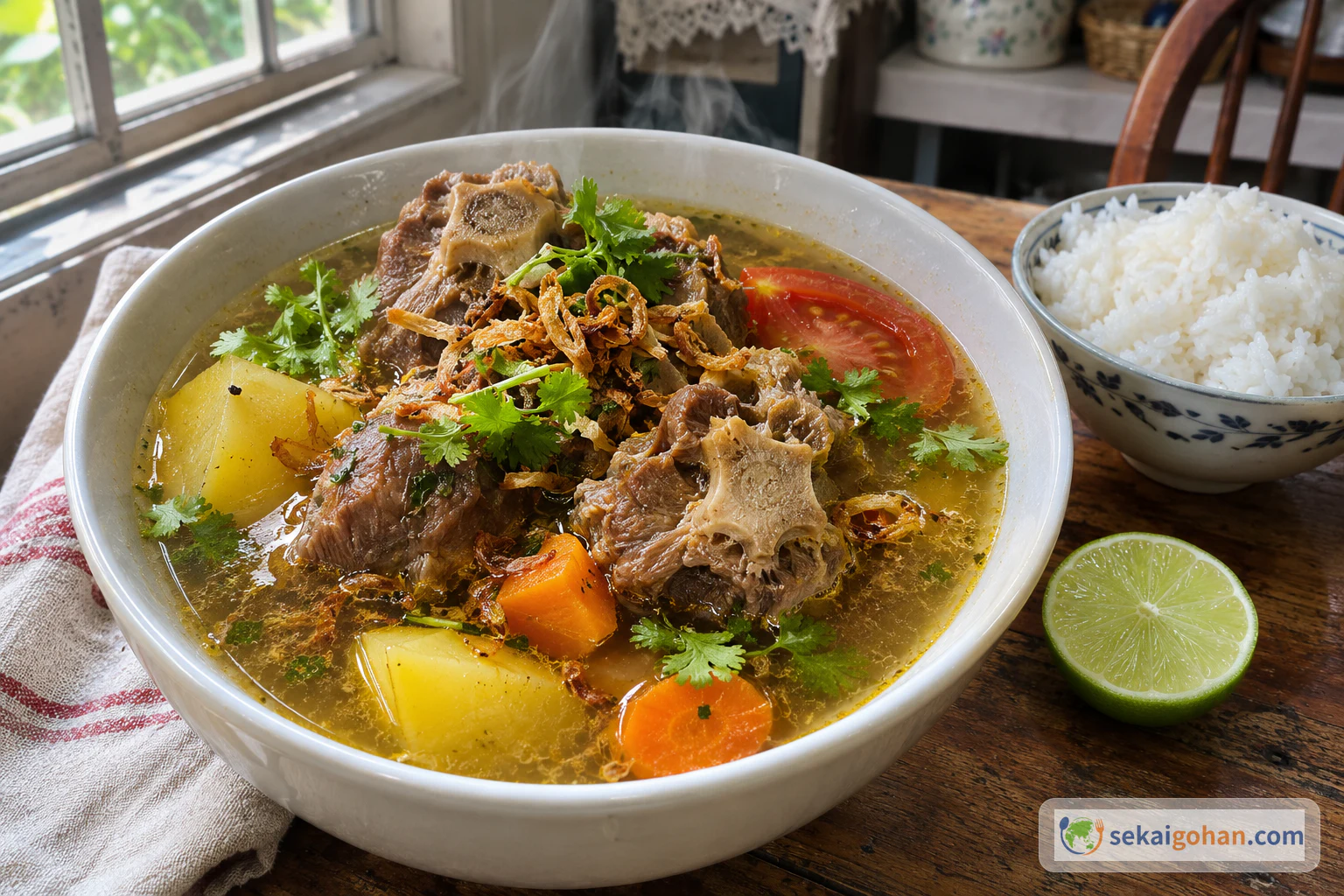
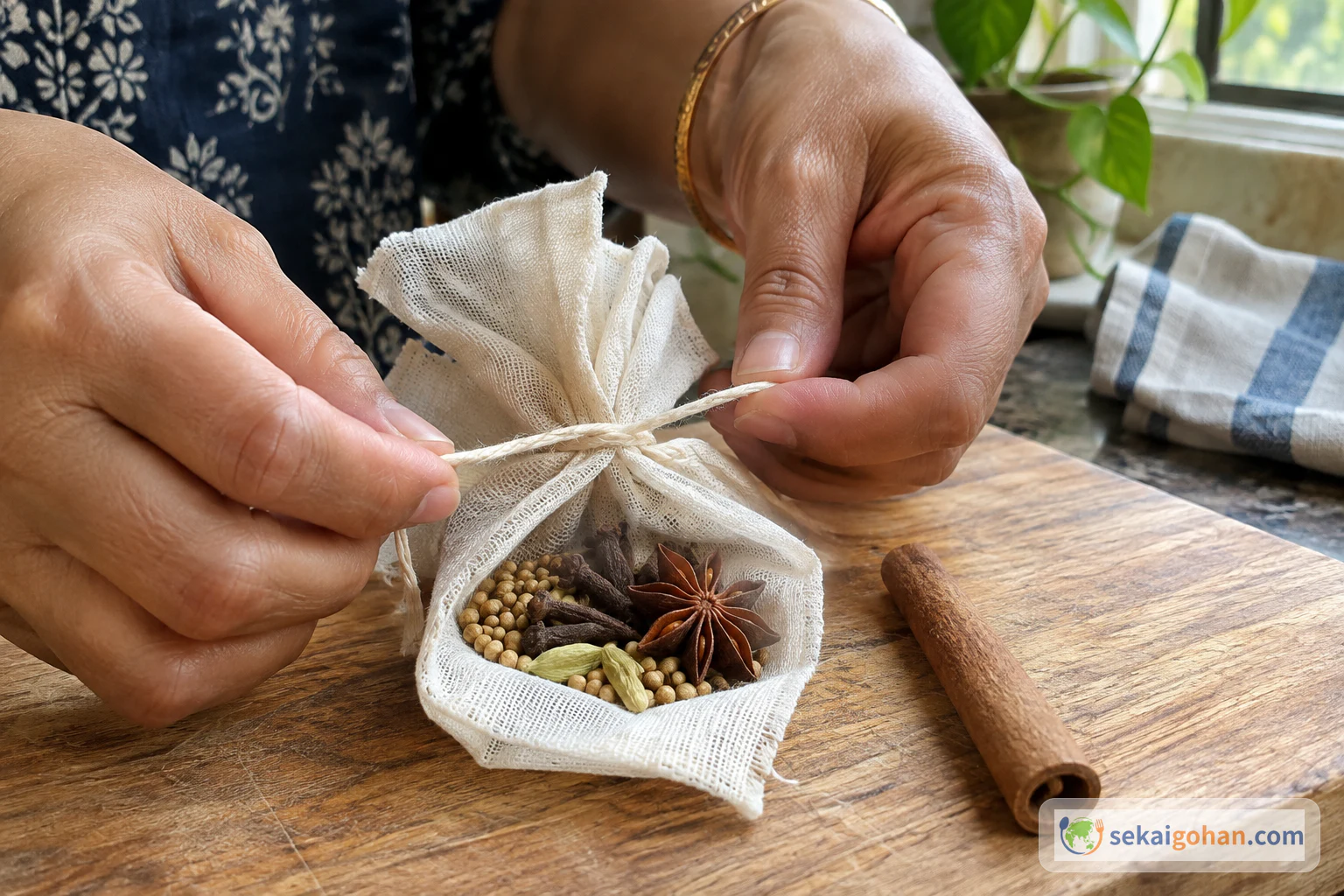
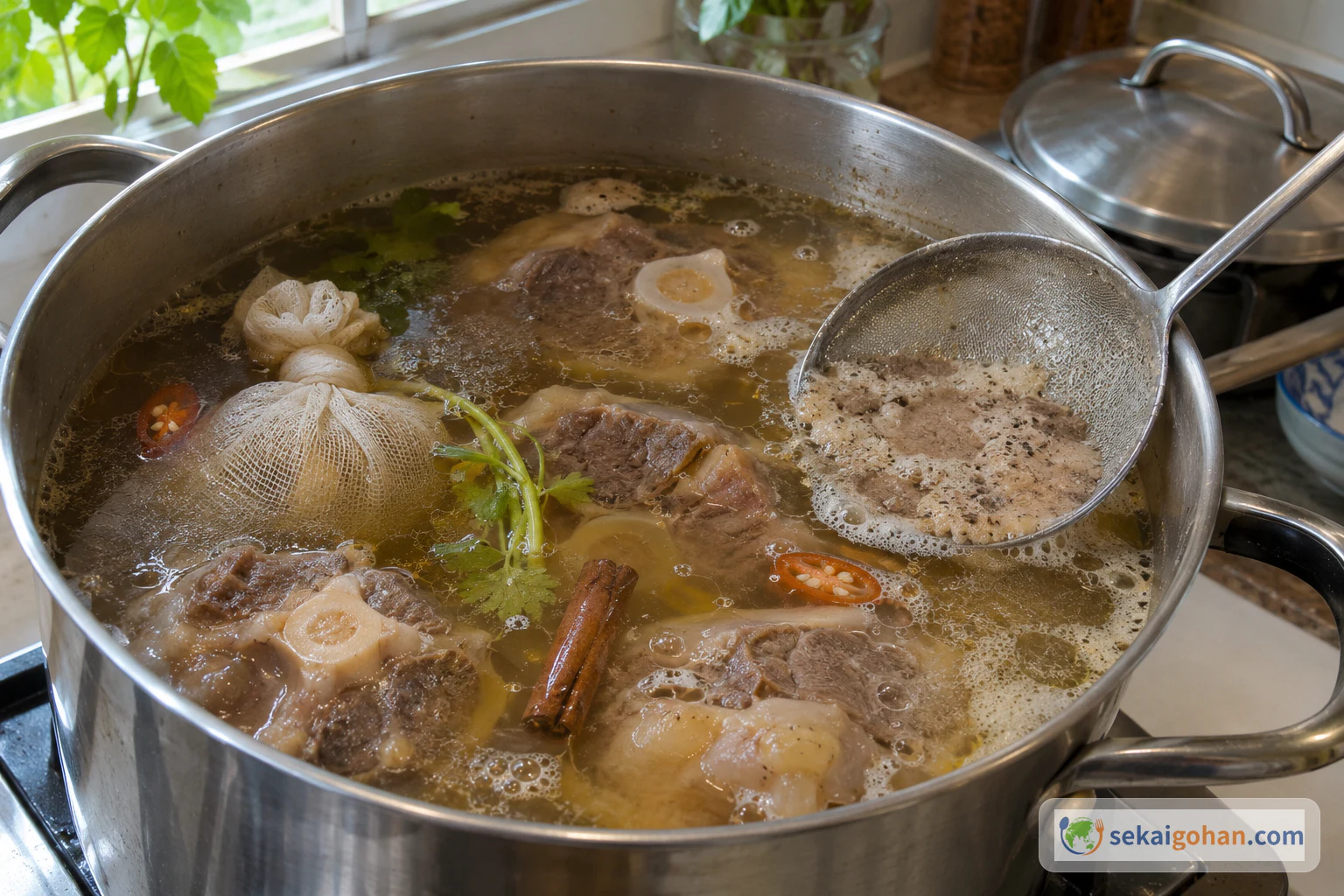
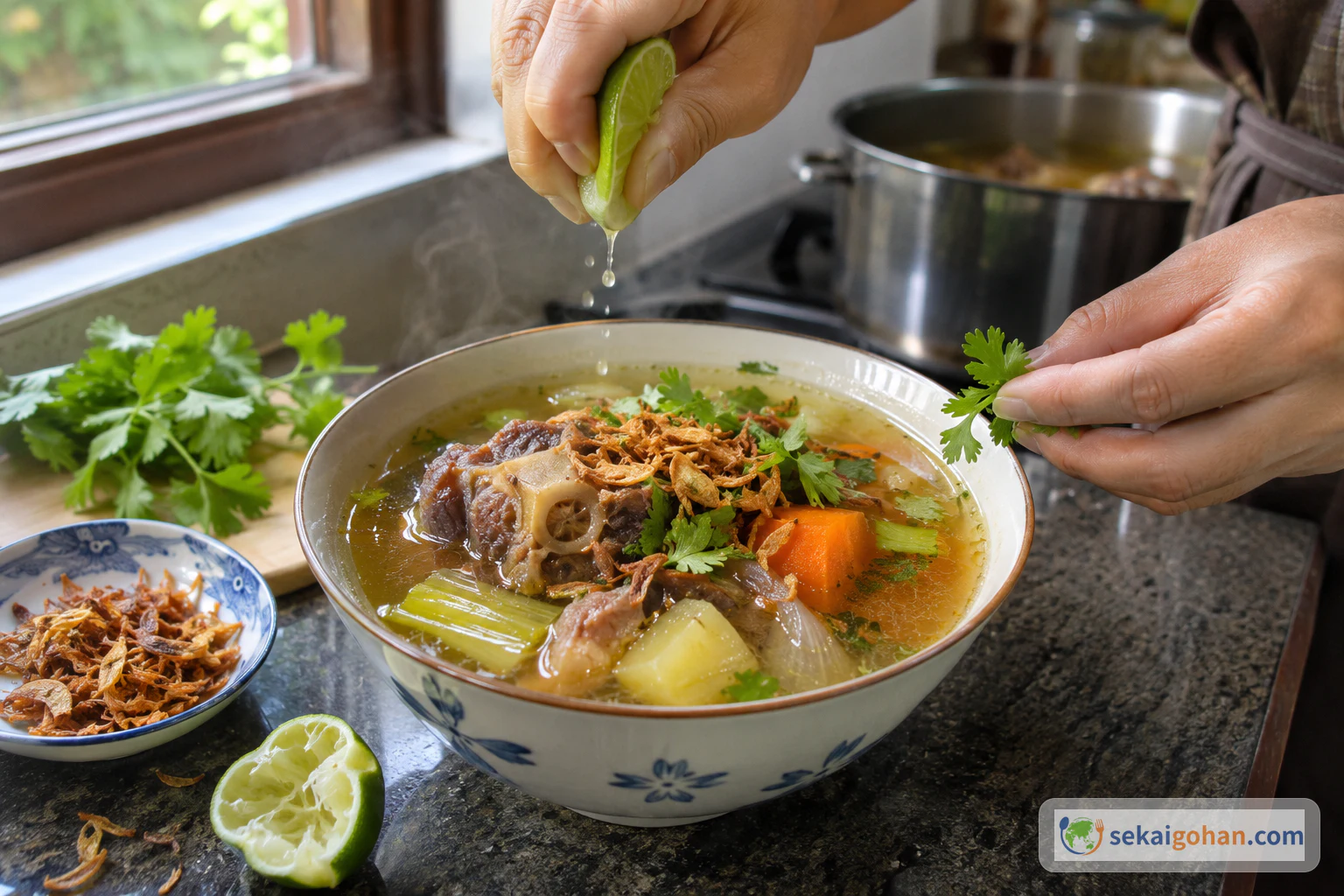
Two hours into the simmer, the kitchen smells of cloves, cardamom and star anise, and a fork pressed against a round of oxtail pulls the meat cleanly away from the bone. The broth under the spice bundle is clear and amber, with a gloss from the collagen that has melted out of the tail. This is sup ekor, the oxtail soup of Malaysia. It is served at mamak stalls, Malay eateries and night markets across the country. Each spoonful is beefy and warm with cumin and cinnamon. A squeeze of lime at the table brightens it, and a scatter of fried shallots gives it crunch.
A Soup Named for the Tail
The name is as direct as the dish. Ekor is the Malay word for tail, so sup ekor is simply "tail soup", and the oxtail sits at the center of every bowl. Oxtail is an inexpensive cut. It turns tender only with long, slow cooking, and that long simmer is what builds the body of the broth.
In Malaysia the dish is usually written sup ekor. Sop ekor is the spelling closer to Indonesian usage. Both names refer to the same bowl of oxtail soup.
From the stall counter to the hotel buffet
At a mamak stall, soup is a headline item. The board lists sup ekor beside sup tulang (beef bone soup), sup campur (mixed soup), sup lidah (tongue soup) and sup torpedo. In the mid-2000s, a stall near Chow Kit in Kuala Lumpur put sup ekor at the top of its menu, and its owner named the rempah ratus, the house spice blend, as the key to the soup. A bowl there had already climbed from 70 sen to RM4. Sup ekor was once roadside stall food. It now appears in large restaurants and on five-star hotel buffets, and it is still easy to find at a pasar malam (night market). In Ramadan it is a favorite for breaking the fast at iftar: a long-simmered pot waits for the end of the day's fast.
The spice blend changes from cook to cook, and many cooks guard theirs as a secret. The base stays steady across kitchens: a clear broth scented with cumin, coriander, cinnamon and cardamom, with cloves and star anise behind them. Set it beside bak kut teh, Malaysia's other long-simmered pot of bones and meat, and you can taste how differently two kitchens in one country build a broth. For oxtail taken in another direction entirely, the peanut-thickened kare-kare of the Philippines makes a good contrast. More dishes from the country are collected on the Malaysia page.
The Indonesian sibling
Across the water in Indonesia, the same soup is called sup buntut, or sop buntut, and the method is the same. The Indonesian pot often adds nutmeg, and leek, celery and dried black mushrooms can join the vegetables. In one popular Indonesian style, sop buntut goreng, the oxtail is fried or grilled and served on its own plate beside the broth. The Malaysian bowl keeps the tail in the soup and lets the whole spices carry the flavor.
Ingredients (serves 4)
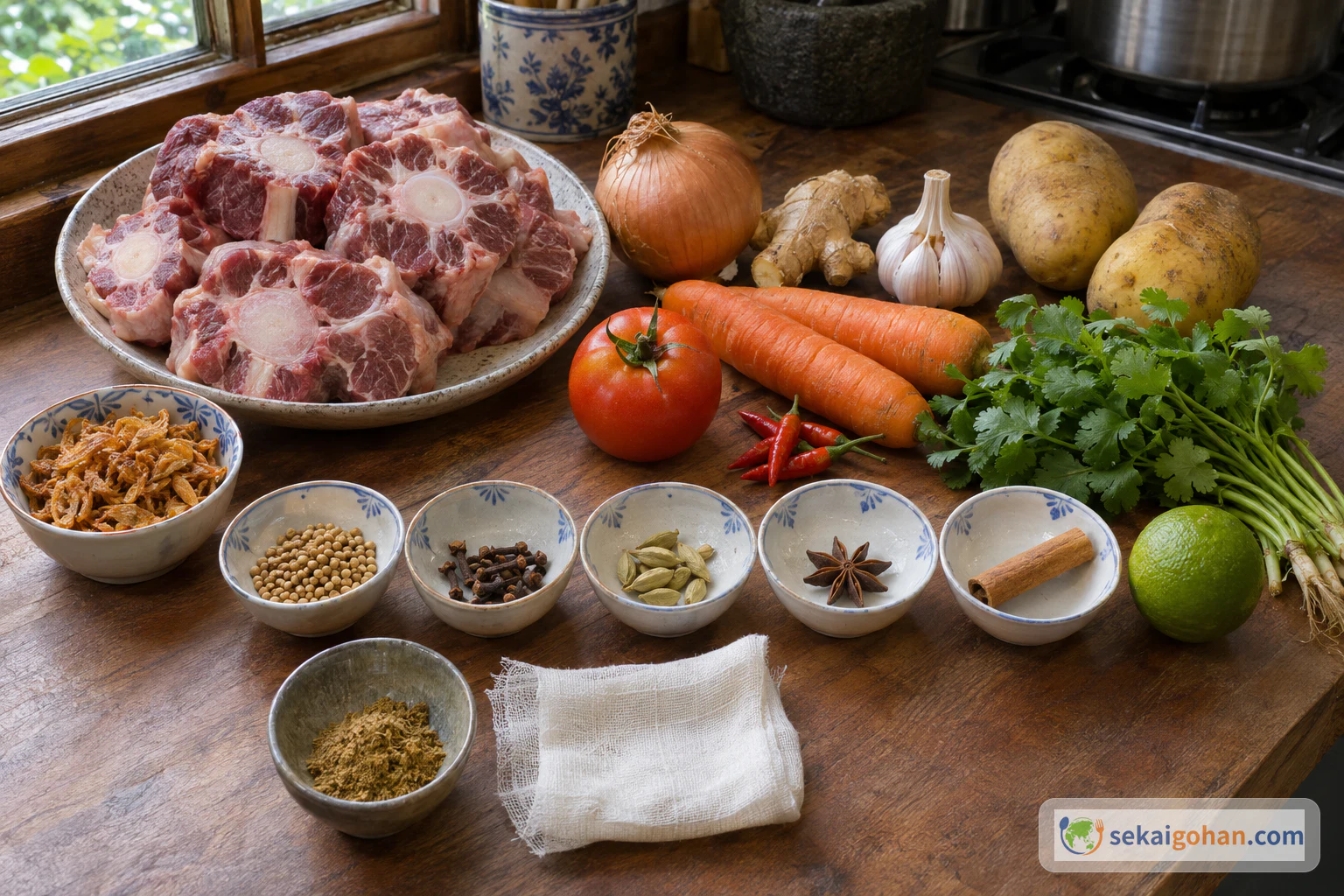
The aroma of sup ekor depends on the age of your spices. Cardamom, cloves and star anise that have sat in the cupboard for years give a flat, dusty broth. Buy fresh whole spices for this pot. You need both forms: whole spices for the bundle and ground cumin for the broth.
The recipe itself contains none of the common major allergens. Read the label on store-bought fried shallots or fried onions, which are processed products. The creamy candlenut version below adds a nut, so keep it away from anyone with a tree nut allergy.
Equipment
- A wide skillet for searing
- A deep pot or Dutch oven, about 4 quarts (4 L), for the long simmer and for skimming
- A square of muslin or cheesecloth and kitchen string, or a large tea bag, for the spice bundle
- Tongs
- A skimmer or ladle
- A fork for testing the meat
Choosing and Substituting
The oxtail is the one ingredient that takes some planning, so get it first. Ask a butcher for oxtail for soup, cut into ½–¾-inch (1–2 cm) rounds. Thin rounds sear evenly and give up their gelatin within the simmering time. Bone-in beef short ribs also work. They give a meaty soup but less gelatin, so the broth comes out thinner on the lips.
The whole spices are sold in Asian and Indian groceries and online. Large supermarkets may carry some or all of them, often in jars larger than this pot needs.
| Item | Swap | What changes |
|---|---|---|
| Bird's eye chilies (cili padi) | A small dried red chili | Heat with less fresh fruitiness |
| Bird's eye chilies | Use 2 or 3 instead of 5, or leave them out | Five is fierce. A mild pot suits children and still tastes like sup ekor |
| Fried shallots (bawang goreng) | Store-bought fried onions | Slightly sweeter, with less sharp shallot flavor |
| Muslin bundle | A large tea bag | Works the same; tie it shut so no seeds escape |
Keep the clear broth and the whole spices. They make the soup Malaysian. The amount of chili can change to suit your table without changing the character of the dish.
Method
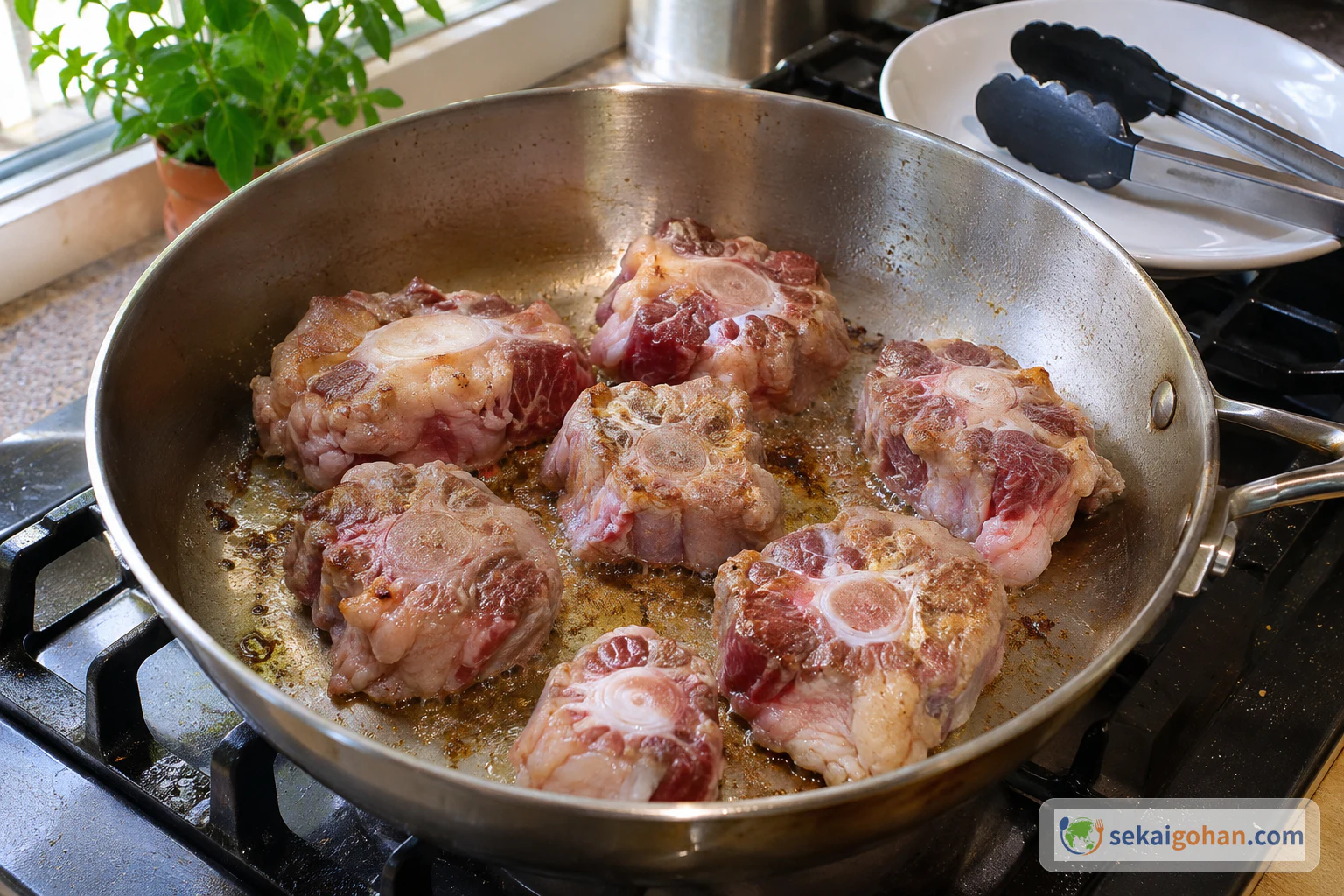
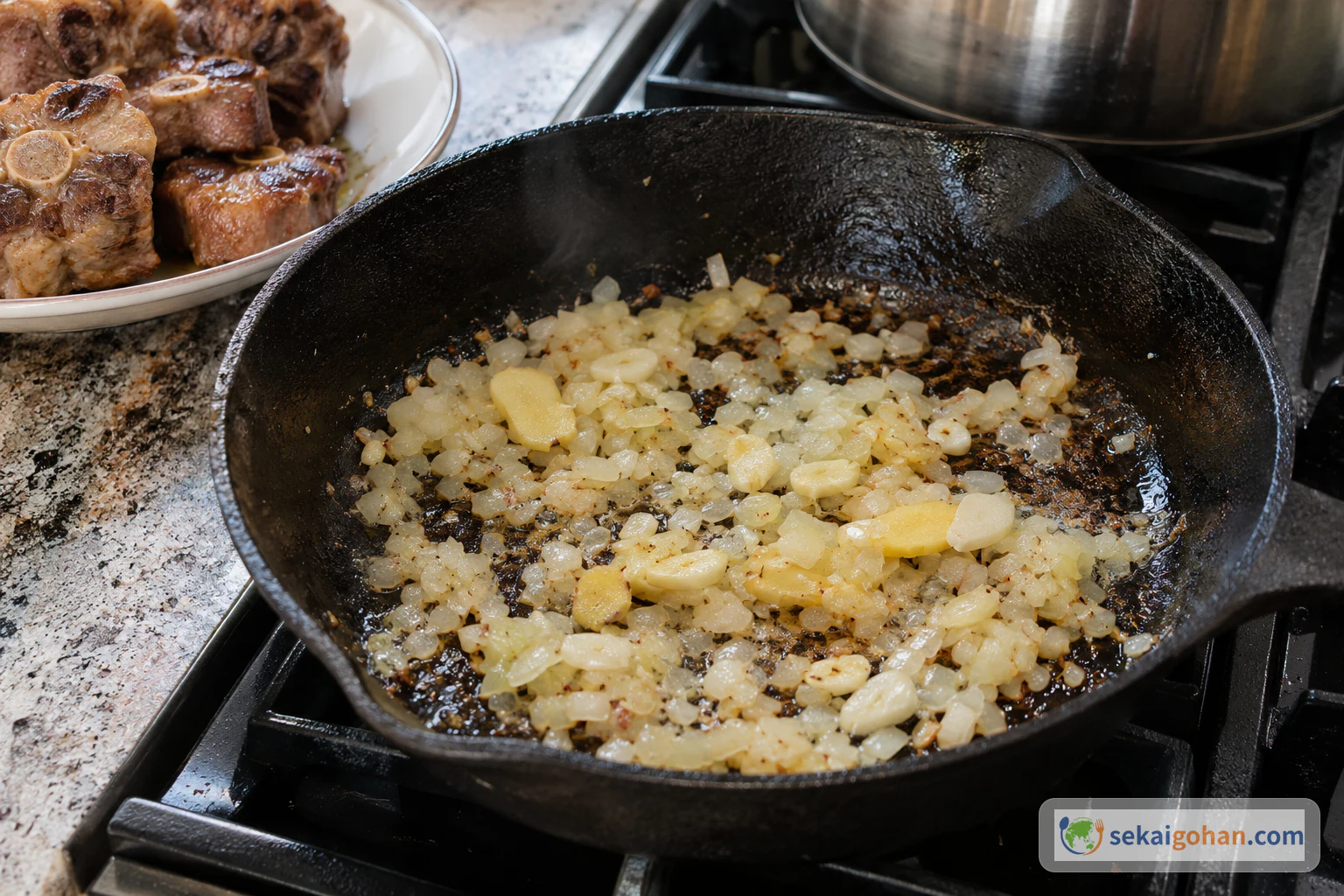
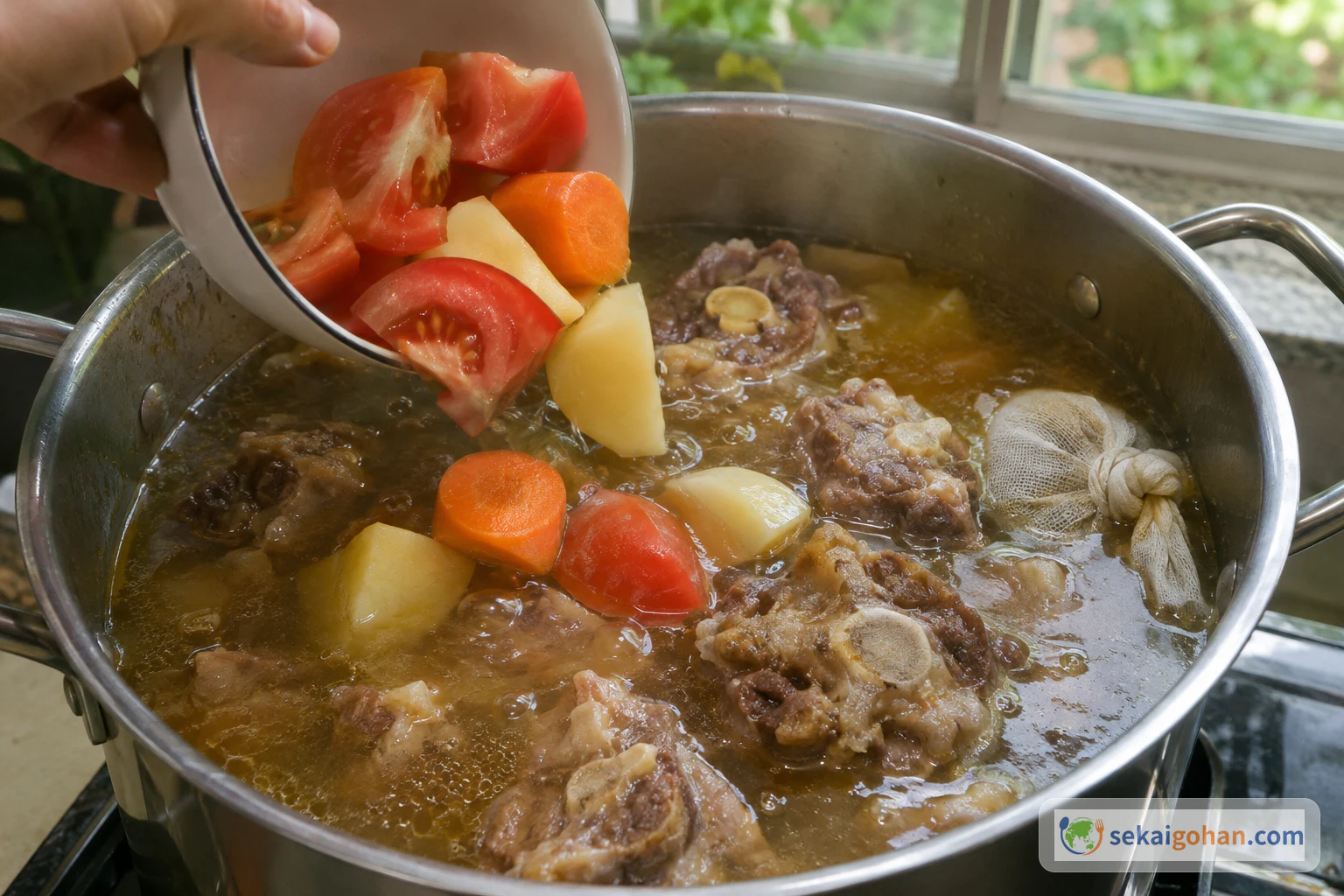
The work comes in two short bursts with a long wait between them. Sear the oxtail and soften the aromatics in the skillet. Once the pot is filled, toast and tie the spice bundle. The two-hour simmer is mostly hands-off, apart from regular skimming. The vegetables, seasoning and garnish fill the last half hour.
When It Goes Wrong
| What you see | Why | What to do |
|---|---|---|
| Cloudy, greasy broth | The pot boiled too hard, or the scum and fat were not skimmed | Turn the heat down to a steady simmer and skim carefully. Chill any leftovers and lift off the set fat |
| Meat still clings to the bone after 2½ hours | The meat has not simmered long enough | Keep simmering and test again every 20 minutes |
| Too hot to eat | Bird's eye chilies are very strong | Lift the chilies out. Next time use 2 or 3, or leave them out and put sliced chili on the table |
| Broth tastes thin | Too much water for the pot | Simmer the broth down a little before you add the salt |
| Broth tastes too salty | It reduced further after seasoning | Add a little hot water and taste again |
| Aroma is dull and flat | The whole spices are old | Buy fresh spices for the next pot. For tonight, a squeeze of lime lifts the bowl |
Serving, Variations and Storage
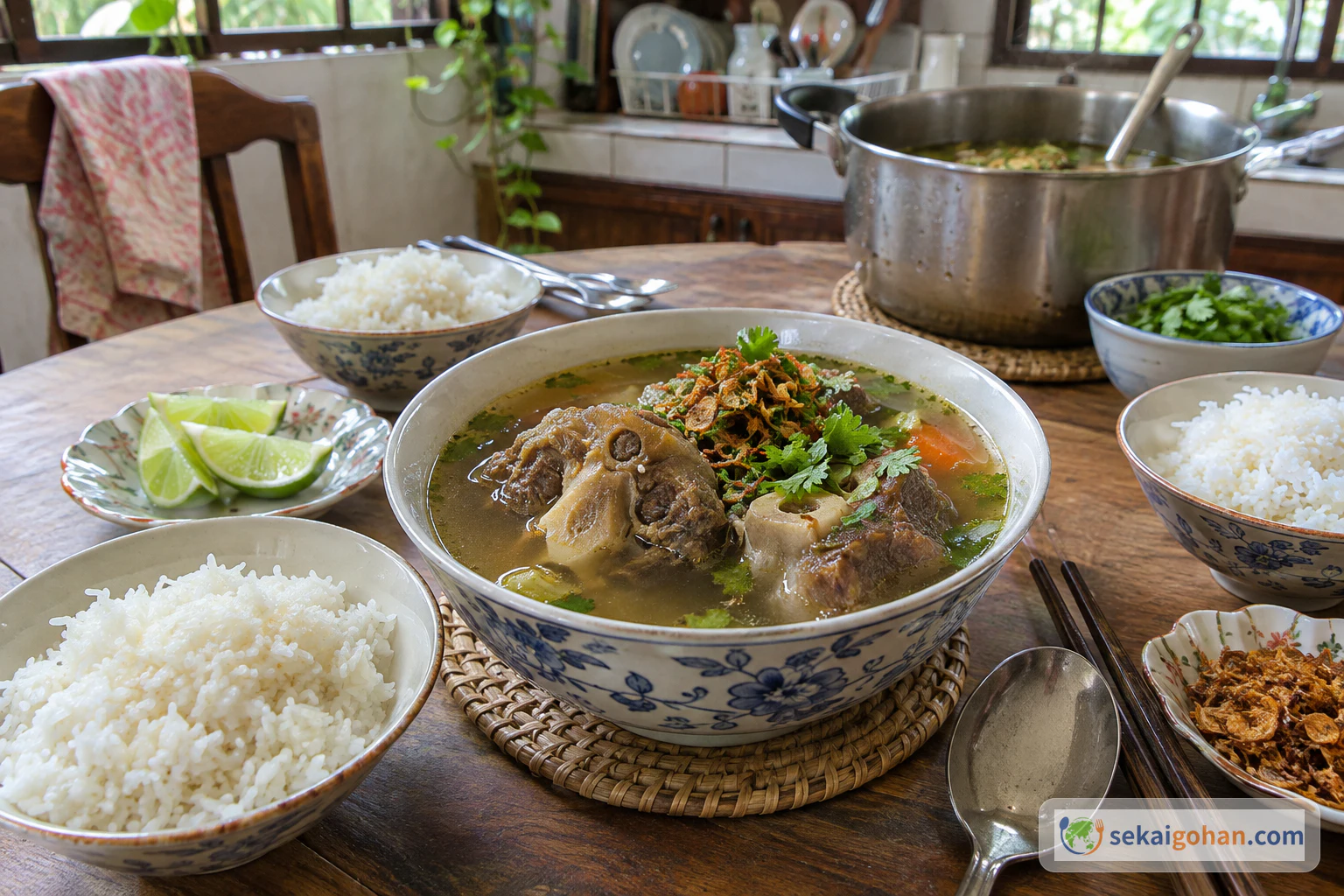
Sup ekor comes to the table with steamed white rice, lime wedges and extra fried shallots in a small dish. Each person spoons rice into the broth or takes the two in turns. At an iftar table, the pot can sit on the stove and be ladled out as people sit down to break the fast. At the mamak counters that also turn out roti canai, it is a full meal in a bowl.
Variations
- Spice paste version. Sear 2.2 lb (1 kg) oxtail in batches and set it aside. Pound 2 large onions, 8 shallots, 6 garlic cloves, 4 stalks of lemongrass and a knob of ginger into a paste. Fry it with 4 cardamom pods, 1 inch (2.5 cm) of cinnamon, 6 cloves and 2 star anise. Then add 3 tbsp ground coriander, 1½ tbsp ground cumin and 1½ tbsp ground fennel. Add the oxtail, 2 tbsp tomato purée and 6¼ cups (1.5 L) water and bring to a boil. Add 2 carrots and 4 celery stalks, and simmer over medium-low heat for 1½ to 2 hours. The lemongrass and fennel make the broth more herbal.
- Iftar version. Cook meat curry powder, turmeric, garam masala, asam keping (dried tamarind slices) and tamarind water into the pot, with lime juice added during cooking. The soup turns darker, sourer and more heavily spiced. It is served with toasted baguette alongside.
- Creamy candlenut version. Crush candlenuts and stir them into the broth for a thick, creamy soup. This trades the clear broth for richness, and candlenut is a nut, so check your guests' allergies.
Storage
Cool leftovers, cover them and refrigerate within 2 hours of cooking. Eat them within 48 hours, or freeze them. Freeze the meat and broth in small portions so you thaw only what you need. Reheat each portion only once, until it is steaming hot throughout. Do not let the soup sit between 46°F and 145°F (8°C and 63°C), the range where bacteria multiply. One restaurant recipe for the soup gives up to 3 days in the fridge and 1 month in the freezer. At home, follow the 48-hour rule.
Frequently Asked Questions
Can I make sup ekor in a pressure cooker or Instant Pot?
Yes. Sear the oxtail and cook the aromatics first, then pressure-cook the soup with the spices and water. Release the pressure and check that a fork pulls the meat off the bone easily. If it does not, cook it longer.
Can I use chicken or lamb instead of oxtail?
Both work with the same method. Bone-in chicken needs only 45 to 60 minutes of simmering, and the bones add flavor to the broth. Lamb turns the pot into something close to sup kambing, the lamb soup.
Can I make it a day ahead?
Yes, and the broth improves for it. Cool the finished soup, cover it and refrigerate it within 2 hours. The next day the fat sets in a white layer on top, and you can lift it off in one piece before reheating. Add the fried shallots, coriander and lime only after reheating.