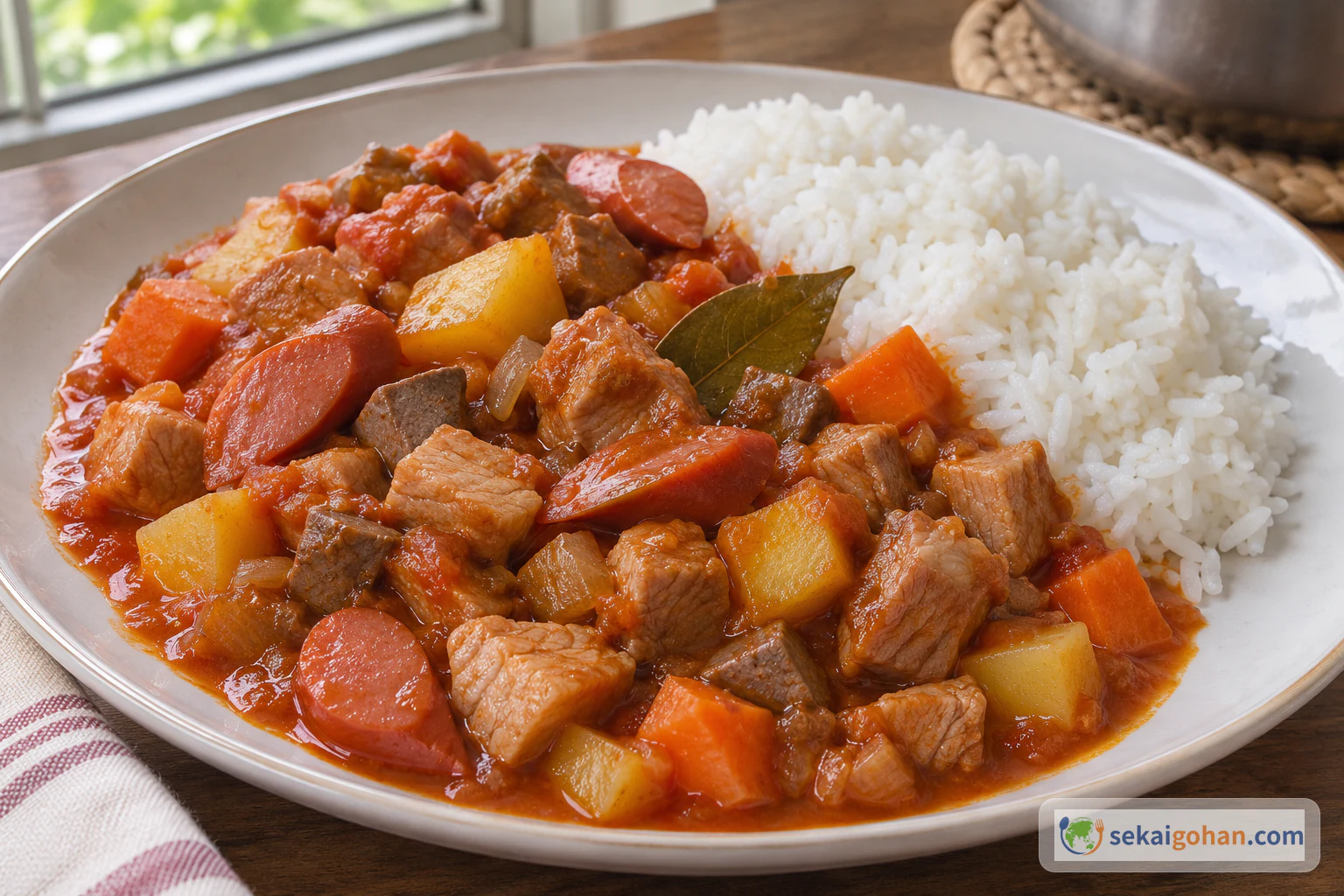
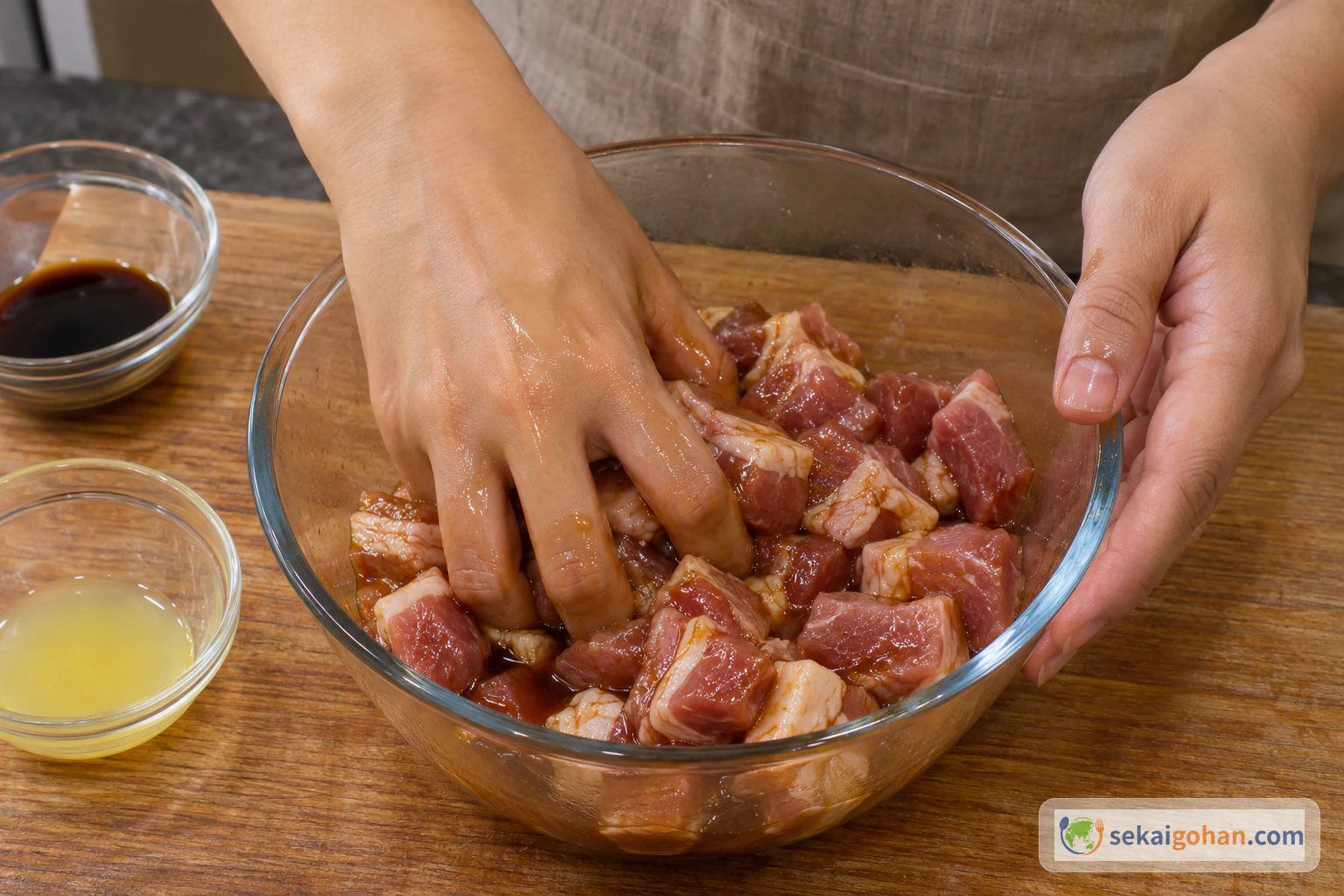
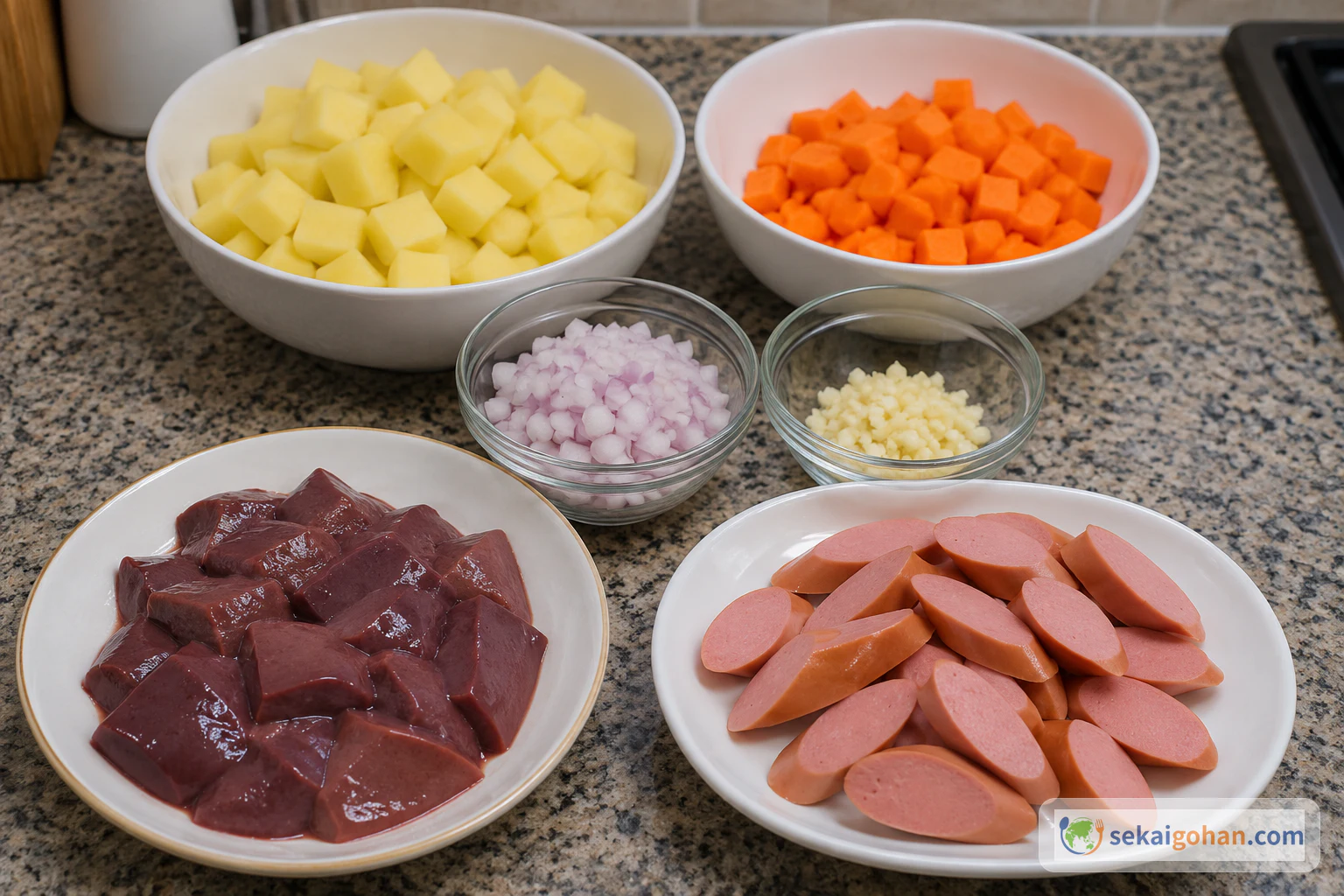
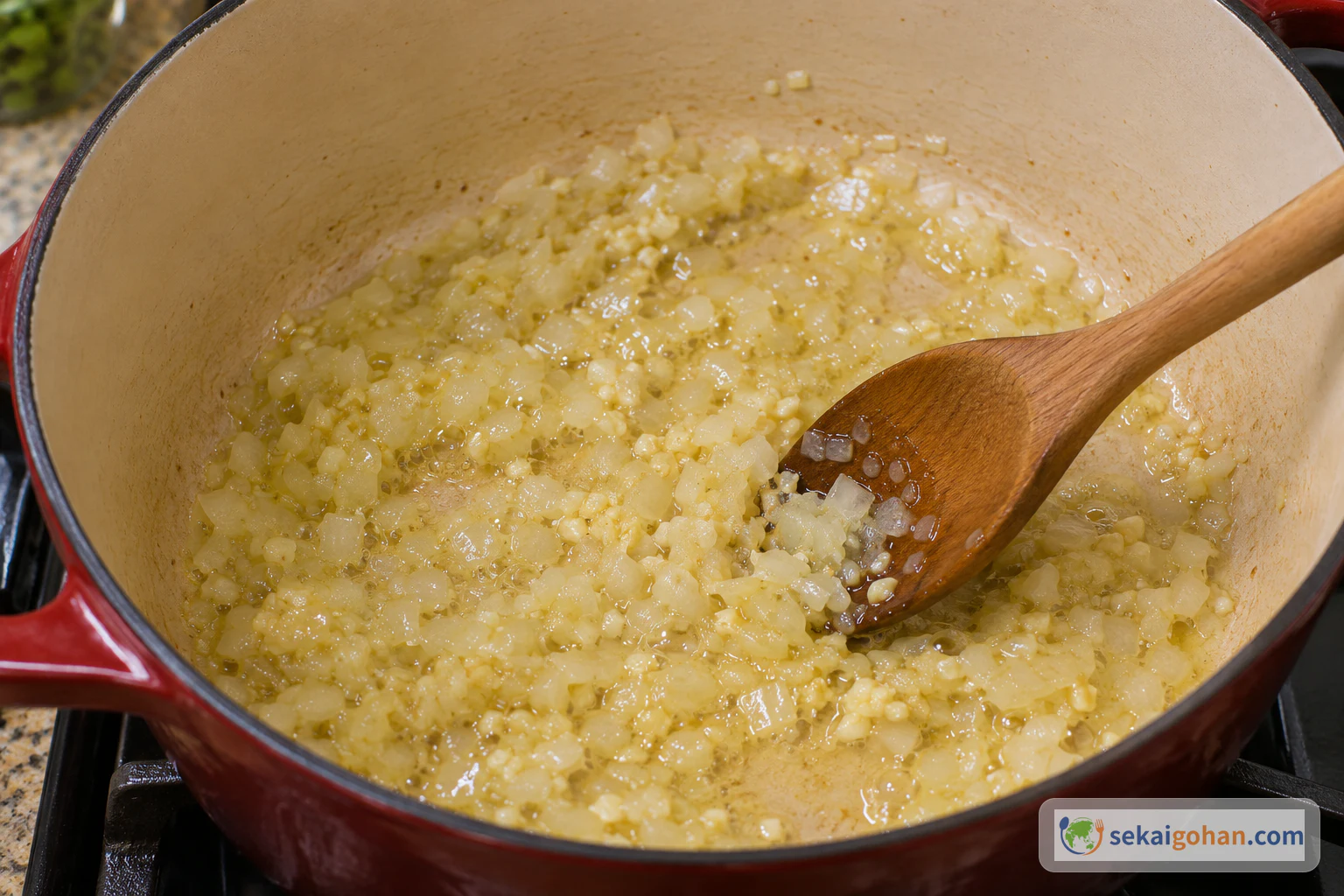
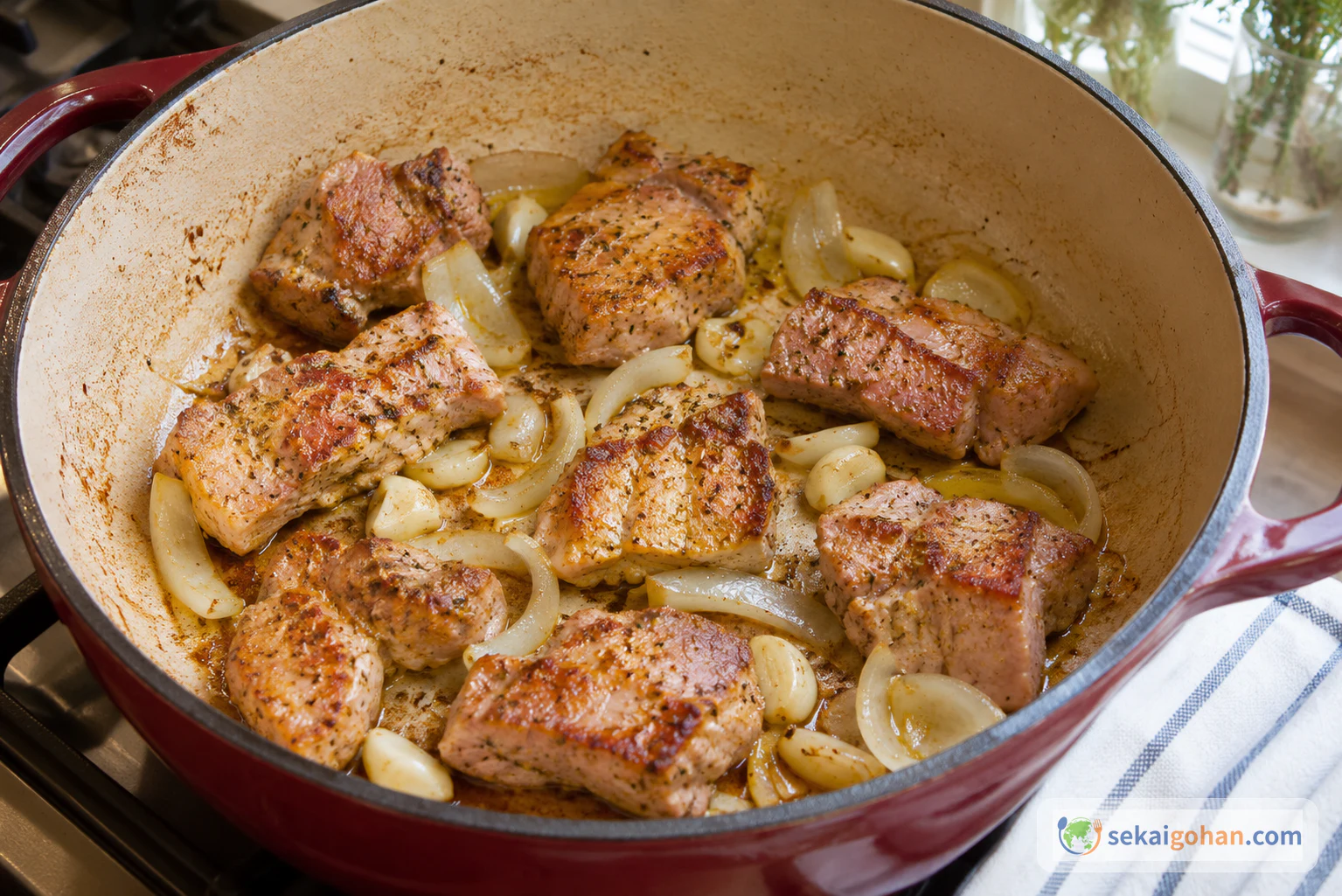
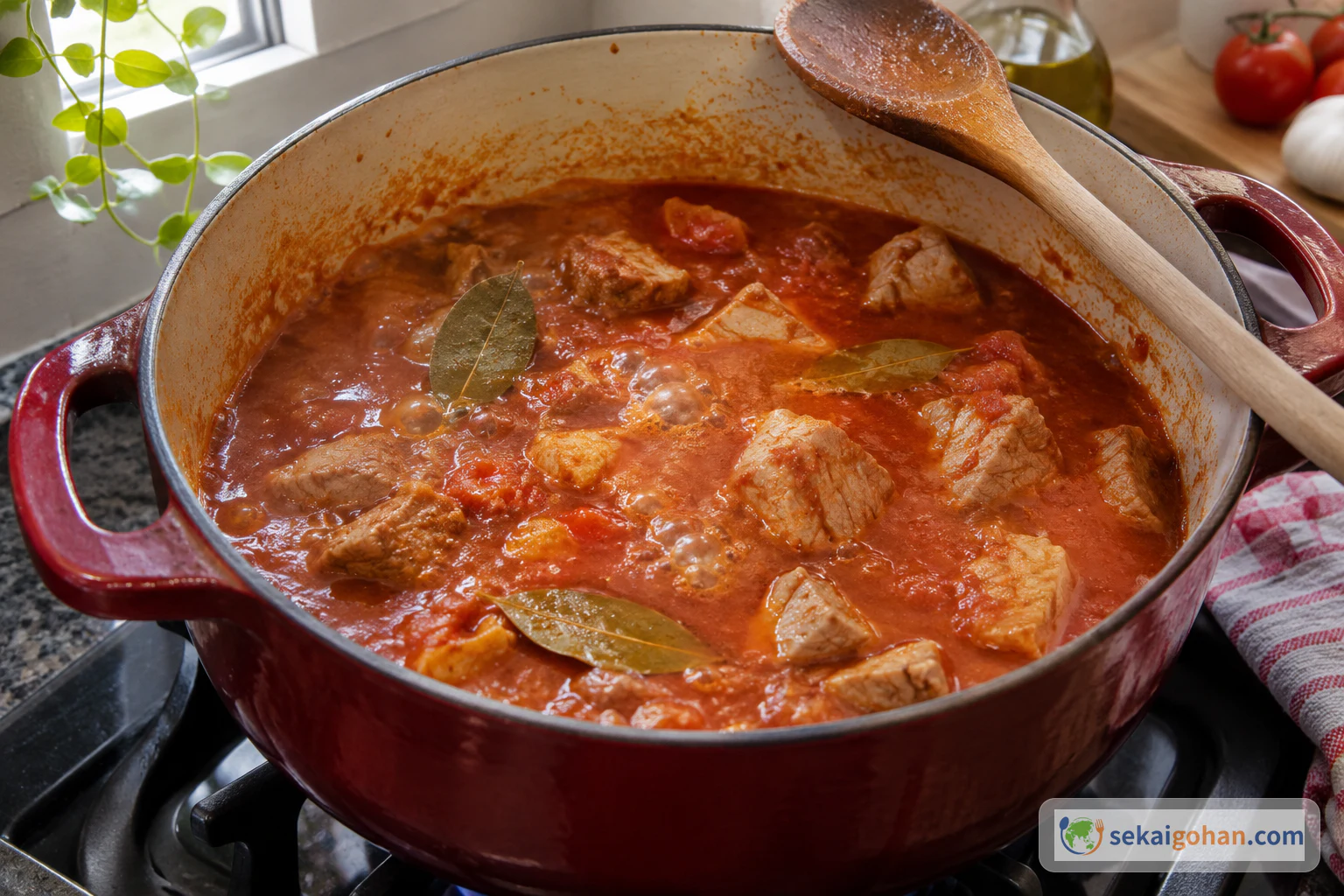
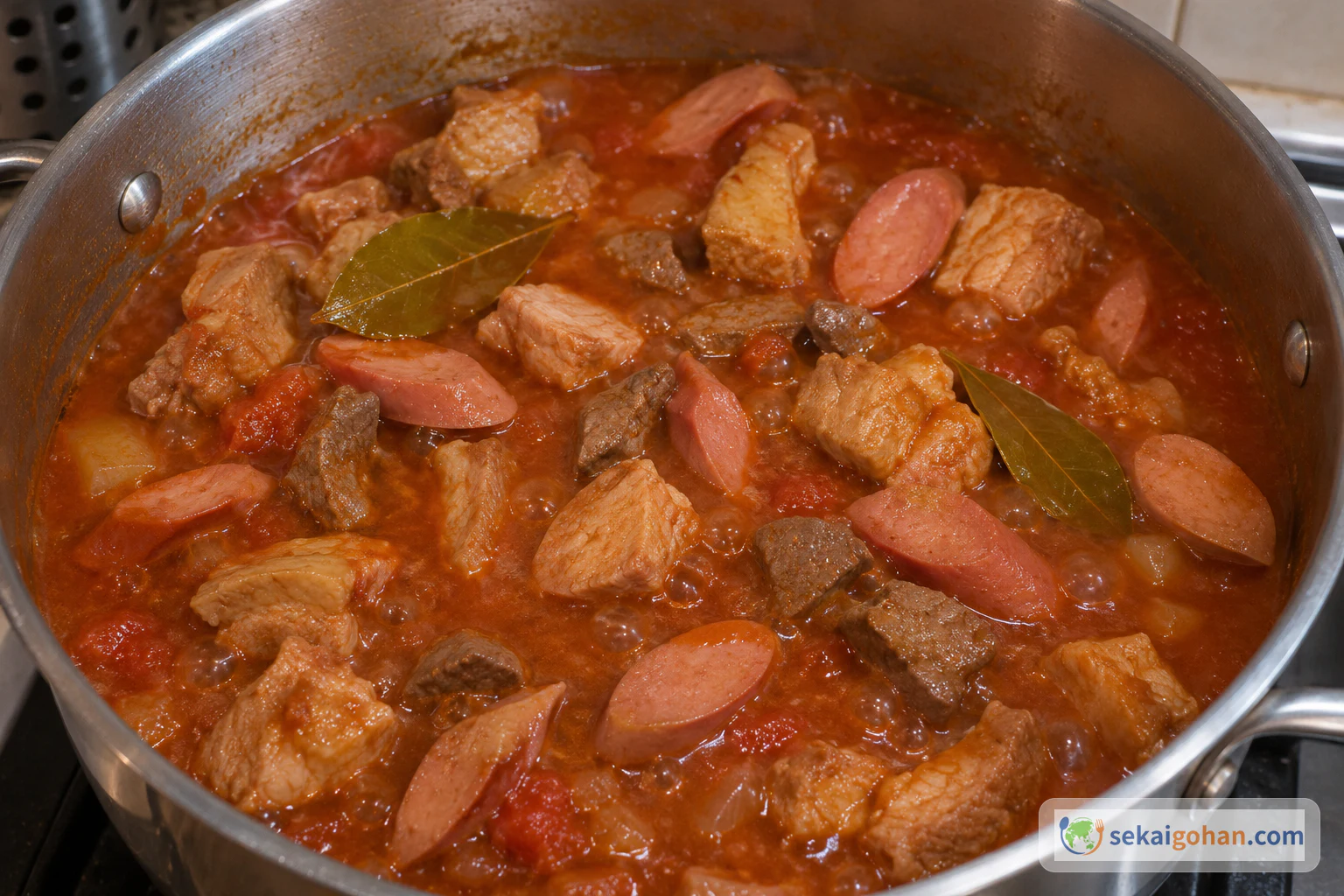
The tomato sauce goes into the pot over browned, soy-dark cubes of pork. It hisses, turns brick red, and the bay leaves start to smell as the steam rises. After a long, slow simmer the pork gives way under a spoon. Small pieces of liver go in, then potato, carrot and slices of hot dog. Filipino menudo is a home stew from the Philippines: tart from the tomato, rich from the pork and liver, with a sauce made to be spooned over a mound of hot white rice.
Small Pieces, Big Pot: Where Menudo Fits on the Filipino Table
The name explains the knife work. Menudo comes from Spanish, where it refers to something cut into small pieces. In Cebuano the dish is called ginamay or ginagmay, which also means "cut small." Everything in the pot is cut to roughly the same small size, the pork, the liver, the potato and the carrot, so every spoonful carries a little of each along with plenty of sauce for the rice.
Menudo is everyday food. Small eateries serve it as an inexpensive dish, and it shows up at potlucks and buffets, where a big pot feeds a crowd and goes well with rice. Where it was first made is not settled, so it is best enjoyed for what it is now: a dish that every household adjusts to its own taste. Some cooks add green peas or raisins. Others add hot dogs, bell pepper, Vienna sausage, chorizo or sweet pickles. Pork, liver and a tomato-based sauce are what stay the same from pot to pot.
Within Filipino cooking it is one stew among several. Adobo leans on soy sauce and vinegar. Menudo keeps soy sauce in its marinade, but tomato carries the pot. If you like tomato-based stews, pochero is another one to cook. Searching for "menudo" can also turn up Mexican menudo, which shares the name but is a completely different dish, a red chili soup built on beef tripe and hominy.
Filipino menudo has no tripe, no hominy and no red chili sauce. If a recipe calls for any of them, you are reading about the Mexican dish.
Ingredients (serves 6)
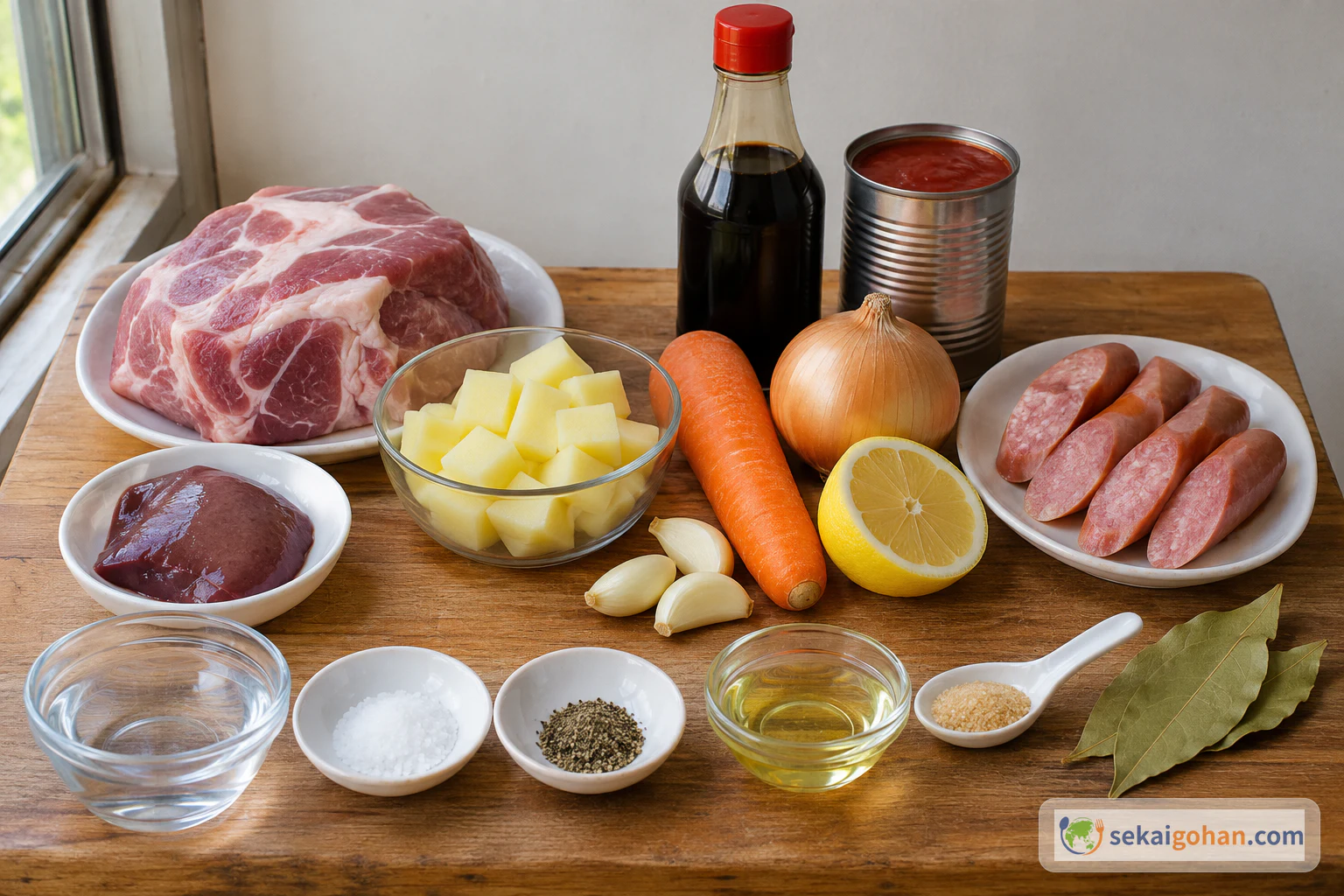
Soy sauce contains soy and wheat. Depending on the brand, hot dogs can contain wheat, milk and other allergens. Check the labels on the soy sauce, tomato sauce and hot dogs you buy.
Equipment
- Wide, heavy pot large enough to brown the pork in a single layer
- Mixing bowl for the marinade
- Knife and cutting board, plus a separate board or a thorough wash for raw meat and liver
- Tongs or a spatula for browning, and a wooden spoon for stirring
- Bamboo skewer or thin knife to test the potatoes
- Instant-read thermometer for checking the center of the meat
Choosing and Substituting
Pork shoulder is the cut to buy. It has both lean meat and fat, so it turns tender over a long simmer and still holds together. Very lean cuts dry out in the time it takes to soften them.
For the liver, buy pork liver. Beef liver also turns up in Filipino menudo and works the same way. Chicken liver does not belong here: it gives a different flavor and is not a substitute.
Use plain, all-purpose soy sauce and taste before adding salt at the end, since soy sauces vary in saltiness. Canned tomato sauce varies in sweetness from brand to brand, which is why the sugar waits until the last step. Any ordinary hot dogs or wieners will do.
Lemon is the citrus for the marinade. If a Filipino grocery near you sells calamansi juice, the other common choice, you can use it in place of the lemon. Everything else on the list is in an ordinary supermarket.
Cut the pork, liver, potato and carrot into pieces of about the same small size. They cook evenly, and you can check the liver is cooked through. Small pieces are also what give menudo its name.
Method
The pork marinates first, and that is the time to cut the vegetables, liver and hot dogs. After a quick sauté and sear, the long, hands-off stage is the tomato simmer while the pork softens. The last part moves quickly: liver and hot dogs, then vegetables, then a final taste.
Never use the liver raw. Cook the pork and liver until the center reaches 75°C for at least 1 minute. Keep the chopsticks, tongs and boards that touched raw meat or liver away from the cooked stew and from any raw vegetables.
Tomato sauce brands differ in sweetness, so add the sugar only at the end and taste before adding anything else. If the sauce already tastes sweet, leave the sugar out.
Add the liver at the point given in step 5 and take the pot off the heat once the potatoes are tender. Liver that simmers too long turns hard and grainy.
When It Goes Wrong
| What you see | Why | What to do |
|---|---|---|
| The pork is still firm after an hour | It needs more time in the sauce | Add a little water and keep simmering on low. Turning up the heat only tightens the meat |
| The pork is gray and wet instead of browned | The pot was crowded and the pork steamed | Next time use a wider pot or brown the pork in batches. This time, simmer as usual |
| The sauce is too thick or too sweet | Tomato sauces vary, and the sauce reduced | Add a splash of water and hold back on the sugar |
| The liver is hard and grainy | It cooked too long, or the pieces were uneven so some overcooked | Cut the liver to an even size, add it at step 5 and serve once the vegetables are tender |
| The potatoes are falling apart | The heat was too high, or the pieces were too small | Simmer gently and cut the potatoes a little larger |
Serving, Variations and Storage
At the table
Menudo is a rice dish. Serve it over steaming white rice with plenty of sauce. The tomato sauce soaks into the grains, and that is half the pleasure. A full pot suits a potluck or a buffet table as well as a weeknight dinner.
Variations
- Liver paste: Mash or blend half the liver into a paste and stir it into the sauce, and cube the rest as usual. The sauce becomes thicker and the liver flavor runs through the whole pot.
- Raisins: Add a handful near the end of cooking for little bursts of sweetness against the tomato.
- Green peas: Stir them in at the end for color and a fresh, sweet bite.
- Bell pepper: Add diced bell pepper at the end for a fresh, slightly crisp contrast to the soft stew.
Storage and reheating
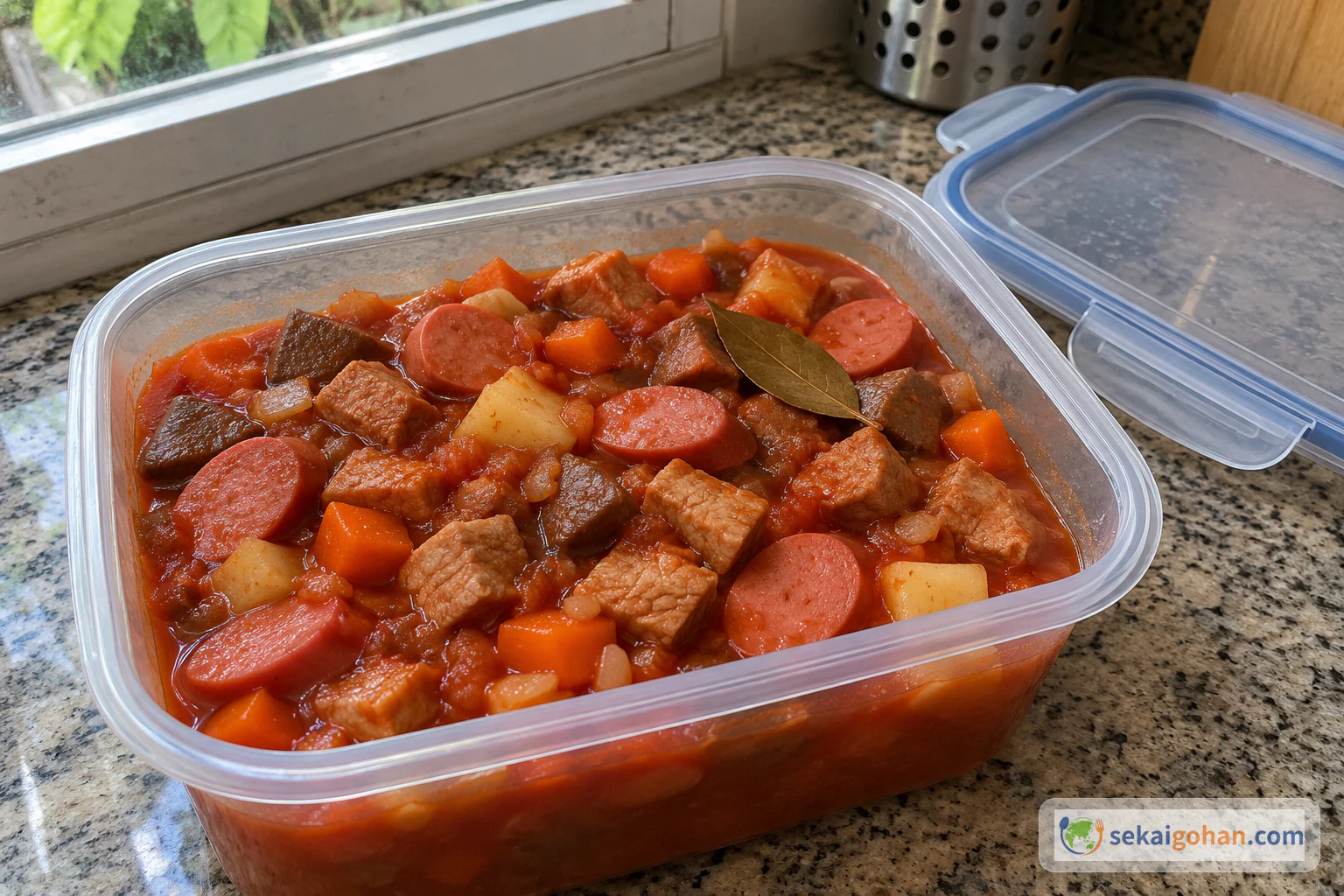
Store menudo in a covered, airtight container in the refrigerator for up to 3 days. The sauce thickens as it cools. To freeze it, let it cool completely first, then seal it and freeze for up to 2 months. Reheat it in a pot over low heat with a little water, stirring until it is hot all the way through. In the microwave, stir it every 2–3 minutes as it heats.
Frequently Asked Questions
Can I use beef liver instead of pork liver?
Yes. Beef liver is also used in Filipino menudo. Cut it to the same small size as the pork and add it at the same point. Do not use chicken liver, because it changes the flavor of the dish.
Can I make menudo without liver?
Yes. Leave the liver out and use more lean pork in its place. The sauce will taste lighter and less rich, but the tomato, pork and vegetables still make a good stew.
The liver tastes too strong for me. What can I do?
Before step 5, sauté the cut liver for about 2 minutes with ½ tsp ginger powder per ¼ lb (113 g) of liver, then add it to the stew as usual. The ginger softens the liver's flavor. The liver paste variation also helps, because the liver blends into the sauce.
Should I fry the potatoes and carrot before they go into the stew?
You can. Fry them lightly in oil until the outsides are colored, then add them at step 5. The browned surfaces help them keep their shape, and they cook through in the sauce.