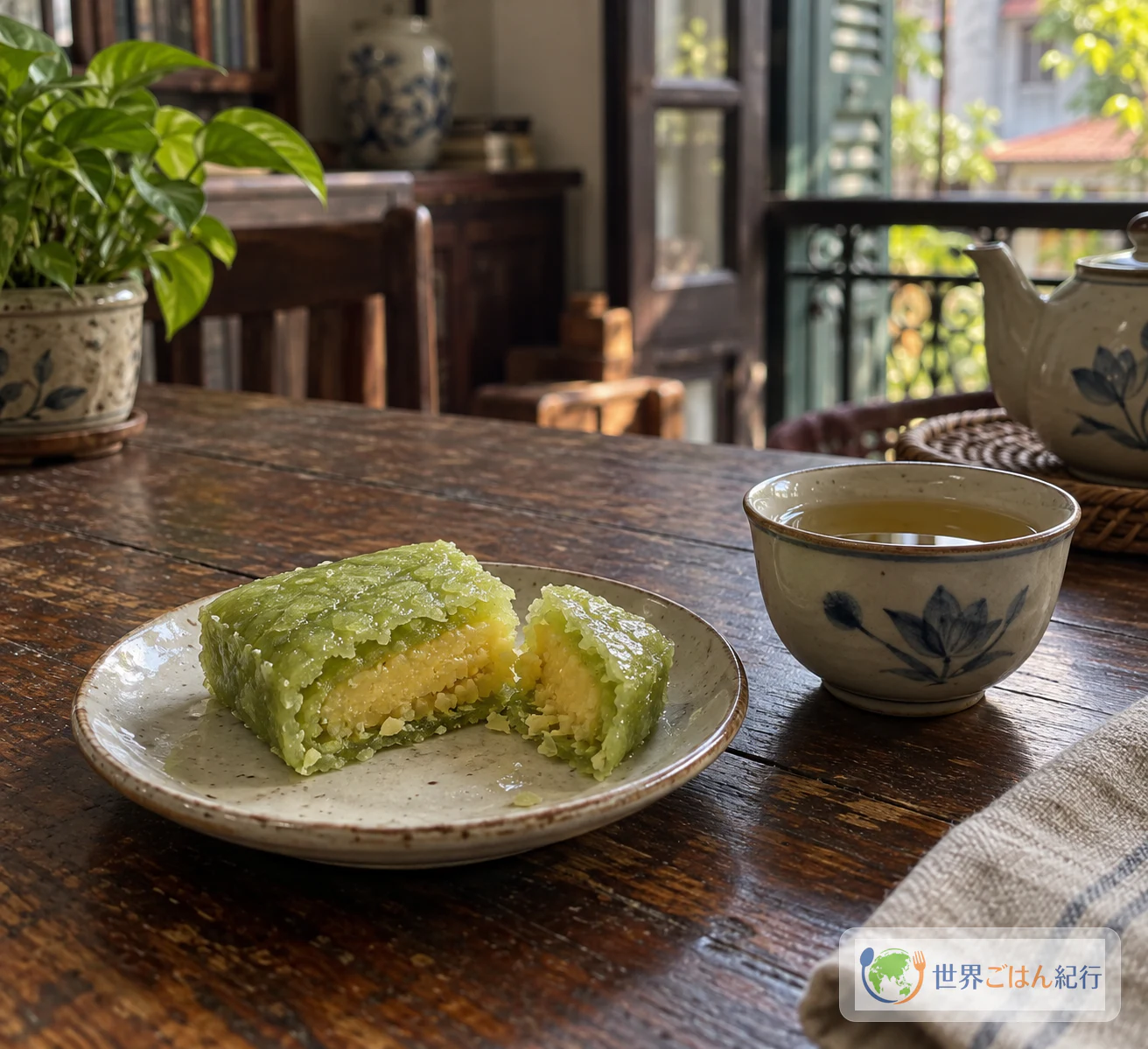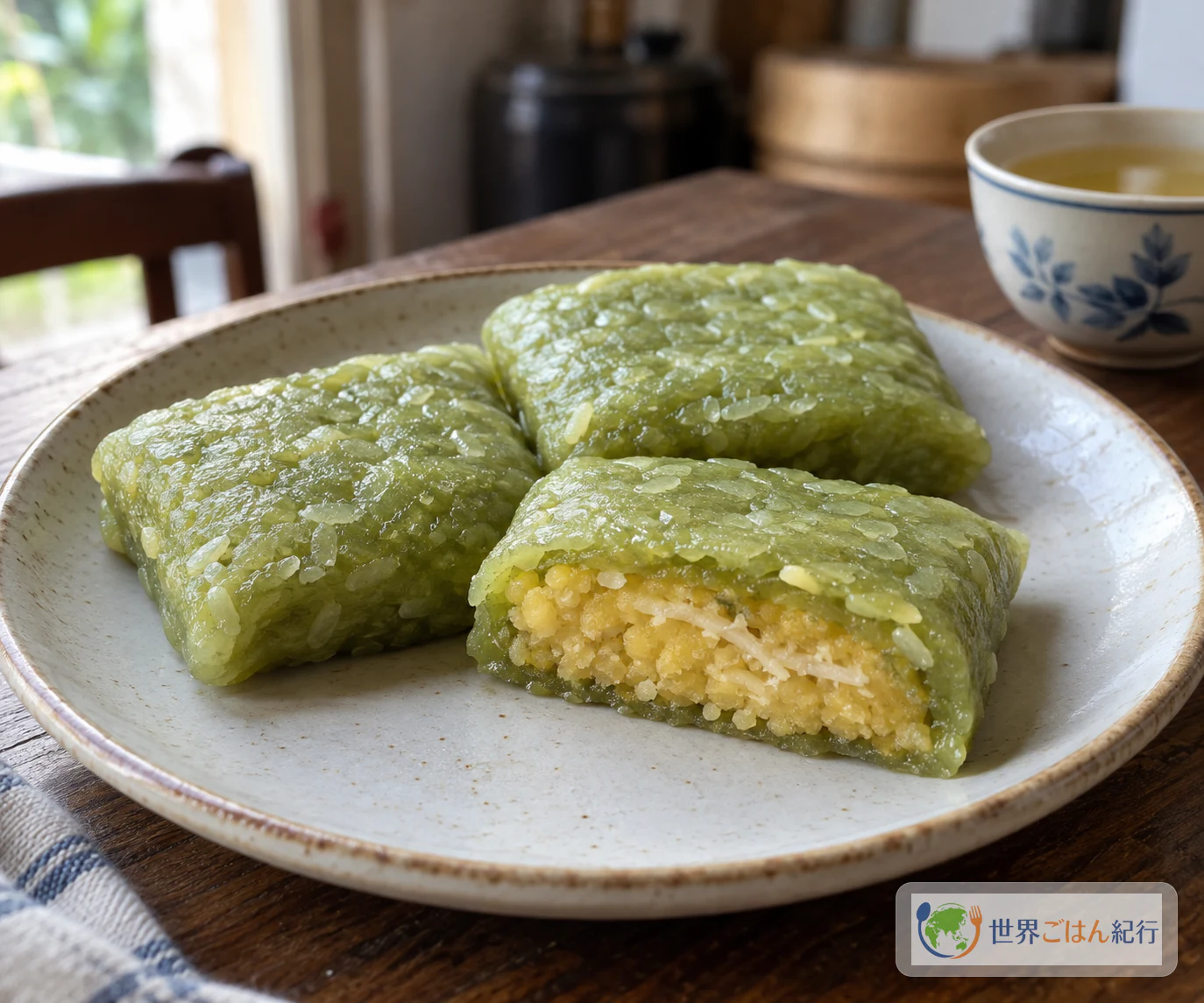
A cut Hanoi-style bánh cốm: a square, muted-green young-rice cake showing its yellow mung bean filling
CuisineVietnamese

Bánh Cốm: Hanoi's Square Young-Rice Cake with Mung Bean Filling (Hàng Than Style)

How to make bánh cốm, the Hanoi confection from Hàng Than Street: a chewy green shell of young glutinous-rice flakes (cốm) wrapped around a sweet mung bean and coconut filling. Covers rehydrating dried cốm, cooking a filling that holds its shape, stirring the shell until sticky, pressing the cake square, and how it fits into Hanoi's engagement gifts and tea.

Cooking flow

Cooking steps

STEP 11 / 5

Soften the dried cốm

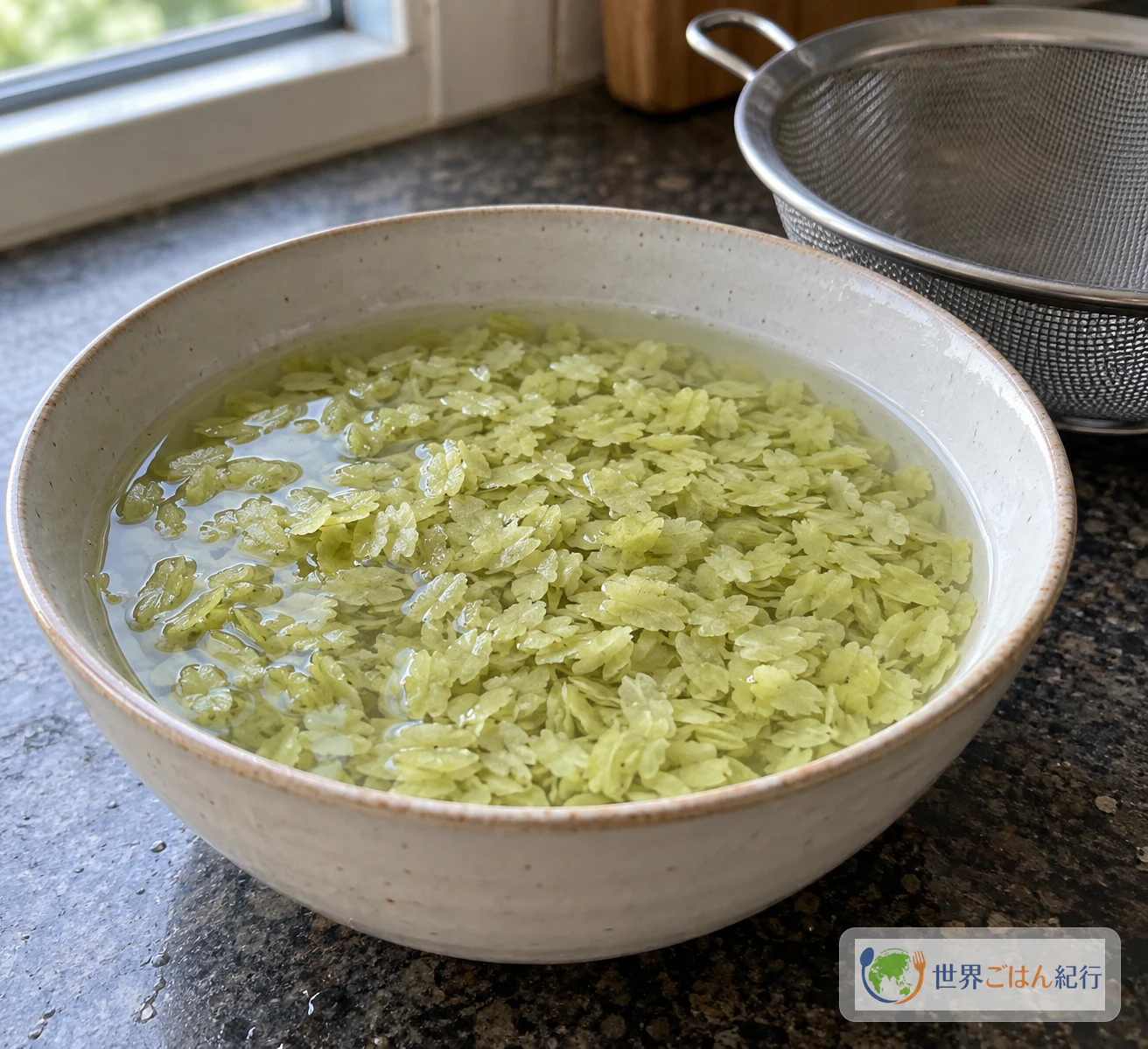
Dried young-rice flakes soaking in a shallow bowl of water, with a sieve nearby
Soak the dried cốm only until the flakes soften, then drain well

If the dried flakes look dusty, sift or rinse them briefly. Put the 7 oz (200 g) of dried cốm in a shallow bowl of clean water and let it soak for 10–15 minutes. Don't leave it submerged much longer than that.

The flakes are ready when they have softened but each one is still identifiable. Drain them well in a sieve. Water clinging to the surface makes the shell harder to control later.

STEP 22 / 5

Steam the mung beans and cook the filling

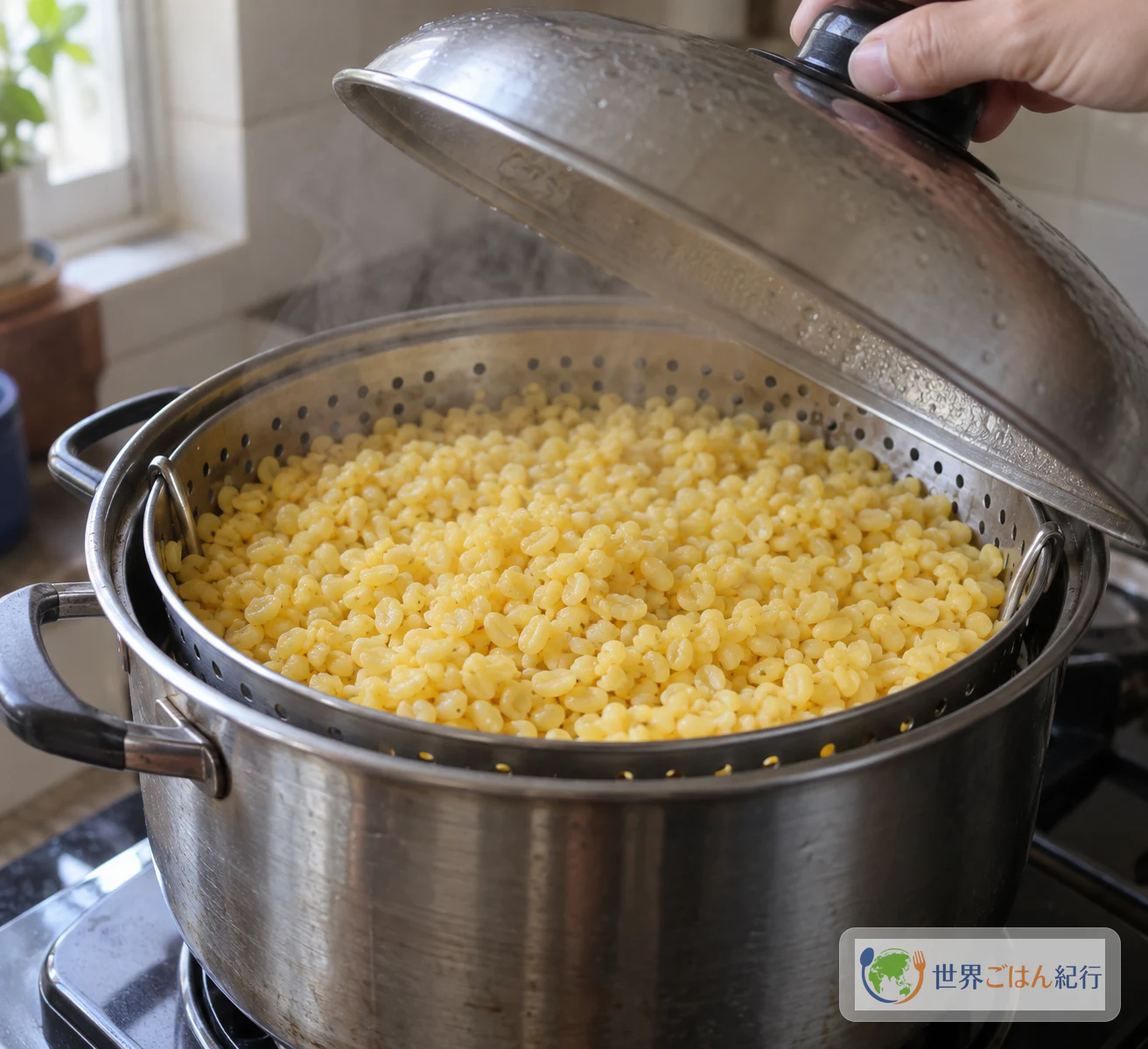
Peeled split mung beans steaming in a metal steamer insert as the lid is lifted
Steam the beans until they are fully tender before mashing

Soak the 3.5 oz (100 g) of peeled split mung beans until plump. Drain, then steam until completely tender all the way through.

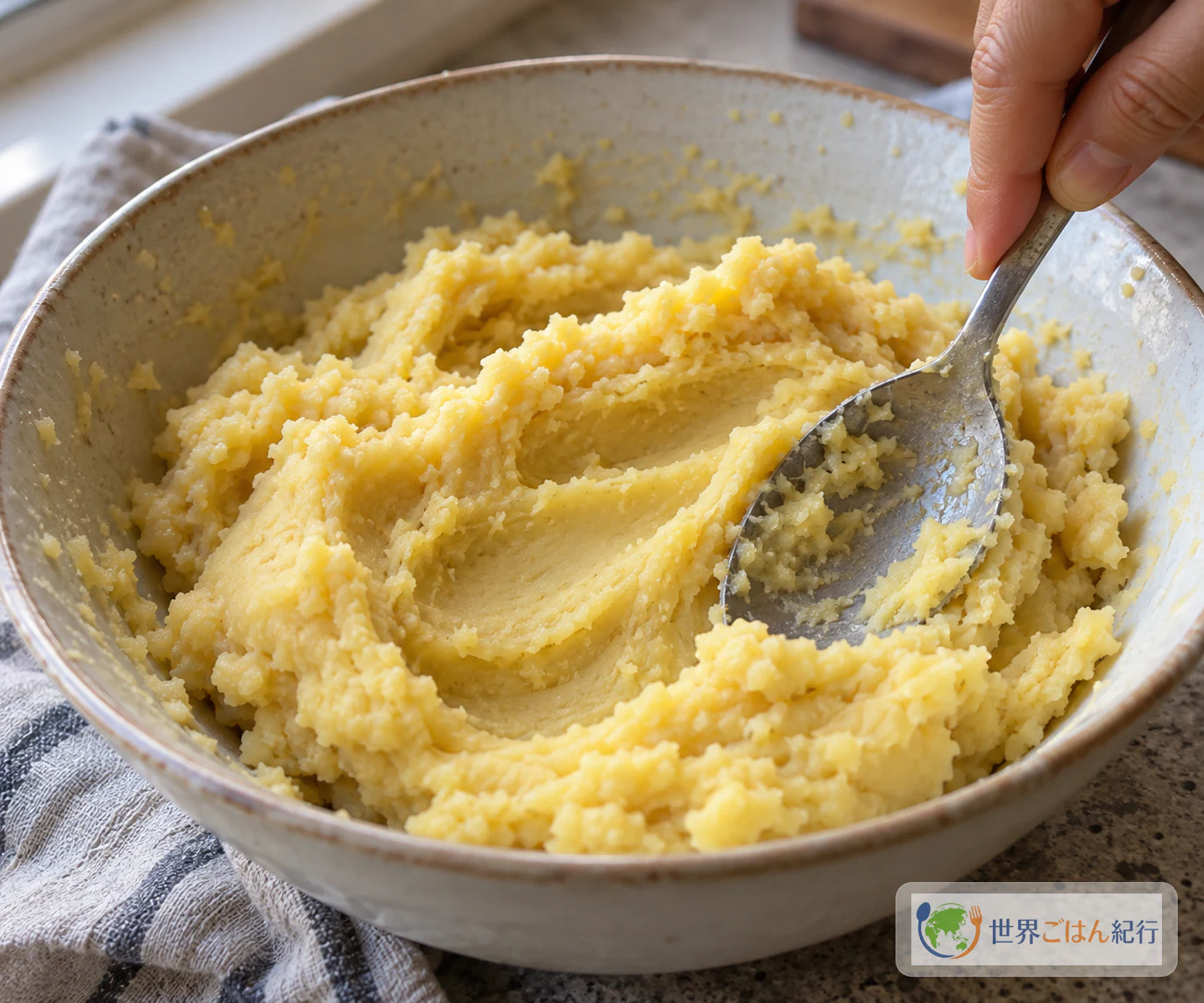
Mash the steamed beans until smooth and thick.

Steamed mung beans being mashed with a spoon into a thick, smooth paste
Mash the beans on their own first, before adding anything else

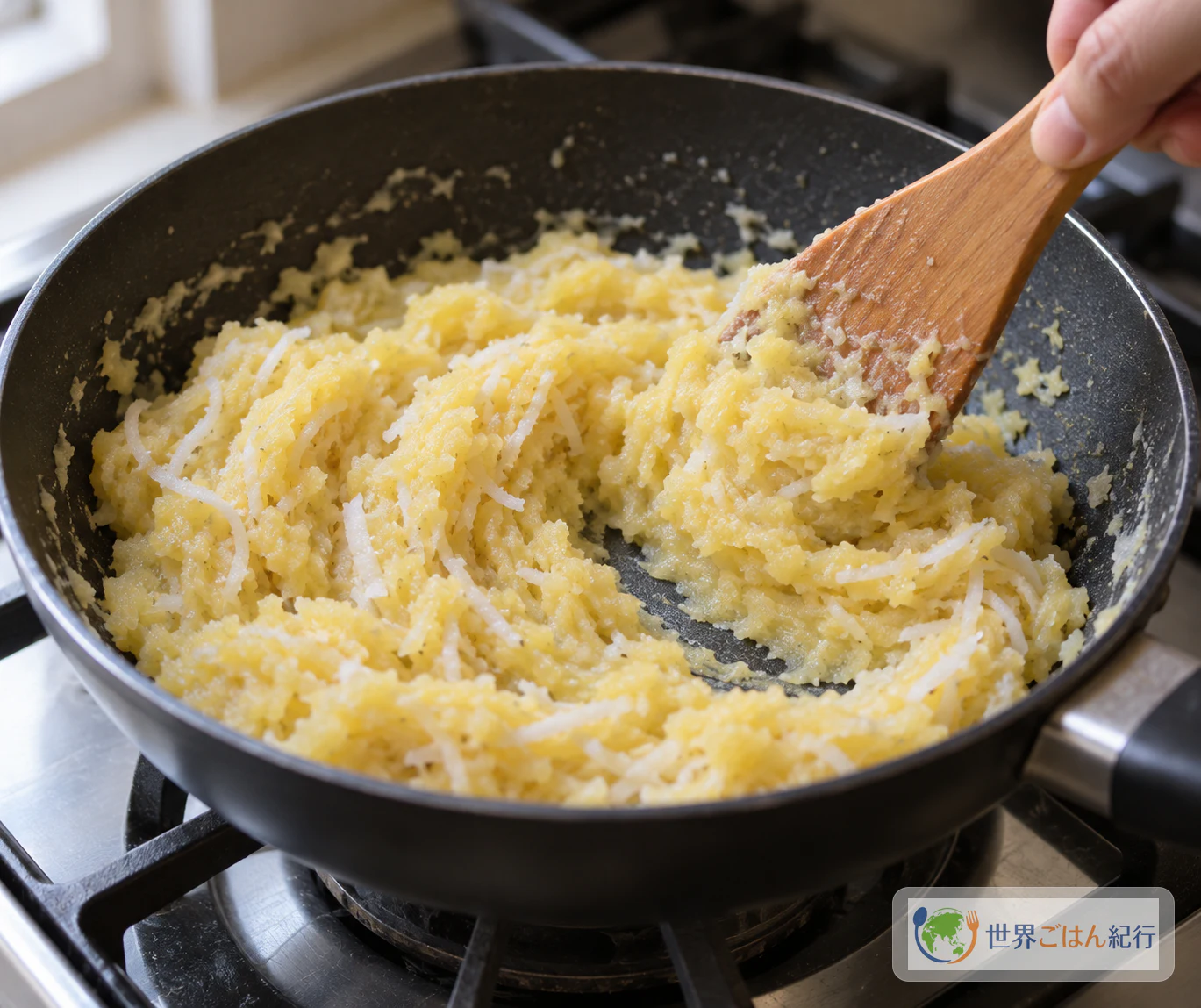
Move the mashed beans to a nonstick pan with the 1.75 oz (50 g) of shredded coconut and part of the sugar. Cook over gentle heat, stirring, until the paste is cohesive enough to hold a mound. Divide the 3.5 oz (100 g) of sugar to your own taste, keeping the rest for the shell, and judge by the texture rather than the clock.

Mashed mung beans with shredded coconut being stirred in a nonstick pan into a cohesive paste
The filling is ready when the spatula leaves a track in a paste that holds together

Let the filling cool, then shape it into compact pieces, small bars or balls, ready to wrap.

STEP 33 / 5

Cook the green shell

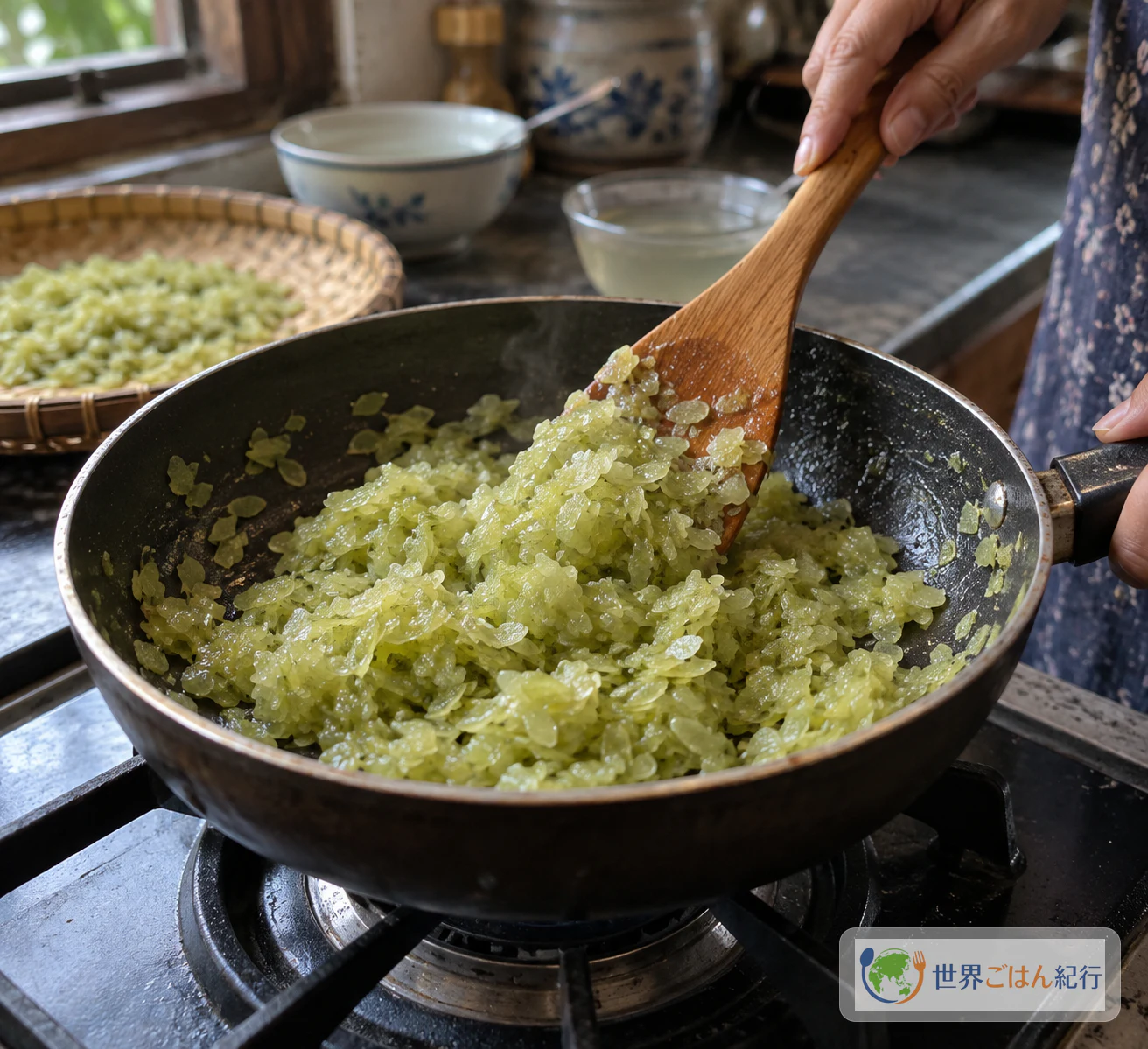
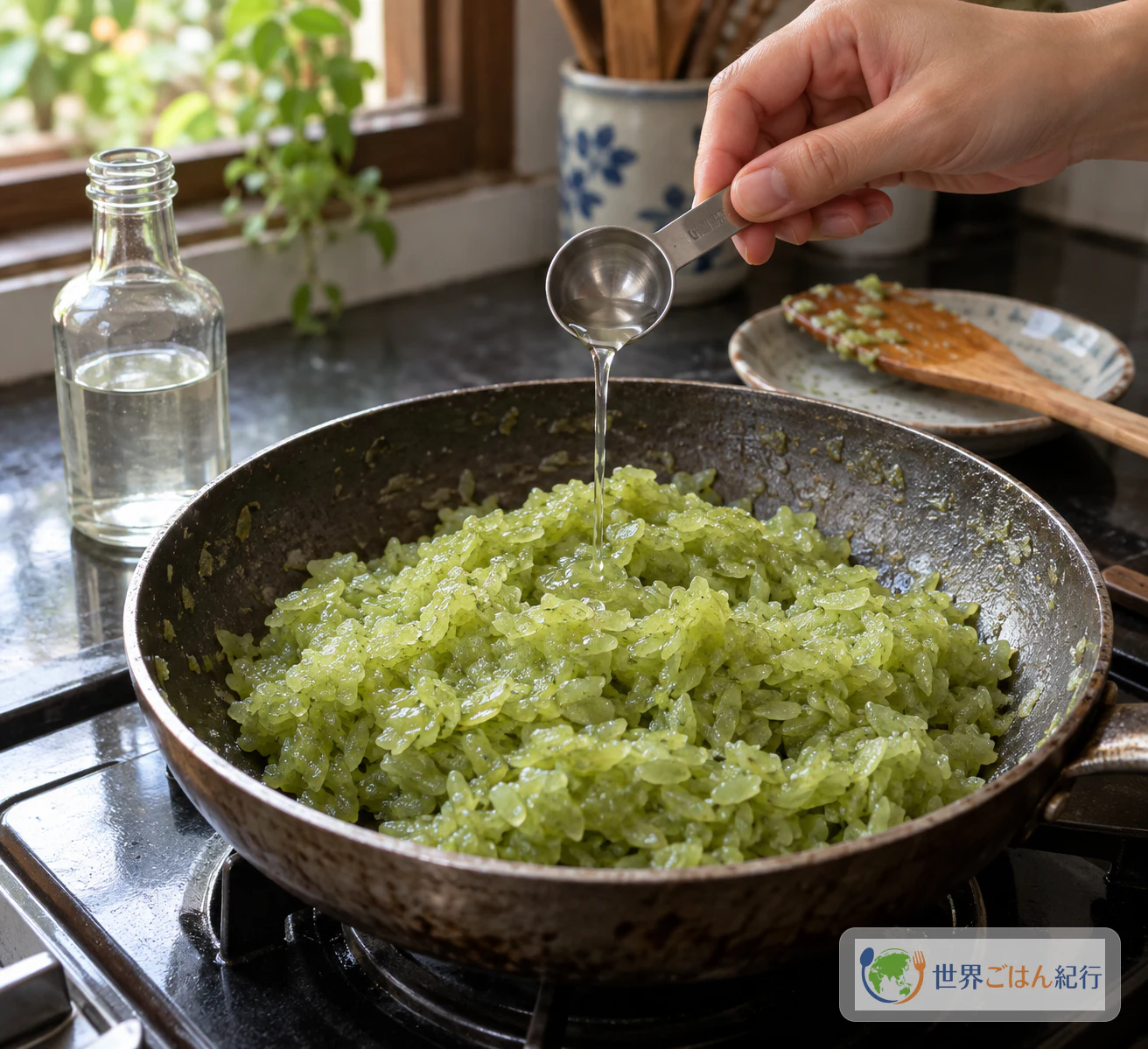
Softened young-rice flakes being stirred with a wooden spatula over low heat into a sticky green mass
Keep stirring over low heat until the flakes cling together into a spreadable mass

In a pan, bring a little water and the remaining sugar to a boil so the sugar dissolves. Add the drained cốm and stir over low heat until the flakes turn into a sticky, cohesive mass that can be spread. Keep the heat low and keep stirring so the shell neither scorches nor cooks too far. Some individual flake texture can remain.

Once the shell is cohesive, add the 1 tsp of food-grade pomelo blossom water near the end and work it in.

A small spoonful of food-grade blossom water being added to the cooked green shell in the pan
Add the blossom water to the shell once it has come together
STEP 44 / 5

Wrap the filling and press it square

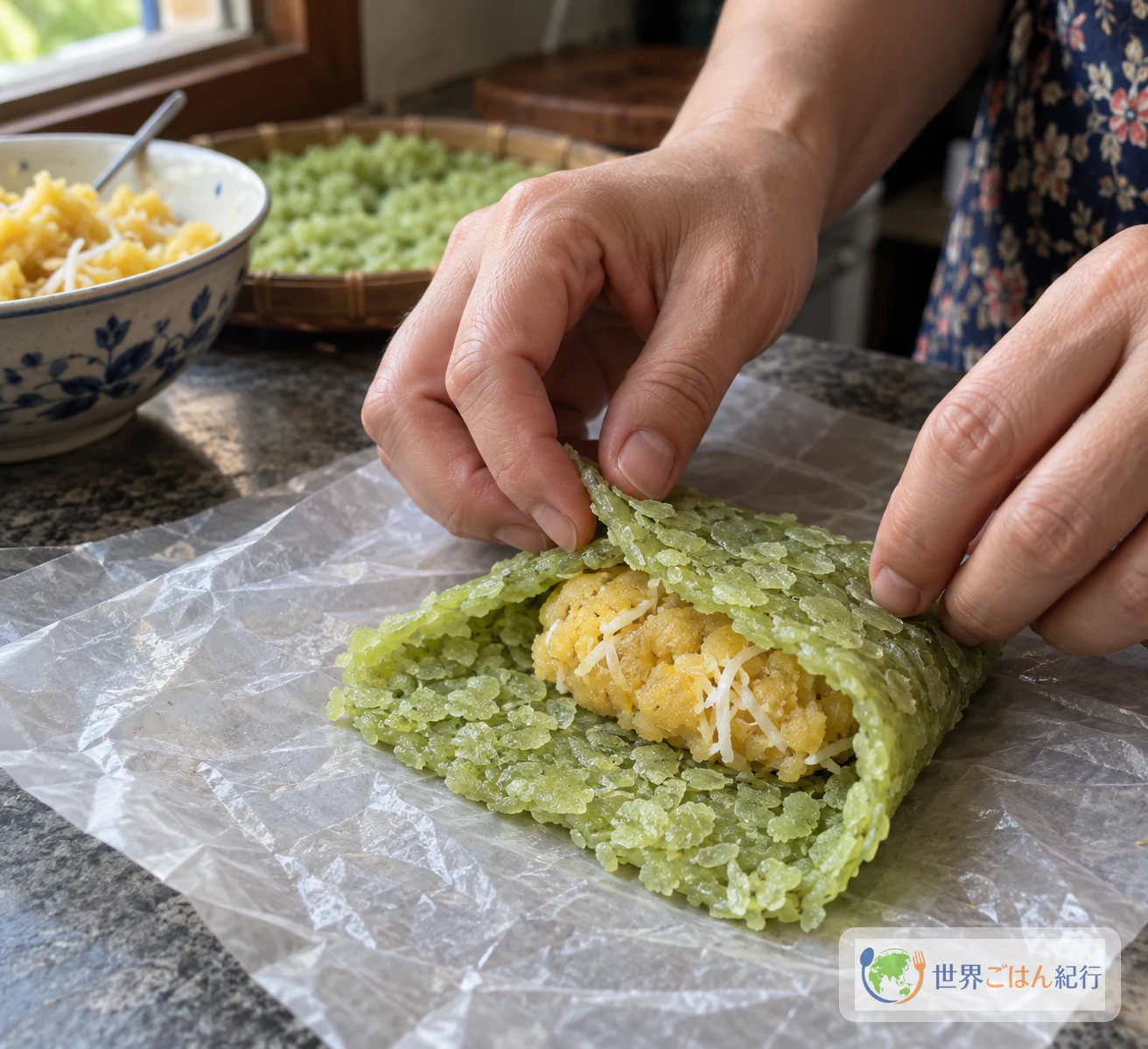
Hands folding a green young-rice shell around a yellow mung bean filling on clear food wrap
Enclose the filling with shell from below and above

Lay out a sheet of plain food wrap; no oil is needed. Spread a thin layer of the warm shell on it, set a piece of cooled filling in the center, then cover it with more shell, folding it over so the filling is enclosed.

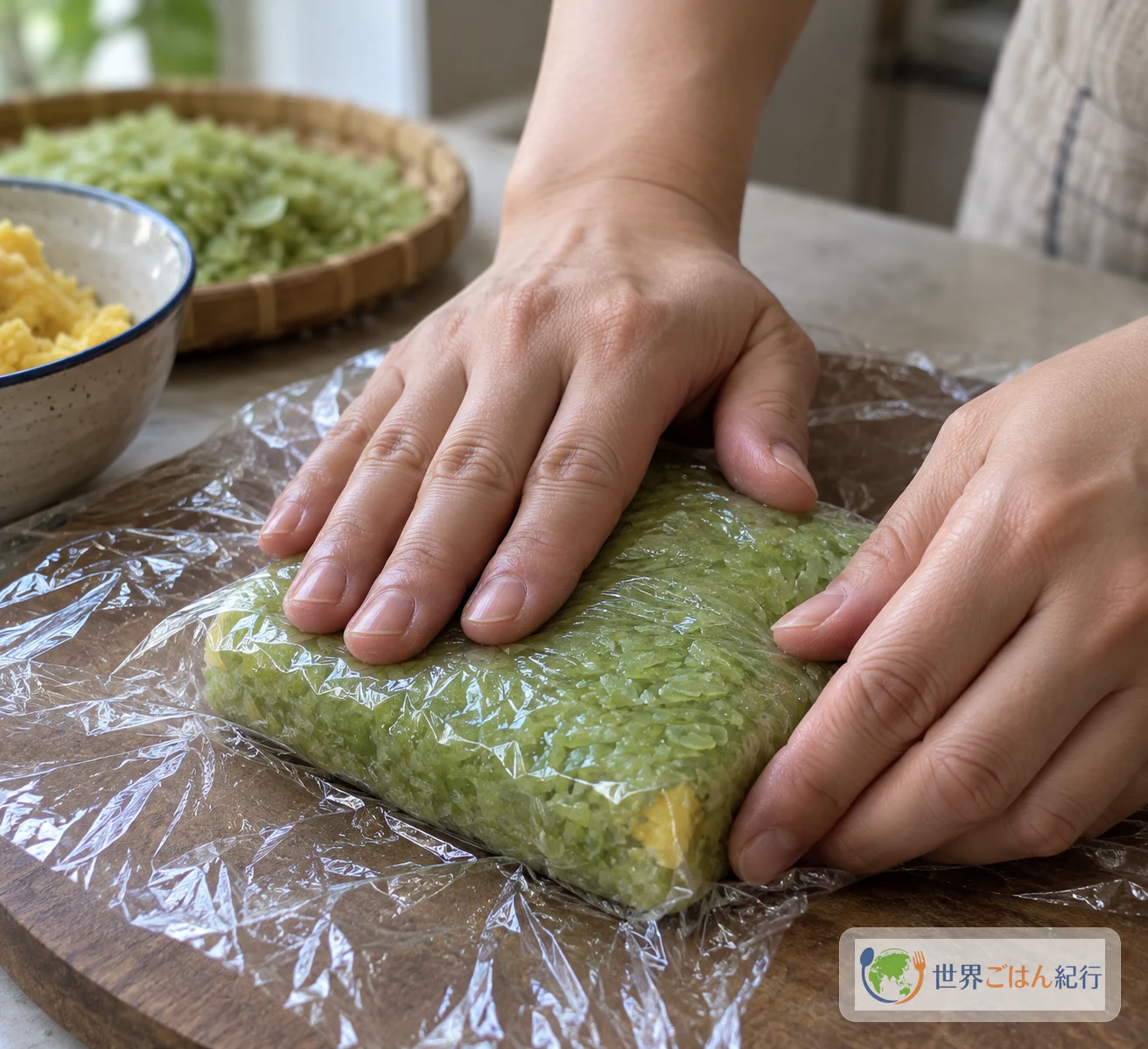
Close the wrap around the cake and press it gently into a flat square. Slightly uneven, handmade edges are natural, and a little shine through the clear wrap is just the film. Repeat with the remaining shell and filling.

Hands pressing a filled green cake into a flat square through clear food wrap
Press through the wrap to flatten the cake into a square
STEP 55 / 5

Cool and wrap each cake

STEP 5

Let the cakes set until they are cool enough to handle, then wrap each one individually in clear wrap or paper. Both the home recipe and the Hanoi portal describe bánh cốm as individually wrapped square cakes.

0 / 0
Ingredients

Ingredients

1 / 1

Ingredients

Ingredient Amount Role
Dried cốm, young glutinous-rice flakes (cốm khô) 7 oz (200 g) The green, chewy shell. Use the dried form for this measured version
Peeled split mung beans (đậu xanh đã bóc vỏ) 3.5 oz (100 g) The filling. Soaked, steamed until fully tender, then mashed
White granulated sugar (đường cát trắng) 3.5 oz (100 g) Sweetness for both the shell and the filling combined
Shredded coconut (dừa nạo sợi) 1.75 oz (50 g) Cooked into the mung bean filling
Pomelo blossom water (nước hoa bưởi) 1 tsp Fragrance, added to the cooked shell near the end
Pandan leaf (lá dứa), optional As needed Optional aroma and color. Left out in this version
0 / 0

A small square cake, wrapped on its own, set out with a cup of hot lotus tea. Cut it open and a soft, muted green shell gives way to a warm yellow center. This is bánh cốm from Hàng Than Street in Hanoi, a sweet given at northern engagement ceremonies and eaten slowly with tea. The green comes from cốm, flattened flakes of young glutinous rice, stirred with sugar and water until sticky and pliable, then wrapped around steamed, mashed mung beans. The result is gently sweet and chewy, with a smooth center that holds its shape.

About this recipe

The source gives no yield, no exact cooking times for most stages, and no split of the sugar between the shell and the filling, so this article does not invent them either.

Bánh Cốm and Hàng Than Street

Bánh cốm is a two-layer cake: a young-rice-flake shell and a mung bean filling. The shell is built from cốm itself rather than rice flour or sticky-rice dough, which is why you can still faintly see the flakes in a thin, chewy shell. The filling is peeled mung beans, steamed, mashed and cooked with sugar and shredded coconut. The finished cake is square and flat.

The word cốm turns up in several Vietnamese dishes, and they are quite different:

Name What it is How it differs from bánh cốm
Bánh cốm (Hàng Than style) Square cake: stir-cooked cốm shell around mung bean filling The dish in this article
Cốm xào Stir-fried sweet cốm Served loose, not shaped or filled
Xôi cốm Steamed sticky rice with cốm A sticky-rice dish, not a wrapped cake
Bánh tét cốm dẹp A Khmer rolled cake from the south Rolled into a cylinder, a different tradition

Hàng Than is a street in Ba Đình, Hanoi, known for cốm and the cakes made from it. The craft there dates to 1865, the street has more than 50 food businesses, and in June 2024 Hàng Than cốm was recognized as a Hanoi traditional craft.

In Hanoi and northern Vietnam, bánh cốm belongs to engagement ceremonies, where it sits on the gift tray, and to the tea table. Cốm itself is tied to the young-rice season, but Hàng Than bakers use dried, mature cốm for a steadier chew, and that dried form lets you make the cake any time of year.

Ingredients: The Home Formula
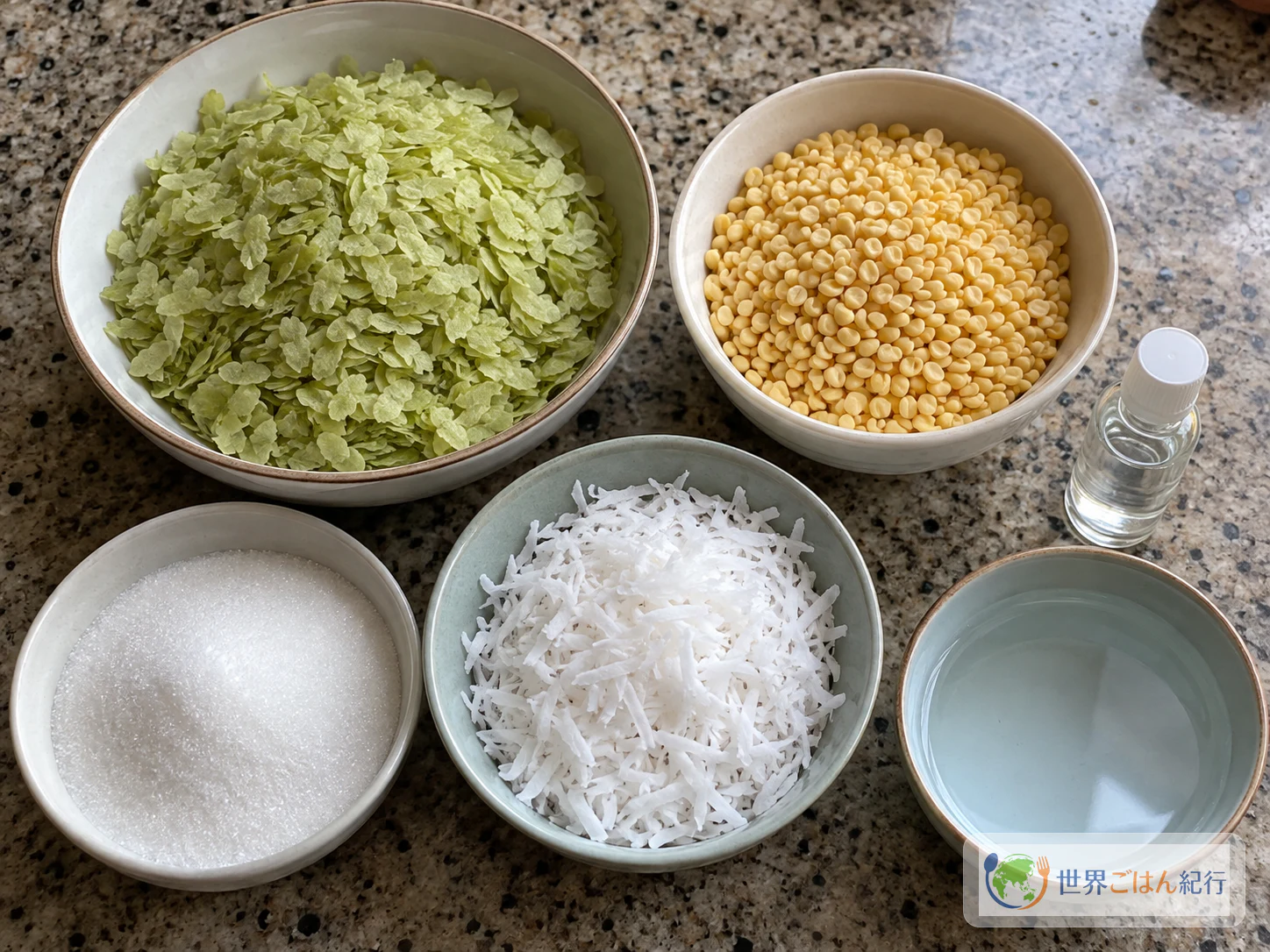
Dried cốm, peeled split mung beans, sugar, shredded coconut, a small bottle of blossom water, and a bowl of water
The base version uses dried cốm; the optional pandan is left out here

No salt, oil, rice flour or coconut milk is added. Use water as needed for soaking, steaming and the sugar syrup.

Allergens and labels

This recipe contains rice, mung beans and coconut. Coconut counts as a tree nut for labeling in some places, so check with anyone who avoids tree nuts. It contains no egg, dairy, wheat or peanuts, but read the labels on the cốm, coconut and blossom water for other ingredients and shared-facility statements.

Choosing Ingredients for Bánh Cốm

Dried cốm is the heart of the cake and has no true substitute. Glutinous rice flour or ordinary sticky rice loses the flattened flakes and the texture they bring. If it's hard to find where you live, look for Vietnamese dried cốm (cốm khô).

  • Mung beans: Use peeled, split beans. Whole beans with their skins need longer cooking and change the texture of the filling.
  • Coconut: Use unsweetened shredded coconut, fresh or frozen. Sweetened dried coconut throws off both the sweetness and the moisture.
  • Pomelo blossom water: Use a food-grade blossom water made for cooking, not pomelo essential oil, cosmetic floral water or juice made with the peel. If you can't find one, simply leave it out.

Equipment

  • A shallow bowl for soaking the cốm
  • A fine-mesh sieve for draining
  • A steamer insert and pot for the mung beans
  • A spoon or masher
  • A small nonstick pan for the filling
  • A pan for cooking the shell
  • A heat-safe spatula, wooden or silicone
  • Plain food wrap for shaping
  • Individual wrappers, such as clear wrap or paper, for the finished cakes

Method: Filling First, Then a Warm Shell to Wrap It

How the work flows

Soak the cốm, make the filling and let it cool while you cook the shell. Then wrap the cooled filling in the shell while the shell is still warm and pliable. Decide for yourself how large to make each cake.

Fixing Common Bánh Cốm Problems

Problem Likely cause What to do
The filling is too loose to hold a mound The beans held too much water Drain the beans well before mashing, and keep cooking gently until it holds its shape
The shell is wet and hard to control Too much water left on the soaked flakes Drain the cốm thoroughly before it goes into the syrup
The shell crumbles when you wrap it The flakes were under-hydrated, or the shell cooled Let the flakes soften fully in the soak and work while the shell is warm. Don't add unmeasured liquid
The shell scorches on the bottom Heat too high, or stirring stopped Keep the heat low and stir continuously
The filling shows through or bursts Shell too thin, or filling piece too large Use a more compact piece of filling and enclose it fully before pressing

Serving, Storing and Variations

A square bánh cốm cut to show its yellow center, beside a cup of hot lotus tea
Hanoi's food portal pairs bánh cốm with hot lotus tea

Because the cake is sweet, a cup of unsweetened hot tea suits it well, and hot lotus tea is a lovely match. Serve it at room temperature, when the shell's chew is at its softest. Once the cakes have cooled, keep them wrapped and covered in the refrigerator.

You can shift how the sugar is divided between shell and filling, or adjust it to taste, though the sugar also affects the texture. A square mold is handy but optional: you can press the cakes into shape through food wrap.

Looking for more dishes from the same country? Browse Vietnam.

Frequently Asked Questions

Can I use fresh cốm instead of dried?

Fresh cốm works as a separate version at 10.5 oz (300 g), alongside 7 oz (200 g) of dried. It isn't a straight conversion, so treat it as its own recipe rather than mixing the two.

Is pandan essential?

No, it's optional. Without it, the shell keeps the gentle natural green of the young-rice flakes and a flavor centered on the grain and blossom water. Pandan adds its own aroma and color; there's no set amount, so add it to taste.

Sources

  • Cốm Mộc Lam, "Bánh Cốm quà tặng đặc sản thủ đô." The published home recipe used here: 200 g dried cốm (or 300 g fresh), 100 g peeled mung beans, 100 g sugar, 50 g shredded coconut, 1 tsp pomelo blossom water and optional pandan; steaming, mashing and cooking the filling with sugar and coconut; soaking dried cốm for 10–15 minutes; cooking the shell with sugar syrup and shaping it around the filling. A gift seller's introductory recipe with no yield, sugar split or full timing. https://commoclam.vn/banh-com-ha-noi/
  • Hanoi City Food Safety Information Portal / Hanoi Department of Culture and Sports, "Đặc sản Bánh cốm Hàng Than: Hương Thu Hà Nội gói gọn trong sắc lá xanh ngọt ngào đến thế." Hàng Than's use of dried mature cốm for a stable chew, stirring with water and sugar over controlled heat, pomelo blossom aroma, the mung bean filling, the cake's role in northern engagement ceremonies, and the pairing with tea. https://antoanthucpham.hanoi.gov.vn/dac-san-banh-com-hang-than-huong-thu-ha-noi-goi-gon-trong-sac-la-xanh-ngot-ngao-den-the-239260416094552.htm
  • Hanoi New Rural Development Information Portal, "Cốm Hàng Than, đúc đồng Ngũ Xã được công nhận nghề truyền thống." Hanoi's recognition of the Hàng Than cốm craft as a traditional craft in June 2024, the reported 1865 date for the craft, and more than 50 food businesses on the street. https://nongthonmoihanoi.gov.vn/tin-tuc/com-hang-than-duc-dong-ngu-xa-duoc-cong-nhan-nghe-truyen-thong-2938
  • Beemart, "Học ngay cách làm bánh cốm Hà Nội nhân đậu xanh ngon nức tiếng." An alternate recipe with dried cốm, pandan water, rice flour and oil, used only to show how published recipes differ; not combined with the formula here. https://www.beemart.vn/hoc-ngay-cach-lam-banh-com-ha-noi-nhan-dau-xanh-ngon-nuc-tieng