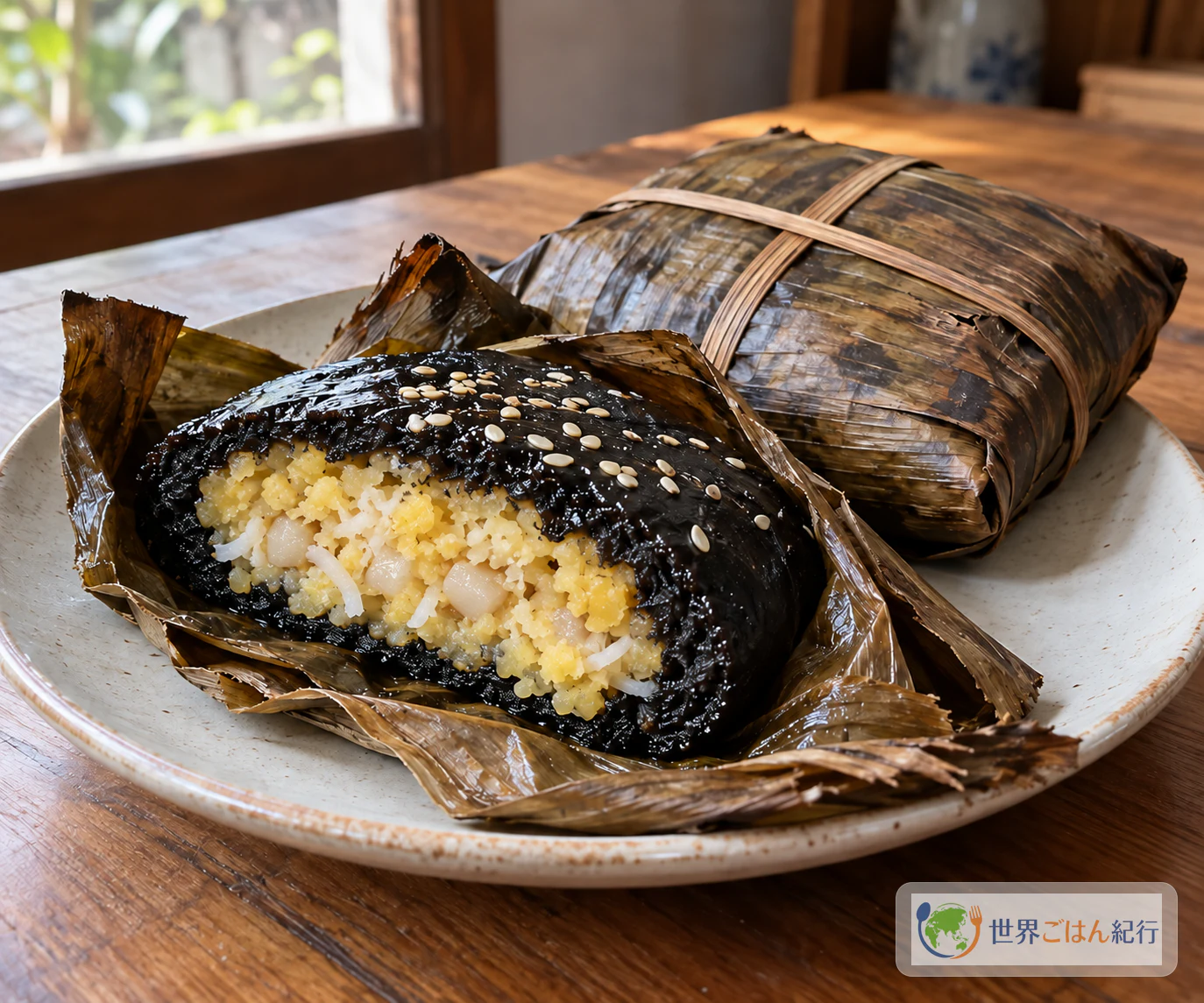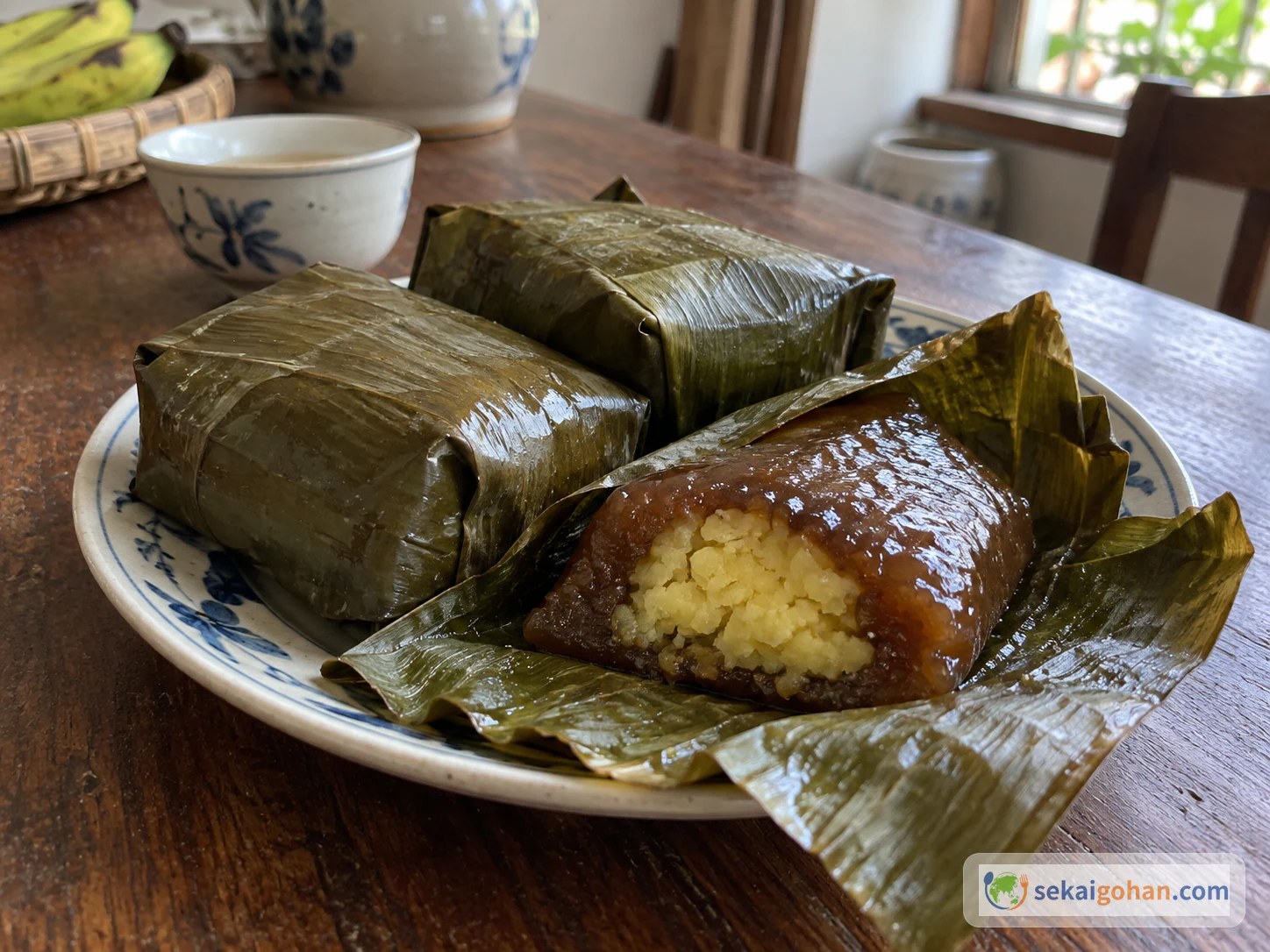
Peel back the banana leaf and the cake underneath is dark, glossy brown, coloured by nothing but sugarcane molasses worked into the rice dough. Cut it through and a pale mung bean centre shows, flecked with coconut and softened with a little lard. The dough is chewy and sticky the way boiled glutinous rice gets, and its sweetness is deep and dark, while the filling is mild, soft and rich. This is bánh mật as the Cao Lan people of Tuyên Quang make it for the New Year. It is a cake meant to be made in a batch and handed around.
A Tết cake of the Cao Lan
The Cao Lan live in Tuyên Quang province in northern Vietnam. Around Tết, families cook ahead, host relatives and go visiting. Bánh mật is one of the cakes of that season. It is set out as an offering to the ancestors, given to relatives and put in front of guests. That is why it comes in small, wrapped parcels: each one is a gift that can be carried, placed on an altar or opened at the table.
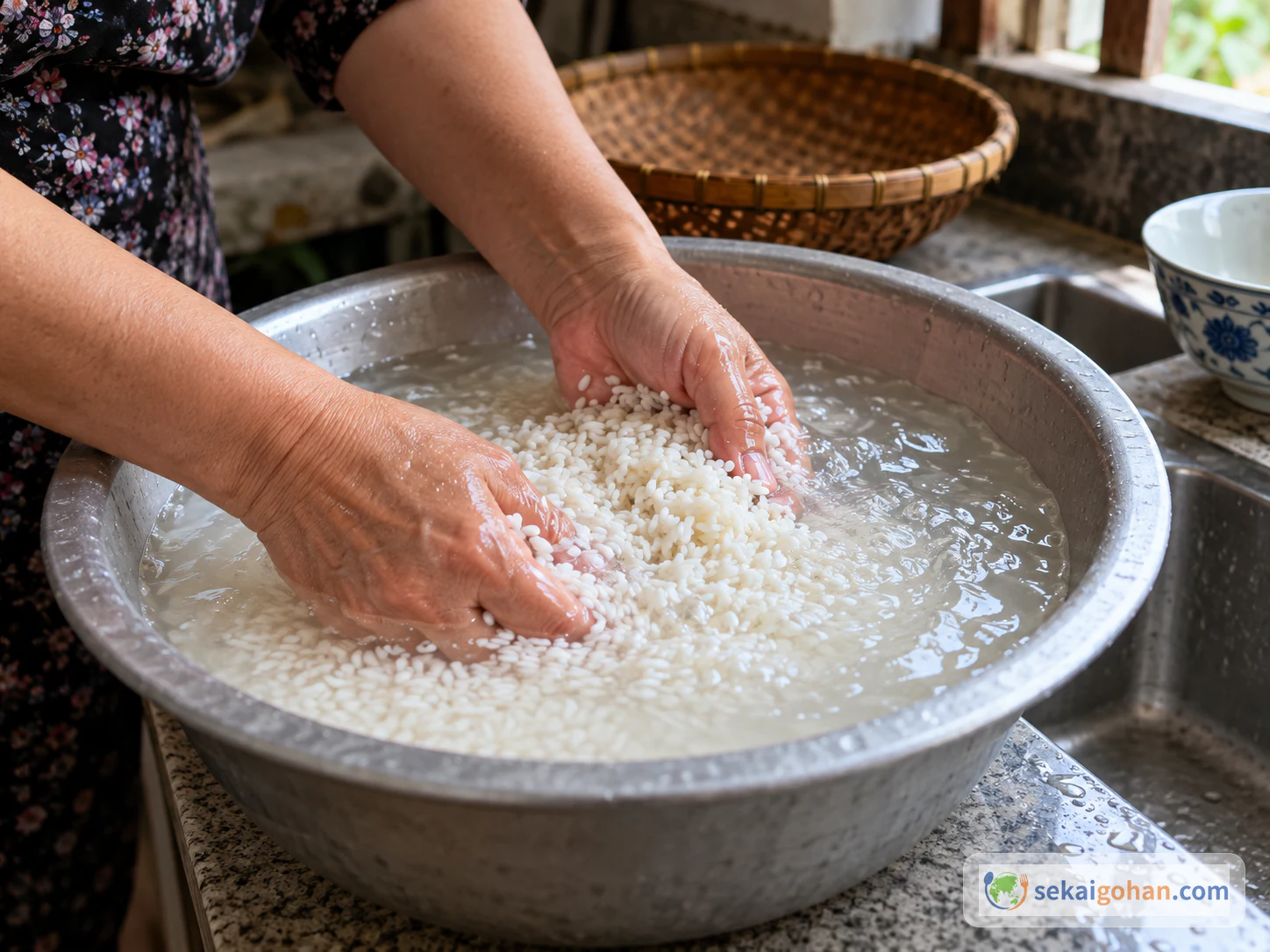
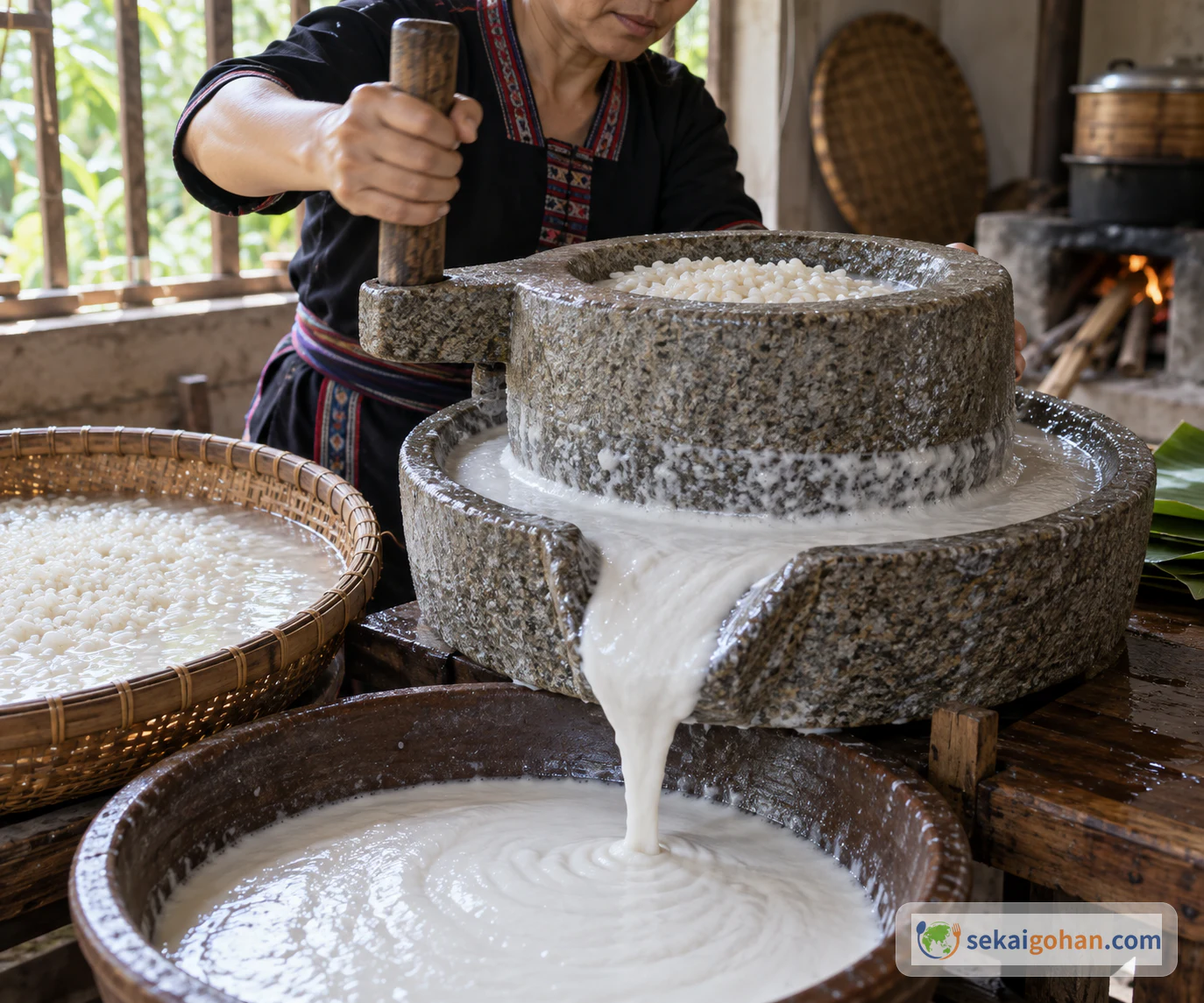
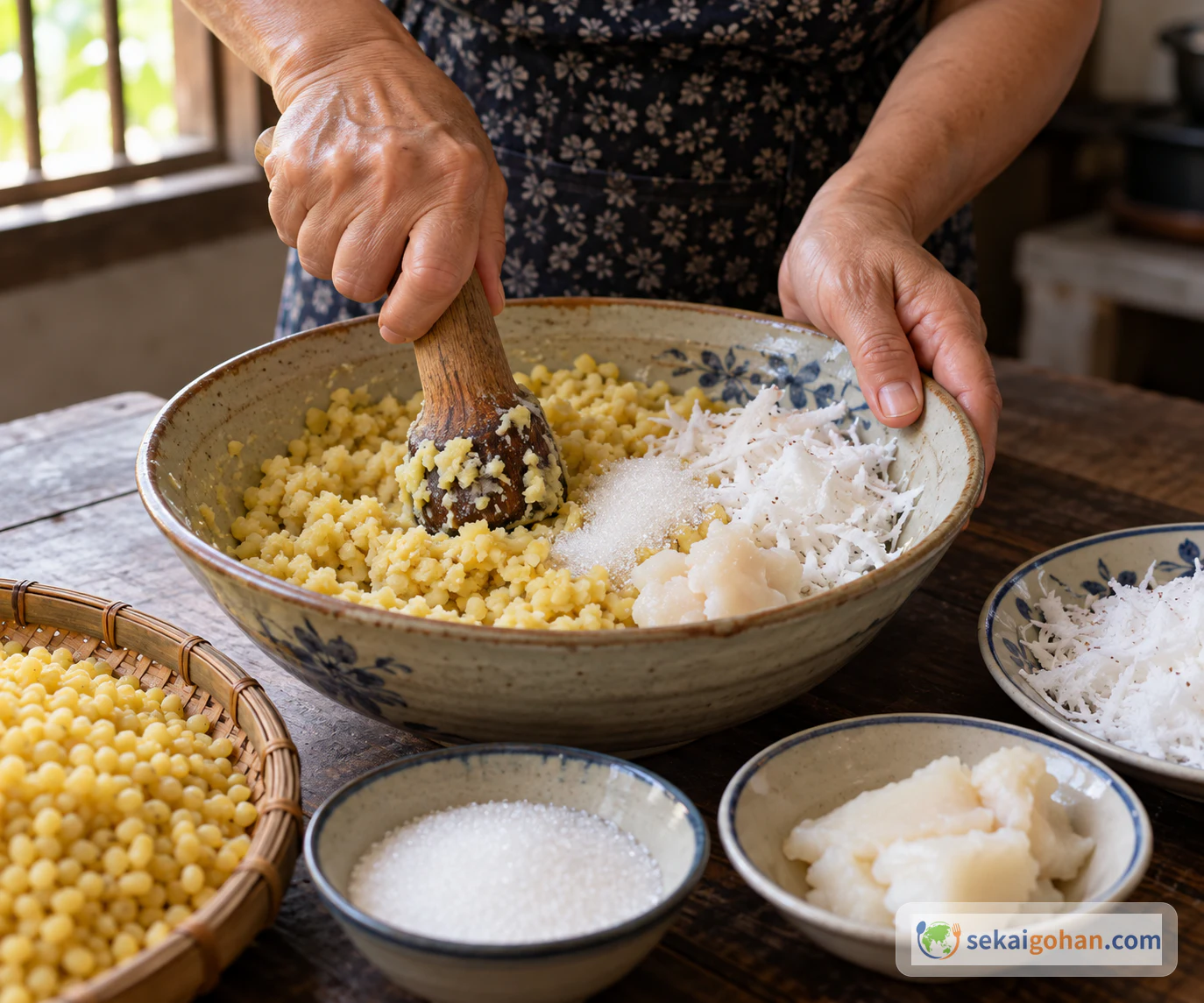
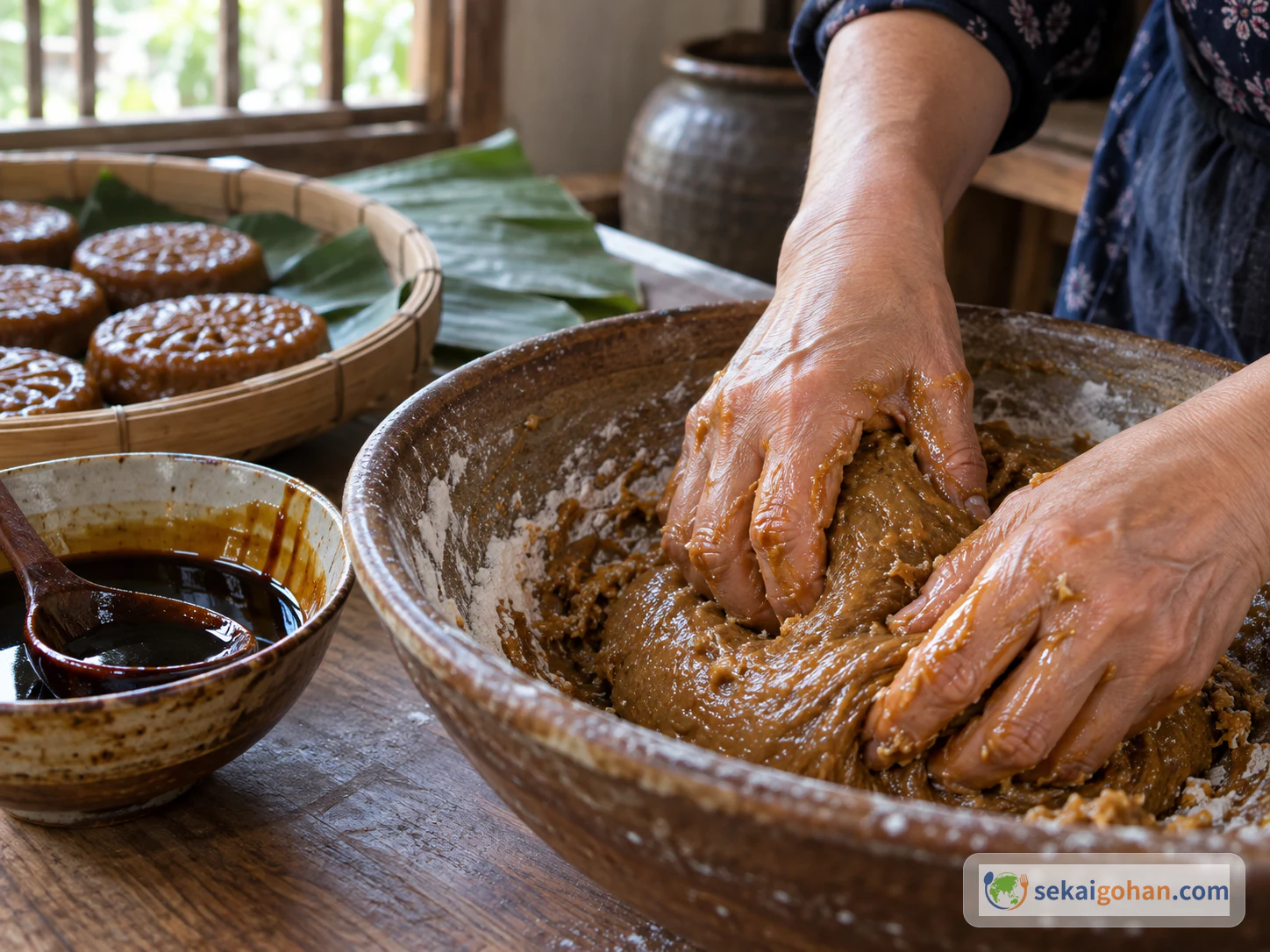
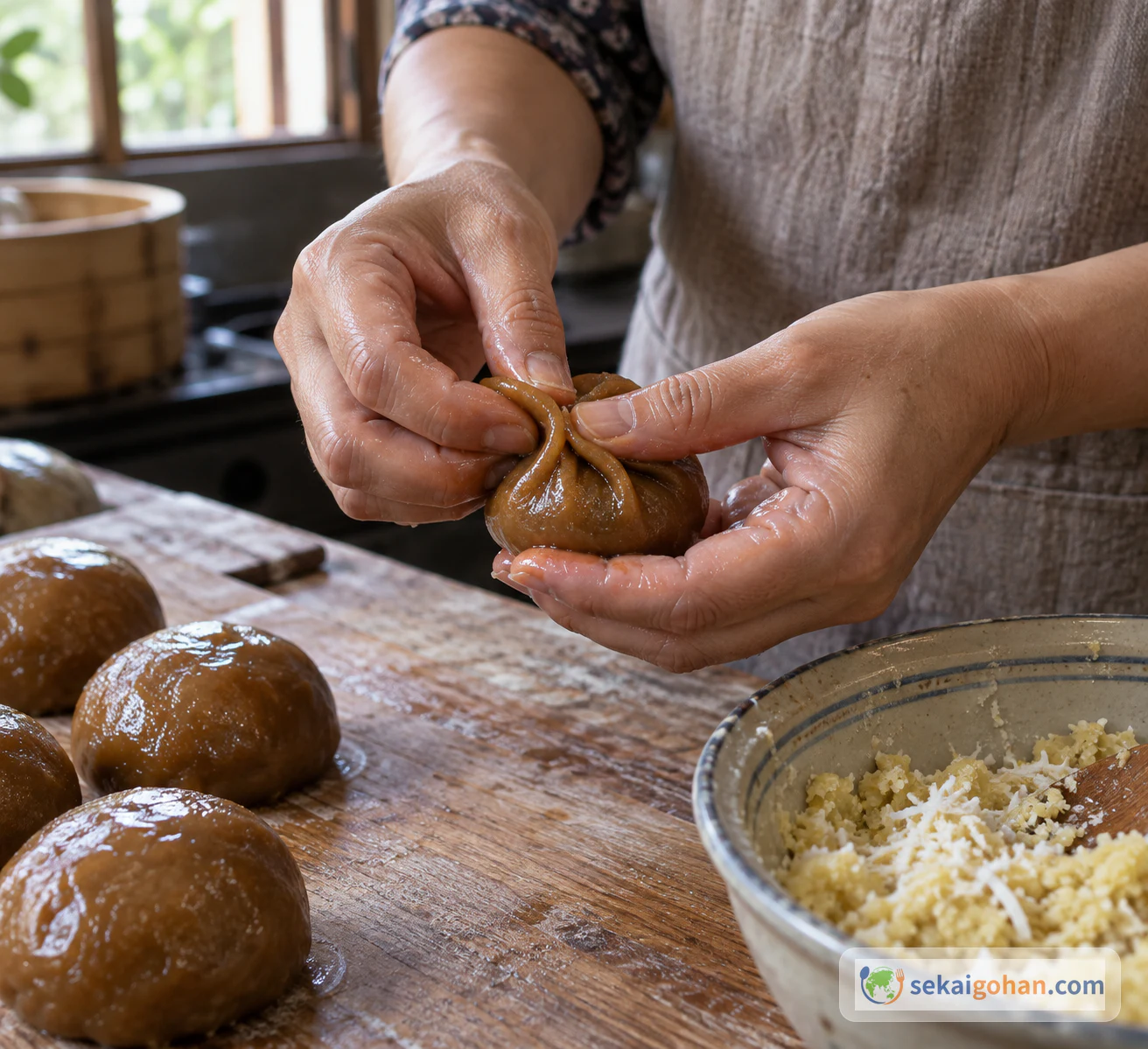
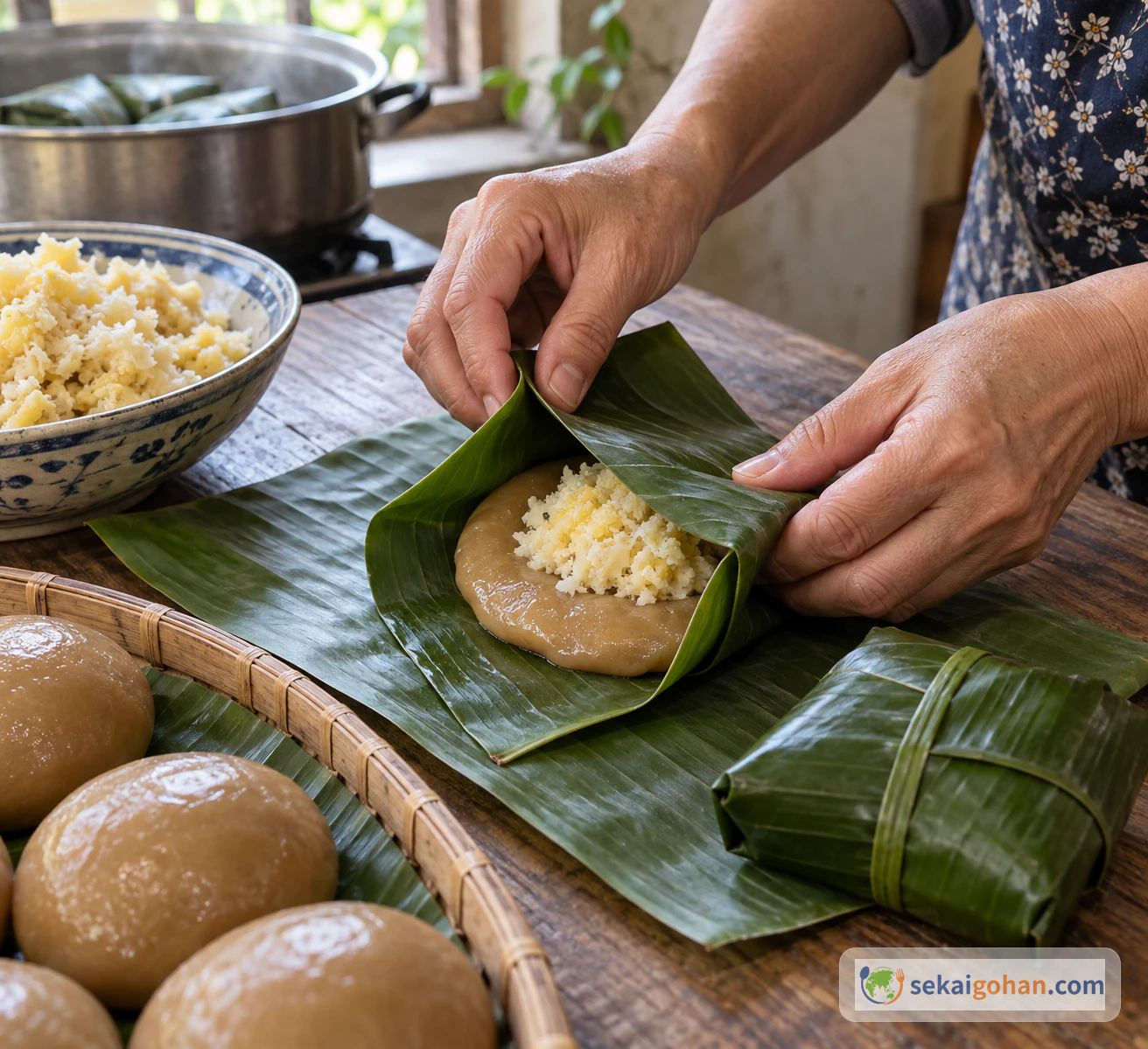
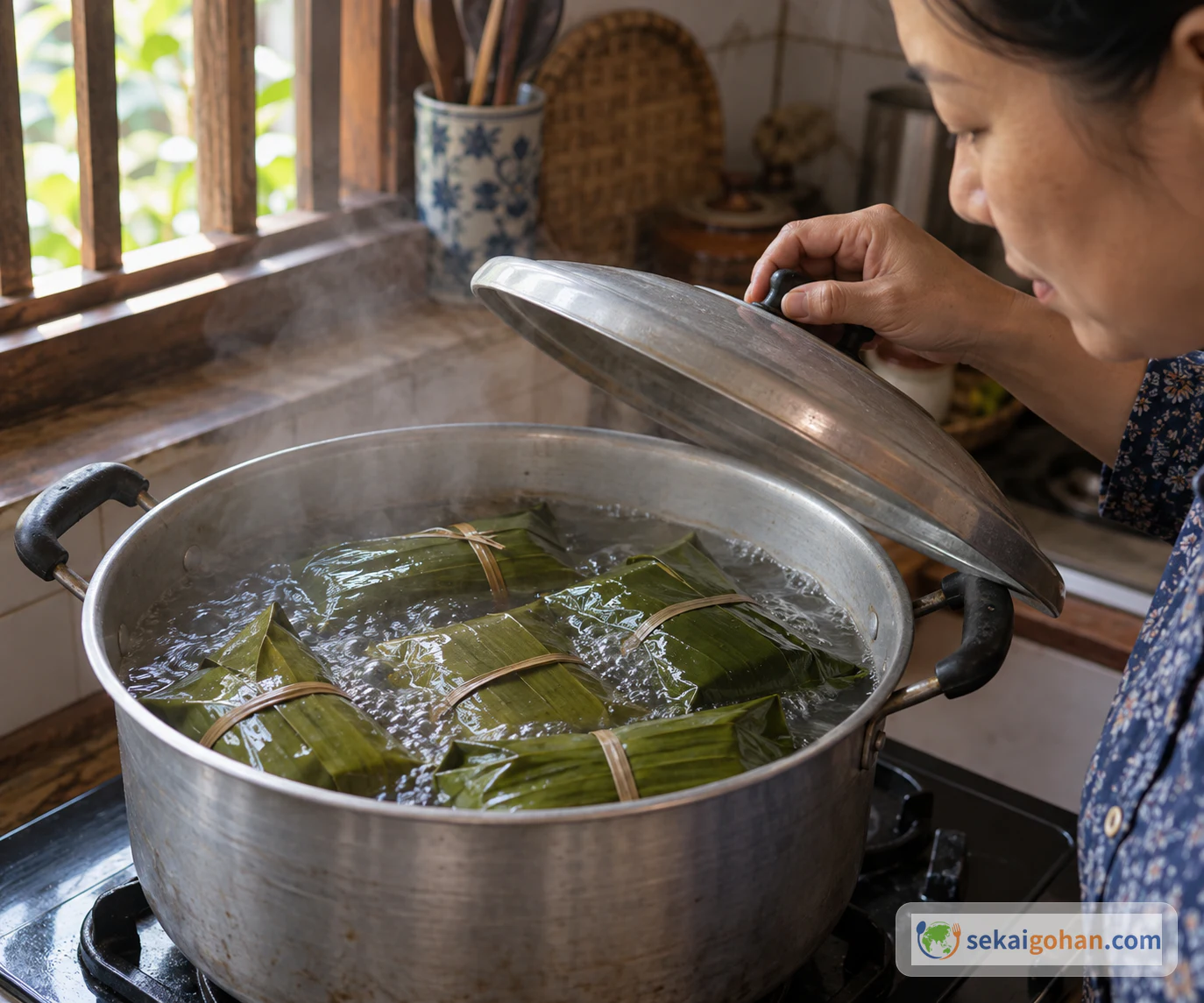
The cake is built on a single proportion. Two parts glutinous rice flour to one part sugarcane molasses, by weight, kneaded into one dough. In Cao Lan kitchens the rice is washed, soaked and milled wet, so the flour starts out damp. The dough is divided, wrapped around cooked mung bean mixed with a little sugar, lard and grated coconut, folded into banana leaf and boiled. What is documented is the 2 : 1 ratio, the ingredients and the order of work: divide, fill, wrap in leaf, boil.
Other cakes in Vietnam carry the same name and look nothing alike. One home version is a plate of small, plain glutinous rice dumplings, boiled and then simmered briefly in diluted molasses with ginger, with no filling and no leaf. Others are topped with sesame or include peanuts. In some northern provinces the cakes are steamed, and in Thái Bình they come very large, are boiled for hours and pressed afterwards. The Cao Lan cake keeps to rice, molasses, mung bean, lard, coconut and leaf, and it goes into boiling water. Bánh mật is a different cake from bánh chưng, the other leaf-wrapped Tết cake, and a sweeter one.
Bánh is a broad word that covers cakes, dumplings and many rice-based sweets. The mật here is mật mía, sugarcane molasses. Honey has no part in this cake, and the molasses is what gives the dough its colour.
Ingredients (makes 8 small cakes)
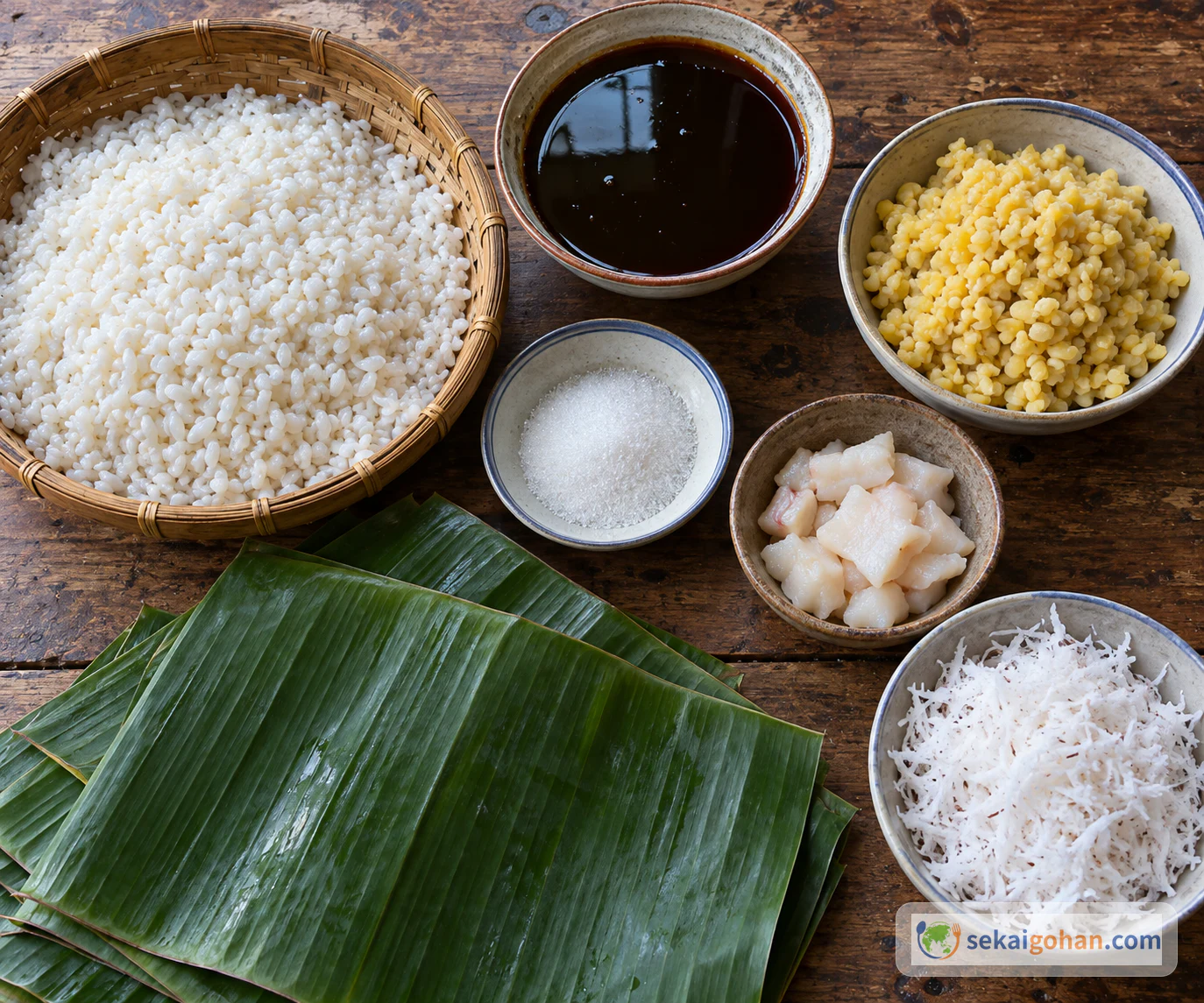
These amounts are a home-kitchen guide scaled to a bag of dry glutinous rice flour. Each cake comes out at about 4 oz (110 g), and eight are enough for 4 people as a sweet snack.
This cake contains glutinous rice, mung bean, coconut and lard (pork). Check the labels on bought molasses and flour for other allergens and shared-facility statements.
Molasses varies in thickness from one bottle to the next, and that is why the water is a range. Add it only when the dough is still crumbly after kneading. A thick molasses may want the full amount, and a runny one may want none.
Equipment
- Kitchen scale
- Two mixing bowls
- Small saucepan or steamer for the beans
- Potato masher or sturdy fork
- Nonstick or heavy frying pan
- Wide pot with a lid, large enough for 8 parcels in water
- A heatproof plate that fits inside the pot
- Kitchen string and scissors
- Tongs
- A stone mill or wet grinder, only if you mill your own rice
Choosing and substituting
Sugarcane molasses is the one thing to track down. Look for mật mía at Vietnamese and other Asian grocers, or online. Honey, Japanese kuromitsu and brown-sugar syrup are different products. They change the colour, the sweetness and how the dough comes together, and the cake made with them is a different cake.
Banana leaves are sold frozen at most Asian grocers, and sometimes fresh. Buy only leaves sold as food, never cut from garden or ornamental plants. Hulled split mung beans are the yellow ones, and Indian grocers sell them as moong dal.
| Ingredient | What keeps it Cao Lan | Workable swap and what it changes |
|---|---|---|
| Rice flour | Rice washed, soaked and milled wet at home | Dry bagged glutinous rice flour gives the same chew. It needs water to reach the right softness |
| Coconut | Freshly grated | Desiccated coconut, rehydrated, is drier and finer in the filling |
| Lard | A little in the filling | Leaving it out makes a leaner, flatter-tasting filling |
| Banana leaf | Wrapping and boiling in leaf | Keep it. The leaf holds the cake together in the water |
Ginger, peanuts and sesame belong to the other cakes of the same name. Leave them out, and the dark molasses and the mung bean centre stay in front.
Method
Start with the beans, because they soak for 3 hours. If you mill your own rice, wash and soak it in the same window. The filling has to cool before you wrap, so cook it before you knead the dough. Once the parcels are in the pot you have 45 minutes of hands-off boiling, with only the water level to watch.
The parcels hold steam and boiling water in their folds. Lift them with tongs, let them drain over the pot, and open the leaf away from your face.
When it goes wrong
| What you see | Why | What to do |
|---|---|---|
| Dough cracks and crumbles as you knead | The flour is dry or the molasses is thick | Work in warm water 1 tbsp at a time and knead until it is smooth |
| Dough sticks to your hands | Too much water went in | Knead in a little more flour until it comes clean off your palms |
| Filling smears and will not hold a ball | The beans were wet or the filling was cut short in the pan | Return it to the dry pan over low heat and stir until it pulls together, then cool |
| Pale, raw flour at the centre | Not boiled long enough, or the boil dropped | Boil the rest 10 minutes more and test another cake |
| Filling leaks or the cake turns soggy | A thin seam, or loose leaf ends letting water in | Pinch seams thick, fold the leaf ends under and tie the parcels snugly |
| Leaves split while folding | They were not softened | Pass them over the flame or dip them again until they bend freely |
Serving, variations and storage
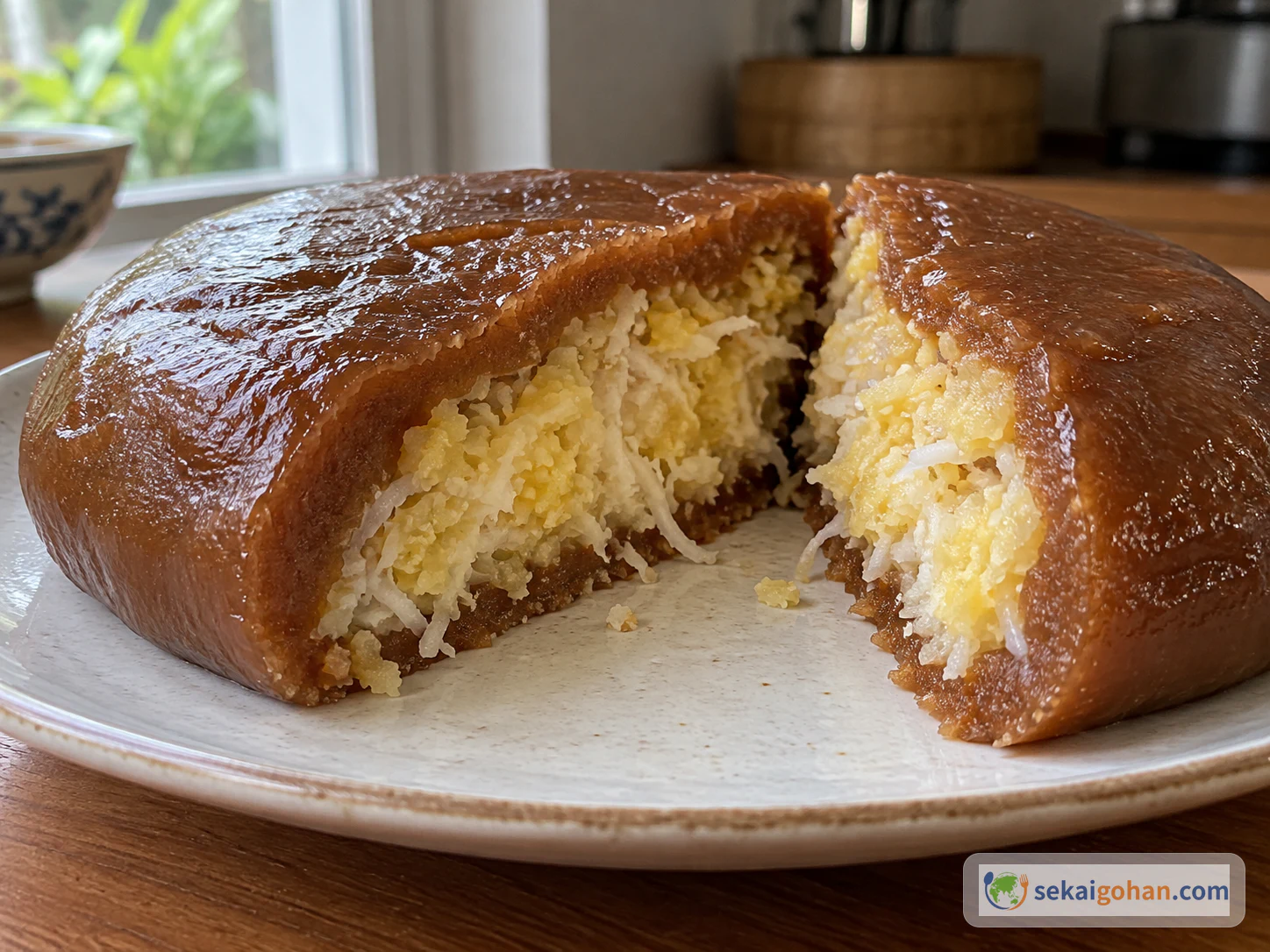
Serve the cakes warm, unwrapped at the table, one or two per person with tea. At Tết the same parcels go onto the ancestral altar, into the hands of relatives and out to guests, so make a full batch and keep some wrapped for giving.
Variations
A bigger Tết batch. Keep the flour and molasses in the same proportion by weight and scale the filling with them. Shape the cakes at the same size and use a pot big enough to keep every parcel covered.
Storage
Eat bánh mật on the day you boil it. For leftovers, cool them within 2 hours, refrigerate them in a covered container, and reheat until steaming hot throughout. Do not keep the wet rice cakes at room temperature.
Frequently asked questions
Can I steam the cakes instead of boiling them?
The Cao Lan cake is boiled, and the times here are for boiling in leaf. Steamed bánh mật belongs to other provinces and their own versions of the cake. Boiling under a plate cooks the parcels evenly from every side.
Do you eat the banana leaf?
No. The leaf is the wrapper and comes off before eating. It holds the cake in shape in the pot.
Why weigh the parcels down with a plate?
A plate keeps the parcels fully under the water so each cake cooks evenly and the parcels do not knock together and loosen their leaves.