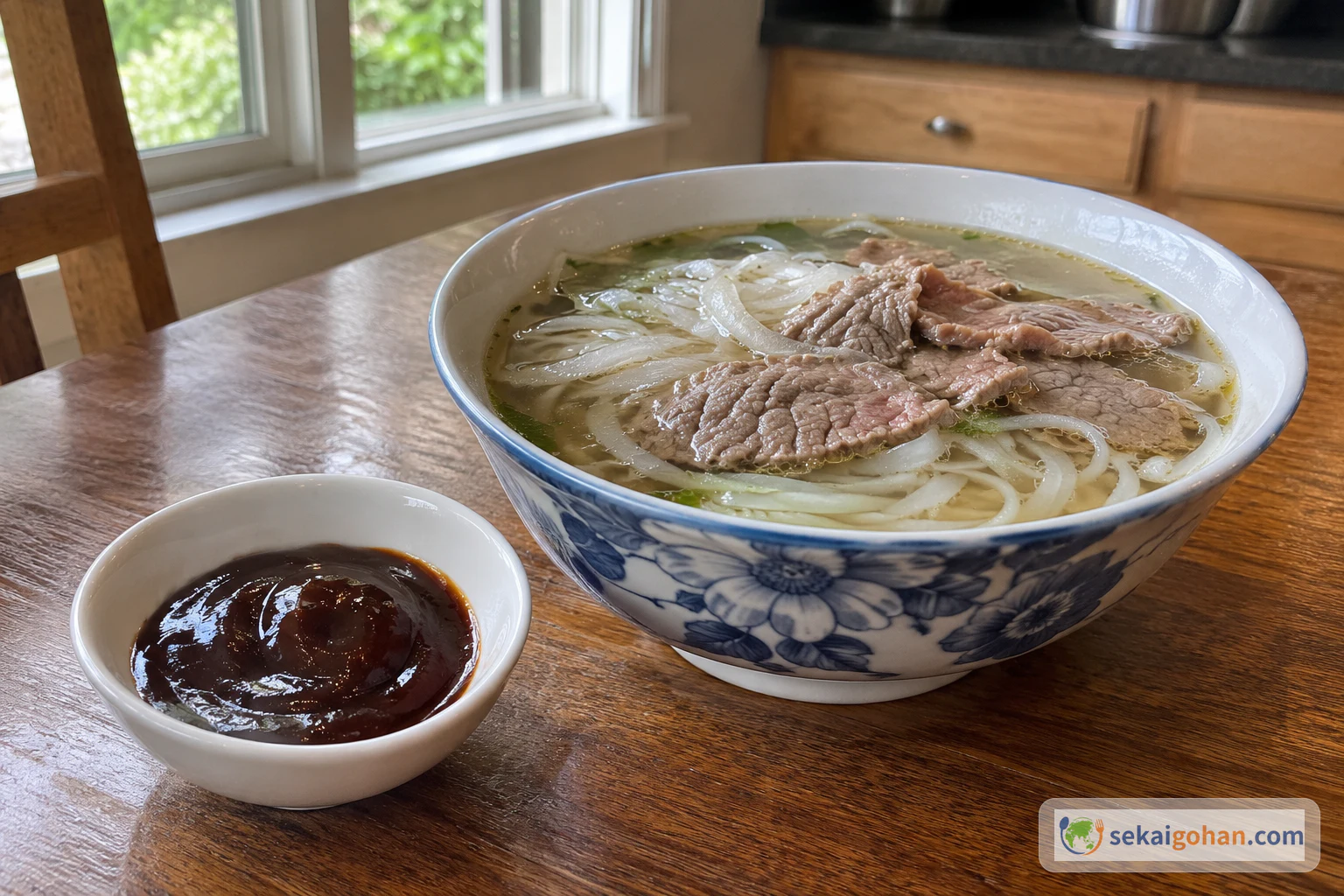

A bowl of pho arrives, and beside it sits a small dish of glossy, dark brown sauce. Leave the sauce out of the broth. Lift a slice of cooked beef with your chopsticks, dip it and eat it, because at the pho table hoisin goes with the meat, not into the soup. In Vietnam this sauce is called tương ăn phở. This homemade version is sweet and salty, with the deep flavor of fermented soybeans. It's less sweet and more complex than jarred pho sauce, so the sweetness never takes over. For more dishes from the same table, see the Vietnam country page.
Hoisin for Pho and This Miso Version
Hoisin is not one fixed recipe. It's a Chinese-style condiment based on fermented soybeans, and commercial versions vary a lot. A typical jar combines fermented soybean paste with sweeteners, starch, sesame and garlic. It works both as a dip for the meat and as something to stir into the soup.
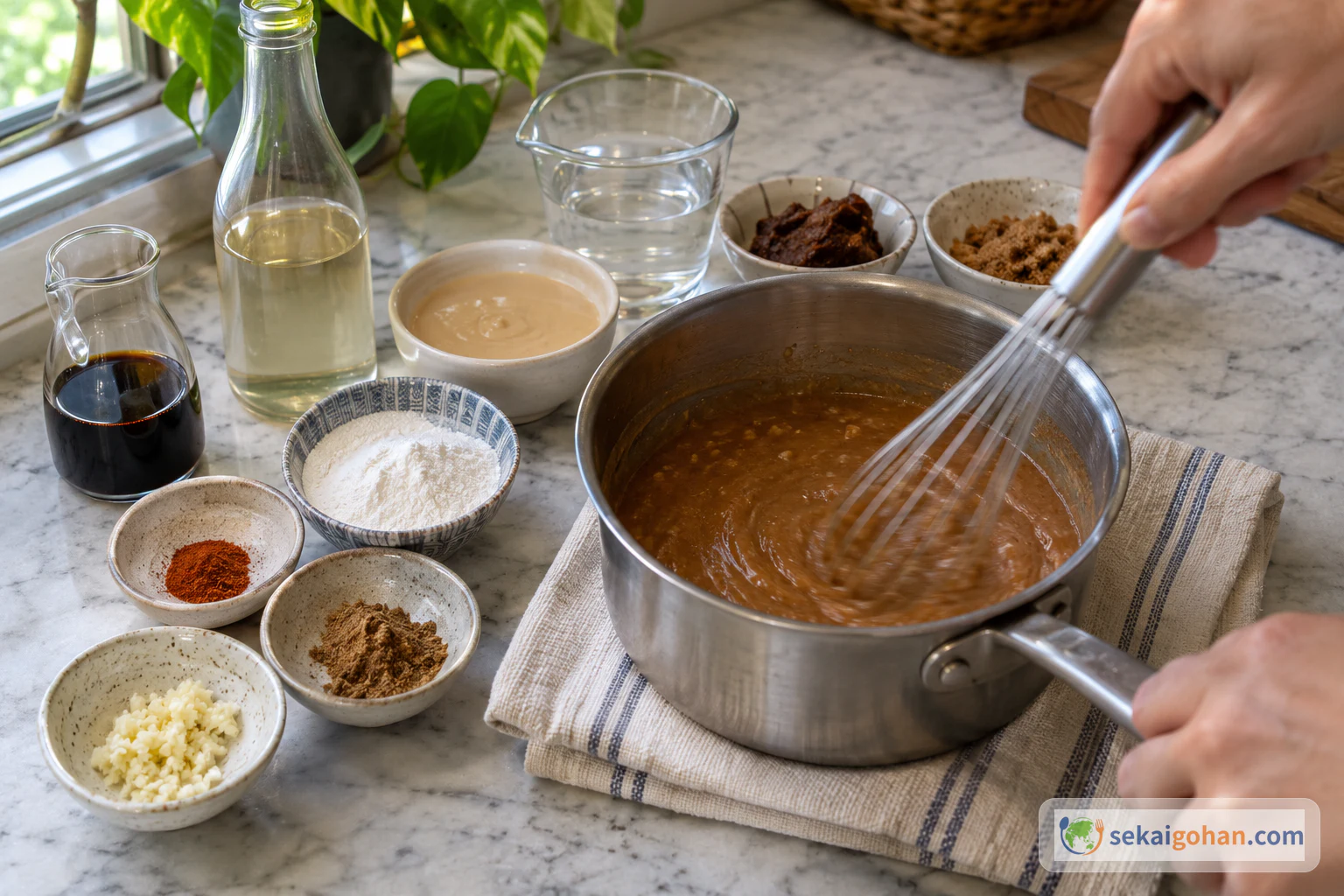
This version gets its fermented depth from store-bought miso, plus soy sauce if you add it. Brown sugar brings the sweetness and tahini the richness, with rice vinegar, garlic, cayenne and five-spice to round it out. A little rice flour and a short simmer thicken it. After that the sauce rests, gets strained and goes into the fridge. No fermenting happens at home.
Ingredients: Makes 1 Cup
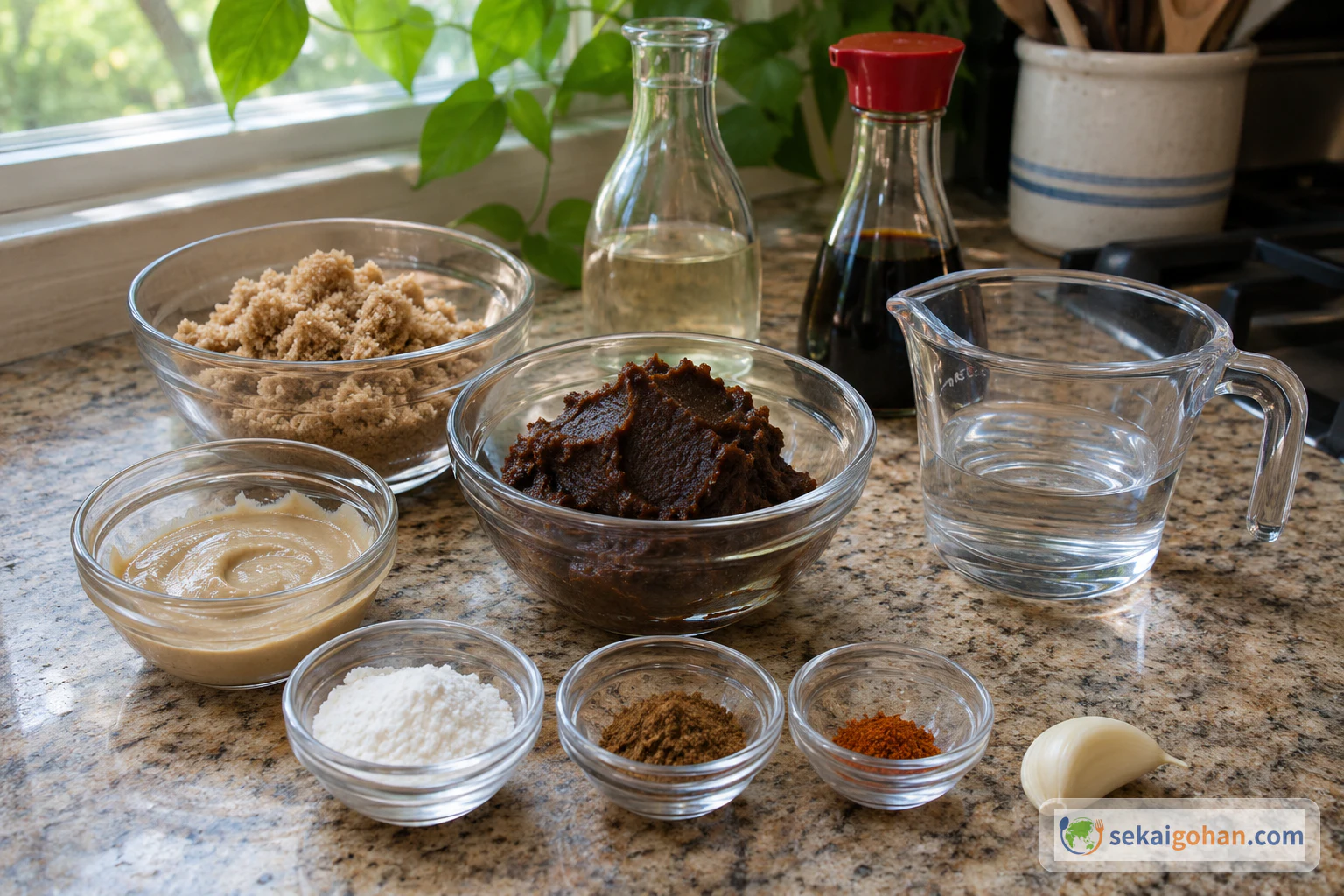
Pack the brown sugar firmly into the cup.
This sauce contains soy (miso, soy sauce) and sesame (tahini). Some misos and soy sauces also contain wheat. Do not assume the sauce is gluten-free: check the label of every miso, soy sauce, rice flour and spice blend you use, including any shared-facility statements.
Equipment
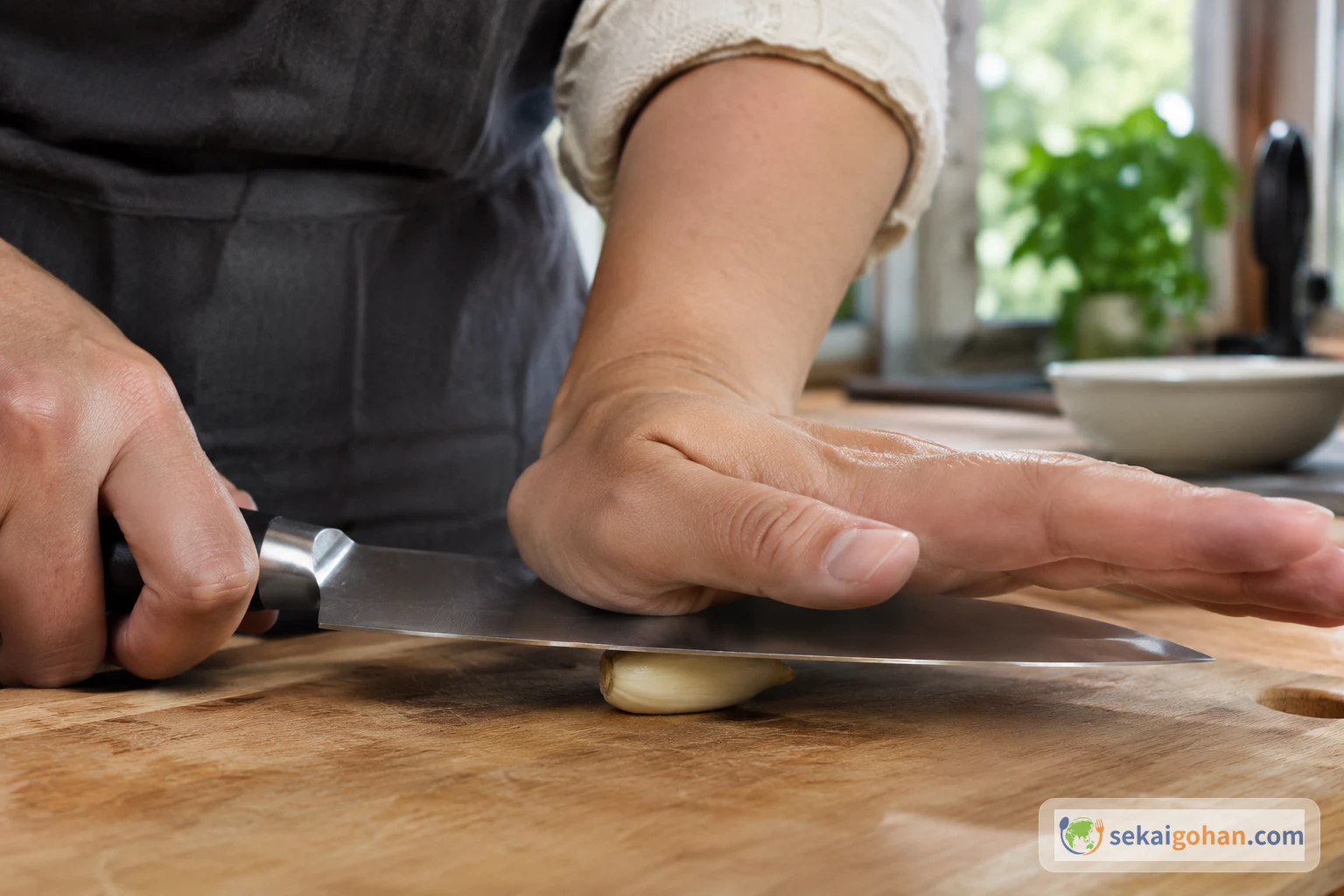
- Chef's knife and cutting board
- 1.5-quart saucepan
- Whisk (or a sturdy spoon)
- Fine-mesh strainer and a bowl
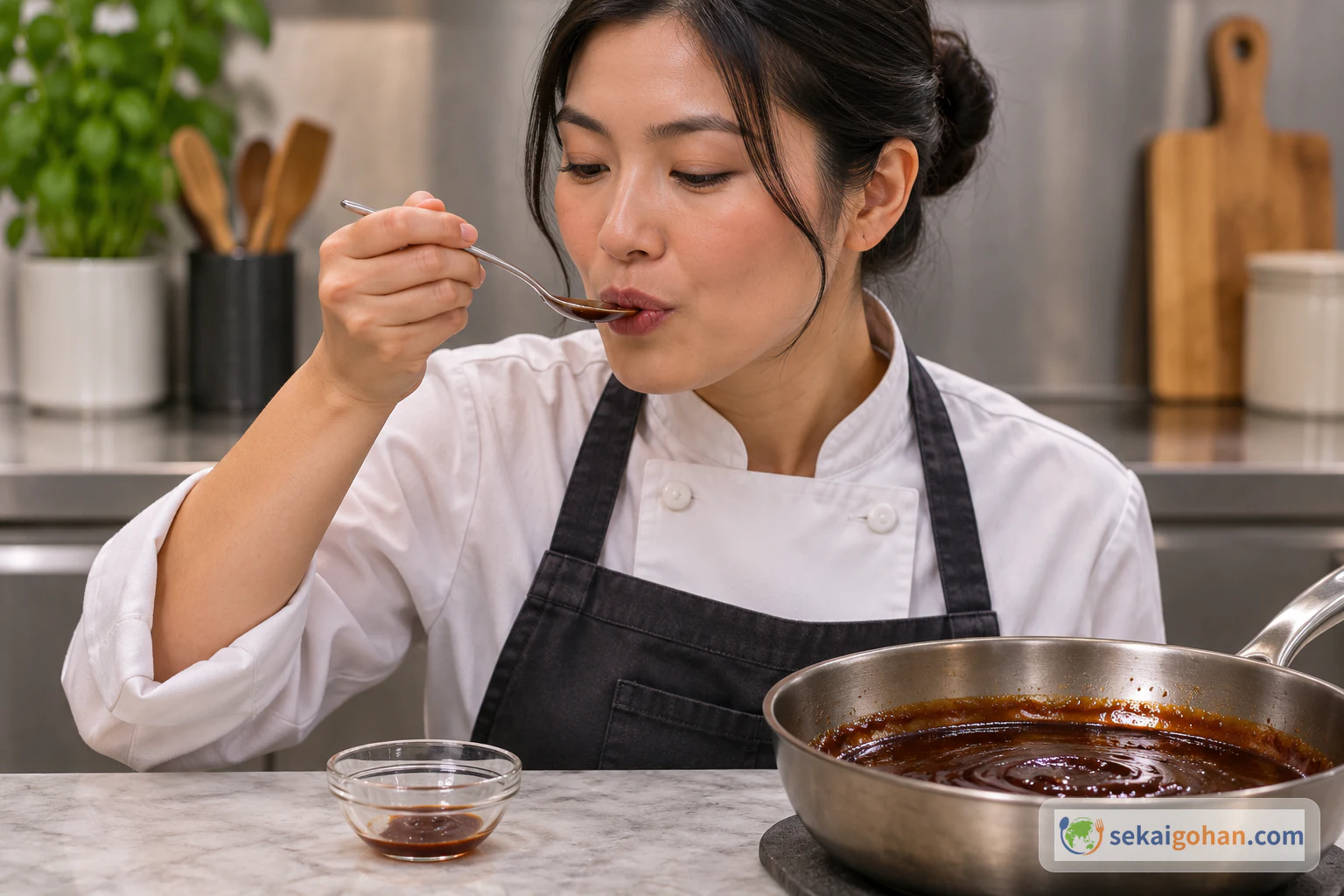
- A clean, separate spoon for tasting
- A clean container with a lid for storage
Choosing Miso and Making Substitutions
Miso is the backbone, so choose it first. This version uses smooth Hatcho miso, a dark soybean miso. Red miso and brown rice miso also work, and so does Korean doenjang (check the label for wheat). Each brings its own saltiness and depth, so if you switch misos, expect the finished sauce to taste different and plan to adjust it at the end. For a stronger miso note, add up to 1 tbsp more miso when mixing.
Spice. Use 1/2 tsp store-bought Chinese five-spice powder, or a pho spice blend in the same amount.
Heat. You can swap the 1/8 tsp ground cayenne for 1/4 tsp dried red pepper flakes. Use one or the other, not both.
Sugar. Light or dark brown sugar both work; this version uses light. Japanese sanontō is a possible stand-in, though its flavor differs.
Tahini. If tahini is hard to find, try Japanese sesame paste (neri goma). Its flavor and consistency are different, so the sauce won't come out quite the same.
Vinegar. Use unseasoned rice vinegar. The seasoned kind already contains sugar and salt.
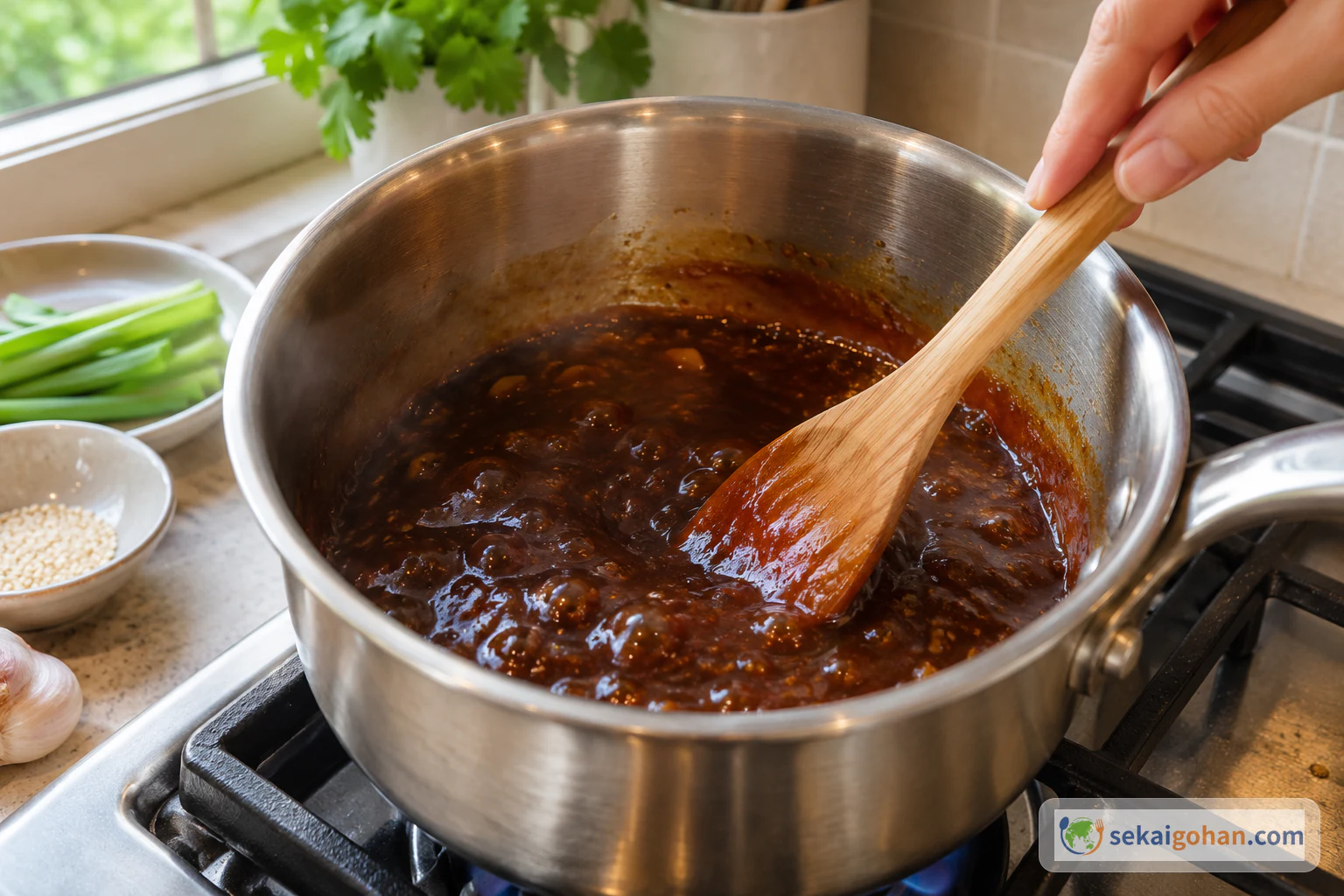
Method: Mix, Simmer Briefly, Rest, Season, Strain
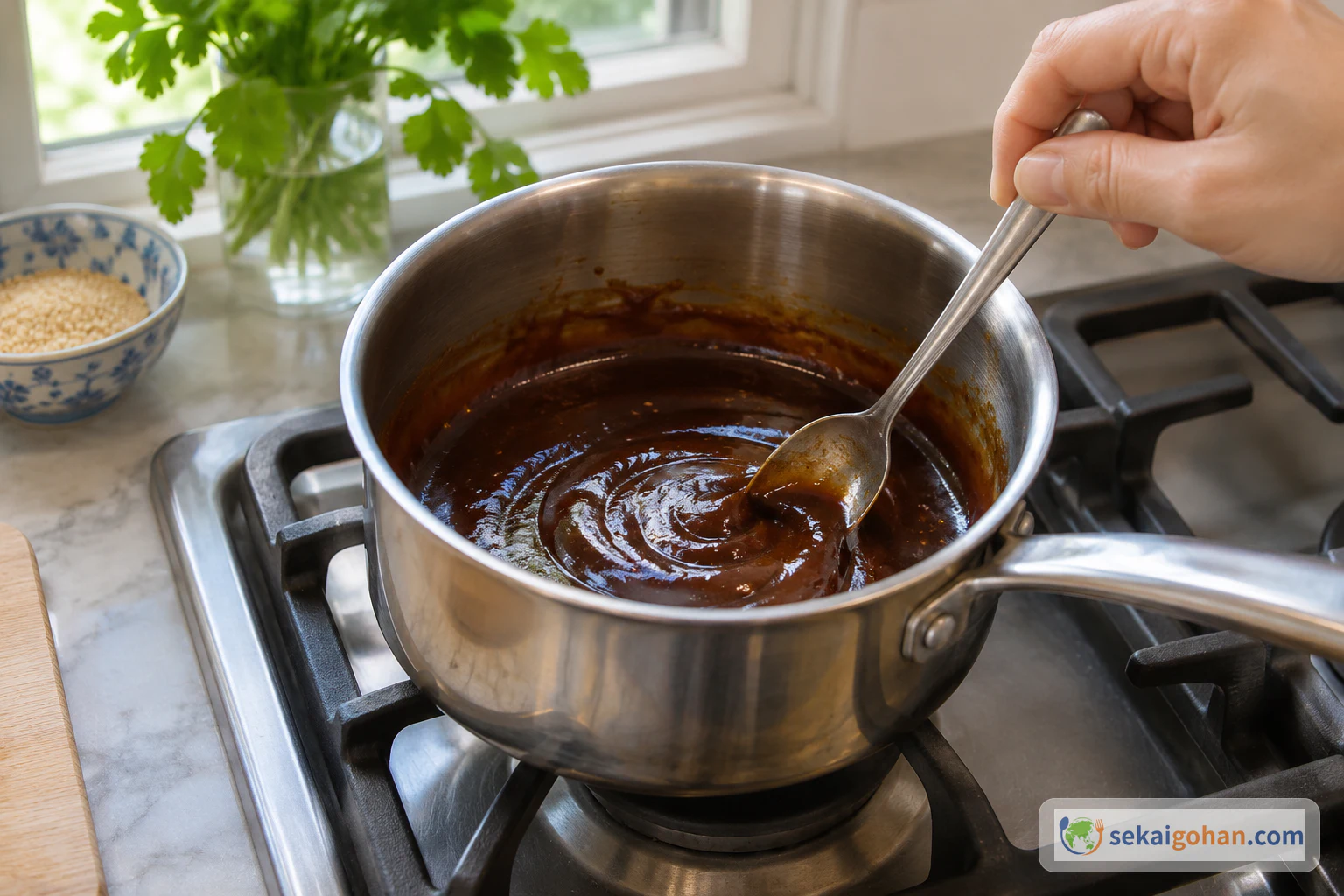
The heat is only about a minute. What matters is that the sauce comes to a gentle simmer and visibly thickens, then rests off the heat while you stir it now and then.
Troubleshooting Homemade Hoisin
| Problem | Likely reason | What to do |
|---|---|---|
| Bits of miso remain in the sauce | The miso was chunky, not smooth | Blend the sauce in a food processor instead of straining it |
| A skin forms on top | The sauce sat undisturbed while resting | Stir now and then during the 15-minute rest |
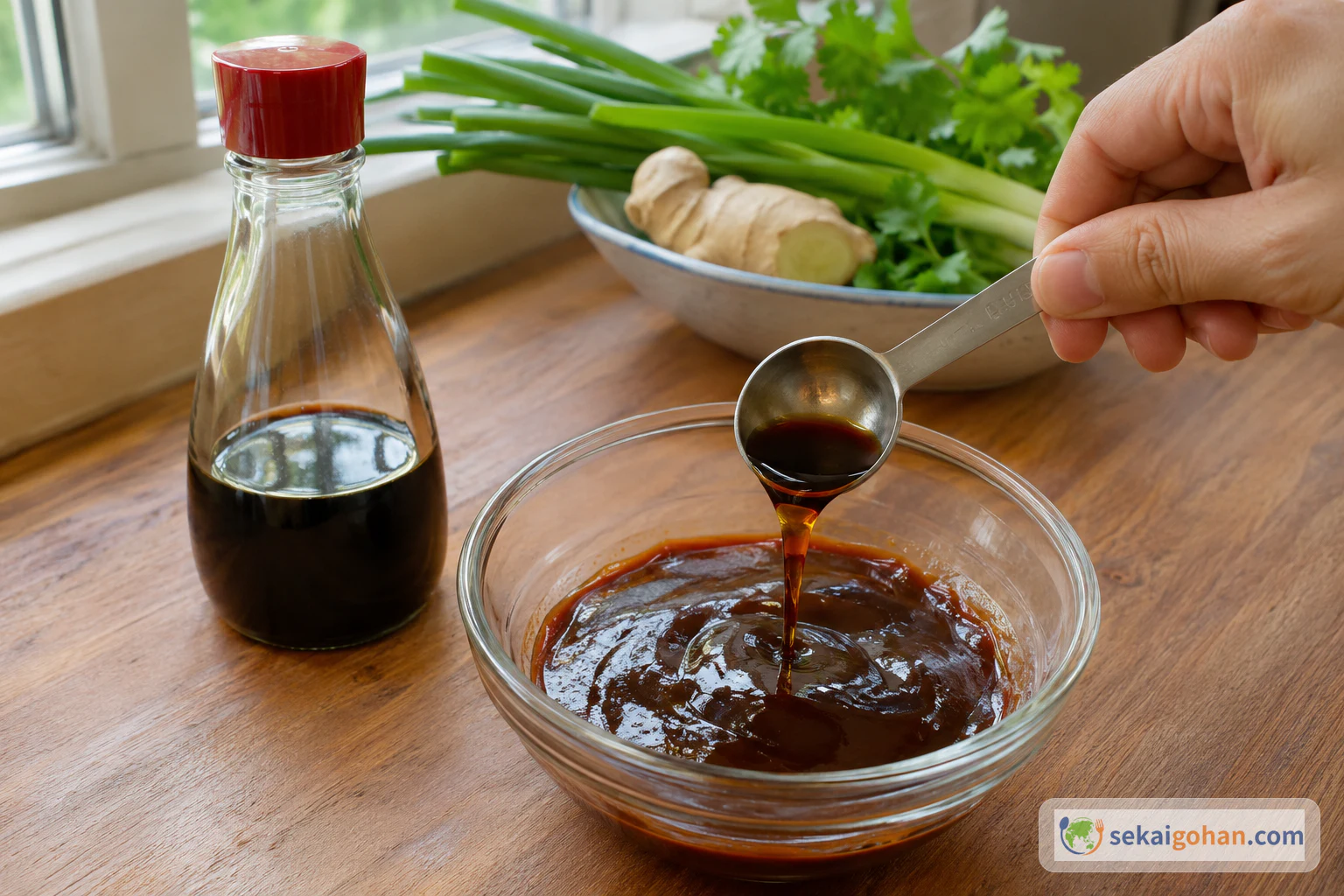
| The flavor seems flat or too sweet | Misos differ in saltiness and depth | Adjust at the end with soy sauce 1 tsp at a time or rice vinegar 1/2 tsp at a time, tasting between additions |
| It tastes saltier than expected | A saltier miso, or soy sauce added too fast | Add soy sauce only after tasting, in small steps. Next time try a different dark miso |
Serving and Storing Hoisin for Pho
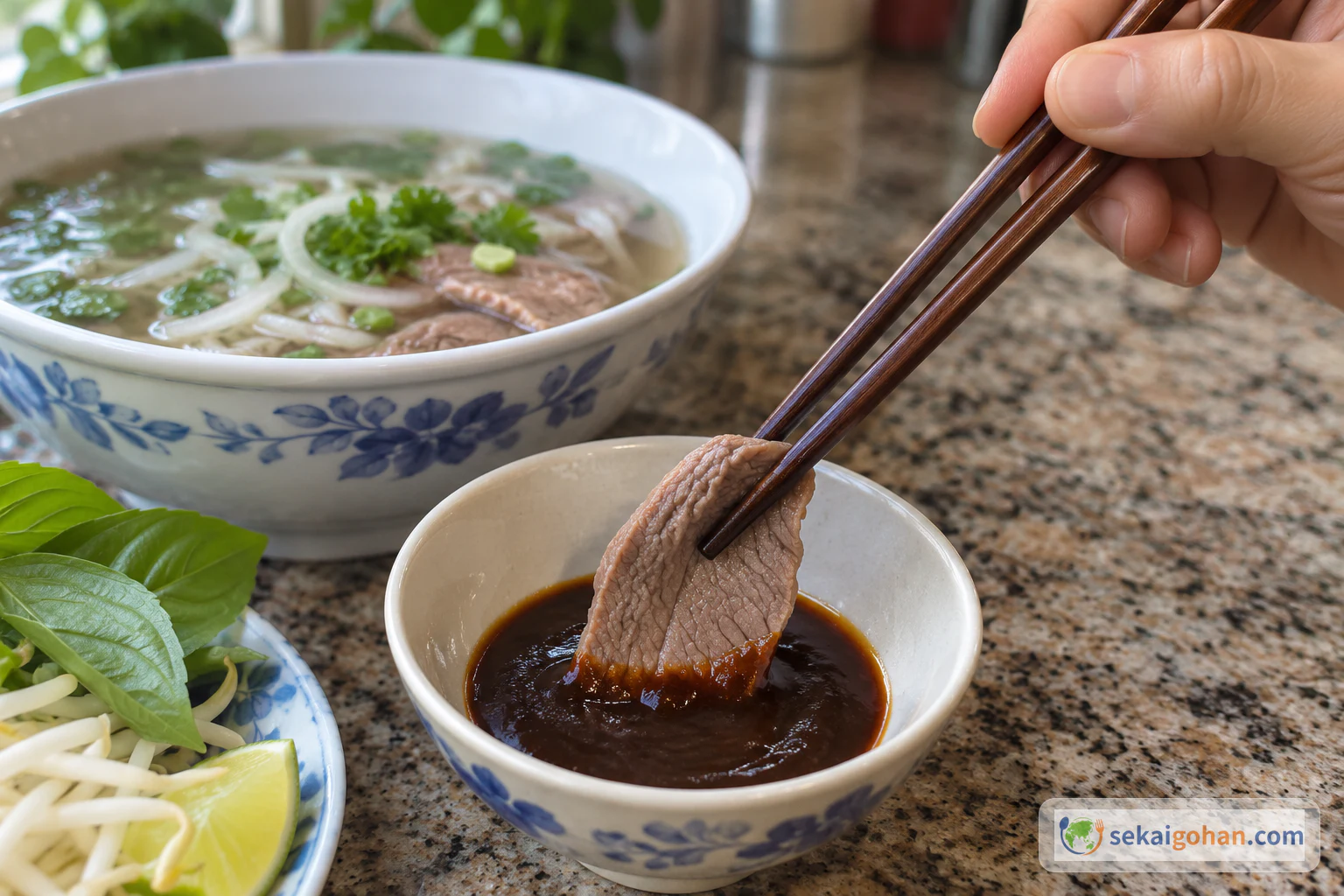
Spoon a little sauce into a small dish for each person and set it beside the pho bowl. With the sauce on the side, the broth keeps its own flavor, and each bite of meat gets as much sweetness and saltiness as you like. Stirring some into the soup turns the whole bowl sweeter and darker. That's a matter of taste, but try it on the side first.
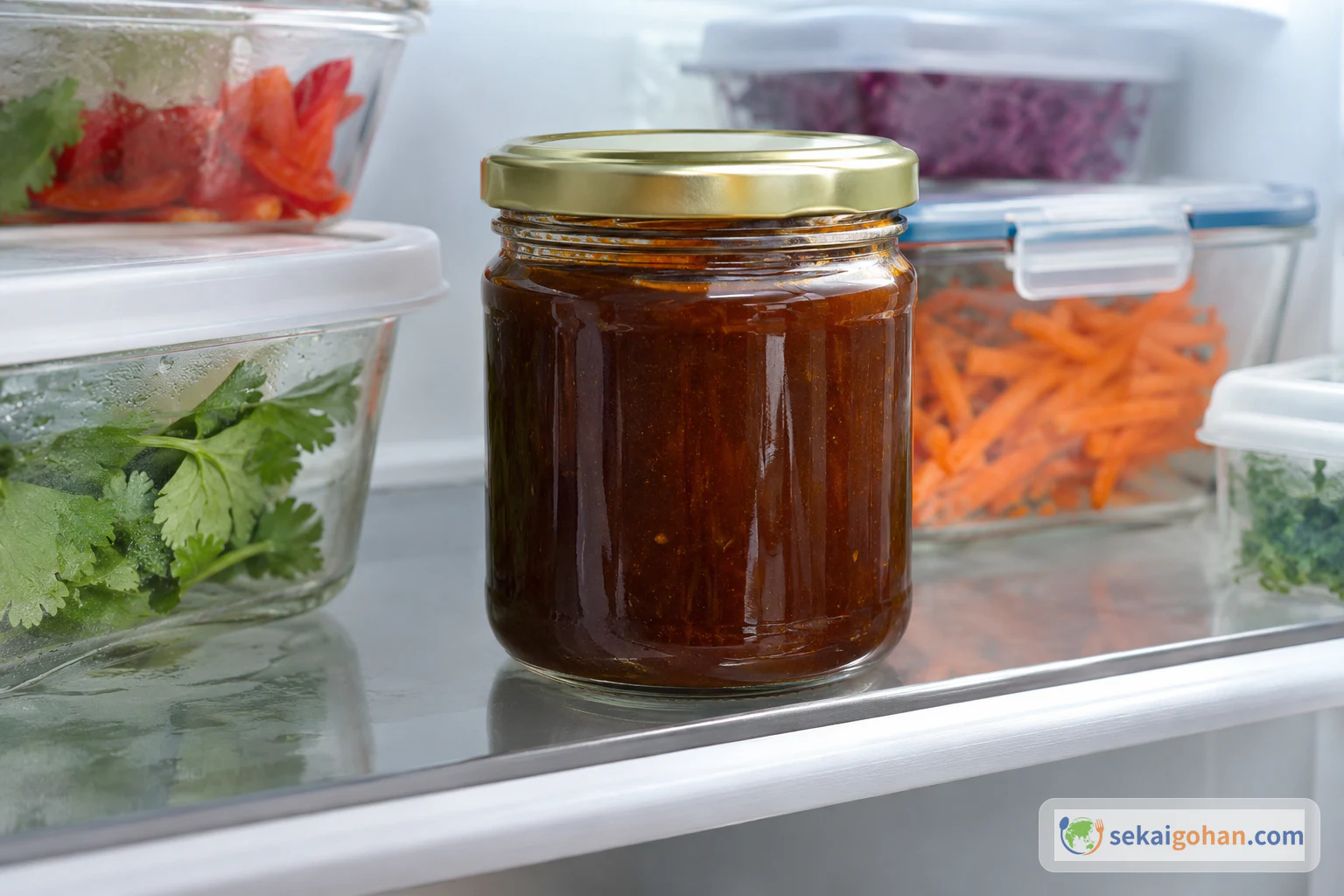
For storage, start with clean utensils and a clean container with a lid. Once the sauce is strained, transfer it, cover it and refrigerate it right away. If you've made a larger amount, divide it among smaller, shallow containers. Don't leave it sitting out at room temperature. Take out only what you need with a clean spoon, and use the sauce soon.
This is a cooked, refrigerated sauce made with purchased fermented ingredients. It is not a fermentation recipe, not a canned or sealed preserve, and not for room-temperature storage. Discard it if you see mold or anything unusual. A normal look and smell do not prove it is safe.
Frequently Asked Questions
My miso has grains in it. Should I still strain the sauce?
With a chunky miso, blend the finished sauce in a food processor instead of straining. With a smooth miso, straining is enough, and it also removes the garlic. Pick one or the other.
How big is a "cup" here?
Use standard US measures. A US cup is about 237 ml and a US tablespoon about 14.8 ml, and both are volume measures, not weights. Australian cups and tablespoons (250 ml and 20 ml) are larger, so they'll throw off the recipe.
How long does it keep?
The sauce keeps in the refrigerator for up to three months. Keep it covered in a clean container, use clean utensils, and use it soon.
Is it gluten-free?
Not automatically. Some miso, soy sauce and other products contain wheat. Check every label, including the rice flour and spice blends, before calling your batch gluten-free.