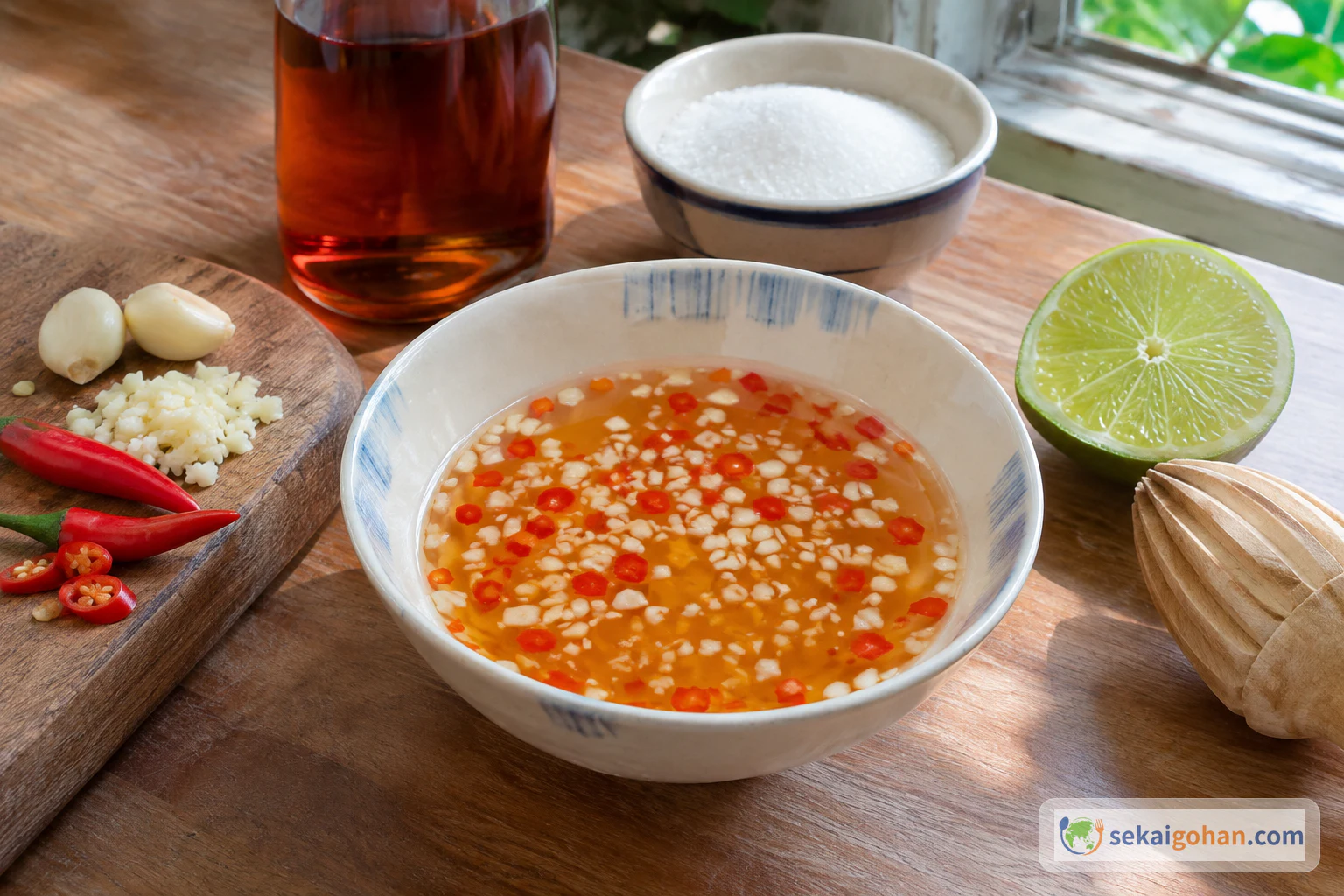
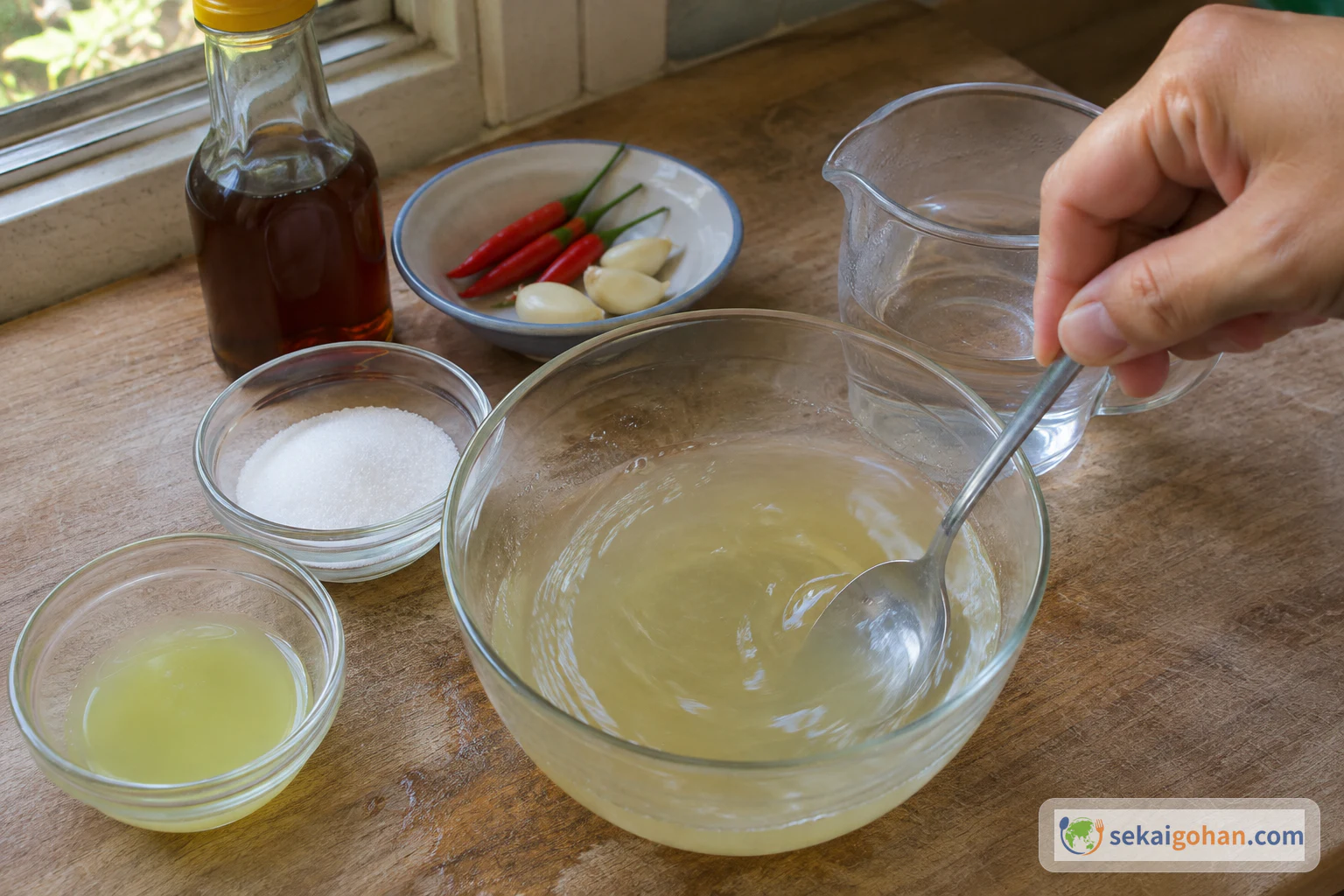
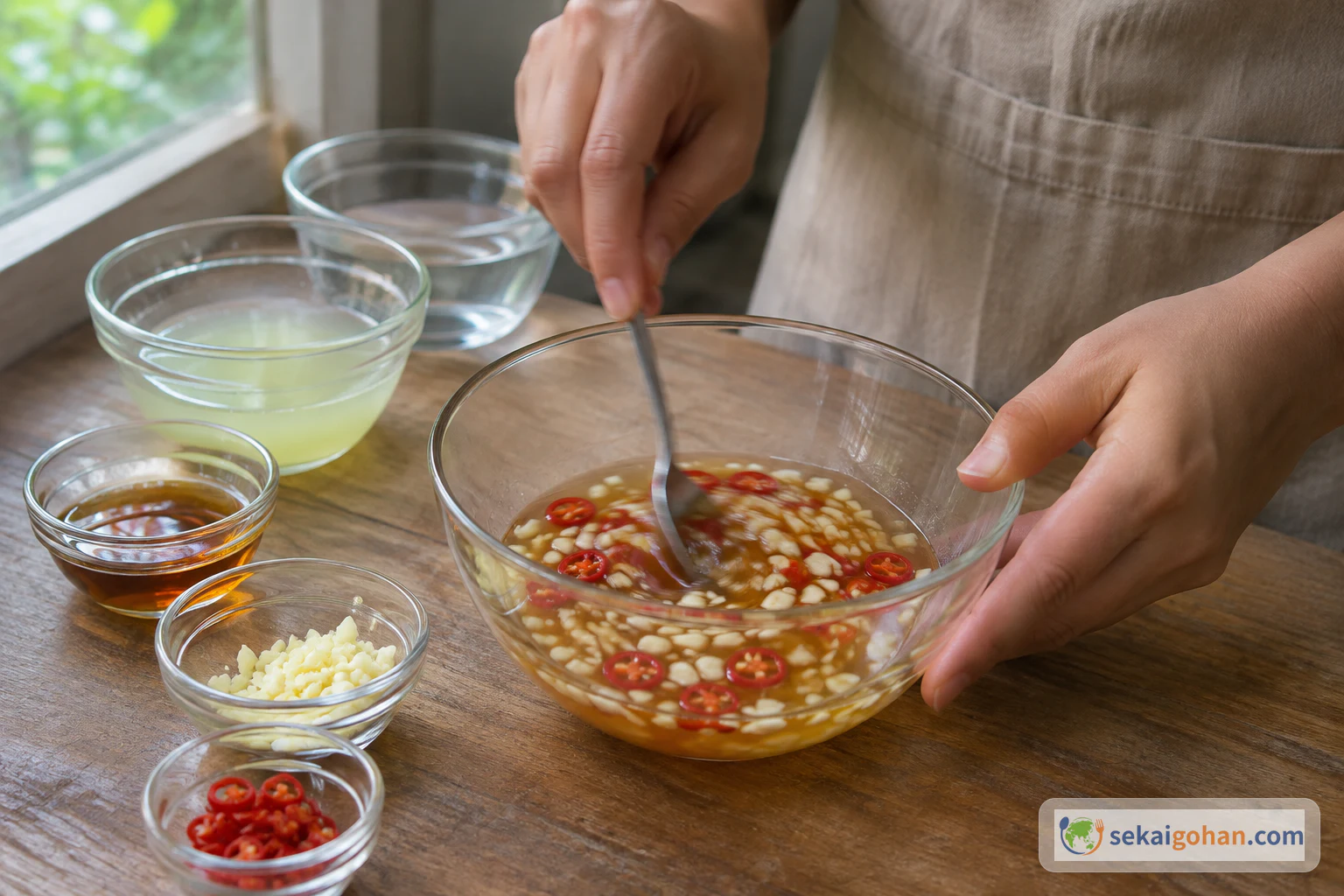
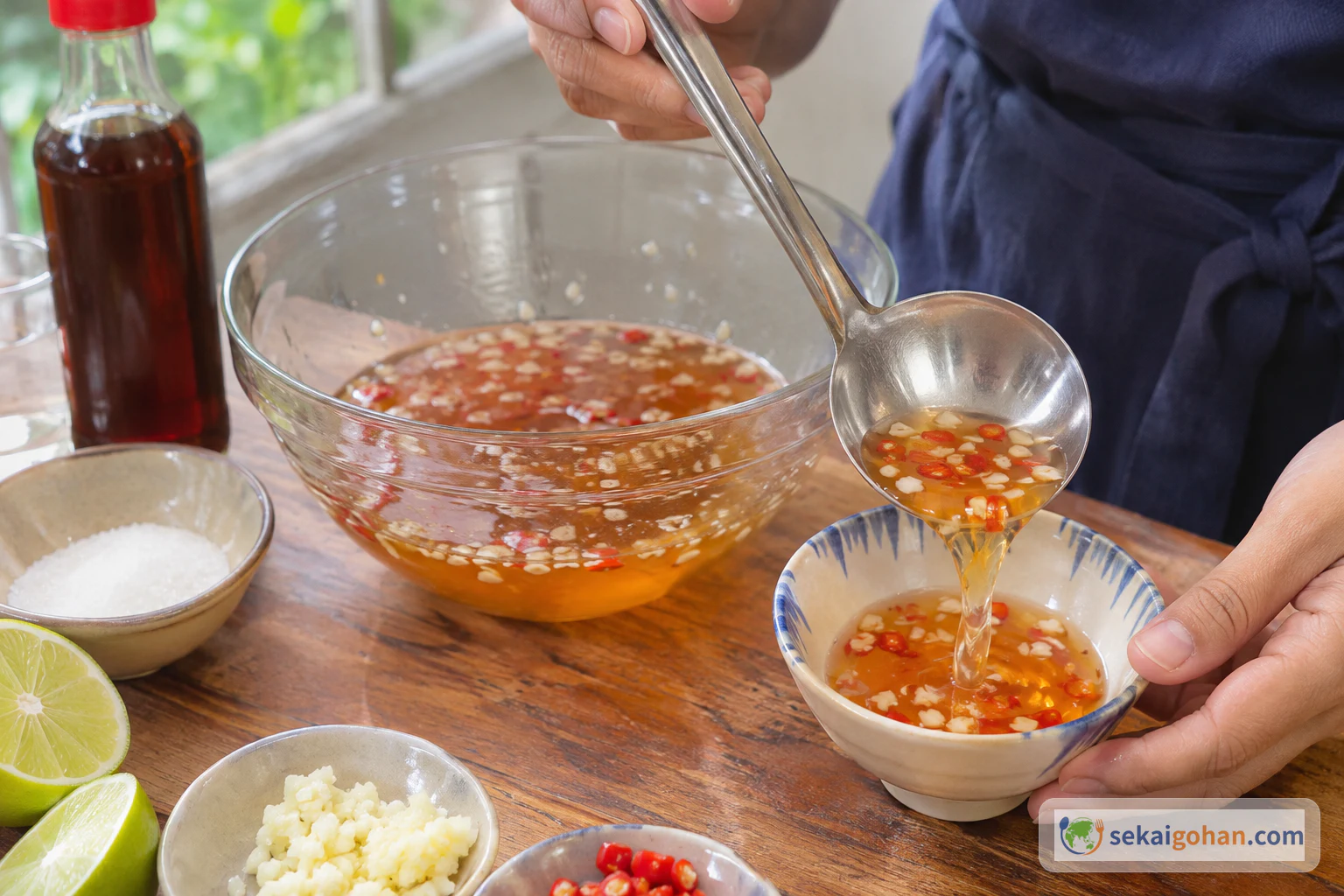
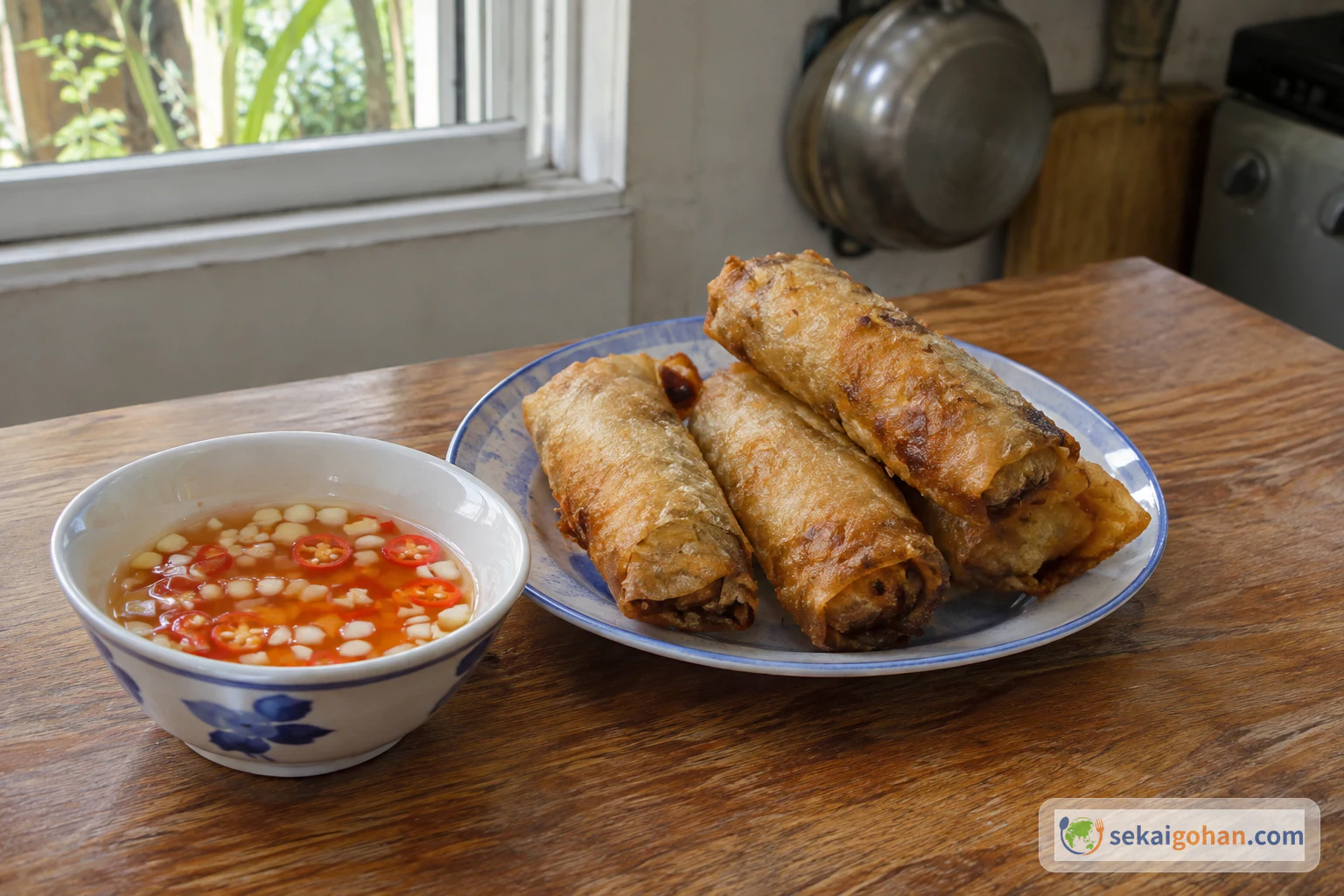
The spoon circles through lime juice and warm water, and the sugar clouds and then vanishes. Then the fish sauce goes in, and the bowl turns a thin, clear amber with flecks of garlic and rounds of red chile drifting through it. The smell is sharp lime and deep, salty fish sauce, with raw garlic underneath. This is nước chấm, the Vietnamese dipping sauce that sits beside fried spring rolls and grilled pork with noodles. One taste hits sweet, sour, salty and hot together, and it is thin enough to soak into whatever you dip.
A Dip Whose Name Covers a Whole Family
Across the dishes of Vietnam, the small bowl of sauce matters as much as the food beside it. The version here is one well-known style. It is sweet, sour, salty and hot at once, built from fish sauce that has been loosened with lime juice, sugar and warm water, then sharpened with raw garlic and bird's-eye chile. Undiluted, fish sauce is a seasoning. Once it is softened this way, it becomes a sauce you can drink off a spoon.
At the table it goes with crisp fried spring rolls, chả giò (also called nem rán), which are dipped one bite at a time. It also turns up with bún chả, the grilled pork and rice noodles that are eaten with a dipping sauce. Serve it in a small bowl for each person, so the sauce is mixed in one larger bowl and then portioned out.
There is no single fixed ratio across the country. The proportions shift with what the sauce is for. A dip spooned over delicate steamed rice rolls in Hanoi can be mixed far thinner, with much more water against the fish sauce. Some households leave out the garlic and chile entirely, and some use lemon where others use lime. The balance below is the full-bodied sweet-sour style, strong enough to stand up to something fried.
Nước chấm is a name that covers several dipping sauces. A fish sauce dip mixed with water, citrus and sugar is also called nước mắm pha, which means "mixed fish sauce." On a menu or at a market stall, either name can point you to this bowl.
Ingredients
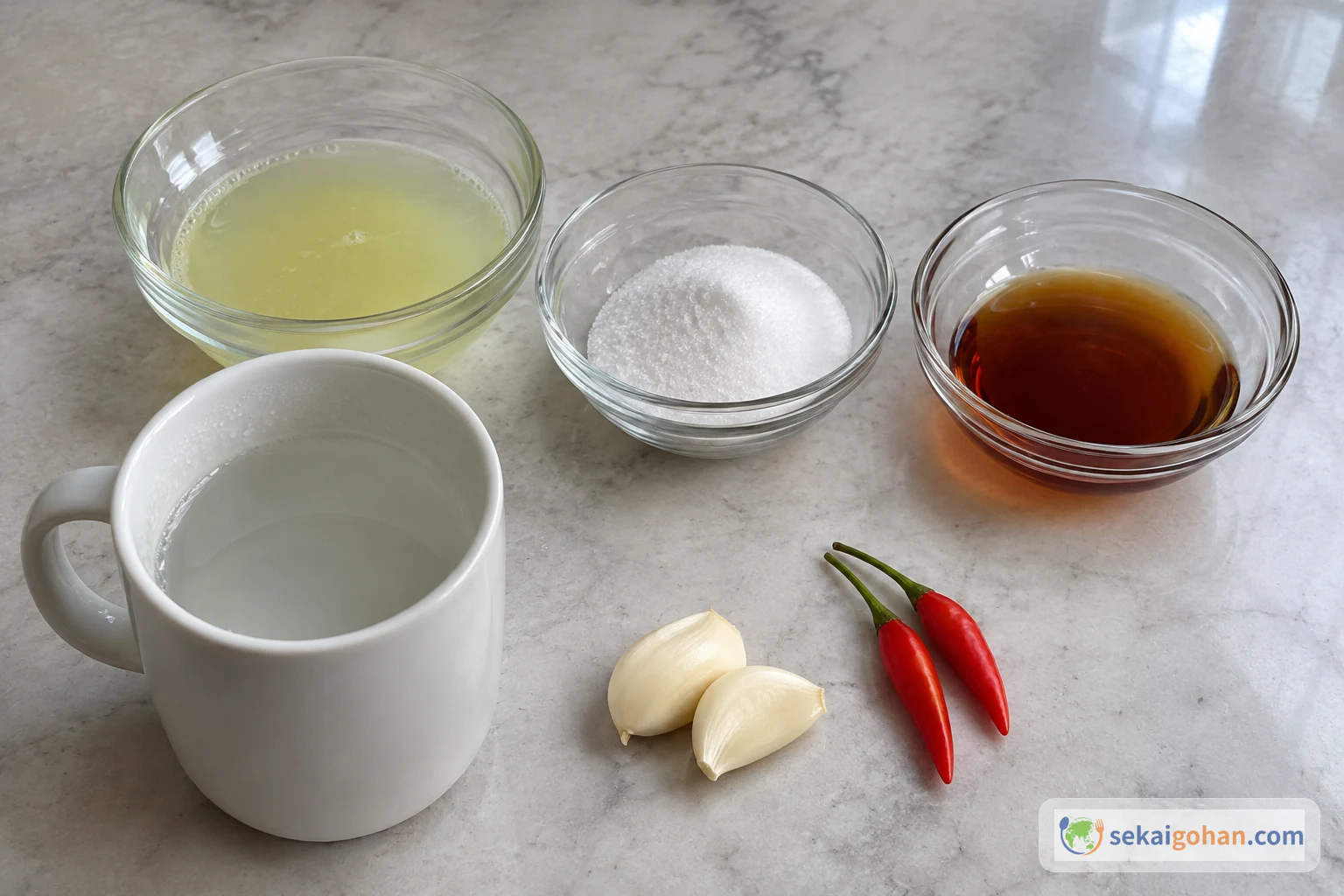
The warm water is easy to forget because it reads like a background ingredient, but it decides the body of the sauce. Without it, you get a concentrated seasoning.
Fish sauce is made from fish. Anyone with a fish allergy should skip this sauce. Check the ingredient and allergen label on your bottle, because fish sauces differ by product.
Equipment
- Small knife and cutting board
- Measuring cup and measuring spoons
- Medium mixing bowl
- Spoon for stirring
- Small dipping bowls, one per person
- Ladle or small spoon for portioning
Choosing Fish Sauce, Limes and Chiles
Fish sauce carries the whole sauce, so buy a Vietnamese one if you can. Look for it at Asian grocers or online, labeled nước mắm. Brands differ noticeably in how salty they are, so taste your bottle on its own before you start. Japanese fish sauce works, but it has a different saltiness and aroma, and the same amount will not taste the same. Soy sauce is a different seasoning and turns this into another sauce altogether.
Squeeze fresh limes for the juice. Lemon also shows up in nước chấm, but it gives a different sourness and pulls the flavor away from the lime-bright version. Any ordinary white sugar works. A sugar with its own aroma changes how the sweetness comes through.
Bird's-eye chiles are small, red and fiery, and Asian grocers usually stock them fresh. Other small fresh red chiles work, but their heat varies from batch to batch. Use fresh chiles. Dried flakes have no measure that matches the fresh slices, and they change the look and bite of the sauce. The same goes for garlic. Fresh cloves give a clean, sharp aroma, while jarred or tube garlic brings a different smell and extra moisture.
| Keep for the local taste | Can flex abroad |
|---|---|
| A Vietnamese-style fish sauce | The brand, as long as you taste it first |
| Fresh lime juice | The type of white sugar |
| Fresh garlic and fresh chiles | Which small fresh red chile you use |
Method
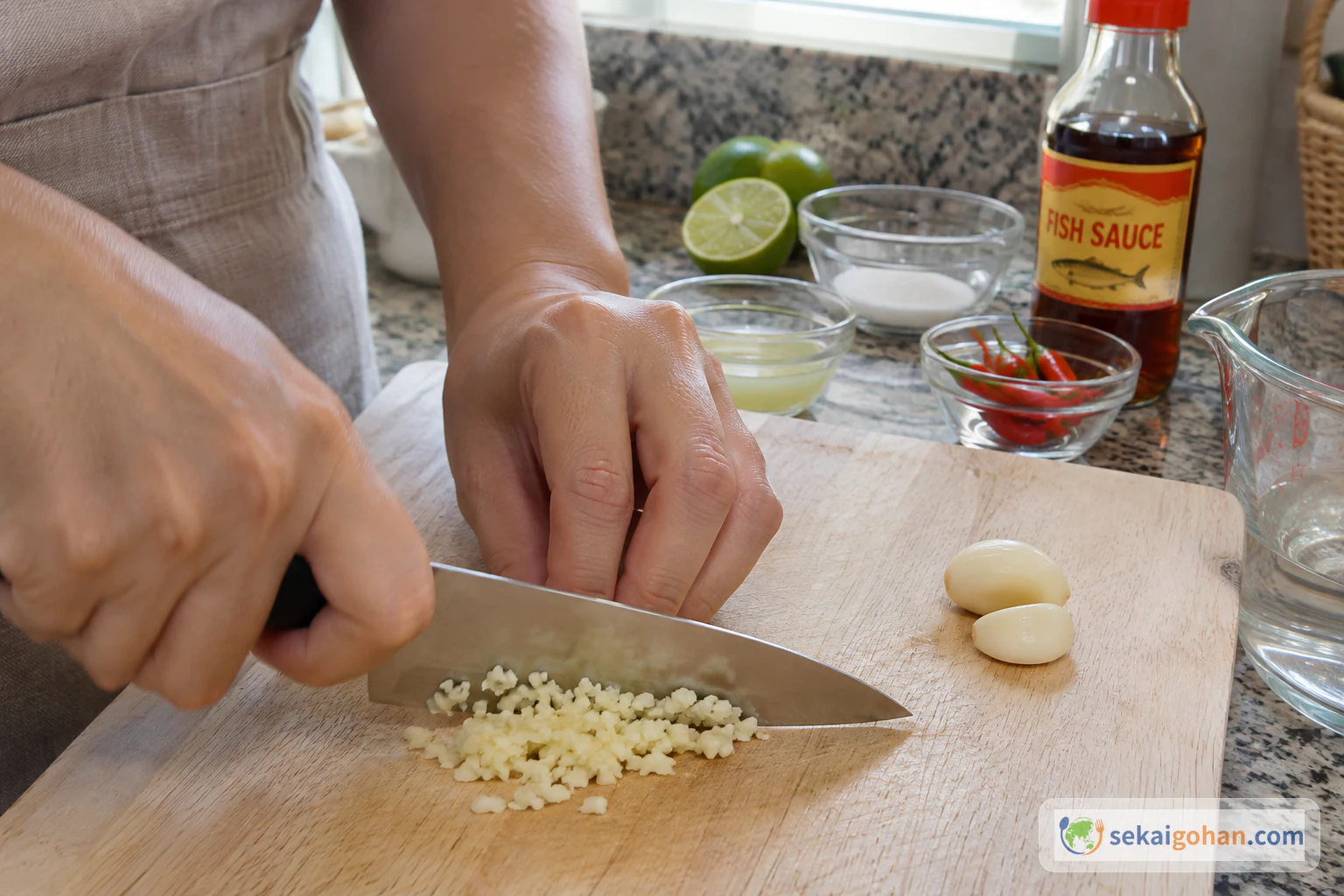
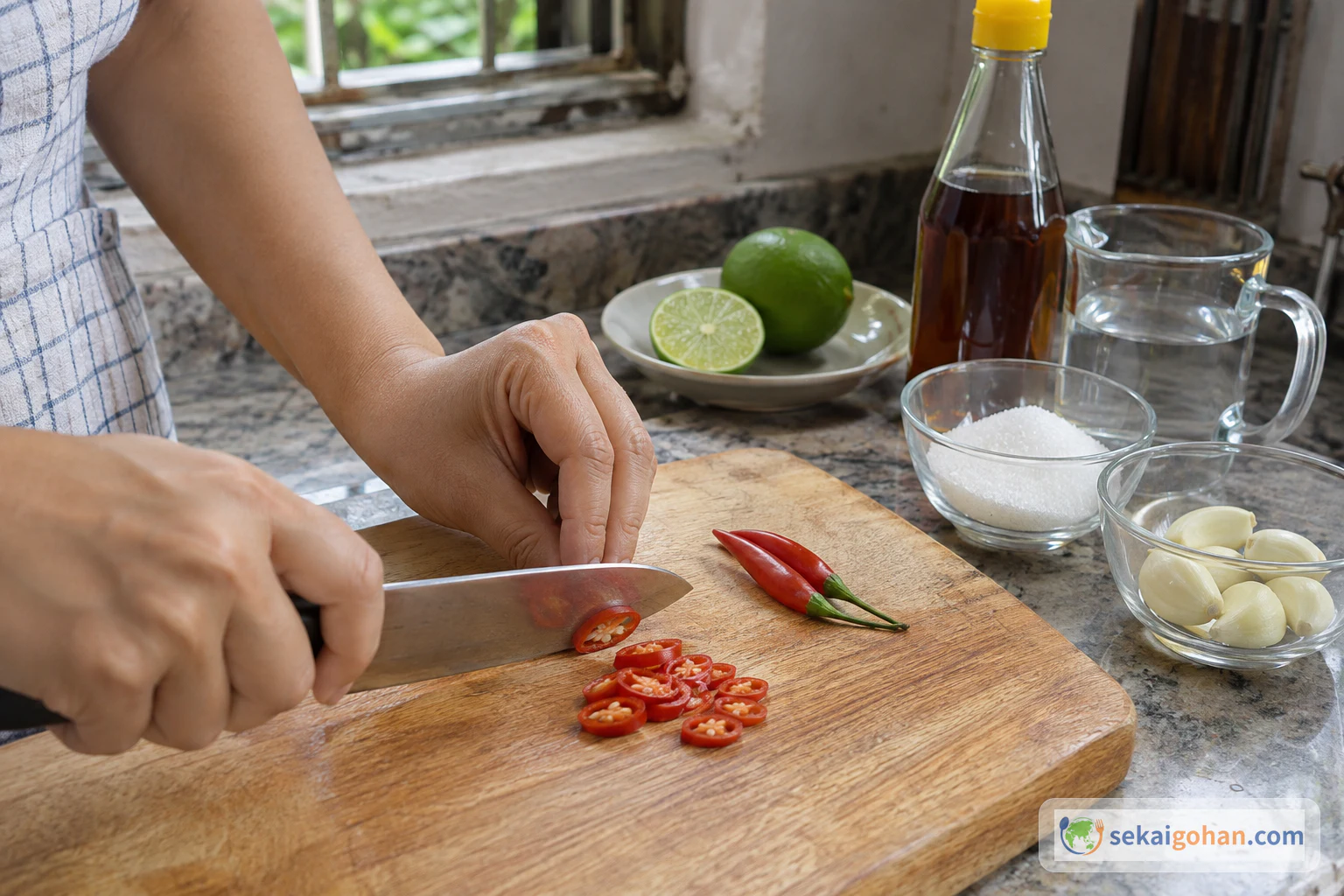
All the work happens in about five minutes, and almost all of it is knife work. Prepare the garlic and chiles first so they are ready the moment the base is done. Then dissolve the sugar in the lime juice and warm water, and only after that stir in the fish sauce and aromatics together. The sauce is never heated, so the whole job happens at the counter.
Everything in this bowl is raw, so start clean. Wash the limes, garlic and chiles. Use a clean board and knife kept apart from raw meat and fish. Buy fish sauce sold as food in a sealed bottle, never a homemade ferment. Serve the sauce right away. After slicing chiles, wash your hands before you touch your eyes or face.
When It Goes Wrong
| What you see | Why | What to do |
|---|---|---|
| Grit on the bottom of the bowl | The sugar went in with the fish sauce, or the stirring stopped early | Keep stirring. Next time, dissolve the sugar completely in the lime and warm water before anything else goes in |
| The sauce tastes harshly salty | Your fish sauce brand is saltier than most | Add a little more lime, sugar or water, a small splash at a time, tasting between additions |
| The heat is overwhelming | The chiles run hotter than expected | Lift some chile slices out with a spoon. Next time, start with fewer chiles |
| Garlic sits in lumps at the bottom | The garlic was chopped too coarsely | Chop it finer. Small, even pieces stay suspended and flavor every dip |
| The sauce tastes flat and dull | The garlic and lime have faded | Mix it fresh right before the meal and serve it at once |
Serving and Variations
At the table
Nước chấm belongs with fried and grilled food. Its acid and sugar cut through fat, and its thin body soaks into crisp wrappers. Fried spring rolls are the classic partner, and bún chả is another, with grilled pork and noodles dipped into the sauce. Give everyone their own small bowl so people can dip as often as they like.
Variations
- Without garlic and chile. Leave them out for a clean, mild dip of fish sauce, lime, sugar and water. It suits children and anyone who avoids heat, and the fish sauce comes through more clearly.
- With lemon. Swapping lemon for lime gives a rounder, less floral sourness. The sauce reads less like the lime-bright version but still works with fried food.
- Thinner, for steamed rice rolls. Use more water against the fish sauce. The result is lighter and gentler, made for soft, delicate food rather than crisp shells.
- Milder or hotter. Change the chiles to suit your table. The sweet-sour-salty base stays the same while the heat moves up or down.
Making it fresh
This sauce is at its best the moment it is mixed. Squeeze the limes and chop the aromatics close to mealtime, stir everything together, and bring it straight to the table.
Frequently asked questions
How warm should the water be?
Use warm water, not boiling and not heated with the sauce. Its only job is to help the sugar melt. The sauce itself is never cooked.
Can I make it a day ahead?
This recipe is made to be served right away, so mix it just before the meal and bring it to the table. No make-ahead or storage time is given here. Fresh garlic and lime lose their bright edge as the sauce sits, and that brightness is the point.
Why does the fish sauce go in last?
The sugar dissolves cleanly in the lime and warm water, which gives you a smooth, even base. When the fish sauce and aromatics go into that finished base, the sauce comes together without gritty sugar or salty pockets.
Can I use less fish sauce for a gentler dip?
Yes. Thinner versions are common, especially for soft food like steamed rice rolls. Add more water or lime to taste until the salt sits where you like it, keeping the sweet-sour balance in step.