Phở Bò: Three Hours in the Pot, One Moment in the Bowl
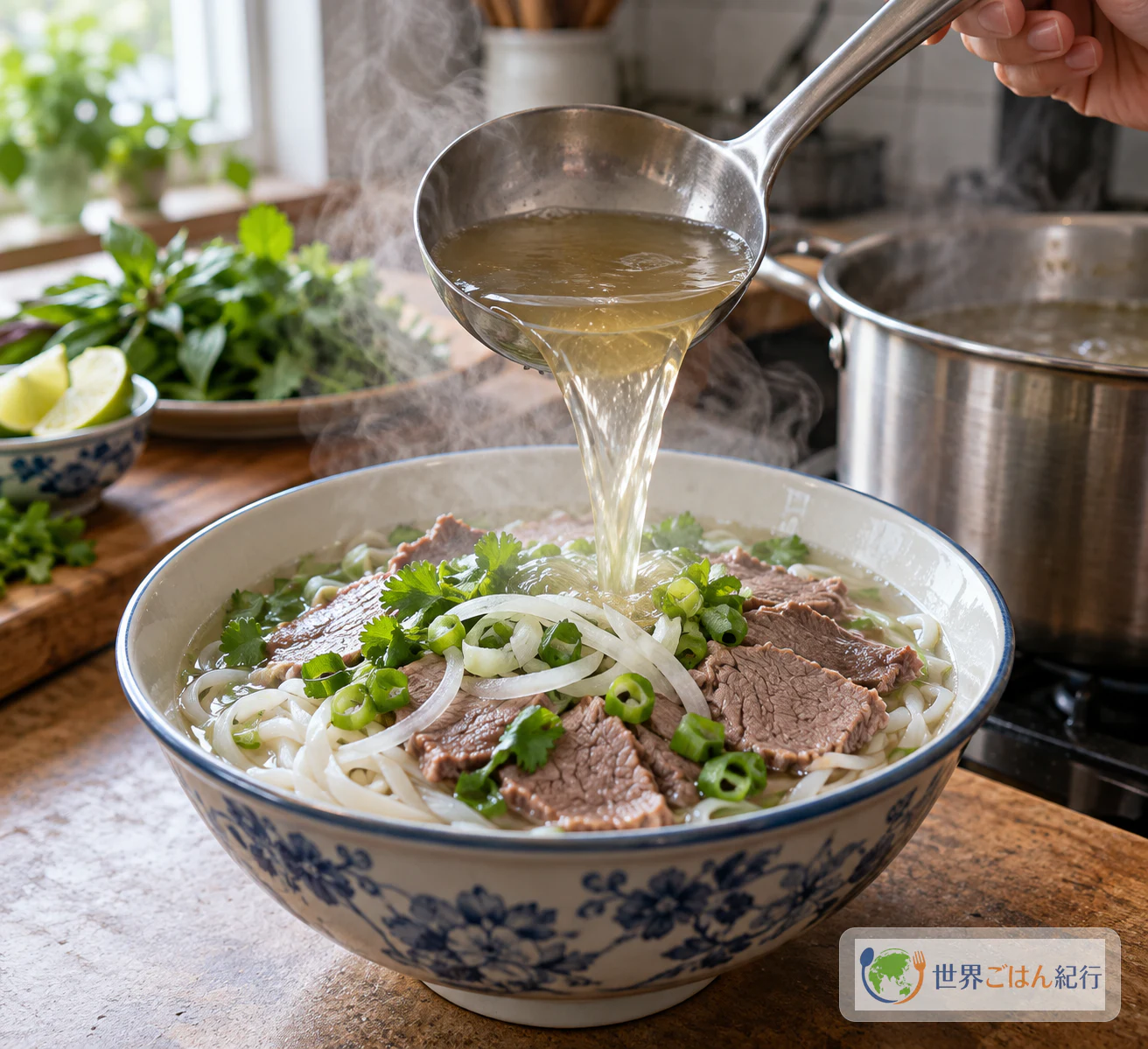
Keep the broth clean and fragrant, and pull the beef out before it toughens. Assemble each bowl right before eating so the noodles stay soft and the broth is still at a full boil when it goes in.
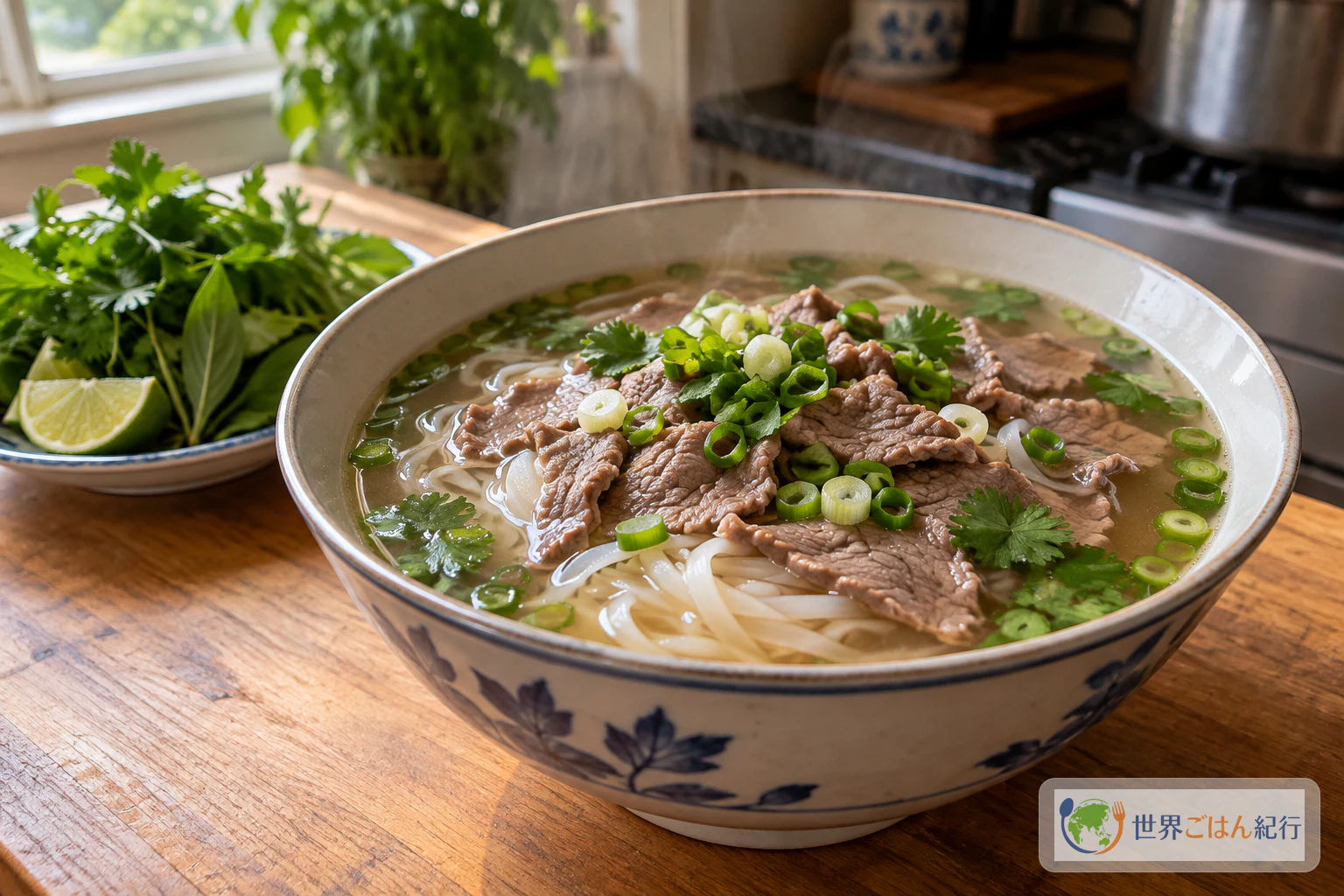
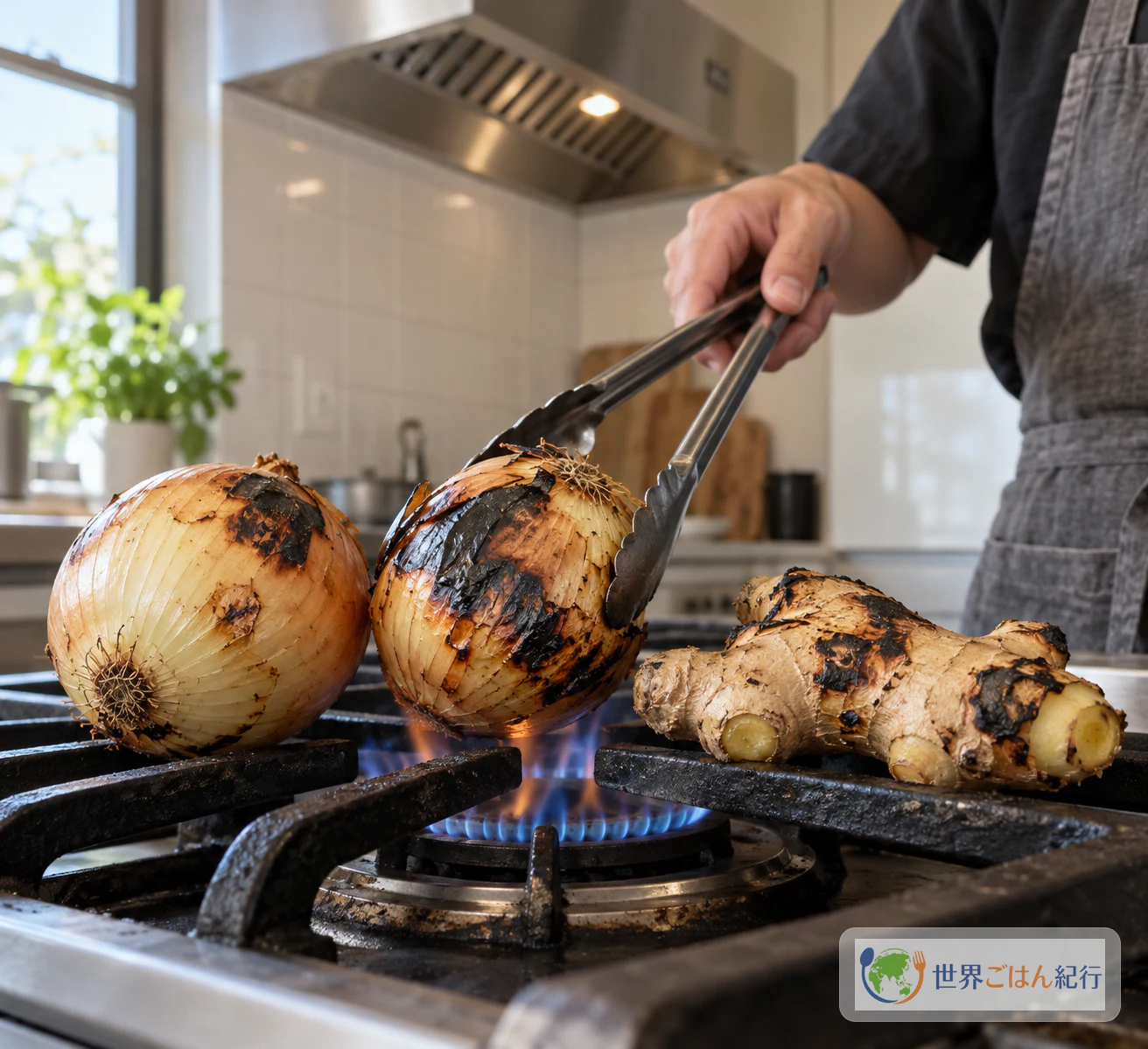
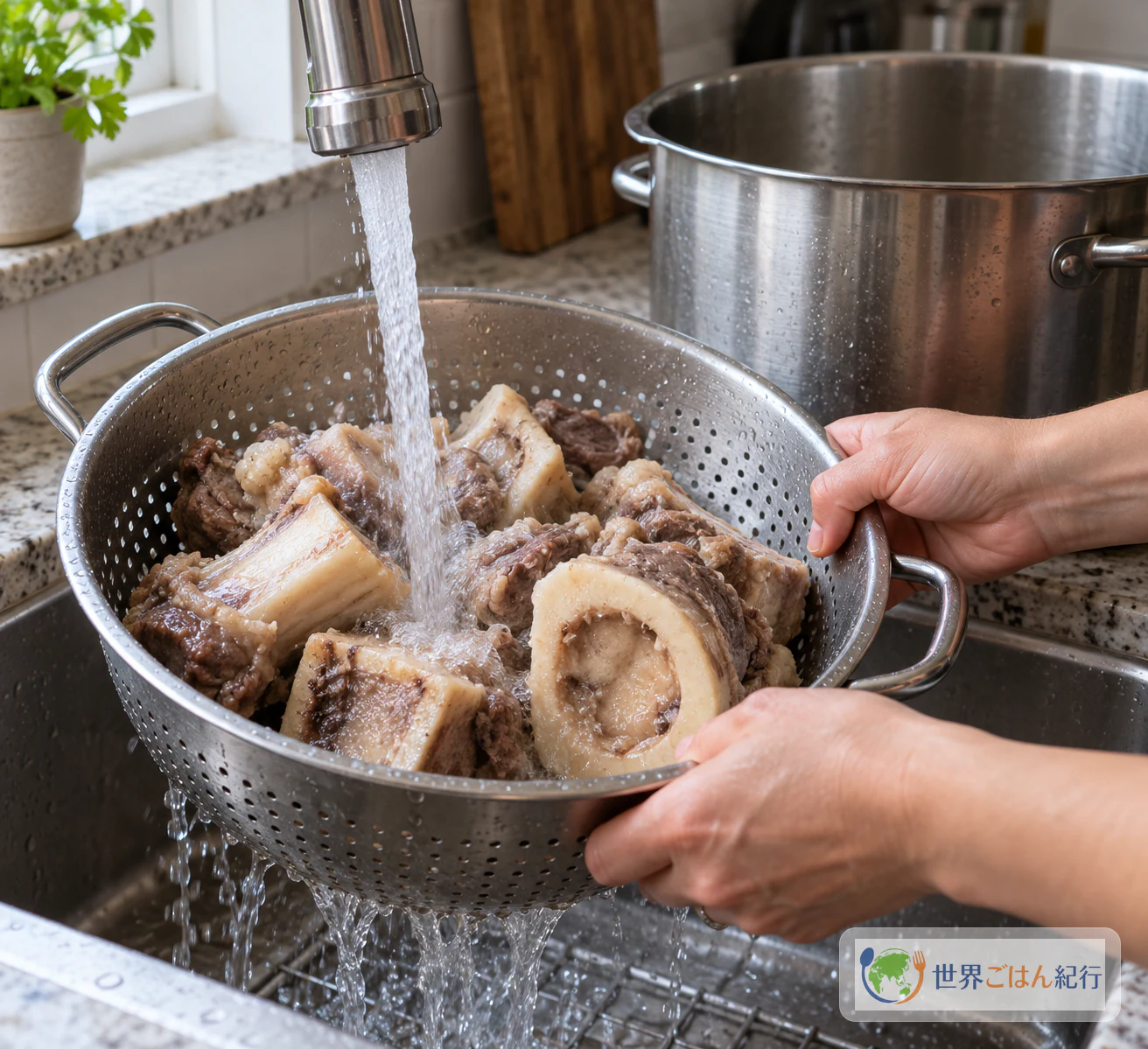
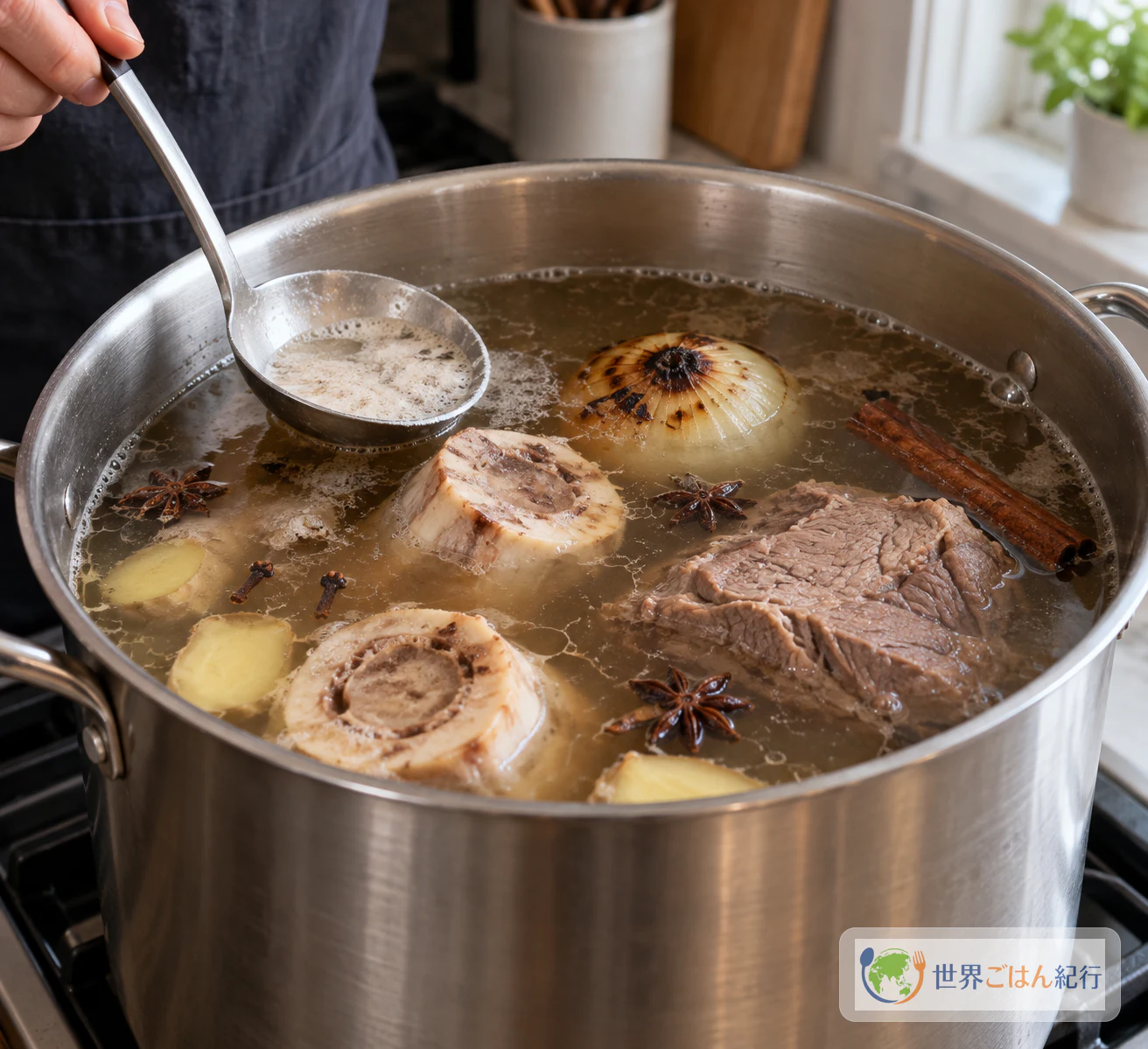
The day starts with charring. Whole onions and a thick piece of ginger turn over a flame until their skins blister and blacken. Next, beef bones go into a cold pot for a quick boil, and the cloudy water is poured away. Then the bones return to fresh water with star anise, cloves and cinnamon. For about three hours the pot only needs a low simmer and a ladle to skim the surface. The real finish comes at the very end, one bowl at a time: flat rice noodles, sliced beef, onion and herbs, and a ladle of broth at a full boil.
This article makes phở bò, the beef version of Vietnamese phở, built on a beef-bone broth. It is a different dish from phở gà, the chicken version, which uses a different main ingredient and a different broth. It is also not bún bò Huế, another Vietnamese beef noodle soup.
The recipe follows Andrea Nguyen's 8-serving beef pho, a family recipe from her 2006 book Into the Vietnamese Kitchen, published on her site Viet World Kitchen. The base amounts, sequence and recipe timings come from that one recipe. This article separately identifies its home-method change for fully cooking the thin beef and the general food-safety guidance; no other recipe's quantities are mixed in. The times are hers, not measurements from our kitchen. Bones, pots and burners vary, so the steps also describe what to look for in the pot.
The broth needs 5–6 lb of bones, a pot that holds at least 12 US quarts, and about 3 hours of simmering. You can make the broth a day ahead. Prepare the noodles, sliced beef and garnishes while it simmers.
What Phở Bò Is: The Noodle, and the Beef
Vietnam Tourism explains that the word phở refers to the noodle itself. Phở bò is the bowl built on beef, and phở gà is the bowl built on chicken. The noodle is bánh phở, a flat rice noodle. It is not round rice vermicelli, which has a different cross-section and texture. Vietnam Tourism also lists star anise, cloves and cinnamon as common spices in the broth, and notes that phở is eaten at breakfast as well as later in the day.
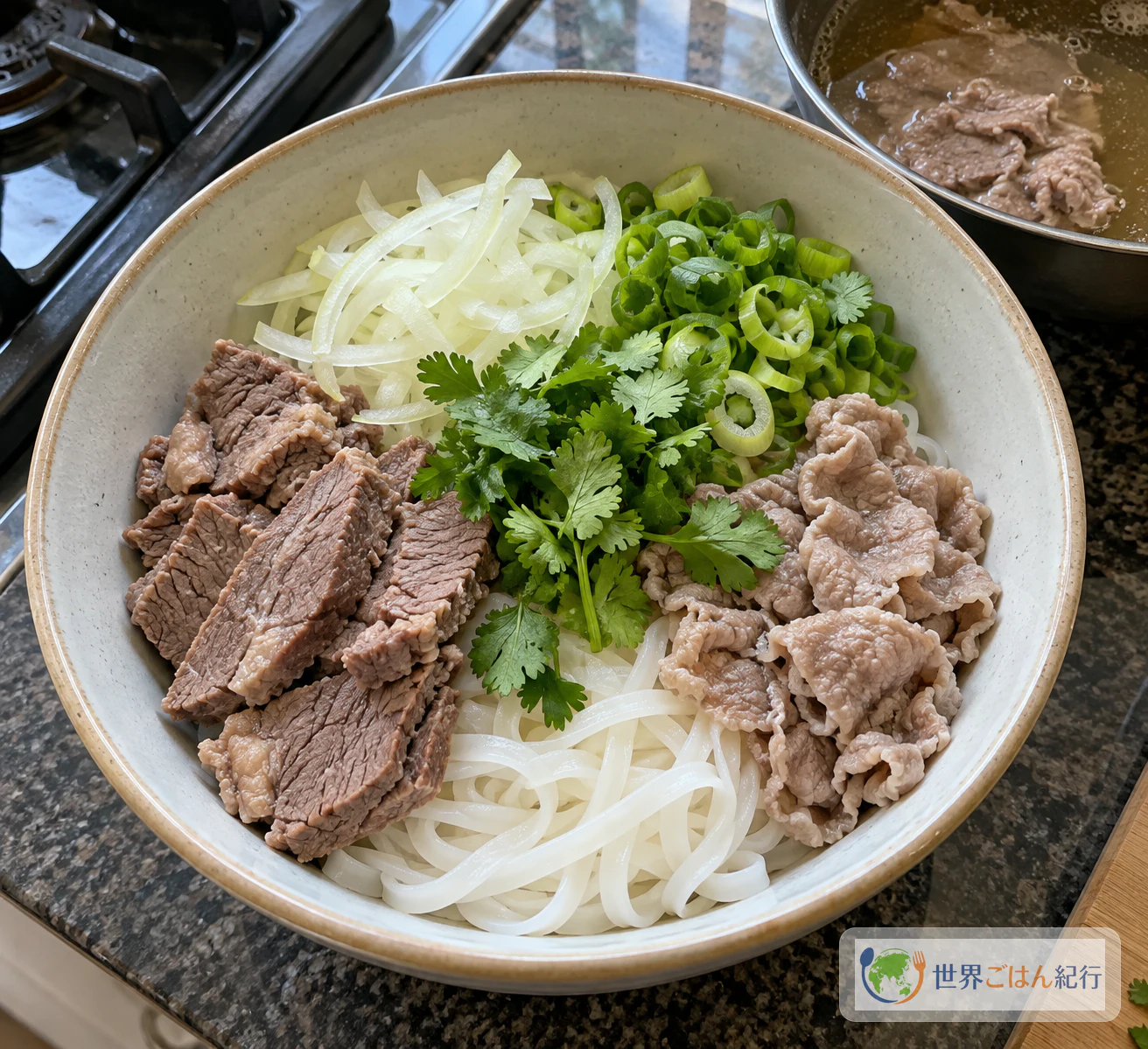
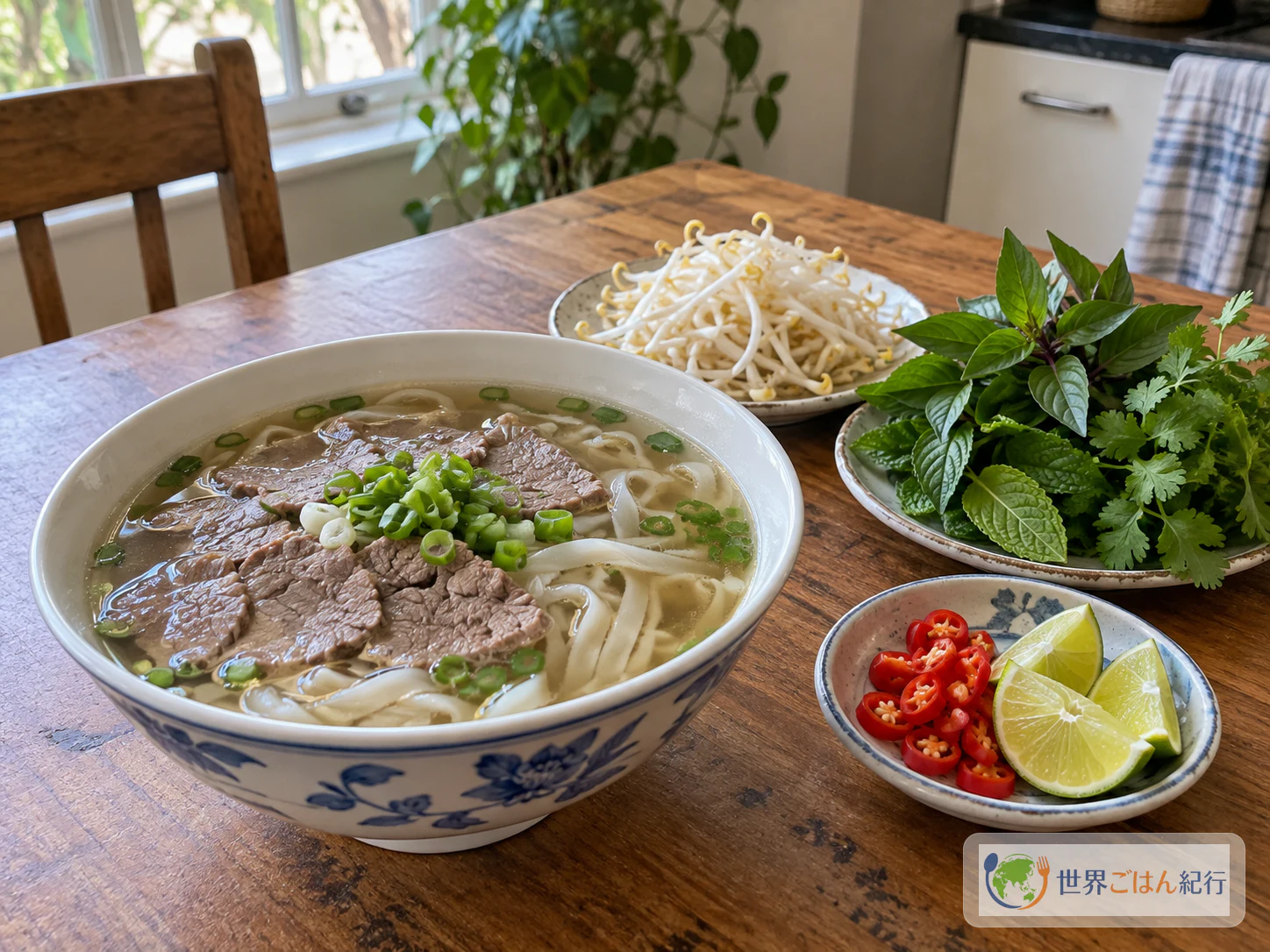
The bowl in this article uses two kinds of beef. One is a roast-style cut simmered in the broth and then sliced. The other is a separate cut sliced paper-thin. At the table it comes with a side plate of bean sprouts, herbs, chili and lime. That kind of generous plate is what Vietnam Tourism describes as typical of the south.
Ingredients: Serves 8, from a Single Recipe
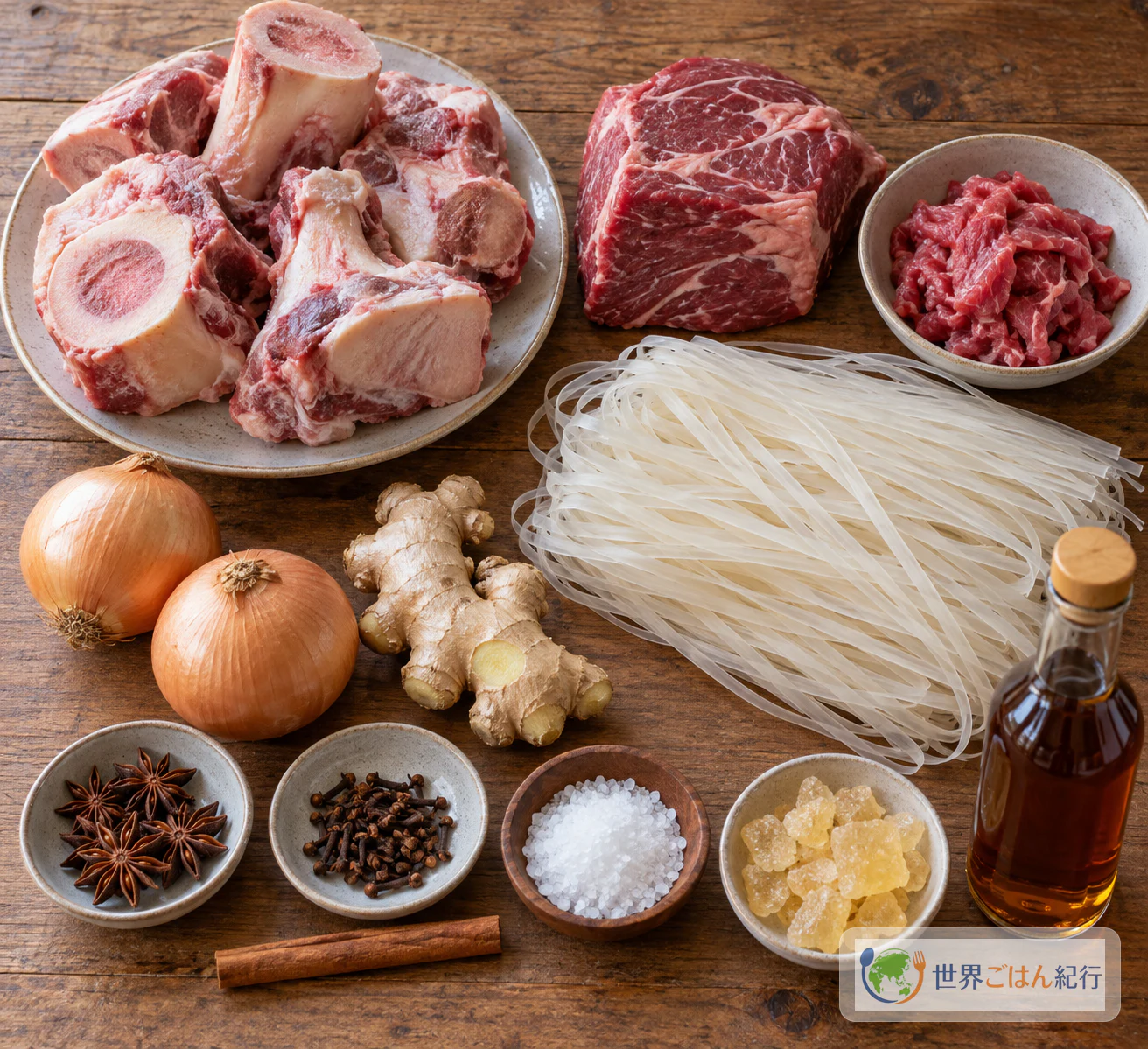
The broth makes about 4 quarts, enough for 8 servings.
The 6 quarts in the table is only the broth water. The water for blanching the bones, the warm water for rinsing them, the water for soaking and boiling the noodles, the cold water for the sliced onion, and the clean water for the simmered beef are all separate, and none of it comes out of the 6 quarts. Any salt, fish sauce, rock sugar or water you add when seasoning the strained broth is also extra, on top of the starting amounts.
Fish sauce is made from fish. Check labels for beef and for any herbs you are sensitive to. Allergens can also travel through shared tools, cooking water and serving plates. Keep tongs, boards and plates for raw beef separate from anything used for cooked food, noodles or herbs.
Equipment
- A stockpot of at least 12 US quarts (about 11.4 liters) capacity, as the recipe specifies. Don't try to squeeze 8 servings into a smaller pot.
- A grill rack or gas burner and long tongs for charring the onions and ginger. Use the range hood and open a window.
- A paring knife for peeling the charred ginger.
- A colander for draining and rinsing the blanched bones.
- A ladle for skimming and serving.
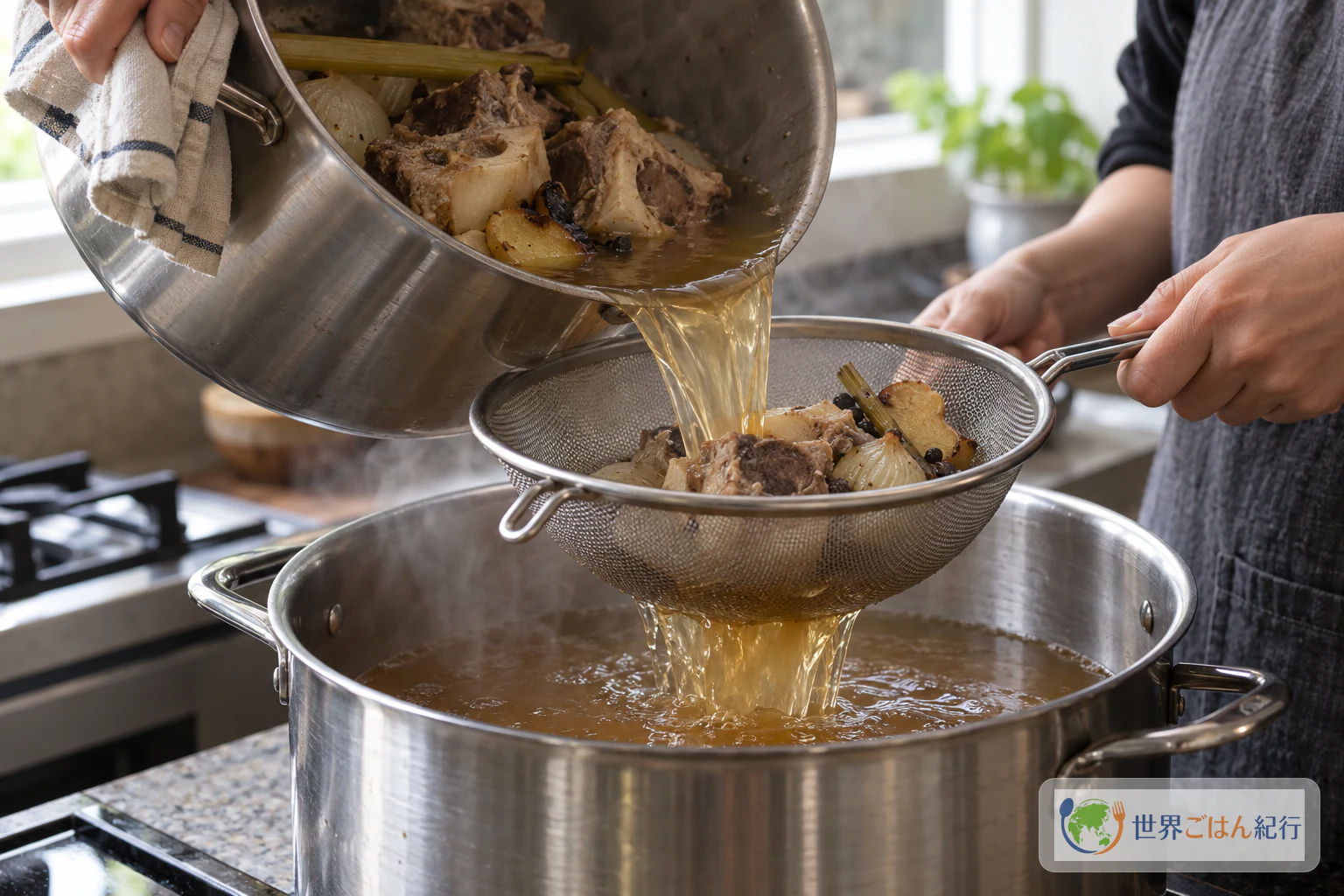
- A fine-mesh strainer and a second clean pot for the strained broth.
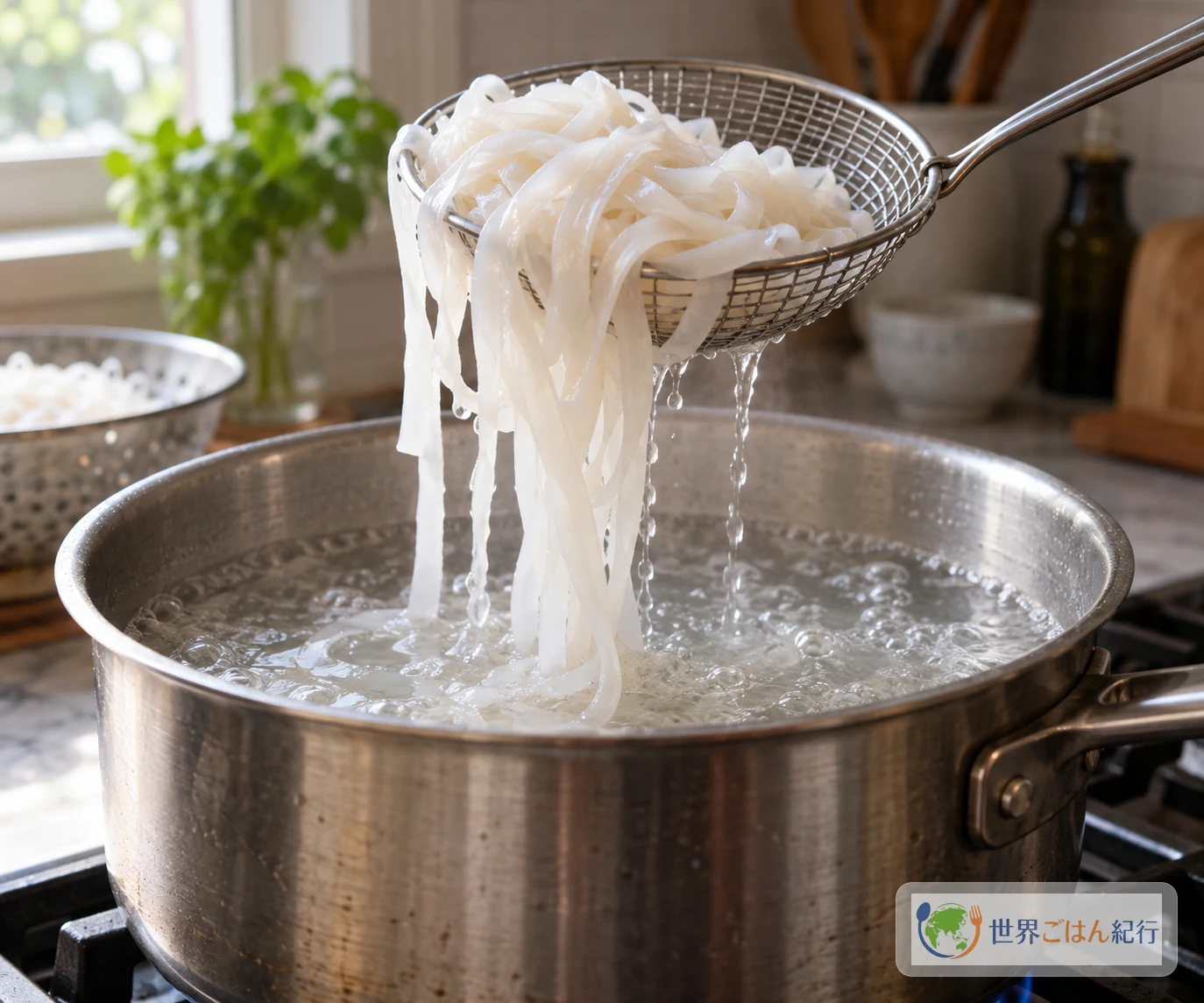
- A large bowl for soaking the dried noodles, and a long-handled wire strainer for blanching portions.
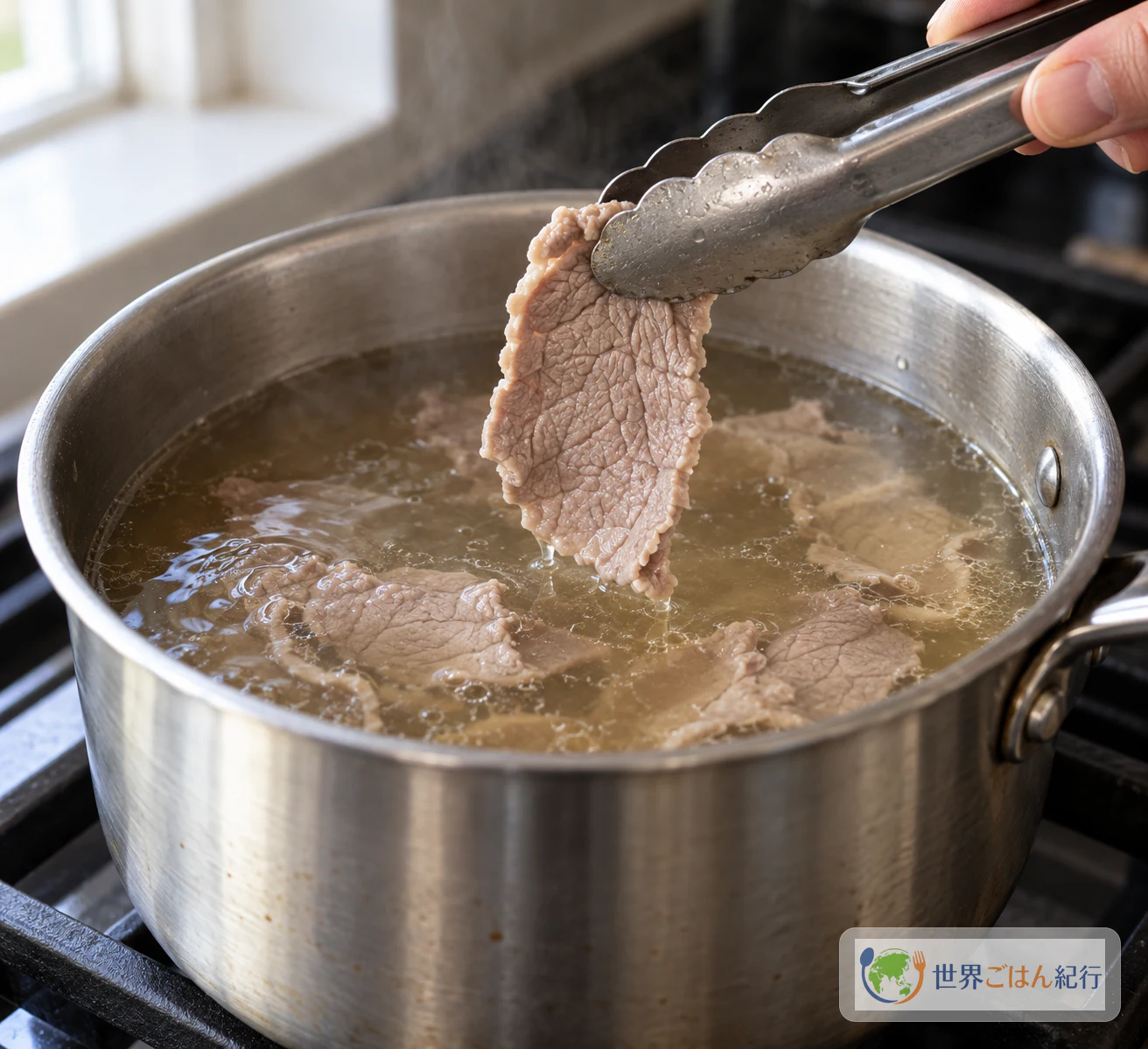
- A small separate saucepan for cooking the thin-sliced beef.
- A food thermometer, if you want to check the center temperature of the thin beef.
- Shallow, clean containers for cooling and storing broth, with enough room in the refrigerator for them.
Shopping and Substitutions: What to Find Nearby and What to Track Down
At an ordinary supermarket you can usually find onions, ginger, a roast-style beef cut, a lean cut for slicing thin, scallions, cilantro, bean sprouts, chilies, limes, sea salt and black pepper. Whole star anise, cloves and cinnamon sticks are often on the spice shelf too.
These are worth a trip to a butcher, a Southeast Asian grocery or an import shop:
- Beef soup bones. The recipe asks for marrow and knuckle bones. If you switch to other bones, such as shank bones, the mix of bones changes. Treat that as your own change to the recipe, not the same broth.
- Bánh phở. Look for flat rice noodles about ⅛ inch wide, dried or fresh. Rice vermicelli has a round cross-section and a different texture, so it makes a different bowl.
- Fish sauce. It carries the saltiness and savory depth of the broth. Soy sauce is not an equal swap. Leaving fish sauce out for a fish allergy is a departure from the recipe.
- Yellow rock sugar (đường phèn). Look for it at Asian grocers. White sugar is not a confirmed equivalent. If you use it, see the variations section.
- Vietnamese herbs. Spearmint, Thai basil and sawtooth herb (ngò gai) can be hard to find with the same names. They are optional, so leave out what you can't get. Ordinary cilantro does not have the same flavor as these.
Method: From Charred Aromatics to a Ladle of Boiling Broth
The 15 minutes of charring, the 1½ hours for the beef and the 3 hours for the broth all come from the recipe. Bone size, pot and burner change how things go. Check the state of the onion skin, the firmness of the beef and the bubbles in the pot as you go.
Troubleshooting: Cloudy, Bitter, Salty, Tough or Soggy
| Problem | Likely cause | What to do |
|---|---|---|
| Cloudy broth | Blanching water not fully discarded, bones and pot not rinsed, broth boiled hard, scum not skimmed | Discard the first boiling water completely and rinse both the bones and the pot. Keep the broth at a gentle simmer and skim it. These steps help keep cloudiness down but don't guarantee a clear broth |
| Burnt, bitter aroma | Onions and ginger charred until black throughout | Char only the skins, then remove the blackened skin and burnt ends before they go into the pot |
| Broth too strong or salty | Seasoning concentrated, or too much added while adjusting | Dilute with water, as the recipe suggests. Taste again once the noodles and toppings are in the bowl |
| Simmered beef is tough | Left in the pot too long | Treat 1½ hours as a time to check, not a fixed rule. Take the beef out when it is cooked enough to eat, before it toughens. The recipe doesn't measure differences by cut or size |
| Noodles break or go soggy | Blanched too long, or boiled too early | After soaking, blanch one portion at a time just before eating, and check the package directions |
Variations Worth Making
- A simpler, Hanoi-leaning bowl. Vietnam Tourism describes Hanoi-style phở as having a clear broth and few garnishes. You can serve this bowl with just scallion, cilantro, onion and pepper, and skip the side plate. This changes how you serve it, not the recipe.
- A full southern-style garnish plate. Add more bean sprouts, Thai basil, mint, sawtooth herb, chili and lime, and let everyone build their own bowl.
- Simmered beef only. Leave out the thin-sliced raw beef and top the bowls with the sliced simmered beef alone. If you do use thin raw beef, cook it in a separate pot as in step 6.
- Without yellow rock sugar. Plain sugar is not confirmed to give the same result. If you use it, treat it as your own adjustment: add a little at a time and taste.
- Missing herbs. Serve whatever you can find on the side, and don't think of cilantro or other herbs as the same as the original ones.
Phở in Vietnam: History and Regional Bowls, as Vietnam Tourism Tells It
Vietnam Tourism presents Nam Định as the dish's geographical cradle and Hanoi as its spiritual home. In its account, beef bones came into use in the late 19th century, and by the 1930s phở was being sold by street vendors. After 1954, it says, phở spread to the south, where the broth grew sweeter and more herbs and condiments were added. This is the tourism board's own telling of the history, not a settled account of where phở began.
Vietnam Tourism contrasts Hanoi-style phở, with its clear broth and spare garnishes, with southern bowls that come with plenty of herbs and bean sprouts. These are differences in style and seasoning, not a ranking. The bowl in this article is beef phở served with the kind of herb plate seen in the south. It is one family's recipe, not the single standard version for the whole country. Vietnam Tourism also describes the street-stall routine that the last step here follows: hot broth poured over rice noodles and meat, and each customer adding their own garnishes. For a different Vietnamese noodle meal, see bún chả. For more dishes from the same country, see Vietnam.
Storing and Reheating
Assemble only the bowls you will eat right away. Store the broth, the meat and the noodles separately. Cool the broth quickly by dividing it into shallow, clean containers, then refrigerate it. Don't leave the big pot at room temperature for a long time. Keep the cooked beef in a clean container in the refrigerator as well.
FoodSafety.gov's Cold Food Storage Chart gives soups and stews with meat 3–4 days in the refrigerator, kept at 4°C or below, and 2–3 months in the freezer at −18°C or below. The freezer interval is a quality guideline; these figures assume the stated storage conditions and are not a guarantee for an improperly handled batch. When you reheat, follow the Ministry of Health, Labour and Welfare's general guide: reheat to 75°C or above, and bring soup to a boil. Prepare fresh noodles for each serving.
Frequently Asked Questions
How is this different from phở gà?
Phở gà is chicken phở. Phở bò, this dish, uses beef and a beef-bone broth. They share the flat rice noodle, but the main ingredient and the broth are different, so they are separate dishes.
How do I prepare dried rice noodles?
Soak them in hot tap water for 15–20 minutes, until soft and opaque, then drain. Just before serving, dip one portion at a time in boiling water for 10–20 seconds. Follow the package directions where they differ.
Can I make the broth a day ahead?
Yes. The recipe allows for it. Cool the strained broth in shallow containers, refrigerate it, lift off the set fat, and reheat it until it boils.
I'm not a fan of star anise. Can I change it?
The recipe doesn't offer an alternative. Its amount, 5 whole pods, is the baseline. Using less is your own change and will shift the aroma of the broth. Don't swap in ground star anise.
I'm uneasy about pouring broth over raw beef. What should I do?
Follow step 6: cook the thin slices in a separate small pot of broth until fully cooked, using 75°C at the center for at least 1 minute as a guide, then add them to the bowl with clean tongs. The original method of pouring broth over raw beef doesn't state what temperature the meat reaches. Another option is to top the bowls with the simmered beef only.
Is nutrition information available?
No. It hasn't been calculated, and it would vary with the cut, the bones and the products you use, so no figures are given.
Sources
- Andrea Nguyen, "Beef Pho Noodle Soup Recipe (Pho Bo)," Viet World Kitchen. The 8-serving family recipe from her 2006 book, used for all ingredients, amounts, steps and timings, and for the original method of pouring boiling broth over raw beef. The recipe does not state the temperature the beef reaches. https://www.vietworldkitchen.com/blog/2008/10/pho-beef-noodle-soup.html
- Vietnam Tourism, "The story of Vietnamese pho." The tourism board's account of Nam Định and Hanoi, the late 19th century to the 1930s, changes in the south after 1954, and street-stall serving. Not a primary historical source. https://vietnam.travel/things-to-do/history-pho/
- Vietnam Tourism, "21 must-try Vietnamese dishes." Phở as the name of the noodle, Hanoi and southern garnishes, common spices, and phở as a breakfast dish. https://vietnam.travel/node/195
- Health Canada, "Pho (beef noodle soup)." A shorter, Vietnamese-inspired recipe, used only to compare approaches to pouring hot soup over thin beef. Nothing from it is mixed into this recipe. https://www.canada.ca/en/health-canada/services/food-guide/eating-support/kitchen/recipes/pho-beef-noodle-soup.html
- FoodSafety.gov, "Cold Food Storage Chart." General refrigerator and freezer guidelines for soups and stews with meat, and the 4°C refrigerator standard. https://www.foodsafety.gov/food-safety-charts/cold-food-storage-charts
- Ministry of Health, Labour and Welfare (Japan), "Six points for preventing food poisoning at home" (in Japanese). The guide of 75°C at the center for at least 1 minute, shallow containers for leftovers, reheating to 75°C or above with soup brought to a boil, and keeping raw meat away from cooked food. Not a measurement of this recipe. https://www.mhlw.go.jp/stf/seisakunitsuite/bunya/kenkou_iryou/shokuhin/syokuchu/01_00006.html