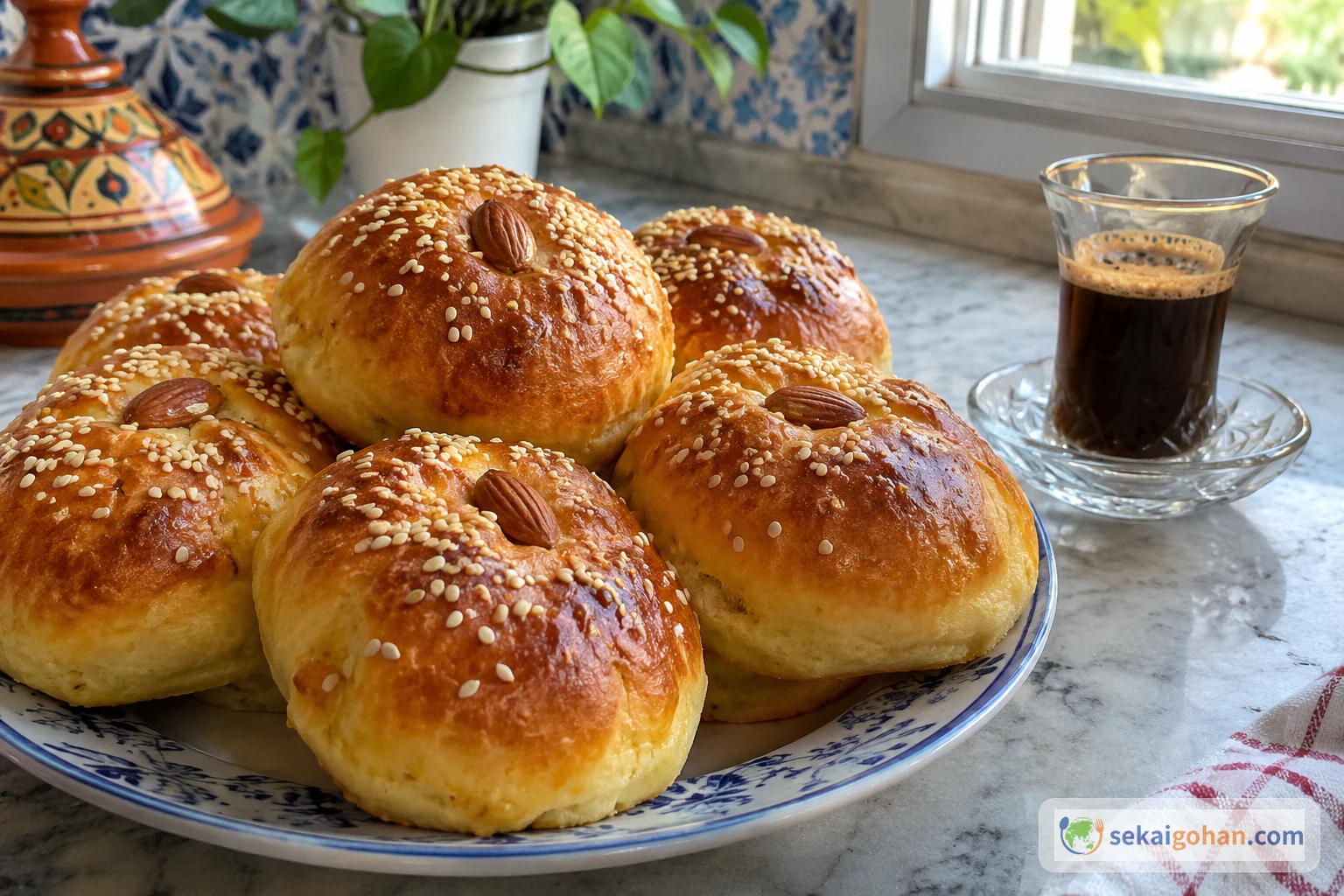
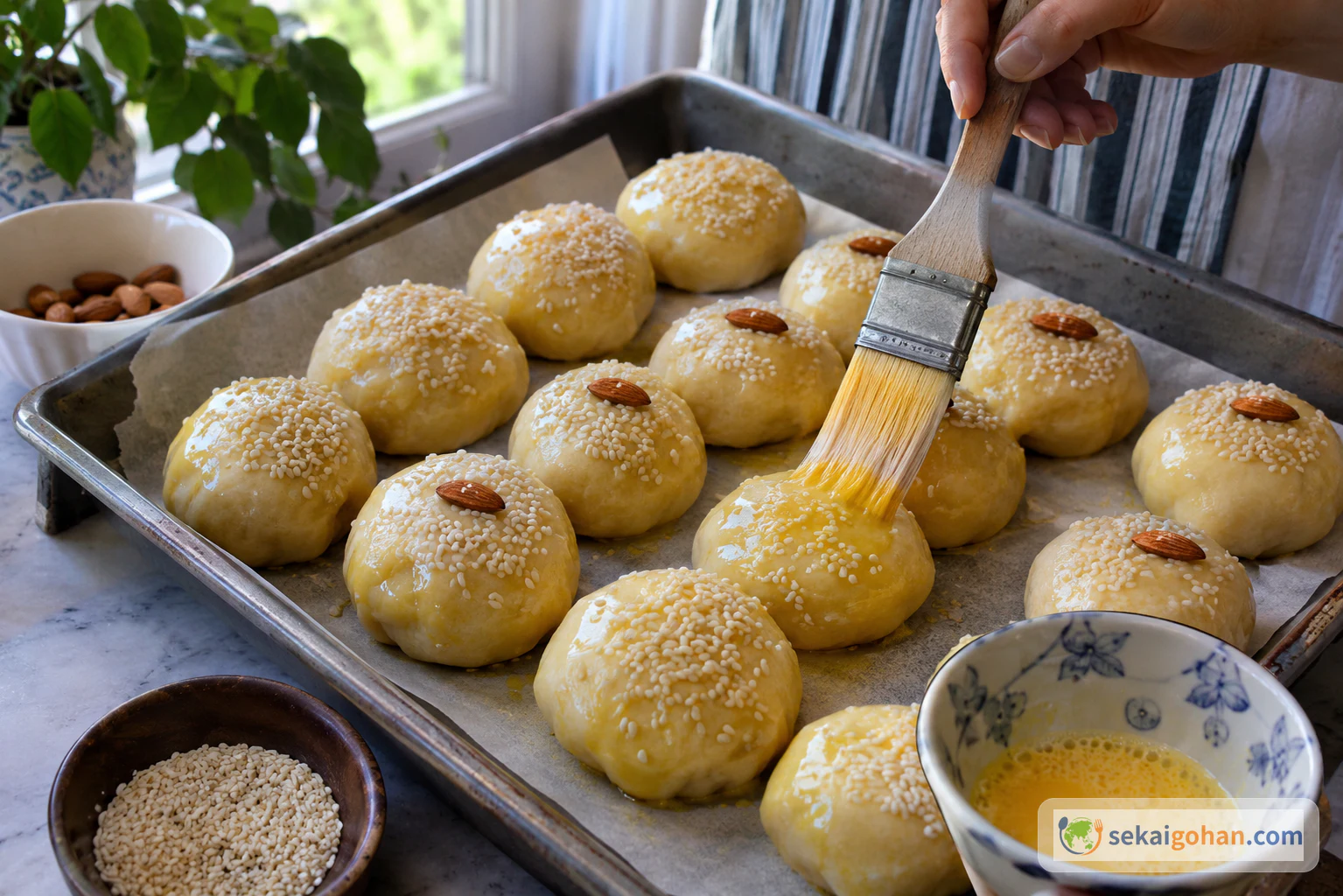
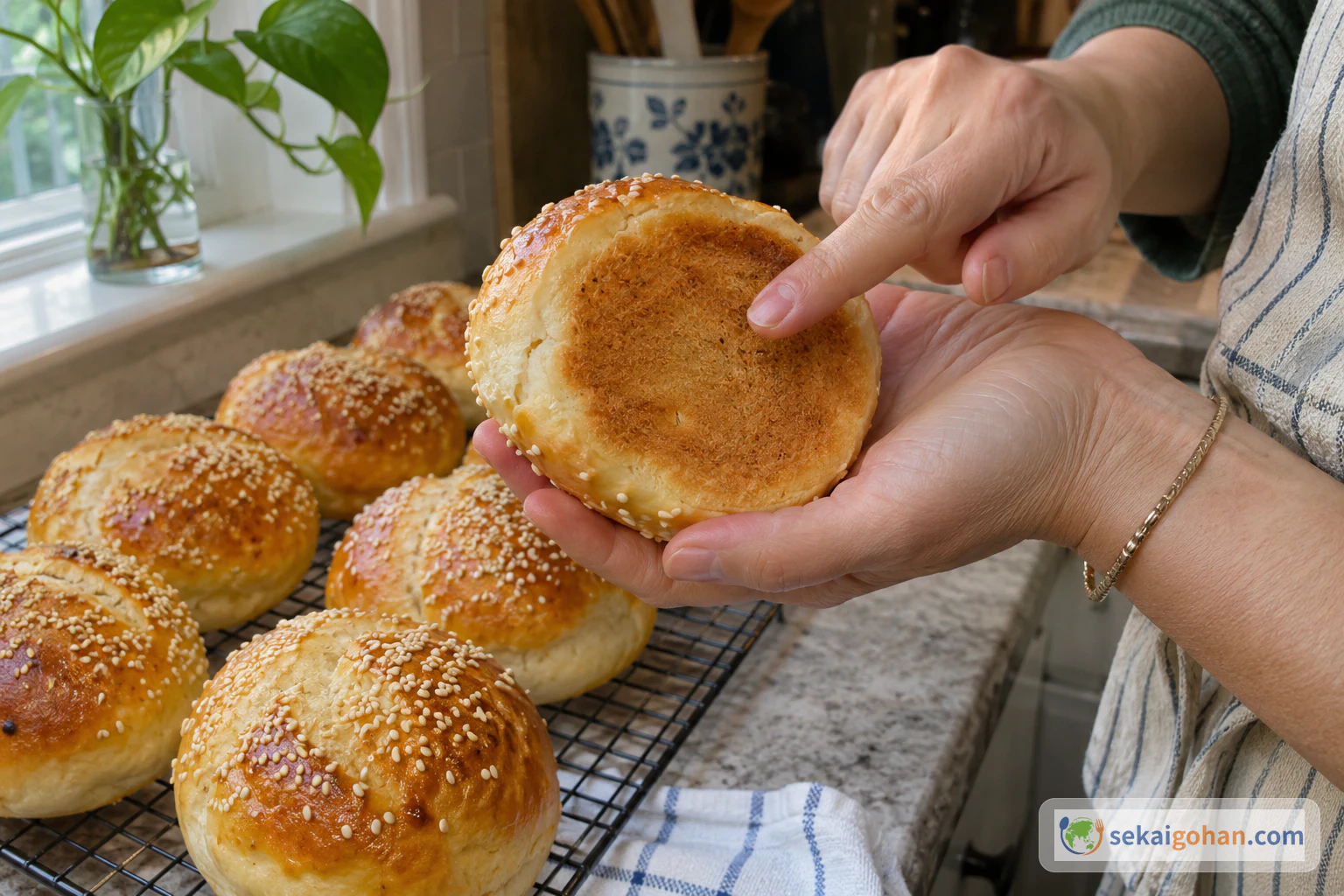
Turn one bun over in a cloth and tap its golden bottom. When it answers with a hollow knock, the tray is done, and the kitchen already smells of butter, orange zest and orange blossom water. Chrik are small round brioche buns from Constantine in eastern Algeria. They have a glossy egg-washed top scattered with sesame, and often half an almond is pressed into the middle. The crumb is light and airy, lightly sweet, and flecked with nigella seeds that give a faint bitter edge against the citrus. It is a lighter bread than French brioche, soft enough to tear with two fingers and made to sit beside a pudding, a bowl of fruit or a small cup of coffee.
Chrik in Constantine: Buns for Late Nights and Big Occasions
Chrik belongs to Constantine and the surrounding Constantinois region, which is why you will often see it called chrik constantinois. It is made for special days. At engagements and weddings it comes out at the end of a long, heavy meal, when nobody wants another savoury dish but everyone wants something sweet to hold. A plate of buns goes round with fruit such as apples and peaches, juice or soda, and m'halbi, a milk pudding thickened with rice. It is made with cream of rice and flavored with rose water.
During Ramadan the buns take on a second role. After the evening meal, families stay up late for the sah'raa and then eat again at suhour before dawn. Chrik suits those hours well because it is soft and gently sweet and goes easily with m'halbi and whatever fruit is in season. Turkish coffee, mint tea and fruit salad are just as common beside it. The bread is part of a long night at the table.
Where the bun began is not settled. Some trace it to the Turkish çörek, a family of enriched breads, and connect it to the Ottoman period in Constantine. That is a reasonable guess, and it stays a guess. What is certain is the flavour that marks it as Constantinois: orange blossom water, orange zest and sesame on a rich dough with butter and egg.
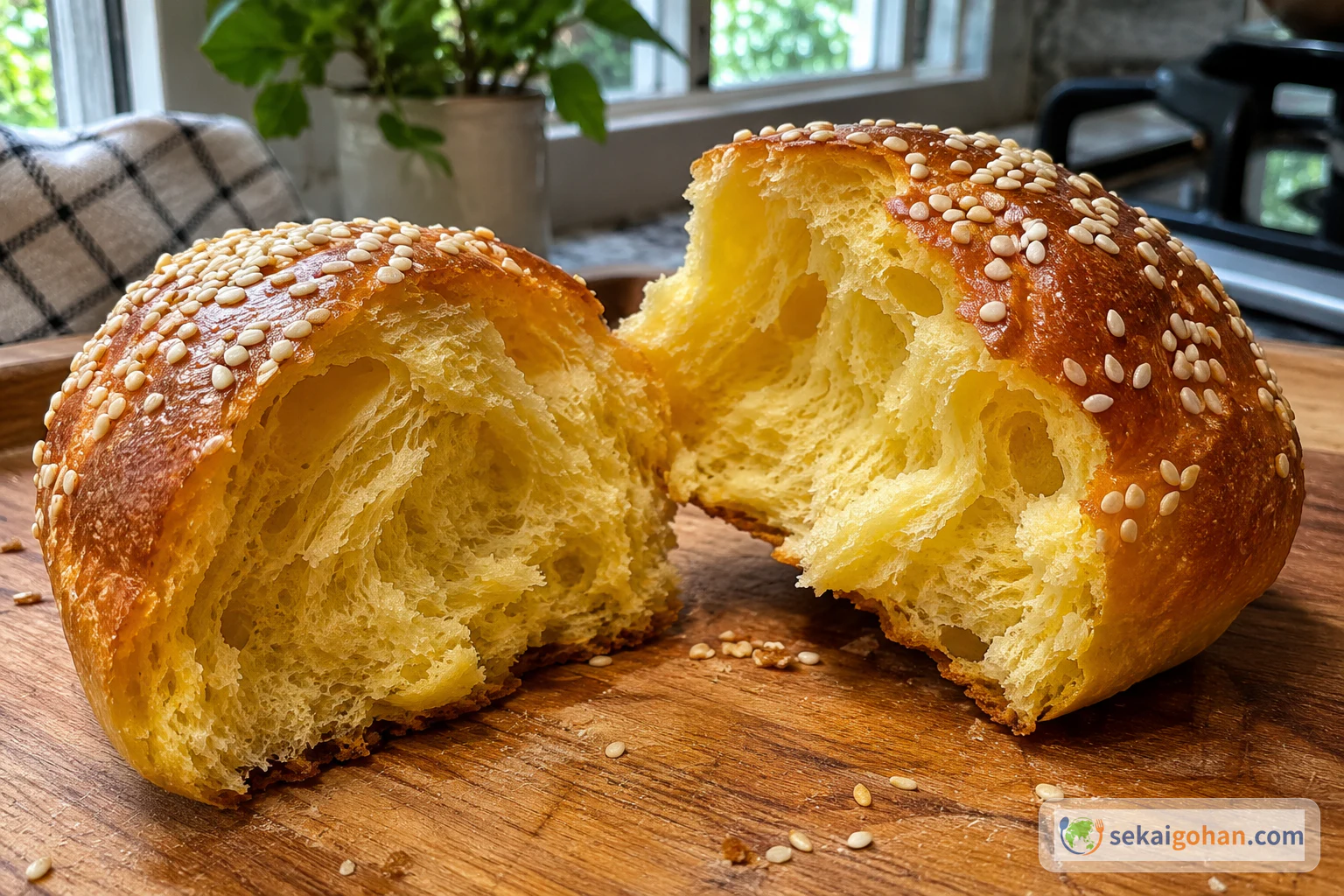
Chrik is easy to confuse with chorba frik, the Algerian soup made with green cracked wheat. Apart from the similar spelling, the two have nothing in common. In Algerian baking it also sits beside kaak, a crown-shaped brioche flavoured with aniseed. Chrik is the small round bun with orange blossom and sesame. For more of the country's breads, soups and stews, see Algerian cooking.
Ingredients (makes 24 buns)
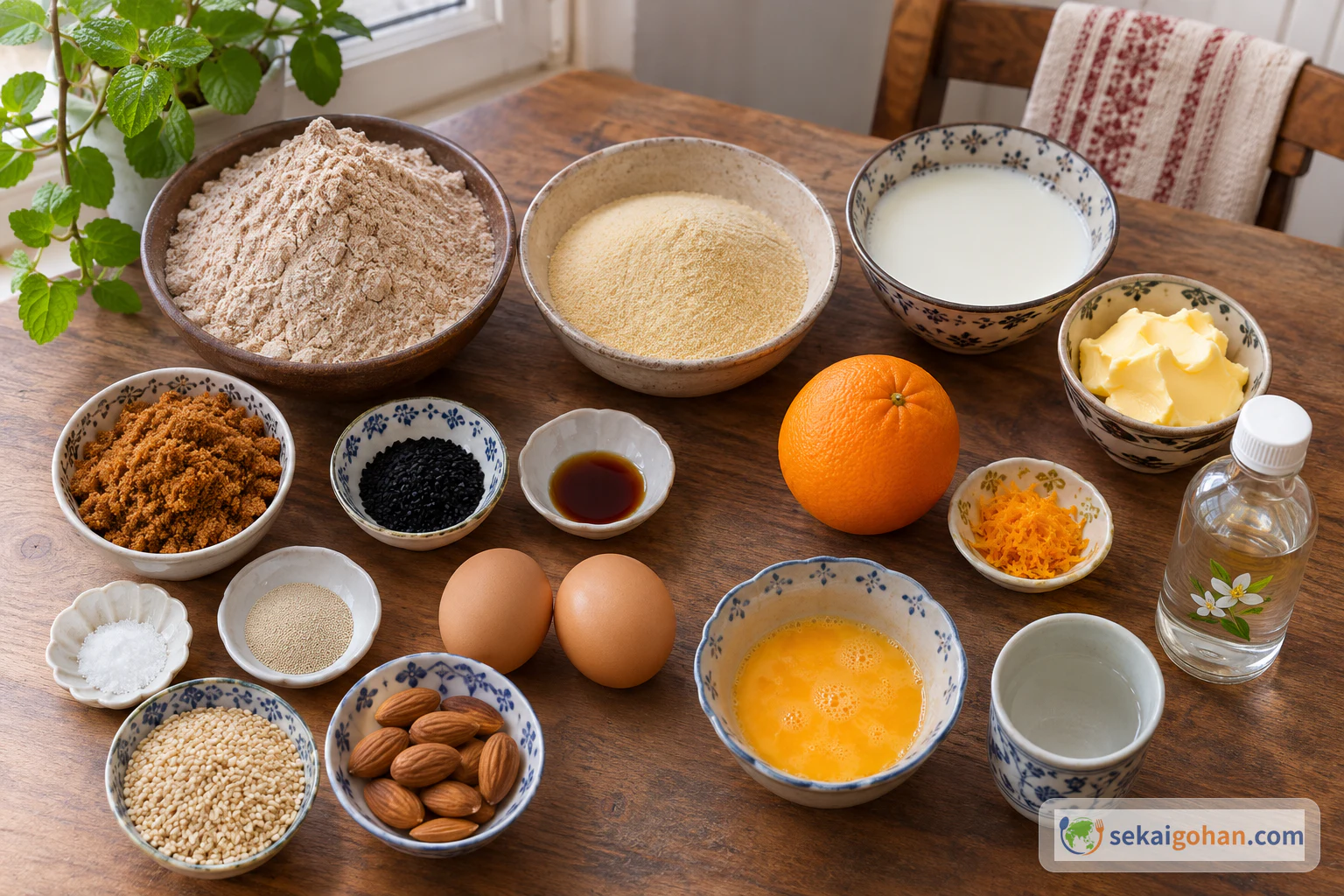
The yeast amount is generous, more than most home enriched doughs use, so measure it level. You will brush on as much egg wash as the tops need, and some may be left over.
Chrik contains wheat, milk, egg and sesame. The almond topping adds tree nuts. Leave the almonds off for anyone who avoids them, and remember that the sesame remains.
Equipment
- Large mixing bowl
- Clean kitchen towel
- Baking sheets
- Pastry brush
- Wire cooling rack
- Kitchen scale (useful for dividing the dough evenly)
Choosing and Substituting: What Has to Stay
The scent is the one thing chrik cannot do without. Orange blossom water is sold in Middle Eastern and North African shops and online, usually in small bottles. A capful is a capful: use the cap of your own bottle and do not convert it to spoons. If you cannot find it, leave it out and lean on the orange zest. Do not replace it with orange juice. Juice adds liquid and the dough will turn slack.
Nigella seeds are often sold as kalonji or black seed, in the same shops or in the spice section of a well-stocked grocer. Black sesame can stand in for them in the dough. It gives a toasty note in place of nigella's faint bitterness, so the buns will taste a little different from Constantinois ones.
Of the three sweeteners, plain sugar is the easiest to buy and to work with, and it gives the cleanest orange blossom flavour. Date sugar adds a darker, caramel note. Honey brings its own floral taste and some extra moisture, so add the milk gradually if you use it.
The whole wheat and semolina mix gives a more rustic bun with a slightly grainy bite and a nutty taste. All-purpose flour gives the lightest crumb. If your oranges are waxed, scrub them under warm water before zesting. Instant yeast is the easiest to find in individual sachets, and it is mixed straight into the flour without proofing first.
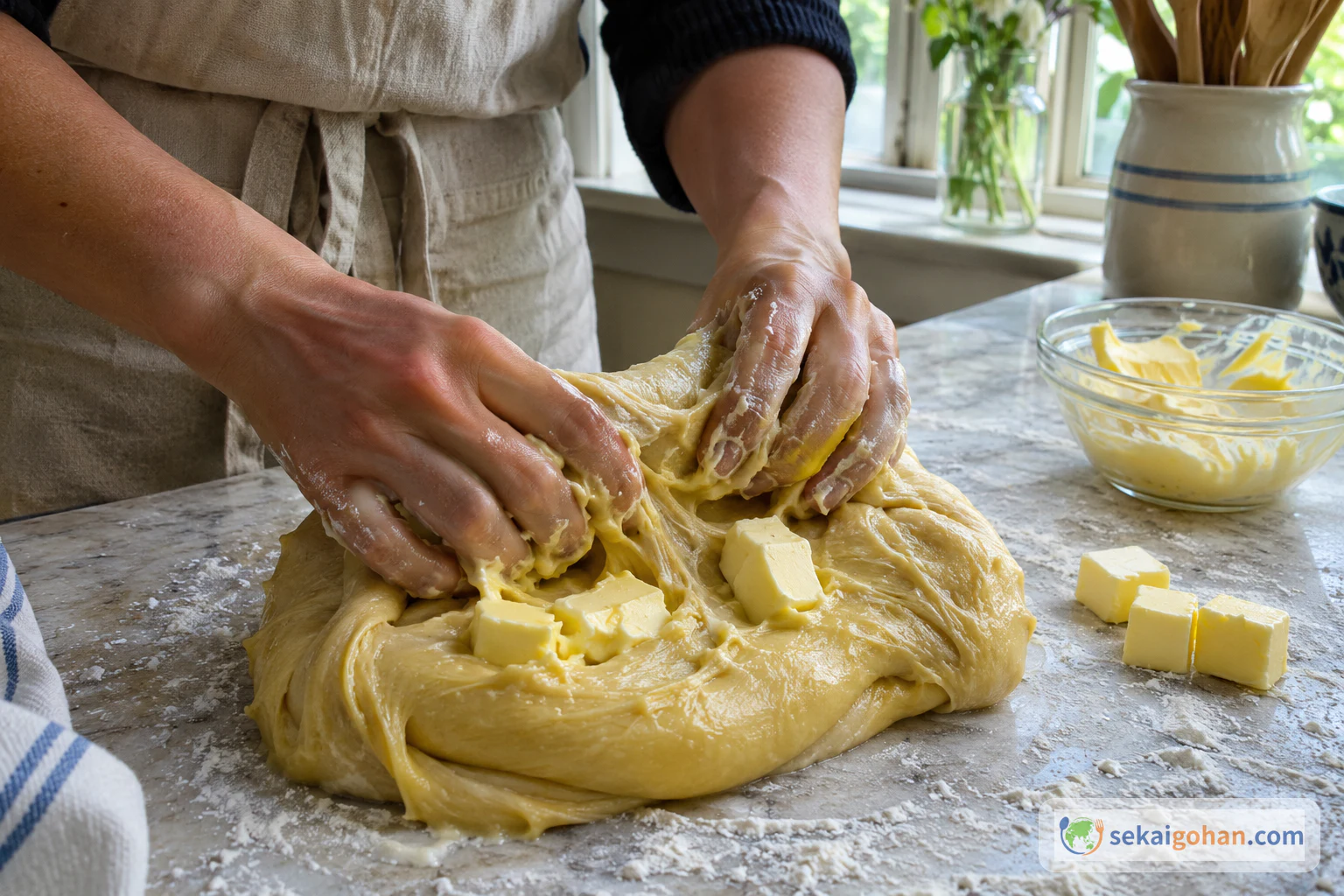
Take the butter out of the fridge the night before. It should give easily under a fingertip without looking oily. Butter softened in a hurry in the microwave melts at the edges and greases the dough instead of mixing into it.
Method
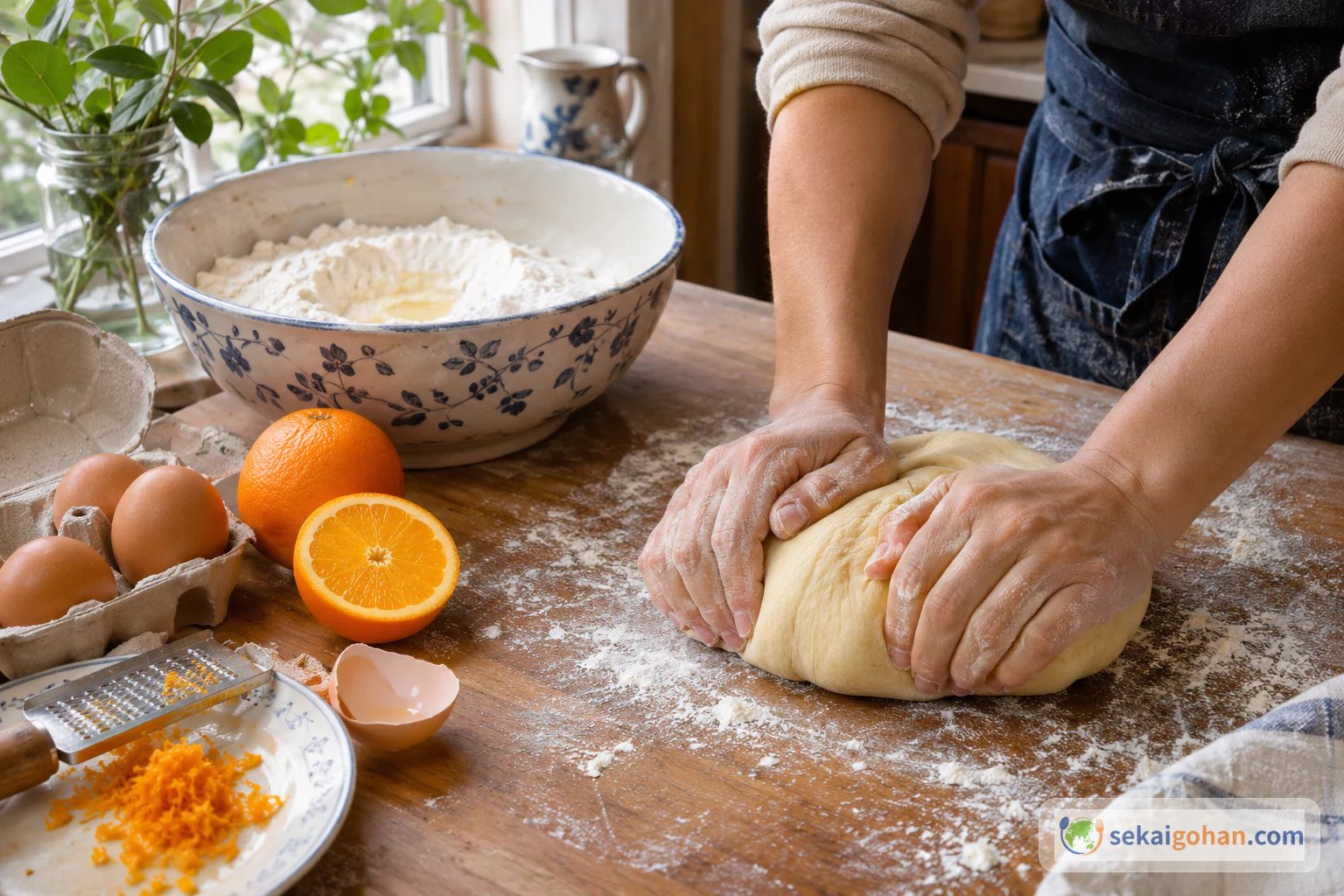
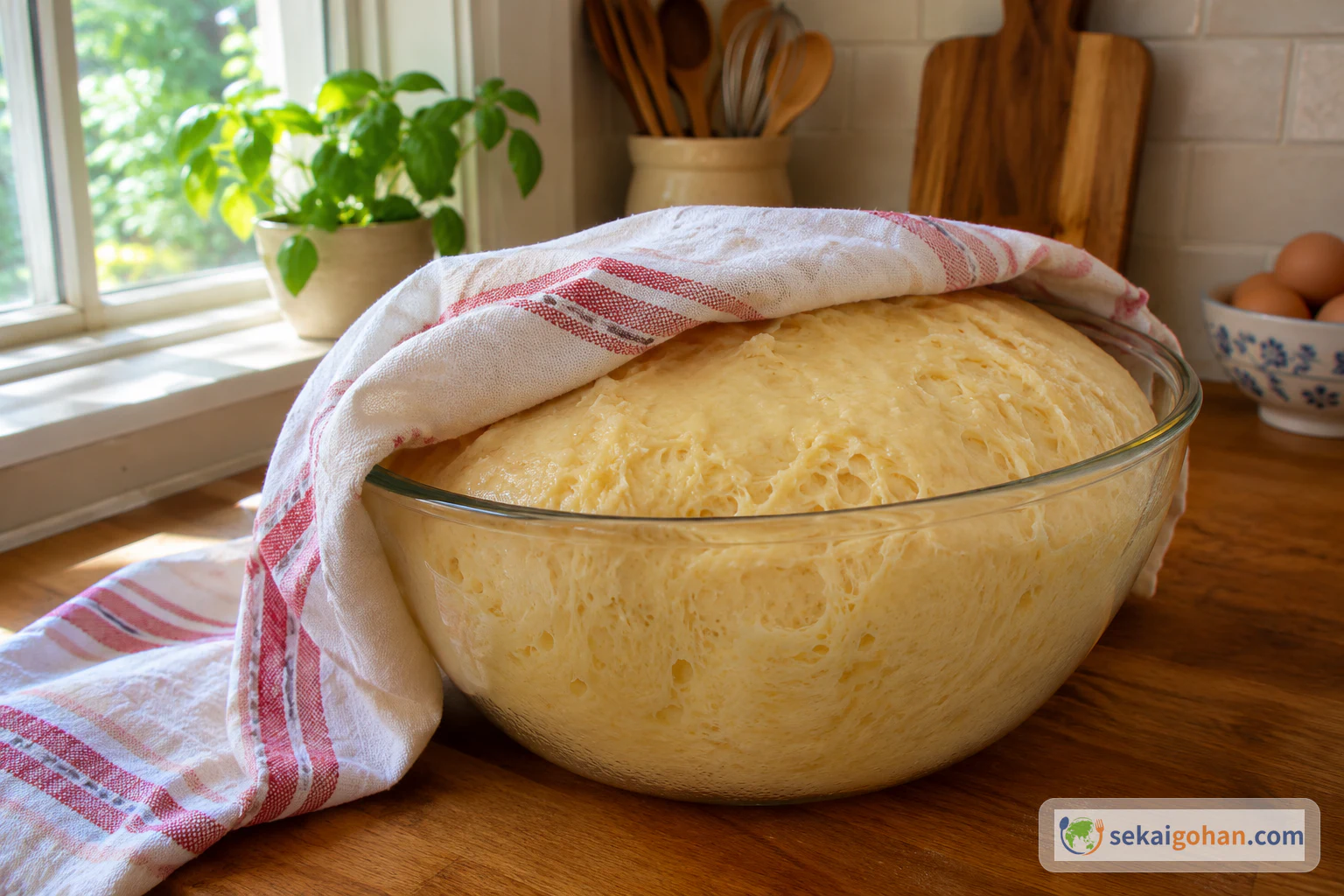
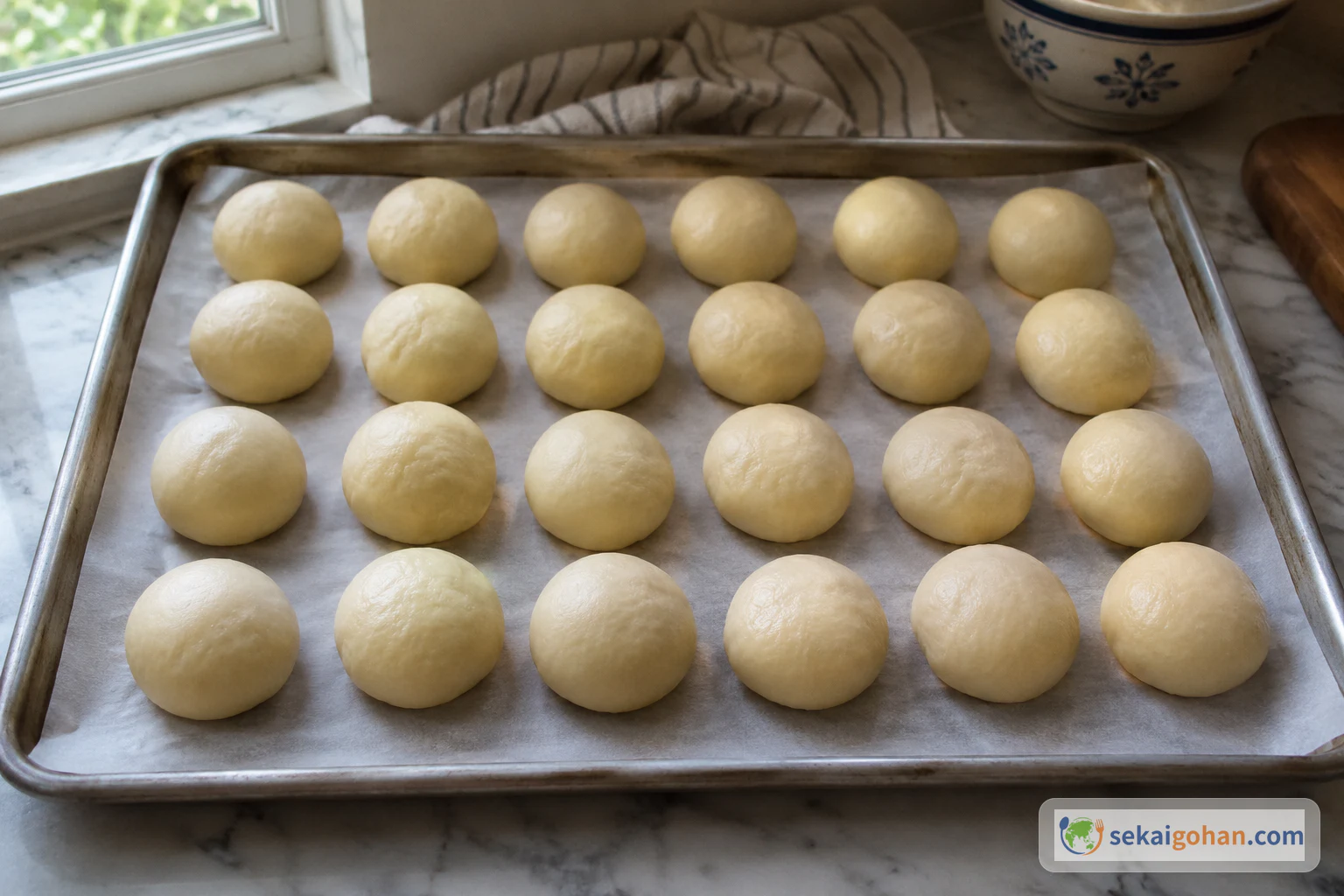
The work comes in two hands-on bursts with waiting in between. First comes the kneading, including working in the butter. The dough then rises for an hour, and after shaping the buns rest for another half hour, which is when the oven heats. Have the butter softened and the eggs beaten before you start, and mix the warm milk in last.
The milk is an approximate amount, and flours absorb liquid differently. Hold back the last splash and add it only if the dough feels stiff. A soft dough that just stops sticking to your hands gives the light, airy crumb.
The trays and buns come out very hot. Use a dry cloth or mitt to turn a bun over for the tap test, and keep your face back when you open the oven to move the almonds.
When It Goes Wrong
| What you see | Why | What to do |
|---|---|---|
| The butter smears, the dough looks greasy and will not come together | The butter was too cold, or partly melted | Keep kneading and add the remaining butter in smaller pieces. Next time soften it overnight at room temperature |
| The dough is stiff and tears when kneaded | Too little milk for your flour | Work in warm milk a spoonful at a time until the dough turns soft and stretchy |
| The dough has barely grown after an hour | The spot is too cool or drafty | Move the bowl somewhere warmer and wait until it has doubled |
| The almonds have slid off the buns | They shift as the dough rises in the oven | Push them back when you lower the heat, and press them in more firmly next time |
| The tops are pale, or the bottom sounds dull | Underbaked | Return the buns to the oven at 350°F (180°C) for a few minutes and tap again |
Serving and Variations
At the table
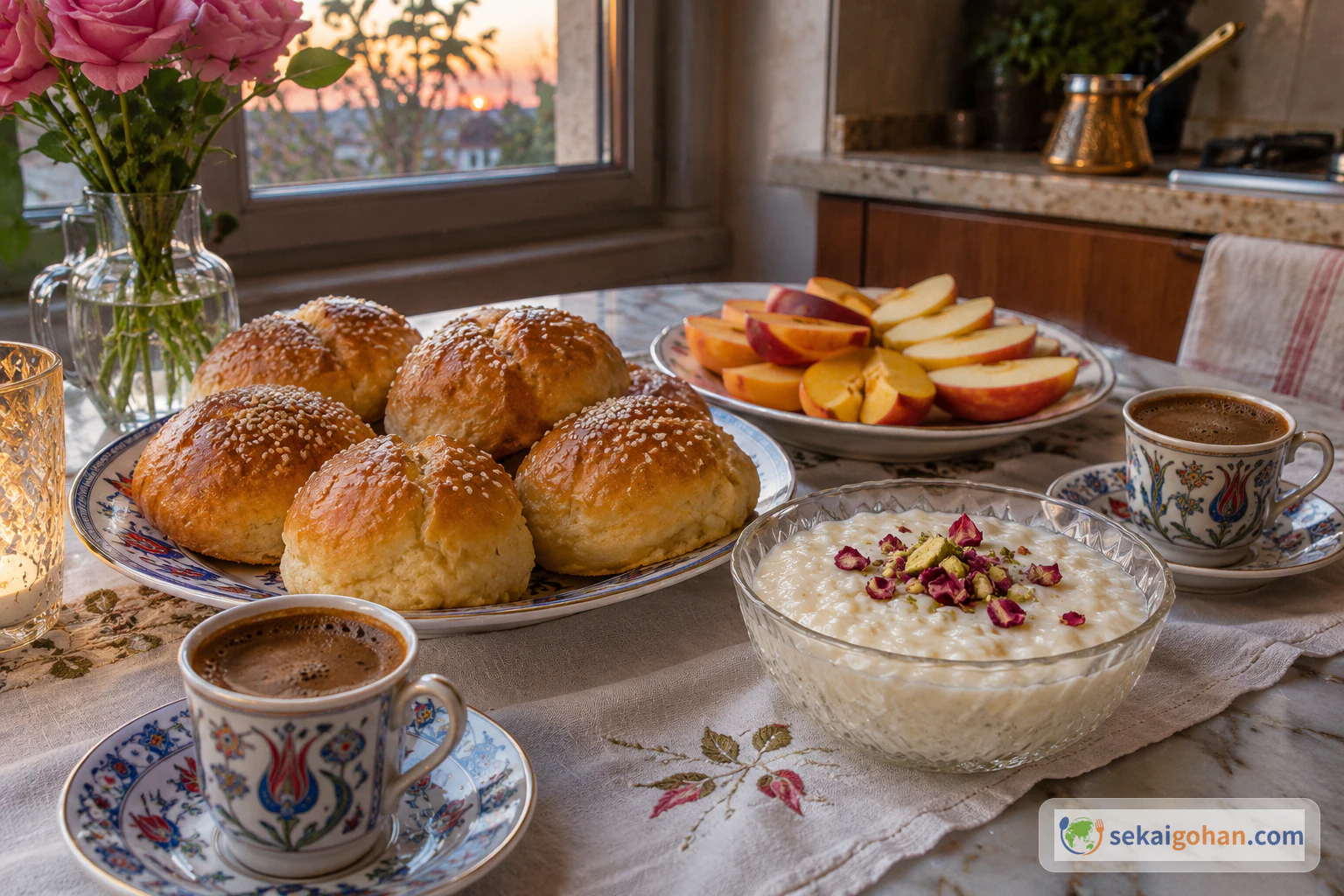
Serve chrik as it would come out in Constantine, after the main meal. Set out a bowl of m'halbi, a plate of sliced apples or peaches or whatever fruit is in season, and small cups of Turkish coffee or glasses of mint tea. Fruit salad, juice or soda fit in just as well. People tear the buns open and eat them between spoonfuls of the cool pudding. During Ramadan, the same spread suits the late sah'raa or the suhour before dawn.
Variations
- Whole wheat and semolina: Use the grain mix from the ingredient table. The buns come out denser and nuttier, with a little grain in the crumb.
- Date sugar or honey: Date sugar gives a darker, caramel-like sweetness and a deeper crust. Honey makes a moister crumb with its own floral note.
- No almonds: Top with sesame alone. The buns look plainer, and this also leaves out the tree nuts.
- Other shapes: Chrik can be shaped as you like. An oil-based version made in a bread machine also exists, but it uses its own recipe and should not be mixed with this dough.
The 24 buns bake evenly only if they are the same size. Weigh the whole dough, divide by 24, and weigh each piece as you go. Small buns at the edge of the tray brown first and dry out.
Frequently asked questions
How is chrik different from French brioche?
Chrik is lighter and less rich. It has less butter in the crumb and gets its character from orange blossom water, orange zest, nigella and a sesame crust, not from a deep butter flavour. The buns are also small and made to share at the end of a meal.
Can I make the dough in a stand mixer?
Yes. Use the dough hook for the kneading, adding the soft butter a couple of cubes at a time and working each addition in fully before the next. Then rise, shape and bake as in the steps.
Can I bake fewer buns?
Yes. Halve every ingredient, using one egg in the dough, and shape 12 buns. Keep them the size of a mandarin so the baking times and the hollow-sound test still work.
Is chrik eaten for breakfast?
In Algeria it is usually served after a large meal, at celebrations or during the long evenings of Ramadan, with pudding, fruit and coffee or tea. Its gentle sweetness also goes well with a morning coffee, so eat it whenever suits your table.