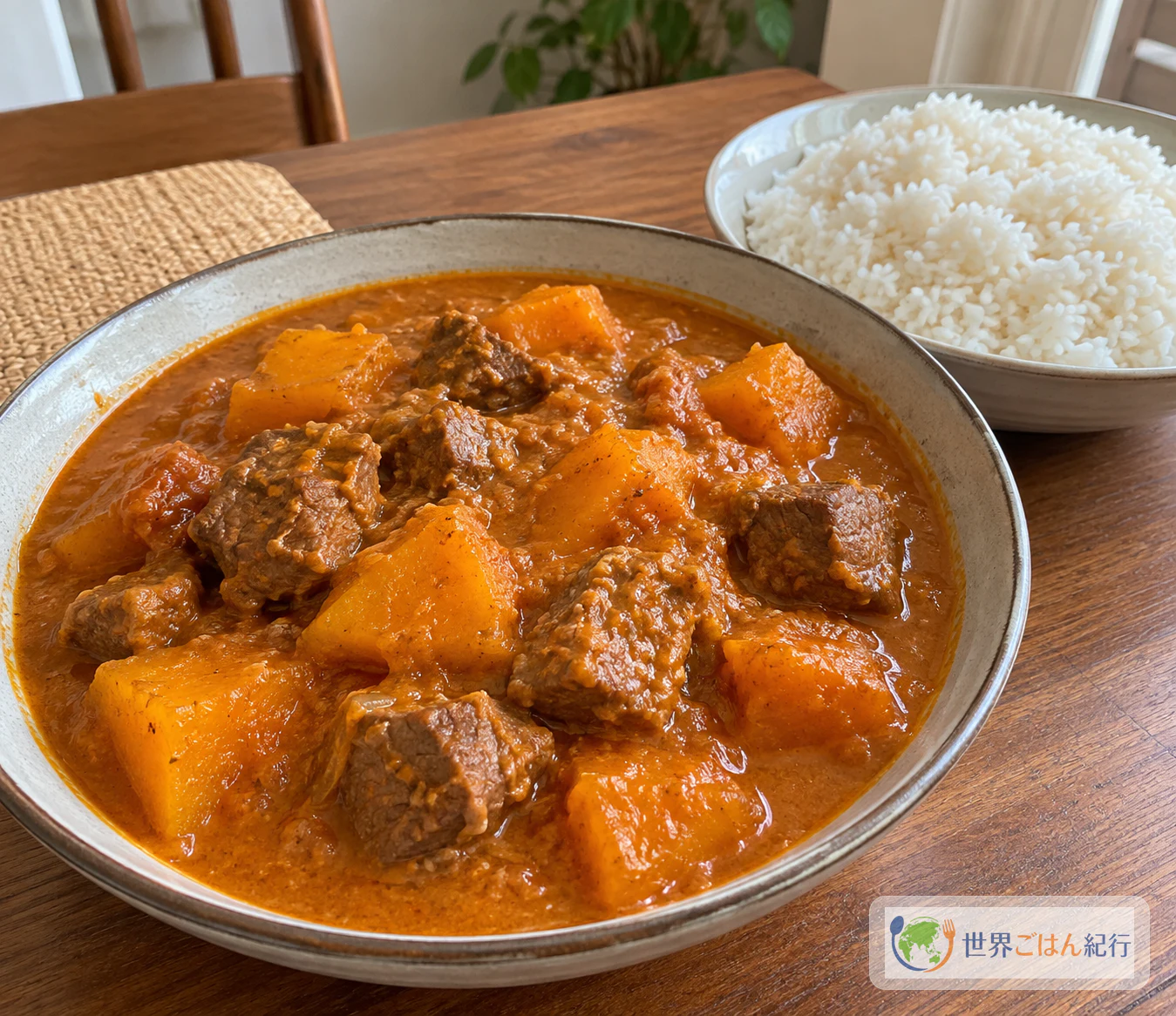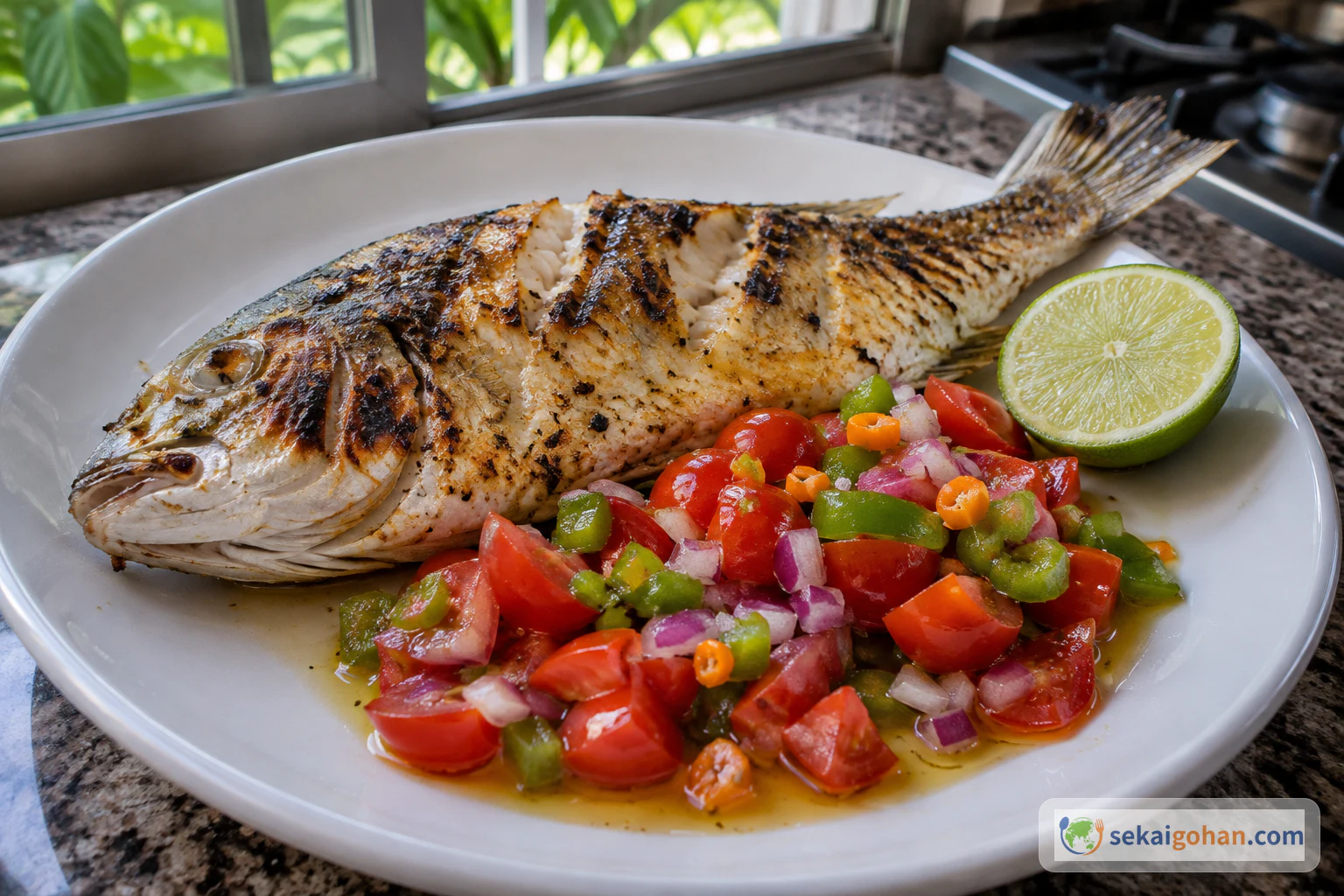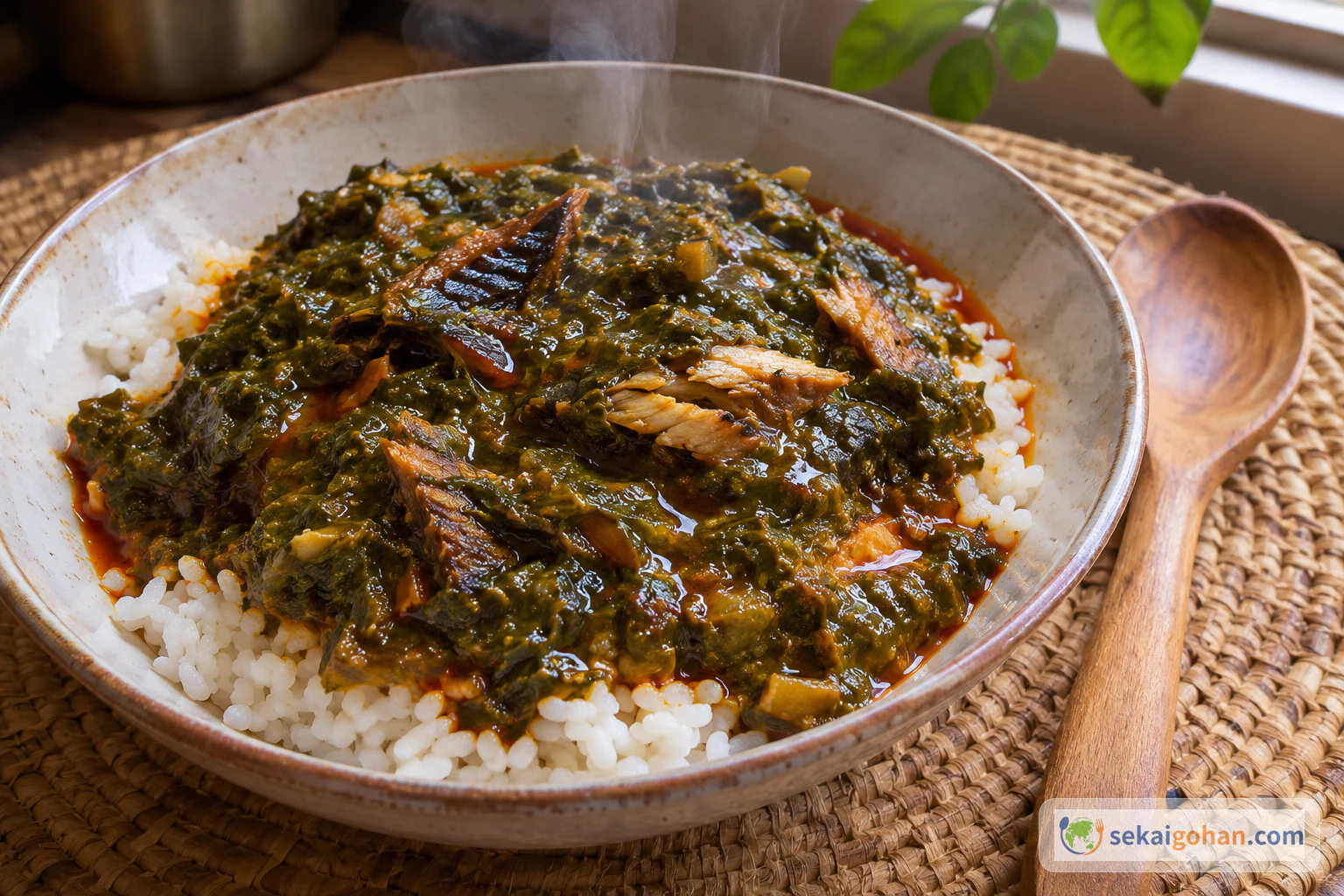
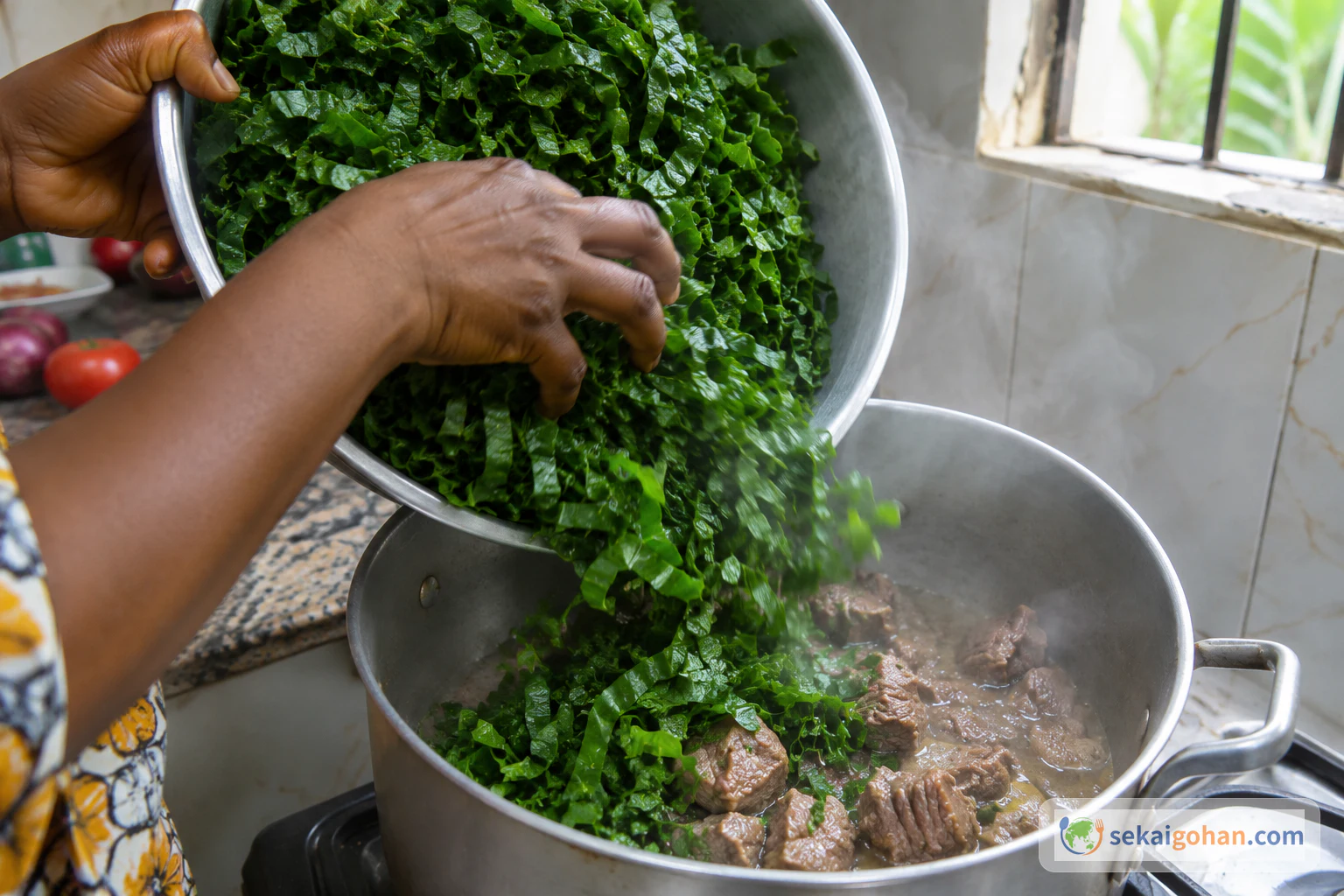
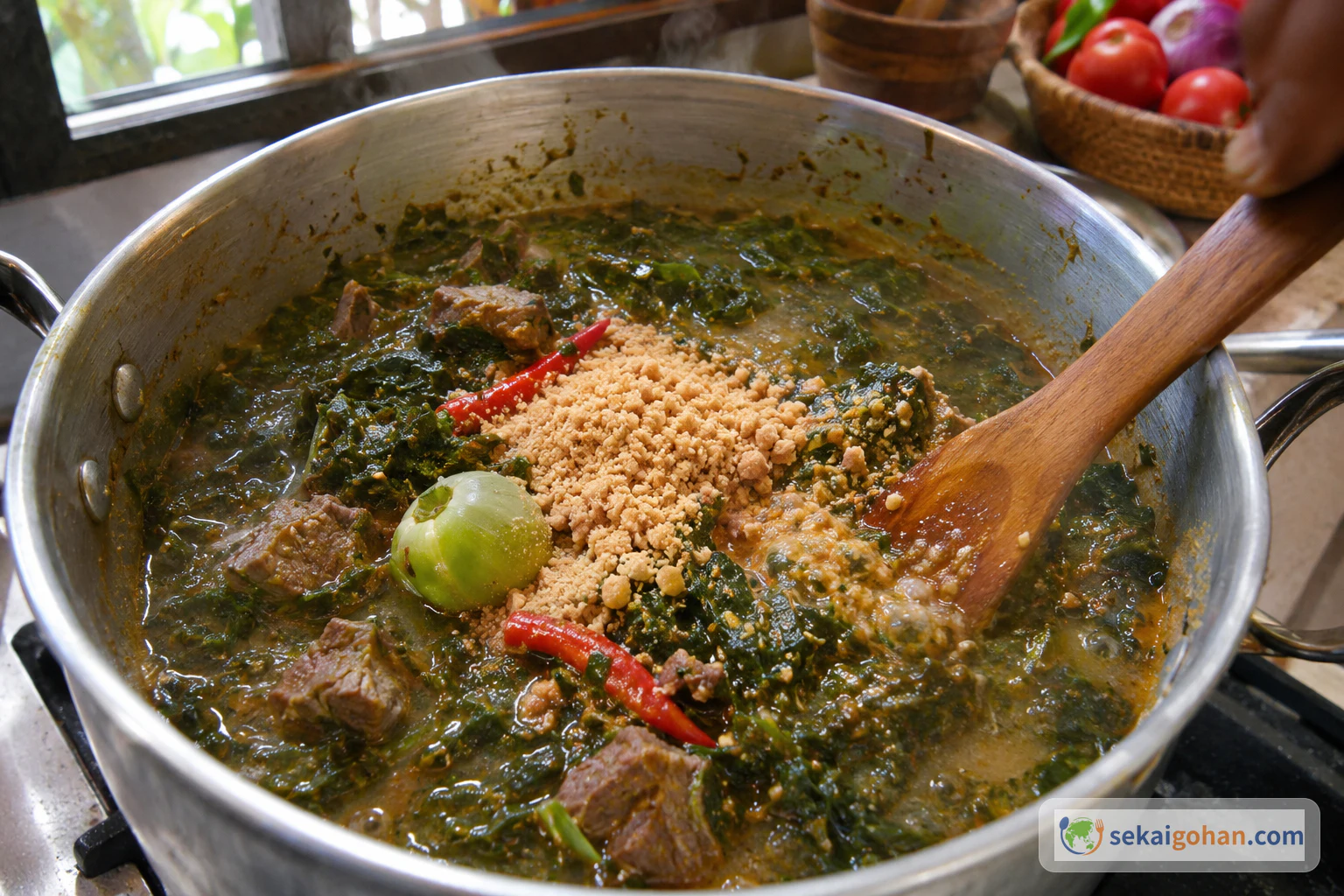
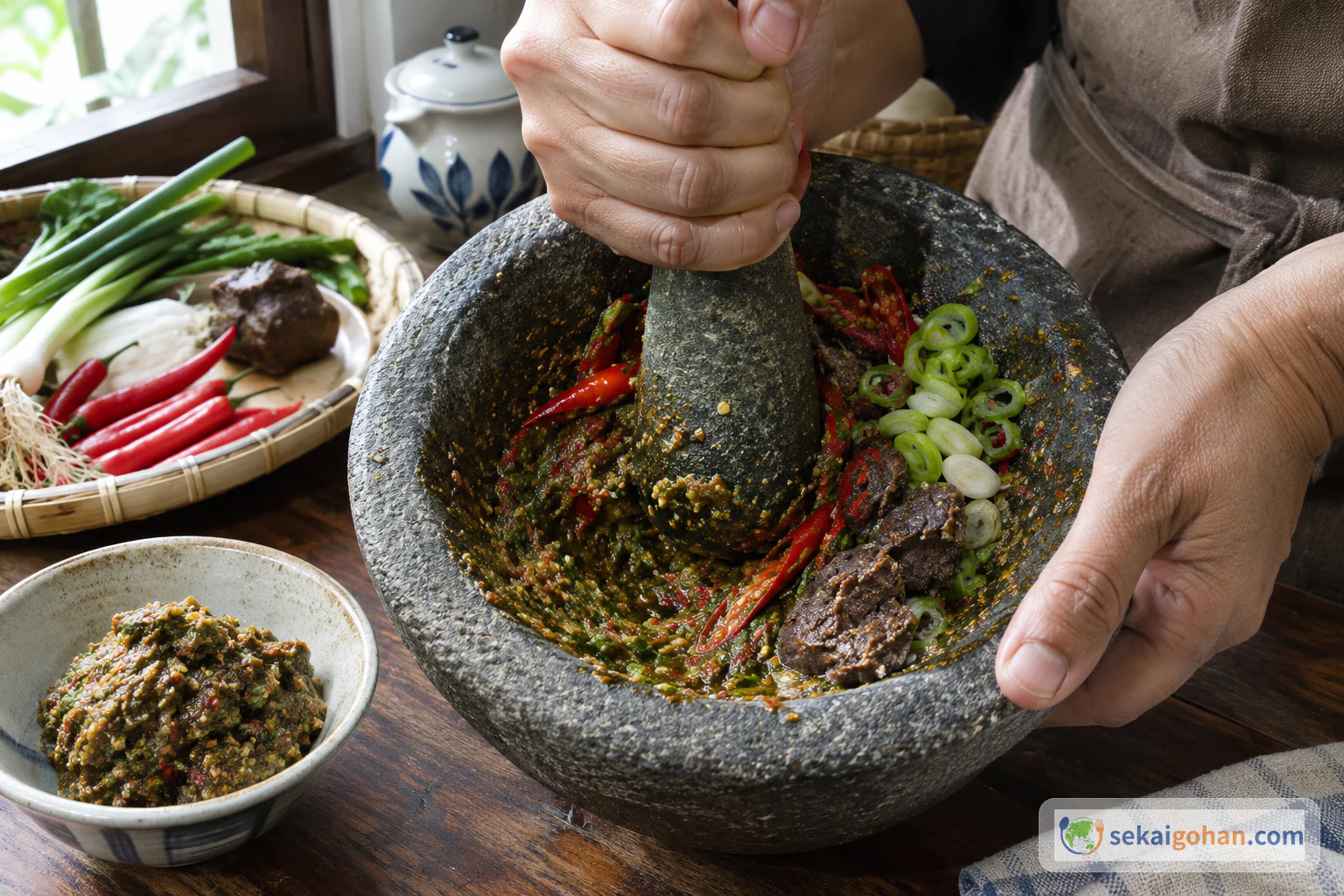
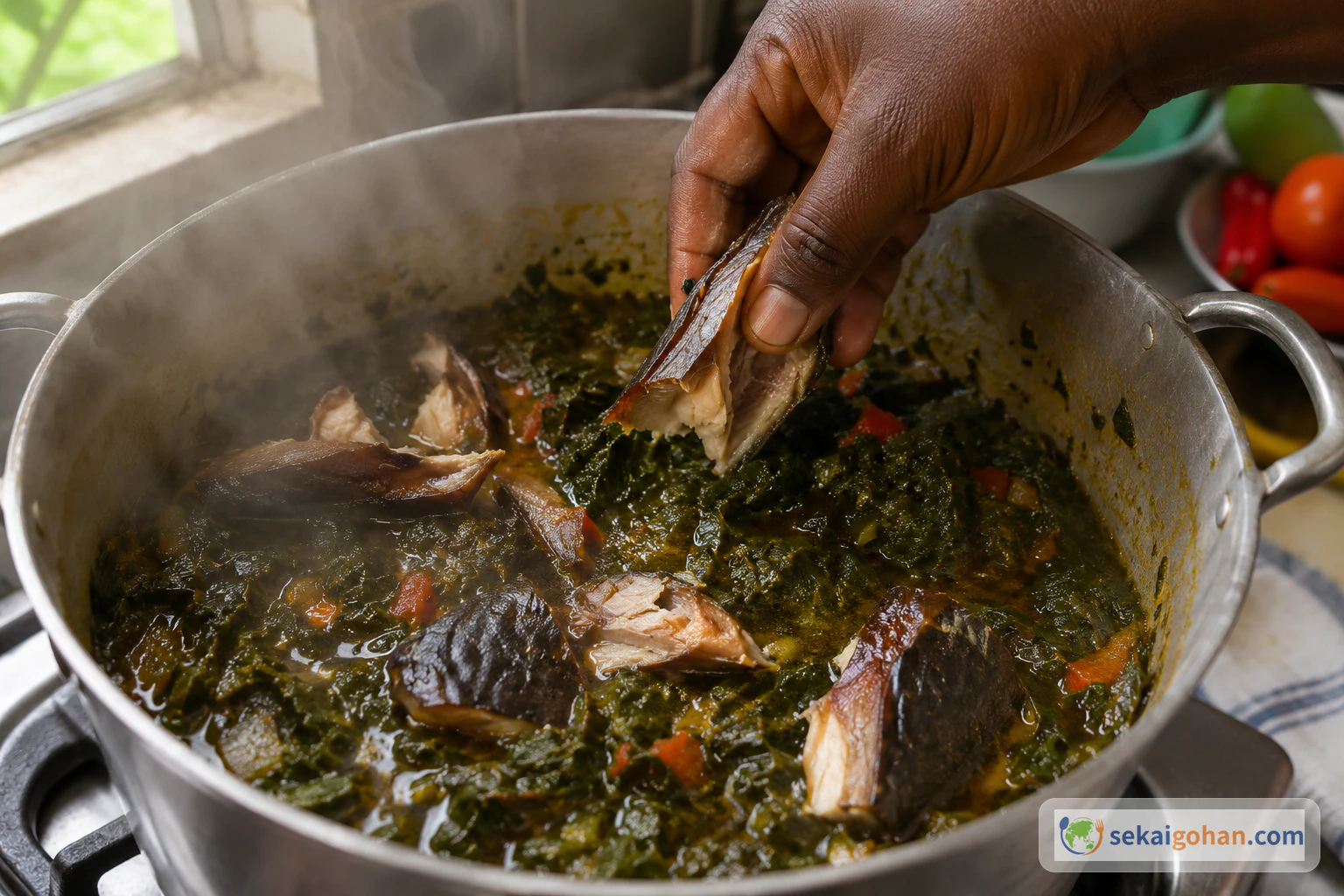
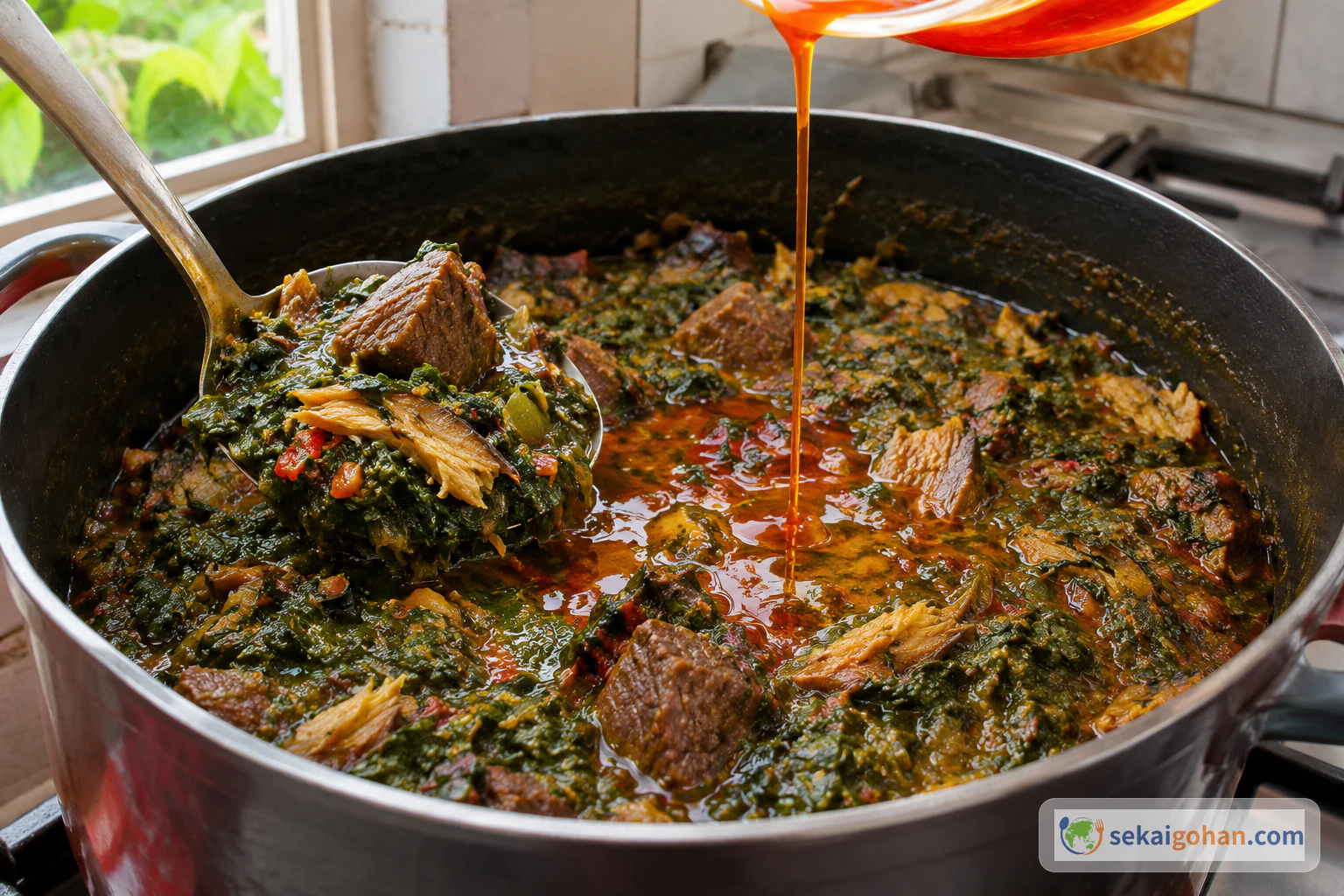
The moment that matters comes late. The pot of chopped leaves has cooked down, the water is almost gone, and a pounded paste of hot pepper, locust beans and spring onion goes in, followed a few minutes later by a pour of red palm oil that spreads across the dark green like a sunset. Spooned over white rice, plasas is thick, savory and smoky, with peanut holding the leaves together, a fermented depth underneath, and a bitter edge from a small local fruit that ordinary tomatoes cannot imitate. In The Gambia it is everyday food and celebration food at once, and it is one of the dishes people name first when they talk about Gambian cooking.
A Pot of Leaves for Every Day and Every Ceremony
In The Gambia, plasas is cooked in many ways, but the two leaves that come up first are potato leaves and cassava leaves. Potato leaves here means the leaves of the sweet potato plant. Its stems and leaves are eaten along with the tubers, and in The Gambia they very often go into plasas. Other cooks use greens, cassava or wild leaves, and jute leaves sometimes go into the pot as well. Some households mix as many as seven kinds of leaves in one pot. Meat and fish change with the household too: plasas is cooked with meat, with fish, or with neither.
The dish turns up at weddings, meetings, naming ceremonies, important events and special days, alongside the everyday bowl over rice. Among the Aku, the Creole community of The Gambia, plasas is served with fufu at ceremonies. Rice or fufu is the usual partner.
Sweet potato goes by different names across the country: patat in Wolof, patato in Mandinka and pute in Fula. The bitter tomato that goes into plasas is called jahatu in Wolof. It is sold in markets across The Gambia, is plentiful in the dry season, and also appears beside or inside many other traditional dishes.
How it sits among its neighbours
Plasas is often compared to supakanja, the Gambian okra stew cooked in palm oil, which can also hold smoked fish and beef. Plasas follows the same palm-oil path but is built on leaves, spinach or sweet potato leaves rather than okra, although some older household versions add okra too. Across West Africa, sweet potato leaves are one of the greens cooked under the general name plasas.
The closest cousin on this site is the cassava leaf stew of Sierra Leone, where cassava leaves, beef and peanut carry the pot. The Gambian sweet potato leaf version differs in its leaves, in its flavorings (locust beans and bitter tomato), in the meat being steamed first, and in smoked stingray joining the smoked fish. If leaf stews become a habit, Ghana's kontomire stew and Mozambique's matapa make good next pots. For more dishes from the country, see Gambian food.
Ingredients
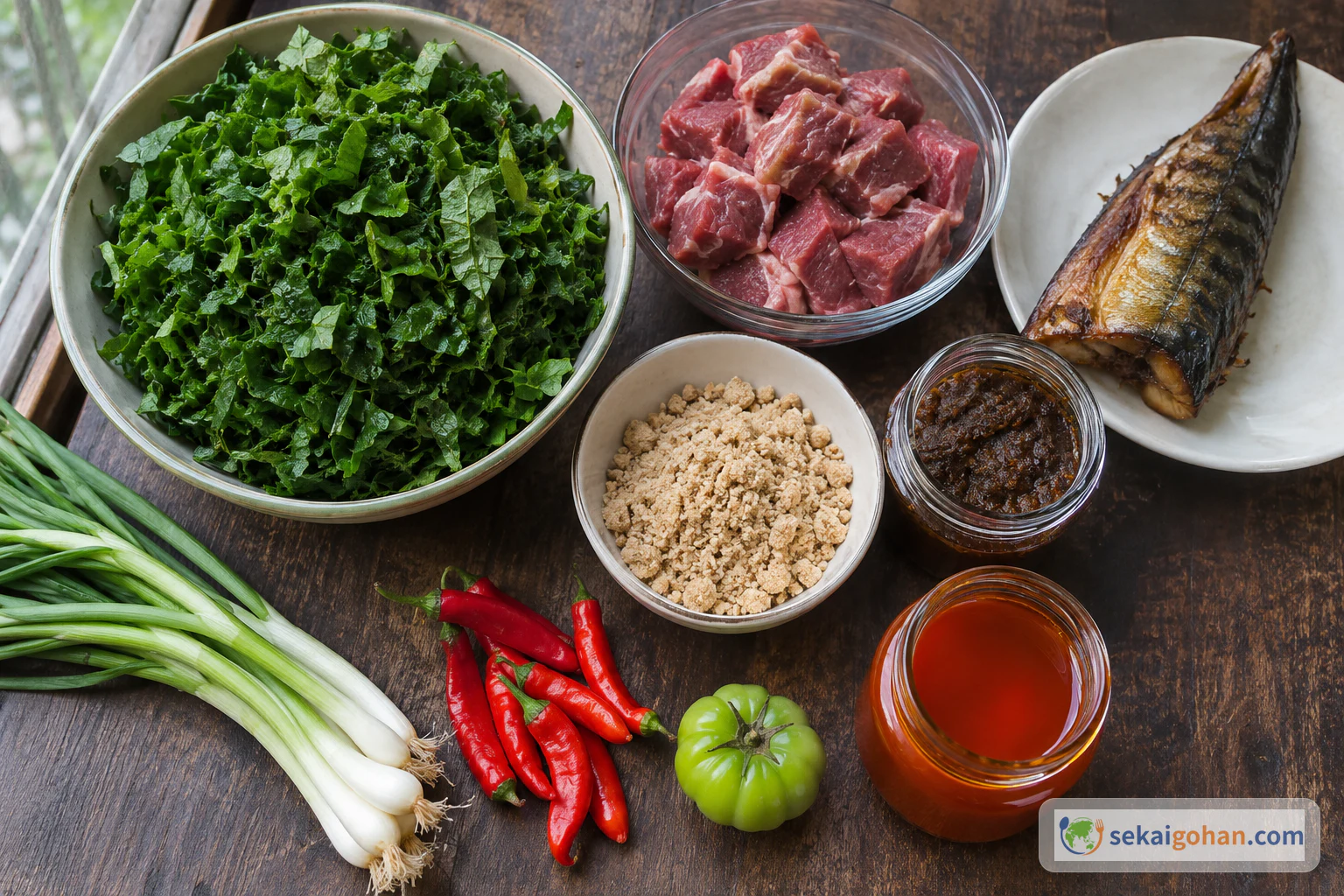
This dish contains peanut, a major allergen, and fish (smoked fish and smoked stingray). Fermented seasonings such as locust beans or ogiri and seasoning cubes are processed products: read their labels for allergens before buying.
Equipment
- Large heavy pot with a lid
- Mortar and pestle (a blender works too)
- Knife and cutting board
- Large bowl and colander for washing the leaves
- Wooden spoon
- Small bowl for loosening the peanut powder
Choosing and Substituting Outside The Gambia
The leaves come first. Look for sweet potato leaves sold as food; they may be labelled simply as potato leaves. Buy only leaves sold as food. When you cannot find them, spinach is the swap that works: it tastes milder, with a softer texture in the finished pot.
"Potato leaves" in West African cooking means the leaves of the sweet potato plant. Some other plants also called potato leaves are not edible and may be poisonous. Do not use unlabelled leaves, leaves taken from a garden, or foraged plants. Use a labelled food product or swap in spinach.
Red palm oil is the one ingredient to keep. Every Gambian version of plasas cooks with it, and without it the stew loses both its orange-red gloss and its rich, slightly earthy aroma. Look for a bottle labelled red palm oil and sold for cooking.
For peanut, buy unsweetened peanut powder. Unsweetened peanut butter is a workable swap and gives a slightly smoother, heavier sauce; avoid anything with sugar or honey, which pulls the pot toward sweet. Smoked stingray is hard to find abroad; smoked mackerel sold for eating brings the smoke and salt, though with a fattier, softer flake. Beef in bite-size pieces is an easy choice for the meat.
Locust beans and ogiri are fermented seasonings, and both are bought ready-made. Ogiri is made from fermented sesame seeds and has a savory, miso-like depth, so a store-bought jar fills the same place when locust beans are missing. Bitter tomato is a different fruit from the tomato in your salad. Where you cannot find it, leave it out; an ordinary tomato adds sweetness and acidity, not the bitter note the dish wants. Hot pepper can be any fresh chili; in The Gambia small hot peppers, sometimes called kanni, are common.
Method
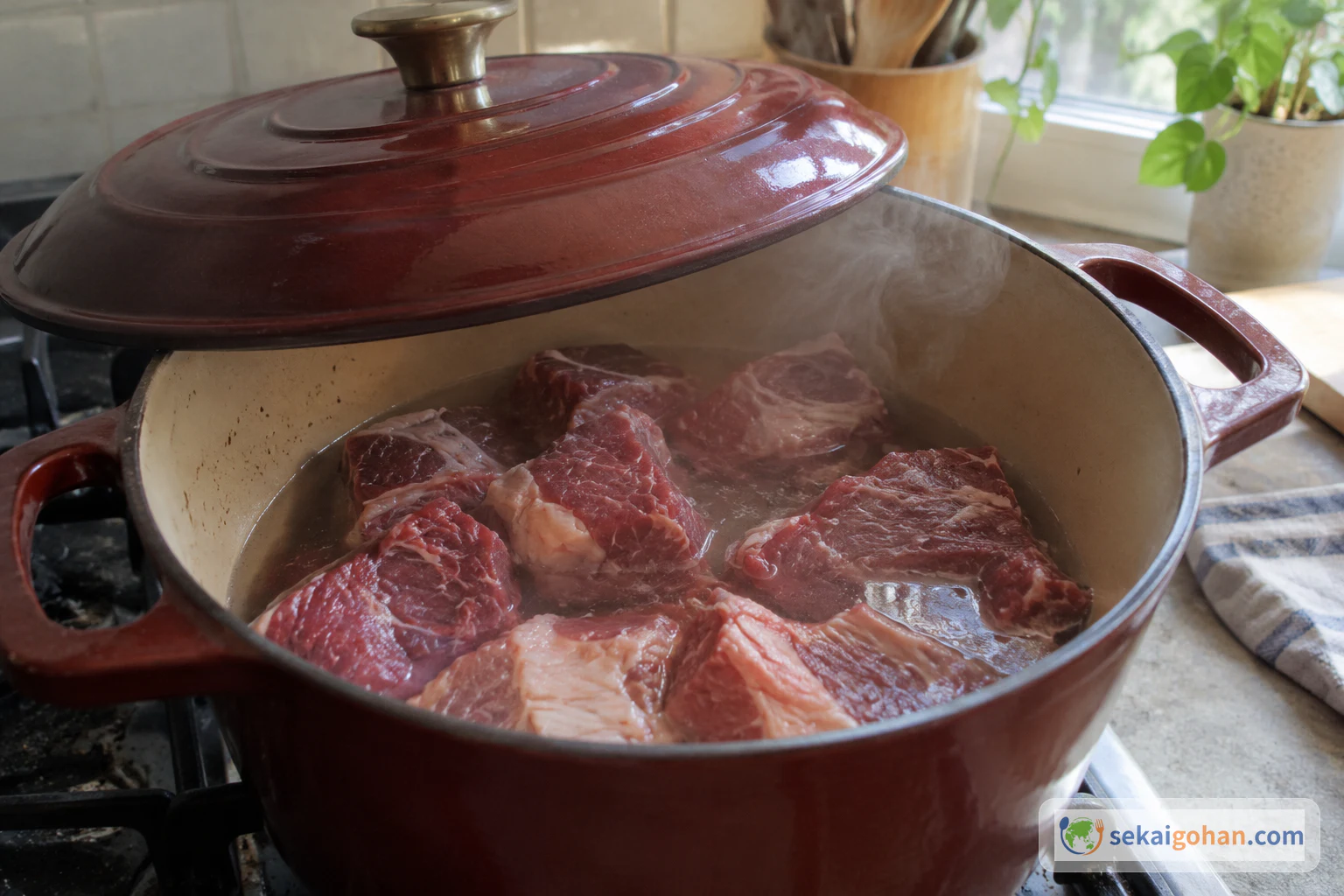
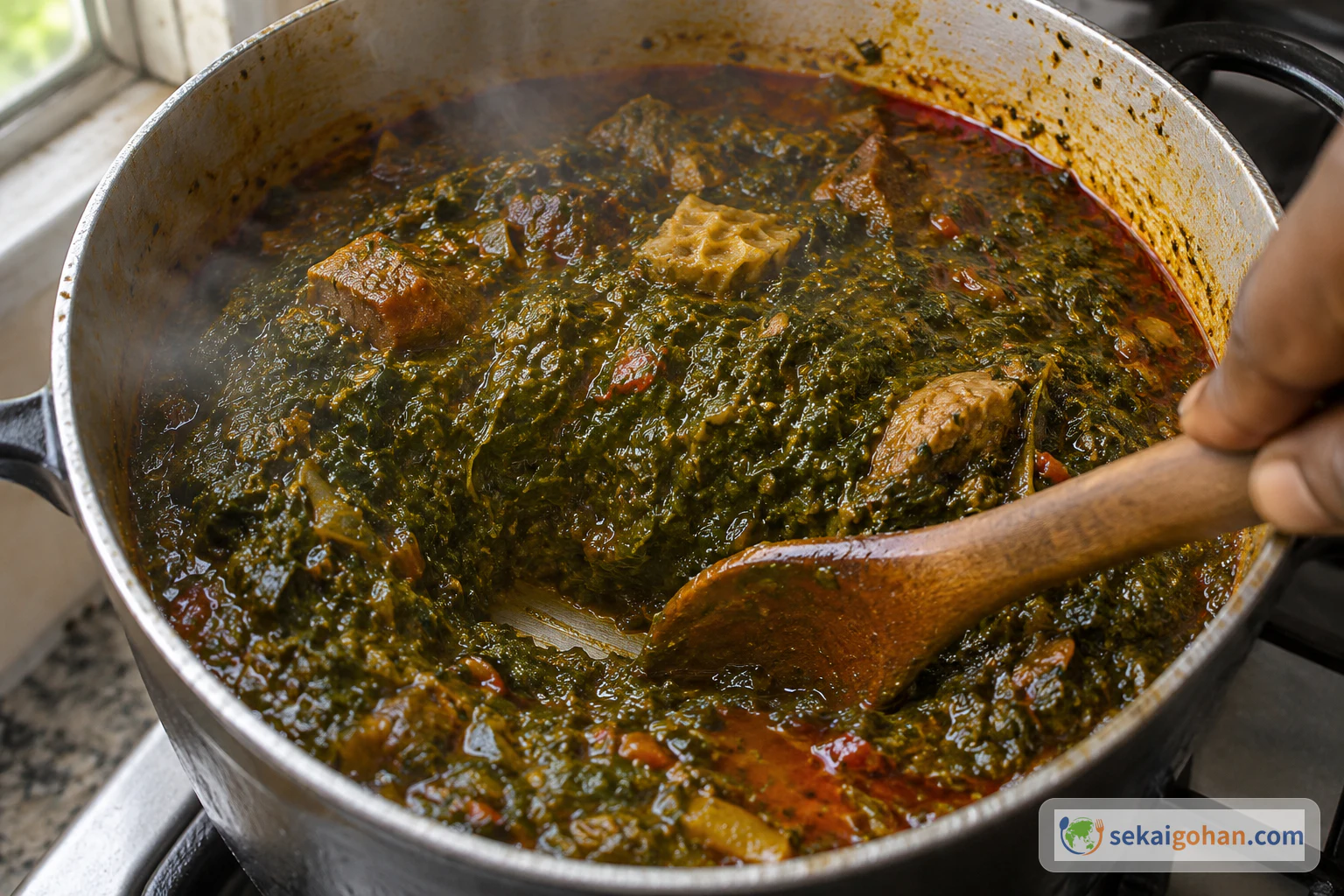
The meat goes on first and keeps steaming while you chop and wash the leaves, so the pot is never idle. Everything after that happens in the same pot. The one stretch of hands-off time is while the leaves simmer: use it to pound the paste of pepper, locust beans and spring onion. Watch for the moment the water has cooked away, because that is the signal for the paste, and then for the palm oil a few minutes later.
When It Goes Wrong
| What you see | Why | What to do |
|---|---|---|
| Floury lumps in the sauce | Peanut powder went in dry | Press the lumps against the side of the pot with the spoon and stir; next time loosen the powder in hot pot liquid first |
| The sauce stays thin and runny | The paste and oil went in before the water evaporated | Keep the pot cooking, stirring from the bottom, until the spoon line closes slowly |
| Too salty | Smoked fish, stingray and seasoning cube together carry a lot of salt | Add more chopped leaves and a little water and cook them down; next time salt only after tasting at the finish |
| Flat, dull flavor | Too little fermented seasoning, or not enough seasoning at the finish | Pound a little more locust bean with spring onion and stir it in, then taste and adjust with salt |
| Too hot for some eaters | Hot pepper goes in twice, at step 4 and in the paste | Before step 7, lift out a portion for milder eaters and finish it separately with palm oil and fish |
The two cues to trust are the ones you can see: the water gone before the paste, and the slow-closing line on the bottom of the pot before you serve.
Serving, Variations and Storage
At the table
Plasas goes over white rice, spooned on generously so the red oil runs into the grains. On ceremony days, at weddings and naming ceremonies, it shares the table with other dishes made in large pots. For an Aku-style table, serve it with fufu, pulling off a piece of fufu to scoop up the leaves and sauce.
Variations
- Mixed leaves. Combine sweet potato leaves with other edible greens such as spinach, or add jute leaves. The flavor becomes layered and the texture less uniform, some leaves soft, some with more bite.
- Without meat or fish. Leave out the meat, smoked fish and stingray and rely on peanut, palm oil and the pounded paste. The stew turns lighter and greener tasting, and the locust beans carry the savory depth.
- Bitter tomato on the side. Rather than cooking it in the pot, serve the bitter tomato alongside. Each eater decides how much bitterness to add, and the pot itself tastes rounder.
- A simpler groundnut pot. Soften onion in palm oil, add garlic and green chili, stir in groundnut paste and water to make a sauce, then add cassava leaves or spinach and salt and simmer covered over low heat. With no meat or fish, it is quicker and milder, with peanut at the center.
Storing leftovers
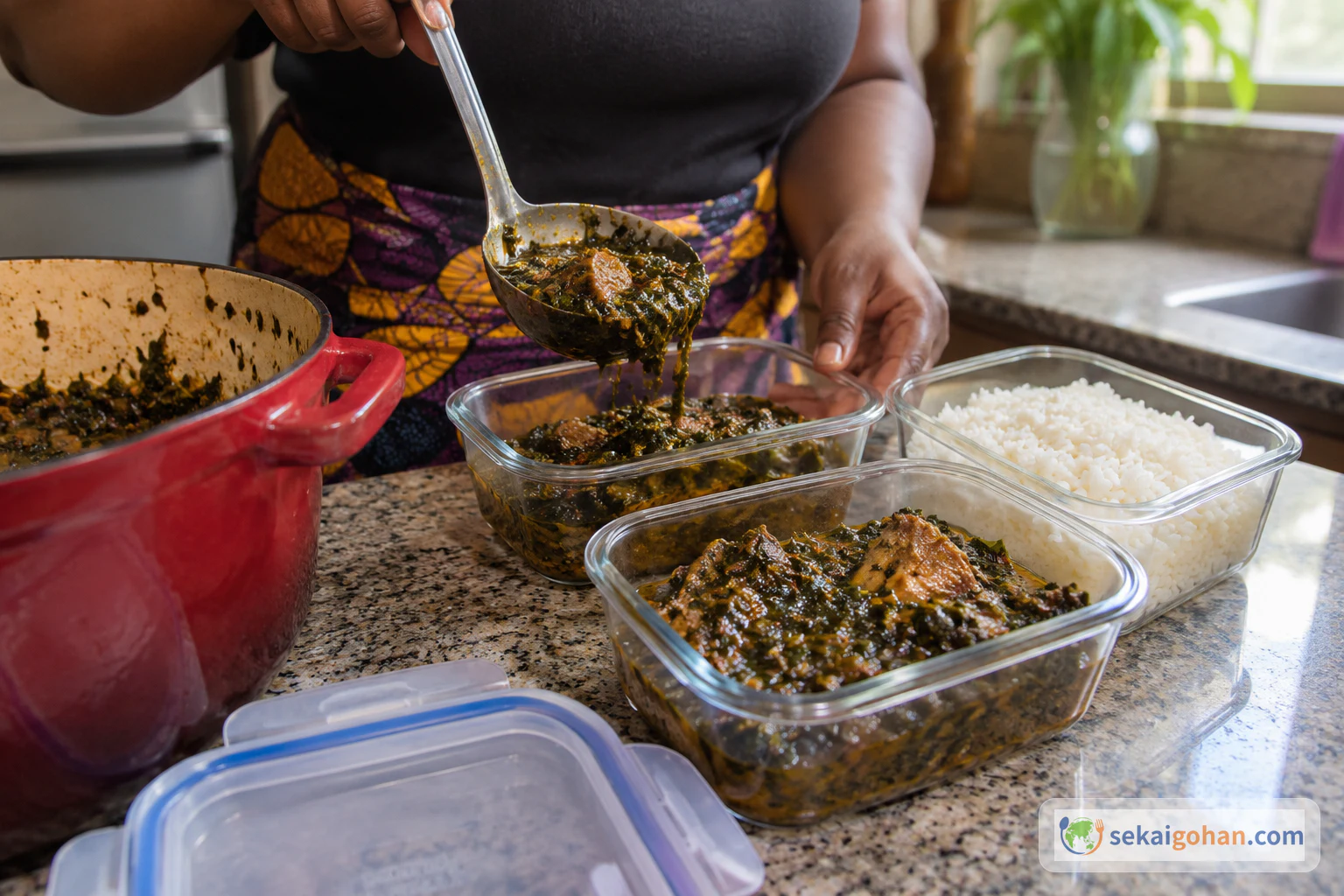
Ladle leftover plasas into shallow containers so it cools quickly, keep any rice in a separate container, cover both, and refrigerate promptly. Reheat only the portion you will eat, stirring, until it is hot all the way through.
Frequently asked questions
Can I leave out the palm oil?
No. Palm oil is part of every Gambian version of plasas. It gives the stew its orange-red color, its aroma and the glossy finish that lets the sauce coat the rice, so the dish without it is a different pot.
Can I use cassava leaves instead of sweet potato leaves?
Yes, and in The Gambia many cooks do. Cassava leaf plasas follows its own method, where the leaves are cooked with peanut and palm oil in a different order. For a pot built on cassava leaves, the Sierra Leone cassava leaf stew is a good guide.
What if I cannot find bitter tomato?
Leave it out and cook the rest as written. The stew loses its bitter edge but keeps its peanut, smoke and fermented depth. An ordinary tomato brings sweetness and acidity instead, which pulls the flavor away from plasas.
Should the pepper paste be smooth or coarse?
Coarse. Pounding until the ingredients have just come together keeps small pieces of spring onion and pepper that give bursts of flavor in the finished stew. A blender works if you pulse it briefly instead of running it to a purée.