
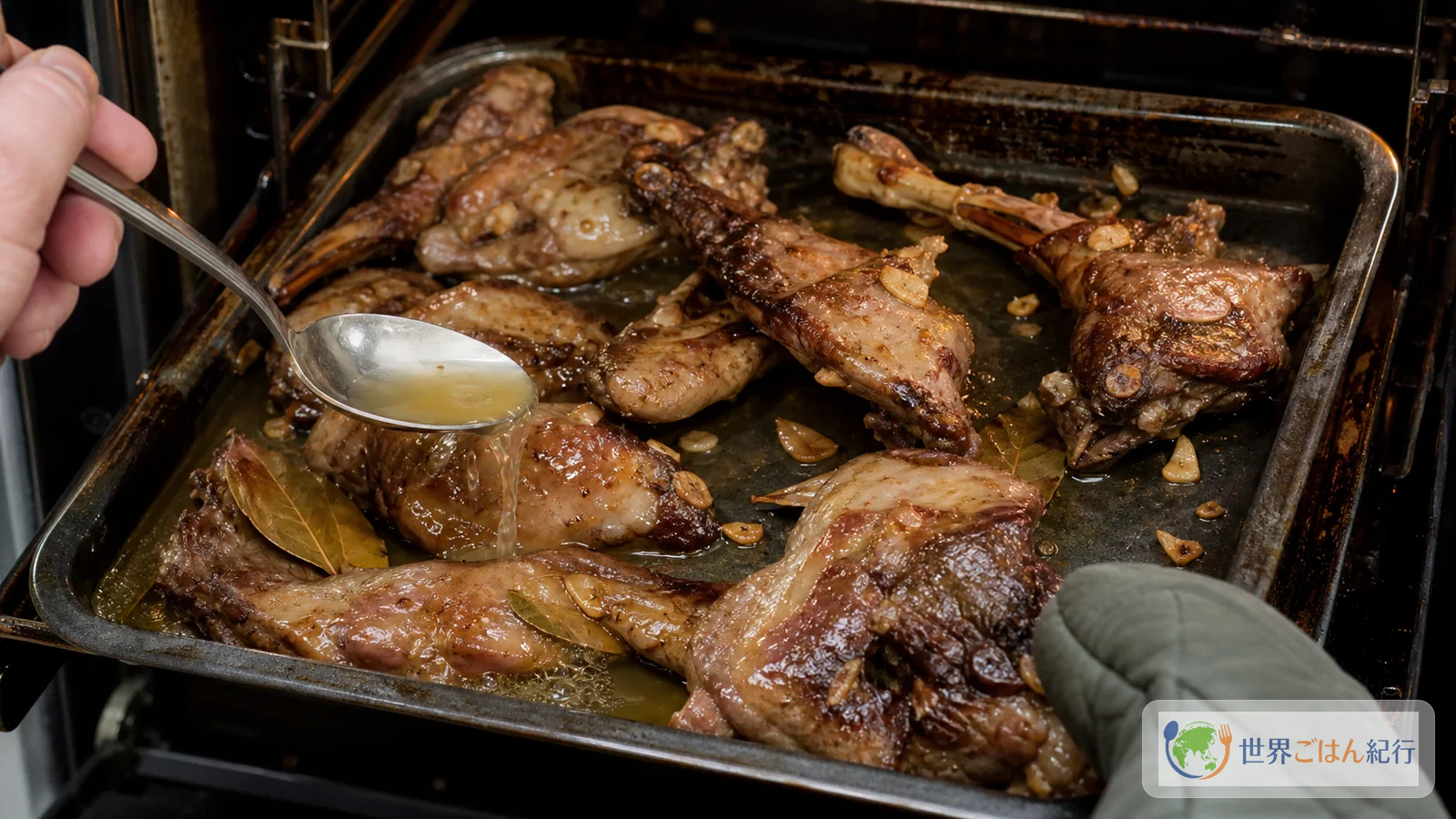
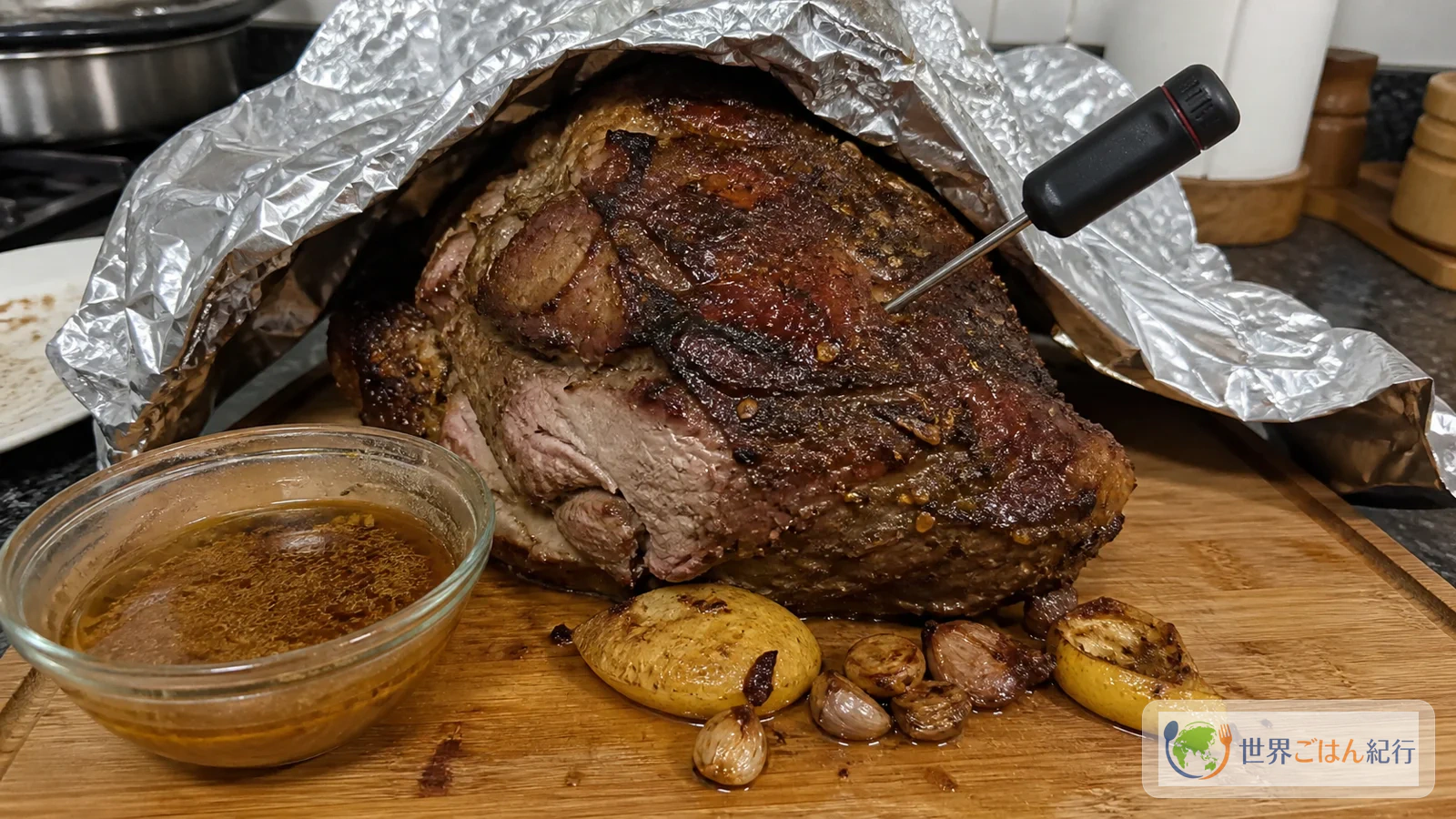
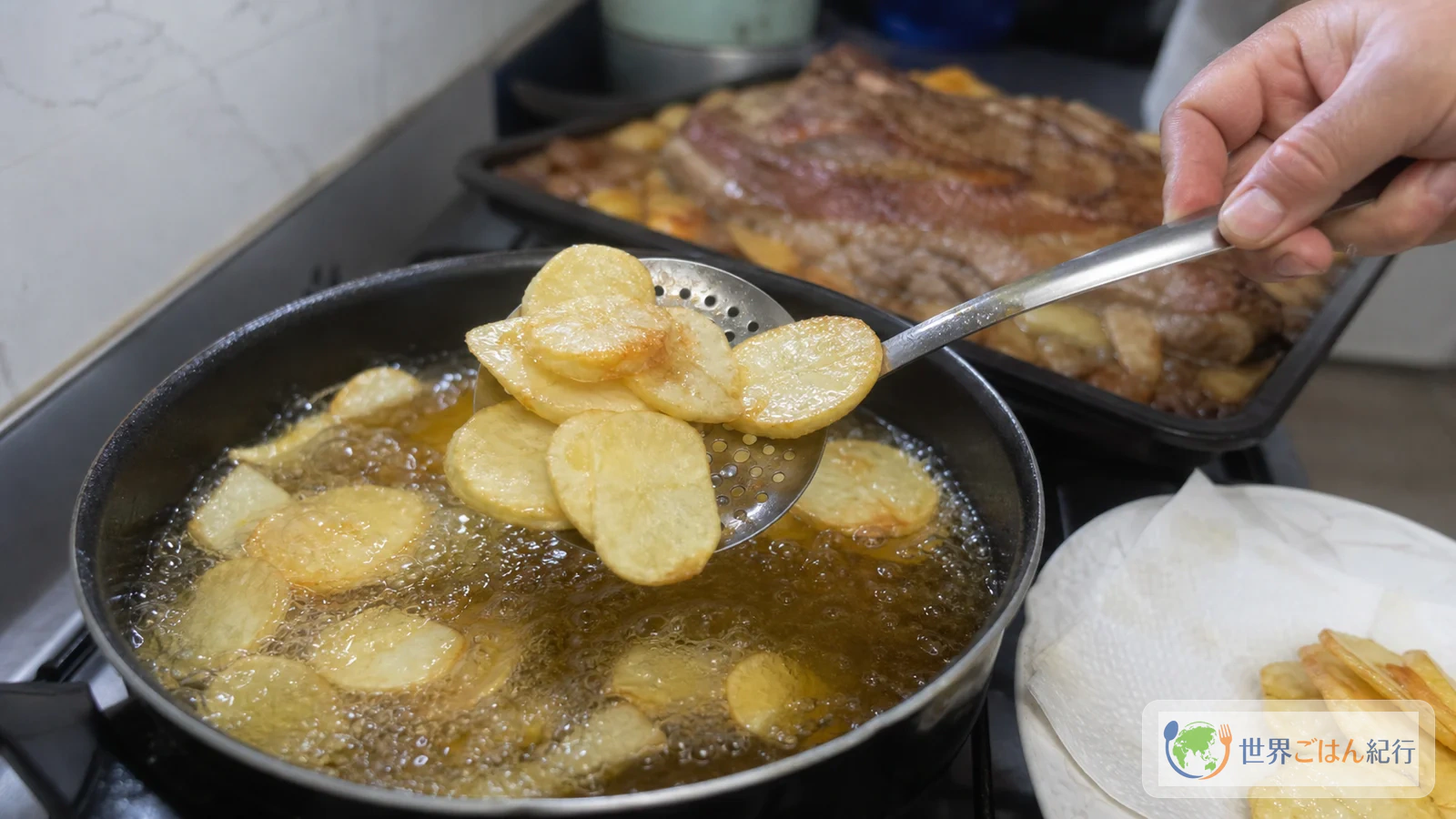
Roasting meat in lemon and white wine
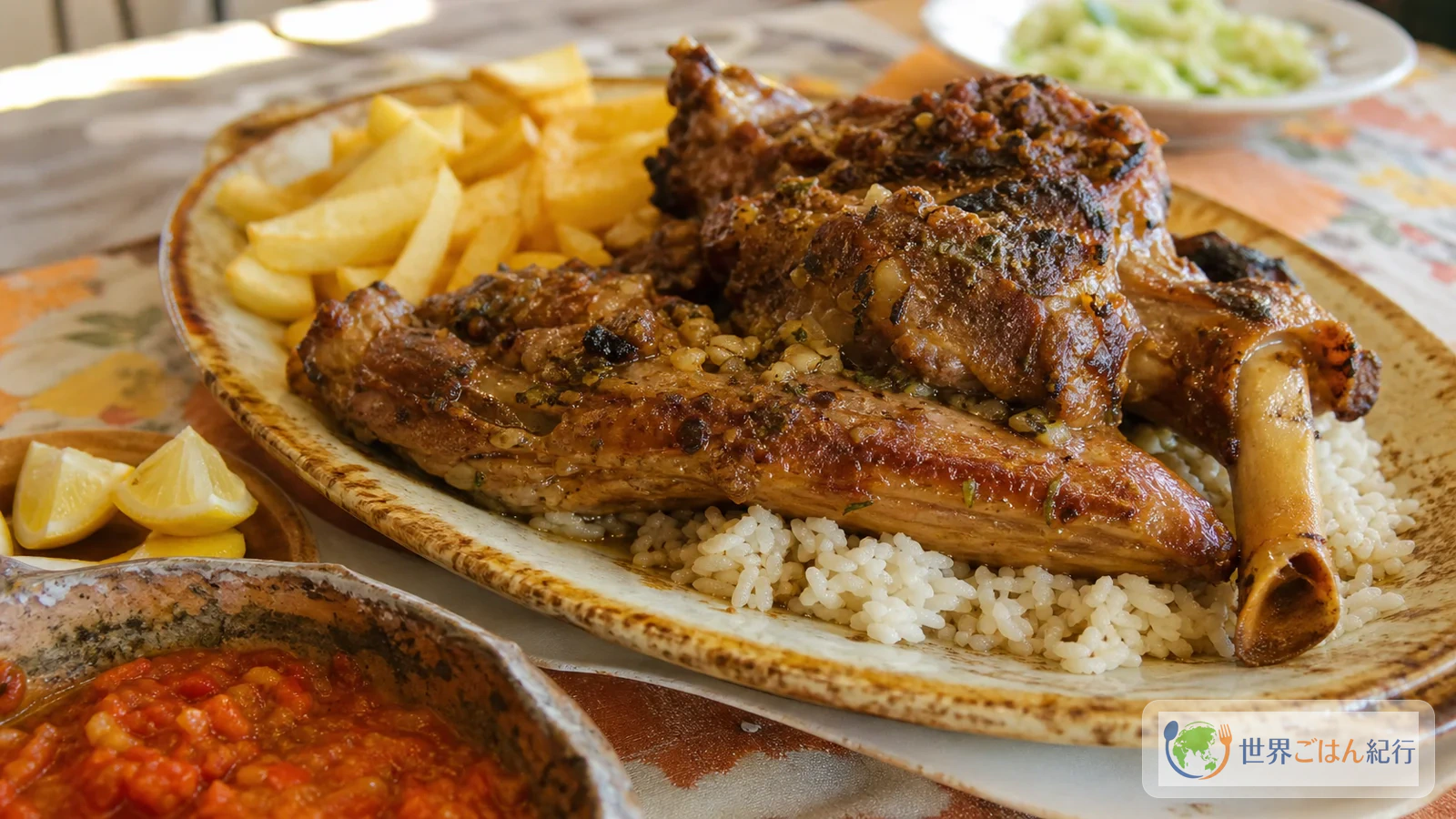
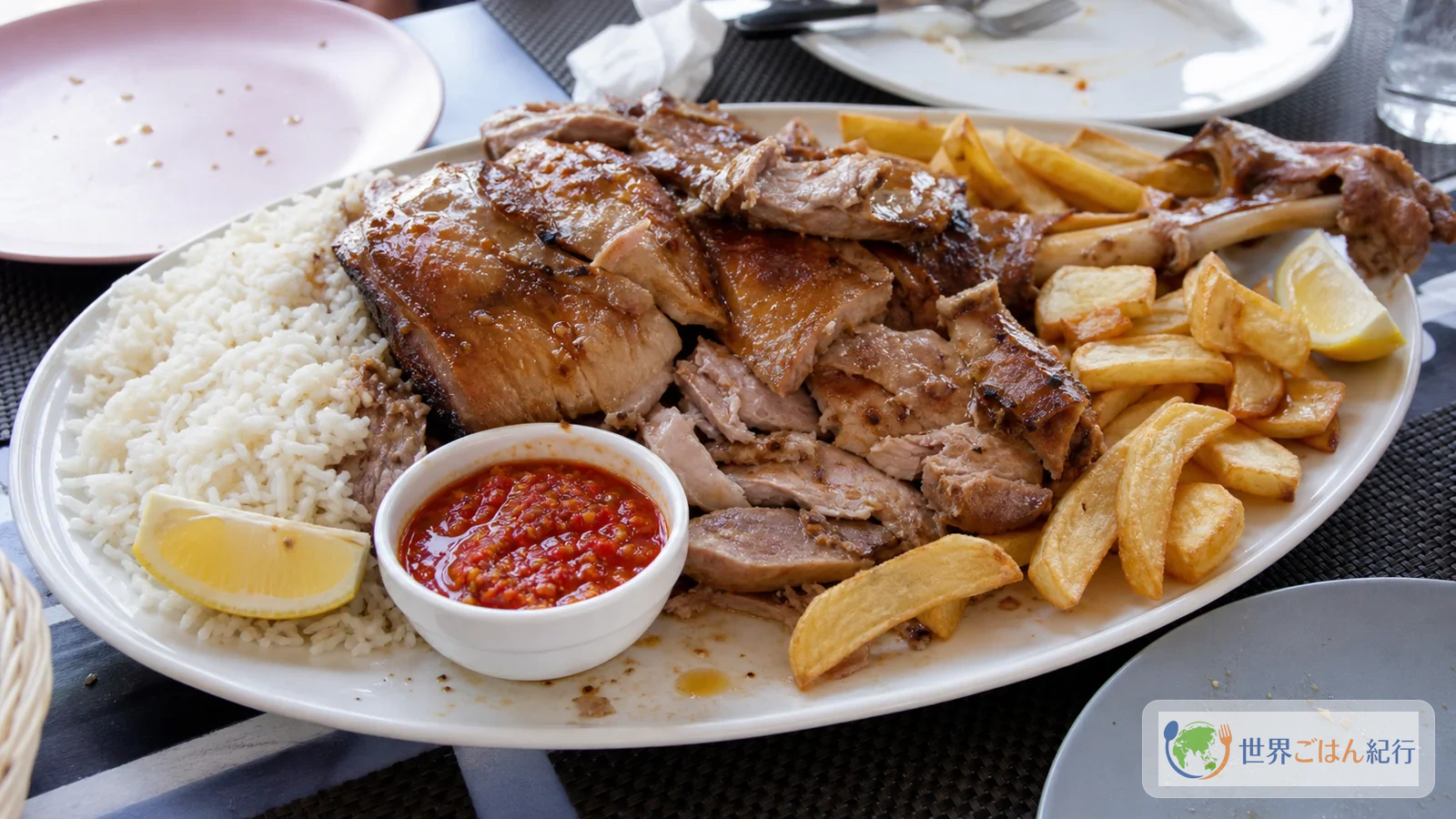
When you open the oven door, the steam of garlic, lemon, and white wine reaches you first. Unlike Angola's red stews, kissuto rombo is about the smell of roasting meat. The surface is a little toasty, wine-soaked pan juices gather underneath, and rice and chips sit alongside on the plate. Most of the ingredients are familiar in any kitchen, yet together they make a dinner that feels far from home.
Kissuto rombo is Angola's roast goat. In Portuguese-language recipes it is treated as cabrito assado, roast kid goat: seasoned with garlic, lemon juice, a chili called gindungo, bay leaf, and olive oil, left overnight, and roasted the next day while basted with white wine. English-language descriptions also present it as roast goat served with rice and chips.
Goat is not easy to buy everywhere. This article uses bone-in lamb shoulder or lamb chops, the closest practical substitute. The idea is the same: tighten a strongly flavored red meat with lemon and garlic, and roast it without drying it out, using wine. If you want to cook Angola's red stews, see Muamba de galinha and Calulu de peixe; for the wider tradition of cooking meat over fire, Brazil's churrasco connects too.
If you can get goat, use goat shoulder or bone-in goat. If you can't, make it with lamb shoulder and keep the backbone of garlic, lemon, white wine, bay leaf, and chili. For sides, we follow the local sources and make rice and chips the default, and leave funge as an option.
Background of kissuto rombo and the Angolan table
If you remember kissuto rombo only as "Angolan roast goat," it is a little harder to see why rice and chips share the plate. The Portuguese name that accompanies it, cabrito assado, means roast kid goat. That reflects a history in which Portuguese rule layered Portuguese dish names and roasting techniques onto local cooking. But Angolan cuisine is not a copy of Portuguese cuisine. A food-culture guide from Angola's embassy in Japan explains that each ethnic group has its own traditional dishes, and that locally available ingredients such as cassava, maize, yam, fish, shellfish, and meat form the foundation. Kissuto rombo too reads more naturally as an Angolan flavor, with goat, chili, lemon, and garlic worked into a large piece of meat, than as a borrowed name.
At the Angolan table, what matters is less the dish on its own than how the staple receives the sauce or meat. Funge is a pale staple made from cassava or maize flour and is served with saucy dishes such as muamba and calulu. Recipes that present kissuto rombo, by contrast, pair the roast goat with rice and chips. In other words, this roast is not meant to sit on the same plate as a rich stew; it is a dish where the pan juices, acidity, heat, and a mild staple are set alongside and each diner combines them with a piece of meat. Keeping the juices from the roasting pan and serving lemon and chili on the side is more than decoration.
Regional differences matter too. Angola stretches from the Atlantic coast to inland highlands and dry regions, and judging from the range of geography and ingredients the embassy describes, what you can buy must vary across coastal fish and shellfish, urban supply through ports and markets, and inland grains, tubers, and meat. A study of food culture in early twentieth-century Luanda likewise argues that the capital had a greater supply and variety of ingredients than other regions. So rather than fixing one "authentic side dish," it is better to understand this as a dish whose table changes depending on whether you can get goat, cook rice, or find flour for funge.
To recreate it at home, use bone-in shoulder if you can get goat, and otherwise substitute thick lamb shoulder. If you sear a thin cut over high heat and stop there, you lose both the feel of gathering around a large piece of meat and the white-wine pan juices that define the dish. Marinate the day before, build the surface at 220°C, then lower to 190°C and cook through while basting with the pan juices. Serve rice and chips, and if you have cassava flour, make a little funge as well. In this order, the ingredients are easy to buy and the dish still runs unbroken from its background to your kitchen.
Ingredients and shopping
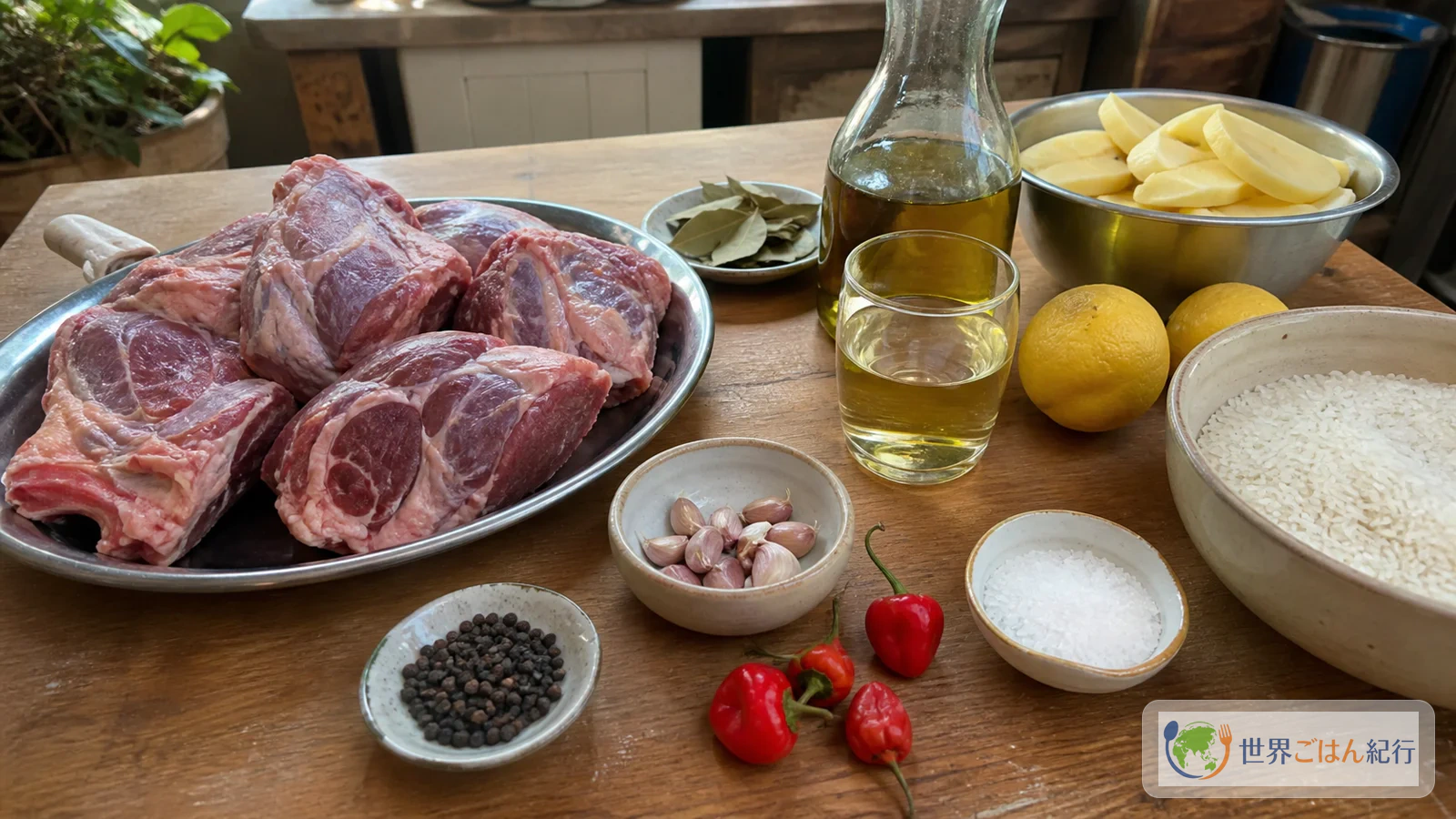
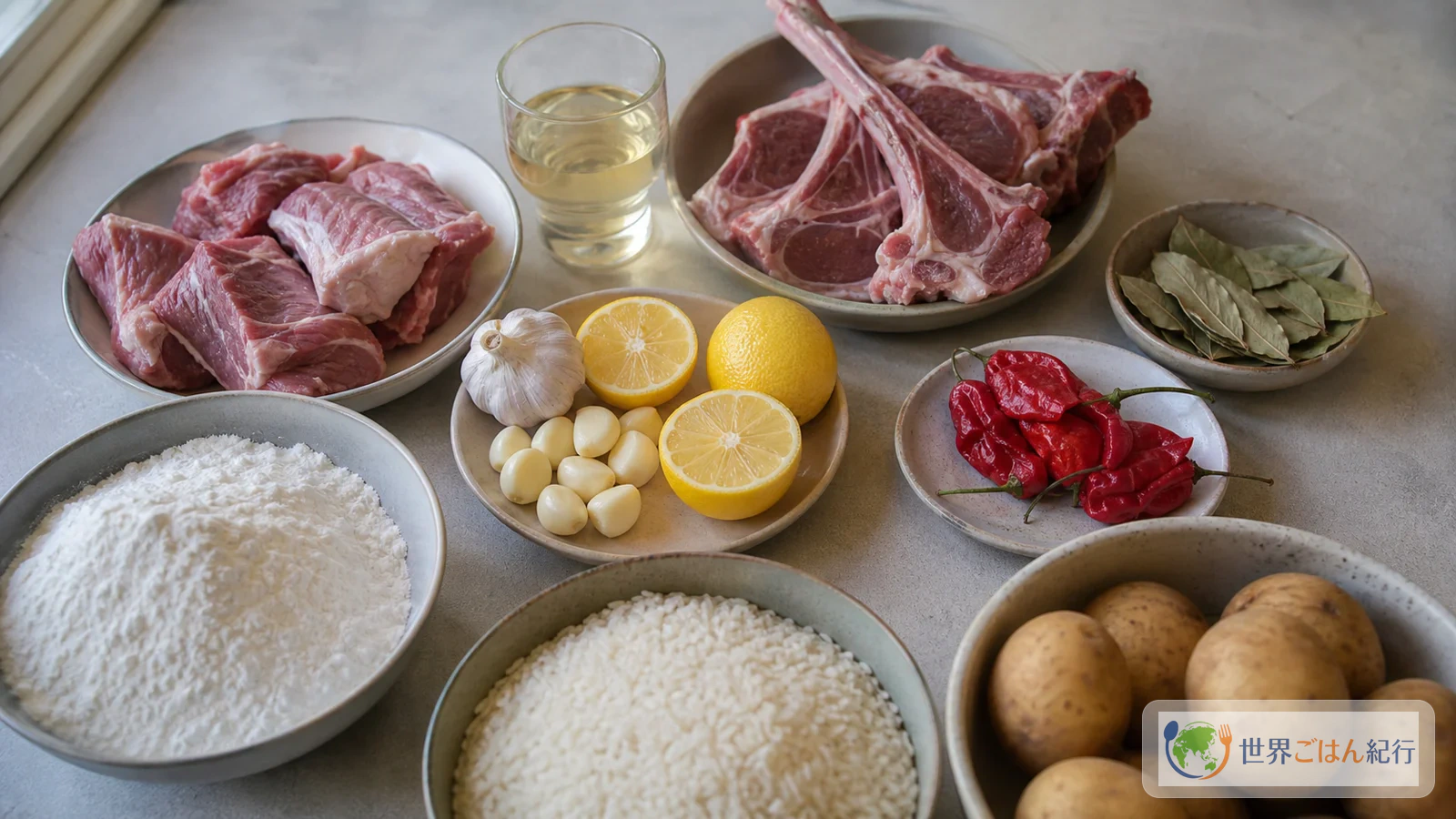
When substituting lamb for goat, choose a thick, fatty cut, not thin lean slices. Lamb chops alone are easier to cook, but weaken the sense of gathering around a large piece of meat that makes this an Angolan roast. For a first try, a combination of bone-in lamb shoulder, lamb spare ribs, and thick lamb chops is easy to handle.
This recipe uses meat and white wine, and some store-bought seasonings may contain wheat. The alcohol in the white wine cooks off, but it can't be said to disappear entirely. If you are serving children or anyone who avoids alcohol, replace the wine with 150 ml water plus 1 tbsp lemon juice. Cook the meat through to the center, and don't leave it at room temperature for long after roasting.
Ingredients and tools for this dish
Gindungo itself is hard to find in many places, so it is easier to adjust the heat by adding a Scotch bonnet-style hot sauce at the table. A little spooned over the roast works better than putting too much in the pot, and it is easier to share among a family.
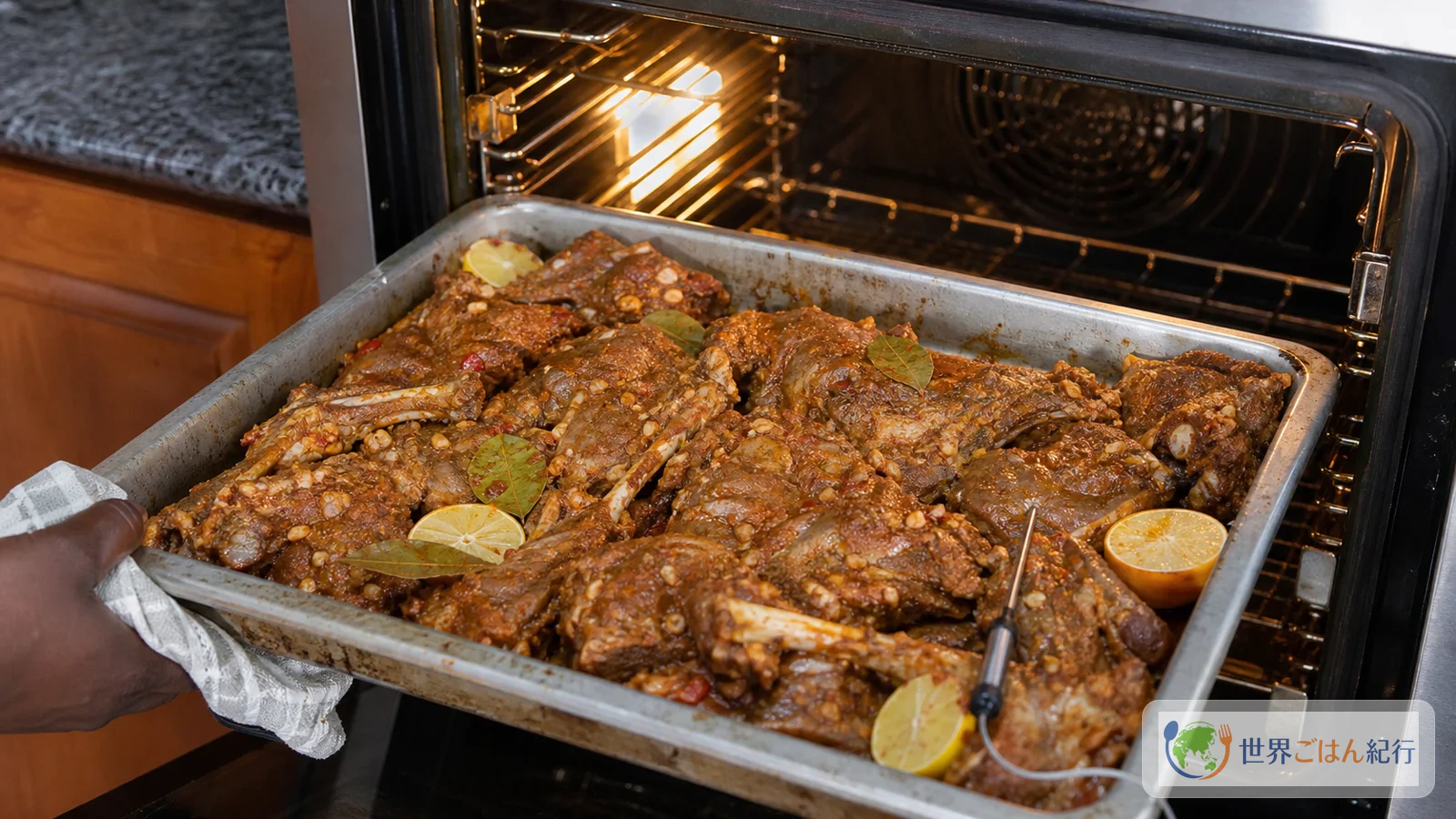
Goat and lamb are meats whose doneness is hard to judge by color alone. For a first try, a thermometer helps you avoid both failures: overcooking it until tough, and serving it with the center still uncertain.
To move one step closer to the local table, have cassava flour ready for funge. Rice and chips are the basic pairing for kissuto rombo, but across Angolan cooking funge is the staple that receives rich meat juices.
Instructions: rest overnight, then roast without letting it dry out
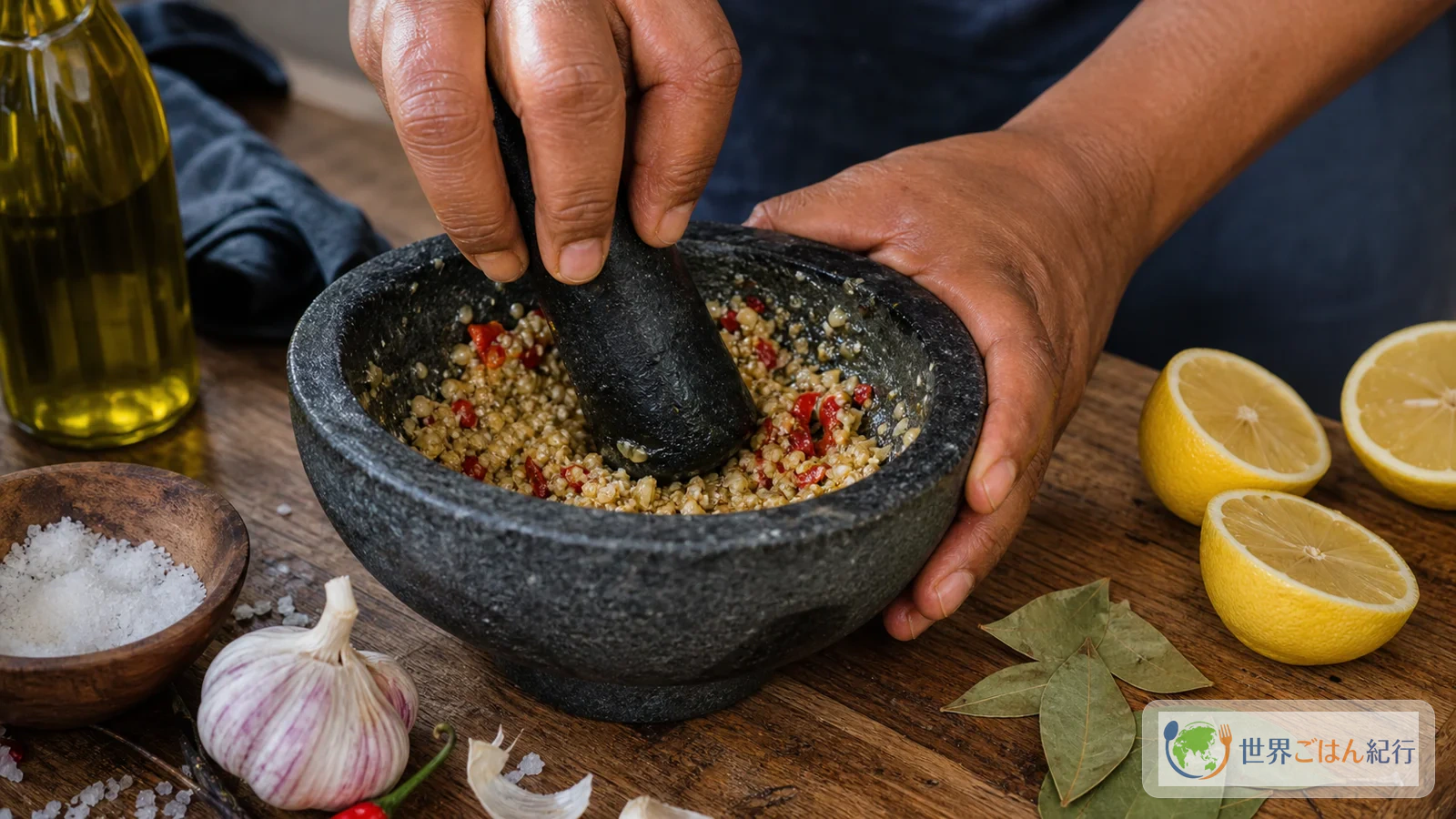
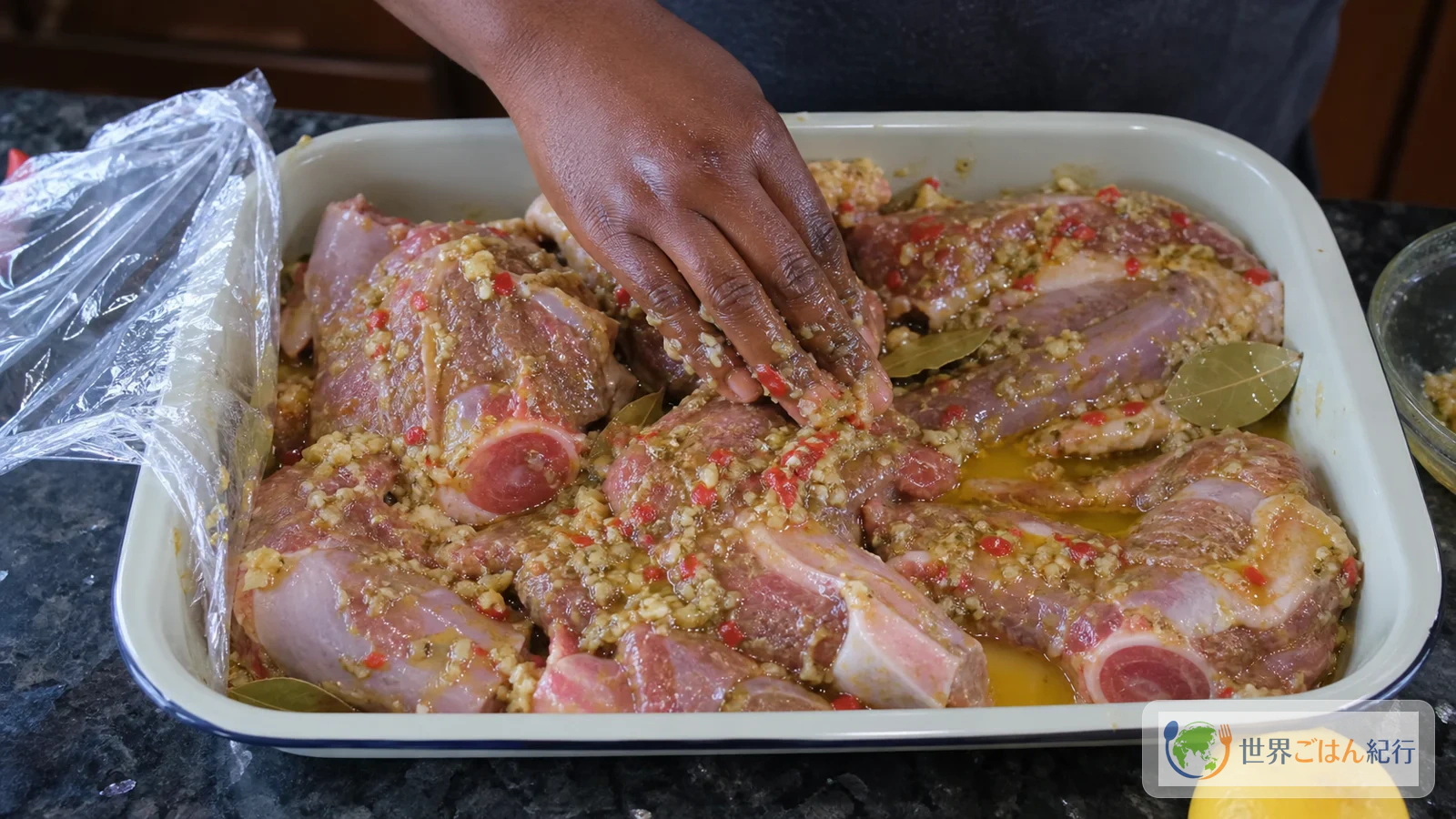
Kissuto rombo is decided less by what you do just before roasting than by the seasoning the day before. If the lemon is too strong the meat tightens and turns hard, so combine it with olive oil and white wine and spread a garlic paste thinly over the whole piece. On roasting day, build the surface at high heat, then lower the temperature a little and keep the meat moist with wine.
Substitution table for staying close to the original in your kitchen
The ingredient list looks simple. That is why it helps to sort out first which change turns it into a different dish.
| Where you hesitate | Closer to the local dish | Realistic substitute | Why keep it |
|---|---|---|---|
| Meat | Kid goat, goat shoulder | Bone-in lamb shoulder, lamb spare ribs, thick lamb chops | Strongly flavored lean meat goes well with the savor of the bone |
| Heat | Gindungo | Dried red chili, a little habanero, Scotch bonnet sauce | Puts a hot kick behind the garlic and lemon |
| Acid | Lemon juice | Lemon, lime, a little sudachi | Tightens the smell of the meat and lightens the roast |
| Wine | White wine | 150 ml water + 1 tbsp lemon juice | Prevents drying and makes the pan juices into a sauce |
| Staple | Rice, chips | White rice, long-grain rice, potatoes, funge | A mild staple is needed to take the juices and acidity |
If you make it with lamb chops alone, shorten the second half of step 4. At about 2 cm thick, start checking after 20 minutes at 190°C, 10 minutes after turning, and 10 minutes of rest. A large shoulder takes longer, but cooking it slowly while basting with the pan juices leaves more garlic and lemon aroma in the meat.
Eating it with funge
Bring 500 ml water and 1/4 tsp salt to a boil in a small pot, add 150 g cassava flour a little at a time, and stir over low heat for 8 to 10 minutes. It lumps easily, so don't stop stirring for the first 2 minutes. When it falls heavily from the spatula and gathers away from the sides of the pot, turn off the heat. A little of the kissuto rombo pan juice over it matches the acidity of the meat with the mildness of the flour.
To get a feel for funge first, read Fufu and Ugali, which show the idea, found across Africa, of a mild staple receiving a rich sauce. In Angola the staple ties the dishes together: calulu for fish, muamba for chicken, kissuto rombo for roast meat.
Why it fails and how to fix it
The most common failure with kissuto rombo is dry meat. The next is too much lemon, which leaves only the surface sour. The result varies with the size of the meat and the strength of your oven, so watch the pan juices and the temperature, not just the time.
| Failure | Cause | Fix |
|---|---|---|
| Tough meat | Roasted too long at high heat, or cut without resting | Lower to 190°C or below and add white wine or hot water. Rest 15 minutes after roasting |
| Too sour | Too much lemon juice, or marinated too long | Cap lemon juice at 4 tbsp and don't marinate more than 12 hours |
| Bitter garlic | Garlic on top of the meat burned | Move pieces about to burn into the pan juices partway through |
| No pan juices | The pan is too wide or the oven too hot | Add 2 tbsp each of white wine and hot water and keep them bubbling at the edge of the pan |
| Strong goat smell | Too much fat or sinew, or seasoning too shallow | Trim thick fat and work the paste into the slits. Add hot sauce at the table |
Leftover meat the next day is easier to eat shredded thin over white rice. If the pan juices have set, add 2 tbsp water and warm in a small pot over low heat for 3 minutes. Microwaving alone tends to tighten the meat, so coat it in the pan juices before moving it to a plate. Chips don't keep, so re-crisp any leftovers in a skillet over medium heat for 2 minutes the next morning.
Building the meal
Kissuto rombo comes together when meat, rice, chips, heat, and acidity are all on the plate. Served as meat alone on a platter, the oil and garlic feel heavy, so always put lemon alongside. If you add side dishes, boiled greens or a light tomato and onion salad suit it better than raw vegetables. Next to a red palm-oil stew, the fish and acidity of Calulu de peixe pair more easily than Muamba de galinha.
For a holiday table, roast the meat large and set it in the middle, with rice on a separate plate, chips on a paper-lined dish, and hot sauce in a small bowl. Eating as you carve brings out the fun of the dish. For a weeknight dinner, a small version with lamb chops, with cooked rice and oven potatoes, is plenty.
FAQ
Can I still call it kissuto rombo without goat?
It is originally a goat dish. At home, use lamb shoulder or lamb chops as the substitute, and understand it as a dish where lemon and garlic tighten the smell of goat. Beef or chicken can be roasted too, but the outline of the dish changes a lot.
What if I don't use white wine?
Mix 150 ml water, 1 tbsp lemon juice, and 1 tbsp olive oil and add it in two portions in step 4. The aroma is weaker, but it still keeps the roasting pan from drying out. Avoid sweet cooking sake, whose aroma is too heavy.
How hot should I make the chili?
It is safer to use a little in the marinade and add more at the table. In place of gindungo, 2 dried red chilies or 1/4 habanero is enough. Only people who like heat should add a few drops of Scotch bonnet-style sauce.
Can I make it without an oven?
You can use a heavy skillet. Brown the surface of the meat over medium heat, add 150 ml white wine, cover, and steam-roast over low heat for 25 to 35 minutes. At the end, remove the lid and reduce the pan juices over medium heat for 2 minutes. The overall toasty flavor is better from an oven, though.
Which Angolan dishes are good to read alongside it?
Within Angola, Muamba de galinha with chicken and red palm oil, and Calulu de peixe with fish and dried fish. For a comparison across meat-roasting cultures, South America's churrasco is an interesting contrast.
Summary
Kissuto rombo is Angolan goat roasted with garlic, lemon, white wine, and chili. Goat is hard to find in many places, so substitute bone-in lamb shoulder or thick lamb chops, and if you keep the step of roasting while moistening with white wine, the core of the dish stays. For the first shopping trip, prioritize thick lamb, lemon, white wine, bay leaf, and chili. Rice and chips are closest to the sources, and adding funge moves toward the Angolan sense of a staple. When the smell of meat and wine comes out of the oven, you begin to see an Angolan table beyond its red stews.



