
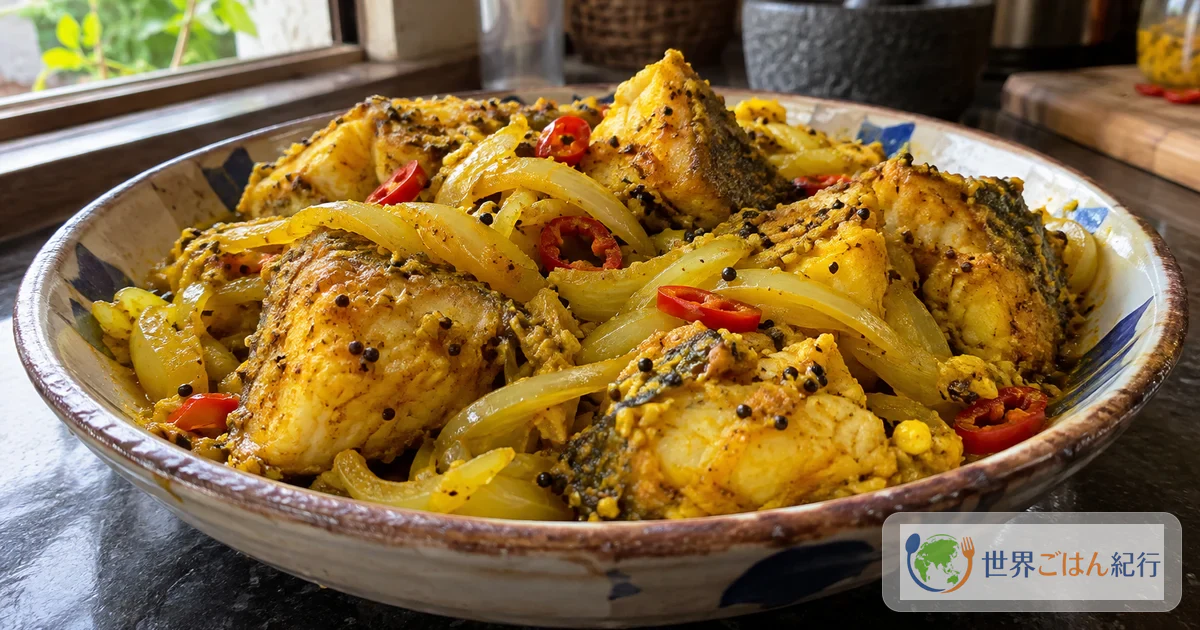
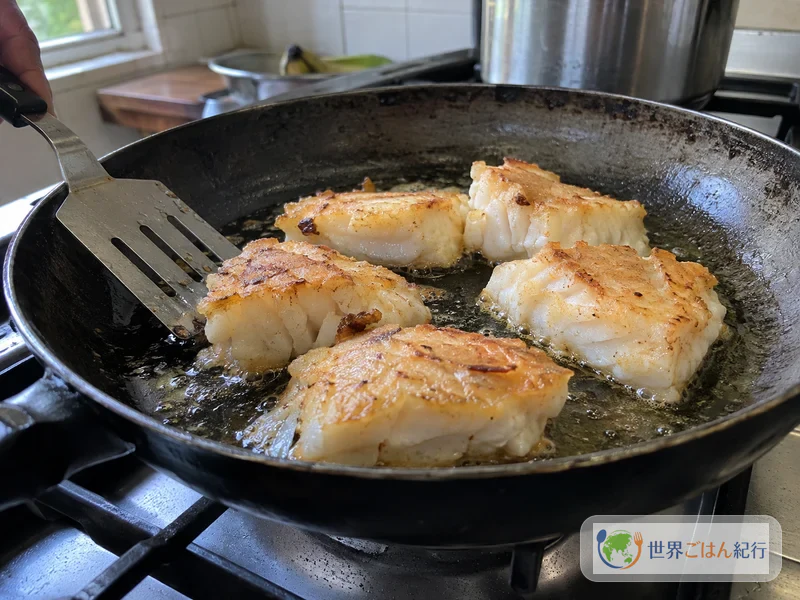
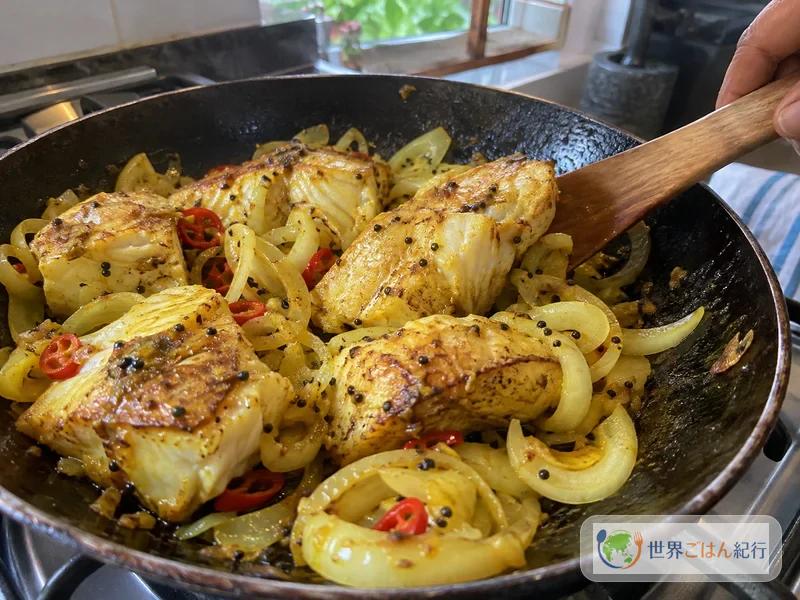
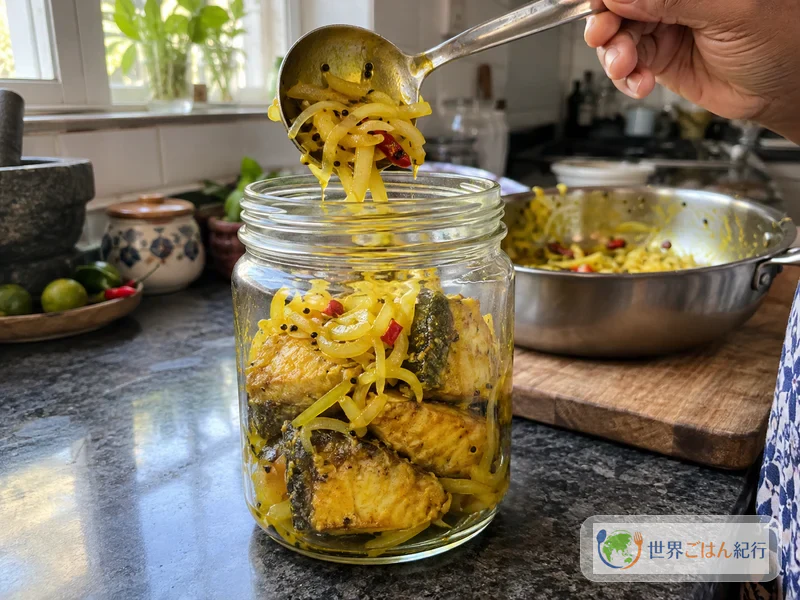
In the Central Market of the capital, Port Louis, colorful vegetables, fruit, and bags of spices are piled high from the morning. Past them, at the fish stalls, you take home fish just caught. In the home kitchen, the fish is fried until golden and then pickled in vinegar with bright yellow turmeric and popping mustard seeds dissolved in it. A few days later, when you open the lid of the jar, the sourness of vinegar and the scent of spices rise up. Vindaye is a spiced vinegar pickle of fish passed down in Mauritian homes.
At the Port Louis Market, Creole, Indian, and Chinese Layer Together
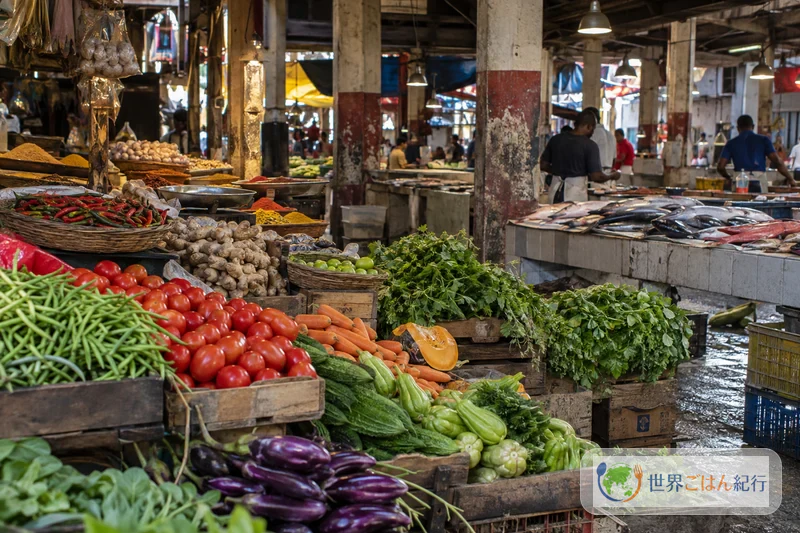
Mauritius is an island nation in the Indian Ocean, east of the African continent. Selina Periampillai, a food writer with roots in Mauritius, describes the island's cooking as a mix of Creole, French, Indian, and Chinese influences. The Central Market and street stalls of Port Louis, brightly colored Tamil temples, the traditional dance sega. Many cultures overlap in every part of island life.
Periampillai lists vindaye as a traditional Mauritian dish with sour and spicy notes. It is an island home flavor alongside the bean-filled flatbread dholl puri and the tomato stew rougaille. Turmeric, mustard seeds, and vinegar. It uses spices familiar from Indian kitchens, yet preserves firmly in vinegar. It is a dish in which many cultures fit into one jar.
Robyn Touchard, who presented vindaye on the Australian public broadcaster SBS's cooking show "Food Safari," introduces the dish as low in fat and rich in protein and omega-3 fatty acids. She herself says she makes it a lunch or a quick dinner with steamed rice.
Fry, Pickle, and Wait a Few Days
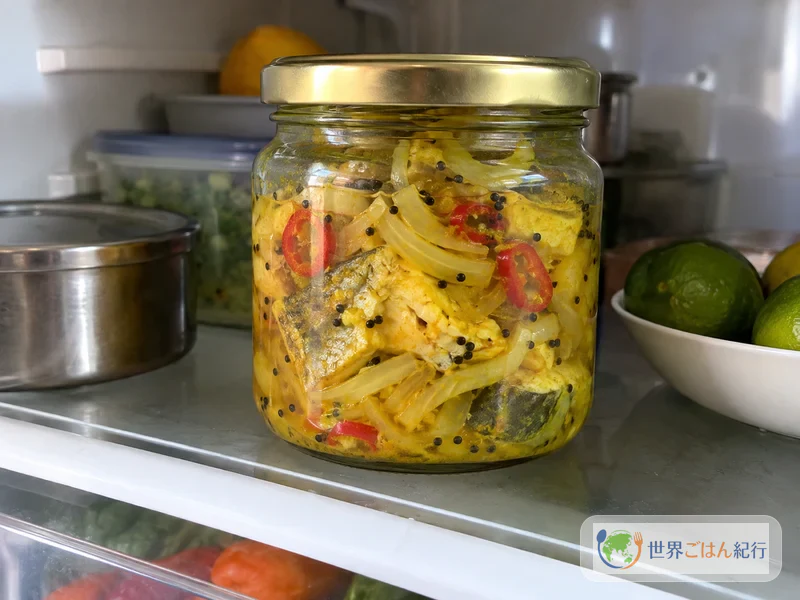
Vindaye has two broad ways of being made. The one introduced here is the recipe by Robyn Touchard published in SBS's Food Safari, a pickling method in which pan-fried fish is tossed in spiced vinegar, packed in a jar, and left in the refrigerator for a few days before eating. Rather than right after it is made, letting it rest lets the turmeric and vinegar flavor soak into the fish.
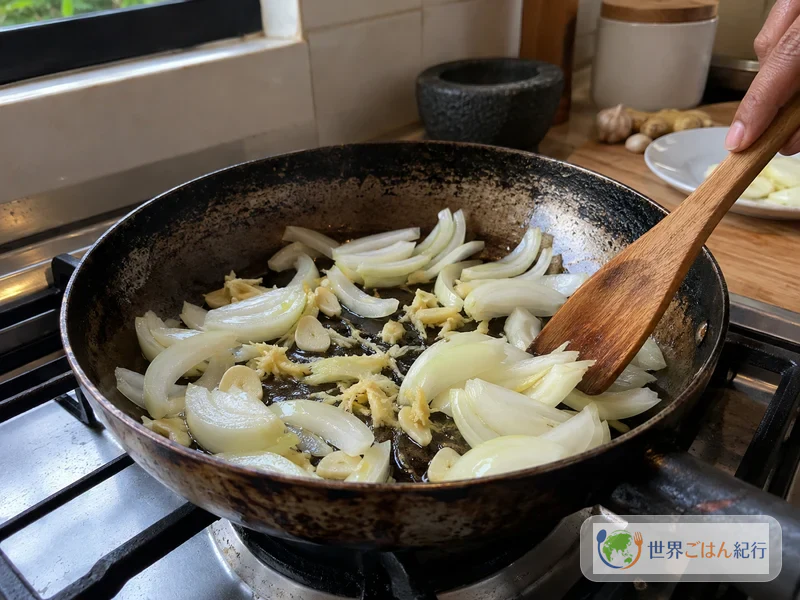
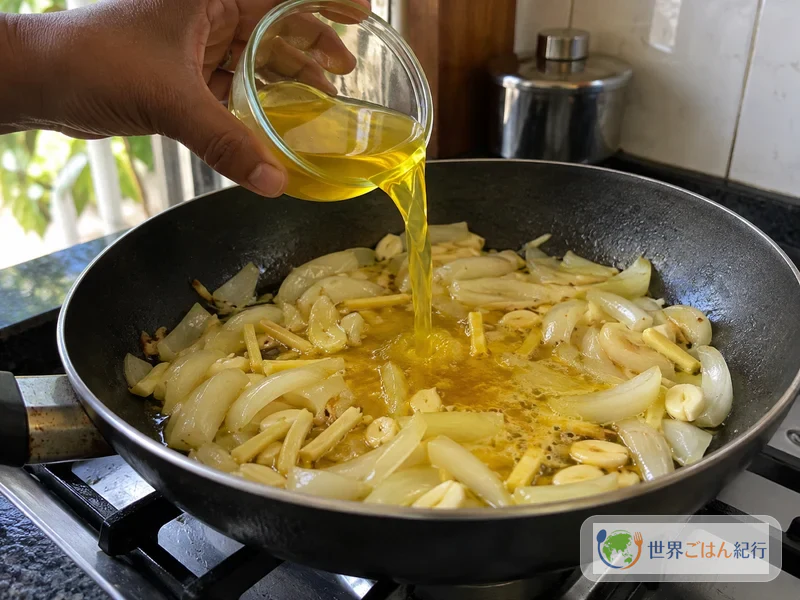
The other is the method Periampillai describes, in which mustard seeds are popped in oil, onion, garlic, ginger, and turmeric are sautéed, and then fish, vinegar, and sugar are added and simmered for 10–15 minutes. This one can be eaten the same day. The pickled version is for making ahead, and the simmered one for days you want it right away. Under the same name, whether you wait or not changes the expression of the dish.
Ingredients (serves 4)
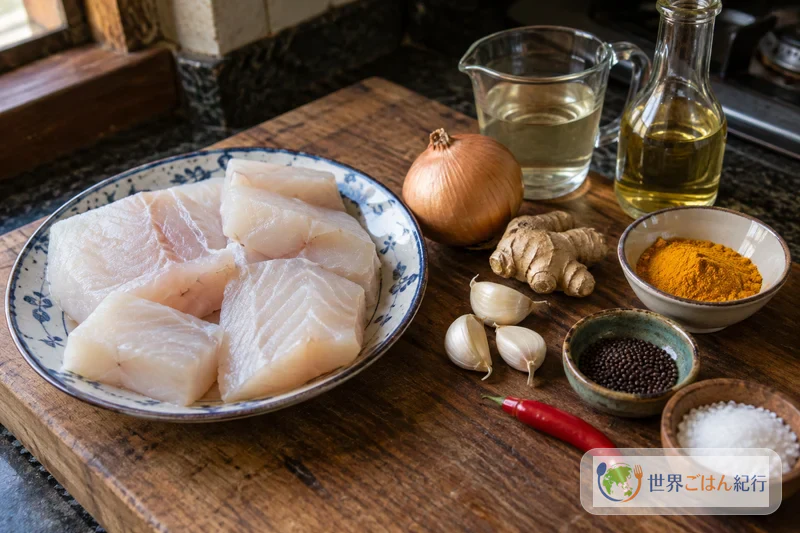
The ingredients are Robyn Touchard's recipe in SBS's Food Safari (for 4–6) cut to half so it is easy to make at home. The original uses Australian measures (1 tbsp = 20 ml), so the ginger is converted to teaspoon measures.
Choose a thick white fish that does not break down easily when pan-fried. With thin fillets the flesh splits when tossed in vinegar. Black mustard seeds give a strong mustard-like aroma. Lightly crushing them in a mortar helps the aroma move into the vinegar.
Before pan-frying the fish, wipe the surface dry thoroughly with paper towel and sprinkle lightly with salt. If moisture remains, the oil splatters and the surface does not crisp.
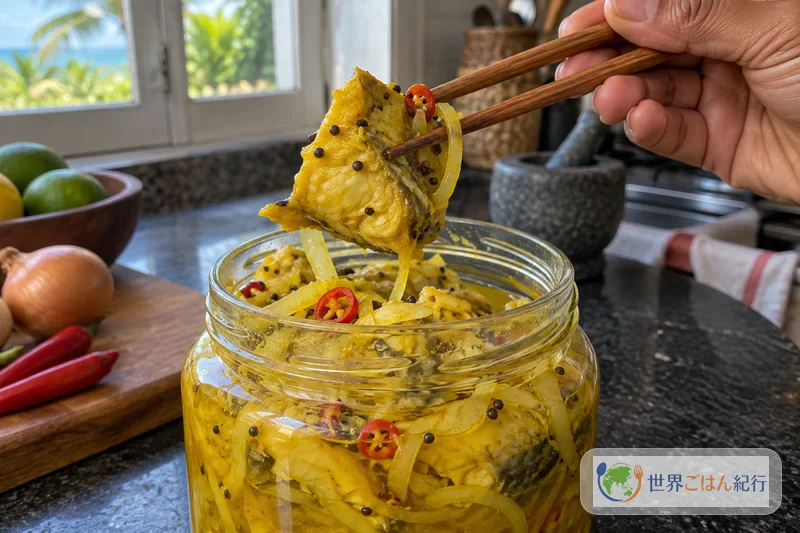
Vindaye is a pickle kept in the refrigerator. Make the jar clean by boiling it in hot water or similar, and use clean chopsticks or a spoon when taking some out. The SBS recipe says it keeps in the refrigerator for up to 2 weeks, but this varies with the temperature of your refrigerator and how it is handled. If you notice anything off in the smell or appearance, do not eat it. People with a fish allergy should not eat it.
If you cook the fish through firmly at the pan-frying stage, the flesh is less likely to break when tossing and packing into the jar. A pale golden color is enough. If browned too dark, the surface turns hard and the vinegar does not soak in easily.
Lightly toasting the mustard seeds in a dry frying pan before crushing adds toastiness. They pop and fly, so toast them over low heat with the lid on.
With White Rice, at the Mauritian Table
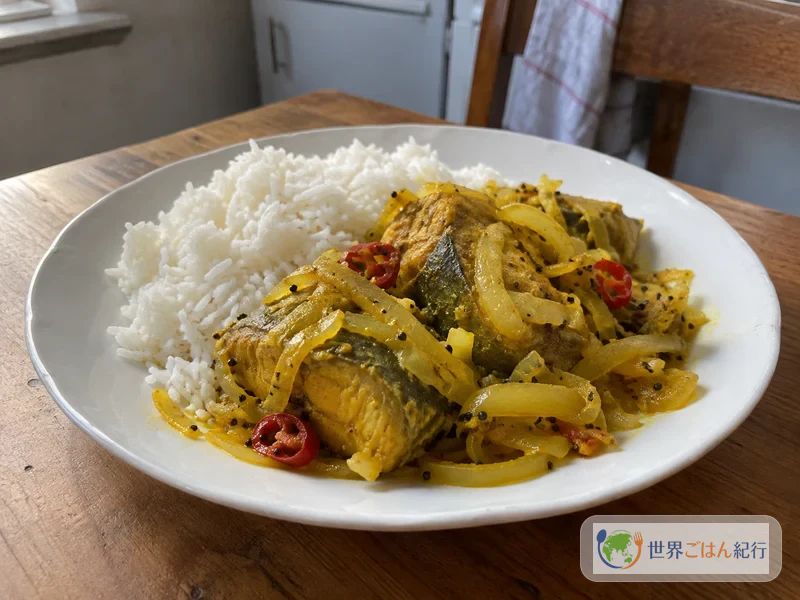
Vindaye that has rested is best taken out of the jar and left a little at room temperature before eating, when the aroma comes through well. As Touchard does, with steamed rice it becomes an easy lunch or dinner. Periampillai too serves the simmered version of vindaye with rice, scattered with chopped cilantro. The sourness of the vinegar goes well with rice, so a single fillet of fish carries a lot of rice with it.
To taste more of the Mauritian table, try setting it beside the island's street food, the bean-filled flatbread dholl puri. For another Indian Ocean island dish, the Seychelles octopus curry kari koko zourit is also worth trying.
Frequently Asked Questions
Can I eat it right after making it?
The method in this article is a pickle that rests a few days to let the flavors blend. If you want to eat it right away, I recommend the way Periampillai does it: pop the mustard seeds in oil, sauté the onion, garlic, ginger, and turmeric, then add the fish, vinegar, sugar, and salt, cover, and simmer for 10–15 minutes until the fish is cooked through.
What kinds of fish are suitable?
A thick white fish that does not break down easily when heated suits it. The SBS recipe uses thick white fish fillets. Make it with an easy-to-find fish such as cod, swordfish, or Spanish mackerel.
Is it a spicy dish?
The heat is decided by the amount of red chile. Without chile, the taste centers on the aroma of turmeric and mustard seeds and the sourness of the vinegar.
May I reduce the vinegar?
The vinegar is not only for seasoning but also for pickling and preserving the fish. Reducing it lowers the keeping quality, so if the acidity bothers you, rather than reducing the amount, take the fish out of the jar when you eat and let it stand a little at room temperature before eating.
Sources
- SBS Food, Robyn Touchard, “Fish vindaye” (Food Safari “Mauritian Safari”), 25 June 2015. Accessed and checked: 22 October 2026. https://www.sbs.com.au/food/recipe/fish-vindaye/55m6zninf
- Selina Periampillai, “Authentic Fish Vindaye Recipe and…,” What Shall We Eat?, 1 July 2024. Accessed and checked: 22 October 2026. https://selinaperi82.substack.com/p/authentic-fish-vindaye-recipe-and



