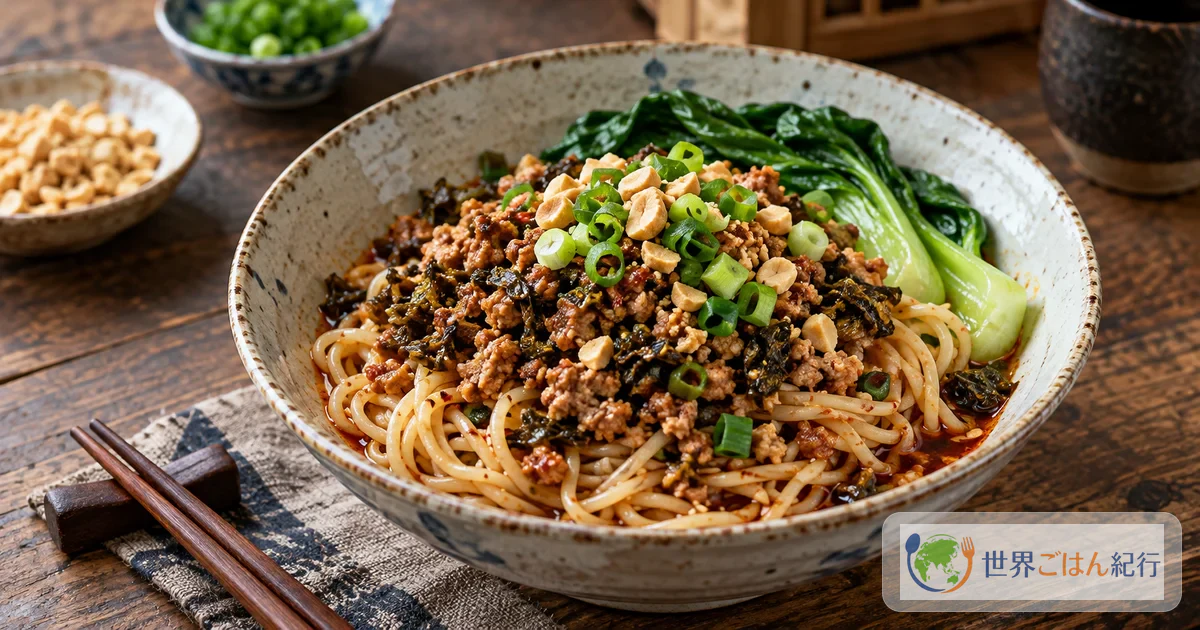
The easygoing charm of lo mein, noodles soaking up sauce in the pan
Return boiled noodles to a hot wok and swirl in a dark, soy-colored sauce, and at first a small puddle forms at the bottom of the pan. Turn the noodles over, lifting them with a wooden spatula and chopsticks, and the pale patches gradually disappear while a gloss spreads between the chicken and the bok choy. Unlike chow mein, which is seared for a toasty aroma, lo mein is about getting the noodles to hold on to the sauce.
Lo mein (撈麵 / 捞面) is a noodle dish whose name preserves the Chinese verb 撈: to scoop, to stir, to toss together. In the English-speaking world it's known as a Chinese takeout staple loaded with vegetables or chicken, but at its core is the idea of tossing boiled wheat noodles with toppings and sauce. This article builds a home version with chicken breast, bok choy, bean sprouts, carrot and shiitake, in proportions that are hard to get wrong in a home kitchen.
Unlike biangbiang noodles (in Japanese), where the fun is in making the noodles, the challenge here is how you handle store-bought noodles. You can use steamed yakisoba-style noodles, but add the packet of seasoning powder and you've made a different dish. The color of dark soy sauce, the roundness of oyster sauce, the aroma of white pepper and the crunch of bean sprouts added at the end: keep those four and you'll head in the direction of lo mein even with supermarket ingredients.
It's written 撈麵 in traditional characters and 捞面 in simplified, with the Mandarin pinyin lāo miàn. It spread in the English-speaking world as lo mein. This article uses "lo mein" throughout and gives 撈麵 / 捞面 only where the original name matters.
The background of lo mein: soft noodles, distinct from chow mein
The first thing to separate when you get to know lo mein is how it differs from chow mein. Chow mein is, as the name says, "stir-fried noodles," and the time the noodles spend against the hot wok to develop aroma is what matters. Lo mein, by contrast, tosses boiled noodles with fillings and sauce so the noodles absorb it. Wikipedia's entry on lo mein explains that the Cantonese 撈 relates to the motion of mixing and scooping, and that the Cantonese style combines boiled wheat noodles with sauce. In North American Chinese restaurants it became a beloved dark-sauced noodle dish with vegetables and meat, and a fixture of the takeout box eaten right after ordering.
Still, if you dismiss lo mein as "just an American Chinese takeout dish," you lose half of what makes these noodles interesting. Made With Lau talks about lo mein in the context of noodle dishes tied to longevity and good fortune at birthdays and weddings. The motion of 撈 in the name is exactly the gesture of lifting the noodles and combining them with sauce and toppings. Keeping long noodles uncut and lifting them high with chopsticks connects to the sense of celebration found across Chinese noodle dishes.
At the same time, home-style lo mein is a relaxed dish. Some days it's piled on a platter and shared with relatives; other days it's dinner made from whatever greens, mushrooms and meat are in the fridge. The Woks of Life treats it as a dish where the vegetables can be swapped quite freely, and Omnivore's Cookbook emphasizes dark soy sauce for the deep color and cutting the vegetables so they stay crisp. Bringing that into a home kitchen, matching the exact ingredients matters less than not overcooking the noodles, mixing the sauce in advance, and tossing everything at the end with a lifting motion.
The difference in name shows up directly in your decisions at the stove. If you press the noodles down out of a stir-fry habit, lo mein quickly gets heavy. On the other hand, if you turn off the heat while sauce is still pooled in the bottom, the noodles on top are bland and only those at the bottom are salty. Even though it's a "tossed" dish, scooping from underneath with a wooden spatula and lifting the noodles with chopsticks to loosen them works better than stirring around in circles. The moment the sauce clings to the surface of the noodles and the liquid on the bottom of the pan disappears into a thin line is when lo mein is done.
| What to watch at the stove | Priority for lo mein | Priority for chow mein |
|---|---|---|
| The motion in the name | Lift the noodles and toss them with sauce and fillings | Press the noodles against the wok and stir-fry |
| State of the noodles | Boil them slightly firm and let them absorb sauce in the pan | Drive off surface moisture to build aroma |
| Role of the sauce | Coat all the noodles thinly with dark soy and oyster sauce | Bring out the aroma of the ingredients with oil and high heat |
| Signs of failure | Sauce left in the bottom, broken noodles, only the fillings strongly flavored | Watery, no browning, steamed noodles |
As lo mein spread through North American Chinese restaurants, it also suited the kitchen workflow. Boil the noodles ahead, briefly stir-fry vegetables and meat, and toss with sauce for each order. That's why it's easier to reproduce on a less powerful home stove than chow mein, where searing takes center stage. It's easy to eat out of a takeout box and holds up when reheated the next day. That's the fascinating part: a celebratory banquet noodle and an everyday takeout noodle are linked by the same name.
There are regional differences too. In Cantonese cooking the sense of tossing boiled noodles with toppings and sauce comes to the fore, while in North American Chinese restaurants the dish spread as a dark-sauced plate with lots of vegetables, adapted to the ingredients available to immigrants and to each restaurant's workflow. Serious Eats' guide to Chinese egg noodles describes the thicker noodles used for lo mein as suited to rich sauces and easy to handle when reheated. That helps at home too: noodles boiled at lunch can go back into the pan for dinner, and leftovers can be loosened in a skillet the next day.
The problem when transferring the original method is the noodles. Chinese grocery stores carry lo mein noodles and fresh egg noodles, but an ordinary supermarket may only offer steamed yakisoba-style noodles, fresh ramen-style noodles, dried Chinese noodles, or even spaghetti. This article takes thin Chinese egg noodles as the first choice, then draws the line as follows: steamed noodles get rinsed and loosened, dried noodles get boiled slightly firm, and spaghetti is a last resort. The heart of the flavor is less the noodles themselves than a fairly rich sauce made with small amounts of dark soy sauce and oyster sauce. Even on days when you can't get authentic noodles, if you keep the color, the sweetness, the white pepper and the snap of the bean sprouts at the end, you can put lo mein on the table.
Ingredients (serves 2): chicken and vegetable lo mein

| Chicken marinade | Amount |
|---|---|
| Soy sauce | 1 tsp |
| Shaoxing wine or sake | 2 tsp |
| Potato starch | 1 tsp |
| Oil | 1 tsp |
| Sauce | Amount |
|---|---|
| Soy sauce | 1 tbsp |
| Dark soy sauce (laochou) or Chinese dark soy | 2 tsp |
| Oyster sauce | 1 tbsp |
| Sugar | 1 tsp |
| White pepper | 1/4 tsp |
| Water or chicken stock | 3 tbsp |
| Sesame oil | 1 tsp |
If you'd like a little more body, prepare a slurry of 1/2 tsp potato starch dissolved in 2 tsp water. You only need enough for the sauce to coat the noodles; don't add so much that it turns into a thick gravy.
Watch for wheat, egg, soy, chicken, and the shellfish in oyster sauce. To avoid shellfish, replace the oyster sauce with 2 tsp shiitake soaking liquid, 1 tsp soy sauce and 1/2 tsp sugar.
How to choose noodles
The ideal is yellow Chinese egg noodles. Boil fresh noodles briefly, and pull dried noodles 30 seconds to 1 minute earlier than the package directions. If you use steamed yakisoba-style noodles, warm them in the microwave in their bag, rinse briefly under running water to remove some of the oil and sourness, and leave them in a colander for 5 minutes. Spaghetti has a different texture, but only when you truly can't find Chinese noodles, boil thin 1.6 mm spaghetti firm, without salt.
When you're unsure at the store, look less at the name of the noodle than at whether it can "absorb sauce in the pan for 2 more minutes." Noodles that are already soft break easily the moment the sauce goes in. Dried noodles with too much bite left, on the other hand, feel separate from the fillings even after tossing.
| Noodles you found | Prep | Water in the sauce |
|---|---|---|
| Fresh Chinese noodles / Chinese egg noodles | Boil 30 seconds less than the package says; rinse off the starch in cold water | 3 tbsp water is fine |
| Dried Chinese noodles | Boil 1 minute less than the package says; leave in a colander for 5 minutes | 3–4 tbsp water |
| Steamed yakisoba-style noodles | Warm for 30 seconds in a 600 W microwave; rinse the oil off lightly under running water | Reduce to 2 tbsp water |
| Thin spaghetti | Boil without salt, 1 minute less than the package says | 4 tbsp water, less dark soy |
On days you use steamed noodles, it holds together more like lo mein if you don't try to brown them. If you want browning, lean toward chow mein. If you want the noodles to absorb sauce, lean toward lo mein. Decide that fork in the road first, and the result won't waver even with the same noodles.
Shopping: noodles, dark soy sauce and a wok

Chicken, bok choy and bean sprouts are easy to find at any supermarket, so they stay in the ingredient list. What's worth seeking out at an Asian grocery store or online is dried noodles close to thin Chinese noodles, dark soy sauce to set the color and aroma, and a pan in which you can lift and turn the noodles. Lo mein doesn't sear the noodles the way chow mein does, but in a cramped pan the sauce stays at the bottom and the noodles pile up and steam.
If you can't find Chinese egg noodles, dried noodles sold for pancit canton are an option that makes moisture easier to control than steamed noodles. They aren't made for lo mein, but they're good for practicing how to boil thin dried noodles firm and let them absorb sauce.
Dark soy sauce adds a deep brown color and a caramel-like roundness with only a small amount. Made with regular soy sauce alone, the dish tends to taste salty first and doesn't look much like lo mein. You can also use dark soy in char kway teow (in Japanese) or pancit canton.
Because lo mein is a dish where the noodles absorb sauce, you can make it in a deep skillet. Still, when you're turning two servings of noodles at once, the width of the pan bottom makes a big difference. In a pan with no room to lift the noodles, the sauce stays at the bottom and only the outside of the noodles gets strongly flavored.
Method: toss the noodles in sauce without searing them
You use high heat as with chow mein, but the goal is controlling moisture, not browning. Cook the chicken and vegetables first, then return the noodles and let them absorb the sauce quickly. Dither in the pan too long and the noodles break and the vegetables release water.
Where to draw the line on substitutes
When making lo mein outside China, protecting the core of the flavor works better than sourcing every authentic ingredient. What you want to keep is thin noodles, the deep soy color, a light sweetness, the aroma of white pepper, and the greens and bean sprouts at the end. Conversely, changing the type of meat or mushroom doesn't easily throw the dish off course.
When you're unsure while shopping, go in this order: noodles, color, pan size. If there's no bok choy, komatsuna or other tender greens will do, and if there's no shiitake, shimeji is plenty. But if the noodles are too soft from the start, there's no room left for them to absorb sauce. On days you use steamed supermarket noodles, don't just open the bag and dump them in the pan. Warm them lightly, loosen them, and rinse off the oil and sourness, and you'll move a little further from the taste of instant yakisoba. If the store has dried noodles, choose ones that are a bit thin and don't break when spread out in a colander after boiling.
Dark soy sauce isn't there to add salt; it's a seasoning for coating the noodles thinly in a deep color and a round aroma. If you try to get the color by adding more regular soy sauce, the saltiness comes through before the noodles do. You can make the dish without buying it, but in that case accept it as a "pale home-style lo mein" and make sure the white pepper and oyster sauce are pronounced, which makes it more enjoyable. And if you do buy a bottle, you can use it to color chow mein, char kway teow and braises, so you'll have a way to finish it.
When it comes to pans, working space matters more than authenticity. A wok sets the mood, but if two servings of noodles end up pressed into a lump at the bottom, a wide, deep skillet may be less likely to fail. Lo mein isn't a dish where you sear the noodles into a crust, so a home stove is fine. However, without room to lift the noodles, they split into bland noodles on top and salty ones at the bottom. If you can't change pans, finishing one serving at a time gives more consistent flavor and texture.
| Ingredient in question | Choice that gets closer | Choice to avoid |
|---|---|---|
| Noodles | Chinese egg noodles, fresh Chinese noodles, dried Chinese noodles | Yakisoba noodles used as-is with their powdered sauce |
| Dark soy sauce | Dark soy sauce, Chinese dark soy | Adding lots more regular soy sauce |
| Oyster sauce | Use a small amount; to avoid shellfish, make up the flavor with shiitake soaking liquid | Japanese thick brown sauce, yakiniku (barbecue) sauce |
| Shaoxing wine | Sake works as a substitute | The same amount of mirin |
| Vegetables | Bok choy, komatsuna, cabbage, bean sprouts | Adding watery lettuce early |
| Pan | Wok, deep skillet | Cramming two servings into a small skillet |
If you have no dark soy sauce, keep the 1 tbsp soy sauce as is and increase the sugar by just 1/2 tsp. The color will be paler, but you avoid saltiness. When using yakisoba noodles, skip the included sauce packet, loosen the noodles lightly under running water, and drain. If the sourness of the noodles bothers you, pour boiling water over them and let them sit for 30 seconds to mellow it.
Common mistakes and how to fix them

| Problem | Cause | Fix |
|---|---|---|
| Noodles clump | Not drained after boiling, surface still starchy | Rinse off the starch under running water and toss with 1 tsp oil before returning them to the pan |
| Watery | Vegetables stir-fried too long, pan too small | Take the vegetables out once, toss the noodles and sauce first, then return them |
| Too salty | Added dark soy as freely as regular soy sauce | Measure dark soy by the teaspoon. Add it for color; don't adjust saltiness with regular soy sauce |
| Too pale | No dark soy, or heat turned off before the sauce coated the noodles | Return to medium-high and toss with a lifting motion for just 30 seconds |
| Tough chicken | Overcooked at the start | Move on to the vegetables once the surface turns white and finish with residual heat at the end |
| Limp bean sprouts | Added too early | Add them only for the last minute, and stop knowing residual heat will keep cooking them |
As long as a little sauce remains at the bottom of the pan, lo mein isn't finished. But if you stir-fry until it's completely dry, it drifts toward chow mein. Aim for noodles that shine when lifted, with no liquid running across the bottom of the pan.
What to serve with it, and storage

Lo mein is a meal on its own, but since the oil and soy flavors carry through, a tangy side or a soup makes it easier to eat. Cucumbers in sweet vinegar, tomato and egg soup, or greens stir-fried with garlic go well. If you want a more vegetarian side, the idea behind vegetable-rich Buddha's delight (luohan zhai) (in Japanese) is a good reference.
If you're serving it next to a spicy dish, make the lo mein sauce a little lighter. On days you put something with strong doubanjiang and Sichuan pepper, like mapo tofu (in Japanese), alongside, reduce the dark soy in the lo mein to 1 tsp and add 50 g more bean sprouts so the table doesn't get heavy. When lo mein is the star, tangy cucumbers, egg soup and some chilled tofu are plenty.
When serving on a platter, don't tip it straight from the pan. Loosen the noodles a little first and pile them high in the center. If sauce is left at the bottom, don't pour it all onto the platter; move the noodles first and drizzle on only as much as you need. Noodles mixed together in a takeout box, North American style, have their charm, but at home it's better to serve while the bean sprouts are crisp and the greens are still bright, so the second and third bites don't feel heavy.
There's no need to build the whole menu from Chinese dishes. Lo mein's soy sauce dressing pairs just as well with everyday sides like tangy cucumbers, wakame soup or chilled tomatoes. If you want to compare wheat noodle dishes, put it next to hand-pulled, robust biangbiang noodles (in Japanese), seared, toasty chow mein, and shuizhu niurou (in Japanese), where spicy oil takes the lead, and the softness of lo mein becomes clear.
To make it ahead, don't pack it hot into a deep container; spread it on a tray or plate and let it cool for about 10 minutes. It keeps in the refrigerator until the next day. To reheat, put 1 tsp oil and 1 tbsp water in a skillet, loosen the noodles over medium heat, then toss over high heat for 30 seconds. Reheating in the microwave alone tends to dry out the edges and leave the center heavy.
We don't recommend freezing. The surface of the noodles cracks, and the bean sprouts and bok choy release water. If you must keep leftovers, refrigerate the noodles and fillings in small portions and finish them at lunch the next day for the best flavor.
Frequently asked questions
What's the difference between lo mein and chow mein?
Chow mein stir-fries the noodles against the pan to create a seared aroma. Lo mein tosses boiled noodles with fillings and sauce so the noodles absorb the flavor. In the English-speaking world the terms are used differently by restaurant and region, but at home it's easiest to decide by asking: "sear, or toss?"
Can I use yakisoba noodles?
Yes, but don't use the included sauce. Warm them slightly in the bag, loosen them under running water or with boiling water, and drain in a colander before using. If the noodles are thick and soft, reduce the water in the sauce to 2 tbsp.
Can I make it without dark soy sauce?
Yes, but the color and roundness will be weaker. Adding more regular soy sauce makes it salty, so keep the soy sauce amount the same and make up for it with a little extra sugar. If you'll make lo mein, chow mein or char kway teow a few times, a bottle of dark soy sauce is easy to put to use.
Can I make vegetable lo mein without chicken?
Yes. If you leave out the chicken, increase the shiitake to 5 and cut 120 g fried tofu (atsuage) into strips and sear them for heft. The sauce can stay the same, but if it tastes too salty, add 1 tbsp water.
Can I make the sauce ahead?
Yes. Mix the soy sauce, dark soy sauce, oyster sauce, sugar, white pepper, water and sesame oil and use within about 2 days, refrigerated. Stir well from the bottom just before using. If the sugar and oyster sauce stay settled at the bottom, the flavor will be weak at first and strong only at the end. Garlic and ginger have a strong aroma, so leave them out of the sauce and add them when stir-frying in the pan for a cleaner result.
Can I pack it in a lunch box?
You can if it will be eaten the same day, but use fewer bean sprouts since they release water easily. If you make it in the morning, keep the noodles slightly firm, reduce the water in the sauce to 2 tbsp, and cool it thoroughly on a shallow plate before packing. Rather than packing last night's leftovers as they are, reheat them in a skillet over medium heat for about 2 minutes to drive off excess moisture, then cool; it'll be less sticky.
What do I do if the noodles get sticky?
Add 1 tsp oil to the pan and loosen the noodles over medium heat. Adding water loosens them temporarily, but they get heavy as they cool. If it's already too salty, it's easier to fix by adding more stir-fried bok choy or bean sprouts to spread out the sauce.
Sources
- Wikipedia, "Lo mein", accessed 2026-06-19, https://en.wikipedia.org/wiki/Lo_mein
- The Woks of Life, "Vegetable Lo Mein", accessed 2026-06-19, https://thewoksoflife.com/vegetable-lo-mein/
- Made With Lau, "Vegetable Lo Mein", accessed 2026-06-19, https://www.madewithlau.com/recipes/vegetable-lo-mein
- Omnivore's Cookbook, "Vegetable Lo Mein", accessed 2026-06-19, https://omnivorescookbook.com/vegetable-lo-mein/
- Serious Eats, "A Guide to Chinese Noodles", accessed 2026-06-19, https://www.seriouseats.com/chinese-noodles-101-guide-to-types-and-styles-of-chinese-egg-noodles